



Abstract
Independent hotels are in a competitive marketplace for staff in which they face a high rate of employee turnover resulting in poor performance and low profit. This study examines the impact of ethical leadership on turnover intention through ethical climate, employee voice, employee empowerment and affective commitment using a cross-cultural approach in two contrasting GLOBE surveyed countries, Iran and the United Kingdom, based on Social Exchange Theory. A sample of 807 personnel of independent hotels in the two countries were surveyed. Findings show that ethical leadership can reduce turnover intention by different mechanisms through the cultural features and leadership dimensions of the two countries.
Introduction
Independent hotels cannot leverage the same economies of scale as the chains so they must try harder to attract and retain customers by competing by other means than price (Such and Mendieta, 2013). The best way to achieve this is to improve the commitment and morale of the staff. However, independent hotel managers often find it difficult to attract suitable employees and instead must make do with workers who have lower motivation and a higher tendency to quit their jobs after a short period. Research has shown that ethical management practices generally make for happier employees and reduced staff turnover (Suifan et al., 2020). However, another problem faced by independent hotel managers is caused by the fact that their business training often fails to take matters of national culture into account.
Organizational climate is a significant element that impacts the behaviour and motivation of individuals and can be a driver of good job performance for employees in an organization (Rusu and Avasilcai, 2014). Ethical climate, as a component of organizational climate, reflects how ethical issues are handled within a company (Teresi et al., 2019). It plays an important role in shaping the ethical behaviour of staff and has a significant influence on the ethical decision making of employees and their attitudes and behaviour at work (Newman et al., 2017), including their commitment to the organization and turnover intention. Since the leaders of an organization can influence and inspire others, ethical leadership is a significant factor that forms the ethical climate; in other words, leaders’ ethical values and behaviours have an impact on affective commitment and intention to turnover through ethical climate (Demirtas and Akdogan, 2015).
Effectiveness, performance (Nazarian et al., 2020) and the long-term success for the business (Ghani et al., 2022) are developed primarily by employees’ involvement and identification with the business and its aims. Employees who can participate in organizational decision making and are able to communicate their suggestions, opinions, concerns, and ideas can be expected to develop affective commitment. Thus, one of the factors that can reduce turnover intention is employees’ affective commitment to their organization (Nazarian et al., 2020). In fact, giving employees a voice through empowerment, and giving them a sense of self-efficacy, results in promoting organizational effectiveness (Eibl et al., 2020) since empowered employees are loyal, committed, more productive and more collaborative.
This research examines the relationship between ethical leadership and intention to turnover via the variables ethical climate, employee voice, employee empowerment and affective commitment, all of which depend on social interactions. According to SET, social interactions are determined by the advantages gained from service exchange (Jahan and Kim, 2021) and are derived from perceived norms of reciprocity (Nazarian et al., 2020). Therefore, they are based on the mutual exchange of privileges and social relationships that function as the fundamental elements of human interaction in an organization. As a result, if the leaders of an organization behave ethically and fairly towards their employees, the employees will improve in commitment towards their employer which, in turn, helps to reduce turnover (Nazarian et al., 2021).
Most of the theory and research behind these variables and their relationships was developed in Western contexts (Nazarian et al., 2021). So, to gain some understanding of how these are influenced by national culture, data were gathered in two countries, Iran and the UK, that are part of two distinctively different GLOBE clusters for comparison. According to GLOBE, the UK, which has a well-established hotel industry, belongs to the Anglo cluster, and Iran, with a less-developed but growing hotel industry, belongs to Southern Asia cluster. Thus, the aim of our research is to explore the similarities and differences in the relationship between ethical leadership and turnover intention through the variables: ethical climate, employee empowerment, employee voice and affective commitment - in the context of independent hotels in two culturally contrasting countries. This study will help managers of independent hotels to interpret the results of research on the relationships between these variables based on data gathered in Western contexts.
The article is organized as follows: after (1) this introduction, (2) a review of literature on the constructs used in this study is presented and the hypotheses are stated followed by (3), a methodology section; the next (4) section provides data analysis and results, and this is followed by (5) a discussion of the findings of the study; finally, (6) there are the practical and theoretical implications of our study as well as suggestions for future research are presented.
The purpose of this study is to determine how ethical leadership decreases the rate of turnover among the personnel of the hotel industry and make comparison between two culturally contrasting countries: Iran from the Southern Asia context and the UK from the Western context. Our main aims for this study are to determine the relationship between ethical leadership as an independent variable with intention to turnover as a dependent variable via the variables: ethical climate, employee voice, employee empowerment and affective commitment, as expected from SET. Next, understanding the similarities and differences in the relationship between ethical leadership and turnover intention through the variables ethical climate, employee voice, employee empowerment, and affective commitment in the context of independent hotels in two culturally contrasting countries and to obtain some understanding of how data on these variables, influenced by national culture, may possibly require some modification of SET, as it is currently formulated, also.
Literature review
Ethical leadership and its effects on ethical climate, employee voice and employee empowerment
Brown et al. (2005) have defined ethical leadership as leadership that is guided by respecting the moral beliefs, dignity and rights of others through two-way interaction. Therefore, it is related to concepts such as honesty, attention, fairness and trust. It has been shown that ethical leadership has an impact on the overall performance of the organization (Cheng et al., 2019; Kuenzi et al., 2020).
Ethical climate is a shared understanding of various activities which have moral implications (Fan et al., 2016; Hefny, 2021) and is manifested in the policies of the organization (Shapira-Lishchinsky and Raftar-Ozery, 2016). It determines the degree of decision making in the organization that is based on moral indicators and provides a context for ethical decision making (Simha and Jatin Pandey, 2020). As a result, ethical climate may positively impact organizational goals by reinforcing actions that enhance ethical standards, which has been shown to lead to more loyalty among employees (Hashish, 2015).
On the other hand, ethical climate is produced by ethical leadership (Barkhordari-Sharifabad et al., 2017). And ethical leaders motivate employees to work harder and perform ethical acts by prioritizing ethical codes (Suifan et al., 2020). Such leaders set clear ethical standards and act as role models by behaving according to them (Aloustani et al., 2020). They also encourage their employees to follow the ethical standards laid down for them by creating an appropriate climate in the organization (Naiyananont and Smuthranond, 2017). Therefore, the following hypothesis is proposed: Hypothesis1: Ethical leadership has an impact on ethical climate
The principle of ethical leadership, as proposed by Brown and Treviño (2006), recommends guiding people based on ethical principles and promoting these principles through dialogic communication (Ngoc et al., 2020). In fact, ethical leadership plays a significant part in shaping employees’ attitudes and behaviours (Pasricha and Rao, 2018).
Researchers have discovered that ethical leadership may not only improve the performance of employees but also reinforce their social behaviour through employee voice (Ahn et al., 2018). The first reason for this is that ethical leaders care about the feelings of their employees. This attitude encourages employees to make suggestions not only related to business problems but also to ethical matters (Avey et al., 2012; Ngoc et al., 2020). Second, ethical leaders strive to adjust the behaviour of employees and emphasize the necessity for moral behaviour. This is good for employees since it encourages them to have a voice (Avey et al., 2012; O. Walumbwa et al., 2012). Third, ethical leaders communicate honestly with employees which increases interpersonal trust between managers and subordinates (Ngoc et al., 2020). When employees feel their leaders treat them respectfully and fairly, they tend to offer valuable opinions (Ngoc et al., 2020). Finally, ethical leaders encourage employees to voice their opinions by paying attention to voice, motivating employee voice, and increasing the legitimacy of voice in various ways (Cheng et al., 2019). This approach creates a dynamic environment in which employees feel valued (Ngoc et al., 2020).
Thus, the following hypothesis is proposed: Hypothesis2: Ethical leadership has a positive impact on employee voice
Employee empowerment is a factor which increases employees’ efficiency by providing opportunities to participate in decision making. This is mainly related to the development of trust, motivation, and removal of boundaries between employees and management (Hasan, 2020; Sattar et al., 2020). Empowerment is a mechanism in which the employee is authorized to make decisions and is often accompanied by managers delegating responsibility to them (Ghani and Syed, 2020; Makwetta et al., 2021).
Some ethical leaders empower their subordinates by motivating them to achieve specific goals (Makwetta et al., 2021) and create challenges while others inspire and empower their subordinates by providing valuable and meaningful goals (Wang et al., 2014). Based on these arguments, the following hypothesis is proposed: Hypothesis3: Ethical leadership has a positive impact on employee empowerment
Effects of employee empowerment on employee voice
The term empowerment, which has been widely used by researchers, encompasses many techniques including effective information sharing, power allocation, and increasing employee confidence by organizing them into teams (Bughin et al., 2017; Raub and Robert, 2013). Empowered employees need less oversight, vertical hierarchies are reduced, and managers strategize some of the tactics now being developed by employees (Ghani and Syed, 2020). Employee voice behaviour is based on managerial behaviour since voicing suggestions is only possible if the superior respects and values the employee’s ideas and opinions (Ghani et al., 2022). This leadership behaviour conveys positive emotions to the subordinates. In addition, empowerment supports the internal progress of employees who are concerned about the performance of the organization (Chan and Yeung, 2016). Based on these arguments, the following hypothesis is proposed: Hypothesis4: Employee empowerment has a positive effect on employee voice
Effects of employee empowerment on turnover intention
Employee empowerment evokes positive emotions such as consent, trust and organizational commitment (Kim and Fernandez, 2015). In fact, capable employees are satisfied with their jobs and operate as useful members of the organization (Suifan et al., 2020). Empowered staff members also operate with more passion and efficiency, and empowerment increases self-confidence and self-efficacy (Akinwande et al., 2015). Studies have shown that employee empowerment has a negative effect on turnover intention because it makes employees’ feel responsible for their activities by participating in decision making (Kim and Fernandez, 2015). As expected, based on SET, capable staff members demonstrate favourable organisational conviction and contents (Suifan et al., 2020).
Another reason why empowered employees want to stay in an organization is because they fear that their level of empowerment will not be matched if they go to another job which prevents them from looking for alternative career opportunities and dissuades them from leaving (Suifan et al., 2020). Therefore, the following hypothesis is proposed: Hypothesis5: Employee empowerment influence negatively intention to leave
Effects of ethical climate on affective commitment and turnover intention
Employees with strong affective commitment tend to remain in an organization through identification with its goals and values and highly committed employees have a strong sense of ownership of the organization (Kim et al., 2021). Such employees are less likely to give in to problems and voluntarily share creative ideas, warn about possible problems, and encourage constructive changes (Kim et al., 2021).
Affective commitment is a common reaction to a good work climate and employees are more committed to their organizations when the ethical values of the organization are consistent with theirs (Lau et al., 2017). Thus, an ethical climate leads to a positive affective commitment of employees. Also, research indicates that an ethical climate can dissuade from intention to leave (Nurtati et al., 2020).
Based on these studies, the following hypotheses are proposed: Hypothesis6: Ethical climate has a positive impact on affective commitment Hypothesis7: Ethical climate has a negative impact on turnover intention
Effects of employee voice on affective commitment and turnover intention
Employee voice is a verbal behaviour of employees which they use to improve their situation (Jha, 2021; Maynes and Podsakoff, 2013). It also reflects an individual’s interest in correcting current problems (Shepherd et al., 2017) and is strongly correlated with extra-role behaviours such as affective commitment and turnover intention (Nisar et al., 2020). Voice behaviour creates a mechanism for employees to feel satisfied with their organization and become emotionally attached to it (Good et al., 2015; Jha, 2021). This leads to more loyalty of staff to the organization, involves them in the current affairs of the organization, and significantly reduces their intention to leave (Amah and Oyetuunde, 2020; Gramberg et al., 2019; Saeidipour et al., 2021). Additionally, employees who exhibit higher levels of affective commitment communicate the organizational goals and values through voice behaviour (Nisar et al., 2020).
When employees realize that they can talk about their suggestions and opinions, their participation in the workplace increases (Holland et al., 2016). However, when employees feel that their voice is being ignored employees may physically remove themselves from the situation and may psychologically quit their jobs (Joe et al., 2017; Kasi et al., 2020).
Based on these findings, these hypotheses are proposed: Hypothesis8: Employee voice has a positive effect on affective commitment Hypothesis9: Employee voice has a negative effect on turnover intention
Effects of affective commitment on turnover intention
Studies have shown that affective commitment has a negative relationship with turnover intention (Gatling et al., 2016; Oh and Oh, 2017) and, where employees have a stronger affective commitment, they experience a stronger sense of identity and belonging to their organization. Furthermore, people who are highly emotionally dependent on their organization exhibit less turnover intention (Allen and Meyer, 1990; DiPietro et al., 2020; Jang and Kandampully, 2018). Thus, the following hypothesis is proposed: Hypothesis10: Affective commitment has a negative impact on turnover intention
Culture, leadership and GLOBE
One of the most influential factors associated with culture in an organization is leadership (House et al., 1999; Lam et al., 2021), and different social-cultural contexts require different leadership styles to increase the organizational performance (Javidan et al., 2006). Therefore, leaders should be aware of the influence of culture on various facets of their organizations (Javidan and House, 2001). As ethical leadership may be perceived differently in different cultures, by employing a cross-cultural perspective, we could improve our understanding and knowledge of how cultural similarities and differences can affect the different leadership styles.
The GLOBE Project has identified 10 cultural clusters, including Eastern Europe, Southern Asia, Latin Europe, Nordic Europe, the Middle East, Sub-Saharan Africa, Confucian Asia, Africa, Germanic Europe, Anglo, and Latin America (Kabasakal et al., 2012). Each cluster can be characterized by its common scores on the cultural dimensions (Dorfman et al., 2012). For our study, we selected two countries from contrasting clusters: the UK from the Anglo cluster and Iran from the Southern Asia cluster. These cultural groups exhibit significant differences. While the Southern Asia cluster emphasizes family and group orientation, valuing harmony with the environment, Anglo societies prioritize individualistic behaviour and competitiveness. Additionally, while in Anglo societies, social mobility is customary, and resources are accessible to most, the Southern Asia cluster is characterised by their hierarchical, with limited resource availability (Nazarian et al., 2023).
As this study compares two culturally diverse countries, we have adopted the GLOBE study as a useful model for investigating the similarities and differences in the relationship between ethical leadership and turnover intention through four further variables in the context of independent hotels. For this purpose, this research selected Iran and UK belonging to the Southern Asia and Anglo clusters respectively. As a result of cultural differences between the two clusters, the researchers anticipated that the expectations of ethical leadership and managers’ perceptions of subordinates would be different and may, consequently, affect employees’ turnover intention.
Methodology
Sample and data collection
Data were collected from personnel who work in independent hotels, and not being part of any chain, in major cities in the two countries, Iran (Tehran, Shiraz, Esfahan, and Mashad) and the United Kingdom (London, Manchester, Birmingham, and Bristol). Data were collected during 4 months from September 2022 to January 2023.
The questionnaire was designed for both online and hard copy to be easily accessible and time-saving. Because the number of independent hotels in two countries is too many, the questionnaires were distributed among personnel by means of hotel receptions during their work time with the permission of their chief executive, and 10 questionnaires were distributed in each hotel. An online version was sent to target personnel via email and other ways such as social media platforms including Telegram and WhatsApp to complete the form voluntarily.
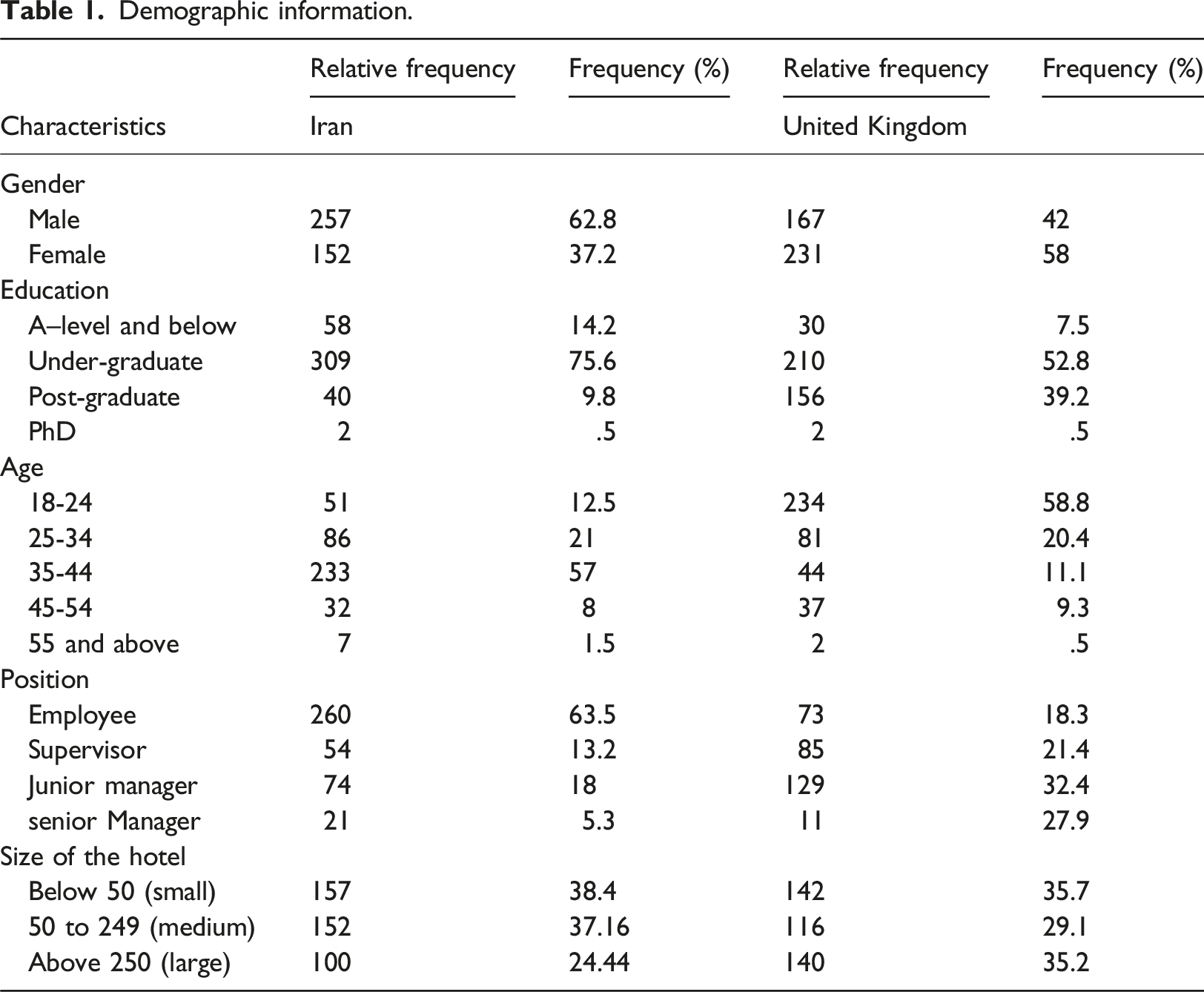
Demographic information.
Instrument
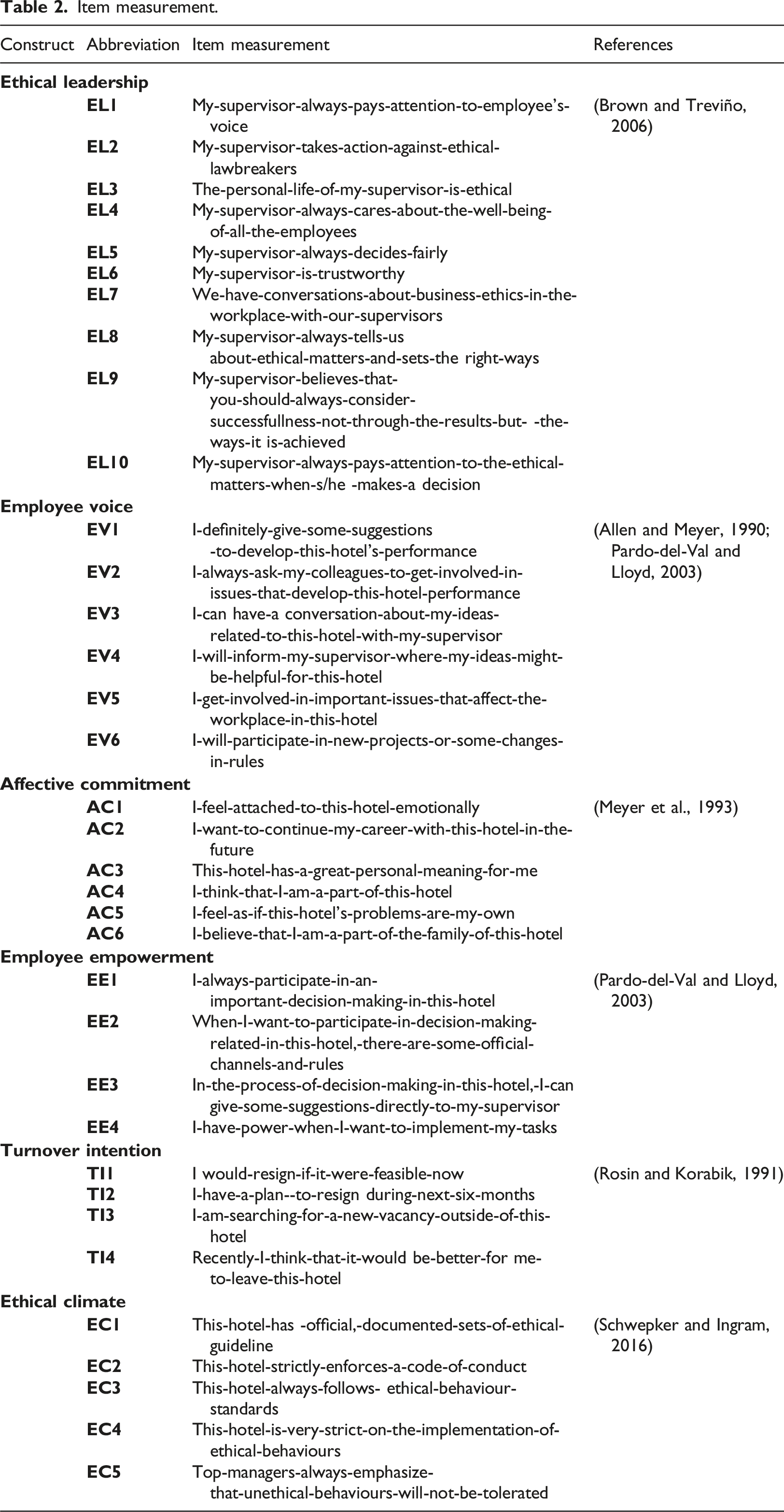
Figure 1 shows the conceptual model. All six constructs of this study were adopted from the existing literature. The variables of the study were: Ethical Leadership (EL), Employee Voice (EV), Affective Commitment (AC), Employee Empowerment (EE), Turnover Intention (TI), and Ethical climate (EC) which are indicated in Table 2. Figure 1 shows the model used in this study to test the relationships. As the questionnaire was originally designed in English, to keep the authenticity and phraseology of the questions intact, this study has followed Ageeva et al.’s (2019) recommendations on non-mechanical translation and therefore the questions were translated into Persian with the help of a group of experts in tourism and hospitality and two academics. Conceptual model. Item measurement.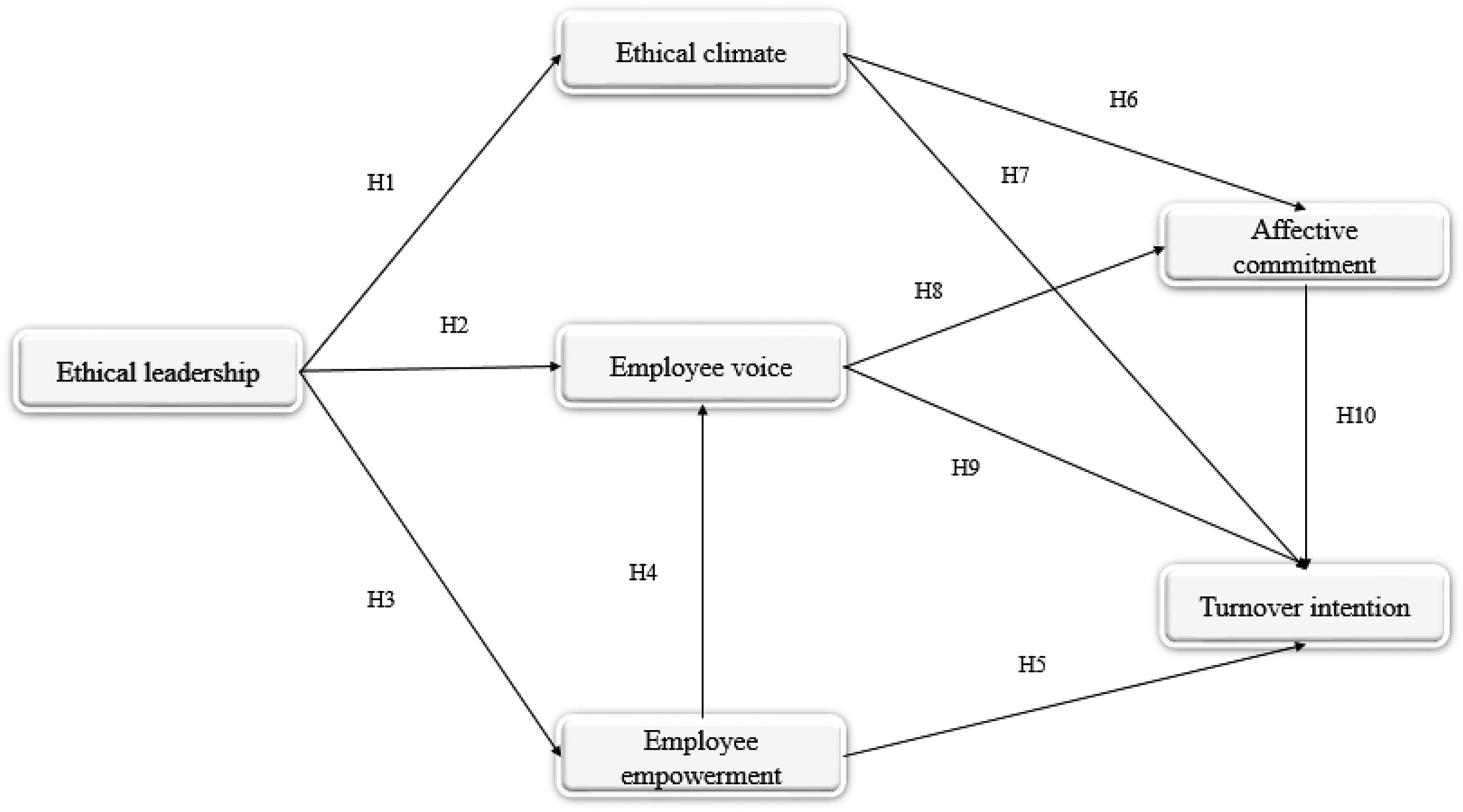
Results
To examine our conceptual model (Figure 1), this research has employed SEM by utilising PLS.3 to test the relationship between constructs (Ranjbaran et al., 2022). This software was utilized because of its accuracy in performing complex models with many variables, reflective and formative models, mediation and moderation impacts, second-order constructs, and notably nonlinear relationships (Magno and et al.,. 2022). The first 50 and the last 50 sets of data were extracted to test non-response bias and the results indicate that significance values of all the constructs used in this study were in the acceptable level range. Therefore, there is no difference between the first and last 50 sets of data.
Measurement model
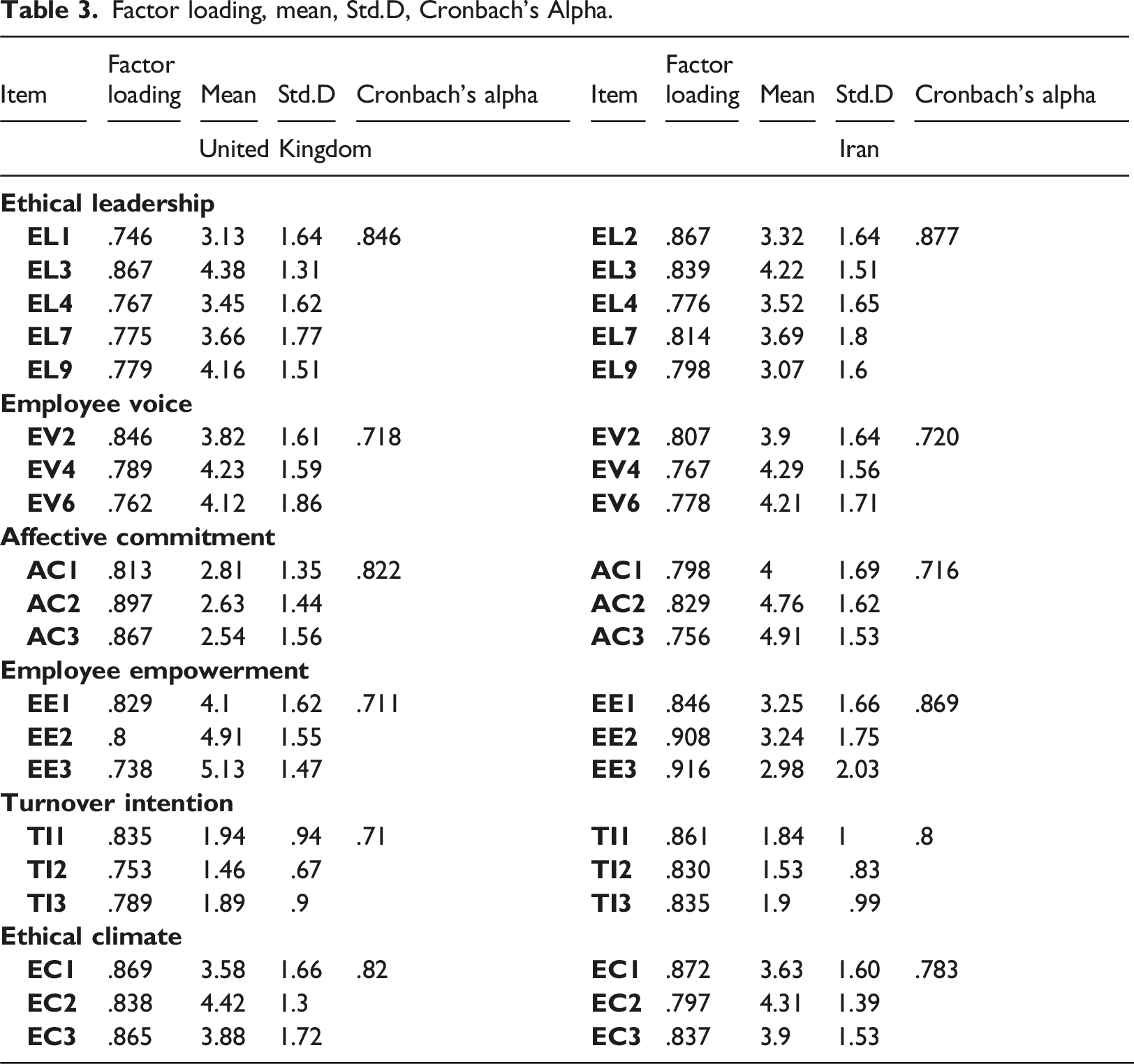
Factor loading, mean, Std.D, Cronbach’s Alpha.
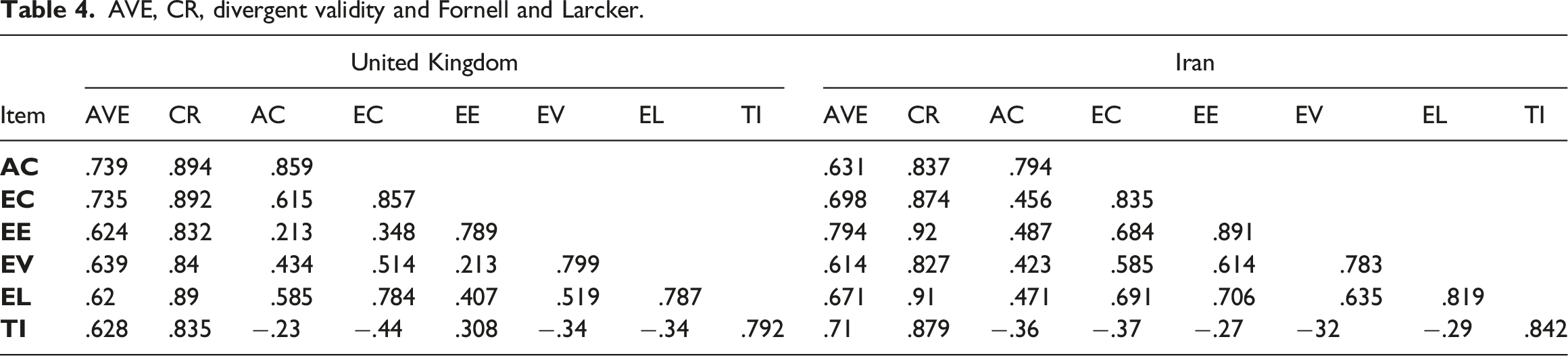
AVE, CR, divergent validity and Fornell and Larcker.
Additional test
Moreover, this study, conducted additional tests to ensure the reliability of our findings. Initially, the variance inflation factor (VIF) for each construct was calculated, and all were found to be below 5, indicating that they are acceptable according to Akinwande et al. (2015). Furthermore, the heterotrait–monotrait (HTMT) test, as introduced by Henseler et al. (2015), was used to assess discriminant validity. The study’s HTMT test results demonstrate that discriminant validity has been successfully established between the two reflective constructs. All the results from this test were lower than 0.85.
To evaluate the influence of factors such as gender, education, age, and position in this study, hierarchical linear modelling (HLM) was utilized. The findings from the HLM analysis revealed that none of these control variables had a significant impact on the research outcomes and all BETAs for the control variables were found to be insignificant, as their analysis results exceeded the threshold of 0.05. Consequently, it can be concluded that the control variables did not demonstrate any significance in this study (Raudenbush and Bryk, 2002).
Hypothesis testing
In the second phase, confirmatory factor analysis (CFA) was employed to test our hypotheses and the relationships between them. According to Cohen (1992), the amount of R2 should be 0.13 and above and the amount of Q2 which, based on Stone (1974), should be above zero. All indices are in an acceptable range (R2 for British staff were from 0.166 to 0.616 and for Iranian staff were from 0.197 to 0.499).
H1 addresses the impact of EL on EC, and the results show a positive relationship in both countries. Based on the results, it can be concluded that there no differences between the two countries (UK: = .785, t = 23.93; IR: =.692, t = 25.52). This means Ethical leadership has a positive effect on the ethical climate in both countries and that the staff in both countries have the same perspective. Ethical leadership cause to increase ethical climate in hotel industry in both nations.
H2 Tests the relationship between EL and EV and the relationship is significant in both countries, (UK: = .510, t = 11.412, IR: =.403, t = 7.285) and no differences were observed in this relationship. Like the previous hypothesis, this relationship also shows there is a positive effect of Ethical leadership on employee voice. In other words, Ethical leadership helps employee voice among personnel in the hotel industry.
H3 Addresses the relationship between EL and EE and according to our results the relationship is significant in both countries. (UK: = .407, t = 9.148, IR: =.706, t = 23.193). This result also shows that there is a positive relationship between Ethical leadership and employee empowerment. It can be concluded that in both clusters, Ethical leadership is a crucial factor for these organizations because this element helps all personnel in terms of ethical climate, employee voice and employee empowerment.
H4 showed the impact of EE on EV while the results from UK participants were insignificant (UK: =.024, t = 0.509) and there is no relationship, they showed a significant impact from the Iranian viewpoint (IR: = .33, t = 5.852). So here, there is a different result between two clusters, meaning that employee empowerment does not lead to employee voice in Britain; however, this relationship was found to exist in the Iranian data.
H5 tests the relationship between EE and TI and here there is a sharp difference between the two countries (UK: = -.168, t = 2.707; IR: =.094, t = 1.09). As the results show, there is a negative relationship between EE and TI but only for the UK participants. In this hypothesis, it is understandable that employee empowerment in the hotel industry in Britain is important while this factor is not necessary for the Iranian personnel, or they do not care about this element.
This hypothesis tests if the relationship between EC and AC (H6) was significant in both countries and there are no differences between the two. (UK: =.533, t = 11.207; IR: =.318, t = 5.977). However, this relationship is positive in both countries but as the results show, this relationship is stronger among the British compared with the Iranian personnel.
H7 shows the impact of EC on TI (UK: = -.346, t = 6.572; IR: = -.254, t = 4.989) and according to the results the relationship was significant in both countries and there is a reverse relationship between them so, if ethical climate increases, turnover intention decreases, reciprocally.
H8 shows the impact of EV on AC and the results show a positive relationship in both countries. (UK: =.161, t = 3.203; IR: =.238, t = 4.215). In this hypothesis test, employee voice has a positive effect on affective commitment, which means that if employee voice increases in both countries, affective commitment goes up at the same time.
This relationship, which addresses the impact of EV on TI (H9) (UK: = -.168, t = 2.801; IR: = -.137, t = 2.574), was negative in both countries. In this relationship, it was observed that there are similarities between the two countries. As both factors are crucial for any personnel of the company, so employee voice has a negative impact on turnover intention which means, if employee voice among staff increases, turnover intention will decrease and vice versa. The research validated conceptual model.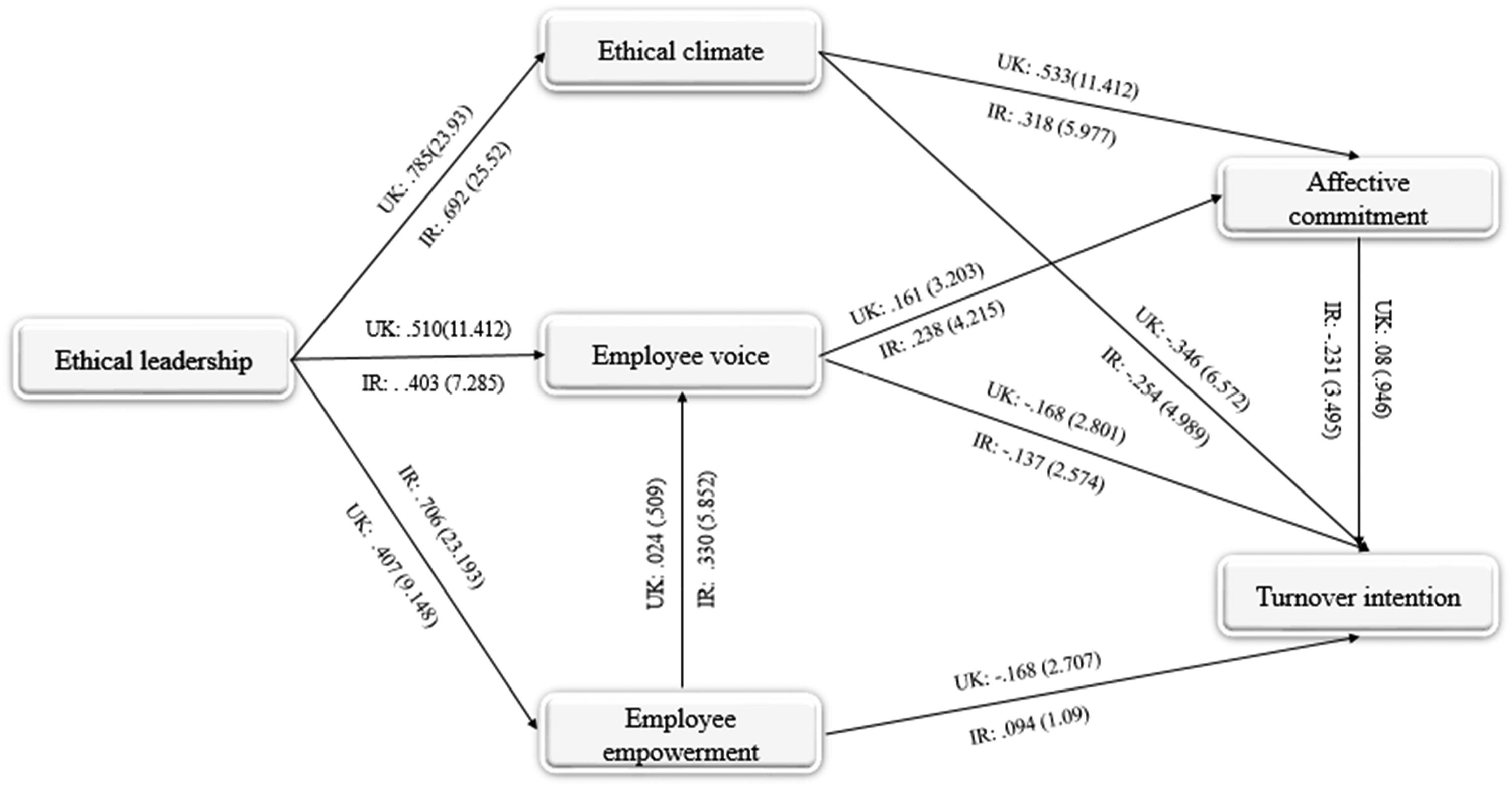
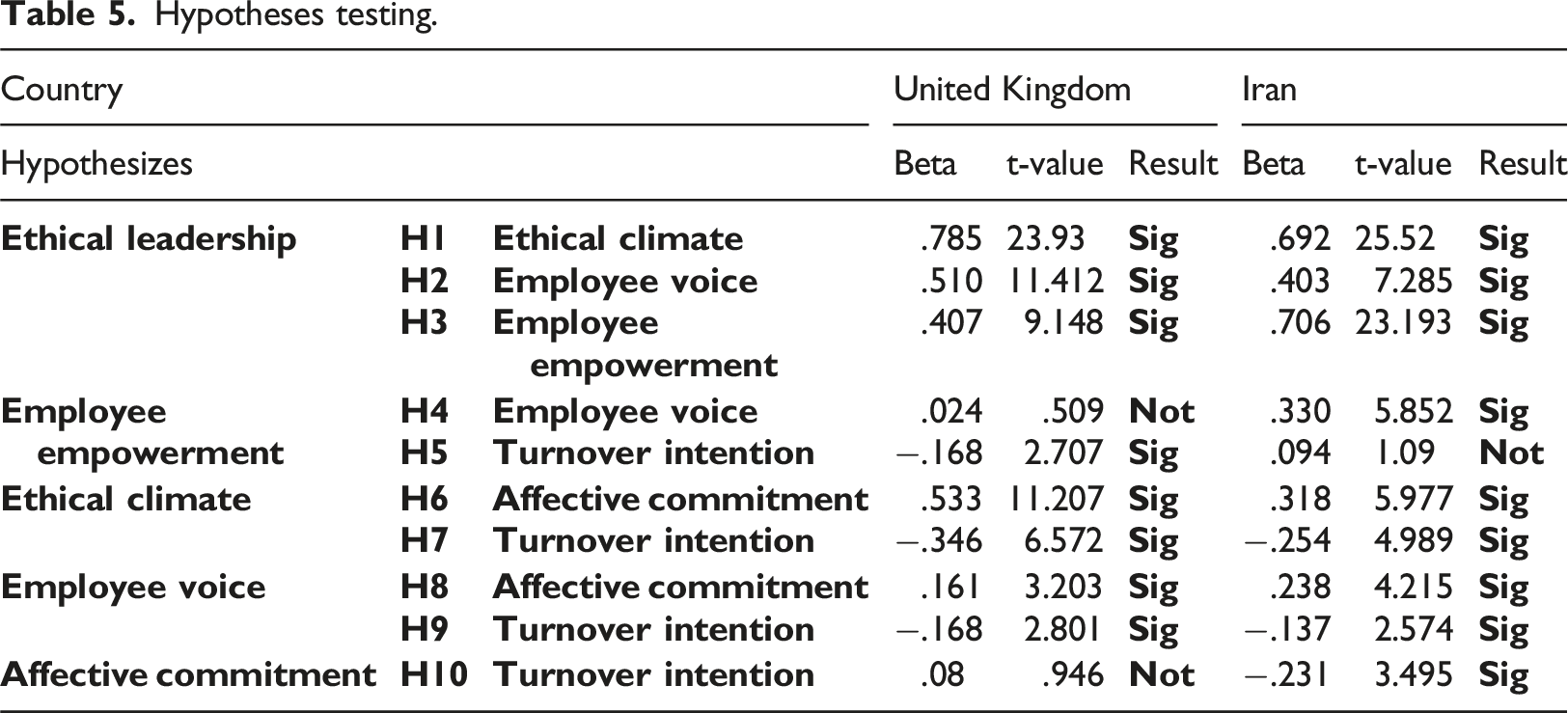
H10 shows the impact of AC on TI and the results indicated different results for the two countries (UK: =.08, t = 0.949, IR: = -.231, t = 3.495) This suggests that this relationship is only found in Iran, within the Southern Asia cluster. Affective commitment is more important for Iranian than for British staff. This suggests that if hotel managers in Iran do not pay attention to employees’ commitment, it leads to intention to leave. A summary of all hypotheses testing is shown in Table 5 and Figure 2.
Discussion and conclusion
The purpose of this study is to investigate the impact of ethical leadership on intention to turnover through the variables: ethical climate, employee voice, employee empowerment and affective commitment. Our research also examines how cultural differences may affect the relationships between the variables in the two culturally different contexts of Iran and the UK. Of the 10 hypotheses tested, seven were confirmed with some interesting and meaningful relationships between the variables across both nations, thus tending to confirm the basis of this research, which is SET, while the other three exhibited different patterns between the two samples demonstrating the effect of national culture.
Testing of hypotheses H1, H2, H3, H6, H7, H8 and H9 showed consistent results between the UK and Iranian samples. Ethical leadership was shown to impact ethical climate (H1), which is consistent with the results of Demirtas and Akdogan (2015), showing that ethical leadership improved the ethical climates in their organizations. According to the results of our study, ethical leadership also affects employee voice (H2) which is consistent with the results of Cheng et al. (2019), as well as employee empowerment (H3) which is consistent with the findings of Sattar et al. (2020). Participative Leadership, as a leadership dimension mentioned in (https://globeproject.com/2020), can lead to employee empowerment because managers encourage others to make and implement decisions. Moreover, in independent hotels due to the lack of formal departments including marketing and human resources, personnel help their managers in some decisions (Yang and Zhenxing, 2017). According to (https://globeproject.com/, 2020), countries belonging to the Anglo cluster have a higher score on Participative Leadership than those belonging to the Southern Asia cluster. But in the present study it is surprising that, contrary to our expectations, the impact of ethical leadership on employee empowerment in Iran (Southern Asia cluster) is higher than that in the UK (Anglo cluster). This result is consistent with the Globe Project regarding the Southern Asia cluster which emphasizes family and group orientated decisions. Therefore, hotel owners in independent hotels, sometimes delegate their authority (Nazarian et al., 2023).
Moreover, the confirmed relationship between ethical climate and affective commitment (H6) and the negative relationship between ethical climate and intention to turnover (H7) in both countries are consistent with the results of Demirtas and Akdogan (2015) which showed that ethical climate plays a mediating role in the relationship between ethical leadership, affective commitment and intention to turnover. According to the results of this study the negative relationship between ethical climate and intention to turnover shows that improving an organization’s ethical climate can reduce turnover intention. This result illustrates that because of the direct relationships between personnel and hotel owners in independent hotels, the more the moral decisions in independent hotels, the lower the rate of staff quitting.
In addition, the effect of employee voice on affective commitment (H8) and intention to turnover (H9) was confirmed in both countries. Although in both countries voice affects employee commitment, the effect is higher among Iranian employees than among British employees This can be attributed to the difference between the degree of the cultural dimension of Assertiveness between the two clusters. Since Assertiveness in the Southern Asia cluster is slightly lower than in other clusters, probably when Iranian employees are given voice, they become more dedicated to the organization than British employees who are more used to being assertive. On the other hand, British employees become more committed through the ethical climate of their organizations compared with their Iranian counterparts.
Among the other three hypotheses proposed for this study there is a distinctive pattern of relationships among the variables. For instance, although employee empowerment shows a clear link with employee voice in the Iranian context (Southern Asia cluster), it shows no substantial influence on employee voice in the UK context (Anglo cluster) (H4). This can be explained using (https://globeproject.com/, 2020) which shows that, in the countries which are in the Anglo cluster, the score for the assertiveness dimension is higher than that of countries that are in the Southern Asia cluster. Therefore, while in both countries’ employees’ voice is encouraged by the ethical leadership of their organizations, Iranian employees in independent hotels also need to be empowered to have a voice. This could also be related to the high score for Power Distance in the Southern Asia cluster which indicates that the Iranian community accepts authority and expects status privileges. On the other hand, employee empowerment reduces the turnover intention of the British, but it does not have the same effect on the turnover intention of Iranian employees (H5). One explanation is that Participative Leadership in the Anglo cluster has a higher score compared with the Southern Asia cluster; in other words, managers in Britain involve their employees in making and implementing decisions more than Iranian managers. This may explain why empowerment of Iranian employees does not lead to the reduction of turnover intention.
Our results also show that affective commitment affects the turnover intention of Iranian employees which agrees with Guzeller and Celiker (2019); however, it does not impact the turnover intention of British employees (H10). The Anglo cluster is low on the cultural dimension of In-Group Collectivism (https://globeproject.com/, 2020) compared with the Southern Asia cluster which shows their tendency toward individualistic attitudes and behaviour and the Southern Asia cluster’s propensity to express pride, loyalty, and close agreement with their organizations. Therefore, it is not surprising that affective commitment does not impact the turnover intention of British employees but can affect the turnover intention of Iranian employees.
Hypotheses testing.
Implications
Theoretical implications
Our research provides some major contributions to the previous body of knowledge by demonstrating a flaw in SET. Because SET is rooted in behaviourism, it does not readily consider cultural factors. Further empirical research and theoretical development will be required to remedy this shortcoming.
Our study also provides some empirical evidence and insight into the influence of ethical leadership on intention to leave via ethical climate, employee voice, employee empowerment and affective commitment by considering the impact of the cultural dimensions on the relationships between the constructs. Based on the results of the study, it can be concluded that ethical climate significantly mediates the relationship between ethical leadership and turnover intention in both the Anglo and Southern Asia clusters. In addition, affective commitment has a mediating role in the relationship between ethical climate and turnover intention just for the Southern Asia cluster, which has a higher score on the cultural dimension of In-group collectivism compared with the Anglo cluster. Moreover, in societies belonging to the Anglo cluster employee empowerment acts as the only mediator between ethical leadership and intention to leave. But in societies belonging to the Southern Asia cluster employee empowerment by itself is not enough, and employees must have a voice so that ethical leadership can reduce turnover intention. This is due to the difference in the degree of the cultural dimension of Assertiveness (House et al., 1999) between the two clusters.
However, the results of our research indicate that both the societal cultural practices and the leadership dimensions of countries, play an important role in the impact of ethical leadership on turnover intention which are consistent with SET. Therefore, by examining GLOBE’s cultural dimensions of two different countries, our research provides useful insights for both academics and practitioners.
Practical implications
It is evident from our results that managers and policy makers need to develop a deeper understanding of the characteristics of their employees that are derived from the cultural dimensions of the countries and clusters they belong to. This is particularly important for the managers of independent hotels to consider because they have to compete with chain hotels that have access to greater resources. Based on the results of this study, in the case of the Southern Asia cluster, developing a participative leadership style can reduce turnover intention and benefit the effectiveness of the organization. Since participative leadership promotes behaviours that support, encourage and involve subordinates to participate in the decision-making process of organizations, thereby enhancing employees’ sense of ownership and actively integrating their personal goals into organizational goals, it can have a significant impact on positive employee outcomes such as employee loyalty and commitment, (Khassawneh and Elrehail, 2022) which ultimately leads to higher employee retention. Similarly, delegating authority to subordinates to participate in decision-making, influences their identification with their workplace and leads to better organizational citizenship behaviour (Ahmed Iqbal et al., 2021).
Therefore, to achieve high retention rates of employees, it is suggested that independent hotel managers implement strategies to offer opportunities and support for employees’ participation and provide them with adequate information and resources. Displaying participative leadership is especially of importance in a crisis like COVID-19 (Einwiller et al., 2021).
Another implication is for the training of independent hotel managers. Trainers need to understand the impact of national culture on the behaviour of staff and to interpret the textbooks, which are mostly of Western origin, accordingly and to tailor their courses so they are suitable to their audience.
Limitations and future studies
This study shows that certain factors affecting intention to turnover are affected differently by components of national culture. Further investigation is required to identify which components of national culture are having what effect. Since the countries studied in this research were chosen from the Anglo and Southern Asia clusters, future research should be done in the context of countries from other clusters. Furthermore, as the sample of the study concerns independent hotels, the conclusions can be applied only to independent hotels. Therefore, to give a broader insight, future studies might examine the effect of ethical leadership on turnover intention in chain hotels.
In addition, commitment is usually treated as a multi-dimensional construct comprising the three components: affective, continuance and normative (Murray and Holmes, 1999). In the present study, only the role of affective commitment has been examined. So, further research should be done to investigate the roles of the other two components of commitment as well.
Footnotes
Declaration of conflicting interests
The author(s) declared no potential conflicts of interest with respect to the research, authorship, and/or publication of this article.
Funding
The author(s) received no financial support for the research, authorship, and/or publication of this article.
