



Abstract
Cultural Intelligence (CQ) has gained prominence as a vital attribute for organizational managers, encompassing their ability to navigate diverse cultural contexts effectively. However, despite its acknowledged significance, the relationships among its dimensions need to be better understood. This paper contributes to the existing CQ literature in two ways. First, we propose a model of CQ that integrates elements from previous conceptualizations, separating the motivational component. Our proposed framework retains the metacognitive, cognitive, and behavioral CQ dimensions but does not assume predefined relationships among them. Instead, we demonstrate that metacognitive CQ positively influences cognitive and behavioral CQ. Second, this paper explores the culture-specificity of the applications of CQ dimensions. We challenge the prevailing notion that CQ applications are culture-neutral, offering initial evidence to the contrary. Our research contributes to refining CQ conceptualization and provides practical insights for recruiting and developing internationally oriented managers with a strong emphasis on their CQ enhancement. Ultimately, this study addresses the pressing need to unravel the intricate dynamics of CQ and its dimensions, enhancing our understanding of its role in international management effectiveness.
Keywords
Introduction
Cultural Intelligence (CQ), defined as the capacity to recognize, assimilate, and respond effectively in diverse cultural situations (Van Dyne et al., 2012), has gained increasing attention in the field of international management over the past two decades (Crowne, 2013; Jyoti and Kour, 2017). It plays a pivotal role in enhancing the effectiveness of international managers across various domains, such as negotiation styles (Caputo et al., 2019), learning organizations (Mangla and Singh, 2022), expatriate retention (Ren et al., 2021), multicultural team dynamics (Shokef and Erez, 2008), trust building in virtual teams (Mangla, 2021), and marketing mix adaptations (Magnusson et al., 2013). Despite its recognized importance, the literature lacks a comprehensive understanding of the interrelationships among its dimensions and the cultural dependencies influencing their applications. This paper aims to address these gaps, presenting two objectives: to propose a refined conceptualization of the relationships among CQ dimensions and to examine whether or not some dimensions are culture-specific.
In response to the critical need for a more nuanced conceptualization of CQ (Ott and Michailova, 2018; Rockstuhl and Van Dyne, 2018), the first objective of this research is to deepen the understanding of the relationships among different CQ dimensions. While existing studies explore these dimensions (Gooden et al., 2017), there is an absence of consensus on their interrelationships (Ott and Michailova, 2018; Rockstuhl and Van Dyne, 2018). Our paper addresses these theoretical shortcomings by explicitly incorporating the relationships among CQ dimensions. Combining elements from Ang et al. (2007) and Thomas et al. (2015), we distinctively separate the motivational component from other CQ dimensions (Thomas et al., 2015), maintaining metacognitive, cognitive, and behavioral dimensions (Ang et al., 2007). Unlike previous conceptualizations (e.g., Ang et al., 2007; Earley and Ang, 2003), our model does not assume predefined relationships among these dimensions but rather proposes that metacognitive CQ is an antecedent of behavioral and cognitive CQ. We therefore formalize the first research question:
What is the influence of metacognitive CQ on cognitive and behavioral CQ?
The secondary aim of our study is to examine the culture-specificity of the application of CQ, distinguishing between general and culture-specific dimensions. CQ application involves the culture in which specific abilities and knowledge become relevant and useful. For example, Menon and Narayanan (2015) posit that for CQ to be more useful in Asia, in needs to be applied in the context of Asian cultures. Challenging the prevailing notion that applications of CQ are not culture-specific (e.g., Ang et al., 2007), our research provides initial evidence suggesting otherwise. We adopt an institutional theoretical lens to propose that the cultural distance between an individual person’s home culture and the culture where CQ is sought for application may determine the variation in culture-specific CQ dimensions. We therefore formalize the second research question:
Do the dimensions of CQ vary based on the cultural distance between an individual person’s home country and the country of CQ application?
This exploration not only contributes theoretically by addressing conceptual ambiguities in current CQ frameworks but also offers practical insights for recruiting internationally-based managers and guiding their CQ development. Through these dual contributions, our study seeks to enhance the understanding of CQ, fostering more effective global management practices.
Literature review
Cultural Intelligence (CQ) has been a focal point in international management studies, with much of the existing research relying on the foundational conceptualizations of Earley and Ang (2003) and Ang et al. (2007). Their model posits CQ as a multidimensional construct encompassing metacognitive, motivational, cognitive, and behavioral dimensions (Ang et al., 2007). Empirically, these dimensions have been treated as part of a general reflective CQ construct, though they exhibit distinct antecedents and outcomes (Ott and Michailova, 2018; Rockstuhl and Van Dyne, 2018), suggesting independence while being related.
Given CQ’s multifaceted nature, research has explored antecedent constructs of CQ dimensions, such as personality traits (Şahin et al., 2013), outcomes such as perceived environmental uncertainty (Prado, 2006), and CQ as a moderator to relationships, such as the influence of leadership style and innovation (Elenkov and Manev, 2009). This conceptualization has positioned CQ as a crucial factor in understanding performance variance in intercultural contexts (Ang et al., 2015). However, despite its widespread adoption, the research has pointed out certain limitations, prompting the need for greater refinement in CQ conceptualization (Ott and Michailova, 2018; Rockstuhl and Van Dyne, 2018).
A later extension by Van Dyne et al. (2012) introduced 11 sub-dimensions, emphasizing the interplay among these dimensions to achieve an overarching CQ level. Despite this, scholars continue to investigate the antecedents and outcomes of CQ dimensions within the confines of existing models. Critiques of the utility of these conceptualizations persist, prompting the need for further research on the causal ordering between the four CQ factors (Rockstuhl and Van Dyne, 2018).
Thomas et al. (2015) presented a distinct conceptualization, separating the motivational component from the other three dimensions: cultural knowledge, cross-cultural skills, and cultural metacognition. The authors contend that these dimensions, though interrelated, collectively contribute to the overall CQ construct. Moreover, Thomas et al. (2015) criticized Ang et al.’s (2007) four-dimensional conceptualization for not reflecting a single construct. Thus, these theoretical and empirical shortcomings with Ang et al.’s (2007) CQ conceptualization prompted the proposal of our model of CQ.
The current paper responds to the misfit between theoretical conceptualization and empirical modeling in existing CQ frameworks. While both Ang et al. (2007) and Thomas et al. (2015) highlight the significance of metacognition in developing behavioral and cognitive abilities, we posit that metacognitive CQ directly influences behavioral and cognitive CQ, providing a novel perspective on the relationships among CQ dimensions.
While providing valuable insights, the utility of CQ based on Ang et al.’s (2007) and Thomas et al.’s (2015) conceptualizations is still heavily criticized (Ott and Michailova, 2018). Thomas (2006) notes that when the relationships among dimensions are not specified, a multidimensional construct loses its utility. While several studies aim to address this issue by examining the interrelationships among CQ dimensions (Bücker et al., 2015; Gooden et al., 2017; Van Dyne et al., 2012; Zhao et al., 2013), and using alternative measurements of CQ (Alon et al., 2018; Bücker et al., 2015; Lima et al., 2016; Velez-Calle et al., 2018), the inconsistency in results necessitates more clarity.
Criticism of existing CQ models has intensified, with a meta-analysis emphasizing the necessity of exploring the causal relationships and potential reciprocal effects among the four CQ factors (Rockstuhl and Van Dyne, 2018). The unexpected findings of this meta-analysis, such as the negative relationship between cognitive CQ and intercultural performance (Rockstuhl and Van Dyne, 2018), underscore the need for a more comprehensive understanding of the relationships among CQ dimensions to enhance theoretical precision and managerial guidance.
Our proposed model aligns with Sternberg and Detterman’s (1986) multiple loci of intelligence framework, conceptualizing CQ as a multifaceted construct residing in biology, cognition/metacognition, motivation, and behavior. We argue that metacognitive CQ positively influences both behavioral and cognitive CQ. Moreover, both conceptualizations suggest that CQ is not culturally specific in the way that CQ levels are not dependent on cultural contexts and are universally applicable (Ott and Michailova, 2018). We, however, argue that while metacognitive CQ is not culturally specific, behavioral and cognitive CQ are culture-specific dimensions. We develop theoretical arguments for our position in the following section. Figure 1 demonstrates the existing conceptualizations along with our proposed model of cultural intelligence. Theoretical conceptualizations of CQ.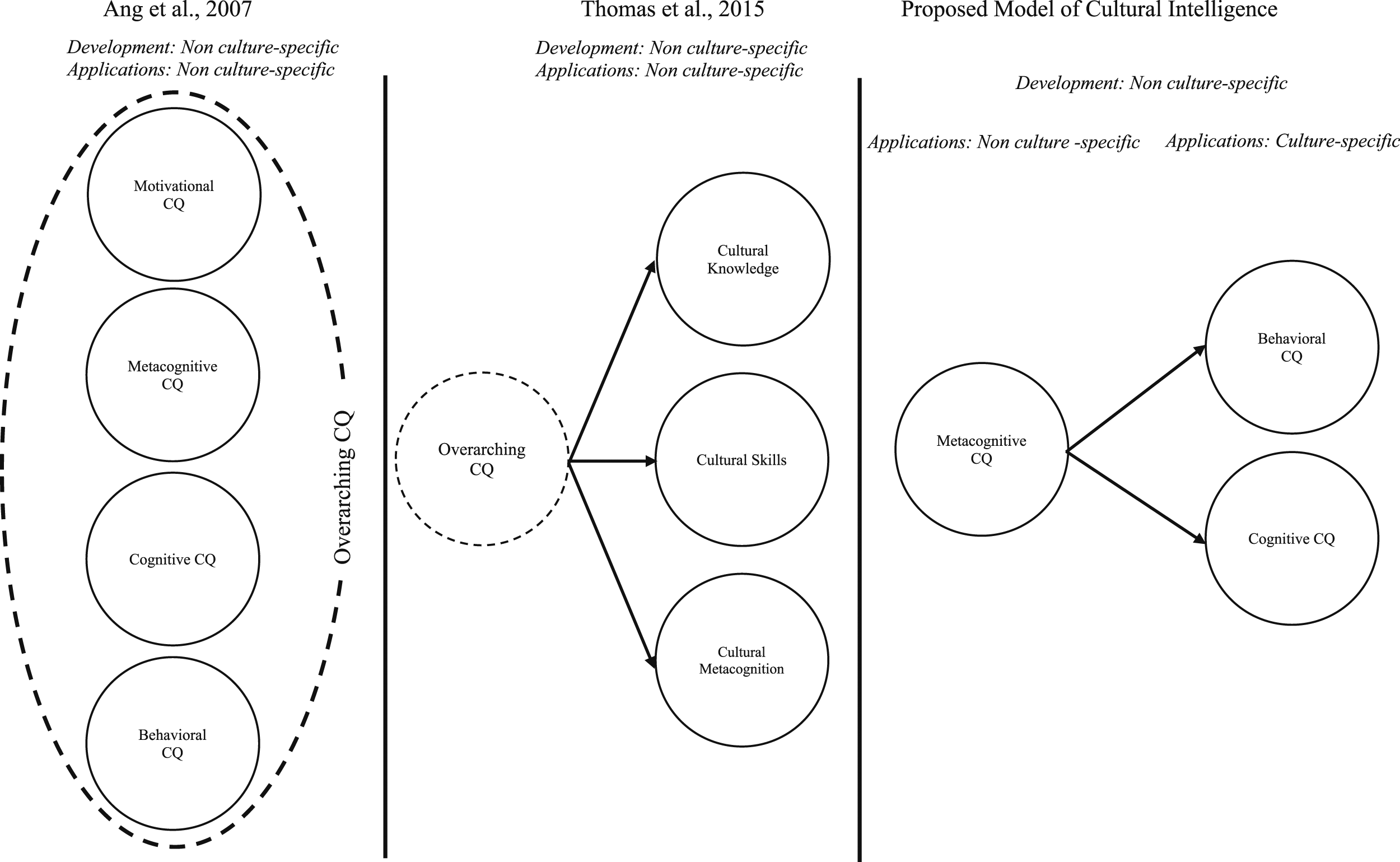
Theory and hypotheses
Our theoretical framework, rooted in Sternberg and Detterman’s (1986) multiple loci of intelligence, aligns with previous conceptualizations (e.g., Ang et al., 2007) in characterizing CQ as a multifaceted construct. However, diverging from Ang et al. (2007) and aligning with Thomas et al. (2015), our model distinguishes the motivational component from CQ. In parallel with Ang et al. (2007), we define metacognitive CQ as the mental processes utilized to acquire and understand cultural knowledge, with individuals possessing high metacognitive CQ demonstrating the capacity to plan, monitor, and revise mental models of cultural norms. Cognitive CQ pertains to the tangible knowledge of cultural norms, practices, and socio-economic-legal systems in various cultures. Behavioral CQ focuses on the proficiency to display suitable verbal and nonverbal actions in intercultural settings. In contrast to Ang et al. (2007) and Thomas et al. (2015), our conceptualization posits that metacognition and cognition/behaviors are situated at distinct levels of conceptualization. Furthermore, we assert that metacognition directly influences cognition and behaviors, aligning with the metacognitive framework (Nelson and Narens, 1994), which proposes that metacognition and cognition operate at different levels of abstraction. Metacognitive CQ, encapsulating the capacity for “thinking about thinking,” represents a meta-level capability at an abstract conceptualization level, while cognitive CQ embodies more concrete knowledge at a specific (contextual) conceptualization level. The subsequent section explains the rationale behind positing relationships between metacognitive CQ and the behavioral/cognitive dimensions.
Theoretical base of metacognition
We draw upon the theoretical foundations of metacognition, cognition, and behavior to hypothesize the relationships between metacognitive CQ and behavioral/cognitive CQ. Metacognition encompasses two facets: (1) knowledge of cognition and (2) regulation of cognition (Schraw, 1998). Knowledge of cognition pertains to an individual’s awareness of cognitive abilities, processes, and resources concerning the execution of cognitive tasks (Garofalo and Lester, 1985). This includes subjective beliefs influencing cognitive behavior (Norman, 1981). Regulation of cognition is “a variety of decisions and strategic activities that one might engage in during the course of working through a cognitive task or problem” (Garofalo and Lester, 1985: 166). As a regulatory aspect of metacognition, it addresses decisions and strategic activities undertaken while navigating a cognitive task (Garofalo and Lester, 1985). Within this framework, metacognitive CQ is postulated to influence both cognitive and behavioral CQ.
Metacognitive CQ is posited to positively impact cognitive CQ as it encompasses knowledge of cognitive abilities (Schraw, 1998). We propose that the ability to reflect on mental processes used in acquiring and understanding cultural knowledge enhances actual knowledge of other cultures. Beyond knowledge, metacognition involves the regulation of cognition, encompassing monitoring and revising goal-appropriate behavior (Schraw, 1998). Higher metacognition is linked to increased knowledge and enhanced task performance (Ford et al., 1998). Therefore, metacognitive CQ involves activities engaged in while working through tasks related to intercultural situations. This leads to the formulation of Hypothesis 1:
Metacognitive CQ positively influences (a) behavioral CQ and (b) cognitive CQ.
Culture-specificity of CQ application
Ang et al. (2007) propose that CQ development is not culture-specific. In their conceptualization, cognitive CQ involves knowledge of the norms, practices, economic, legal, and social systems of specific countries, while behavioral CQ reflects the ability to exhibit appropriate behavior in a specific context. Even from an application perspective, Ang et al.’s (2007) conceptualization suggests that “CQ is culture free and refers to a general set of capabilities with relevance to situations characterized by cultural diversity” (Ang et al., 2007: 339). Essentially, the application of CQ is viewed as non-culture-specific within this framework.
Thomas et al.’s (2015) conceptualization presents CQ as a general cultural intelligence that develops independently of a specific cultural context. They posit CQ as a multifaceted “construction of abilities that exists outside the cultural boundaries in which these abilities are developed (Thomas et al., 2015: p.1101).” However, when considering applications, the knowledge, skills, and metacognitive facets of CQ may operate differently in various cross-cultural contexts. Supporting this view, studies by Stoermer et al. (2021) and Li et al. (2021) highlight the contextual nature of CQ application. Stoermer et al. (2021) find that contextual values, such as openness toward foreigners, influence the application of CQ in organizational embeddedness. Similarly, Li et al. (2021) demonstrate that the context of organizational cultural differences moderates the effect of CQ on employee knowledge sharing and sustainable innovation behaviors.
While agreeing with Ang et al. (2007) and Thomas et al. (2015) on the culturally independent development of CQ, our proposal introduces a nuanced perspective. We argue that the applications of some CQ dimensions, not all, might be culture-specific. Metacognitive CQ, influenced by genetically inherited traits and external experiences, is independent of a specific cultural context. It results from traits of conscientiousness and openness to experience (Ang et al., 2006), is enhanced through experience (Earley and Ang, 2003), and is influenced by exposure to other cultures (Crowne, 2008). Metacognitive CQ does not require a specific culture to be relevant, but instead may be employed throughout any cultural situation. Thus, we propose that the applications of metacognitive CQ are non-culture-specific.
On the other hand, our proposition suggests that the applications of cognitive and behavioral CQ are culture-specific, aligning with previous research indicating that CQ depends on various cultural environments (e.g., Brislin et al., 2006). Certain types of intelligence, including CQ, are argued to be culture-bound and must be understood within their unique cultural context (Sternberg and Grigorenko, 2006; Triandis, 2006). Therefore, for cognitive and behavioral CQ to be effective, they must be understood within their specific cultural contexts.
Various categorizations of culture, such as high-versus low-context (Hall, 1976), cultural dimensions (Hofstede, 1984), and manifestations in industries, organizations, and society (House et al., 2004), contribute to the complexity of CQ. While some managerial knowledge holds universal applicability, others are distinctly culture-specific (Khanna, 2014). Our focus on cognitive and behavioral CQ emphasizes their elements of culture-specificity, acknowledging that they entail knowledge and behaviors tied to particular cultures (Patel and Salih, 2018; Van Dyne et al., 2012).
Cognitive CQ incorporates culture-specific knowledge about how culture manifests in a particular domain, ensuring effectiveness within that domain (Patel and Salih, 2018). Similarly, behavioral CQ comprises culturally specific verbal and non-verbal behaviors aligned with particular cultural standards (Patel and Salih, 2018). This implies that knowledge of different cultures, as captured by cognitive CQ, might not universally apply to any cultural situation but is instead relevant to situations aligned with the acquired knowledge. As noted by Ang et al. (2007), “Those with high behavioral CQ exhibit situationally appropriate behaviors based of their broad range of verbal and nonverbal capabilities” (p.338). This situational specificity indicates that its applicability may be confined to its culture of application.
The distinction between culture-specific and non-culture-specific applications of CQ dimensions holds significant implications for both theoretical understanding and practical application. According to existing conceptualizations (Ang et al., 2007; Thomas et al., 2015), two managers might exhibit similar overarching CQ levels, but their scores on different dimensions can vary. Specifically, with Ang et al. (2007)’s conceptualization, one manager might have high cognitive and behavioral CQ for individualistic cultures, while another might excel in collectivist cultures. This implies that even with the same overall CQ, one manager could possess deep knowledge (cognitive CQ) and exhibit appropriate verbal and non-verbal behavior (behavioral CQ) in the U.K., while the other manager could excel in knowledge and appropriate behavior in China. Thus, a high score on cognitive and behavioral CQ does not necessarily indicate culturally-specific knowledge and behaviors. Instead, it suggests that an individual is attuned to a specific environment, knowledgeable about the culture, and capable of exhibiting behavior appropriate to that culture.
However, a critical limitation arises when it comes to transforming knowledge and behaviors acquired in one culture to another using metacognitive CQ. The current conceptualization (Ang et al., 2007) considers behavioral CQ as a “behavioral repertoire,” implying high CQ only if an individual can change behavior from one culture to another. This raises questions about the feasibility of possessing high behavioral and/or cognitive CQ. For instance, can an individual exhibit appropriate behavior (behavioral CQ) in egalitarian Nordic countries solely based on the ability to do so in hierarchical Asian cultures, even with high metacognitive CQ? Similarly, can one acquire actual knowledge (cognitive CQ) about egalitarian Nordic countries solely based on knowledge of hierarchical Asian cultures, even with high metacognitive CQ? The current conceptualizations (Ang et al., 2007; Thomas et al., 2015) need further refinement to address these challenges and provide a more accurate representation of CQ applications across diverse cultures.
Institutional theory and CQ application
We employ institutional theory to propose the culture-specificity and applicability of cognitive and behavioral CQ. Institutional theory holds that individuals and organizations develop and behave according to their institutional environments (Dacin et al., 2002). One key component of an institutional environment is culture (Campbell et al., 2012). Culture has been defined as the collective programming of the mind that distinguishes one group of people from another (Hofstede, 1980). Such programming of the mind indicates that people within a culture are “programmed” to understand the norms and appropriate behaviors within the culture to which they belong. From this position, it can thus be stated that individual people have high cognitive and behavioral CQ within their home culture, indicating the culture-specificity of behavioral and cognitive CQ. Different cultures, however, have different values, norms, and accepted behaviors and such differences between the cultures of two institutional environments are known as cultural distance (Campbell et al., 2012). From an institutional theoretical perspective, it can thus be stated that individual people who grow and develop within one institutional environment are familiar with the norms and practices as well as appropriate behaviors in the culture of that focal environment (Morosini et al., 1998). From this view, we posit that individual-level behavioral and cognitive CQ are specific to cultures with which the individual is familiar, such as their home culture. It can also be stated that cultural distance between a person’s home culture and the culture of CQ application negatively influences a person’s cognitive and behavioral CQ pertaining to the culture of application. For example, a person whose home culture is a hierarchical culture may be familiar with the norms and accepted behaviors of their hierarchical home culture as well as the norms and behaviors of other hierarchical cultures. However, they may not be as familiar with the norms and behaviors of egalitarian cultures. The utility of such a person’s cognitive and behavioral CQ is therefore different depending on its application either in a hierarchical or egalitarian culture. Supporting this stance, Meyer (2014) highlights that the differences in cultural dimensions such as hierarchical/egalitarian values, communication styles, modes of confrontation, and norms of evaluation have been known to impact the behavioral and normative understandings of people in cross-cultural interactions. People’s abilities to behave appropriately and effectively understand norms across cultures are therefore negatively impacted by cultural distance.
The theoretical stance proposed here is that (1) institutional theory states that people develop and behave according to their institutional environments, (2) culture is a component of the institutional environment, (3) culture is the collective programming of the mind, (4) people programmed within one culture have high cognitive and behavioral CQ applicable to their home cultures, and therefore (5) cultural distance between a person’s home culture and the culture of CQ application negatively influences a person’s cognitive and behavioral CQ within the culture of CQ application. We formalize the following hypothesis:
Cultural distance between a person’s home culture and the culture of CQ application negatively influences a person’s cognitive CQ within the culture of CQ application.
Cultural distance between a person’s home culture and the culture of CQ application negatively influences a person’s behavioral CQ within the culture of CQ application.
Methods
Study 1 tests H1 with five samples across three countries (US, Germany, and India) to demonstrate that our findings are not a result of p-harking (Meyer et al., 2017). Also, two competing models based on Ang et al. (2007) and Thomas et al.’s (2015) conceptualizations are empirically compared to the hypothesized model. Study 2 tests H2 and H3 with a US sample.
Correlations, Means, and Standard Deviations for Sample 1 (US, n = 209)/Sample 2 (Germany, n = 88)/Sample 3 (India, n = 221).
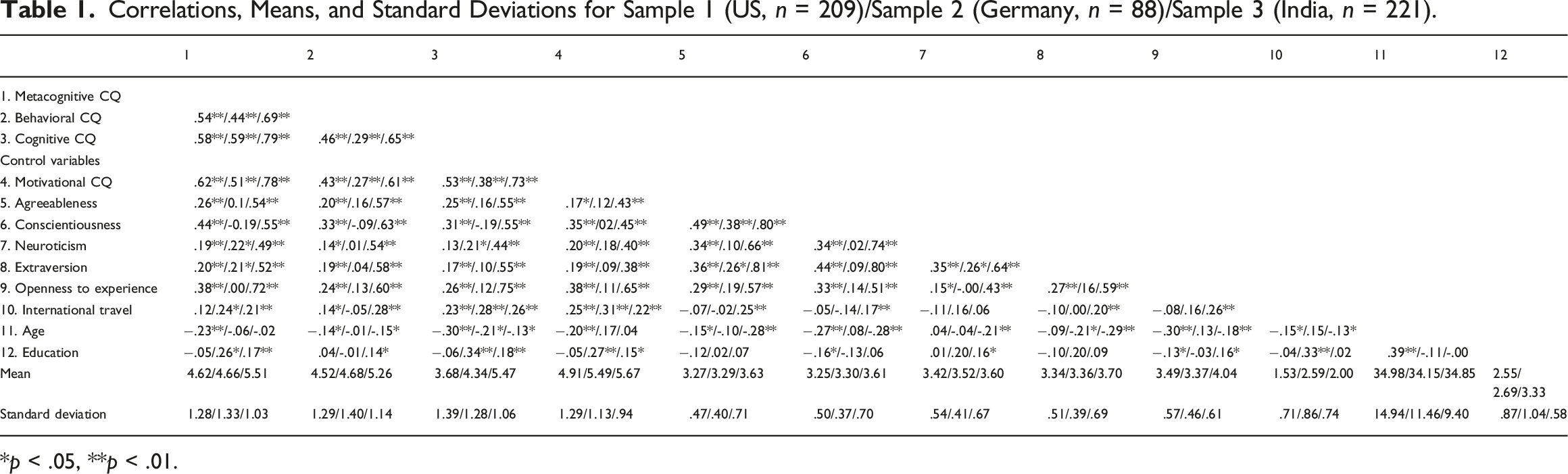
*p < .05, **p < .01.
Factor Loadings, AVE, and CR for Items and Constructs Measured in the US/Germany/India Samples.
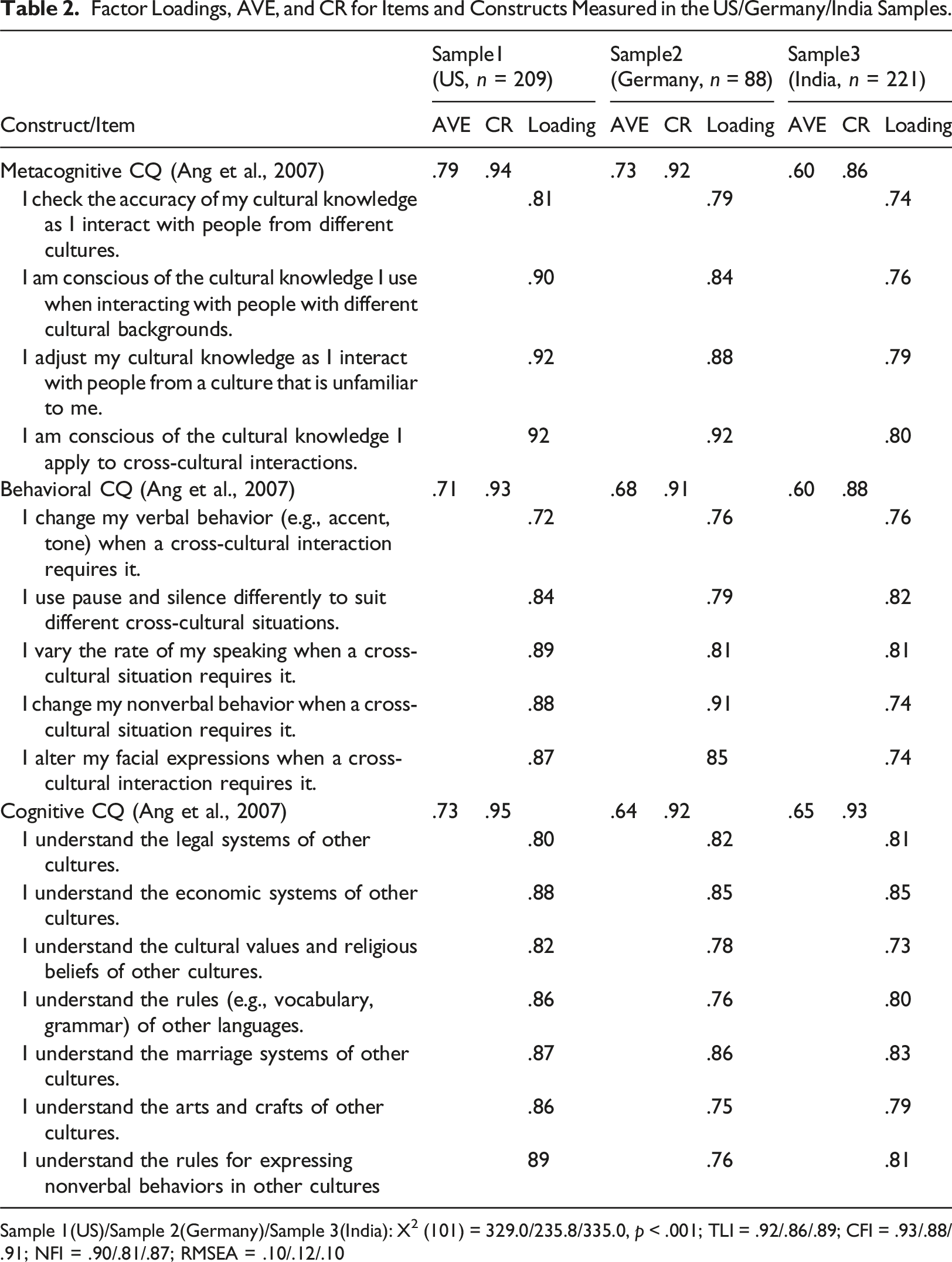
Sample 1(US)/Sample 2(Germany)/Sample 3(India): X2 (101) = 329.0/235.8/335.0, p < .001; TLI = .92/.86/.89; CFI = .93/.88/.91; NFI = .90/.81/.87; RMSEA = .10/.12/.10
Study 1
Data collection
Data for Study 1 was collected in three different countries (the U.S., Germany, and India) with two different procedures through an online survey. These three countries were selected because the U.S./Germany and India represent two different markets (developed and emerging) and three distinct cultures (Hofstede, 1984). The U.S. and India have a common language of business and government (Joseph, 2011), so using surveys in English decreases the threat of measurement invariance. The survey for the German sample was administered in German. The survey was translated into German by a German national in the US, proofread and purified by a German citizen in Germany, and back-translated into English by a professional translator. The differences in procedures and the data collection from different countries provide confidence that the results are not a manifestation of the sampling procedures or the countries surveyed. We are not using different samples to draw a comparison between countries, but rather to show generalizability, therefore making this method appropriate. Sample 1/Sample 2 were collected from the U.S./Germany with a snowball method (Weeks et al., 2023). Undergraduate students at a U.S./German university were asked to forward the survey to three nonstudent respondents. This yielded 209/95 respondents and retained 199/88 usable responses after deleting missing data, and non-US/non-German citizens.
Sample 3 was collected from India with Amazon’s Mechanical Turk (MTurk), which has been utilized by previous research (Aycan and Shelia, 2019). The questionnaire was kept short (3–5 minutes Qualtrics estimation) because attention is a concern for MTurk samples (Paolacci et al., 2010). Parameters in MTurk were set to participants with a 99% approval rating and who completed over 1000 “HITs”. This data was collected to (1) display that the Sample 1/Sample 2 results were not due to the sampling method since research finds some limitations with snowball samples (Marcus et al., 2017), and (2) show the generalizability of the results. This method initially yielded 230 respondents and retained 221 usable responses after deleting cases with missing data/non-Indian citizens.
Personality traits, cultural experiences, and international travel were found to influence CQ (Ang et al., 2006; Crowne, 2008) and were thus included as control variables for cognitive/behavioral CQ. We also included motivational CQ measured using Ang et al., (2007) scale to test competing models.
Common methods bias and measurement invariance
To avoid common methods bias, we constructed the survey in reverse causal order (MacKenzie and Podsakoff, 2012). Harman’s single factor test revealed that the common factor only explained 17.28%/17.02%/35.88% of the variance in the US/German/Indian samples. The common latent factor test was also conducted (Williams and McGonagle, 2016). The US/German/Indian samples with the common factor showed slightly better fit (X2 (1089) = 2321.1/1670.3/2613.7, p < .001; TLI = 0.81/.75/.79; CFI = 0.83/.78/.81; NFI = 0.72/.56/.72; RMSEA = 0.07/.08/.08) than without (X2 (1139) = 3080.8/1827.1/3825.6, p < .001; TLI = 0.71/.71/.64; CFI = 0.73/.73/.67; NFI = 0.63/.52/.59; RMSEA = 0.09/.08/.10). None of the differences in regression weights were above 0.2 in all three samples. The minimal differences between models’ fit showed that common methods minimally influenced the results. A multi-group CFA with behavioral/cognitive/metacognitive dimensions demonstrated a good model fit for configural measurement invariance (Levesque-Côté et al., 2018): X2 (303) = 900.4, p < .001; TLI = 0.90; CFI = 0.91; NFI = 0.87; RMSEA = 0.06.
Hypothesis testing
SEM Results for Direct Relationships in the U.S./Germany/India Samples.
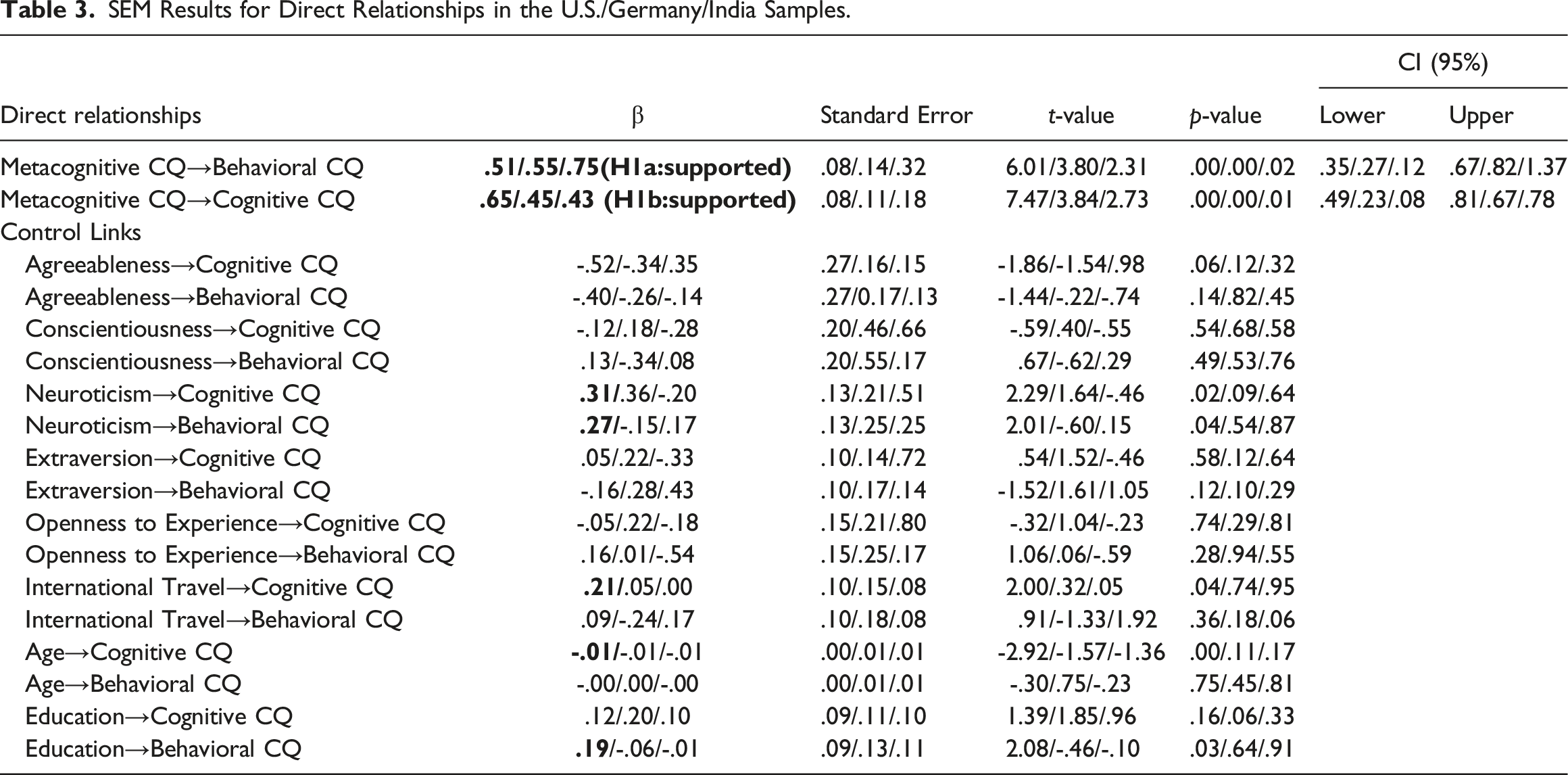
In the U.S./German/Indian samples, metacognitive CQ affects both behavioral (β = 0.51/.55/.75, t = 6.01/3.80/2.31) and cognitive CQ (β = 0.65/.45/.43, t = 7.47/3.84/2.73). The R2 in the U.S./Germany/India samples for behavioral CQ improved from 20.5%/11.4%/41.5% (without metacognitive CQ) to 36.6%/29.7%/73.8% (with metacognitive CQ), the medium/medium/large effect size (f2 = 26.18%/26.03%/123.28%). The R2 for cognitive CQ in the U.S./Germany/India samples improved from 25.0%/44.6%/73.9% (without metacognitive) to 48.5%/56.7%/88.9 (with metacognitive), the large/medium/large effect size (f2 = 45.63%/27.94%/135.14%).
Robustness test
To ensure the robustness of our hypotheses, we conducted additional testing using samples from the United States (Sample 4) and India (Sample 5). Sample 4, collected via a snowball method in the U.S., comprised 451 respondents, with 435 usable responses after data cleaning. Sample 5, collected from India using MTurk, yielded 170 respondents, and 156 usable responses were retained after data cleaning and excluding non-Indian citizens.
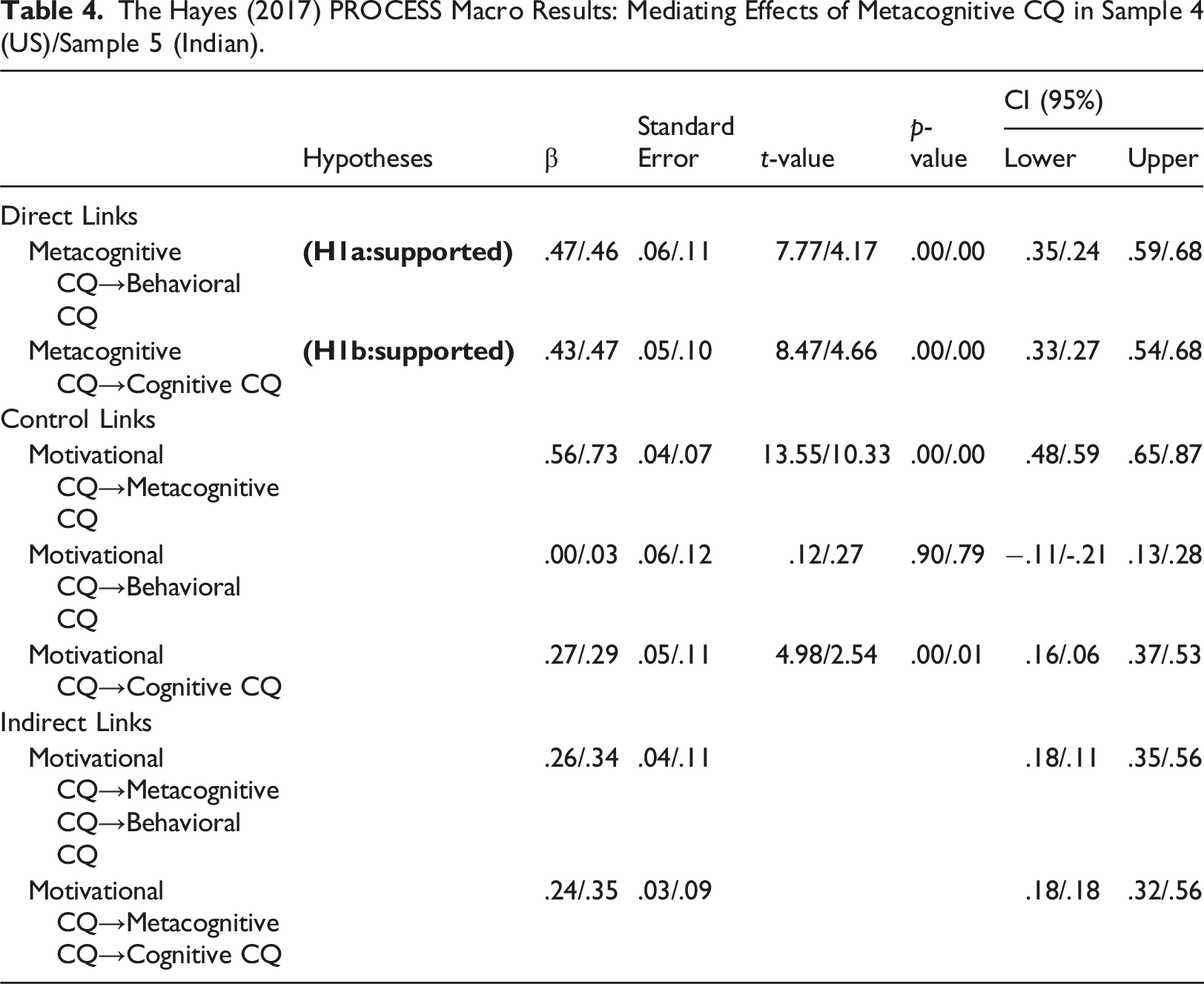
To assess the relationships proposed in Hypotheses 1(a) and 1(b), we employed Model 4 in the Hayes (2017) PROCESS macro for SPSS, incorporating 5000 bootstraps. Notably, we controlled for the effects of motivational CQ in these analyses. Composite scores were computed for each variable. The results from both samples consistently supported our hypotheses.
The Hayes (2017) PROCESS Macro Results: Mediating Effects of Metacognitive CQ in Sample 4 (US)/Sample 5 (Indian).
Competing models
Although the results support the hypotheses, we analyzed two competing models to compare the results of different theoretical perspectives. Competing Model 1 is based on Ang et al.’s (2007) conceptualization, and competing Model 2 is based on Thomas et al. (2015)’s conceptualization. Figure 2 displays these models. Competing models.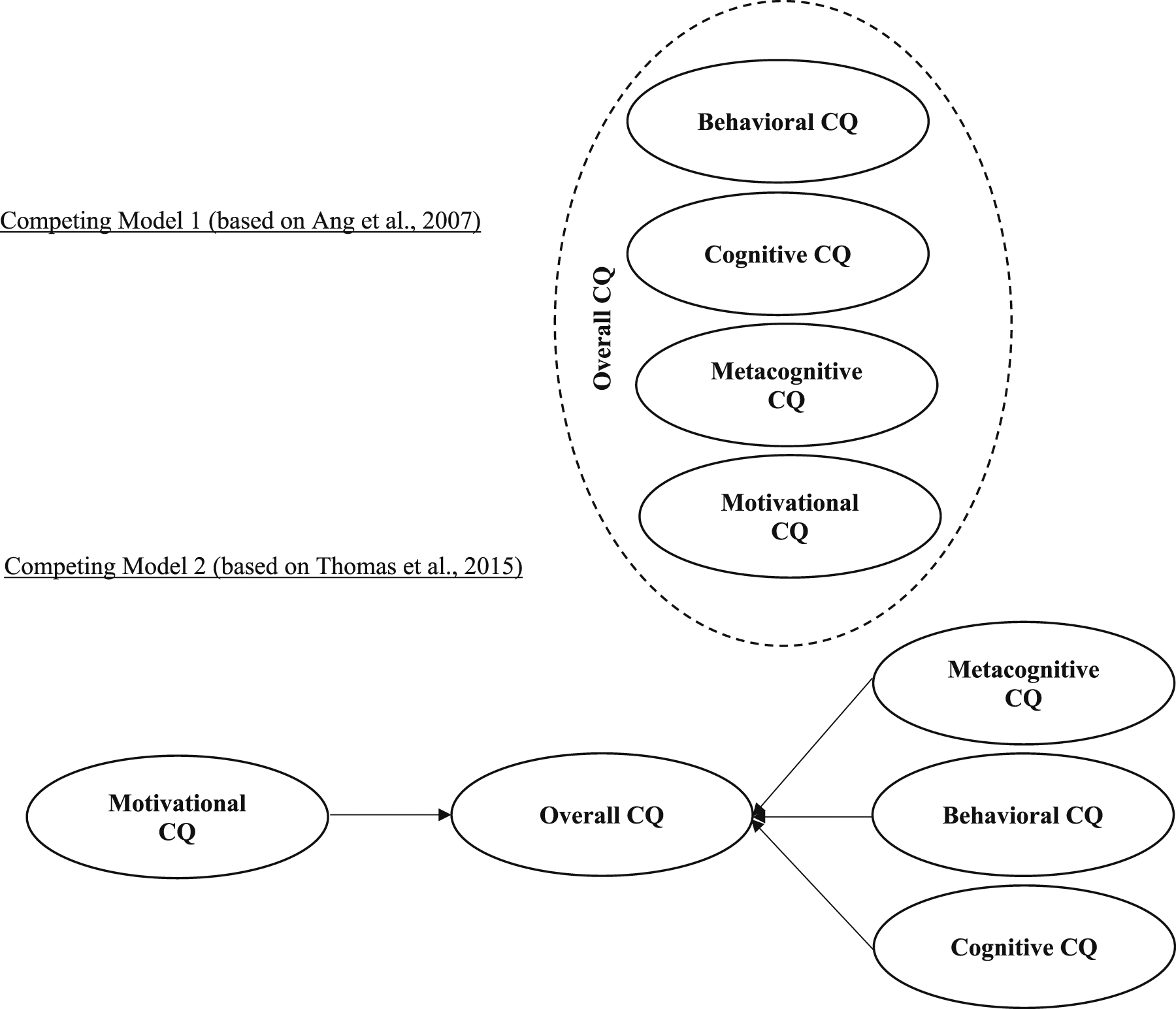
The hypothesized and competing models were analyzed with the U.S./German/Indian samples from the main study. The hypothesized model yielded moderate fit statistics in US/Germany/India: X2 (102) = 335.8/235.8/335.0 p < .001; TLI = 0.92/.86/.89; CFI = 0.93/.88/.91; NFI = 0.90/.81/.87; RMSEA = 0.11/.12/.10. Competing model 1 yielded moderate fit in US/Germany/India: X2 (183) = 546.7/354.3/653.3; p < .001; TLI = 0.90/.86/.84; CFI = 0.91/.88/.86; NFI = 0.87/.79/.82; RMSEA = 0.10/.10//.11. Competing model 2 also yielded moderate fit in US/Germany/India: X2 (186) = 595.3/386.5/684.7; p < .001; TLI = 0.89/.84/.84; CFI = 0.90/.86/.86; NFI = 0.86/.77/.81; RMSEA = 0.10/.11/.11. Although the competing models yielded moderately acceptable fit, the hypothesized model yielded better-fit statistics.
Following Homburg et al. (2005) recommendations, Akaike’s information criterion (AIC) of the models was used to compare the competing models with the hypothesized model. The AIC comparison supports the hypothesized model [AIC(US/Germany/India) = 435.83/335.84/435.03] over competing model 1 [AIC(US/Germany/India) = 684.69/492.28/791.31] and competing model 2 [AIC(US/Germany/India) = 727.30/518.45/816.69].
Study 2
Data collection
A sample of undergraduate business students from a major U.S. university who volunteered for course credit was collected via an online survey. This method initially yielded 180 respondents and retained 175 usable observations (Sample 6).
Factor Loadings, AVE, and CR for Items and Constructs Measured in Study 2 (U.S. Sample).
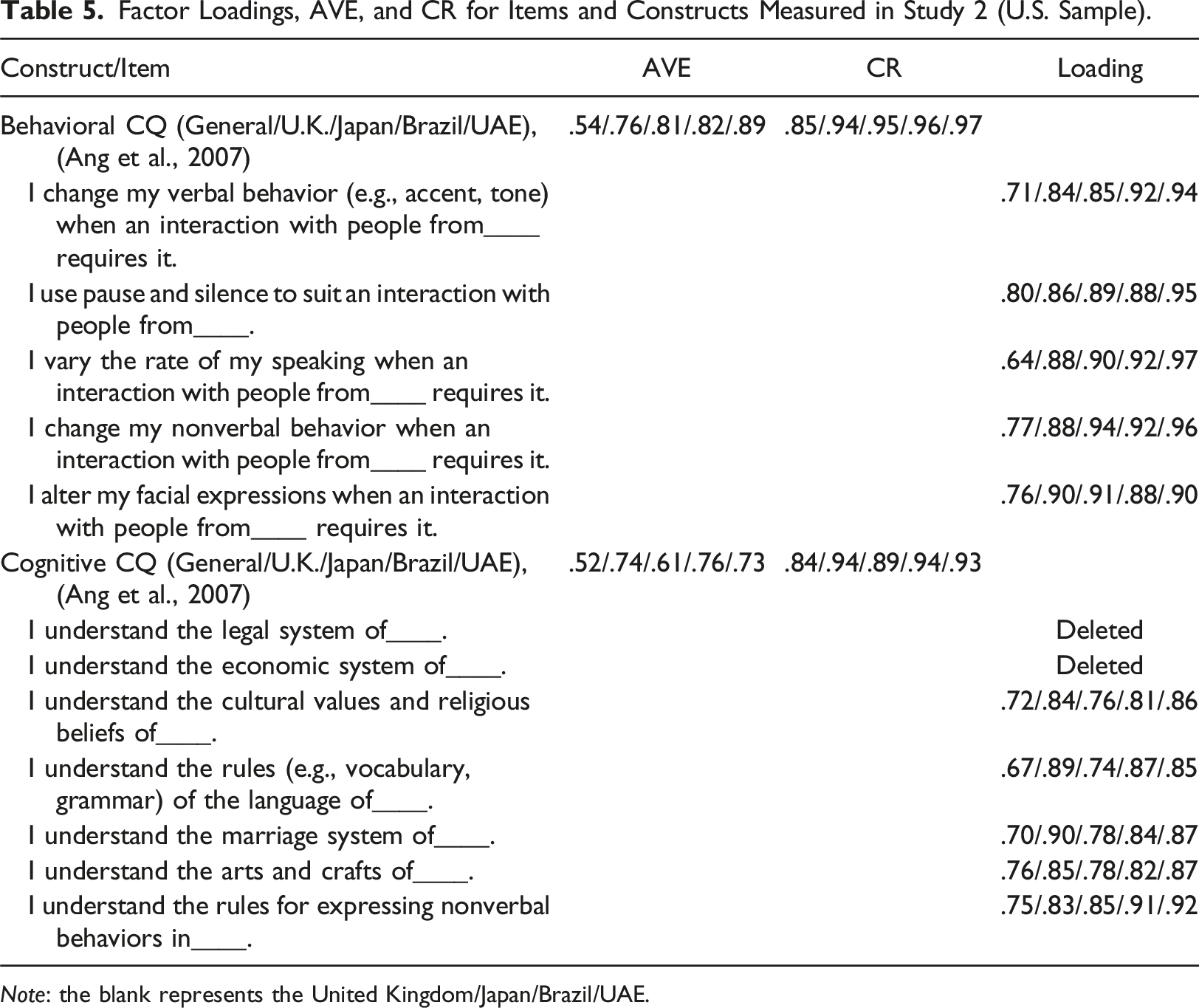
Note: the blank represents the United Kingdom/Japan/Brazil/UAE.
Hypothesis testing
T-Test Results for the General Behavioral/Cognitive CQ.
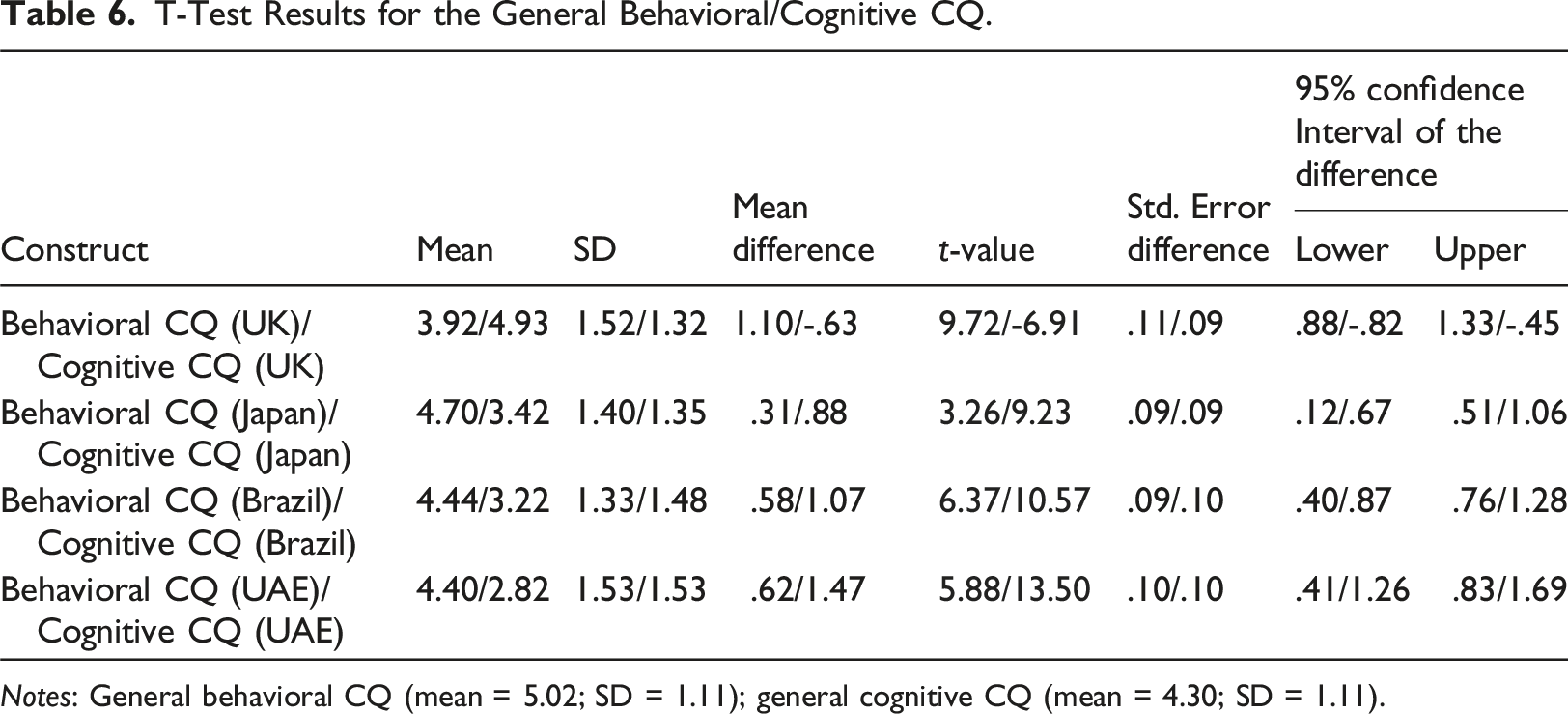
Notes: General behavioral CQ (mean = 5.02; SD = 1.11); general cognitive CQ (mean = 4.30; SD = 1.11).
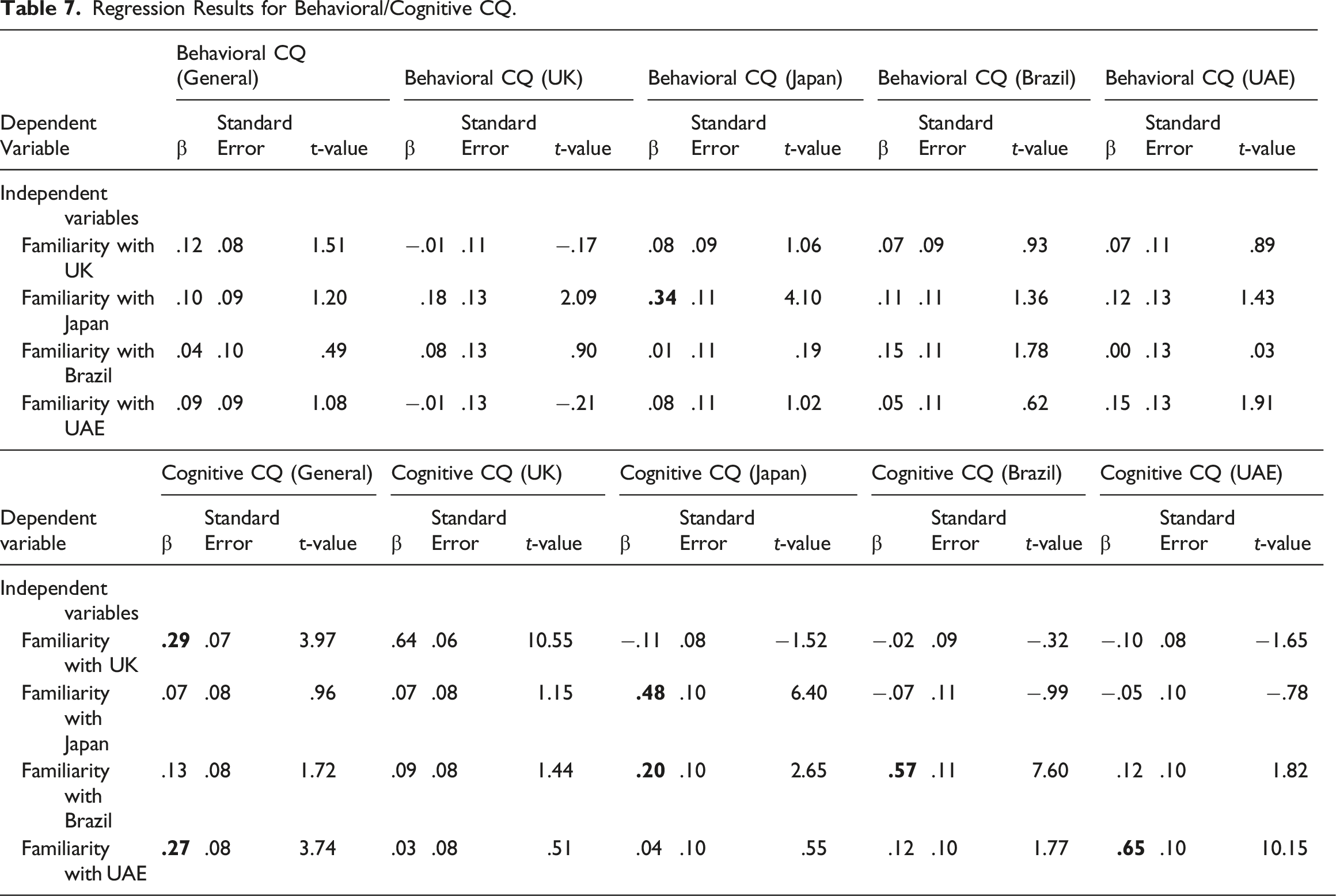
Regression Results for Behavioral/Cognitive CQ.
General discussion
Within the realm of international management, cultures influence critical constructs like consulting expenditures (Barthélemy, 2020), interpretations of strategic issues (Wulf et al., 2020), and expatriate work-life boundaries (Bader et al., 2018). The continuous challenge of recruiting and training culturally competent managers persists, underscoring the importance of understanding the multifaceted nature of CQ (Meyer and Xin, 2018; Shih and Chiang, 2011).
We contribute to the literature by examining the nuanced relationships among distinct CQ dimensions, emphasizing their individual examination while acknowledging the intricate interplay between them. Our objectives are twofold: (1) to present a comprehensive conceptualization of the relationships among CQ constructs, and (2) to examine the culture-specific applications of these dimensions.
Validation of our proposed model, which separates motivation from CQ, finds alignment with previous research suggesting that motivation for a positive interaction is not a requirement for possessing high CQ (Thomas et al., 2015). Furthermore, behavioral CQ focuses on capabilities to exhibit behaviors “that are appropriate for putting others at ease during intercultural interactions” (Van Dyne et al., 2012: p.298). Individuals may be motivated to direct energy towards functioning effectively in intercultural situations, yet still exhibit appropriate verbal and non-verbal behavior (behavioral CQ) to facilitate goal achievement. It is possible because metacognitive CQ allows individuals to develop heuristics for interaction in situations characterized by cultural differences (Briñol and DeMarree, 2011).
Our study not only provides general support for our hypotheses but also initiates a discussion on the practical application of CQ. Notably, our findings suggest that cognitive and behavioral CQ are culture-specific, while metacognitive CQ retains a universal quality. Interestingly, while the results do support the culture-specificity of behavioral and cognitive CQ, the role of cultural distance in influencing cognitive CQ was somewhat inconsistent. Where general cognitive CQ was higher than culture-specific cognitive CQ for Japan, Brazil, and the UAE, it was found to be lower for the UK. One possible explanation could be the colonial ties between the respondents’ home country (the US) and the country of cognitive CQ application (the UK). International business literature suggests that colonial ties positively affect foreign direct investments (Glaister et al., 2020), but also significantly interact with institutional distance to negatively affect post-acquisition performance for internationalizing firms (Liou and Rao-Nicholson, 2017). We posit that such effects of colonial ties may influence the tangible knowledge of cultural norms, practices, and socio-economic-legal systems, or cognitive CQ, that is specific to the country of application. We therefore encourage future research to further investigate the intricacies of CQ development and colonial ties. These results contribute both theoretically and managerially, offering avenues for further exploration and implications for developing targeted interventions in intercultural contexts.
Theoretical contributions
This paper makes several key theoretical contributions that address foundational issues inherent in existing CQ conceptualization (Ang et al., 2007). Our primary theoretical contribution involves proposing and empirically testing our model that explicitly integrates the intricate relationships among its dimensions, challenging the prevailing assumption that all four dimensions of CQ exist at the same conceptual level. Notably, our findings urge a reevaluation of the assumption that motivation should be conceptualized as a part of CQ.
Furthermore, our research sheds light on the culture-specific nature of applications associated with behavioral and cognitive CQ. While existing literature emphasizes the non-culture-specific nature of CQ, our study introduces the notion that cognitive and behavioral CQ may be situationally relevant in distinct cultures, unlike metacognitive CQ, which appears universally applicable.
Importantly, our study underscores the pivotal role of metacognition in acquiring and refining cognitive and behavioral competencies. We reveal that metacognitive CQ significantly and directly influences behavioral CQ, challenging the assumed direct influence of motivational CQ on behavioral abilities. This observation suggests that while metacognition directly impacts behavioral ability, motivation may exert its influence indirectly, potentially moderated or mediated by other globally-oriented constructs such as cosmopolitanism, global identification, and world-mindedness.
Lastly, we contribute to the field of international human resources (HR) and management by unraveling the intricate relationships between CQ and outcomes in this domain. We advocate for a nuanced, multi-level examination of the interplay among metacognitive CQ, behavioral/cognitive CQ, and international HR and management outcomes. This approach, considering the complex interactions between various CQ dimensions, provides a more comprehensive understanding of the intricate dynamics at play in international HR and management contexts.
Managerial implications
The implications of our research offer valuable guidance for managers operating in diverse cultures. Recognizing the challenges associated with mastering multiple cultures, as it may risk diluting one’s own cultural identity (Gelfand et al., 2008), our findings underscore the need for a versatile training tool applicable across diverse cultural landscapes (Earley and Peterson, 2004). In light of recent management research emphasizing the nuanced understanding of multi-paradigmatic cultural perspectives (Patel, 2017), our model, highlighting the impact of metacognitive CQ on behavioral and cognitive CQ, serves as a practical tool for organizations to construct more targeted and effective CQ development strategies.
Given the profound influence of CQ on global leadership, managerial global mindset, cross-cultural adjustments, multicultural team success, and expatriate performance (Ott and Michailova, 2018; Rockstuhl and Van Dyne, 2018; Shokef and Erez, 2008), our empirical evidence suggests that applications of behavioral and cognitive CQ may be culture-specific. Rather than investing extensively in training behavioral/cognitive CQ for each distinct culture, organizations stand to benefit by prioritizing the enhancement of managerial metacognitive CQ. This strategic shift could substantially influence behavioral/cognitive CQ and, consequently, downstream outcomes, aligning with the acknowledgment of metacognitive CQ’s pivotal role in intercultural effectiveness (Mor et al., 2013).
Enhancing metacognitive CQ emerges as a pragmatic approach, offering efficiency gains by accounting for a broader range of contexts, thereby minimizing training time and costs. This aligns with literature highlighting the positive relationship between metacognitive and cognitive CQ and various outcomes such as task performance, intercultural judgment, and decision-making (Rockstuhl and Van Dyne, 2018). While the literature advocates enhancing all CQ dimensions to positively influence outcomes, our proposed model suggests that focusing on metacognitive CQ serves as a streamlined and effective strategy.
Knowledge sharing, a critical aspect influencing multicultural team performance, is intricately linked to metacognitive, motivational, and cognitive CQ (Chen and Lin, 2013). Therefore, organizations seeking efficiency in fostering knowledge sharing may find it more beneficial to invest in enhancing metacognitive CQ, given its adaptability to changing contextual dynamics. This recommendation is particularly relevant as knowledge sharing is sensitive to context, which can evolve rapidly in diverse cultural settings.
Limitations and future research
While our study makes substantial contributions to the understanding of CQ dimensions, it is imperative to acknowledge certain limitations and suggest avenues for future research. First, despite the inclusion of five diverse samples across three countries and the utilization of two distinct data collection methods, our model has not been tested in the least developed countries. Future research should explore these underrepresented contexts to provide a more comprehensive understanding of the applicability and generalizability of our proposed model (Barthélemy, 2020).
Second, our study does not examine the relationships between individual CQ dimensions and overall CQ, nor does it establish causal relationships. To address this gap, future research should investigate and establish separate nomological networks for each CQ dimension before advancing theories on the development of overall CQ. This nuanced examination would enhance the precision of conceptualizations in the field (Rockstuhl and Van Dyne, 2018).
Third, we advocate for future research to identify the boundary conditions of the proposed relationships. For instance, the reciprocal relationships between CQ dimensions and global identity observed in multicultural teams (Shokef and Erez, 2008) might manifest differently in other contexts such as consumer behavior or managerial decision-making. Moreover, the significance of these relationships can vary based on the empirical method used, prompting the exploration of within-subject versus between-subject designs (Bücker and Korzilius, 2015).
Fourth, scholars could extend our findings by designing practical training programs and learning platforms to enhance metacognitive CQ. Such initiatives would offer companies valuable tools to optimize costs and boost productivity, aligning with the practical implications of our research.
Fifth, we urge scholars to further investigate the culture-specificity of behavioral and cognitive CQ. Developing or adapting measures for these culture-specific dimensions and exploring their simultaneous application across various cultures would enrich our understanding of the adaptability of CQ in diverse settings.
Sixth, we acknowledge concerns associated with data collected from MTurk, such as potential language barriers, respondent effort, deception, and survey dropout rates (Hauser et al., 2019). Future research should employ additional strategies to mitigate these concerns and enhance the robustness of data collected through online platforms.
Finally, we propose future research to further examine motivational CQ. Adopting Thomas et al.’s (2015) perspective, future work could investigate motivational CQ as a component of motivation, employing self-determination theory to conceptualize it as the motivation to acquire CQ (MACQ). Such exploration would provide insights into the nature of this construct, establishing its distinctiveness from the other three CQ dimensions. In this sense, MACQ could be examined as an individual’s willingness to learn and acquire the ability to navigate intercultural situations effectively.
Conclusion
Our paper aims to address crucial gaps in the understanding of CQ by proposing a dual-purpose framework aimed at refining its conceptualization and exploring the cultural applications of its dimensions. We respond to the need for a more nuanced understanding of the interrelationships among CQ constructs by demonstrating the positive influence of metacognitive CQ on both behavioral and cognitive aspects and, thereby, proposing a new model of CQ. Our study challenges prevailing assumptions regarding the cultural specificity of CQ applications, offering initial evidence that certain dimensions may indeed exhibit culture-dependent behaviors. This research not only contributes theoretically by addressing conceptual ambiguities but also provides practical insights for the development and recruitment of internationally-based managers, fostering more effective global management practices. In essence, our study advances the discourse on CQ, offering a more comprehensive framework that aligns with the dynamic complexities of global interactions and management.
Footnotes
Declaration of conflicting interests
The author(s) declared no potential conflicts of interest with respect to the research, authorship, and/or publication of this article.
Funding
The author(s) received no financial support for the research, authorship, and/or publication of this article.

Demographics of All Samples.
Main study
Robustness test
Sample 1
Sample 2
Sample 3
Sample 4
Sample 5
Sample size
n = 209
n = 88
n = 221
n = 435
n = 156
Country
U.S.
Germany
India
U.S.
India
Age
Mean
34.98
34.15
34.85
32.32
35.18
Standard deviation
14.94
11.46
9.40
14.68
12.71
Gender
Male
43%
43%
61%
49%
69%
Female
57%
57%
39%
51%
31%
Education
High School
8%
18%
1%
9%
0%
Some College
45%
19%
4%
46%
4%
Bachelors
30%
38%
56%
33%
52%
Graduate Degree
17%
25%
39%
12%
44%
International travel
0
55%
4%
22%
54%
20%
1 to 2
40%
50%
60%
39%
63%
3 to 4
3%
30%
14%
5%
12%
5 to 6
1%
14%
3%
1%
2%
7 or more
1%
2%
1%
1%
2%
Race
Caucasian (Non-Hispanic)
86%
97%
93%
African American or African Descent
4%
1%
1%
3%
1%
Asian or Pacific Islander
1%
96%
1%
96%
Latino/Latina
2%
1%
2%
1%
Native American
1%
0%
Other
6%
2%
2%
1%
2%