




Abstract
In today’s interconnected global business landscape, the rise of international business and technological advancements has led to a proliferation of global virtual teams. This dynamic environment underscores the critical importance of understanding cultural diversity within such teams and its impact on performance. To effectively compete in this milieu, individuals must possess the requisite knowledge and skills to navigate diverse cultural backgrounds, both in virtual and face-to-face interactions. This paper delves into the profound significance of cultural diversity and its multifaceted implications within the context of virtual and face-to-face project team dynamics. To gain insights into global virtual teamwork dynamics regarding cultural diversity, a project involving 65 participants was designed. The project’s progression was closely monitored, and participants provided feedback in two stages, yielding a total of 130 feedback sheets for analysis. The research findings shed light on the nuanced dynamics of global virtual teamwork, highlighting cultural diversity as a perceived risk factor. However, these challenges can be effectively managed through the strategic deployment of project management tools. Conversely, in face-to-face settings, cultural diversity emerges as a potent catalyst for innovation and creativity, offering unique perspectives that enrich problem-solving processes. This study serves as a critical resource for educators, project managers, and stakeholders invested in optimizing cross-cultural interactions in both virtual and face-to-face environments. By leveraging insights gleaned from this research, practitioners can harness the power of cultural diversity to drive success in today’s globalized organizational landscape.
Keywords
To remain competitive on a global scale, it is crucial for employees to possess the necessary knowledge and skills to effectively engage with diverse cultural contexts, particularly within the dynamic landscape of modern workplaces. The rapid advance of digital technologies due to the COVID-19 pandemic has profoundly changed organizations’ national and international leadership, fostering change in management education too (Baber, 2021; Bajaj et al., 2021; Jackson, 2020; Palumbo, 2022; Udvari and Vizi, 2023). Many tasks that were previously done manually are now being digitized (Barnes, 2020; Davis and Fill, 2007; Liu et al., 2023; Ratten, 2023a; Tiwari et al., 2021). As a result, management educators have incorporated new emerging technology as part of the education experience (Baber, 2021; Bao, 2020), that includes students working in teams on a joint project without coming to the classrooms. This process already sets the student’s mindsets to work in global and virtual teams (GVTs). Learning online in an age of digital learning makes it even more difficult to understand cross-cultural challenges. In GVTs, cultural diversity is among the most challenging factors; the increasing complexity of the societal and cultural expectations, understanding peers and contributing to joint projects require different approaches to cultural understanding (Chen et al., 2018; Chua et al., 2023; Swoboda and Batton, 2019). In face-to-face interaction, body language, non-verbal communication, and other factors can undeniably support understanding, create a sense of belonging and inclusion as well as build trust (Feitosa et al., 2022) but with virtual cooperation and coworking, this is simply not manageable. Global, virtual teamwork requires different skills in order to communicate efficiently and understand the team members. Also, the specificities that come from diverse cultural backgrounds appear different in virtual communication as opposed to real-time or face-to-face communication.
Awareness of cultural diversity in teamwork demonstrates that cultural differences affect the attitudes of team members, which in turn can affect team dynamics and performance (Earley and Ang, 2003; Hofstede and Bond, 1984, 1991; Schippers et al., 2012; Szymanski et al., 2019). Cultural differences are common in international projects and play a critical role in GVTs (Maznevski and Chudoba, 2000). Cultural diversity has been shown to address the challenges regarding innovation, creativity, and problem-solving; it can also hinder social integration among its team members (Stahl et al., 2010; Taras et al., 2019). In contrast, cultural differences can also be a barrier to collaboration (Johansson et al., 1999; Kayworth and Leidner, 2000) and create obstacles in effective communication (Van Ryssen and Hayes Godar, 2000). However, understanding the differences may mitigate these adverse effects (Robey et al., 2000). In other words, with behaviors and attitudes characterizing cultural intelligence, referring to “a person’s capability to adapt effectively to new cultural contexts” (Earley and Ang, 2003: 59), the challenges and problems that come from cultural differences can be overcome and solved. Understanding and accepting cultural differences in traditional teamwork settings was important, and there is interaction during virtual work, too; therefore, it directly affects the member’s satisfaction (Collins et al., 2017; Mangla, 2021) and performance in GVTs (Feitosa et al., 2022). If individuals are equipped with a better understanding of cultural differences, they are not only able to respond but even predict the behaviors of others (Caligiuri, 2021; Caligiuri et al., 2022). Cultural factors appear differently in virtual teamwork than they usually do during a face-to-face setting, but can not be overlooked (Mahadevan and Steinmann, 2023).
Culture and diversity emerging in the workforce, as well as the development of technological means and social media channels, amplify not only the need to understand cultural differences, but also have managers with responsible diversity management approaches. These managers can navigate across cultures and through virtual and face-to-face communication (Chua et al., 2023; Martins, 2020; Taras et al., 2013). Management education literature has also highlighted the value of developing prospective managers’ and leaders’ digital, virtual working, and intercultural skills (Erez et al., 2013; Richards and Bilgin, 2012). In order to reach this goal of culturally competent managers, universities are being challenged to develop the knowledge and skills of the students already in the classrooms. Students are being brought closer to the industry by changing the curricula, as well as linking theory and practice through simulation activities and virtual interactions. Since the rise of social media, teamwork and intercultural interactions all seem to be already present in the lives of students’, but not used as a learning or working platform. It appears that higher education can easily build on this familiarity and provide students with virtual and intercultural learning opportunities during their studies. There is no need to teach them about it, but rather shift their focus, so they will be able to understand cultural diversity, communicate more effectively, and get used to working virtually in global teams.
Global teamwork in a virtual setting makes cultural differences an even more complex challenge since the members within a team vary geographically too. Understanding these differences, and improving intercultural competencies, that can be adapted appropriately to the circumstances since it is a priority in international business and management education. This paper aims to give a better understanding of cultural differences and the way that these can appear in virtual and face-to-face teamwork. In the next section, literature regarding global virtual teamwork and cultural diversity within that is explained. The research material will be elaborated on in the methodology section. This will then be followed by the research results, visualized by NVivo, and finally end with a detailed discussion of the outcome. The paper’s last section includes the conclusion, managerial implication, highlighting the limitations, and suggested future research directions.
Literature review
Global virtual teams
Globalization has given rise to the creation of GVTs and has been defined as a “temporary, culturally diverse, geographically dispersed, and electronically communicating work group” (Jarvenpaa and Leidner, 1998: 792). GVTs offer several possible advantages. First, teams can be staffed with members from around the world with different talents and expertise, without the costs associated with being physically present in a certain location for a long or short period of time. Second, building on the diversity of perspectives and resources brought in by the members, GVTs have the potential for increased creativity, innovative ideas and enhanced problem-solving. Third, the non-stop working hours in GVTs, which result in a workload that can be handed off seamlessly from one time zone to the next. In a face-to-face setting, all of these options are limited, or not even possible at all. The cost of mobility of the employees, homogeneity in the mindset of the local professionals, and the rules and restrictions regarding the actual working hours all reduce efficiency and harm the creativity of the teamwork. However, despite many benefits, GVTs can also face obstacles that come from a virtual setting and a high level of cultural diversity. Differences in language, culture, and institutional environments come with increased coordination costs and information-processing losses (Martins et al., 2004; Maznevski and Chudoba, 2000; Presbitero, 2020; Selmer et al., 2021). This is problematic given the increased use of GVTs by many organizations, and a strong desire by managers to understand how GVT performance can be optimized (Jimenez et al., 2017).
To understand the complexity of GVTs, studies have focused on diversity in GVTs at different levels and their impact on effectiveness (Schlaegel et al., 2021; Taras et al., 2019); challenges associated with information elaboration (Maynard et al., 2019); social identity formation and the potential negative influences on perceptions among team members (Au and Marks, 2012; Presbitero, 2021; Tavolleti et al., 2022; Vahtera et al., 2017). GVT member diversity comes in different forms that each have different effects on team dynamics and performance. GVT is subject to multiple types of team-member differences, which may include demographic and economic, besides the cultural, geographical and institutional variables. Taras et al. (2019) propose that different types of team member diversity may have different effects on one or many of the aspects of team effectiveness. Despite face-to-face teamwork, where technology is used only to store or share the same information, in GVTs, the team leverages solely on communication and information technologies to carry out their expected tasks. The use of communication technology and devices limit the non-verbal cues and social presence that are prevalent in face-to-face communication. Cultural diversity amplifies the complexity of the communication, making it challenging to understand communicational nuances, resolves misunderstandings and conflicts, and improves effectiveness.
In order to understand GVTs, it is essential to analyze this type of teamwork compared to the other types of virtual teamwork. Mahadevan and Steinmann (2023) differentiate four types of virtual teams: global virtual teams, (non-global) virtual teams, COVID-induced virtual teams, and the additional fourth type, the post-COVID hybrid teams. The first three types (GVTs, non-global virtual teams and COVID-induced virtual teams) have in common that these are characterized by; (1) the use of information and communication technologies, (2) some degree of diversity and dispersion, and (3) some degree of ‘teamness’ (Mahadevan and Steinmann, 2023: 320), that is: shared operational procedures or goals. Despite these similarities, the non-global virtual team lacks the worldwide dispersion and cross-national cultural diversity, which are usually formed if technology is a key element of the team’s operations and goals, and if members’ technological versatility allows for it. As a particularity compared to the other types of virtual teams, COVID-induced virtual teams consist of dispersed team members who work in highly diverse work-from-home environments, and are formed due to an external crisis. Post-COVID hybrid teams alternate between a work-from-home and an on-site mode, and also require certain changes, but these changes are not related to cultural diversity, but rather a matter of the employees’ workplace environment, and work-life balance. Therefore, the specifics of the three factors (use of technology, degree of diversity, and shared procedures and common goals) differ across the different types of virtual teamwork.
Adapting to virtual team dynamics
International business and technological advances have made an increase in virtual collaboration in the corporate world. Similar changes have happened in education since the beginning of 2000 refers to internationalization, digitalization, and interactivity (Ratten, 2023a). According to these tendencies, the virtual generation is already accustomed to distance learning in the classroom, and universities have already adapted this style of learning within their institutions. Before the COVID-19 pandemic, distance learning already existed, and various platforms were being used, but along with the pandemic, all this became a necessity (Jackson, 2020; Mahadevan and Steinmann, 2023). Due to the restrictions, many students returned home instead of staying and living on campus. From that point on, distance learning became a much more attractive option. Likewise, employees from the corporate world preferred working from home, university students also started to prefer learning from home, requiring a hybrid learning model that incorporated direct engagement in a physical and virtual format (Ferreira et al., 2018; Kang and Park, 2023). With global virtual team projects, further adoption can be reached. Gannon et al. (2016) emphasize that there is a growing need to involve and expose students to different cross-cultural situations and challenges. Students can learn and easily get used to working within diverse teams, and some or most of the communication can happen virtually. Using augmented and virtual reality brings a new perspective to students (Blaine, 2019). With all of these new options, virtual teams can be global teams where cultural diversity can be experienced without geographical challenges. This makes students already familiar with the concept of a global virtual setting. Before entering the labor market, students can experience the environment of a global organization during their studies, and important learning points will be accessible to them regarding cultural diversity and virtual teamwork (Byram, 2018; Caligiuri et al., 2022; Deardorff and Bok, 2009; Kadam et al., 2021).
The altered nature of the communication process in online teamwork requires different skills and techniques to promote virtual team effectiveness. Reliance on body language, voice tone, and other non-verbal communication are all common in face-to-face settings, and are all “virtually” eliminated during many online exchanges. All of these points are influenced by culture, so if these are indeed eliminated, then some of these cultural factors could be considered eliminated too. Without these elements, the dynamics of group development, leadership, and individual influence attempts could shift. Hearn et al. (2017) highlight the irony that the virtual world may be more adept at tracking meaningful contributions than face-to-face setting. This is mainly because actual content, ideas, and specific information will more likely be prioritized in a virtual group. The pressure of visibility and individual dominance is eliminated, and the focus is solely on the task. Virtual visibility and physical visibility manifest themselves in entirely different ways since someone attending a face-to-face meeting might be perceived as contributing solely by their physical presence, even if that participation is relatively passive. Despite all of this, virtual participation is probably less passive by nature. Virtual group members wishing to make a contribution to the project; must log on, review the assignment, see the teammates’ written comments, develop a contribution, and finally share it on their common platform so that the others can also review their material. The risk of uneven efforts is lower in this case. All of this work can not be avoided, as it happens with face-to-face meetings when members, in many cases, only show up for merely the meetings.
Bergiel et al. (2008) note that the core elements of success are common in both face-to-face and virtual teams: trust, communication, and leadership. They emphasize that the virtual environment can alter the process through which these elements develop. Computer-mediated communication operates with different rationality and requires different types of skills, abilities, and knowledge than with face-to-face communication. Virtual communication is routinely asynchronous; the time delay element can change the nature of collaborative efforts (Berry, 2011). Virtual teams can produce decision quality that is equivalent to face-to-face teams, but it needs more time. The quality of group decisions seems higher in face-to-face teamwork (Hearn et al., 2017) since, through more interaction and real-time presence trust can be gained, and with this, group decisions can be made more efficiently and frequently. Group leaders can be elected with a higher level of trust. Also, group members can divide up the workload and trust each member to deliver their own part. Group dynamics can benefit from this trust. Classroom settings utilize groups due to their greater resources, stimulation of creativity, positive impact on comprehension, and development of interpersonal skills (Alavi, 1994; Kumari and Nirban, 2018; Lee, 2023; Sheetal et al., 2018). Also, it is equally as important to mention that virtual assessments are not without emotional content, non-verbal elements, or interpretation (Carrier et al., 2015; Cheshin et al., 2011). In today’s globalized world, the ability to communicate effectively in global virtual teams is one of the key requirements at the workplace. University students improve these skills during their studies and hence, properly prepare them to enter the business world (Deardorff, 2006; Zakaria and Ab Rahman Muton, 2022).
Research questions
It is crucial to include that culturally diverse team dynamics in virtual environments work differently compared to face-to-face scenarios. Moreover, cultural diversity within GVTs may be experienced in distinct ways due to the unique nature of communication platforms and the skills that they demand. This paper aims to examine the difference between cultural diversity in face-to-face and virtual groups. The following research questions have been defined with the intention of providing further insights: RQ1: How do cultural diversity-related factors shape collaborative dynamics in both virtual and face-to-face teamwork contexts? RQ2: What kind of cultural diversity-related factors occur only in virtual or face-to-face teamwork?
Methodology
The information based on a specifically planned global project’ feedback sheet has been utilized. ‘Cross-cultural Challenges Team Project’ has been designed to analyze university students’ team dynamics in culturally diverse teams. Students had two subprojects and a feedback sheet was put in after each subproject. The first part was managed virtually; the background research, team meetings, and brainstorming were all virtual. The consultations with teachers and supporting materials were all managed and shared virtually. The scheduled events within the project teams were also monitored. The second part was face-to-face; every team had to meet in person and exchange ideas in real-life conversations, and this was tracked with attendance sheets. Many of the related literature and studies were discussed in the classroom, where students had tasks to do directly related to their projects. Each subproject’s results had to be presented, the first virtually, and the second one in the classroom. After the group presentations, a feedback sheet was given to every participant, which included five open-ended questions. They had 1 week to fill out the sheet and upload it to the platform provided for this. Each project team consisted of five team members. The most important requirement was to create diverse teams; every team included at least two international students, and a team of only locals or only international students were not allowed.
Target group
The research started with ethical considerations before publicizing the ‘Cross-cultural Challenges Team Project’ for the students. First, the permission of the university’s ethical board was taken in order to collect data. Then, information notes about the research and background information were shared with the students. Initially, the project idea and the feedback sheet’s questions were shared with four individuals (two lecturers and two students), and the details were discussed to ensure the project’s validity. The project was disseminated in a Hungarian university, among 167 students studying 'International Business', and the language of instruction was English throughout the 4-years program. The limited number of international students among 167 students allowed 65 students to participate, and to create 13 teams which met the requirements of the culturally diverse teams. The project took 14 weeks altogether (each occasion was 6 weeks for background research, preparation, and team presentation, and then 1 week for feedback). The participants were 20 years old on average, and 51.5% were female. 52% were Hungarian; the remaining individuals came from a variety of countries in Asia 36% (China, India, Kazakhstan, Turkey, and Russia), Eastern Europe 5% (Romania, Slovakia), Western Europe 5% (Spain), Africa 1% (Ghana), and North America 1% (Canada). The diversity of the participants gives a more complex understanding and highlights the cultural factor, which was a crucial aspect of this study.
Data analyses
The research was conducted with a qualitative methodology to better understand the different ways cultural diversity appears in virtual and face-to-face settings (Qu and Dumay, 2011; Ratten, 2023b). In this project, two feedback points were built in and the same questions were raised after each group presentation. Participants had to elaborate on their experience during team meetings, preparation, teamwork, and overall team dynamics. The feedback sheet included five open-ended questions and the content of this written feedback was analyzed. 65 students gave feedback two times during the project and a total of 130 feedback sheets were collected and included in the research. Every content was analyzed by using NVivo 14 software. This software allows the study of the data from several perspectives (Lewins and Silver, 2014). After manually coding the feedback sheets, the codes were double-checked with autocoding of the software. The themes were identified by assigning labels to specific sections and paragraphs of the content. The second part was to see the relationships within the data. Since every student gave feedback after the virtual subproject and the face-to-face subproject, these two parts were analyzed separately, and similar codes generated from the data were studied further to see the relationships between them. The two parts of the received responses were coded and hierarchically structured. The two codings were analyzed together, and queries were created in order to see connections between the codes and themes in the two cases. One structure was built up, connecting the common themes and highlighting the differences. To present the data in a visual format, a mind map was built.
Results
The results show six common codes: ‘team,’ ‘management,’ ‘work,’ ‘diverse,’ ‘time,’ and ‘language.’ ‘Background’ and ‘experience’ codes occurred during the virtual subproject, while ‘environment’ and ‘culture’ codes were during the face-to-face subproject (Figure 1). These main codes include different subcodes. The common codes are developed and continuously revisited during analyses of the received feedback. In one case, the codes pointed out the same topic, but in the two subprojects, it was referred to differently, and in the coding, it is labeled separately. In the case of ‘background’ and ‘culture’ in the first round, students refer to the ‘background’ of their teammates and themselves during virtual cooperation in the feedback. Cultural diversity was interpreted as the ‘background’ of the teammates. In the second round, during the face-to-face subproject, the word ‘culture’ remained, and similar topics were included, as it was the case with the ‘background’ word (Appendix A). In order to analyze the qualitative data from another angle, the frequency of the words was calculated too, separately in virtual and face-to-face settings. The received feedback was also clustered by word similarity, to see if the common codes are referring to the same topic or there are gaps. According to the research results, there are common topics and meanings attached to these topics, but the common codes do not equal the same interpretation entirely. During the analyses, these were focused on separately to show the common ground and to highlight the differences. Mind map of the coding.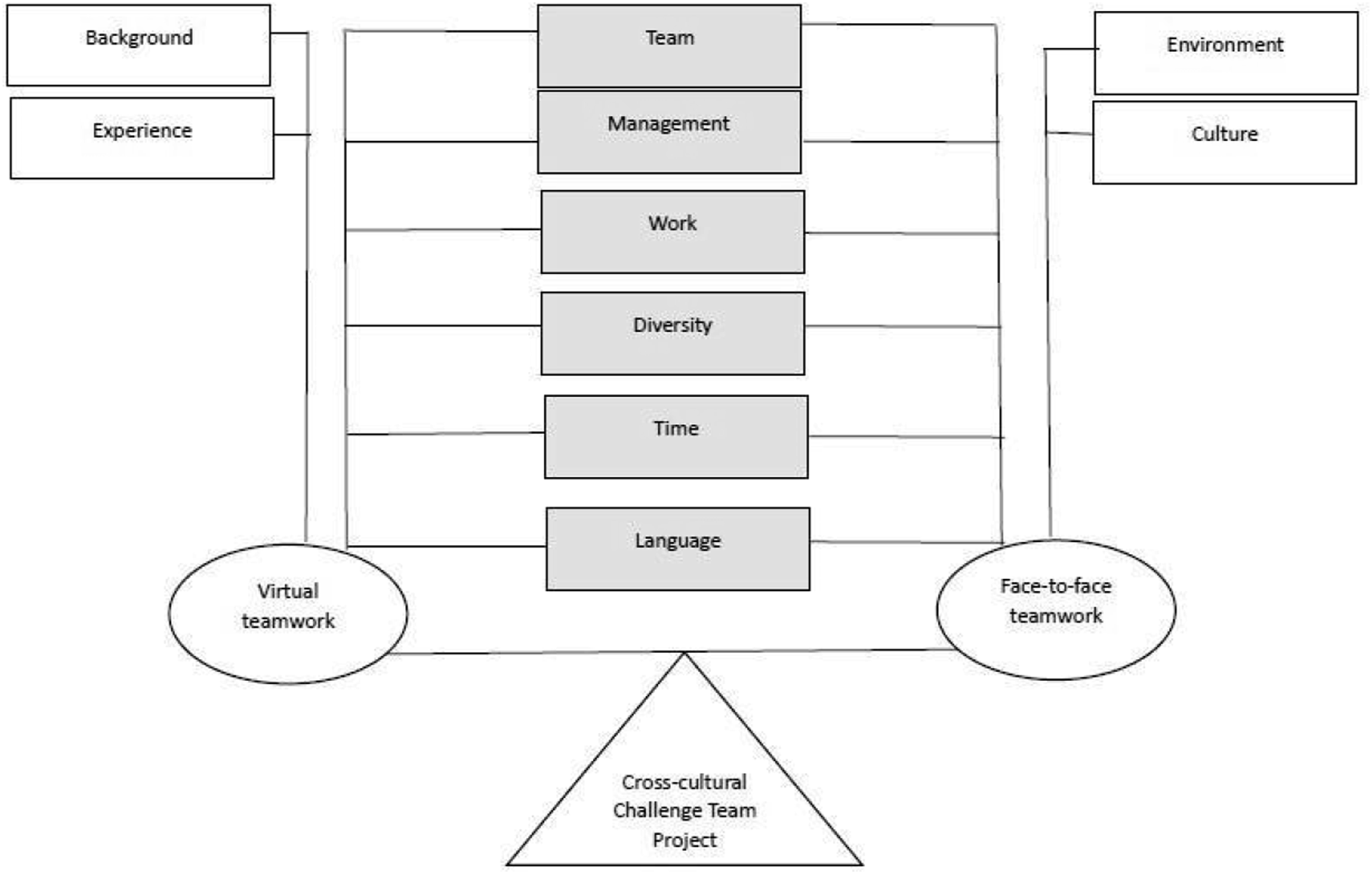
Discussion
Common codes
After both subprojects in the feedback, students highlighted the importance of the “team”. The interpretation of team effort, synergy, and participation differed after the virtual and face-to-face subprojects. After the first section of the project, when every part of the subproject was carried out virtually, the team members focused on the international setting (VT10). The feedback mentioned the “multinational”, “diverse team” and the “cultural specificities”. Diversity in the team was interpreted as a challenge that might have a negative effect on the efficiency or the outcome of the teamwork (Taras et al., 2019). The words “cultural” (228 times) and “different” (178 times) were mentioned in most of the feedback. In the face-to-face subproject, the teammates focused on “coordination” and “team dynamics” besides their cultural diversity (FF24; FF32). Studying the word frequency, mainly the word “culture” (244 times) was combined with “time” (173 times). In most of the feedback, the cultural factor occurred when students elaborated on the different senses and interpretations of time. “We had two Chinese teammates, and it was hard for them to participate. In China, they don’t use Facebook as we do here, so we tried WhatsApp, which was inefficient. They grew up there. They are used to different apps or ways of communication”. (VT10) “Here in Hungary, we are like Germans; we take meetings seriously and go to them earlier to start working at the agreed time. This was too strict for the international students in our team, and as they told us, they felt pressured”. (FF24) “We had to send everything on time; we had to check each other's work on time. There was a deadline for everything in our team. We were very efficient during the projects”. (FF32)
During virtual teamwork, team members highlighted the factors that had affected their project, such as different technologies, habits, and attitudes that can be affected by the cultural background. The cultural differences were taken into consideration along every step of the project due to the fact that they experienced cultural diversity as a risk factor during the project. Constantly monitoring the cultural background of each other, and learning about each other’s home countries was important to prepare and plan the communication accordingly. Most of the students reached high scores, and projects accomplished 81.6% on average; the outcome of this subproject was high quality, but students tended to see cultural differences as a factor that could jeopardize their success. In face-to-face settings, cultural diversity was seen as a source of creativity, and differences were considered as an asset within the team. In the feedback, students emphasized the importance of presentation, visualized and summarized the outcomes they reached together, and presented these materials in an engaging way. They found that this was easily reachable since they had different perspectives within the team and was considered as an interesting factor that can engage their peers (Chua et al., 2023). As a risk factor, mainly time management was mentioned. However, this was taken into consideration, and not identified as an important factor, but rather a part of the project that needed more attention from them. In the face-to-face subproject, students scored higher after presenting their materials, 87.9% on average.
In the feedback regarding “management” in the face-to-face subproject, the importance of time and language management was mainly highlighted. Students mentioned that the level of language is crucial for exchanging information. The other important factor was confidence. Students emphasized that some of their teammates needed to be more talkative during brainstorming, and they assumed it was because of their cultural background. They found this as one of the reasons for unequal distribution of the workload. They pointed out that an equal workload can be ensured if everyone participates in the meetings and knowledge would be exchanged between one another. In a virtual setting, the workload was divided and given to everyone by the commonly elected team leader (Liu et al., 2023). In the virtual subproject, students emphasized the importance of project management tools, such as choosing the right platform for transparent communication, constant updates of the teammates regarding the task, and a commonly editable platform for the documents and the presentations (VT16). “Online communication and work are easy for me because I can do my task, edit, check the grammar, and then share it with my teammates. I prefer it this way because I can work in my language and only translate it”. (VT16)
Virtual coworking requires structure in the sense that everyone knows their task, the meetings at the project milestones were already set, and members could work individually and then share the results with one another. The common platforms were there to see the inputs of the teammates. Workload was equally distributed and every teammate could manage their part of the task on their own. Cultural diversity in this way can be minimized, since daily processes, such as collecting information based on the level of knowledge, the accessible platforms in each country, the fluency in English, the need of a translator or grammar check softwares, and time management related issues are all eliminated from the teamwork. However, not every project can be carried out within this manner. In online meetings, the same real-time conversations are going on, and ad hoc ideas come up, and these have to be elaborated on at the team level. Also, long-term effective task performance requires cross-cultural competency, and it can be gained through understanding each other’s cultural differences. Observing the cultural environment and responding appropriately, also clarifying one’s own cultural values and norms are all essential in culturally diverse teams, regardless of virtual or face-to-face context (Caligiuri, 2021; Caligiuri et al., 2022).
Regarding “work” in a face-to-face setting, the “ethical” and “environmental” aspects seem more important for the students. They tend to focus on team dynamics and then the management-related questions; the third place is work and its “ethical”, fair, and “inclusive atmosphere” (FF60). In a virtual setting, individual goals were more emphasized, such as career-related matters, plans for the future, or individual working styles, hence, the appropriate combination of these in a successful project seemed more crucial (VT48). Work and all the related areas are the top priorities, management-related matters seem to be important, but are not seen as top priorities in the hierarchy. “I realized that when we had some more time with my teammates, and we met at the University, and afterwards had something to eat just as regular people, work was much better. I had the chance to use my English knowledge in not only school-related projects but to chat with others”. (FF60) “I really enjoyed this project because I want to work in a multinational organization and plan to move abroad. Now I understand how people with different cultural backgrounds work, and I can even use this in my term abroad next year”. (VT48)
According to the results, face-to-face work seems to be more about engagement, inclusion, and building a sense of community or team among teammates. Despite having this in virtual settings, work, particularly this project, seems to be considered a tool, a chance to gain knowledge of cultural diversity and individual experience that they can use in the future. Words such as ‘people’ (149 times) and ‘understand’ (92 times) were used in the feedback. In the face-to-face subproject’s feedback, words such as; ‘together’ (100 times) and ‘people’ (98 times) mainly occurred. However, engagement and a sense of inclusion can give common ground to the team members, in virtual teamwork this can be used to improve efficiency in communication and enhance performance (Presbitero, 2021).
In the analyses of the codes and the initial content, “diversity” as a theme was the most similar in the feedback. However, a slightly different interpretation can be seen in the virtual subproject feedback than in the face-to-face subproject’s feedback (Appendix A). Codes such as “diverse team”, “cultural diversity” and “diverse perspectives” occur in both rounds of feedback. The meaning has similarities too. However, in face-to-face settings, “diverse backgrounds” and “embracing diversity” are also important factors. These codes were given to the contents where there was a positive interpretation of the diversity within the team. Understanding diverse backgrounds and using them as an asset, source of creativity, as well as for innovative ideas. Students highlighted how cultural diversity was a positive factor and gave them more perspective to grow individually and have a better project outcome. In a virtual setting, diversity is understood and considered during teamwork but not given a positive meaning. “Diverse solutions” coding hints that the students often saw cultural diversity as a way to develop a unique solution for the project but with reducing efficiency, which was a higher priority (VT21; VT55). “In my team almost all of us were from different countries, which was great because we could manage our tasks quite easily. We basically had to talk and share our understandings. I am a student from China and having such a team project helped me to participate since my teammates were curious about everything related to my culture”. (FF41) “We hear a lot about cultural awareness and cultural intelligence, and I think these things can be understood if you spend a lot of time with people from different places. I want to work for a multinational company, and this setting is exactly what I will have, so I had the chance to try it myself”. (FF59) “I was a project leader in our team. I like that everyone had a good idea since basically all of us were from different countries, and we could understand cross-cultural challenges, so we could brainstorm together, but it was hard to choose one and stick to that. If we had stayed with our first choice, we could have finished the project a week before the deadline”. (VT21) “I was afraid that one of our international teammates didn’t understand what we were doing. We speak Hungarian and English, so one of our international teammates, who is fluent in English, could work with us, but the other one was using a translator, which was not a problem, but she could not get the solution we found for the project. She was new in the city and at the University. It was a cross-cultural challenge for sure”. (VT55)
According to the research result, in face-to-face, real-life conversations, a sense of community can support engagement, and teammates support each other by getting to know and understand one another. Conversation in this case goes beyond information sharing, it includes active listening, and an eagerness of the others’ contribution. In a virtual setting, efficiency dictates the division of the workload, and everyone works individually; meetings only happen if a complex question comes up regarding the project that needs discussion (Mangla, 2021). This process does not address the gaps between the teammates, cultural differences remain, and this leads to the benefits of cultural diversity remaining untapped.
Attitude towards “time” and the interpretation of it were different in the two rounds of feedback. In face-to-face teamwork-related feedback, the focus was on the teammates' time together. The deadline for the subproject was clear, and within that time, the teammates aimed to spend more time together and have a clear vision of which topics they wanted to brainstorm about together and which topics could be done individually (FF63). In the virtual teamwork-related feedback, time was interpreted as the most crucial part of the task, and only essential topics were considered as a good reason to set an online meeting (VT63). “I did not want to waste time talking about every detail. Everyone has their classes and schedule. The project leader had already divided the project, so everyone had to only do that part. Setting a meeting, waiting for everyone to be online, and doing the mute-unmute dance was not efficient”. (VT 63) “Meeting in person for the first time with my teammates was shocking. We had many ideas, I understood our goal, and later on, I could correct the other's uploaded materials, and they could support me too. (FF63)
Participant VT63 finds it efficient to only discuss the most complex topics in meetings and not interact with one another during the project. Time with teammates is considered as an unnecessary use of effort, which can be focused in a better way, by finding solutions to the task, individually. During the face-to-face subproject in the meetings, the vision of their project solution became clear to Participant FF63, as it required time and interactions, but also trust started to be built within the team. Team members were not communicating only to discuss the task related questions but work together in order to clarify the common goals, understand the different approaches and build on the several perspectives they had. Every task became common, therefore everyone is able to work on each other’s materials, such as; correct, add, and edit it, and not only view or check it. Gaining a better understanding of the task and sharing all the materials as well as giving an overview about the individual parts clearly improved the overall efficiency of it.
“Language” was one of the themes that was being interpreted differently in the virtual subproject than it was in face-to-face (FF12; VT30). In face-to-face teamwork, language-related issues mostly fell under language management. For instance, when to switch to English and to always keep communicating in a clear and proficient manner. Regarding communication, there were no other issues mentioned in the feedback. Language usage was a more complex and a broader topic in virtual teamwork. “During our project time, we had to speak in English continuously. We spent hours together and had to stick to this even if we were working in pairs for a while. It was important because we were sitting in one room and every team member had to know what was going on. So if I was working with other Hungarian teammates, I tried not to change to Hungarian. It was a bit exhausting to be honest, but worth it, we received good feedback, and it was partly because of this I think”. (FF12) „Language and timing were crucial in the project. Our team was very diverse; three of us were in Hungary, one in Spain, and one in China. We had different accents and also found the right time was very hard too. We had to be as structured as possible. Everyone worked in the background and only a few questions were discussed in the meetings. I even had my questions and comments “grammar checked” to be sure I was clear. It was an interesting experience”. (VT30)
In virtual teamwork, language was identified as a barrier that had to be addressed right away. Grammar checks were recommended and translators were allowed to be used within the teams, and the team leader had clarified this in most of the teams. Based on the results, clarification of the common language was also important. Everyone had to use the English language, and in the written materials, clear and professional English was required by the teammates. Every member had to use the same platform, which was not to be changed during the project. Immediate attention to technical matters becomes imperative, as meetings are an essential component of virtual team communication, and the majority of teams prioritize operational efficiency. Each teammate had to prepare and ensure everything worked correctly, including the audio, video, and software. Efficiency was prioritized over frequency regarding communication in virtual teams. Some nuances in communication that can lead to misunderstandings were not discussed, these can jeopardize the outcome of the project, have a negative effect on the emotional wellbeing of the members, and also harm building trust within the team.
Specific codes
Besides the common codes that were developed from the feedback around a similar theme but had different interpretations, other codes occurred in only one type of feedback, either virtual or face-to-face. The code “environment” was given to the paragraphs that included “inclusive environment”, “cross-cultural environment”, and “professional environment”. Students were eager to create an atmosphere each time they met in person where each member of the team was engaged in the conversation. They differentiated the usual project setting from this project; they emphasized their curiosity throughout the process. Cultural specificities, different ways of thinking, and styles of working were highlighted in the feedback. In many of the feedback forms, students emphasized the importance of a professional environment. They found it essential to be polite, open, and to be able to listen to each other since (FF3), from their point of view, this is the professional way to deal with culturally diverse teams (Erez et al., 2013; Taras et al., 2019). “I was the one in our team responsible for organizing and leading the project. For everyone, it was important to participate equally, and it could have only happened if I had asked them. I always asked everyone to be sure everyone said what they wanted.” (FF3)
In the virtual setting regarding the “work” code, students mentioned many cases coded under “future work” and “working environment”. However, in those cases, it was more about the individual career path and the future team they wanted to have and prepare for during the project. In this case, in the face-to-face setting the code “environment” focuses on the space they created as a team, the atmosphere when real-life team meetings happened and the values they wanted to convey. These values and making an effort to achieve positive and balanced team dynamics did not occur during the virtual subproject. Seemingly these required more time and effort, therefore, was interpreted as a risk on the performance. However, analyzing cultural differences and understanding other cultures improve efficiency through better communication, clearer common goals and the inclusion of the members (Caligiuri, 2021; Lee, 2023).
Culture was interpreted differently in virtual and face-to-face settings. In the virtual subproject’s feedback, students pointed out the different “backgrounds” they had. They could identify the differences and try to find common ground to carry on the project (VT64). In a face-to-face setting, diversity was experienced on a more personal level (FF51). “We were very different in our team. Almost every one of us had a different family from different countries, and we had different working styles. The background knowledge level was different too. Fortunately, we divided up the project so we could work in our own way and be able to share at the end”. (VT64) “It was interesting because we had our unique cultural heritage. However, somehow, we decided to work in a way that the local Hungarian culture works. It seemed logical that way. We had two Hungarians in our team, and the rest of us were from all over the world. Attending a Hungarian university made us use the Hungarian way of work as a standard. It was a wise solution”. (FF51)
In a virtual setting, culture was analyzed to determine its effect on the common project. Not only culture, but rather the focus was on the background of each of the members. In this case, culture has a broader perspective, it means that the members’ country of origin and within that the work ethics, behaviors, time management, and importance of punctuality. All of these were important aspects to calculate in the project, in order to reduce considered risk factors. In the face-to-face setting, the meaning of culture is detached from the background knowledge and working habits of the members. Culture is interpreted in a geographical sense, therefore. Members can choose to follow that certain one offered by the context or create one based on their own values and norms, a standard one and use that as a common ground (Caligiuri et al., 2022; Feitosa et al., 2022). Despite the virtual in face-to-face subprojects, other success factors, such as; knowledge, efficiency, and team dynamics, are all mentioned separately and not linked to culture.
In the virtual round of the project, “unique work experience”, “eye-opening experience”, and “valuable experience” topics occurred. Students highlighted that the virtual setting, cultural diversity, and the common goal were all factors they had to pay attention to, simultaneously. In the future, in their professional life, they plan to have similar projects (VT18, VT34). “I want to have a job in a multinational company and want to travel and live in many places, so this is what I will do for my living in the future. Different places and different projects. For me, it was a valuable experience”. (VT18) “I am a trainee in an international company. I have never met my boss in person, we always have meetings online, and some of my colleagues also work remotely. So, for me, it was a valuable experience because I already have this kind of work style” (VT34)
After COVID-19, studying and working remotely is not rare, but the circumstances were different during the pandemic. After the pandemic, some changes remain, and multinational organizations and universities work differently (Ratten, 2023a). The new ways of working definitely shape an individuals' education as well as professional life, and this has been highlighted in their feedback. With the increasing development and usage of technological means and social media channels, students’ learning and work habits have drastically changed. Their plans for the future already include virtual teamwork, and furthermore, it seems to be a preference. The new virtual team projects are part of the multinational organizations, and among students these are already familiar ways to learn, work and live.
Research outcome
According to the research results, cultural diversity is experienced in different ways in virtual and face-to-face settings. In virtual teamwork, cultural diversity was interpreted as a risk factor. The team member’s cultural background, knowledge, and working habits were highlighted, since these were the differences, therefore, monitoring all with project management tools was important. In the face-to-face subproject, cultural diversity was seen as a source of different perspectives that could help the team to reach an innovative and creative solution. Working together with culturally sensitive approaches and meeting in person to constantly clarify common goals while promoting shared values were seen as priorities. Several codes belong to virtual and face-to-face teamwork, but every code was built differently (RQ1). Common codes were generated from the feedback, and certain overlaps which include “team”, “work”, “diversity”, “time”, “language”, and “management”. However, these have their specifics in virtual and face-to-face teamwork. In virtual settings, differences among the teammates and the tools to address these challenges were emphasized. The goal was to minimize the effect of these factors, and to improve efficiency by individual working schedules and technical solutions to task management. In a face-to-face setting, time and language management were important, but team dynamics and ethical issues arose as a higher priority. Regarding the main differences in virtual and face-to-face settings, “environment”, “culture”, “background” and “experience” codes were identified (RQ2). In a face-to-face setting, topics such as environment, paying attention to engaging every team member and conveying values that support each member of the team were highlighted. Culture was interpreted more as a geographical factor; work style, knowledge, and personality were not directly attached to this. In a virtual setting, culture has a broader and more complex meaning, individual habits are also linked to cultural diversity.
Conclusion
This article discussed cultural diversity and the way it is experienced in virtual and face-to-face settings. In virtual teamwork it means a challenge that is rooted in the members' different cultural backgrounds. Since culture varies among the team members, it can jeopardize efficient communication, as well as team performance, and limiting this risk is an important goal. In the face-to-face setting, cultural diversity is taken into account, and values are built around them. Team members believe that with high cultural diversity comes a factor of liberty that allows the members to choose a common team culture. This commonly created culture gives a platform to more effective communication and cooperation. Cultural differences are addressed by engaging everyone. Creating a sense of belonging is prioritized over efficiency, which in long-term leads to increased efficiency and performance. This teamwork gives opportunity to address the growing complexity of cultural diversity within organizations.
Implications
Understanding cultural diversity and the different ways it occurs in virtual and face-to-face teamwork is crucial. Virtual teamwork focuses on efficiency. Every member’s background is calculated in the project, transparent communication is supported, and the project is carried out with an equal workload. Short-term projects can be managed successfully and efficiently this way. Face-to-face teamwork requires more time and involvement. Common goals are clarified, and shared values are promoted during teamwork. Cultural differences are identified as assets and sources of creativity. Long-term projects can benefit from this kind of teamwork. Both ways are equally valid but the purpose of the projects should be clarified in order to choose the right way to carry it. Even a combination of both can be efficient and support its team members. According to the research results, the order of the two types of teamwork plays a more important role. A team where the members know each other, have the chance to work in a face-to-face setting first, and address the cultural gaps within the team, can be efficient virtually later too. Starting with virtual teamwork and not giving a chance for real-life, present time conversations can jeopardize the advantage that diversity can offer.
Limitations and suggestions for future research
Based on the research results, there are two main limitations. The first one is that this research is based on one project. The project lasted 14 weeks, but a more extended project with a larger target group would be able to give more information. Future studies should focus on generating new codes, in order to have a more complex understanding of cultural diversity in virtual and face-to-face teams. The second limitation is that the current research included only students, so future research directions to include more professionals would be beneficial to see the main factors and cultural specificities that occur in virtual settings. The present study is to be considered a qualitative exploration that could very well be extended.
Footnotes
Declaration of conflicting interests
The author(s) declared no potential conflicts of interest with respect to the research, authorship, and/or publication of this article.
Funding
The author(s) received no financial support for the research, authorship, and/or publication of this article.
