




Abstract
This research critically examines corporate human rights violations (CHRVs) regarding exploitation and inequalities within the international business system. From the context of the emancipatory agenda of critical cross-cultural management, we present a novel framework for evaluating CHRVs based on a comprehensive analysis of reported cases between 2007 and 2017. Delving into the power dynamics and privileges that cast global workers, suppliers, and communities as the “other,” our research sheds light on how this conceptualization fuels decisions that put the rights of these “others” at risk. Our findings highlight violations related to all dimensions (abuse, labor, development, environment, and health) across industries and geographies. Notably, our findings align with the critical cross-cultural management literature on structural oppression that North American and Western European companies account for a significant number of violations in developing countries.
Keywords
Introduction
Despite a long history of research in the political, legal, and ethical fields, human rights (HR) has become an emerging issue in the international business (IB) community (Giuliani, 2019; Giuliani and Macchi, 2014; Wettstein et al., 2019) with calls for research on the multinational corporations’ (MNC) impact on HR (Cuervo-Cazurra et al., 2021; Doh, 2019). Notably, studies have highlighted corporate misbehavior in the social dimension, particularly focusing on issues like child labor, discrimination, and modern slavery (Cuervo-Cazurra et al., 2021). Additionally, other research into corporate HR delve into practical concerns such as identifying how corporations respond to allegations (e.g., Kamminga, 2017), litigation issues that prompt changes to policies and procedures (Schrempf-Stirling and Wettstein, 2017), governance issues (Zagelmeyer and Sinkovics, 2019), and mitigation tools and resources (Fasterling, 2017). While existing IB HR research concentrates on a particular company (e.g., Clarke and Boersma, 2017), industry (e.g., Whiteman and Cooper, 2016), or issue, there remains a gap in the literature concerning a holistic understanding of corporate impacts on global HR.
This area should be of particular interest to the emancipatory agenda of critical cross-cultural management (CCM), which focuses on power inequalities and the inherent privileges that some have over others worldwide (Romani et al., 2020). Furthermore, research in CCM has called for the need to “assume a bigger picture in terms of grand societal challenges and supranational drivers aimed at tackling ethics-related issues” (Szőcs and Miska, 2020). While arguments have been made for the economic and institutional environments that lead to corporate HR violations (e.g., Fiaschi et al., 2017; Santangelo, 2018), social factors, such as the tendency to treat those who are different as “outsiders” or “others” (Hall, 1997) with a lesser degree of fairness, justice, or kindness, may play a role that has yet to be fully explored in the literature. The present research seeks to fill this gap by incorporating the emancipatory approach of critical CCM and HR victims with IB HR research.
This study examines accusations of corporate human rights violations (CHRVs) and provides insights for scholars and practitioners to understand the extent of CHRVs within the context of critical CCM. Specifically, we applied a modified framework of CHRVs based on the most commonly-cited HR indices to evaluate the kinds of violations of a large sample of multinational HR violations.
The next section explains why this study focuses on HR violations in the context of “otherness” in CCM. The following section proposes an analytical framework to identify and classify corporate HR violations. We describe the methodology and results, followed by a conclusion and managerial implications.
Corporate human rights violations & otherness in critical cross-cultural management
The concept of “otherness” relates to the ingroup bias phenomenon from social identity theory (Tajfel and Turner, 1979). Outgroup members tend to be considered as “different” or “others” and foster an “us versus them” mentality. This often leads to upholding the interests of some over others (Hall, 1997) and the representation of the “others” as undesirable, often marginalized, and excluded. Organizational research has found support for this phenomenon (Zanoni et al., 2010), and CCM research found that “othering” is harmful to marginalized and disadvantaged groups (Mahadevan et al., 2020).
A key component to understanding corporate HR issues stems from understanding the potential effects of “otherness” in the IB environment. While existing research has found support for “otherness” being linked to national culture superiority and inferiority at work (Kakar and Mahadevan, 2020), these dynamics expand beyond the organizational boundaries into the global economy. For instance, critical CCM highlights the role of historical and structural “…oppression, hegemony, and majority-minority relations, as well as unequal power relations, resistance, empowerment, and emancipation” (Romani et al., 2020: 2) in intercultural interactions. Such issues also likely play a much larger role in the macro-environment concerning location, supplier decisions, and treatment of local communities (Szőcs and Miska, 2020).
CHRVs serve as the ultimate symbol of “otherness,” as such an act inherently involves the dehumanization of the victim, whether as a deliberate decision or a consequence of careless disregard. Thus, to understand how multinationals interact with “others” throughout their global operations and supply chains, we seek to investigate CHRVs in terms of breadth and type, with critical CCM scholars’ purpose of improving the existing social order (Romani et al., 2020).
Thus, our primary research question is:
How can corporate human rights violations be systematically classified, and what violations have companies committed in these categories?
Analytical framework for evaluating human rights abuses
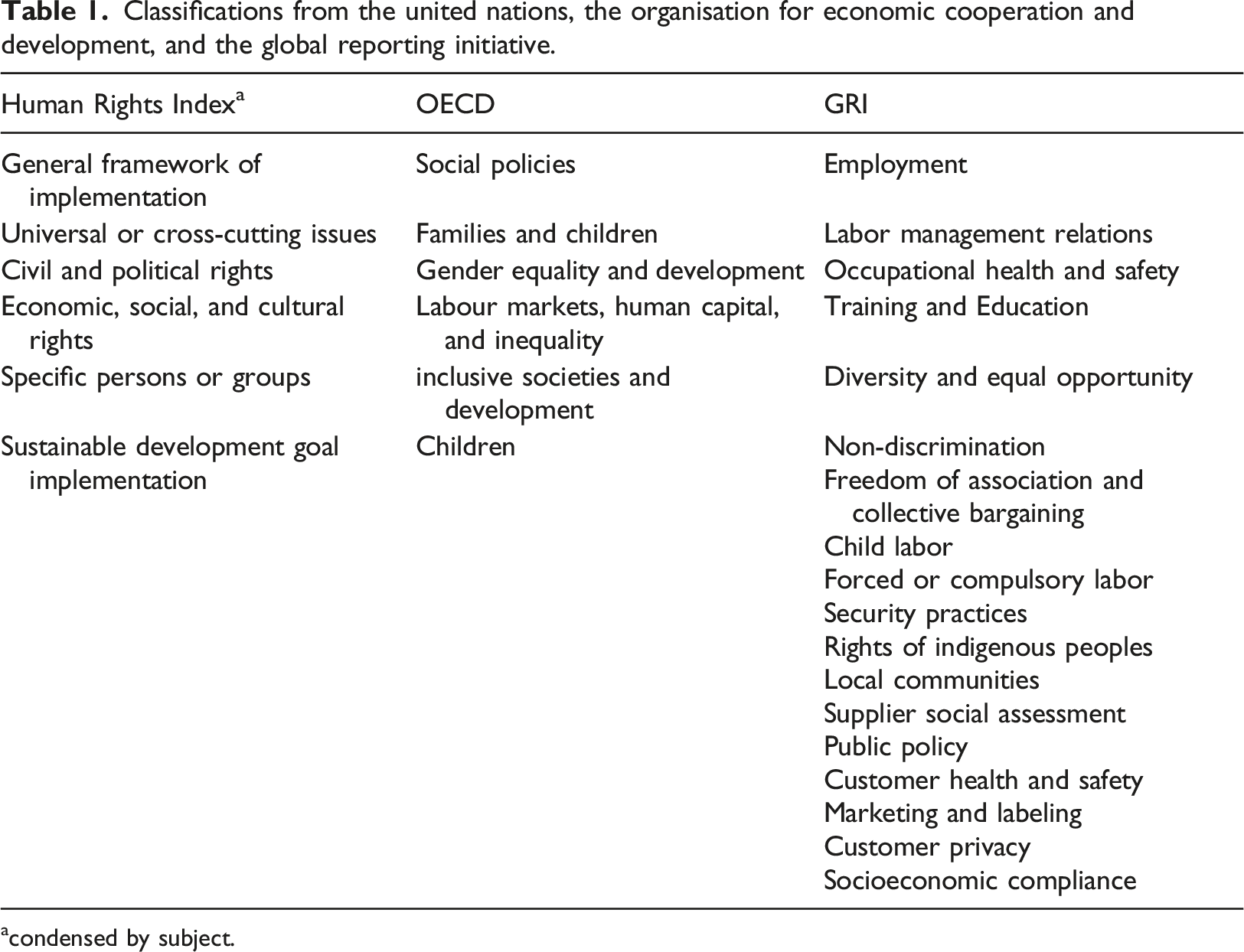
Classifications from the united nations, the organisation for economic cooperation and development, and the global reporting initiative.
acondensed by subject.
The UHRI classifies human rights violations across five broad themes: implementation (e.g., derogation, policies, treaties); universal or cross-cutting issues (e.g., genocide, self-determination, racial discrimination); civil and political rights; economic, social, and cultural rights; and specific persons or groups. This index has been used extensively in many areas of academic research, including issues related to gender and discrimination (Khosla et al., 2016), domestic violence (Mahserjian, 2015), immigration (Grange and Majcher, 2017), sanitation (Winkler, 2015), and even internet governance (Mihr, 2017).
The second framework is the OECD’s “social and welfare issues.” These include issues relating to social policies, families, and children, among others, listed in Table 1 (Organisation for Economic Cooperation and Development). This framework is often used in research on well-being and quality of life (e.g., Attah et al., 2016).
The third framework we draw from is the GRI, which provides standards to aid corporations and governments and has been used extensively to document corporate social responsibility and sustainability ratings for practitioners and academics (ref. Appendix A). The GRI has a sophisticated classification of social standards such as employment, labor-management relations, occupational health, and safety, etc.
We reviewed the literature using these frameworks to assess the operationalization and empirical testing of HR dimensions (e.g., Attah et al., 2016; Grange and Majcher, 2017; Vigneau et al., 2015), focusing on multinational business CHRV identification. The GRI has been widely used for sustainability and CSR reporting, the OECD framework is mainly applied in well-being research, and the UHRI is prominent in international legal and HR bodies’ research. Many methodologies used multiple databases besides those we reviewed and favored targeted keywords or search terms for analysis. Other studies indicated the shortcomings of the indices, such as the OECD’s standardized approach (Attah et al., 2016). Among these frameworks, the UHRI stood out for its broad coverage of HR issues applicable to various business contexts. Therefore, the UHRI shaped the initial structure of our framework, eliminating similar items or those irrelevant to IB. Thus, we began with a reduced list of items from the UHRI, renaming the dimensions based on our literature review. Dimensions include policies and institutions, physical integrity, empowerment, labor, health, specific groups and discrimination, poverty and growth, and the environment. See Appendix A for a detailed description of the framework with supporting literature.
Following the creation of the coding scheme, a face validity test with four independent coders confirmed that the categories fit the definitions (kalpha = .77). During this process, we incorporated emergent thinking, impressions, and feedback from the face validity results. Some categories were moved, removed, or edited for clarity and consistency, resulting in the initial coding scheme for our data analysis.
Methodology
Content analysis of corporate human rights violations
To systematically classify and evaluate CHRVs, we adopted a content analysis methodology, which involves systematically coding and categorizing information units (Krippendorff, 2004). We coded CHRVs published in media outlets utilizing a coding scheme from the HR framework developed in the preceding section to identify, categorize and compile CHRV data (Singh et al., 2021). Further, content analysis of textual data has been widely used in organizational research and is favored for topics difficult to study with traditional methods (Duriau et al., 2007). This research addresses a sensitive issue for companies accused of HR abuses. Thus, the unintrusive nature of content analysis (Duriau et al., 2007) allows for a broad look at violations across many companies and issues from the semi-neutral perspective of global news outlets.
Data & sample
We collected data from the Business & Human Rights Resource Centre (BHRRC) (https://www.business-humanrights.org), a UK-based nonprofit dedicated to advancing HR in business and eradicating abuse. The BHRRC’s automated online repository of HR news articles provides hourly updates of news and reports (positive and negative) of companies’ impacts on HR worldwide. It covers over 7,000 companies in over 180 countries.
We identified companies for our sample based on the sampling rationale used by the 2016 Corporate Human Rights Benchmark (CHRB) study. 1 Companies were chosen from the extractives, apparel, and agricultural products industries due to the severity of HR impacts of the industry, the extent of previous work on HR in the industry, including through industry-specific initiatives, the existence of other HR-related benchmarks covering the industry, and the size of the industry (Business & Human Rights Resource Centre, 2016).
Other factors for the company sample include market capitalization according to the Financial Times Global 500, if the company derives at least 20% of revenues from the relevant industry, at least six companies per continent, and industry balance. Our sample contained 91 companies. 2 See Appendix B for information on the company, headquarters location, region, and industry of each of the 91 companies in the sample. All news headlines between January 1, 2007- December 31, 2017, for each company in the sample were downloaded from the BHRRC web repository and copied into an Excel spreadsheet for coding.
Trained coders read each headline, identifying allegations of CHRVs. The original news source was then located through the BHRRC and coded as either “violation” or “no violation.” If an alleged violation occurred in the news source, coders identified the category according to the coding scheme. When links were broken, or information was unclear, researchers pursued other news outlets, company websites, and NGO websites to verify the allegations. Much time and energy were spent pursing legitimate accusations that specifically identified the companies in our sample.
Pilot study & refinement of coding scheme
First, coders were trained and familiarized with the coding scheme for the pilot study. The pilot study involved coding 10 companies from the sample, with the researcher independently coding the first five, the researcher and research assistant coding one company together, and the research assistant independently coding the final four companies. Questions, issues, and feedback were brought to the research team, contributing to adjustments to the coding scheme in an emergent process. As a result, the coding scheme was edited and refined, including updated definitions of dimensions and categories. A peer review of the coding scheme and a review of the past and planned methodology were completed. The refined coding scheme was tested for face validity with three independent coders, resulting in an acceptable Krippendorf alpha (kalpha = .78). See Appendix C for the refined coding scheme.
Validity & reliability
Consistent with qualitative research standards, co`ders were trained and assessed for reliability multiple times throughout the research. Following the initial pilot test, the research assistant was retrained and tested according to the revised coding scheme to ensure sufficient familiarity and understanding. A second pilot test was conducted to ensure consistency in coding. This consisted of the two coders coding the first five companies in the sample and discussing the codes and their appropriate application. Next, both coders independently coded the same ten companies and were reviewed for intercoder reliability. The scores reflected excellent levels of consistency for violation categories (kalpha = .80) and acceptable levels of consistency for whether the news article contained an alleged violation (kalpha = .66). The areas of possible disagreement for the presence of a violation were discussed and resolved.
Next, coders independently coded the remaining companies, with the researcher and research assistant coding 40 and 60% of the data, respectively. During the independent coding, regular communication was made between coders and the research team, identifying and resolving issues and questions in an emergent and consistent approach. Approximately two to 3 months into the independent coding process, each coder re-coded a random sub-sample of ten companies, which were reviewed for intra-coder reliability. Reliability scores for all tests were quite good, with violation kalphas of 0.83 and 0.77 for the researcher and assistant and the categorization of violations scoring kalphas of 0.79 and 0.87. Coders then completed the remaining companies, with the coding process completed in approximately 6 months.
In addition to the abovementioned training and reliability testing, thorough research notes and a timeline were kept throughout the process. We also incorporated emergent thinking as we refined, added, and modified aspects as we worked.
Findings
Dimension
Labor
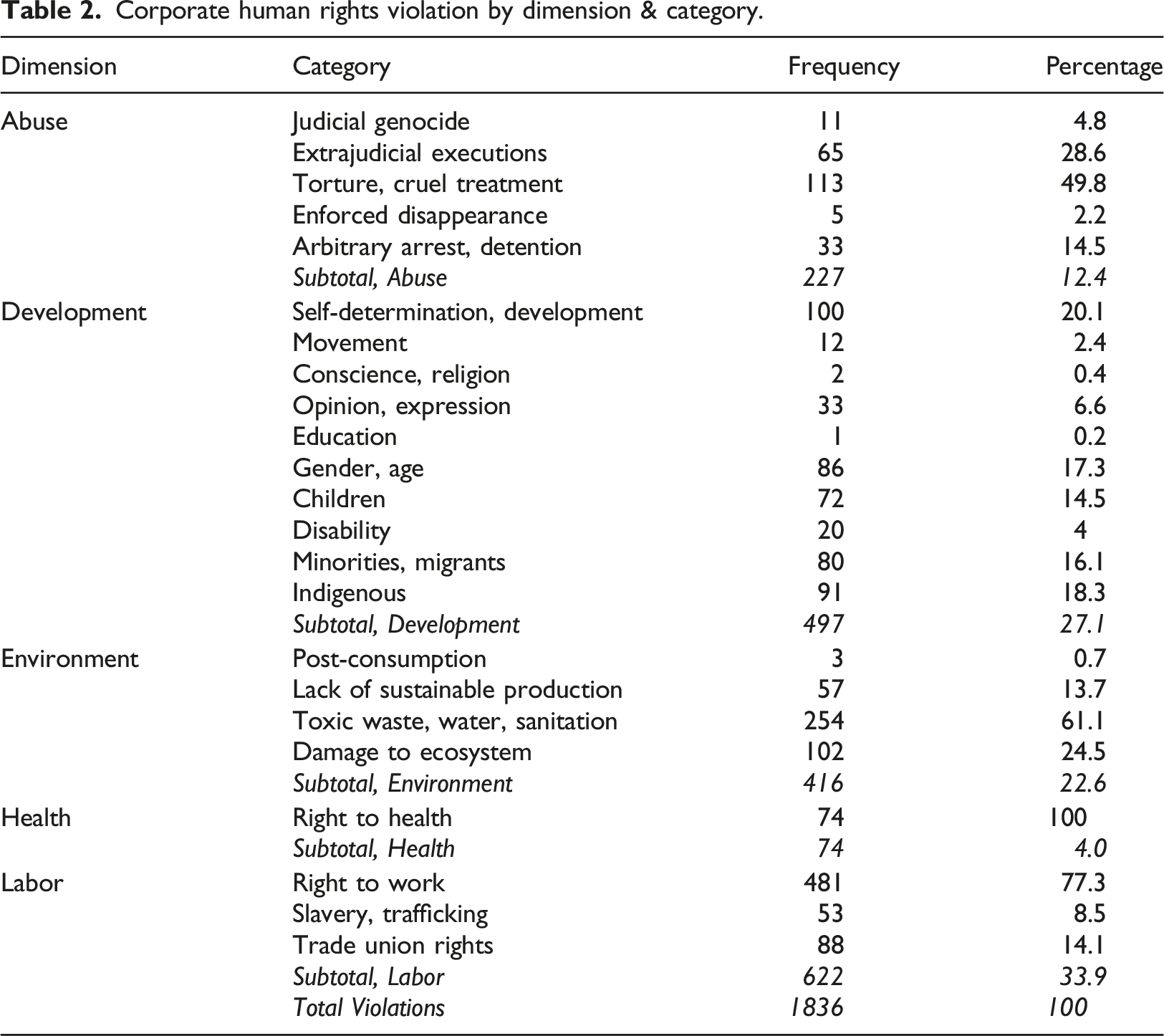
Corporate human rights violation by dimension & category.
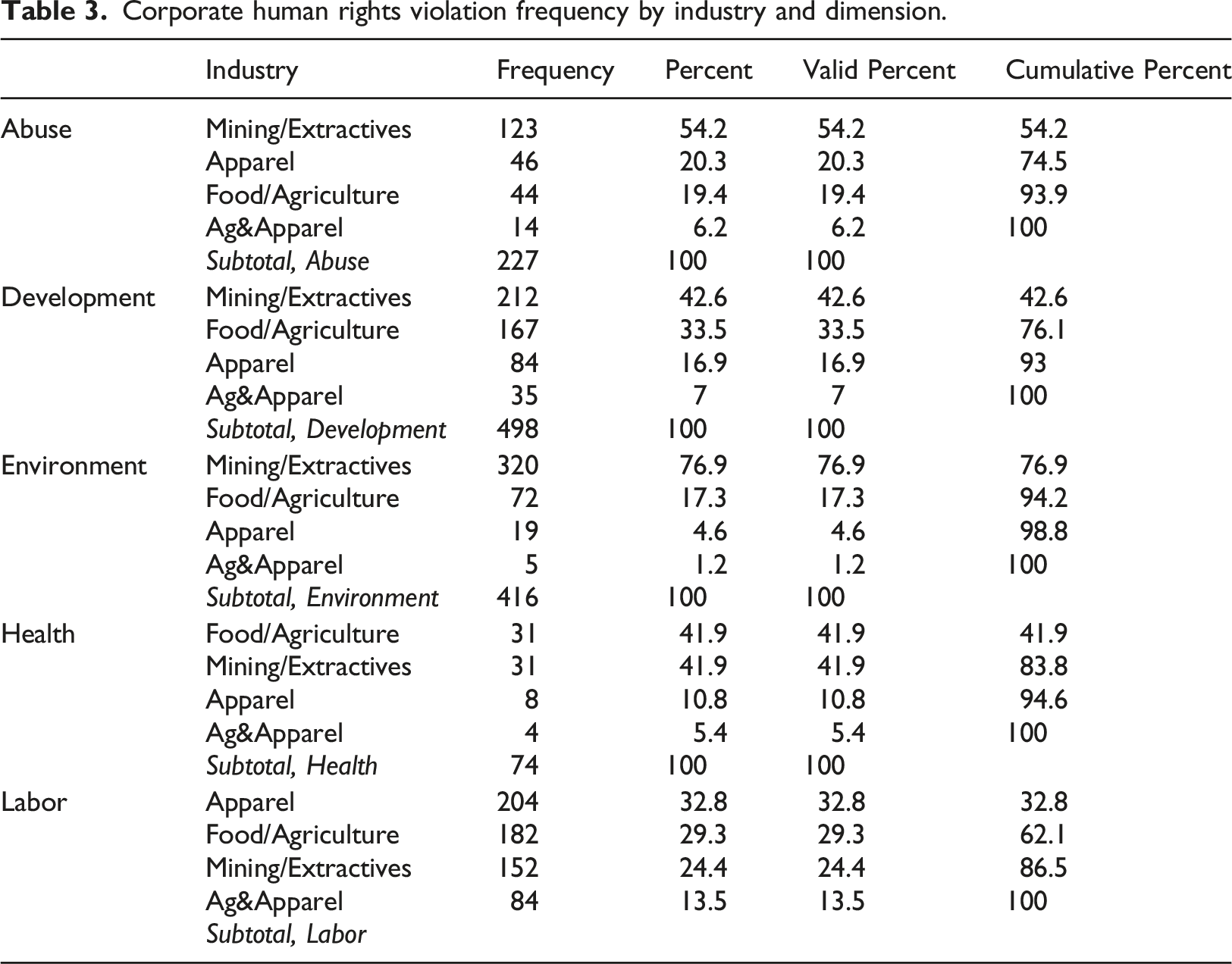
Corporate human rights violation frequency by industry and dimension.
Development
This dimension held approximately 27% of the cases, as indicated in Table 2, including discrimination by age and gender (17.3%), migration status (16.1%), child labor (14.5%), indigenous (18.3%), and self-determination & development (20.1%), frequently presented as loss of livelihood. Considering that this dimension encompasses many categories related to human development, we find a large percentage of development violations within our expectations based on previous research (e.g., Fernando and Patriotta, 2020; Kolk and Van Tulder, 2004; Kumar and Perepu, 2021). We also find that some violations are easier to directly implicate MNCs, such as child labor or gender discrimination, while other violations are less explicit. For example, farmers whose land was taken or were forced to sell it to large mining companies resulted in the loss of livelihood, a key component of the self-determination and self-development category. These situations are less visibly connected to companies and are often overlooked. Evidently, individuals with vulnerabilities, such as the indigenous, minorities, women, and children, are most likely to become victims of CHRVs in this dimension (Table 2), which is consistent with research on power relations and “otherness” (Primecz et al., 2016).
From an industry comparison in Table 3, we found that the mining and agricultural industries contributed to most (42.6%) of the development CHRVs while food/agriculture comprised 33.5% and apparel 16.9%. Our findings also indicate that most development related CHRVs occurred in Asia (34%) or Africa (24%). This dimension deals with issues of land-grabbing and loss of livelihood, including the impact on indigenous populations; thus, the higher frequency of violations corresponds to areas of the world that are resource-rich, including parts of Africa and Asia. Furthermore, these regions also tend to have more instances of child labor that often involve harvesting natural resources, such as the cocoa industry in the Ivory Coast or cotton picking in Azerbaijan.
Abuse
A surprising finding is the number of abuse-related violations with over 12% of all CHRVs. This dimension comprises physical and mental harm to individuals, including torture (49.8%), executions (28.6%), arbitrary arrests (14.5%), judicial genocide (4.8%) and disappearances (2.2%). Over 54% of all abuse violations occurred in the mining and extractives sector (Table 3); however, limited research in IB has exposed the harmful effects of this sector (e.g., Ayres, 2012; Santangelo, 2018). Other abuse violations occurred in the apparel (20.3%), agriculture (19.4%), and combined agriculture/apparel companies (6.2%). Government or paramilitary officials committed many of these violations on behalf of a country or company; however, with the power that multinationals hold, particularly in less developed parts of the world, their silence can be interpreted as complacency (Wettstein, 2012). For example, in the 2007 “Saffron Revolution” in Myanmar, the country’s removal of oil subsidies led to lengthy protests, eventually turning violent with arbitrary arrests, detention, and deaths (Taylor, 2007). Despite sanctions from the United States and European Union against Myanmar for HR abuses, oil companies worldwide continued to invest in the country’s natural gas and oil fields (Hogue, 2007). Eighty-five percent of all abuse cases occurred within Asia (44%), Africa (22%), and South or Central America (19%), where States typically have weak institutions and high dependence on revenue from natural resources. China, in particular, has been known for its high rate of state-issued executions, even for minor offences (Schrempf-Stirling, 2014). Within these conditions abusive violations often involve private or governmental security agencies, the violent quashing of protests, and even arbitrary executions, including those of human rights defenders.
Environment
Our findings show a significant impact of MNCs on the environment, especially from the mining and extractives sector (76.9%; Table 3) and agriculture (17.3%). In particular, deforestation (Pîrvu, 2020), mining, and extraction activities cause damage to the ecosystem (Yeganeh, 2019), resulting in loss of plant and animal species. For instance, the Amazon region plays an important role in preserving biodiversity and stabilizing the climate by storing large amounts of carbon that otherwise would lead to climate change; however, beef and leather industries have had negative impact on the region. Approximately 80% of deforested Amazon land is used for cattle ranching, and more than 90% of its deforestation was illegal, with many ranches using forced labor (Greenpeace, 2009). Nine companies from our sample were found to be purchasing cattle products fueling the deforestation of the Amazon.
Approximately 25% of environmental CHRVs can be attributed to damage to the ecosystem. Importantly, these accounts also included cases related to company contributions to climate change, particularly from the oil and gas industry. The HR impacts of these actions alone are immense as oil and gas companies have been found to have provided disinformation about climate science while actively releasing vast amounts of carbon into the atmosphere, affecting not only individuals regionally, but all over the world.
Significantly, toxic wastes, water, and sanitation represent 61% of environmental violations (Table 2). Often this results from MNC chemical wastes or other runoff infiltrating the surrounding communities’ water supply. For example, dumping industrial hazardous waste or discharging wastewater into surrounding lands and waterways can substantially impact the environment and community (India Resource Center, 2007). Most of these cases occurred in Asia (31%), Africa (25%), and North America (22%), with the Deepwater Horizon oil spill representing a major CHRV in North America.
The CHRVs regarding lack of sustainable production (13.7%) or post-consumption responsibilities (0.7%) were limited. These issues are less identifiable to the public and media outlets and have been less visible in HR research, possibly due to lack of consensus regarding corporations’ responsibilities after consumers have used the product. Some might argue that this is the consumer’s responsibility more than the company’s. With the United Nations’ Sustainable Development Goals (SDGs) and increased attention to climate change, this area may be growing; however, our findings indicate that these issues received little attention for the 10-year period examined.
Health
This smallest dimension reflects fewer instances of company actions resulting in adverse health effects to consumers and community members with only 4% CHRVs overall; however, most resulted from the agricultural (41.9%) and mining (41.9%) industries and occurred in Asia (36%), Africa (22%), and North America (17%). Accordingly, IB has researched this area very little (Giuliani and Macchi, 2014). Some resulted from product deficiencies, such as when food inspectors found seven times the permissible amount of lead in food products (Rana, 2015), while others resulted from production-related emissions, such as respiratory diseases in communities caused by ‘fly ash’ from the thermal power plants of coal mines (Kasturi, 2010). This category deserves more attention to understand corporate activities’ impacts on one’s health.
Location
When examining the location data, North American and European companies are most frequently accused of CHRVs, with 17.6 and 33.2 violations respectively when the data has been normalized by dividing the number of violations (in the headquarters country and total violations) by the number of companies from that country (see Figure 1). In line with previous research (e.g., Giuliani and Macchi, 2014), normalization of the data by the number of companies per region indicates a pattern of CHRVs by Western companies in nations other than their own. After controlling for the number of companies analyzed per country, Table 4 indicates that Sweden and Switzerland, each represented by a single company, lead, along with the UK by number of CHRVs with 65, 46, and 49.6 CHRVs respectively. Location: Headquarters and corporate human rights violation. Corporate human rights violation by headquarters country.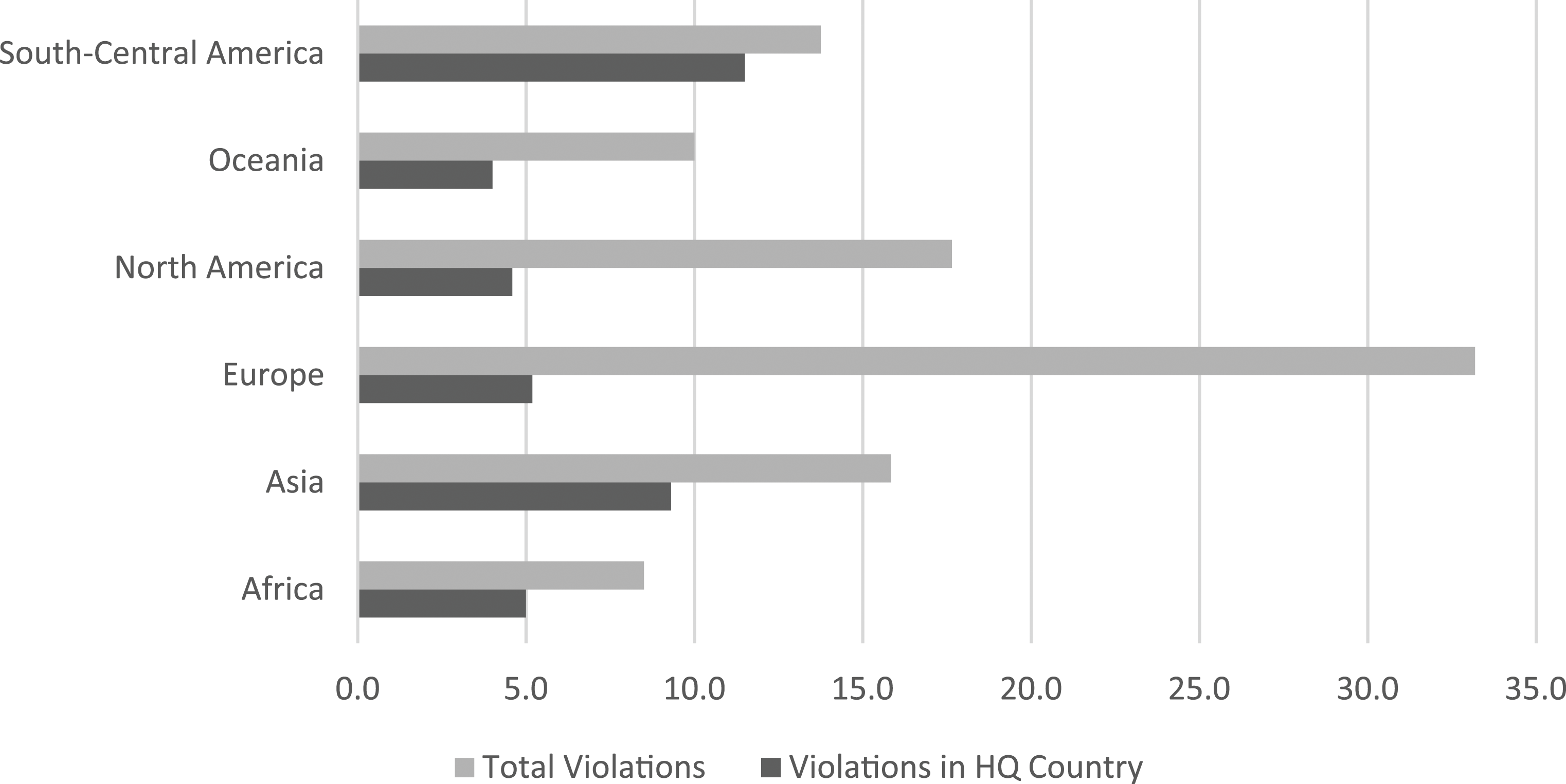
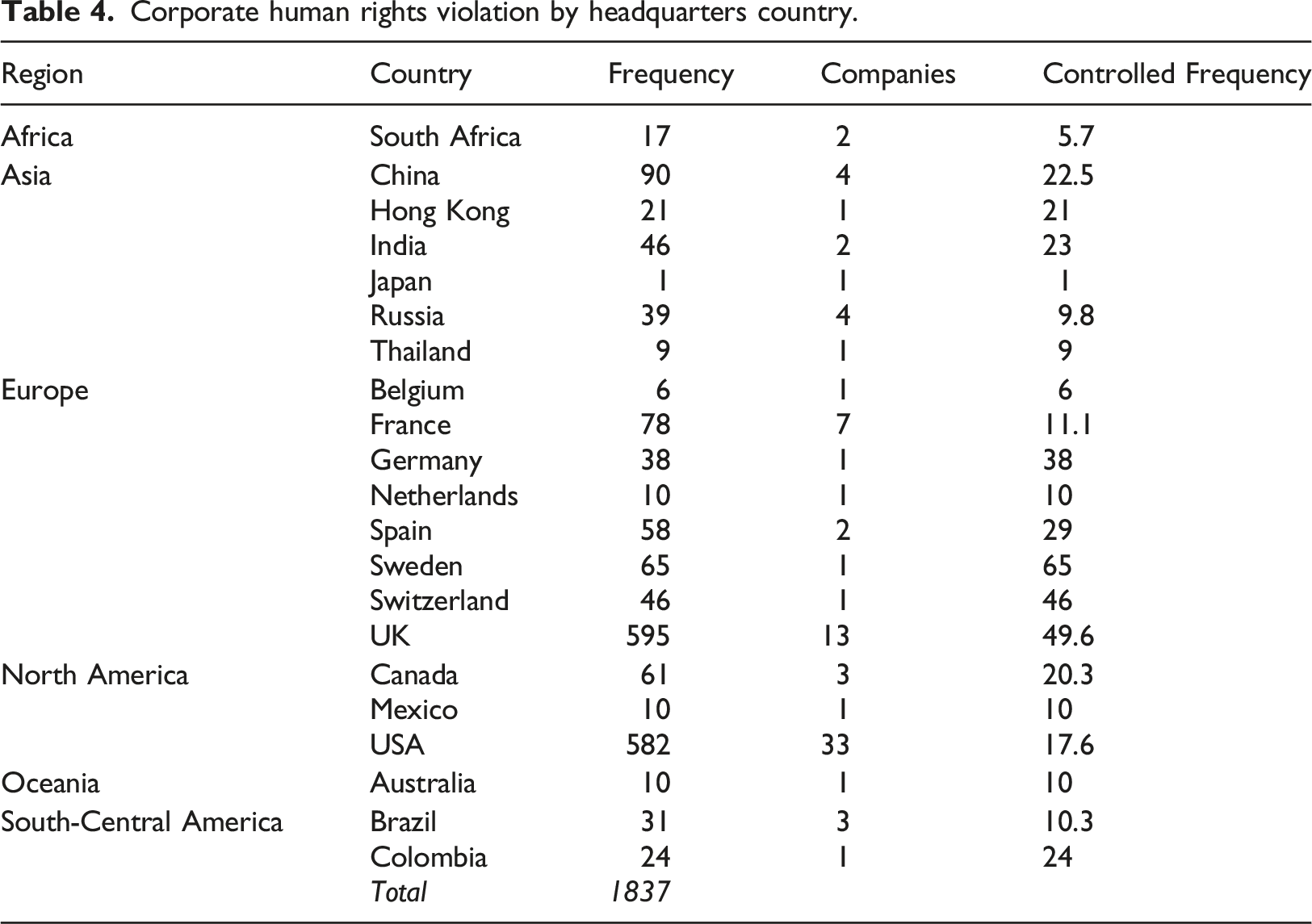
The analysis also reveals That companies from South and Central America (11.5), Asia (9.3), and Africa (5.0) violated the HRs of individuals within the same region as their headquarters. Compared to the findings of Europe (5.2), North America (4.6), and Oceania (4.0), this is an intriguing finding. One might assume that companies (and governments) would try to protect their communities, taking advantage of “others” instead; however, our findings suggest that companies from less-developed nations are apt to violate the HRs of citizens in their regions. This aligns with previous research that found that MNCs were less likely to violate workers’ rights than local firms (Colovic et al., 2019). The authors suggested that this could be due to the regional institutions influencing local firms but not MNEs. While we do not evaluate causal factors in this study, possible explanations could be related to regional institutions, as suggested by Colovic et al., or competition from Western MNCs has driven local MNCs with fewer resources to reduce costs and increase efficiencies in any way possible, including through CHRVs. Weaker enforcement and worker protection mechanisms in less developed and emerging economies may further exacerbate such actions.
Discussion
This research integrates HR into the sociology of radical change (Burrell and Morgan, 1979) and the emancipatory agenda of critical CCM. In seeking alternatives to the systematic oppression of humans worldwide (Romani et al., 2020), we find that CHRVs represent an often-overlooked element of structural oppression that occurs through the context of commercial relationships between countries. Our findings of CHRVs in the domains of abuse, development, environment, health, and labor represent a wide range of impacts that the existing global economic system has on individuals who this system has exploited, and ignored by those who benefit from the system, in part due to their perception as “others.”
With Romani and colleagues (2018), whose work focuses on denaturalization, reflexivity, and the goal of emancipation, we promote this agenda within the context of international HR. Our work denaturalizes the historical power inequalities associated with the concepts of national cultures that originate from colonial ambitions, questioning a system that has been taken for granted and believed to be unchangeable. Through our methodological approach, we demonstrate reflexivity in our own backgrounds and assumptions and in our analysis of “otherness” within the global economic system. Critical CCM focuses on issues of domination and exploitation and attempts to change the existing social order for the better. Our work aims to emancipate those “others” by creating awareness and criticizing oppressive regimes that elicit CHRVs. With existing calls for denaturalization through various methods and analysis of alternative voices (Romani et al., 2020), this research builds the perspectives of those whose voices are lost due to CHRVs.
Additionally, while much critical CCM examines relationships of cultural power disparities on an individual level (e.g., Mahadevan et al., 2020), and their impact on organizational behavior (e.g., Kirkman et al., 2017), our study examines these relationships on a macro level by focusing on cultural and national differences driving a sense of “otherness” and disregard for the rights of “others.” This form of structural oppression is primarily relegated to the Global South, or as other critical CCM scholars have called it, the Majority World (Romani et al., 2020). Moreover, this is consistent with research on postcolonial theory that bases national “otherness” within binary terms (e.g., North/South, East/West) and with the power inequalities from these histories (Fougère and Moulettes, 2007). Our research highlights the broad level of systematic oppression and exploitation on the part of mostly Western companies. These stark disparities indicate a perception of “otherness”—that those affected are somehow less deserving of HRs than individuals and communities in their home countries. Since the creation of the United Nations Guiding Principles on Human Rights (UNGPs) in 2011, businesses cannot feign ignorance or transfer blame to the lack of institutions in host countries. Furthermore, complicity with state or private security abuses, such as those we observed, have been identified as the responsibilities of corporations (Ruggie, 2008).
CCM research intersects with various fields, including ethics, diversity management, languages, and culture, among many others (see Szkudlarek et al., 2020); however, this study contributes to another intersecting field to the CCM domain—that of business and human rights. Additionally, and even more importantly, it highlights the need for managerial competencies in the corporate responsibility to respect human rights of all people, even those who are beyond one’s immediate purview and who may be considered as “others”.
Finally, another intersecting field of research in CCM is cross-cultural ethics. Where research in CCM ethics identifies challenges for management regarding inconsistent understandings of value systems across cultures and individuals (Szőcs and Miska, 2020), our research on HR represents a failure to uphold a basic international norm regarding the protection of human rights. The rights identified in the UDHR have been adopted by all member States of the United Nations and thus are recognized as normative ethics with universal support. In fact, in contrast to other responsible business terms like CSR, respecting human rights is an obligation, not a voluntary option, as in the case of CSR (Wettstein et al., 2019). Nor is it a misalignment of cultural values, as in the argument favoring cultural relativism (Donaldson, 1996). Unfortunately, our research shows that several companies worldwide may regard respect for HR as voluntary or optional.
Implications
Our research adds to the field of critical CCM by applying HR to the emancipation agenda. We find wide-ranging and systematic CHRVs worldwide, but primarily in the Majority World. As such, we identify issues related to the dignity of human life that many have been deprived of due to globalization.
By identifying specific domains and categories of CHRVs we highlight the variety of ways a company can impact HRs, directly or indirectly, adding to the theoretical understanding of existing systems of oppression and exploitation in global commerce. Through awareness of the oppression of distant “others,” we aim to improve the situation of the oppressed by highlighting the Westernized global system of commerce that relies on disregard for the humanity of “others.” We hope this research will foster theoretical and practical action in alternative modes of economic development that support and protect the HRs of all.
Our analysis highlights how marginalized groups face discrimination, exclusion, and exploitation. This awareness can help managers recognize inequalities and power dynamics. More importantly, it can help managers to develop alternative modes of management and redefining of existing concepts to address oppressive practices that lead to CHRVs. Hence, our findings regarding various CHRVs can assist critical CCM practice and theory to focus more prominently on the social justice aspects of corporate and human organizations.
CCM also recognizes the importance of diversity and inclusion as essential components of successful organizational management (Romani and Holgersson, 2020). By identifying rights denied to various groups worldwide, our study enables managers to develop alternative modes of management for these issues and understand and incorporate the concerns of marginalized groups within the workplace. Understanding and improving the company’s HR record can enhance the firm’s reputation to external stakeholders and create a more inclusionary business environment for internal stakeholders (Marslev, 2020).
In addition, addressing CHRVs can positively impact organizational performance. For instance, investors look at firms with better HR records more favorably (Janney et al., 2009) and those who join multi-stakeholder initiatives that support HR, such as the United Nations Global Compact (Janney et al., 2009). Also, consumers with a higher sense of political rights tend to patronize or join responsible firms (Puncheva-Michelotti et al., 2010). A positive HR record can also lower litigation and compliance costs (Schrempf-Stirling and Wettstein, 2017) and facilitate the social license to operate in local communities (Ruggie, 2008).
Furthermore, examining CHRVs can inspire managers to reflect on the organization’s impact on society more broadly and adopt policies and practices that consider alternative modes of value creation beyond the traditional profit-based focus. It is also an opportunity for leaders of organizations to set the tone from the top and raise awareness regarding corporate respect for HRs.
Limitations & future research
While every attempt was made to conduct valid and reliable research, this study has several limitations that can lead to future research opportunities. First, our sample was limited to the 2016 CHRB, representing 91 companies from three industries. Future research investigating a larger number of companies from diverse industries could be a valuable source of knowledge. In addition, many of the companies in our sample come from developed countries. Future research should also investigate more companies from developing countries. This would help understand the overall HR issues worldwide and provide valuable building blocks on research relating to multinational versus local company violations (e.g., Colovic et al., 2019) and the research on emerging market multinationals and HR (Wettstein et al., 2019). Second, our data was limited to reports from the news media and NGOs. Accordingly, some of these data points could be allegations of violations, while others are verified abuses. The possibility of interviewing the leadership of these companies would provide helpful insights for future research. The companies in our research faced media attention for their alleged violations. Given the potential financial and reputational losses that companies can experience from HR violations (Bağlayan et al., 2018), more research is needed to understand why companies make such decisions and their fallout. Our research also found instances of cooperation with governments accused of genocide. These findings should shed light on companies and countries regarding their trade and investment decisions, as well as MNC operations, as previously indicated by Kolk (2016), and following the research agenda item “anatomy of corporate wrongdoing,” as described by Wettstein and colleagues (2019).
Furthermore, many violations from the mining and extractives industry need to be further researched, including the many abuse allegations. Additionally, do other industries have the same opportunities to violate but choose not to? If not, why? Further examination of the categories we have identified, the institutions and other contextual factors that may influence these violations are warranted. Previous research has evaluated how companies respond to allegations (Kamminga, 2017), litigation that prompts policy change (Schrempf-Stirling and Wettstein, 2017), and other corporate governance issues (Zagelmeyer and Sinkovics, 2019) and tools (Fasterling, 2017). Future research can extend these studies to incorporate the violations that we have found. For example, examining the company’s response to allegations and subsequent changes in the mining industry compared to the apparel industry may provide insight into the industry discrepancy we identified.
Lastly, the possibility exists for human error in coding despite our attempt to limit such errors through a meticulous research design and methodology. While our research team is comprised of diverse national backgrounds, we have all lived and worked in the United States for many years and may have interpreted this study through a Western lens despite our reflexivity.
Conclusion
In this research, we identified a coding scheme to classify CHRVs and elucidated it with a large sample of multinational CHRV allegations. Our findings demonstrate a wide variety of CHRVs, with most occurring in developing countries by Western companies, aligning with existing supremacy of “the West” power relations (Primecz et al., 2016). This research results from careful attention to previous studies in related fields and is grounded in empirical CHRV data over ten years. We found patterns related to violation location (mostly in developing nations) and dimensions, with labor, development, and environmental violations representing the majority. Although comprising approximately 12% of total violations, the number of abuse violations is surprising. We also found the mining and extractives industry to have the most violations overall and in nearly every category, as is supported by research on the industry (e.g., Buchanan and Marques, 2018).
In line with Szőcs and Miska (2020), this research demonstrates the need for multinationals to take a moral stance upholding universal principles of HR. It calls for recognition of the fact that managers and business leaders are decision-makers who are influenced by sociological phenomena. This involves recognizing workers, suppliers, and local communities, not as “others” but as human beings deserving the same rights as the managers.
This study brings practical awareness to managers regarding potential violations such as those resulting from complicity with abusive host governments (Wettstein, 2012), the potential damage to the ecosystem, or damage to a community’s livelihood due to existing practices. Awareness of and training in these issues can help CCMs navigate complex situations to develop environmentally and socially responsible policies and practices concerning all people affected by the firm. Thus, it is incumbent on CCM scholars and practitioners to prepare tomorrow’s leaders with a solid understanding of ethical decision-making (Szőcs and Miska, 2020) and respect for human life regardless of “otherness”.
In addition, policymakers can use this research to inform decisions based on environmental concerns, labor, trade, and cross-border sourcing and employment. International organizations may further investigate the power relations involved in exploiting developing countries (Primecz et al., 2016).
Finally, academics, business, and government leaders worldwide must recognize and reassess their research, policies, and decisions based on the conceptualization of those who are different as equally deserving of each of the HR outlined in the Universal Declaration of Human Rights (UN General Assembly, 1948).
Footnotes
Acknowledgements
We would like to thank Isabella Petti for her hard work, dedication, and thoughtful insights to this project.
Declaration of conflicting interests
The author(s) declared no potential conflicts of interest with respect to the research, authorship, and/or publication of this article.
Funding
The author(s) received no financial support for the research, authorship, and/or publication of this article.
