



Abstract
Understanding how informal relationships such as Wasta operate in different cultures is necessary for multinationals to thrive. However, studies on the effect of such networks on multinationals' activities in Arab countries remain limited. The aim of this study is to examine the effect of informal inter-organizational business relationships on the satisfaction and performance of firms in Arab Maghreb countries. This research is based on a self-administered survey with 534 procurement managers from Morocco (n = 220), Algeria (n = 148) and Tunisia (n = 166). We used structural equations to test our hypotheses. The results showed that Wasta has almost the same effect on interorganizational relationship in the three Maghreb countries. Specifically, Mojamala (affection) does not influence the satisfaction of the B2B relationship within the three counties under study, while Hamola (reciprocity) and Somah (trust) positively influence this relationship. The analysis showed that the negative side of Somah has a negative influence on satisfaction only in Algeria. The results also showed that satisfaction positively influences the performance of Maghrebian B2B partners. These results show that the phenomenon of Wasta is rooted in the cultures of the Maghreb countries and underscore the need to conduct further studies to understand it and to raise awareness among multinationals that plan to do business with the local partners or those who are planning to relocate. Implications for IB, theory and policy are discussed together with the study’s limitations and suggestions for future research. Through this study, we contribute to the development of research on cross-culture management by showing the effect of Wasta as a cultural phenomenon on business relations in the Maghreb countries. Our research is the first to investigate the effect of the informal interorganizational relationship on the satisfaction and performance of B2B partners.
Introduction
In the last decade, the study of the effect of social and interpersonal relationships on business practices in different parts of the world has gained important attention in international business research (Ali and Weir, 2020; Velez-Calle et al., 2015). For example, doing business successfully in Korea requires the skill to read the Nunchi, which means the look in a person's eyes, and it is a nonverbal response to a question (Fatehi, 1996); while in Beijing, it requires a good relationship with the government (Jiang et al., 2018). However, studies of these relationships have analyzed mostly the developed countries (Albin Shaikh et al., 2019; Jiang et al., 2011; Mysen and Svensson, 2010) and China with Guanxi. Yet, these relationships are very present in countries of the Arab world which rely heavily on them to develop business (AlHussan et al., 2017; Hofstede, 2001) in the absence of strong formal institutions (Weir et al., 2016). This research used social networks, institutions, social capital, and identity as a theoretical framework to explain and explore the effect of an individual's membership in networks or groups or alliances in influencing business decisions and practices (Coleman, 1988; Putnam, 1995; etc.).
The countries of the Arab Middle East are of great importance to the world, be it politically, geographically or economically (Hutchings and Weir, 2006; Iles et al., 2012). This importance has encouraged scholars to investigate and explore the Middle Eastern countries. However, research has focused on a few countries and remains scarce (Khakhar and Rammal, 2013; Iles et al., 2012). The studies done on this topic have focused on the context of the Gulf countries (Saudi Arabia, UAE), Egypt (Mohamed and Mohamed, 2011) and Lebanon (Tlaiss and Kauser, 2010). Moreover, most of these studies were interested in investigating the impact of Wasta on human resources management (Al-Twal and Aladwan, 2020; Harbi et al., 2016; Abalkhail and Allan, 2016; Mohamed and Mohamad, 2011). However, the literature on business in Arab countries highlights the contextual differences that exist between Arab and Western countries (De Waal and Frijns, 2016). These differences are manifested at the early stage of Arab countries, their religion, their level of economic development, their tribal and family structure, the important role of relationships (Wasta) in business, and the centralization of power in their countries and organizations. These differences influence the business environment in these countries (Stephenson et al., 2010).
Wasta is a practice that is highly recognized in Arab countries, and which plays an important role in making important decisions (De Waal and Frijns, 2016; Branine and Pollard, 2010; Stephenson et al., 2010). Wasta is an Arabic term that describes social networks rooted in the membership of a family or group or tribe, and using the relationships to circumvent existing procedures (considered bureaucratic) to achieve goals in the shortest time possible (Cunningham and Sarayrah, 1993; Hutchings and Weir, 2006). It means the act of one person mediating or serving as an intermediary on behalf of another party. Wasta is the mediation itself, and the Wasit (wasset) is the person doing the mediation (De Waal and Frijns, 2016). It is known in North African Maghreb countries by the name “Ma'arifa or piston” (Iles et al., 2012). It can be derived from a powerful family tie, position in government or business, respect for people's achievement, and one's professional network (De Waal and Frijns, 2016). Wasta's conception is considered as the Arabic manifestation of social exchange theory (Ali, 1996). The latter is considered the dominant theory in the study of exchange relationships and is used to explain and understand trade relationships in developed economies (Van Tubergen and Volker, 2015) and some emerging economies such as Russia (Albin Shaikh et al., 2019; Tatarko and Schmidt, 2016; Batjargal, 2003).
The studies done so far on Wasta have tried to conceptualize it (Alsarhan and Valax, 2020), compare it to Guanxi (Hutchings and Weir, 2006), study its effect on development (Cunningham and Sarayrah, 1993; Oukil, 2016), on human resource management (Alsarhan and Valax, 2020; Alsarhan et al., 2021; Tlaiss and Kauser, 2011; Al-Enzi, 2017), and on business climate (Loewe et al., 2007). As for the effect of Wasta on the B2B relationship, there is only one study done by Berger et al. (2020) whose purpose was to validate a measurement scale of Wasta in the context of the B2B relationship.
In the Wasta literature, the majority of countries studied are in the Middle East such as Jordan (i.e., Al-Ramahi, 2008; Ali et al., 2015), Kuwait (i.e., Al-Enzi, 2017; Alenezi et al., 2023) El-Enzi et al., 2017), and Egypt (i.e., Mohamed and Mohamad, 2011). However, the Arab Maghreb has not received any attention and has not been studied. To the best of our knowledge, there are no studies on the effect of Wasta on inter-organizational relationship satisfaction and business performance. Yet, Wasta influences people's daily lives on both a personal and professional level. Thus, the study of Wasta and its effect on inter-organizational relationship satisfaction and performance is of great importance. The study will show the effect of Wasta on satisfaction and performance in a B2B relationship (inter-organizational relationship). Such results are important for foreign investors wishing to access the Arab markets in general and the Maghreb markets in particular. Thus, the results of this study will allow these investors to know the role of Wasta in business relationships and consequently determine the way to better apprehend this phenomenon. Through this research, we wish to contribute to cross-cultural management scholarship by providing evidence on the effect of Wasta as a cultural phenomenon in business in the Maghreb countries. Indeed, understanding how informal networks operate in different cultures is necessary for multinationals to thrive (Michailova and Worm, 2003; Horak, 2022). They play an important role in coordinating business activities in both developed and emerging markets, and it is therefore important to understand how they operate (Horak, 2022). Informal networks also influence human resources management in multinational subsidiaries (recruitment, development, etc.) and the actions of expatriates, such as team management and well-being outside the workplace (Horak and Paik, 2023). Thus, personal relationships and especially informal ties and networks are the key to business success in emerging markets (Horak and Paik, 2023). It will allow us to know if Wasta has the same effect in the Maghreb countries, which will have implications in the understanding of this phenomenon in the context of the studied countries. The Maghreb countries have similarities and the study of Wasta will allow us to know if Wasta acts in the same way on inter-organizational relations. The results of this study contribute to the development of literature on international affairs related to Arab countries in general and the Maghreb countries in particular. This study contributes to the theory of social exchange by showing that it can explain an exchange phenomenon that takes place in a different cultural context. Indeed, Wasta remains a rather interesting phenomenon but not much explored and the theory of social exchange constitutes a theory that allows building a solid theoretical base that will amply explain the particularities of this phenomenon.
The choice to study and compare the Arab countries of the Maghreb is due to the fact that these countries, as already mentioned, constitute the gateway to Africa and have a common past and present cultural features. The comparison between these countries will allow us to understand the anchoring of Wasta in the practices of the societies of these countries and to know if Wasta has the same effect in the three countries studied. The Maghreb countries are considered as the gateway for foreign firms to Africa (this continent is rich in resources and offers several opportunities) and the study of the implications of this phenomenon on inter-organizational relations will enrich the scarce research on the subject, participate in the development of a theoretical model but also allow foreign investors and multinationals to understand the business environment in these countries. This article begins with a review of the literature on social networks and Wasta. Then, we will present the hypotheses of our research, the research methodology and finally, we will discuss the results obtained.
Context study
The Maghreb is made up of five countries: Mauritania, Morocco, Algeria, Tunisia and Libya. On February 17, 1989, these countries signed the treaty establishing the Arab Maghreb Union (McKeon, 1991). These countries share a common history, having been under the domination of the same dynasties - such as the Carthaginians and the Romans - for centuries (McKeon, 1991). It was only after the Second World War that the region was carved up into nation states. These nation states remained under colonialism until the second half of the 20th century. In 1951, Libya was the first Maghreb country to become independent, followed by Morocco and Tunisia in 1956, Mauritania in 1960 and finally Algeria in 1962 (McKeon, 1991). The nation states formed were characterized by heterogeneous populations with little awareness of common goals (Barnett et al., 2013). According to them, many countries in the region still continue to develop a national identity and national allegiance and therefore individuals in these states may identify more strongly with their tribal group than with their nation-state, they have more of a tribal identity than national. McKeon (1991) notes that “the Maghreb's common religion and history, coupled with a common people, established significant and fraternal links which foster a common cultural identity.” Furthermore, the Arab world shares similarities regarding certain characteristics such as oil, Islam, Bedouin historical roots, a common history of foreign rulers and colonialism (Hickson and Pugh 1995). The Maghreb population, which is made up of Arabs and Berbers, shares similar identity traits such as the Arabic language, the Islamic religion, an identical history and a similar culture (Zoubir, 2012). In 2021, according to UNCTAD data, the five Maghreb countries had a population of 104,868 million, broken down as follows: Mauritania: 4615 million, Morocco: 37,077 million, Algeria: 44,178 million, Tunisia: 12,263 million and Libya: 6735 million. This population is characterized by an abundant, young and skilled workforce, spread over a territory of 6 million km (Khalfaoui and Derbali, 2021).
In the Middle East, Wasta has its origins in the tribal system of social organization in Arab countries for millennia (Al-Ramahi, 2008). It still exists because of the tribal structure of these societies (Barnett et al., 2013). The tribal structure of Arab societies has been influenced by the colonization that lasted for a long time. Indeed, in order to dominate the local population, the colonizers allied themselves with tribal leaders and influential families who were rewarded for their loyalty with land grants, a delegation of power at the local level, tax exemptions, special subsidies, and the allocation of positions (El-Ghonemy, 1998). In this way, the patronage system was facilitated and accentuated, and Wasta became like a cultural norm. The role of the tribe allied with the colonizers’ became major and its members found themselves with important advantages and prerogatives. For example, Morocco was colonized for 44 years by France and Spain, and French culture has left its mark on management practices. Hofstede (2001) estimates that Morocco is above the world average. With respect to Moroccan society, Geertz (1979) found that the Moroccan view of the family takes the form of friendship and patronage. Moroccans build networks of reliable relationships that they can rely on throughout their lives, creating extended families. Geertz (1979) found that real social ties, obligations, attachments, loyalties, and networks are of great importance to Moroccans. At the heart of this network is a powerful and wealthy man. The Maghreb countries are very close to Europe (9 miles between Morocco and Spain), and this geographical position makes them a gateway to Africa and a magnet for international investors.
Islam as an essential component of Maghreb culture
To be considered a Muslim, one must observe the five pillars of Islam and respect the Islamic code of ethics (Abuznaid, 2009). Islam governs the daily life of Muslims including the economic sphere; indeed, business decisions are guided by faith (Iman). That is, following Sharia law, engaging in whatever is Halal (allow) and avoiding whatever is Haram (Prohibit) (Alawneh, 1998).
In Islam, there are two main fundamentals of conducting business: justice and freedom (Abeng, 1997). Justice must be applied by everyone and with anyone, even relatives and opponents. God said: “O believers! Observe justice strictly and be witnesses (truthful) as Allah commands, even if it is against yourselves, your father and mother or close relatives. Whether it is a rich man or a laborer...” (4:135). The second foundation is the freedom of commercial transactions, which is manifested in the right of ownership, the legality of trade and the presence of mutual consent. According to Abeng (1997), mutual consent can only exist when there is a willingness, honesty, and sincerity in the face of coercion, fraud, and deceit. Abeng (1997) cites six important principles in commercial justice which are full compliance with promises; accuracy of weights and measures; truthfulness, sincerity and honesty; efficiency (work must be done without any failures or omissions); selection of merit; and investigation and verification. The trader is free in his choices and Islam provides him with a framework to exercise his choice (Ali and Gibbs, 1998).
Islam condemns Wasta and considers it unjust because those who have no power or privilege are being marginalized. It should be noted, however, that there are differences between Wasta and Guanxi. Guanxi is based on Confucianism, which emphasizes the strengthening of collective bonds (Hutchings and Weir, 2006). This being said, Wasta is not compatible with Muslim teachings. In the Holy Quran, there are clear punishments for those who resort to corruption (here, Wasta is equated with corruption). In the Quran, Muslims are warned that “indeed, the penalty for those who wage war against Allah and His Messenger and strive upon earth [to cause] corruption is none but that they be killed or crucified or that their hands and feet are cut off from opposite sides or that they be exiled from the land. That is for them a disgrace in this world; and for them in the Hereafter is a great punishment” (Quran, 5, 33). We also read in Surat Al baqarah (the cow) thus: “And do not consume one another’s wealth unjustly or send it [in bribery] to the rulers in order that [they might aid] you [to] consume a portion of the wealth of the people in sin, while you know [it is unlawful]” (Quran, 2, 188). These versus clearly show that corruption is forbidden in the Muslim religion. However, it is used by individuals in the Middle East to hold the positions they desire, which is frowned at (Cunningham and Sarayrah, 1993).
Theoretical framework of informal inter-organizational relationship
The theoretical analysis of the mechanisms that govern the exchange relationship between trading partners can be done through different aspects of exchange such as transaction costs and resources (Tsanos and Zografos, 2016). According to the relational exchange theory (Ring and Van de Ven, 1992), relational norms such as cooperation, flexibility, and information sharing are elements of governance that can be replaced by contracts as the only medium of exchange (Vijayasarathy, 2010). These norms provide internal control over the behavior of the partners involved in the exchange through internalization and moral control (Joshi and Stump, 1999). Social network theory suggests that parties to the exchange who are strongly connected or socially embedded may develop a common understanding of the usefulness of certain behaviors that impact their managerial actions and performance (Gulati, 1998). Studies have also shown that social capital influences the behavior of individuals and consequently, their individual and collective performance is influenced (Gulati, 1998).
Social exchange theory remains one of the theories that have explained and analyzed social relationships and their effects on society. It is defined as “an exchange in which either partner can engage without knowing exactly what consideration will be offered” (Blau, 1964). Social exchange theory explains how the subjective logic of cost/benefit influences human relationships (Kelley and Thibaut, 1978). According to Blau, “The objective of exchange theory is to explain social phenomena on the basis of exchange by analyzing the processes of reciprocity that make up exchange, and not to explain why individuals engage in exchange relationships on the basis of their motivations and psychological factors”. In other words, the exchange between individuals is motivated by the symbolic, economic, and social benefits they can derive (Blau, 1964).
According to Levine and White (1961), the role of social exchange theory is to develop tools and concepts to compensate for the inadequacy of market-based economic analysis. To do this, Levine and his colleague highlight inter-organizational relationships and the factors that influence these relationships. For them, the frequency of inter-organizational interactions and the types of items exchanged depend on the function of the organization. This means that some functions require more exchange than others and the primary function of the organization determines its exchange needs. The founding father of social exchange theory, Blau (1964), considered that organizational trust plays an important role in the social exchange between the employee and his organization, which is contrary to economic exchange that does not require trust to take place. In the case of Wasta, however, there is both an economic and a social exchange. The economic exchange is materialized by an exchange of goods and services in which the obligations and rights of each party are formally written in the form of a sale/purchase contract, it is impersonal and does not require trust. In addition to the economic exchange, there is the social exchange which takes place through the development of interpersonal relationships between the two parties (supplier and buyer). Thus, social exchanges are either purely social or a combination of social and economic exchanges (Bignoux, 2006). According to the latter author, restricted social exchange occurs at the individual level between two actors, while generalized social exchange occurs at the organizational level. As a result, and as noted by Schakett et al. (2011), social exchange theory provides the research basis for examining interpersonal relationships that have an impact on inter-organizational relationships. Many links exist between buyers and sellers in inter-organizational relationships (Schakett et al., 2011). The first link is the social one that occurs at the individual level between the key interlocutors of buyers and sellers, while the second and third links are structural and economic links that operate at the organizational level between both the buyers' and the sellers' organizations. These links are governed and impacted by social, structural and economic obligations.
Social exchange is also characterized by an investment in the relationship based on trust with the risk of non-return on investment (Eisenberger et al., 1986; Blau, 1964). According to Lambe et al., (2001), four fundamental assumptions of social exchange theory are discussed in the literature on business-to-business relationships: exchange interactions give rise to economic or social outcomes; determining dependence on the exchange relationship of the two results over time; positive outcomes increase trust and commitment; and over time, relationship norms emerge to govern it. In the same vein, business relationships can develop through five essential phases: opportunity awareness, exploration, expansion, commitment and dissolution (Dwyer et al., 1987). These relationships can also be developed through a series of exchanges, during which each partner defines the objectives of the relationship, sets boundary conditions, specifies exchange values and verifies the results of the exchange (Anderson, 1995). In Wasta's framework, these four assumptions are not necessarily required to develop a relationship because exchange relationships are not always based on economic but rather on personal motivations (friendship, family, tribe, religion, etc.). Drawing on the leader-member exchange model of Graen and Scandura (1987) and Graen and Uhl-Bein (1995), Cropanzano and Mitchell (2005) distinguished between two models that are contradictory. The first states that the exchange causes the relationship, whereas in the second it is the relationship that causes the exchange. In the context of Wasta, the relational precedes the exchange, indeed, as mentioned above, Wasta is seen as a kind of corruption and nepotism. In these cases, interpersonal relationships facilitate and enable exchange. But we cannot exclude the other case where inter-firm exchanges develop and become close.
Wasta remains a form of social capital (Alwerthan et al., 2018). It is considered a system of personal exchange between members of a tribe (Al-Ramahi, 2008). It is based on interpersonal networks in which the tension of the relationship between the giver and receiver of Wasta determines the degree of its influence, a strong relationship implying a strong influence of Wasta (Al-Ramahi, 2008; Makhoul and Harrison, 2004). In the mainstream literature, the concept of social capital is used as the basis for conceptualizing informal networks as an informal institution (Horak, 2022). According to the latter, this type of network remains a complex and dynamic construction, and current concepts do not take these characteristics into account. Social capital is defined as an informal process that allows individuals to exchange resources, talents and favors for social and economic opportunities (Putnam, 1995). Scholars such as Grenfell (2009) consider it as a process that enables individuals, communities, and developing nations to develop and improve their position through the exchange of knowledge, resources, and assistance as social capital. In the following paragraph, we will highlight the concept of Wasta by showing its origins and its role in business activities in Arab and Muslim countries.
The role of Wasta in business performance in Arab Maghreb countries
Definition and history of Wasta
Wasta is an Arabic word that literally means “mediation,” it represents connections used as a form of mediation (Hutchings and Weir 2006). Wasta is an implicit social contract within a family or group of individuals that obliges its members to offer favors or favorable treatment to members of the same group (Barnett et al. 2013). Wasta means both the act and the person mediating (Cunningham and Sarayrah, 1993). It is a social mechanism that determines decisions about allocation in the economy, politics, but also in the society at large. In this society, personal merit, work and even capability give way to personal contact with policymakers that influences how resources are allocated, which affects the material well-being of individuals (Schwarz, 2008). This phenomenon reverses the authentic capitalist relationship between work and productivity, on the one hand, and reward or profit on the other (Schlumberger, 2000). According to Mohamed and Mohamed (2011), Wasta is the intervention of a boss in favor of a client in the attempt to obtain privileges or resources from a third party. They note that there is a difference between, nepotism, cronyism and Wasta. Nepotism is based on the allocation of benefits and resources based on kinship. Cronyism is the bias towards close friends. Both of these phenomena are triggered only by the presence of kinship or friendship ties. However, Wasta is not conditioned on these ties but can be used to serve strangers (no ties between the two parties) in return for payment for Wasta's services. Wasta makes people strong and enables them to access prerogatives. In an article titled “Vitamin WAW” by Al-Maeena (2001), there is an anecdotal story of a bright young student who could not get his dream job because there were others who took his place using Vitamin WAW. This shows that candidates with low qualifications can, with the help of Vitamin WAW (means Wasta), get into positions that should normally be filled by candidates with the right qualifications. However, according to Abosag and Ghauri (2022), many scholars have mixed up Wasta's objectives (favoritism), its process (relationship between giver and receiver) and its mode of operation (intermediary function), leading to different definitions. We end this paragraph dedicated to Wasta definitions with the recent study by Abosag and Ghauri (2022), who compared Wasta with Et-Moone. According to these authors, both phenomena are essential to trade relations in the Middle East. For them, Wasta is based on Et-Moone, which is the strongest Wasta that can be used. Wasta and Et-Moone can have a combined effect on business relationships, leading to relationship success and market competitiveness.
Through a qualitative research (narratives), Al-Twal (2021) identified three main conditions that influence the decision to offer Wasta, they are: the nature of the relationship between donor and recipient; the donor's judgment of the supplicant's merit; and the effect and results of offering Wasta on the patron. Regarding motivations for using Wasta, Al-Twal and Cook (2022) studied this issue in the context of Jordanian higher education and identified three types of motivation. Social motivations: Wasta is a widespread cultural norm among Jordanians. Institutional motivations include the weakness of communication systems, the lack of transparency in the decision-making process, and the absence of a coherent evaluation system that promotes the visibility of work. Individual motivations include shared values, mutual benefits and personal needs that motivate individuals to get involved in Wasta on a personal level.
Wasta is omnipresent in Middle Eastern countries and has its origins in tribal mediation practices in the event of conflict (Alhussan and Al-Husan, 2022). It is based on family and parental relationships. According to Gibler (2010), Wasta has its roots in the post-independence era of Arab countries, when, to cope with internal and external threats, political leaders centralized power in the hands of close, trusted individuals. This situation generated inequalities in the distribution of power and wealth (Arab Human Development Report, 2022). This has created an elite group that has dominated the society and as a result, institutional structures no longer serve their purpose and the use of social relationships becomes the norm to make transactions happen (Peng and Luo, 2000). There are some studies that have considered Wasta as a form of nepotism and a negative practice (Al-Ali, 2008; Cunningham and Sarayrah, 1993). Al-Ali (2008) conducted a qualitative and quantitative research with 20 human resource managers in big UAE public firms. He found that Wasta produces negative social capital and is a barrier to reform and good governance. Al-Ali (2008) and Cunningham and Sarayrah (1993) consider Wasta as synonymous with nepotism and which is practiced in countries with Arab culture. Other scholars have found that the use of Wasta causes poor economic performance and encourages emigration of highly skilled people (Cunningham and Sarayrah, 1994; Loewe et al., 2007; Makhoul and Harrison, 2004). In the case where Wasta is used within groups, it can induce social unrest as it is considered a kind of corruption (Al Ariss, 2010). Wasta is negative, dubious and illegal when it is used to gain economic advantage in violation of existing rules and procedures (Hooker, 2009). It is also negative when it is due to corruption or bribery rather than loyalty in the case where the beneficiary of Wasta does not do a good job and makes mistakes. It is considered positive in the legal and moral sense when it helps to resolve conflicts or in the context of normal relations between people. Wasta also plays a positive role in building relationships and networks as well as when the person who has benefited from it performs the work properly (Barnett et al., 2013). De Waal and Frijns (2016) also distinguished between a good Wasta and a bad Wasta. The first type is where the person who received Wasta makes it clear that the system is to blame, while in the second type, Wasta is exercised to hide the inefficiencies of the system. Wasta also allowed to go through a short-cut instead of waiting and following the due process, a person can make a few phone calls to reach their goal within a shortest time (De Waal and Frijns, 2016). Recently, research has focused on examining the issue of network outcomes, as in the study by Horak (2022).
To mitigate and reduce the effects of Wasta, Al-Twal (2022) suggests that solid governance and value systems need to be established, as well as fostering the creation of professional networks within organizations. On the other hand, Alsarhan (2022) proposed a roadmap for containing and combating Wasta in the various areas where this practice is developing. To this end, he suggests starting with the family, schools and universities, the media and public opinion, decision-makers, and even the state, by applying three main aspects: the stages of implementing change, an effective human resource management policy, and short- and long-term measures.
Before any business discussion or negotiation in the context of Arab countries, the Arab party must identify the other party, his family and tribe, and place him in an appropriate social setting (Feghali, 1997). However, in the context of Western countries, individuals are more interested in personal values and professional achievements than in the social standing of the other party. Indeed, according to Schoop et al. (2010), success in international negotiations depends on the manager's ability to communicate effectively in different cultures. These negotiations consume much of the time of global leaders and having negotiation skills remains a primary criterion for executive recruitment (George et al. 1998). They can be very complex because there are low and high cultures, which have their own negotiation processes, individual and religious practices, and also have different peculiarities and expectations. The characteristics of each culture influence the outcome of negotiations. This is not easy because negotiators have to take into consideration the differences that exist between organizations and national cultures (Saee, 2008). Intercultural negotiation also differs in terms of the size of the negotiating teams.
The components of Wasta and their effects on the satisfaction of exchange relationships
We have, in the previous axis, a rather precise presentation of the concept of Wasta. Based on the GRX Model (Ganqing, Renqing and Xinren) which was developed by (Yen et al., 2011) and based on Confucianism, Berger et al. (2015), Berger et al. (2020) adopted this model to the phenomenon of Wasta. Ganqing means personal attachment (Mojamala), Renquing (Hamola) means reciprocal exchange of favors while Xiren (Somah) means interpersonal trust. In the following paragraphs, we will analyze each of these components of Wasta and elaborate the hypotheses that will be tested in this study.
Mojamala
Mojamala (مجاملة) refers to the emotional and expressive factor of Wasta (Berger et al. 2015; 2020). It is the social bond that links two actors within a social or professional network (Berger et al. 2021). It is used to describe the quality of the relationship between two business partners (Berger et al. 2015). Mojamala shows the level of emotional understanding and sense of loyalty. Mojamala is an Arabic word that describes the desire of Arabs to be conciliatory for the sake of harmony and to avoid confrontation during business negotiations (Al-Omari, 2003). In the corporate culture, in order to establish meaningful business relationships, it is crucial to go through the stage of social relationships (socialization) before moving on to business relationships (El Said and Harrigan, 2009). Socializing is done through meetings over coffee or tea related to Mojomala. Social relations in the Arab business culture precedes business and is a necessary condition for any interaction or business transaction (El Said and Harrigan, 2009). Given the role of Mojamala in the formation of Wasta by ensuring the socialization of the parties and creating a state of trust and honesty between the parties. Arab businessmen prefer frequent (informal) interactions with their counterparts to talk openly about business, which enables them to reduce the uncertainty and risks associated with doing business (El-Said and Harrigan, 2009). Mojamala is perceived by Arab society as a social force that maintains the relationship between two parties thanks to the willingness of one person (Wasta giver) who, through this action, shows his willingness to help and make others happy (Velez-Calle et al., 2015). Thus, the donor agrees to give Wasta regardless of its cost since he or she has no desire to hurt the requester. In such a situation, Velez-Calle and his colleagues describe it as “face-saving", which is essential not only for the members of the group (tribe, family, etc.), but also for the whole network. Mojamala could be the start of a process that leads to corruption. Indeed, according to Alenezi et al. (2023), Mojamala is the factor that provokes more favoritism, and favoritism leads to corruption. Based on the above, we advance the following hypothesis:
Mojamala positively influences exchange relationship satisfaction.
Hamola
Hamola ( ) refers to the level of social understanding, compassion, and nepotism with the other party through favors (Abosag and Lee, 2013). In other words, it is the level of expectations of both parties to receive reciprocal favors. Hamola is necessary to form a socially based business relationship (Berger et al. 2021) and allowed for positive outcomes in business interaction (Mohamed and Mohamed, 2011). For this component of Wasta to work, the individual must be identified in relation to a group or tribe with the same principles, similar thinking, same morals, same ethos, etc. (Berger et al., 2021). Thus, Hamola finds its roots in groups and reciprocity constitutes its core; without reciprocity, Hamola will not exist. Members of a tribe have an obligation to offer a favor when asked while those who ask to have no immediate obligation to return a favor or compensation because they are from the same tribe (Barnett et al., 2013). Instead, it is based on the hope of receiving a favor from the recipient or their family 1 day (El Said and Harrigan, 2009).
Through the mechanism of reciprocity, Hamola allows for an increase in the volume and value of interactions between individuals and groups given that social networks support certain types of conduct based on trust and mutual obligation (El Said and Harrigan, 2009). For Berger et al. (2015), reciprocity is the basis of social relationships in the Arab world. In this sense, individuals use their position in the society to benefit or favor their family or kinsmen. The giver of these favors expects to receive favors later if necessary. Moreover, mutual trust and reciprocity are important in Arab countries where property rights are poorly developed or enforced (El-Said and Harrigan, 2009).
Hamola is close to the concept of reciprocity in interpersonal relationships. However, it speaks of a dimension of a phenomenon that is Wasta. Hamola and reciprocity are close concepts. Indeed, the Arab culture is different from the Western culture where the concept of reciprocity in relationships was developed. Therefore, they do not have the same role and degree of rootedness in the societies. In the Arab world, relationship building, and bonding precede any business relationship (Berger et al. 2021). The parties create relationships and then, in subsequent meetings, address business. In Western countries, however, transactions are the ultimate goal of interaction and there are no preparatory steps. Once a deal is done, the parties follow and enforce the terms of the formal contract. However, in commercial transactions in the Arab world, there is more of a connection effect or Wasta that manifests itself in trust (Somah), Mojamala (the emotional aspect of the relationship) and obviously Hamola (reciprocity). In the Arab society, commercial operations are concluded through verbal contracts (the word “lkalma”). In case one of the parties has not kept his word, the Wasta network will sanction him with expulsion from the network. Thus, this conception remains the one presented in the Western literature on reciprocity in commercial exchanges and is analyzed in a separate way, whereas Hamola belongs to a phenomenon that has a different explanation and history from that of reciprocity in the Western sense. Rather, the meaning of Hamola is closer to the concept of Ganqing which is an element of the GRX model of Guanxi. Indeed, Wasta and Guanxi (interpersonal networks) are key to working and collaborating effectively with China and the Arab world (Hutchings and Weir, 2006). These networks and social connections permeate aspects of professional and social life. Wasta plays an important role in the professional and social life of the world and is a force to be reckoned with in important decisions (Cunningham and Sarayrah, 1993). Reciprocity in the Wasta framework has social and familial dimensions and the return of favors is not mandatory given the long-term relationship that binds the two parties (becoming like a family). This contrasts with the conception of reciprocity in the framework of social exchange theory. Indeed, the return of service or favor is mandatory (Blau, 1964; Gouldner, 1960). In addition, individuals have different degrees of acceptance of reciprocity in social exchange (Umphress et al., 2010). However, in both cases, reciprocity remains an important element in the proper functioning of Wasta as in the case of reciprocity according to social exchange theory. Accordingly, we advance the following hypothesis:
Hamola positively influences satisfaction with the exchange relationship.
Somah
Somah ( ) refers to the rational and cognitive nature of Wasta (Berger et al., 2015; 2020). It expresses the extent and scope of the shared business relationship, how to resolve disagreements and how to conduct business (Alhyasat, 2012). It is measured through the evaluation of the cases where written and verbal agreements are respected (Al-Kandari and Al-Hadben, 2010). In other words, it measures the level of commitment in the relationship towards the group. Trust is the determinant of effective relationships and networks, and its absence is a major obstacle (Abosag and Lee, 2013). The culture of Arab countries is collectivist (Hofstede, 2001), it gives more importance to the group. Members of the society are oriented towards establishing relationships with other members, though socialization and relationship formation take time but once an agreement is recognized by group members, written contracts are no longer necessary (Weir, 2000). Members who fail to live up to their verbal commitment will be excluded from the relationship and both parties will dissolve the business relationship.
According to Berger et al. (2020), trust provides the basis for assessing the predictability of the other's future behavior and reliability and reduces the uncertainty and perceived risk associated with opportunistic business behavior. Trust could enable satisfaction, promote cooperation, and influence the long-term direction and commitment of business relationships. Based on trust, Somah plays the role of a relationship driver, it emphasized cooperation and increased expectations of continuity of the relationship. Trust has this great importance and essential in the Arab society because property rights are weak in Arab countries and contracts are not reliably enforced by the legal system and limited access to financial resources (Knack and Keefer, 1997; El-Said and Harrigan, 2009).
In the Chinese culture, the commercial legal system is a counterpart to Guanxi and the presence of one reduces the need for the other (Ambler, 1994). Guanxi replaces the commercial contracts used by Western countries, but China had to comply in order to have commercial relations with foreigners and Westerners in particular. In Chinese society, the Guanxi relationship is more valuable and beneficial to them than the commercial transaction and therefore, both parties have an interest in honoring their commitments, and commercial contracts have no sense of commitment (Ambler, 1994). Guanxi remains a governance system that is different from the Western perspective of relational governance and is rooted in Chinese organizations (Geng et al., 2017). Moreover, Chinese firms are encouraged to use Guanxi as a major governance structure to reduce their environmental uncertainty and the opportunistic behavior of network members (Chung, 2011).
A lot of studies exist in the ‘Western' literature on the role of trust in inter-organizational relationships. But before looking at the most important studies, we stop at the definition of trust, which is “an increase in one's vulnerability to the increased risk of opportunistic behavior by the other” (Chiles and McMackin, 1996). The fact that a person accepts to be vulnerable in a relationship remains an irrational choice (Deutsch, 1958) even though later studies have tried to shed light on the antecedents of trust. For his part, Ring (1996) proposed two dimensions of trust that are quite interesting. The two dimensions are fragile trust and resilient trust. Fragile trust refers to the situation where the partners rely on forecasts that may or may not come true, the partners are aware of the existence of risk related to the contingency and not to the risk (Ring, 1996). Resilient trust is defined as “Trust is the non-calculative belief in the moral integrity or goodwill of others that economic actors depend upon for the achievement of collective and individual goals when engaging in a relationship with unpredictable future outcomes” (Ring, 1996).
Two levels of analysis of trust can be distinguished: inter-organizational trust and interpersonal trust (Currall and Inkpen, 2002), even though there are scholars such as Zaheer et al. (1998) who believe that the two notions are interrelated. The first is built through personal bonds that are created between individuals (Macauley, 1963). This type of trust is justified by the long-term stability of the inter-organizational relationship (Ring and Van de Ven, 1994). It refers to informal control mechanisms (Hosmer, 1995) and is defined as “the trust placed by members of an organization on the associated organization” (Zaheer et al., 1998). The second level is considered as the legitimate anchor of trust (Williams, 2001) and is built on cognitive and affective foundations (Jeffries and Reed, 2000). Accordingly, we formulate the following hypothesis:
Somah positively influences the satisfaction of the exchange relationship.
Wasta, satisfaction and performance
According to the literature, the components of Wasta (Mojamala, Somah, and Hamola) influence exchange relationship satisfaction (Berger et al., 2015, 2021). Even in Arab countries, satisfaction is considered an essential and fundamental outcome of Wasta (Ali et al., 2013). The level of satisfaction informs the level of performance of the relationship between the network actors (Anderson and Narus, 1990). It is primarily the result of a good relationship and also reflects the value of the exchange (Berger et al., 2015). Also, several studies have shown that the results (positive or negative) of exchanges influence dependence and mutual trust differently, which in turn influences the degree of cooperation, satisfaction, commitment and reputation (Anderson and Weitz, 1989, 1992; Anderson and Narus, 1990). Trust plays an important role in these relationships. Indeed, trust between partners, but also commitment, develops on the basis of healthy communications and shared values, leading to the success of the relationship (Hunt and Morgan, 1994). In addition to trust, there is satisfaction: a person (party) who is happy in a relationship will be more willing to share personal information about themselves with the other, which could lead to performance (Parsons, 2002). As a result, trust and satisfaction are the most widely used dependent variables (Jeong and Oh, 2017).
Following a questionnaire-based study of 300 Indian managers, Berger et al. (2020) concluded that to improve performance in a Business-to-Business relationship in the Indian context, it is necessary to experience a satisfaction of this relationship which can only be done through Jaan-Pehchaan practices. The authors found that relationship satisfaction and long-term orientation are driven by three behaviors associated with Jaan-Pehchaan practices namely: Pehchaan (social bonds between similar people which occur at a higher rate than among dissimilar people (McPherson et al. 2001), Len-Den (reciprocal favors) and Bharosa (trust). These practices positively influence performance. Scholars have studied the behavioral side of the Business-to-Business relationship. Robson et al. (2006) reviewed 41 studies that examined performance outcomes of behavioral attributes of strategic alliances. Relationship capital “reflects the long and sticky nature of the relationship that provides a realistic alternative to selfish power and control strategies" (Robson et al., 2006). These studies suggest that relational capital has a direct and indirect impact on performance outcomes through a healthy exchange environment. They found that engagement and cooperation are most consistently positively related to performance, and consideration of the study context makes the behavioral attributes more consistent.
The effect of commitment on relationship success performance has been documented by scholars such as Sambasivan et al. (2011). The latter studied 260 strategic alliances in Malaysia using a questionnaire and concluded, among other things, that relational capital has a significant effect on strategic alliance outcomes and mediates between interdependence and alliance outcomes. Costa e Silva et al. (2012) studied the antecedents of trust and its influence on international alliance performance. They found that the main antecedents of trust are shared values, communication, and opportunistic behavior. Considering experience and firm size verifies that trust has a strong and positive effect on performance. Studying the relational governance of commercial banking exchanges, Ferguson et al. (2005) concluded that close relationships between buyers and sellers have an impact on overall exchange performance. In another study, Leonidou et al. (2006) argue that satisfaction remains an essential component of relationship quality, which can improve performance. Accordingly, we advance the following hypothesis:
High satisfaction positively influences firm performance.
From the above theoretical model of this research can be presented as follows (Figure 1). Theoretical model. Source: Authors.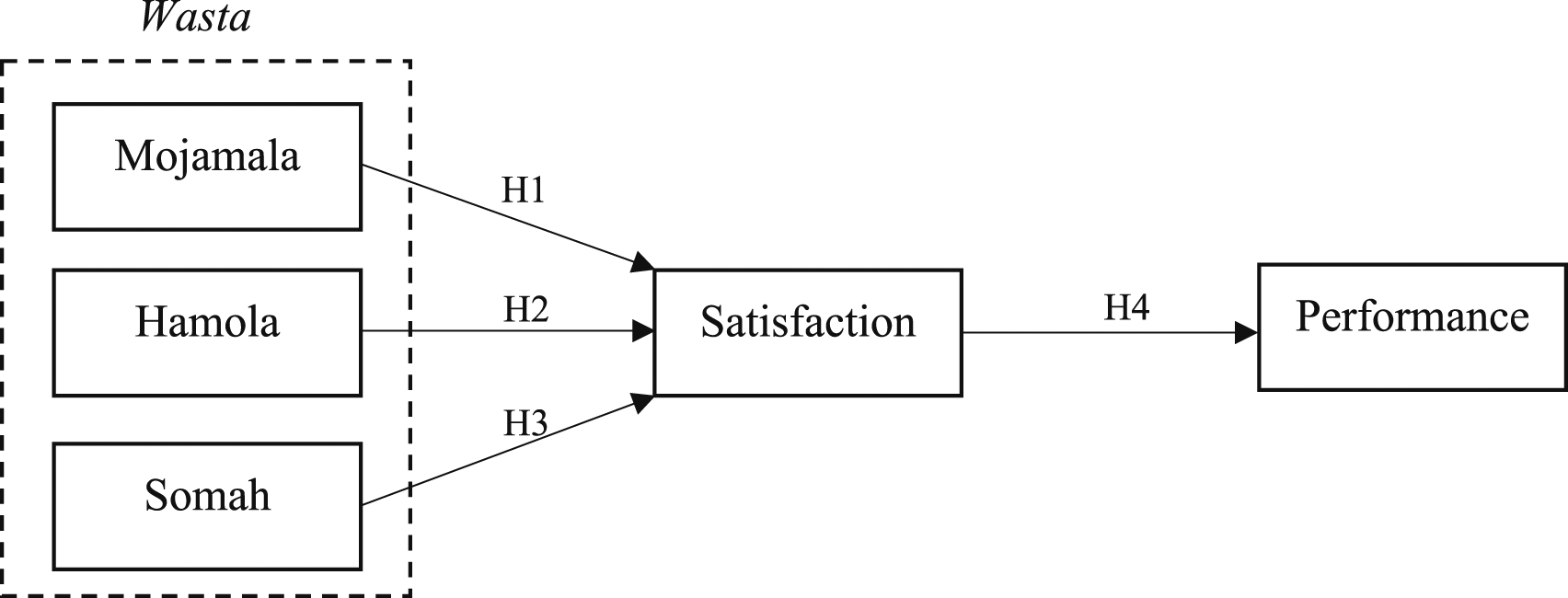
Methodology and data collection
To achieve the objectives of this study, we chose to adopt a quantitative approach. Based on our review of the literature, we were able to find measurement scales (see below) that allow us to measure the variables of our study. We adopted the convenience sampling method and the data was collected by a questionnaire that was administered via the Linkedin professional network. Respondents were asked to indicate their level of agreement with the propositions of each variable on a Likert scale ranging from 1 (strongly disagree) to 7 (strongly agree). Answers to each question were not compulsory, and each respondent was informed of the implications of his or her participation. After several follow-up waves, we were able to collect a total of 534 usable responses, distributed as follows: Morocco = 220 responses, Tunisia = 166 responses, and Algeria = 148 responses. Our initial goal was to collect data from the five Maghreb countries (Mauritania, Morocco, Algeria, Tunisia, and Libya) but we were not able to get data from Libyan and Mauritanian buyers’ managers, and so we used what we have collected as data. We are confident that the result of our study also reflects the Libyan and Mauritanian reality. The demographic characteristics of the sample are presented in the Table below.
Measures
Independent variables
To measure Wasta, we will use the three components (Mojamala, Hamola and Somah) explained in the previous paragraphs and measured by the scales of Berger et al. (2020). Mojamala represents the affective side of Wasta and is measured by seven items. Hamola represents reciprocity in Wasta relationships and is measured by six items. Somah represents trust in Wasta relationships and is measured by seven items.
Dependent variable
Satisfaction indicates the overall feeling generated from both parties' reaction to the relationship and it measures the degree to which the parties are satisfied with the others’ contributions (Barnes et al., 2011). Moreover, satisfaction is considered a fundamental outcome of Wasta (Ali et al., 2013). It measures the buyer's satisfaction with the business relationship. It is the buyer's overall satisfaction and degree of happiness with the supplier, and the likelihood that the buyer would choose to work with the same supplier if given a second chance. It is measured by six items developed and operationalized by Cannon and Perreault (1999).
Performance is measured by five items operationalized by Barnes et al. (2011). The first three items measure the performance of the buyer-supplier relationship in terms of cost reduction, profit, and overall financial performance, while the last two items measure the buyer's performance relative to suppliers' products on sales and market share. All items are measured on a Likert scale from 1 (strongly disagree) to 7 (strongly agree).
Control variables
The size of the buying firm: Previous studies have found that a small supplier may be more dependent on an independent buyer (Larson et al., 2005). Also, large buying firms may fear that the supplier will exploit sensitive information and compromise its performance. As a result, the buyer may be reluctant to share confidential information or invest in the relationship (Akrout and Diallo, 2017). Thus, smaller firms are more likely to invest in the relationship and share confidential information to maintain a good relationship.
Industry: The industry of the partners could have an influence on the relationship between the two. Indeed, firms offering services have to make more communication and relational investments. The development of one of the main components of Wasta namely Somah or trust depends more on social cues (Moorman et al., 1993).
Seniority: The duration and history of the relationship between the buyer and the seller is taken into consideration. Indeed, repeated interaction facilitates the establishment of trust between the parties (Blau, 1964). It also allows the parties to learn about each other's reliability (Lewicki and Bunker 1996).
Age and gender: Buyers of similar ages and genders are likely to share common values and beliefs (Perrone et al. 2003). Therefore, we use age and gender as control variables to account for similarities in people's ages and genders.
Data analysis
Since our variables are latent in nature, we decided to use a regression using structural equations. To do this, we used SmartPLS version 3 to verify the measurement scales used and also to test the hypotheses of our study. Before presenting the results of the verification of the measurement scales, we will present the descriptive statistics of our sample.
Descriptive statistics
Sample characteristics.
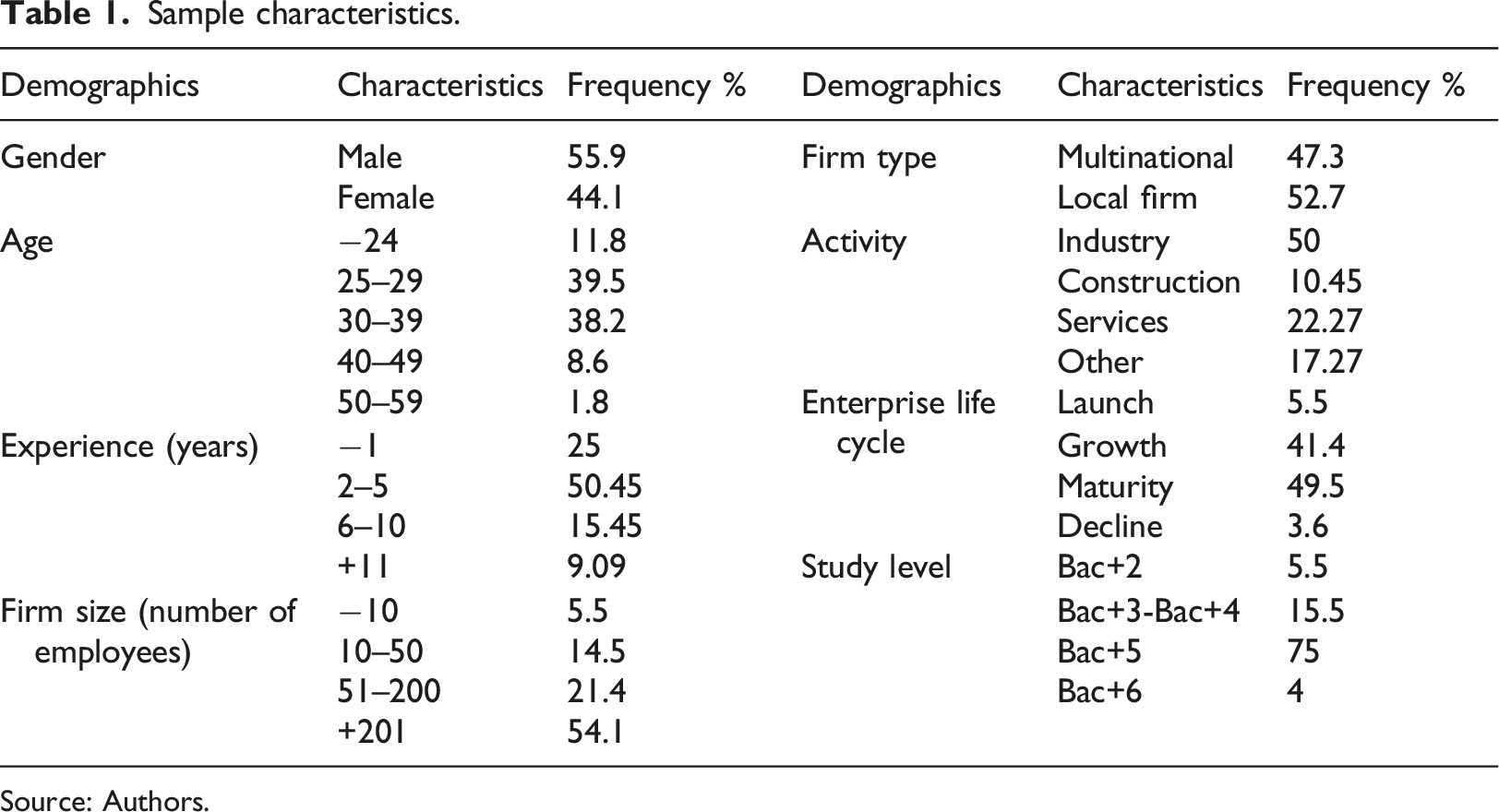
Source: Authors.
Exploratory factor analysis
Factor loadings.
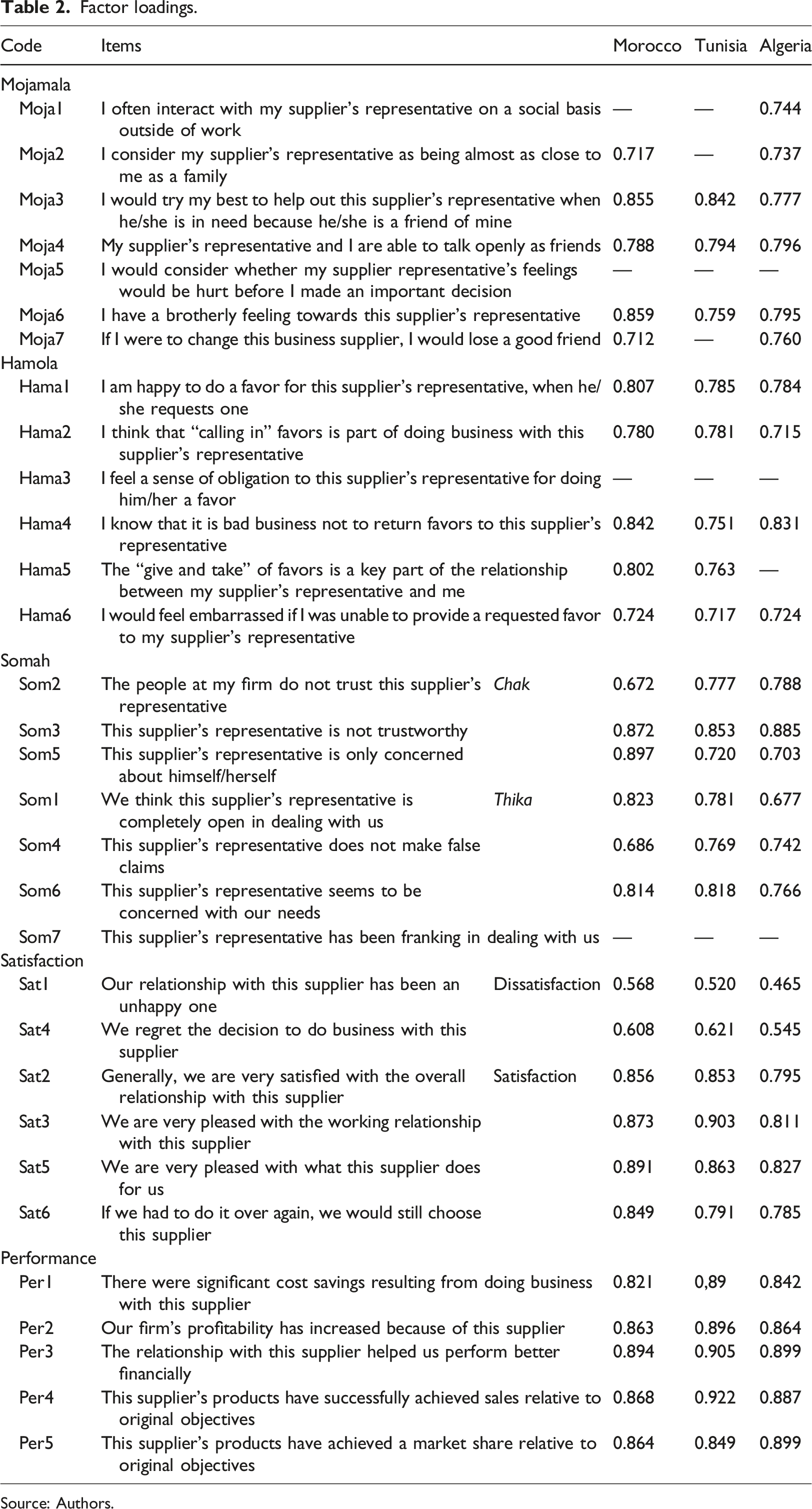
Source: Authors.
The factor structure that emerged was more or less consistent with the original conceptualization. Indeed, two of the five constructs have more than one dimension. We used varimax rotation to distinguish the dimensions. In this framework, the Somah construct (6 items) has two dimensions; we named the first dimension “Thika” (3 items) which means trust in Arabic and the second dimension “Chak” (3 items) which means lack of trust. The second construct is satisfaction. We named the first dimension “dissatisfaction” measured by two items and the second dimension “satisfaction” measured by 4 items.
Our model is composed of five reflexive latent variables. Before analyzing them, it is important to ensure that these variables are valid and consistent. Using exploratory factor analysis, a check for unidimensionality and internal consistency was conducted. We found that Somah and satisfaction have two dimensions and through the Varimax rotation we were able to distinguish the dimensions of the variables. The third component of Wasta (Somah) refers to the trust between the two parties. The first dimension expresses the presence of trust while the second expresses distrust. Similarly, for the satisfaction variable, in fact, two dimensions are distinguished. The items “satis1; satis4” refer to the state of dissatisfaction of the B2B relationship while the rest of the items express the opposite state (satisfaction).
The Kaiser-Meyer-Olkin (KMO) test gives information on the quality of inter-item correlations. In the case of our study, four variables and sub-variables (Mojamala, Hamola, satisfaction and performance) have an index equal to or higher than 0.80, which is considered excellent. The rest of the variables have an acceptable KMO index. The result of Bartlett's sphericity test is significant (p value <5%) for all variables. This means that not all inter-item correlations are equal to zero. The Cronbach's alpha coefficient is good for all variables except for the dissatisfaction sub-variable which is 0.55, and we decided to delete this sub-variable. It is a newly developed scale and also composed of just two indicators. The variance explained (Eigenvalues) by the variables is equal or higher than 61%, which is considered good.
Table 2 below shows the factor loadings of the variables. The factor load indicates the extent to which an item represents the underlying construct. Factor loading over 0,70 is recommended, and for exploratory research, a loading factor of 0.6–0.7 is acceptable (Esposito Vinzi, 2010). In the case of our analysis, all factor loadings are above 0.70 except for the items (Sat1 and Sat4) that form the “dissatisfaction” sub-variable. This variable is composed of only two items, and we decided to delete them.
Cronbach α, composite reliabilities, average variance extracted, and discriminant validity.
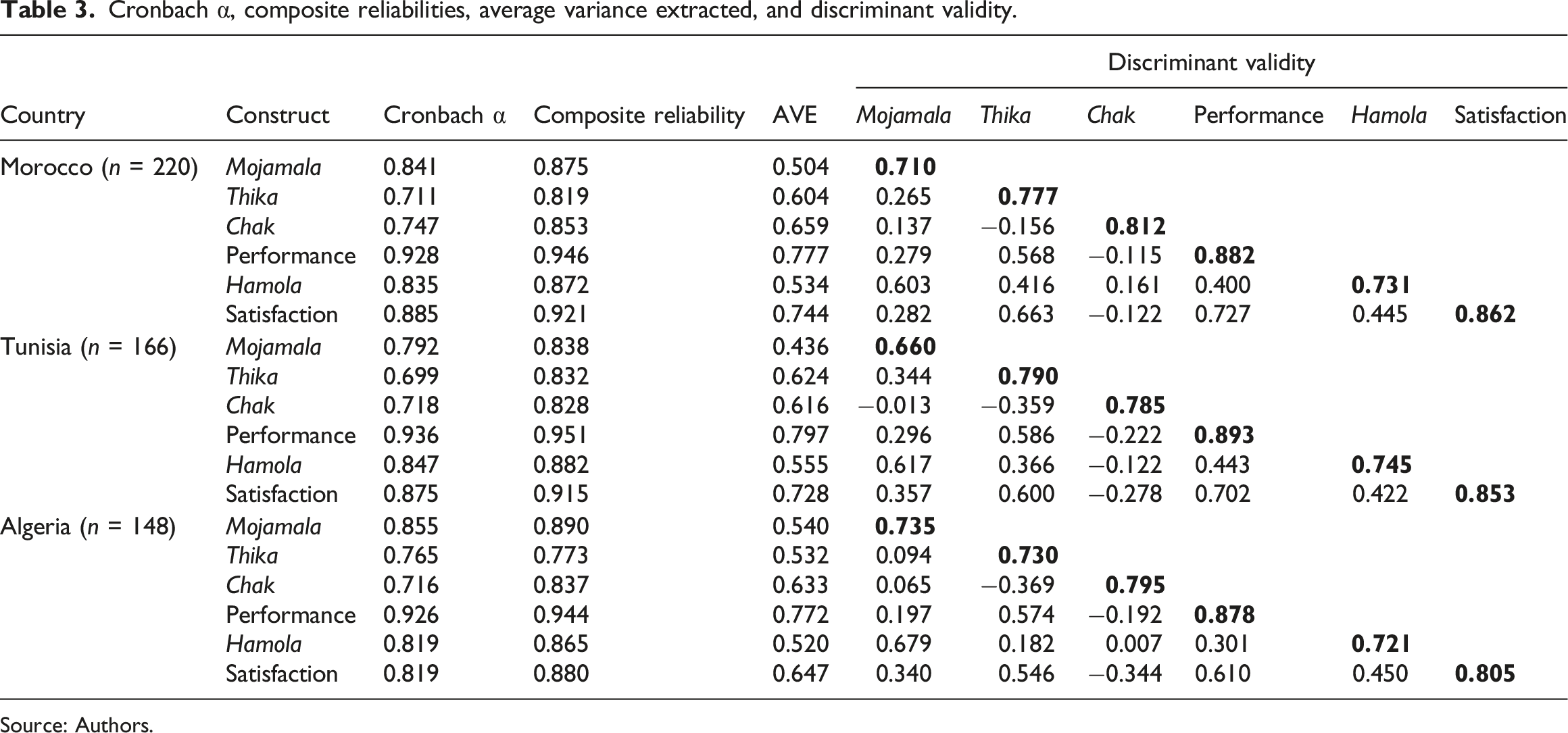
Source: Authors.
Composite Reliabilities are considered a better indicator of the unidimensionality of a block (Esposito Vinzi, 2010). The indicator must be above 0.70 (Esposito Vinzi, 2010). All composite reliability lies between 0.773 and 0.951, indicating unidimensionality and the suitability of concepts for further analysis.
Average Variance Extracted (AVE) illustrates the share of variance that items share with the construct they are intended to measure (Fornell and Larcker 1981). AVE results range from 0.436 to 0.797. Discriminant validity of latent variables allows us to compare the correlation of the variables with the other variables in the model to see if there is interdependence between the variables (Fornell and Larcker, 1981).
The results demonstrate adequate convergent validity and unidimensionality. Convergent validity is therefore satisfied. The hierarchical measurement models can now be estimated.
PLS regression result
Summary of results of testing hypotheses.
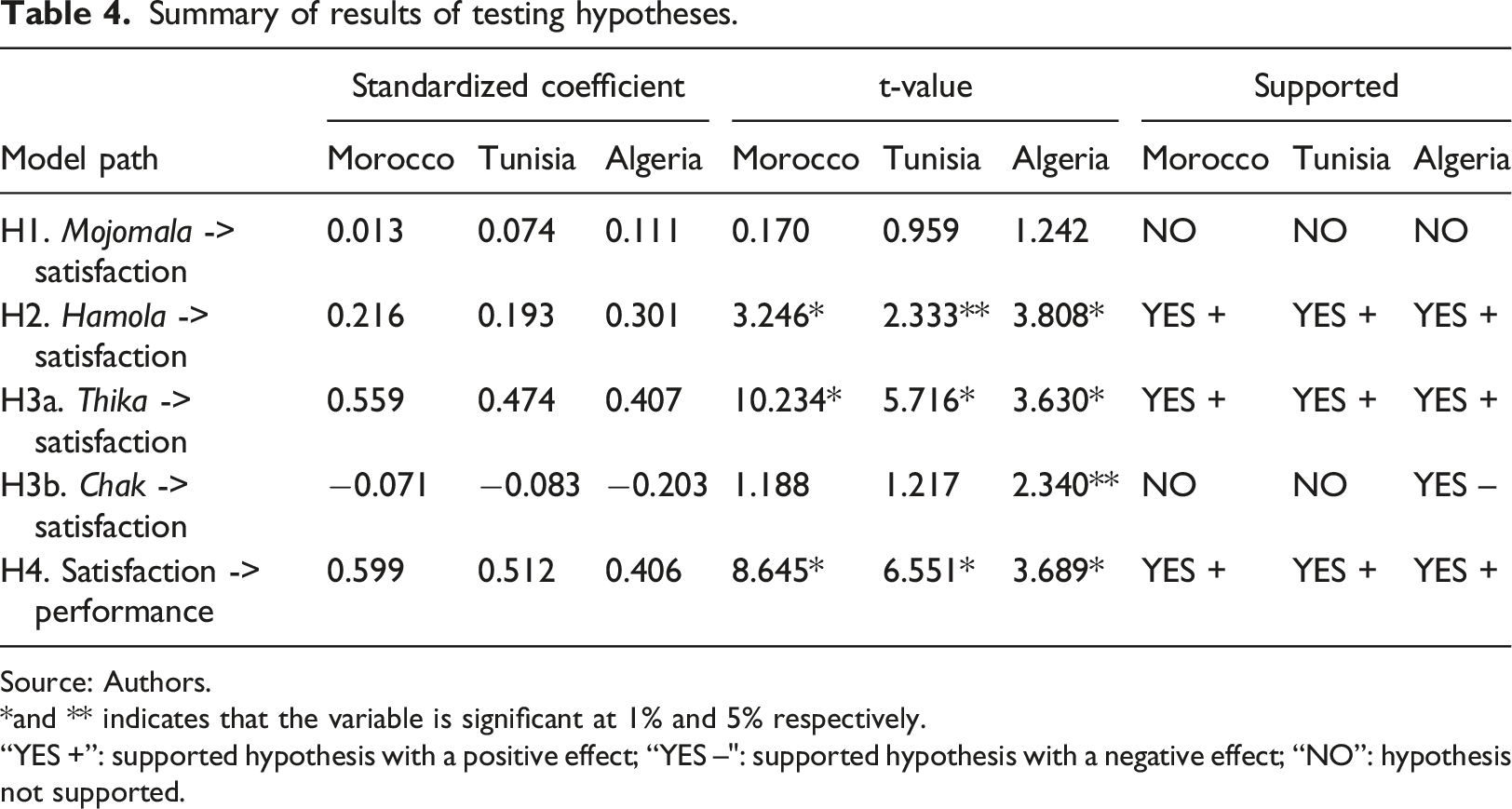
Source: Authors.
*and ** indicates that the variable is significant at 1% and 5% respectively.
“YES +”: supported hypothesis with a positive effect; “YES –": supported hypothesis with a negative effect; “NO”: hypothesis not supported.
The effect of Mojamala on the satisfaction of the exchange relationship (H1)
Following the SmartPLS analysis, the Mojomala component (affective component) has no influence on the seller's satisfaction with his relationship with his buyer. p value is well above 5% in all three countries studied. As explained above, Mojamala refers to the emotional and expressive part of Wasta, which is expressed in terms of the social ties that unite two actors within a social or professional network. Socializing activities (informal gatherings, cafés, etc.) help create this kind of bond between actors involved in a network. The result of this hypothesis shows that Mojamala does not influence the satisfaction of the inter-organizational relationship, something that was not expected, considering the existing literature on the subject. However, this result can be explained by the fact that this component could be considered more in relationships that involve family members or individuals who belong to a very closely knit circle. Indeed, among the Mojamala items, we have the following: Moja1- I often interact with my supplier's representative on a social basis outside of work. Moja2- I consider my supplier's representative as being almost as close to me as a family. This result can also be explained by the fact that developing this kind of relationship requires long-term interaction between buyers and sellers. Indeed, 50% of respondents had only 2-5 years' experience, which is still not enough to develop a Mojamala in which the giver will consider his interlocutor as a family member and is ready to offer him favors so as not to hurt his feelings and save face. However, future research must look into this question in order to provide justified explanations.
The effect of Hamola on satisfaction with the exchange relationship (H2)
The second component of Wasta (Hamola) has a positive and statistically significant effect on satisfaction (H2Morocco: β = 0.216, t = 3.246, p < 0.01; H2Tunisia: β = 0.193, t = 2.333, p < 0.05; H2Algeria: β = 0.301, t = 3.808, p < 0.01). Hypothesis 2 being supported in all three Maghreb countries. Hamola is the component of Wasta that refers to reciprocity in relationships. In other words, a giver of Wasta/favor expects to receive a favor in return at a later date, but the receiver is not obliged to return the favor to the giver. In the present study, Hamola positively influences the satisfaction of inter-organizational relationships, meaning that buyers and suppliers exchange favors, and the fact of giving and receiving favors makes them happy in their relationships. Taking into account the existing literature on Wasta, exchanging favors is important for maintaining the Wasta relationship. Give-and-take can only satisfy the parties in a social exchange relationship.
The effect of Somah on satisfaction with the exchange relationship (H3)
Analysis of the measurement model enabled us to distinguish between two dimensions of the Somah construct, which we named “Thika” meaning trusting someone, while the second dimension is named “Chak” meaning distrusting someone. Thus, we derived two hypotheses:
Thika positively influences satisfaction with the exchange relationship (H3a)
Thika (trust) positively influences the satisfaction of the relationship between seller and buyer (H2Morocco: β = 0.559, t = 10.234, p < 0.01; H2Tunisia: β = 0.474, t = 5.716, p < 0.01; H2Algeria: β = 0.407, t = 3.630, p < 0.01) in the case of the three countries studied. Somah refers to the rational, cognitive nature of Wasta, and expresses the extent and scope of the business relationship. Somah is a sign of the degree of commitment to the group. The positive component of Somah, Thika, positively influences satisfaction with the trading relationship. This result is explained by the fact that mutual commitment and trust lead to satisfaction with the inter-organizational relationship.
Chak positively influences satisfaction with the exchange relationship (H3b)
The negative component of Somah, Chak negatively influences relationship satisfaction only in the case of Algeria (H2Morocco: β = −0.071, t = 1.188, p > 0.05; H2Tunisia: β = −0.083, t = 1. 217, p > 0.05; H2Algeria: β = −0.203, t = 2.340, p < 0.05). According to this second sub-hypothesis, distrust in a relationship between a seller and a buyer hinders satisfaction between the two parties. This result is quite simply logical, since the absence of trust in B2B relationships can only lead to dissatisfaction on both sides. However, the question that arises is why this hypothesis is only verified in the case of Algeria? This result requires future research to shed light on the behavior and perception of buyers when faced with a situation of mistrust with their partners (sellers). Pending such research, are Algerian buyers stricter in situations of mistrust than Moroccan and Tunisian buyers? Or are Moroccan and Tunisian buyers divided on this point?
The effect of satisfaction on performance (H4)
The last hypothesis estimated in this study was the effect of satisfaction on performance. The hypothesis was supported with a positive effect for all three countries studied (H2Morocco: β = 0.599, t = 8.645, p < 0.01; H2Tunisia: β = 0.512, t = 6.551, p < 0.01; H2Algeria: β = 0.406, t = 3.689, p < 0.01). Satisfaction refers to the buyer's overall satisfaction and degree of happiness with the supplier, as well as the likelihood that the buyer would choose to work with the same supplier if given another opportunity (Baker et al., 1999). Performance refers to the impact of collaboration between seller and buyer on cost reduction, profit, and overall financial performance, but also on the buyer's performance relative to suppliers' products in terms of sales and market share (Barnes et al., 2011). According to the result of this hypothesis, a seller’s satisfaction in its business relationship with a vendor positively influences the buyer's business performance.
Discussion and conclusion
The objective of this research was to study the effect of Wasta on the satisfaction of inter-organizational relationships and the effect of this relationship on the performance of the firm. In this research, we studied the Maghreban context represented by three countries: Morocco, Algeria, and Tunisia. To achieve this objective, we conducted quantitative research through an online survey. In general, the results of our study show that Wasta positively influences the satisfaction and performance of B2B partners in the Maghreb countries (H1). However, our study showed that the Mojamala component (affection and emotional side of Wasta) does not influence the satisfaction of the interorganizational relationship. This means that the nature of the emotional relationship (considering the supplier as a brother, for example) between the partners does not influence their satisfaction. Moreover, the average of this component for Morocco is 2.63 on a scale from 1 to 7. This shows that the informal inter-organizational relationship is not strong or even non-existent. However, the second component of Wasta, Hamola (reciprocity) positively influences partner’s satisfaction with coefficients of 0.216, 0.193 and 0.301 respectively for Morocco, Tunisia and Algeria (H2). For Wasta's third component, Somah, measurement and analysis enabled us to distinguish between two dimensions (Thika and Chak) of the construct used to measure Somah. For the first facet, we find that trust (Thika) positively influences partner’s satisfaction with a fairly high coefficient of 0.559, 0.474 and 0.407 respectively from Morocco, Tunisia and Algeria (H3a). However, the results showed that there is a positive relationship between Chak and satisfaction only in the case of Algeria with a negative effect (H3b). This result shows that Chak (distrust in a person) negatively influences satisfaction. In Morocco and Tunisia, the relationship is also negative, but the effect is not significant. These results can be explained by the fact that B2B relationships are stricter in Algeria and that distrust translates into dissatisfaction with the relationship. In this case, Algerian purchasing managers have a different culture of doing business compared to Tunisians and Moroccans. This difference means that Maghrebans do not have the same perception of Wasta, and Algeria could have a Wasta subculture. Research is needed in this direction to verify these explanations with certainty. Finally, the result of our study showed that satisfaction has an influence on performance with a high coefficient for all countries in the study (H4).
Moreover, research on firms in different cultures has shown that there are differences between cultures that favor individualism and those that favor collectivism (Berger et al., 2021). For example, in collectivist societies, conflicts are resolved by preserving harmony, peace, and continuity and not by challenging the status quo or notions of fairness as in the case of individualist societies (Gire and Carment, 1993). In this sense, our study also contributes to the debate on the contradiction of cultural values between East and West such as collectivism and individualism (Hofstede, 2001). Indeed, Morocco is considered as a collectivist country (Hofstede, 2001) and collectivist cultures have a high degree of trust, cooperation and empathy towards members of their home group while their behavior may be different with outsiders, which reinforces the in-group versus out-group mentality (Gu et al., 2008; McCarthy et al., 2012). Wasta in the context of an inter-organizational relationship appeals at the same time to the social exchange but also to the economic exchange. This postulation is in line with Berger et al. (2020) who consider Wasta as the Arabic manifestation of social exchange theory. Indeed, social exchange theory does not integrate economic exchange into its conception, whereas in the case of Wasta, the relationship could start with a pure economic exchange and could develop into a social exchange as well.
The results of Berger et al. (2020)’s study showed that Arab businessmen do not value empathy in business. They found that in this group, Wasta is based on tribal relationships and not on special trust, therefore, foreign firms must have a local partner. However, they note that Arab businessmen tend to work with people with less trust. Berger and his colleagues studied three groups: students, businessmen, and leaders, while in our case, we studied Wasta in another group, that is, the professionals.
Theoretical implications
Our research is the first to investigate the effect of the informal inter-organizational relationship (Wasta) on the satisfaction and performance of B2B partners. Note that the majority of studies on Wasta are done in the context of Arab countries in the Middle East and the Gulf countries specifically (Saudi Arabia and the United Arab Emirates). They have been based on management practices in the context of national trade relations (De Waal and Frijns, 2016; Houjeir and Brennan, 2017) and therefore, they remain tied to the study context.
This study contributes to the theory of social exchange by showing that it is capable of explaining an exchange phenomenon that takes place in a different cultural context. Indeed, Wasta remains a rather interesting but not much explored phenomenon and the social exchange theory constitutes a theory that allows to build a solid theoretical basis that will amply explain the particularities of this phenomenon. Many authors (such as Schakett et al., 2011) have considered social exchange theory to be the most dominant theory to explain interpersonal relationships. Finally, our research contributes to the cross-cultural management scholarship by showing the effect of Wasta as a cultural phenomenon on the inter-organizational relationship in the context of the Maghreb Arab countries. Our results show that generally, Wasta has the same effect in these countries.
Managerial implications
Our study sheds light on Wasta as a phenomenon that plays an important role in the governance of Arab business. Indeed, our study is useful for foreign investors but also for future domestic entrepreneurs that aspire to succeed in business relations with an Arab partner, it is necessary to take into consideration Wasta as a factor that influences business performance. As we pointed out, to build a Wasta network, investors and individuals need to spend time and money to create and sustain it. In this case, investors will be able to make the appropriate decision based on their belief since there are studies who have considered Wasta as a kind of corruption and therefore investors will be able to take a position on Wasta. Our study is also useful for public authorities, as the results can be used to take the necessary measures to regulate this phenomenon or others.
Practical recommendations
Considering the results of this study, foreign investors should take into account Wasta's role in the business. Thus, we recommend that investors approach consulting firms to obtain information on the main players in the targeted business sector. However, the implications of joining a Wasta network need to be considered in advance. Indeed, Wasta is sometimes noted for its negative effects on the economy and considered by others as a kind of corruption. We therefore recommend that investors check Wasta's compatibility with their own standards and ethics, to avoid events that could influence the company's reputation locally (in the company's country of origin) or globally. In addition to consulting firms, foreign investors can cooperate with well-connected local companies to benefit from their Wasta networks. We also recommend that foreign investors train their staff (expatriates) on this kind of practice to facilitate their integration.
Limitations and avenues for future research
The first limitation of this study lies in the size of the sample; it is small and therefore not enough to have accurate conclusions. Although the statistical test “early versus late respondents” which allowed to see if the average answer of the first 20% of respondents is like that of the last 20% of respondents confirmed that there is no difference but the fact of verifying this through a larger sample will be more reassuring. The second limitation lies in the distribution of respondents’ regions or cities. Maghreb Arab countries are known for its cultural richness and its various ethnic groups (Arabs, Amazigh and Sahrawis).
Future studies should investigate the determinants of change in the perception of Wasta and the impact of respondent's environment. For example, if the respondent has already benefited from Wasta in order to be recruited (background) and also if their family belongs to a Wasta group and this kind of relationship is part of the family's values. Future studies can also conduct qualitative research on the role of the industry in the functioning of Wasta and its effects on firms in international business. Future research may also investigate the interaction of foreign members with other cultures, particularly individualistic ones (such as Americans and Europeans) with Arab and Muslim culture groups. The aim will be to see how the two parties with two different cultures manage to maintain business relations and how they manage their cultural differences. Future research can also examine the effect of demographic characteristics like age and seniority on Wasta.
Footnotes
Declaration of conflicting interests
The author(s) declared no potential conflicts of interest with respect to the research, authorship, and/or publication of this article.
Funding
The author(s) received no financial support for the research, authorship, and/or publication of this article.
