



Abstract
This paper investigated immigrant groups’ attributes as factors inhibiting immigrants’ career development and progression vis-à-vis local-born-mainstream-groups. Drawing on the Stereotype Content Model (SCM) of warmth and competence, we examined perceptual cues (surface-diversity) and factors that act as career progression barriers. Results revealed race (white, non-white) and accents, rather than immigrant-status, were largely responsible for perceiving barriers. Immigrant non-white managers had more limited access than immigrant white managers to informal networking, mentoring and career support irrespective of their immigrant-status. Immigrant managers did not identify perceptual biases as factors that shape their unequal access to career development opportunities, suggesting a gap between experienced and perceived bias. SCM’s interdisciplinary theoretical implications are discussed contributing to diversity management practices in international contexts.
Keywords
Introduction
Immigrants play an important role in the workforce of many developed economies (OECD, 2018). Countries in East Asia, Europe, and Asia-Pacific rely heavily on immigrants’ contributions (Chaloff & Lemaitre, 2009) for general and specialized skills to reduce labor shortages, deliver economic and social benefits and address an ageing population (DIAC, 2011). For example, between 2001–2011, immigrants represented 47% of workforce growth in the United States (US) and 70% in Europe (OECD, 2014). Compared to the previous decade, Australia’s immigrant workforce increased by 2% per annum (Cully, 2011). However, employment for immigrants does not imply successful career progression for immigrants. In this paper, we adopt Heslin’s (2005) definition of career progression as; advancement to senior managerial positions, to investigate immigrants’ career experience.
Immigrant workforces occupy a bimodal distribution in many countries, as demonstrated in Organisation for Economic Co-operation and Development (OECD) member nations. In Europe, 24% of immigrant employees are concentrated in declining occupational sectors such as craft, trades, machine operators and assemblers. Similarly, in the US, 28% of immigrants are concentrated in production, installation, maintenance, and repair professions. On the other side of the distribution, immigrants are also employed in the growing professional sectors; 22% in the US and 15% in Europe, notably in Healthcare and Science, Technology, Engineering and Mathematics occupations (OECD, 2014). Since the year 2000, immigrants have represented the 31% increase in highly educated labor in Canada, 21% in the US and 14% in Europe (OECD, 2014). The occupational dissimilarity between locals and immigrants overrepresented in low-skilled occupations remains unchanged as recently as 2017, thus their qualifications are wasted in unsuitable jobs (OECD, 2018).
From the early 20th century to today, migrants continue being disadvantaged in occupational and financial status in their career progression due to gender and race (Wingfield, 2020). Migrants are often devalued as part of selection quotas and as affirmative action policy because their selection process allows organizations to be politically correct and appear positive on diversity, equity, and inclusiveness reports (Pompper, 2011). Despite recent diversity management legislation based on anti-discrimination (EEO/AA action address to increase diversity) and racial discrimination and organizational image demands, managerial positions remain overwhelmingly white, since it has been white women who have increased the proportion of females in senior management positions to manage diversity (Fulton et al., 2019; Klarsfeld et al., 2016)). However, migrants with non-English speaking and non-white backgrounds who managed to acquire entry-level management and beyond, are still not included as part of diversity management initiatives in the organizations decision-making process for hiring, promoting, and career development opportunities at all levels. The impact of stereotypical perceptions may create fewer obstacles for local-born white women in their career progression initiatives, but not for migrants due to the conditions with specific organisational prototypes (Hite, 2004; Li, 2013). Understandably, very little attention has been given to largely excluded non-white migrants’ career progression processes in hiring quotas and affirmative recruits in the organisations. Hence, migrants strive to be in senior management positions which is not only for their interest but also could bring benefits for society and stakeholders and competitiveness (Pace, 2018).
According to the APS report (Australian Public Service, 2019–2020), long-term trends (between 2001 and 2020) show that despite increasing diversity and a greater proportion of women in the APS at all levels, women occupy 60% of roles in the APS, and for the past 6 years, the proportion of promotions into and within the socio-economic status for women has exceeded 50%. There has been relatively little change in the proportional representation of non-English speaking background (NESB) employees’ status within the workforce as a whole (APS, 2019–2020).
Our study provides insights into the critical barriers that contribute to this status quo. In particular, race and non-Anglo accents are largely responsible for the inequity. We present the Stereotype Content Model (SCM) as a tool that enables researchers and practitioners to gain insights into one’s biases and potential diversity, equity, and inclusiveness actions. Our study compared immigrant managers’ experiences vis-à-vis local-born-mainstream-group managers’ experiences in Australia. We note that the term local-born-mainstream-group is distinct from local-born indigenous groups; our study did not examine the latter, therefore, we only compared the experiences of local-born-mainstream-group versus immigrant managers. We define immigrants as people who live in Australia but who were born overseas (ABS, 2021). The data shows that more than half (51.5%) of Australians were either overseas-born-persons or one or both parents were overseas-born (227.6%) (ABS, 2021).
In Australia, immigrants’ profession tends to concentrate in a narrow range of industries associated with low skill requirements and wages, e.g., manufacturing, retail, accommodation, and food services (ABS, 2011; Thomson, 2014). Notwithstanding this, immigrant representation in skilled employment has increased due to Australian government policy emphasizing skilled migration (Cully, 2011). The picture is different when comparing the occupational status of immigrants with that of Australian-born people (ABP). For example, the 2016 census shows that 13% of Australia’s population holds managerial positions, comprised of 3.2% immigrants, despite the fact that immigrants constituted 28.4% of the general population (ABS, 2011). The paradox compared to ABP is that there is a higher proportion of immigrants concentrated in “professional” occupations but lower numbers in managerial positions (ABS, 2011).
Extant works suggest that immigrant managers’ career progression cannot be adequately understood without comprehending the factors that influence women’s and minorities’ career experiences. For example, factors that are viewed as barriers to the career progression of women and minorities include a lack of mentoring, informal networking, or career support (Ahmad, 2011; Bradley, 2013; Sethi and Williams, 2015). Other factors include accent (Bertone et al., 2011; Sultana, 2001), language difficulties (Ho, 2006; Xiao et al., 2014), local experience (Ho and Alcorso, 2004; Pio, 2005), skills recognition (Almeida et al., 2012; Iredale, 2005; Kler, 2006), and negative stereotypes (Heilman and Okimoto, 2008). Nevertheless, little attention has been paid to understanding why immigrants are not progressing into advanced management positions.
The present study investigates the relationship between factors (surface-diversity: immigrant-status, gender, race, accent, local-work-experience) that inhibit access to career development opportunities for immigrant managers (informal networking access, mentoring, career support, bias performance evaluation). We begin by outlining the Stereotype Content Model (SCM; Fiske et al., 2002) applied to immigrant work experience and how other theories such as Similarity Attraction, Social Identity, and Social Categorization Theory explain the phenomena relating to immigrants’ career experiences. We discuss possible factors that inhibit and facilitate immigrants’ career progression and discuss the results in terms of theoretical and practical contributions, including how alternative interdisciplinary theories extend current diversity management perspectives.
Immigrants’ career progression: Theory and hypotheses development
The SCM theorizes how people perceive others on two dimensions: warmth and competence. These dimensions are perceived on a low-to-high-continuum and generate emotional reactions (e.g., admiration, contempt, envy, and pity) as well as behavioral reactions (e.g., active, passive, facilitative and harmful) (Fiske et al., 2002; See Figure 1). Stereotype Content Model - four types of stereotypes resulting from combinations of perceived warmth and competence (adapted from Fiske et al., 2002).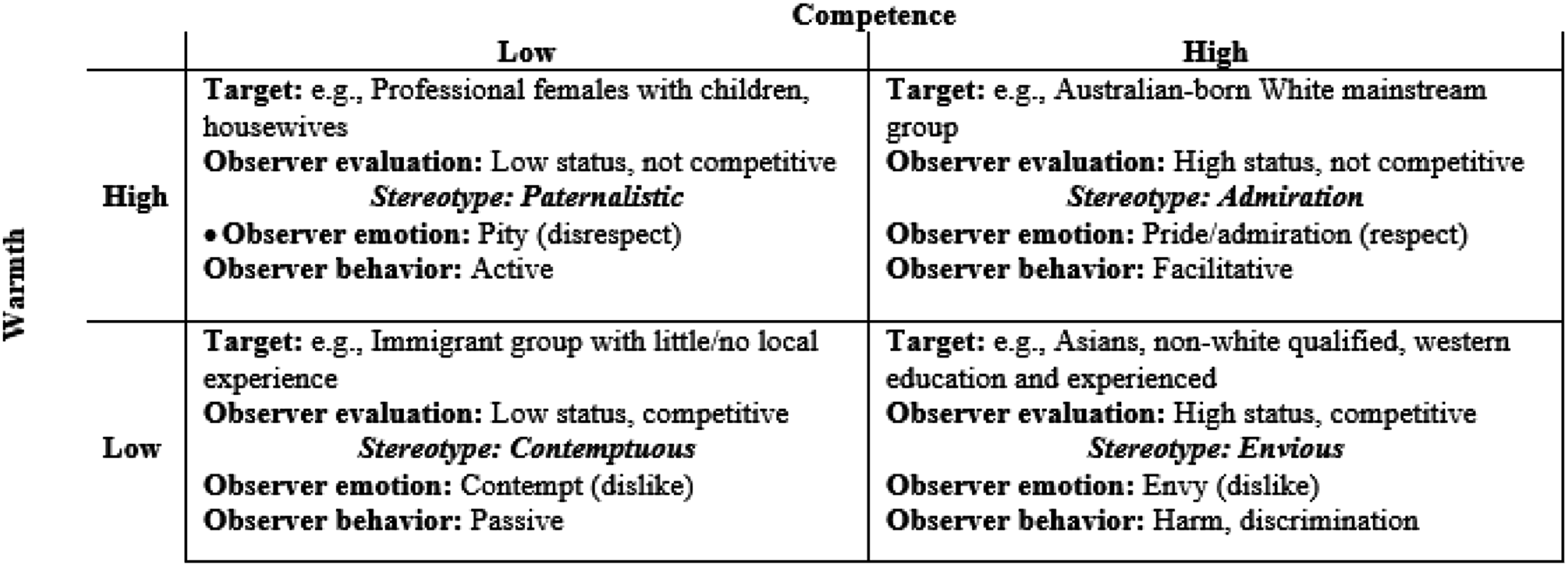
The dimensions of warmth and competence operate together to determine the stereotypical content of individuals’ attributes. Glick and Fiske (1999) noted that stereotypes of both high-warmth and high-competence are ascribed to local-born-mainstream-group within society (i.e., dominant-group). However, SCM demonstrates that most out-groups are associated with mixed stereotypes that are high on one dimension and low on another (Cuddy et al., 2008). As a result, the evaluation is either positive or negative depending on societal norms, intergroup relations, and power. For example, in a US study, Asians were seen as competent but cold and lacking social skills (Glick and Fiske, 2001). Further, in Belgium, Hong Kong, and South Korea, Asian immigrants are viewed as untrustworthy and incompetent (Fiske et al., 1999; Eckes, 2002). These studies found warmth judgment is made before competence in evaluating immigrants. Warmth seems to carry more weight than competence in emotional and behavioral reactions (Fiske et al., 2007).
In social psychology, the phenomenon of people using stereotypical based perceptions has been well established. For example, Social Categorization Theory (SCT; Turner and Oakes, 1989) suggests that out-group members (such as non-whites and/or women) behaviors tend to be perceived unfavorably compared to that of local-born-mainstream-group members, such as white males (Härtel et al., 2007). This phenomenon can be explained by Social Identity Theory (SIT; Tajfel & Turner, 1978). Group members attempt to maintain a positive self-image in relation to group membership whereby in-groups tend to be perceived more positively than other groups. There is evidence showing employers tend to hire from the mainstream in-group, rather than dissimilar groups (Ahmad, 2020; Chow and Crawford, 2004). This indicates that mainstream-group members will be favored, while immigrants will be disadvantaged. Complementary to SCT and SIT, Similarity Attraction Theory (Byrne, 1971) suggests individuals are naturally attracted to others when they perceive similarities in attitudes, values and/or beliefs in others (i.e., similarity-attraction hypothesis). Consequently, workers are likely to perceive person-organization fit and demonstrate organizational commitment when they perceive similar characteristics in others (Edwards et al., 2006). In a workplace context, factors such as immigrant-status, and surface-diversity, which include gender, accent, and local-work-experience are known as perceptual cues. Evidence shows these cues influence career developmental access or acceptance in organizations.
Perceptual cues
Research shows that due to gender and race, many immigrants are differentiated in employment status despite having skills and qualifications equivalent to their mainstream counterparts (Pio, 2005). Fernandez (1998) found that educated non-white minorities in the US encounter difficulty in gaining management positions and are disadvantaged in career advancement and compensation. Syed and Pio (2010) identified poor local regulations, lack of local qualifications, access to social networking, and language differences as factors that may limit management careers, particularly for NESB immigrants. These studies indicate how supervisors’ negative perceptions of NESB immigrants result in NESB immigrants having poor access to development opportunities (career support, mentoring and networking) (Pio, 2005; Syed and Pio, 2010).
It is possible that employers may negatively view people who have different social backgrounds or demographic characteristics to themselves (Bennett, 1998). According to Byrne’s (1971) similarity attraction theory, managers may prefer selecting candidates from mainstream group members (in-group) than non-mainstream group members (out-groups) in decision-making. Their evaluations of out-groups (e.g., females, migrant men, and women) may be influenced by their own preconceptions of similarity and biases. Hence, negative work behaviours become associated with characteristics relating to race or ethnicity (Bruento & Far-Wharton; Haslam, 2002). Consequently, factors such as migrant status—in association with gender, race, work experience, accent, and parental/family status (perceptual cues), may impede gaining them access or acceptance in organizations.
Based on the theoretical foundations and extant works, we present the following hypothesis.
Hypothesis-1: Immigrants will experience greater barriers (less access to career development activities: informal networking, mentoring and career support, less recognition of qualifications and less favorable performance evaluations) and lower career advancement than ABP.
Race
Existing studies have documented the negative effect of immigrant-status on immigrants’ career progression (Härtel et al., 2014; Sultana, 2001). Wesley (2009) found a minority’s race affected career progression because social perceptions created barriers that made it difficult for immigrants to access mentoring and networking thus limiting career progression. Likewise, research has found a minority’s race affected career progression because social perceptions and racial stereotypes created barriers that made it difficult for immigrants to access mentoring and networking and viewed as low in social competence and assertiveness thus limiting career progression (Gündemir et al., 2018; Li, 2013; Wesley, 2009). Likewise, Reynolds-Dobbs et al. (2008) found indirect favoring of white applicants, while non-white (Asian, Indian) males have the greatest difficulty breaking the concrete ceiling (Erskine et al., 2021). Thus, based on their gender and visible appearance such as race—immigrants are differentiated in employment status while holding skills and qualifications equivalent to women of the majority culture (Pio, 2005, 2008).
Accent
Foreign accent has also been found to play a significant role in immigrants’ employment and careers. Munro et al. (2006, p. 71) found “Individuals with foreign accents may be perceived negatively because of the stereotypes or prejudices (they) can evoke in a listener”. Lev-Ari and Keysar (2010) claimed individuals with foreign accents are less believable because they are harder to understand. Other research (Almeida et al., 2015; Rakić et al., 2011) suggests individuals perceive different treatment when they have non-Anglo accents.
We argue an immigrant’s foreign accent is a surface-diversity that automatically categorizes them as an out-group to supervisors and/or decision-makers. We contend this bias may be ingrained as we grow up and are exposed to popular media. Further research indicated accents are associated with less intelligent individuals (e.g., African American language trope, regional accents - Moore, 2016; Shah, 2019). Almeida et al. (2015) examined the similarity effect regarding immigrant professionals, highlighting accent as an important predictor of career barriers. In sum, immigrants with foreign accents experience difficulties compared to those with local accents.
Gender
Ample research has also shown minority women face more challenges and obstacles than men, because of additional factors such as ethnicity, language, race, religion, and family status, including qualifications (Foroutan, 2008, 2012; Syed and Pio, 2010). Despite women holding fewer managerial positions and lower career advancement opportunities than males, women with skin color face impenetrable barriers compared to males (Shi et al., 2018). For example, women perceive limited access to social networks where the information for employment opportunities, development and career advancement are exchanged, thus are hampered by their inadequate access to social networks (Shi et al., 2018).
Local work experience
Local-work-experience is a qualifying expectation for the Australian labor market (Foroutan, 2012). Bertone et al. (2011) found a positive correlation between NESB immigrants’ promotion rates and their length of residence in Australia; thus, immigrants are perceived as not possessing the local skills or considered suitable for the job (Almeida et al., 2015). This may also explain why immigrants’ overseas experience is not considered in their early career placement. Almeida et al. (2015) confirmed employers prefer hiring professionals with local experience, despite immigrants having skills and qualifications when they migrate to Australia.
Developmental factors of career progression
Having established the importance of perceptual cues in career development, it is necessary to identify the factors that facilitate careers. Existing literature indicates career progression is aided by several facilitators that include mentoring, networking, and career support (Sethi and Williams, 2015; Wesley, 2009). In contrast, recognition of skills, qualifications, and performance evaluations are factors that have a direct and indirect influence on career advancement. We will now review and hypothesize the implications of these factors for immigrants and marginalized social groups.
Mentoring
Mentoring refers to relationships between protégés and more senior influential staff (Dreher & Cox; 1996 Jordan, 2010). These relationships are important for career success (Washington, 2011). Since the 1970s, the literature has focused on mentoring relationships and their links to personal development, skills, career progression and career success (Peluchette and Jeanquart, 2000; Stuchiner et al., 2022). Mentors are able to assist mentees in developing competencies by identifying skills, knowledge, and development of behavioural and individual changes in a supportive environment (Proestakis et al., 2018). Further, experienced, committed mentors can assist less-experienced employees to develop skills in a supportive environment that can enhance retention, and career progression which leads to a competitive advantage for the organization (Dahlberg and Byars-Winston, 2019; Noe, 1988). Research indicates that informal mentoring is more beneficial than formal mentoring for career support, increased promotional opportunities, higher salaries, higher job satisfaction and psychosocial support (Chao et al., 1992; Nemanick, 2000). However, not all employees have equal access to mentoring programs. Women and minorities with racial backgrounds are more restricted from informal networks than mainstream men are and, consequently, have less access to formal mentoring programs (Ahmed et al., 2021; Ragins and Cotton, 1991; Wasburn, 2007). Much of the literature has investigated gender’s effect on mentoring and its impact on female managers’ career advancement (Powell and Butterfield, 1997; Tharenou & Conroy, 1994). However, there is less research on the effect of race and immigrant-status on mentoring (Wesley, 2009). Wesley (2009) found one’s racial attribute limits career progression when social perceptions create impermeable barriers to accessing mentoring and networking facilitators. In line with the similarity-attraction hypothesis (Byrne, 1971), mentors tend to choose protégés similar to the male stereotype. Mentors usually chose mentees who are like them which is prompted by informal networks. This may explain why women and non-white immigrants perceive difficulty finding a mentor and support, despite being competent at work (Wasburn, 2007), that is, they are dissimilar to their potential mentors.
Networking
There is considerable research on the effect of informal social networking on career progression and promotion (e.g., Bradley, 2013; Wesley, 2009). However, there is less knowledge regarding how NESB immigrants are less accepted into informal organizational networks. Junakar et al. (2010) found white Australians have access to better social networking in the workplace than immigrants do, while non-whites do not receive the same acceptance into informal networks as local in-groups (Mor Barak, 2009).
Career support
Career support is an important factor in career progression. This is often provided by supervisors in the form of challenging assignments, visibility, sponsorship, training opportunities, promotional opportunities, and management development programs (Greenhaus et al., 1990). Several studies suggest race and gender negatively impact career support and advancement. For example, Giscombe & Mattis (2002) argued immigrant women receive less access to career support than non-immigrants because they are marginalized by both gender and race.
Recognition of skills and qualifications.
A considerable literature connects the lack of skills recognition and qualifications with immigrants’ employment status, particularly those from NESB countries (Kler, 2006). As aforementioned, skills and qualifications gained abroad are generally not acknowledged in the immigrants' new host nation (Foroutan, 2008, 2011). This affects immigrants’ careers because employers and organizations prefer candidates with similar skills, knowledge, and experience to their current staff (Foroutan, 2011; Heuvel and Wooden, 1995).
Performance evaluation
Performance evaluation may adversely affect promotion opportunities for non-whites (Ilgen & Youtz, 1986) and managers (Eagly and Karau, 2002). For example, failure by female managers is likely to be linked to incompetence stereotypes, which has detrimental consequences for promotion (Heilman and Okimoto, 2008). Such factors are also valid for immigrants who perceive greater difficulties in their performance evaluations for career progression due to detrimental stereotypes. In general, non-local-born-mainstream-group members are disadvantaged in labor market integration, well-being, and social inclusion compared to the mainstream local population (Brell et al., 2020). They are disadvantaged in the recruitment, evaluations, and promotional opportunities for career progression while viewed as incompetent and lacking in leadership skills due to implicit bias of decision makers (Carter and Phillips, 2017).
Impact of career developmental factors
Taken together, the literature suggests that lack of networking, mentoring access, career support, skills recognition and qualifications, and bias in performance evaluations may impede immigrants’ career progression into higher management positions. It is, however, unclear if these barriers or lack of facilitators are the effects of being an immigrant and/or other factors (surface-diversity) that inhibit career progression. Based on the empirical evidence outlined above, four hypotheses are proposed to explain the relationship between factors that may impede immigrants’ career outcomes,
Hypothesis-2a: Immigrants, particularly non-whites, will report greater barriers (less access to career development activities: informal networking, mentoring and career support, less recognition of qualifications and less favorable performance evaluations) and lower career advancement outcomes than ABP.
Hypothesis-2b: Immigrants, particularly those with a non-Australian accent, will report greater barriers and lower career advancement outcomes than ABP.
Hypothesis-2c: Immigrant women will report greater barriers and lower career advancement outcomes than immigrant men and ABP.
Hypothesis-2d: Immigrants, particularly those with less local-work-experience, will report greater behavioral barriers and lower career advancement outcomes than ABP.
Mediators: Perceptions of warmth and competence
Cikara and Fiske (2012) concluded that managers often perceive their subordinates’ actions and interpret their interactions through unconscious biases. The present study nuances our understanding of the perceptual process associated with immigrant career development and advancement in more depth. The SCM suggests people evaluate individuals’ and group behaviors by warmth and competence (Fiske et al., 2002, 2007). This suggests perceptual bias influences employers’ (who are LMG members of society) decisions regarding women and immigrants’ career development and advancement (Festing et al., 2015; Martin & Parsons, 2007; Shah, 2019). As a function of immigrants’ work experiences, immigrants perceive those supervisors and/or decision-makers are biased by stereotypical perceptions of immigrants. Therefore, immigrants perceive greater barriers to their career development and advancement as a function of their supervisors' and/or decision-makers' biases. The following immigrant perception is hypothesized as a function of immigrant managers’ perspectives.
Hypothesis-3: Immigrants will report greater barriers and lower career advancement outcomes than ABP, mediated by perceptions of supervisors and/or decision-makers’ judgments of warmth and competence.
Our previous discussions highlight how subjective perceptions of evaluative judgment carry considerable weight in one’s career, but these perceptions are not addressed in the extant literature on skilled immigrants’ managerial career progression. Derived from extant work, we propose a theoretical model that accounts for immigrants’ surface-diversity, stereotype content, facilitators, and barriers to career progression (please see Figure 2). The following section discusses the methodology applied to test the model of factors affecting the career progression of immigrants in this study. Theoretical model of factors affecting career progression of immigrants.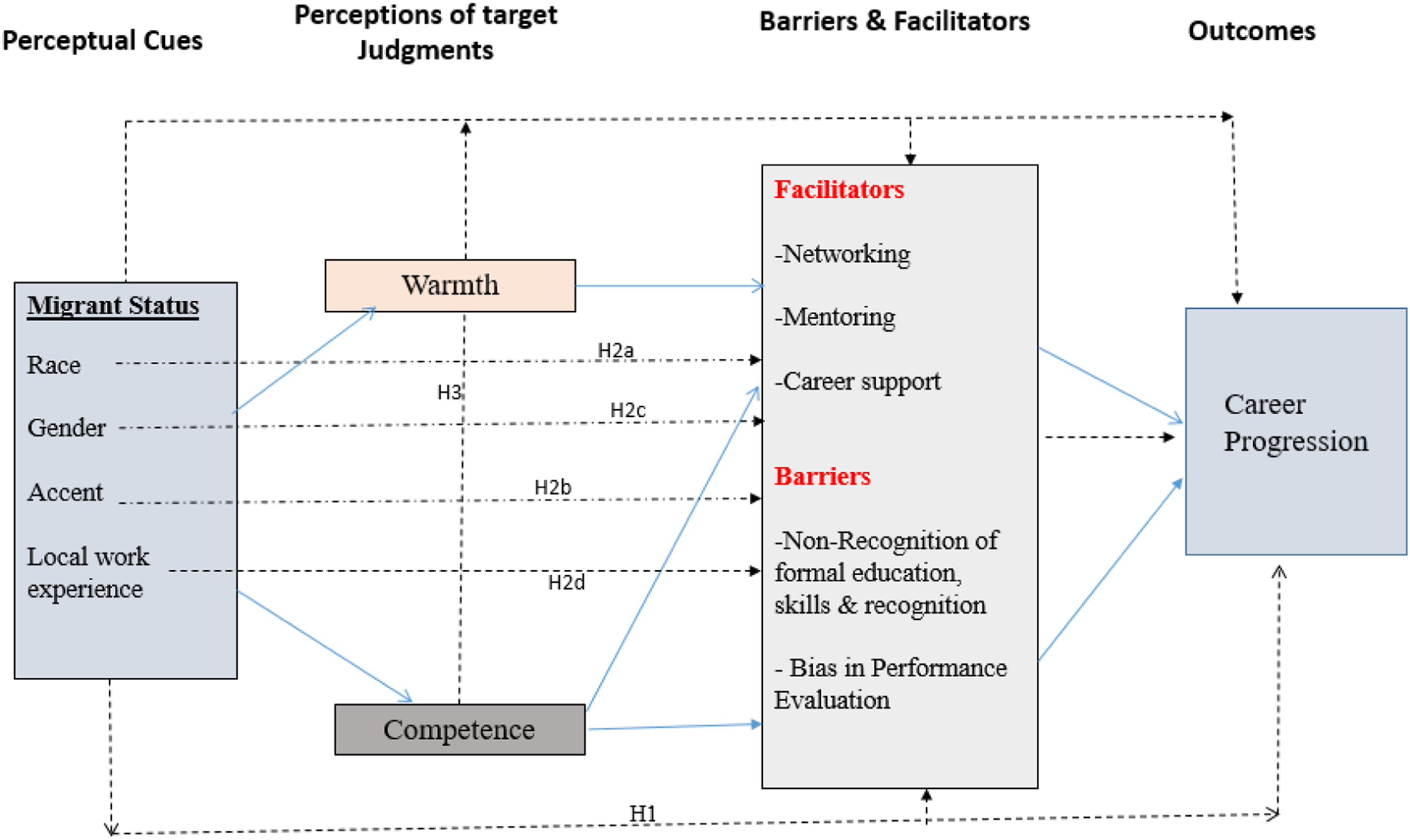
Method
To test our hypotheses regarding barriers to career progression between immigrants and ABP managers, participants responded to an online survey facilitated by a data collection company through an online survey from the public and private sectors in Australia. The sample criteria for participants were as follows. (1) Minimum 1-year working experience in a management position in Australia; (2) Employed by an organization with a minimum of 100 full-time employees in Australia; (3) It was anticipated participants would be over 20 years old. This guaranteed their experience to provide insights into factors that facilitate or impede career advancement.
Sample
The sample included 448 managers in a variety of industries, including IT, finance, banking, community care and education, consisting of 300 (66.9%) ABP [non-immigrants and second-generation immigrants 174 (38.7%)] and 148 (33.1%) immigrants. Of the 448, 343 (76.5%) were white and 105 (23.5%) were non-white. Of the 300 ABP, 267 (89%) were white and 33 (11%) non-whites; 100 (33%) participants were Australians whose parents and grandparents were born in Australia. Of the 148 immigrants, 76 (51%) were white. There were 220 (48.9%) males and 230 (51.1%) females. 286 (63.6%) participants were in front-line and lower-level management positions, 109 (24.2%), in middle-level management positions, 44 (9.7%) in senior management positions and 11 (2.4%) at CEO level. Two incomplete surveys were deleted. Participants’ average age was 42 (ranging from 21 to 70) and the average local-work-experience in Australia was 16.42 years (SD = 12.49).
Measures
The survey comprised two sections. The first section surveyed demographic information: accent, age, race, gender, nationality, immigrant-status, local work experience and overseas work experience. The second section surveyed views regarding mentoring, networking, career support, recognition of overseas skills, qualifications, and issues immigrant managers face in their careers, including beliefs about their supervisors’ judgments, and career outcomes. Measures are described below.
Demographics
Information was collected concerning surface-diversity. The measure for organizational work experience asked, “How many years have you worked in the paid Australian workforce?” (Bellamy and Ramsay, 1994).
Warmth and competence
To measure perceived warmth and competence from others in the organization, participants were asked to indicate what they believed other people in their organisation thought about them and how they thought they were perceived by others. The 14 items were developed following Fiske et al. (2002). The set of 14-item scale used in this study has been used in previous SCM research by Fiske et al. (1999). Respondents were asked to indicate a number from 1–5 (1 = not at all, 5 = very frequently) to rate seven items each for perceived warmth and competence. Examples of warmth-related items were “People in my organisation think I am friendly”, “People in my organisation think I am trustworthy”. Competence-related items included “People in my organisation think I am competent”, “People in my organisation think I am confident”. An example of warmth (α = 0.973) and competence (α = 0.973) items, respectively, was “People in my organization think I am friendly or competent”.
Barriers and facilitators
The predicted factors that affect immigrants’ career progression include the following facilitators: mentoring (overall, formal, and informal), networking (overall, formal, and informal), career support, non-recognition of skills, qualifications, and less favorable performance evaluations.
Mentoring
Formal mentoring was measured using Ronald’s (1987) tool for career choice, career direction, career aspirations, career change and career. Informal mentoring was measured using Härtel et al. (2014) tool by asking, “How formal is your relationship with your supervisor or mentor?” Formal and informal mentoring were measured on a seven-point scale (1 = very informal, 7 = very formal). Overall mentoring was measured by combining informal and formal mentoring with nine items (α = 0.87).
Networking
Formal and informal networking was evaluated by using Fagenson’s (1988) eight-item (α = 0.97) measure. Access to informal networking was assessed with questions such as, “In my organization, negative stereotypes block migrant men’s opportunities and impede access in networking for their career progression”; for formal networking, “Minority men have limited access to formal networking (e.g., conference)”. Responses were given on a seven-point Likert scale (1 = strongly disagree, 7 = strongly agree).
Career support
We adapted Dickinson and Callan’s (1998) 11-item measure of career support for advancement into management. A sample question asked was whether their organization provided “a formal mentoring scheme”. All items (α = 0.96) used five-point scales (1 = not at all, 5 = very frequently).
Recognition of skills and qualifications
We adapted Iredale’s (1987) recognition of skills and qualifications questions to the Australian context. For example, “Did you complete any of your degrees in a country other than Australia?” as well as the type of degrees and country of attainment. To indicate recognition barrier variables, respondents were asked, “Have all your qualifications been recognized in Australia?” with two possible responses (1 = yes, 2 = no), and if not, which countries’ degree(s) were not recognized. Respondents were then asked about recognition of overseas experience: “If you have worked somewhere other than Australia, how many years have you worked in the paid workforce?”
Performance evaluation
Performance evaluations were measured by using Thurston’s (2001) 11-item (α = 0.89) scale. A sample item is “My performance rating is based on how well I do my work” on a one to seven scale (1 = strongly agree, 7 = strongly disagree).
Career progression
Career progression was assessed by using Dickinson and Callan’s (1998) 9-item (α = 0.96) measure. A sample question was how often they had, “Changed organizations to take a promotion” on a 0 to five scale (0 = infrequent, 5 = very frequent).
Analytical procedures
The analyses examined the relationships between independent variables (IVs) surface-diversity, local-work-experience, and the dependent variables (DVs): networking, mentoring, career support, non-recognition of formal education, skills, qualifications, bias in performance evaluations, and career progression. It should be noted that race, accent, gender, and local-work-experience variables are considered moderating factors. Correlations, multivariate analysis of variance (MANOVA) and regression analysis were conducted to test hypotheses.
Results
Immigrant surface-diversity
Correlations among variables.
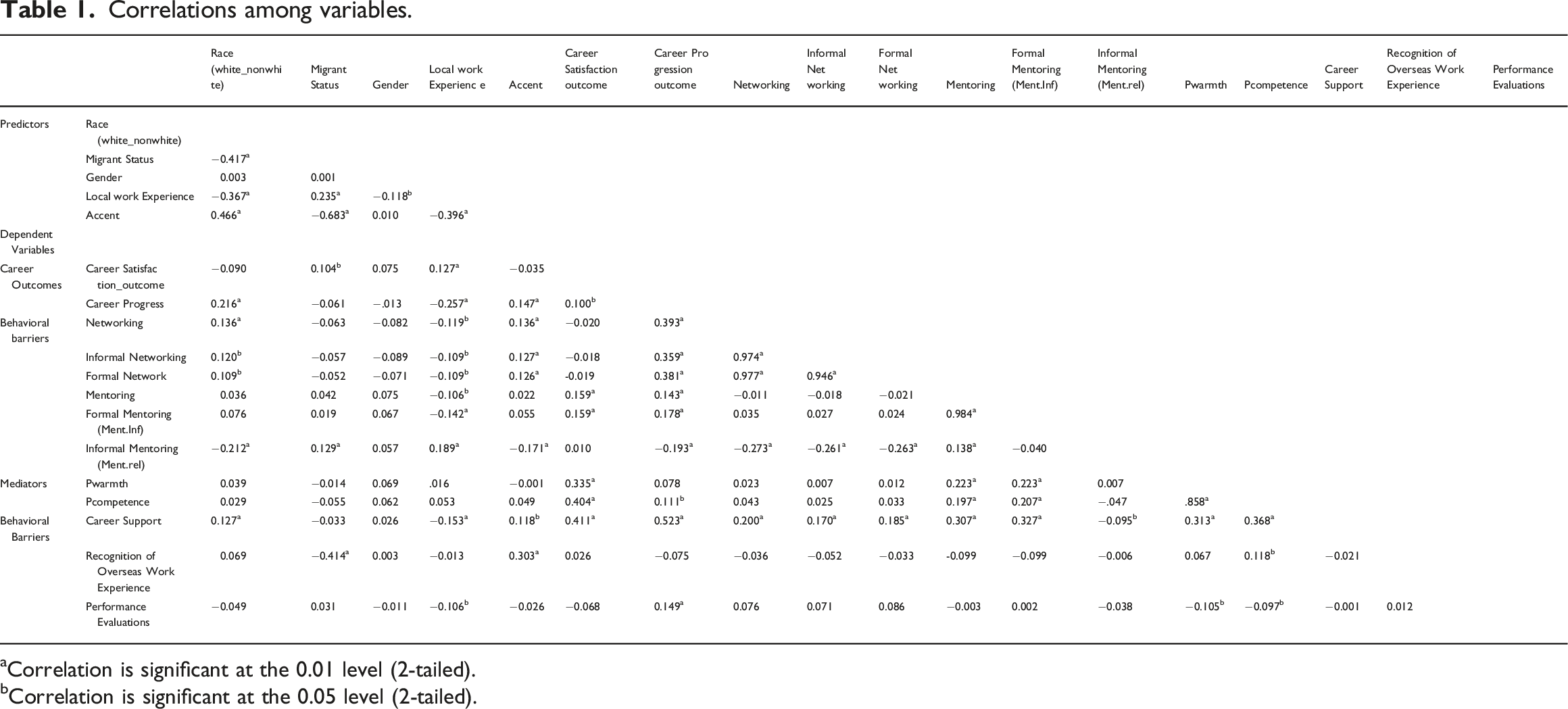
Correlation is significant at the 0.01 level (2-tailed).
Correlation is significant at the 0.05 level (2-tailed).
The MANOVA results indicated an effect for the independent variable of surface-diversity on combined dependent variables, (F (11,298) = 6.41, p = 0.000; η 2p = 0.19). There were no correlations between subject effects (Immigrant vs ABP) in respondents’ perceived experience of immigrant-status on dependent variables, other than recognition of skills and experience, for immigrant managers compared to ABP counterparts. Immigrant-status affects the recognition of skills and experience (F (1,308) = 63.67, p < 0.000, η 2p = 0.171), suggesting immigrants face greater barriers in having their skills and experience recognized. Therefore, Hypothesis-1 was partially supported, immigrant managers experience greater barriers in skills and experience recognition than ABP managers. Interestingly, predictors of the study such as race, accent and local work experience showed significant effects across several dependent variables. More importantly, results indicated a significant correlation between race and overall networking (r (450) = 0.136, p = 0.004), informal networking (r (450) = 0.12, p = 0.011), formal networking (r (450) = 0.109, p = 0.021), informal mentoring (r (450) = −0.212, p = 0.0001), and career support (r (450) = 0.127, p = 0.007) in behavioural barriers, and career progression (r (450) = 0.216, p = 0.0001) in career outcomes. This suggests that migrant status not only predicts behavioural barriers and career outcomes but also that predictors associated with migrant statuses, such as race, accent, local work, and parental status—may lead to different perceptions than mainstream in-group members. This may impact career advancement.
Immigrant status and race
To examine whether race moderated the relationship between immigrant-status and race on the DVs; multiple linear regressions were conducted. Only race had a main effect on informal mentoring (β = −0.194, t = −3.46 p = 0.001), but not for mentoring and formal mentoring. There was a significant effect of race on overall networking (β = 0.150, t = 2.654, p = 0.008), formal networking (β = 0.128, t = 2.258, p = 0.024), informal networking (β = 0.124, t = 2.181, p = 0.03), career support (β = 0.163, t = 2.89, p = 0.004), and career progression (β = 0.213, t = 3.82, p < 0.0001). However, there were no effects of immigrant-status or race on performance evaluations and recognition of skills and qualifications. This suggests that whites experience more informal mentoring relationships, and perceived higher levels of access to overall, formal, and informal networking, career support, and career progression than non-whites in Australia. There were no interaction effects between immigrant-status and race on any DVs. Thus, Hypothesis-2a was partially supported, race affects barriers in career development activities: informal mentoring, formal and informal networking, career support, and career progression, but not for immigrant-status (Figure 3). Relationship between immigrant-status, race, and all dependent variables.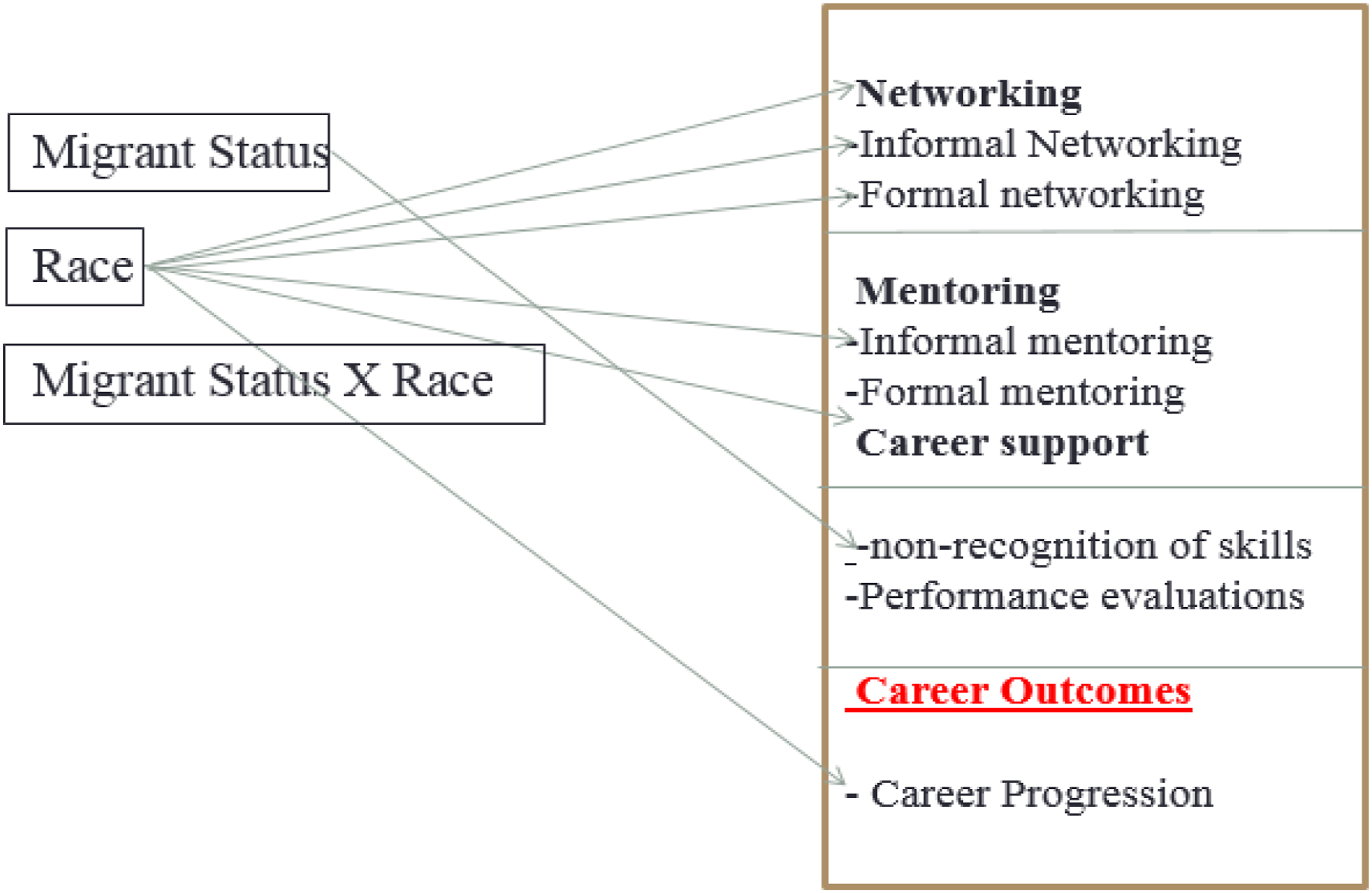
Immigrant status and accent
There was no main effect for immigrant-status. However, accent affected mentoring (β = 0.153, t = 2.15, p = 0.03), formal mentoring (β = 0.196, t = 0.021, p = 0.006), and informal mentoring (β = −0.23, t = −3.19, p < 0.002). There were also significant interaction effects between immigrant-status and accent for mentoring (β = 0.112, t = 1.87, p = 0.06), formal mentoring (β = −0.14, t = 2.296, p = 0.022), and informal mentoring (β = 0.14, t = −2.26, p = 0.025). Immigrant-status is significant for mentoring when respondents hold foreign accents; respondents with foreign accents perceive less access to formal, informal, and overall mentoring than those with local accents.
Accent affects networking (β = 0.214, t = 3.027, p = 0.003), formal networking (β = 0.21, t = 2.99, p = 0.003), and informal networking (β = 0.19, t = 2.71, p = 0.007). This suggests respondents perceived that overall networking access is limited because of their foreign accents.
Findings also show foreign accent affects career support (β = 0.25, t = 3.56, p = 0.001), and career progression (β = 0.269, t = 3.83, p = 0.0001). The interaction of foreign accent and immigrant-status also predicts respondents’ career support (β = −0.143, t = 2.397, p = 0.017) and career progression (β = −0.142, t = 2.394, p = 0.017) indicating foreign accent respondents perceived less career support and career progression than respondents with Australian accents. However, foreign accents did not significantly affect performance evaluation and recognition of skills and experience. Hypothesis-2b was supported; foreign accent affects immigrants’ perceiving career developmental activities mentoring, networking, career support, and career progression.
Immigrant-status and gender
Similar to Martins and Parsons (2007), our results indicated no difference between males and females in perceiving barriers and facilitators and career outcomes. Immigrant-status and gender interaction revealed neither predicted behavioral barriers nor career outcomes. Therefore, Hypothesis-2c was not supported.
Immigrant status and local-work-experience
Descriptive statistics show that 17.6% of participants reported their overseas degrees were not recognized in Australia, but 82.4% reported their educational qualifications were recognized in Australia. Results indicated a significant correlation between immigrant-status and local-work-experience (r (450) = −0.235, p = 0.0001) (Table 1), suggesting respondents with more local-work-experience receive greater career progression, as such regression analyses were conducted.
Regression analysis indicated local-work-experience main effect on all dependent variables: mentoring (β = −0.12, t = −2.56, p = 0.001), networking (β = −0.109, t = −2.26, p = 0.024), career support (β = 0.256, t = −5.45, p < 0.001) except for non-recognition of skills and experience. There were no immigrant-status effects and the interaction (immigrant-status with local-work-experience) on all dependent variables. Results suggest respondents with more local-work-experience receive greater career progression. All these effects indicate that further analysis is required to see the wider impact of race. Therefore, a three-way interaction was conducted for race to examine the predicted local experience moderator effect.
Additional analysis for immigrant-status, race, and local-work-experience
None of the three-way interaction results was significant, although significant interaction effects emerged for career support. The overall model was significant (F (7,442) = 2.923, R2 = 0.044, p = 0.005). There were main effects of immigrant-status (β = 0.017, t = 0.301, p = 0.764) and race (β = 0.110, t = 1.53, p = 0.126) on career support, and the effect of local-work-experience was significant (β = −0.156, t = −2.648, p = 0.008). Respondents with less local-work-experience received higher career support. None of the two-way interactions was significant. Interestingly, the three-way interaction between immigrant-status, local-work-experience and race were significant (β = −0.16, t = −2.196, p = 0.029).
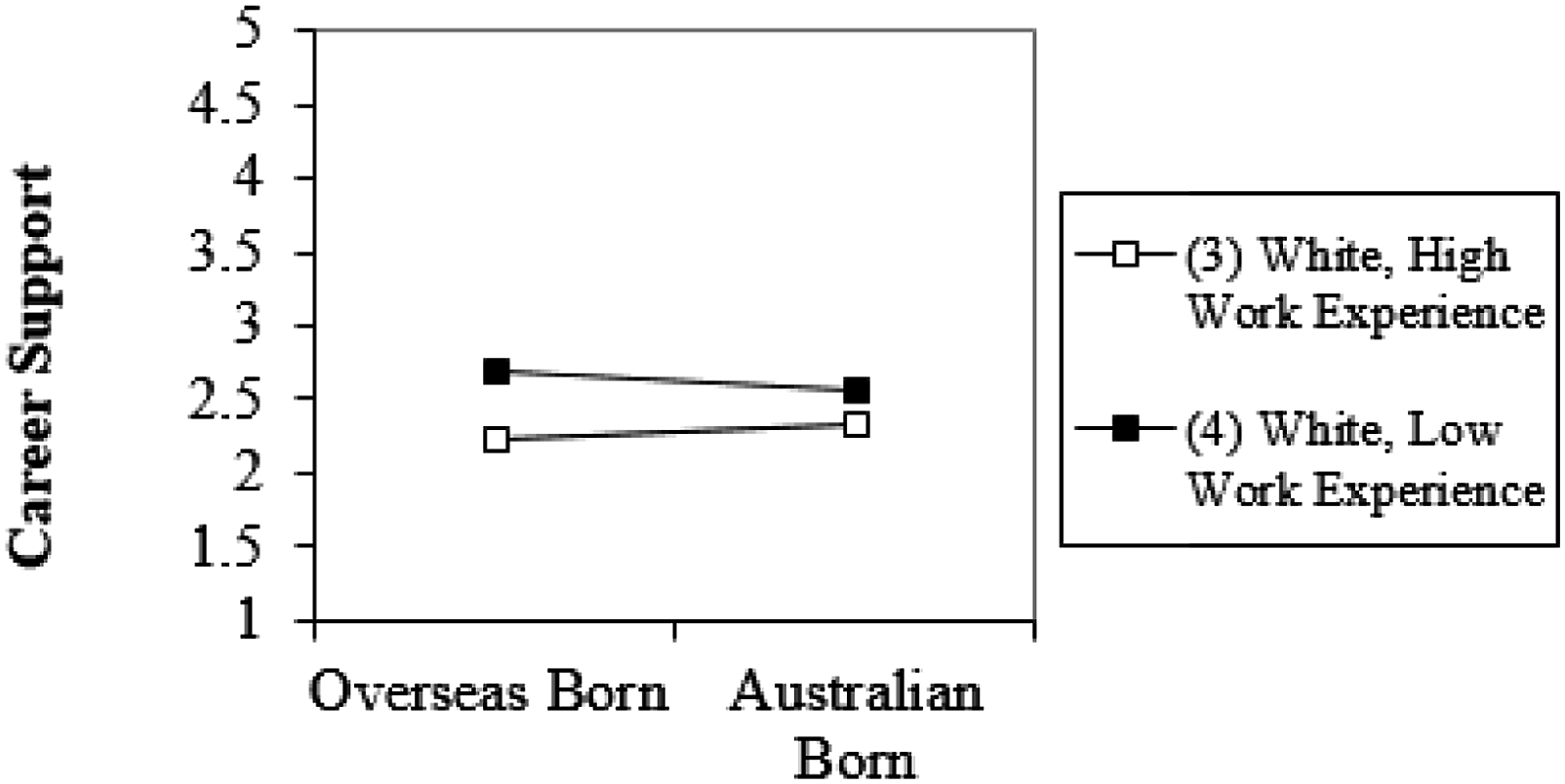
The three-way interaction effects were then graphed using slope analysis (Dawson, 2015). Non-white immigrants with lower local-work-experience had less career support, but those with higher levels of local-work-experience had more career support (Figure 4). This suggests a pattern where inexperienced non-white immigrants do not receive the remedial career support they need, while those with more local-work-experience receive additional support. Among whites, on the other hand, immigrant-status was unrelated to career support (Figure 5). Moderating effect of race (non-white), local-work-experience on immigrant-status for career support. Moderating effect of race (white), local-work-experience on immigrant-status for career support.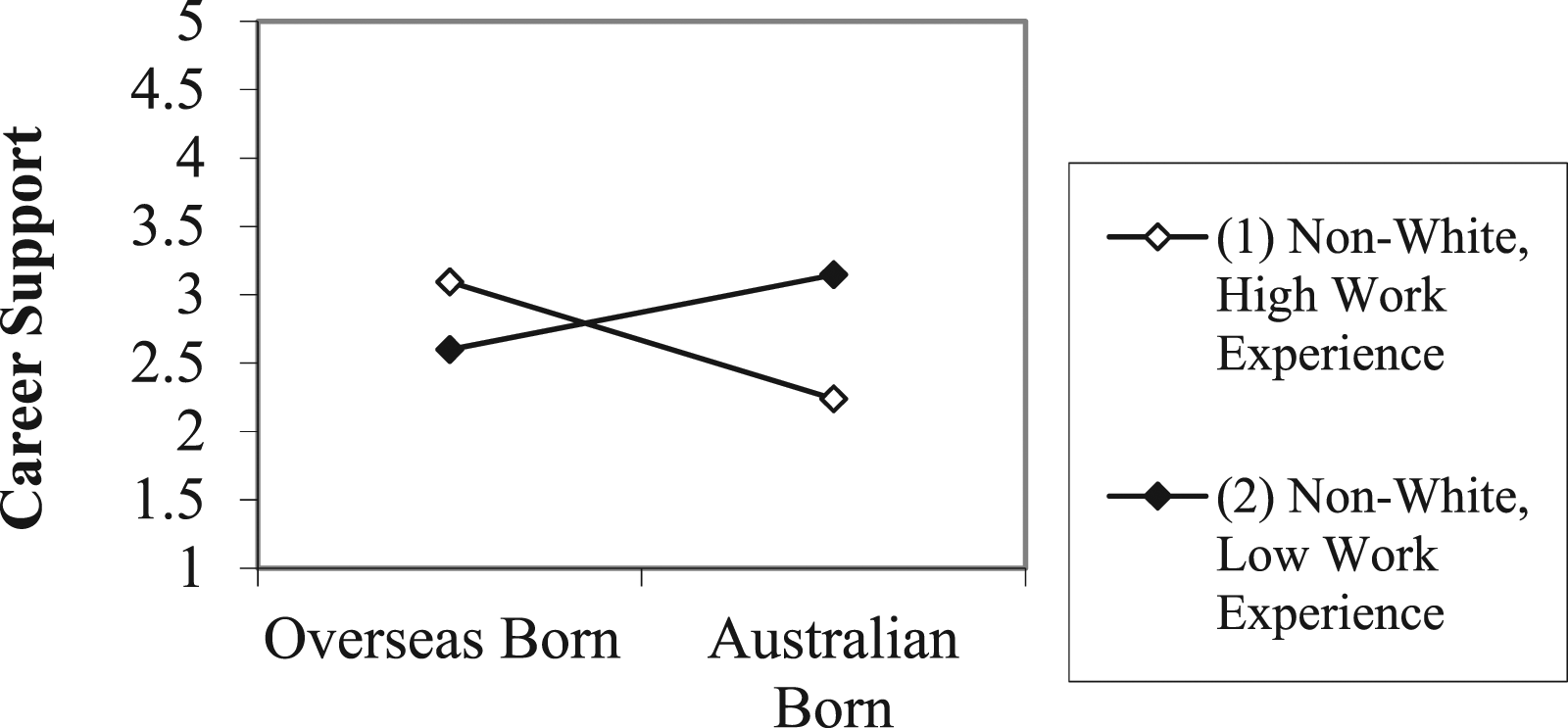
Warmth and competence effect on barriers, facilitators, and career outcomes
Warmth and competence were examined as mediators to determine whether immigrant-status influences barriers and career outcomes (Hypothesis-3). No significant correlations were found between immigrant-status and meta-perceptions of warmth and competence. Correlation between immigrant-status and perceived warmth (r (450) = 0.014, p = 0.77, ns) or competence (r (450) = 0.055, p = 0.54, ns) was not significant. Regression analysis showed no effects of immigrant-status to predict warmth and competence mediators. In sum, warmth and competence do not mediate career development activities and career progression; thus, Hypothesis-3 was unsupported. Further analysis was unwarranted because there were no effects found for immigrant-status on mediators (Preacher & Hayes, 2006).
Discussion
Immigrant-status and surface-diversity on career progression
Our results corroborate previous research showing that immigrants are perceived less favorably than local-born-mainstream-groups and senior managers or employers tend to prefer locally qualified managers (Qureshi et al., 2013). Despite skills and qualifications being recognized in migration policies, many non-whites and NESB immigrants are less likely to obtain comparable positions to locally qualified local-born-mainstream-group members (both white and non-white) (Parr and Guo 2005; Qureshi et al., 2013). Further, immigrants do perceive employers to be consciously or unconsciously penalizing them for not having local credentials and experience (Almeida et al., 2012).
De Alwis (2015) illustrated this phenomenon by examining Australian census data (ABS, 2011). NESB immigrants (E.g., Vietnamese and Filipinos) are more concentrated in low-skilled occupations such as laborers, technicians, and trades workers. In NESB birthplace groups (E.g., China, Indonesia, and South Korea), there are bi-modal concentrations of persons in higher-skilled managerial and professional occupations, vis-a-vis lower-skilled occupations, especially for males. This is also occurring in OECD nations (OECD, 2014, 2018). There are similar patterns across all Asian birthplace groups, in particular a smaller proportion of males employed in managerial positions compared to ABP. However, European immigrants are more likely to have similar occupations to ABP and in managerial occupations (De Alwis, 2015). Results suggest skills and qualifications obtained in non-Western countries are viewed as less transferable or advantageous than those acquired in Australia or from Western nations (Almeida et al., 2012, 2015). Ho (2006) found that highly educated Chinese female immigrants in Australia who are perceived as challenging, and their qualifications and experiences devalued by employers, had their careers affected negatively.
In contrast, Watson (1996) found South American immigrant women in Australia reported that their racial or ethnic background may be an initial advantage in the labor market and that they secured success in managerial occupations because their US work experience was similar to the Australian environment. The reality is that Asian and Southern European immigrants have remained under-represented in Australian management jobs during the 1990s, 2000s and 2010s (Watson, 1996). Similarly, in New Zealand, Europeans are seen as “high in status” since they were viewed as both highly warm and competent compared to other ethnic groups (Sibley et al., 2011). This mindset penalizes non-white immigrants and disadvantages their career advancement.
Although the present study did not support the SCM; research in the past three decades (Almeida et al., 2012; 2015; Ho, 2006; De Alwis, 2015; Parr and Guo 2005; Qureshi et al., 2013; Sibley et al., 2011; Watson, 1996) show patterns where immigrant-status and surface-diversity variables of immigrants are associated with being perceived as challenging and lower in competence, which disadvantages them, compared to local-born-mainstream-group members. These findings, taken together with what is occurring in OECD nations (OECD, 2018), suggest that immigrants’ surface-diversity is a disadvantage. Our results support the notion that surface-diversity categorizes immigrant people as “dissimilar to me” (Cuddy et al., 2008; Glick and Fiske, 1999, 2001; Rudman, 1999; Turner and Oakes, 1989), or less trustworthy (Eckes, 2002; Fiske et al., 1999) or less intelligent (Moore, 2016; Shah, 2019), which in turn influences the non-recognition of skills and qualifications gained from foreign nations (e.g. Almeida et al., 2015; 2012; Bhandari et al., 2015).
Effect of race, accent, and local experience on career progression
Race
Immigrant-status is complex since it is associated with race, accent, and local-work-experience. For example, we found no direct effect of immigrant-status on the majority of DVs. This suggests that immigrant-status is hidden, but race is obvious. Results suggest that non-white local-born second-generation immigrants are initially perceived as non-white immigrants until their accent is heard and people realize that they are ABP. Hence, all overseas-born people (i.e., first generation) are considered immigrants, but not all ABP (i.e., non-white local-born second-generation immigrants) are recognized as local Australians. This study’s findings suggest race interacts negatively with career development activities and career progression.
Accent
It is important to note that accents represent a crucial but overlooked discriminating factor at work (Bent and Bradlow, 2003) which impedes managerial career progression. Our findings suggest that managers’ career progression varies as a function of their immigrant-status and accent in relation to barriers such as mentoring, career support and career progression. The categorization that underlies SCT (Turner and Oakes, 1989), and linguistic research suggest immigrants with accents may automatically be perceived as dissimilar by decision-makers or worse less trustworthy and less intelligent (Dobrow and Gidney, 1998; Moore, 2016; Shah, 2019). ABP managers are, therefore, more likely to identify with their in-group members than with immigrants who are dissimilar (Rakić et al., 2011). Our findings show participants who self-identified as having a foreign accent are viewed unfavorably by senior managers/decision-makers for career advancement. Therefore, immigrant managers with foreign accents are more likely to face career barriers than local-born-mainstream-group accented managers.
Local-work-experience
Results show the effect of local-work-experience was significant in relation to all barriers, facilitators, and career outcomes, with the exception of skills and experience recognition. It demonstrated race and local-work-experience influence employers or decision-makers to provide career support to those like them (white immigrants or local-born-mainstream-groups). Non-white immigrants received less career support when they had less local-work-experience than whites. However, non-white immigrants receive more career support than ABP managers when they have more local-work-experience; while white immigrants are not affected when they have less local-work-experience. Our findings corroborate previous works that local-work-experience is a key determinant used to judge immigrants’ abilities and their career outcomes (e.g., Almeida et al., 2015; 2012; Bhandari et al., 2015). Concerning SCT, immigrants with less local-work-experience are less likely to be favored by managers. Local employers view local-work-experience as indicative of an immigrant’s credibility, and potential to integrate into the organization (Foroutan, 2008, 2011). Length of stay is a leading facilitator of benefits gained after settlement in the host country (Foroutan, 2011), thus residency length can mitigate the impact of local-work-experience on immigrant career progression, although not fully.
Our results concerning the lack of facilitators for immigrants: informal networking, mentoring and career support, corroborated existing works (Tharmaseelan et al., 2010). Previous research indicates informal networking significantly affects career progression (e.g., Kirai and Mukulu, 2012). For example, Thomas (1990) found that same-race dyads enjoy more career and psychosocial support from mentors than cross-race dyads due to similarities in perception. The results are congruent with similarity-attraction (Byrne, 1971), where a lack of employee-employer similarity may decrease personal attraction and identification with the employer. Rudman (1999) documented this “just-like-me” effect in senior managers where race was influential in forming in-group and out-group categorizations.
Research suggests being liked depends on warmth (likability and trustworthiness) and people usually make such judgments of others instantly (Abele et al., 2011). Social skills enable one to build relationships and connections through networking with people within and outside the organization (Settles et al., 2010), regardless of race, accent, and local experience. Our findings suggest the in-group/out-group effects for immigrants can be mitigated by developing social networks. Formal and informal networks contribute to social and cultural integration, especially when employers are concerned about an immigrant’s competence and fit in the Australian workplace (Almeida et al., 2015). Therefore, although it is challenging for individuals to maintain professional networks while aspiring to advance, such networks bring positive outcomes for career progression (Thomson, 2014).
Mediators’ warmth and competence effect on career progression
Our results failed to support Hypothesis-3 regarding immigrants’ perceived effects of judgements from senior managers. The results did not find perceptual bias in evaluative judgments when immigrant managers reported their perceptions. The results of mediation analyses for mediators warmth and competence effect suggest immigrants may not be perceived in terms of warmth and competence (less warmth and competence), compared to ABP managers. These findings are not congruent with previous meta-perceptions research conducted across several European and Asian nations regarding host country members’ perceptions of immigrants (e.g., Asians are meta-perceived as low in warmth and high in competence) which appeared consistent across international samples (Cuddy et al., 2009; Fiske et al., 2002). Extant research suggests discrimination is more likely to occur when evaluators project their beliefs onto out-groups (Glick and Fiske, 1999, 2001).
We offer a nuanced explanation from the decision-maker’s perspective when immigrants do not experience differential judgments on warmth and competence. Existing research shows appropriate social skills foster positive judgments about competence (Fiske et al., 2007), therefore, it is possible that from decision-makers’ perspectives, immigrants lack appropriate social skills, thus perceived as less likeable and colder than local-born-mainstream-groups in the workplace. Furthermore, it is possible that the study’s sample was not able to respond to the meta-perception items effectively because the relationship between the supervisors’ underlying beliefs and evaluative outcomes could be more complex, making it difficult to distinguish between reality and perception. These findings could be specific to the present study’s particular managerial context. Thus, it is critical to examine whether this lack of perceived bias is an accurate reflection or if respondents simply did not perceive existing biases.
Implications
This paper contributes to current knowledge by integrating literature on diversity management, stereotypical perceptions of immigrants' experiences at work, and career development. Our findings suggest perceptual bias against immigrants might reflect underlying racial rather than nationalistic bias. Bruenetto et al., (2002) suggested discriminatory behavior might arise when decision-makers rely on irrelevant factors such as surface-diversity associated with personal characteristics for employment. An important contribution of this research is to assist with developing strategies to enhance fairness and awareness in decision-making processes through training and education when the dissimilarity effect influences decision-makers and subsequently impedes the career progression of people who are not local-born-mainstream-group members.
The findings also contribute to the limited research on immigrant managers who are in multiple marginalized demographic categories. Our findings are similar to Hӓrtel et al. (2014) that women’s career progression is dependent on their immigrant-status, however, our study examines the broader intersectional effect of immigrant status and race rather than immigrant status and gender. Our study identified that irrespective of gender, many barriers experienced by managers appear to be related to respondents’ race rather than either being born overseas or locally.
Theoretical Implications
There are several important theoretical implications of our study. First, it demonstrated that immigrant managers’ career development challenges are not necessarily due to their immigrant-status; but are triggered by more obvious cues associated with surface-diversity, namely race (white vs non-white) and accent (local vs foreign). Race largely accounted for the barriers experienced by immigrants. This highlights the centrality of decision-makers’ perceptions of the target as being “different” as a key factor in shaping individual career progression. Therefore, it is not whether one is born locally per se that drives these outcomes, but rather how others perceive immigrants' skin color and foreign accent that shapes their experiences and opportunities. The implication for managing equity and equality across borders are clear, namely, white, middle-aged, heterosexual males who still make up the mainstream-group in managerial positions in nations such as Australia, France and the US are still negatively biased towards female out-groups (Festing et al., 2015; Knappert, 2013) or people with foreign accents. As such, existing diversity management theories need to add alternative perspectives or theories to inform mainstream-groups in managerial positions to be aware of their biases.
Second, the study broadens our understanding of the career progression factors affected by the perceptual cues associated with immigrant surface-diversity, in particular race and foreign accent. Beyond considering how these cues inhibit career progression, this work considers their impact on career development facilitators of networking, mentoring and career support that affect the career progression of managers. We found that immigrant managers who are non-white and have a foreign accent perceive more barriers in accessing networks and career fast-tracking opportunities. Our findings speak to the intersectionality of being an immigrant and having a foreign accent (30.7%). Current theories do not address how multiple surface-diversity factors impact individuals. This is something that current equity management theories and practices need to address. The SCM we have introduced in this paper offers an alternative interdisciplinary perspective or theory that the diversity management field should consider.
The third theoretical implication this study contributes to the diversity management field is the adoption of the social psychological SCM to understand and explain the experience of immigrant managers. It also offers a novel investigation into meta-perceptions of immigrant managers. For example, immigrant managers in our sample did not perceive any perceptual bias in evaluative judgments of warmth and competence. This contradicts existing literature, which reports negative meta-perceptions of decision-makers towards immigrant managers in terms of warmth and competence (Fiske et al., 2002). Our finding suggests a potential gap between experienced and perceived bias. Our results show that immigrant managers report experiencing career disadvantages relative to their non-migrant counterparts, yet do not believe their surface-diversity shapes how people perceive them. In other words, immigrants may not recognize the role that others’ judgements and evaluations might play in their career trajectory. Another possible explanation as suggested by Martins and Parsons (2007) is that participants in our study are experiencing some denial of biases to protect themselves or avoid the stigma of discrimination.
It is pertinent to the diversity management field that the present study’s sample is represented in the SCM (Figure 1). Therefore, it is probable that the following biases are likely to exist in the mind of current local supervisors and decision-makers when dealing with the following groups. A) Female managers with children, are going to be liked, but likely to be pitied, paternalized and considered incompetent as indicated in past research (e.g., Giscombe & Martins, 2002; Heilman and Okimoto, 2008). B) Newly arrived, non-white immigrants (48% in our study) with foreign accents (30.7%) and little or no local-work-experience (69.1% non-local and 30% had no local experience) are likely to be perceived as incompetent, disliked, and treated with contempt. Consistent findings of negative stereotypes towards dissimilar individuals have led several researchers to make a connection between stereotypical perceptions and individual attributes (e.g., Almeida et al., 2015; Munro et al., 2006; Rakić et al., 2011). C). While non-whites, both immigrant and locally born (23.7%) individuals though perceived as competent, are likely to be disliked and envied. This may be informative to be aware of whether perceptual bias differs as indicated in past research (e.g., Eckes, 2002; Fiske et al., 1999; Glick and Fiske, 2001). In contrast, D), White mainstream-groups, especially males (89% in our study) are inclined to be liked, perceived as competent, respected, and admired. Local-born-mainstream-group members must be made aware of these potential biases, as Martins and Parsons (2007) suggest people who do not believe or are unaware biases or discrimination exist are unlikely to support diversity management initiatives; while those who believe or are at least aware that biases or discrimination exist are likely to support diversity management initiatives to develop equity and equality (Festing et al., 2015).
Practical implications
There are several practical implications of our study. Organizations should develop awareness of job-relevant and irrelevant factors that lead to fairness in recruitment, career developmental opportunities, and corresponding decision-making processes. There is a need to continue raising awareness regarding the benefits of diversity for competitiveness globally, and to avoid underutilizing and undervaluing immigrants’ skills and expertise due to race and accent. Organizations should educate and train all levels of employees irrespective of status, if not all then at least managers in intercultural competence, or awareness of our unconscious biases, which in turn can lead to more positive attitudes in the workplace towards out-groups. This would result in greater satisfaction, motivation, and innovative work behavior for all, including being more open to diversity management initiatives to develop equity and equality.
Organizations can introduce a Diversity Management Mobility program. One of the ways to overcome barriers and stereotypical perceptions for disadvantaged and marginalized migrant groups is by establishing a programmed plan. This pipeline program would provide opportunities for learning and development for those who aspire to achieve senior management positions. In that program, marginalized and underrepresented groups i.e., females, NESB and non-white males and females would be highly encouraged. Diversity assessment surveys, mentoring training, leadership training, and community of practice (COP) should be included in the program. This program should be evaluated regularly to ensure its effectiveness. The program would require two key aspects.
First, organizations need to complete a diversity needs assessment to understand current diversity practices in the organisation. Some questions could be included such as the definition of diversity, the proportion of diverse people at all levels in the organisation, promotional practices, and recruitment processes with the inclusion and empowerment of diverse people in the organisation. This survey should not only be transparent and available to all employees but also be aligned with the organisational strategic objectives, which could be conducted annually or bi-annually.
Second, it is crucial for organizations to be aware that unconscious bias exists. A large number of employees were overseas-born thus their values, behaviours and perception will vary. It has long been recognized that mentoring programs are designed to develop new employees (Kram, 1985), but mentoring programs need more attention to particular under-represented groups i.e., non-white and NESB in the context of managerial career progression. Organizational hiring processes should be part of the program plan. The plan should entail a review of hiring processes with the inclusion of diverse personnel at all levels in the organisation. HR should be in charge of the process in the absence of an eligible diversity leader.
Mentoring is one of the most valuable facilitators for the career progression of marginalized out groups (Chance, 2022; Freeman et al., 2019). Migrants are seeking out networking opportunities and career support for career progression in our research findings. Mentoring can assist migrants in the preparation of senior-level roles that may maximise the retention of employees in the organisation. Through the mentoring program, migrants can have more opportunities to access formal and informal networking (vis-versa). Community of practice (COP) can also provide networking opportunities that enhance opportunities to find a mentor as well as what was not available for them in the past. If organizations were to provide mentoring programs for diversity (irrespective of racial background) by formalizing leaders for mentoring and supporting, this would benefit not only migrants but also benefit the organizations in terms of hiring, retention and ultimately their competitive advantage.
Organizations can also introduce unconscious bias training in mentoring programs that could assist overcome stereotypical perceptions of mentors that would assist in choosing mentees to develop relationships. More engagement would influence trust and commitment among employees at work who seek career developmental opportunities for progression. Organizations can introduce mentoring programs with weekly participation and measure the efficacy of career progression outcomes. Other activities could be added like inviting diverse speakers with their stories, social gatherings, empowerment, and community of practice where informal mentoring opportunities and develop social capital.
Organisational leaders can take actions such as creating safe workspaces “identity hub” for career development includes a community of practice where learning, experimentation, sharing stories, experiences, and transferring and sharing knowledge between people of different backgrounds would take place. Creating a community of practice can provide opportunities to share experiences and opportunities for diverse employees’ development (Noe, 2022). Mentors and/or mentees can also be chosen through a community of practice, while this practice provides opportunities to share experiences, understanding people of different backgrounds, and allows employees development in a multifaceted learning environment. Investment in mentoring programs would not only improve culture but also the competitive advantages of organizations.
Scholars have suggested devising programs that improve local-born-mainstream-group members’ knowledge of stereotypes toward anyone considered as “other” (Bhandari et al., 2015; Xiao et al., 2014). These findings support effective strategies such as social inclusion programs, open office plans in the workplace, enhancing feelings of connection, generating trust, and helping individuals feel validated as productive in the organization and society (Settles et al., 2010). More importantly, such programs may reduce the “just-like-me” effect among employees irrespective of demographic characteristics; thus, developing an inclusive outlook for all, which will consequently positively influence career opportunities for all workers. Anti-discrimination and anti-racism policies alone will not improve immigrants’ career outcomes, particularly for non-white immigrants, if social perceptions remain unchanged and bias continues to persist. The benefit to immigrant-receiving countries, including reducing the cost of lost opportunity will outweigh the cost of such programs. Taken together, our research highlights building and developing authentic or well-meaning organisational leaders for the future who hold respect and empathy in supporting diversity and inclusion initiatives, often motivating, rewarding, or valuing employees (irrespective of migrant status) achievement and strengths (Dillon & Bourke, 2016). Thus, leaders need to be trained to develop awareness of stereotypical perceptions and create a supportive environment through the empowerment of migrants in the decision-making process.
Finally, this study showed how the SCM can be incorporated into organizational HRM practices to examine the stereotypes of non-white and white immigrants; using a national random sample used by Sibley et al. (2011) to index experiences. The SCM enables a deeper understanding of social perceptions and career outcome processes. Our study suggests a strikingly different pattern of immigrants’ perceived experiences. Although they did not perceive bias, they did experience lower career outcomes. Research suggests that judgments based on stereotypes rather than individual merit can lead to inappropriate career advancement decisions, negatively affecting organisations and economies (Loughlin, 1999).
Limitations and future research
The online survey took 25–30 min to complete, thus there may have been survey-fatigue. It is also possible that immigrants do not desire to perceive themselves as a disadvantaged group or may not wish to show disrespect to their new country and causing a deliberate selection of survey responses that accord with such motives.
Numerous organizations refused to participate in this study without providing any logical explanation. The lack of interest may be indicative that little focus on managing diversity in the workforce. Thus, researchers attempted to recruit a data collection company while it was difficult to access migrant managers without permission. Perhaps there are other impediments to immigrant career advancement missing from this sample.
Another limitation is that we cannot assign causality since there were no experimental manipulations. However, the study does identify a broad range of factors related to immigrant managers’ career progression. More in-depth study is necessary to explore subtle and complex factors (e.g., spouse’s career, socio-economic conditions, migration policy and previous learning credentials).
Future research could focus on the intersection of race and accent on a particular ethnic group of immigrants (e.g., Asians) in senior management positions and in specific industries, such as banking and finance, where higher positions are more relevant to public dealings and where strategic decision-making is involved. A closer examination of ethnic group effects amongst South and East Asian and European groups who arrived in Australia at the same time under the skilled migration policy could be further examined.
Conclusion
This study demonstrated career advancement opportunities are influenced more by racial characteristics than immigrant-status in Australia, with foreign accented immigrants being more disadvantaged than non-accented persons. Decision-makers in organizations need to be aware of this when assisting employees with their career progression. Career facilitators should ignore job-irrelevant factors such as skin color or accent but instead focus on relevant factors such as skills and experience. Many immigrants, particularly non-whites receive fewer career development opportunities compared to white employees, which could result in discrimination in Australia and other OECD countries. Immigrants are important assets for organizations, countries, and the economic growth of Australia (OECD, 2014). Once this is appreciated, it is obvious why the strategies would benefit organizations at the individual and group levels and allow economic benefit nationally and internationally. Therefore, organizations should take more effort to investigate the depth and work experiences of immigrants to help the organization and facilitate equity for immigrants including future career development and advancement.
Even as race and accent play an important role, it is also vital to understand perceived differences; what immigrants perceive from their supervisors and what impressions, or perceptions supervisors have towards immigrant managers. These perceptions may reflect a preference for one’s similar race (white) in career progression. Senior managers and decision-makers are in positions of power to determine career outcomes for immigrants and should aim to minimize the “just-like-me” effect as much as possible.
Footnotes
Declaration of conflicting interests
The author(s) declared no potential conflicts of interest with respect to the research, authorship, and/or publication of this article.
Funding
The author(s) received no financial support for the research, authorship, and/or publication of this article.
