




Abstract
This paper expands non-representational theory’s emphasis on translation by exploring the potential of comic-based research (CBR) to illuminate consumer behaviour and intensify knowledge translation processes. CBR uses art-full mechanisms of knowledge translation to foster increased imaginative engagements and enhanced ontological author-ity resulting in the co-production of more personalised and applicable knowledge for audiences. Research comics are multi-representations – interactive interfaces – combinations of theory, data, and imagination capable of generating unlimited story-worlds and vivid knowledge translations that evolve and regenerate uniquely for each reader. CBR can be used as an effective translation device in marketing to generate unbound knowledge connections with diverse non-specialised audiences and establish a more imaginative, collaborative, and impactful culture of knowledge translation, and in doing so, realise the full potential of art-science hybrids. The illustrated consumer research comic 10 Business Days exploring the sensitive COVID-19 context is offered to support arguments.
Keywords
Introduction
It tends to be forgotten that ‘science is an adventure of the human spirt, an essentially artistic enterprise stimulated largely by curiosity – by imagination’ (Weaver, 1960). The resurgence of more curious approaches to science providing exiting possibilities for knowledge creation is referred to as non-representational theory (NRT) (Thrift, 2000). NRT has become the umbrella term for creative methodologies seeking to animate the vivid, multi-sensual, and dynamic contexts explored by social science researchers. Thrift (2008) claims at the heart of animating powerful scientific story-worlds that move audiences to an understanding is the act of translating. Moving beyond discussions of dissemination and knowledge transfer (Nokes, 2009), knowledge translation ‘is a collaborative model of research, a form of engaged scholarship, in which the goal is the co-production of knowledge with audiences’ (Kreindler, 2018). An underlying premise of knowledge translation is that active audience engagement in knowledge co-production is more effective at converting knowledge to action. Creative – artistic – imaginative – representations are effective for knowledge translation because they reposition audiences, welcome them to co-produce, interpret, theorise, and take on performative roles (Vannini, 2015a).
Belk et al. (2018) foresee a research culture in which representations will become more active and collective, in which the mechanisms of knowledge translation at play will become even more dynamic and stimulating. The purpose of this paper is to expedite the arrival of a more imaginative, collaborative, and intense culture of knowledge creation in marketing by exploring the knowledge translation capabilities of comics. 1 A role for research comics is argued for on the basis they utilise art-full mechanisms of knowledge translation, inspire the production of multi-representational knowledge, are capable of generating and re-generating unlimited idiosyncratic interpretations for each reader, and can open up a world of unbound and unforeseen knowledge connections.
Due to the performance centred narratives and imaginative appeal of comics, research comics could be employed as creative ‘translation devices’ (Pountney and McPhail, 2017): interpretive interfaces that combine theory and data to allow concepts and perspectives from a discipline to be translated to non-specialised audiences, resulting in increased knowledge integration across boundaries and more robust interdisciplinary knowledge bases. To strengthen arguments made in this paper, and showcase the exciting knowledge translation capabilities of CBR, the illustrated research comic 10 Business Days exploring sensative COVID-19 consumption experiences is offered to readers.
The paper unfolds as follows: Firstly, NRT and the creative (re)turn inspiring art-full approaches to knowledge creation are discussed. Following this, the art-full mechanisms of translation employed in consumer research to create knowledge are explored. CBR is then introduced, followed by a discussion on its research affordances, and application in other fields. The research comic 10 Business Days is then presented. Following this, how CBR generates multi-representational knowledge and the unique mechanisms of knowledge translation at play are discussed. Finally, the use of CBR in marketing as a knowledge translation device capable of inspiring regenerative knowledge connections with diverse audiences and promoting an art-science culture privileging imaginative author-ity is explored.
Non-representational theory: The creative (re)turn
NRT is a new style of doing research – a ‘fight against methodological timidity’ (Latham, 2003); it’s not anti-representation but celebrates the complexity of representation – ‘more-than-representational theory’ (Lorimer, 2005). The objectives of NRT are to expose elements obscured in traditional modes of research; to seek out novel categories of knowledge; to expand ontological outlooks; and to (re)inject a sense of wonder in research by creating artifacts where different kinds of knowledge can be produced (Hill et al., 2014). Thrift (2008) outlines seven qualities of NRT: (1) it aims to capture the onflow and viscous becoming of life (2) is anti-biographical, unmeasured, and authentic (3) focused on practice, action, and performance (4) exposes relational materialism (5) is hyper-experimental and intrinsic (6) emphasises the importance of bodily states and (7) stresses an aesthetic of novelty. These creative qualities contribute to the emergence of a new intellectual environment – an art-science hybrid – and have been adopted as a guide for this application of CBR in marketing.
In its subject matter NRT explores events, crises, and emergences; their sites, drama, and actors; the conflicts, consequences, and uncertainties that underlie the complex atmospheres of social life (Vannini, 2015b). NRT is an appropriate approach to expose the novel malaise and elusive existential knowledge central to the sensitive COVID-19 experience. What distinguishes NRT from other approaches is the acknowledgement of the temporality of knowledge; it's more interested in the potential of what knowledge can become, concerned primarily with evoking an impact in audiences over empirical reality (Vannini, 2015a). NRT researchers view their research as impressionistic; although inspired by data, it’s not communicated neutrally, it's intensified for impact. NRT flirts with reality in highly creative ways to disrupt, unsettle, and disorientate but inspire eclectic interpretations of the world (Thrift & Dewsbury, 2000). Hawkins (2019) claims the rise in NRT approaches marks a creative (re)turn inspiring researchers to take creative risks, exercise passion, and re-configure modes of thinking, sensing, and presenting (Essén and Värlander, 2013).
Because art extends beyond representation by creating fissures in reality, art-full methods are popular in NRT research (Dowling et al., 2018). Art-full representations promote more playful, performative, and unpredictable forms of knowledge production (Seregina & Van Den Boosche, 2022). NRT’s art-full modality can draw from all performance-driven methods and media capable of shaking audiences from passivity. Art-full approaches acknowledge the evolving role of the audience in knowledge co-production; they nurture audience author-ity and promote performative knowledge connections (Assis, 2011). If NRT is about affect, then it must also be effective; new styles of evocative storytelling and creative structures allowing audiences to co-author story-worlds and generate personalised knowledge translations must be developed. But what mechanisms of knowledge translation underly an affective NRT marketing representation? The art-full knowledge translations utlised in consumer research will now be explored.
Art-full knowledge translation in consumer research
Lynch et al. (2012) argue consumer research knowledge is dependent on four pathways of intelligent reasoning along two dimensions: the approach to knowledge creation (deductive/inductive), and the domain of intended contribution (theory/phenomenon driven). According to Belk et al. (2018), these four pathways can be characterised as being (1) theoretic (deductive-theoretical), which advance novel shifts in understanding in relatively structured ways (2) pragmatic (deductive-phenomenon), which make convincing links between theory and phenomena of interest (3) emergent (inductive-theoretical), that flow from the presented findings to make speculative conceptualisations with impactful potential (4) descriptive (inductive-phenomenon), which capture phenomena in sufficient detail to stimulate interest in developing theoretical explanations. Different pathways lead to different knowledge creation goals, different representations being created, and different mechanisms of knowledge translation used. Interpretive consumer research uses art-full approaches to knowledge co-production such as metaphoric language (Sherry and Schouten, 2002), expressive narratives (Coffin and Hill, 2022), emotional reflexivity (Canniford, 2012), affective resonance (Belk et al., 2018), empathic identification, (Hudson and Ozanne, 1988), multisensory stimulation (Rokka and Hietanen, 2018), and inciting active audience performance (Seregina, 2018).
Sherry and Schouten (2002) argue that poetic forms of translation can engage audience’s humanity and offer insights into the hearts and minds of consumers. The power of poetry is that audiences draw upon their own personal storehouse of knowledge and emotional experiences. Poetry is a non-linear knowledge translation that induces ‘empathic identification’ (Hudson and Ozanne, 1988) – readers feel their way to an understanding. Canniford (2012) too argues for increased poetic translation in consumer research on the basis it inspires more creative language and imaginative metaphors necessary to excite unforeseen discourse and for passionate perspectives that advance marketing theory to emerge.
Advocates of visual art-full translations claim the illuminating powers of visual representation involve the audience in an intense heuristic process of meaning-making. Visual knowledge translations make use of principles of implication, identification, and shifting perspectives; they offer vivid pathways into to the other senses by combining psychological or kinaesthetic responses with interpretive ones (MacDougall, 1997). In consumer research, videography is most widely applied for visual knowledge translation. Kozinets and Belk (2006) claim the videographer is an artist-storyteller translating research into emotionally dense consumption-centred audio-visual narratives. Vibrant and resonant videographic narratives utilise artistic cinematography, dramatic framing, and emotional scoring. Videographic translations are epistemologically emancipatory – forms of ‘serious fiction’ that force audiences to think differently about research meanings (Rokka and Hietanen, 2018). ‘Serious fiction’ videographies are highly expressive knowledge translations; they rethink representation in terms of affect and agency, of emotional intelligibility and impact (O’Sullivan, 2024). The videographic audience is active and reflexive, they momentarily act within the artifact, meaning elusive knowledge can be explored, performed, and lived (Seregina, 2018).
The argument for comicisation in marketing is made on the basis research comics hyper-intensify the current mechanisms of knowledge translation used but also employ additional art-full and imaginative mechanisms that enhance audience ontological author-ity and personalise knowledge even further. Comics inspire the creation of vast story-worlds with unlimited possibilities of interpretation, narrative trajectory, and the generation and re-generation of knowledge. McCloud (1993) claims, ‘no other medium demands so much from audiences and offers so much in return, several times on each page the reader is released into the open air of imagination’ – a type of magic that only comics can create. Comics are an art of pure composition and design, a page-by-page visual pattern brought to life – authored – directed – performed – by the audience like a colourful narrative puzzle. CBR can be used to magnify audience author-ity, nurture imaginative interpretation, excite fantastical performances, and unflatten science (Sousanis, 2015). The affordances that CBR offers to researchers and its creative application in other fields will now be explored.
Comic-based research affordances
The use of comics to create knowledge is neither a new idea nor a fad: in 1944 the Journal of Educational Sociology published a special issue dedicated entirely to comics (Gruenberg, 1944). There has been a recent resurgence in research supported by comics; creative researchers from diverse fields are increasingly coming into contact through conferences, symposia, special issues, book series, and other venues, to shape what is termed comic-based research (CBR). Kuttner et al. (2021) define CBR as ‘an emergent field of practice comprised of researchers with diverse disciplinary norms and alternative epistemological commitments conducting research that integrates the comic form into one or more steps of the research process’. They highlight the affordances CBR offers researchers, emphasising characteristic such as multimodality, the combination of sequence and simultaneity, and the emphasis on creator style and originality.
CBR shares strengths with other visual, narrative, and art-based methods, for example, visual methods’ capacity to integrate with the image-based modern world (Pink, 2006); narrative methods’ ability to tap into human process of co-creating meaning (Canniford, 2012); and the power of art-based methods to engage audiences' emotions and facilitate empathic identification (Seregina & Van Den Bossche, 2022). The sparks of creativity central to CBR encourages researchers and audiences to make lateral connections – playful leaps – to translate concepts, theories, and perspectives– to illuminate meanings that otherwise could not occur. So how do comics create engaging narratives and facilitate knowledge co-production? The magic central to comics is due to the unique vocabulary and grammar, which include panels, frames, and gutters that integrate the interplay of the visual, textual, and imaginative elements of engagement (Medley, 2010). Whitlock (2006) provides further clarity on the working cogs of comic communication: The vocabulary of comics represents figures and objects across a wide iconic range from the abstraction of cartooning to realism; its grammar is based on panels [images] and gutters [gaps in the narrative] that translate time and space onto the page… and balloons [bubbles] enclose speech and convey the character of sound and emotion. (square brackets added)
Because of the variety of the vocabulary at play, the range in style of comics is far more diverse and distinct than other narrative media (Sabin, 2008). In comics different semiotic systems coexist and interplay; comics are multisensory communications, which use visual and auditory channels in addition to the verbal (Stecconi, 2004). The multiplicity of semiotic systems includes visual systems such as illustration, caricature, painting, photography and graphics, temporality systems such as written narratives, poetry, and music, and mixed systems such as images and temporality as story-worlds are performed and characters are shown ‘acting’ (Groensteen, 2007).
Panel imagery fractures both time and space, offering a series of windows into a story-world – lucid flashes of action in an emerging (co-produced) narrative. Narrative panels transition from action-to-action, moment-to-moment, or subject-to-subject to heighten different emotions. Vivid colour, facial expressions, body language, gestures, movements, clothing, objects, physicality, spacing, and positioning aim to fascinate the reader, intensify context, and provide resources for narrative co-construction (Snyder, 1997). Switches in background colour or style of panel indicate a change of atmosphere, or a shift in ontological order (action that is ‘real’ within the narrative versus action that is experienced only by a character), or the epistemology of perception (objective gazing, bird’s eye view, level of the action, close-up) (Marcoci, 2007). Discordant or missing frames around panels mark flashbacks, dreams, hallucinations, intoxication, and other subjective experiences (Horstkotte, 2015). Despite panels possessing a logic of sequence, each reader engages with the unfolding comic uniquely. Because of the visual attention required, readers develop idiosyncratic strategies of understanding, an interpretive ensemble consisting of identifying narrative entry points, the navigation of blockages, the impression of borders, frames, and negotiation of conflicting images (Cohn, 2013).
Comics offer an active engagement that cannot be reduced to pure reading nor pure viewing (Gillenwater, 2009). Hirsch (2004) uses the term ‘biocularity’ to discuss the distinctive visual-textual conjunctions that occur in comics. Readers interpret back-and-forth between the words and images, revealing the visuality and materiality of words and the discursivity and narrativity of images (Whitlock, 2006). Words can have a graphic or illustrative substance, which make them part of the picture rather than as pure text. Sounds are represented in a sonographic – as onomatopoeic words: THUMP! WHACK! SPLAT!
What differentiates comics from film is that emerging temporal narratives are formed by the juxtaposition of a sequence of two or three panels. Comics work through ellipsis, meaning the time of narration is independent from that of seeing/reading; while in motion image time and vision coincide, meaning readers co-author narratives at their speed and level of depth. There is a constant flow of narrative directed at videographic audiences but within comics the gaps/gutters defy and disrupt the narrative and establish crucial space for reader reflection, imagination, and authority. The distinctive gutters central to comics impose extraordinary demands on readers; they are required to live between the seen and unseen countless times per page. The story-world is constructed by readers as they move between the sequential gaps and fill them with their expectations and personal knowledge (Zanettin, 2015). These unique spaces allow readers to develop critical literacy by questioning motives and analysing contrasting viewpoints (Norton, 2003). Naghibi and O’Malley (2005) refer to narrative gutters as catalysts for imagination, interpretive spaces where new or alternative meanings are generated or refined – where personalised translations of the narrative occur and creative story-worlds based on personal and cultural experiences emerge.
NRT style translation is central to one of the most renowned illustrated narratives, Maus. Spiegelman (1986) translates his father’s interview transcript into an illustrated graphic narrative – which not only illuminates the traumatic experience of the Holocaust and intense vertigo of moral order but also captures the impossibility of making sense of it, achieved using zoomorphism. The surrealist illustrations in Maus operate as a translation of the horror-dream like state of the Holocaust. Because of the intense multimodal interpretations and active author-ity, fields as complex as medical health (Czerwiec, 2020), neuroscience (Kim, 2017), geography (Peterle, 2021), sociology of illness (Scavarda and Grüning, 2025), cultural studies (Williams, 2021a), and history (Woock, 2025) use CBR to translate knowledge.
Williams (2021a) through hauntingly detailed graphic narratives translates some of the darkest moments of American history and the terror of racism experienced by black people. Her illustrated cultural narratives illuminate the dread and injustice for distant audiences. Williams’ (2021a) brings to life the torture and lynching of 10 black men and Mary Turner, who was 8 months pregnant at the time, which occurred in Georgia, 1918. Similarly, Williams’ (2021b) graphic retelling of the deadly civil unrest which occurred during the 1943 Detroit riots combines first-hand accounts and detailed illustrations to animate the atrocities of racism, white supremacy, economic disparity, and oppression. Her cultural studies CBR allows audiences to encounter the trauma, the bleak reality of the past, and be outraged by the lack of humanity, while reflecting on the forms of racism persisting in present day life. She translates the terror, tension, and turmoil for audiences who otherwise would not feel the upsetting lived history of black people in the United States.
In sociology, Scavarda and Grüning (2025) use comics to highlight issues around mental health and wellbeing, and the difficult experiences of social anxiety, emotional regulation, hyper-sensorality, and ableism experienced by neurodivergent people. They show how comicisation can be effectively used in qualitative research to translate how socially stigmatised people experience daily interactions and social conditions. From an ethical point of view, they argue CBR is advantageous to explore sensitive issues or divergent behaviours because comics allow complex and abstract meanings to be conveyed in indirect ways and the experiences of those often marginalised in social science to be illuminated.
In medical humanities, Czerwiec (2020) utilises comics to explore women’s reproductive health. Historically, menopause has been underexplored in social science resulting in feelings of isolation and anxiety. Her CBR challenges stereotypes by drawing upon perspectives from a range of life experiences, ages, gender identities, ethnicities, and health conditions to create a graphic antidote to the simplistic approaches framing menopause as a cultural taboo. She emphasises the underlying role of bodies in directing social life, social relationships, and social interactions, enabling those experiencing menopause to feel empowered. Similarly, Weaver-Hightower (2017) presents a powerful research comic about a father’s perinatal loss of twins. His comic recounts the hospital and deaths, it details the complex grieving process afterwards and explores themes of anger, distance, relationship stress, self-blame, religious challenges, and resignation.
The comicisation observed in other fields highlights comics to be effective for exploring trauma, marginalisation, or those stigmatised, providing emotional accessibility to the uncomfortable social experiences of others; for animating anxiety, embodiment, and sensitive phenomenon; and developing elusive emotional knowledge difficult to articulate or process in other media. The illustrated consumer research comic 10 Business Days will now be introduced to showcase the potential of CBR to translate the sensitive and traumatic experiences of the COVID-19 pandemic and novel feelings of malaise accompanying lockd.
Translating COVID-19 consumption
The consumer research comic 10 Business Days was created following a mixed method approach that explored the novel context of COVID-19 and the initial lockdown (pre-vaccine). Other research projects were abandoned to preserve an ontology of the arrival of the novel COVID-19 existential threat. Behaviours and experiences were documented using autoethnography (Wall, 2006), visual and digital observations (Kozinets, 2019), drawings (Soukup, 2014), discourse analysis of local, national, and global news reports (Fairclough, 2013), psychographic walking (Jung, 2014) and photography and video (Pink, 2006). The intention was to preserve the virus visually by illustrating the uncanny atmosphere and narratives central to the first 2 weeks (10 business days) of COVID-19. The comic aims to capture the emotional complexity underlying the sudden revert to an alternative mode of being. The goal was to illuminate how consumers experienced the experience of lockdown; how consumers, void of typical social resources, negotiated the COVID-19 environment in which consumption activities now possessed significant risks. It is vital to preserve the existential turmoil and widespread psychological disruptions caused by COVID-19 and the experience of being vulnerable beyond science – consuming a terrifying unknown.
Given the all-encompassing nature of COVID-19 data was in abundance, overwhelming at times, and analysed using constant comparison (Goulding, 2005). All data was coded using an initial coding practice, re-analysed against the entire data set, and abstracted to theory informed codes (Spiggle, 1994). Following this, story-world codes were assigned to direct how data could be translated into the comic narrative, story-arc, characters, dialogue, images, gutters, context, drama, conflict, and relationships and so on. The comic was co-created with professional illustrator William Helps (to gain a deeper understanding of the how-to methodological steps underlying consumer research comics see O’Sullivan and Kozinets (2020) and O’Sullivan (2023)). 10 Business Days will now be introduced without further contextualisation to not overly frame the narrative nor limit potential interpretations and imaginative engagements.
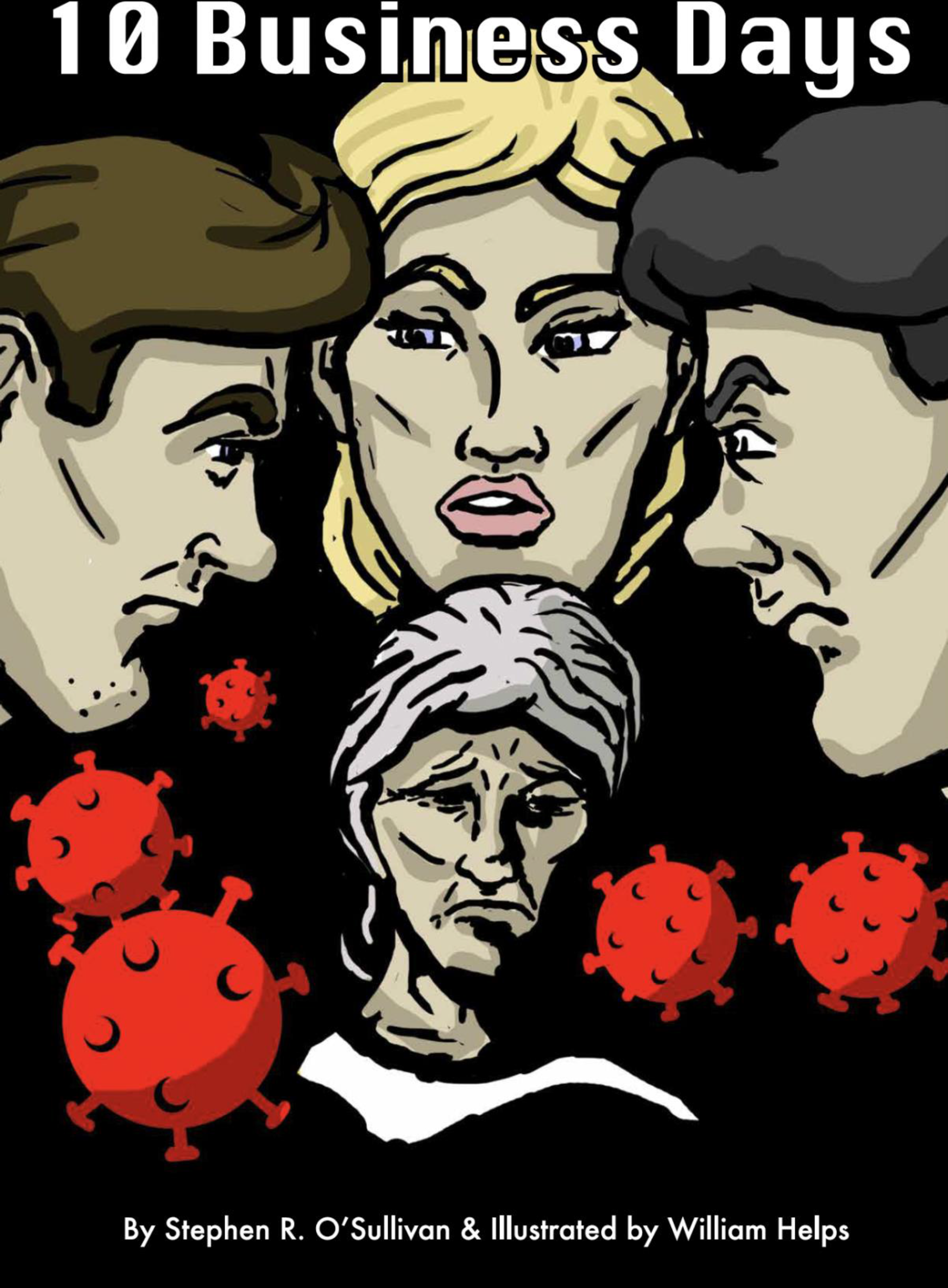
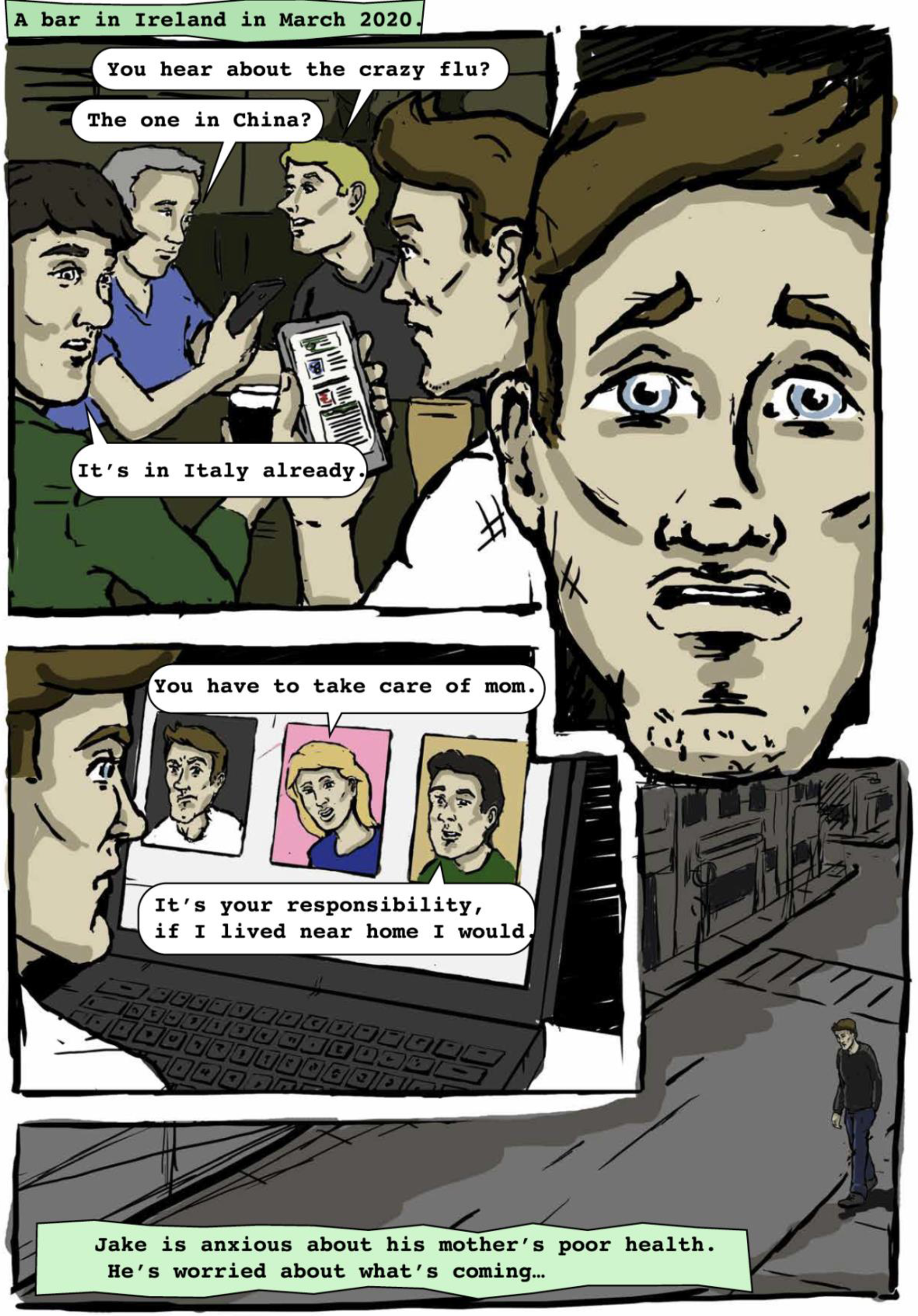
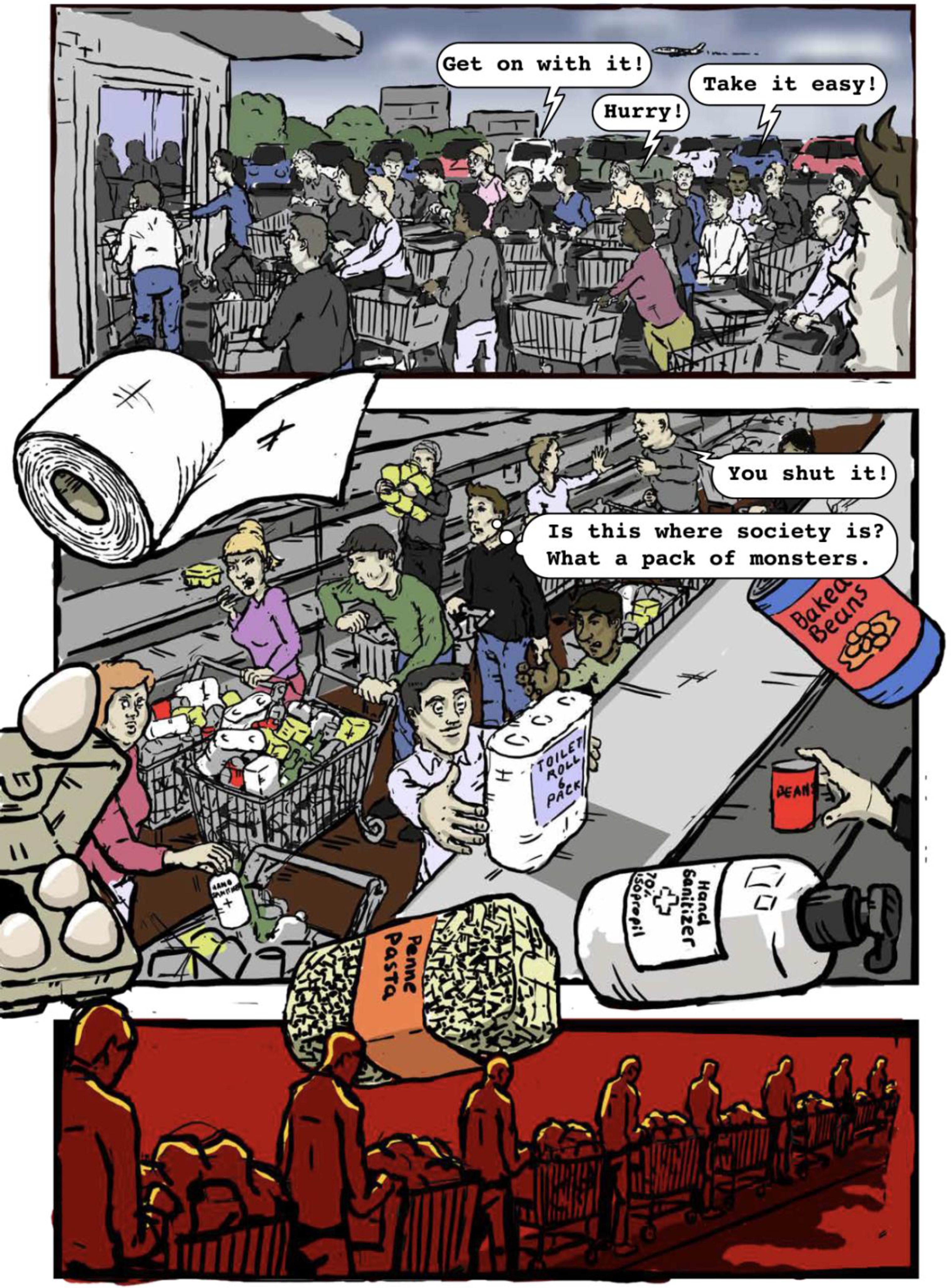
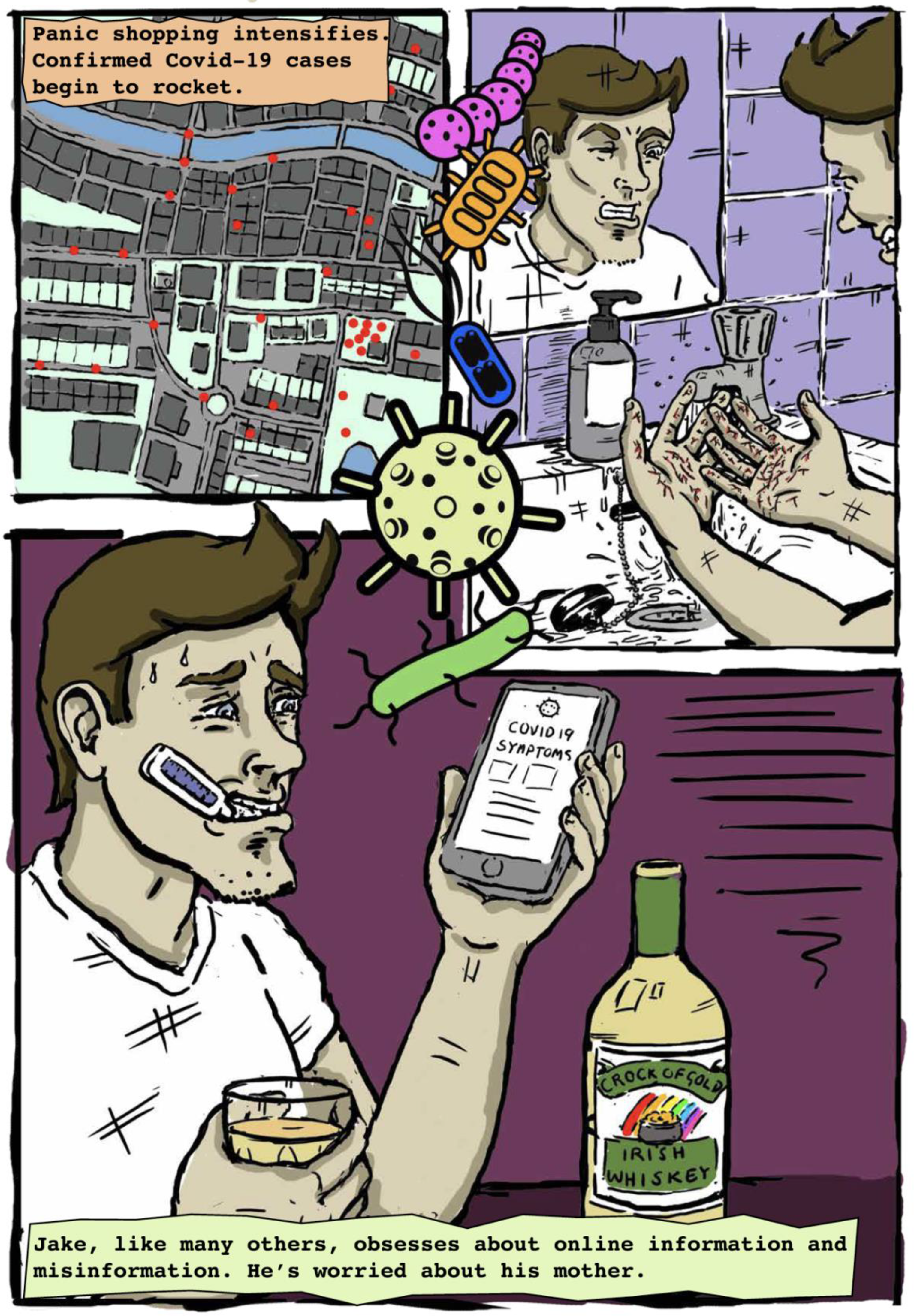
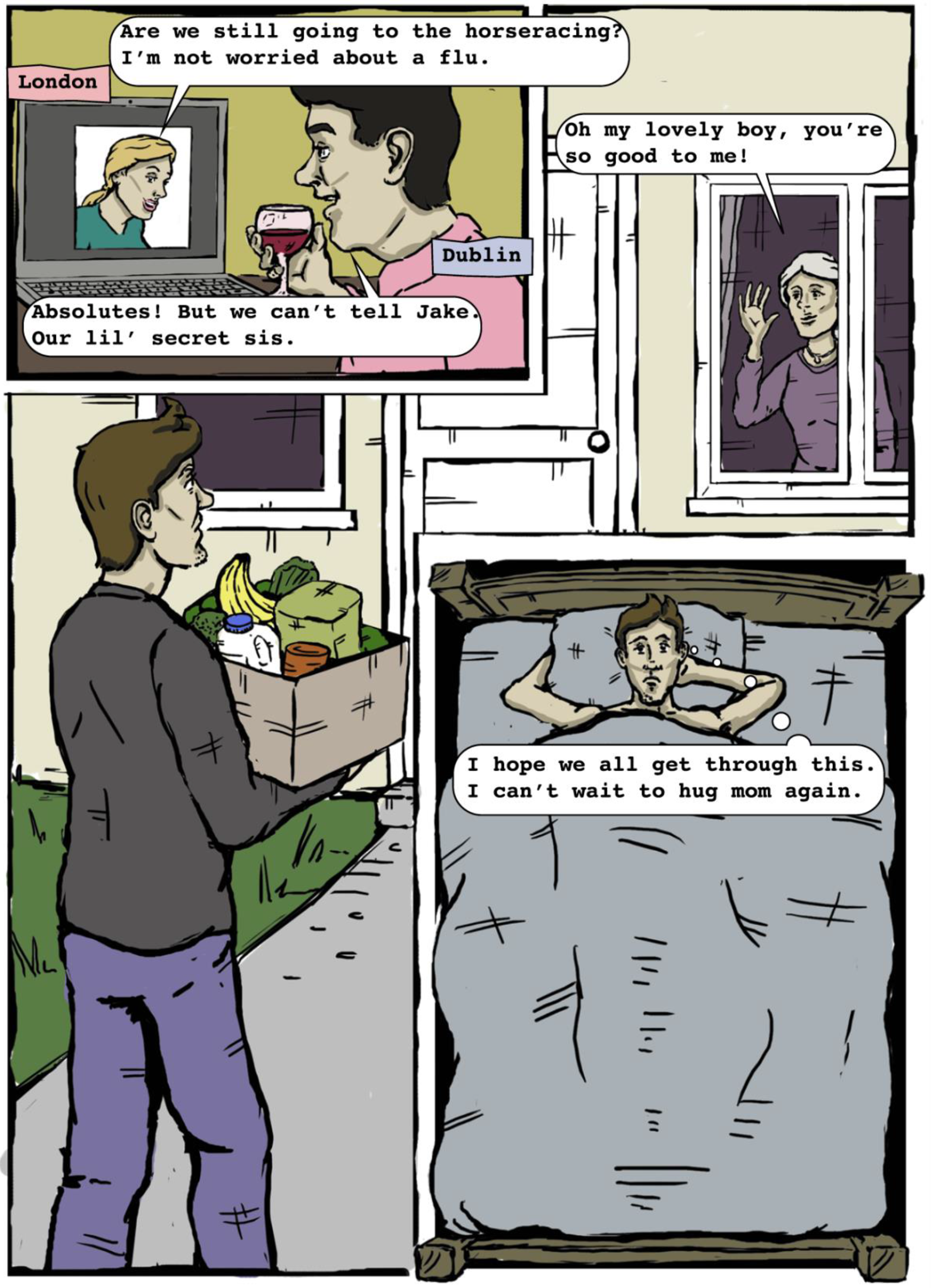
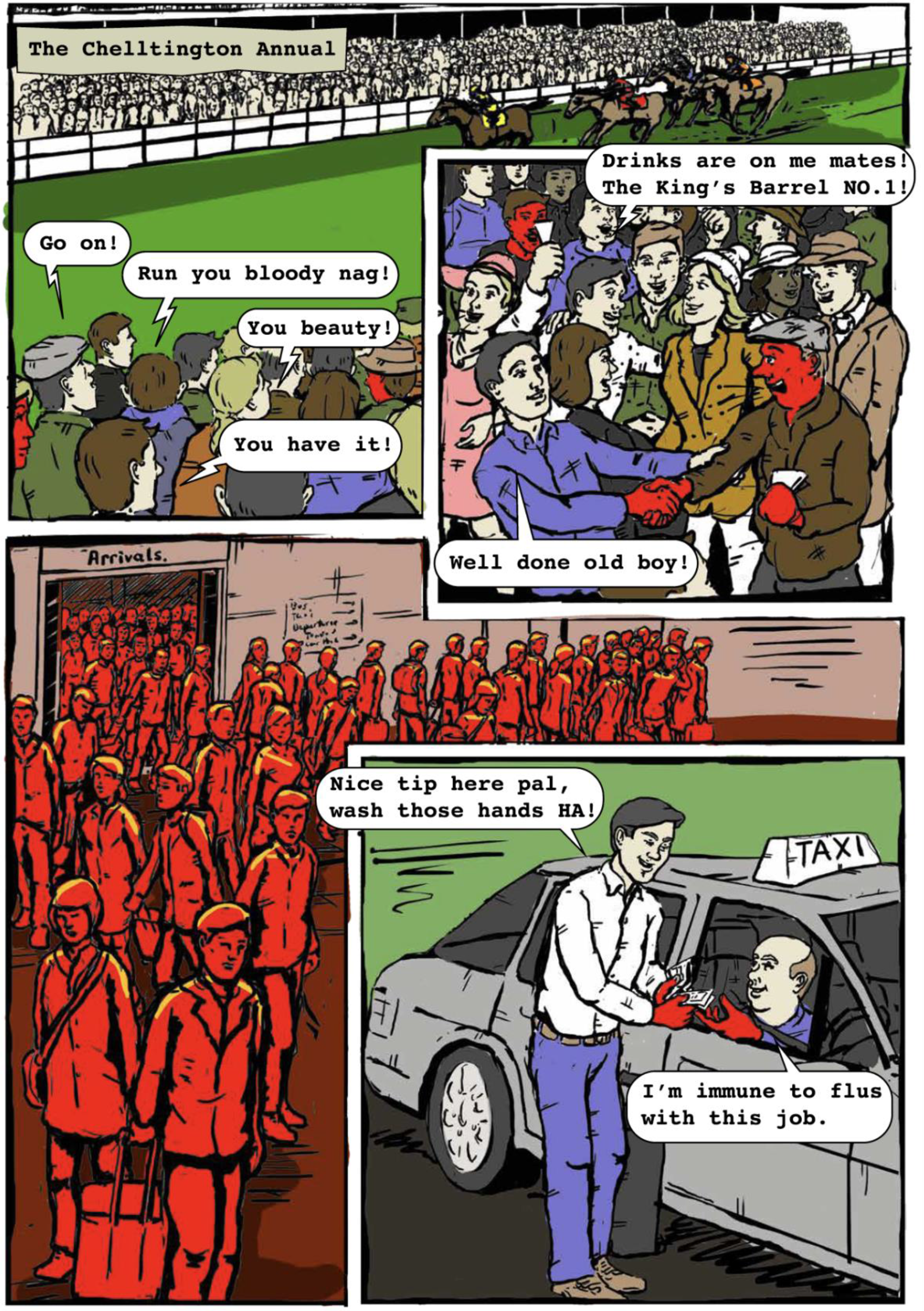
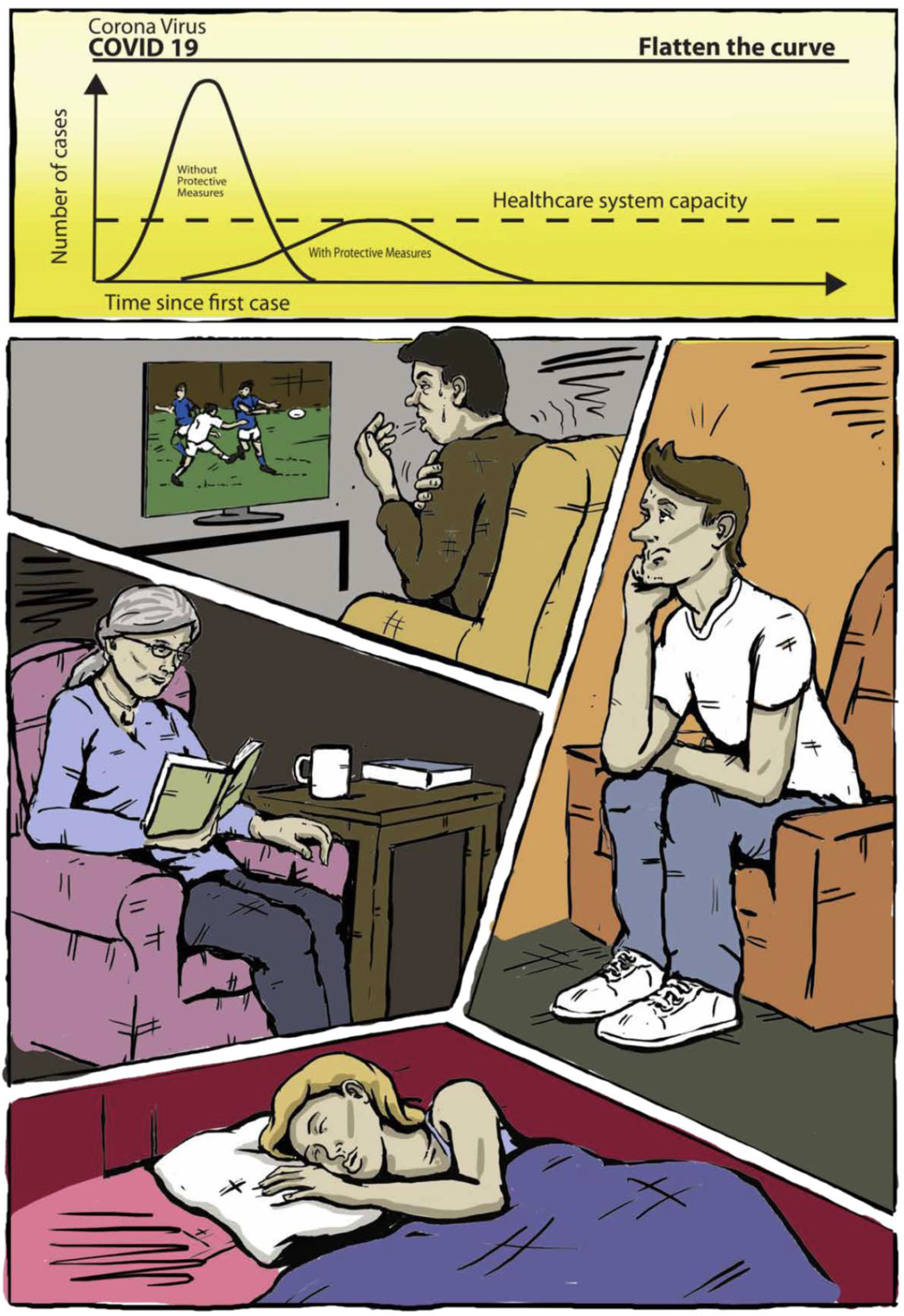
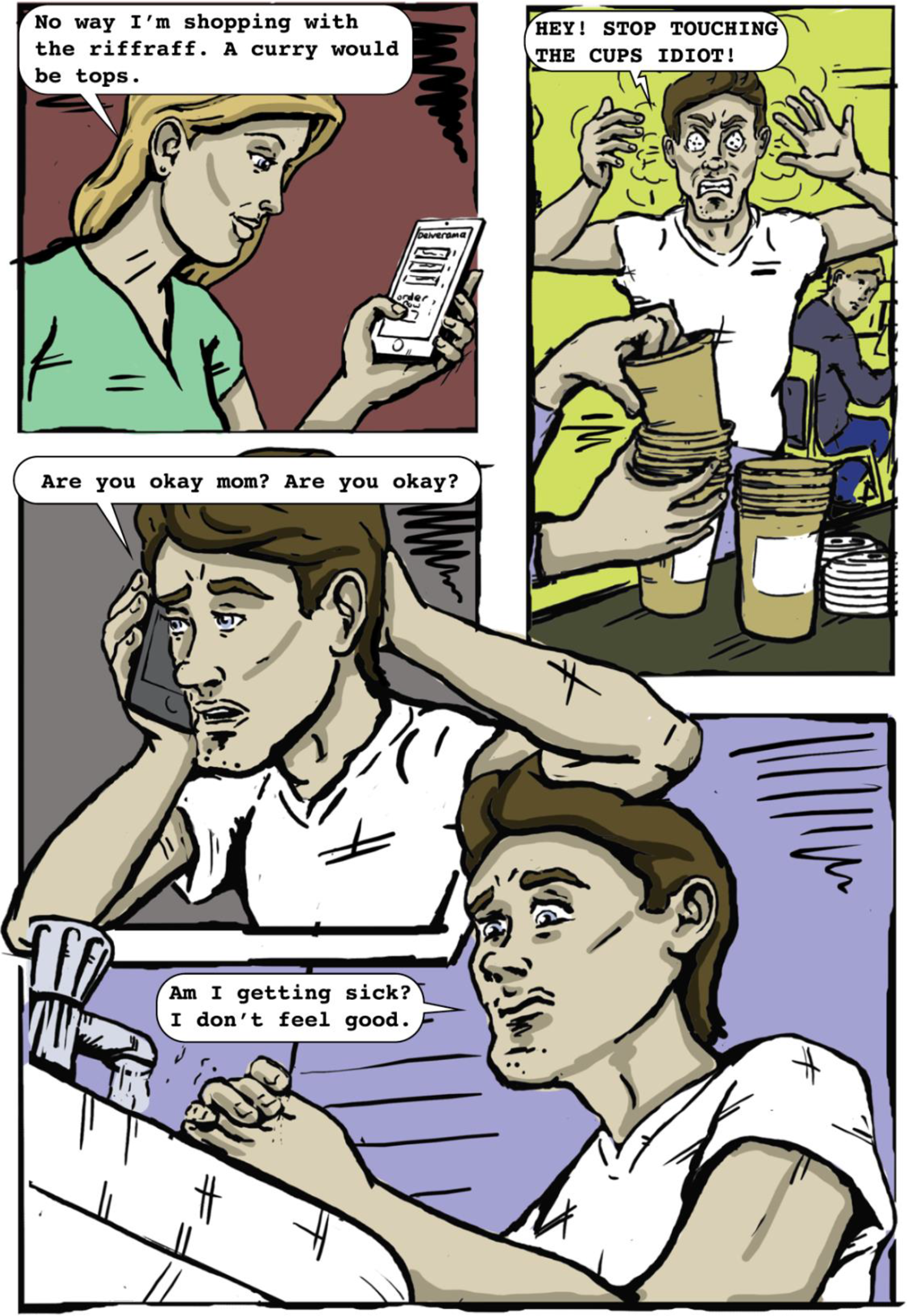
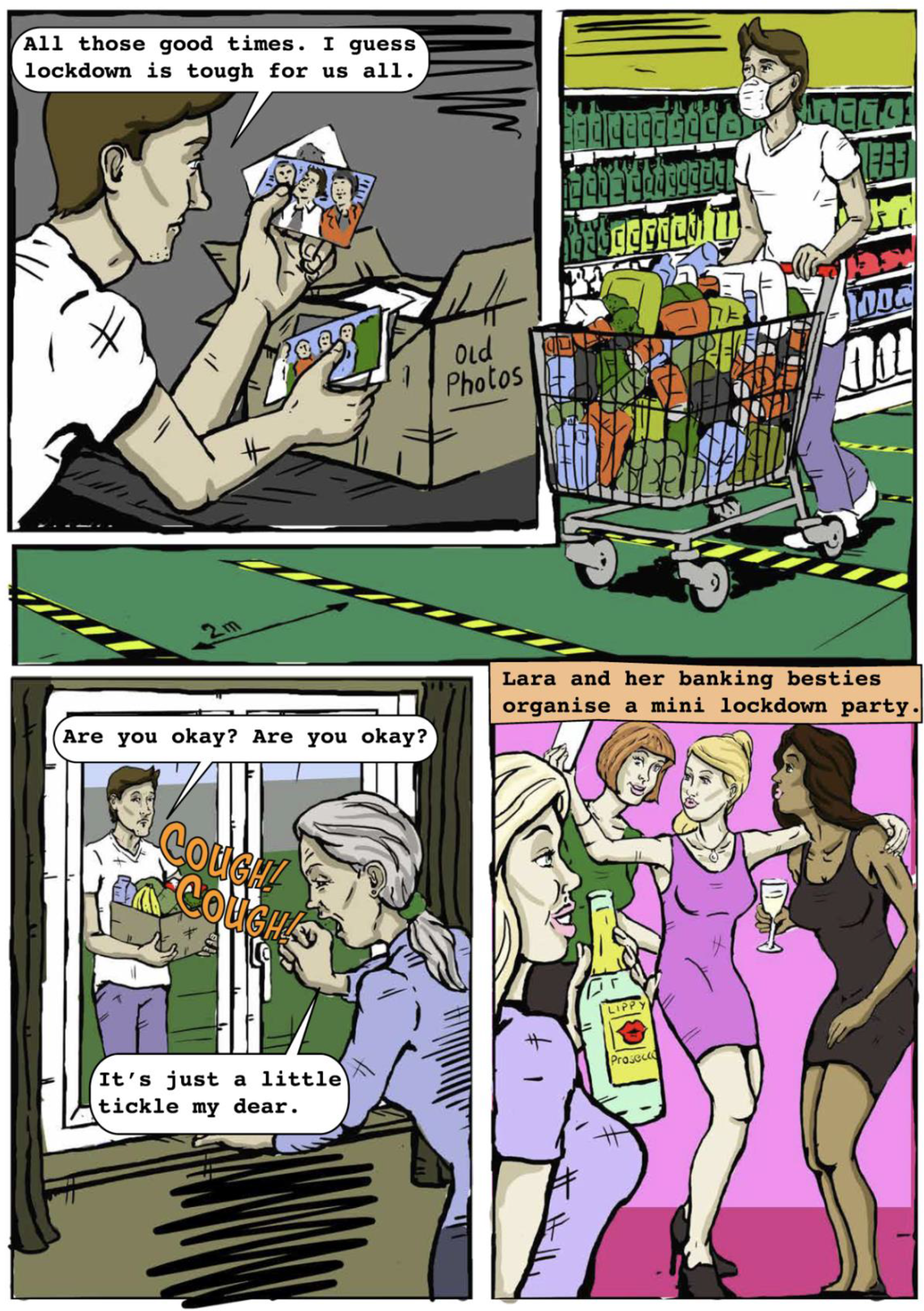
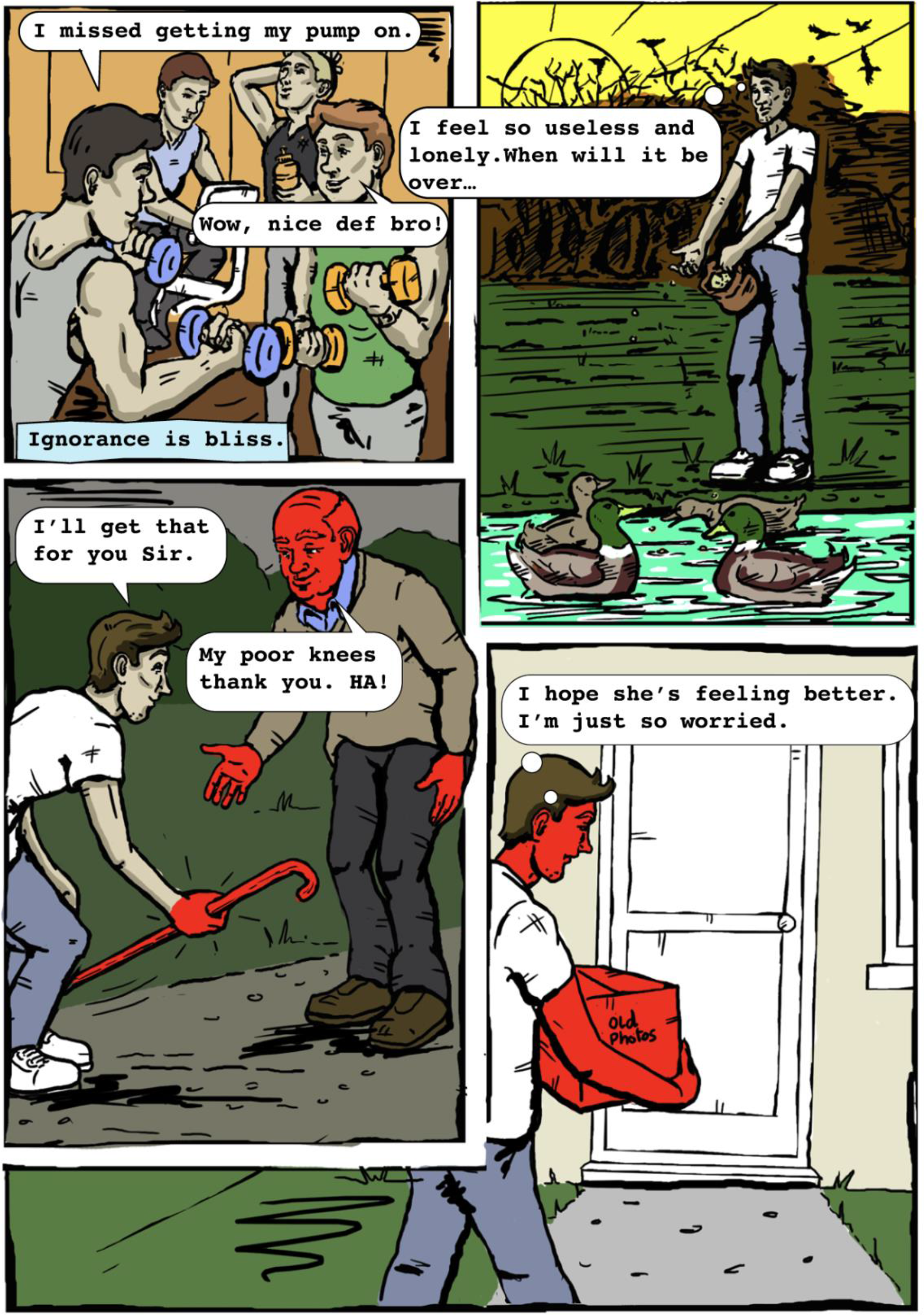
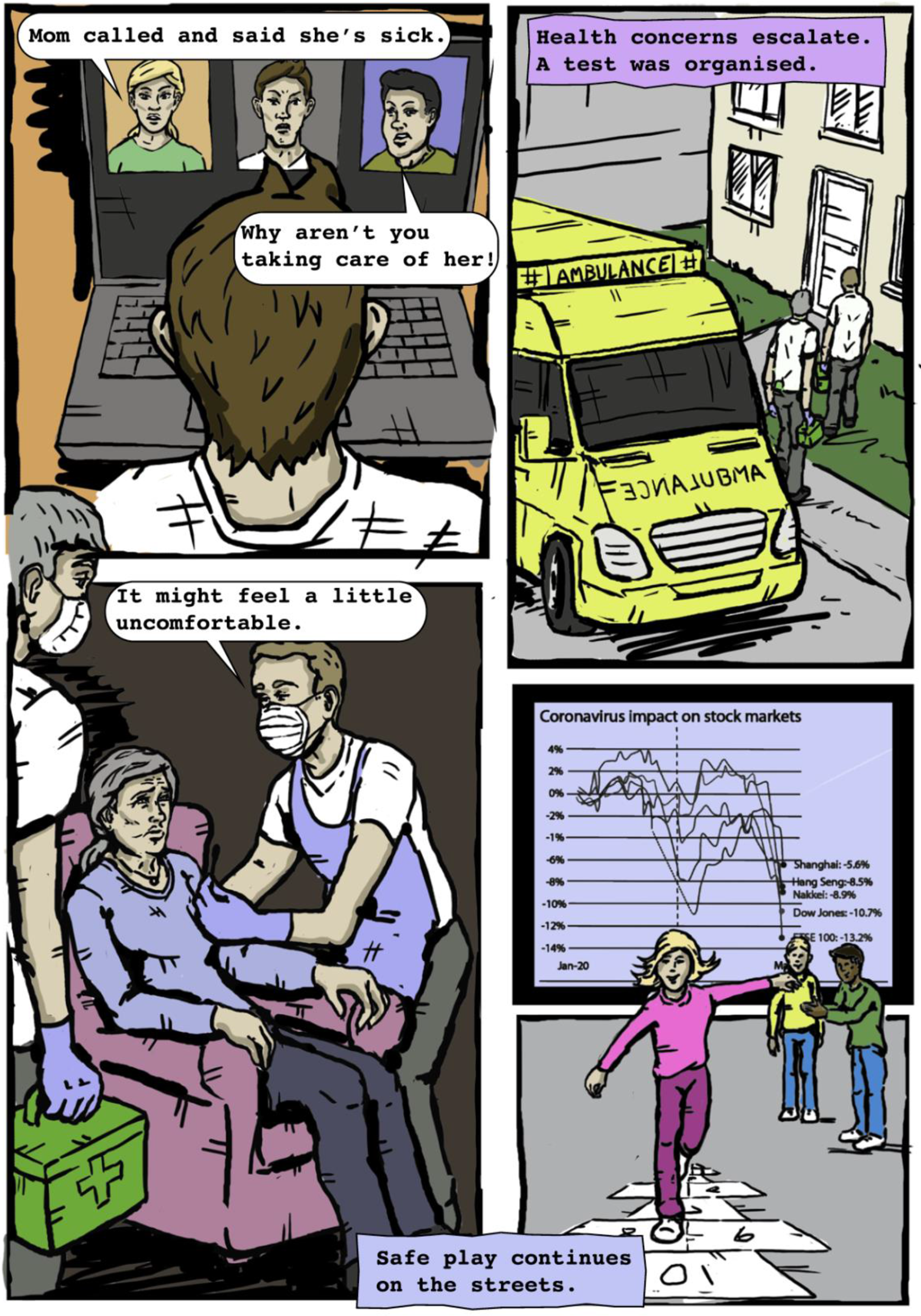
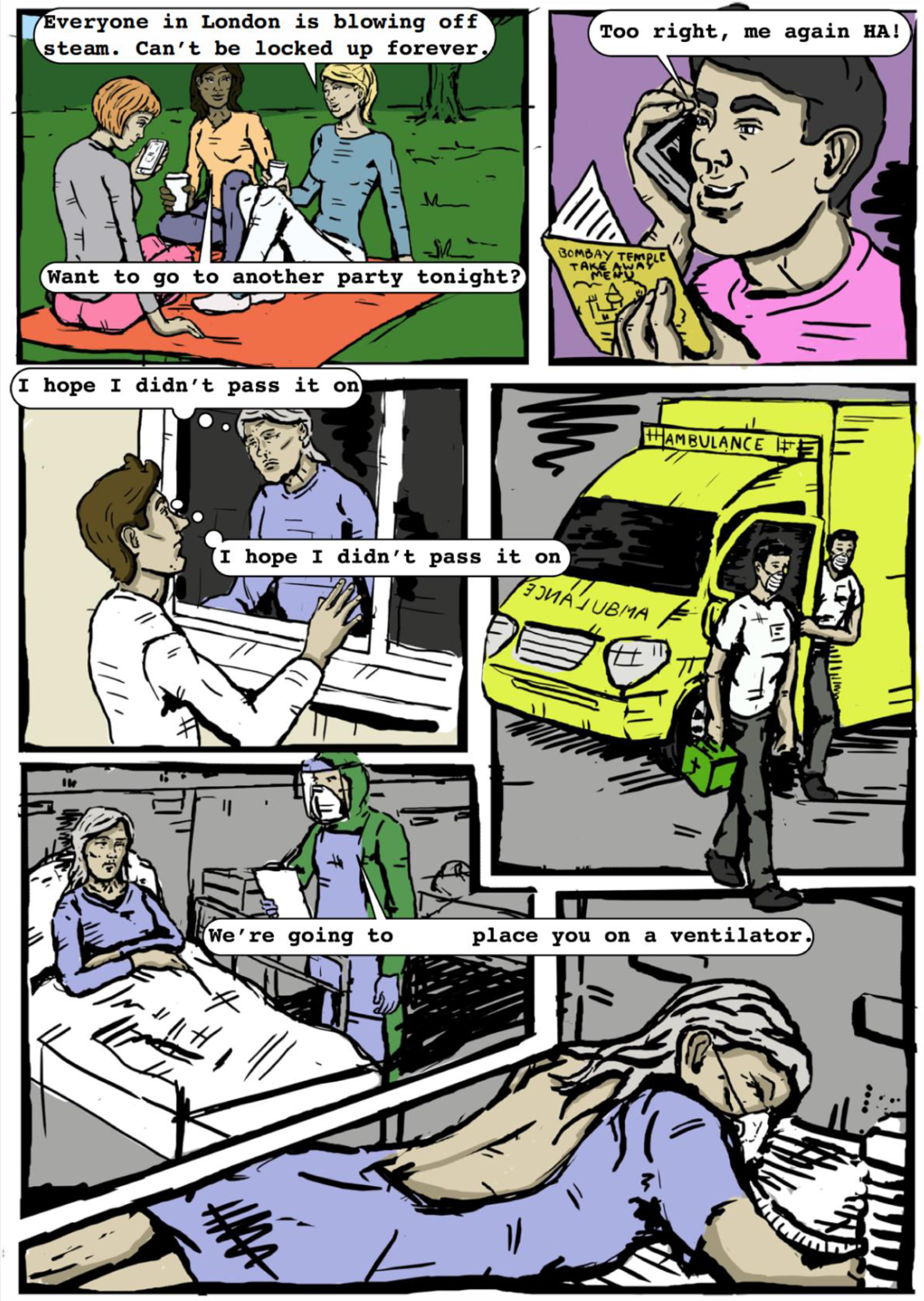
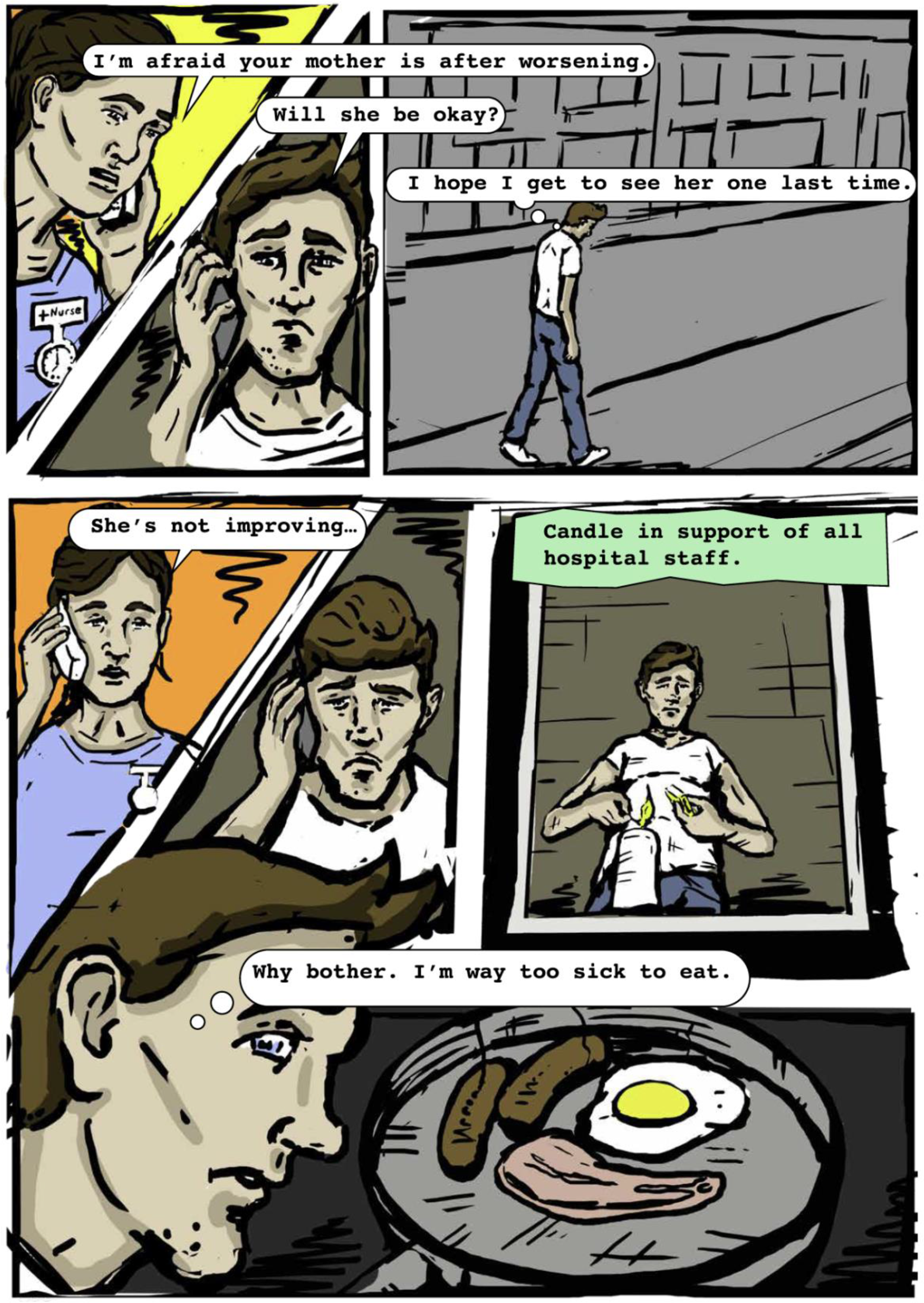
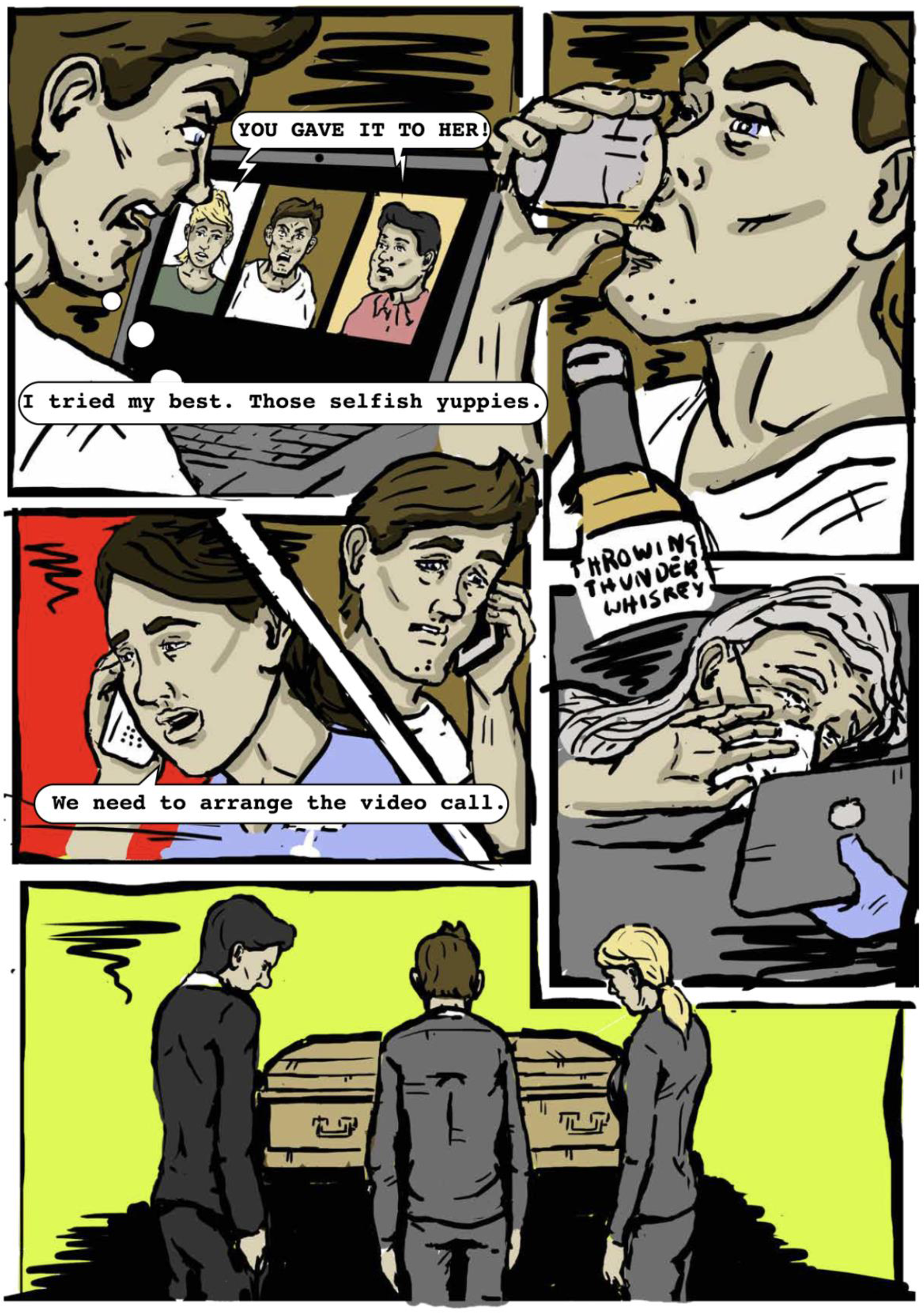
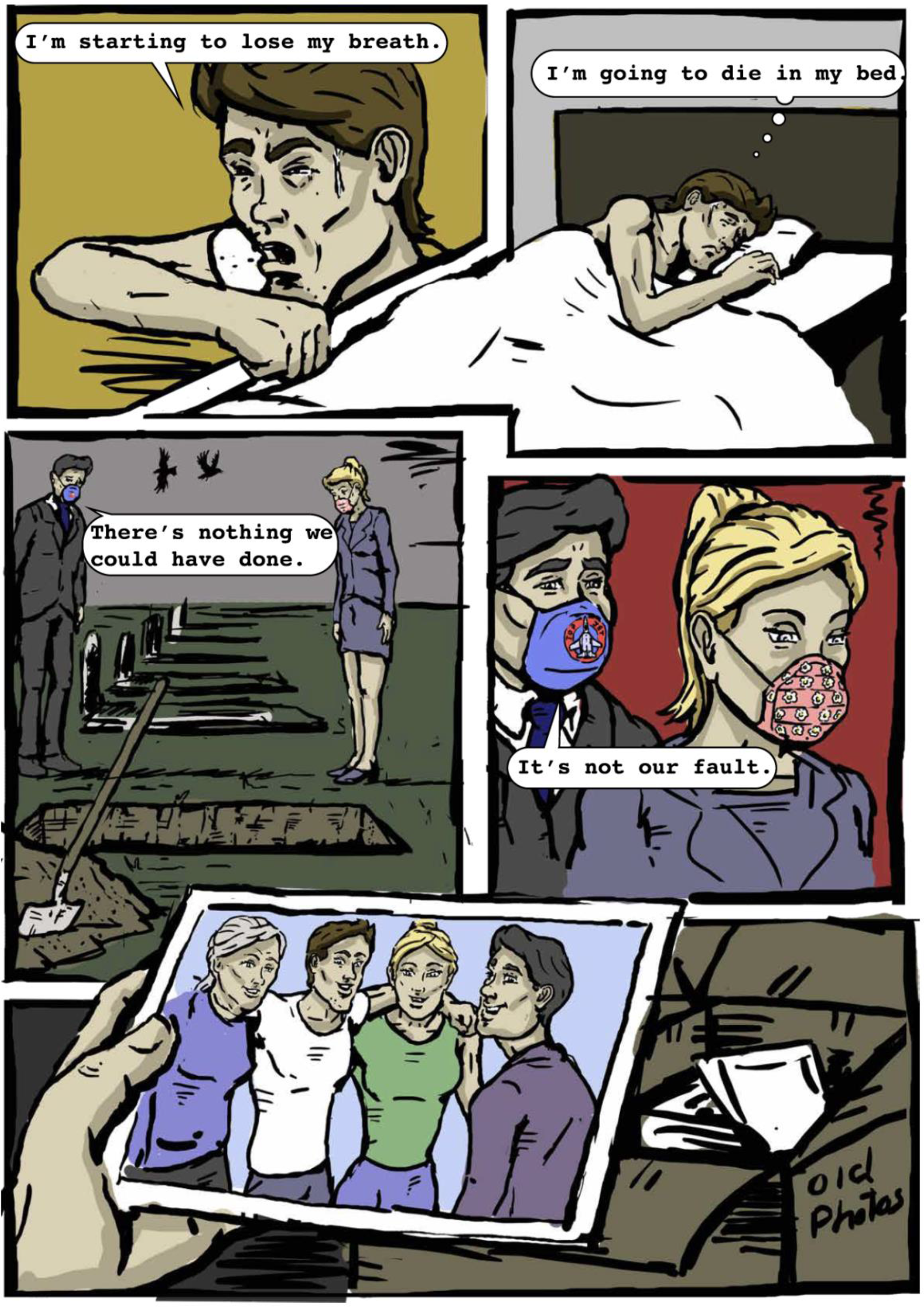
The goal of 10 Business Days was to preserve the harrowing aspects of the pandemic experience difficult to articulate, to capture the uncanny atmosphere of the existential threat, and animate the consumption which both undermined and supported the revert to the alternative mode of being; it animates the de-embodiment central to the ‘new normal’, the other-less-ness, and detachments caused by the lack of physical contact, routinised hand washing/sanitising, isolation, and stigma. The novel forms of malaise, trauma, risk, and anxieties accompanying the virus overlays the comic narrative – a melancholic varnish emulsifying the illustration.
Historically, pandemics/plagues have been preserved artistically; the Old Woman walking the fields, horsemen of the apocalypse, and dancing skeletons, acted as purports for future action – as knowledge translations – the difference between culturally remembering and forgetting (Hanson and Small, 2022). Despite the 1918 Flu pandemic occurring roughly 100 years prior, the social, emotional, and psychological impacts have not been well preserved in cultural memory. As such, in line with NRT approaches, a serious intention underlies 10 Business Days, that of potentially saving future lives; it's both an art-full preservation and warning relevant to the present.
The title is a criticism of the lack of concern for human life shown by some governments, global commercial giants, and consumers during the initial onslaught of COVID-19. Existential risk was superseded by GDP, share price, and attachments to consumption; each of which contributed to minimising perceived risks, spreading the virus, and increasing avoidable deaths globally (Brown et al., 2023). What if there were to be another more deadly pandemic, what could be done differently? How could society adapt more effectively? How could consumption behaviours be altered to preserve lives? 10 Business Days is a catalyst for indirectly exploring these and similar questions.
Because the comic reader is a semiotic investigator and narrative co-author – each reader’s process of arriving at an understanding will differ drastically. As such, 10 Business Days has no fixed meaning, it's a porous narrative structure with vivid resources for narrative co-construction – a partial methodological mosaic awaiting audience interplay. Comics promote imagination, narrative co-authorship, and regenerative emotion-based translations; they are self-perpetuating interactive interfaces – mutative and versatile – ever-evolving multi-representations, which will now be explored in more depth.
CBR and multi-representational knowledge
Research comics can be classified as what Pruitt et al. (2014) term ‘multi-representational translations’. Multi-representations inspire regenerative knowledge translations, communicate complex phenomenon, specialist perspectives, and abstract concepts in a manner that resonates with diverse audiences. Multi-representational approaches to knowledge translation intensify the audience's role in the authentication, evaluation, and interpretation of information. The goal is to inspire audiences to create multiple novel translations, for them to personalise the information/narrative in ways that significantly reshape knowledge (O’Sullivan and Kozinets, 2020). Researchers utilising multi-representations must relinquishing control of the final narrative and realign focus on the relationship between the intent of the communication, the explorative structure of the representation, and capacity to nurture audience imagination. Multi-representations celebrate mutation and distortion as pathways to explore elsuive knowledge. The scientific narrative serves as a resource for translation into many possible complex culturally relevant narratives.
Multi-representations are not confined to the medium of comics, although the CBR presented in this paper serves as an art-full evolution. Each research comic reader generates multiple translations from a single source comic due to the narrative biocularity enhanced by imaginative author-ity and personalised knowledge. Each new translation can increase the depth and intensity of the source narrative and expand knowledge of the context or phenomenon. What if 10 Business Days was revisited by readers? What would adapt, evolve, or contrast in the narrative? What would be experienced or felt deeper? What would be explored laterally? How would initial translations mutate and regenerate? Far from a narrowing device, research comics (and multi-representations), are spaces to expose experiences unrepresentable in traditional research, and enlarge knowledge through the workings of multimodal understanding (Weaver-Hightower, 2017). Advances in the ability to translate the rich experience of cultural life to larger and more diverse audiences will require the use of more multi-representation formats like CBR, that allow for the interplay of theory, cultural research data, and audience imaginations to form idiosyncratic knowledge translations.
According to some fields the conditions of knowledge are strict, resulting in narrow representations, whereas in others’ the conditions are broad, resulting in expansive representations (Badley, 2015). Rorty (2007) believes knowledge should be viewed as what representations are allowed get away with. Ongoing revitalisation to the conditions of knowledge and refreshed approaches to representation are necessary for fields to evolve and extend impact (Sicilia and Lytras, 2005). Zagzebski (2017) distinguishes between representing knowledge of things – direct knowledge – typically secured through forms of acquaintance, and knowledge about things – propositional knowledge – typically accessed through books, and journals, and so on. Knowledge by acquaintance cannot be communicated in a straightforward way, it requires some element of heightened imaginative engagement and emotional proximity on behalf of the audience. Consumer research comics can provide a synthesis by representing a scientific narrative (proposition) in which free engagement, imagination, creativity, and emotion-dense personalised translations can be established (acquaintance). In this regard, CBR and multi-representations operate as personalised knowledge refineries – creative translation spaces that promote imaginative narratives which exist between knowledge as science and knowledge as culture. This broadening view on knowledge translation acknowledges the interconnectivity and interplay that occurs between the representation, audience, and imagination. The mechanisms of knowledge translation that underlie CBR’s multi-representational agentic and creative structure which promotes author-ity, imagination, and allows for heightened forms of emphatic proximity to emerge will now be discussed.
Mechanisms of CBR knowledge translation
Multi-representations are about designing narrative structures that allow audiences to explore and develop meanings, promote interpretation, and nurture imagination. Knowledge translation in this model is a liberating and expansive social affair charged with the intention of impact in more compelling ways than traditional research (Huzair et al., 2013). Art-full mechanisms of knowledge translation, grounded in creativity, emotion, and expression amplify knowledge production (Eisner, 2008). Consumer research comics co-produce knowledge by intensifying the mechanisms of knowledge translation in use in consumer research and applying additional mechanisms such as, theory selectivity and redundancy, sub-creation and fantasy, depresentation, sonder, and levity, which will now be explored in more detail.
Theory selectivity and redundancy
A goal of multi-representational translation should be to layer theory beneath more emotive or entertaining narrative connections. For instance, there is much psychoanalytic theory embedded in horror film (Urbano, 1998), but it's employed selectively, in the shadows of the emotional narrative. Concealing theory is central to construction of 10 Business Days. It’s not that theory disappeared from researcher focus, it’s just less obvious than in traditional academic communications because it cannot be neatly detached from the narrative (or data). Theory is not absent, it has been translated, it’s being lived, experienced, and performed, as such (Seregina, 2018). Without a grounding in theory the researcher-translator will be limited in designing insightful, creative, or even relevant multi-representations. It can be difficult for researchers to let go of the safe comfort of theory, and instead rely on other mechanisms to establish legitimacy and maintain audience engagement. The comic-based researcher acknowledges that many resources within the representation will be redundant for audiences, but it’s in this creative application of selectivity and redundancy, that novel translations and unforeseen interpretations evolve and the potential for sparking lateral connections accelerated. CBR (and multi-representations) should not be concerned with the communication of a truth but with the generation of a narrative surplus (Pruitt et al., 2014) – of inspiring unpredictable translations of theory and data into collaborative knowledge adventures.
Sub-creation and fantasy
Drawing on Turner (1979), Denzin and Lincoln (2011), claim the liminal space, is the next frontier for qualitative research. At the core of their suggestion is that audiences should be invited to separate from everyday established norms, identities, and roles during learning experiences – transported to a curious elsewhere (Gergen, 1997) – a more abstract and performative space that allows for alternative translations to emerge (Rokka et al., 2018). The separation from the ordinary to fantasy-based spaces based relates to the liminoid, ‘a conception of in-between experiences incited by culturally reflective performance, drama, or entertainment, which expose the injustices, inefficiencies, and immoralities of mainstream structures and organizations’ (Turner, 1979). Designing intentional narrative gaps (gutters) for theorising within the comic structure fosters idiosyncratic translations, in which audiences explore knowledge in collaboration with the narrative resources and enhanced exponentially by their imagination triggers. The resources for playful adventure in CBR are the same for individual readers but the outcome and experience of the knowledge translation will differ from person to person. Such an approach transforms academic representations from dyadic engagements to collaborative explorations that draw on sub-creation theory and world-building, similar to experiences of narrative-based multi-player computer games (Gandolfi and Semprebene, 2016). CBR audiences are free to explore meanings laterally, horizontally, back-and-forth, in a depth and weight direct by their capacity for imaginative exploration, relevant curiosities, and narrative production.
Depresentation
While liminoid states belong to realm of narrative entertainment, it's only part of the desired audience separation. CBR can accommodate for the existential ups and downs, the life energy of both tonus and tension – anticipation and anxiety. Multi-representations should inspire knowledge production via depresentation –‘a process of intense knowledge exploration in which anything can emerge' (Fazakas, 2025). Depresentation is the mental state of extreme openness – vulnerability of interpretation – sensitivity of emergent narrative – a form of knowledge through intensity – through terror– a realm in which any interpretation or tentative meaning unshackled by norms can emerge (O’Sullivan, 2022). The value of depresentation is that it can promote deep ontological reflection and lateral eschatological connections in thinking. By utilising both depresentation and liminoid states – both the reflective and projective impulses of imagination are nurtured, and audiences can author a multitude of extraordinary story-worlds while confronting elusive emotional knowledge in personalised, non-linear ways.
Sonder
Rosenberg (2018) claims representations should endeavour to recognise, name, and normalise emotions; and that researchers should emulate Koenig’s (2021) attempt to explore the human condition by finding holes in the language of emotion and represent them. Specifically, Rosenberg (2018) draws attention to the experience of sonder, defined as ‘the realization that each random passerby is living a life as vivid and complex as your own – populated with their own ambitions, friends, routines, worries, and inherited craziness – an epic story that continues invisibly around you like an anthill sprawling deep underground, with elaborate passageways to thousands of other lives that you’ll never know existed’ (Koenig, 2021). 10 Business Days uses sonder as a mechanism of knowledge translation by providing an interweaving ensemble of characters which audiences can empathically identify with and imagine the complex web of social relationships unfolding in the unseen. By providing access to the emotional experience of sonder readers actively contribute to the social complexity of the CBR narrative.
Levity
Humour opens a safe space for social critique and reflection on ideological issues – it can translate complex social practices and sensitive contexts into simplified dialogue and accessible framings to aid reflection and thinking. In letting go of the seriousness of scientific research, the multi-representational nature of humour can be adopted to generate affective connections and translations. For instance, there are deliberate attempts at subtle humour in 10 Business Days. Despite the seriousness of the context, humour is employed to enhance opportunities for obtuse, lateral, or emotional connections. Humour can break the drama and trauma of the narrative, provide a necessary sense of comfort, and alter the pace of time unfolding. Geertz's maxim ‘to understand a joke is to understand a culture’ (Dwyer, 2013), could be reframed as to tell a joke is to understand a culture. For instance, the faux brand names utilised in 10 Business Days are a deliberate satirical commentary on consumer culture. Satire can also be adopted in translations in the form of exaggeration, sarcasm, irony, and parody. In 10 Business Days there are amusingly dislikeable characters because they are a translation – a satire of something bigger – the archetype of their kind. Multi-representations, like CBR, should be more ambitious than just the communication of science, attempts at what can be considered amusement/entertainment should also be made to establish more culturally relevant art-science hybrids.
The novel combination of mechanisms of knowledge translation discussed which underly the research comic, are not fixed to the form. To incite novel empathic and imaginative engagements these mechanism can be adopted in isolation, in alternative combinations, and in compliment with other mechanisms, in other media, to promote multi-representational knowledge exchanges. By expanding the translation mechanisms used in consumer research, more creative representations capable of achieving multi-purpose knowledge creation goals can be developed.
CBR as translation devices in marketing
Contemporary social science, whose credibility is being challenged in the post-truth age, will benefit from creating more imaginative and playful representations (Mickwitz, 2016). How knowledge is translated, in which medium, in what style and tone, orchestrates what is to be learnt and how it is processed (Severi, 2014). Eisner's (2008) encomium for the application of artistic translation is on the basis that it can improve understandings of the human condition by widening the breadth of knowledge about the inexplainable emotions underlying existence. Knowledge about emotions are most powerfully exposed when communicated artistically (Becker, 2023). As Dewey (2008) suggest, ‘science states meaning, art expresses it’. Art provides vivid access to emotions, interpretations, and translations – novel combinations of knowledge affects that otherwise would remain dormant. Art-full approaches enable researchers, participants, and audiences to come to know something via personalised knowledge translations unachievable using linear science. Concerned with author-ity, empathy, and becoming aware of the capacity to imagine as a means to rediscovering humanity, CBR could be employed in marketing as a translation device to facilitate novel knowledge exchanges with a variety of non-specialised audiences and intensify access to marketing knowledge.
Marketing possesses high levels of interdisciplinarity, or what Youngblood (2007) terms ‘bridging character’. Interpretive consumer research frequently draws ideas from sociology, anthropology, psychology, philosophy, geography, and art, and as a result possess significant interdisciplinary and social value (Arnould and Thompson, 2015). If interdisciplinarity, as Rundle (2014) suggests, is approached as translation across different scientific languages, CBR can be used to accelerate successful translation, as a device to facilitate the emergence of interactive dialects and strengthen interdisciplinary knowledge bases (Newell, 2001). Consumer research comics, given the co-creative narrative structures, personalised interpretations, and regenerative meanings, are an advantageous translation device to facilitate interdisciplinary interaction and cross-boundary knowledge production. Comics are flexible and adaptable structures that allow knowledge relevant to multiple fields to interact, connections to be developed, conceptual leaps to be made, and implications explored from diverse perspectives. For instance, given the vast scientific relevance of COVID-19, 10 Business Days has designed linkages to the fields of epidemiology, public health, and virology, as well as the more typically associative fields of sociology, psychology, history, and geography. CBR can initiate a dynamic evolution of unbound connections between narratives, fields, languages, theories, and knowledge bases.
It is not the case that CBR should be used instead of all other rich narrative visual media; comics are an exceptional device which can be used in conjunction with traditional representations to support marketing knowledge creation or alongside other creative methods to illuminate different kinds of knowledge and achieve diverse knowledge translation goals. CBR is particularly well-suited to be used as a translation device to represent sensitive, explicit, traumatic, risky, and extreme consumption contexts – to illuminate feelings and experiences too graphic or private to represent in other visual media (O’Sullivan and Kozinets, 2020). CBR translation can be used to explore unbeknownst knowledges central to dystopian futures, biodiversity collapse, Ai culture, and other nightmarish worlds yet not known. Comicisation is a superior device to expose extreme knowledge from genocide, illness, famine, terrorism, dangerous driving, drug abuse, and so on – to foreshadow the darkest elements of humanity – to translate them in a safe proximity (Williams, 2021a). There is also the potential for published consumer research studies to be illustrated – translated into the comic form to enlarge interpretations and regenerate meanings. What would a collection of consumer research comics illustrating some of the most influential extreme context explorations look like? What would River Magic (Arnould and Price, 1993), Claiming the Throttle (Martin et al., 2006) or Working Weeks, Rave Weekends (Goulding et al., 2002) look like in comic form? What themes could be revisited and exposed in new light? What new knowledge connections could emerge as result of creative marketing comicisation?
The versatility of comics makes them an attractive device capable of supporting a variety of marketing knowledge production procedures and knowledge translation goals beyond representation, from documenting and eliciting data (Ramos, 2004), aiding analysis (Weaver-Hightower, 2025), co-creation with participants (Thomas et al., 2024), and connecting with new audiences (Cairns et al., 2023). Thomas et al. (2024) co-created the Climate Comic with participants to generate intergenerational knowledge on climate change attitudes, behaviours, and visions of the future to develop shared places of meaning, effective in terms of health, wellbeing, and sustainability. Similarly, Cairns et al. (2023) co-created a comic with research participants and artists to explore medial processes such as bowel cancer screening, it’s used as an elicitation device in focus groups with members of the public and healthcare professionals to initiate knowledge exchanges. The co-creation of marketing research comics could support the exploration of stigmatised, marginalised, or excluded consumers. Consumer behaviour can be channelled through fictional comic characters and scenarios to maintain anonymity and preserve identity. CBR facilitates the representation and expression of individual realities without unwarranted attention. It can allow those without a strong presence in marketing research to not only be seen and heard – but contribute to the evolution of marketing knowledge in more compelling ways, and at earlier stages of the research process.
Marketing researchers should not be timid in their experimentation with comics. There is the opportunity for researches to illustrate their own comics; to expedite this and accelerate the adoption of CBR into mainstream research culture, Woock (2023) provides guidance as to what dimensions and standards to pay attention to when crafting research comics, Kuttner et al. (2017), Peterle (2021) and O’Sullivan (2023) provide guidance on how to build confidence illustrating and transforming scientifically rigorous data into engaging research comics narratives. Given NRT approaches should be expansive and maximise the potential of knowledge translation, working with artists to illustrate narratives is advantageous and can add additional layers of knowledge creation. In an ideal world universities would have artists-in-residence to assist in the co-creation of multi-representations, aid artistically with developing interdisciplinary and public audience connections, and help establish a multi-purpose culture of collaborative knowledge exchanges. If an artist cannot be secured there is also the option for researchers to explore using Ai software to help create research comics. However they are produced, abstract, playful, and creative CBR narratives, styles, and formats exploring diverse and under-examined marketing themes should be enthused. The comicisation of marketing could establish deep contextual and conceptual synthesises capable of generating new theoretical insights on the humanly interesting themes underling social science and promoting multi-purpose knowledge translation. While CBR is intensifying in application in social science research, its methodological evolution will benefit greatly from increased theorising and attention by creative marketing researchers attempting to illuminate, illustrate, and translate the complex worlds of consumer behaviour.
Conclusion
The purpose of this paper was to advance NRT inquiry in marketing theory by exploring the creative practice of CBR and how it could be employed to help researchers and audiences understand consumer behaviour in new, more engaging, and imaginative ways. This engagement with CBR emphasises the importance of incorporating imaginative author-ity into NRT’s creative qualities and exposes the link between its aesthetic of novelty, multi-representations, and the future of knowledge creation and translation. In doing so, this research builds upon the understanding how translation occurs in NRT and what mechanisms of knowledge translation can achieve its goal of animating and intensifying research contexts. Future NRT research should aspire to build interdisciplinary connections by developing more translation devices valuable to multiple fields that privilege the potential for novel, immersive, and imaginative knowledge connections.
This paper conceptualises consumer research comics as multi-representations that reposition each audience member as an active co-author of scientific and cultural narratives, in which a diverse range of idiosyncratic interpretations and regenerative knowledge translations interplay to form vivid personalised understandings of consumer behaviour. The unique art-full mechanisms of knowledge translation central to CBR – the magic of the form – reduces hierarchies to knowledge by placing the author-ity of the knowledge adventures in the imagination of readers. Consumer research comics – as illustrated in 10 Business Days – are particularly effective for exploring traumatic and extreme consumption contexts, aspects of social life too sensitive to expose using other visual methods. This research illuminated sensitive elements of the pandemic experience which could play a part in amplifying awareness of the risks consumption holds and preserving lives in the event of another pandemic. Due their capacity for creative and vivid knowledge co-production, research comics could be effectively used as translation devices in marketing theory to inspire art-full scientific translations and forge links with participants, artist, and interdisciplinary and public audiences to establish a creative culture of collaborative knowledge exchanges, and in doing so realise the full potential of art-science hybrids.
Footnotes

Funding
The author received no financial support for the research, authorship, and/or publication of this article.
Declaration of conflicting interests
The author declared no potential conflicts of interest with respect to the research, authorship, and/or publication of this article.