



Abstract
Consumer informal production (CIP) refers to practices where individuals make or modify their own consumption goods, bypassing market offerings and professional services. It includes craftwork, do-it-yourself (DIY), repair, and makeshifting. Our study adopts a practice-theoretical lens to distinguish among CIP practices and explore those that are market-autonomous; practices that transgress market praxis without reliance on its resource provisions. We conducted a netnographic study on gambiarra, the Brazilian makeshifting, investigating how this highly market-autonomous CIP impacts established consumption practices. Our findings reveal that the ingenuity and resourcefulness in makeshifting drive it to reconfigure established consumption practices, disrupting their normative rules, deconstructing their material arrangements, and diversifying practice performances. Consequently, makeshifting democratizes these practices, enabling excluded consumers to participate in and benefit from them. Our study further contributes to marketing research by mapping CIP practices along a market autonomy spectrum, accounting for their reliance on market resources and adherence to market praxis.
Keywords
Introduction
Consumer informal production (CIP) refers to practices whereby individuals modify and make their own consumption goods rather than relying on market offerings and professional services. It includes a range of practices such as craftwork, do-it-yourself (DIY), repair, and makeshifting, that have been the object of previous research (e.g., Agarwal et al., 2020; Boufleur, 2022; Gregson et al., 2009; Türe and Ger, 2016; Watson and Shove, 2008). Consumers engaging in CIP do not produce goods for sale, so their practices may not align with economic principles and are not subject to government regulations (Campbell, 2005; Portes and Haller, 2005; Wolf and McQuitty, 2013). These differences suggest possible variations in the ways some consumers interact with formal markets (i.e., structured systems of exchange governed by institutional rules and regulatory frameworks). They allow us to investigate instances where consumers deviate from formal markets and to explore how these deviations impact established consumption practices.
Research on craftwork, DIY, repair, and makeshifting shows that consumers engage with these practices differently depending on how closely their actions align with market praxis. Inspired by Schatzki’s (1996) concept of praxis, we define market praxis as the set of consumer actions enacted through production and consumption activities that conform to socially accepted norms, aesthetics, and processes. For example, in some forms of CIP, consumers may reproduce market praxis and rely primarily on formal markets for resource provision, like supplies and tools, when making their own consumption goods (Campbell, 2005; Seregina and Weijo, 2017) or repairing owned items (Godfrey et al., 2022; Gregson et al., 2009). Alternatively, they may rely only partly on formal markets for resource provision when engaging in craftwork and DIY aimed at improving and personalizing products and spaces (Martin and Schouten, 2014; Moisio et al., 2013). These forms of CIP can either realign (Godfrey et al., 2022) or reproduce established consumption practices (Arsel and Bean, 2013; Campbell, 2005). Consumers may even overlook market offerings by using idle, abundant, and discarded materials, often transgressing market praxis (Boufleur, 2022; Phipps and Ozanne, 2017). For instance, some consumers make their own cosmetics using edible ingredients (e.g., Morais and Brito, 2025). By sourcing materials from outside formal markets to produce their own consumption goods, these consumers defy socially accepted norms, aesthetics, and processes. Hence, they transgress normative production and consumption activities, yet they can still carry out the established consumption practice (i.e., applying makeup).
Despite these observations, market-autonomous CIP, such as makeshifting, remains poorly understood because most research has narrowed its focus to a single practice and has not adequately theorized the distinct relationships of each form of CIP to market praxis and its resource provision. As a result, there is no framework to distinguish between market-dependent and autonomous forms of CIP. Moreover, the literature has yet to explore the unique roles that market-autonomous forms of CIP play in reconfiguring established consumption practices. Consequently, the transformative potential of CIP remains undertheorized. To address this gap, we ask: How do market-autonomous CIP practices reconfigure established consumption practices? Addressing this question can not only enhance the understanding of how different forms of CIP vary in their level of dependence on formal markets but also illuminate the specific role of market-autonomous CIP. Furthermore, this research extends the understanding of how consumers negotiate and refine the boundaries of market participation and material consumption employed in their everyday lives.
Our research centers on makeshifting, a highly market-autonomous form of CIP in which consumers (re)use materials, objects, and their parts to adjust, improve, or invent their own consumption goods. Makeshifting is often considered a practice emblematic of the Global South, where structural constraints and limited resources consistently hinder consumers’ efforts to meet their own needs (Agarwal et al., 2020). We focus on gambiarra, the term for makeshifting in Brazil, where the social practice is linked to national identity and celebrated as a form of artistic expression (Boufleur, 2013, 2022), in addition to addressing consumers’ needs. We conducted netnographic research on various social media platforms, including YouTube, Instagram, and Pinterest, observing how consumers share examples and guide one another in producing gambiarra. We adopted a practice-theoretical lens (Schatzki, 2002, 2019) to develop our findings in alignment with previous research that has found a practice-focused analysis useful in understanding how production and consumption interconnect and influence each other (Hartmann, 2016). Therefore, we analyzed CIP practices that occur outside market praxis without reliance on its resources to explore how they may reconfigure established consumption practices.
Our contribution to marketing theory is threefold. First, we provide insights into market-autonomous forms of CIP, demonstrating how makeshifting reconfigures established consumption practices by deconstructing the material arrangements, disrupting normative rules, and diversifying the performances of these practices. In doing so, we show how practical understandings associated with ingenuity and resourcefulness operate as mechanisms that enable these reconfigurations. Second, we develop a conceptual framework that maps CIP practices according to their relationship to market praxis and their mode of resource provision, clarifying how market-autonomous practices differ from market-dependent ones in their capacity to reconfigure established consumption practices. Third, we illuminate the transformative potential of CIP by demonstrating how market-autonomous CIP may empower consumers to transgress market praxis and meet their own needs without relying on market resources. This democratizing potential expands access to consumption practices for those excluded from formal markets and contributes to a postcolonial perspective on markets (Corrêa and Maas, 2021) by highlighting the empowering role of consumers’ ingenuity and resourcefulness in creating alternative consumption practices, resisting market exclusion, and overcoming conditions of market scarcity and precarity.
Theoretical background
Theories of social practices provide a framework for examining how socially shared patterns of activities come together in time and space through moments of enactment (Schatzki, 2002, 2019). Such theories provide a culturally embedded account of how social practices emerge, stabilize, change—even if temporarily—and reproduce through coordinated assemblies of practice performances (Warde, 2014). Although practice-theoretical accounts differ in how they understand the constitution of social practices, there is agreement that a practice is bound together by elements that may include embodied actions and routines (Kjellberg and Helgesson, 2007; Reckwitz, 2002); the know-how and competences required to perform it (Reckwitz, 2002; Shove et al., 2012); and the meanings associated with a practice (Nicolini, 2013). Individuals engaged in CIP are carriers of practices and can simultaneously assume the role of consumer and producer (Hartmann 2016). These CIP practices vary from handcrafting objects (Seregina and Weijo, 2017), repairing already-owned products (Godfrey et al., 2022), and DIY-ing items and spaces (Moisio et al., 2013), to makeshifting objects by repurposing existing objects, their parts, and any materials on hand. Thus, CIP practices involve various actions aimed at specific goals, while also drawing on individuals’ experiences, abilities, and life skills (Campbell, 2005; Warde, 2005), which shape the distinct ways in which each type of CIP practice unfolds.
As defined by Schatzki (2002, 2019), a social practice is an organized set of activities, aimed at and carried out with a goal in mind, and bound together by its coordinating elements: rules, practical and general understandings, and teleoaffective structures (Schatzki, 2002). Rules manifest as normative directions, instructions, or disapprovals. Practical understandings guide intentional actions (i.e., basic doings and sayings) through bodily performances and inform people’s perceptions of others’ actions (Schatzki, 2019). General understandings are “senses of the worth, value, nature, or place of things, that infuse and are expressed in people’s doings and sayings” (Schatzki, 2012: 16). Teleoaffective structure refers to the associated normative emotional dimensions of practices, such as mood and emotions, experienced alongside enacted activities that give a practice its raison d’être (Schatzki, 2002). Material arrangements (i.e., the way material objects are organized to convey meanings about what people do and say) support activities, are carried out within practices, and compose bundles of practices (Schatzki, 2002). Each CIP practice requires specific material arrangements, such as supplies, fixtures, and tools. They differ in their teleoaffective structures, general and practical understandings, and approaches to rules.
Practice elements can both shape and be shaped by the contexts in which a practice is performed, resulting in a social practice that is itself an end (i.e., integrative practice) or a means to another (i.e., dispersed practice) (Schatzki 1996, 2002). Integrative practices are “complex entities joining multiple actions, projects, ends, and emotions,” and dispersed practices are open-ended activities that “circulate through different sectors of social life, retaining more or less the same shape in those different sectors” (Schatzki, 2010: 88). In short, integrative practices have a teleoaffective structure that governs them and embeds them into specific social contexts (Schatzki, 2002). In contrast, “dispersed practices rarely have rules or a teleoaffective structure; rather, they depend on the rules and teleoaffective structures of the integrative practices that they are woven into” (Harries and Rettie, 2016: 875). Examples of dispersed practices include various activities that exist across multiple contexts (Arsel and Bean, 2013), such as benchmarking (Maciel and Wallendorf, 2017), walking (Harries and Rettie, 2016), and music listening (Fuentes et al., 2019).
A dispersed practice becomes integrative when it develops a teleoaffective structure (Harries and Rettie, 2002: 88). For example, music listening is a dispersed practice because one can listen to music while cooking, driving, or walking, but also an integrative practice for concert goers because there is a teleoaffective structure governing how music is listened to at concerts. It does so through a set of goals and prescribed affectivities that together involve collective listening to music for enjoyment associated with a social-specific context, like concert venues (Fuentes et al., 2019). Similarly, CIP practices can assume both integrative and dispersed forms. Repairing a bike tire while commuting (Godfrey et al., 2022) is an example of repair as a dispersed practice entangled with commuting, which is an integrative practice. In this case, the repair’s teleoaffective structure does not govern the social practice (i.e., commuting) and could also happen in other social contexts. Conversely, when performed in a community-based repair cafe (Ozanne, 2024), the practice is laden with affect and integral to what is meant to be achieved in that context. This means that the teleoaffective structure of repair governs this social practice through a set of goals and prescribed affectivities, like charitable work, community involvement, and skills development. In this context, repair is an integrative practice. This also applies to craftwork, where multiple crafts come together into a complex that governs the practice, as in a housewarming party (Campbell, 2005), but it is dispersed within cosplay (Seregina and Weijo, 2017) because teleoaffective structure from a different practice governs it rather than crafting. As with DIY (Moisio et al., 2013), the set of goals and prescribed affectivities, along with the chosen social contexts, differ between integrative and dispersed practices. Likewise, makeshifting is a dispersed practice that entangles with integrative practices (i.e., one can do makeshifting while cooking or gardening). Nonetheless, makeshifting also exists as an integrative practice in its localized, culturally embedded forms (e.g., gambiarra and jugaad), where it has a teleoaffective structure particular to each context.
Situating CIP within this practice-theoretical framework enables us to examine how CIP practices potentially reconfigure established consumption practices. Prior research has identified certain mechanisms within dispersed practices that can influence them. For example, Gonzalez-Arcos et al. (2021) note that sensemaking helps consumers reconfigure the shopping practice after one of the practice’s key materials (single-use plastic bags) is eliminated. Similarly, Thomas and Epp (2019) discuss planning as a way for future parents to prepare for reconfiguring breastfeeding practice when misalignments happen in their performances. Bonetti et al. (2023) note how envisioning, adapting, and (re)aligning, enacted in interactions among practitioners, support the co-evolution of retail practices. However, despite showing transformative potential, the ways through which dispersed practices challenge and redefine established consumption practices remain undertheorized, particularly in the context of CIP.
Research context
Makeshifting has generally been studied for its potential to drive innovation, particularly in situations where its capacity to overcome resource limitations or structural constraints is most evident, for example, in Indian jugaad (e.g., Agarwal et al., 2020; Birtchnell, 2011). In such studies, makeshifting represents transgressions of social norms (Sedlmayer, 2017), customs (Assunção and Mendonça, 2016), and institutionalized approaches (Boufleur, 2013; Corrêa and Maas, 2021). Thus, it is associated with ad hoc solutions that are quickly developed to meet immediate needs. Necessity rooted in economic constraints enables a mindset in which makeshifting becomes an opportunity in the face of adversity: a “doing more with less” mentality (Prabhu and Jain, 2015). In this context, individuals engage in makeshifting using as few resources as possible and exercising resilience and risk tolerance (Radjou et al., 2012).
However, makeshifting arises not only from scarcity but also from an abundance of idle objects that invite reuse (Boufleur, 2013). While resource scarcity affords objects with non-predesigned functions and minimizes waste, resource abundance encourages resource utilization. Whether driven by scarcity or abundance, makeshifting is resource-oriented. In such cases, makeshifting may also be performed for artistic and recreational purposes, reflecting a desire to create something unique or a yearning for a simpler life (Boufleur, 2022).
In Brazil, makeshifting is called gambiarra. Whether driven by scarcity or abundance, the practice is so deeply ingrained in Brazilian culture that it is often associated with the Brazilian “jeitinho,” a term loosely translated as the “art of bending the rules” or “finding a way around something.” Hence, gambiarra is viewed as a national institution and may serve as a mediator of complex cultural contradictions in Brazilian society because its practitioners transgress or break rules imposed by authoritarianism and bureaucracy (Hess and Da Matta, 1995). However, to view gambiarra merely as representing disruptive and precarious improvisation is to perpetuate a colonialist perspective that privileges Western knowledge to the detriment of local forms (Mignolo, 2007). Its presence across diverse domains of daily life, together with the cultural legitimacy of improvisation and rule bending, creates a rich environment through which to observe how consumers work with available materials and conditions. Brazilians often take pride in their gambiarras and frequently share them with others, including online, which further amplifies their visibility and circulation in everyday life. This setting enables an in-depth examination of how makeshifting unfolds as a dispersed practice and interacts with established consumption practices.
Research methods
Makeshifting predominantly occurs in improvised situations that would be difficult to capture through traditional fieldwork. However, many social media users exchange tacit knowledge and makeshifting outcomes. Thus, we immersed ourselves in multiple online platforms where gambiarras are shared and discussed by Brazilian consumers. We drew on netnography (Kozinets, 2019), a research method of approaching online communities as a communication ecosystem that can yield valuable ethnographic data (Kozinets and Gambetti, 2020). This method allows researchers to engage in immersive and reflexive analysis of individuals’ experiences grounded in culture and everyday life practices (Kozinets, 2019). Thus, netnography is well suited for capturing the rich, multilayered nature of CIP practices.
To assemble our diverse digital dataset, we engaged in an iterative process of data collection, analysis, and interpretation (Kozinets, 2019). We collected 324 videos on YouTube between September and December 2019 and updated our dataset with 35 additional videos collected in December 2022 to further explore the entanglement of gambiarra with established consumption practices. We identified videos by searching for the keywords “gambiarra,” “engenhoca,” and “arte do improviso” (translated as “gadget” and “art of improvisation,” respectively), terms that have been associated with gambiarra in the literature (e.g., Boufleur, 2013).
On Pinterest, we took advantage of the platform’s key feature—the suggestion of similar images based on a previous selection—to expand on the results of a keyword search. On Instagram, we collected data by searching for the same set of keywords and by examining the Instagram posts from several Brazilian influencers whose profiles are dedicated to craftwork using idle and discarded materials. This resulted in 952 images collected from Pinterest and Instagram between June 2018 and December 2022.
The field of visual anthropology inspired our analysis because it offers a way to understand how images from a wide variety of media (e.g., drawings, photographs, and videos) can be studied as visual systems. This is because visual and visible forms, for example, the materiality of objects in a scene, can be brought together and analyzed as a “range of human activities and representational strategies” (Banks, 1998: 8). Our analysis followed Collier’s (2001) approach to visual analysis, which has previously been adopted in consumer research (e.g., Scaraboto et al., 2016). Following this approach, we analyzed the visual data in four stages. First, we analyzed the whole dataset to “discover connecting contrasting patterns” (Collier, 2001: 39). This initial analysis revealed various ways in which consumers interact with materials, objects, and their parts to develop makeshift solutions suited to their needs. Second, we developed a data inventory based on emergent themes aligned with our research goals. Given that our initial goal was focused on material transformation, we categorized the data based on how the makeshifting was reconfiguring materials to be used for other purposes. Third, we added structure to the analysis (Collier, 2001). We identified how makeshifting reconfigures established consumption practices by exploring the transformation in the components of each practice and then categorizing the identified types of transformation.
Fourth, we returned to the complete visual records searching for “meaning significance,” which Collier labels “social drama” (Collier, 2001: 39). This final coding procedure included examining visual aspects (e.g., emojis) present in comments responding to posts about makeshifting for their significance, such as thankfulness (e.g., praying hands) and support (e.g., thumbs up) (Schneider Dallolio et al., 2025). When the textual aspect of the comments complemented these visual aspects, we included the text in our analysis. Across these four stages, two authors coded the data independently, guided by procedures outlined in Ferreira and Scaraboto (2022). All authors met regularly to discuss the analytical outcomes throughout the coding process.
Research findings
Our findings show that ingenuity and resourcefulness constitute the central practical understanding that enables makeshifting and explains how makeshifting, as a dispersed practice of CIP, reconfigures established consumption practices. Ingenuity refers to individuals’ ability to solve practical problems in unusual or surprising ways (Dowling, 2011). It is a specific form of creativity that channels imaginative thinking into functional outcomes. Resourcefulness refers to individuals’ ability to make the best possible use of the materials and conditions available to them (Bonfleur, 2022). Resourcefulness often emerges when individuals encounter structural constraints or limited resources and must identify alternative pathways for action (Lampel et al., 2014).
In performing gambiarra, consumers realize ways to reconfigure materials to afford new product designs, as seen in the variety of products made from plastic bottles presented in Figure 1: a cutlery drainer, toilet paper dispenser, shoe rack, thread organizer, nut and bolt storage container, and toothbrush holder (sources of all figures are listed in Appendix A). Hence, rather than seeing only material objects as they exist, consumers engaged in Gambiarra envision what they can become. Wide range of objects made from plastic bottles.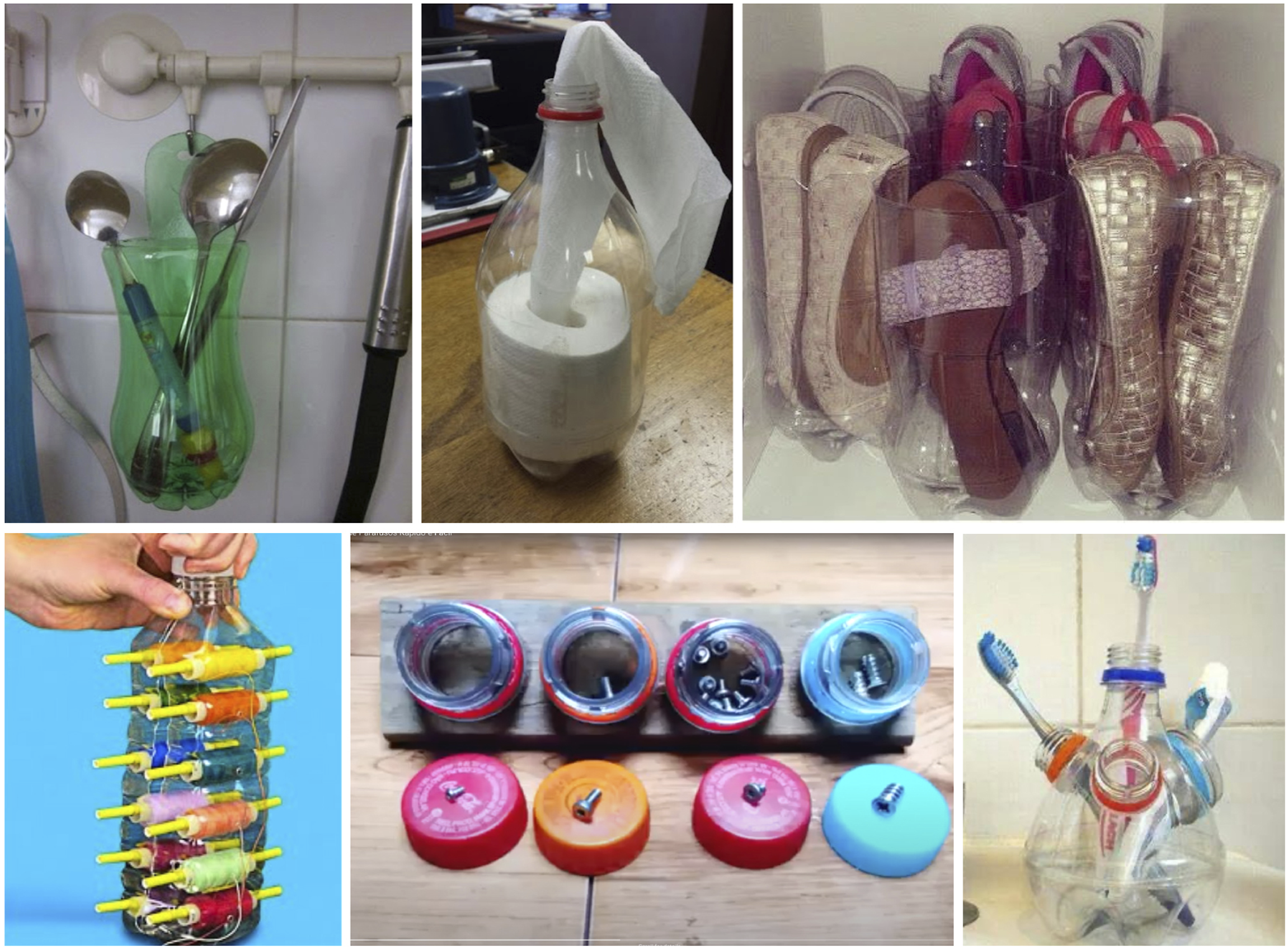
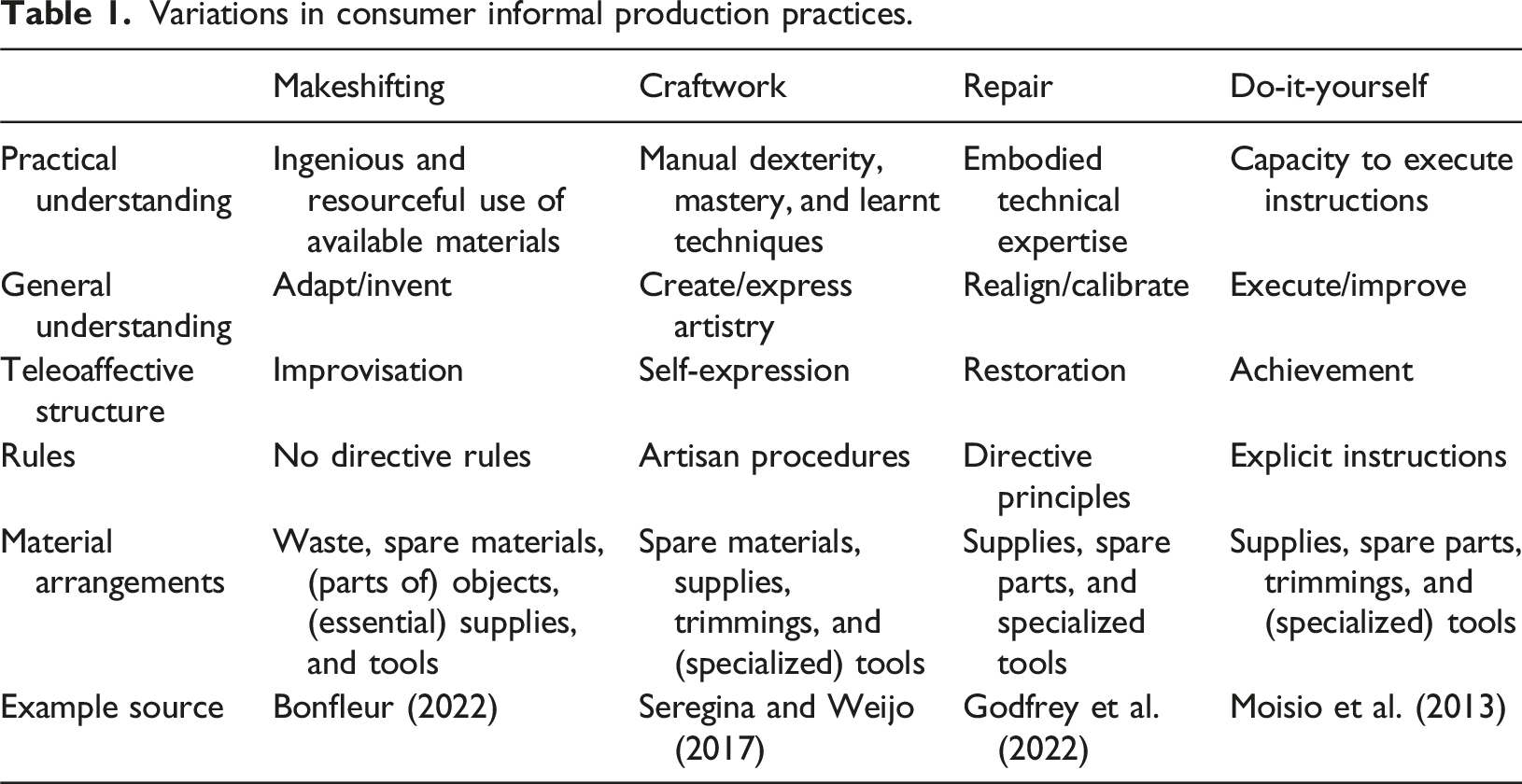
Variations in consumer informal production practices.
Understanding these defining skills also helps explain how makeshifting entangles with everyday consumption. Brazilian consumers’ performances of gambiarra as a dispersed practice are entangled in various integrative consumption practices, such as cooking, cleaning, driving, self-care, gardening, exercising, and decorating. As consumers go about their daily routines, they require specific goods, and these goods are typically purchased. When driven by necessity or the desire to create, and when market offerings are not sufficient, effective, or readily available, consumers may engage in makeshifting. For example, a cook may use a plastic bottle to protect their hand while pan-frying food (Figure 2). In this case, gambiarra is a single action performed among many others involved in the consumer’s cooking performance. Here, gambiarra is a dispersed practice entangled in the integrative practice of cooking. Makeshift solution used in cooking practice.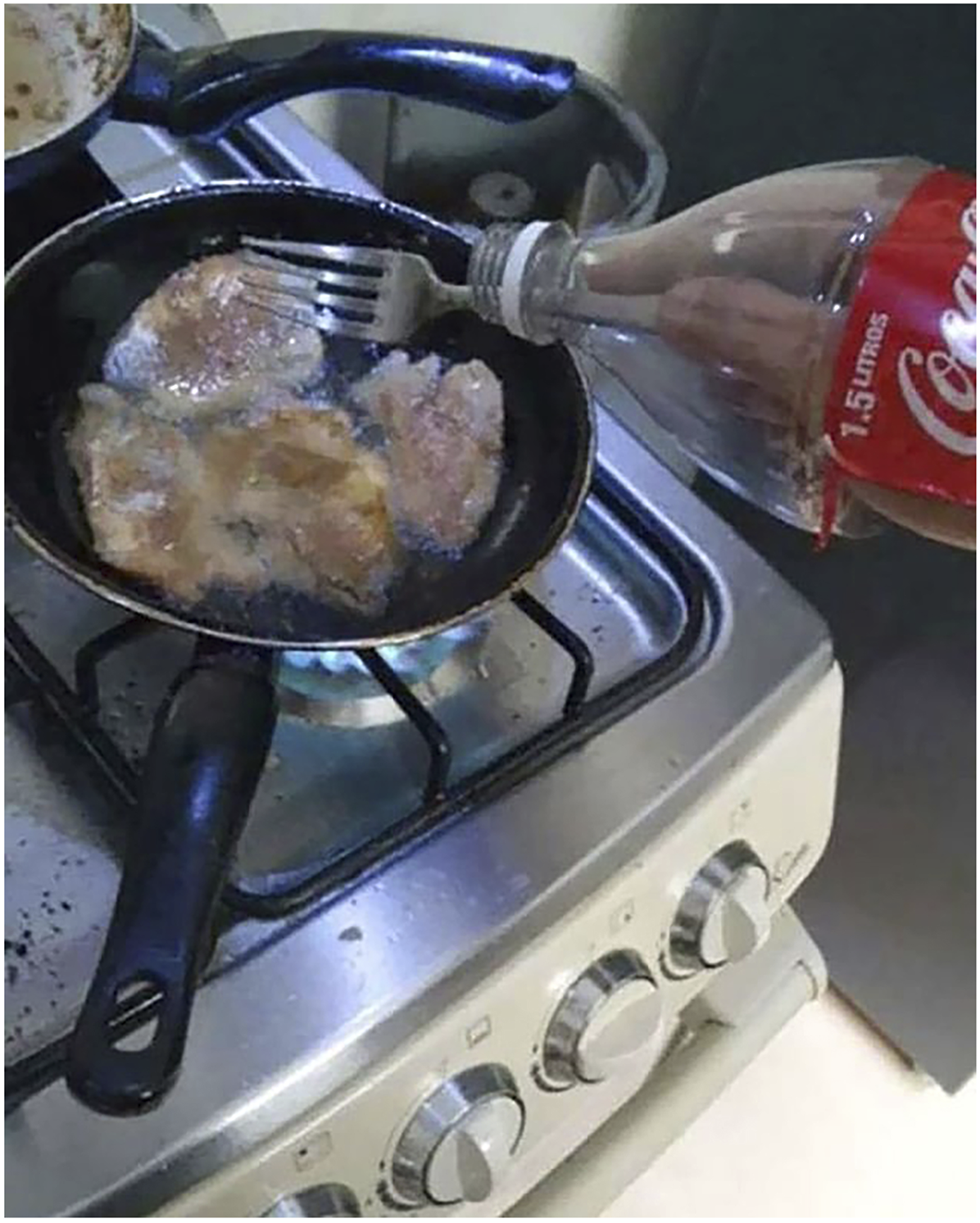
How makeshifting reconfigures established consumption practices
Having introduced ingenuity and resourcefulness as the practical understandings that underpin makeshifting, we now turn to how makeshifting as a dispersed practice becomes entangled with established consumption practices, potentially reconfiguring them. Our findings show that the ingenuity and resourcefulness in makeshifting expand the affordances of materials, objects, and their component parts, enabling consumers to deconstruct established material arrangements, disrupt normative rules, and diversify the performances of the practices in which it is embedded. These transformations illustrate how makeshifting reconfigures established consumption practices and ultimately contributes to their democratization (Figure 3). In the sections that follow, we unpack each component of this process. How makeshifting reconfigures established consumption practices.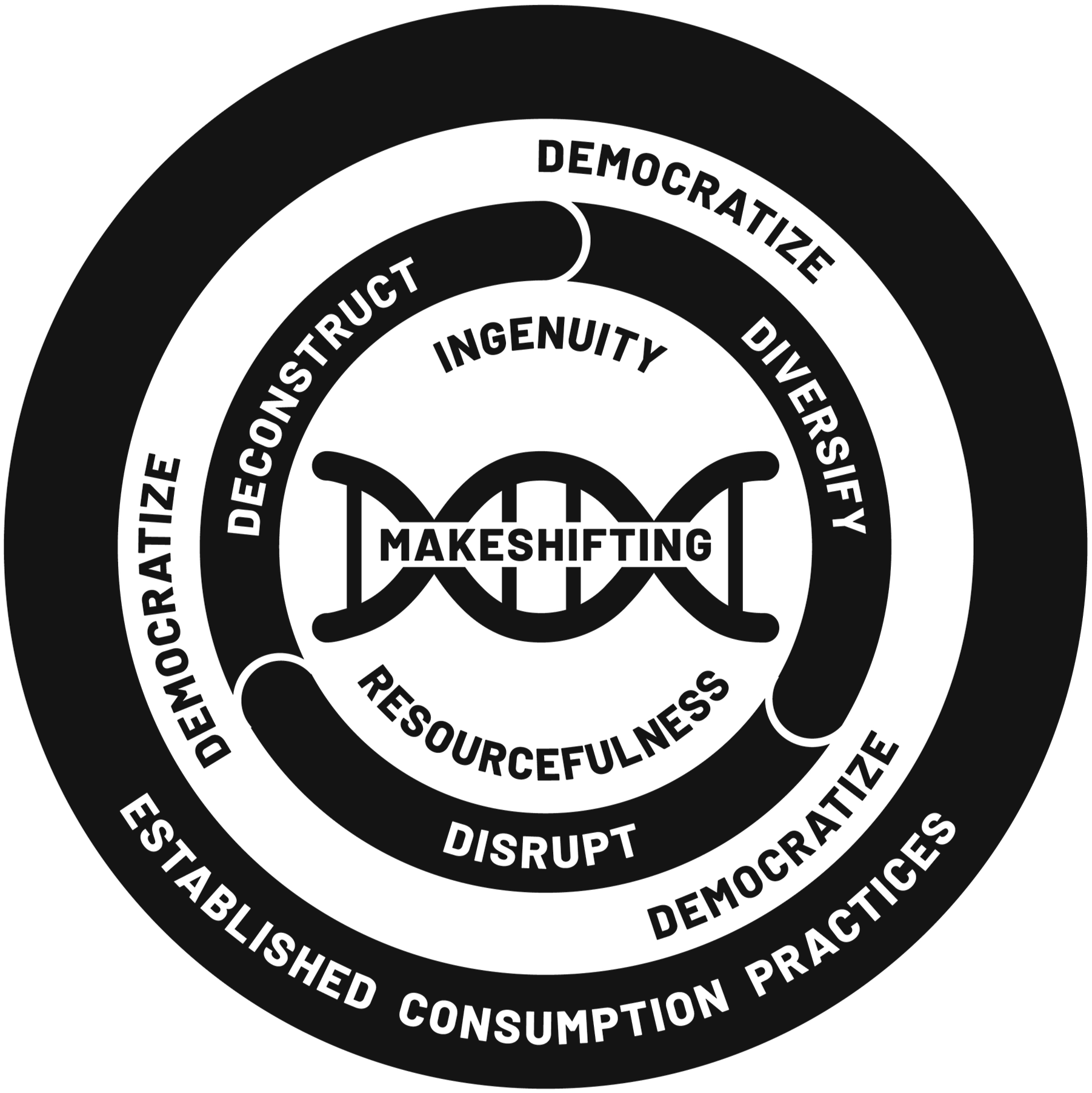
Deconstruction of material arrangements
Gambiarra deconstructs material arrangements by modifying the material dimensions of existing entities or introducing new ones, thereby changing the established material arrangements. This process is driven by resourcefulness and ingenuity, through which consumers creatively reimagine the affordances of materials and ingeniously recombine them into novel functional arrangements. For instance, in a video, a consumer demonstrates how to cut a plastic bottle so that it can fit inside another plastic bottle creating a makeshift blower for lighting a barbecue (Figure 4, video link on Appendix A). This showcases ingenuity and resourcefulness in transforming ordinary and discarded objects into new components for improvised creations, thereby redefining their practical potential. In a comment on the video, another consumer recommends an alternative way to make the blower: heating the plastic bottle in hot water to shrink it instead of cutting it. They note: “If you heat a plastic bottle in hot water, it will shrink and fit inside the other; this works better and exerts more pressure on the blower, my friend.” Online exchanges among consumers are common and demonstrate how practical understandings around ingenuity and resourcefulness can circulate socially within the digital world. Overall, the example illustrates how ingenuity and resourcefulness function as mechanisms for reconfiguring established practices by changing material dimensions and enabling innovative makeshift solutions (Figure 4). Screenshot from an online video showing how to make a makeshift fire blower.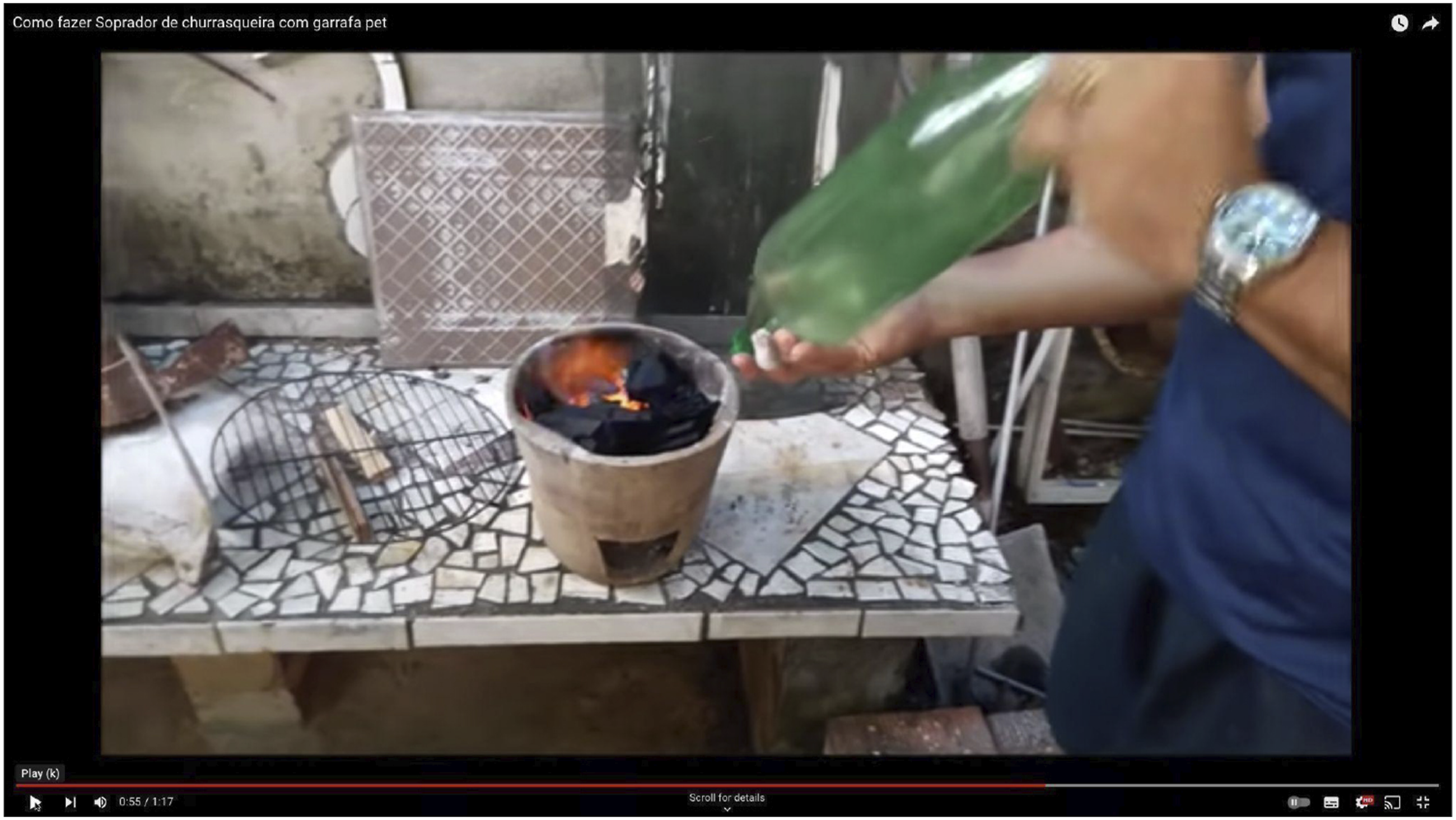
Consumers may also change the connections between material entities in established consumption practices to align the modified arrangements with their goals. For example, the material arrangement for home organizing practices includes several commercially available objects, such as boxes, magazine holders, and drawer dividers. Through makeshifting, consumers devise alternative objects (e.g., book holders made from juice containers) in their performance of home organizing (Figure 5). Book holders made from juice containers.
Similarly, Figure 6 illustrates how consumers resourcefully envision new affordances for existing materials, creating solutions to replace food and water bowls while preserving the goals of pet caring practices. Our data suggest that consumers often replace the material entities in a material arrangement using whichever materials, objects, and their parts they have readily available. Thus, deconstructed material arrangements seem to be open-ended, varied, and likely to be further changed through consumers’ resourcefulness and ingenuity. For instance, we identified 16 different makeshifts of pet feeders and water dispensers in our dataset, evidencing how multiple practitioners arrive at different solutions. Solutions for pet feeders and water dispensers.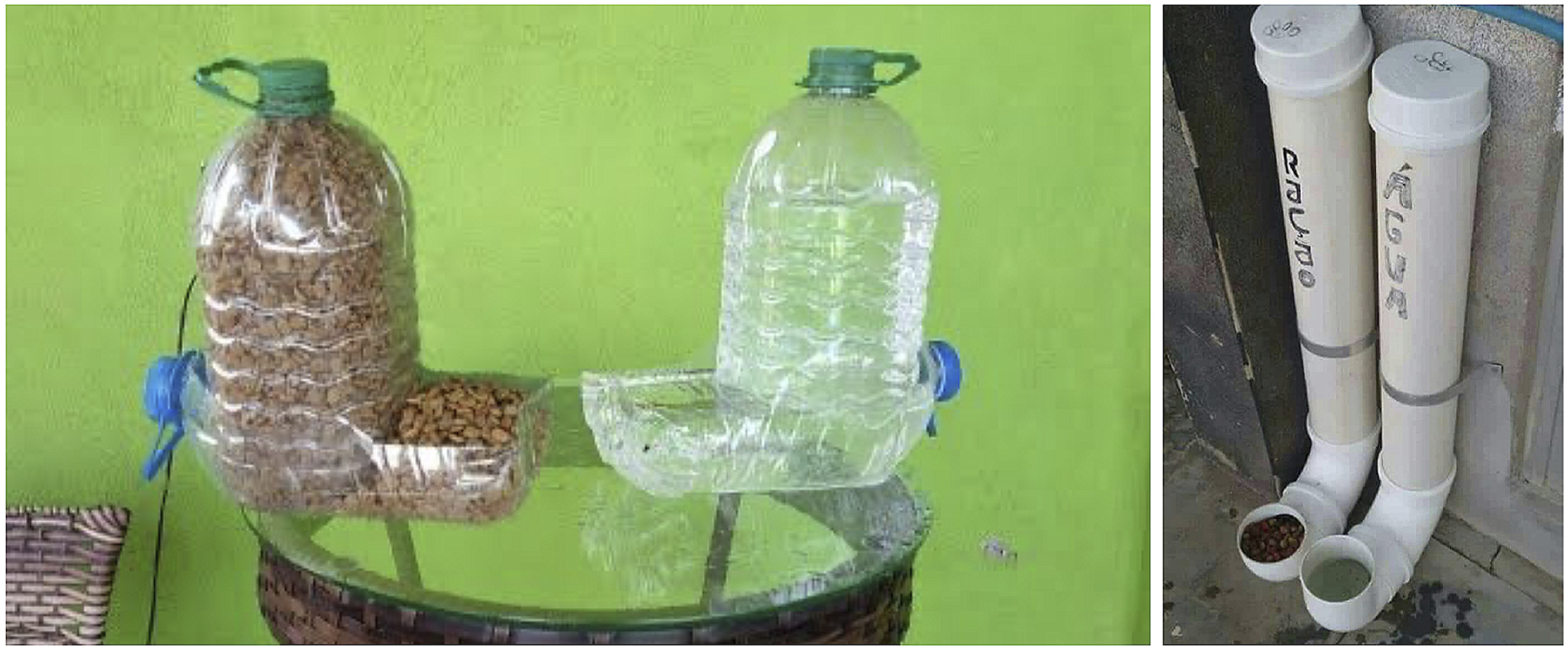
Disruption of rules
Practice rules, in general, may be intentionally disrupted but may also change when material arrangements are deconstructed (Phipps and Ozanne, 2017). Gambiarra disrupts rules by defying the limits of practice-related actions and expanding their possibilities. For example, in the practice of doing laundry, the norm is that laundry is dried on a clothesline on sunny or windy days and in a clothes dryer on rainy days. By hanging clothes under a large umbrella on rainy or cloudy days (Figure 7), the consumer exhibits ingenuity by reconfiguring the affordance of the umbrella from an object of protection to an improvised drying device and shows resourcefulness by mobilizing an available object to enact the function. So, the consumer disrupts the norm and performs the practice of doing laundry beyond its traditional spatiotemporal limits (Schatzki, 2002). Solution for hanging out laundry on a rainy day.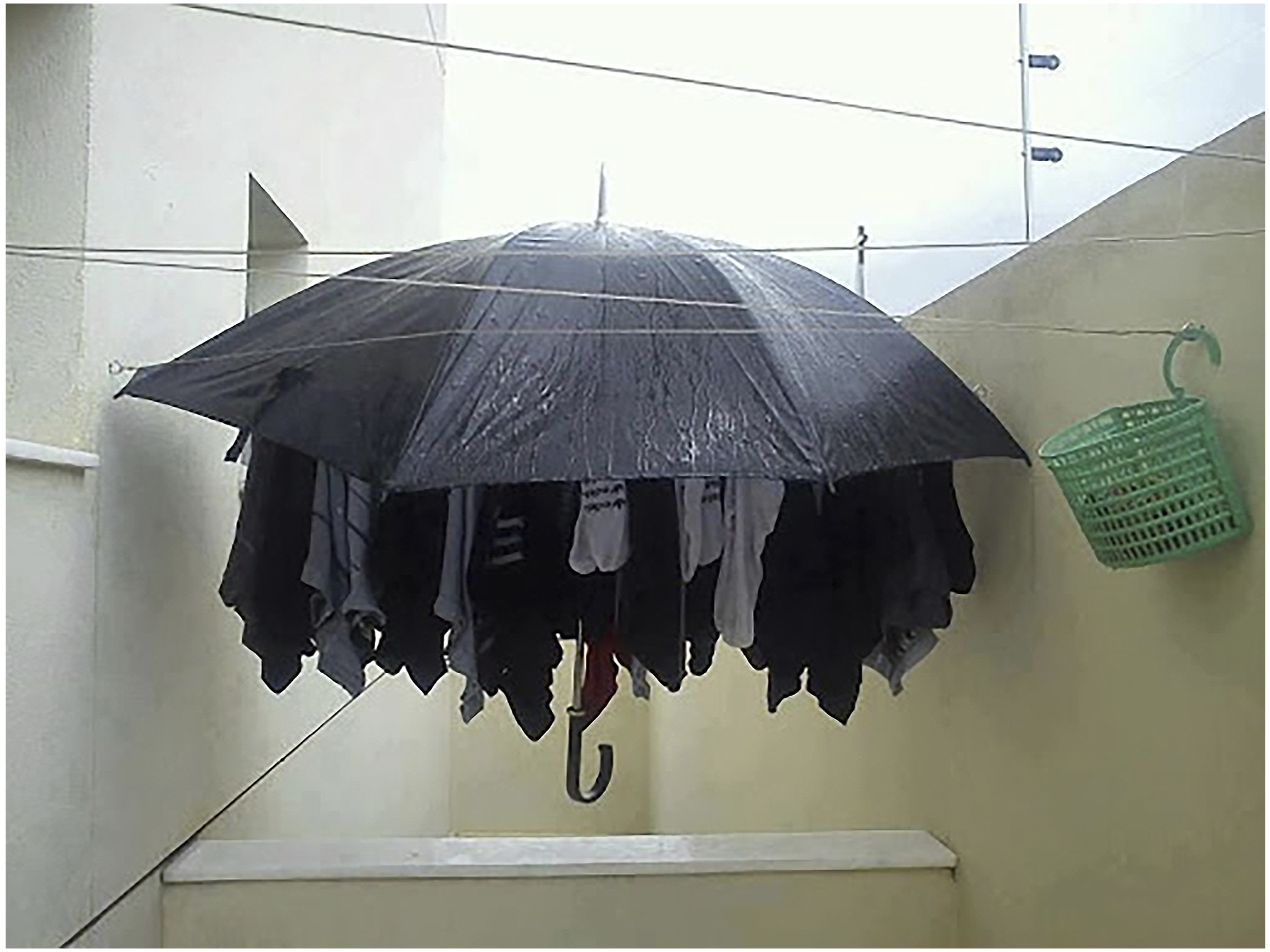
Similarly, Figure 8 provides an example of rule disruption when a consumer challenges the norms of cooking by extending the normative use of a coffee maker to using this object to cook rice, boil eggs, or prepare instant noodles. Such rule disruptions allow consumers to cook in their workplaces or bedrooms in shared houses and hotels (where cooking is usually not allowed) or cook when their stove cannot be used for reasons such as running out of liquefied gas. Commenting on the video illustrated in Figure 8, a consumer writes: “Thank you, I ran out of gas a week ago! At the moment, I am unemployed and do not have cash to buy gas! I was eating bread and drinking coffee, but [this video] has helped a lot!”. This comment further illustrates how social digital interaction and appreciation allow the circulation of resourceful solutions. Cooking rice using a coffee pot.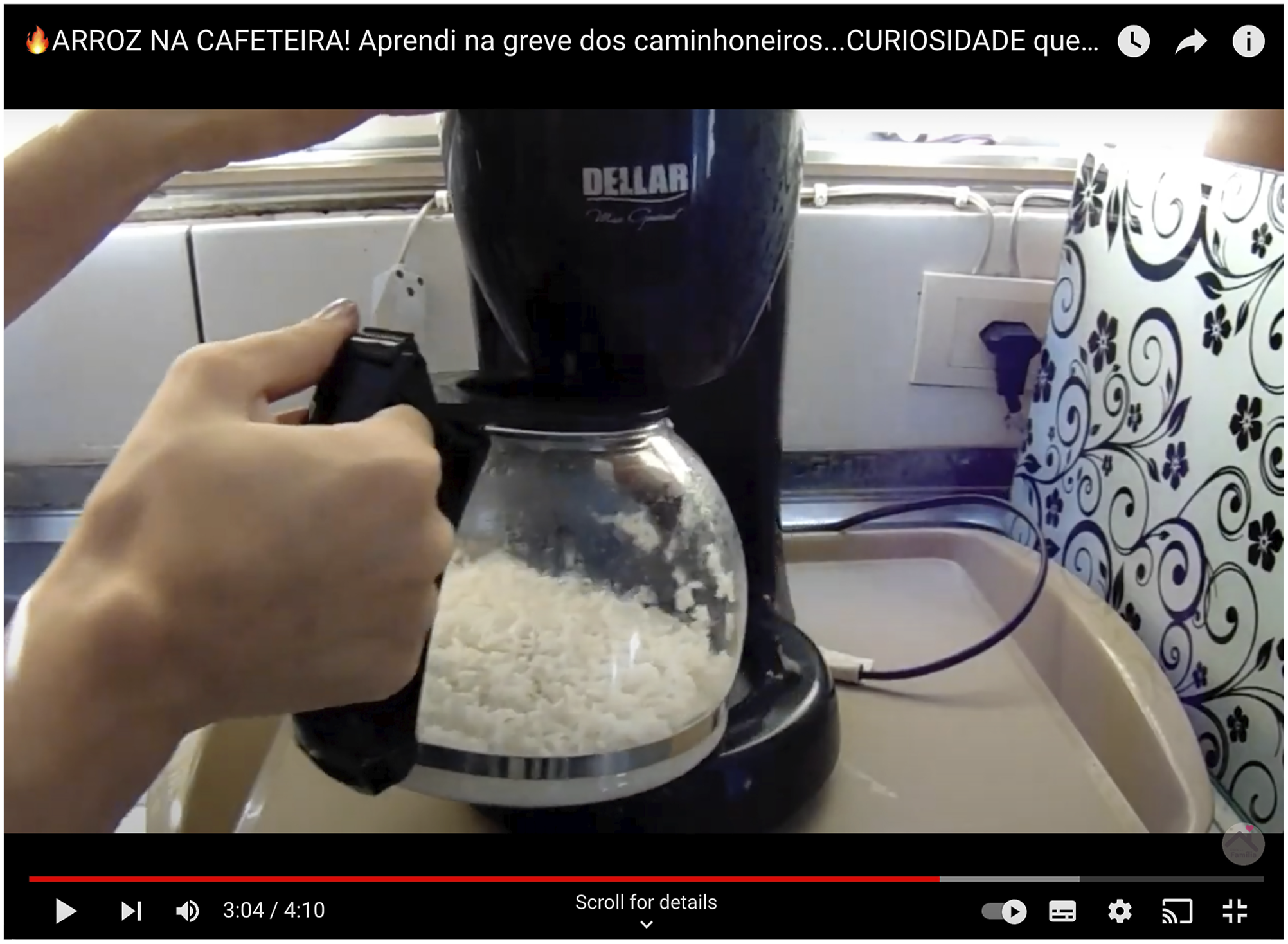
In both examples, gambiarra demonstrates how ingenuity and resourcefulness jointly mediate between structural constraints and the transformation of consumption practices. They also illustrate that, when the rules of established consumption practices are disrupted through gambiarra, these practices’ dependence on the market is challenged (Watson, 2016). Rather than relying on limits and allocations established by others (e.g., the availability of an energy source), consumers take charge of their needs with the resources they have readily available and perform the practices on their own terms.
Diversification of performances
As the observable behavior of the individuals enacting the practices (Reckwitz, 2002), the practice performances vary. However, the performances can be further diversified when makeshifting is entangled in established consumption practices.
This can be seen in the practice of plant-watering. When traveling, consumers may water their indoor plants using a market-based solution (Figure 9, left). When disseminated through the market, such products become part of the material arrangement of the plant-watering practice, and many individuals are likely to adapt their performances of plant-watering to this market product’s affordances. When consumers use gambiarra, as in the plant-watering solutions shared online, each individual’s performance will require unique adjustments. Figure 9 (center) illustrates a plant-watering system ingeniously devised by a consumer using a cooking pot, cotton twine, and a step stool. Plant-watering solutions: market offering (left); temporary solution (center); and makeshift irrigation system (right).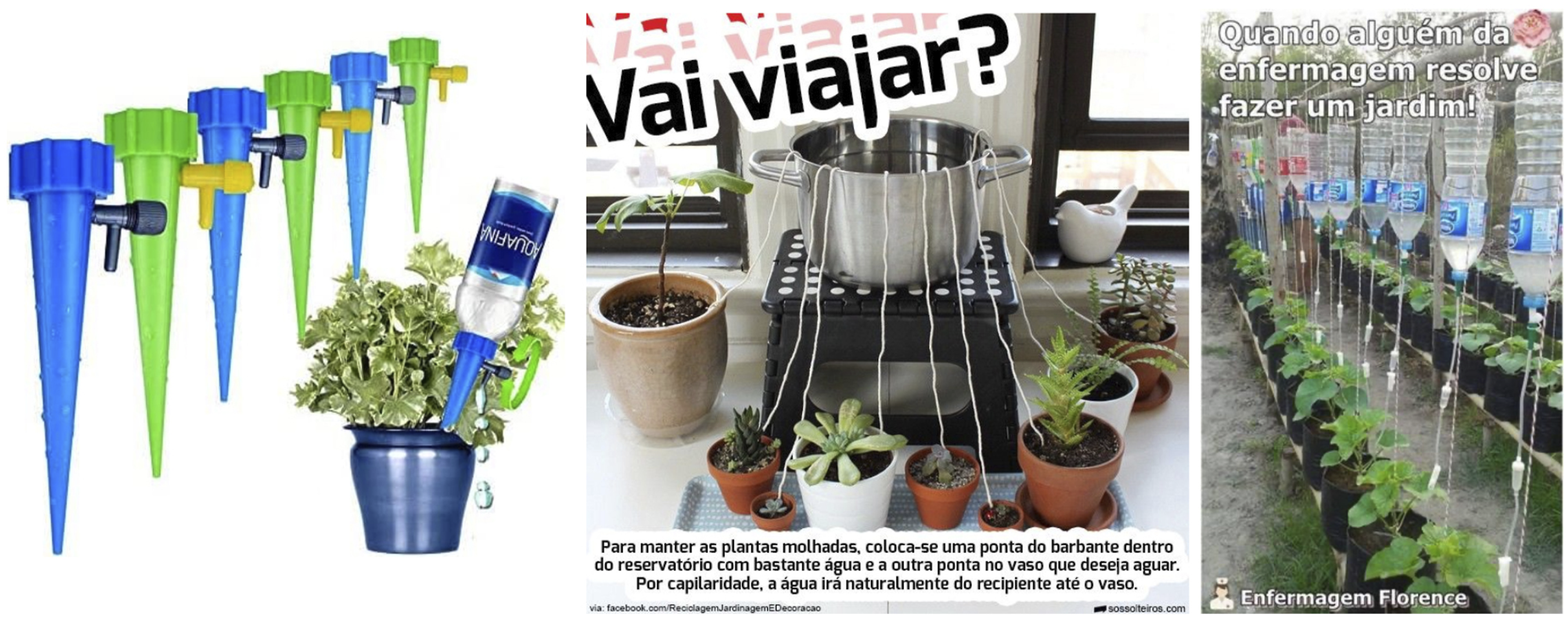
In contrast to the market-based solution (Figure 9, left), a makeshift plant-watering system requires adjustments in the performance of the plant-caring practice. Plants need to be rearranged and moved from their locations to a place where they fit around the water pot (Figure 9, center). The consumer also needs to be able to assess the amount of water to add to the pot to keep all the plants alive during the required period. The provisional makeshift can be disassembled and reassembled in the same way or in a different configuration (e.g., more twine threads to accommodate more plants). Over time, the consumer will likely become more skilled in using this system to care for their plants, adjusting the thickness or length of twine used or finding the ideal location to set up the watering system. These adaptations reveal resourcefulness in operationalizing the imaginative reconfiguration produced by ingenuity, transforming it into something workable under diverse constraints. A similar, albeit more planned, watering system solution is seen in Figure 9 (right), in which makeshifting was developed to regularly water a vegetable garden.
As these different makeshift solutions indicate, the performances of the plant-caring practice vary across consumers. The diversification of makeshifting performances is likely to lead to varied individual-level outcomes, which may range from practice embeddedness in consumer routines (Phipps and Ozanne, 2017) to practice abandonment (e.g., Thomas and Epp, 2019). Given the variation in solutions, it is unlikely that makeshifting will lead to gradual processes of practice dissemination (Akaka et al., 2022) or incremental evolution similar to that which unfolds through cumulative variations in performances (Scaraboto and Fischer, 2024) or the interventionist approach often prompted by new product launches or policy interventions in formal product markets (e.g., Gonzalez-Arcos et al., 2021). Rather, we find that the performances of the established practices in which makeshifting is entangled become so diverse through the interplay of ingenuity and resourcefulness that the practice is democratized, that is, the established practice becomes more accessible to consumers than the practice versions without gambiarra.
Democratization of consumption practices
Through deconstructing material arrangements, disrupting rules, and diversifying performances of established consumption practices, makeshifting reconfigures established consumption practices, making these established practices accessible to a broader range of practitioners. This is evidenced in the varied makeshift solutions developed by consumers for pool bathing—some temporary and improvised, others more permanently incorporated into backyards and home designs (Figure 10). Consumers endow pickup trucks, skip bins, cisterns, tarpaulins, and other objects with new affordances, combining these objects into new material arrangements to create makeshift bathing pools. Examples of makeshift bathing pools.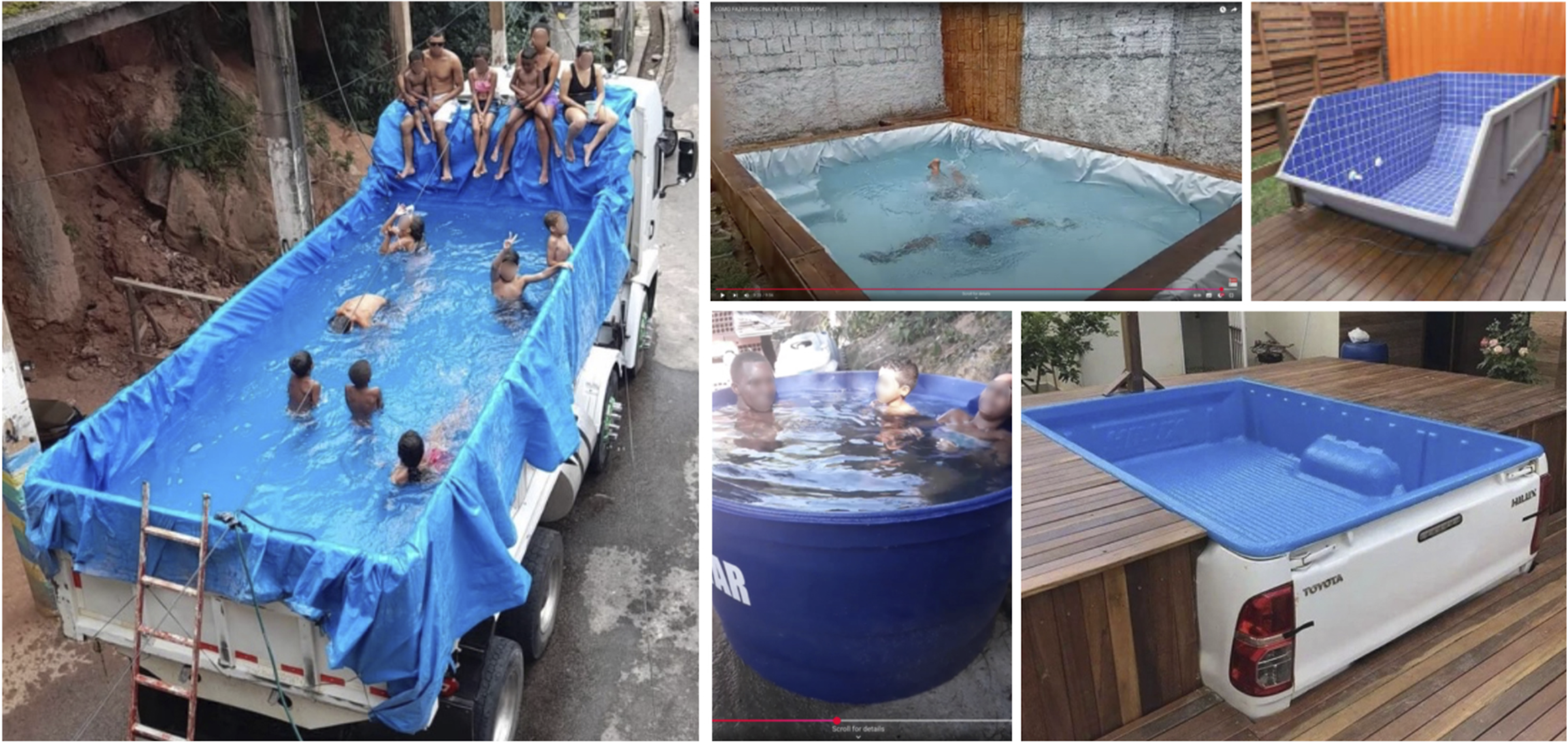
In these gambiarra solutions, rules are disrupted because the pools created do not usually allow swimming as their size is limited. Consumers may only splash around or refresh themselves in the water to escape the heat.
In Brazilian culture, as elsewhere (Scholes, 2015), the practice of pool bathing is associated with affluence, prosperity, and even luxury. Access to the practice is primarily restricted to those who own swimming pools or have the means to access private pools (e.g., through club membership or swimming lessons) because public options are very limited. Thus, swimming pools are a status symbol, and bathing in them is considered a privilege—an opportunity to escape from reality and to relax. By developing pool-like solutions using gambiarra (i.e., deconstructing the material arrangements, disrupting the rules, and diversifying performances), consumers who do not have the means to access market-made swimming pools can engage in pool bathing practices.
The more gambiarras like this are created, the more people have access to pools, thus democratizing the practice. This means that the material arrangements, shared understandings, and teleoaffective structure of the established practice of swimming in a swimming pool expand. Furthermore, sharing one’s gambiarra on social media helps increase the potential for practice democratization, spreading an accessible form of consuming a practice that was previously restricted or simply unattainable to a larger number of individuals.
Discussion
Our findings addressed the question of how market-autonomous CIP practices reconfigure established consumption practices. To do this, we examined instances of makeshifting, in which consumers transgress formal market norms, and showed how these transgressions democratize consumption by disrupting rules, deconstructing material arrangements, and diversifying practice performances.
Here, we expand on these findings to develop the theoretical contribution of our study along two lines. First, to situate makeshifting’s autonomy from markets within the broader landscape of CIP, we introduce a positional map that distinguishes CIP practices according to their relationship to market praxis and their mode of resource provision. This conceptualization reveals how practices such as craftwork, DIY, repair, and makeshifting vary in their capacity to reproduce or reconfigure existing arrangements of consumption. Second, as our findings illustrate the democratizing effects of makeshifting on consumption practices, we theorize the broader social implications of these reconfigurations. Building on postcolonial perspectives (Messias and Mussa, 2020; Rai, 2015), we demonstrate how market-autonomous CIP practices expand consumer access beyond dominant systems of provision, enabling consumers to engage in everyday practices on their own terms.
A framework for mapping CIP practices
While prior research has investigated CIP practices such as DIY (Moisio et al., 2013), craftwork (Seregina and Weijo 2017), and repair (Godfrey et al., 2022), these studies have examined each practice in isolation. Consequently, there is no framework that compares and contrasts CIP practices. To address this gap, we first identified and compared the elements (Schatzki, 2002, 2019) constituting each CIP, as shown in Table 1.
We then developed a more nuanced understanding of how CIP practices vary by introducing a conceptual framework (Figure 11) that distinguishes these practices along two key dimensions: market praxis and resource provision. The first dimension concerns the nature of the practice’s doings (i.e., praxis) in relation to market praxis, ranging from normative to transgressive. The second dimension concerns the source of the resource provisions employed in CIP practices, ranging from market based to non-market provisions where consumers reuse idle, abundant, and discarded materials. CIP practices: positioning map.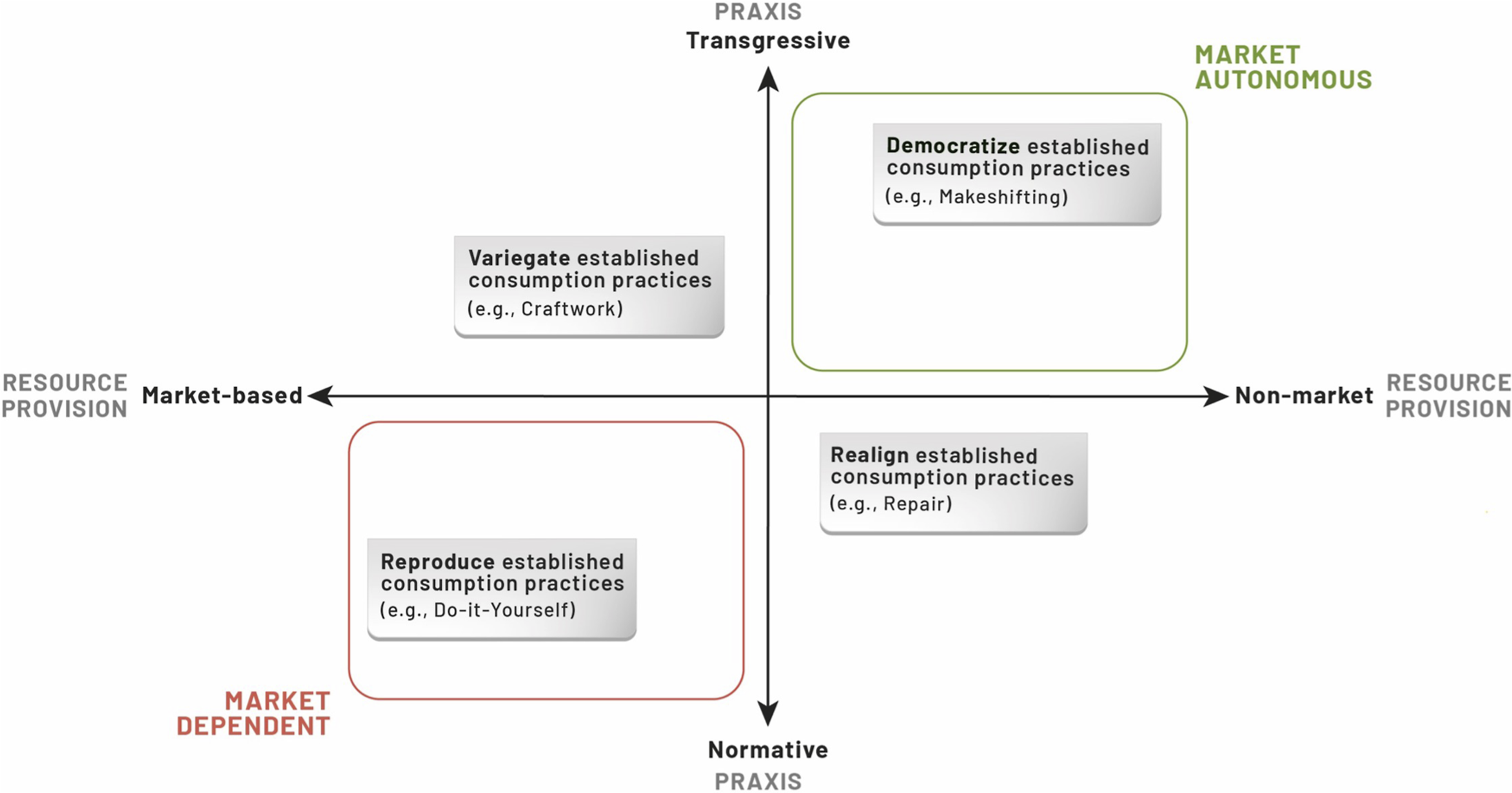
Figure 11 demonstrates how CIP practices occupy different positions within each quadrant, depending on their deviation from market praxis and their source of resource provision. Note that the positions shown are purely illustrative.
Praxis
This dimension captures whether a CIP practice is aligned with or transgresses the normative market praxis that structures market-based consumption. Normative CIP practices follow conventional market rules, aesthetics, and procedures. For example, DIY practices often involve assembling or modifying products using commercial kits and instructions. When a consumer retiles a bathroom using DIY, they typically follow the same sequence and standards as a professional tradesperson, thereby reinforcing existing consumption norms and, more broadly, market praxis.
In contrast, transgressive CIP practices reimagine or reject such market norms. Rather than adhering to step-by-step methods, consumers rely on improvised doings, creative recombination of materials, and rule-breaking tactics. As our findings show, makeshifting is emblematic of this transgressive orientation. For example, we found consumers ingenuously using coffee pots to cook or building plant-watering systems from kitchen items. These performances of makeshifting do not merely adapt market-based practices to meet consumers’ needs; they alter the parameters of what a practice can be, producing outcomes that are structurally and experientially different from conventional outcomes (as in the example of democratized pool bathing).
Resource provision
This dimension distinguishes CIP practices based on their reliance on market resources. For example, traditional craftwork largely depends on tools, materials, and components purchased through formal markets. Although craftwork is often associated with artistic creativity (Campbell, 2005), it typically requires access to commercial goods such as yarn, hooks, adhesives, and decorative materials. Conversely, practices such as makeshifting rely on non-market resources such as repurposed waste, found objects, or spare materials. Our findings demonstrate how consumers use these resources to perform everyday activities (i.e., established consumption practices) such as cooking, organizing, and pet care without purchasing new products.
Our framework (Figure 11) further shows that CIP practices that follow normative praxis and depend on market resources are market dependent (i.e., bottom left quadrant), while those that transgress market norms and rely on alternative resources are market autonomous (i.e., top right quadrant). This helps clarify how market-dependent practices, such as DIY, tend to reproduce existing consumption practices, while market-autonomous practices, such as makeshifting, have the potential to reconfigure these practices. This conceptual clarity provides a foundation for a greater systematic understanding of the diversity within CIP and its varied implications for the continuity and reconfiguration of consumption practices. For example, while Godfrey et al. (2022) found that repair practices realign the elements of the consumption practices in which they are embedded, our findings demonstrate that makeshifting reconfigures such practices in more fundamental ways. Godfrey et al. (2022) focus on how repair allows individuals to maintain participation in an existing practice, such as cycling, by restoring a broken object to functional status. Repair thus preserves the structure of a practice by aligning its components (i.e., material arrangements, rules, and performances) with their original configuration.
In contrast, makeshifting alters the very fabric of established practices. As consumers repurpose available materials, they modify the physical arrangements, expand the action possibilities, and enable new forms of performance. These actions are not about maintaining continuity but enabling participation under constrained or excluded conditions. Our findings reveal how market-autonomous CIP, such as makeshifting, deconstructs existing material arrangements, disrupts normative rules, and diversifies performances, allowing consumers to engage in practices such as cooking, pet care, or plant-watering without relying on conventional tools, settings, or resources. Although both repair and makeshifting can involve non-market resources, the motivations and outcomes of these CIP practices diverge significantly. Repair is typically driven by the intent to restore, which implies adherence to market-sanctioned standards of functionality and form. In contrast, makeshifting is driven by necessity, creativity, or constraint and results in alternative solutions that redefine consumption practices. This distinction suggests that makeshifting has the potential to transform not only how a practice is performed but also who can participate in it, as well as when and under what conditions.
Our framework also helps explain how other CIP practices, such as craftwork, can reconfigure consumption in distinct ways. For example, Seregina and Weijo’s (2017) study of cosplay highlights how consumers engage in creative crafting techniques to achieve personalized goals. While craftwork introduces expressive variation (sometimes becoming transgressive in relation to market praxis), it often remains reliant on market-based supplies, trimmings, and usually specialized tools. Thus, it may diversify performances but does not necessarily expand access. When craftwork is entangled in the cosplay practice, consumers still face high material costs and aim for “professional looking costumes” (Seregina and Weijo, 2017: 154). Therefore, consumers who cannot spend “too much time and money on leisure” (p. 152) are prevented from engaging in cosplay and are excluded from participating fully in the practice.
These examples support our broader claim that transgressive CIP practices, particularly those that are market autonomous (i.e., that are not dependent on market resources), are more likely to reconfigure established consumption practices by introducing alternative material arrangements and expanding who can participate in the practice.
Democratization of practices as a postcolonial outcome
Our findings also reveal that makeshifting contributes to the democratization of established consumption practices by enabling broader participation in contexts where market access is limited or exclusionary (Figueiredo et al., 2015). This democratization occurs through the deconstruction of existing material arrangements, the disruption of normative rules, and the diversification of performances. For example, when consumers build makeshift pools using discarded materials, they reconfigure the practice of pool bathing, allowing participation in a form that would otherwise be financially or spatially inaccessible. In this way, makeshifting does not merely serve as a coping mechanism but acts as a subaltern practice (Rai, 2015) that affirms consumer agency through creative adaptation and the repurposing of available materials into customized consumption solutions.
This interpretation aligns with recent calls to challenge entrenched knowledge hierarchies in marketing (Eckhardt et al., 2022; Kravets and Varman, 2022). Rather than viewing makeshifting through a deficit lens focused on scarcity and precarity, we position it as a postcolonial epistemological practice that foregrounds alternative forms of knowing and doing (Messias and Mussa, 2020). Market-autonomous practices such as makeshifting, particularly in its manifestation as gambiarra, provide a culturally embedded and materially inventive response to consumption constraints. As Corrêa and Maas (2021) suggest, such practices arise within a complex context shaped by sociospatial and material diversity that are often marginalized by the logics of the Global North. Within these settings, consumers do not passively adapt to exclusion, but instead devise ways to create, resist, and endure.
At the same time, we caution against essentializing makeshifting as an exclusively Global South phenomenon. While its ethos is deeply connected to the lived realities of marginalized communities, makeshifting transcends geographic and socioeconomic boundaries. As Chiesa and Foletto (2022) observe, gambiarra is not reducible to a regional practice but rather exemplifies a form of resistant creativity that critiques dominant systems of provision. It offers alternatives to hegemonic knowledge regimes by challenging the idea that legitimate solutions must be derived from formal markets or technical expertise. In this way, makeshifting represents a form of material disobedience (Corrêa and Maas, 2021), opening up space for the emergence of locally situated, emancipatory modes of consumption.
Through the lens of practice theory, we argue that makeshifting functions as a dispersed practice that embeds itself within various established consumption practices, such as cooking, gardening, pet care, or home organization, without adhering to codified procedures or norms of the market praxis. The ingenuity and resourcefulness that drive makeshifting lead to open-ended variations in performance, resulting in diverse adaptations rather than standardized solutions. This contrasts with evolutionary models of practice evolution or adaptation (Phipps and Ozanne, 2017; Thomas and Epp, 2019), which are shaped by repeated interactions, learning curves, or policy and organizational interventions. In addition to mechanisms of practice change already identified in prior research such as sensemaking (e.g., Gonzalez-Arcos et al., 2021), envisioning, and planning (e.g., Epp and Thomas, 2019), we identify ingenuity and resourcefulness as mechanisms that enable practice reconfiguration.
This research extends the current understanding of practice reconfiguration by demonstrating that informal, improvisational versions of practices can support, rather than undermine, established consumption practices by building variability into them. This finding is aligned with prior work establishing that fluid teleoaffective structures facilitate practice adaptability (Spotswood et al., 2023). In doing so, makeshifting sustains rather than destabilizes these practices, leading to a democratization that is materially grounded, socially situated, and participatory.
Finally, we highlight that even though makeshifting practice happens outside the digital realm and in the physical world, social media interactions enable the expansion of its democratization potential. Thus, we suggest that future studies should more deeply explore how social media interactions shape makeshifting dispersed practice and consequently the impacts on the embedded established consumption practices.
Footnotes
Acknowledgments
The authors thank the editor, the associate editor, and the anonymous reviewers for their thoughtful comments and guidance. They also express their sincere gratitude to Ian Fillis, David Gallear, Juliana Lobo, and those who provided feedback at the Association for Consumer Research Conference, the Consumer Culture Theory Conference, and the Academy of Marketing Science Conference. Lastly, they extend their gratitude to the many gambiarreiros, makeshifters, who generously share their inventiveness online, making this research possible.
ORCID iDs

Author contributions
All authors contributed equally to this work. All authors participated in the research idea, theoretical arguments, conceptualization, interpretation, writing, and revision of the manuscript.
Funding
The authors disclosed receipt of the following financial support for the research, authorship, and/or publication of this article: The first author acknowledges financial support from Brunel University of London through the Brunel Research Initiative & Enterprise Fund (BRIEF) and the Brunel Global Lives Fund (Pilot project).
Declaration of conflicting interests
The authors declared no potential conflicts of interest with respect to the research, authorship, and/or publication of this article.