




Abstract
Place marketers operate in a complex, multi-faceted stakeholder environment. Frequently operating at the nexus of the public/private sector divide, promotional professionals are uniquely positioned to leverage their stakeholder relationships with local, national and international actors to both establish credibility and legitimacy for their roles, and also build a successful brand reputation for the city they represent. With qualitative data collected from 44 professionals in 19 cities, this paper enhances theoretical understanding of the complex inter-relationships involved in place branding through the lens of cultural intermediation and social capital. By identifying the significant personal and professional relationships and means by which they are developed and maintained across diverse fields, this contribution positions promotional actors in unique positions of power within the urban landscape.
Introduction
It is broadly understood that the process of place branding is a dynamic, holistic endeavour that transcends political cycles and promotional campaigns (Eshuis and Edwards, 2013; Zenker et al., 2017). Branding places, particularly cities, is an attempt to capture and reflect the complex range of marketised geographic knowledge, symbolic meanings, perceptions and experiences of a place in the hearts and minds of a variety of audiences including residents, tourists and businesses (Andéhn et al., 2020; Kavaratzis, 2004). The range of meanings associated with a place are as varied as the people who experience it, and can encompass both the material (‘hardware’ such as infrastructure, architecture and landscape) and the immaterial (‘software’ such as culture, customs and feeling) components that are revealed through lived experience or communicative action such as urban reminders, resident action, images, symbols, narratives and discourse (Amin and Thrift, 2002; Green et al., 2018; Kavaratzis and Kalandides, 2015; Landry and Anheier, 2012; Ripoll González and Lester, 2018).
With a focus far beyond logos and taglines, place branding scholarship has drawn inspiration from the discipline of public management, understanding it as an operational endeavour that considers and embeds governance, political and cultural contexts, and power relations within it (Reynolds et al., 2022; Tøttenborg et al., 2021). This sees place branding as broad aspirational and authoritative project that leverages public funds to drive policy decisions and provide public value (Hereźniak and Anders-Morawska, 2021; Lucarelli, 2018; Zavattaro, 2018). A significant element of this is the need to build and strengthen stakeholder relationships both within the political and public administrative environments and throughout the broader private sector and civil society.
A participatory place brand approach further conceptualises place brands as ‘community builders’, with a strategic focus less on ‘selling’ a place and more so on providing value for active stakeholders and strengthening relationships with them in order to encourage inclusion and representation (Kavaratzis, 2017; Pasquinelli, 2013). This positions a place brand as a dynamic concept, contingent on the social constructionist and phenomenological dimensions of place that relies on inputs from stakeholder groups in a circular co-creation of meaning – the dialogue among stakeholders acting as the ‘raw material’ upon which a brand identity is formed (Kavaratzis and Hatch, 2013: 82; Warnaby and Medway, 2013). This perspective centralises a relational approach to place branding, demanding a strategic collaborative effort to engage with a complex array of stakeholders who possess their own symbolic narrative of the place (Eshuis and Klijn, 2012; Hankinson, 2015; Zenker and Braun, 2015).
Hankinson’s (2001) thinking of place brands as ‘relational network brands’, requires a collaborative and inclusionary approach that brings the public and private sector together in pursuit of a common cause, while Dinnie (2018) reflects that a social constructionist approach that centralises the plurality of stakeholder voices necessarily includes representation, shared vision, responsibility and a commitment to cohesive communicative action.
With so much emphasis on the need to embed stakeholders and residents in the process of place branding, the mechanisms of stakeholder relationship management remain under-researched and ill-defined. Organisational and managerial processes are frequently described, but with less focus on the material day-to-day methods of key actors (Beritelli & Laesser, 2011; Klijn et al., 2012; Ripoll González and Lester, 2018; Todd et al., 2017). If we begin to interrogate the work of professionals working in place branding and centralise them at the nexus of where these stakeholder relationships occur, we can begin to better understand the broader socio-economic role they might play in place branding – and policy – processes. Recent work has centralised these actors within the Circuit of Culture, affecting political processes upstream to influence politicians and policy-makers in hidden, non-systemic ways, much of it via relational means (Warren et al., 2021). However, when considering a stakeholder approach to place branding, their influence has the potential to be much more widely felt, as it is not just the political class that matters, but also the tourism operators, universities, corporate and non-profit organisations, the hospitality sector, the media and residents who also hold a key stake in the promotional success of the city, region or country in question.
This paper positions place marketers as cultural intermediaries, acting as a central link between these stakeholder groups, utilising social capital as the currency with which to leverage power over place branding processes. This is an important theoretical consideration, because, from a policy perspective, place marketers frequently hold very little power – still being seen as an ‘add-on’ or ‘nice to have’ when it comes to policy processes (Zavattaro and Adams, 2016; Zenker, 2018). The lack of legitimacy afforded to their work means they frequently need to fight for position; one of the most effective ways to do this is by leveraging the breadth and depth of their relationships across several fields. This is where Bourdieu’s (1984) theory of cultural intermediation becomes useful, with notions of field theory, habitus and capital acting as a framework from which to better understand the nature of relationships, and the mechanisms by which they are formed and maintained in the profession. This understanding helps us to codify and theorise the work of place branding, affording it a greater position of power, particularly in a city’s value chain.
This study aims to contribute to marketing theory in three ways. By applying a cultural intermediary lens to city branding, and centralising forms of capital and habitus in the profession, it extends existing sociological theory into stakeholder and relational processes that help us better understand its occupational processes (Eshuis et al., 2018; Reynolds et al., 2022; Warren and Dinnie, 2018). It answers calls for a deeper socio-economic understanding of cultural intermediary occupations and the means of organising within fields (Cronin, 2004; Matthews and Smith Maguire, 2014; Moor, 2008). Here it adds insights into the means by which relational and socially contingent processes are embedded into city branding and offers a framework for understanding the formal ‘bridging’ and ‘boundary-spanning’ functions that place marketers hold in a city’s policy and promotional value chain (Rinaldi et al., 2021). Finally, it identifies and formalises key formal and informal relational mechanisms required to do the job and calls to embed both into professional pathways that cultivate and reward social capital both at the personal as well as the organisational level of the profession.
This paper is structured as follows: first, a literature review that demonstrates the stakeholder management perspective on place branding that relies heavily on the relational qualities of its leaders, followed by a theoretical framework of cultural intermediation that outlines how the profession of place branding holds a larger socio-economic and cultural value within a city’s promotional processes. Next, the context and methodology used to study the phenomenon is introduced. In the empirical section, extensive data is provided that extends the notions of fields and social capital, and how – and with whom – those networks are cultivated. The discussion section outlines the implications for centralising the work of place branding – and its people – in a city’s value chain, and why a focus on social capital, above other occupational resources, must become a codified and formal requirement for the job. To conclude, the paper reiterates the theoretical, practical and professional implications of this study and outlines opportunities for further research.
Literature review
The following review draws from organisational studies and strategic management literature, which underlines the importance of stakeholder management, power and legitimacy in complex institutional processes. The intricate stakeholder environment of place branding is then introduced, identifying the specific challenges that are only amplified by the multi-sector public sector environment in which it operates. This sharpens the focus on the key promotional actors within that context whose professional function it is to manage myriad complex relationships, vying for position within a complex policy value chain. Finally, the theoretical framework of cultural intermediation is introduced as a lens through which to better understand the place marketing function, with power and legitimacy gained through the exertion of forms of capital – social, cultural and symbolic. This helps to advance theoretical understanding of place branding and opens up avenues to explore it more deeply through the experiences of the actors themselves.
Stakeholder relations in strategic management
Earlier management literature mainly focused on identifying the stakeholders of an organisation, their needs, and the means by which they try to achieve their goals. Freeman et al.’s (2010) definition of a stakeholder as ‘any group or individual who can affect or is affected by the achievement of the organisation’s objectives’ has provided a foundation from which to explore how managers might understand stakeholders while also strategically managing them. Dominant discourses in stakeholder theory worked to identify and organise stakeholders relative to the organisation. For instance Mitchell et al.’s (1997) typology categorised them according to their possession of three identifying attributes – a stakeholder’s power to influence the firm; the legitimacy of the stakeholder’s relationship with the firm; and the urgency of their claims to the firm. In different combinations, stakeholders can thus be grouped as latent, expectant or salient. These positions tend to be variable and are unfailingly tied to situational uniqueness and the manager’s own perception of their position and entitlement to salience; nonetheless this is a useful categorisation method from which to address and prioritise certain stakeholder needs. Further work attempted to better understand the organisation/stakeholder interaction through the lens of resource relationships, with the balance of power between them determining the type of influencer strategy a stakeholder might use in working with an organisation (Frooman, 1999).
Beyond a strategic management lens, the observation of stakeholder relationships in an urban partnerships context attempted to classify them in terms of their interactions – focusing more on the shifting, fluid interplay of their actions rather than their identities or classifications, with an emphasis on the quality of the interaction rather than as a set of individual characteristics or actors (Le Feuvre et al., 2016). While this study was not utilised in the context of place marketing per se, it offers a useful lens through which we can better understand the dynamic protocols that utilise a form of ‘smart pluralism’ guided by compromise inherent in public sector operations, rather than a form of ‘coercive dominance’ more often utilised in a private sector or corporate organisational context.
The complex and challenging stakeholder environment in place branding
A true place brand belongs to no one; everyone who engages with that place, whether residents, visitors or businesses hold a stake in its economic, social and cultural reputation. Thus a strategic and sustainable place branding endeavour must operate within a complex stakeholder environment, collaborating with a network of diverse actors across multiple interlocking and continually evolving spheres (Beritelli and Laesser, 2011). In this context, place branding can serve as a tool for building organisational relationships, a process in which the ‘agents, relationships and interactions’ and their communicative activities across social and political spheres can be observed (Hanna and Rowley, 2015: 473). A challenge for place branding scholars is to better understand this co-creative process of meaning creation – a process defined by non-linear communication exchanges among a wide range of traditional and non-traditional actors who undergo a process of ‘dialogue and collaboration’ in the pursuit of common brand goals (Kavaratzis, 2012; Ripoll González and Lester, 2018: 64).
This understanding of place branding, and city branding in particular, requires a sophisticated stakeholder management system. True stakeholder engagement involves a process whereby place marketers must identify the key stakeholders, understand their interests, and attempt to manage their interactions (Hanna and Rowley, 2011). Some scholars have attempted to define and categorise the most important stakeholder groups, including: public managers and executive politicians; residents; and (private) companies (Eshuis et al., 2018). Hankinson (2001) suggests four categories of stakeholder groups which must be considered: consumers (local people, employees of local organisations and targeted visitors), primary services (services at the heart of the core brand, for example, retailers, hotels and events), secondary services (brand infrastructure relationships) and the media (marketing communication channels that is advertising, publicity and public relations). What is evident in the literature is that identifying and categorising stakeholders in a place branding environment, especially in cities, presents numerous complexities due to the diverse and interconnected nature of urban communities. The challenge lies in recognising that any group, ranging from residents and local businesses to tourists and advocacy organisations, can wield influence over or be impacted by the city’s brand image and reputation.
The function of the profession of place marketing in stakeholder relationship management
Nearly all the literature on place branding highlights the need for and strategic use of key personnel who can bring a diverse group of stakeholders together to agree on and commit to the overall vision of the place and its brand (Dinnie, 2016; Govers and Go, 2009). Explorations into the dynamics of stakeholder relations in place branding have identified that there is a perceived lack of interaction between stakeholders in place branding processes, where decision-making still occurs in a top-down government-business centred structure, marginalising more indirect groups such as residents or civil society (Klijn et al., 2012). This is compounded by complexity; research demonstrates that brand managers cannot simply communicate a single identity of a city brand to multiple stakeholders, but that multiple brand identities and multiple stakeholder groups are required (Merrilees et al., 2012). Even attempts to encourage straightforward stakeholder inclusion does not necessarily guarantee active engagement, as power dynamics and proactive engagement need to be closely integrated into relational processes in order to balance the diverse range of stakeholder needs (Reynolds et al., 2022).
This reinforces the notion that the work of place branding ultimately operates as a ‘relationship builder’, a compendium of interactions among various stakeholder groups and the place itself (Giovanardi et al., 2013: 368). As cities have adopted a ‘destination culture’ mentality and have emerged as sites of competition, reputation and consumption, so has the need for an entirely new layer of promotional personnel whose occupational focus is managing brand activity and communicative action among these myriad stakeholder groups (Judd and Fainstein, 1999). Thus, it is necessary to explore the functions of those professionals who work in a promotional capacity in a city branding endeavour, and for whom stakeholder identification, categorisation and relationship management is central to the role.
There is some research in the place branding and tourism literature that begins to interrogate the occupational functions of place marketers, focusing on the strategic, relational and instrumental ways that actors operate (Warren and Dinnie, 2018). Earlier work by Hankinson (2001: 140) identified the following occupational factors as being particularly important – partnerships, organisational complexity and control, product complexity and measurement of success; while van Gelder and Allan (2006) extended this to include leadership, cooperation and coordinated organisation on behalf of governmental and promotional officials. Attempts at theorising this work has seen them labelled as ‘change agents’ and ‘boundary spanners’ and who straddle the public/private divide, harnessing knowledge and relationships that build capacity to foster collective action among a diverse and multi-sectoral stakeholder landscape (Clark et al., 2016; Rinaldi et al., 2021; Zavattaro, 2018).
Towards theorising the profession of place branding through cultural intermediation and social capital
Professionals working in promotional fields across various industries encounter a unique array of challenges, given the dynamic and culturally contextual nature of the landscape they operate in. This aspect is particularly pertinent for place marketers who face the task of merging a market-oriented approach with a lived commodity that transcends rigidly defined boundaries and parameters (Govers and Go, 2009).
Absent a theoretical framework for understanding not only the functionality but also the sociological implications of this work, most place branding literature has focused on the outcomes of the profession, rather than its particularities. Recent scholarship has positioned place marketers as ‘cultural intermediaries’ who act as ‘professional taste-makers’ in the cultural and economic representation of a city, influencing politicians and policy-makers upstream while building legitimacy for their position in impacting media discourse downstream (Warren and Dinnie, 2018; Warren et al., 2021). This theoretical approach informed by (Bourdieu, 1984) centralises constructions of legitimacy and power relations in the profession, with social, cultural and symbolic forms of capital catalysing cultural consumption across disparate fields (Smith Maguire, 2014). In city branding, these fields interlock and overlap – encompassing the tourism and visitor economies, arts/culture, food/gastronomy, sport and education, across both the private and public sectors – intersecting market forces with the community (Reynolds et al., 2022).
The study of cultural intermediaries has primarily focused on their role within capitalist and market-oriented environments. They are seen as actors who generate value by interpreting and mediating the significance of the goods, services, or places they represent (Bourdieu, 1984: 365; Smith Maguire and Matthews, 2014). Additionally, they are viewed as ‘needs merchants' who excel in presenting themselves as role models and guarantors of the value of their offerings, backed by their genuine belief in what they promote (Bourdieu, 1984: 365).
Cultural intermediaries exercise ‘symbolic imposition' of meaning, using various strategies to legitimise their counsel and maintain their influence (Bourdieu, 1984: 362). Their responsibilities extend beyond framing cultural forms to align with consumer taste; they are also entrusted with legitimating these cultural expressions, infusing them with credibility that resonates with their own personal preferences and significance within specific fields. To accomplish this, they must establish and uphold a certain level of professional authority, as the credibility of the meanings and messages they construct directly impacts their effectiveness in their professional roles (Smith Maguire, 2008).
For cultural intermediaries lacking more established or embedded positions of legitimacy within policy value chains, social and cultural capital act as valuable currency. The central proposition of social capital theory is that networks of relationships constitute a valuable resource for the conduct of social affairs, providing their members with ‘the collectively-owned capital, a “credential” which entitles them to credit, in the various senses of the word’ (Bourdieu, 1991a: 249). These forms of capital are highly prized tools that cultural intermediaries can draw on, as they act as legitimating forces for recognition of their position of influence. Their symbolic power stems from their ability to not only define some aspect of the social structure in which they operate, but to also facilitate the actions of individuals within that structure (Coleman, 1990).
The concept of social capital, at its foundation, is straightforward: it represents social relationships that are invested in with an expectation of a return. This return on investment is represented by the expected outcome of potential action, such as the flow of information, the exertion of influence, or as the perception of credibility or an individual’s credentials within a social hierarchy (Lin, 1999). However, their standing within this hierarchy must always be re-evaluated and re-affirmed, meaning that they are constantly in a position of seeking legitimacy and favour within the fields they operate (Matthews and Smith Maguire, 2014).
Whilst the tourism literature has acknowledged the importance of a network approach which integrates tourism with other value chains (d’Angella and Go, 2009) as well as political advocacy frameworks to understand how tourism marketers leverage social capital to wield influence in the tourism industry (Knollenberg et al., 2021), the use of cultural intermediation in general and social capital in particular to better understand the processes of place branding is in its nascent stages, focusing on norms of behaviour in the institutionalisation of branding practices (Halme, 2021) or on power dynamics that exist among stakeholder groups (Reynolds et al., 2022). A cultural intermediation approach provides a robust sociological theoretical framework to understand how professionals working in place branding might construct legitimacy for their roles, establishing and maintaining the stakeholder relationships necessary for place branding to succeed. This paper thus deepens our theoretical understanding of city branding practices and processes, positioning marketers at the nexus of that complicated social, professional and public management stakeholder landscape.
Method
Theory development in the people and processes responsible for place branding remains in its early stages. Given that the main objective of this research was theoretical advancement of an emerging profession within organisational constructs, a discovery-oriented qualitative approach using in-depth semi-structured interviews with practitioners was deemed appropriate (Glaser and Strauss, 1967). The data collection was performed during two phases: the first, to establish an exploratory understanding of the profession and develop theoretical frameworks around it, and the second to broaden the scope of analysis to consider both geographical and occupational norms and generalisations (Hybels, 1995). As the unit of analysis centred around social and contextual relationships, an interpretivist phenomenological research approach was employed, with its focus on an analytic understanding of the first-person account, aiming to understand how certain actors make sense of their situations in a given context (Griffin & May, 2012; Schutz, 1972).
The use of in-depth interviews is flexible enough to enable a greater understanding of the lived experience of informants, whilst also providing for a deeper, more detailed exploration of their perceptions, perspectives and experiences (Bryman and Bell, 2015; Daymon and Holloway, 2010). Interviews also encourage a deeper probing of complex, relatively under-researched phenomena that can help transform individual experience into a collective theoretical framework under analysis (Dinnie, 2018; Hollmann et al., 2015).
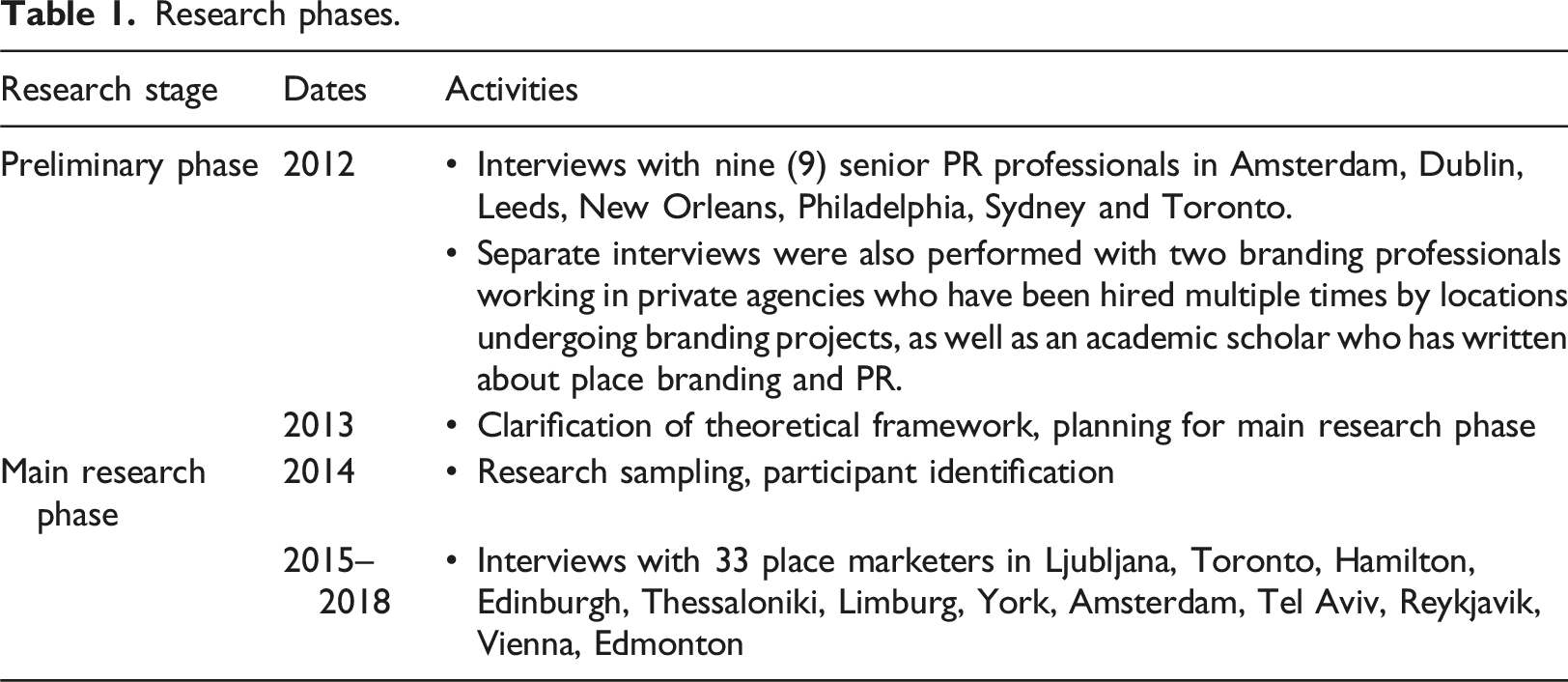
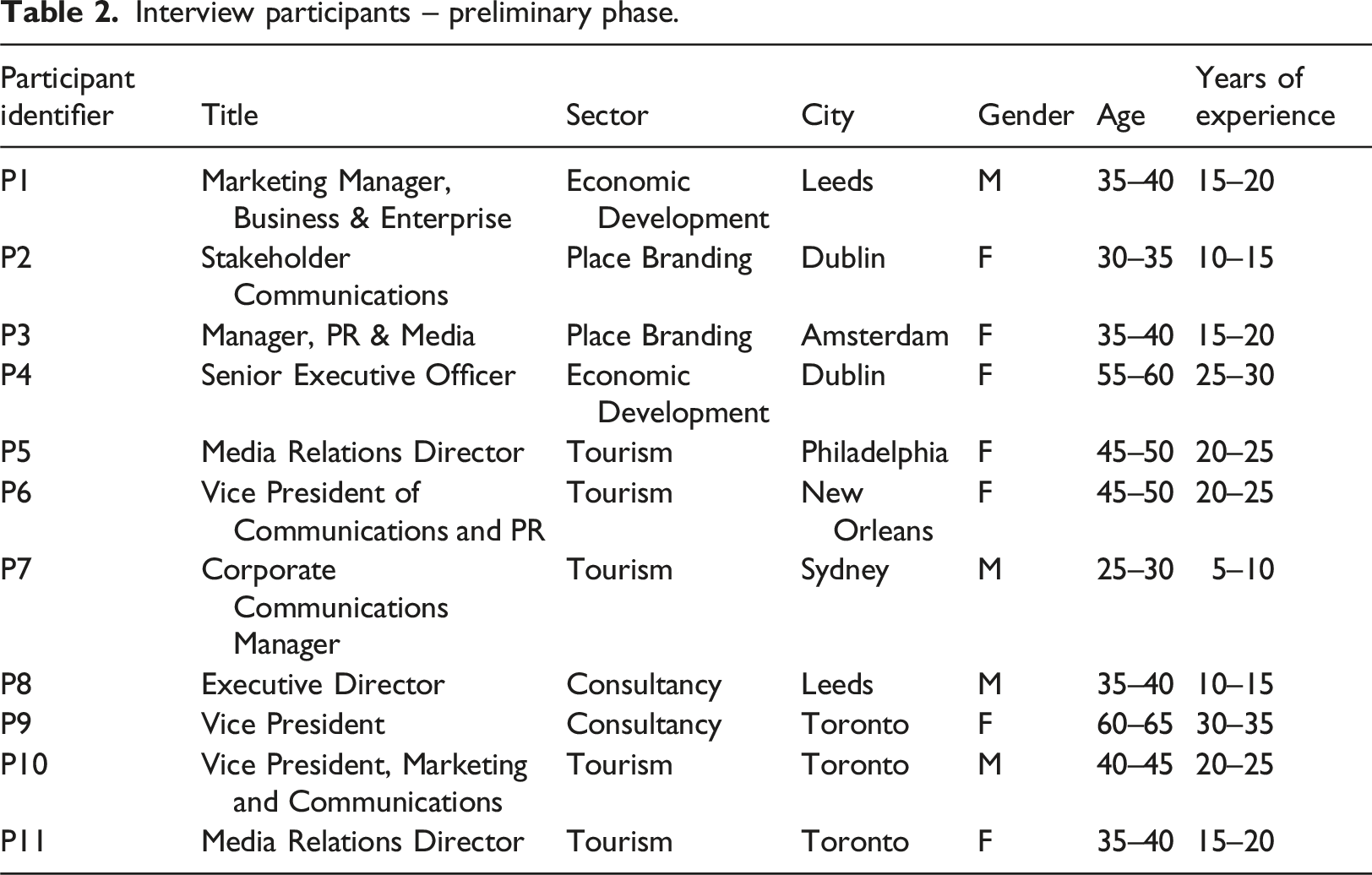
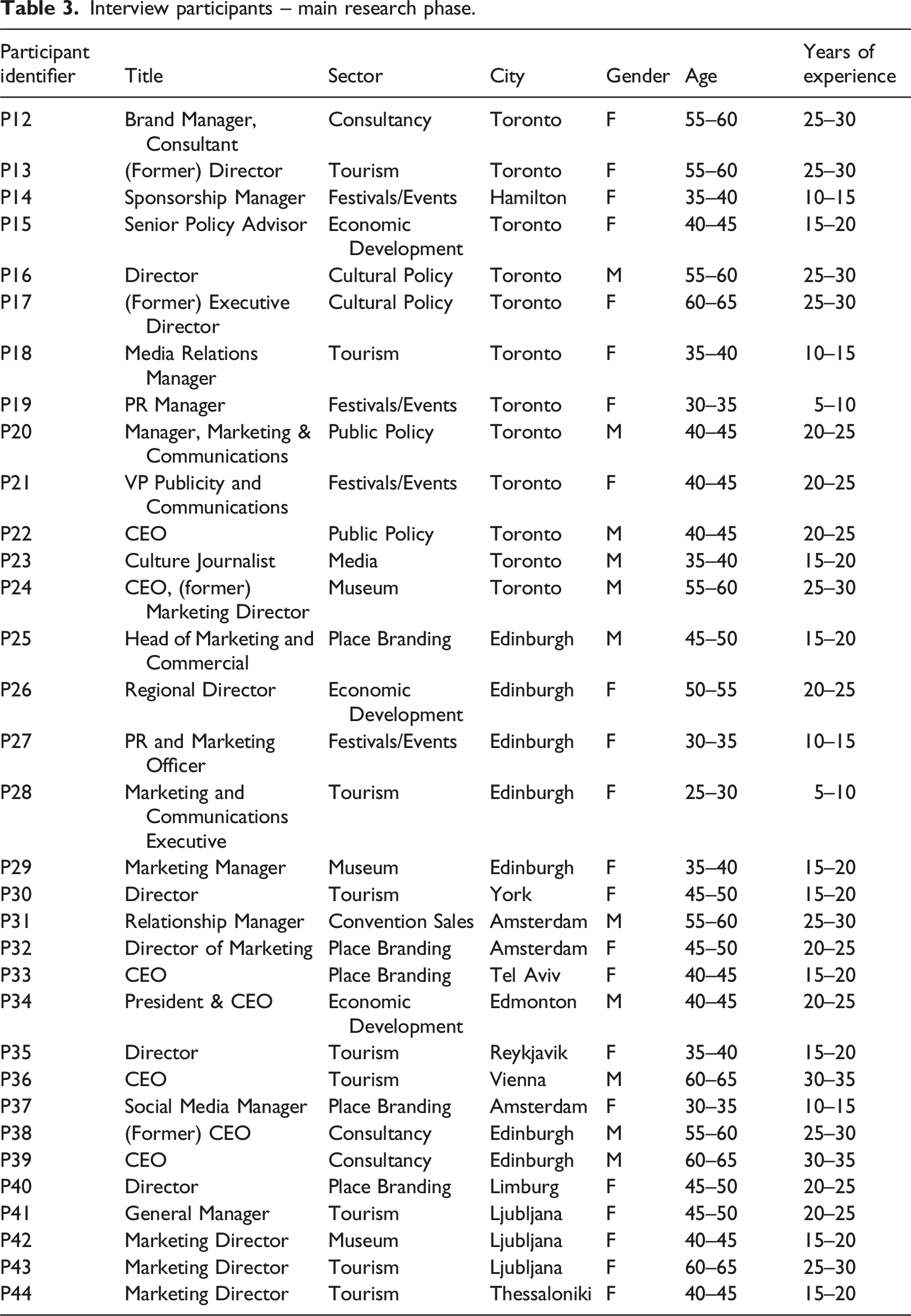
In total, 44 semi-structured interviews were performed with senior-level place marketers in 19 cities. The cities chosen for inclusion in the study were both considered part of the global West, where place branding practices are more established, and had also been identified in academic and industry literature as having undertaken an active city-branding campaign or promotional brand strategy within the last decade (Ashworth and Kavaratzis, 2015; Dinnie, 2011; Lorentzen and Carsten, 2012; Middleton, 2011; Moilanen, 2015). An online search of city council websites, Destination Marketing Organisations (DMOs) and city-generated press releases served as an initial discovery tool to identify the names, titles and email addresses of potential interview targets. From there, a purposive sequential sampling approach was employed to expand the scope of professionals who met the criteria for inclusion – namely, that they held senior management roles in marketing, communications, public relations, promotion, or stakeholder engagement in either a DMO, economic development or city-branding organisation, or within an agency responsible for city-branding strategies and campaigns.
Research phases.
Interview participants – preliminary phase.
Interview participants – main research phase.
The interviews typically lasted between 60 and 90 min and were recorded using a smartphone (in-person) or a computer-assisted device (video conferencing). The interview process was formalised with an interview guide sent to participants and ethical considerations regarding consent and anonymity addressed beforehand. While the geographical and occupational specificities of each participant varied, it was evident early in the study that a deep commonality in their professional experiences transcended the unique contexts and diverse political, economic, social and economic frameworks in which they operated. Once it became evident that theoretical saturation had been reached, data collection was halted; respondents were repeating key themes, phrases and the similarities among their experiences, and it became clear that the commonalities contained within the profession of place branding – namely, promotional strategy, relationship management and communicative action – meant that a generalisable measure of transferability of data could be assumed (Bryman and Bell, 2015).
As this research was part of a larger study aimed at understanding the broader phenomenon of cultural intermediation in place branding, an initial reading occurred to provide a ‘thematic review’ that identified patterns, themes and ‘interpretive repertoires’ that guided further examination using qualitative software (Cameron and Price, 2009: 437; Daymon and Holloway, 2010: 143). A more detailed analysis of the interview transcripts using coded themes in NVIVO led to the identification of the main theme of ‘social capital’ (n = 91 nodes). These thematic nodes were then grouped into meaningful conceptual categories as follows: materialities of social capital; constructions of legitimacy; professional relationships; stakeholder relationships; personal relationships; and other relationships. The use of theory-driven codes aligned with the theoretical literature and advanced the validity of the study (DeCuir-Gunby et al., 2011).
Findings
Cultural intermediaries are defined by their expert orientation. They utilise the expertise they hold in a certain field by influencing meaning-making, which equals value in a media-dominated society (Smith Maguire and Matthews, 2014). The value attributed to this meaning is contingent on social acceptance by those with power in certain fields. In a city branding context these intermediaries must use their social capital to both establish and assert their influence over existing, new and expanding fields, in a bid to maintain their expert status. The findings in this study point to several ways they can do this: by identifying new fields in which they might exert influence and classifying the stakeholder groups among them; by categorising the fields and establishing strategies to utilise different forms of social capital depending on the stakeholder groups being interacted with; and asserting their influence in those fields through a series of formal and informal practices that ultimately provide a value through legitimacy afforded to them by way of their participation in key social dynamics. Finally, practitioners can implement evaluative and informational measures to both reinforce and expand the importance of their relationships, using these measures to illustrate to others just how effective they are, by converting social capital into powerful cultural capital and ultimately symbolic power.
Identifying and classifying key stakeholder groups
Place marketers operate in highly complex, varied, and multi-faceted environments that straddle community groups, networks and institutions. The social ecosystem in which they operate is as varied as it is influential, in terms of the decision-makers, the political and professional classes, as well as at the broader grassroots community and resident levels. We’ve got these huge groups of stakeholders. There’s the broader public which is important to us, but in terms of achieving these goals and getting our projects done, it’s more about governments, opinion leaders, thought leaders, influencers, and that kind of ecosystem around them. And that includes any possible platforms in there. That’s social media, that’s one to one, that’s the whole universe in there. Well beyond traditional media relations and journalists, which we also do a lot of as well. (P10)
One of the primary and most important tasks for practitioners upon embarking on the job is to identify and understand where and who the key stakeholders might be, and how best to work with them. You need to know who the right people are for the right information. I’ve got quite a long list of people I need to stay in contact with! (P16)
This reinforces Mitchell et al.’s (1997) premise that, when sorting stakeholders through a defined set of criteria, it is predominantly the manager’s own perception that leads to salience in the relationship. Place brand practitioners, through their extensive knowledge of the stakeholder landscape, often need to prioritise their interactions with those they deem to have the greatest potential for utility.
Categorising stakeholder groups – establishing fields
The work of place branding is dominated by a promotional framework; as such fundamental concerns such as target audience segmentation and strategic communication are prioritised (Kotler and Armstrong, 2017). Respondents in this study actively admitted to constantly being on the lookout for new opportunities to build relationships with stakeholders; this meant within established networks, as well as developing new ones. Borrowing from Bourdieu (1984) we can conceive of the arenas where these interactions occur as the various fields they actors operate in.
Thinking holistically about how to establish influence, interviewees described their strategic methods of actively engaging in different fields. As one noted, It’s a huge puzzle piece and everyone has a piece to bring in and I just need to know where it fits. I have my main contacts. I do the [tourism leadership group], I attend networking events, evening events. I attend training stuff. And I attend all the meetings as best as I can, and I follow up on the things I said I would do and send them the information and dig it out, so I do all those things but it’s finding the bits that are left and filling them in and that’s often more informal. (P26)
To better understand this landscape, the fields can be categorised as follows:
Promotional field
Place marketers tend to nurture a network of other promotional actors working in adjacent organisations across the city. These could include marketing managers or communications officers at museums, attractions, universities or large companies. Respondents shared those other promotional actors ‘speak the same language’ and work with greater ease in building greater consistency in brand strategies and outreach campaigns. We’ve got a very friendly network of people in both marketing and communications and creative within other arts institutions and the city at large, and there’s an informal network of people liaising with each other and chatting about best practices and frustrations that might occur. There’s a lot of shared learnings. We get together with those groups a couple times a year, which is always really interesting. For me, just getting out and interacting with the industry, seeing what’s happening in terms of trends within the space. (P21)
This is an enduring feature of strategic alliances that occur between organisations that complement, rather than compete, with each other. Compatible goals and a non-hierarchical structure means that actors can share information freely and mutually benefit from it (Inkpen and Tsang, 2005). Thus, successful place marketers maintain a strong network of relationships with other marketers across the city to both commiserate, as well as keep them up to date.
Public diplomacy and policy field
It is also vital that practitioners working within the levers of official channels within the city maintain strong professional relationships with external agencies and affiliates who might also represent the city in both promotional as well as policy discourse internationally. This might include in situ PR agencies hired to represent a city locally, or communications staff at diplomatic offices, or even the promotional teams at overseas headquarters of local businesses (Aronczyk, 2013).
As one informant declared, In my old job at [a tourism DMO] we would link in with both organisations, so every market overseas that [the DMO] has an office in has somebody dedicated to PR. A big part of my job was basically creating relationships with them and maintaining relationships with them, because we didn’t have the budgets to be paying agencies overseas. They were our people in the markets overseas and the way I looked at it was, these people are going to help me do my job, so relationship management with them was a really big project for me that I kind of took on for myself. I kind of wormed my way in - technically there was a little bit of resistance, a little bit of reluctance on their part to deal directly with me, but eventually I succeeded. (P2]
Beyond the organisations that are hired or committed to promoting the city brand internationally, exist another series of external partners that offer key opportunities for network development. Membership affiliation within certain organisations that also work within the city branding sphere globally offer opportunities to leverage partnerships with key groups outside the city as does working directly with promotional intermediaries in other cities: We talk with many different stakeholders and with other European cities, share information and do our utmost to continuously improve our city in any aspect when required. (P3) We have quite a number of dialogue groups. Corporate content management teams, market research. Input from tourist boards, international colleagues - we are very involved in the European tourism marketing association, a close colleague of mine is there and I’m in constant contact with him. That’s very important, to keep those contacts. (P36)
Political field
Place marketers must familiarise themselves with a broader stakeholder mix that encompasses not only municipal, but also regional and potentially national policy directions within brand hierarchies (Dinnie, 2018). This requires a willingness to work with colleagues at other government levels to both adapt and align strategies. Understanding the political landscape in which they operate, and the priorities that political leaders might have for the economic and social development of the city, can act as a guiding force for place marketers who understand that their success in implementing their strategy is tied to the larger political climate. As one respondent noted, Well I work with the Minister of Economy and the Secretary General as well. We go pretty regularly to the Minister, to talk strategy. I know upfront what’s coming up and I give my opinion. On the regional level, I can influence the other Mayors through our Mayor and that again is what we are doing regularly because we get there at least once a year. Sometimes twice. (P41)
Many of the respondents of this study were keen to point out that the work they did outlasted political cycles but remained at the mercy of funding and policy decisions that originated with political actors.
Media field
What is unique to the job of city marketers versus other municipal employees is the range of exposure that practitioners have due to their adjacency to media. Understanding that the media has a powerful impact in increasing exponential outreach to audiences, place marketers prioritise their relationships with journalists in a vast media universe that includes print, broadcast and online sources. L’Etang (2007) suggested that the study of source-media relations is crucial when trying to understand destination promotion; with practitioners acting as a crucial bridge between what is happening in the community and what is published in the media. When key information about the city needs to be shared, a media relations strategy is often the first point of contact between marketers and all the publics they are trying to reach.
When asked about their most important stakeholder relationships, nearly all of the respondents in this study indicated that the media were their biggest and most significant concern. Obviously the media are a crucial stakeholder. We try to communicate proactively with them, and as much as possible we capture the data of any journalist that visits [the city] or contacted us. We keep them on a mailing list and send them news, features, anything that might be of interest to them, making sure they know that I am the expert they should come to if they are doing a story on anything related to tourism or promoting [the city]. (P2)
The media act as a conduit to other audiences, offering exponential opportunities for message amplification and information-sharing. Whilst promotional work is comprised of various functions, media relations can be considered to be perhaps the most vital function of promotional work because the media act as gatekeepers through whom information is shared with other publics – both a general consumer audience as well as stakeholders who might be impacted by the brand’s reputation (Curtin, 1999; Reber and Berger, 2006).
For resource-stretched marketers, the media acts as a direct outreach vehicle to stakeholders in the city, fulfilling a greater function than providing broad exposure to the public alone. Using the media as an official communication channel to engage with businesses, other government organisations, major institutions and politicians is a unique option available to those with a broad public policy portfolio and easier access to the media due to their more central and powerful status as city representatives (Davis, 2013).
Personal field
Cultural intermediaries who think holistically about their relationships tend to view any and all of their contacts as involved somehow in their work (Cronin, 2004). Lines tend to blur between the professional and personal when it comes to networking, gathering information or taking the pulse of the city (Todd et al., 2017). Several practitioners spoke of their colleagues as friends, commenting how their mutual shared love of the city meant that they frequently socialised with them outside of work hours. One participant noted that regularly socialising with key industry stakeholders had shifted their relationship: We tend to go out, have a couple of drinks and chew the fat. It’s not official business but it’s so necessary. It’s important to cultivate those personal relationships. I bump into them regularly. We all drink slightly too much when we go out. They’re great people to be with. (P21)
Beyond turning colleagues into friends, other practitioners frequently noted how their existing friendships and personal relationships were useful to them in their work. Friends that enjoy regularly partaking of the city’s social and cultural offerings are particularly helpful in providing non-official market research or helping practitioners to expand their networks within the city in non-traditional ways. Here’s somebody who’s opening up a new hotspot, whether it’s a club, bar or restaurant, and even a small gallery. And let’s say they’re your friend, or they know you from someone, or they just know you personally. They get into your ear about it. And you go and you see it and you think, this is really cool, I should bring some media here. And then you bring media there - and boom, it’s taken off! Not just because of the influence of what the media can generate, through their jobs and what they do and the writing and speaking to their audience directly and promoting that place. But also because of the fact that YOU said that place over another! So you are very influential! And extremely powerful! (P19)
Many practitioners also described the need to actively seek friendships with people who work in attractions, culture, tourism and hospitality within the city – both because they tended to have similar interests, schedules and proclivities for spending their spare time, but also because their values aligned around loving the city and all it had to offer. This reinforces the idea that a main feature of social capital is its ability to provide emotional support and identity reinforcement among actors who wish to cement their membership among certain groups (Halme, 2021).
Asserting influence and establishing power
Constructing legitimacy through dynamic interactions
Once relationships across key fields have been established, the work of constructing legitimacy and maintaining their credibility among stakeholders becomes a focus of the job. This is not a static nor fixed process; depending on what field they are operating in, cultural intermediaries must constantly put effort towards asserting their position of influence (Lin, 2001; Smith Maguire, 2014). Many respondents in this study were very reflexive about their positioning, recognising the importance of being seen by the right people, in the right context, and saying and doing the right things. This means ensuring their participation at key meetings and events, being seen to be consistent, and constantly understanding and acting within a broader political context. This work occurs at both an individual and collective level. As one respondent noted, In general it’s all about managing the team. It’s of course a small team, but everybody is on top of the business. So it’s working on the strategy activities of the upcoming year. It’s about seeing which promotional activities are being planned at our partners, where we can combine, co-create. It’s having discussions with managing directors, CEOs, but also Mayors of cities and it’s all about media, which strategies do we develop there, what do we do on social media, and how do we prioritize all these activities to get results? (P40)
Sometimes, a high public profile and strong relationships are simply not enough for practitioners looking to maintain and establish their influence. Respondents often spoke of the need to ‘sell themselves’ as credible taste-makers, constantly reminding stakeholders of their value. In order to do this, many relied on the creation of reports, metrics, presentations and other creative ways of affirming their position among certain fields. Good relationships aren’t always enough, as one commented, And we pretty much have a good relationship with the management and the board in the sense that we’re pretty effective and we can show how effective we are, through our metrics for instance. (P20)
Many practitioners remarked that their longevity in the role, and the persistence they have displayed throughout in maintaining a vast network of relationships, has been the greatest factor in determining and establishing their position of power within the social value chain of the city. Solid relationships are built on a foundation of familiarity and trust, developed over time, and are not available to those who jump in and out of the profession with no view to the longer term (Inkpen and Tsang, 2005). In some cases, it takes years to develop the social capital that establishes clear positioning. We’ve been very strategic about the markets we target, the media, the genre, and how we message. And maintaining a sustained relationship as opposed to sort of dipping our toe in on a couple of touch points over the course of a year. (P21)
Using the legitimising tools at their disposal, once they have established a level of influence over certain stakeholders they must constantly negotiate and assert that influence within those fields. This resonates with the assertion that managers must constantly be engaging in a series of ‘dynamic stakeholder interactions’ to develop a process-enabling approach, overcoming inhibitors in pursuit of ‘smart pluralism’ in urban partnerships (Le Feuvre et al., 2016). As the next section will demonstrate, place brand practitioners have developed a key set of occupational tools that help them maintain this position of influence by leveraging their social capital in formal and informal ways.
The formal and informal practices of power dynamics
Because ‘place branding is seldom under the control of a central authority’ (Iversen and Hem, 2008: 604) the fields where place marketers interact with stakeholder groups spans both the public and private sectors and must be considered concurrently, with an emphasis on managing ‘across’ rather than ‘for’ them. Doing this effectively requires a strategic and systemic effort to see and be seen. Stakeholder engagement meetings, conference and event attendance, individual visits with stakeholders at their place of work, being constantly available via digital channels and consistent and repeated transactions are considered crucial in maintaining social capital and is readily accepted by informants as a basic function of the job (Gulati, 1995). The meetings might be professional or social in nature – but regular attendance is non-negotiable. There’s always things happening in the city for stakeholders so you see them at these things, so you make a point of speaking to them and engaging them when you see them. You have to be really active in your networking and outreach. You definitely can’t be a wallflower, and dive right in there, and be prepared to speak to pretty much everybody. There definitely needs to be a certain aspect of knowing who the best people to speak to are. (P28) Before I started in the role, they didn’t necessarily liaise with us on itinerary planning. So they were very important stakeholders — I could see in the mix that they were crucial so it was a matter of making sure that they knew what our priorities were, and getting them to include the products that we wanted to push on itineraries. So similarly we would do a bit of ‘PR’ and divide the team for a session and a nice lunch, a presentation on our goals and our products and our messages for a given year or a given season. We’d just try and keep pushing our priorities with them and I nearly killed myself offering help with itineraries! To the extent that they just didn’t bother doing it anymore and gave it over to me, which was great because it gave me a lot of control over what journalists did when they came to [the city]. (P2)
Reflecting on some of the more informal ways of establishing and exerting influence, respondents noted that while political processes sometimes hindered their brand endeavours, they were still required to ‘play politics’, working closely with politicians to gain their trust and respect in hidden and non-systemic ways (Eshuis et al., 2018; Warren et al., 2021). So we have 10 – we call it our top 10 stakeholders. Could be university, the provincial government, we kind of monitor that all the time in terms of how we’re doing. We use three words that we measure ourselves against - Resonance. Do we resonate with them? Are we talking about the right things at the right time? Are we Relevant? Which is our we on their speed dial? And is there Respect? And Respect is interesting because we don’t need them to like us or love us, but they need to respect what we’re doing. Because often we will create a rub between us and them, because we need to push them. They don’t like us sometimes, but it’s kind of like broccoli. It doesn’t taste good, but damn it’s good for you! (P34) So your biggest impact isn’t necessarily a direct line into government, but it’s communicating and corralling and combining the appropriate stakeholders together to lobby on your behalf. Not on your behalf, but on the city’s behalf. But you need them onside. (P35)
‘Creating a rub’ between themselves and stakeholders or working behind the scenes to bring other actors together to work on their behalf are some of the unofficial and informal ways that these professionals assert their taste-making and meaning-making function in certain fields. Through creating relational tension, or encouraging camaraderie, or even via persuasive story-telling, place marketers are able to establish their position, where they can interact and reinforce mutual recognition and acknowledgement as members of a network or group (Bourdieu 1990).
Sometimes, the work is subtle, strategic and potentially even subversive, transcending professional norms. The respondents in this study were overwhelmingly reflexive about this element of their work; acknowledging that the positions of power they held were often not explicit, but that they were confident they could exert influence in unofficial ways that would still result in demonstrated impact. Much of this stemmed from an understanding of the power of communicative action and meaning-making that is made possible through work that is viewed via a promotional lens: I would argue that communications touches everything. It could be promotional, around our product, but it’s brand, it is reputation, it’s how we position ourselves, it’s how we deploy our C-Suite, it’s issues management, it’s crisis. So when I’m sitting around the table I don’t tend to be the loudest voice, but I will credit the senior team in particular my boss the CEO, he will turn to me and say - ok so you’ve heard all this, give me your lens. So I am fortunate that I think he might not always agree, but I do have an opportunity to influence what we’re doing as an organization, as an institution. Looking externally, certainly relationships with the media have been really key in terms of - it’s not necessarily pitching something all the time. It’s having the quiet conversations to sort of develop a narrative of what we’re doing with a long tail of thinking about what our long terms goals are. It’s nurturing. It takes time. It takes a lot of time, and you’ve got to be patient and understand and know where you’re able to influence in key ways. (P21)
Conversion of social capital to cultural capital
Depending on where they work in the city’s promotional hierarchy, marketers are aware that the relationships they foster are likely going to be their most valued occupational resource. Social capital acts as stock in trade for these actors; it is a stock that influences, and is influenced by, the social component of any interaction and offers informational benefits that act as valuable currency (Freytag et al., 2007).
The reason that maintaining these stakeholder relationships is so valuable to practitioners is because the information flows are reciprocal, a significant feature of social capital. Social ties in strategic locations can provide individuals with knowledge exchanges that exist to meet market demands, and researchers have argued that access to new sources of knowledge is one of the most important direct benefits of social capital (Inkpen and Tsang, 2005; Lin, 2001). Stakeholders – whether that be private businesses in the fields of hospitality, attractions, food/beverage and other identified industrial growth sectors, or public sector entities in culture, tourism, education (such as universities) economic development or resident engagement – hold a wealth of information about current market trends within their sector, as well as the key initiatives that are impacting city life at ground level. It would be impossible for the intermediaries promoting the city to know everything that was going on at any one time, and their professional links with key stakeholder groups can help to bridge that gap. Our stakeholders and partners are a really good source of information. Keeping up to date with them, we’re always encouraging our stakeholders to keep in touch with us and let us know what’s going on, what’s coming up. Social media is a big one because again I’m on social all the time for work, so I tend to connect quickly with people across the city via those channels. (P29)
For place branding practitioners, this takes the form of the constant acquisition of new inputs gathered from non-traditional, non-institutional sources. Respondents point to ‘a range of sources – partnerships with local business media, news releases from stakeholders/partners, internally generated news stories based on our own services and economic updates from our policy team’ (P1), as well as myriad other sources, both personal and institutional, as guiding their knowledge about the city. Nearly all participants identified that their jobs required them to be constantly updating both their knowledge and their skills, and usually in non-traditional ways, and that their legitimacy as promotional professionals relied on it. As one respondent commented, I like to make sure I know what’s going on here. Like I said I went to lunchtime learning today to learn about what business events are up to. I once worked in that team but it was so long ago it makes no difference. So I need to go and find out. So I’ll either use formal learning opportunities or go seek out people individually. I’ll circle the building till I find the right person. This afternoon I have a meeting with the growth fund manager, so I’m in constant dialogue with the people I work with. But I’ve also put in a request with the marketing team, because we change our marketing so much, I’ve requested that we get some training on digital. I’m not the expert, and we’re not delivering it, we need to be able to speak about it knowingly. Not to the depths because it’s not our job, but we have to understand the language being used, and used it correctly. I try to keep myself up to date. (P17)
What is perhaps most significant in the ways and means that practitioners gather information is how they are able to convert the knowledge acquired through their social networks into valuable currency, which then in turn allows them to leverage even more influence among stakeholder groups. The result is a circular, dynamic cycle that converts social capital into cultural capital and back again. Thus, intermediaries were able to orchestrate a conversion process of social capital into cultural capital and utilise both to achieve their legitimising ends. So from the beginning we said this is the philosophy and we believe it’s true but together we’ll find out if it works or not. And by keeping your mind sharp and your relationships solid, I’m constantly asking people who say ‘oh can we do this or that’’, and I say ‘why?’ Why is that [the city]? If you train people, and we train each other, you can make beautiful stories in a co-creative way. And then you can see, if you have a proven concept, you can tell other people, hey this worked, and then other people start believing it. Half of the people in [the city] in our business fields, they still think it’s a marketing trick. Maybe it is! But it works! (P32)
This is perhaps one of the most important dimensions of social capital that practitioners leverage – a bridge-building and boundary-spanning function, with the ability to connect the dots, bringing disparate actors together who may not meet otherwise (Rinaldi et al., 2021). The access to key stakeholders across disparate fields allows them to see the big picture, working both horizontally and vertically to in pursuit of shared brand objectives. The legitimacy afforded to them by their participation in these interactions can then be leveraged as an even more visible form of cultural capital, which combined with social capital, bestows upon them a measure of symbolic capital not explicitly nor formally made available in their city’s policy value chain.
Discussion and implications
Building on and extending previous theory that positions place marketers as cultural intermediaries who leverage their symbolic capital as a key occupational resource, this study deepens our theoretical understanding of place branding by identifying the specific fields, as well as the mechanisms for categorising and managing stakeholder networks where leveraging forms of social capital becomes an integral component of the job (Warren and Dinnie, 2018; Warren et al., 2021). These relationships reflect the social constructionist nature of place branding and centralise the marketers in the policy and promotional value chain of the city – a key professional resource that acts as the vital link among a disparate universe of actors unlikely to interact otherwise.
They leverage these relationships to both evaluate and affirm their standing within various fields. First, they identify the key players across the urban landscape, and organise their relational priorities among them. The identified fields – promotional; public diplomacy and policy; political; media; and personal – all equally provide a chance to leverage dynamic relational processes that can enhance their standing and improve efficacy in their jobs. Their position is neither fixed nor constant, depending on the fields in which they operate, and they must constantly negotiate this position using a variety of occupational tools to establish their influence (Bourdieu, 1991b). This includes holding a near constant schedule of face-to-face meetings, networking events, presentations, and town halls, while also ensuring that online and social media engagement remains consistent. In order to assert influence and establish power in each of these fields, a wide range of both formal and informal practices act as central and necessary functions of employment. It means that conferences, meetings, informal gatherings, networking functions and online platforms should be embedded into the job description, and that opportunities for forming and building relationships need to be prioritised and formalised. Thus, the ability to forge relationships, having existing networks, and comfort with various forms of relational engagement – in person and online, needs to be a fundamental aspect included in hiring processes.
The challenge in adequately studying networks of actors in a social context is in defining the boundaries of those networks (Gulati, 1995). Networks can occur horizontally or vertically; between individuals and also between organisations. It is common for place marketers to enter into multiple alliances with a number of partners, both officially and unofficially, in a producer/consumer relationship (such as supplier and purchaser) but also in a strategic alliance that pursues mutually beneficial goals, such as among adjacent promotional actors in both competing and complementing organisations. Researchers of social capital have used the term ‘alliance constellation’ to describe those alliances between organisations that pursue common goals but involve a number of potential partners that are tied in myriad and complex ways (Das and Teng, 2002). Here we might introduce the fields in which place marketers operate, and the specific relationships in those fields, as a ‘network constellation’ where the formal and informal practices of relational power dynamics might occur across identified fields.
This helps us to visualise where and how place branding professionals might first identify the key actors with whom they need to build relationships, and establish their position within those organised fields. A systematic ordering of activities might then allow them to begin the process of converting the social capital gained within those fields to a form of cultural capital – a transfer of knowledge, expertise and shared understanding about the city that can advance brand objectives more broadly, while also establishing legitimacy for the branding function more specifically. Stakeholder groups involved in a place brand endeavour bring with them varying levels of cultural capital (gained through both formal and informal means) – and the ability to act as a nexus within the network constellation, holding the relationships, and therefore access to information that comes from them, can significantly advance an actor’s symbolic capital. This credibility and authority, bestowed on them via the social and cultural capital they display, becomes a central feature in further expanding and strengthening the network constellation. It also significantly allows promotional actors to maintain a position of power and influence over meaning-making and narrative within a policy value chain, where competing priorities and a multitude of voices leaves open a leadership void that those holding symbolic power can effectively fill (Figure 1). The Network Constellation of Place Branding: Place marketers operate at the nexus of various identified and established ‘fields’ where they draw on social capital to exert influence and establish symbolic power.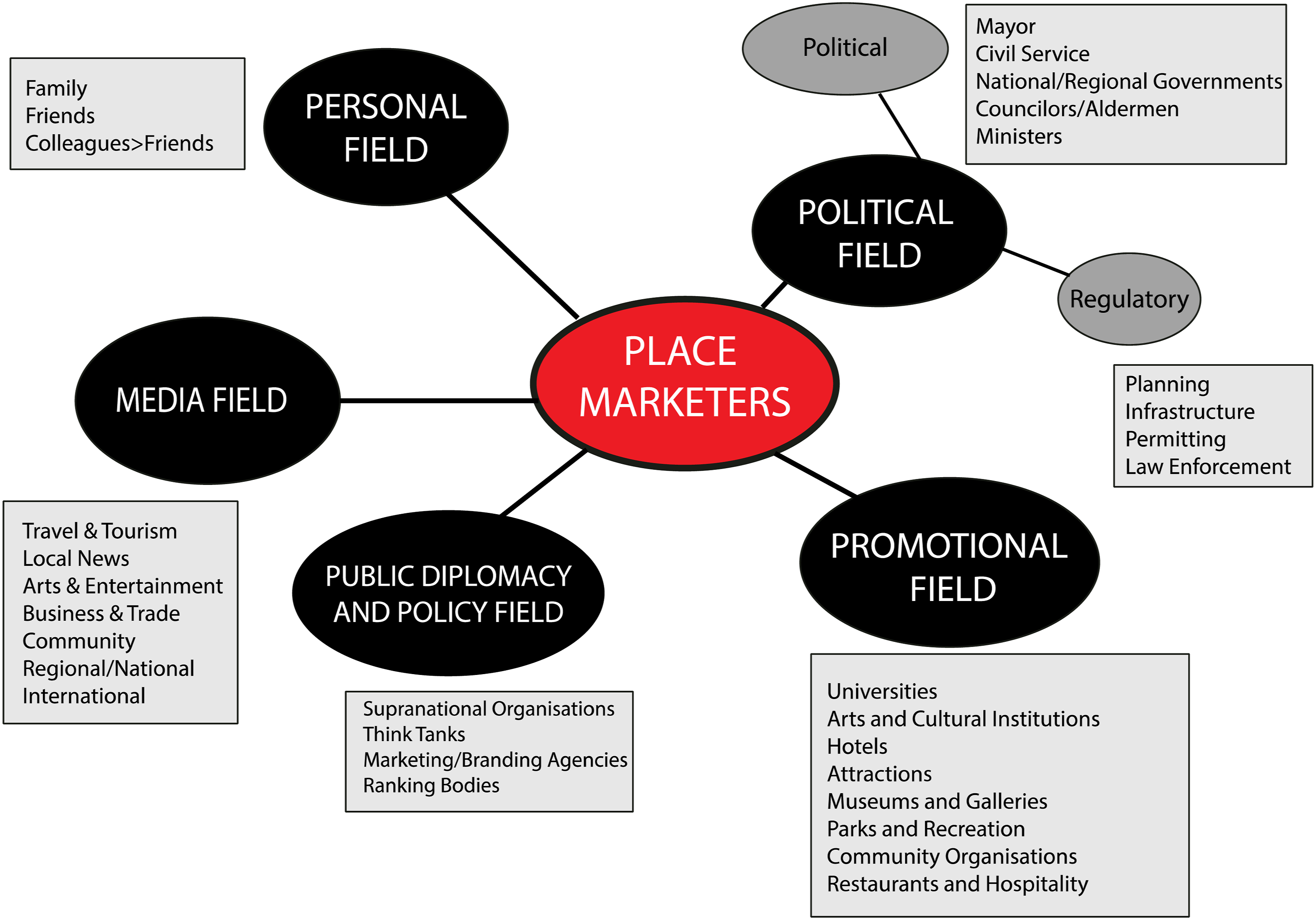
Theorising this work as cultural intermediation helps us to better understand the interconnectedness of relationships maintained by place marketers – whilst some stakeholder networks might not be formally linked to each other, place marketers hold a centralised position among them, acting as ‘boundary-spanners’ that not only bring actors together, but also codify and legitimise strategic narrative norms such as brand identity, brand positioning and brand messaging that are shared and used by stakeholders more broadly. This strengthens their meaning-making function and confers a level of cultural authority that allows them to amplify brand strategies a city’s active promotional efforts. It also means that the stakeholder relationships that are formed should be professionalised to some degree – so that the links don’t leave when the marketer does. They need to transcend the life of the professional – and even though they are personally contingent, there needs to be a way to embed them into processes of engagement for future brand operations. This is what will allow cities to develop a resilience in their place branding processes over the long term.
Conclusions
This paper extends social capital and cultural intermediation theory to identify the fields within which place marketers might establish both informal and formal stakeholder relationships, and the means by which they might assert their legitimacy and influence over those fields. The promotional field is comprised of like-minded individuals who work in marketing in similar organisations, or who have a vested interest in the city’s economic, social and cultural fortunes. These might be PR practitioners or marketing executives at attractions, hospitality and tourism organisations or even other cities. The policy and public diplomacy field is of international importance, with place marketers ensuring that they maintain membership and access to external organisations that contribute latest thinking but also exposure on a global scale. Third, place marketers must be persistent in maintaining active and consistent relationships within the political field, which could straddle both public and private sectors. This might include politicians, industry liaison committees, small and large businesses, universities and tourism organisations. Importantly, the field of local, national and international media acts as a necessary conduit to amplify information and provide vital traditional and digital channels that link all of the above and requires ongoing relationship management. Finally, practitioners draw from their personal relationships – either previously established connections, or through the transference of professional relationships into more informal ones that become unofficial, but crucial occupations resources.
The identification and categorisation of these fields acts as a strategic backdrop from which practitioners actively manage their stakeholder relationships. Understanding the dynamic and transient nature of social capital, they undergo a prolonged, consistent and managed effort to ‘see and be seen’, through a series of formal and informal mechanisms designed to keep their relationships relevant. This is a credibility-building exercise; the concept of city branding is still largely new and misunderstood in political circles, and practitioners continue to see fighting for legitimacy as an ongoing concern (Moilanen, 2015). However once established, they are able to deftly convert their hard-won social capital into cultural capital, which affords a level of symbolic power over cultural discourse and narrative norms. This process is an area ripe for new research.
The theoretical framework of cultural intermediation and social capital opens several avenues of further theoretical exploration but is also constrained by limitations. Utilising an interpretivist, phenomenological lens that centralises the lived experience of informants characteristically embeds personal bias into the mix and could be seen as an unreliable and unquantifiable record of events. Further, cultural intermediaries are, by their nature, difficult to study, first because they are skilled in reflexive and performative ‘smooth talk as meaning-makers and image-builders’, and secondly because what they are describing doesn’t necessarily look and sound like work (Kuipers, 2014: 55). Much more could be understood in terms of the complex web of diverse actors, and the specific processes and dynamics that occur between them in a collective construction of a place brand – especially including outcomes and measured results (Dinnie, 2018). A case study approach might be useful here, to apply the theory in practice – especially in the event of a crisis, when stores of social capital and the interactions it encompasses could be put to the test. Finally, whilst this study utilised an extensive data set across 19 cities, it nonetheless took a common, generalised approach to the profession of place marketing, as it is nearly impossible to find informants with identical job descriptions and professional remits, especially in disparate geographic contexts. While the scale and scope of this study pointed to theoretical saturation, a deeper more context-specific application of this theory might yield different results (Loacker and Sullivan, 2016). However, by centralising the people and the processes that occur in place branding, we can begin to better understand the socio-political power that the profession might hold and prioritise further research into its particularities.
Footnotes
Declaration of conflicting interests
The author(s) declared no potential conflicts of interest with respect to the research, authorship, and/or publication of this article.
Funding
The author(s) received no financial support for the research, authorship, and/or publication of this article.
