




Abstract
This study examines how consumers coordinate temporary access of their private homes in a home swapping market in which different guiding principles compete. Drawing on the theory of justification, we find consumers strategically use objects to stabilise the different economies of worth that govern this access-based marketplace. Three economies of worth, domestic, civic, and market, are stabilised in homes signalling to visitors how to coordinate their use of the home. Moreover, consumers facilitate the coexistence of all three economies of worth by managing justifiable and object-led compromises. Our findings contribute to understanding that the peaceful coexistence of economies of worth occurs through stabilising objects that guide both coordination and compromises. Our findings extend the current explanations of why markets with plural institutional logics are often conflictual, fragile, and unstable. We also propose theoretical and managerial implications on the strategic use of objects to support a diverse but stable market.
Market systems are often guided by shared institutional logics that are used to justify how the markets should work. Institutional logics are socially constructed systems of beliefs, values, and expectations that help stabilise and reproduce markets (Huff et al., 2021; Humphreys, 2010). Scaraboto and Figueiredo (2022: 30) find that the coexistence of different logics contributes to market instability because market actors often struggle to “find a common frame”. When confronted with plural logics of exchange, market actors may face conflict and be unable to reach agreement (Finch and Geiger, 2010; Scaraboto, 2015). But how consumers navigate the coexistence of plural logics is important for understanding the process by which acceptable agreements are negotiated, and markets stabilise (Fortezza et al., 2022; Lindberg and Mossberg, 2019).
In this study, we turn to the French Convention Theory tradition, specifically, Boltanski and Thévenot’s (2006) theory of justification, as a useful approach for understanding how actors coordinate agreements and resolve conflicts (cf. Bridson et al., 2017; Varman et al., 2022). Although the coexistence of plural logics is well explained at a market level, we know less about how actors coordinate more local and bounded agreements across different situations (Thévenot, 2001). Convention theory highlights the uncertainty of coordination and how actors work to reach agreements by mobilising different conventions or common goods as a “shared frame of interpretation, evaluation and valuation for the worth of goods, objects and persons” (Diaz-Bone, 2016: 49). Tradition, competitiveness, or collective welfare are examples of common goods (Jagd, 2011). Unlike institutional theory, the theory of justifications is “much more open to uncertainty, critical tensions and creative arrangements than the idea of stabilized and reproductive orders” (Thévenot, 2001: 406). This theory assumes that conflicts are inevitable, but market actors are competent to find a common good and work out acceptable agreements (Boltanski and Thévenot, 2006).
Drawing upon this theory, we studied home swapping, which is an access-based form of consumption in which consumers temporarily derive value from consuming without ownership (Bardhi and Eckhardt, 2012). Home swapping services facilitate temporary access to more than 400,000 homes in over 150 countries on different online platforms (ShareTraveler, 2019). An access-based market of homes could be a challenging context for coordinating acceptable agreements because homes are valuable and filled with personal possessions providing opportunities for conflict over how they are used. Homes are not usually shared with strangers (Csikszentmihalyi and Rochberg-Halton, 1981). Family members even set boundaries on sharing with one another to protect their cherished possessions (Epp and Price, 2010). However, unlike conflicts found in some access-based market (cf. Bardhi and Eckhardt, 2012; Barbe and Hussler, 2019), home swappers access everything from cars and kitchens to beds and pets.
We specifically ask: how do consumers with competing ideas of the common good coordinate access to personal possessions? Using in-depth interviews, netnographic observations, and secondary data, we employ Boltanski and Thévenot’s (2006) theory of justification to understand how consumers flexibly coordinate and make compromises to prevent major conflicts.
Plural institutional logics in access-based markets
Consumers participate in access-based marketplaces driven by different motivations, expectations, and evaluative criteria (cf. Benoit et al., 2017; Lawson et al., 2016; Schor and Vallas, 2021). When consuming cultural products in art galleries, art owners and consumers have different priorities yet experience little conflict on how to access art. Compared to art owners who value preserving the artwork, consumers value the temporary enjoyment of viewing art and thus feel little responsibility other than pleasure (Chen, 2009). In contrast, car sharing is an example in which conflict exists when consumers jointly access products. For this system to work, “Zipcar users have to rely on one another to bring the cars back on time, clean up the cars, and fill up the gas tank” (Bardhi and Eckhardt, 2012: 891). However, conflict over how the car is accessed occurs when consumers mistreat the cars diminishing value for others; these consumers justify their behaviour using a market logic of self-interest rather than the community logics espoused by the company. These contradictory outcomes thus suggest opportunities exist to expand our theoretical understanding of how agreements of access are coordinated among consumers.
We also do not know how consumers navigate potential conflicts in access-based markets when access has more demands. In local toy libraries, little conflict arises even though all borrowed toys must be maintained, cleaned, repaired, and returned by members who have different values (Ozanne and Ballantine, 2010). Somehow this access-based market sustains a common civic logic among different families. Similarly, in the case of public art, different understandings and ideologies for consuming public places can coexist and even promote “meaningful dialogues” about the nature of democracy and civic engagement (Visconti et al., 2010: 526). These dialogues involve both conflict and cooperation between artists and residents but converge towards an “aesthetic commons that invite belonging and participation” (526). These findings hint that access-based markets work when consumers find some common ground and follow basic rules of governance to access the cars, the art, the toys, the public spaces, or, in our case, the private homes.
Although coordination is easier when consumers agree on a dominant logic, more recent research reveals that plural logics are common leading to conflicts over opposing ideas for actions. Scaraboto (2015) explains how market actors coordinate by integrating competing logics. In the case of the geocaching network, the producer introduces a complex pricing system that integrates market and gift logics. This integration creates “a zone of indeterminacy” that minimises consumers questioning the legitimacy of the hybrid logics that sustains the access system (169). Similarly, Scaraboto and Figueiredo (2022) find that two competing logics of community and market impose challenges for consumers to co-create valued consumption experiences. This research highlights important insights on how consumers collectively adopt new strategies to overcome conflicts over the appropriateness of either the logic of the market or the community. Thus, extant research finds that plural logics do not always converge into a shared understanding but can also integrate.
The institutional theory perspective offers insights on how conflicts emerge and are resolved, but it risks oversimplifying how market actors manage plural logics to maintain or change institutions (Cloutier and Langley, 2013). Institutional theory tends to place more focus on macro-level dynamics and whether conflicts are fully resolved through a dominant logic or an integration of logics (Dansou and Langley, 2012). Yet institutions and markets are full of uncertainties and compromises (Lawrence et al., 2011), and more work is needed to explore how individual consumers constantly negotiate these plural logics and even inspire changes (Cloutier et al., 2017; Jagd, 2011). Next, we explain how convention theory offers a novel theoretical lens to understand these processes drawing on justification and critique to explain how opposing ideas for action are managed.
Convention theory
Convention theory proposes that normative principles guide individuals’ behaviours and justify the broader system (Dansou and Langley, 2012). Like institutional logics, conventions are common principles that signal the appropriateness of actions. But convention theory offers a “fine-grained understanding of how social actors manage to coordinate their actions” (Cloutier et al., 2017: 6). This theory focuses on the dynamics of coordination through exploring conflicts, uncertainty, and creative solutions. It assumes that many possible ways of coordinating exist, and the appropriateness of a convention is always up for critique (Jagd, 2011; Varman et al., 2022). Compared to institutional logics, convention theory is more pragmatic as conventions are not “pure standards” but “incomplete” resources for actors to flexibly mobilise across situations (Diaz-Bone, 2016: 60). Thus, convention theory emphasises how competent actors work toward acceptable agreements (Dansou and Langley, 2012; Diaz-Bone, 2016).
Theory of justification
Boltanski and Thévenot’s (2006) theory of justification explores convention-based coordination aiming to understand how people work together amid the fragility and disorder of social life (Jagd, 2004). The theory of justification explains how individuals coordinate agreements and manage conflicts among different common goods thereby enabling common action (Boltanski and Thévenot, 2006; Patriotta et al., 2011). In this process, actors respond to conflicts and are “capable of appraising the situation they find themselves in critically and of evoking, and even advocating for, a variety of principles upon which collective actions must be organized” (Cloutier et al., 2017: 12). Although this framework shares similarities with institutional theory, it offers an original perspective on how actors do the work of justifying or critiquing the use of common goods in different situations (Jagd, 2011). Thus, the theory of justification offers a deeper understanding of rhetorical and discursive elements of how actors work out varying degree of agreements and conflicts (Cloutier and Langley, 2013).
This theory argues that conflicts in social life are often tests. In these moments, actors draw on a finite set of higher-ordered principles called “economies of worth” (Boltanski and Thévenot, 2006). Each economy of worth is guided by a common good that actors use to value, justify, and critique its appropriateness in different situations against another actor’s application of a different economy. Therefore, actors do not automatically become trapped in conflict and legitimacy repair as they work to maintain institutions (Patriotta et al., 2011). Instead, they can coordinate agreements and manage conflicts by drawing from a common repertoire of moral alternatives to justify for a common good (Dodier, 1993; Thévenot, 2001).
Six economies of worth.
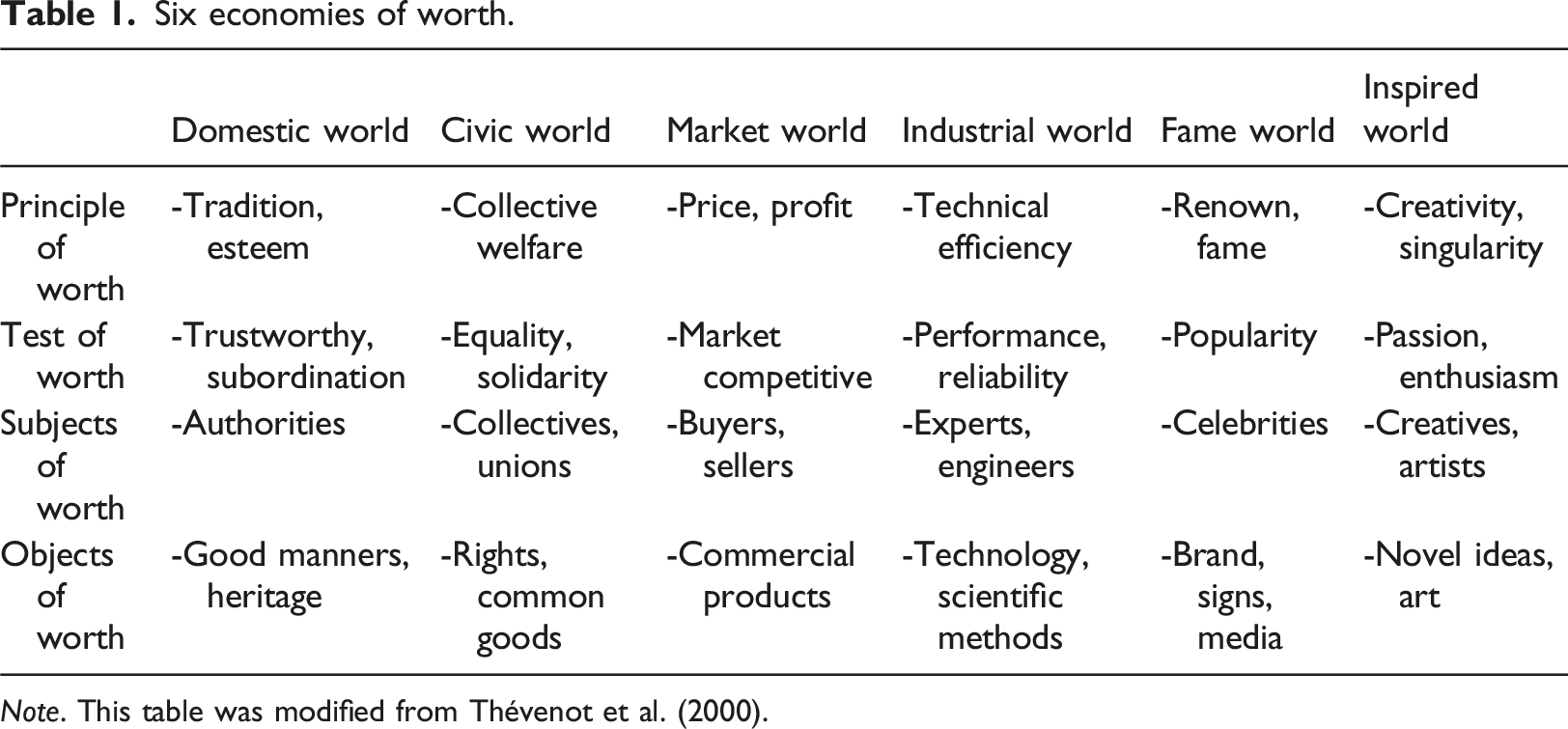
Note. This table was modified from Thévenot et al. (2000).
Social actors often mobilise different economies of worth to coordinate agreements (Jagd, 2011). For example, in conflicts over opposing ways to use the family car, one sibling may claim it is her turn, another sibling may claim he is helping do family errands, and a parent may claim that the siblings should drive together and combine trips for efficiency. The common goods, such as collective welfare and efficiency, are justifiable because they are widely known in society even if they may compete (Patriotta et al., 2011).
Second, social actors test the worth of both people (subjects) and objects against the specific common good (Boltanski and Thévenot, 2006). Tests of worth determine who and what is valued in an economy. Objects are particularly important because they are evidence of an economy and create a concrete and visible order out of uncertainty. Objects “are rules, diplomas, codes, tools, buildings, machines, or take some other form” (Boltanski and Thévenot, 2006: 142). Compared to institutional logics in which objects are “analytically inactive and invisible”, economies of worth highlight “the involvement of both human beings and objects” (Boltanski and Thévenot 2006: 128).
Objects can help coordinate common understandings and agreements, such as in the example of co-living in which a communal kitchen facilitates comradery or personal closets preserve privacy (Fortezza et al., 2022). Objects also play important roles in reconciling conflicts by guiding compromises (Daudigeos and Valiorgue, 2018). For example, an heirloom is an object that makes demands for the common good of tradition. Thus, economies of worth consider “how persons confront uncertainty by making use of objects to establish orders and, conversely, how they consolidate objects by attaching them to the orders constructed” (Boltanski and Thévenot, 2006: 17).
Table 1 specifies for each economy the principle of worth, the test of worth, and the worthy subjects and objects. Boltanski and Thévenot (2006) derived these economies of worth inductively from empirical studies of people’s everyday justifications; however, they support the economies deductively by drawing on seminal theorists in political and social philosophy. They claim that these common goods are widely known in society but that social actors draw on them indirectly and in fragments (Dodier, 1993). We summarise the three economies of worth that arose in our findings.
Domestic economy of worth
The domestic world is guided by the common good of tradition (Boltanski and Thévenot, 2006); this common good is about ensuring continuity of tradition, being respectful, and preserving the existing social hierarchy. In the domestic world, actors and their actions are evaluated through the test of being trustworthy and fulfilling duty. Authorities are worthy subjects when they act responsibly for subordinates, such as parents caring for their children (Bossuet, 1709/1990). Subordinates, such as children, are less worthy subjects who are expected to conform and avoid conflicts (Boltanski and Thévenot, 2006). At home, parents teach children about proper manners and joint obligations. Objects of worth are ancestral and cherished possessions that affirm tradition.
Civic economy of worth
The civic world is guided by the common good of the collective welfare, which promotes equality, so each person is “subject to the same justice” (Boltanski and Thévenot, 2006: 185). This makes “the King a citizen like other people” through the social contract (Rousseau, 1762/1994 as cited by Boltanski and Thévenot, 2006: 108). Subjects are worthy when they express the general will and interests of the collective. Worthy subjects are unions, collectives, and communities, as individualism jeopardises the collective welfare. The general will is enacted in practices of meetings, negotiations, and agreements that support “common interests” (192). Worthy objects are common goods, such as the dining table that serves different family purposes (Epp and Price, 2008).
Market economy of worth
The market world is guided by the common good of the exchange of goods and services to maximise profit (Smith, 1759/1976). The coordination of buyers and sellers is tested through competition and bargaining governed by “an evaluation of market worth, the price” (Boltanski and Thévenot, 2006: 196). More worthy subjects are differentiated from less worthy ones through the accumulation of wealth. Worthy objects include are those that are more “desirable, salable, and marketable” (197). The priority is to obtain “a strong position in a market”, and self-interest is prioritised over empathy toward others (196).
Justification, critique, and compromise in plural economies of worth
The theory of justification explains how actors coordinate agreements when faced with plural economies of worth by drawing upon the “complex processes involved in justification, critique and attempts to produce compromises” (Jagd, 2011: 355). Actors debate which economy of worth is most appropriate using two processes. First, critiques are judgements about the inappropriateness of an economy or if an action violates the understanding of how the economy should work. Second, justifications are arguments supporting the appropriateness of an economy or advancing one’s understanding of how the economy should work. Critiques and justifications keep unfolding until the arguments and objects deployed as evidence of worth are resolved. However, critiques and justifications are never completely resolved as new critiques can always emerge in response to new justifications and vice versa (Dansou and Langley, 2012).
Thus, Boltanski and Thévenot (2006) argue that conflicts within and across plural economies of worth are inevitable, and compromises are needed because no single common good exists upon which to appeal. This leads us to wonder how these unavoidable conflicts might be better managed. Moreover, can several economies of worth coexist or is competition among them inescapable? Empirical studies offer support that coexistence is possible but unstable. For example, Bridson and colleagues (2017) find when musicians popularise their work for mass appeal based on a market economy, they are critiqued by fans for the loss of originality based on an inspired economy (see Table 1). This compromise to support the coexistence of market and inspired economies is critiqued as a loss of originality.
Empirical studies also support that compromises are subjective and tend to be unstable. To continue this example, fans accept a compromise only if they perceive the musician holds an anti-commercial ethos. Thus, the compromise between an inspired economy and market economy is dismissed if the musician is perceived to be profit-driven (Bridson et al., 2017). Similarly, Lindberg and Mossberg (2019) reveal how compromises are negotiated during social gatherings to temporarily reduce tensions within a climbing community. But the community is still threatened by competing economies of worth, such as when climbing as a form of social escape conflicts with climbing as an athletic competition. Thus, compromises are unstable because they “depend on the goodwill of the involved parties who can question the appropriateness of a given arrangement that favours the other involved order” (127).
However, in access-based markets, the coexistence of several economies of worth may create a broader and more appealing market for consumers if different common goods can peacefully coexist. These studies highlight the important role of objects, which may point to a possible explanation. In the study of musicians, consumers judge music as an object that supports or rejects a compromise between the market and inspired economy of worth (Bridson et al., 2017). In another example, domestic consumption objects are employed by subaltern migrants to reinforce a domestic economy of worth when overseas (Sreekumar and Varman 2019). Migrants use their traditions (e.g., consume their home food and watch the same television programs) to justify the domestic economy of worth and critique the market economy. However, returned migrants use conspicuous consumer goods from the same market economy of worth to enhance their domestic economy.
Understanding the role of objects may offer some insights into how to stabilise plural economies. A potential way forward is to better understand how social actors can “rely on things, objects, and devices that are used as stable preferences for carrying out tests and trials” (Boltanski and Chiapello, 1999: 367). Specifically, we explore object-led compromises, which we define as the coexistence of multiple common goods that are stabilised by specific arrangements and uses of objects. We study the home swapping market to explain how consumers manage competing common goods in a well-functioning market with little organisational mediation. Thus, we seek to understand how plural economies of worth coexist and govern agreements in markets without major conflicts by looking at how common good is stabilised in objects (Jagd, 2011).
Methodology
Research context and overview
We studied the home swapping market that facilitates temporary access to consumers’ homes. It is an interesting context because, although plural economies of worth exist, consumers experience few problems in managing swapping their homes. In fact, a global survey finds that 92% of swappers are satisfied, 80% are repeat users, and most owners trust their partners even though they are from different countries and cultures (Forno and Garibaldi, 2015). One might conjecture that this market is governed by a detailed contract, but members rarely use contracts. Or one might assume that a centralised authority guides this process; however, home swapping organisations provide only general suggestions and rarely intervene. Thus, somehow this access-based market coordinates home swaps with little conflict, which is unlike other markets in which competing logics cause conflict and instability (Barbe and Hussler, 2019; Finch and Geiger, 2010).
This explorative qualitative study involved two phases. During the first phase, secondary data on the alternative lodging market was studied to develop the general research question. Five initial interviews were conducted to understand how consumers use different online lodging platforms. During the second phase, the first author carried out nonparticipatory observations in two online groups of home swappers. As the problem of social coordination emerged, we conducted 26 more interviews and collected naturally occurring materials, home instruction books, and photographs. We received approval for the study by a university ethics committee.
Sampling and researcher positionality
We conducted five preliminary interviews with informants across different lodging platforms and the interesting problem of coordinating access arose. We focused subsequent interviews on home swapping using a snowball sampling strategy across personal blogs and online groups. We sampled users who traded primary and secondary homes and swapped a variety of homes. Theory guided later sampling, as we sampled on experience ranging from first-time to veteran swappers. Our informants were middle-class homeowners who are representative of consumers in this market (Forno and Garibaldi, 2015).
Informants and their preferred economy of worth.
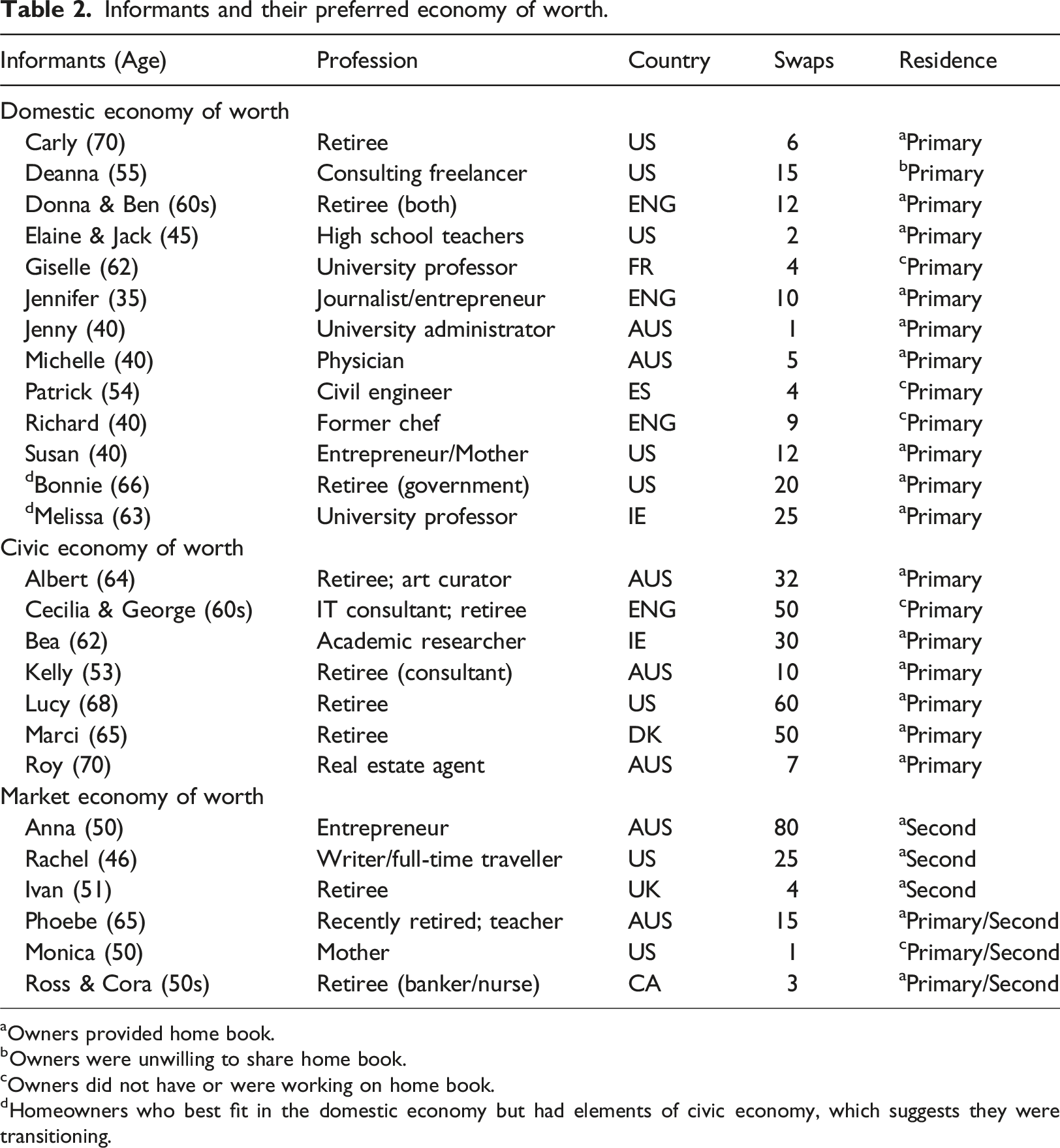
aOwners provided home book.
bOwners were unwilling to share home book.
cOwners did not have or were working on home book.
dHomeowners who best fit in the domestic economy but had elements of civic economy, which suggests they were transitioning.
Data collection
Most informants swapped their primary home, and we conducted all interviews with informants in their home (except one at a workplace). The interviews started with an informal discussion about travel. Then the first author asked the informant to give a home tour, virtually or in person, during which field notes were taken. These interviews focused more on the perspective of homeowners exploring their general approaches to coordinating agreements and their past experiences. We conducted 26 interviews over Skype or telephone because most informants were international. We used the same interview protocol for all interviews, though the in-person interviews included more detailed observations. Interviews range from 50 min to 4 hours in length.
We also collected and analysed naturally occurring materials. Home books were created by homeowners as guides to their home and local areas. We collected and coded 20 home books, which ranged from two to 35 pages. Some homeowners also shared photos of their past home swaps. In total, we collected 434 photos that served as supplemental visual aids in analysing and understanding interview transcripts.
Data analysis
We transcribed and coded all interviews. The data analysis was iterative because we used emergent findings from initial interviews to inform analysis at subsequent stages. We conducted an intratextual analysis to understand personal narratives within each interview using all forms of relevant data. Then, we conducted an intertextual analysis by comparing across all informants identifying broader themes. Our analysis was hermeneutical, and we continuously refined emergent codes and compared them with theory until the interpretation stabilised (Thompson, 1997).
Stabilising three economies of worth
Stabilising economies of worth in access-based market.
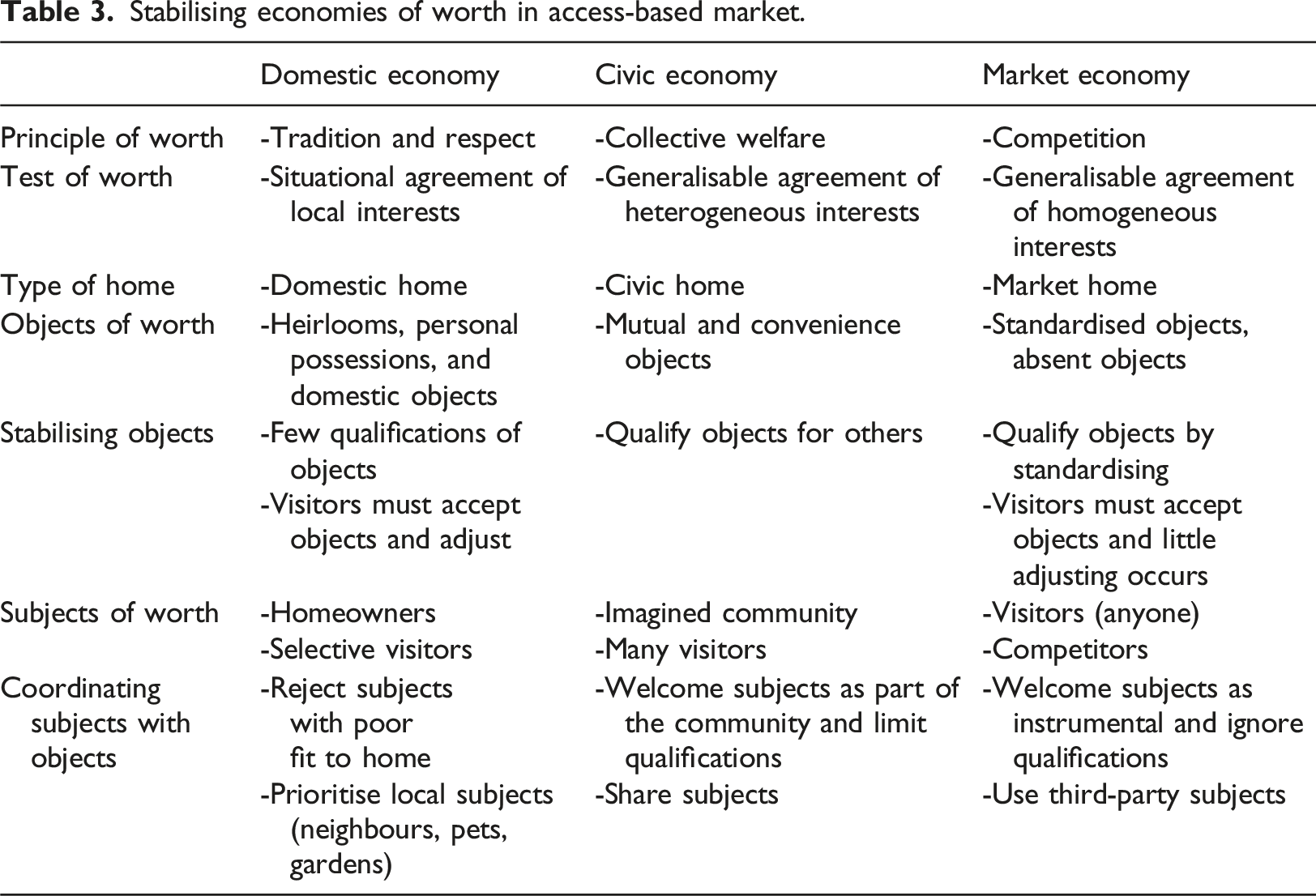
Coordinating the domestic economy of worth
The principle of worth and test
The domestic world is based on a common good of tradition to govern coordination. Domestic swappers prioritise a situational accommodation of local interests in which the homeowners’ interests are most important. Deanna succinctly states: “This is my home and we got to respect it. It is just how it is”. Michelle explains that the same common good holds as visitors: “This home is their home, a place they live, and we cannot change it”.
Stabilising objects
Domestic homeowners stabilise a domestic economy of objects defined by traditions. They defend the worthiness of traditional and personal objects by appealing to the object’s history, personal meanings, or importance. For example, Bonnie’s home book demands that visitors respect the history of her older home’s “original red Georgia pine floor” (Bonnie) (see Figure 1). Worthy objects identified in home books include “irreplaceable family photos” and “100-year-old artwork by the grandmother” (Michelle), as well as “our music instruments” (Melissa) and “antique wood furniture” (Bonnie). Domestic economy: Worthy objects demand respect.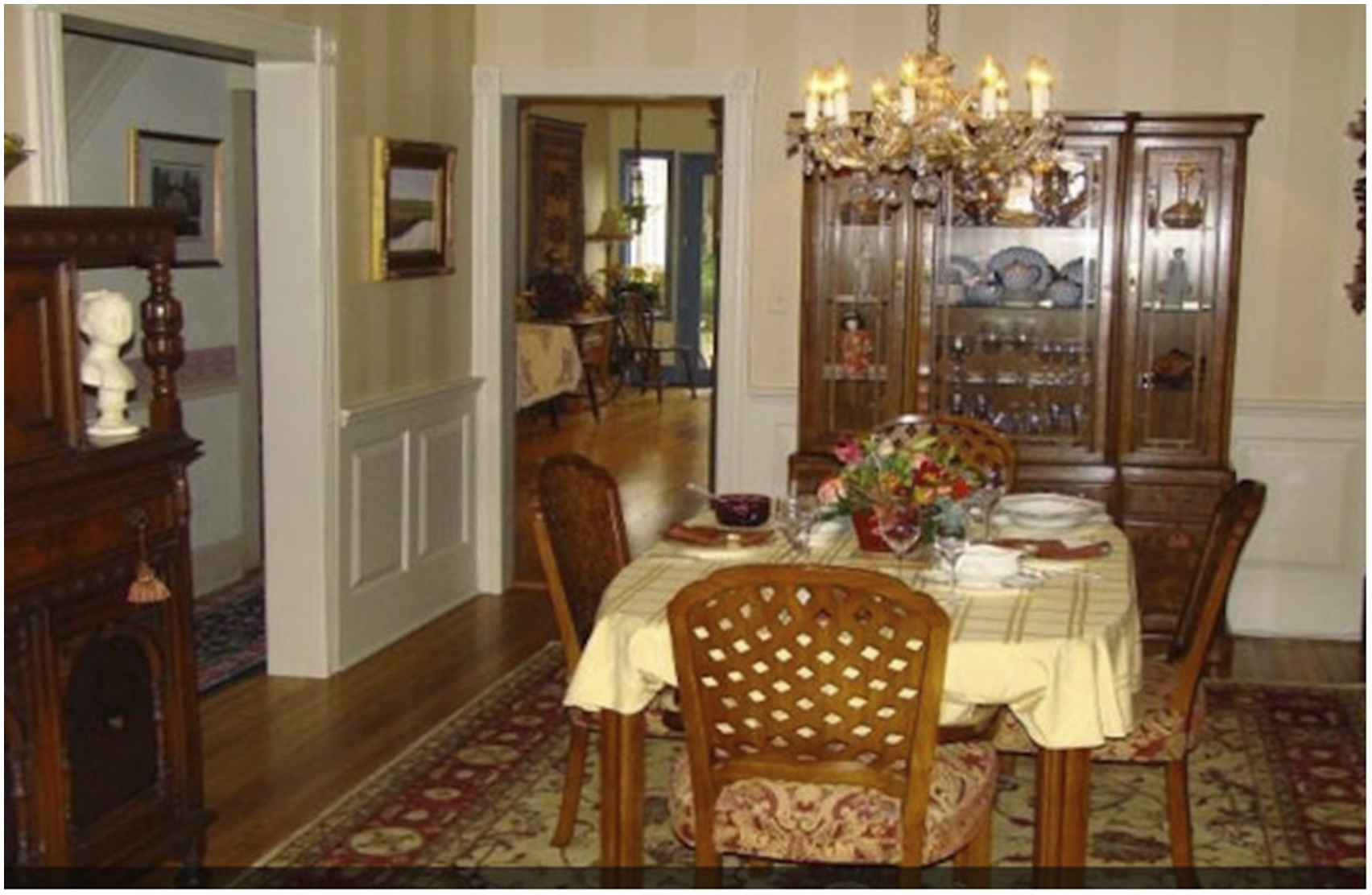
These objects are central to stabilising domestic economies of worth, as is evidenced in Jenny’s pride over her home and personal objects: Everyone who comes in says, “Oh it’s a beautiful house. It’s in good condition, it’s been renovated, it doesn’t look dodgy…”. You know, I might sound I’m bragging here, but it’s probably a little bit tasteful compared to some. This is good quality stuff (pointing to the dining table). It’s not just some crappy old furniture that someone just threw together.
Jenny stresses that her home is worthy because of the history and “character” of her 100-year-old home, along with her well-loved artwork, tasteful furniture, and treasured family antiques. Visitors also affirm the value of domestic homes and their features, including “modern furniture” (Bonnie), “a nicely renovated kitchen” (Deanna), “good air conditioning” (Giselle), or “lots of sunlight” (Carly). Although Elaine’s home is full of clutter, nevertheless, she still expects respect (see Figure 2). She feels a little guilty but defends the clutter as essential to her personal comfort: “People may have one picture and two books on the bookshelves. That will be enough for them. [For me] it wasn’t cosy”. Similarly, when Albert stayed in a university student’s modest apartment, he respected that she lived with few possessions or comforts. Domestic economy: Personal books as clutter.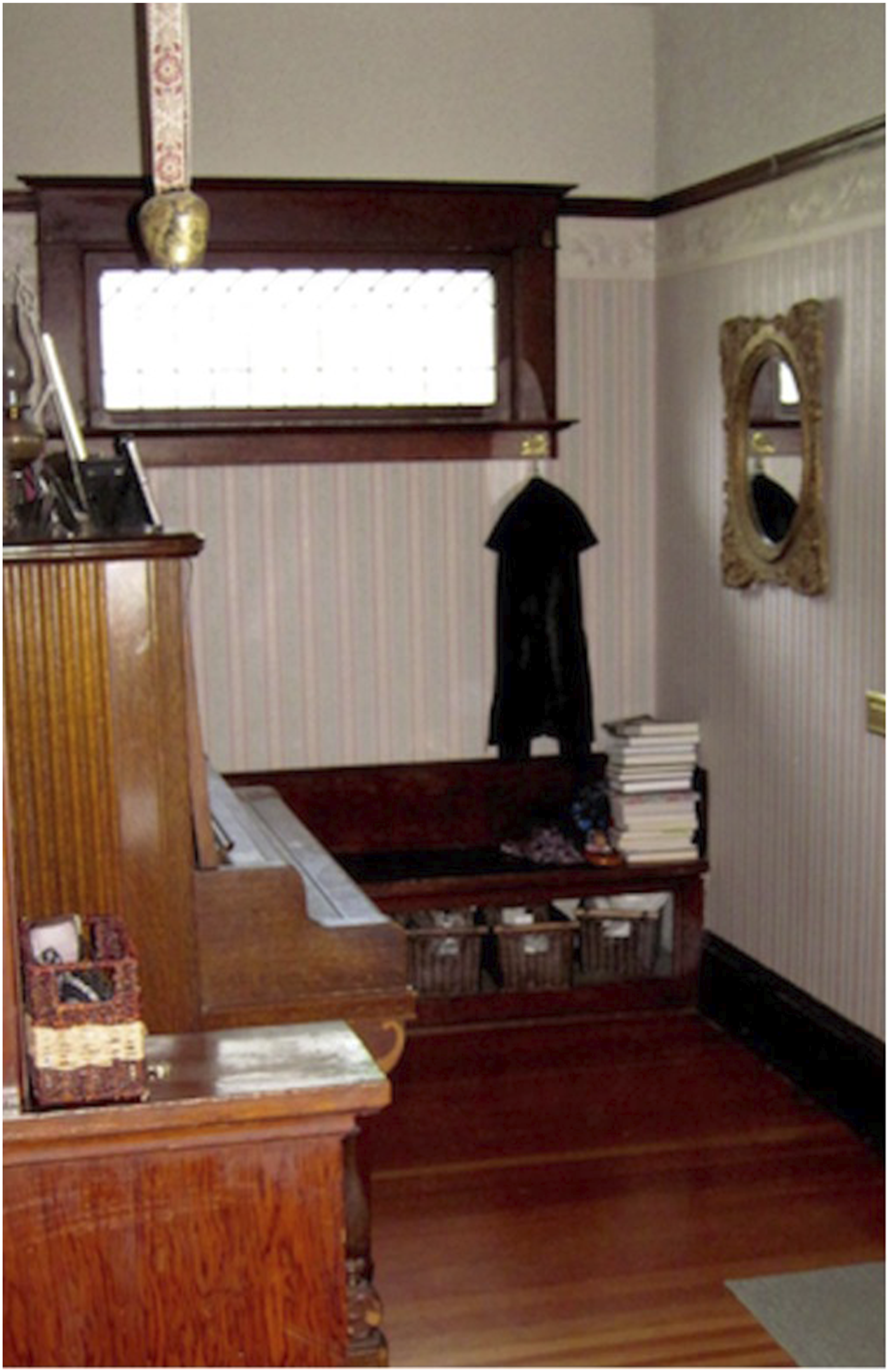
Coordinating subjects with objects
In this economy, homeowners are considered worthier than visitors based on the common good of tradition and authority over the home that they own. Domestic homeowners actively coordinate visitors who can work with their homes and preserve their domestic order. They qualify subjects who are “like-minded” and with “the same standards” (Jennifer). We even found one subgroup of swappers (Giselle, Carly, Jennifer, and Monica) who established their own circle of qualified visitors. Jennifer swapped with Carly who then vouched for Giselle and so forth; “You should swap with my friends like Giselle in Paris. They’re fine. They’re good”.
Domestic homeowners avoid conflict through disqualifying visitors who are a poor fit with their home. Homes filled with traditional and personal possessions are more likely to generate conflict over how they are used. Elaine and Jack refuse families with young children because “we have a lot of nice things” and “our house isn’t kid-proof”, thus kids do not coordinate with their home. Jennifer states that her home has a “very steep little set of stairs” that “is not great for older people or anyone with a bit of a disability”. Thus, older bodies do not coordinate with steep stairs. Instead, swappers like Donna and Ben coordinate visitors who fit well with their home and organise “grandparent exchanges” for similar home amenities (i.e. child-friendly).
Domestic homeowners also prioritise their local subjects. They ask visitors to be mindful of their neighbours, by avoiding loud noises, respecting shared laundry spaces, and taking care of trash (“Please do not use our neighbour’s trash can that is in the alley” [Bonnie’s home book]). They even make caring for local subjects, such as their pets, a prerequisite for swapping homes (“Definitely have to make sure they are on board feeding the cat” [Elaine and Jack]). Bonnie stresses care of her “big backyard garden” and has 30 separate garden instructions in her home book. Other domestic homeowners also expect visitors to look after herbs and pots (Jenny), flowers and lawn (Donna and Ben), and even compost that needs tending to stay alive (Michelle). In the domestic economy, visitors are only worthy if they coordinate with and care for prioritised local subjects.
Coordinating the civic economy of worth
The principle of worth and test
The civic world is based on a common good of collective welfare or mutuality to govern coordination (see Table 3). Civic swappers work toward generalisable agreement that balances heterogeneous interests of both homeowners and visitors. They stress that coordinating home swaps relies on “mutual trust” (Cecilia and George) and “you are always depending on two families” (Marci) for a positive experience. Civic owners emphasise “a two-way process” (Bea) of coordination in which mutual adjustments are expected among all objects and subjects including homeowners, homes, and visitors.
Stabilising objects
Civic swappers stabilise a civic economy of mutuality and convenience. Thus, objects of worth are those that work for both the owner and visitor. Civic swappers reason that “we [have] never been precious about our house” (Cecilia and George). Thus, worthy objects are those that make the home “nice and welcoming for people” (Roy) and offer “practical use for people who stay” (Albert). Worthy items are convenience objects such as “tea and coffee, some milk, bread and butter especially (when) visitors arrive late” (Marci) (see Figure 3), transportation and parking cards (Bea), or “a little toiletry pack…. If they forgot, this sort of stuff is there for them” (Kelly). Although other homeowners may provide items of convenience, it is not a priority as it is in civic economies. Civic economy: Worthy objects of mutuality.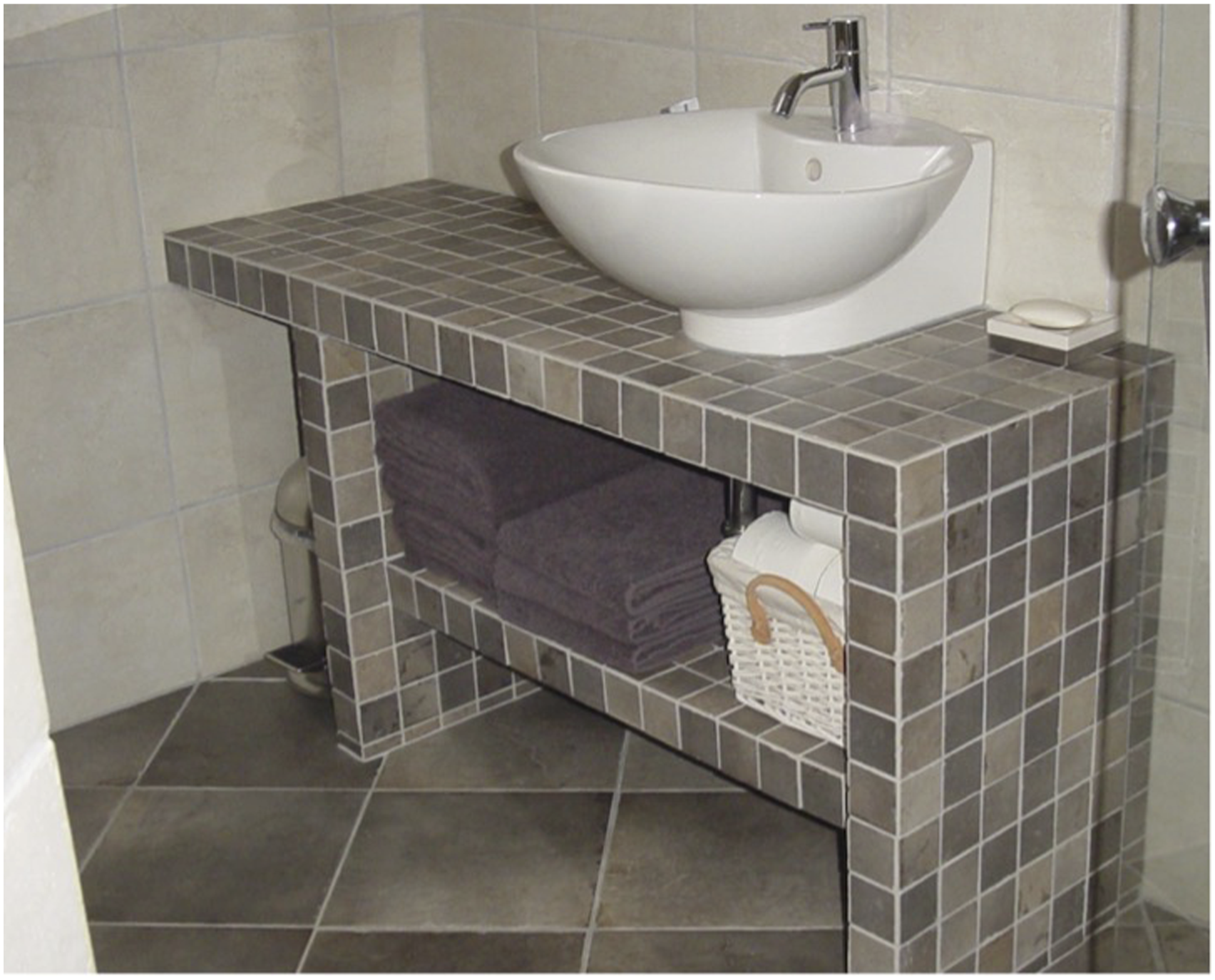
Civic homeowners work hard to make their homes convenient by putting themselves in their visitor’s shoes. Civic swappers share mutually worthy objects, such as their ensuite master bedroom—rather than putting visitors in the guest room (Kelly). They share the superior car because it has “better air conditioning and tons of room if you want to go away on the weekends” (Roy). They will even share their clothing: “If you need a sweater or something, just grab one of mine” (Lucy’s home book). These homeowners take responsibility to preserve their valued objects with little pressure on visitors: “So you do put those of things out of way. [If something happens] so they are not embarrassed [and] I’m not gonna’ be heartbroken or disappointed” (Albert).
Coordinating subjects with objects
In this civic home, the imagined community is the worthy subject. Marci ensures that her home supports “a general interest” (Boltanski and Thévenot, 2006: 187): “You must look at your house like you were a stranger. If there is something special, you tell them. [For a problem,] it’s better to fix it, so it’s not a problem”. The civic swappers are the most responsive to the different needs of visitors. Problematic objects in civic homes are fixed or removed to minimise difficulties for visitors, unlike objects in domestic homes in which care is demanded.
Compared with domestic owners who emphasise visitors’ fit, civic homeowners will coordinate with anyone who is “trusting” (Roy), is “generous, easy going” (Kelly), and has an “openness and willingness to share” and “enjoyment of differences” (Bea). Civic owners will coordinate access even at great personal sacrifices. For example, Lucy postponed an unexpected surgery so she could meet her obligation to swap homes with a family who would have lost their airfare if she cancelled. Civic swappers sometimes offer accommodations without reciprocation. When Kelly queried an older French couple to swap homes, they were physically unable to manage the long journey to Australia; instead, they invited her to stay in their home when they were on holiday. These acts of generosity are common among civic swappers and epitomise an informal system governed by the common good of collective welfare.
Civic homeowners are more likely to share their worthy subjects, such as their families’ and neighbours’ contact information, to coordinate visitors’ stay as “comfortable” and problem free (Roy). They ask their family members or neighbours to welcome visitors and familiarise them with the neighbourhood (Albert, Roy, Cecilia, and George) or offer friends who speak the visitor’s language. Civic homeowners commonly share extensive lists of trusted service providers, from pharmacists and doctors to electricians and plumbers (Joan; online community) all toward better coordinating subjects’ visit in their home.
Coordinating the market economy of worth
The principle of worth and test
The market economy is based on a common good of competition to govern coordination (see Table 3). Market swappers prioritise a generalisable agreement to satisfy the homogeneous interests of all visitors. They value the economic benefits of doing home swaps: “it’s totally free, that’s the number one thing” (Anna). Because “it is free, it allows us to stay in an area much longer” (Ross and Cora).
Stabilising objects
It is worth noting that all the market owners have second homes that stabilise a market economy by maximising opportunities for home swaps (see Table 2 under residence). Moreover, market homes are stabilised by using standardised objects with few personal meanings. These homes are qualified as worthy if they provide “all the basic things” that visitors need (Anna). Phoebe’s second home is pragmatically curated to provide essential utilities, such as providing bunk beds and a sleeper sofa so she can host larger families. She decorated with standard IKEA furniture and “tried not to clutter it”. They focus on providing standard utilities to be attractive to all visitors, such as using neutral paint colours and inexpensive dishware (see Figure 4). Some owners of market homes do provide personalised objects such as leaving a list of favourite local restaurants for visitors (Anna) or stocking kitchen staples (Ivan). However, market homes are mainly structured by a market economy using basic objects to minimise conflicts and attractive locations to maximise opportunities to swap. Market economy: Worthy objects are standardised.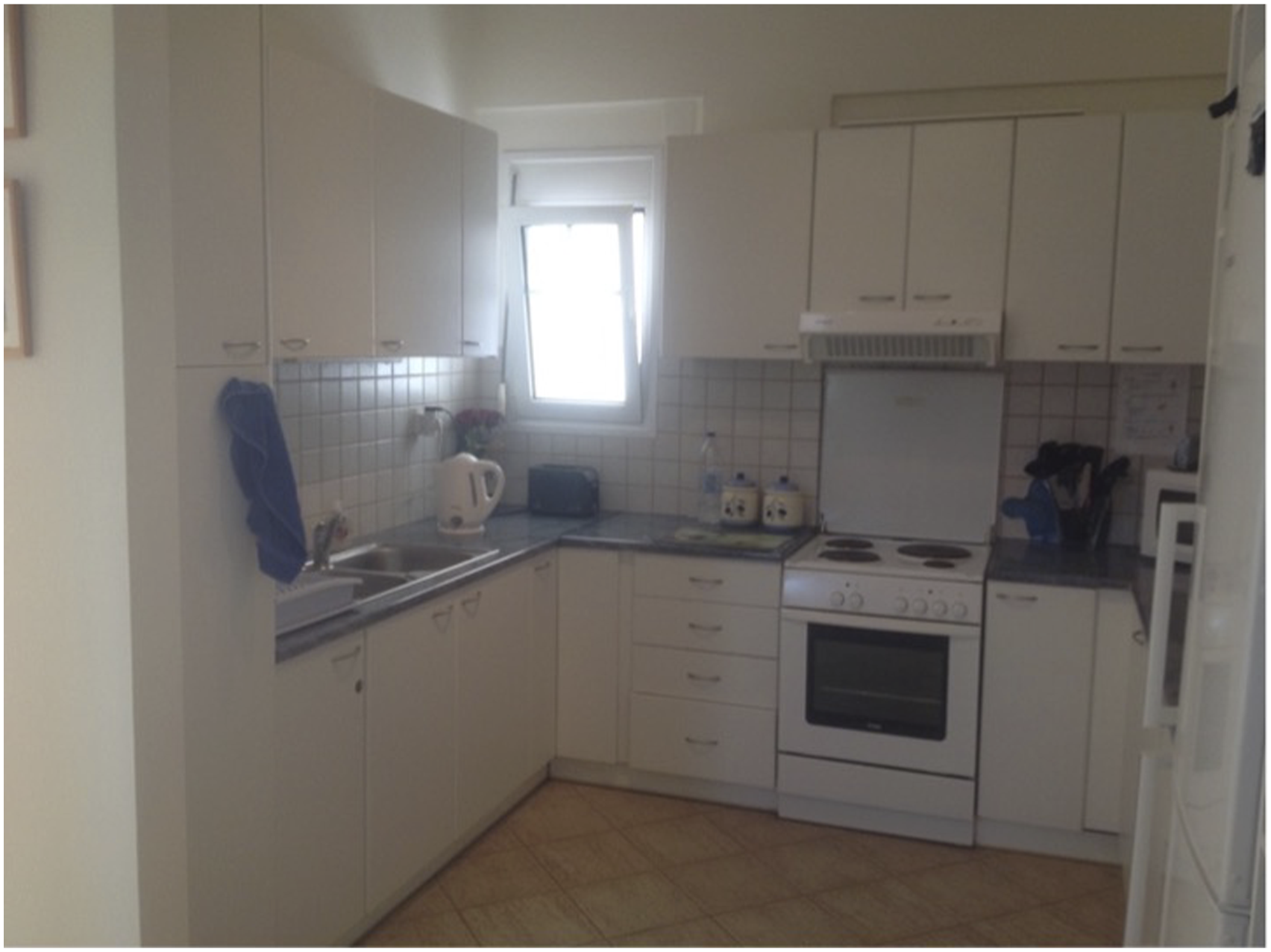
Market swappers prioritise marketability and opportunism in home selections. They are aware of the priorities in the larger swapping market. As a case in point, Ivan tried to swap his primary home on and off for 10 years, but his rural home was undesirable in this competitive market. So, he invested in a desirable holiday home (see Figure 5). Ross and Cora cleverly “invested” in their primary home in Canada and a secondary home in Mexico, selecting attractive holiday locations to accommodate visitors across different seasons. Market economy: Desirable house in competitive market.
Coordinating subjects with objects
Visitors are the worthy subjects and homeowners’ primary concern is making their home attractive to a wide variety of potential visitors. Market homeowners prioritise coordinating with visitors by ensuring that the home is “always available” (Anna) and by being “very very flexible” and saying, “yes to everyone” (Rachel). Market owners value visitors instrumentally – they are a means to an end: “You just do the exchange and that’s it” and one maintains a relationship “only if you want to go back to the same place” (Phoebe). They do not differentiate the worth of visitors. Visitors are qualified if they are in the online platform and have a home. They coordinate with the needs of visitors by buying homes in desirable locations, such as near beaches, resorts, and cities.
Market swappers do not offer their home for free to visitors like some civic swappers do. They are calculative and gain “credits” by offering their homes in nonsimultaneous swap: I let them go even if I have no plans going to their house. I think, my place is gonna’ be empty anyway. So why don’t I let somebody stay there…. I benefit [in] many, many ways. I keep it [credit] because I know that eventually I can do either a triangle exchange, [or] if it’s not an exchange that I can use, I give it to someone else. (Rachel)
Although home swapping does not involve the exchange of money, members with second homes can accumulate credits to use. For example, Rachel designed a “triangle swap” as an efficient way to stay in a desirable home; that is, she finds a home that she prefers to stay in and offers her credits to this owner. Some visitors appreciate the flexibility of market homes that are “always available and makes it easier to use points” (i.e. credits) (Deanna).
In addition, most market homeowners turn to other third-party subjects to make their home swap more efficient, such as employing “a manager that supplies them with anything that anybody needs” (Rachel), offering paid cleaning service to visitors (Anna), or “hiring a couple who look after the place” (Phoebe). For example, Phoebe’s market agent cleans the home, welcomes visitors, and troubleshoots when unexpected problems arise. In comparison, domestic homeowners might offer the services of a cleaner, but they are far less likely to use third-party subjects.
Coordination and compromise
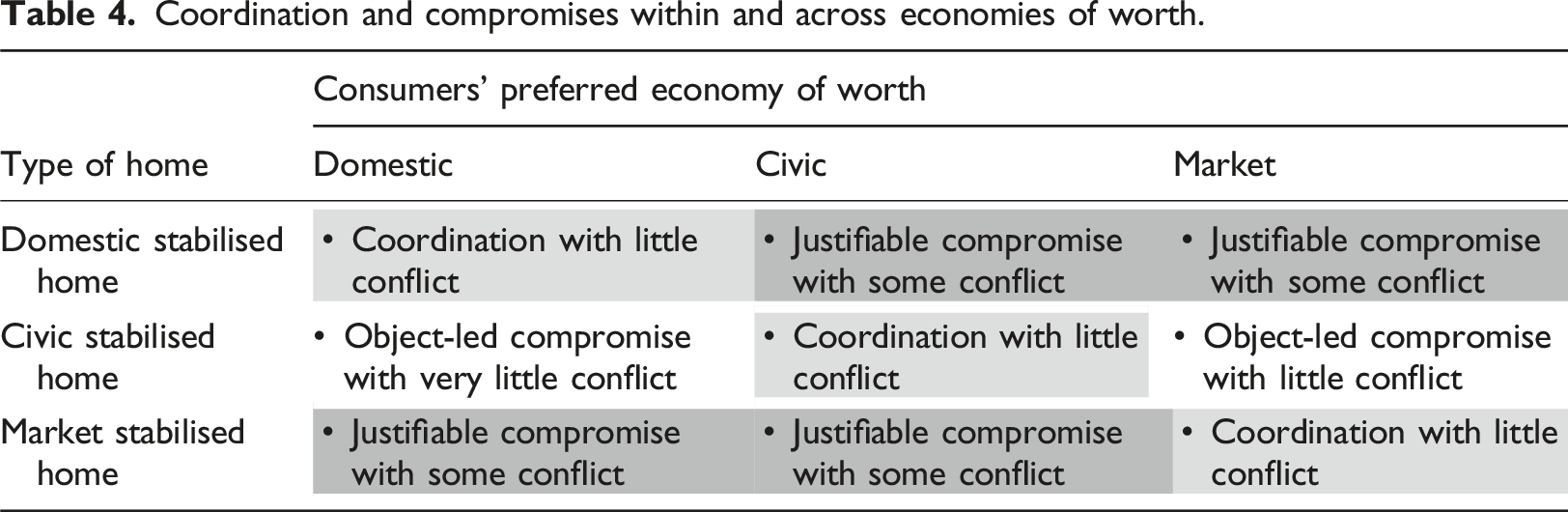
Coordination and compromises within and across economies of worth.
Coordination within economies of worth
When consumers’ preferred economy of worth matches with the stabilised one within the home, coordination occurs with little conflict (light grey cells). When consumers prefer and access a domestic home, they affirm that this is “the sort of place I would like to own myself” (Jennifer). Similarly, Giselle describes a domestic stabilised home as supporting her domestic routines of teas in the afternoon and lounging in the evening watching television. When a consumer prefers and visits a civic home, they affirm these homes as “lived-in” that “just feel comfortable” (Roy), or “clean and well-maintained” (Albert). Or, when a consumer prefers and visits a market home, they affirm the standardised home with “a holiday feel” (Anna) and with less clutter (Phoebe), and “very useful and well-done furniture” (Rachel).
Justifiable compromises across economies of worth
Consumers sometimes experience some conflict when their preferred economies of worth mismatches with the one accessed in the stabilised home (dark grey cells). Domestic homes are most likely to cause some conflicts with consumers who prefer civic and market stabilised homes. Bea who prefers civic homes was disappointed to find dirt hidden under the kitchen mat, “unpleasant surprises in the fridge”, or expired items in the pantry. However, this is a justifiable compromise, and she easily solves the problem: “It wasn’t life threatening. We just pull it (mat) out. We left that house cleaner than we have found it!” Lucy who prefers a civic stabilised home even justifies these problems as normal: “people have a different idea of what clean is”. Visitors work around these problems and justify the compromises by discursively drawing on the common good of the economy, such as Lucy explaining that it is reasonable to assume that people clean their personal homes differently.
Similarly, consumers who prefer market stabilised homes have some conflicts with domestic homes. Phoebe found a domestic stabilised home as “quite untidy (and) very crowded. She didn’t really leave room in the wardrobes or anything or the drawers. But we just made do. We just kept our stuff in the suitcase. We are quite easy”. Thus, she makes justifiable compromises to access this free home.
Market stabilised homes are frequently critiqued for absent objects. The market homes have few personal possessions, mostly utilitarian domestic objects, and objects that are easily replaceable (e.g., IKEA furniture). Consumers who prefer the domestic stabilised home tend to critique market homes as “bare” and poorly stocked (Deanna) and “not cosy” (Elaine and Jack). These homes clash with the domestic homes because they are merely adequate and instrumental: “You could tell that wasn’t really somebody’s home. It was set up for exchanges. So, it wasn’t like going into his home” (Jenny).
However, the owners of market homes discursively encourage justifiable compromise by warning and sensitising the visitors to these differences. Homeowner Ivan evokes a market economy of worth by “making it clear it is a holiday house”. When consumers who prefer domestic encounter market homes, they also justify the compromise by framing this as merely a “home base” that supports basics domestic practices of cooking, sleeping, and doing laundry (Susan). Although consumers are not always pleased, they access the home and tolerate the differences: “I don’t expect them to have a well-stocked pantry in there” and “that’s okay I can go and buy a small bottle [of oil] to cook with. It’s not the end of the world” (Deanna). Thus, major conflicts are prevented by discursively justifying the market economy of worth as offering a less personalised experience.
Consumers who prefer a civic stabilised home stress mutuality and are most supportive of justifiable compromise. They are the most flexible because they have “realistic expectations” (Bonnie). Unlike the domestic swappers who expect their same comfort in accessed homes, civic swappers generally tolerate and even appreciate the cross-cultural and regional differences. They are often more experienced and are aware that “continental houses can be less warm” (Cecilia and George) or “[Germans] have very very strict rules of getting rid of the garbage” (Marci).
Object-led compromise
We generally find that civic homes support compromise even when a mismatch exists with swappers’ preferred homes. Owners of civic homes proactively transform these homes over time into a comfortable offering based on mutuality using objects. Patrick who prefers a domestic stabilised home still acknowledges civic homes as “perfectly prepared” because they offer a good compromise of functionality and personal comfort. For example, he argues that a Danish house strikes “an optimum [balance] between your needs and the look of it”. He found their home was beautiful as it was house “full of candles” but it was practical because the sun sets very early in winter. Consumers who prefer market homes but access civic homes also appreciate object-led compromises. Compared to the more basic market homes, Anna found a civic home attractive because it “has a lot more amenities … they have better quality furniture, better quality television, and more books”. Thus, civic homes have stabilised an accommodating compromise that enables easy coordination and minimises conflict for everyone.
This object-led compromise gradually emerges through trial and error until homeowners find a stable compromise. Fragile objects (e.g., heirlooms, breakables, and cherished items) are removed or protected. For example, Albert moves his family bible to the home of a friend. Similarly, because visitors ignored her request to use a tablecloth, Marci now proactively protects a favourite wood table with a plastic tablecloth. Challenging objects are removed or simplified. For example, Roy has a complex home cinema created by combining customised pieces. He designs a comprehensive guidebook and “just took the time to explain it” thereby simplifying a potentially challenging object. Some civic homes even go as far as permanently rearranging furniture to better accommodate visitors.
Civic homeowners are interesting because they permanently stabilise a home of mutuality, unlike domestic homeowners who make temporary changes. For example, gardener Marci changed her garden to be more sustainable, so it is easier for visitors. Albert permanently changed his study into a guest room with an additional bed for hosting families.
The civic home emerges in the tension between a personal home (that may be too personal) and a standardised home (that may be too impersonal). This sometimes involves a balancing act, as Albert explains: When I first started out, I used to put a lot of things like photos and things away. But then I thought. I don’t do it now because it makes it look like a motel room. Right, they want to come into a house! So, I have bits and pieces around, whether they are photos, ornaments and so on, you know, a vase, just so it feels more homely.
In summary, what emerges from an analysis of the coordination and compromise in this access-based market is an understanding of consumers as flexible, nimble, and willing to work across many economies of worth to get their needs met. They are quick to recognise and understand the economy within which the home is organised through stabilising objects and then coordinate their access accordingly.
Discussion
Stabilising coexisting principles of the common good
Boltanski and Thévenot (2006)’s theory of justification argues that people pragmatically coordinate agreements when they work within existing economies of worth guided by a common good. Moreover, this common good is used to justify the worth of objects and subjects in each economy. In this access-based market, we find that homeowners coordinate agreements by actively using objects to stabilise one of three economies of worth—the domestic, the civic, or the market—when preparing homes. But when accessing plural economies of worth, consumers recognise the common good through stabilising objects and generally achieve flexible coordination and compromises to minimise conflict. Thus, objects play an important role both stabilising the economy and signalling its appropriateness when visitors access the home.
We extend existing work that highlights instability in plural economies by showing how competing common goods are stabilised in homes supporting flexible coordination and compromises. Civic stabilised homes are organised by the principle of mutuality and support the most stable object-led compromise that minimises conflict in this access-base market. While both domestic and market stabilised homes cause some conflicts, coordination of these homes works with justifiable compromises. Challenging Boltanski and Thévenot’s (2006) assertion that compromises are inevitably fragile and unstable, we explain the important role of objects in helping stabilise the coexistence of plural economies of worth. Our findings also extend the current theorisation of compromise as negative and destabilising of an economy of worth (Bridson et al., 2017; Varman et al., 2022), by showing how compromises can be flexibly worked out between subjects and objects across different economies of worth.
One might assume that a home swapping market that accesses personalised homes would be dominated by a domestic economy of worth because homeowners offer their personal homes. But highly motivated homeowners are often very strategic in leveraging the value of the very important asset of their home and even adapting their homes overtime. Some consumers are so committed to accessing homes in this market that they permanently change their home to become more mutually accommodating as a civic stabilised home. Other consumers buy market homes that are stabilised by standardised goods for wider accessibility and greater competitiveness. Although some conflicts do arise across domestic and market stabilised homes, consumers do not view these homes as unacceptable. Instead, compromises are employed to support and normalise different degrees of acceptable coordination extending “beyond the binary of legitimacy and illegitimacy central to institutional lens” (Varman et al., 2022: 104). Thus, this access-based market supports the peaceful coexistence of three economies of worth.
While some common goods (e.g., mutuality) are more acceptable and preferred than others (e.g., tradition), consumers rarely discriminate and instead justify compromises with most common goods. This finding differs from past research that finds consumers in a car sharing market favour the industrial economy of worth and discriminate against the domestic economy of worth (Barbe and Hussler, 2019). We found that no single economy of worth dominates the access-based market of home swapping, in contrast to prior research in which one economy of worth is often more central to the coordination (e.g., a palliative care community dominated by the civic worth; migrant workers dominated by the domestic worth; and music marketplace dominated by the inspired economy) (Bridson et al., 2017; Sreekumar and Varman 2019; Varman et al., 2022). In home swapping, consumers do not treat a single economy of worth as take-for-granted in working out agreements in different situations. Motivated consumers do not necessarily critique plural common goods. Instead, they strategically and pragmatically examine the applicability of different common goods in preventing and solving disagreements and conflicts (Dansou and Langley, 2012). Compared to Fortezza and colleagues’ (2022) findings that consumers rely on organisational mediation to transform conflicts into meaningful experiences, we suggest that consumers are more capable and pragmatic than we have imagined in managing potential conflicts. We call for further investigation of consumers’ institutional work in negotiating disruptions, maintenance, and change, with or without organisational support. For example, past research examines dissatisfied consumers’ institutional work in demanding organisational change (Scaraboto and Fischer, 2013), but future research might examine how satisfied consumers preserve institutions through their everyday maintenance work.
Object-led compromises supporting coordination
Our findings highlight the important role of stabilising compromises using objects to support the flexible coordination of markets. When an economy of worth is stabilised in the home, it justifies how access should be coordinated. Although coordination is most acceptable when consumers’ preferred economy of worth matches the one found in the home, compromises are tolerated and justified within this market system. Rather than converging towards a single common good or integrating two common goods (Scaraboto and Figueiredo, 2022), home swappers work nimbly across three common goods with few conflicts. Although Scaraboto (2015) revealed a zone of determinacy that also helps reduce conflicts, it was achieved through limiting the possibilities for critique from other consumers. However, we found participants are willing to work across the domestic, civic, and market economies, based on the shared understanding that minor conflicts are a normal part of coordinating access.
Extending past research that finds compromises are fragile and temporary (Bridson et al., 2017; Finch et al., 2017; Lindberg and Mossberg, 2019), we explain that compromises are relationally distributed between consumers, visitors, homes, and objects within the home. Compromises across the three economies of worth are stable because they are supported by the physically structured homes and tolerated by consumers. Our findings show that swappers generally work with the local subjects and objects of worth to respect the economy of worth stabilised within the home. Thus, we show that the capacity to prevent disagreements is distributed among actors and, importantly, objects (Daudigeos and Valiorgue, 2018).
Nevertheless, less is understood on how consumers strategically rearrange and navigate objects to facilitate compromises. In the decentralised market of home swapping, consumers are motivated and capable of stabilising the economy of worth in their personal homes, as well as justifying and tolerating a different economy of worth in accessed homes. Likely our findings would not hold in a market in which consumers and other market actors were less committed and capable of adapting objects. These consumers were all middle-class homeowners with significant resources and capabilities. This stands in contrast to the unstable compromise of green chemicals critiqued by regulators and environmental activists as temporarily good enough (Finch et al., 2017), or subalterns with limited resources. Our findings suggest that consumers accept, justify, and normalise compromises required by different economies of worth. Therefore, we add to the growing research on how market systems exist between “clean-cut, settled and uncontested” and contested systems in which buyers and sellers continuously develop capabilities and act as “boundary spanner(s)” who bridge competing ideas of common good (e.g., a financial advisor who bridges different understandings and priorities of consumers and banks) (Finch and Geiger, 2010: 131).
The flexible employment of objects points to how plural economies can coexist. Objects may be specific enough to support a dominant economy of worth (e.g., traditional food). Or objects may facilitate “a momentary, local understanding – in such a way that the disagreement is smoothed over even though it is not resolved by reference to a common association” (Boltanski and Thévenot, 2006: 33). For example, the community-based palliative care system was dominated by the civic economy of worth and suffered from ongoing conflicts with other more peripheral economies of worth (e.g., industrial). Compromises were temporarily established between the civic and industrial economies of worth as the community organisations sent nurses to support primary health centres (Varman et al., 2022). But a more stable compromise may require stabilising objects, such as a new policy or joint care facility that can better support coordination or justifiable compromises.
Understanding opportunities and challenges of access-based marketplaces
Our findings contribute to access-based market research by explaining how consumers govern access to resources using different notions of the common good. Home swapping thrives as a stable yet dynamic system of access because three main economies of worth govern loose coordination and normalise compromises. Conflicts arise in ridesharing services when members evoked both the civic economy of worth (i.e. consumers who value mutuality) and the market economy (i.e. consumers who value convenience and cost-saving) (Bardhi and Eckhardt, 2012; Barbe and Hussler, 2019). To manage these conflicts, organisations might support more diverse product offerings stabilising different economies of worth, such as a personalised car that is owned and named by a neighbourhood or a civic car in which part of the profit goes to a social cause. Rather than arguing that hybrid markets exist because of common goals that eliminate conflicts (Scaraboto, 2015), we found home swapping works because of the acceptance and tolerance of different goals in avoiding major conflicts.
Our findings of flexible coordination and compromises can also advance understanding of the conflicting findings in the access-based consumption literature. We would argue, for example, that members of a toy library were operating using a civic economy of worth and valuing the shared toys that met children’s heterogeneous needs for play (Ozanne and Ballantine, 2010). Few conflicts arose over access to toys because “the toy library stood in sharp contrast as a relatively stress-free alternative” to shopping in commercial toy stores following a market economy of worth (Ozanne and Ozanne, 2011, 269). Importantly, toys were well maintained because parents affirmed that cleaning the toy was a form of education in civic values of mutuality. Based on these findings, a gratitude program might be a good object to remind consumers and track how much “compromise” they have made (e.g., the cumulative money saved from swapping homes) further encouraging compromises. Future research might also explore if compromises can work in more market economies of worth that are often driven by competition.
The integration of new economies into a market might offer opportunities for expansion by for-profit organisations. Home swapping organisations might consider if other economies of worth offer potential market segments not yet fully realised by consumers. For example, a home organised by an economy of inspiration could be marketed as a writer’s or artist’s retreat. A home organised by an economy of fame, such as the former homes of celebrities, could be marketed to consumers who are celebrity watchers. Similarly, in the case of green chemical production, introducing domestic and civic economies of worth as subordinate economies might encourage regulators and corporate employees to reconsider their responsibility toward local traditions and the collective welfare of the community (Finch et al., 2017). Unlike agreements that are often made through a single economy of worth, such as the industrial, we emphasise managing conflicts through stabilising, accepting, and justifying compromises across competing economies of worth.
Conclusion
This study explains how consumers within a home swapping market coordinated access using plural economies of worth. We find home swapping is a stable market system that supports loosely governed coordination and compromises across different economies of worth preventing major conflicts. The consumers in this market are highly motivated to work together to travel to different destinations and save money. Future research could investigate platforms that face more severe conflicts (e.g., the time share market) to explore boundary conditions. We also note that the home swapping system has existed for over 50 years and therefore is relatively mature. One potential area for future research would be to understand how different economies of worth emerge as acceptable or justifiable in new markets. For example, an inspired economy of worth might be more relevant during the early emergence of a market. Or a fame economy of worth may be more relevant during the expansion of a niche market such as accessing designer clothing.
In our findings, home owners and visitors were willing to work across the three dominant economies of worth and make compromises. Of course, home swappers all appreciated the “free” accommodations, and these significant savings likely made them willing to tolerate differences among homes. One of the limitations of this study is that although we find a wide range of homes and homemaking practices, most participants are middle-class and have similar socioeconomic backgrounds. In our findings, fairness was not a concern and consumers positively associated compromise with adaptability and flexibility. Future research might investigate the nature and type of compromise in more heterogeneous market systems, such as when compromise is associated with negative moral meanings.
Footnotes
Declaration of conflicting interests
The author(s) declared no potential conflicts of interest with respect to the research, authorship, and/or publication of this article.
Funding
The author(s) received no financial support for the research, authorship, and/or publication of this article.
