




Abstract
Research has recently highlighted processes of platformization through which consumer activities are shaped by socio-technical features of digital environments. Prior theorizations have focused on corporate-initiated platform dynamics and affordances, emphasizing either the managerial facets of platformization or how consumers use and interact with these platforms. Our interpretive research on Familyship.org offers a contrasting case and theorizes how ordinary consumers, thwarted by social and legal constraints in their desires to create families, leverage platformization for family creation and consumption. Our findings conceptualize consumer-initiated platforms and show how their key affordances—embeddedness, privacy, modularization, and scaling—shape one of the most sacred spheres of life, the institution of family. Our study contributes by theorizing how consumer-initiated platform affordances differ from dominant corporate-initiated ones and why the differences matter. We discuss how they can help consumers to find solutions to acute consumption problems and to reimagine dominant cultural institutions.
Keywords
Introduction
Platformization has received considerable attention in social science scholarship, affecting phenomena such as the internet (Helmond, 2015), capitalism (Srnicek, 2017), society (Van Dijk et al., 2018), and culture (Duffy et al., 2019). Platforms have become so deeply embedded in consumers’ lives that many consumption choices, preferences, tastes, practices, and lifestyle expressions are increasingly shaped by the socio-technical structuring of digital platforms such as Google, Apple, Facebook, Amazon, or Microsoft. Platforms are (re)programmable digital infrastructures that bring together and enable interactions between various users, organized through systematic collection, processing, and circulation of data (Helmond, 2015; Poell et al., 2019; Srnicek, 2017). Our study resides in the domain of platformization as a force for reconfiguring and reordering consumer culture, an area still largely undertheorized in marketing and consumer research (Airoldi, 2022; Airoldi and Rokka, 2022; Caliandro and Anselmi, 2021). We theorize the role of consumer-initiated platforms and how their affordances may differ from dominant corporate-initiated platforms.
Platforms are dynamic infrastructures that continuously influence their users, impacting how consumer culture unfolds and is negotiated. Duffy et al. (2019) have established that a wide variety of cultural practices—including strategies, routines, creative labor, and citizenship—shape the platformization of cultural production and, thereby, the institutional structures that mutually and recursively influence the lived experiences of consumers. Platform mechanisms often extract data from platform users and leverage it toward strategic and, typically, for-profit aims such as advertising sales (Poell et al., 2019). Data capture is connected to concerns about power and surveillance (Darmody and Zwick, 2020; Zuboff, 2019). Other aspects of platforms that merit critique include authority, non-neutrality, opacity, and recursivity (Airoldi and Rokka, 2022; Beer, 2013).
Platform affordances can facilitate or constrain consumer interaction and expression (Caliandro and Anselmi, 2021; Kozinets et al., 2021). Affordances refer to possibilities for action that objects present in relation to human subjects (Gibson, 1979; Kozinets et al., 2021). Research, while not always employing an affordance theory lens, has enhanced our understanding of consumers’ co-creative labor (Cova et al., 2011), influencing behaviors (Scaraboto and Fischer, 2013), digital possessions (Mardon et al., 2022), and shifting consumer-brand relationships (Arvidsson and Caliandro, 2016; Caliandro and Anselmi, 2021; Rokka and Canniford, 2016; Wichmann et al., 2022). Past research has emphasized how digital platforms may afford consumer empowerment (Kozinets et al., 2017, 2021) and the “liquification” of possessions and consumption practices, stressing access-based, ephemeral, de-materialized, and individualized forms of consumption (Bardhi and Eckhardt, 2017). Scholars have called for increasing critical attention to the paradox of autonomy/emancipation and control/surveillance that platforms engender as well as their implications for cultural change (Airoldi and Rokka, 2022; Darmody and Zwick, 2020).
An important limitation of prior literature is the focus on corporate-governed, mainstream digital platforms and their cultural influences. Platforms initiated by public sector institutions display important differences in terms of their setup, purpose, business model, and dynamics (Ottlewski and Gollnhofer, 2019). In this article, we wish to extend views on platformization beyond the firm-centered perspective (cf. Martin and Schouten, 2014) and theorize the role of consumer-initiated platforms. We pose the following general research question: How do platform affordances manifest in consumer-initiated platforms and shape consumption in potentially distinct ways? We seek answers to this question in the context of Familyship.org, a platform created and developed by ordinary consumers, without any entrepreneurial, or business background. This leads us to the more specific research question: How do the platform affordances of Familyship.com shape family and consumption?
Familyship was created by two German women wanting to bear and raise a child together, but who were barred by German law from the necessary institutional resources. To solve their dilemma, they imagined and implemented a new digital platform for family formation, which they soon discovered had powerful implications for other people with similar desires and constraints. Our study of Familyship offers new insights into the role of consumer-initiated platforms and their affordances—including embeddedness, privacy, modularization, and scaling—influencing how consumption processes are reorganized and reconfigured. We conclude with theoretical implications for consumer research on how consumer-initiated platforms can enable new ways of reimagining and re-organizing consumer lifestyles, including the creation of new pathways to family formation and consumption. Finally, we discuss implications for public policy makers wishing to create and mobilize cultural change.
Theoretical framing
Platformization of consumer culture
Recent theoretical contributions in the social sciences address the forceful cultural shifts brought about by digital platforms, through which multiple spheres of our “datafied” lives are being shaped and re-configured. Widely resonant conceptualizations, including “platform society/capitalism” (Van Dijk et al., 2018), “platform economy,” or “surveillance capitalism” (Zuboff, 2019) populate concurrent commentaries and have also inspired scholars in the Consumer Culture Theory (CCT) field. In particular, the notion of “platformization of culture” (Duffy et al., 2019), has close relevance for CCT scholarship in that it enhances our understanding of how cultural intermediaries, producers, and various kinds of cultural influencers are fundamentally affected by platformization. Platforms contribute to the blurring of conventional consumer and producer roles (Cova et al., 2011) and private and public spheres of life, including the negotiation and expression of identity (Belk, 2013), various self-branding practices (Marwick, 2015), or possessions (Mardon et al., 2022).
The process of platformization has led to “the extension of social media platforms into the rest of the web and their drive to make the rest of the web platform-ready” (Helmond, 2015: 1). In this study, we extend prior literature toward understanding how platformization processes may affect even some of the most intimate and sacred spheres of our lives, by examining the case of family creation—the way in which consumers reimagine, negotiate, and enact a family that they desire. Family has been highlighted in past consumer research literature as one of the foundational consumption contexts, involving numerous family consumption practices (Epp and Price, 2008) and rituals closely relevant to identity work (Weinberger, 2015). Prior work has paid attention to family assemblages (Barnhart and Peñaloza, 2013; Huff and Cotte, 2016) and the complex relation between intimacy of the family versus the involvement of market forces in shaping family consumption (Epp and Velagaleti, 2014). While the institution of family is deeply embedded and normalized in Western culture and its legislation, it is also constantly being re-negotiated and shaped by cultural disruptions and tensions. While CCT research has paid considerable theoretical attention to examinations of marginalized consumer subjectivities—including gender and sexuality (Kates, 2002), ethnicity (Peñaloza, 1994), race (Crockett and Wallendorf, 2004), and body ideals (Scaraboto and Fischer, 2013)—we find that the institution of family has rarely been examined in terms of how it is problematized, contested, and re-imagined by consumers. Despite recent interest in how platformization could help trigger, mobilize, and innovate cultural and social change (Nardini et al., 2022; Marres, 2017), as also suggested by research on social and consumer movements (e.g., Gollnhofer et al., 2019; Weijo et al., 2018), our study is the first to examine platformization in the context of innovating family consumption.
An affordance theory perspective
Originating in the field of ecological psychology (Gibson, 2015), applied in design studies (Norman, 1988), and commonly used in computer science and communication research (Evans et al., 2017), the concept of affordance is generally used to “describe what material artifacts such as media technologies allow people to do” (Bucher and Helmond, 2018, p.4). However, definitions of the notion vary and there have been inconsistencies in their specific use (Evans et al., 2017, p. 37). Therefore, we wish to clarify the affordance terminology in this study. Affordances are “not a quality of the object in isolation but manifest in the object’s relationship with a socially situated subject” (Gibson, 1979 cited in Mardon et al., 2022, p. 5). Such functional and relational aspects are key in framing, while not determining, the possibilities for action in relation to an object (Evans et al., 2017, p. 36). As Mardon et al. (2022, p. 3) stress, affordances are “relational and also contextual, meaning that their environment (physical, social) also influences what and how much is afforded for the person by the object and also what might be the cost or consequence of raking advantage of it.” An affordance also does not change if the actor’s needs and/or goals change (Evans et al., 2017, p. 37).
Prior work distinguishes different kinds of affordances. Initially, an affordance perspective mainly considered technical features of digital platforms. These so-called low-level affordances refer to a concrete, feature or design-oriented aspects. The set of architectural properties are typically located in the materiality of the medium, for instance, in the form of buttons, menus, or content type. In contrast, high-level affordances are more abstract and broader in orientation. They are “the kinds of dynamics and conditions enabled by technical devices, platforms and media” and go well beyond specific buttons, technical features, or artifacts (Bucher and Helmond, 2018, p. 11–12). Recent scholarship has started to examine social affordances, including “the social structures that take shape in association with a given technical structure” (Postigo, 2016: 5), and “the way in which technology affords sociality” (Bucher and Helmond, 2018, p. 4). Thus, it follows that conceptualizations of affordance differ in terms of how they see affordances materializing and what affordances are supposed to activate, encourage, or limit. An affordance theory lens offers a useful framework to examine the dynamic relationships between platforms and its users in specific contexts. We next map out relevant scholarship in this regard.
Platform affordances shaping consumption
Consumer and marketing research on digital platforms has mainly focused on managerial and marketing facets of platformization, such as functionalities, benefits and challenges, value co-creation, and branding (Arvidsson and Caliandro, 2016; Puntoni et al., 2021; Rokka and Canniford, 2016). Some of these studies advance critical views of platformization and surveillance capitalism (Airoldi and Rokka, 2022; Darmody and Zwick, 2020). Exceptions in which platformization has been approached from the consumer culture perspective include Kozinets and colleagues’ (2021) study theorizing different platform affordances and identifying elements of consumer empowerment through “voice, choice, justice, inclusion, catalysis, and consciousness-raising” (p. 428). Perren and Kozinets (2018) characterize different types of digital consumer platforms and their features, showing how “Forums connect, Enablers equip, Matchmakers pair, and Hubs centralize exchanges” between actors (p. 20). Theorizing value creation in loosely connected, heterogeneous, collaborative consumer networks, Figueiredo and Scaraboto (2016) explain how circulation enables the systemic creation of value by connecting networked participants, their actions, objects, and value outcomes. Kozinets et al. (2017) suggest that platforms such as Instagram can even enhance consumers’ passion to consume. Taken together these studies highlight how consumers connect, collaborate, and co-create value by employing existing digital platforms.
Within the literature on platformization, a platform affordance perspective is emerging in consumer research (Caliandro and Anselmi, 2021; Kozinets et al., 2021; Mardon et al., 2022; Hoelscher and Chatzidakis, 2021). Contemporary platforms are now equipped with a plethora of technical features (e.g., visual stories, live-streaming, and digital objects) that expand people’s socialization and expressive opportunities. Mardon et al. (2022) build on Davis (2020) to show that objects’ affordance mechanisms variously request, demand, encourage, discourage, refuse, or allow certain behaviors. The affordances of a single digital object (e.g., an app) may be perceived, made sense of, and imagined differently by different kinds of users (Mardon et al., 2022). Kozinets et al. (2021) identify discovery, narration, contact, meta-voice, outreach, and organizing affordances which enable specific ways of consumer empowerment.
Moreover, scholars have shown how platforms may shift consumers’ relation to brands or communities (Arvidsson and Caliandro, 2016; Caliandro and Anselmi, 2021; Wichmann et al., 2022), online influencing (Marwick, 2015; Rokka and Canniford, 2016), tastes (Airoldi, 2022), co-creative exchanges (Perren and Kozinets, 2018), and even core elements of identity (DuFault and Schouten, 2020). For example, algorithm-mediated calculative systems, such as those governing platforms’ content feeds, can privilege or limit consumers’ creative expression and socializing. This contributes to “memetic” tendencies (Caliandro and Anselmi, 2021) in terms of cultural production and consumer expressions. Platformization in this mode tends to encourage imitation and replication and, thus, sameness and similarity in terms of content, rather than cultural difference.
What stands out among the studied platform affordances is that they are essentially shaped by the capitalist logic of data harvesting, marketing optimization, and profit motives that underpin most of the dominant mainstream platforms in use. Corporate-owned software and algorithms have been characterized by opaqueness and authority; consumers, or even experts, often do not know how they function or how they are oriented to shaping consumer culture (Airoldi and Rokka, 2022). This creates tensions in relation to how the digital platforms privilege, constrain, or control specific kinds of content that they make visible. Commercial platforms are found to link and mediate among marketers, brands, and consumers in ways that are oriented to match them toward commercial transactions (Perren and Kozinets, 2018; Wichmann et al., 2022) and to target the most appropriate or profitable consumers. Such platforms employ automated recursivity (Beer, 2013), by which platform algorithms model and predict user behavior and then produce outcomes iteratively, and in this way embed themselves as part of the everyday life.
However, as we have argued, it is likely that corporate-initiated platforms also serve specific, mainstream needs while leaving others unattended. Martin and Schouten (2014) have shown how consumers drive the innovation of new solutions to their unfulfilled consumption needs. Thus, a limitation of the prior literature is focus on established corporate-initiated, for-profit platform dynamics and affordances. We do not yet know how processes and affordances differ in platforms that are developed by consumers to address non-commercial needs or institutional voids. Compared to corporate platforms, consumer-initiated platforms are likely to differ in terms of ownership, treatment of user data, goals (e.g., commerce vs social cause), operational activities, and use of automation and algorithms. To better understand these differences and what they mean for consumers, we examine the case of a consumer-initiated platform and its affordances for shaping and reconfiguring consumption.
Methodology
Research context
In Western nations, family forms are becoming more diverse, and non-traditional families are slowly “changing family practices” (Furstenberg, 2020, 364). Family constellations increasingly show the effects of delayed marriages, common-law marriages, re-marriages, delayed childbirth, increasing divorce rates, voluntary childlessness, multiple-partner fertility, and LGBTQIA+ unions (Leopoldina, 2019). For example in Germany, marriage, family, and procreation fall under special state protection in the constitution, meaning that these protections do not extend equally to people such as unmarried or LGBTQ+ individuals. Instead, due to lagging legislation, structural asymmetries of power and information between providers and users of infertility care, rigid social expectations, social hardship, cultural barriers, and social stigmatization, German institutions make it difficult for many (Leopoldina, 2019). The digital platform Familyship.org was founded by ordinary consumers as a response to these institutional voids.
Familyship.org, is an online platform operating in Switzerland, Germany, and Austria. The former couple Miriam Förster and Christine Wagner created Familyship.org in 2011 as a web-based solution to find and screen for a biological father to complete a family for bearing and raising a child. Following on that individual success, Förster and Wagner expanded their website to assist other people in creating new kinds of families in various alternative constellations. As of 2022, around 11,800 people (currently 6500 active users) had used the platform in efforts to find co-parenting partners. The Familyship community is diverse with regard to gender, sexual orientation, relationship status, desired family constellation, and geographic location. Familyship users are generally politically liberal and well-educated. The success of the platform lies primarily in the empowerment for procreation for single women, the LGBTQIA+ community, and people who are skeptical of romantic partnerships as a stable foundation for childrearing.
Data
Summary of Data Sources.
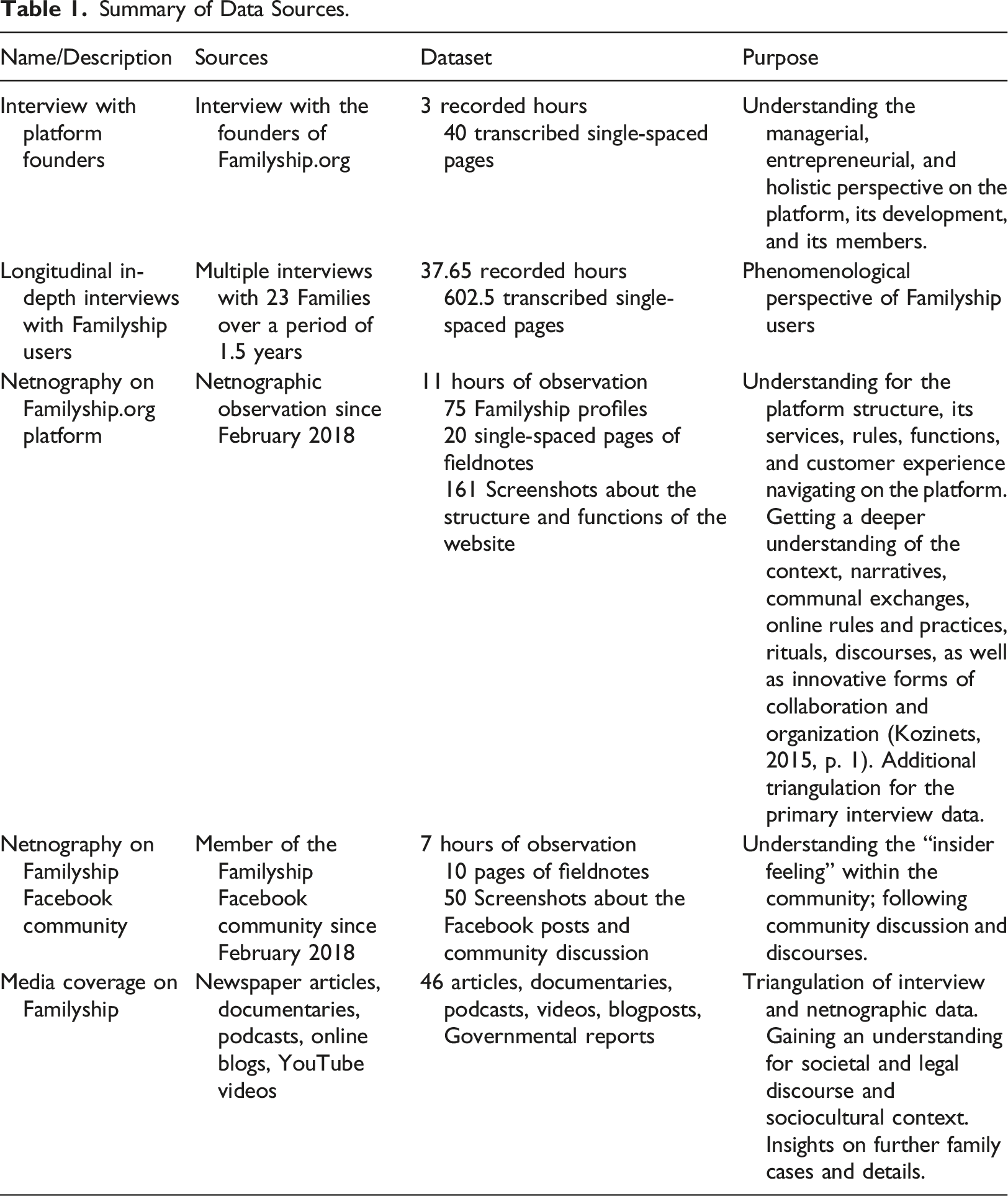
Data collection began in February 2018 with semi-structured interviews of the Familyship founders following McCracken (1988). Their perspectives were important for understanding what led ordinary consumers to create the platform in the first place. They shared their ideas, intentions, and ongoing projects. The founders granted us access to recruit participants from the community. They also provided us with further details, statistics, and information upon request throughout the research project. The first author conducted multiple in-depth interviews with 23 families over a longitudinal timeframe in order to understand the platform mechanisms from a user perspective, and their detailed consumption processes. Platform users were contacted and voluntarily participated in the study. Participants cover a broad spectrum of platform users with regard to gender, sexual orientation, and relationship status. We continued recruiting and interviewing to the point where no additional insights appeared to be emerging (Creswell, 1998). Interview topics included their motivations for using the platform, their desire to have a child, their vision for a family, the meaning of family, their process of family formation, daily family life, pregnancy and birth, and their views on the legal and cultural conditions for alternative family constellations. The interviews were recorded, transcribed verbatim, and translated to English. The first author, a native German speaker, led the data collection and analysis. The analysis and interpretation was carried out jointly with the second and third authors.
Interviews were complemented by netnographic observation, data collection, and analysis (Kozinets, 2015) covering the Familyship platform and the Familyship Facebook group. Netnographic field notes recorded the platform’s functions and dynamics, the variety of user profiles, the navigation and user experience of the platform offerings, the many family visions, and the community ethos. Netnographic exploration of the Familyship Facebook group revealed discourse among community members which was often stimulated by content the founders themselves provided. Analysis of media coverage on Familyship and alternative family formations helped us to better understand the ongoing public discourse and to triangulate our findings relative to the general perception of Familyship in the media. Media coverage plays a key role to reflect and shape public opinion and discourse (Humphreys and Thompson, 2014). Despite the variety of data that informed and triangulated our research, the findings from this article mainly draw from the interviews and netnographic data.
Data analysis
Our analysis involved developing a systematic coding process (Gioia et al., 2013) to build a data structure to identify key platform mechanisms and affordances. For our inductive data analysis (Strauss and Corbin, 1990), we applied open coding to our raw data, and then axial coding to the open codes. We interpreted and abstracted emerging themes to develop theoretical inferences (Spiggle, 1994; Thompson, 1997). We constantly reviewed the literature, developed emerging analytical categories, sought boundary conditions, gathered more data, and developed alternative perspectives (Miles and Huberman, 1994). Theoretical coding was introduced to link axial codes (Humphreys and Latour, 2013) to the concepts of platform affordances. As is customary in qualitative research (Belk et al., 2013), data analysis was advanced by multiple iterations of interpreting, discussing, writing, and refining emerging interpretations until theoretical saturation was achieved. We analyzed our data on several levels (Desjeux, 1996): the micro level of personal narratives; the meso level of the platform interactions, functions, and tools involved in family creation; and the macro level of creating new family understandings in the sociocultural context. Triangulation of multiple data sources allowed a rich and fruitful exploration of intersecting themes (Flick, 2004).
The analysis of our interview data focused first on emic themes emphasized by our informants. Afterward, our analysis identified etic theoretical concepts. We analyzed our data both vertically (within families) and horizontally (across families). Vertical analysis facilitated empathic understanding of individuals’ experiences, while horizontal analysis allowed us to examine thematic similarities and differences as well as suggesting boundary conditions (Epp and Velagaleti, 2014). We then moved iteratively between our data and emerging analytical themes and theoretical frames (Spiggle, 1994). We adapted our interview and observation guide as we investigated the emerging themes.
Our netnographic inquiry followed Kozinets (2015) with analysis employing the same open and axial coding techniques described above. The analysis focused on the Familyship platform (to develop an understanding of the functionalities and dynamics around platform-assisted family creation processes), the Facebook community (to understand community discourses around alternative family constellations), and the Familyship community (to gain an in-depth understanding of the diversity of Familyship users, and their desired family constellations as outlined in their profile descriptions). Analysis of media coverage started with transcribing any data that was not available in textual form (e.g., podcasts, TV documentaries), followed by open and axial coding as with the interview and netnographic data. Our analysis of media coverage focused on understanding the socio-cultural context around family and alternative family constellations as portrayed in the media.
Findings
Our findings shed light on how platform affordances manifest in consumer-initiated platforms and shape family and consumption. Our analysis reveals Embeddedness, Privacy, Modularization, and Scaling as central affordances for reorganizing and reconfiguring consumption in the realm of family and platformization. The Embeddedness affordance invites consumer entrepreneurs to find solutions interactively (with each other and then with outsiders). The Privacy affordance enables and encourages users to talk freely, safely, and creatively about their desired family constellations. The modularization affordance encourages and inspires users to experiment with alternative family forms. The scaling affordance allows more people to access the platform (scaling out), demands action from policy makers (scaling up), and demands recognition and legitimacy from society (scaling deep). We will next present each platform affordance in turn.
Embeddedness
The key affordance that distinguishes consumer-initiated platforms from corporate-initiated ones is embeddedness. We define embeddedness as the way in which consumers are firmly set in a surrounding structure, which implies certain agency and space of open possibilities for them, such as “accumulating insider knowledge […], identify gaps in current market offerings that present entrepreneurial opportunities” (Mardon et al., 2023, p.3). Embeddedness also constrains and limits this space (cf. Van Wijk et al., 2019). When the founders and users of the platform are embedded within the consumption-related problem they face (family consumption), and when they have experienced its constraints first-hand (inability to create a family they desire), it leads consumers to become more agentic through their interaction with others. First, we find that embeddedness leads them to become experts in the consumption problem at hand (living through continuous disappointments and struggles). Second, interacting through the platform, they experience emotions including empathy which enables them to hear and understand other’s viewpoints. We find this stimulates reflexivity toward challenging taken-for-granted perspectives, creating room for imagining alternative solutions to their problems, enabled by the interactive spaces of the platform. The embeddedness is also the ultimate reason why the platform was created by ordinary consumers, and why it is so successful in addressing the needs of other embedded actors who experience similar social and legal constraints.
Expertise
Two ordinary consumers, Christine and Miriam, were a lesbian couple that wanted a family. In Christine’s words, “One evening, when I was sitting on the sofa, a clear feeling came over me: I want a child… My girlfriend felt the same way. But how could we do that?” After lengthy discussion, they decided they also wanted a father for their future child, ideally a gay man who would provide sperm and also take an active role in childrearing. The problem was that, as a lesbian couple, they faced serious legal and social barriers to realizing their vision of a family. The legal constraints alone were daunting. Says Christine: The regulations for family creation in Germany, Austria, and Switzerland are very conservative… For example, only two people can be the legal parents of a child… fertility clinics are not allowed to treat homosexual couples and single women… homosexual couples need to be legally married, and they have to go through a long and difficult process of second-parent adoption to become the legal guardian for their partner’s child… regulations for sperm donations are restricted and differ within Europe.
After accumulating a large amount of knowledge about the legal situation, they realized that in the German-speaking parts of Europe, laws reflect a narrow societal understanding of family and deny institutional support for people with alternative visions of family. Christine and Miriam turned to the market and, in particular, to the internet for possible solutions. Internet searches led them to gay dating-and-mating sites and to sperm donor pages, but they found nothing that met their needs. It seemed their problem was intractable. Experiencing these constraints first-hand, becoming experts in the legal situation, and living through these disappointments led them to envision a solution. They programmed a simple web page for the purpose of recruiting and screening potential fathers. Soon, their embeddedness afforded them the ability to create and accumulate expertise that was shared with others.
In addition to the personal expertise the consumer-founders acquired, the Familyship platform offers access to an institutionalized expert network (Figure 1). Expert network.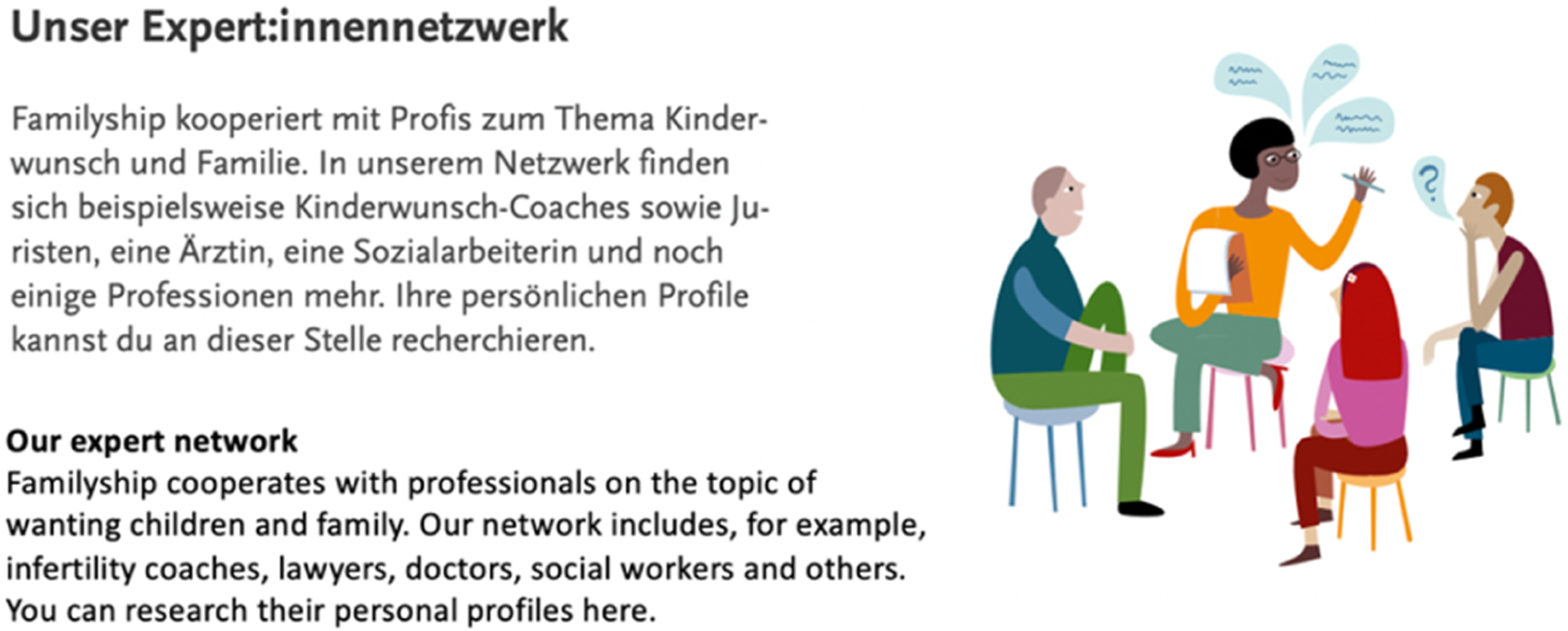
Collectively shared expertise, nurtured via interactions and exchange with platform users, enabled innovative solutions to a range of questions, brought together embedded actors from different professional fields, and reflected a wide range of desired family constellations and roles.
Empathy
We also found that the embeddedness of the founders and platform users afforded empathy for others who found themselves in a similar situation. Miriam and Christine illustrated a clear sense of empathy once they had to make a decision about the future of their website. After only a few weeks of implementing their website that was purely focused on meeting their own needs, the couple chose the father of their future child. Registrations through the portal were abundant and they realized there was a widespread need for what the Familyship platform offered. In Christine’s words: Well, we had founded it for our own needs. When that was actually over, we considered closing it down, because we didn’t need it anymore. But then we saw that there were so many people on the site, and there were always new registrations. Can we really close it down? No, we cannot create this site and leave all these people alone with their searches. We ran it for, I think, three years altogether, completely at our own expense, simply out of belief and conviction, because we thought we just couldn’t shut it down.
The number of ongoing registrations signaled that the case of the consumer-founders was not idiosyncratic but, rather, shared with others and possibly systemic. The efforts of two consumers innovating for their own purposes suddenly revealed unanticipated demand and the opportunity to help other consumers with similar needs. Their decision to keep the website was not a determination to make a profit. It was born from an empathetic understanding due to their embeddedness that led to a moral desire to help other, similarly marginalized people realize the dream of forming families and raising children.
Shared understanding, psychological harmony with others, the feeling of belonging, being able to relate to the lives of other platform users, and realizing that there are many others out there with a similar story is a common theme in our data. For example, Felicitas, a heterosexual active mother, tried a variety of potential family models, but decided to become a single mother by choice together with a sperm donor whom she found on Familyship. She appreciated the exchange with other like-minded people: “I’m on the platform … talking to successful family founders because it was just what I needed to motivate me in this difficult process of founding a family….” Claudia, a heterosexual active mother in a co-parenting relationship with a homosexual active father, adds: “I had already been registered with Familyship for a while, because I wanted to see what people write about themselves, what stories there are out there, and how do others do it.” In-community discussions have clear impact on the lives and decisions of Familyship users.
Platform users, able to connect and empathize with the founders’ situation, were encouraged to reflect and act on their own situations in turn. Claudia shares: I’m very happy with my decision to have this family model and to have this child. I think that’s something I’ve come to because I’ve given myself time to really reflect on what I want and really examine what of it is my honest desire […] I actively thought about questions like: How important is it for me to have children? What if I didn’t have children? How important is it for me to have a traditional family? […] I think it’s quite important that we as a society develop more ways and possibilities of what family can look like […] and include all members of society.
While past literature identifies digital platforms as opaque, non-neutral, authoritative, and principally driven by profit-motifs, we found consumer-initiated platforms afford embeddedness that can generate consumer expertise and put the platform creators into social and emotional harmony with the users. The embeddedness plays a special role for the consumer-initiated platform. The founder’s embeddedness into the consumption problem led them to envision and create the platform solution in the first place. Therefore, it is an inherent criterion of consumer-initiated platforms. Moreover, the embeddedness fosters a space where it is easier for everyone involved to share their stories, experiences, etc., and to connect to deeper emotional wells; not just to solve their own consumption problem but to influence society at large. The embeddedness enables the founders to build a platform that is more suited to the users, because they experienced the problem first hand. They are embedded in the same system, facing the same problems other users are facing. The embeddedness allows them to provide and shape the specific platform affordances as needed for its founders and users.
Privacy
Another affordance that strongly manifests in our data is privacy, thus presenting a striking contrast to literature emphasizing platform surveillance and exploitation (Zuboff, 2019). The experienced sensitivity around the topic of family creation translated into profound efforts to ensure privacy and transparency concerning sharing and use of personal data. We define privacy as a protected space that is “free from unauthorized intrusion” (Merriam Webster 2023a) and characterized by a transparent use of data, open communication from platform owners, and absence of surveillance. The Familyship platform does not seek to monetize people’s data. There is no advertising, and the business model is non-profit. We find privacy affords users confidence and trust to get involved on the platform and encourages discussions around sensitive and personal topics. The Privacy affordance enables and encourages users to talk freely, safely, and creatively about their desired family constellations.
This is illustrated in the following community statement: The subject of having children is usually a sensitive one. Hardly anyone wants their neighbor to know better than they do. That’s why our co-parenting community is protected. After your registration you will get access. (Familyship.org)
Community access is provided upon registration. Users can report other users that don’t behave according to the rules of the Familyship community. Data privacy and IT security are important topics for the platform. This concern was also the main reason that drove a platform relaunch in 2020. Miriam explains: We made another big relaunch – away from open source software. Keyword: IT security and vulnerability. It was important to us to show that we are professional. Users should not be afraid to register and leave their data there. (Miriam)
Potential users are directly informed that they can feel safe on the platform and that their data is protected. The founders communicate this openly and visibly:
When it comes to such a sensitive topic as starting a family, the protection of your data and privacy plays a particularly important role. On the one hand, we collect as little personal data as possible to protect your identity, and on the other hand, we ensure through IT security measures that no personal data of yours can be publicly viewed. In this respect, we clearly stand out from other platforms. (Familyship.org)
The statement acknowledges data sensitivity and the importance of data protection and IT security measures, distinguishing it from other common platforms. The founders’ commitment is also manifested in the website policy: A privacy policy should be easy to understand and provide sufficient transparency. Before we bombard you with long texts, we would like to try to give you a clear presentation of the data that we process when you use Familyship. Processing means as much as data collection, storage, editing, etc. If you have any questions about this privacy policy, please send us an email. (Familyship.org)
Figure 2 illustrates an excerpt from the Familyship data policy, which lists in clear and accessible language which data is being collected and stored at which stage of the website usage. The platform communicates, without page after page of legalese, the regulatory basis for the data protections. It is important to note that in contrast to most corporate-initiated platforms, there is no algorithm in place. Excerpt from privacy policy.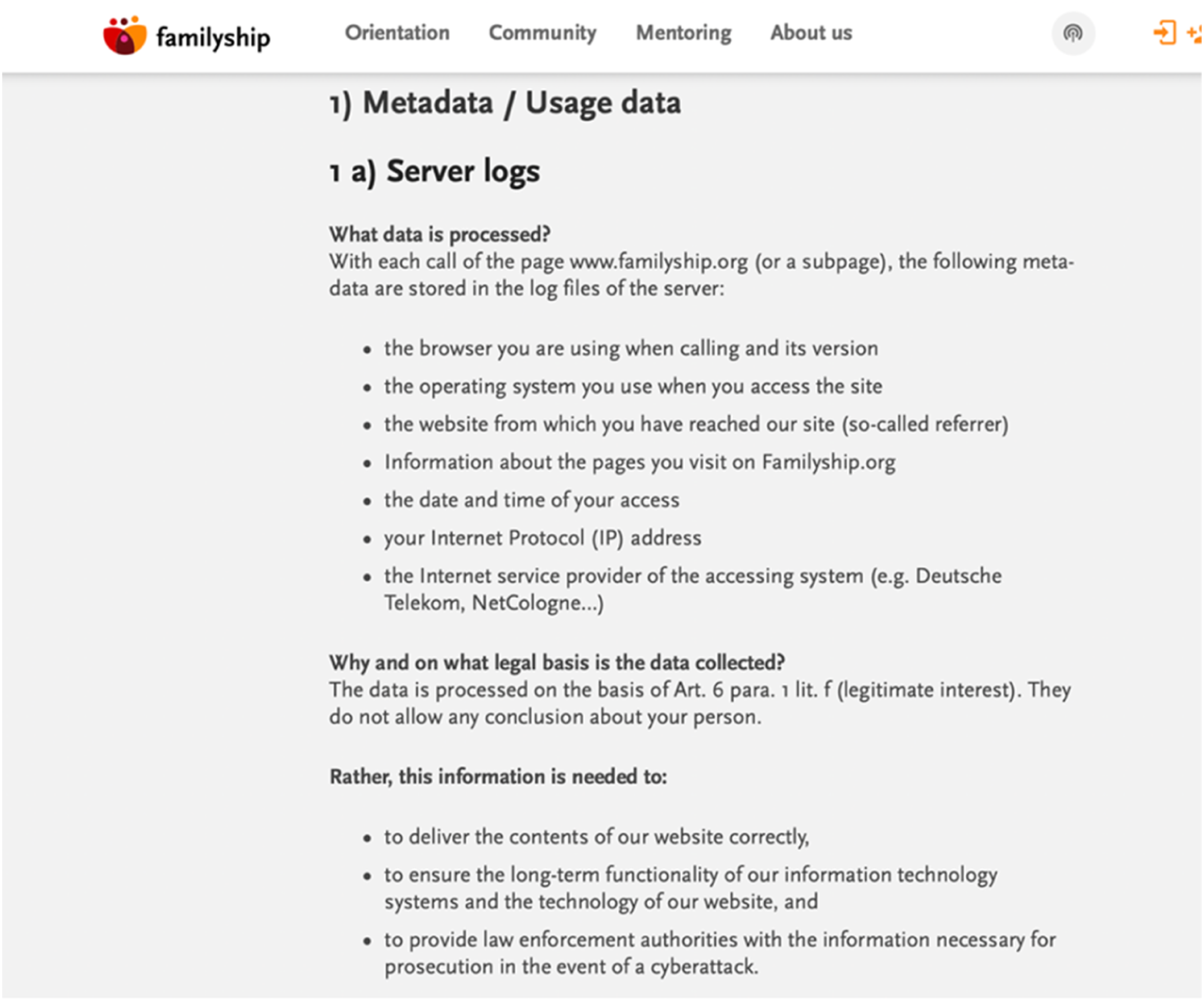
Underscoring the platform’s transparency and commitment to protect user privacy is the social enterprise business model. Two key aspects of social enterprise reinforce these characteristics: the social mission and the non-profit status. As a result, there is no need for hidden exploitation of user data. Familyship introduced a revenue model based on package pricing to offset their expenses and to make the site financially self-sustaining.
In sum, the affordance of privacy shapes family and consumption by offering a closed community space that allows users to share their stories and experiences through detailed profile descriptions and in community discussions, as family creation can be a very personal and sensitive topic. Contrary to prior literature that stresses surveillance and opaqueness of commercial platforms, the consumer-initiated platform reversed these affordances toward privacy and transparency. The platform’s drive to address a social cause meant that there is no need to exploit user data. Instead, success is built on nurturing privacy and trust among users and towards the platform creators/owners.
Modularization
The embedded consumer-founders and users problematized the notion of family, decoupled romantic love from parenthood, and constructed elements for family creation, which manifested in modularization of the platform architecture, affording a plurality of family identities and roles. We define modularization as integrating, configuring, and combining standardized self-contained components (modules) in different ways (Merriam Webster, 2023b). The platform literature recognizes modularity as a key facet of the software structure of platforms (Hein et al., 2020). Modularization of the Familyship platform affords the easy, step-wise configuration of different family constellations, depending on the specific needs and lifestyle of consumers, and encourages and inspires users to experiment with alternative family forms.
Welcome modules
Welcome modules offer a step-wise approach to family creation through the platform. The platform offers a guided path depending on the user’s situation (Figure 3). Welcome modules.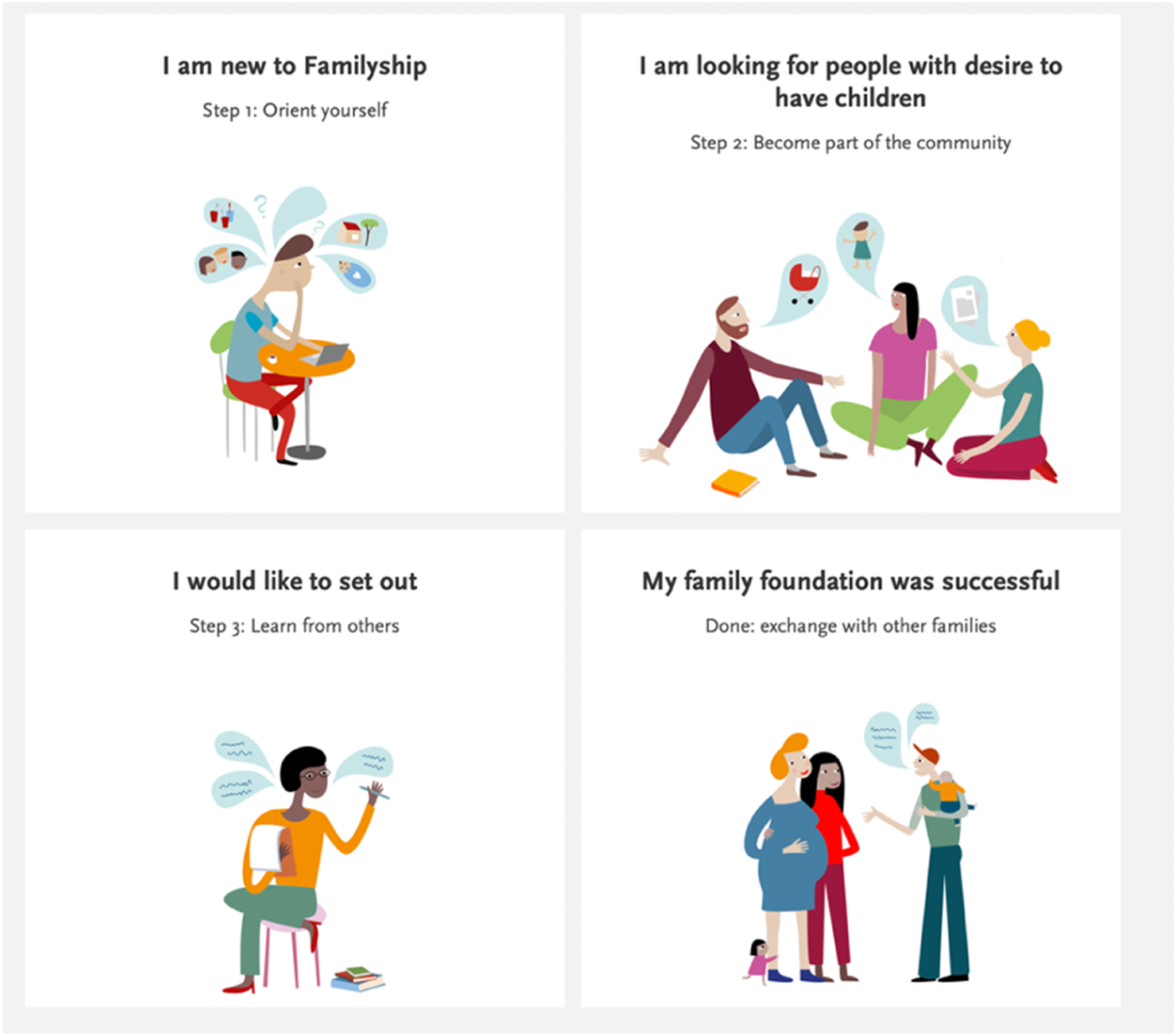
Depending on users’ path selections, the platform takes them to a variety of other modules. For path 1, the user is taken to a Test-Module (see also below), a Q&A section about common co-parenting terms, success stories, and a networking forum. For path 2, the user is taken to the community registration page. For path 3, the user is taken to a section on avoiding stumbling blocks, an expert network, mentoring consultation, or the Familyship podcast series. The reports from users about their personal stumbling blocks while starting a family help others in a similar situation to learn about these particular hurdles and how they have been successfully overcome by other families. Consultation is available for mentoring purposes. In small groups, Familyship users may ask questions and get professional advice: “Take the chance and let us support you, because the better informed you are, the better prepared you will be.” The podcast series called “Elective Kinship” offers information about family models like co-parenting, rainbow families, solo moms, sperm donation, and more. Christine, one of the two consumer-founders of Familyship talks to guests who have started a family themselves or are experts in the field. All of these offerings take potential users through their co-parenting journey and assist them at the different stages.
Test-module
The Test Module is an important element in the family configuration process via the platform. The introduction to the testing module states: Which family suits you? When there are many options available, it can quickly become confusing. We want to help you sort out your thoughts. What you end up with doesn’t have to correspond to a clearly defined family model, but rather to yourself. We’ll give you ideas for further thinking and explain which modern family constellations could fit your individual life situation. (Familyship.org)
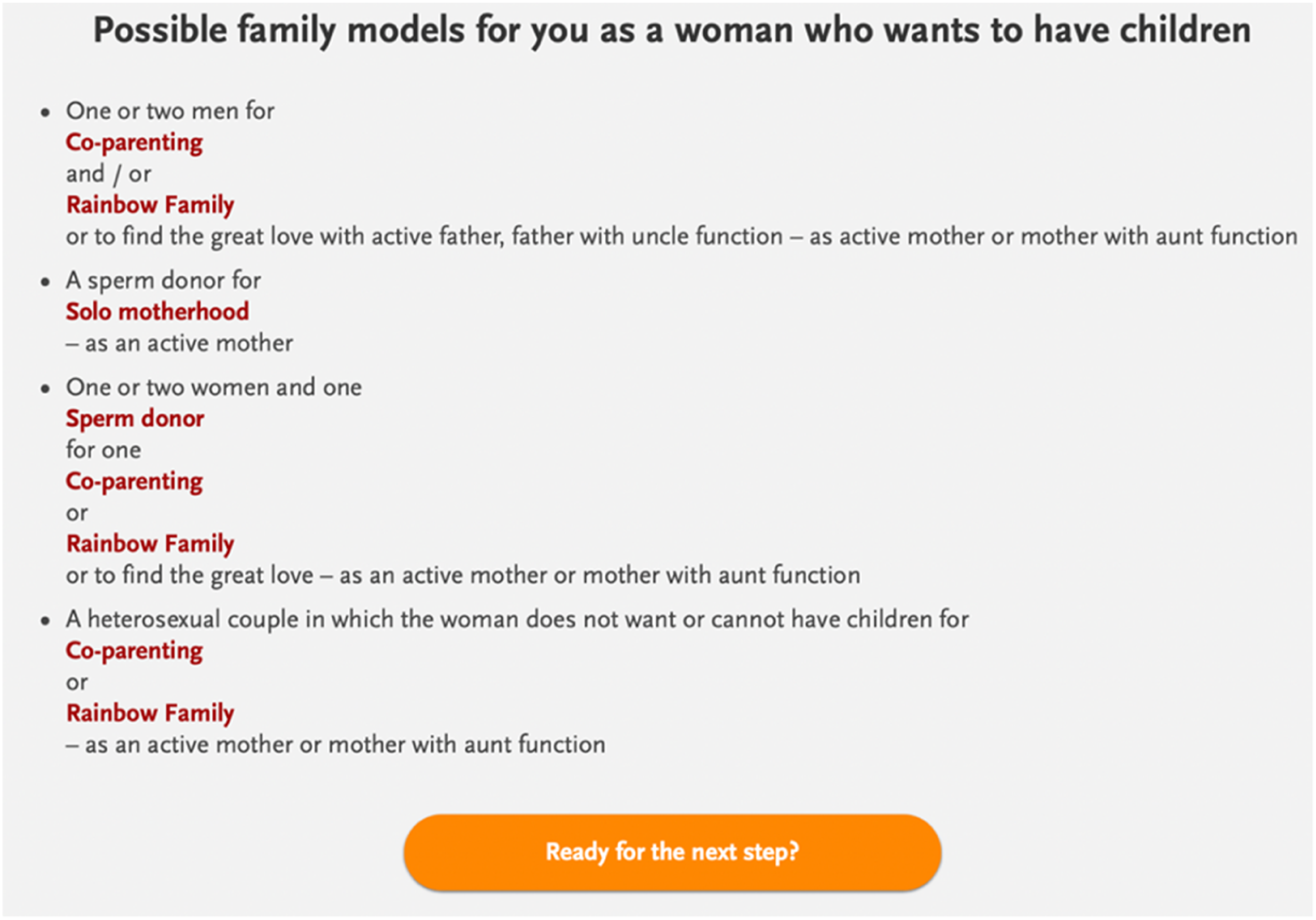
The testing module starts with the status-quo of the user (Figure 4). Depending on the selected answer, a different list of options will appear (Figure 5). Detailed explanations of each family concept can be found when clicking on them. Test module. Test outcome – overview of family creation options.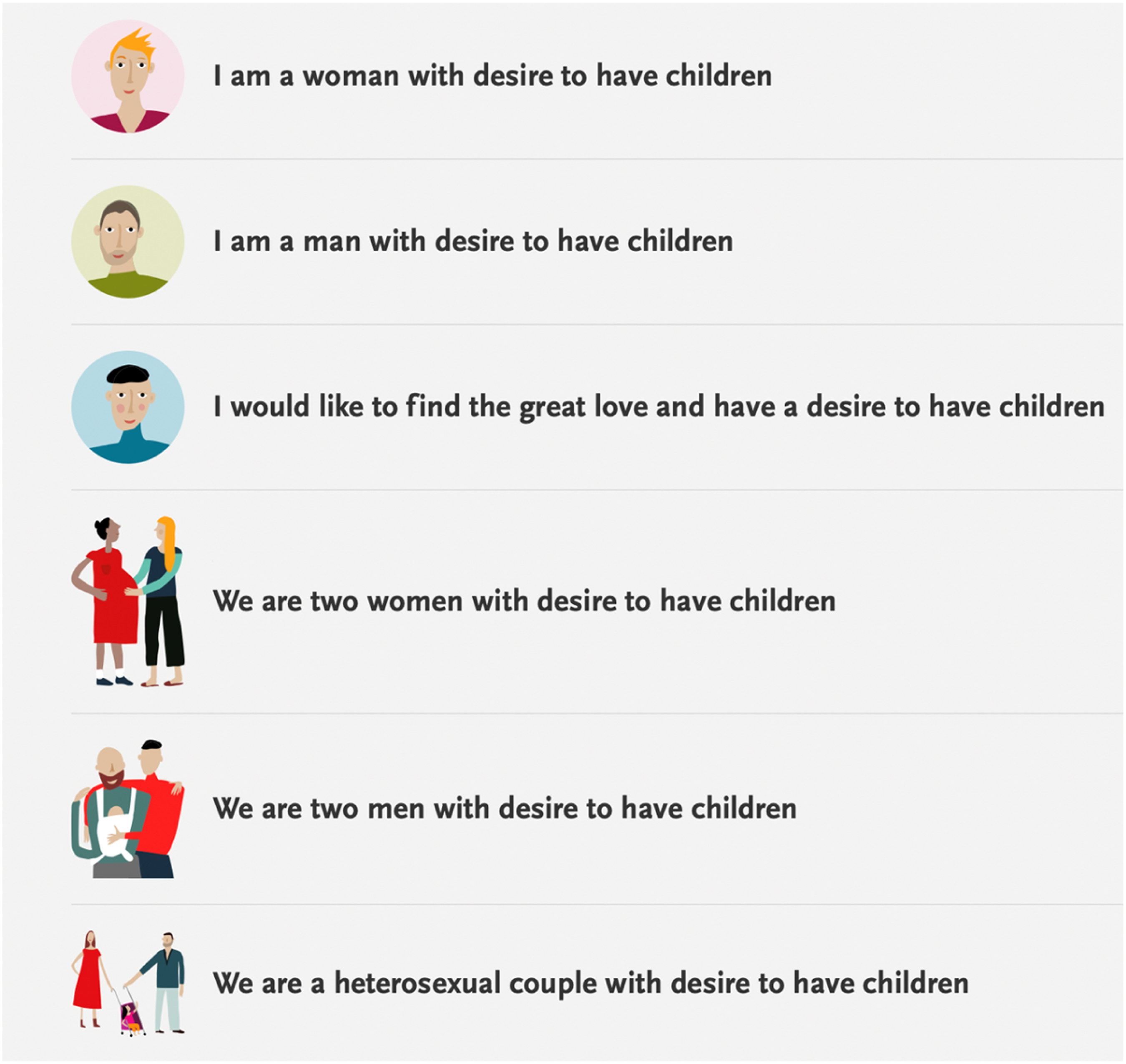
Parental role module
Parental roles constitute another type of module (Figure 6). Familyship deconstructed traditional roles within a family and borrowed from existing notions (e.g., mother, father, and child), but they redefined and reconfigured the roles like building blocks, so a “mixing and matching” would suit many people in configuring their desired family constellations. Depending on the selected family constellation, users may configure their own role within the family and that of potential co-parents. Parental role modules.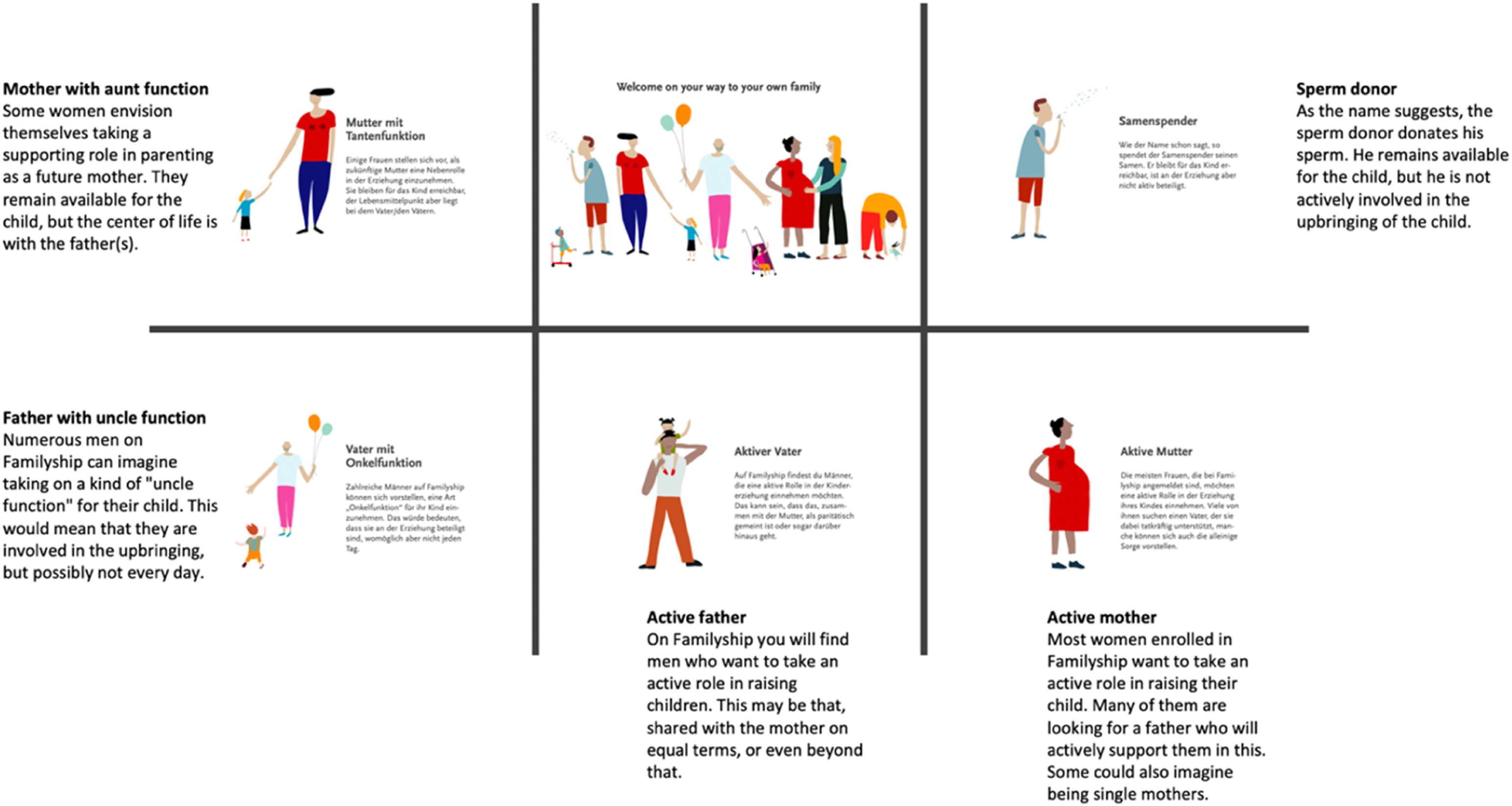
Plurality of outcomes
Variety and Diversity of Family Constellations.
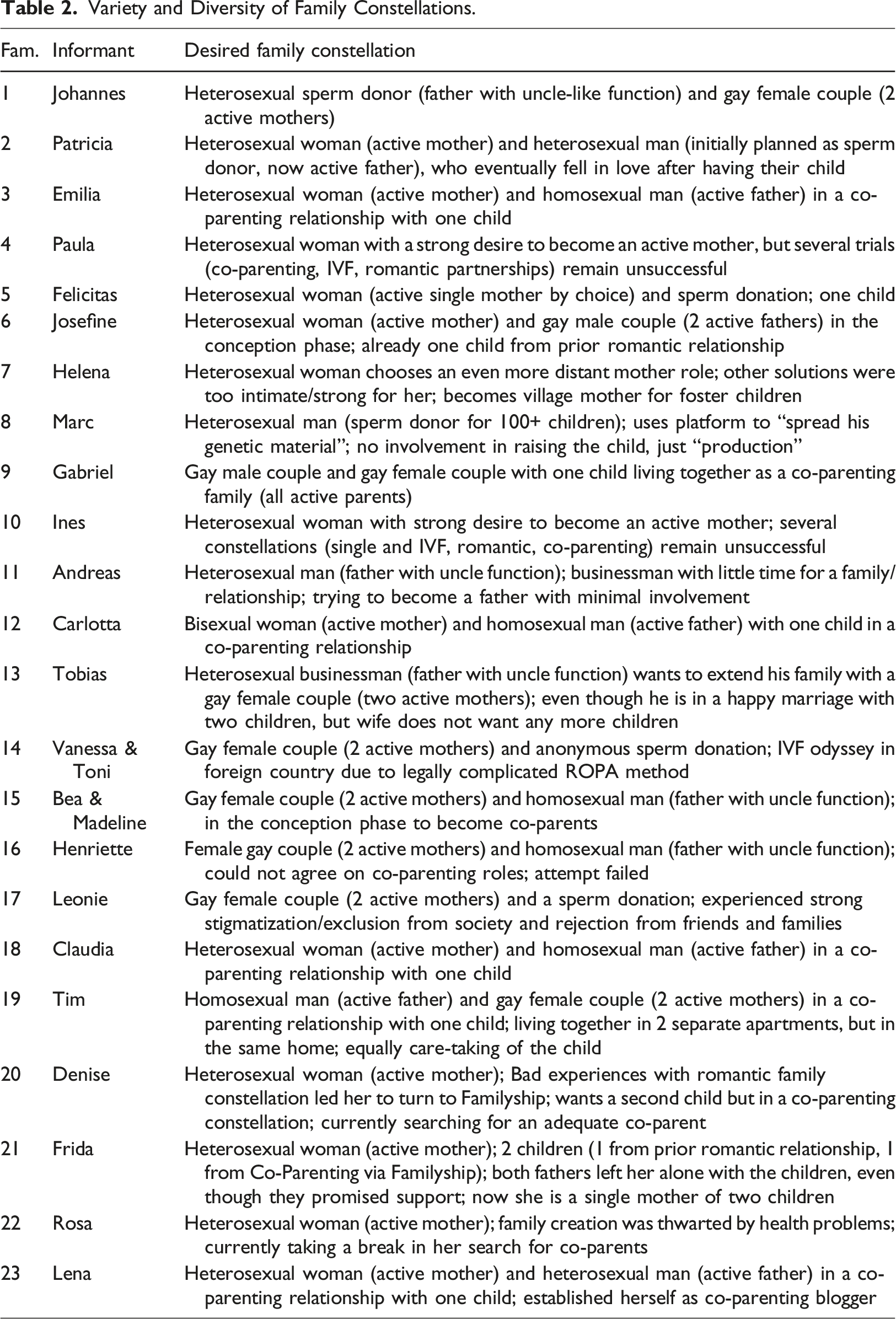
The platform affordance of modularization shapes family and consumption by assisting platform users in configuring a diversity of family constellations depending on their wishes and individual life situation. The modules serve as guides (getting informed, understanding the concepts, selecting parenting roles, step-by-step to “building” a family) through this novel process of creating a family through platformization. While modularity is not uncommon in corporate-initiated platforms, we find it manifests differently in consumer-initiated platforms. The modules serve as guidance and structure for the platform users. Categorizations/classifications are often an authoritative element of platforms, forcing categories on users and putting them in boxes. In Familyship, the categorizations and classifications do not serve as restrictive boxes that place boundaries on users. Instead, the modular building blocks encourage and inspire users to experiment with alternative family forms, and afford a broadening and pluralization of the institution of family and of users’ identities.
Scaling
The scaling affordance allows more people to access the platform (scaling out), demands action from policy makers (scaling up), and demands recognition and legitimacy from society (scaling deep) (Moore et al., 2015; Chliova and Ringov, 2017). Scaling has been identified as a central affordance in prior literature (Bucher and Helmond, 2018) and has been themed “outreach” affordance in prior consumer literature (Kozinets et al., 2021, p. 448).
Scaling out
The Familyship platform expands its reach to more people by creating a digital platform that offers configuration modules for family creation (Figure 6). Providing its users with a variety of parental role modules facilitates self-customized solutions to a virtually unlimited number of users, irrespective of their geographic locations. Scaling out to new locations, however, is currently limited by the importance of relative proximity to potential family members, which requires some critical mass of users in any geographic location.
Scaling up
The Familyship platform aspires to influence policy and have an impact on society by aligning with already legitimized actors in the field (cf. Tracey et al., 2011). Familyship tackles this through its own activities of advocacy and those of its broader community, including influential people from media, government, university, and other professions. A common means of connecting Familyship with societal discourse has been to give interviews and promote its ideas and organization through interviews, podcasts, blogs, and documentaries about the organization (Figure 7). The platform founders also created a podcast to discuss co-parenting, rainbow families, single motherhood, legal matters, and other topics around alternative families with invited speakers (Figure 8). Familyship in the press. Elective kinship podcast.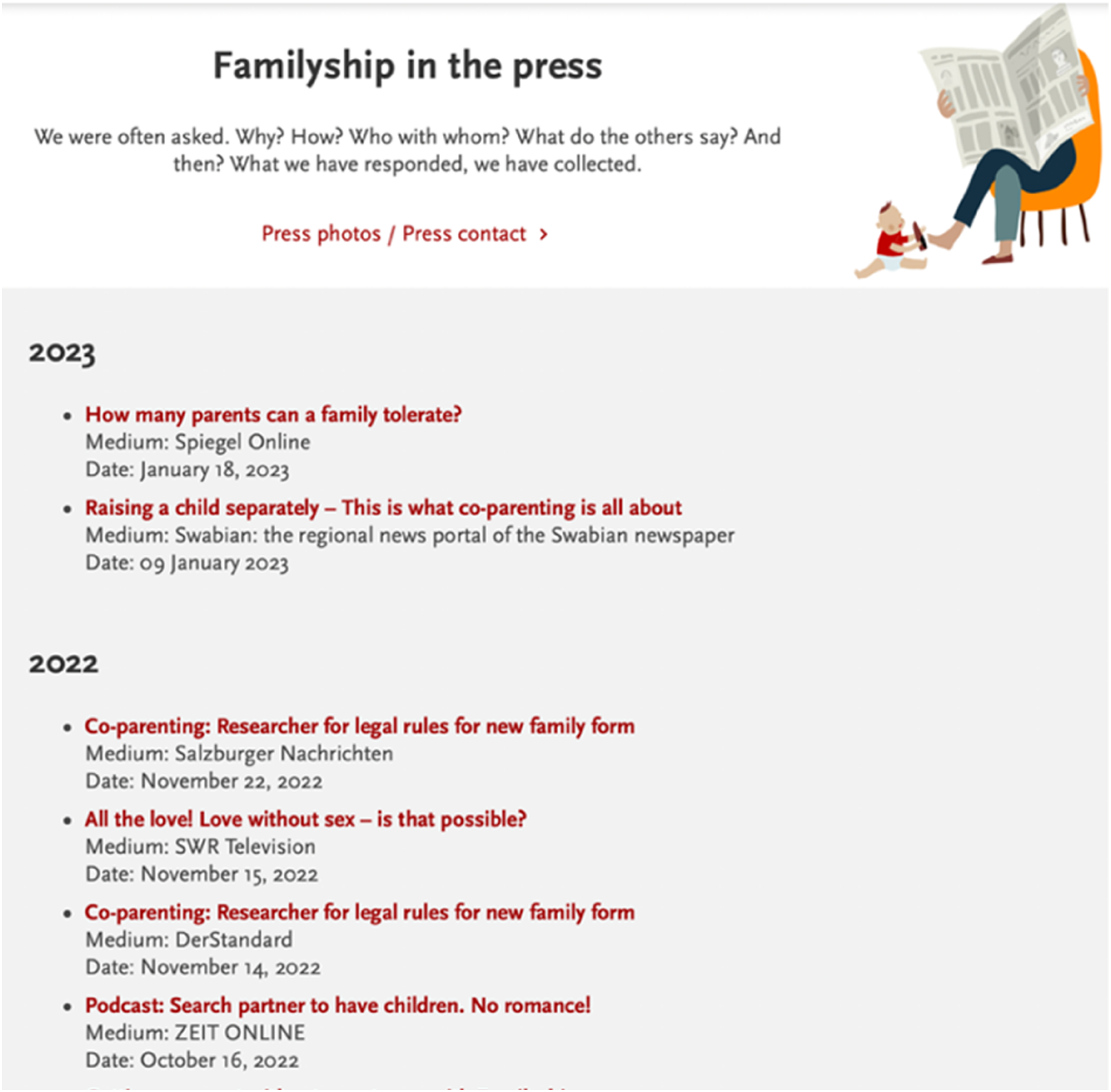
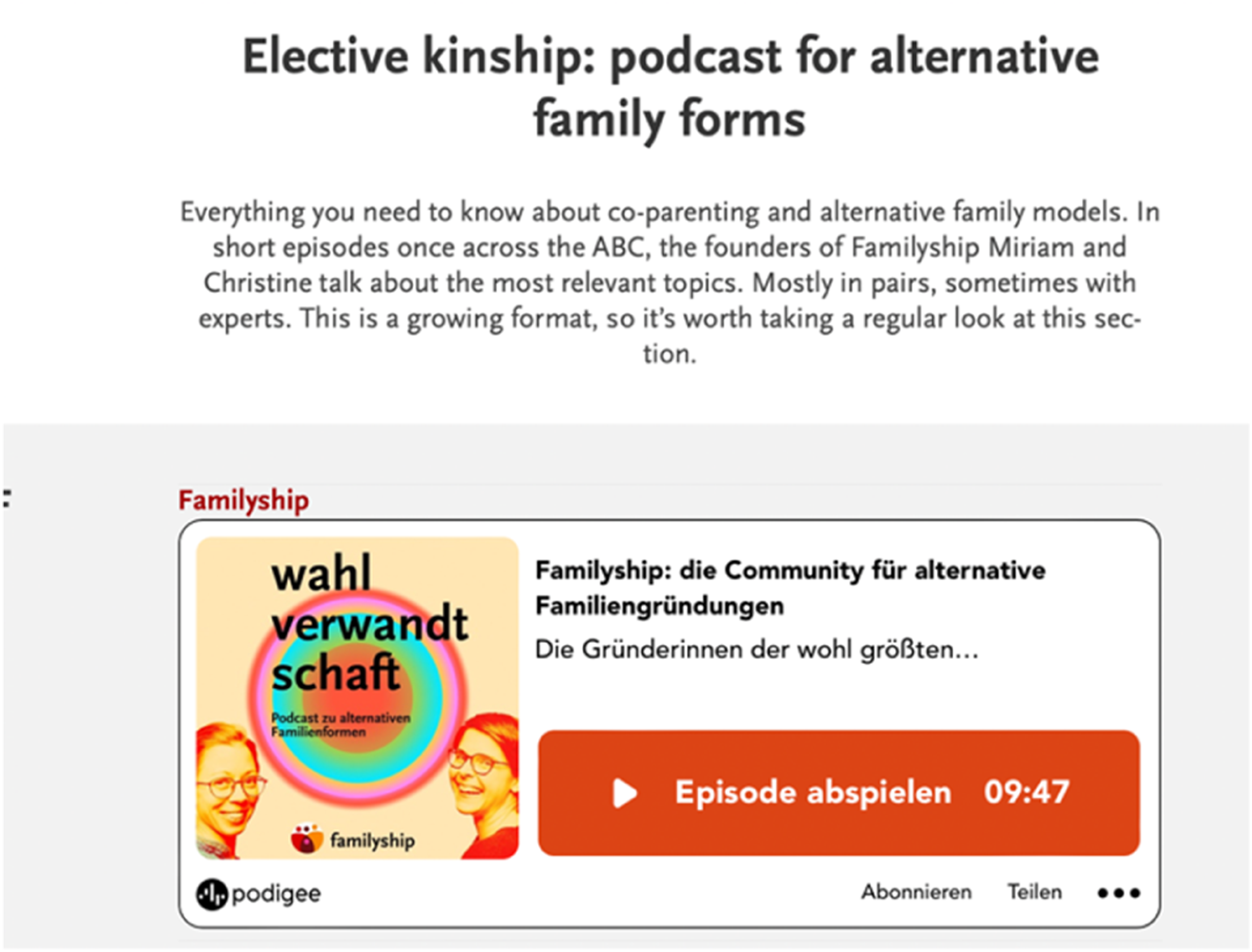
Alliances with already-respected people and organizations confer a kind of halo effect and lead to valuable advocacy. Familyship established formal partnerships with renowned organizations (Figure 9). Familyship also connects to and draws momentum from the LGBTQ+ movement, which represents a potential target group for the platform and has already worked hard to establish its legitimacy. Partnership with legitimate actors.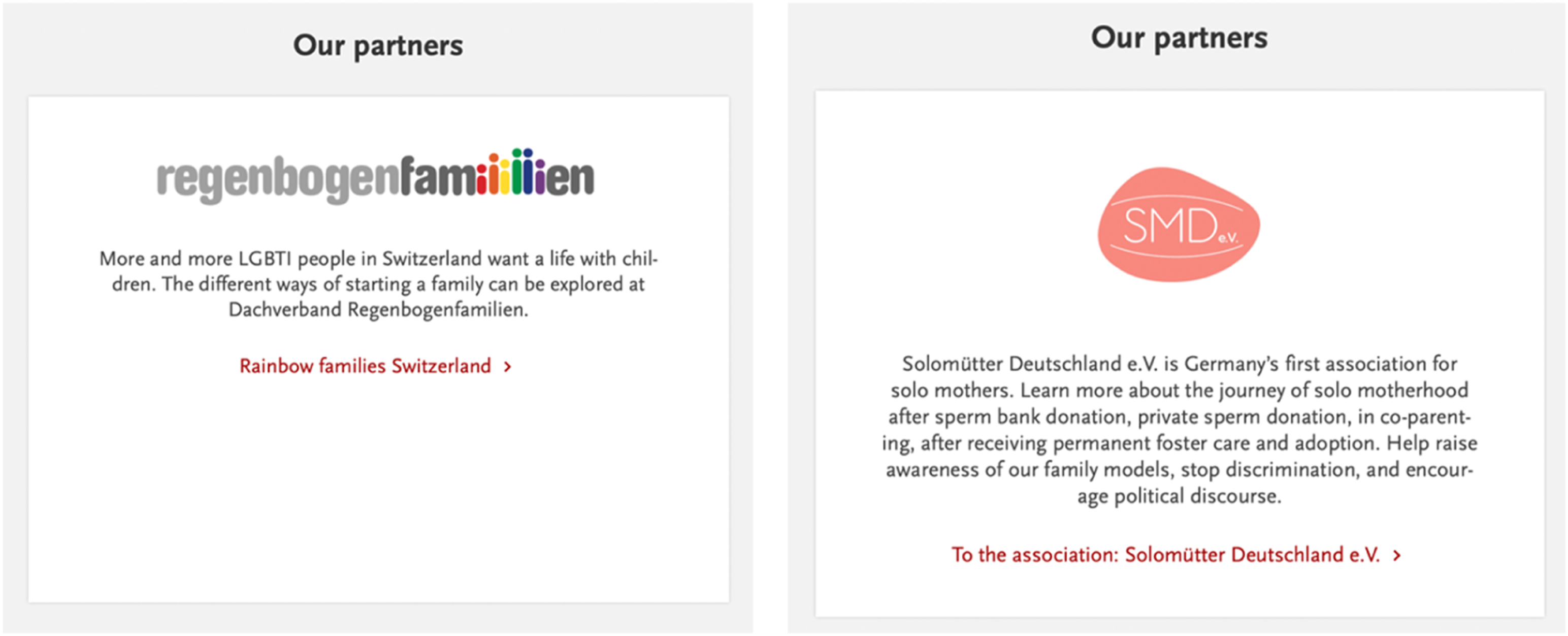
Familyship connects with prominent people from fields such as law, sociology, psychology, and politics, and invites them to present their perspectives on the Familyship website. In the platform space called “The Family in Transition,” selected individuals present their views on family in favor of the online platform (Figure 10). “The family in transition” commentaries on Familyship.org.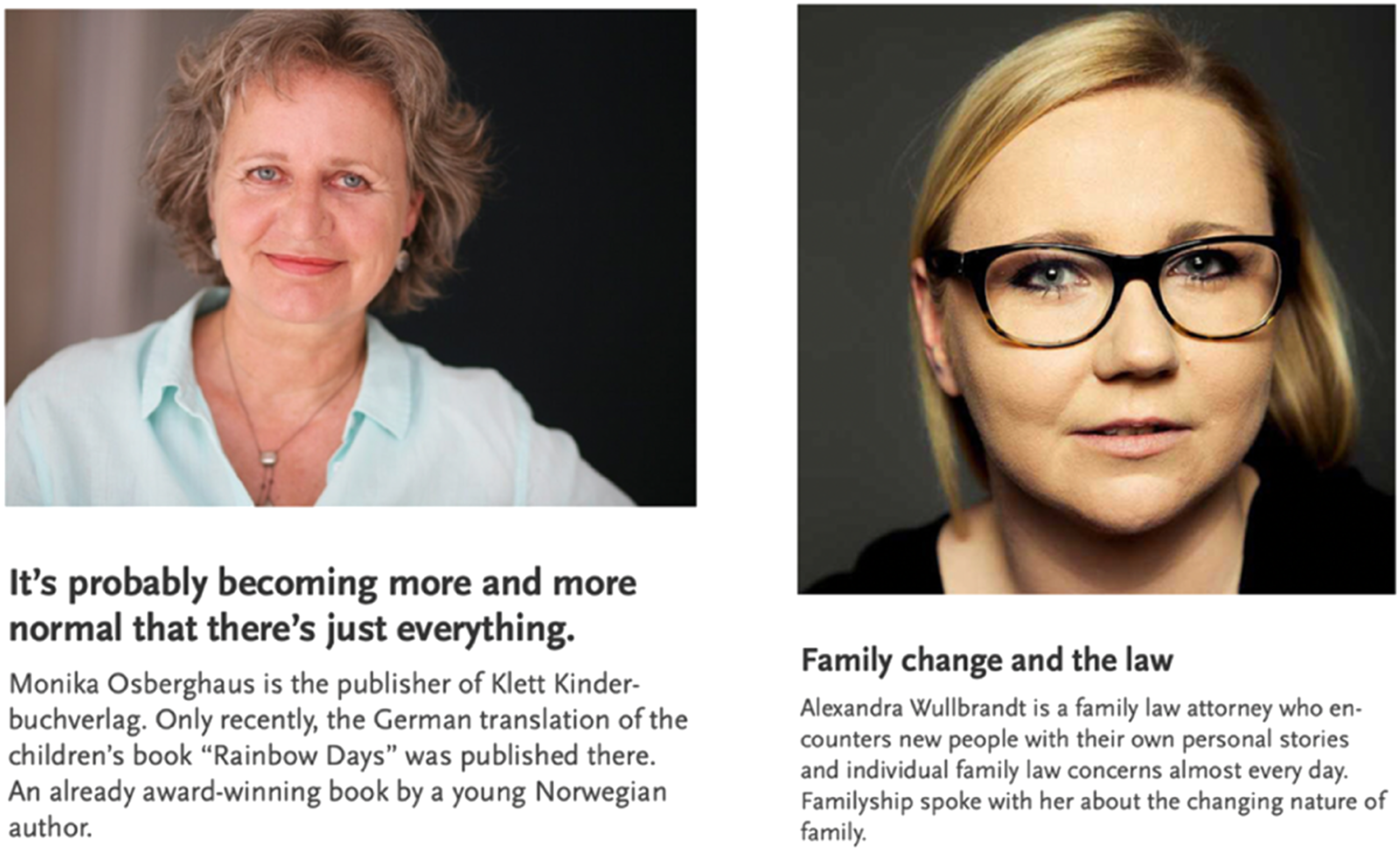
Familyship also connects with legitimizing societal discourses by participating in relevant competitions and award programs. Familyship founders received an award from the national “Germany–Land of Ideas” initiative. Such mainstream honors confer legitimacy, not only on the organization, but also on the cultural ideas for which it stands. Scaling up is afforded by both scaling out and deep, especially when legitimate and important mainstream actors begin to share the platform narratives.
Scaling deep
The Familyship platform connects with and leverages cultural roots (Moore et al., 2015) through their generative telling of stories that normalize, if not romanticize, alternative families and their structures, experiences, and benefits to transform “people’s hearts and minds, their values and cultural practices, and the quality of relationships they have” (p. 74). The founders blog their own story on the website, including such episodes as the development of the online platform, their selection of a co-father, the creation of their family, the process of getting pregnant, the first weeks with a newborn, descriptions of daily family life, and the dynamics of new romantic partners. Sharing intimate details about their private life establishes trust and models a functioning co-parenting relationship to interested Familyship users. Figure 11 is an illustrative excerpt from the founders’ blog. Storytelling to model a functioning co-parenting relationship.
The website features a diversity of family portraits based on successful Familyship experiences. Family portraits cover a wide range of possible family constellations and describe the story behind each family through combinations of text, photography, and video (Figure 12). They embody the innovative logics for family creation and present them in a friendly, relatable fashion. Success Stories: Sample family portraits of Familyship families.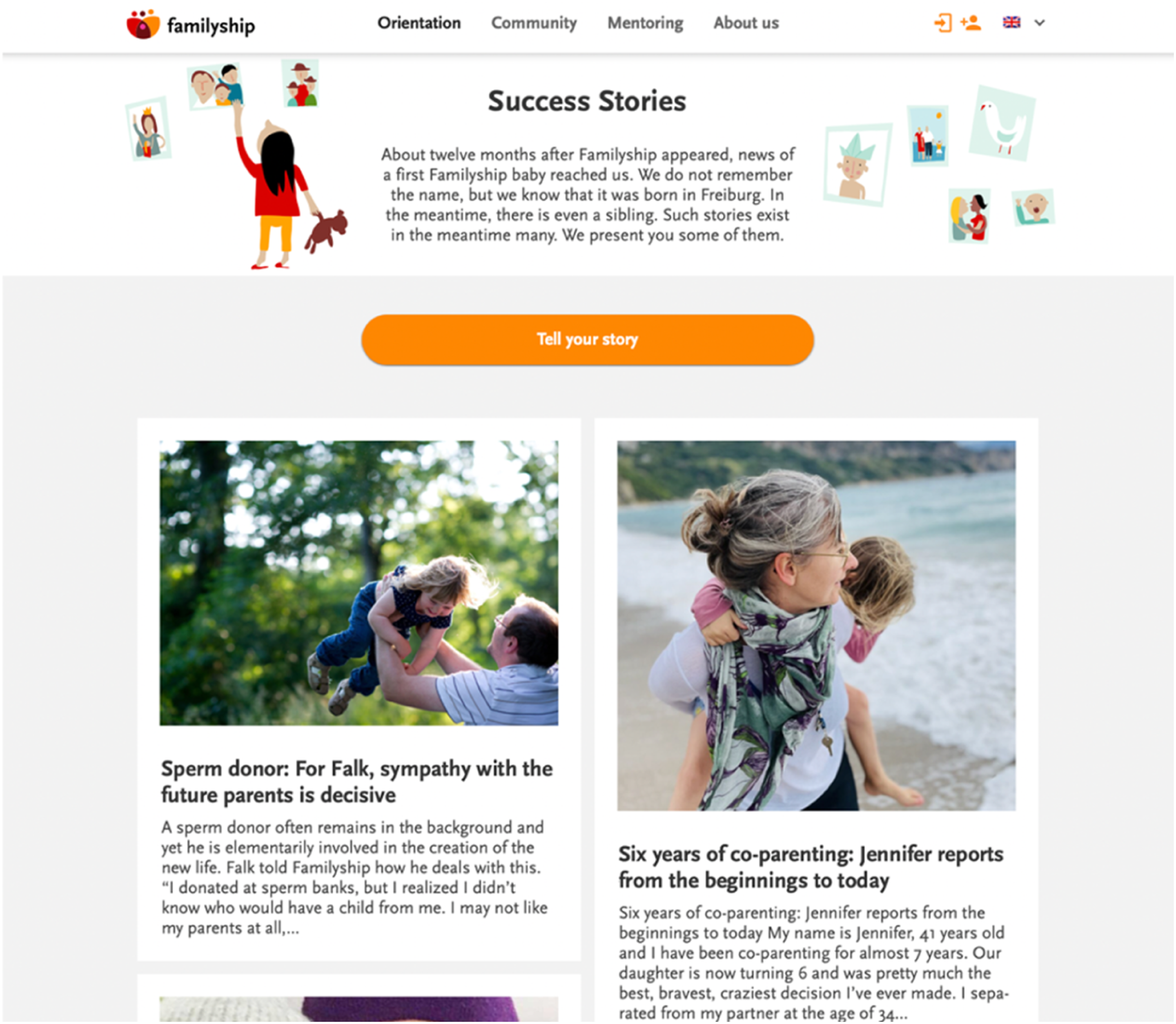
The platform also functions as a source of generative storytelling to advocate for alternative families through ready-to-tell bedtime stories for children (Figure 13). The website states that, “as different as the children’s stories may be, what they all have in common is that the characters do not grow up in a classic nuclear family” (Familyship.org). Bedtime stories.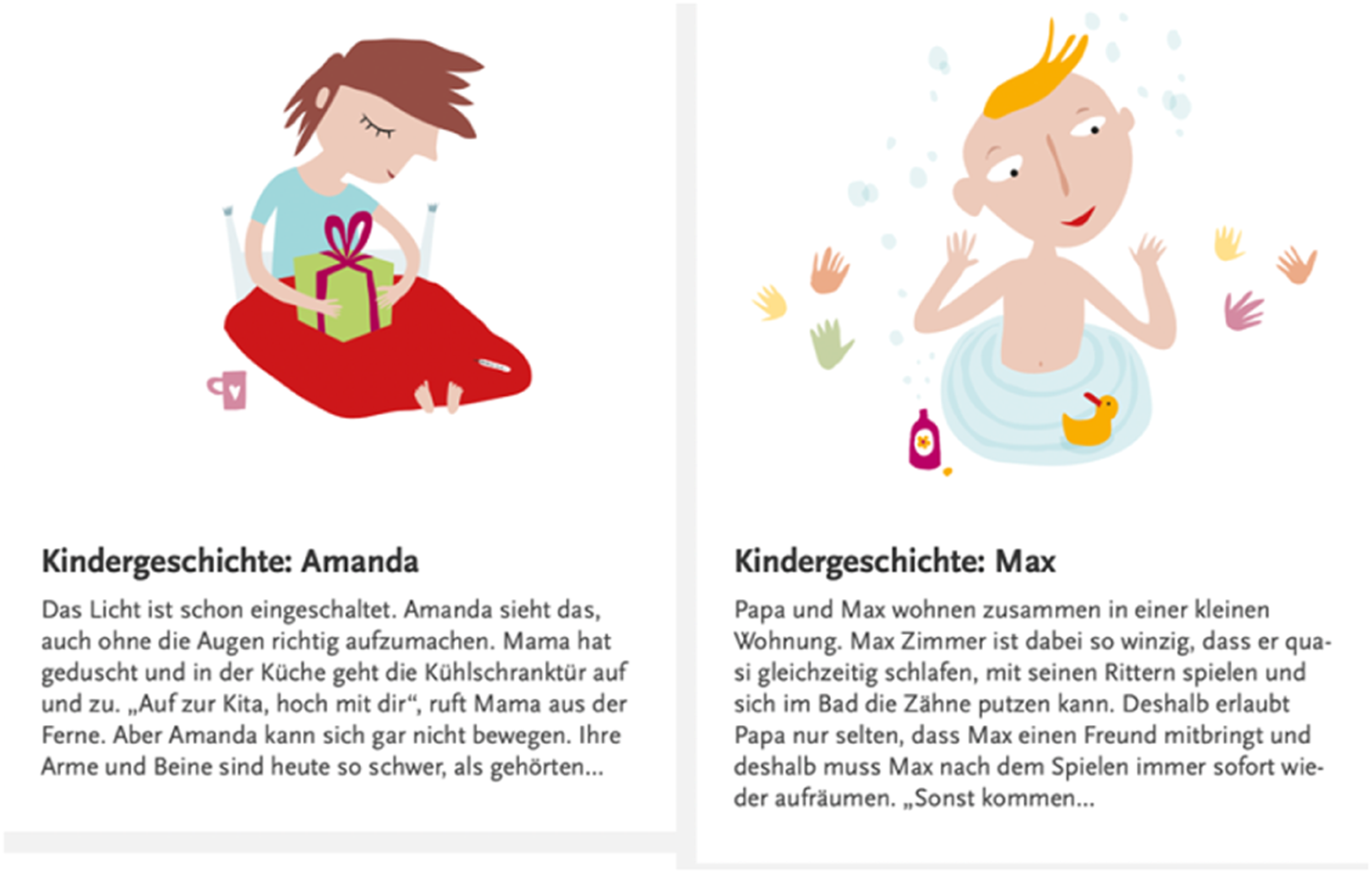
The platform elements of scaling deep serve the purpose of facilitating and advocating for alternative family arrangements. Scaling deep aims to generate kinds of social changes that make alternative families more acceptable to mainstream citizens.
The platform affordance scaling shapes family and consumption by connecting people with others who are similarly marginalized that they otherwise probably would not have found. Users feel welcome in their niche of like-minded people and get inspired through the exchange with others. Scaling also shapes family by broadening and perhaps even normalizing the notion of family in society. Our analysis reveals scaling as a key affordance of consumer-initiated platforms. While scaling is not uncommon in corporate-initiated platforms, especially with regard to reaching more people for profit purposes, it manifests differently in consumer-initiated platforms. Scaling out to reach more people is about inclusion, not profits. Scaling up is about increasing legitimacy and institutional support for those that fall into institutional voids. Scaling deep is about helping users to connect more meaningfully with positive societal values.
Discussion
Platform affordances of consumer-initiated platforms
Prior research has identified platform affordances of corporate-initiated platforms, such as discovery, narration, contact, meta-voice, outreach, organizing (Kozinets et al., 2021), recursivity (Airoldi and Rokka, 2022), and memetic tendencies (Caliandro and Anselmi, 2021). These action possibilities (Gibson, 1979; Kozinets et al., 2021; Mardon et al., 2022) enhance our understanding of how platforms relationally afford ways of interacting and engaging with the platforms, encouraging or limiting distinct consumption behaviors, expressions, or ways of feeling. We started the exploration of Familyship by asking the following research question: how do platform affordances manifest in consumer-initiated platforms and reshape family and consumption? Drawing on our analysis of Familyship, we argue that platforms initiated by consumers stand out from corporate-initiated platforms in several ways regarding how they shape consumption and culture, including at the fundamental level of the family.
We conceptualize consumer-initiated platforms as digital platforms created by ordinary consumers using readily available (market) tools. Designed initially to address personal consumption problems/needs, the platforms’ affordances may resonate with other consumers, allowing them to leverage community dynamics in bringing about broader change. While most mainstream platforms are owned by corporations, here they are owned by ordinary consumers themselves. And while corporations take the principal role of mediating commercial transactions between various actors (Wichmann et al., 2022) and typically with the aim of maximizing profits or advertising revenues (Poell et al., 2019), consumer-initiated platforms address institutional voids (Ottlewski, 2021) by helping to advance consumer well-being where corporations or public-sector actors offer limited help.
Our findings illustrate four key platform affordances that are elevated in the consumer-initiated platform. Embeddedness refers to the consumer-founders’ immersion within the surrounding socio-cultural structures, implying certain agency and space of open possibilities but also constraints and limits. Embeddedness is the underlying affordance that shapes the platform’s architecture and functions. We further suggest underlying affordances to be specific, higher-level affordances that shape the creation as well as enable and support other platform affordances we identified. In our empirical case of Familyship, embeddedness served to trigger the creation of the consumer-initiated platform and facilitated the manifestation of privacy, modularization, and scaling. Embeddedness enabled the creators to build a platform in a way that serves the needs of its users, is sensitive to their particular problems, and provides solutions that illustrate an in-depth understanding of the social and legal context.
Privacy and transparency afford consumers the confidence and trust that is needed to navigate sensitive personal issues. Modularization enables individuals to integrate, recombine, filter, and choose from various components or profiles regarding their desired family constellation, allowing them to creatively configure, test and find solutions. Scaling allows the platform to reach larger numbers of people, influence key societal actors, and link to deeply rooted cultural values.
Embeddedness and privacy are platform affordances that contrast most clearly with corporate-initiated ones. While surveillance (Darmody and Zwick, 2020; Zuboff, 2019) and opacity (Airoldi and Rokka, 2022; Beer, 2013) are central characteristics of corporate-initiated platforms, we argue these are reversed in consumer-initiated platforms, which tend to protect privacy and offer transparency. Modularization and scaling, affordances which could be found in some corporate-initiated platforms, also manifest in consumer-initiated platforms distinctively. We find they offer a powerful way for ordinary consumers with limited prior business experience to innovate and mobilize change for themselves and for others. Notably they afford and encourage plurality for consumers’ identity constructions and emphasize an orientation to address prevailing cultural meanings and values. Our research thus answers not only what is being afforded by platforms but how (Davis, 2020; Mardon et al., 2022, pp. 5–6), to capture a variety of ways in which consumers can find solutions to their consumption-related problems.
Prior research offers contrasting perspectives on the notion of empowerment through platformization. One perspective holds that platform affordances may lead to perceptions of consumer empowerment in different ways, by promoting voice, choice, justice, inclusion, catalysis, and consciousness-raising (Kozinets et al., 2021). Yet, other scholars have convincingly argued that commercial platforms engender an “illusion of empowerment”: consumers are tricked into thinking they are in control; and sometimes they may actually feel empowered, even though corporate-initiated platforms are largely in control and manipulating their behaviors (Darmody and Zwick, 2020). Our study on consumer-initiated platforms contributes a fresh perspective and shows that the embeddedness of the consumer-founders affords a platform architecture that empowers other consumers in their quests to solve fundamental problems in the privacy and safety of individuals with similar challenges.
Digital platforms and family
Our study highlights how current understandings of family are inherently limited, opening the door for embracing a broader view of family in consumer research. Family is a cultural institution that is both intimate and public and regarded as fundamental to society. Prior research reveals increasing diversity among family constellations. However, these developments have been overlooked in our field. Family consumer research has examined family identity (Epp and Price, 2008), family assemblages (Barnhart and Peñaloza, 2013; Huff and Cotte, 2016), and market offerings for families (Epp and Velagaleti, 2014). However, the understanding of what constitutes family is largely taken for granted. Current developments and changes in family structures raise many important issues in consumer culture, and yet we see very limited dialogue about them in consumer research. Our study features a more inclusive understanding of the variety of family constellations, family identities, and family construction. We invite new research addressing and problematizing the notions of what family is and what family does. Our study identifies a need to further theorize the processes and consequences of “platformization of family.” Such research could address new categorizations of organizing based on innovative consumption templates of family leading to novel social arrangements, mediated and shaped by digital platforms. Our empirical work can be regarded as a discussion starter.
Digital platforms and public policy
Our findings have several implications for public policy makers. First, policy makers should acknowledge the expanding diversity of what family is and reflect that new understanding in policymaking and regulation. Second, our research underscores the potential importance of consumer-initiated platforms in addressing institutional voids (Mair and Marti, 2009). We see society evolving in its needs more rapidly than established institutions can accommodate, leading to gaps that need to be filled. Prior work has illustrated that internet users may create blogs, forums, and communities in the hope instigating change in the society (Gollnhofer et al., 2019; Weijo et al., 2018; Scaraboto and Fischer, 2013). Yet, this perspective has not been a major focus in consumer research. To answer this call, we suggest that digital platforms may have the potential to provide adequate and scalable solutions. Other successful examples can already be found. The “Housing for help” initiative affords elderly people the opportunity to age in their own homes and combat loneliness while providing young people affordable housing (Bajde and Ottlewski, 2016). “Timebanking for the future,” a Swiss time-banking initiative, affords 60-something consumers a way to assist 80-something consumers in exchange for banked hours of assistance for themselves once they reach 80 years of age (Ottlewski et al., 2019). Platformization can help trigger, mobilize, and innovate cultural and social change (Nardini et al., 2022). We envision new opportunities for public policy to support and experiment with consumer-created (for and not-for profit) digital platforms addressing social problems. Following Mulgan’s (2006) view that “(…) people are competent interpreters of their own lives and competent solvers of their own problems” (p. 150), policymakers should follow suit. In this light, shifting the perspective from organization-initiated change toward institutional work by ordinary consumers to create change is a promising future avenue for research.
Footnotes
Authors’ Note
The manuscript is based on the lead author’s dissertation, conducted at the University of St. Gallen under John W. Schouten.
Declaration of conflicting interests
The author(s) declared no potential conflicts of interest with respect to the research, authorship, and/or publication of this article.
Funding
The author(s) disclosed receipt of the following financial support for the research, authorship, and/or publication of this article: This study is supported by Schweizerischer Nationalfonds zur Förderung der Wissenschaftlichen Forschung (P1SGP1_188106).
