




Abstract
Limited research exists around the interrelationships between protest camps and marketing practices. In this article, we focus on the 2014 Hong Kong protest camps as a context where artistic work was innovatively developed and imaginatively promoted to draw global attention. Collecting and analysing empirical data from the Umbrella Movement, our findings explore the interrelationships between arts marketing technologies and the creativity and artistic expression of the protest camps so as to inform, update and rethink arts marketing theory itself. We discuss how protesters used public space to employ inventive methods of audience engagement, participation and co-creation of artwork, together with media art projects which aimed not only to promote their collective aims but also to educate and inform citizens. While some studies have already examined the function of arts marketing beyond traditional and established artistic institutions, our findings offer novel insights into the promotional techniques of protest art within the occupied space of a social movement. Finally, we suggest avenues for future research around the artwork of social movements that could highlight creative and political aspects of (arts) marketing theory.
Introduction
From Tiananmen to Tahrir Square and from the Indignados movement to the Red Shirts in Thailand, historically, protest camps have emerged as contexts of social movements’ activism and as spaces where people’s opinions and demands are publicly heard. The outbreak of the 2007/2008 global financial crisis, followed by the economic recession and increased social inequality, has caused a rise in the number of protest camps globally (Price and Sabido, 2014) and more recently, social unrest and protests followed the 2016 US Presidential elections and Brexit vote. Phenomena related to protests and protest camps have been examined in some fields, for example, sociology, politics, media and communication (Feigenbaum et al., 2014; Johnson and Suliman, 2014). In particular, social movement theorists have offered critical insights on the role of art in the context of contentious politics as a means of communication, mobilization and collective expression to accomplish political aims (Adams, 2002; McDonald, 2006). Surprisingly, there is very limited research on the interface between artistic activities in protest camps and marketing theory.
Higgins and Tadajewski (2002) theoretically explored the utilization of marketing technologies and knowledge in anti-corporate protests, as vehicles for spreading political ideas and discovering new audiences. They called for a more thorough exploration of how social movements communicate their opinions and messages, by re-engaging with marketing theory (Higgins and Tadajewski, 2002). Despite this call, the presence of marketing practices within protest camps (e.g. promotion of protest art and distribution networks for collective claims and messages) has remained unexplored in the field of marketing studies and arts marketing in particular. While there is robust literature on the production of anti-war art (Monteith, 2008), protest music (Rosenthal and Flacks, 2012) and activist art projects (Waltz, 2005) in several contexts, the marketing technologies and practices utilized for their communication and promotion are also absent from arts marketing theory. Considering the rise in frequency, visibility and creativity of protests and social movements over the last 40 years (Jasper, 1997; Johnson and Suliman, 2014), we suggest that marketing and arts marketing researchers could learn from the promotional methods of protest art.
This study provides a novel exploration of how a social movement employed promotional techniques of protest art to effectively communicate their aims and messages to the wider public. Although our existing knowledge of arts marketing theory and practice has been heavily enriched over the last three decades (O’Reilly, 2011), some distinctive features of protest art related to its production, collective creativity, promotion and aesthetic consumption – among others – have been entirely unexplored. Diverse forms of visual, performing and fine art can be produced, shared and marketed in order to satisfy the spiritual, utilitarian or hedonic needs of the artist(s), consumer(s) and even global audiences (Fillis, 2011). On the other hand, social movements’ protest art is (usually) collaboratively produced, ephemeral, portable and non-copyrighted, seeking to effectively convey messages and symbols that will engage the public, attract media attention and stir action. In general, the production of art aims to explore the human condition and its display can increase aesthetic satisfaction, arouse feelings and frequently secure monetary advantages. Protest art adopts a shared and public character and its promotion primarily aims to raise awareness of social injustice and expose power relationships. Considering these differences, we argue that insightful and original findings can emerge from an empirical exploration of social movements’ protest art via the lens of arts marketing theory.
In this study, our main research objective is to examine and critically discuss how marketing technologies engaged with the promotion of protest art during the Hong Kong protests in 2014. Our empirical data are based on moderate participant observation, a visual analysis of photographs taken by the researchers and secondary data stemming from the publicly available digital archives of the Umbrella Movement. We employ the research findings firstly in order to identify the promotional techniques of protest art in the occupied spaces of the Umbrella Movement. Secondly, we contribute to existing theory and practice through a critical discussion concerning the role of protest art in developing spatial aesthetics, audience engagement tools and arts-infused education methods. Finally, we demonstrate how our observations provide the opportunity to inform, rethink and extend the boundaries of arts marketing and marketing theory in general.
The Hong Kong protest camps and protest art
The 2014 Hong Kong protests, also known as the Umbrella Movement, occurred between September 2014 and December 2014 (Kaiman, 2014). Since Hong Kong’s reunification with China in 1997, and following the principle of ‘one country, two systems’, this special administrative region preserves a high degree of autonomy regarding its political and legal organization. The Chinese government’s decision, in August 2014, to introduce an alternative electoral framework which redefined the terms of universal suffrage – by controlling the selection of the candidates – triggered a series of protests that demanded the continuation of democratic elections in Hong Kong. Demonstrations outside the Hong Kong Government Headquarters began in late September 2014, gradually forming the Umbrella Movement which created protest camps in several other areas of Hong Kong. The three main sites of the protests were formed in the arterial routes and key areas of the city (Admiralty, Causeway Bay and Mong Kok) which remained closed for almost 70 days; it is estimated that at their peak, there were more than 100,000 protesters (Roantree and Jucca, 2014). Following more than two months of protests – characterized by tensions with the police and anti-protesters – the occupation sites were cleared in December 2014 without the protests having achieved any promises from the state (Dapiran, 2015).
Together with the mass mobilization of the public, it is well documented (BBC News, 2014a; Lau, 2014) that the most prominent features of the Umbrella Movement involved the spontaneous outpouring of creativity, including the production and display of protest art as vehicles for both communicating messages and engaging the public. Strategically occupying key urban intersections at the heart of Hong Kong’s business and commercial districts, the protesters carefully installed diverse forms of highly visible, imaginative and interactive protest art. Adopting the umbrella as a symbol of passive resistance, hundreds of artistic installations of yellow umbrellas in forms that included patchwork canopies, statues, trees and origami mobile emerged. Furthermore, colourful banners, lamp posts, tents, leaflets, stands and posters provided artistic platforms for pro-democracy quotes, visual symbols, icons of resistance, as well as caricatures of politicians. In sharp contrast to the surrounding skyscraper architecture, the proliferation and ingenious demonstration of protest art transformed the urban environment – within the occupied camps – into open-air spaces for arts participation and engagement. A variety of collaborative projects encouraged protesters, Hong Kong citizens and tourists, often without any artistic background, to actively participate in the co-production of protest art. Interactive street painting events, chalk drawing on the pavements and blind contour sessions inspired and engaged pedestrians who enthusiastically contributed to the co-creation of these impulsive, unconventional and all-inclusive protest art projects. Last but not least, the Umbrella Movement utilized protest art to inform and educate audiences as to their collective aims and with regard to issues of social justice and universal suffrage. Protesters organized and created arts-infused learning environments, including a specially designated study area, ‘mobile democracy classrooms’ and free libraries in the protest camps of Admiralty and Causeway Bay. In general, protesters’ art that was displayed in the camps and through social and mainstream media played a crucial role in politically awakening the Hong Kong citizens and in attracting worldwide attention to their cause.
Arts marketing and protest art
Favouring a sociological perspective, we view art in general and protest art in particular as complex constructs which mirror and communicate to wider audiences the interrelationships between social, historical and cultural forces (Rodner and Preece, 2016; Schroeder, 2010). We consider protest art as a broad term, encompassing both a work of fine art, such as Picasso’s Guernica, and a site-specific installation related to environmental injustice, to give two examples (Reed, 2005). Following Jasper (2014), we suggest that protest art’s main objectives are to provide a form of criticism towards social injustice and convey messages and statements designed to influence or cause positive change in society. In our context, the Umbrella Movement employed spatial aesthetics, audience engagement techniques and arts-infused educational events that sought to express protesters’ critique of the Chinese government’s decisions, highlight injustice and turn into a change agent. Aiming to build on these three promotional methods, a review of relevant arts marketing literatures is presented below, designed to suggest ways in which existing marketing practices might constructively inform and engage with the protest art of social movements.
Spatial aesthetics
In the realm of shopping and marketing environments, spatial aesthetics and cultural production of retail spaces have been explored in spectacular marketplace sites such as the Nike Town (Penaloza, 1998; Sherry, 1998), a festival shopping mall in Dublin (Maclaran and Brown, 2005) and a menswear fashion house in the Netherlands (van Marrewijk and Broos, 2012). Likewise, in artistic and specific cultural contexts, consumers’ and visitors’ multisensory and aesthetic experiences towards places have been examined in museums (Goulding, 2001; Joy and Sherry, 2003), concert halls (Debenedetti et al., 2014; Skandalis et al., 2016), Disney World’s EPCOT Center (Houston and Meamber, 2011) and anti-market festivals (Kozinets, 2002). These studies, among others, have provided novel insights as to how the spatial dimensions of contemporary marketplaces, arts venues and festivals, create and shape consumers’ experiences and their emotional bonds with specific places. However, the spatial contexts and aesthetic processes, explored in the existing literature, differ significantly from the multifaceted spatial character of urban protest camps and the participatory and political aesthetics of protest art. Protesters carefully choose their protest sites and utilize various spatial strategies and aesthetics to attract large number of participants and to strengthen the visibility of political symbols and messages (Brown et al., 2017). Thereupon, the strategic display of protest art develops the capacity to generate collective experiences and unify audiences on both intellectual and emotional levels. With this in mind, we can identify certain similarities and resonance between the spatial aesthetics, ideological purposes and promotional tactics of street art (Borghini et al., 2010) and protest art. Exploring ideologies of public space consumption, Visconti et al. (2010) suggested that the employment of street art in unexpected places is capable of creating and expressing ‘an aesthetics commons’ for individuals who seek to adopt common identities and a sense of belonging. Nonetheless, street artists’ individualistic or collective outcomes are usually focussed on specific neighbourhoods and aim to engage local communities, while protesters’ use of spatial aesthetics aim to mobilize vast audiences, attract global attention and enhance a sense of solidarity within and outside the movement.
Through occupying public squares, parks and/or central streets, social movements’ protest art alters the urban landscape and for a short period of time prompts visitors to both embrace social change and consider an unconventional and artistic viewpoint of their city. Oakes and Warnaby (2011) examined how outdoor musical events transform the environment and contribute in attracting audiences and changing consumers’ perceptions of urban spaces. Moving beyond the physical boundaries of artistic organizations, scholars have explored the promotion of open-air festivals (Wilks, 2014), brand building of visual artists in London’s outdoor sites (Sjöholm and Pasquinelli, 2014) and the cultural branding of Liverpool (Patterson, 2010). These outdoor arts events and projects can turn into generators of collective artistic experiences and create a fresh awareness of a city’s aesthetic character. However, the aforementioned site-specific and well-organized arts marketing activities occur within a public funded or market governed perspective, which stands in contrast with protest art’s non-commercial, empowering and anti-authoritarian features. Consequently, in this article, we use the Umbrella Movement protest camps as alternative urban contexts to conceptualize the spatial and aesthetic organization of protest art and subsequently to rethink and develop the spatial aesthetics of open-air art events, public or street art.
Audience engagement techniques
Over the last 30 years, several arts organizations have experienced a gradual transformation from being considered as presenters of tailored programmes to be seen as organizers of experiential settings and participatory events and projects (Ryan et al., 2010). Cultural policies, together with funding terms and conditions, directly encourage artists and arts managers to formulate strategies and performances based on audience participation and engagement (Knell, 2006). Kemp (2015) sought to define the meaning(s) and outcome of audience engagement, within the sphere of arts and cultural organizations, concluding that artistic performances should evoke feelings, emotions and collective responses which motivate consumers’ participation. Consequently, audience engagement in artistic experiences has the potential to foster social interaction, build a sense of belonging and also strengthen individuals’ attachment to the art message or organization’s aims. In a similar manner, social movements’ success depends heavily upon individuals’ participation (della Porta, 2013) and collaborative protest art can constitute a pre-eminent vehicle for the engagement of citizens in collective expression and identification with pro-democratic ideals.
Arts marketing studies, especially in the domain of the performing arts, demonstrate how artists’ creative activities can blur the traditional divisions between producers and audiences in theatres (Ryan et al., 2010), orchestra halls (Crawford et al., 2014) and museums (vom Lehn, 2006; vom Lehn and Heath, 2016). Within these experiential cultural contexts, consumers – as members of the audience – can be transformed into collaborative producers, since they are invited to take an active role in the co-creation of artistic services and experiences. Heritage organizations (Minkiewicz et al., 2014), art galleries (Minkiewicz et al., 2016), theatres (Walmsley, 2014) and online sites (Ren and Montgomery, 2012) have been turned into experiential and collaborative platforms where visitors engage and participate in the co-production of art. The importance of collectivity in these contexts has been emphasized by Carù and Cova (2006, 2007) who explored classical music concerts and recommended that service providers (organizers or artists) should act as ‘guides’ who facilitate audience participation. These carefully planned collaborative performances, for the co-creation of consumption experiences, take place within the designed spaces of established arts institutions and typically engage with performing arts audiences. Against this background, we turn our attention to the complex spatial and experiential terrain of urban protest camps where ideologically, culturally and age diverse audiences have access to public and collaborative protest art projects. In considering the co-creation of politically inspired art, this exploration seeks to offer fresh insights as to how collaborative art can enhance both consumers’ and citizens’ awareness of social issues.
Arts-infused educational events
A plethora of arts institutions around the world act as educators, employing marketing communications and promotion for their events (Bresler, 2007; Kolb, 2005). Oakes et al. (2013) emphasized the role of web-based forums and metaphysical branding as promotional vehicles of artistic services that could arouse consumers’ desires for aspirational self-improvement, pursuit of the arts or university education. Butler (2000) proposed that local communities – and especially young consumers – should be recognized as the primary market target segments for arts projects that seek to educate and develop audiences via events, platforms and alternative distribution networks. In the United Kingdom, arts and film festivals promote and celebrate the artistic achievements of individuals who faced mental health battles in order to engage and educate communities on how to tackle mental health stigma and discrimination (Clarke and Knifton, 2009). Also, museum exhibitions seek to enhance audiences’ knowledge around urban renewal and common cultural heritage (Lazzeretti and Capone, 2015) and in the face of funding cuts a variety of arts centres have created digital art spaces and online interactive tools which aim to strengthen non-arts students’ academic motivation and popularize arts consumption (Enhuber, 2015; Winner et al., 2013). The aforementioned arts marketing studies mainly approach audiences’ education and development either from the psychological angle (relating to visitors’ motivation) or via the adoption and consideration of government social policies, community enterprise strategies and measurable participation rates (Osborne and Rentschler, 2010). On the contrary, we focus on an ideological perspective that views arts marketing as a trajectory for social inclusion and change (Khan, 2015; Navaie, 2004), and accordingly, we seek to explore how protesters promoted arts-infused learning practices in the open, ephemeral and all-inclusive environments of protest camps. Considering that the vast majority of Hong Kong protesters and audiences were young people and students (CUHK, 2014), we propose that there is a need for a more concrete conceptualization on the role of protest art in educating audiences and cultivating social capital.
The current literature discussed a variety of promotional methods for outdoor arts events, the co-creation of cultural services and arts-inspired education of audiences, primarily with regard to the performing and visual arts sectors. These studies have emphasized the significance of place for artistic experiences and consumers’ reactions to interactive art and educational programmes; however, they do not reflect the spatial complexity, multifarious collaboration and ideological sensitivity required for the production and promotion of urban protest art. Thereupon and considering the identification of ‘more specific arts-related marketing frameworks’ (Fillis, 2011: 15), we now introduce the innovative promotional techniques of protest art by a pro-democracy social movement. As O’Reilly and Kerrigan (2010: 3) suggest, arts marketing research can lead scholars to interesting places: ‘in the moshpit at a rock concert, contemplating a pile of boxes in Tate Modern’s Turbine Hall, filming people at a music festival, talking to fans in a pub, reading novels and comics’. Through visiting, exploring, photographing and critically discussing Umbrella Movement’s creative activities in the heart of Hong Kong, we also invite the readers of this article to immerse themselves in this fascinating public space.
Methodology
In this section, we analyse our methods of data collection and analysis from the Hong Kong protest camps as research sites. Several studies on arts marketing theory have presented case study approaches, examining topics including marketing/brand activities in museums/galleries (Pusa and Uusitalo, 2014; Rentschler et al., 2012) and visual artist’s creativity (O’Reilly, 2005). For this study, the ideological diversity and organizational volatility of an organic, altering and dynamic political movement and the geographical complexity characterizing the occupied areas meant that the completion of a ‘holistic’ case study approach was not possible. A series of lively sit-in protests – together with dozens of artistic and protest-related events – occurred from the 26th of September 2014 to the 15th of December 2014 across three sites. Consequently, the identification or demarcation of specific ‘case study’ boundaries (Stake, 1994) with an intensive examination of the whole setting (Bryman, 2012) over a sustained period of time did not constitute a feasible plan.
Empirically, our study was based on moderate participant observation (Bernard, 1994) primarily photo-documentation (Rose, 2012; van Leeuwen and Jewitt, 2001) so as to collect data from the context under investigation. Two researchers spent a week – during the peak of the protests in November 2014 – at the Hong Kong protest sites, collecting empirical data comprised of photographic images, observations, field notes and a varied assemblage of artistic objects. The researchers adopted a moderate participant observation approach (DeWalt and DeWalt, 1998; Spradley, 1980) throughout the process of collecting primary data. During the first two days, the researchers acted as observers strolling in the protest camps, photographing and immersing themselves in the protest sites, protest activities and overall atmosphere. In the following days, the researchers moderately engaged in activities such as (a) interacting with the protesters through informal discussions and (b) participating in some of the creative activities, such as post-it writing and sticking as well as having their portraits drawn by local artists. These purposeful meanders around the camps, the observations and the discussions with protesters and bystanders resulted in field notes that included descriptions of the physical context, the presence and promotion of different forms of art; the creative activities taking place; and thoughts regarding the protest and the use of art as part of it.
Our primary data set includes almost 300 photographic images collected from two different protest camps (Admiralty and Mong Kok), field notes from observations and collection of artistic objects, such as postal-cards and drawings. Additionally, we examined secondary data stemming from existing digital archiving of photographic images created to preserve the artwork of the Hong Kong social movement, which was primarily established by the Umbrella Movement Visual Archives and Research Collective (Hilgers, 2015). For our analysis, we adopted a unifying approach with material stemming from both the field notes and visual collected data, which allowed us to develop a closer link between the abstract process of conceptualizing (as part of the researcher’s interpretative work), the experientially derived observations (Suchar, 1997) and the photographic images. We employed visual analysis (Rose, 2012) on both the photographic material we collected and the existing digital archives, in order to examine interrelationships between arts marketing theory and how the protests’ aims and causes were promoted at the site. Following Van Leeuween and Jewitt (2001: 4), the main aim of using photographic images in our analysis and discussion of findings was ‘to serve as records of reality, as documentary evidence of the people, places, things, actions and events they depict’. To protect the anonymity and confidentiality of protesters, we focus only on photographic images that depict artistic installations and public artwork already widely available on the Internet – while covering the faces of bystanders and removing any information which could identify particular individuals.
Findings
The collected data were based on a careful conceptualization of our main research objectives (Rieger, 1996), and following an examination of our literature review on the broadening of arts marketing theory and its potential to engage with protests, we identified three main themes that will be discussed in this article. First, we examine and discuss the creativity and ‘aesthetic and spatial organization of protest art’ employed by Hong Kong protesters, used to enhance awareness about their causes, transform the urban environment and captivate the imagination of wide audiences. Second, we focus on the use of creative methods to support increased participation in and co-creation of artistic activities and experiences as vehicles to engage the audience with protest’s artwork and messages. Finally, we elaborate on the value and promotion of protesters’ artwork for the development and education of audiences’, which facilitated the communication of their aims and sought to induce social change (Navaie, 2004). Tying together insights from the literature review with our observations, data analysis and interpretation from the Hong Kong protest sites, we critically discuss in the following sections how our findings can inform, enrich and even update arts marketing theory.
The aesthetic and spatial organization of protest art
Located at the central business district of the Hong Kong Island and surrounded by government buildings and shopping malls, the Occupy site of Admiralty turned into the epicentre of the pro-democracy camps. From the east entrance of the site, long colourful banners were hung on overhead bridges and roads. The banner displays included pro-democracy slogans and an image portraying the President of China holding an umbrella. The iconic and symbolic status of the umbrella gained prominence for the movement when protesters used their open umbrellas as shields against police tear gas two days after the start of the protests (Schumacher, 2014). Umbrellas were used as artistic objects and installations both in the protest sites and in other parts of Hong Kong during the protests. Walking through the central protest camp, we observed a mosaic of connected umbrellas strung between two footbridges, as a canopy, while large yellow umbrellas were positioned on each side of the occupied avenue (see Figure 1). Similar to the use of sunflowers by Taiwanese protesters in 2014 and the Goddess of Democracy statue in Tiananmen Square in 1989, the opened yellow umbrella turned into the celebrated aesthetic symbol of the movement (Lim, 2015) and the protesters carefully and imaginatively installed such site-specific protest artwork so as to ensure maximum visibility.
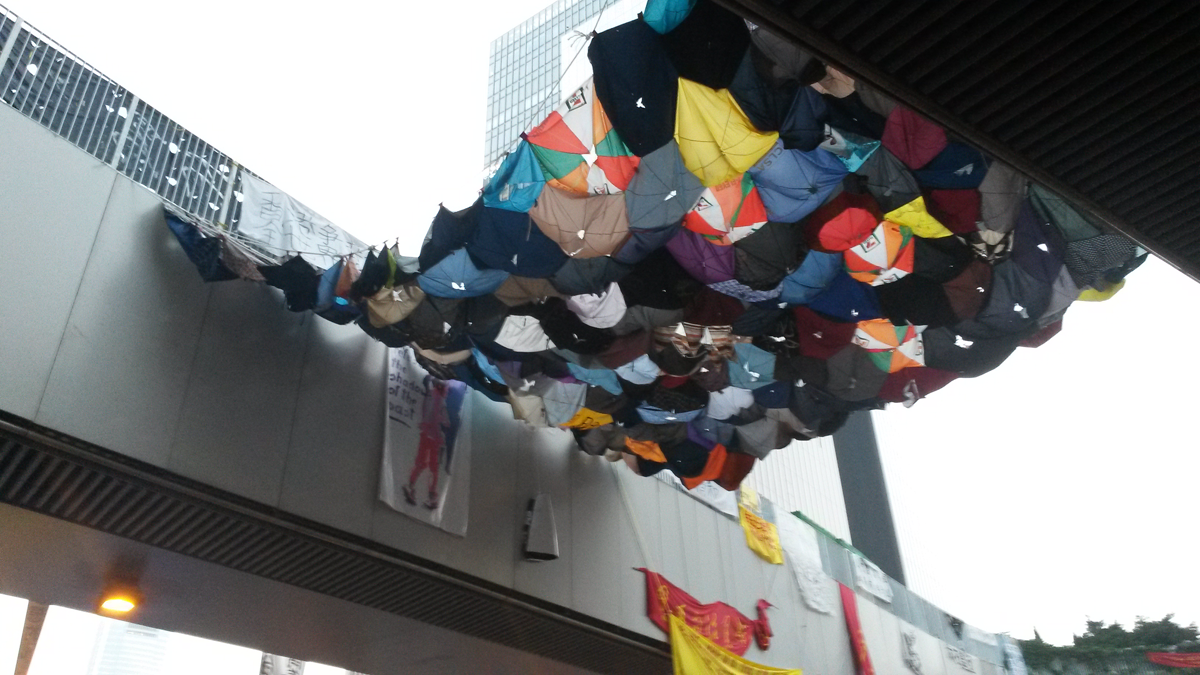
Image of interweaved umbrellas as a canopy (photographed at the Admiralty on 14 November 2014).
The recognition and acceptance of the umbrella as an enduring emblem led to a popular online competition to create an imaginative logo design for the protest movement, involving participants from all over the world (Li, 2014). Through the growing connectivity offered by the Internet, we observe the perhaps surprising adoption of a conventional marketing strategy for the development of Umbrella Movement’s logo. The organization of a voluntary design competition embodies elements of crowdsourcing – the engagement of a crowd or group for a collective objective – which is gradually turning into a popular marketing mechanism for the co-production of brands, products or services (Cova and Dali, 2009; Gabriel et al., 2015). Bauer and Gegenhuber (2015) accentuated the marketing capacity of crowdsourcing to share knowledge, produce and develop digital artefacts. Focussing on the production of artwork, the authors argue that the epicentre of originality and creativity alters from something completely ‘new’ to innovative and collaborative patterns of reusing and reframing existing ideas. Likewise, the digital development of the Hong Kong social movement’s logo shifted protesters’ artistic efforts and communication of goals towards an online and global network of artists sympathetic with the aims of the Umbrella Movement.
Examining arts directors’ perceptions of visual brand identity, Phillips et al. (2014) indicated the importance of colour for the creation of a strong and communicative visual identity. The authors proposed that art directors aim to employ brand visual elements which are identifiable and original in their sector to secure competitive advantage. Although social movements do not compete for a commercial market share, colours and ribbons distinguish and reflect diverse collective identities and stimulate emotional responses from protesters (Martin, 2015). Despite the fact that Hong Kong’s Movement lacked a team to co-ordinate the promotion of its artwork, gradually and spontaneously the colour yellow was adopted by protesters for ribbons, banners and umbrellas. Creative artistic installations of yellow umbrellas could be found in many parts of the city, including an ‘Umbrella Man’ statue, ‘umbrella bushes’ made of origami art and calligraphy on umbrellas displayed in the camps, among others. Concentrating on protesters’ emotions, Sawer (2007) offered a critical review on the importance of political colours for social movements. She considered the display of colours as a significant statement of a movement’s identity, collective action and sense of community. The author underlines how the employment of visual strategies by social movements creates ‘symbolic languages that are about emotional identification as well as about organizational needs for distinctive brands and brand loyalty, to use the language of modern marketing’ (Sawer, 2007: 54). Concurring with Sawer’s (2007) analysis, umbrellas and the colour yellow both served as visual identification of an emerging social movement and strengthened the presence of a distinctive visual and ‘branding’ identity around protesters’ goals and causes. Focussing on the collective nature of creativity in the development of an art brand by visual artists (Rodner and Kerrigan, 2014), we argue that brand managers might learn from social movements’ creative efforts to communicate their aims through the visible features of a unifying protest symbol.
Walking throughout the occupy site of Admiralty, we experienced an explosion of creativity involving visually striking handmade signs, banners, sculptures and artistic installations of yellow umbrellas. Fillis and Rentschler (2005) suggested that during periods of change, the concept of creativity in the arts adopts a wider and multidimensional scope intermingling the role of people and objects. Correspondingly, we can argue that, during a period of turbulence, the Hong Kong protesters’ objective to promote their aims was channelled into an outburst of artistic expression and creativity, amalgamating the role of protest art with the perceptions and political views of the protesters, protest’s opponents and the divided Hong Kong citizenry. In her seminal paper on creativity, Hirschman (1983) claimed that artists (and ideologists) characterized by self-oriented creativity and product-centred marketing consider a variety of viewpoints on social issues, even if their perspective might oppose predominant popular views, sentiments and social norms; a process that introduces the opportunity for social change through the promotion of art. From a holistic perspective, the Umbrella Movement protest art has not been the outcome of a single artist whose efforts might be characterized by individual self-oriented creativity. Individual creators have been identified for only half of the 400 artistic objects now in the Umbrella Movement Research Collective’s collection (Qin, 2016). Nonetheless, due to their organized artistic practices and common intentions, we might approach the creators as a group (Fillis, 2002) or a creative organization (Fillis and Rentschler, 2005) wherein artistic self-expression and collective creativity was purposefully channelled towards unified aims characterized by ideological independence. One of the intrinsic values of self-oriented artists is that they can challenge audiences who ‘may find themselves confronted by ethical issues, moral choices and emotions that are difficult or painful to acknowledge’ (Hirschman, 1983: 49). As expected, the occupation of arterial routes, major city intersections and public space by protesters was met with both feelings of support and hostility from the Hong Kong public, causing a ‘yellow’ (pro-Occupy) versus ‘blue’ (anti-Occupy) war on social media (Chan and Tsui, 2014). School closures, blocked highways and economic disruption affecting business interrupted the everyday lives of people in a city where the last violent riots occurred in the 1960’s (The Economist, 2016). Both Hirschman (1983: 48) and Fillis (2011) view public acceptance as an important objective of self-oriented artists, since ‘by creating something that vividly expresses their values and emotions, the audience might then be persuaded to accept their perspective’. Similarly, Hong Kong protesters created protest art which distinguished their values and political beliefs, and imaginatively promoted their creative outcomes, in order to confront their ideological opponents and attract the attention of indifferent citizens (BBC News, 2014).
At the heart of the protest site, a large stand displayed small connected images, primarily of superheroes, celebrities and political figures, holding the yellow umbrella. Images of Thor, Hulk, Bruce Lee, Batman, Mahatma Gandhi, Che Guevara and Queen Elizabeth II (among very few female figures) are easily identified, mingled with other famous Asian fictional and non-fictional characters (see Figure 2). Focussing on Hong Kong protesters’ use of superheroes, Garrett (2014) argues that the movement employed them as visual metaphors and turned them into cultural and political icons of resistance against the erosion of Hong Kong’s core values through China’s efforts to control the elections. Although marketing and arts marketing theory has paid attention to the use of celebrities (Erdogan, 1999; Hackley and Hackley, 2015) and famous artists (Bradshaw and Holbrook, 2007; Fillis, 2015) as vehicles of communicating brands and ideas, the use of superheroes to cultivate intimacy and attachment has remained unexamined. The bizarre collage of superheroes and ideologically diverse political figures not only captivated the attention of the perplexed viewer but stimulated feelings of familiarity and growing interest towards the aims of the movement. Rather than adopting and portraying a particular superhero or celebrity embodying specific ideals – for example, Captain America (patriotism) – the cultural, political and aesthetic diversity of these comic heroes and famous individuals brings the visitor a sense of inclusiveness and universality which can create attachment with the movement’s aims through the figures portrayed.
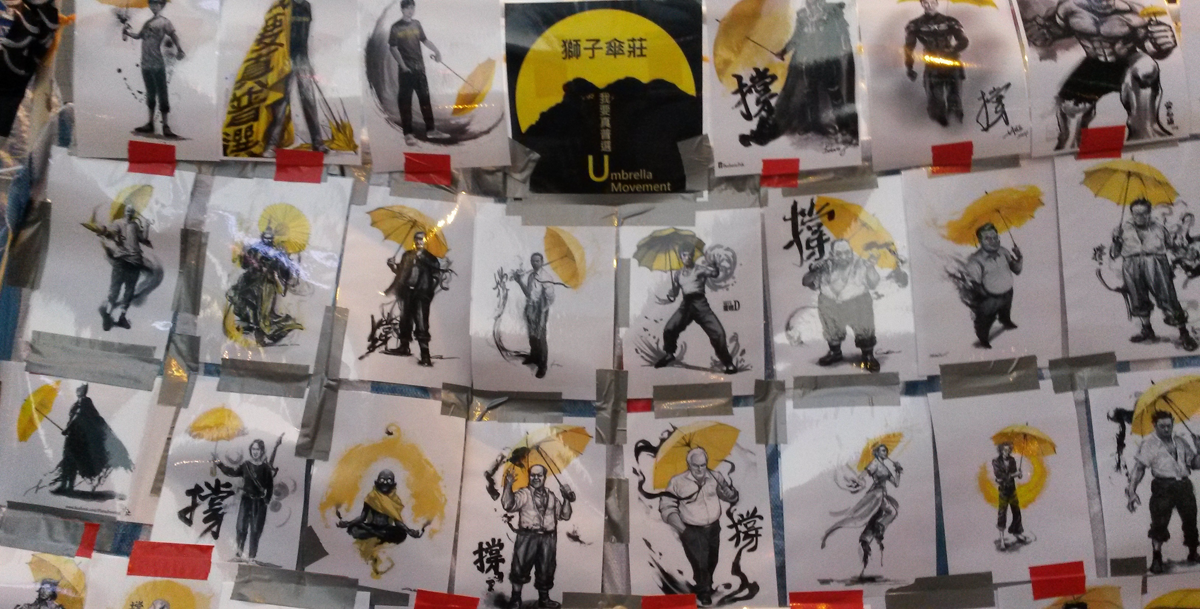
Images of superheroes and political figures (photographed at Admiralty on14 November 2014).
Besides the portrayal of superheroes, we observed posters, clothing and balloons which displayed pictures of Hollywood action movie heroes, as well as Martin Luther King’s image and his ‘I Have a Dream’ slogan. Examining the behaviour and practices of famous European artists during the 19th and 20th century, Anderson et al. (2009) suggested that tactics such as an embrace of foreign techniques (adoption) or the amalgamation of traditional artistic styles with foreign influences (fusion) can inform the business practices of the 21st-century global manager. Anderson et al.’s (2009) generic concept of artistic and managerial fusion can be viewed in an analogous and metaphorical sense, taking into account authors’ – somehow superficial – comparison between Picasso’s radical combination of foreign approaches with a European style and the efforts of a cosmopolitan CEO to increase mobile penetration in Africa. Nonetheless, the visual display of Marvel comic heroes and the protagonists of acclaimed anti-authoritarian films – such as V for Vendetta and the Matrix trilogy – presents an interesting example of fusion practices between Western popular culture and the promotion of protest art in ‘Asia’s World City’ (Hong Kong Government, 2002). Fillis and Lee (2011) discussed how visionary awareness and a collective approach to creativity have significantly enhanced the internationalization strategies of Korean performing arts organizations. Possibly, the imaginative promotion and collective improvisation by Hong Kong protesters, to infuse Western icons in their artistic installations, can inform innovative and creative internationalization practices of Small and Medium Enterprises (SMEs) and artistic organizations in both Asian and Western contexts.
Finally, in one of the most densely populated cities in the world, we observed a spatial context commandeered for the display and promotion of artwork in the two, most prominent, protest camps. Hong Kong protesters created unique public sites of communication, artistic expression and political cultivation at the heart of a major international financial centre. These idiosyncratic spaces emerged in stark contrast to the backdrop of emblematic skyscrapers (see Figure 3). Small outdoor libraries, artistic installations, posters, banners, sculptures and Post-it walls were organized and placed within a few hundred square meters. For three months, the protesters generated and fostered an alternative space within which they promoted their political messages and channelled their creativity through artistic installations. We suggest that the artistic expression and promotion within the occupied public space of Hong Kong protests can turn into a platform adding to the existing research (Borghini et al., 2010; Oakes and Warnaby, 2011; Sjöholm and Pasquinelli, 2014) on arts marketing theory rethinking the concept of space and place identity beyond the geographical boundaries of galleries, museums and theatres. Apart from the (anti)consumption of art or symbolic brands in public spaces (Brown and Sherry, 2003; Chatzidakis et al., 2012; Visconti et al., 2010), our findings identify and stress the innovative employment of spatial strategies for the promotion of Umbrella Movement’s protest art and protesters’ ability to aesthetically reshape and transform the impersonal and colourless urban environment into a non-traditional and inclusive space for experiences, collective expression and arts engagement as we argue below.
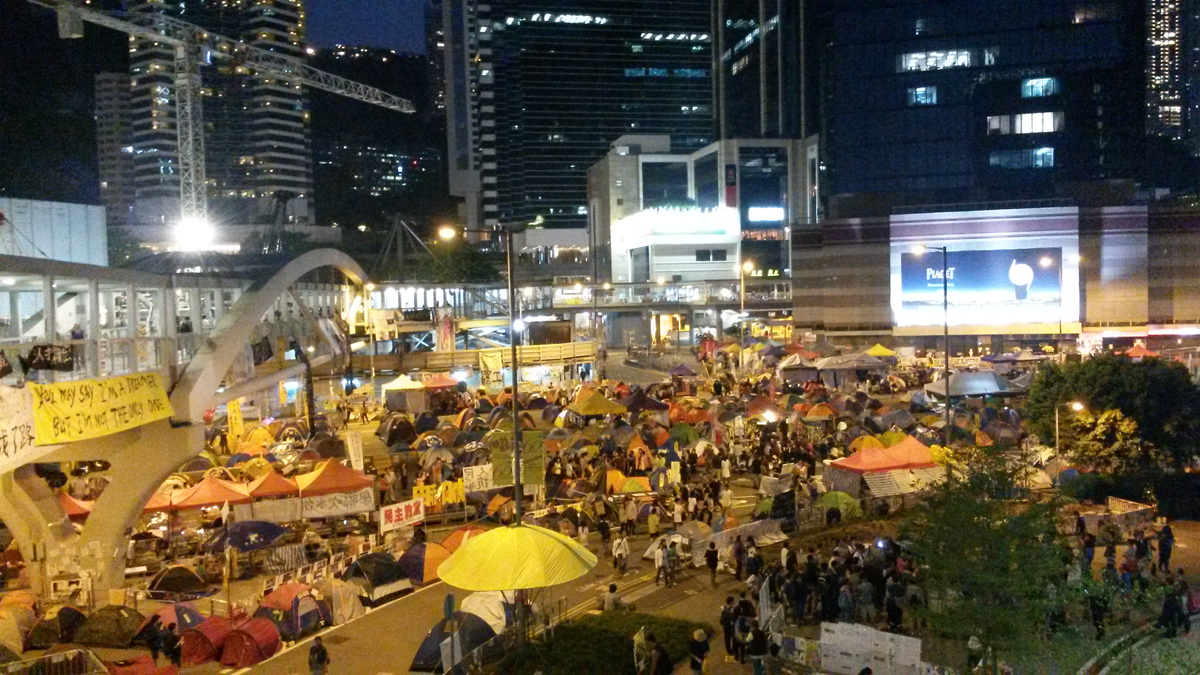
Image showing the unique public sites of communication and artistic expression (photograph taken at the Admiralty on 15 November 2014).
‘Audience engagement and co-creation of protest art’
In both Admiralty and Mong Kok, we observed and actively participated in the movement’s employment of artistic performances and interactive activities to enhance audience engagement and identify with the aims of the protest. Protesters’ efforts to maximize the impact of their messages and communicate through artwork with the individuals who visited the protest camps are encapsulated in the words of the Hong Kong Arts Centre’s former Exhibition Director, Oscar Ho Hing-kay, who argued that ‘the entire city is a work of art, and everyone is an artist’ (Pollack, 2015). Similar to the John Lennon Wall in Prague – a wall filled with lyrics and graffiti inspired by Beatles songs and Lennon’s life – the protesters created their own Lennon Wall (see Figure 4), at the heart of the main protest camp in Admiralty. The wall was spontaneously created by a group of social activists who disseminated colourful Post-its and pens to protesters and visitors, asking them to write and express their thoughts, feelings and attitudes towards the movement. In a few days, the Lennon Wall in Hong Kong became a colourful mosaic of Post-it notes which included written messages, lyrics and epigrams, expressing solidarity with and encouragement towards the protests. Almost 10,000 sticky notes – including messages of support from tourists and locals – were counted by pro-democracy protesters who sought to rebuild the wall – digitally – after the end of the protest (Ng, 2014). Consequently, the co-creation and transformation of a curved staircase in central Hong Kong to an artistic wall constitutes an improvisational mode of arts engagement attracting individuals whose previous involvement in arts co-creation events and protest activities could have been limited or non-existent.
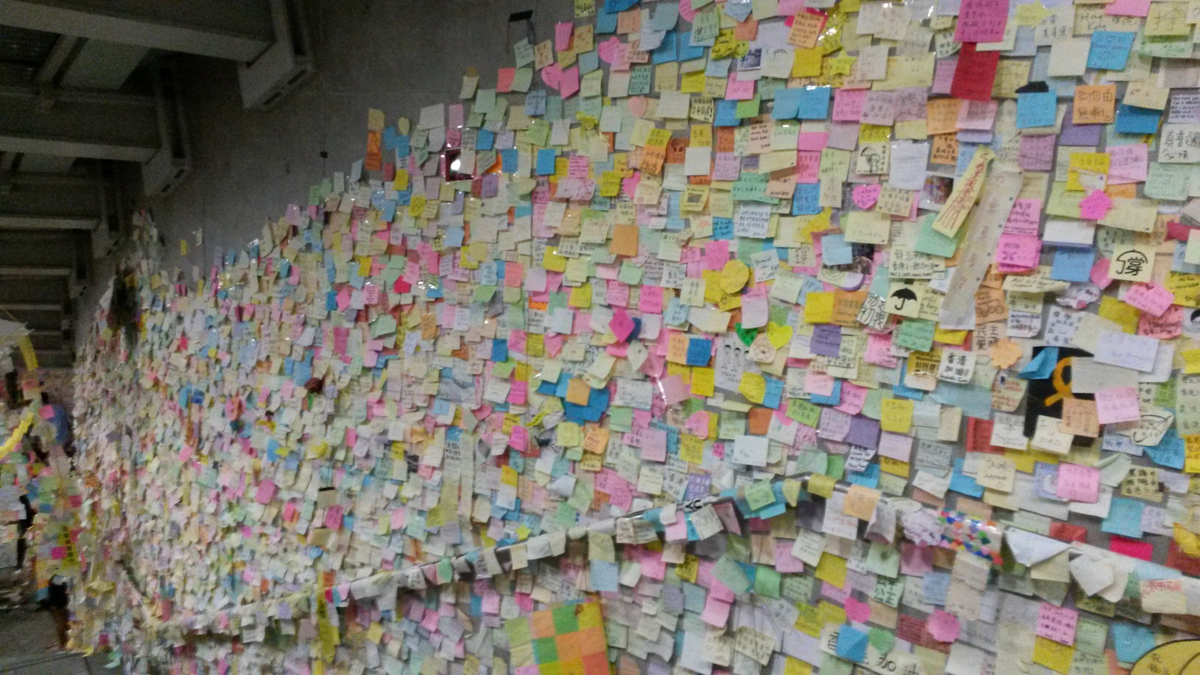
Hong Kong John Lennon Wall (photograph taken at the Admiralty 15 November 2014).
We (as researchers) and thousands of other individuals became active participants in the co-production of the Lennon Wall Hong Kong, an experience which involved our physical presence and action for the co-creation of protest artwork. As participants, we posted our own messages on the Hong Kong Lennon Wall and our experience was personalized since there was an element of personal relevance and a sense of emotional immersion. Similarly, thousands of protesters and participants became co-producers of public artwork, creating a highly collaborative and inventive visual arts project characterized by mass participation and interaction. As Kozinets et al. (2008: 352) suggest consumer creation can be viewed beyond the prism of pleasure-seeking, experiential and leisure activities, and we can see consumers ‘as continuing in the working tradition of organized work networks, art studios, factories’, since collective creativity is fostered by ‘shared values, ideologies…collective political action, and the shared base of grounded knowledge’. In the context of the Umbrella Movement, our findings indicate that along with contemporary consumer protest practices – such as Internet petitions and boycotting – the co-creation of protest art emerges as a means of directly challenging institutional power and of influencing government and corporate policies.
Citizens, tourists and even visiting children were encouraged by protesters and artists to utilize artistic tools and resources in order to engage with the movement and its aims. Street artists organized interactive street painting events where anyone could contribute in the production of collaborative canvases. These street painting sessions – entitled ‘the Voice of the Streets’ – provided a space for engagement with the co-production of artwork that was expressing universal values related to peace, democracy and representation. Becoming a member of the protest community himself, in this novel and experiential street context, we can argue that the artist adopted the role of the ‘guide’ or facilitator who enables and constructs the co-production of art and experiences (Arnould and Price, 1993; Carù and Cova, 2006). Carù and Cova (2006) suggest that immersion in an experiential context derives gradually, following the stages of nesting, investigating and stamping. Nesting embodies a feeling of comfort and familiarity with the experience, which leads the audience to investigate further the unfamiliar territory. Through stamping, the audience member ascribes particular meanings to the experience deriving from their own personal history and feelings. Rethinking audience engagement practices in the context of protest camps, we observed how visitors, tourists and sympathizers with the Umbrella Movement gradually developed a degree of familiarity with the collaborative projects which progressively led to further exploration of this unusual artistic terrain. We also noticed that dozens of Post-it notes on the Hong Kong Wall included personalized messages and drawings, expressing association with the Umbrella Movement. Creating non-traditional art spaces for co-participation, engagement and interaction, both the interactive painting process and the co-creation of the John Lennon Wall can be seen as platforms where audience members immersed themselves in protest art. These outdoor projects of protest art constitute novel platforms for existing arts marketing research (Minkiewicz et al., 2016; vom Lehn and Heath, 2016) to consider how communities, social movements or networks of audiences and artists can turn into collaborators of creative processes distinguished by openness, engagement and the communication of universal values.
We also actively participated in the production of street protest art. Artists produced blind contour drawings of protesters or visitors – including of this articles’ authors – and engaged in creative street art activities throughout the protest site. The artists engaged and interacted with visitors, inviting them over to produce individual face portraits on A5 sheets, with a pre-printed yellow and black background in accordance with the emblematic colours used by the protest movement. Before, during and after the drawing of our portraits by a blindfolded artist, we embarked upon a very informative discussion with the painters regarding the origins and ideological background of the Umbrella Movement. Like other passengers, we found an opportunity to be informed and exchange ideas about the protesters’ demands while we engaged and participated in the production of simple and imaginative artwork in a non-art context. Additionally, we observed chalk drawings on roads and pavements by individuals expressing their solidarity with the movement. The spread of artistic creativity and imagination throughout the protest camps and city is summarized in the words of the former Director of the Hong Kong Arts Centre who argued that the totality of artwork ‘reflects a collective spirit, and it is organic, so it keeps growing’. He also stated that the productive outcomes of ‘some trained artists are more conservative’ when compared to the inventive street art created by protesters, visitors, students, activists and tourists, all-together (Pollack, 2015). As mentioned above, these direct comparisons and statements by art critics seem to add status along with aesthetic legitimacy to the Umbrella Movement’s protest art. The Hong Kong protesters’ artwork was displayed at the ‘Disobedient Objects’ exhibition at London’s Victoria and Albert Museum, which aimed to focus on how collective creativity and political activism challenge standard conceptions of art and design (Victoria and Albert Museum, 2016).
By examining the innovative methods for audience engagement and co-creation of objects and experiences, in the occupied spaces, we suggest that cultural policies (Knell, 2006) and arts marketing theories (Kemp, 2015) can extend their conceptual boundaries by paying more attention to collaborative creation, methods of engagement and communication of protest artwork by social movements. Considering the duration, central locations and scale of the movement, thousands of people became collaborative producers of several protest art projects that transformed the urban landscape and communicated messages of solidarity and pro-democratic ideals. Contrary to public perceptions of protest camps as arenas of violence, struggles for control and confrontation (della Porta, 2006; Seferiadis and Johnston, 2012), our findings show how protesters instilled elements of playfulness, imagination and humour in their cooperative artistic platforms. Within this unique art context, we identify nonlinear and multifarious collaborative activities, a sense of enduring creativity and multi-sided spaces for untended and open spaces of massive arts participation. We suggest that, especially during periods of budget cuts to arts programmes, national arts councils and art practitioners can encourage and develop sustainable and empowering community arts projects so as to increase art engagement in deprived neighbourhoods or rural areas.
Protest art for the development and education of audiences
Several social movements attempted to promote audience development and education within their camps through cultural strategies and pedagogical experiments (Anyon, 2005; Feigenbaum et al., 2014). For example, more than three hundred lectures and workshops on political education occurred in the protest camps of the Occupy Wall Street Movement (Di Salvo, 2013), while protesters in Taksim Square, Istanbul combined public reading and peaceful protesting (Henton, 2013) and anti-globalization camps screened anti-authoritarian films and discussed countercultural art projects (Pleyers, 2010).
Our observations in Hong Kong demonstrate the employment of protest art as a promotional vehicle to educate audiences about social issues and justice. We observed how the Umbrella Movement fostered participation by creating appropriate platforms to inform and educate protesters and visitors in the locality, and globally through online communications. Exploring the emergence of technology, arts marketing research has emphasized the importance of eWoM through social media in performing and fine arts (Hausmann and Poellman, 2016; Wroot, 2015) and online networking sites in allowing companies to disseminate information (Ryan et al., 2010). Focussing on politically inspired art, we observed how the Umbrella Movement turned social media into prominent and popular digital platforms, such as the Facebook page ‘People in the Streets’, that acted as an initiative to collect personal stories from individuals around the protests. Inspired by the famous ‘Humans of New York’ Facebook page, the protesters digitally displayed a picture of a protester, a couple and even a journalist, accompanied by a quote about their everyday realities, relationships or working conditions in the city of Hong Kong. Additionally, the movement’s main Facebook webpage was widely displayed through large yellow banners in the protest camps. Characterized by The Guardian as a ‘social media revolution’ (The Guardian, 2014), through their smart phones the protesters managed to synchronize and co-ordinate supply chains, medical teams and warnings regarding violence and attacks in protest camps. Digital media were also turned into means of social protest and motivation, through the creation of a media art project which displayed short messages of solidarity from all over the world appearing via a projector on a gigantic billboard in the protest areas. The key role of social media in the Umbrella Movement to access and inform wider audiences reflects and builds upon the insights from marketing studies (Kerr et al., 2012; Makarem and Jae, 2016) which portray the World Wide Web as an alternative protest site for collective opposition against the interests of powerful institutions.
In the main protest site Admiralty, we observed and photographed specially designed areas where the protesters provided English language lessons displayed on whiteboards. Phrases like ‘civil disobedience’ and ‘universal suffrage’ – the ultimate aim of the protestors – appeared in both English and Cantonese characters, alongside a brief vocabulary list. On another white board, we observed the translation of the terms ‘Wikipedia’, ‘WikiLeaks’, ‘Bitcoin’ and ‘Occupy Movement’, aiming to encourage protesters and visitors to conduct further research about the causes and objectives of the movement. Apart from these references to alternative payment systems and non-profit journalistic organizations, the protesters displayed banners and yellow leaflets with quotes about freedom and democracy by John Lennon, Nelson Mandela and Mahatma Ghandi. In the central protest camp of the Admiralty, we observed how the protesters created a ‘study corner’ (see Figure 5) several meters from the central highway, including tables, chairs, reading lamps and shelves in a small library in a fenced but publicly visible area. Large yellow and blue tents protected readers from rain, while signs indicated that flash photography was banned. Passengers and demonstrators could attend calligraphy workshops, pick a book from the library and quietly study among the tables. Students were particularly encouraged to complete their homework in the study corner, with volunteer tutors offering free assistance on several academic subjects including mathematics and physics. This unconventional study space was carefully infused with small installations and Post-it notes related to the movement, not only offering a sense of community but also reflecting protesters’ efforts to facilitate the everyday process of learning and education even within what the Hong Kong government considered to be an illegal camp. Consequently, we suggest that arts-based educational practices within social movements can turn into an effective promotional tool to induce social change and foster democratization, despite the lack of modern teaching infrastructures and technological tools. Experimental outdoor theatres and existing or emerging groups of radical performance pedagogy (Colomina et al., 2015; Garoian, 1999) that seek to produce ephemeral utopian spaces and amalgamate experimental aesthetics and interdisciplinary critical education (Gomez-Pena and Sifuentes, 2011) can draw inspiration from the use of protest spaces for arts-infused educational practices and horizontal notions of experimental co-learning.
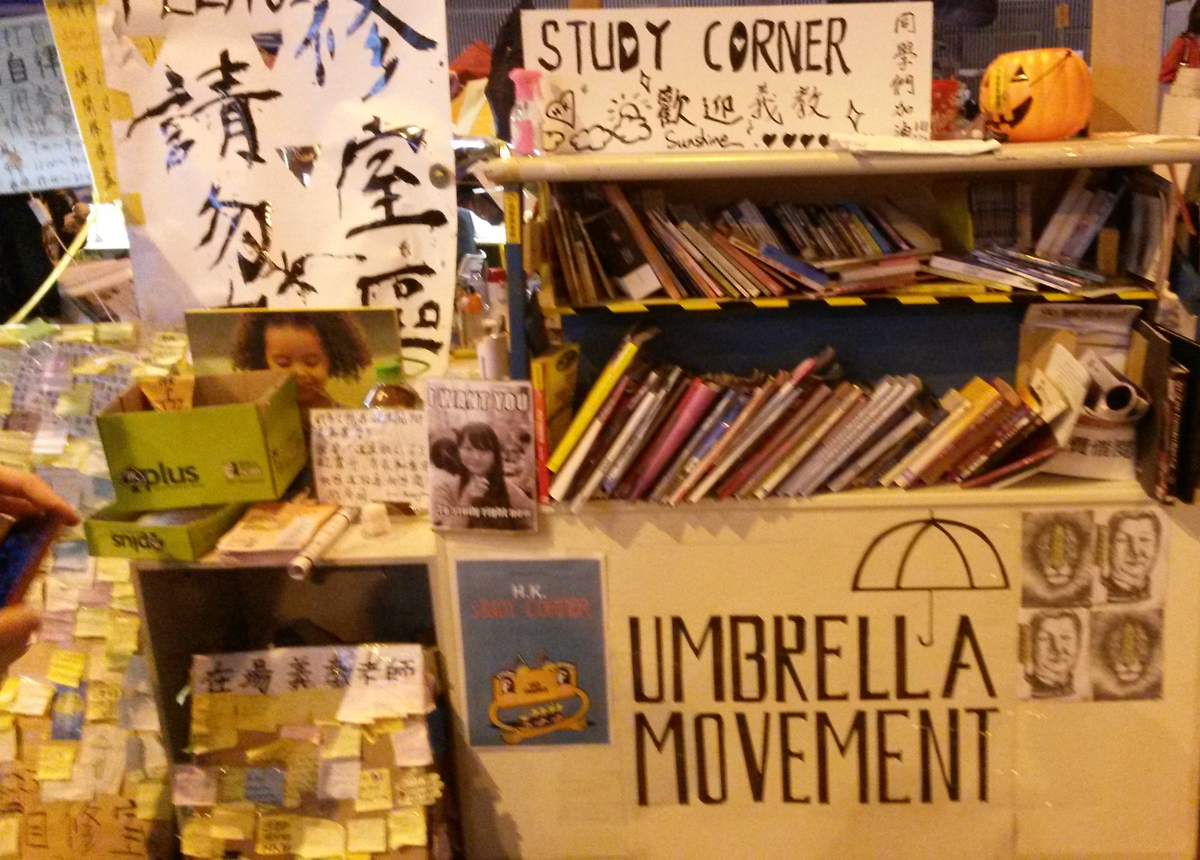
Image of ‘study corner’ (photograph taken at Admiralty on 15 November 2014).
Following these examples from the Hong Kong protest camps, our findings identify and emphasize the potential of arts marketing to become a vehicle for community development, social change and education of audiences (Navaie, 2004). Accordingly, we highlight the capacity of protest art to educate and empower young people and foster equality within communities and urban contexts. Based on our observations and readings around the potential of art to widen the social imaginary and induce social change, we suggest arts marketing theorists and arts organizations (Kolb, 2005; Osborne and Rentschler, 2010) – for example, non-profit arts organizations and community arts centres – might draw their attention to the means of improvisation and creativeness used by social movements in order to develop inclusive educational programmes, identify innovative public performance spaces and explore experimental means of stimulating fruitful dialogues around social and political issues. Especially during times of financial scarcity and conservative cost-cutting in the arts and education sectors, art-infused education could both contribute to the expansion of arts marketing practices and benefit the most vulnerable citizens such as refugees, the homeless and the underprivileged.
Protest art and (arts) marketing theory
Following the lack of an empirical study on the promotion of protest art within marketing studies, we argue that the examination of Umbrella Movement’s creative displays, collaborative art performances and arts-infused educational activities can invigorate the theoretical resources of arts marketing and marketing theory in general. Our article proposes, for the first time, the importance of theorizing and understanding the spatial and artistic practices in protest camps as alternative and emerging arts-related frameworks and valuable empirical platforms for advancing arts marketing theory. We suggest that the resourceful and creative use of the occupied urban space, by protesters and sympathizers, provides a novel and fresh conceptualization around spatial strategies and improvisational techniques for artistic promotion. Our findings depict and elaborate upon the transformation of Hong Kong’s arterial thoroughfares and public squares into an urban protest art platform, which works to reclaim and re-enchant the built environment with aesthetic and ideological interventions that galvanized passengers’ active participation. Appropriation of urban space, encampment and high-functioning infrastructures – among other spatial features of the protest camps – facilitated and enabled the transient, spontaneous and to some extent celebratory co-production and communication of protest art. Consequently, we emphasize the value and powerful potential of promoted protest art in reframing urban environments, disrupting the mundane fabric of a densely populated city and attracting large audiences in captivating and contested contexts of collective artistic expression and experimentation.
Recognizing that the promotion of protest art is capable of transforming perceptions of urban outdoor spaces, we argue that our findings can contribute to rethinking and re-imagining the marketing mix variable of ‘place’ for arts marketing. Thereupon, we suggest a conceptual shift or extension of the traditional marketing mix variable of ‘place’ – perceived, for instance, as location (art studio), settings (opera house), distribution (commercial/art collective galleries) or locales (open-air concert) – towards a broader notion of space. Unlike site-specific and carefully planned outdoor art events which have been discussed in arts marketing literature (O’Reilly and Kerrigan, 2010), we identify the capability of effectively promoted protest art to energetically demand, organically spread and to some degree aesthetically de-alienate the monotonous space and skyscraper architecture of Hong Kong. In synergy with Umbrella Movements’ ‘virtual’ spaces (Facebook page, media art projector), the public display of protest art transformed city’s financial centre and key commercial areas into an arts space characterized by openness and increased visibility that stimulated public participation and attracted worldwide media attention. Protesters’ promotional tactics turned their art into a ‘modifier of space’ and similarly arts practitioners or marketers of city/music festivals and community arts projects – among others – can conceptualize how the presentation and communication of their creative outcomes not only forms fully functioning and attractive venues and settings but also in what way it has the potential to alter urban or rural spaces. Moreover, the artistic improvisation and synergistic spirit of protesters’ spatial tactics can be infused into arts marketing practices regarding the ingenious and shared use of ‘physical’ space for outdoor art venues such as site-specific urban art and interactive public art. Synthetic research approaches between the multifaceted nature of ‘space’ (Lefebvre, [1974]1991; Soja, 1996) and ‘place’ (Chatzidakis et al., 2014) and the complex activities of new social movements in protest camps (Nicholls et al., 2016) offer the opportunity to expand interdisciplinary spaces where arts (and place) marketing theorists can explore further spatial strategies for the promotion of art, effective visibility, symbolism and emancipatory aesthetics.
Social movements seek to produce a series of campaigns and performances in order to express common claims and form a collective identity (Tarrow, 1994; Tilly, 2004). Our findings highlight the employment of innovative promotional activities such as the collaborative building of a visual brand identity and unifying symbolism (yellow Umbrella), internationalization and fusions of Western and Asian superheroes and political icons and online crowdsourcing for logo design. We argue that Umbrella Movements’ digital collective creativity and brand-building strategies evinced a large degree of transnationalism and globalization in terms of communicating universal symbols, language and iconic figures related to the ideals of freedom and democracy. Viewing new social movements as alternative arts organizations and spaces, in different cultural contexts, further research on their creative and cross-cultural ‘branding’ practices – through visual/digital archives and historical research methods – can provide novel insights into the increasingly aesthetic collaboration and technological interdependence for the promotion of common values and global injustice symbols. Accordingly, the findings can inform and update transnational arts initiatives and projects pursuing to promote and advance social justice and cross-cultural artistic fusion between arts organizations that aim to forge affective bonds with global audiences.
Additionally, we suggest that the Umbrella Movement can be approached as type of an alternative creative organization whose temporal processes and powerful artwork can inform the multifaceted construct of creativity for arts marketing theory (Fillis and Rentschler, 2005) and also enlarge our understanding of managing arts organizations. We demonstrated how protesters’ courageous purposes and collective artistic expression embody the qualities of self-oriented artistic creativity (Hirschman, 1983) and a product-centred approach towards the promotion of art. While specific art industries and entrepreneurial marketing practices permit a particular level of organizational creativity (Fillis, 2002), Umbrella Movement’s lack of central leadership allowed the proliferation of ‘free flowing’ creativity which boosted a spirit of individual/group autonomy, risk-taking behaviour and collective enthusiasm. In our context, movement’s free-flowing creativity – spread via the production and communication of protest art – overcame instrumental and traditional organizing tools, enhanced experimental artistic expression and enabled the injection of alternative viewpoints into the public realm. Along with the study of creativity in other contexts and fields (e.g. science and literature), urban movements and social movement scholarship (Jasper, 2014; Shepard, 2011) can offer potential avenues of further research to arts marketing theorists interested in horizontal leadership of arts organizations and events as well as decentralized team or group creativity within smaller art enterprises. In-depth interviews with protest organizers and art activists and semi-ethnographic approaches in occupied urban contexts can explore further non-traditional forms of arts organization together with the spiralling dynamism and contagiousness of social movements’ collective and free-flowing creativity.
Apart from the inventive promotion of visual images, symbols and metaphors, our findings showed how protesters employed the co-production of protest art and collaborative projects – such as a democratic mosaic wall and interactive street painting – in order to enhance audience arts engagement and foster social inclusion. Existing marketing literature has focussed on the co-creation, and to a lesser extent co-production, of consumption experiences within artistic service encounters (Carù and Cova, 2006; Minkiewicz et al., 2014) providing novel insights into the interface between producer’s service elements and consumers’ emotional drivers and cognitive engagement. Our findings identify how in open and all-inclusive urban spaces, (quasi)autonomous groups of protesters, professional artists, locals and visitors intermingled in a collaborative artistic process of experiencing and overtly communicating a collective sense of solidarity related to democracy and autonomy. The accessibility of this huge creative process managed not only to generate instructive/informative experiences about protesters’ cause but also to open the movement’s organizational boundaries and expand its artistic vision to city dwellers, tourists and digital audiences around the world. In this alternative context, the co-creation of protest art blurs and has the potential to rethink the traditional roles (producer/consumer) and spatial boundaries (servicescapes) of arts organizations and raise awareness of social and political issues. Additional research on the formation of spatially complex and experimental collaborative arts projects by social movements can inform grassroots arts groups’ and local authorities’ collective art activities seeking to enhance social inclusion, strengthen community identity or promote social and environmental issues. Furthermore, voluntary organizations and amateur arts groups can raise their profile, attract new audiences and identify suitable outdoor venues by drawing insights from protest art collaborative practice.
Finally, our observations focussed on Umbrella Movement’s employment of the occupied space for an arts-infused education in order to enhance equality, inclusiveness and social development, and we suggested that during an era of arts spending cuts protest camps’ ‘internal’ education tactics (Frenzel, 2011) can enable and inspire the emergence of cost-effective, open and non-hierarchical learning processes and workshops. The outdoor and inventive platforms for education of audiences demonstrate Umbrella Movement’s ephemeral but resourceful efforts to foster an inclusive learning environment and encourage a public dialogue around the necessity and means of achieving social change. From a holistic perspective, social movements’ group actions seek to induce (Occupy Wall Street) or resist (anti-globalization movement) social change and our findings indicate the employment of arts marketing practices and innovative promotion of protest art so as to persuade and unite the public to challenge and resist electoral reforms that threatened democratic processes.
To date, primarily social marketing (Andreasen, 2003; Nolan and Varey, 2014) and advertising literatures (Orazi et al., 2016; Xin and Belk, 2008) explicated the complex interactions between marketing/advertising campaigns and social transformation pursuing to influence (voluntary) behaviour change, improve individual or societal well-being and urge policymakers to increase social welfare, among others. Social change, in the forward thinking and vibrant field of social marketing, is approached, examined and enabled – primarily – through altering behaviours, environments and policies (Gordon et al., 2016; Lefebvre, 2011). In our setting, we identified the spontaneous creation and promotion of protest art as an essential tool of resisting controlling political decisions and institutional power stemming from the powerful Chinese and Hong Kong governments. Consequently, we acknowledge the role of promoted protest art as a change agent whose value lies in the ability to highlight injustice through spatial aesthetics, audience engagement and educational practices. Along with social movements and political public art projects, marketing scholars can focus on contexts of oppression and injustice where the use of marketing technologies and knowledge by arts communities or artists enables them to communicate a form of art and ideas that seek to empower, educate and confront.
Concluding comments
As media scholars argue, activists and new social movements have turned into keen students of communication strategies which enable them to engage and mobilize audiences towards collective actions. In this article, we suggest that marketing theory and practice can also be informed by the rapid growth of multi-media friendly social movements and marketing savvy art activism. Exploring the occupied spaces of the Umbrella Movement, we identified and discussed the presence of several marketing technologies and spatial strategies for the promotion of protest art. Online crowdsourcing, visual ‘brand’ building, co-creation of art and the imaginative use of social media constituted some of the means that protesters utilized in order to transform urban sites, communicate their messages, enhance audience engagement and educate citizens. These findings can inform and update existing arts marketing studies which seek to rethink the concepts of arts space and place identity, explore alternative forms of collective artistic creativity and re-imagine outdoor collaborative projects for the engagement of diverse audiences.
Future research can focus on how social movements encourage audiences to endorse social justice, inspire meaningful actions and rethink organizational hierarchies. Additionally, the political activities, resisting practices and promotion methods within these ‘alternative spaces’ can inform not only marketing theory but also the growing literature on consumer protest and the potential of art to challenge and oppose the interests of powerful commercial or state institutions. Protesters, consumers and activists, we argue, utilize marketing knowledge and art in order to disrupt both the marketplace and institutional power. This process should not be viewed as an anti-marketing phenomenon but as an invigorating stance towards the marketing concept itself that offers the opportunity to examine and theorize the expansion of (arts) marketing activities within unexplored social and political terrains. Consequently, further research on social movements’ efforts to effectively promote, encourage or induce social change – through protest art or campaigns – can uncover and highlight novel aspects of the inherently creative and political nature of marketing.
Footnotes
Declaration of Conflicting Interests
The author(s) declared no potential conflicts of interest with respect to the research, authorship, and/or publication of this article.
Funding
The author(s) received no financial support for the research, authorship, and/or publication of this article.