



Abstract
In this visual essay, Mazen Kerbaj and Jana Traboulsi bear witness to the genocidal violence that has been unfolding in Gaza since 7 October 2023. From Berlin and Lebanon, respectively, Kerbaj and Traboulsi have been chronicling and responding to the harrowing day-to-day news and testimonies from Gaza. Their drawings raise fundamental questions about what it is to bear witness to genocide as it unfolds, about the politics of seeing as an act of solidarity against imposed invisibility and about racialized sight – the eye that refuses to see what is hiding in plain sight.
Drawings by Mazen Kerbaj and Jana Traboulsi Curated and introduced by Zeina Maasri and Hanan Toukan
In this visual essay, Mazen Kerbaj and Jana Traboulsi bear witness to the genocidal violence that has been unfolding in Gaza. After the shocking 7 October attack by Hamas, Israel has launched a relentless retaliatory military assault on the besieged population of Gaza. The mass atrocities and humanitarian crisis suffered as a result by Palestinians is unprecedented since the 1948 Nakba. 1 The indiscriminate carpet-bombing of residential neighbourhoods and the deliberate targeting of civilian infrastructure, hospitals, UN shelters, schools and universities – in conjunction with cutting off water, food, medicine and fuel supplies – has caused immeasurable human suffering and wholesale destruction of vital sites. At the time of writing, more than 17,997 Palestinians have been killed in Gaza, including about 7,729 children and 5,153 women. 2 The risk of disease is skyrocketing, threatening an increasingly horrific death toll. 3 And, on top of that, over 1.9 million inhabitants (85% of the population) have been forcibly displaced within Gaza, some of them second and third generation refugees. Leaked blueprints for a forced population transfer into Egypt’s Sinai, coupled with openly genocidal and supremacist public statements by Israeli government officials, recall all too many traumatic memories of the 1948 Nakba. In short, ‘The logic of elimination’ (Wolfe, 2006) that undergirds the settler colonial structure of Israel’s relation to Palestine and Palestinians has never been more chillingly evident; the ‘slow’ structural violence perpetrated by Israel over the past 75 years has devastatingly accelerated, bringing about nauseating carnage.
Numerous legal experts, UN officials and Holocaust scholars have been warning of a genocide unfolding in Gaza: the last, possibly final, phase in the historical ethnic cleansing of Palestine. And yet the hegemonic Western frames of this unthinkable violence – political leaders, media institutions, many university administrations, publicly funded cultural institutions, think tanks and the military–industrial complex that binds them together – are upholding a dystopian regime of obfuscation, lies and silences. All this to justify Western governments’ unconditional backing of Israel and to cover up both Israel’s crimes against humanity in Gaza and their own complicity in fuelling these atrocities by opposing any ceasefire and continuing their deadly global arms trades (Lipton, 2023). Mainstream Western media coverage has been tightly policed while Palestinians have been increasingly racialized: the living denied their voice and the dead denied ‘grievability’ as human lives lost (Butler, 2010).
Across the so-called free world, cultural events deemed ‘critical’ of Israel are malevolently framed as ‘antisemitic’ and systematically cancelled. People are being fired from their jobs and publicly smeared for denouncing the complicity of their governments in Israel’s war crimes, committed in their name and thanks to their taxes. Politicians and human rights experts are censored for speaking out. Activist student groups are being intimidated and disbanded simply for questioning the regime of lies. Peace marches are banned and vilified and – perhaps most sickeningly – vigils for the dead are stamped on by the German police.
This regime of policed invisibility ‘prescribes what can be seen and what cannot be seen, what can be said and what cannot be said’ (Rancière, 1998: 28). Rancière was referring to the context of the French state’s media blackout and violent repression of a major demonstration in Paris towards the end of the Algerian war of liberation in 1961. His reflections’ chilling resonance today speaks all too sadly to the continued colonial frames of epistemic violence and invisibility wherein the current Israeli assault on Gaza is abetted and obfuscated in formal governmental and media channels. The recent war on Gaza has exposed not only double moral standards with respect to upholding international humanitarian law and conventions that guard against war crimes, but also the exception that is Palestine to the liberal proponents of free speech. Here again, this Western moral relativism is not new. But it has never been clearer. As Aimé Césaire (2000: 37) wrote in his (1972) Discourse on Colonialism about the purported universal tenet of humanism, ‘its concept of those [human] rights has been – and still is – narrow and fragmentary, incomplete and biased and, all things considered, sordidly racist.’
Despite these crackdowns, however, loud expressions of moral indignation continue: indeed, a protest movement calling for an immediate ceasefire in Gaza has made itself felt across the globe. This has taken the form of massive demonstrations of solidarity with Palestinians and their long struggle for freedom and justice and an end to Israeli Apartheid. The millions radically refusing to be silenced as witnesses to Israel’s genocidal onslaught give solace and inspire hope in a time of brutal darkness. In and through solidarity with Palestine and Palestinians, a politics of resistance to the colonial regime of invisibility is emerging. A radical form of bottom-up democracy has punctured the heart of Western liberalism’s pretence that its values are universal and that it can continue to function as unaccountably and as violently as it wishes. The moral and political bankruptcy of liberal democratic governance has never been clearer. People everywhere are standing against its duplicity and hypocrisy.
From Berlin and from Lebanon, respectively, Kerbaj and Traboulsi have been chronicling and responding to the harrowing day-to-day news and testimonies from Gaza. Their drawings raise fundamental questions about what it is to bear witness to genocide as it unfolds; about the politics of seeing as an act of solidarity against imposed invisibility; and about racialized sight – the eye that refuses to see what is hiding in plain sight. Amidst the deluge of horrific media images, their drawings ask us to pause for a moment, and quietly take in the destructive capacity and monumental pain that humans are capable of inflicting on each other. They ask us to stop, look, mourn and cry so that we can go out and continue once again to fight for the living and for life.
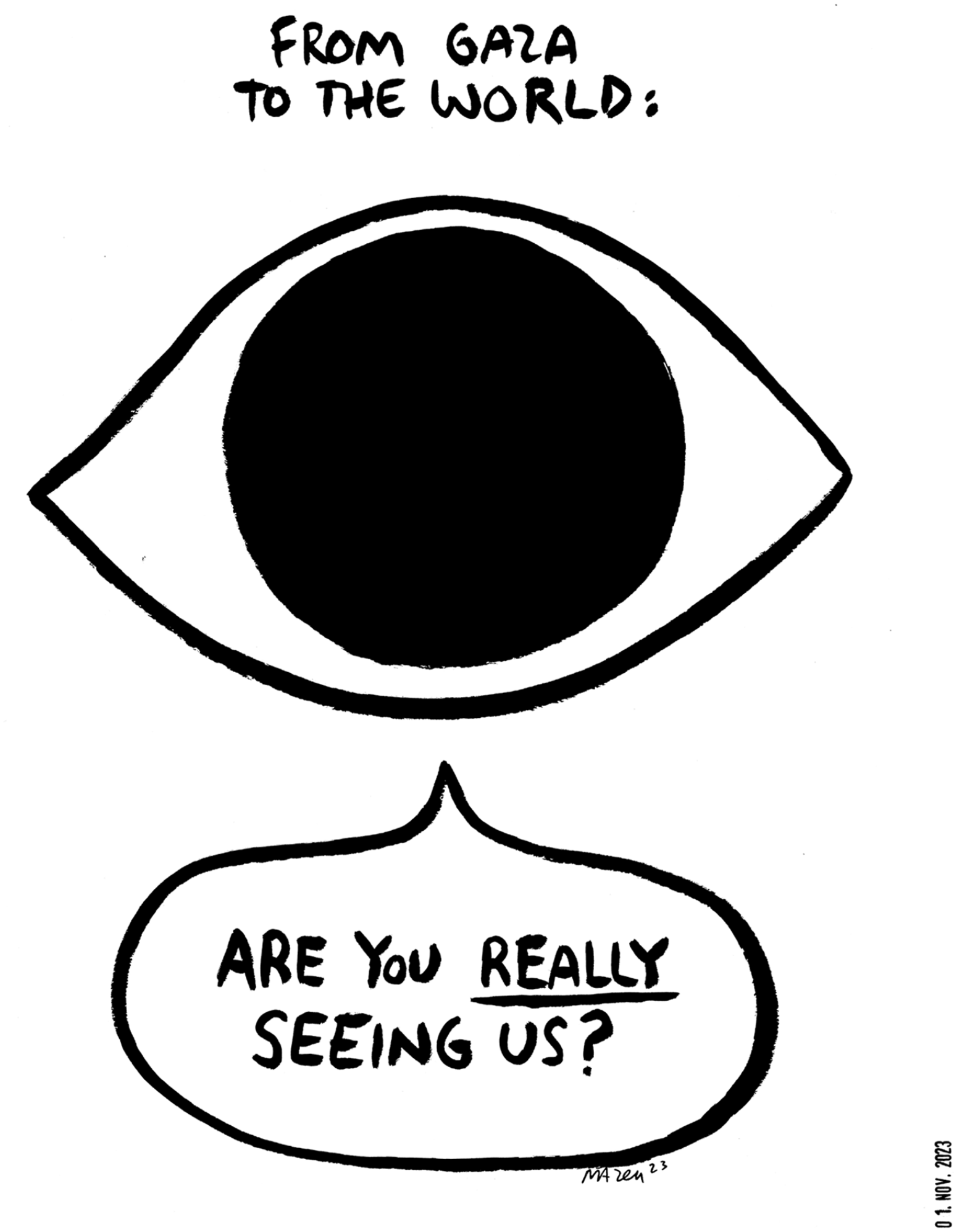
Mazen Kerbaj @mazenkerbaj.
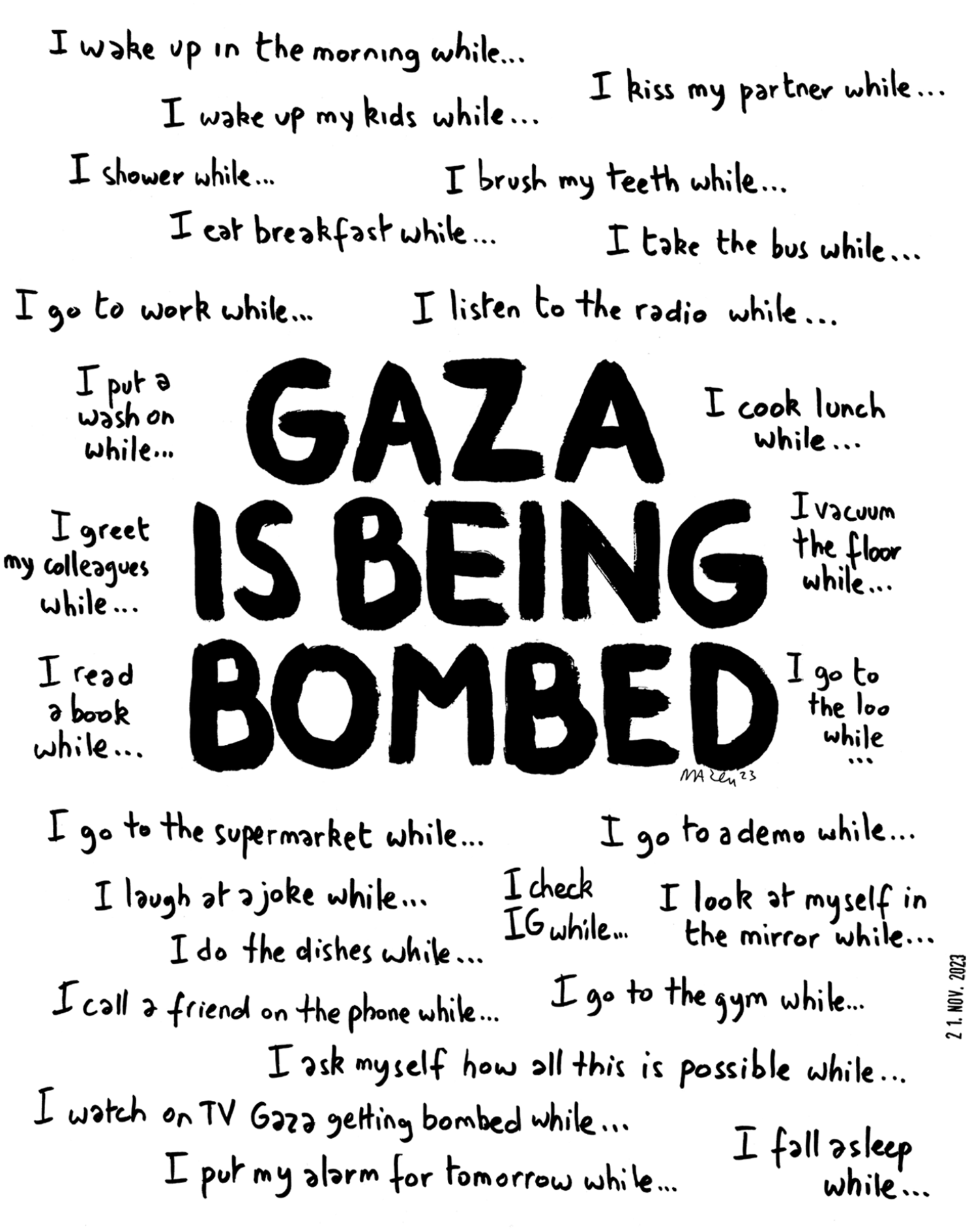
Mazen Kerbaj @mazenkerbaj.
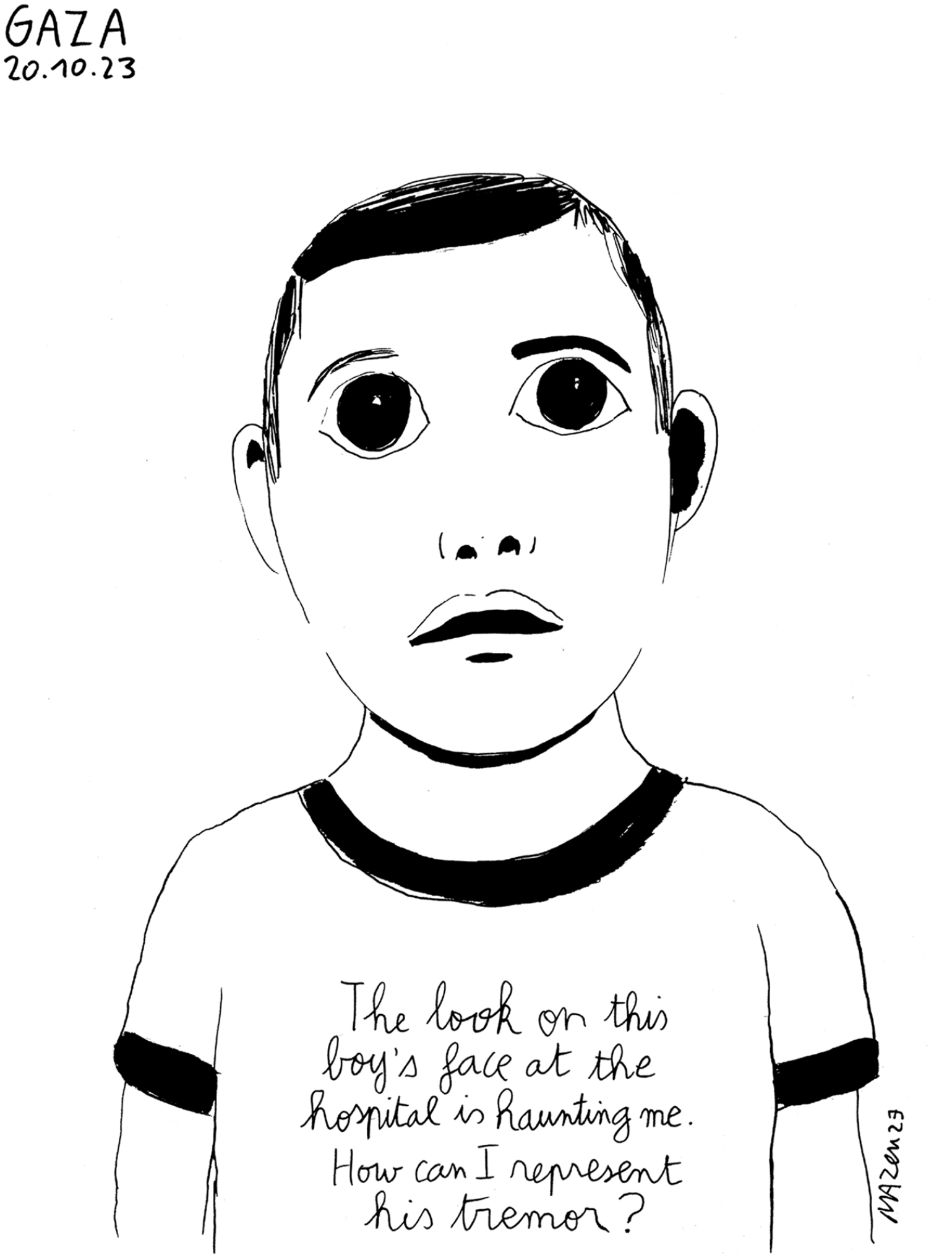
Mazen Kerbaj @mazenkerbaj.
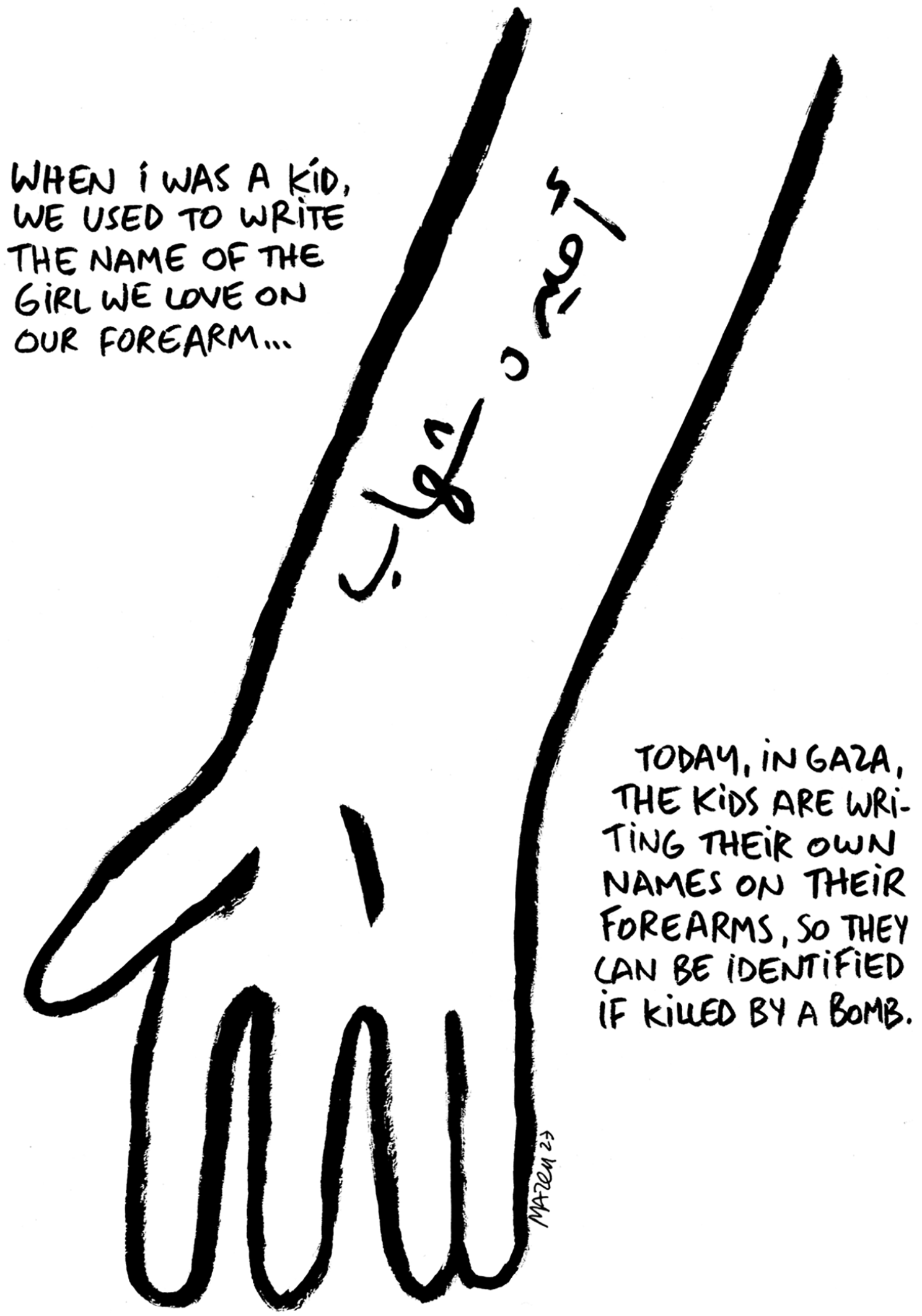
Mazen Kerbaj @mazenkerbaj.
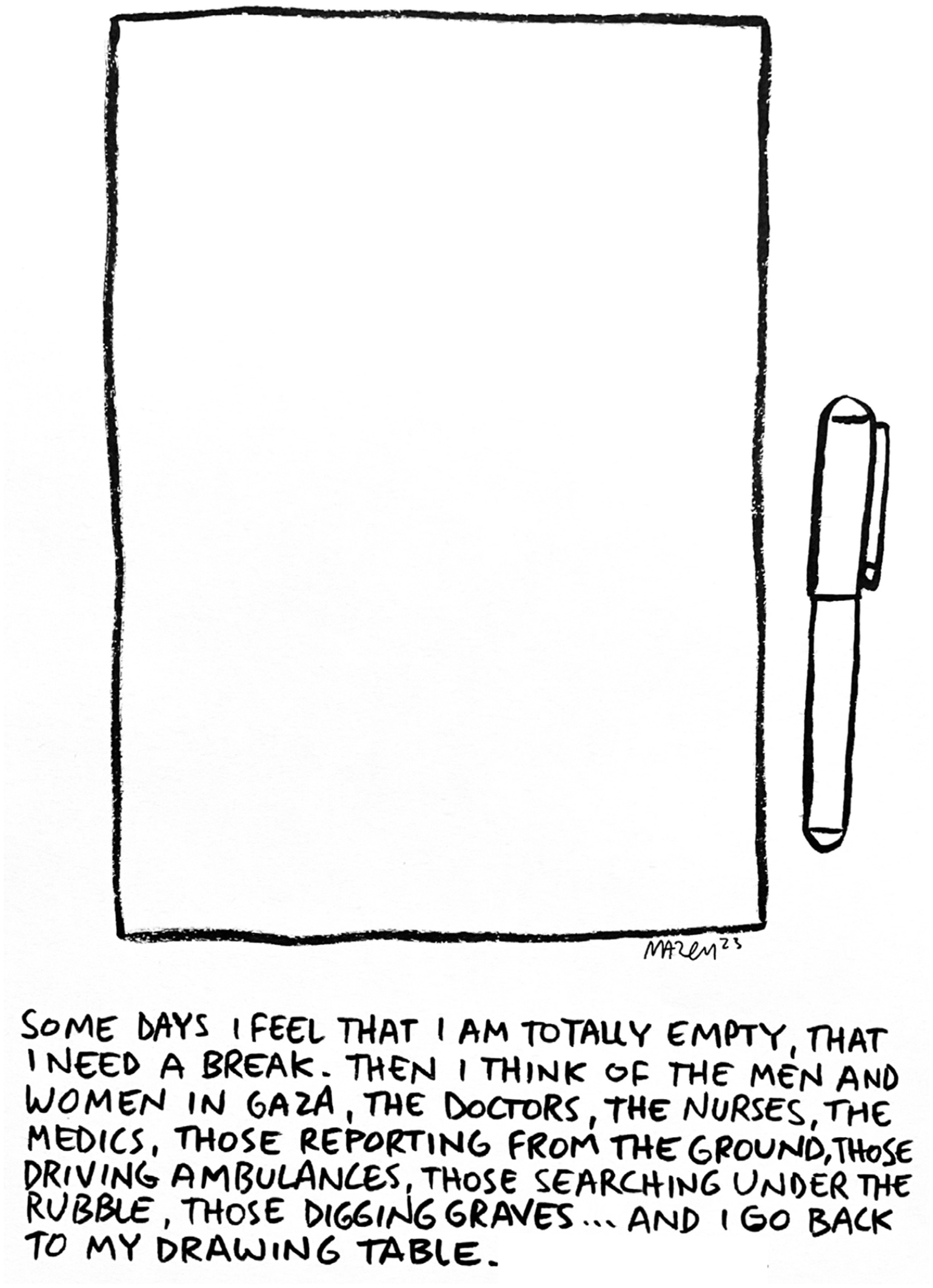
Mazen Kerbaj @mazenkerbaj.
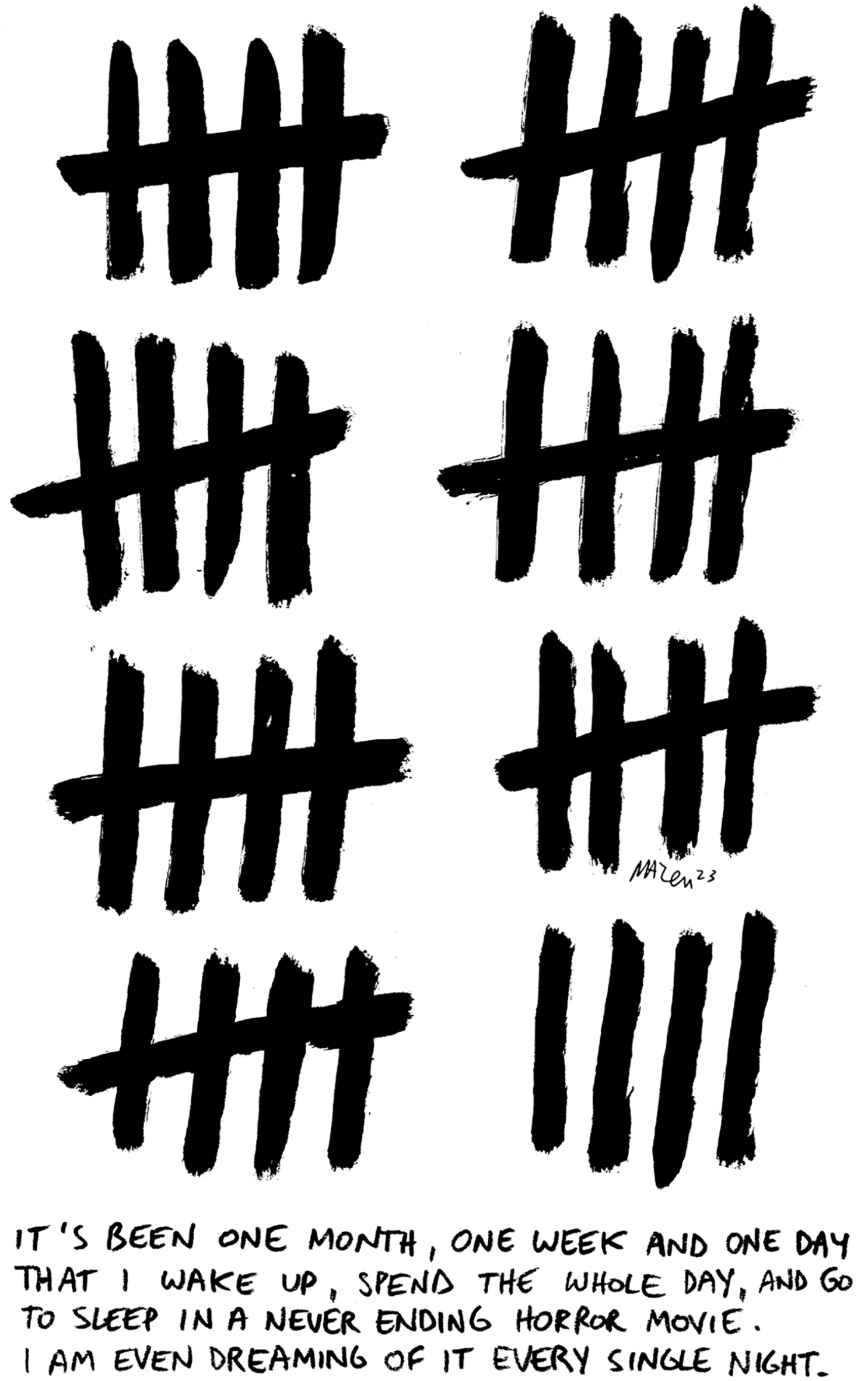
Mazen Kerbaj @mazenkerbaj.
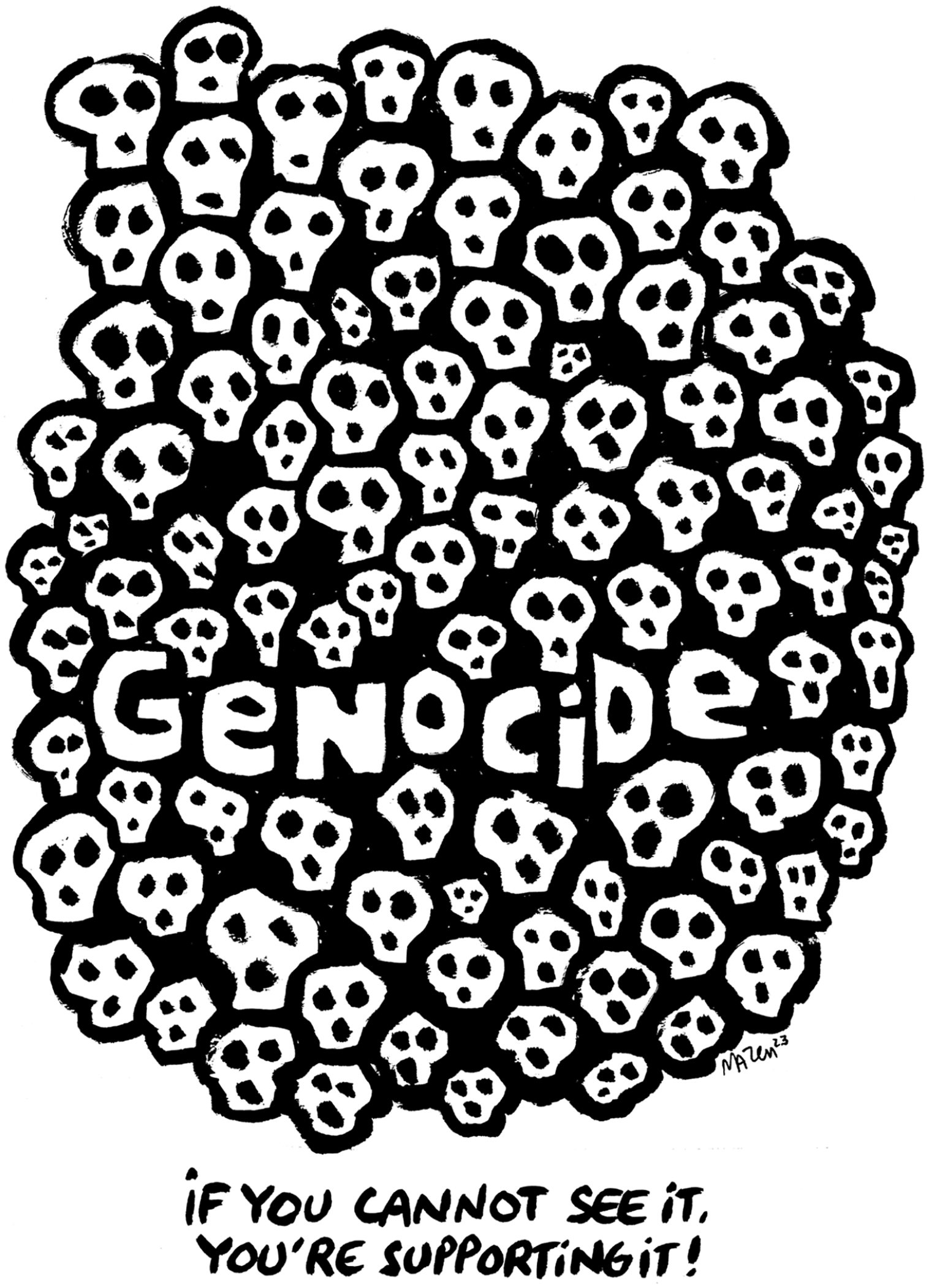
Mazen Kerbaj @mazenkerbaj.
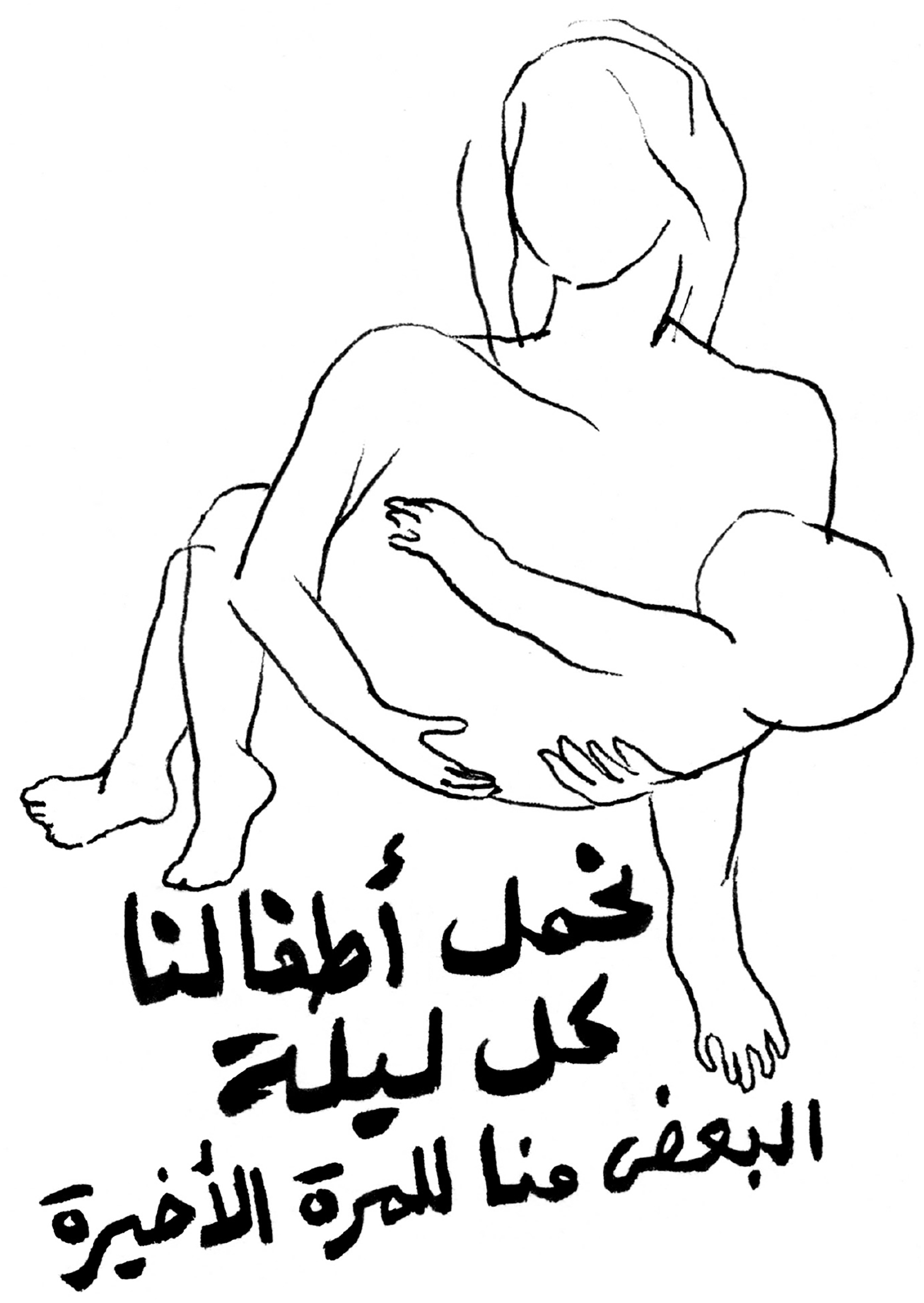
Jana Traboulsi @jana.traboulsi.
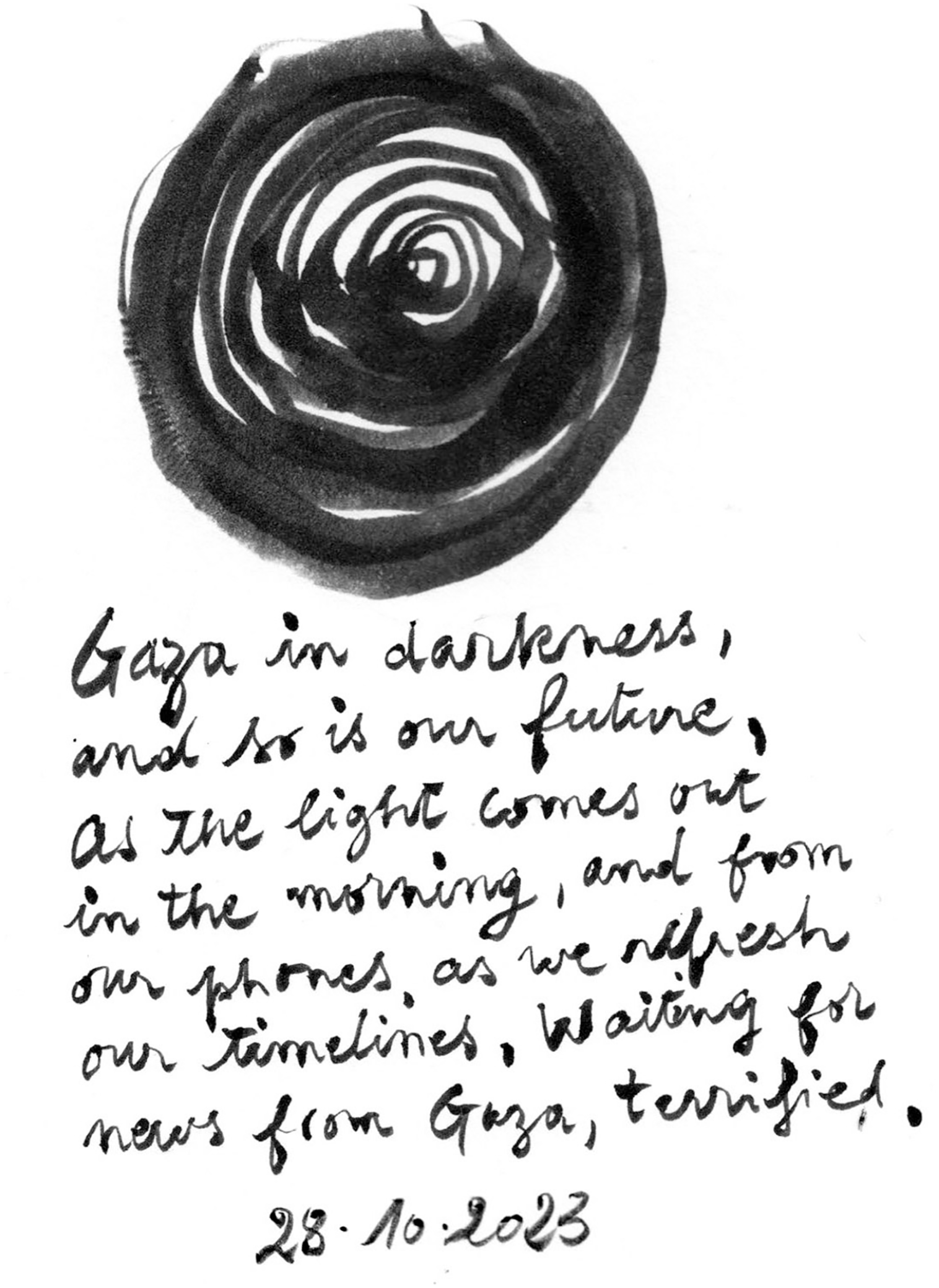
Jana Traboulsi @jana.traboulsi.
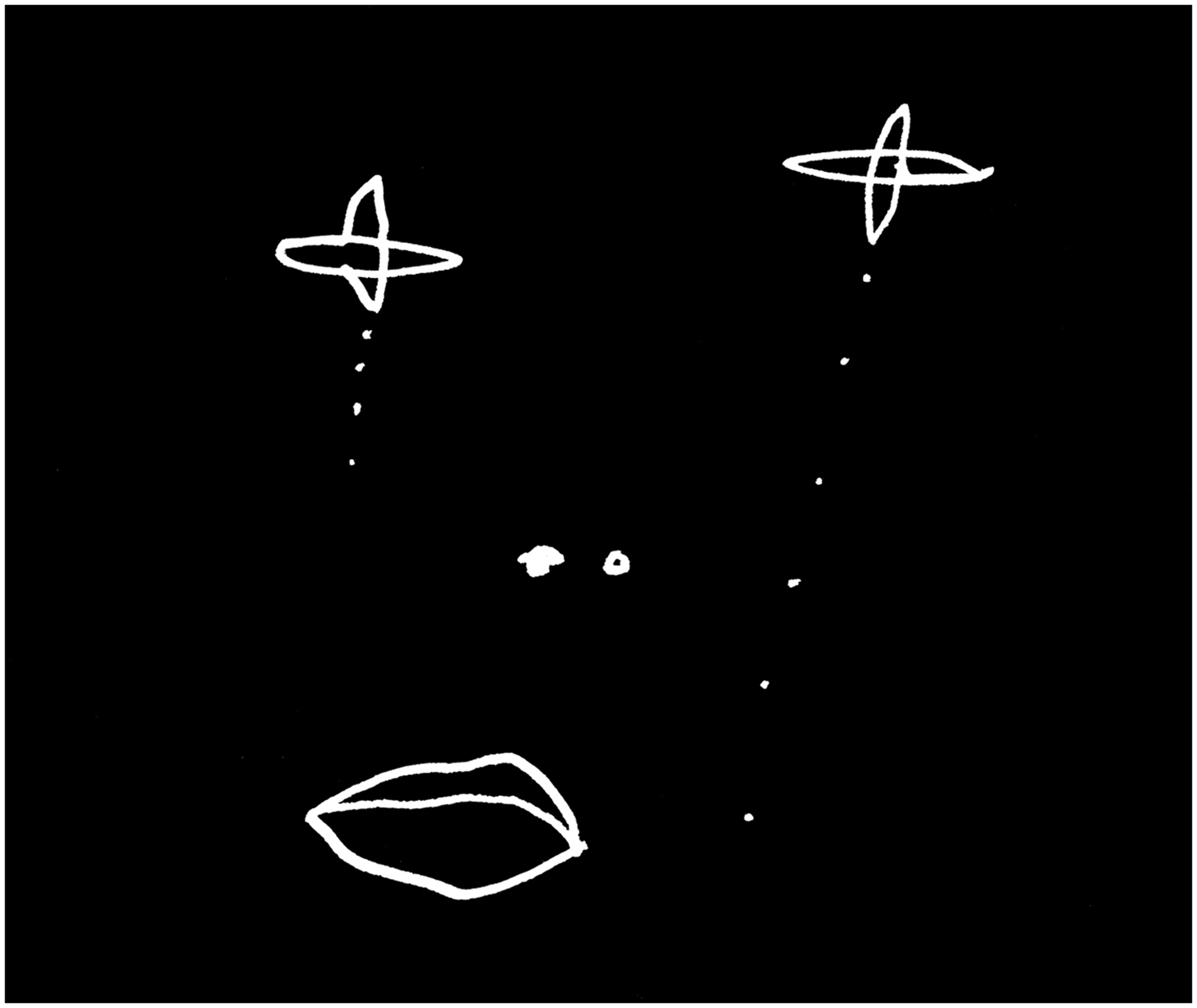
Jana Traboulsi @jana.traboulsi.
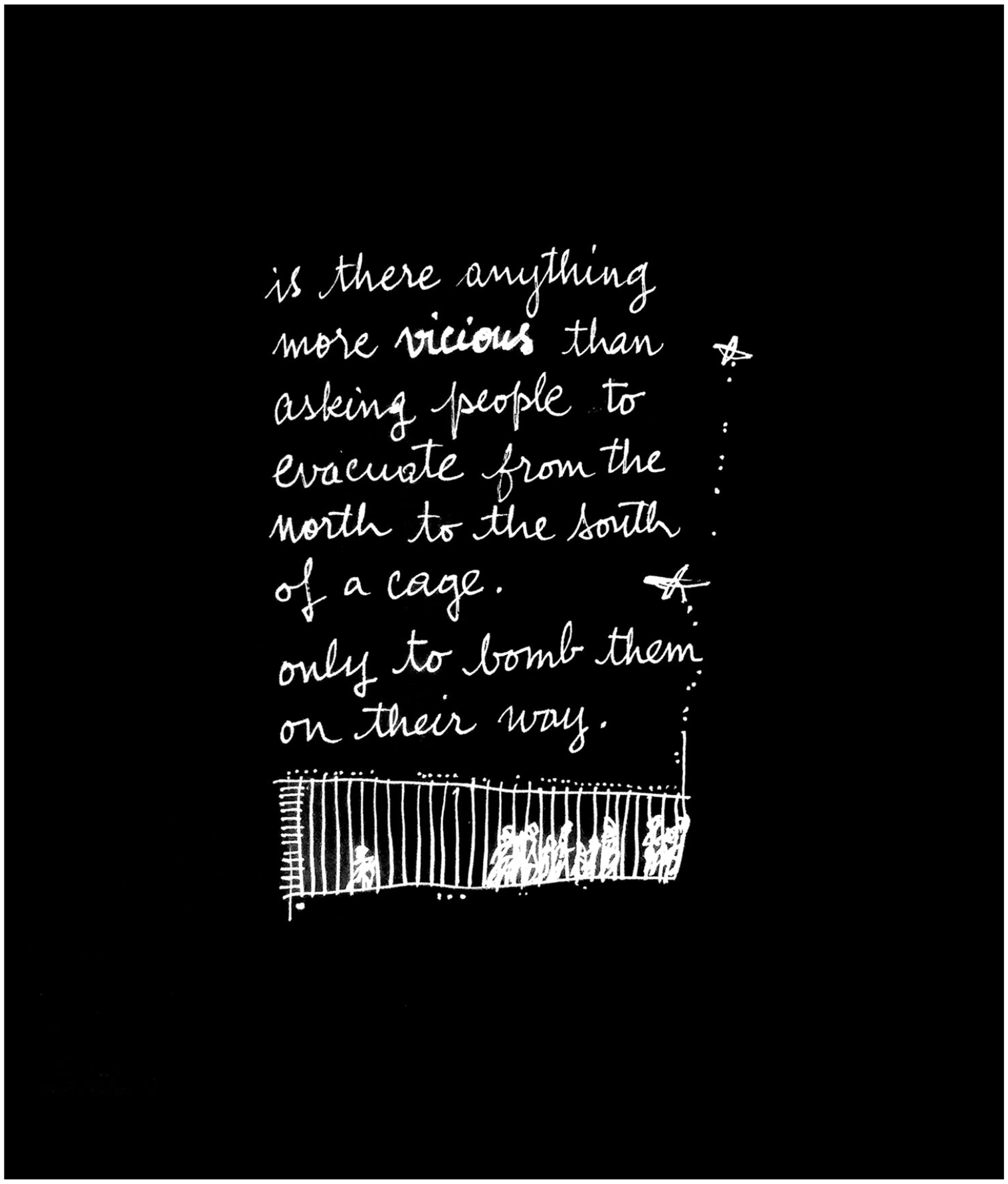
Jana Traboulsi @jana.traboulsi.
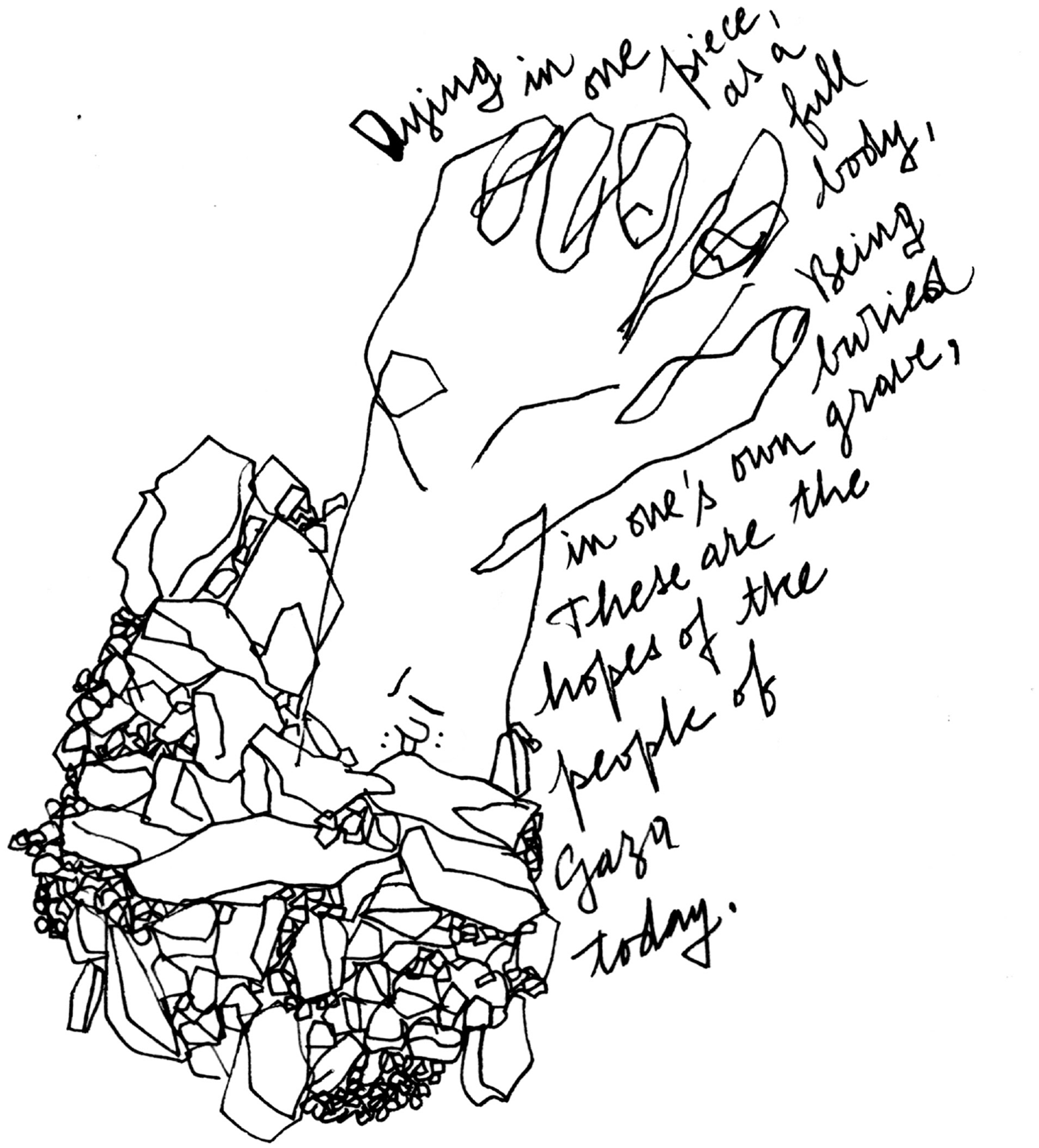
Jana Traboulsi @jana.traboulsi.
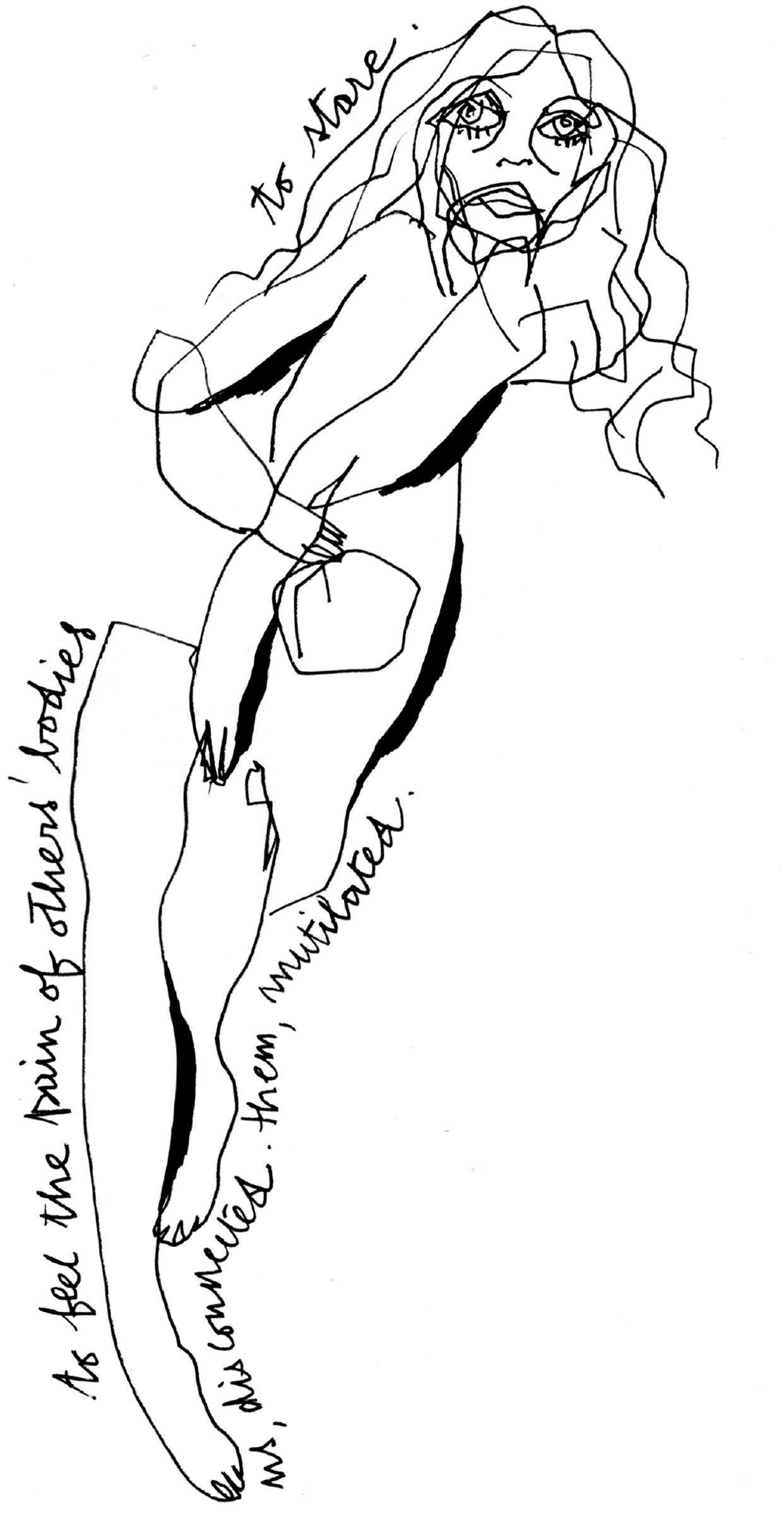
Jana Traboulsi @jana.traboulsi.
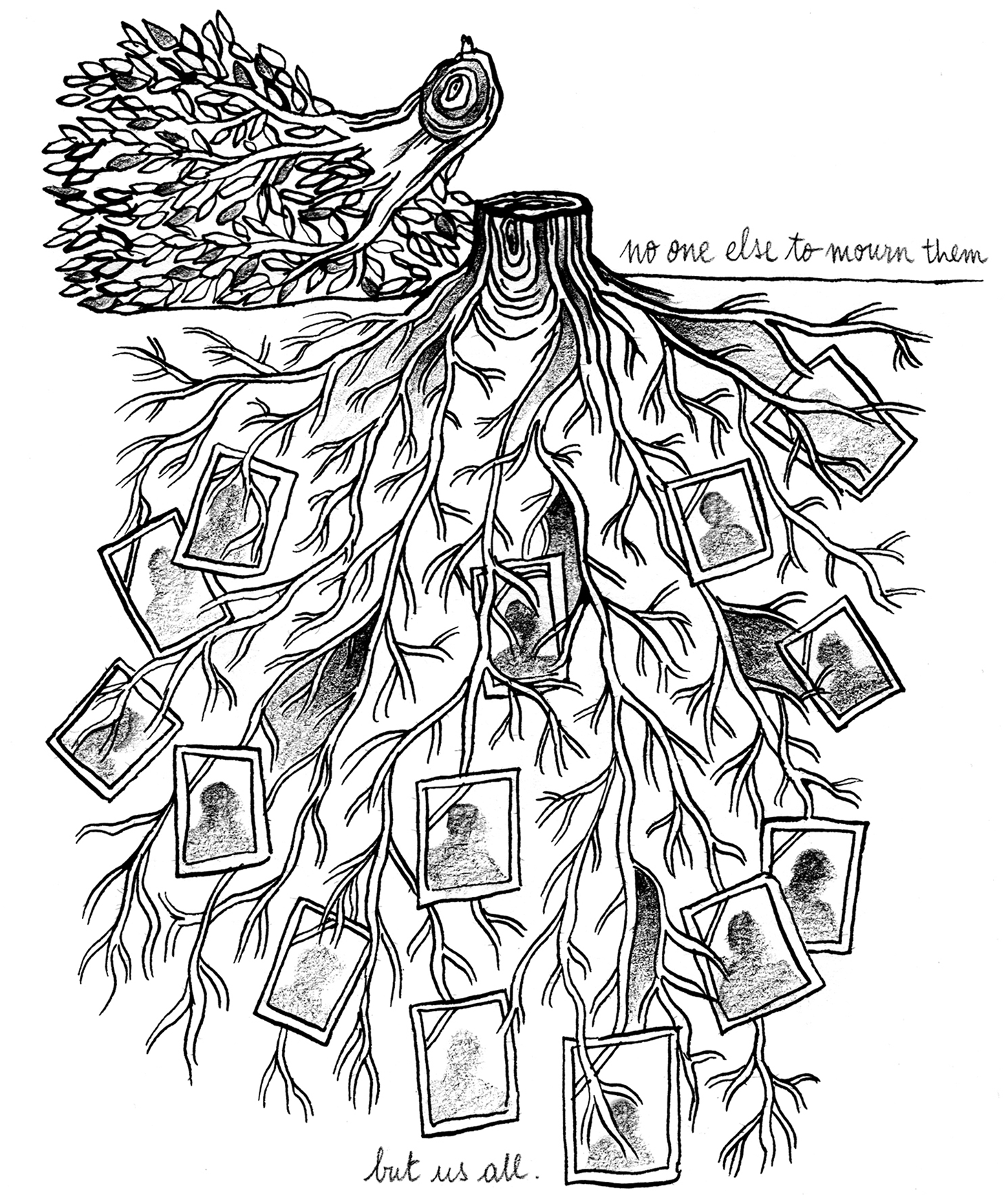
Jana Traboulsi @jana.traboulsi.
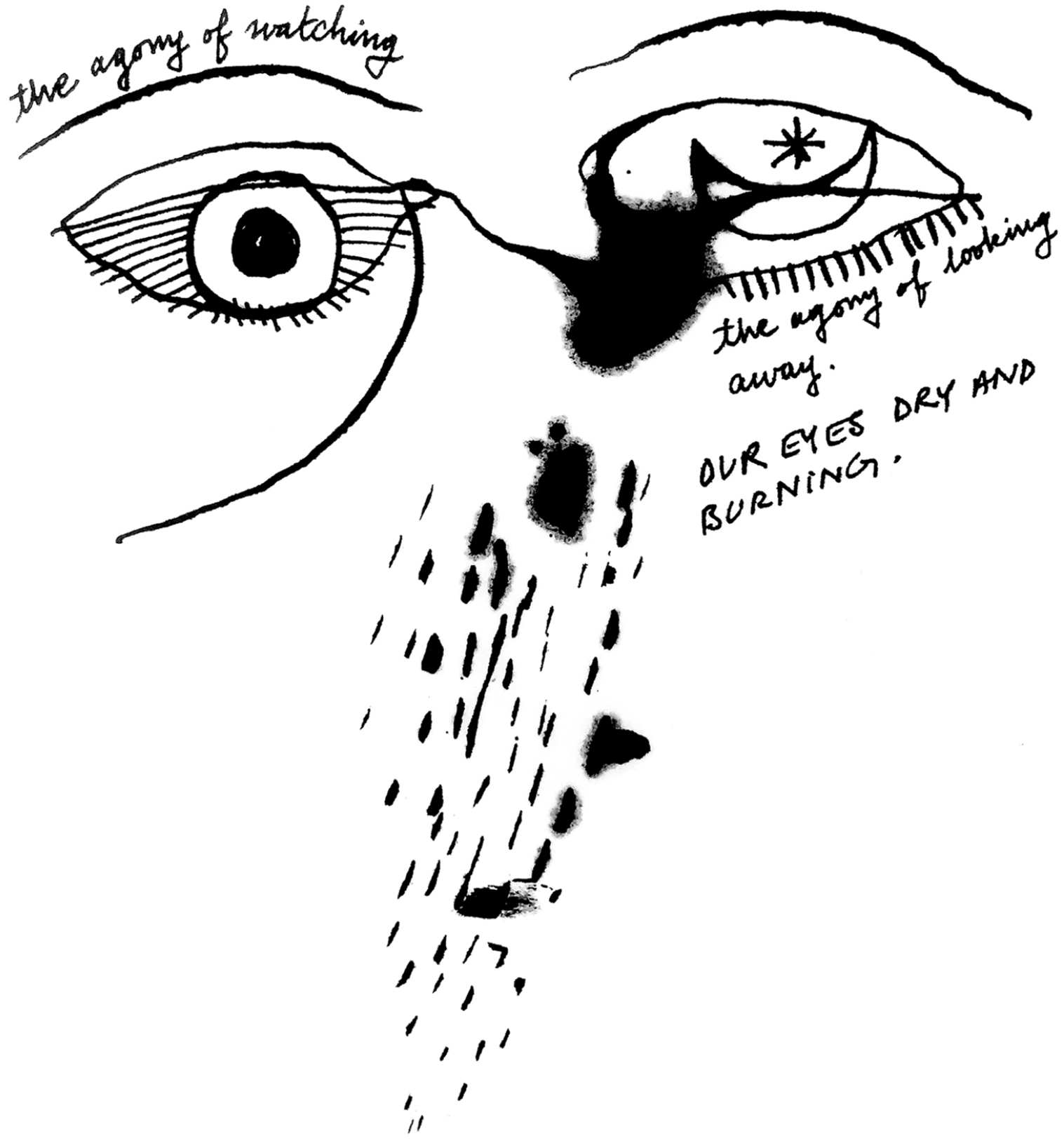
Jana Traboulsi @jana.traboulsi.
Footnotes

Notes
Address: American University of Beirut, Lebanon. [@jana.traboulsi]
Address: University of Bristol, School of Humanities, 9 Woodland Road, Bristol BS8 1TB, UK. [email:
Address: Bard College Berlin, Germany. [email: