




Abstract
This article investigates the evolving methodology of 360-degree video-ethnography, particularly in qualitative inquiries concerning the interconnectedness of individuals and their surroundings. It delineates some unique affordances of 360-degree videos in capturing multimodal elements and interpreting environments within place-centric research frameworks. Drawing from empirical observations and related literature, the authors explore key aspects of serendipity, unobtrusiveness and engagement that are facilitated by 360-degree video and VR headmounted displays (VR-HMD). Employing the ‘Rebuilding a Sense of Place (REPLACE)’ research project as a case study, this work elucidates some methodological and practical complexities of employing 360-degree video-ethnography to investigate community resilience post-natural disasters in Italy. The article concludes by advocating for continued inquiry into the dynamic landscape of 360-degree video-ethnography, emphasizing its evolving role in knowledge production and representation of space and place heritage.
Prologue
This is the little square where I used to look out and see those beautiful mountains over there. When I was a child, I used to breathe in the air filtered by the trees. I come here every year from Nice to visit the place where I was born, and it always makes me nostalgic. You can’t imagine how moved I am . . .
Here, a speaker reminisces about his childhood and teenage years in the old town of Senerchia (Irpinia, Campania, Italy) in the 1960s. After a 6.9 magnitude earthquake struck on 223 November 1980, a major part of the inhabited area was severely damaged and had to be abandoned. Subsequently, a ‘new’ town was constructed in a safer location adjacent to the old settlement which has remained untouched for 40 years, existing as a kind of ghost town. Senerchia was one of several towns that bore the brunt of this devastating seismic event along the fault line in the inner part of central Italy which had profound and tragic consequences. The earthquake claimed the lives of 2,914 people and displaced 280,000, with a total of 687 municipalities affected (Civil Protection Department, nd).
Today, although the old town lies abandoned and in ruins, it remains accessible to former residents and is physically connected to the newer settlement. In the quote, the speaker nostalgically recalls the view of the mountains from the little square in front of his family home’s entrance. He remembers the scent of the tree-filtered air in another passage, and the sound of the stream crossing the village, whose sound would help him fall asleep. It is through these sensory and multi-layered elements that the speaker’s profound relationship with this environment is revealed, underscoring the depth of his emotional attachment to the past and present of the place he is describing. One of the present authors was conducting the interview and listening to the speaker while positioned in front of him, affording the opportunity of closely observing the surrounding environment as the speaker shared his story: a multi-sensory, holistic and immersive experience. Despite the changes in the old town, it was still possible to gaze at the mountains, breathe the fresh air and listen to the sound of the stream. This environment allowed the interviewer to establish a strong connection with the memories shared by the speaker.
This interview was recorded in 2D-video format, allowing the verbal elements and some specific cropped portions of the landscape to be documented. However, it fell short of recreating an enhanced experience of the speaker’s narrative that could immerse the viewer in the physical and symbolical environment of old Senerchia in a manner comparable to that of the researcher at the time of the interview. To address these limitations, we have sought to explore the potential of 360-degree cameras for our ethnographic study conducted together with representatives from local communities in earthquake-stricken areas. In this article we discuss a set of examples drawn from case studies of our 360-degree-video ethnography (section 4).
Introduction
Three-sixty-degree video ethnography is a research approach through which scholars are enhancing place-based research. In a recent comprehensive multidisciplinary review by Cinnamon and Jahiu (2023), the utilization of 360-degree video for what they term ‘virtual place-based research’ was thoroughly examined. This encompasses studies exploring places, environments and human–environment interactions using virtual reality (VR) technologies. While computer-generated VR has a longer history in place-based research, 360-degree video stands out for its user-friendliness, realism and affordability, offering significant potential for experimental, experiential and observational studies of places across various multi-disciplinary domains. Significant advantages of such research include the accessibility of the technology, reduction of impact on study sites and an enhanced sense of realism and perceived immersivity.
Despite its recognition as a research technology since 2018, the use of 360-degree video for in-depth qualitative research remains limited. Scholars have yet to explore fully its potential for delving into the ‘richness, nuance, and intricacies of a place through an interpretive rather than a positivist epistemological framework’ (Cinnamon and Jahiu, 2023: 8).
To address this gap, we consider how 360-degree videos can enhance our understanding of stories of places, documenting multimodal elements including environmental sounds and people’s gestures, as speakers articulate their experiences of the surrounding landscape. Specifically, the article examines the integration of immersive technologies, including 360-degree cameras for content production and Virtual Reality Head-Mounted Displays (VR-HMDs) for visualization, enabling users to experience 360-degree footage from ‘within the sphere’. This study is based on three interconnected theoretical frameworks: sensory ethnography (Pink, 2009, 2021), Actor–Network Theory (Latour, 1999) and phenomenological approaches to place and perception (Malpas, 2018; Merleau-Ponty, 1962; Relph, 1976; Tuan, 1977). Sensory ethnography informs our emphasis on embodiment and multi-sensory engagement, justifying the use of 360-degree video to document spatial relations, gestures, sounds, etc. Actor–Network Theory views people, tools and surroundings as all playing a part in how knowledge is formed. From this perspective, the 360-degree camera is not just a tool for recording but also a tool that influences how knowledge is produced and mediated. Phenomenology, particularly Merleau-Ponty’s (1962) work on embodied perception, humanistic geography’s focus on lived experience and people’s affective relationships to their environment help us theorize how immersive media mediate the participant’s and researcher’s sense of place. Together, these frameworks inform both the methodological design (i.e. ‘walking with video’) and the analytical lens through which we interpret immersive, situated ethnographic data.
The central questions guiding our research were: what are the affordances and limitations of immersive technology, specifically 360-degree videos, when exploring the relationship between individuals and their environment, particularly in the context of natural catastrophic events? How does the use of 360-cameras and VR headset devices by researchers impact the research process? We aimed to explore the advantages and pitfalls of technical solutions devised by our research team to delve into the speaker’s connection to their environment, to validate whether they allow a more comprehensive and immersive representation of this connection. Utilizing this approach, we wanted not only to increase our understanding of the speaker’s connections or disconnections to their environment, but also to contribute to a broader examination of the role of immersive technology in ethnography and qualitative research.
This article focuses on several crucial aspects that emerged principally during the analytical phase but also during data collection. We discuss three key elements: the level of serendipity, unobtrusiveness and engagement favoured by the combination of 360-degree video and VR-HMD as production and viewing techniques.
After presenting a qualitative review of key papers on 360-degree video in ethnographic research (section 2), the article provides information on the research project and process (section 3). In section 4, the study endeavours to ground our empirical observations in the existing literature on ethnographic research. Accordingly, section 4 discusses:
how the point of view (POV) in the context of immersive media can provide fresh insights into the researcher’s analytical experience, by favouring serendipity;
how 360-degree cameras facilitate an unobtrusive approach to video-ethnography, enhancing the analysis of narrative immersion and group dynamics;
the importance of considering the researcher’s presence and positionality within the ethnographic process, suggesting a potential for shared observation experience and immersive collaboration.
some specific ethical challenges presented by 360-degree video, and how they can be acknowledged and addressed.
Section 5 provides a final discussion and suggestions for future place-centred ethnographic research incorporating 360-degree videos.
Related Works: Exploring 360-Degree Camera Affordances In Ethnographic Studies
Here we examine relevant literature on video and digital ethnography, offering insights into the evolving methodologies and applications within the field. The focus is on significant contributions and emerging trends that inform our understanding of video ethnography’s potential; one primary area of attention is immersivity, that is, how immersive technologies shape experiential and analytical engagement with audiovisual materials. This section surveys key contributions across ethnography, digital media and spatial studies, focusing on the affordances and limitations of 360-degree video within place-based research.
In recent years, the application of 360-degree video in research has gained traction across various domains, with significant contributions from studies like Cinnamon and Jahiu (2023), who provide an extensive review of its use in virtual place-based research. They demonstrate the versatility of 360-degree video in enabling immersive experiences, which are now increasingly used in fields such as tourism, urban planning, education, environmental monitoring and cultural heritage preservation. This broad range indicates how 360-degree video is increasingly utilized to simulate real-world environments and study complex spatial dynamics. Cinnamon and Jahiu’s work is particularly relevant to ethnographic research as they explore the methodological strengths and limitations of using 360-degree video to document participant perspectives and spatial interactions. According to these scholars, the advantage of 360-degree video is its accessibility: affordable equipment, manageable data processing and user-friendly tools make it technically and economically viable for researchers. It supports immersive, panoramic representations and facilitates remote field access with minimal site disturbance. However, limitations remain. The simulated sense of presence rarely substitutes for physical immersion, often yielding only partial engagement. Compared to advanced VR, viewer interaction is limited, and issues such as cybersickness and aesthetic overemphasis can undermine critical, meaningful connection with the environment.
Three sixty-degree video research aligns with the aims of digital and sensory ethnography, as outlined by scholars like Sarah Pink, whose emphasis is on how sensory engagement and immersive technologies have shaped contemporary approaches to ethnographic methodologies. As digital and visual ethnography continues to evolve, Pink’s pioneering work is a foundational contribution to the field. She has provided frameworks for incorporating digital tools and sensory experiences into research practices, allowing ethnographers to reflect the complexity of lived experience in ways that traditional textual methods cannot (Pink, 2009, 2021; Pink et al., 2015). Particularly relevant is her concept of ‘walking with video’ (Pink, 2007) which emphasizes documenting the embodied, sensory dimensions of place as participants move through their environments, an approach particularly suited to 360-degree video. This method enables the researcher to explore place in a manner that includes sight, sound, movement and spatiality. In line with Pink’s perspective, 360-degree video is increasingly used within digital ethnographic methodologies to gather not only visual details but also a sensory representation of place, allowing researchers to document a more detailed interaction of people with their environment. Scholars interested in exploring these new avenues have mostly engaged with the subject theoretically, with few debating the utilization of spherical images and their advantages in empirical research. Among these, Gomez Cruz (2017) stands out for situating 360-degree devices within the photographic tradition. He explores continuities and dissonances, arguing that they open up new avenues for thinking about the research subjects from both a visual and sensory standpoint (p. 30). He argues that the pursuit of a 360-degree vision predates the advent of photography itself, tracing the technique’s origins back to Robert Barker’s (1787) patent for a 360-degree painting titled ‘Nature à Coup d’Oeil’ (Uricchio, 2011: 225).
Kostakos et al. (2019) demonstrate the effectiveness of immersive technologies like VR and 360-degree images in virtual go-along ethnography. They used 360-degree images as ‘walking probes’ with participants familiar with the area (primarily students aged 22–31) to simulate a campus-to-downtown route. This approach, followed by semi-structured interviews, showed that VR-based probes can enhance accessibility and participation by overcoming the physical limitations of traditional ethnography. Conducting the walk in a controlled setting also ensures consistency in language and gestures, and facilitates access for individuals with disabilities. Additionally, 360-degree images can evoke memories and emotions, aiding in the identification of ecological changes and environmental concerns. For instance, research participants in the reviewed study were able to scan the environment for missing trees, occasionally referencing the olfactory dimension of memories associated with trees that had been removed.
Adopting a divergent approach to the trope of immersion, often regarded as a marker of realism, Westmoreland et al. (2022: 52) disapprove of this uncritical stance, choosing instead to ‘reinvent’ ‘immersive ethnography’ according to different terms than visual realism and personal empathy, terms which might better align with the crucial concerns of contemporary anthropology such as intervention, collaboration and cultural critique, as well as the conceptual frameworks of multiplicity, entanglement and precarity. The authors argue that ethnographers, aware of the inherent immersion in participant observation, leverage this perspective to explore alternative frameworks, such as diverse visualization strategies, for new forms of immersive ethnography. This method emphasizes diversity and juxtaposition over empathy and realism.
Ceuterick and Ingraham (2021) present a thought-provoking analysis of the intersection of key ethnographic concerns: a critical exploration of novel approaches to enhancing and sharing our understanding of otherness, and the utilization of 360-degree and immersive media. They examined mobility experiences of black individuals, using the Emmy-nominated (2018) VR film Traveling While Black. They argue that these methods allow the viewer – whether the researcher, participant, or, in some cases, a broader audience – to immerse themselves in an otherwise inaccessible world, potentially non-local, imagined, or private, and thereby gain fresh insights into the lives and environments of research participants. Here, ‘viewer’ is intentionally inclusive, referring both to the researchers and participants, as well as other audiences who may revisit these experiences to explore different perspectives. This approach, however, has primarily been analysed within cinematic VR, and it remains uncertain whether these immersive insights translate directly to non-fiction ethnographic narratives and real-world applications.
These scholars argue that simulation and the heightened sense of presence made possible by these technological methods align with the ethos of ‘show don’t tell’, which is inherent in more evocative forms of ethnography (Gullion, 2016: 75–78). Such forms prioritize the representation of participants’ lives and environments without imposing an external narrative, letting participants’ own stories and contexts emerge more directly within the immersive environment. Imposing an external narrative in video-ethnographic research can happen through editing choices, selective framing, or researcher-driven interpretations, which may simplify or reshape participants’ experiences to fit academic interpretative themes. In their argument, Ceuterick and Ingraham (2021) contend that the capacity to immerse the viewer in an otherwise inaccessible world – one that may be non-local, imaginary, or deemed forbidden – has the potential to reveal fresh perspectives on the research participants and their environments.
Westmoreland (2020) has taken a more direct approach, presenting two case studies of experimental co-research with 360-degree video in the field. The first case study focuses on the study of maritime migrants’ patterns in Indonesia. In this instance, the technology aims to deconstruct the conventional omniscopic view: instead of unifying and stitching images from six cameras to create a photorealistic spherical vision, here the images are diversified, portraying an ‘amphibious’ setting that encompasses both underwater and overwater scenes (Pauwelussen, 2017), allowing the viewer to observe different scenes simultaneously rather than a single one from different angles. This approach replaces co-presence in space and time with the simultaneity of distinct, non-contiguous spaces central to spherical vision. Shifting from traditional 360-degree unity to a kaleidoscopic perspective captures the multifaceted lives of maritime migrants, enriching the theoretical framework for analysing the data.
Another instance of 360-degree video’s application in ethnography is Westmoreland’s (2020) project ‘Broken Ground’, capturing the usually inaccessible environment of Ghana’s traditional small-scale gold mines. These images are meant to convey the sensation of being inside a gold mine, an immersive experience often out of reach for most researchers that could leave a lasting impression of the life of a miner and has practical implications for policy research and dissemination. It allows these remote places to be experienced in their sonic, multilingual and multimodal dimensions, demonstrating how 360-degree capabilities can be harnessed during ethnographic studies. Although the author presents this as a collaborative approach to accessing these hidden landscapes, the key sensory experiences – such as intense heat and labour fatigue – cannot be fully conveyed or shared. Visual elements, including darkness and confined spaces, dominate the experience. Workers enduring the harsh workload perceive these environments very differently from viewers of 360-degree footage, who may instead be captivated by the uncanniness and rare opportunity to access otherwise unreachable spaces, rather than by the socio-economic inequities and health concerns.
Rebuilding A Sense Of Place (Replace): Introducing The Research Project And Process
Our research centres on a 360-degree video-ethnography project titled Rebuilding a Sense of Place (REPLACE): The Socio-cultural Role of 3D Technologies in Increasing Community Resilience After Natural Disasters. The primary aim of this project is to enhance post-disaster community resilience by exploring how 3D technologies can facilitate the rebuilding of a sense of place, ultimately helping communities to better prepare for, respond to and recover from natural disasters. This four-year initiative builds on the foundations of Italia Terremotata, an interactive ethnographic documentary combining 3D visualization and multimodal storytelling to tell stories of communities affected by the 1980 Irpinia earthquake in South Italy (Galeazzi et al. 2023).
The project investigates how 3D technologies can help communities reconstruct both their physical and cultural landscapes after disasters. We adopt an ethnographic, in-depth longitudinal study to examine a complex cultural context in Italy, a country affected by recurring earthquakes. These earthquakes predominantly impact marginalized rural areas that have historically grappled with depopulation due to a decline in natural resources, such as timber extraction, which affects the local economy.
The safeguarding and preservation of endangered heritage and communities in these regions has often been overshadowed by the focus on more prominent urban heritage, lending a timely and urgent nature to this research. Consequently, this ethnographic approach also aims to recognize the participation of marginalized groups in hazard management and policymaking, analysed through selected case studies showcasing how 3D technologies can support communities and heritage preservation.
Building on research experiences presented in the previous section, our methodological approach incorporates ethnographic techniques that emphasize sensory and environmental interconnectedness. This is achieved through a practice-based approach which is particularly well-suited to 360-degree video ethnography as it integrates theoretical inquiry with creative, embodied practice. It values knowledge produced not only through analysis but also through the production, visualization and experiential design of 360-degree video content.
Adapting Pink’s (2007, 2011) ‘walking with video’ concept to a 360-degree format, we used ‘walking with 360-video’ interviews to create a dialogue between participants and their surroundings. By allowing participants to walk through spaces meaningful to them, we encouraged interactions that reveal the human–environment connection central to their sense of place. This method is rooted in a phenomenological understanding of place as lived and embodied (Merleau-Ponty, 1962; Relph, 1976). Rather than treating space as abstract or geometrical, we approached it as something participants experience through memory, gesture and multisensory cues. By encouraging participants to walk through meaningful environments, we sought to capture, study and reveal their own perceptual engagement with place, that is, what Tuan (1977) calls the ‘felt value’ of spatial experience.
The fieldwork incorporated 20 hours of 360-degree video footage, recorded with an Insta360 One RS (1-inch 360 edition) camera mounted on a 120cm selfie-stick, controlled through a smartphone. Audio data was captured using Rode Wireless Go 2 microphones to record both participants’ and researchers’ voices. To enhance audio quality, we also recorded an additional soundtrack with a Zoom H3-VR, to allow revisiting of the interactional soundscape of each location. A total of 25 participants (8 females and 17 males) age 24–80 were interviewed. Participants were briefed on the study’s objectives, which focused on their personal experiences of the earthquake and subsequent recovery efforts. Before each interview, participants were asked to provide their consent to be video-recorded and sign the approved consent forms from the Ethics Committee of the authors’ university. To ensure anonymity, participants were assigned pseudonyms.
Analysis involved approximately 45 hours of immersive review, conducted by two researchers using VR-HMD (Oculus Quest 2) headsets. Revisiting the data in a VR environment facilitated a multimodal thematic analysis approach (Nowell et al., 2017), enabling researchers to engage with place and spatial interactions in a more embodied way. This VR-aided process supported immersive multimodal coding, where speech, sounds, gestures, images and spatial dynamics were all considered as elements contributing to a rich narrative of place.
Reflecting on this approach, we postulate that integrating 360-degree video and spatial audio enriches quality of data analysis by enabling researchers to revisit the ethnographic interactions as they unfold, bringing a sensory-rich perspective to the study of place and memory. This methodological approach not only aligns with contemporary visual and sensory ethnographic practices but also supports an ethically aware engagement with participants.
By enabling post-fieldwork reflexive and ethical evaluation, 360-degree practices allow forms of implicit dissent and criticality to emerge – not only directly from research participants, but also through the gestures of passersby accidentally captured in the spherical footage (see section 4.3) or from objects, such as smartphone screens (see section 4.2). Ultimately, realizing this potential depends on researchers embracing these challenges and engaging in a continuous relational negotiation of research dynamics, grounded in empathy and a sincere commitment to ethical responsibility and care (Klykken, 2021: 807). It is only through such attentive engagement that the potential for reflexivity can fully unfold, and research knowledge can be produced in a less extractive way.
By documenting the complex human–environment relationships in disaster-prone areas, this project offers valuable insights into how communities can rebuild and preserve their sense of place in response to recurrent catastrophes resulting from natural hazards.
Discussion On 360-Degree Ethnography In Place-Centric Research
The enhanced serendipity of 360-degree ethnographic practice
3DoF (Three Degrees of Freedom) and 6DoF (Six Degrees of Freedom) are terms used to describe how users can interact with a virtual environment. In a 3DoF setup, users can rotate their viewpoint but cannot move their position within the virtual space, while a 6DoF setup allows users to both rotate their viewpoint and move their position. The specific freedom of movement allowed by 3DoF could be understood as unique to the act of vision in 360-degree media and imagery (Gomez Cruz, 2017: 34). While this might appear at first glance as a limitation when compared to 6DoF, it represents a fully functional system to exploit the three axes of rotational freedom to scan the environment and interactions, and select and retrieve data after ethnographic fieldwork has ended. In fact, with 360-degree images, the real-time pattern of attention is disrupted, being no longer the researcher’s focus on what to shoot, but only on the time–space boundaries (p. 30).
After having experienced it during our 360-degree-led ethnographic practice, we suggest this mechanism of ‘unfocused attention’ could potentially foster the emergence of serendipity, defined as ‘the art of making an unsought finding’ (Rivoal and Salazar, 2013: 178; Van Andel, 1994: 631). Coherently with the Actor–Network Theory, a theoretical–epistemological approach (Latour, 1999) that avoids preconceptions about human and non-human agents and their capacities for meaning-making, serendipity is not about chance encounters but about specific configurations that render something visible and interpretable as the result of a complex network of associations. A connection between the multiplicity of points of view and serendipity has been proposed by Yazaki et al. (2023) and Kimura and Nakajima (2021). At the same time, serendipity plays a pivotal role in the ethnographic method (Rivoal and Salazar, 2013: 178). The concept of the ‘ethnographic hunch’, as articulated by Pink (2022), revolves exactly around those fortuitous moments when a shift occurs from the incremental process of knowledge production to a fresh and enduring perspective that shapes the course of research. According to Pink, this phenomenon extends beyond serendipity during fieldwork; it encompasses ‘serendipitous ways of learning arising from the dynamics within research teams, participants and their various modes of engagement throughout fieldwork, analysis, and writing’ (p. 34). This perspective is integral to the notion of 360-degree ethnographic practices we are exploring. The approach does not require a predetermined framing of the researcher’s attention prior to the analytical process as researchers gain the ability to tilt and pan their attention across the spherical data collected during fieldwork. This methodology enhances ethnographic activity with rich data and has the potential to facilitate serendipitous ethnographic observations. Such an approach can lead to the emergence of fresh insights thanks to the multiplication of accessible points of view, thereby expanding the contextual and sensorial awareness of the actions or scenes being observed (Gomez Cruz, 2017: 35).
The concept of point of view (POV) is widely utilized across various disciplines; in 360-degree video it refers to the perspective from which the scene is taken, influencing the initial viewpoint. This starting orientation helps guide the viewer’s attention or provides a logical entry point. In 360-degree content, viewers can adjust their own POV by rotating their virtual viewpoint, adding a dynamic layer to their experience. Key POV adjustments include tilting and panning. Tilt is the vertical movement, allowing viewers to look up and down, which reveals different elements like the sky or ground, adding depth to the scene. Pan refers to horizontal movement, letting viewers look side to side to explore the environment and observe different objects or follow subjects. Together, tilting and panning grant viewers control over their exploration, encouraging interaction and mimicking natural observational movements. This enhances the immersive experience, making the viewer’s engagement with the scene more intuitive and comprehensive.
The use of a 360-degree camera documents a ‘snapshot’ of space frozen in time, offering a unique form of serendipity that differs from simply revisiting the location, when environmental factors may have changed. Researchers can thus ‘return’ to the same scene, noticing details they may have missed initially.
We have experienced several moments of such serendipity of teamwork. For instance, an inconspicuous detail like a sticker superimposed on a street signboard noticed by one of the researchers led the team to discuss the presence of youth artistic creativity and the dynamics of parochialism. A southern Italian town named Lioni was playfully referred to as ‘Lion’, a novel toponym providing insight into why the interviewed youth expressed a preference for unwinding there rather than strolling in their own hometown: ‘usually, if we want to have a night-out we go somewhere else, we go to Lioni [Beatrice]’ (Figure 1).
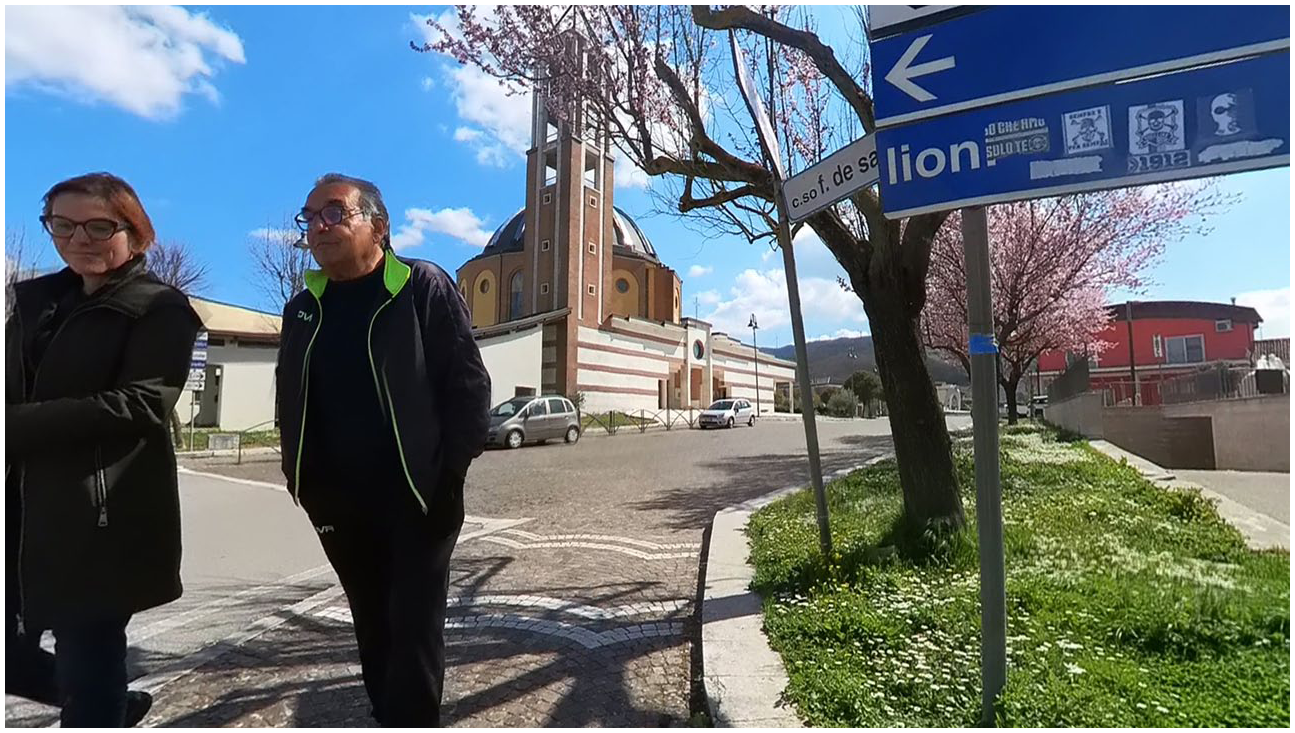
‘Lion’ as new toponym: The semantic shift for the town of Lioni. Detail of the street signboard.
Continuing with the theme of writing as communicative mode and serendipity, an intriguing observation occurred at a specific gathering place for youth, locally known as ‘Le nicchiette’ (The Little Alcoves). Here, during the revisiting of a 360-degree video-interview, attention was drawn to graffiti on an old stone staircase in one of the most popular places of the rebuilt city of L’Aquila (Figure 2): ‘In difesa della bellezza’ (In defense of beauty). In a subsequent search for the text and location online, a researcher stumbled upon the social media page of a civic action group called ‘Jemo ‘nnanzi’ (Let’s go ahead), which had commented on the inscription, expressing disapproval for the defacement based on a literal interpretation of the words. These few seconds of spherical filming not only led to the discovery of the civic action group and their inclusion as new informants for the ethnography but also sparked a discussion regarding the symbolic, rather than literal, meaning of the writing as a social message. The act of defacing an iconic staircase with an unsightly inscription using spray cans suggests not only a disregard for traditional beauty but also conveys a sense of opposition to the reconstruction of a gentrified, postcard-perfect cityscape.
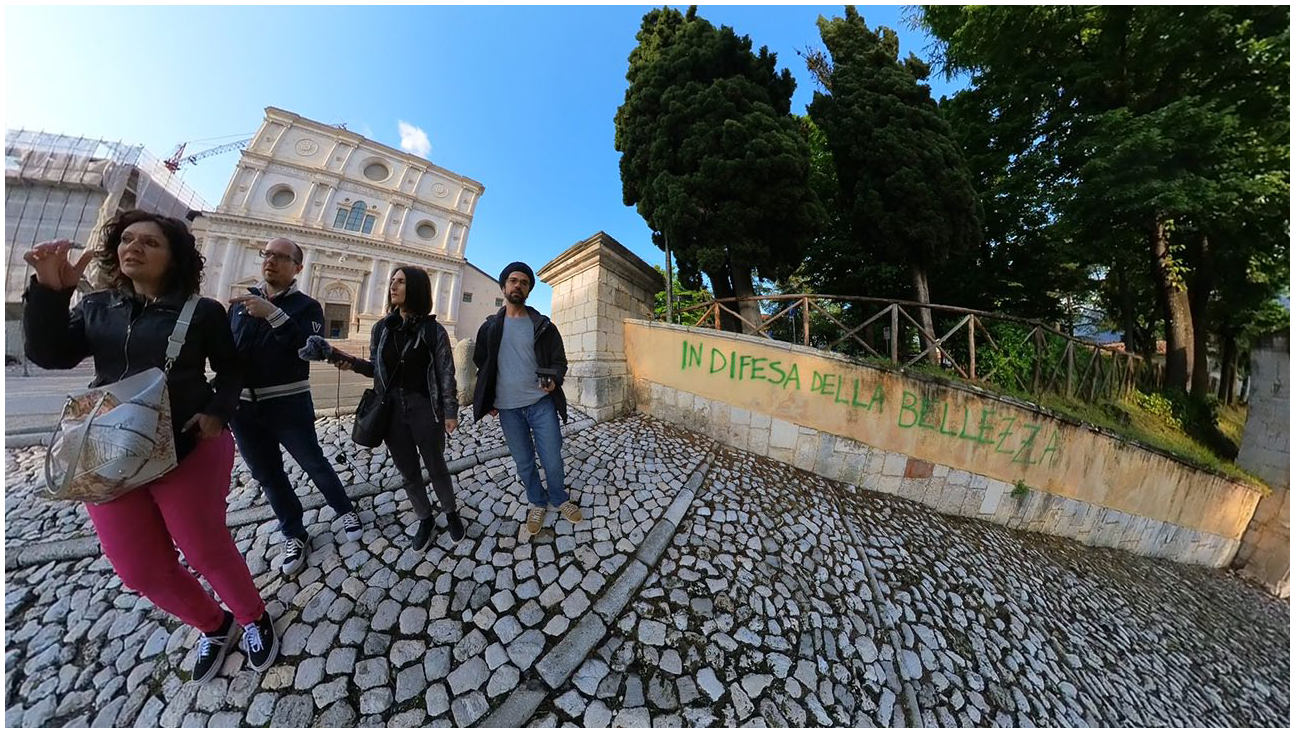
A contested inscription: Defacement of public space or civic opposition to the reconstruction of a gentrified cityscape?
The events and materialities unfolding within the 360-degree images, such as looking for the serendipitous with ‘unfocused attention’, need to be further studied. This approach suggests the technology could offer a practical way to embrace the principle of serendipity, potentially guiding researchers toward new perspectives, unanticipated connections and a richer appreciation of unpredictable ‘ethnographic hunches’. The multiplicity of perspectives enabled by 360-degree video complements Merleau-Ponty’s (1962) idea of perception as emerging from the interplay between the body and its environment. These serendipitous discoveries are not random but arise from the situated co-presence of researcher, participant and environment, an assemblage that Actor–Network Theory frames as a network of human and non-human actants (Latour, 1999). From this point of view, the sticker on the street sign or the graffiti becomes something meaningful because of how it connects to the people, places and things around it.
A potential limitation of the present study is its inability to address the nexus of serendipity/360-degree videos beyond the visual aspect. Although 360-degree cameras can record stereo audio, there remains a gap in integrating spherical image and spatial sound production. In our study, we used an external recorder (Zoom H3-VR) designed to capture 360-degree spatial audio in the Ambisonics format and simulate how sound naturally behaves in a three-dimensional space. However, the VR-HMD used for analysis does not support spatial sound, forcing a choice between being immersed in the visual sphere with traditional stereo sound or experiencing the sound sphere without exploring the landscape immersively. While some digital platforms are already exploring the possibilities of a soundscape created by diverse human voices, highlighting the opportunities to pursue serendipity from an auditory perspective (Kimura and Nakajima, 2020), further evaluation needs to be undertaken.
Sense of unobtrusiveness: the proxemics of gathering spherical images
Having explored the influence of shifting points of view on research practice, we now consider another aspect of 360-degree cameras: their role in maintaining an unobtrusive presence during ethnographic recording. A key advantage in environmental observation lies in the minimization of intrusion when studying human or animal habitats and related behaviours, facilitating a naturalistic type of observation (Cinnamon and Jahiu, 2023: 5). This characteristic of 360-degree cameras, coupled with our use of a 120cm selfie-stick, enables subjects to interact more naturally and maintain personal space, raising interesting considerations about their use in ethnographic research. Furthermore, the design of a 360-degree camera inherently limits its intrusion into peripersonal space as images get distorted when subjects get too close to the spherical lenses. According to Rizzolatti et al. (1997) and Brozzoli et al. (2012), peripersonal space (PPS) is defined as the area surrounding the body within which we can interact with and be interacted by external entities, such as objects or other individuals. The spherical lens of the camera documents a wide field of view, allowing it to record the entire surrounding environment without the need for the camera operator to physically approach the subjects. Thus, the camera can maintain a certain distance from a subject, reducing intrusion and respecting personal space. While traditional video-recorders can be used without invading personal space, they require pointing in a specific direction, selectively ‘capturing’ particular images. In contrast, 360-degree devices mounted on a selfie-stick offer a floating-like perspective that does not require directional focus, ‘gathering’ the entire environment into a spherical image. Ceuterick and Ingraham (2021: 14) suggest that in 360-video works, the viewer’s positioning between proximity and distance coincides with the ‘proper’ stance for documentary witnessing, mirroring the appropriate positioning of an ethnographer. We found using a selfie-stick and not pointing the camera directly at the participant being recorded reduced intrusiveness, with some participants appearing to barely realize they are being filmed, leading to a sense of spontaneity and the emergence of genuine behaviours. In one instance, for example, as the interviewee questioned the purpose of signing the video consent form – despite having been informed in advance – it became clear that he was unaware that any filming was taking place, even though he had often been walking beside the 360-degree camera.
During another interview, after the recording of the video had already started, the participant paused the conversation, requesting to be informed when the researchers were ready to begin shooting. By minimizing the need for physical proximity and preserving personal space, the 360-degree camera facilitates a more unobtrusive approach to recording video footage as participants might behave more naturally and exhibit undisturbed relationships. These examples underscore the need for continuous consent throughout the ethnographic process, made even more necessary by the particular affordance of 360-degree cameras being less obtrusive.
As a result of non-interference with the PPS, 360-degree contents are characterized by the inability to capture facial expressions and close-ups, which are known to impact viewers’ cognitive and emotional processing of messages, particularly on mental state attribution (Bálint et al., 2020). Videos from a body-mounted 360-degree camera capturing interactions between a research participant and local gold miners in a Ghanian village provide a distorted close-up of the participant’s face as he pauses to check a message on his smartphone that adds a compelling personal dimension. In that moment, the research could potentially gather restricted personal information or gain unique insights into his digital habits (Westmoreland, 2020: 264), calling for further research into the aesthetics, rhetoric and ethics of the medium and its close-ups. In our ethnographic study, we found such debated potential limitation to be mitigated by the opportunities for body movements to still serve as powerful proxies for emotions, such as deictic gestures. In general, deictic elements – pronouns, demonstratives and adverbs – are linguistic expressions that rely on the context of the utterance to convey meaning. As Goodwin (2023) maintains, pointing – a specific deictic gesturing – offers a unique opportunity to explore, within a single interactive context, the intricacies of language usage, the body’s role as a socially structured platform for conveying meaning linked to actions over time, and the material and semiotic elements in the surrounding environment (p. 238). In narrative studies, deictic expressions are crucial in shaping the reader’s understanding of places. Analysing the use of deictic elements in a narrative can reveal how the narrator or characters position themselves in the story in relation to environments, events, objects and others. Herman’s (2013: 392) cognitive narratological approach emphasizes the viewer’s active role in constructing place-meaning in face-to-face narration through deictic elements. Viewers engage in mental simulations, drawing on personal experiences and knowledge, to interpret deictic references in the narrative, creating a mental representation of the narrative world and immersing themselves in the story.
During the immersive analysis of our footage, we observed on several occasions that the ability of a 360-degree camera not only to capture iconic gestures but also to reproduce and represent the group dynamics associated with them (such as who is looking at a specific point, apart from the person who gestured) adds important layers to the fine-grained analysis. For example, one of our participants pointed to a distant place where his hometown used to be before it was rebuilt in a safer area after the 1980 earthquake, still using the deictic term ‘here’ (rather than the grammatically correct ‘there’). This demonstrates how the participant felt immersed in the story world of the narrative he was sharing with us and how challenging it was for him to detach from it, re-emerging in the real-time situation in which the walking interview was being conducted and retrieving his sense of distance. This incident also reflects a moment of disorientation for one of the researchers. While the researcher standing beside the speaker mirrored his pointing gesture, either to question or better understand it, the researcher who was at a distance, recording audio and listening in real-time through her headphones, found herself disoriented. She began scanning the nearby areas of the neighbourhood in an attempt to pinpoint the location the speaker referred to. 1 The participant had become engrossed in a sort of story world as he recounted his narrative of grief and loss. In contrast, the researcher recording audio remained anchored in the ‘here and now’, the immediate reality of the world in which the entire group was located (Figure 3). By gathering details non-selectively, 360-degree cameras can document moments when individuals disconnect from the physical environment and whether this experience is shared by the researchers. Furthermore, if a disoriented researcher had been responsible for recording the interview in 2D, this could have introduced bias in the selection of relevant images.
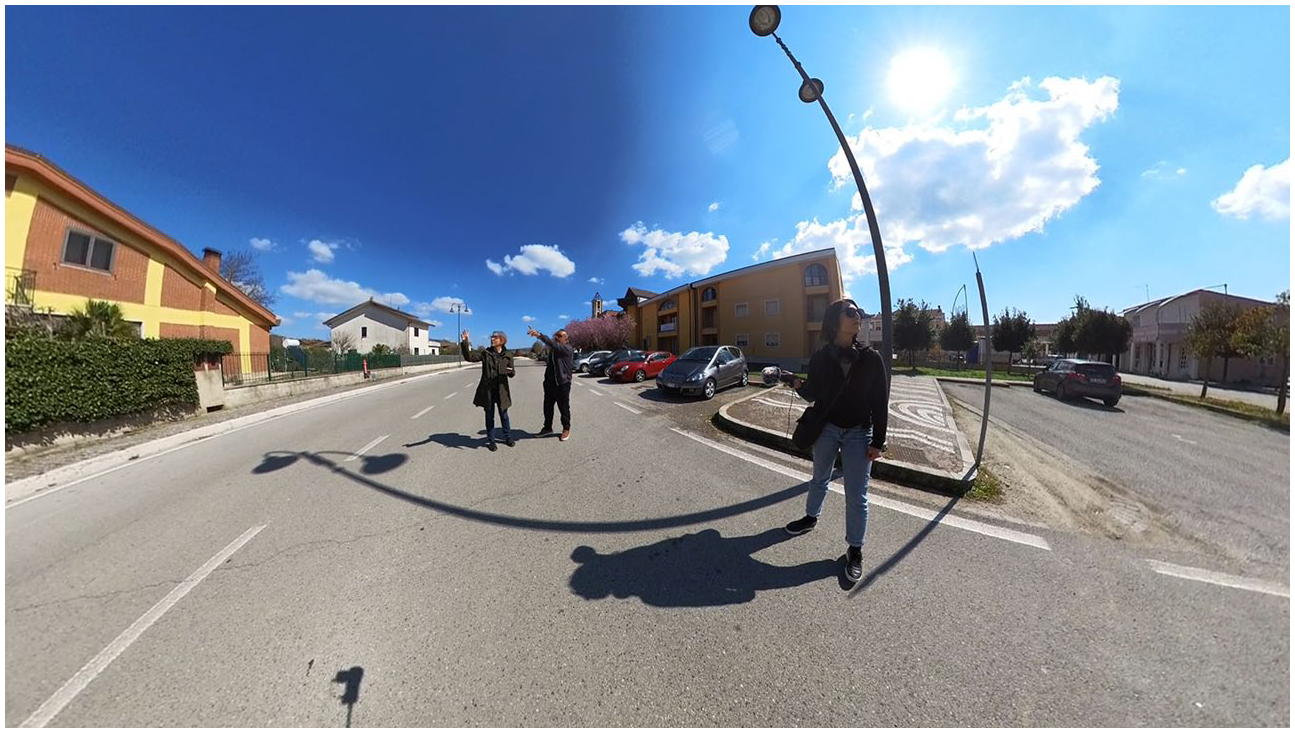
Disorientation between narrative and real worlds that emerged to the attention of the researchers, thanks to the presence of the researchers themselves within the images.
These disorienting moments seem to reveal the embodied dimension of spatial reference. As argued by Merleau-Ponty (1962), orientation is not a mental map but a bodily experience of being-in-the-world. The participant’s deictic use of ‘here’ for a place that was physically ‘there’ illustrates a dichotomy between temporal and spatial perception, which seems linked to the emotional dimension of place-attachment (Tuan, 1977). This moment suggests how 360-degree video can capture the phenomenological nature of dislocation revealed by gestures (i.e. pointing) and words (i.e. ‘here’).
Decentralizing the role of researchers: increased (self)reflexivity, leveraged interactions, shared analysis
In the previous section, we began discussing the theme of distance by analysing its implications on the intrusiveness of the research process. Factors related to distancing and closeness between the research participants also heavily impact the issue of self-reflexivity, which emerges when both researchers and participants are present and interact within the researched scene.
When walking with a 360-degree camera, the naturally unfolding interactions that happen between researchers and participants are fully captured in the spherical images. Avoiding the use of a tripod and the ‘go-and-hide’ strategy often employed in scripted cinematic 360/VR films promotes heightened awareness of such dynamics among those engaged in the research. Film-ethnographers are present within the scene, contributing to a sense of shared experience and mutual understanding, which enables more non-appropriative relations with the lives and ways of being of the participants (Ceuterick and Ingraham, 2021:10). The agency is partly shifted to the viewer, producing an equalizing effect between ethnographer and participants. As the researcher is also portrayed in the simulated reality, these panoptic images become shared observational experience reflecting the researcher’s sensory presence within the field (Gomez Cruz, 2017: 35).
The walking with 360-degree video approach employed by REPLACE is situated within a presence-based ethnography, fostering technology-enhanced, embodied interaction amongst researchers. In one instance, filming inside one of the abandoned houses in Old Senerchia was made possible by the researcher using a camera mounted on a selfie-stick, as entering the ruins would have been too risky (Figure 4). This action prompted the participant to reminisce about childhood memories of playing within the old town ruins; recalling the risks taken while exploring these ruins while pointing to the exact spot where he almost fell in his childhood. The researcher observes a dangerous trompe l’oeil illusion: a stone staircase seems accessible from a distance, but a close-up examination reveals a collapsed ground floor between the viewer and the stairs that leaves an open space above an old cellar below. 2 Viewing the 360-degree footage through the VR headset allows the researcher to ‘experience’ this sense of risk. 3 The safe re-enactment of exploring the ruins allowed the team to clearly focus the perspective of the post-earthquake generation, who experienced them as a place of thrill and adventure. This generation held diverse memories, and possibly conflicting perceptions of places compared to the generation born before the earthquake, for whom the ruins were a memorial of a lost time and full of grief. This underscores the importance of reflecting on the meaningful loop of reflexivity, where inputs flow from participants to researchers and vice versa.
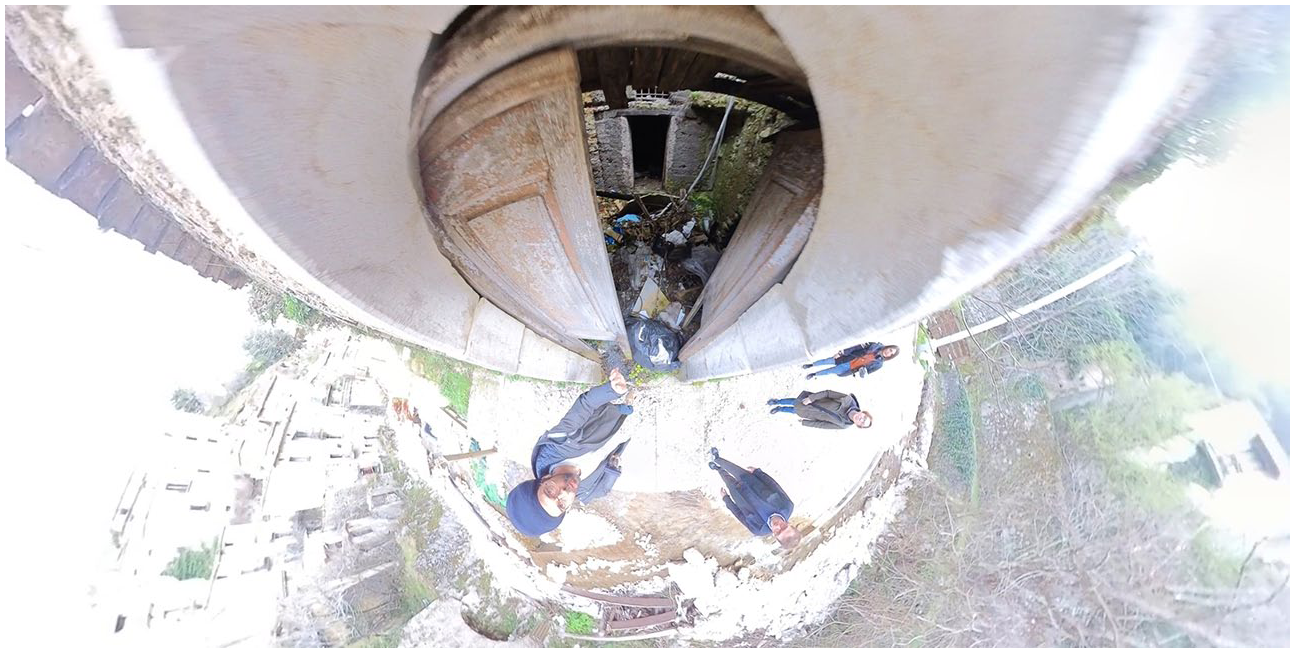
Researchers and participant exploring together the ruins of Senerchia.
While a 2D video-recorder could capture similar nuances in conversations between researchers and participants, and is well-suited for an indoor controlled environment, 360-degree recording is ideally suited for a dynamic environment with multiple people moving through open space (in our experience, up to eight people). This can create a polyphony when they speak simultaneously and a choreography as they move within the space. At times, participants may be positioned behind the camera, their attention may diverge, and synchronous discourses may emerge from the same space, highlighting the negotiation involved in meaning-making processes. The researcher’s presence within the visual field of the 360-degree video aligns with what Latour (1999) conceptualized as relational ontologies in Actor–Network Theory, which decentralize knowledge production and distribute agency across all entities in the network (including technologies, gestures, spaces and viewers). The shared field of observation allows for a phenomenological encounter with place, in which researchers inhabit the space under study together with the participants, rather than observing it from a distance.
In many cases, the observation of spherical videos has revealed various reactions to the practice of filming ‘walking with 360-degree video’ interviews in an ethnographic context. Often, such reactions are in the peripheral area of the image and not readily apparent in real-time while focusing on fieldwork interviewing and walking with participants, exploring the environment together. For example, a passer-by accompanied by his wife, pushing a pram with their daughter, made the typical Italian finger-ring gesture to convey the meaning of ‘what do you want’, but then does not object and continues walking away. Though not overtly intrusive, 360-degree cameras could potentially infringe upon public spaces, and issues related to the privacy of individuals not involved in the research framework must be carefully assessed.
Using 360-degree video-based methods, interactions between researchers and participants can be made accessible to others as virtual bystanders. The metaphor of a swivel chair illustrates this dynamic: it is as if the viewer were seated in a swivel chair that matches the location of the 360-degree camera initially positioned by researchers during fieldwork. From this vantage point (the ‘positioned’ swivel chair in our metaphor), viewers have three axes of rotational movement freedom, allowing them to look around but not to change their position in space. However, researchers should be mindful of the limitations inherent to 360-degree technology, specifically the fact that the positioning of 360-degree cameras by the researcher reintroduces certain framing choices typical of traditional cameras (Reutemann, 2016: 173).
Also, after the shooting process, goggles or computer screens inevitably display only a cropped portion of the whole (Almquist and Almquist, 2017), forcing back some of the older media routines. Despite these limitations, leveraged interactions and participatory opportunities facilitated by the medium foster co-research practices and could potentially offer to any single viewer, regardless of their competence in interpreting complex datasets, the chance to experience encounters in non-local, forbidden and/or secluded places inhabited by communities whose stories, histories and ways of being are typically beyond the purview of a viewer’s personal experience (Ceuterick and Ingraham, 2021: 10). Moreover, bringing researchers to such places offers opportunities for collaboration and engagement in 3D virtual environments. They can view, edit, annotate and comment together using gestures, controllers and 3D tools like the recently developed software AVA360, which is mainly used for interaction analysis (MacIlvenny and Davidsen, 2017: 17). Sharing the emplacement also opens new opportunities for collaboration and engagement in immersive environments (Gomez Cruz, 2017: 26).
However, the combination of viewer and camera movement, particularly for individuals susceptible to motion-sickness during virtual reality experiences, might drastically reduce accessibility to such collaborative digital environments. Westmoreland (2020: 258) draws attention to the risk of sensory disjuncture between observed and felt experiences, underscoring the benefits of confining spherical movement to a fixed position that enables precise control over movements such as rotation, panning and tilting of the head. The researcher who walks with the 360-degree camera should adopt cybersickness minimization strategies, such as pausing, focusing on the movement from a fixed position and then resuming the movement while gradually approaching the subjects. Post-production strategies that reduce nausea and related discomforts should be considered, such as further digitally stabilizing the images or reducing the Field of View (FOV). While the challenges posed by motion-sickness are real, particularly the need for frequent pauses while performing data analysis which can significantly lengthen the timeline of the analytical process, self-reflection by one of the authors who suffers from it revealed that in some instances the physical discomfort felt while analysing interviews engendered an embodied recollection of the distress often experienced when listening to the participants’ accounts of the earthquake.
Ethical engagement in 360-degree video-ethnography
As discussed in the previous sections, the unobtrusive nature of 360-degree video presents specific ethical challenges. As observed during fieldwork, participants were sometimes unaware of when filming began or whether it was ongoing, despite having signed consent forms. This reminds us of the need for continuous consent (Klykken, 2021), an ethical framework ensuring participants are informed not only at the start of the research but throughout its unfolding process. Rather than treating consent as a one-time event, the recording process must be periodically reminded verbally or through gestures during fieldwork, while also reflecting on participant comfort in post-hoc analysis. This ethical perspective also aligns with broader concerns around incidental recording of passersby, the visibility of sensitive gestures and the unintended capture of personal objects (e.g. smartphone screens). Addressing these tensions requires integrating ethics reflexively across both production and analysis.
Final Remarks
This article explored the potential and affordances of immersive media, particularly 360-degree videos, within ethnography. It emphasized their value as an effective method for video collection in place-centric ethnography. These videos were employed to gather and convey the entirety of the environment, allowing for both real-time and post-fieldwork exploration of spatial contexts. Such videos allow researchers and viewers to explore and revisit the physical surroundings in new ways while listening to people recount their experiences of place. This approach enables an immersive exploration of how people interact with and are influenced by their environments. By decentralizing the role of the ethnographer, this approach enhances reflexivity, allowing the researcher to reflect on their interactions with interviewees but also with the broader context of this interaction. Additionally, using spherical images means researchers can revisit video data, potentially involving other researchers who were not present during the fieldwork, providing a means for understanding the sense of place and emotional connections people have with locations, which is central to our place-centric approach.
Our approach integrates sensory ethnography, Actor–Network Theory and phenomenology to understand how immersive technologies mediate lived experience. The experience of place, as described by Merleau-Ponty (1962) and later developed in human geography by Tuan (1977) and Relph (1976), is not just cognitive but deeply embodied and emotional. By combining immersive visual data with embodied methodologies, our research captures these nuanced layers of place experience. Our approach is place-centric and is crucial in enabling personalized, active explorations of the environment. Co-researchers, research participants and general viewers of 360-degree videos can decide what to focus on within the environment, allowing for individual engagement with the place. This personalization can enhance serendipity, thus providing unique insights into the research dataset, primarily because the real-time attention during fieldwork is deferred to a later phase of data analysis, favouring the emergence of unexpected revelations. Through this complex iterative exploration – a process comprising 360-degree video walking interviews and their subsequent immersive analysis through VR-HMD – it is also easier to consider non-verbal cues, including gestures and movements essential for a comprehensive analysis, while mitigating limitations related to the inability to capture undistorted close-ups of an individual’s facial expressions.
A challenge in extending this approach to a broader, fully collaborative framework lies in the technological bottleneck. Access to VR immersive tools for the analysis of data remains limited predominantly to researchers and demands a certain level of professional expertise. Additionally, participants may not be inclined to invest the time required to revisit the data using a VR headset, as the experience can be time-intensive. Thus, while immersive engagement remains ideal, limitations on participant access to the analytical space could pose challenges to achieving research participation.
Within a practice-based approach, 360-degree videos can be effective tools for conveying the lived experiences and narratives of people immersed in a particular place functioning as a powerful way to preserve memories and the intangible aspects of a place’s heritage. The 360-degree approach to videos provides a powerful means of documenting, analysing and presenting the complexities of sense of place and the cultural significance inherent to specific places. In highlighting the dynamic and evolving potential of this approach to ethnographic data collection and analysis, this article stresses the need for further exploration into how immersive media can shape knowledge production, foster participant engagement and enrich the representation of space and place.
Footnotes

Data Availability Statement
The datasets analysed during the current study are extensive, exceeding terabytes in size. Due to privacy restrictions and the sensitive nature of the data, involving fragile community members who were displaced or victims of catastrophic events, the data are not publicly available. However, these datasets can be made available from the corresponding author upon reasonable request, subject to appropriate ethical and legal considerations.
Notes
Biographical Notes
MATTEO BARALDO is currently Senior Research Officer in the School of Philosophical Historical and Interdisciplinary Studies at the University of Essex, where he works on the UKRI-funded project REPLACE. Previously, he held a Postdoctoral Researcher role at the Cape Peninsula University of Technology in Cape Town. His research delves into comparative and multimodal investigations on sense of place.
Address: School of Philosophical Historical and Interdisciplinary Studies at the University of Essex, Office 6.148, Colchester Campus, Colchester CO4 3SQ, UK. [ email:
FRANCESCA DOLCETTI is Senior Research Officer for the REPLACE project at the University of Essex with expertise in Digital Heritage, Human-Centred and Participatory Design. Her research interests focus on investigating the benefits and impact of Values-Led Participatory Design approaches on the heritage sector normative methodologies and everyday practice.
PAOLA DI GIUSEPPANTONIO DI FRANCO is Senior Lecturer and Former Director of Studies for the MA in Heritage and Museums at the University of Essex. She co-directed the documentary Italia Terremotata, earning her a BAFTSS Impact Award for highlighting community resilience in post-earthquake Italy. By blending her expertise in heritage, digital humanities and cognitive science, she aims to contribute to the advancement of knowledge in understanding the dynamic relationship between technology, culture and the preservation of our shared heritage.