




Abstract
This article uses the Museum of Vision Science and other museums of optometry as an entry point for considering the science of seeing and the seeing of science. The Museum of Vision Science, the only optometric museum in Canada, is part of an optometry school. The placement of the Museum of Vision Science within an optometry school perhaps harkens back to 19th-century examples of professional schools and museums, and this article suggests ways the museum could offer a dynamic approach to humanities understandings of vision within a science curriculum. But, more broadly, this article uses the case study of the Museum of Vision Science to consider larger possibilities for visual communication studies in conversation with optometry. Although the museum situates itself as one of vision science, it also offers a complicated ‘cultural’ history of vision. The author bridges questions of the hegemony of vision science with the practice of visual communication studies.
With whose blood were my eyes crafted? (Donna Haraway, 1988)
Donna Haraway was not referencing optometry when she asked in her (1988) ‘Situated knowledges’ essay whose blood had helped to create her eyes. This is not because optometry is often called a ‘bloodless’ profession, particularly when compared to ophthalmology and its surgeries. Haraway instead asked the question with concern for the power and therefore violence implicit in visualizing practices in her larger essay about science and feminism.
Yet what of optometry within visual communication studies? In Visual Methodologies, Gillian Rose (2012: 2) delineates how ‘vision is what the human eye is physiologically capable of seeing’, while ‘visuality refers to the way in which vision is constructed’. This article identifies the space between the two terms through a case study: the Museum of Vision Science.
Instead of positing such a strict division, WJT Mitchell (2002: 171) asked 20 years ago in what ways ‘vision is not [only] a learned activity, but a genetically determined capacity’. For Mitchell, ‘the very notion of vision as a cultural activity necessarily entails an investigation of its non-cultural dimensions, its pervasiveness as a sensory mechanism . . . This version of visual culture understands itself as the opening of a dialogue with visual nature’. For Donna Haraway (1988) and Jonathan Crary (2007), in different ways, optical aids and apparatuses further expose the social construction of vision rather than medicalizing away the cultural of the visual. Lisa Cartwright’s Screening the Body: Tracing Medicine’s Visual Culture (1995) also washes the vision/visuality binary through the sieve of science.
Yet these classics of visual communication and visual culture studies have yielded little engagement today with the field of optometry despite, as this article argues, opportunities to consider the optometric. Peter John Brownlee’s The Commerce of Vision: Optical Culture and Perception in Antebellum America (2019) nudges closer: he argues that the growth of ophthalmology in the US in the 1830s and 1840s led not only to a cultural but also a commercial and medical obsession with vision. His study includes not just what was seen in this period (the pamphlets, advertisements, signage) but also what made such sight possible (e.g. spectacles). For Brownlee, ‘both scientific and vernacular formulations of vision – as an object of ophthalmic investigation, as a productive tool in the workplace, or as an instrument for education or entertainment in the library or parlor – converged’ (p. 23).
While the public may be less familiar with the differences among opticians, optometrists and ophthalmologists (Wilson et al., 1994), there are major distinctions in the scope of practice and training as well as a battle for legitimacy. In Canada – where the Museum of Vision Science is based – as well as elsewhere in the world, ophthalmologists are medical doctors who specialize in eyes; optometrists are primary healthcare providers with their own program of study outside of medical school, resulting in the designation of OD (Doctor of Optometry). Opticians can fit a patient for vision correction devices but cannot diagnose or prescribe. Optometrists often diagnose and help treat glaucoma, macular degeneration, cataracts, and other serious eye conditions. Optometrists are also often first responders to intimate partner violence given that almost half of cases involve the eye (Beck, 1996; Carter, 2020; Georgalas et al., 2012).
The relationship between ophthalmologist and optometrist can be contentious, with a lack of communication between the two practitioners (Whittaker et al., 1999). Since the second half of the 20th century in Britain, Australia, Canada, the US, and elsewhere, optometrists have become professionalized (Fielding and Willis, 1984) whereas ophthalmologists are medical doctors and therefore have a longer history of accreditation and perceived legitimacy. In Canada, optometrists were only added to the list of professions capable of acting as a guarantor for a passport in 1992. In addition to perception, other differences between optometry and ophthalmology include that optometry requires little physical contact between optometrist and patient (Hebert, 2018: 95). For a successful appointment, optometry demands that patients are conscious and able to communicate with their doctor, unlike during surgery conducted by an ophthalmologist. Kirsten Hebert (2018) further points out, referencing Kevin Arnold and Thomas Söderqvist’s (2011) work on medical instruments in museums, that, for a surgeon, such instruments are an extension of the hands unlike optometric instruments, which are non-invasive.
The Museum of Vision Science, the only optometric museum in Canada, is part of the University of Waterloo’s School of Optometry and Vision Science in Waterloo, Ontario. The School is Canada’s only Anglophone school of optometry and offers the Doctor of Optometry (OD) degree as well as graduate degrees. The point cannot be made more strongly: unless a graduate of the small Francophone program at the École d’optométrie de l’Université de Montréal in Quebec, all optometrists trained in Canada study at the University of Waterloo. Some museums were attached to medical schools in the 19th century, such as the one at Birmingham’s School of Medicine, and served as important teaching spaces (Reinarz, 2005), a tradition that still continues today. Some museums were attached as well to teacher education schools to complement teacher programs (Stanworth, 2014). These early examples of museums being not separate from but physically attached to and very much a part of a teaching institution reveal the close relationship between a teaching institution’s values, relationships, and ideologies, and its public-facing museum.
The placement of the Museum of Vision Science within an optometry school perhaps harkens back to these 19th-century examples of professional schools and museums, and this article suggests ways the museum could offer a dynamic approach to humanities’ understandings of vision within a science curriculum. But, more broadly, this article uses the case study of the Museum of Vision Science to consider larger possibilities for visual communication in conversation with optometry. Although the museum situates itself as one of vision science, it also offers a complicated ‘cultural’ history of vision. This article bridges questions of the hegemony of vision science with the practice of visual communication.
Museum of Vision Science Background
There are approximately 18 stand-alone museums of vision science in the world (College of Optometrists, 2021). This number does not include optometric-centric collections, archives, or repositories housed in larger museums, like the spyglasses at the Whipple Museum for the History of Science at the University of Cambridge, or online-only exhibitions such as the EYE-Seum (EYE-Seum, nd). Many of these stand-alone museums are tied to an optometric school; others, such as the Cyril Kett Optometry Museum and Archive of Australia or the Archives & Museum of Optometry in the US, are part of an optometric association. Other optometric museums are fronted by the optometric industry, such as the Zeiss Museum of Optics in Germany or the Shirayama & Tokyomegane Archive and Gallery of Eyeglasses in Japan. 1
The Museum of Vision Science is part of the University of Waterloo’s School of Optometry and Vision Science. Prior to its affiliation with the University of Waterloo, this optometry program was operated by the College of Optometry of Ontario in Toronto beginning in 1925 (Swedberg Kohli, 2011). In 1967, the same year as Canada’s centennial, the school was officially affiliated with the University of Waterloo and moved from Toronto. The School’s stated mission today is ‘to be a global innovator in optometry, vision research, education, and patient-centred collaborative care’ (University of Waterloo, nd[a]).
Edward Fisher (1913–2003) served as head of the optometry program when it was based in Toronto from 1948–1967, and then oversaw its transition to the University of Waterloo. Under his leadership, the optometric degree became a 4-year, Doctor of Optometry program (University of Waterloo, nd[b]). Fisher was a leader in contact lens research. He conducted international education in the Caribbean and Nigeria, and was the first Canadian to serve as President of the American Academy of Optometry. Fisher was actively involved in the Optometric Historical Society and the Ocular Heritage Society, and was the founding curator of the Museum of Vision Science.
Eilean Hooper-Greenhill’s Museums and the Interpretation of Visual Culture (2000) establishes the ways that museums, no matter their content, are studies in visual culture and pedagogy. The Museum of Vision Science has an added layer as an object for visual communication studies given that it is a museum dedicated to vision. Yet, it is a museum of vision science, and therefore also a science museum. Informal science education (ISE) includes science centers, museums, the aquarium, the zoo – spaces outside a classroom where science learning takes place (Dawson, 2014). Sharon MacDonald (2010) understands science and technology museums as a particular convergence of knowledge, authority, power, and objectivity, charting how the taxonomic ordering of material ‘things’ played out in both museums and science between the Renaissance and the 18th century. Ludmilla Jordanova (1997), too, argues that science museums typically promote a narrative of progress and mastery over nature, yet at the same time ‘proclaim the beauty of natural objects and of scientific and medical instruments, models and representations’ (p. 33). With science museums, ‘since looking has long held a privileged placed in scientific and medical practice, there is a special compatibility between the acquisition of natural knowledge and “such museums” (p. 25).
Optometrists have a history less as doctors and more as applied scientists. As Hebert (2019: 12–13) notes, ‘the cross-pollination intellectually among astronomers, scientific instrument makers, and opticians in the [19th] century rendered opticians who would ultimately identify as optometrists very comfortable in company with physical scientists’ along with the adjacent disciplines of engineering and design.’ But, also in the 19th century, ‘identifying as a “healer” – a role appropriated by medical doctors – would have aggravated the bitter jurisdictional battles between oculists and ophthalmologists and optometrists and threatened optometry’s movement to become a legislated profession.’ Preparations for officially affiliating the optometry school with the University of Waterloo wrestled with these distinctions between science and medicine. After a senate committee conducted visits to optometry schools in the US, it filed a report in 1966 recommending that this new school be situated in a faculty of science. The report’s rationale included that optometry was a ‘mature and sophisticated discipline based on a recognized body of scientific knowledge’ and that ‘optometry is a profession in the health care field but operating outside and independent of the medical profession’ (Ryer et al., 1948).
Added to these layers is that the Museum of Vision Science is a university museum, which is its own genre (Kohlstedt, 2017). There are many such institutions throughout the world, as well as in Canada, where a museum is physically and institutionally connected to a university (and vice versa). That the Museum of Vision Science is a university museum matters: it changes who the visitors may be for one. In this case, the Museum of Vision Science can in some ways be thought of as the lobby to the physical space of the School of Vision Science & Optometry, so students, staff, and faculty must enter the museum each day. Other museum visitors include patients of the optometry clinic within the same building – which students apprentice in – and can serve populations including low-income patients. (In Canada, optometry is not covered under the universal health plan for adults.) The optometry clinic that the museum serves as foyer to, as well as its satellite locations, typically host over 20,000 ‘examination encounters’ in specialties such as pediatrics, geriatrics, ocular health, and binocular vision (Sivak and Bobier, 2018: 50). The museum has no entry fee. Because the museum is in the entryway of a building used for all of these other purposes, visitors may not even be intending to visit the museum or be even aware that they are in a museum as they pass through the building, attending to other business in the facility.
Enter the Museum
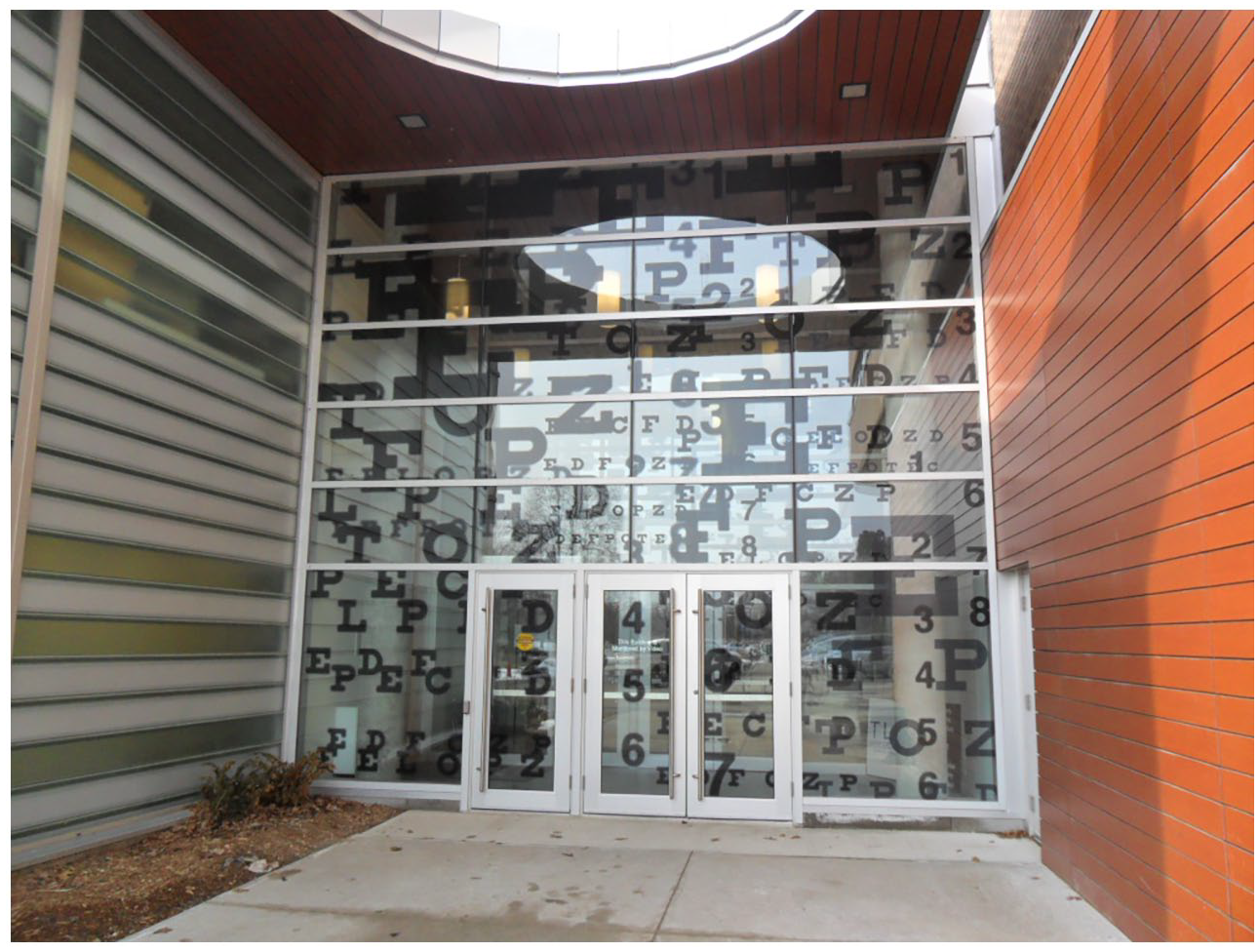
The entrance to the Museum of Vision Science is also the entrance to the School of Optometry & Vision Science. The glass wall and doors of the entrance to the building have an optotype, or eye chart, superimposed. The chaos of case, numeral, and alphabet serve as entry into a school and a space that offers to make order out of visual disorder (see Figure 1).
Entrance to the Museum of Vision Science. © Photograph: Jane Griffith.
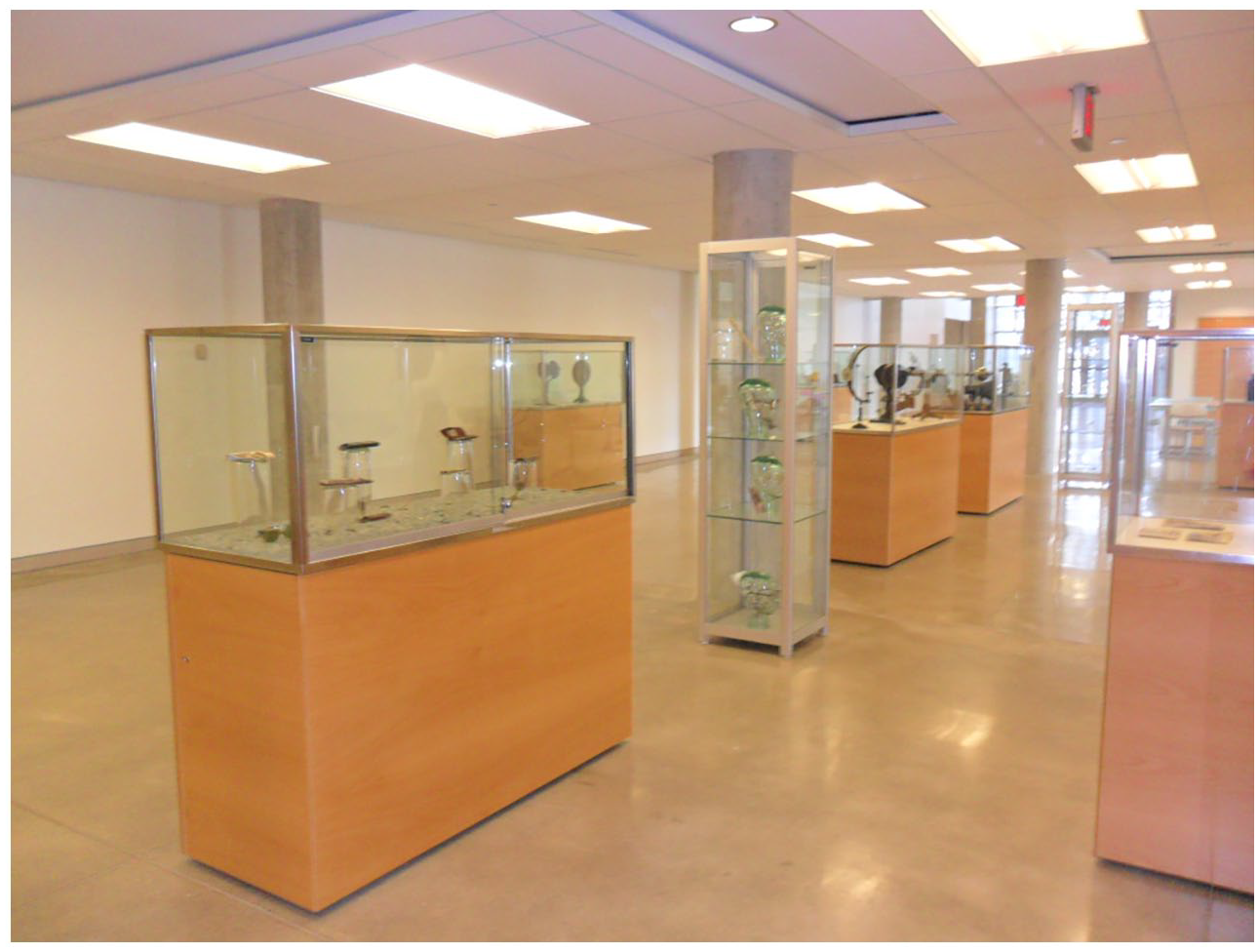
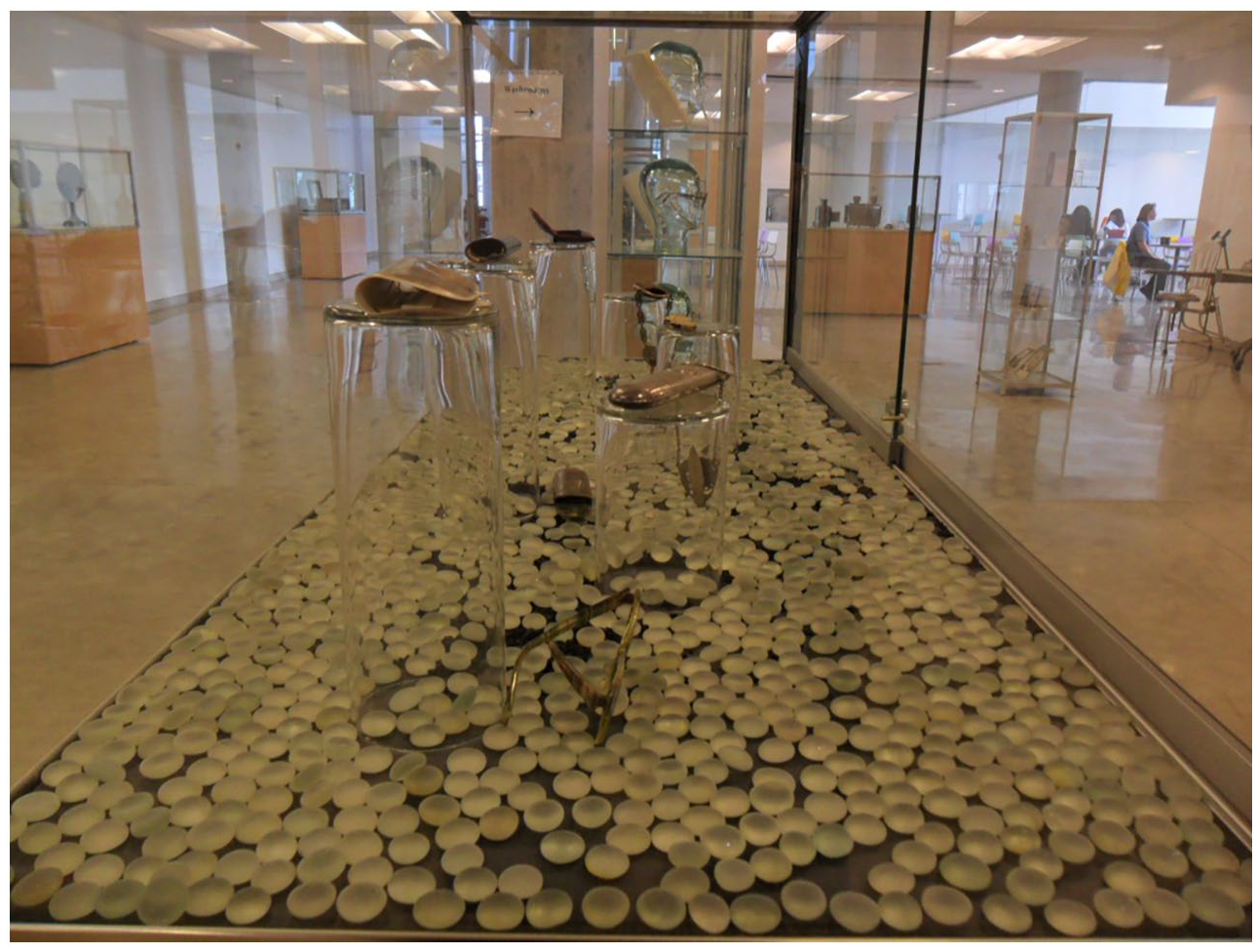
Approximately 600 square feet, the museum contains 13 vitrines, which mostly display historic optical devices. These include rare glasses such as convex lenses and early 19th-century Chinese spectacles, as well as ivory Inuit glasses used to shield the sun. The collection also includes eyewear of social status, like monocles, glass eyes, lorgnettes, and opera glasses. Caption cards are minimal and, when they are present, state in a matter of fact way what each optical device represents: ‘spectacles with double-hinged rectangular, blue-green lenses and sliding extension temples’, for example (see Figures 2 to 3). With a few exceptions, most items on display originate from Canada and the US.
Glasses on display. © Photograph: Jane Griffith.
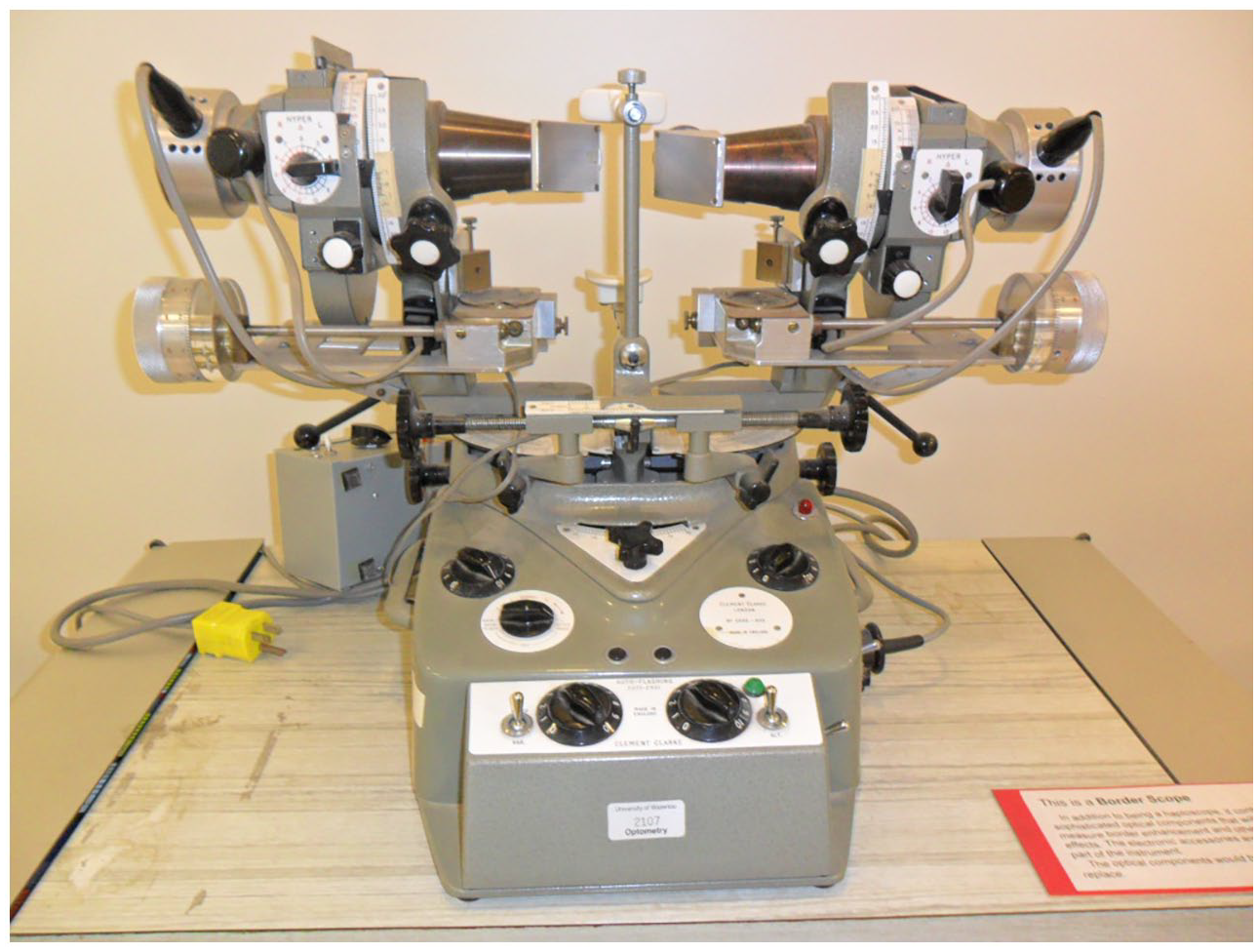
Beyond eyewear, the display cases also contain diagnostic and optometric equipment from the 19th and 20th centuries. One of the pieces of equipment includes a haploscope, which is the umbrella term for devices such as a stereoscope that offers each eye two different but related images in order to test binocular function but, unlike a stereoscope, is used for medical purposes (Phillips et al., 2019). Another vitrine contains a biomicroscope which, when used with a slit lamp, allows an optometrist to see the anterior part of a patient’s eye, such as the cornea, as well as the posterior, such as the retina (Porter, 2018). This device assists in detecting conditions such as scleritis, conjunctivitis, cataracts, glaucoma, and macular degeneration. The caption of the border scope (see Figure 4) is almost tautological:
In addition to being a haploscope, [a border scope] contains sophisticated optical components that will enable it to measure border enhancement and other border effects. The electronic accessories are an integral part of the instrument. The optical components would be very difficult to replace.
The museum largely features optometric instruments, which is unsurprising given that optometry is an instrument-dependent field. As Hebert (2018: 95) states, ‘optometrists were more deeply invested both in the world of innovation and of commerce’ than their medical doctor counterparts. The use of instruments further entrenches optometrists as brokers between patient and (in this case, the optical) industry.
Border scope on display. © Photograph: Jane Griffith.
Still other display cases contain rare books on optometry, splayed open, such as The Optical Wound (1900), The Reflext (1941), and the Pocket Optical Dictionary. Beside tools and texts of the optometric profession are material objects relating to the history of Canadian optometry education: historic gradebooks, sports jerseys, and yearbooks, as well as a wooden bench from the original school at the University of Toronto (see Figure 5). The black and white images of the school’s earliest graduates appear on a computer monitor.
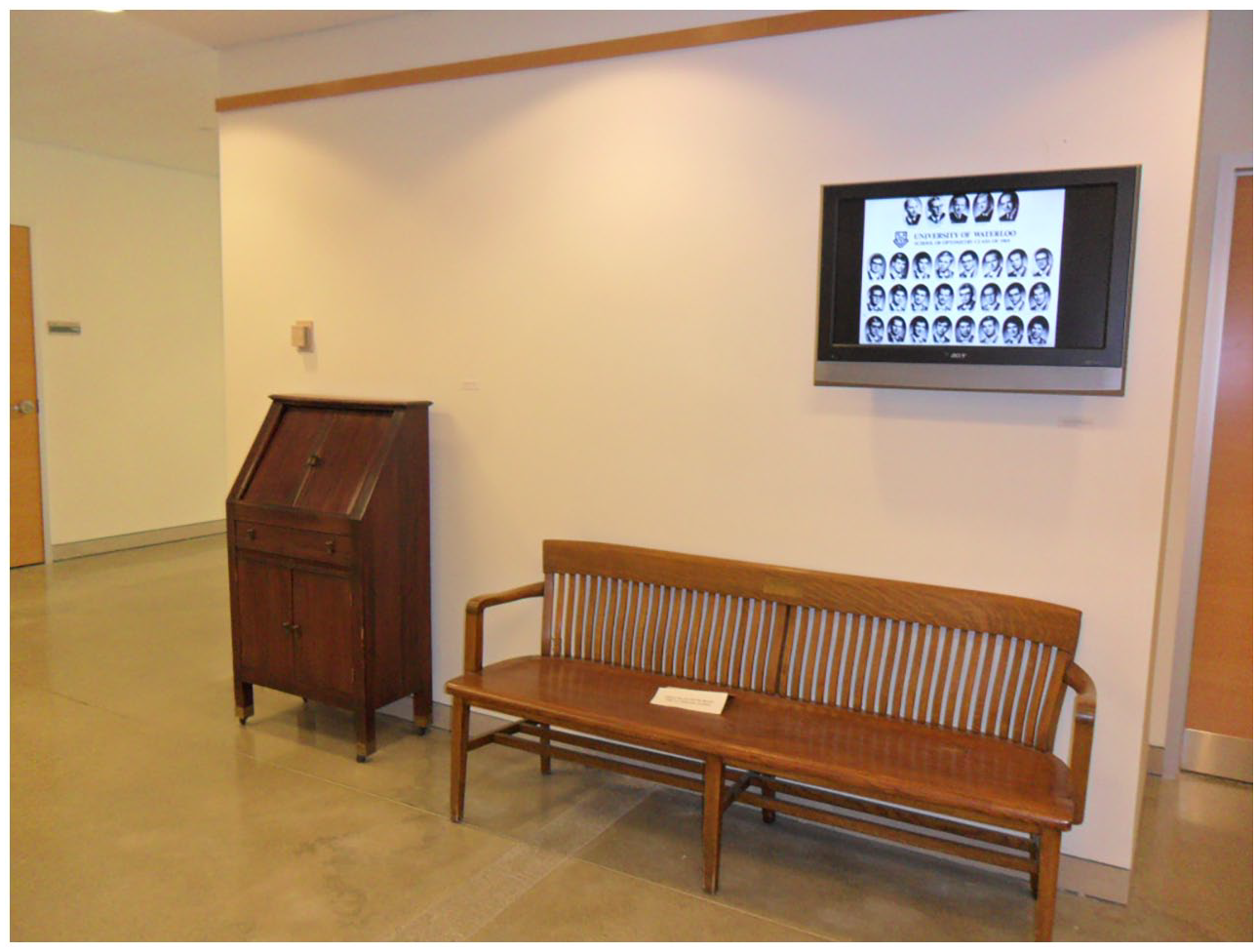
Historical objects from the first optometry school. © Photograph: Jane Griffith.
The museum also contains parlour toys. In one display case is a radioptican, also known as a postcard projector. Another display case contains a 19th-century stereoscope as well as a graphoscope, used to magnify a photograph, with images of Italian cathedrals on display (see Figures 6 and 7). In addition to these historic tools, or techniques as Crary (2007) might call them, are contemporary eyewear donations. In what the museum calls ‘one of its main attractions’ is a ‘Hall of Frame’, featuring the glasses of celebrities such as Desmond Tutu, Brian Mulroney, Gloria Steinem, Lionel Richie, Isabelle Adjani, Jimmy Carter, and Lily Tomlin.
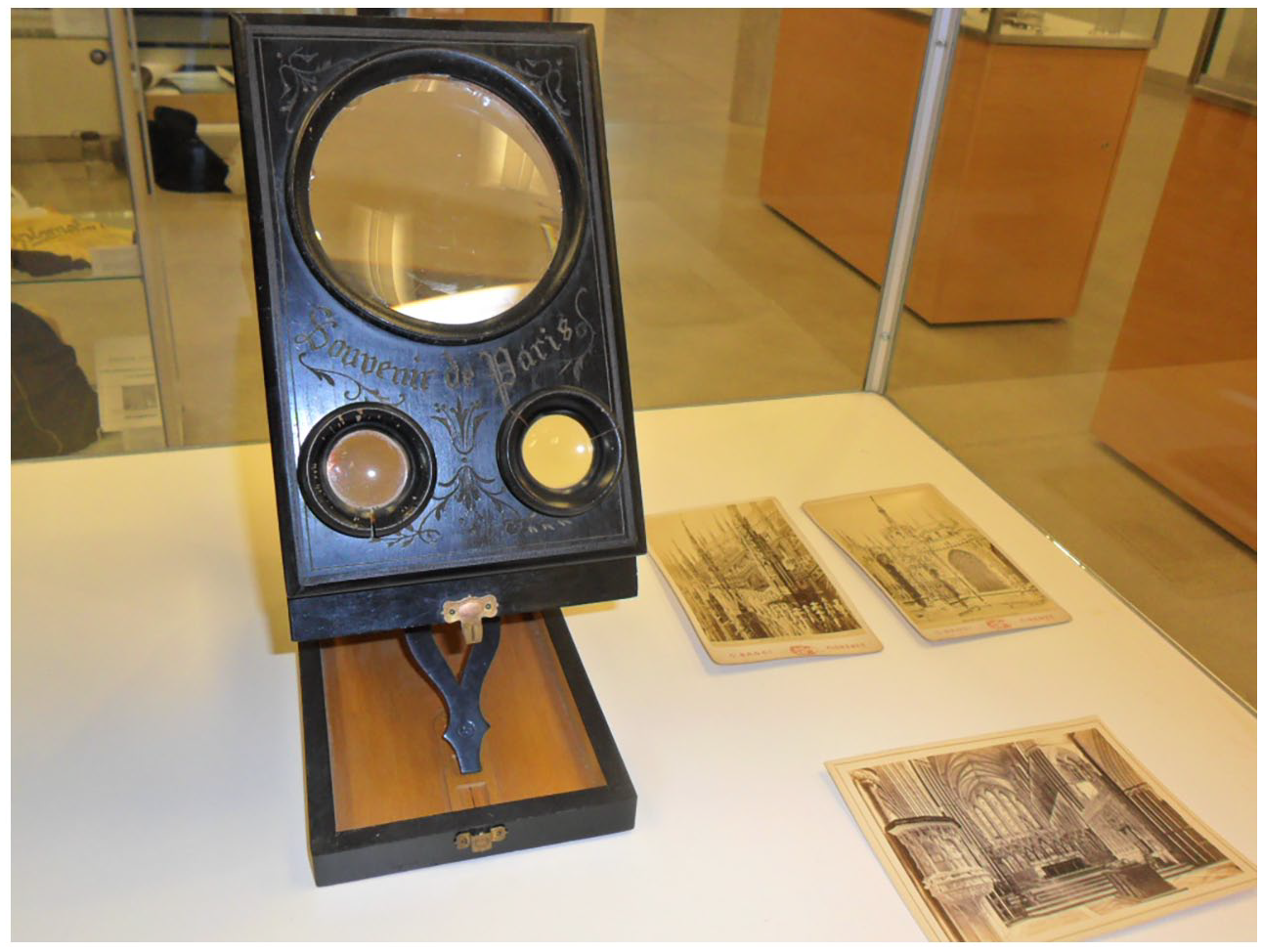
Front of a graphoscope. © Photograph: Jane Griffith.
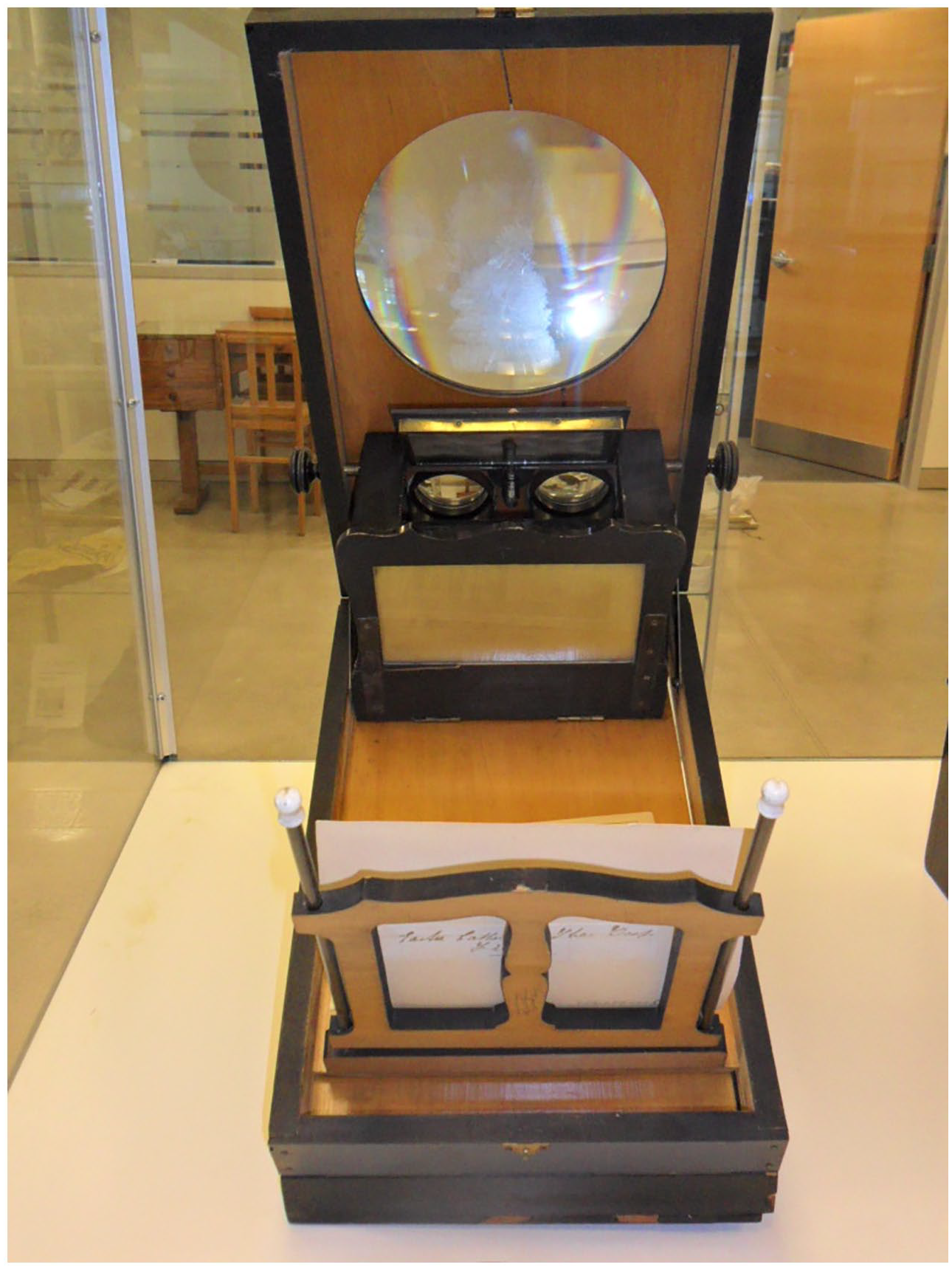
Back of a graphoscope. © Photograph: Jane Griffith.
In and out of the display cases are early 20th-century advertisements for eyewear – a photograph of a child with curled hair and Consol glasses (see Figure 8); a photograph of an embittered elder with a crown of little workers pummeling his head with sledgehammers, with the optometric equipment manufacturer Wellsworth putting the responsibility for this pain – neglecting to have an eye examination – on the target of the advertisement. Other advertisements put the responsibility for outfitting a child with glasses prior to school on the mother; still another advertisement glorifies eyewear for the ‘executive’.
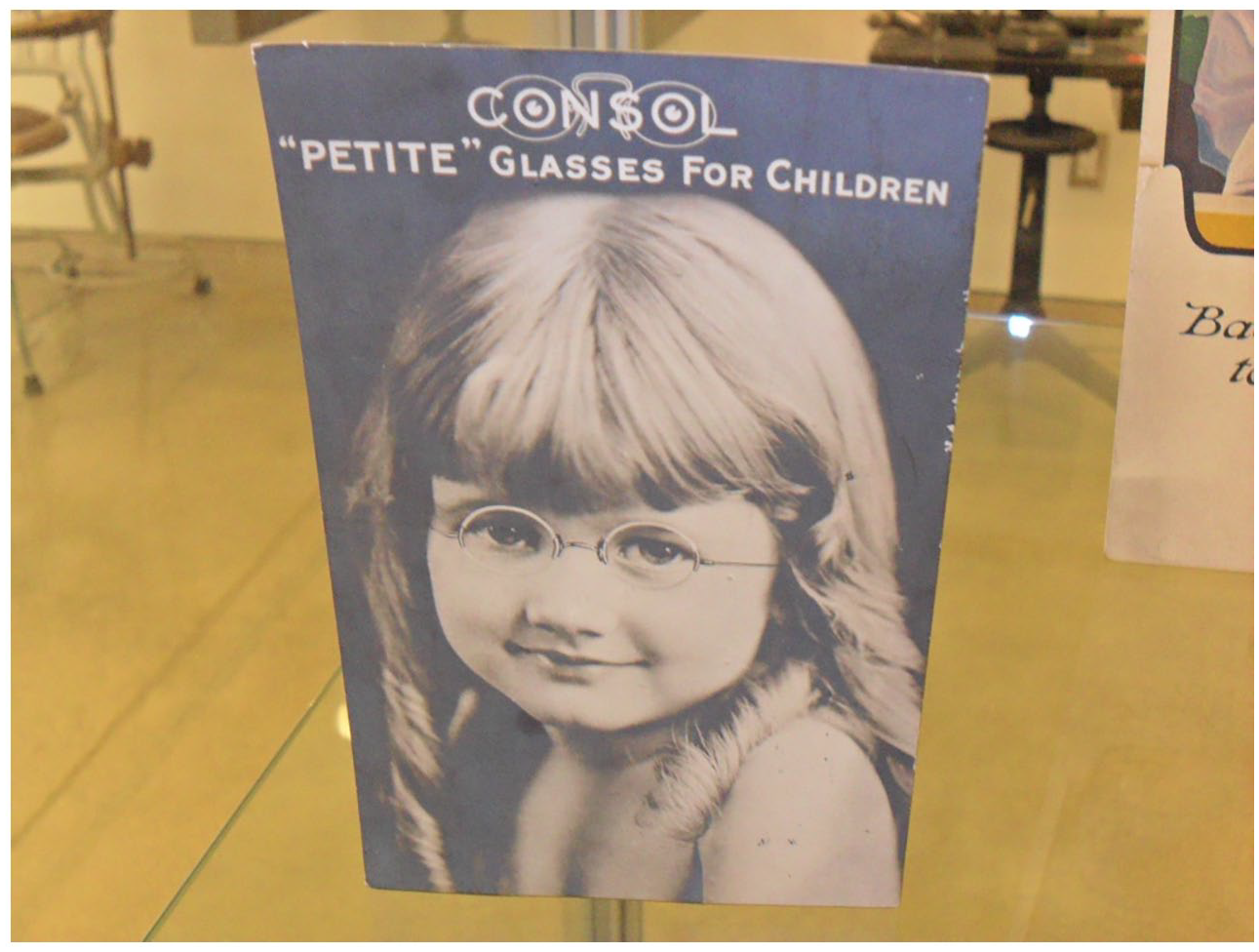
Consul child eyewear advertisement. © Photograph: Jane Griffith.
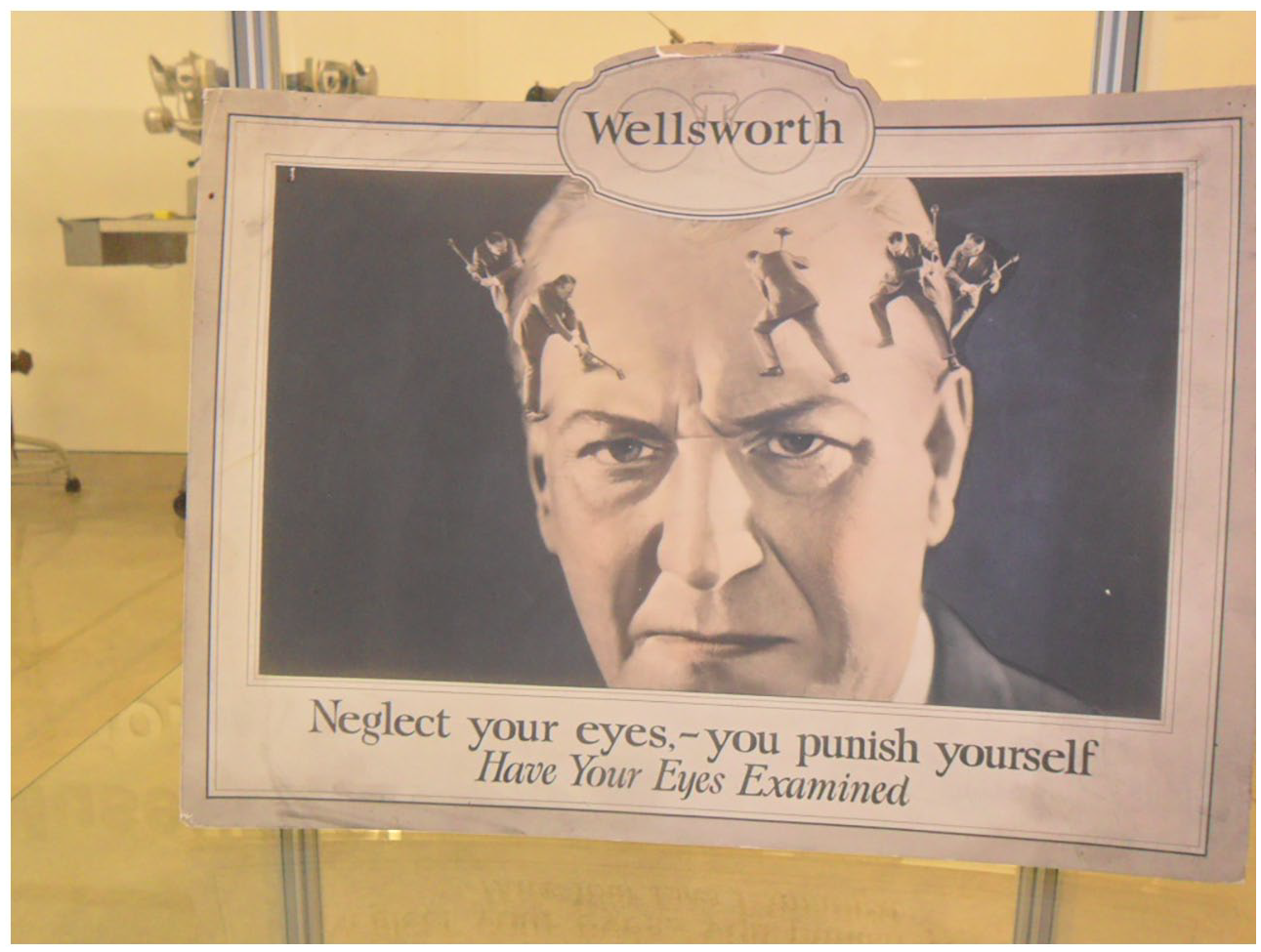
Wellsworth optometric advertisement. © Photograph: Jane Griffith.
Outside of the museum proper on the main floor, the museum extends throughout the school (see Figure 10). Far from a self-contained museum space, the Museum of Vision Science spills throughout the school, bleeding into student study space and the entrance to the school’s cafeteria, adorning the entrance to the practicum clinic (see Figure 11).
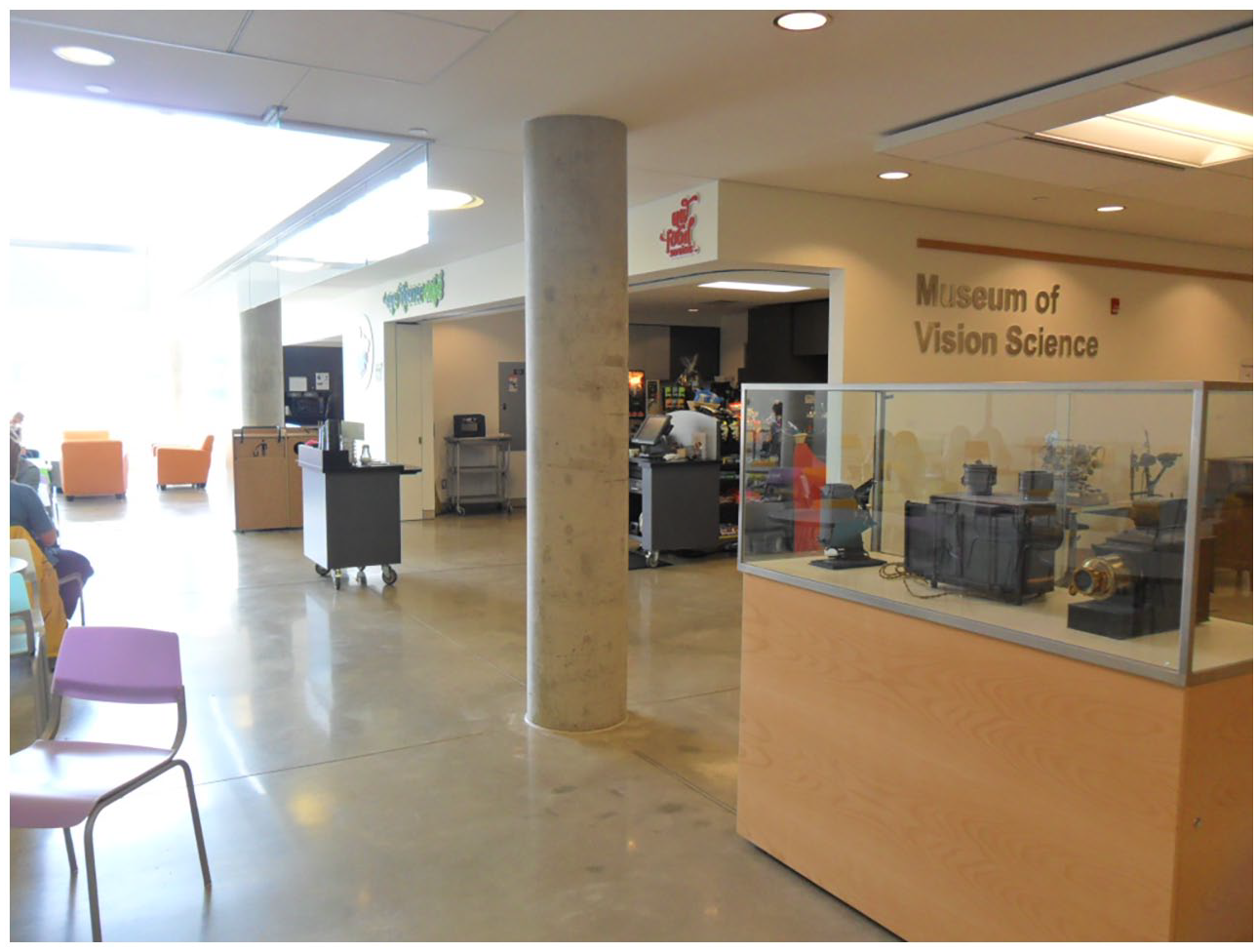
Museum, student cafeteria, study space. © Photograph: Jane Griffith.
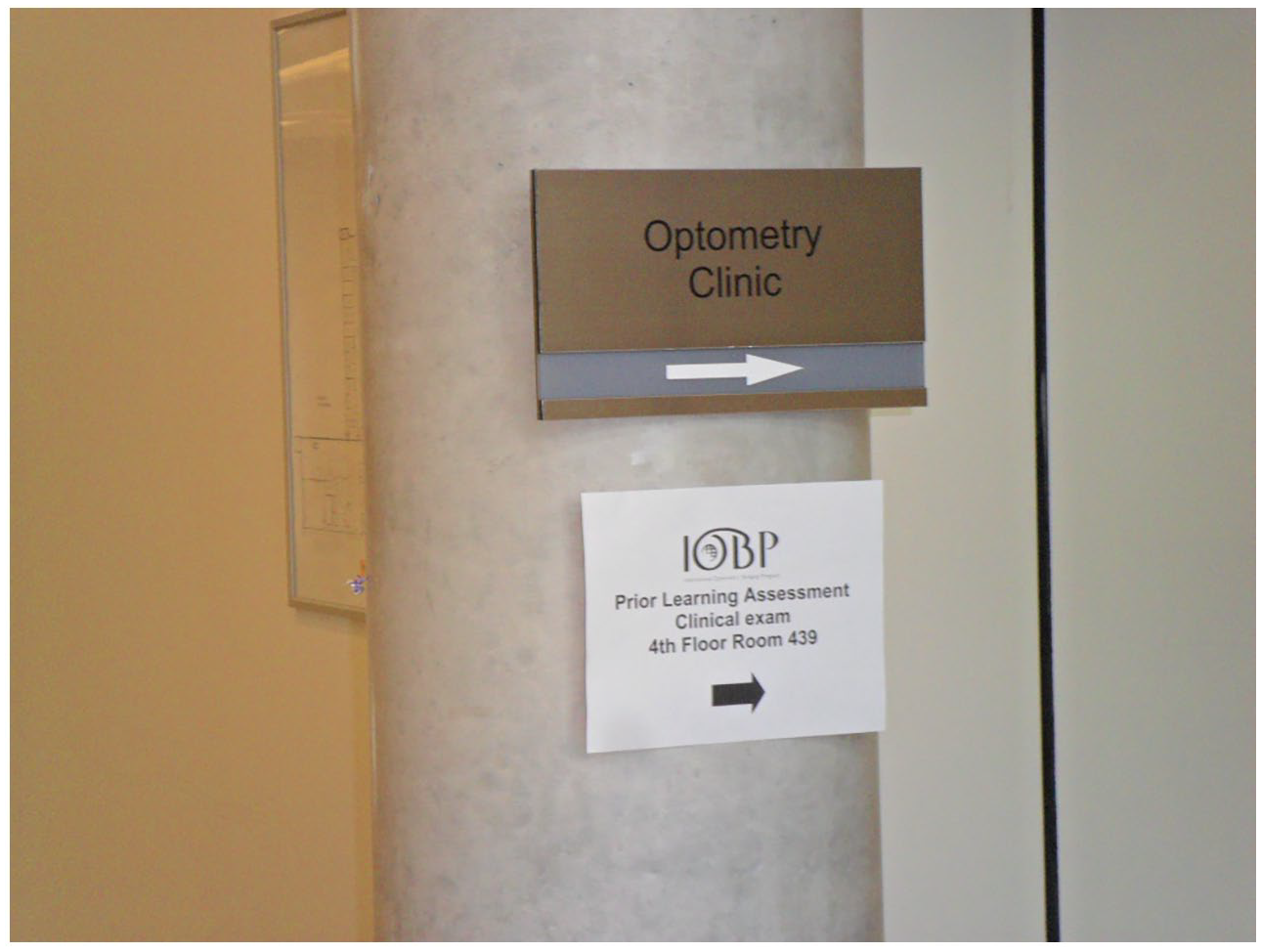
Clinic signage within the museum. © Photograph: Jane Griffith.
On the second floor of the school’s building, dispersed amongst classrooms and study cubicles, is a display of eye baths through the ages, ending with an explanation that eye baths are now regarded as a source of infection. The second floor also has prints of paintings that feature eyewear, offered without dates or artists’ names or titles. Many corners throughout the school contain old optometrists’ chairs from the 19th and early 20th centuries, with signs draped across to discourage people from sitting on them, overtly distinguishing between the chair that is part of the museum and the chair on which current students are encouraged to sit (see Figure 12).
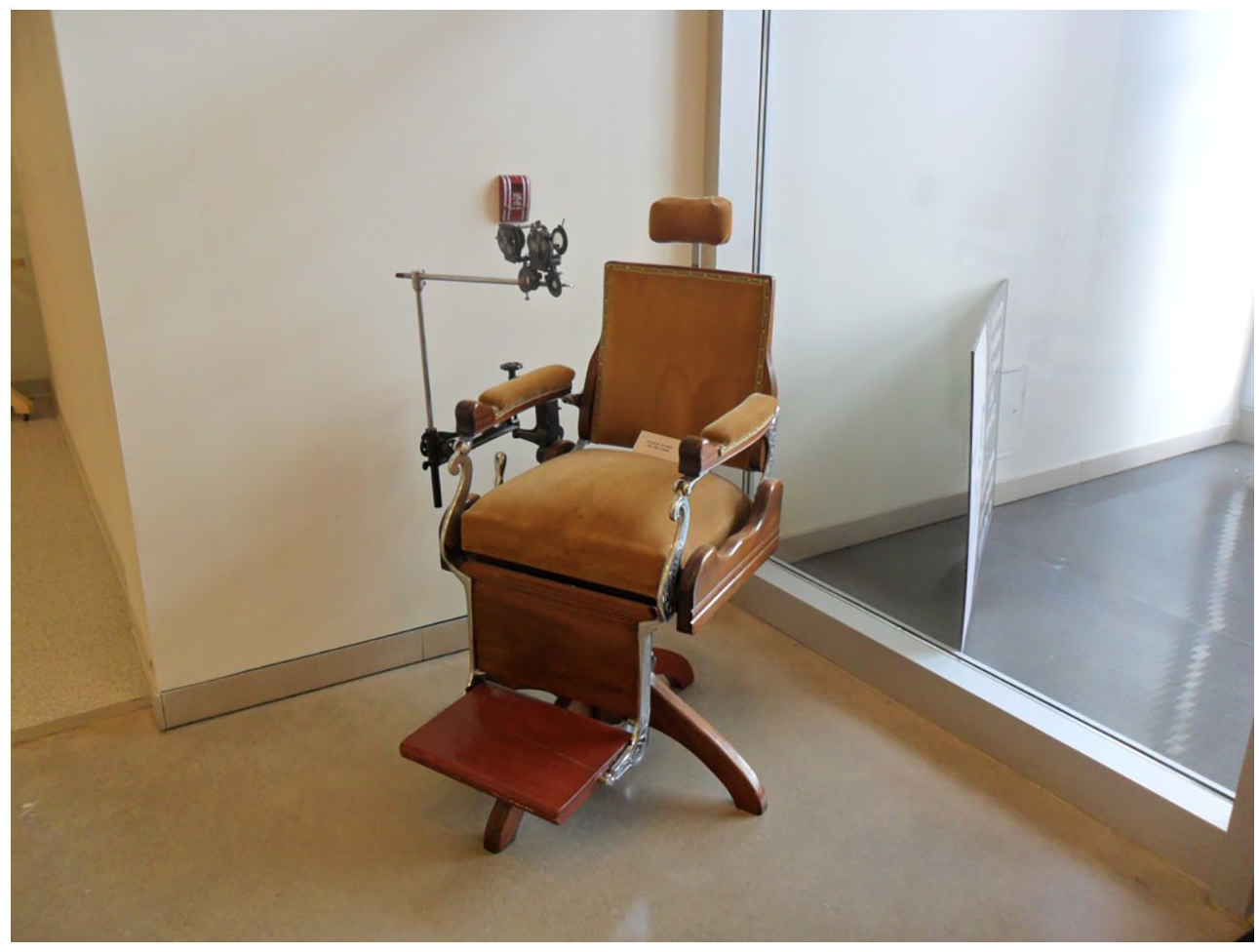
A specialist’s chair from 1915. © Photograph: Jane Griffith.
Optical Pedagogy
The Museum of Vision Science is a modernist museum that presents material objects of vision science, ostensibly ‘showing the story’ of vision and visual health. The gradebooks, yearbooks, and photographs of optometry students from throughout the 20th century narrate the training of optometrists in Canada. The diagnostic machines show visitors how vision is calibrated, tested, legitimated – ‘you have good vision’. The visual accoutrements in the museum (glasses and glass eyes) demonstrate how vision can require assistance. The Museum of Vision Science presents facts about vision, akin to Mieke Bal’s ‘Look! . . . That’s how it is!’ (Bal, 1996: 59)
The museum’s website states that its mission is ‘to preserve the history of vision science in Canada and educate visitors of all ages on the importance of vision’ (University of Waterloo, nd[d]). Although the museum’s mission is to educate, and school children typically comprise a museum’s audience (and budget), the typical audiences of the Museum of Vision Science instead are stratified into experts in optometry (or those learning to be experts), and those requiring optometric and financial assistance.
Without qualitative research it is difficult to know how visitors to the clinic, who have to pass through the museum to make an appointment, interact with the museum space and its objects. Such research would prove difficult given the confidentiality of ‘museum visitors’ who may not see themselves as such, and may instead be passing through the space to seek treatment for eye conditions. Unlike at a museum unconnected to a medical space, these museum visits by clinic patients are not intended or perhaps not even consensual. What is known is that science museums pose many barriers to a diverse museum audience, even without an entrance fee. As Dawson (2014) notes, attributing lack of museum audience diversity solely to financial barriers misses the point that in science museums, there are larger reasons for social exclusion and nonparticipation, including expectations of scientific knowledge and language skills.
As for the more regular visits of the school’s faculty, staff, and students, ‘museum visits’ may also just feel like wallpaper on the way to teach or to take in a lecture, to work at the cafeteria or clean the bathrooms. The school used to teach a history of optometry course which, since 2007, is no longer part of the curriculum. Such curricular absences are common in professional programs in Canada, where a history course begins as required and then is optional until it is no longer offered at all. Perhaps at the School of Optometry & Vision Science the museum replaces a history of optometry course, and by passing the displays every day, students pick up by osmosis one history of seeing. Maybe the historical advertisements will resonate with optometric students, who still today wrestle with the shared identities of doctor and also entrepreneur in the commercialized space of the optical industry.
One optometry school in Australia has used a museum to teach its students. Optometry students were grouped with arts students for six weeks. The researchers ‘purposefully removed students from their usual learning environment’ to push them outside of their ‘optometry-based comfort zone’ and into a ‘foreign environment’: an autobiographical museum of an artist seemingly unrelated to science or optometry, where students learned creativity through museum objects (Cham et al., 2020: 964). Given the importance of ‘soft skills’ in the field of optometry (Faucher et al., 2012; Hildebrand et al., 2009; Spafford et al., 2009), such experiential learning opportunities are likely welcome. Yet how could the learning objectives go beyond professionalism or how to deliver bad news to a patient? How could they include a background in visual communication?
The Museum of Vision Science cannot escape its status as a science museum and its narratives of progress. For instance, one placard reads:
Eyewear has a fascinating developmental history that has unfolded very differently across world civilizations. From Inuit goggles (for mitigating snowblindness) through to monocles, opera glasses, contact lenses and modern trifocals, the evolution of spectacles is inseparable from the long narrative of human culture itself.
In this rendering, Indigenous innovation is instead offered as a starting point on a linear trajectory ending with modern trifocals. The placard participates in colonial binaries of primitive/modern, old/new. The rest of the description is equally Eurocentric, highlighting the role of the European printing press in fueling innovations in optometry. The history of optometric innovation in Asia is long, yet is offered in the museum as simply ‘In Asia, after their introduction by 15th-century European merchants, spectacles were employed less for vision enhancement than to signify social status.’
The Truth and Reconciliation Commission in Canada investigated crimes against Indigenous children perpetrated in government- and church-run Indian residential schools in the 19th and 20th centuries. The Commission’s final report, published in 2015, documented the physical, sexual, emotional, and spiritual abuse of these schools. It also devoted attention to the prevalence in residential schools of trachoma, an eye infection that if left untreated can cause blindness. Trachoma spreads in unclean, overcrowded environments such as residential schools, which also offered limited access to healthcare. Even as early as 1901, a professor of ophthalmology in Montreal was calling for better eyecare for Indigenous children in residential schools. But, through the 1920s and 1930s, the federal Department of Indian Affairs downplayed the risks. This same professor remarked in 1932 that
if through the years the Department of Indian Affairs had maintained even one whole-time oculist for the detection and correction of visual defects alone among the Indian children of Western Canada, the presence of trachoma among its wards would long ago have been discovered. (TRC of Canada, 2015: 448)
At the Royal Ontario Museum in Toronto there is displayed Cree artist Jane Ann Poitras’s mixed media piece Potato Peeling 101 to Ethnobotany 101 (2004), which features a student’s desk, aimed with a split-sight line to a collage of the sights of residential school – the Union Jack, the Hudson’s Bay Company stripes, the Roman alphabet, government propaganda photographs of residential school – with a second collage of medicinal healing plants and a focus on survival of the school system (Debassige, 2013: 65–71). Winter counts and buffalo overlay the propaganda. One of the decoupage pieces of writing includes a page from Mi’kmaq residential school survivor Isabelle Knockwood’s Out of the Depths about her time at the Shubenacadie school. In the piece of paper featured, a nun is forcing Isabelle to look at her, changing her way of eye contact now that she was in the school and away from her family. Beyond educating about the colonial narratives of ‘progress’, how could an optometric museum whose primary audience is students, staff, faculty, practitioners, and patients of an optometry school complement what is learned in the official curriculum and move beyond a museum celebrating equipment?
One article in a journal devoted to optometric history rightly states that optometric tools ‘are never neutral. Indeed, ophthalmic instruments used in eye exams facilitate and reinforce the power dynamic of doctors as actors and patients as those acted upon’ (Hebert, 2018: 96) – a key point in better understanding optometric museums and what they might offer to the general public. Yet the same article states that ‘in the neutral ground of the museum exhibit, all participants can pivot around these objects as a segue to conscious reflection on the nature of power.’
A museum is never neutral. Museums have their own ideologies and narratives. Museum visitors are variously interpellated, and bring their own narratives into museum spaces. Science museums are particularly prone to presenting themselves as neutral when in fact their narratives of progress, innovation, success, maleness, industry, and whiteness are anything but. What is more, at the Museum of Vision Science, where historical optometric equipment and school history are presented with minimal context, it is doubtful the power relationships of doctor and patient are examined; in fact, they may be reinforced. There may be little time for conscious reflection, too, given that museum ‘visitors’ may not have intended their visit.
Yet the Museum of Vision Science presents the optometric equipment alongside material objects more familiar within visual communication studies: the advertisements, celebrity glasses, and opera monocles show ruptures wherein the social enters the otherwise decidedly scientific world of vision. Diagnostic machines are in display cases next to status glasses, lorgnettes, and opera monocles. A display on the development of Sun Protection Factor (SPF) is next to 18th-century prints featuring eyewear.
The educational component of the museum’s website does the same. The website section titled ‘Facts About Eyes’ answers how many times we blink; how bats and eagles are able to see; the different types of contact lenses best for keratoconus; the early signs of diabetic retinopathy – these and more are alongside the following note:
Until around 1000AD, it was belie[v]ed that light was emitted by the eyes and that the light somehow formed a picture. People thought that if a hand was put in front of their eyes, there would be no image because the light would be unable to come out. However, around 1020 AD, the Arab scientist Alhazen correctly suggested that the eyes actually take in light rather than emit it. (University of Waterloo, nd[c])
Like the physical space of the museum, the website’s display practices further exhibit what many would deem as vision science next to visual cultural practices contingent on time and place.
The mixing is not unusual: the US equivalent of Canada’s Museum of Vision Science began much earlier. In 1947, the American Academy of Optometry struck a committee to establish an optometry museum that would include early ophthalmic instruments used for refraction and spectacle fitting in addition to ‘portraits and statuary of optometric forefathers, leaders, and pioneer thinkers’ as well as ‘photographs, illustrations, and artwork depicting early optometric schools, practices, techniques, spectacles, etc’ and other items for diagnosis and optical aids (Ryer et al., 1948).
The display practices of the Museum of Vision Science are unlike the decisions made by the George Eastman Museum of photography in Rochester, New York. Ludmilla Jordanova (1997) analyzes how the museum cleanly separates the fine arts section of the museum and its photographs from the technology section of the museum with its historical displays of cameras and their accessories. Jordanova stresses of course that the binary of fine arts versus technology is unstable, but that the museum has to uphold it lest the photographs be devalued as non-art by the visitor. For this reason, photographs are displayed along with paintings in the part of the museum’s physical structure that once was the home of George Eastman, founder of the Kodak Company; cameras are exhibited in the newer, non-home wings of the museum.
The Museum of Vision Science does not delimit ‘technology’ from ‘culture’, or rather ‘optometry’ from ‘visual communication’ in this way. Part of the reason it can do so without the same perceived threats as at the Eastman House is that the Museum of Vision Science gains its legitimacy from its affiliation with a world-class university and with an optometry school. Throughout the space at any time may be practitioners, students, clinic workers, in white lab coats. The authority also comes from its role as a science museum. Vision cannot be considered completely natural, automatic, or unmediated when visitors to the museum understand that vision requires maintenance and is historically specific, enmeshed in the cultural, and above all subject to change. But, by the same stroke, this potential for self-reflexivity, as a museum of visual culture, is instead elided by the claim that this is a science museum. The museum gains its legitimacy from this space because the old equipment speaks to the profession’s maturity, despite it actually being relatively young. It also serves as foil: the early 20th-century advertisements historicize concerns today over optometry and commercialization. To highlight visual quackery or frivolity or levity in the past further legitimizes the very real, very serious role of optometry today. Yet one could wonder how such a space could help to expose the ableism in visual culture studies, the metaphorizing of blindness and the responses of blind and visually impaired people (Kleege, 2005), into the space of the museum; how the museum could celebrate the successes of historical figures such as Dr Bess Coleman, the first Black woman known to be licensed as an optometrist (Hebert, 2020), but also address the racism directed at racialized optometrists by white faculty during training and white patients in practice today (Harris, 2021; Stoller, 2020; Young, 2020). This museum and those like it offer an entry point for considering the role of visual communication in optometry and the role of optometry in visual communication.
Conclusion
The Museum of Vision Science has no curator and no budget. Its display cases are on caster wheels, routinely pushed aside for professional development courses or white-coat celebrations. At any time in the academic year, much of the museum can cease to exist and literally be wheeled away to serve the larger needs of the profession. So, while this article offers suggestions for how any museum or museum-like space attached to a professional or academic building might complement the curriculum, returning to 19th-century models of museums for medical students or teacher candidates (Reinarz, 2005; Stanworth, 2014), the more immediate contexts of change at this particular museum are not the focus of this article. There are ways offered here that any museum could disrupt rather than reify narratives of progress and colonialism, offering instead display practices that could complement a science curriculum learned in school with a museum more self-reflexive of ‘showing seeing’. If objects perhaps already familiar and of interest to those in visual communication studies – paintings featuring eyewear; stereoviews; historical advertisements – were curated or taught from a visual communication background, this museum would look very different.
But, more broadly, the very concept of the Museum of Vision Science offers much beyond optometry for scholars outside of this applied science. Marlene Goldman’s (2017) work on literary and filmic depictions of dementia in Canada actively engages with scientists and clinicians specializing in geriatric medicine and demonstrates an example of humanities and science work mutually benefitting one another without further entrenching the binary. The Museum of Vision Science may serve as an entry point for visual communication studies to more thoroughly engage with optometric worlds as Brownlee’s work on optometry in the 19th-century US has done. Optometry and Vision Science, the premiere journal of optometry, has topics not unfamiliar: the history of mirrors and their use in sighted people (Enoch, 2006), the painting of the Viceroy of New Spain, Luis de Velasco, wearing spectacles – possibly the first example of glasses depicted in the future US (Calvo and Enoch, 2003). These examples are rare, but do exist. Inspired by the space of the Museum of Vision Science, this article urges for a greater relationship within visual communication studies to the optometric.
Footnotes
Acknowledgements
The author wishes to thank Warren Crichlow.
Funding
The author received no financial support for the research, authorship, and publication of this article.

Notes
Biographical Note
JANE GRIFFITH is an Assistant Professor in the School of Professional Communication at Toronto Metropolitan University in Toronto, Canada. Her award-winning book, Words Have a Past: The English Language, Colonialism, and the Newspapers of Indian Boarding Schools was published by University of Toronto Press in 2019. Dr Griffith was also a Fulbright Scholar.
Address: School of Professional Communication, Toronto Metropolitan University, Toronto, Canada. [email: