




Abstract
Military-themed videogames are significant cultural artifacts that shape popular geopolitical narratives and venerate dominant post-9/11 War on Terror discourses. Overwhelmingly resonant with the Military Entertainment Complex, these artifacts, not excluding America’s Army (2002–2013), envision the world through a Western lens. Over the past decades, America’s Army has come to challenge dominant orthodoxies and ideological presuppositions, disseminating new configurations of power. The article argues that the latest installment of the game, America’s Army: Proving Grounds (2013), marks a paradigmatic shift from the post-9/11 discourse permeating most military-themed videogames. Taking past scholarship on geopolitics and multimodal legitimation as points of departure, the current study unfolds the militarized aesthetics and politics of gameplay unique to America’s Army: Proving Grounds in its capacity to promote redefined ideals of hegemonic masculinity, on the one hand, and substantiate US universal legitimacy, on the other. To this end, the research endeavor proposes a more nuanced multimodal legitimation analytical framework in an attempt to capture the full spectrum of the semiotic affordances instilled in the gaming space. Key convergent discourses and practices of hegemony emerge therein, fundamentally: proficiency, efficiency, virtuosity, agility, nobility, solidarity, precision, stoicism, and aggression. The spatio-temporal shift away from post-9/11 discourses reifies new militaristic representations of hegemonic masculinity symbiotically entangled with futuristic and non-contemporary ideological war narratives.
Keywords
Introduction
Military-themed videogames are significant cultural artifacts that shape popular geopolitical narratives and venerate dominant post-9/11 War on Terror discourses (Payne, 2012, 2016; Shaw, 2012, 2013). Since the 9/11 attacks, the growth of immersive militainment (Stahl, 2010) – framing the Western military as entertainment – has gained visibility and credibility. These games, as a consequence, have become open spaces of ideological conflict that inculcate a clear demarcation between a civilized, moral and democratic (Western) Self and an array of oppositional uncivilized, immoral and hostile Others (Šisler, 2008, 2009a, 2009b). Overwhelmingly resonant with the Military Entertainment Complex (MEC), these gaming artifacts envision the world through a Western lens (Huntemann and Payne, 2010; Salter, 2011), predominantly mirroring ‘the US military’s self-transformation to a global police force that functions secretly, with small rapid deployment teams in the context of a low-intensity warfare’ (Stahl, 2006: 118). Since military-themed videogames ‘naturalize and legitimate military action’ (Woodward, 2005: 14), tactical First Person Shooters (henceforth FPSs) play a recognizable role in the militarization of society and the desensitization to modern asymmetrical warfare and coercive grey actions (Hitchens, 2011). In essence, FPS videogames operate in immersive and complex 3D environments where a player, through the eyes of an avatar, virtually engages in fast-paced battles accompanied by other players, and completes missions against opponents from a first-person perspective. In collegiality, the gaming space foregrounds weapon-based combats, distinct patterns of gameplay, ammunition, realistic soundscapes, sensory regimes, and numerous hardware affordances strategically employed to render the artifact a militaristic narrative feel and, most importantly, a visual aesthetic appeal. In total, these features have the potential to reinforce the militarization of cultural space, affording players the opportunity to participate in adrenaline-inducing combats adopting aggressive attitudes (Stahl, 2006).
Over the past few decades, FPSs have come to disseminate new configurations of power, not excluding the America’s Army franchise (2002–2013). Released in 2002 and freely downloadable through the official website www.americasarmy.com, America’s Army represents the first state production in the videogame popular culture for simulation, training, and recruitment. As Schulzke (2013a: 61) puts it, this release ‘marked a turning point in the history of military gaming, as it was the first game designed by the military for the purpose of influencing civilian gamers’. Peculiarly, the multimodal manifestations in the gamespace showcase America’s Army as an opulent repository of dominant ideologies (O’Loughlin, 2011), an explicit exemplar of US soft power (Nieborg, 2010), a heuristic recruitment tool for ensuing wars (Joachim and Schneiker, 2012), and a rich terrain of contestation between the West (the Self) and the Rest (the Other) in a gendered space (Schulzke, 2013a, 2013b, 2014). From a postcolonial perspective, the West has predominantly stigmatized the Other as savage, primitive, and uncivilized in perpetuation of ‘the Self and Other’ dichotomy, proliferating dominant power relations and processes in both textual and visual media materials. Within this purview, Othering not only encompasses the semio-discursive expressions of prejudice based on gender, identity, or race, but inculcates a set of dynamic processes and conditions that promote geopolitical cleavages and engender inequality and marginality as well. Revamped with new modifications since 2002, America’s Army is a massive multiplayer that propagates a positive view of the American army and their missions (Schulzke, 2013a). Fundamentally, the game introduces player–avatars to soldiering in an entertaining online multiplayer environment with a virtual role in the high-tech American army. Inherently, game players are deployed to a foreign nation in the middle of a desperate conflict. Once immersed in the game world, they assume the roles of young, white, and well-built hegemonic US male soldiers: they receive tactical instructions, engage in training exercises that sharpen maneuver skills, and use projectile-based weaponry in numerous locations and combat zones with varying objectives.
America’s Army conforms to specific procedural rhetoric, ludic design, and mechanics of narrative (Bogost, 2007, 2008) in substantiation of unique militaristically hegemonic modes of control (Intizidis and Prevedourakis, 2008). In the thesis of this study, militarized masculinity is understood as one manifestation of hegemonic masculinity, which, in turn, relates to institutional power (Connell, 2005), dependent on the construction of an enemy (Hopton, 2003), and most visible when the nation is under threat. As a product of cultural ideals, hegemonic masculinity confers a pattern of dominant practices and behaviors comprised of patriarchal legitimacy vis-à-vis women (Connell and Messerschmidt, 2005). These ideals include, but are not restricted to, aggression, muscularity, heterosexuality, and, above all, being white (Connell, 2005; Ricciardelli et al., 2010). In alignment with how the military constructs a masculine identity characterized by emotional control, self-discipline, aggression, and other traits tied to the army (Higate, 2007; Higate and Hopton, 2005), the depictions of military masculinity in FPSs establish the norms of performativity that encompass this particular form of the hegemonic ideal. Following this logic, constant exposure to game-specific tactics in these gaming artifacts is likely to naturalize violent intervention, and, in so doing, may contribute to territorially based ‘imagined communities’ (Anderson, 1991) across the realm of the social.
Invariably, FPSs that immerse players in fictional landscapes conflate militaristic post-9/11 messages and immersive aesthetics with multiple entertainment formats. America’s Army is no different. However, the most recent installment of the game franchise, America’s Army: Proving Grounds (henceforth AAPG) launched in 2013, seems to mark a spatio-temporal departure from the conventional post-9/11 discourse. As opposed to the previous versions, AAPG challenges military hegemonic positions, requiring soldiers to be in constant performativity and maintenance. The inherent semiotic resources showcase the diverse processes of multimodal legitimation employed in the gamespace that, in turn, position, configure, and redefine US militaristic masculinity. AAPG is, therefore, a rich terrain for academic enquiry in multimodal research in relation to the articulation of geopolitical imaginaries and militarized hegemonic masculinity in popular discourse.
Military-Themed Videogames and Multimodal Legitimation
The proliferation of military-themed videogames has garnered attention in the literature to date with special emphasis on post-9/11 political discourses (Payne, 2016). Studies in popular geopolitics are replete with grounded insights into a wide array of genres highlighting the manner in which different media products underpin or challenge hegemonic geopolitical discourses (see, for example, Dittmer, 2012, 2013, 2014; Dittmer and Dodds, 2008, 2013; Ditmar and Gray, 2010; Dodds, 2006, 2008; Jenkins, 2006). Videogames of the FPS sub-genre have received a significant amount of scholarly attention as a popular form of militainment (see, for example, Dyer-Witheford and De Peuter, 2009; Huntemann and Payne, 2010), particularly from geopolitical vantage points (see, for example, Ciută, 2016; Robinson, 2012a, 2015; Valeriano and Habel, 2016). The plethora of studies in this regard postulate that digital representations of war and nationalism, which often bear little resemblance to reality, are expected to elicit player identification with a national hegemonic Self and distinguish this self from a demonized Other. While a considerable body of scholarship addresses how these videogames challenge the Western-led militarization of society drawing on political analyses (Robinson, 2012a, 2012b; Šisler, 2009a, 2009b), largely absent in geopolitical studies is a close examination of the multimodal ensemble that mobilizes meaning potentials and legitimizes the hegemonic Western Self. Recent scholarship dwells on players in isolation (Apperley and Jayemanne, 2012; Shaw, 2013) rather than the deployment of attendant semiotic resources as active agents (Kress, 2010; Van Leuween, 2005).
In the context of this research endeavor, legitimation is understood as the process of giving ‘good reasons, grounds, or acceptable motivations for past or present action’ (Van Dijk, 1998: 255). A major facet of legitimation is the linguistic construction of the positive Self and the negative Other (Van Leeuwen and Wodak, 1999), which contributes to turning the unpleasant realities of war into necessary measures. On making the act of waging war against the Other legitimate, that is, the only way of responding to an omnipresent enemy, the US military gains support from the West (i.e. the supranational actors). Discursive legitimation and de-legitimation extensively examined by several scholars in popular and political discourse (see, for example, Björkvall and NyströmHöög, 2019; Simonsen, 2019) lay bare the ideological bearings of multiple textual genres. Legitimation research has expanded over the years, introducing several functional analytical frameworks across multimodal texts (see, for example, Chaidas, 2018; Mackay, 2013a, 2013b, 2015; Pérez-Arredondo and Cárdenas-Neira, 2019; Van Leeuwen, 2007a; Van Leeuwen and Wodak, 1999). Extant research, however, overlooks how militarized masculinity is aesthetically constructed and, therefore, the multimodal legitimation of hegemonic masculinity remains an under-researched field of enquiry. More precisely, the need arises for a better conflation of multidisciplinary theoretical backgrounds to unpack the multimodal entanglements inherent in AAPG and the practices of Othered wars, ideologically perceived and normatively evaluated, for a deeper appreciation of the political import the military-themed video-gaming artifacts afford.
Against this backdrop, taking past scholarship on geopolitics and multimodal legitimation as points of departure, the current study unfolds the militarized aesthetics and politics of gameplay unique to AAPG in its capacity to promote redefined ideals of militarized hegemony, on the one hand, and substantiate US universal legitimacy, on the other. The videogame takes the series ‘back to basics’, idolizing a particular form of hegemonic military masculinity that is to cope with the new realities of warfare. Unlike prior versions that primarily focused on kill streaks and perks, the key emergent practices of hegemony that emerge through the nuances of the game design fundamentally comprise virtuosity, agility, nobility, solidarity, stoicism, and aggression, among others. Engagement with popular cultural texts, as argued by Adams (2017: 371), requires paying close attention to the ‘ongoing process of making and remaking [geopolitical] meaning’. With this in mind, delving deeper into the multi-semiotic virtual world of military-themed videogames (the audio-visual aesthetics, haptic technologies, and multifarious spatial contexts therein) is likely to unravel the dominant representations of coercive power and hegemonic culture (Bogost, 2007) embraced by the Western military forces, namely the US, at a given time and space.
Methodology
Military-themed videogames are complex geopolitical artifacts that are always dynamic and amenable to contestation and reconfiguration. Multimodal in nature, these artifacts call attention to the various layers of meaning they afford. More precisely, this article purports to fill in the gap by proposing a more nuanced multimodal legitimation analytical framework that hopes to capture the full spectrum of the semiotic affordances (i.e. meaning potentials) infused in the gaming space of AAPG and offer a deeper sociological appreciation of the inherent ideological content. The current study takes Mackay’s (2015) multimodal legitimation framework as a point of departure, suggesting a methodological expansion. Fundamentally, Mackay’s work draws on the contributions of Van Leeuwen and Wodak’s (1999) Discourse-Historical Approach, Kress’s (2010) and Van Leeuwen’s (2005) recognizable efforts in social semiotics, as well as Van Leeuwen’s (2007a, 2007b) and Van Dijk’s (2006) scholarship on legitimation in popular discourse. Mackay’s framework comprises six levels, namely: multimodal resources, pragma-strategic level, justificatory schema, legitimation as a process, legitimation as a quality and discourse-historical moral evaluation (see Figure 1). These multiple levels can be used in isolation or in collectivity in multimodal investigations, given the fact that each level focuses attention on a different facet of legitimation. When testing out the military-themed videogame genre, Mackay’s framework does not seem to capture the full potential of the aesthetics and politics of play with special regard to military hegemony. I therefore introduce a few modifications to Mackay’s (2015) framework to fit the multimodal ensemble of military-themed games. For the purpose of the current study, only the first modified layer will be fully detailed in the sections that follow.
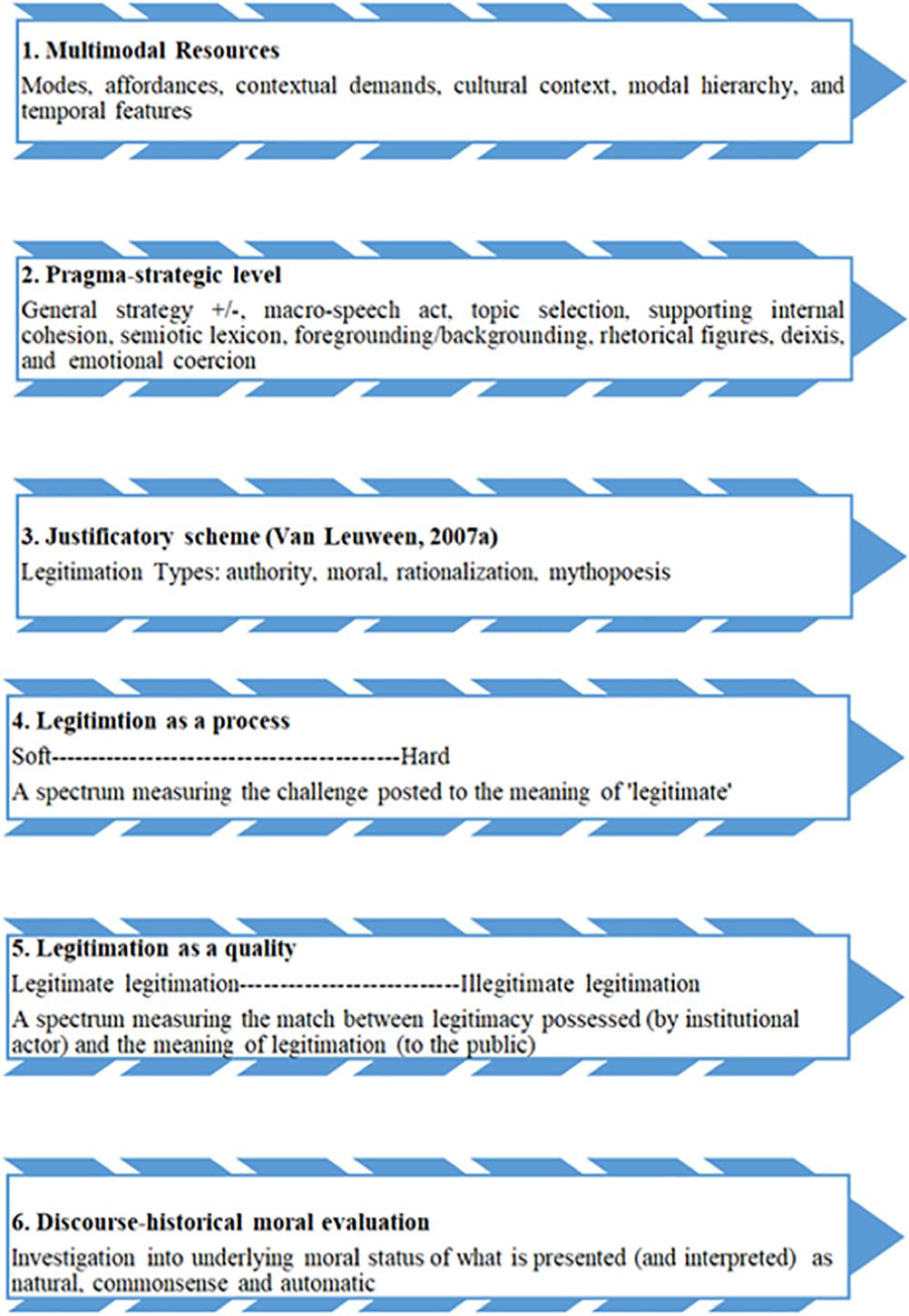
Mackay’s (2015) Multimodal Legitimation Analytical Framework.
This study proposes the addition of two sets of multimodal resources as manipulative triggers of multimodal legitimation that can account for a more rigorous analysis of the gaming artifact. It further proposes that the merge of the sixth layer in Mackay’s (2015) model – discourse-historical moral evaluation, which is drawn from Van Leeuwen and Wodak (1999) – be added to visual attitudinal values (see Figure 2). This is where Economou’s (2009) visual model becomes useful in offering extensive taxonomies of visual attitudinal values along gradable lines attending as they are to value judgments. The proposed sets are as follows:
1. Visual attitudinal values (AFFECT, JUDGEMENT, and APPRECIATION) and visual graduation resources (FOCUS and FORCE) as introduced in the visual appraisal model (Economou, 2009; Swain, 2012).
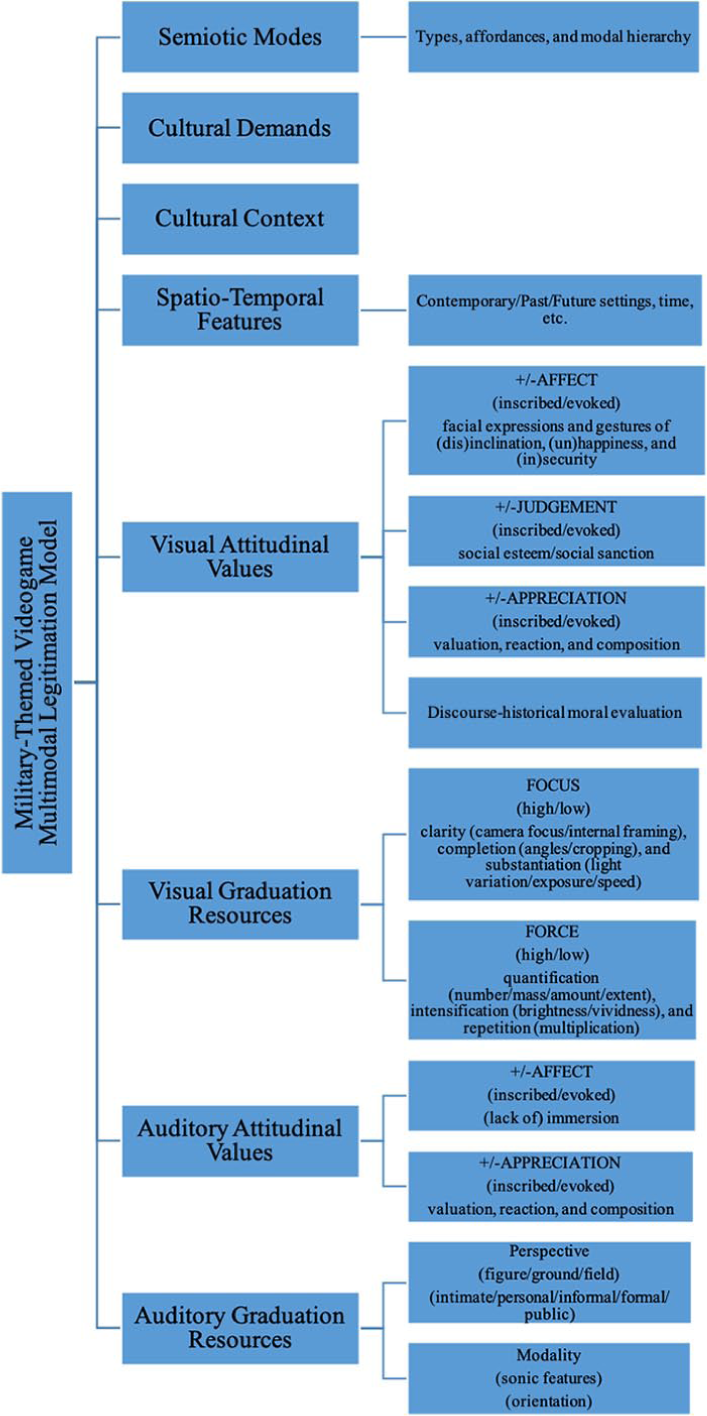
Military-Themed Videogame Multimodal Legitimation Model (MTV-MLM).
Economou’s (2009) visual appraisal model builds on Martin and White’s (2007) work, providing a fine-grained taxonomy of the visual realizations of evaluation in still news photos, either positively or negatively, in both inscribed and evoked manners. Whereas the system of attitude constitutes the main resource for evaluating, adopting stances, constructing textual personas, and managing interpersonal positionings and relationships, graduation is an attendant system that contributes to attitude and functions simultaneously. The attitude system enables authors to foreground their subjective presence through the construal of three main semantic domains, namely: AFFECT (emotional states of (dis)inclination, (un)happiness, and (in)security via facial expressions, gestures and stance); JUDGMENT (evaluation of people and their social behaviors in terms of social esteem and social sanction); and APPRECIATION (evaluation of entities, processes, and phenomena with respect to valuation, composition and reaction). The graduation system, on the other hand, operates across two axes of scalability: FORCE (through quantification, intensification and repetition) and FOCUS (through clarity, completion and substantiation). Critically, choices of graduations of attitude affect the strength of feeling and level of commitment to value positions (i.e. they either ‘up-scale’ or ‘down-scale’ evaluations). The three systems and their sub-systems are typically written in uppercase whereas the lower levels of refinement are written in lowercase.
2. Auditory attitudinal values (AFFECT and APPRECIATION in relation to perspective) and auditory graduation resources (in relation to sonic modality) inspired by Economou (2009)’s visual appraisal model and Van Leuween’s (1999, 2005, 2007a, 2007b, 2009a, 2009b, 2011, 2012) work on multimodal legitimation and sound design.
This article argues that attitudinal values and graduation resources can readily be applicable to the auditory modes in the mediascape of military-themed videogames. For the auditory graduation resources, the current study places special emphasis on perspective and modality by virtue of their remarkable influence in the multimodal ensemble of the gaming artifact. To Van Leuween (1999), perspective is a continuum rather than a strict division ranging from intimate, personal, informal, formal to public. Central to the notion of perspective is social distance. Sound events are further described in terms of figure, ground, and field. While figure is the most prominent sound event that requires immediate attention and is consciously listened to, ground is background ambient, passively heard instead of actively listened. Field (or soundscape) is the physical world in which figure and ground are identified. The functions of these sound events are examined with special regard to social distance. Sound events have different roles in different soundscapes and, for a positive emotive response, they need to be appropriate for the contexts in which they are heard. Modality of sound, on the other hand, as defined by Van Leeuwen (1999: 180), is the degree of truth assigned to a given sound event. Building on Kress and Van Leeuwen’s (2006) work on visual communication, Van Leeuwen (1999) introduces several types of modalities in terms of ‘coding orientation’, fundamentally: naturalistic, technological, abstract and sensory, and he similarly outlines eight markers for sonic modality: pitch extent, durational variety, dynamic range, perspectival depth, fluctuation range, friction range, absorption range and degree of directionality. Van Leeuwen points out that these layers of sound design and their expected effects can easily be manipulated with the help of emerging technologies, and a shift in perspective is likely to arise, enticing listeners to make new connections with a sound event that has previously been associated with another context. The auditory attitudinal values emerge from the full manipulation of perspective, modality in relation to social distance, hence triggering evoked/inscribed AFFECT (immersion) and APPRECIATION of positive and/or negative impact (valuation, composition, and reaction). Graduation of sonic features is likely to result in different modality configurations and hence impacts the affective responses of players while in combat.
It is worth noting that it is challenging, if not impossible, to examine the full audiovisual experience of immersion in AAPG. Therefore, only a few captured shots from the gaming artifact are analyzed in full detail in the sections that follow to pinpoint the semiotic affordances and audio-visual appraisal choices (attitudinal values and graduation resources) that serve the multimodal legitimation of the US hegemonic configuration.
Analysis
Semiotic modes
AAPG runs in a 3D visceral spectacle of graphic realism that locally envelopes players in a full repertoire of aesthetics, subtly influencing them while immersed in ludic war (see Figure 3). In total, the division of labor among the inherent audio-visual semiotic modes (the mood setting music, the realistic sound effects, the multiplicity of colors, etc.) inculcates a sense of immersive presence shaping players’ embodied perceptions of space and time. Predominantly salient in the multimodal ensemble of AAPG are the figures of hyper-masculine and technologically augmented male soldiers fearlessly fighting abstract enemies in cityscapes and surveilled settings (see Figures 4–6). This is likely to generate, as Intizidis and Prevedourakis (2008: 209) argue, an excited state ‘through which both the self and the other are constantly imagined, constructed, and articulated’. Players see themselves and their fellow team members garbed in recognizable US Army uniforms, as opposed to a generic enemy. In the course of the game, players experience a high level of agency, ideological expression, and social responsibility, hence the soldier’s virtual actions become theirs. The militarized aesthetics of AAPG aligns with the fact that FPSs embody ‘manipulation of ideology’, ‘articulation of unreal enemy’, ‘legitimization of war’, and ‘desensitization to violence’ (see Mantello, 2012; Robinson, 2012b; Šisler, 2008, 2009a, 2009b). The inherent multimodal ensemble can consequently be seen as exemplary of how the US mobilizes implicit legitimation strategies that are likely to resonate with potential players.
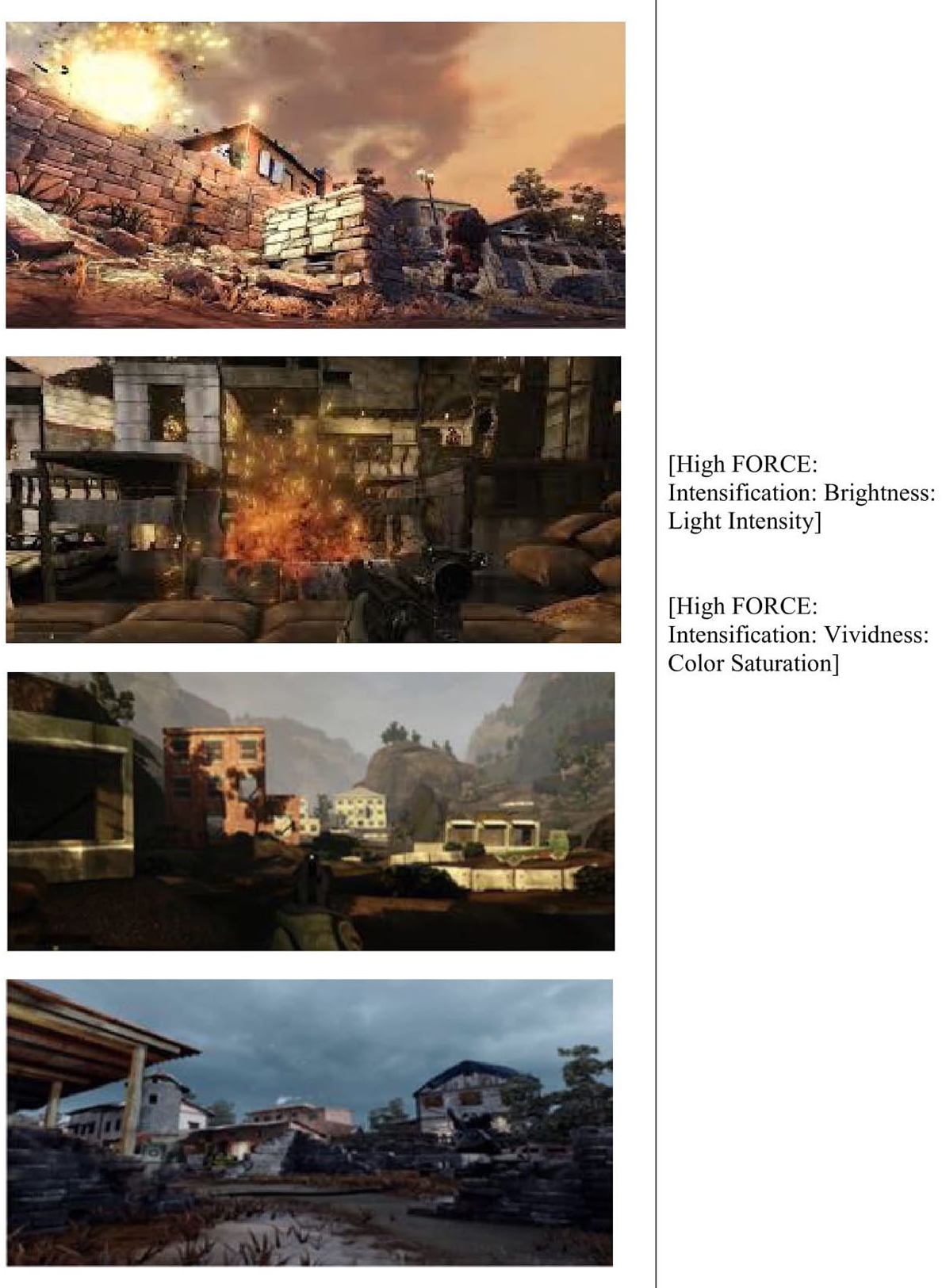
The fictional Republic of Ostregals where combats take place in AAPG. Reproduced with permission from America’s Army.
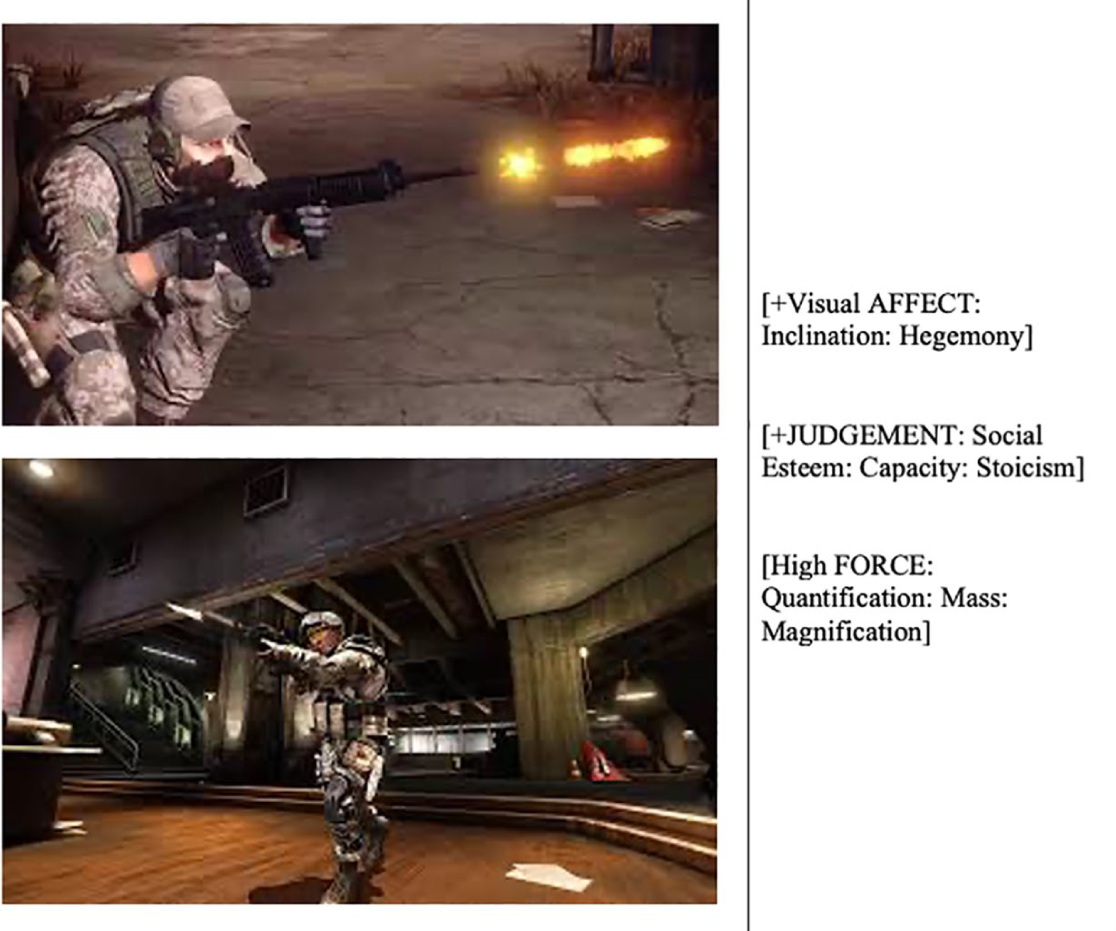
Screenshot of US American soldiers in AAPG.
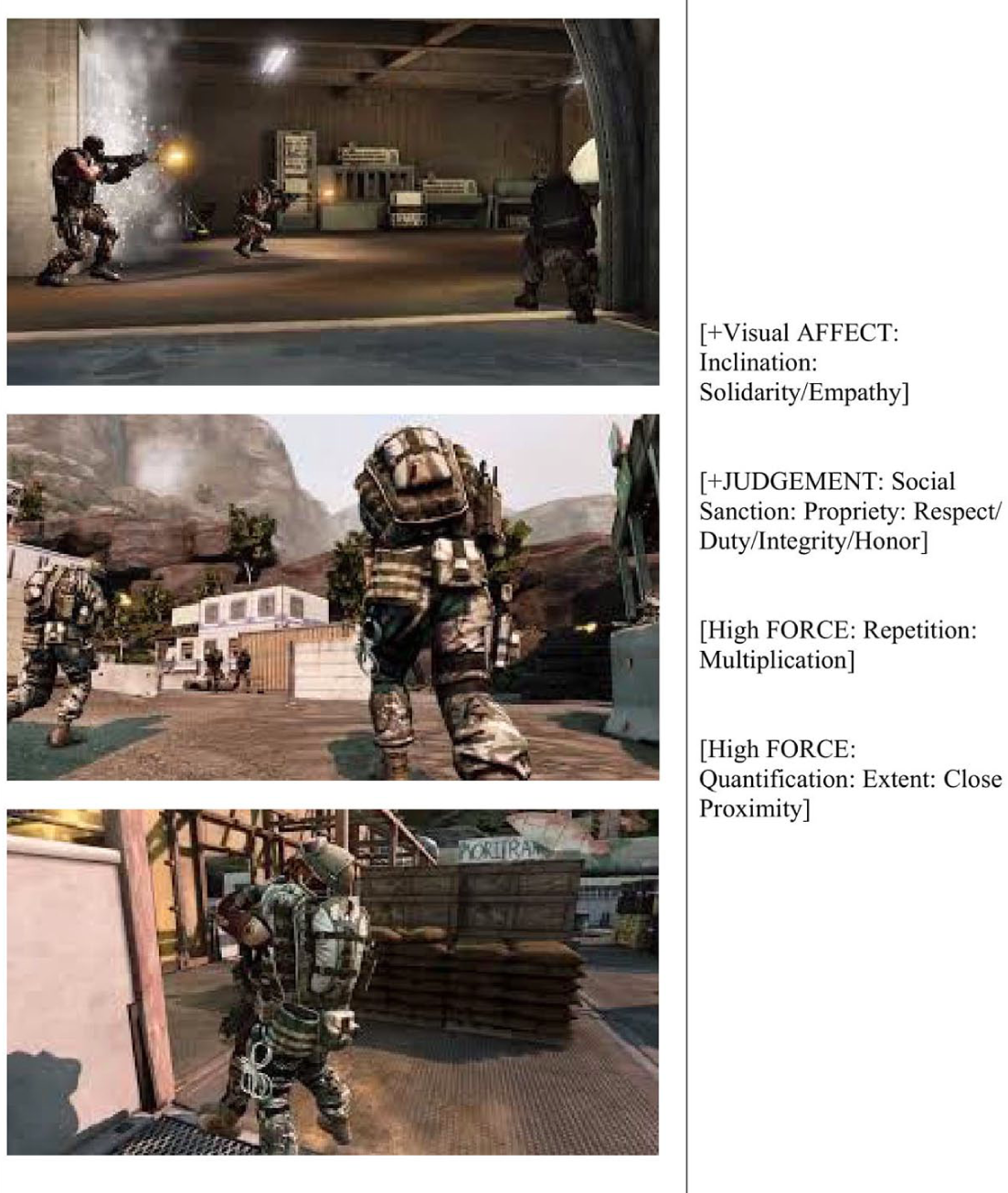
Screenshot of US American soldiers showing teamwork and assistance.
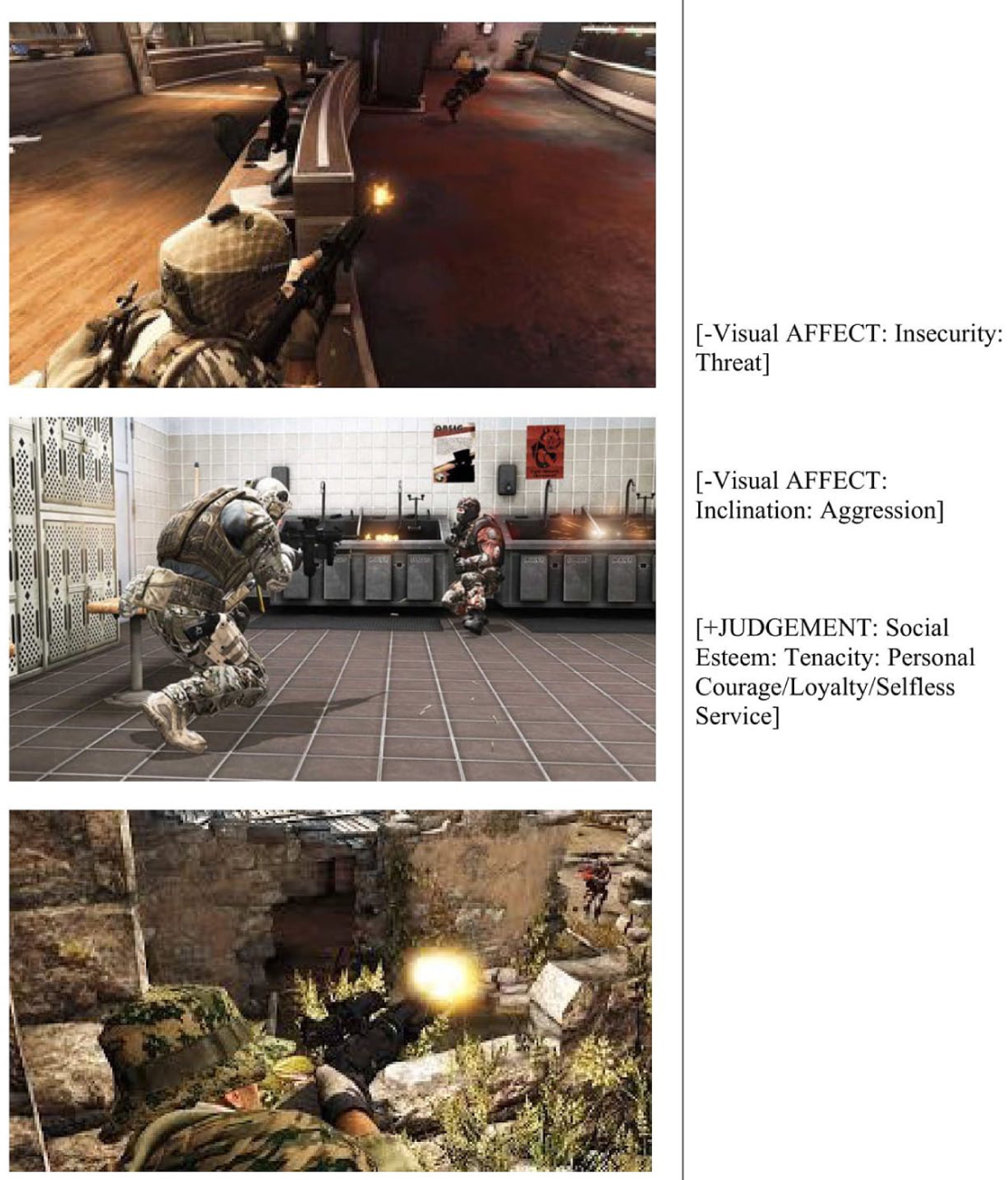
Screenshot of US American soldiers neutralizing the enemy.
Contextual demands
Several ludological and geopolitical contextual restrictions unique to AAPG are noteworthy. First, AAPG strategically obscures aspects of war that interfere with the ideal depiction of virtuous war. The videogame excludes the possibility of friendly fire; no civilian attacks or collateral damages are in sight. In aestheticizing violence – using dynamic montage editing and complex temporal manipulations – ferocious gaming virtuosity, coercive actions, and interactive wars are likely to become the highest forms of masculine performativity. Second, with preset US military agendas and underlying logics in mind, the videogame developers retain control over the possibility spaces for the convergence of soldiers and players. Despite the illusion of full authorial control, player encounters in the simulated worlds are invariably shaped by a peculiar procedural rhetoric (rules, operations, and reward systems) that govern the virtual space and perpetuate the dominant Western ideology of the positive Self and negative Other. These constraints legitimate wars against the omnipresent enemy as a means to an end and, in the course of the game, as altruistic.
Cultural context and spatio-temporal features
AAPG significantly shifts away from post-9/11 conventional battlefields to a myriad of imaginary geographies depicted in high fidelity and set in the virtual Republic of Ostregals with plausible future war scenarios (see Figure 3). This temporal shift seems to parallel evolving US geopolitical ideologies. Rather than being embroiled in a number of contemporary unwinnable conflicts like those in Afghanistan – which have uncertain outcomes and cannot be won – alternative optimistic scenarios that mobilize compliant citizenry, coopt the vigor of the war machine, legitimate moral support for the military, and assure victory in a fantasy future are the inherent dominant portrayals. In several geographical markers of Ostregals, players undertake a series of training missions that legitimize the use of violent forces against abstract enemies that may be domestic or foreign. Overall, the gamespace reinforces dichotomies, foregrounds the legitimacy of self-defense, and can be said to reproduce interpretations of war, attack, and violence from potentially illegitimate to legitimate.
Visual attitudinal values
Affect
Gameplay in AAPG is a form of masculine enterprise and military tactics that abides by the American soldier’s creed and, therefore, gaming is intimately tied to identification and masculine performance. In the gaming space, players see their US soldier-avatars as young, white, and well-built figures with inaccessible facial expressions (see Figure 4). It is not white men per se who defend the nation. Avatars may represent white, Asian or African American soldiers, yet, in totality, they are incarnations of ‘white masculinity’ (Ricciardelli et al., 2010) that denote the ideal protagonists and agents of change. The visual images evoke a positive AFFECT of hegemony and function in tandem as representations of the future self. The level of interconnection between players and the in-game avatars grows so intensely in such battlefields that players are likely to flicker between their physical beings and virtual in-game avatars until they subconsciously internalize, rather than resolve, the convergent tension between the actual and the virtual. Additionally, the gaming artifact engenders positive visual instantiations of solidarity and empathy as integral to militarized masculine performance (see Figure 5). In keeping with the dominant military hegemonic ideology instilled in the gamespace, the honor score system penalizes players for attacking teammates and rewards them for leadership, assistance, and mission completion. On a different note, since the enemy is largely invisible, it poses a constant threat that can actualize any time from virtually anywhere. The infused negative visual inscriptions of threat and aggression require American soldiers (and by extension potential players) to not only neutralize large numbers of enemies, but also manifest high levels of violence, efficiency, and firepower (see Figure 6). Fashioned in this manner, AAPG is likely to sanitize warfare, reinforcing ‘a culture that progressively integrates the citizen into the momentum of the war machine’ (Stahl, 2010: 110).
Judgement
In the gamespace of AAPG, in-game players are bound by Rules of Engagement (ROE) and are indoctrinated to adhere to the seven Army Core Values: Loyalty, Duty, Respect, Selfless Service, Honor, Integrity, and Personal Courage. As they advance through the game in teamwork-based, multiplayer force-on-force operations, they master the tactics of soldiering in the American Army, internalizing and displaying qualities of tenacity (personal courage, loyalty, and selfless service), social esteem (stoicism), and social sanction (respect, duty, integrity, and honor) that all contribute to the construction of hegemonic military masculinity (see Figures 4–6). Such values are awarded for the complexity they entail. For loyalty, for instance, players receive points for protectively shadowing teammates in virtual space and tracking location using onscreen GPS. As a form of procedural rhetoric, this, arguably, affords a collective virtuous Self as opposed to a demonized Other. How players come under attacks by enemies that are suitably Othered in the spatio-temporal configurations displayed in Figure 3 is noteworthy. Players constantly fight hostile adversaries largely unidentifiable by virtue of the ski masks they wear. The erasure of a differentiating enemy race, ethnicity, or gender is deliberate. Retaining the ubiquitous presence of enemy has the potential to legitimate the use of overwhelming FORCE (Potzsch, 2013).
Appreciation
The most straightforward target of APPRECIATION within AAPG is the signature weaponry that is rendered in high fidelity. Players are required to accommodate their abilities to the weapon qualities and gamespace affordances. In all phases of the game, weaponry informs players of their potential deliberations (particularly power and velocity) to affect players emotionally and to trigger aesthetic pleasure. This parallels Huntemann and Payne’s (2010) argument that ‘moving from spectator to participant, from detached spectacle to immersive experience, has far reaching implications for how citizens imagine the role of the military in contemporary society.’ An integral part of militaristic hegemony is not to blast everyone in sight; rather, it is to subjugate the abstract enemy at both the individual and collective institutional levels. Therefore, dual render scopes feature predominantly on screen to help players identify targets (see Figure 8). Since weapons are modeled with astonishing levels of detail, including sound and performance, their visual images are interspersed with positive visual inscriptions of precision, effectiveness, and profoundness in order for players to feel the difference between weapons (see Figures 7 and 8). Characteristically, detailed and diverse audio representations (of footsteps, bullet impacts, particle effects, grenades, and shell casings, to name a few) accompany weapons animations to heighten their emotional impact, thus positively inscribing and evoking immersion. Legitimating wars as normative, universal, and ever present eventually achieves resonance among the game players who are immersed in military technologies and weaponry that are most likely not developed yet. Their mission, then, is to train to multi-task and navigate in the virtual world with a sense of purpose; utilize and control aggression; maximize efficiency and proficiency; and take on a certain degree of risk.
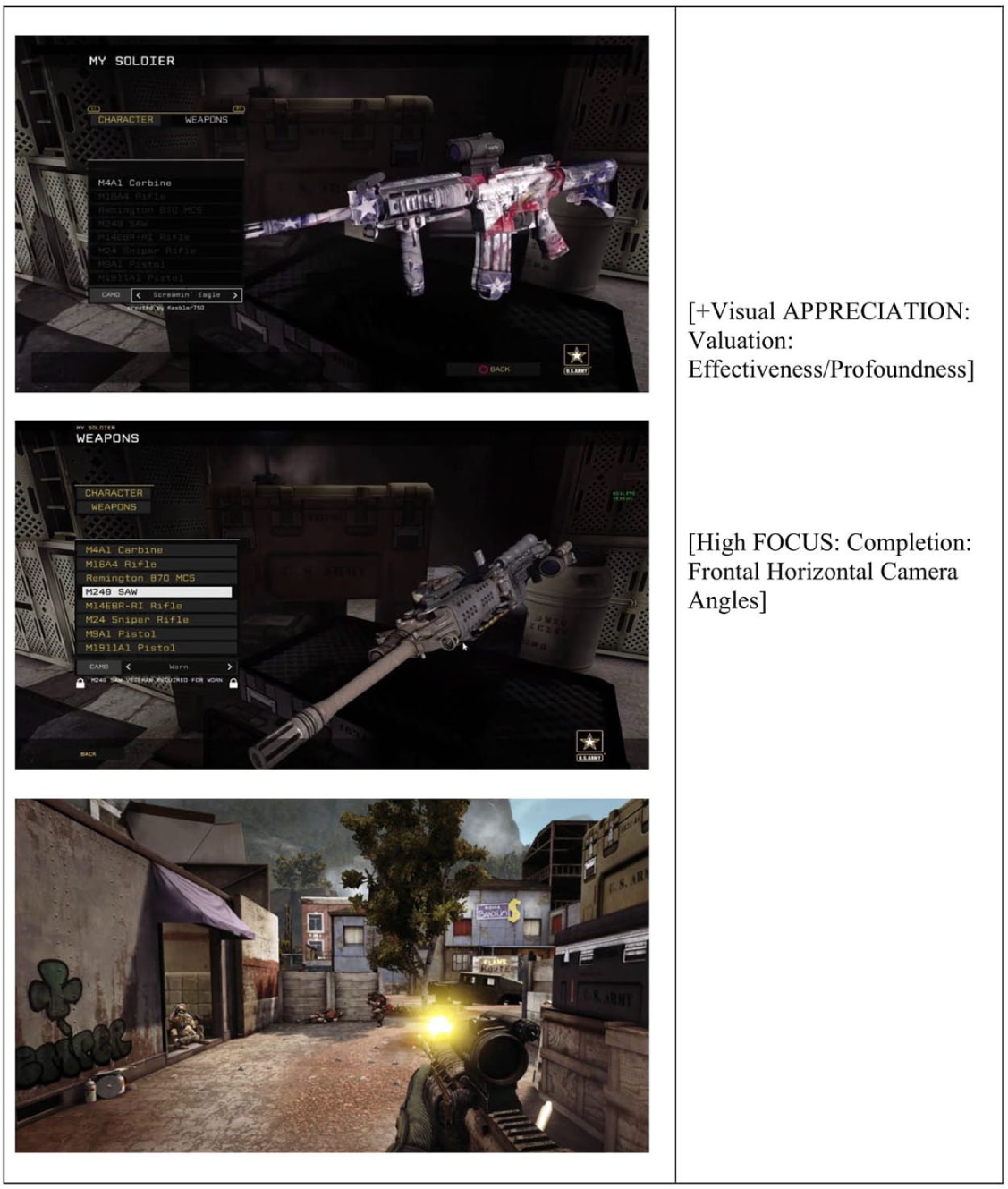
Screenshot of authentically modeled and handled weaponry in AAPG.
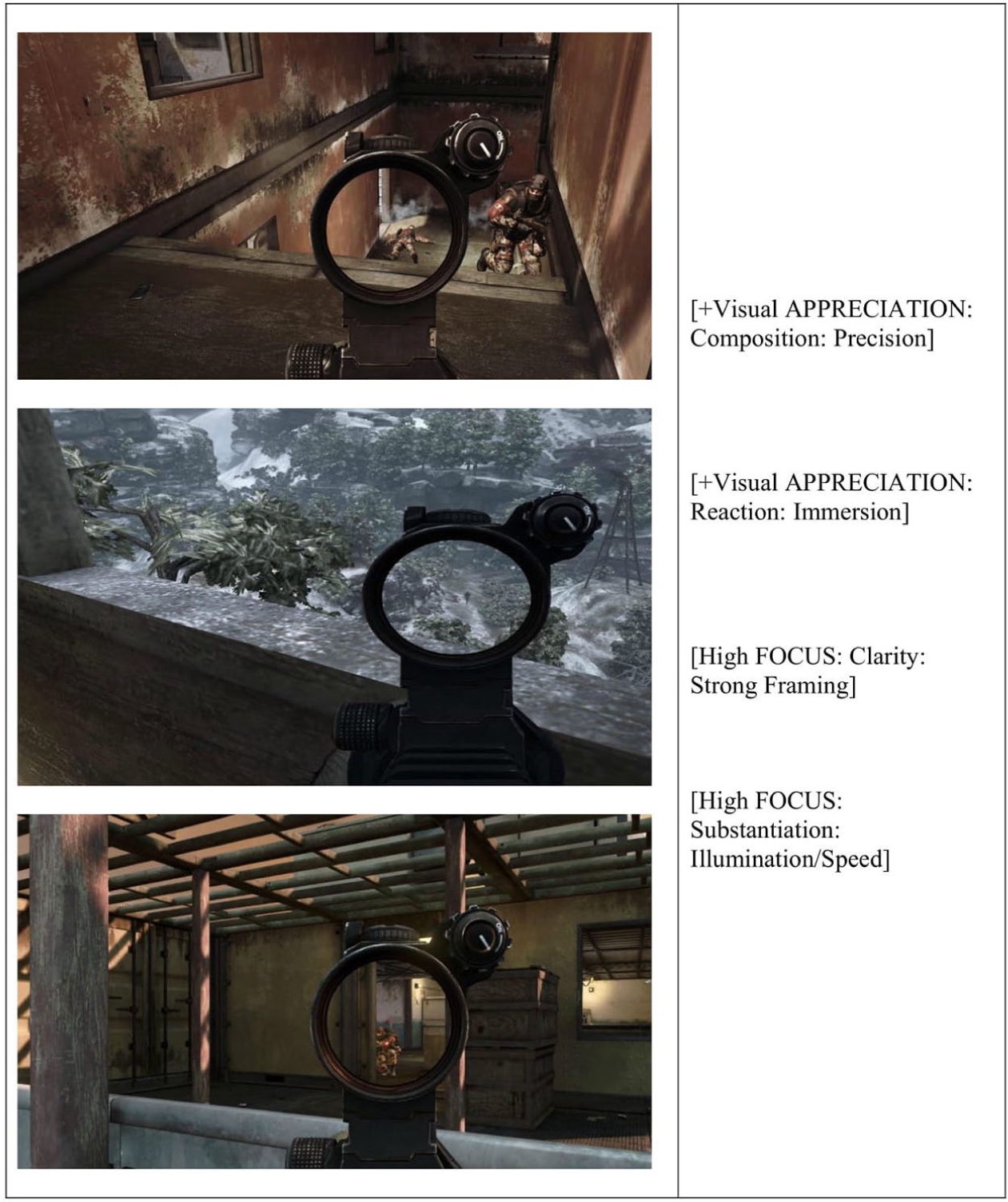
Screenshot of dual render scopes used to identify targets.
Discourse-historic moral evaluation
In the overall gaming environment of AAPG, an altruistic vision of war is accentuated to desensitize players to violence. Selective representations of conflict and violence (Pötzsch, 2017) indelibly tied to militarized masculine performance are discernible in the different phases of the game. The West, namely the US, has predominantly stigmatized the Other as savage, primitive, and uncivilized in perpetuation of ‘the Self and Other’ dichotomy, circulating dominant power relations and processes. As illustrated above, Othering not only encompasses the semio-discursive expressions of prejudice regardless of identity or race, but inculcates a set of dynamic processes that promote cleavages and engender inequality as well. This, ultimately, renders the value-laden masculine discourse-historic moral evaluations contextualized, spatialized, temporalized, and proliferated throughout the game.
Visual attitudinal values and graduation resources
For immersion and identification within the gamespace, combat in battlefields is rendered as an ecstatic yet challenging spectacle (see Figures 3–5 and 7–8). The large, frontal close-ups of fellow US soldiers in combats scale up the FORCE of the inscribed AFFECTS on the part of the players. They are portrayed in magnification and close proximity, highlighting their physical abilities (running, jumping, bouncing, repelling, crouching, etc.) as well-trained and at peak physical conditions. While the US soldiers are visually intensified, multiplied, and made salient (by virtue of the full spectrum of light and color saturation), variant levels of FORCE permeate the 3D gaming spaces. Highly amplified levels of light and color realize hyper-real and sensory effects. Players can see their avatar’s body in a very limited capacity; they gain access only to their magnified hands and forearms gripping a weapon. A value added is modeling soldiers, enemies, and weapons in intricate detail. What resonates among potential players is manifold, namely: (a) maximizing one’s lethality and martial capacities, (b) dehumanizing targets as mere gamic obstacles, and (c) valorizing a masculinity of purpose tied to martial potency and dominant disposition.
Relatedly, as a product of authenticity and verisimilitude, the game artifact provides a highly controlled virtual space in which players can encounter a wide variety of military equipment, training, concepts and terminology, as well as rich symbolism and military traditions. Players combat on a hyper-real, immersive and entirely aestheticized battlefield with contrasting levels of completion, substantiation, and clarity. The strong color contrast between the avatar and the gaming space further frames the visual display. The screen display is characterized by frontal horizontal camera angles that over simplify the act of going to war, and the structure of the game, with clearly defined enemies and easily obtainable objectives in mission fashion, glossing over the ethical and moral concerns that warfare naturally raises. Thanks to camera movements, the gaming spaces are given high FOCUS in terms of depth and dimensionality, and thus higher specification, progression, and liberty are instantiated. US soldiers can sprint indefinitely at a high speed despite the heavy gear they are putting on. Players are given increasing freedom to maneuver. Warfare is reduced to acts of heroic exploits and the type of performance required on the part of players assumes constant maintenance and refinement for the annihilation of the Other. The legitimation of war, in this manner, represents Western social actors in a positive light (as highly polarized and moralized) and the Others in a negative light (totalitarian and aggressive) (Rojo and Van Dijk, 1997; Van Leeuwen and Wodak, 1999).
Auditory attitudinal values and graduation resources
AAPG manipulates soundscapes, making full use of the broadest range of social distances in accordance with aestheticized displays of sublime violence. Music designates, depicts, or otherwise communicates referential concepts, images, experiences, and emotional states. As the players become more emotionally invested in the narrative of the game and a confrontation is imminent, a sudden outburst of music is audible. In the move from background ambient music to combat music, sound events rise from ground to figure, and technological modality becomes higher. It seems that the higher the sonic modality, the more the players are ‘enveloped’ in an interactive, rich soundscape, and the deeper the experience of affective immersion in the videogame soundscape evokes immersion. The player is further positioned in the auditory regime of the game and the sound design sonically affords an immersive user experience, inscribing thrill. Overall, the celebrations of auditory palatable elements like spectacular explosions, lethal ballistics, and experiential realism render a feel of authentic conflicts or plausible scenarios, all of which capture battlefield chatter and recreate settings for players to participate in an AAPG version of militarized hegemony.
Conclusion
This article fundamentally delves into the gamespace of AAPG in an attempt to unravel the inherent aesthetics and politics of play in conjunction with militarized hegemonic masculinity. The proposed Military-Themed Videogame Multimodal Legitimation Model (MTV-MLM), based on Mackay’s (2015) analytical framework, yields intriguing findings. The spatio-temporal shift away from post-9/11 discourses that focus attention on imaginary future wars reify new militaristic representations of hegemonic masculinity symbiotically entangled with futuristic and non-contemporary ideological war narratives. This paradigmatic shift is significant. AAPG harnesses participatory middle grounds that predispose players to affective geopolitical encounters, which unfold contingently in the gamespace where militarized notions of power and ideology are legitimized. In disseminating ideologies of hegemony, the multimodal ensemble of AAPG evangelizes an image of war that glorifies violence. The videogame venerates a particular form of hegemonic military masculinity that needs to deal with new realities of warfare. Key convergent discourses and practices of hegemony emerge therein, fundamentally: proficiency, efficiency, virtuosity, agility, nobility, solidarity, precision, stoicism, and aggression.
The present contribution hopes to have incrementally opened the door to further study. While the findings of this study are limited to the specific sphere of gaming, there are significant ramifications if this particular masculinity has any resonance beyond the sphere of combat-oriented videogames. Further research should examine how hyper-realism problematizes the gratification inherent in the gaming artifact. Future studies can further examine the videogames that run counter to AAPG as an exemplar of recent military entertainment (or militainment), notably those that engender gameplay displeasures such as brutal mise-en-scènes or those that are used by violent non-state actors and terrorists. On a different note, the current study calls for an examination of how postcolonial, phenomenological, and moral deliberations co-evolve in the gaming artifact.
Footnotes
Funding
The author received no financial support for the research, authorship, and publication of this article, and there is no conflict of interest.

Biographical Note
NASHWA ELYAMANY is an Assistant Professor of Linguistics and a certified IELTS speaking examiner at the College of Language and Communication (CLC), Arab Academy for Science, Technology and Maritime Transport (AASTMT). Her research interests include Stylistics, Pragmatics, Critical Discourse Analysis, Cognitive Linguistics, Multimodal Discourse Analysis, Social Semiotics, and New Media and Cultural Studies. Her scholarly work has so far centered around the critical study of motivational speeches, digital narratives, musical numbers, political memes, TED talks, military-themed videogames, National Geographic feature articles, and the aesthetics of forensic crime drama series. She has recently published articles in Anàlisi, Arab Media & Society and The Social Science Journal.
Address: College of Language and Communication (CLC), Arab Academy for Science, Technology and Maritime Transport (AASTMT), Smart village, Egypt. [email: