



Abstract
Dissertations are a critical component of many undergraduate programmes and are often seen as daunting, leading to anxiety and feelings of isolation among students. This study explores the role of writing retreats in supporting undergraduate students during their dissertation process, addressing the unique challenges they face, such as ethical approvals, complex data analysis, and writing and editing the final report. Using a mixed-method approach over two academic years (2022–2024), the study found that retreats significantly increased students’ academic self-perception and decreased academic anxiety. Qualitative analysis identified themes such as the development of a learning community, the demystification of the dissertation process, and the enhancement of academic self-efficacy. The retreats offered students a chance to work alongside peers, access to continuous tutor support, and engagement in structured activities that broke down the dissertation into manageable tasks. The findings suggest that writing retreats not only improve students’ academic outcomes but also contribute to their mental well-being by reducing stress and fostering a sense of belonging. This research highlights the importance of implementing such effective interventions in undergraduate education to enhance student success and well-being during the dissertation process. Further studies are recommended to explore the long-term benefits of writing retreats across various disciplines.
Keywords
Introduction
Many undergraduate programmes require students to complete a final-year dissertation, which often involves conducting an empirical investigation on a chosen topic (Rentzelas & Harrison, 2020). While practices vary by discipline, institution, and country (Ashwin et al., 2016), these projects are crucial for many degree subjects and form a large portion of the final degree classification (Ädel et al., 2024). Completing a dissertation provides a rich learning experience for students, as it allows them to explore their own subject-specific interests (Todd et al., 2004), work independently, and develop research, writing, and communication skills (Healey et al., 2013; Sangster, 2023). With support from an academic supervisor, students apply their knowledge from the first and second years to develop a research question, design a study, collect and analyse data, and disseminate the findings, typically by writing a research report (Medaille et al., 2022). Furthermore, undergraduate dissertations can strengthen teaching-research links, empower learners, and encourage students to pursue research careers or postgraduate study (Brew & Mantai, 2017; Sangster, 2023). Students also report personal benefits, such as increased persistence, self-awareness, self-confidence, and time management skills (Agricola et al., 2020; Wolf, 2018).
Despite the benefits, undergraduate dissertations are time-consuming and challenging (Hemmings, 2001; Medaille et al., 2022; Sangster, 2023). In the UK, they can range from 8 to 12,000 words, are completed over 12 to 18 months, and mark the first independent research project for students (Malcolm, 2020; Sangster, 2023). One significant challenge is providing adequate and continuous support while maintaining the autonomy that defines “student-centred learning” (Agricola et al., 2020; Sangster, 2023, p. 250). Even with 12 to 18 months of supervision intended to promote independence, students frequently face difficulties with confidence and motivation during the final stages of editing, formatting, and writing their dissertations (Medaille et al., 2022; Wu et al., 2017). However, compared to the extensive research at postgraduate and doctoral levels (Stappenbelt & Basu, 2019; Roberts & Seaman, 2018), there are few studies on undergraduate research. Of the limited research available, most address the teaching, learning, and assessment aspects of the dissertation (Sangster, 2023), rather than students’ experiences. Thus, further investigation is needed to determine how to support undergraduates in completing their dissertations.
Beyond writing and formatting, completing dissertations in social sciences can pose additional challenges and time delays. These projects require Human Research Ethics approval and this process has been described as difficult, time-consuming, and overwhelming by both experienced researchers (Brindley et al., 2020; Davis et al., 2022; McLinton et al., 2024) and undergraduates (Ma, 2023). Moreover, dissertations often involve quantitative data collection and analysis using a statistical software. Research indicates that statistics can be anxiety-inducing and stressful for students (Dempster & McCorry, 2009; Devonport & Lane, 2006; Olimpo et al., 2018). A recent evaluation of a Psychology dissertation module by Rentzelas and Harrison (2020) found that undergraduates need more support with data analysis and the development of appropriate empirical research skills. The unstructured nature of the dissertation process – where students are expected to work independently with minimal timetabled lectures and workshops – also led these students to report feelings of isolation and insufficient peer support. Such unstructured approaches are common in dissertation modules in UK (Sangster, 2023; Xuereb, 2023), European (Ädel et al., 2024), and US (Roberts & Seaman, 2018) higher education systems. As a result, dissertation students across various disciplines struggle with time management (Medaille et al., 2022), organisation (Sangster, 2023), motivation (Edwards et al., 2020), and limited peer (Edwards et al., 2020; Medaille et al., 2022) and tutor support (Roberts & Seaman, 2018).
The Use of Writing Retreats to Support Undergraduate Students
Addressing the challenges undergraduates face while completing their dissertations is crucial, and one potential solution is writing retreats. Traditionally, writing retreats involve taking a group of academic staff and/or graduate students out of their usual work and home environments to focus on their academic writing (e.g. publications) for several days (S. Moore et al., 2010). These retreats offer “a total immersion experience, writing support and mentoring, focused engagement in the writing experience, and a community of practice and reflexivity” (S. Moore et al., 2010, p. 21), and their benefits for academic staff, researchers, and doctoral students are well-documented. Kornhaber et al.’s (2016) review suggested that writing retreats enhance publication output and writing skills by (1) creating dedicated time and space for writing, (2) boosting self-confidence and motivation, (3) reducing writing-related anxiety, (4) providing resources, and (5) fostering collegial support and social interaction. Although writing retreats could provide similar benefits for undergraduates completing their dissertations, they are rarely offered. A scoping review of 20 UK universities found that most provide writing retreats for academic staff and researchers (N = 17/20), yet few offer them to postgraduate (N = 3/20) or undergraduate (N = 2/20) students (Little, 2022).
Despite limited research, some recent studies indicate that writing retreats can benefit undergraduates, leading to increased confidence (Edwards et al., 2020; Sangster, 2023), reduced anxiety (Cunningham, 2022; Sangster, 2023), and improved writing skills (Edwards et al., 2020; Rentzelas & Harrison, 2020). However, the evidence base is small and varies in terms of retreat structure, setting, facilitator, and student population. For instance, Cunningham (2022) conducted a mixed-method evaluation with undergraduates participating in weekly 90-min writing sessions alongside an academic tutor who also worked on their own research. In contrast, Edwards et al. (2020) and Sangster (2023) examined multi-day writing retreats with additional academic skill development activities (e.g. workshops, discussion groups). However, there was still evident heterogeneity: Sangster’s (2023) retreat was on-campus and involved various academic staff from different research areas, whereas Edwards et al.’s (2020) retreat was residential and facilitated solely by the dissertation supervisors. Moreover, these studies focused on English Language (Cunningham, 2022) and Geography (Edwards et al., 2020; Sangster, 2023) undergraduates, leaving the potential impact on students in other disciplines unknown. Rentzelas and Harrison (2020) reported the benefits of a writing retreat for Psychology students, but their insights came from the staff facilitating the retreat rather than the students. Therefore, further investigation is needed to understand the role of writing retreats for undergraduates in various subjects, focusing on which features students perceive as most effective for maximising support during the dissertation process.
The current study aimed to address the gap in the literature by exploring Psychology students’ experiences during the completion of their dissertation, including the use of a multi-day writing retreat as a means of providing additional support. This paper describes the writing retreat, before presenting the main findings and recommendations. Key objectives of this mixed-method study are:
To determine whether writing retreats increase undergraduate Psychology students’ academic self-perception and decrease academic anxiety.
To explore students’ experiences of attending the writing retreat, including any features they felt positively impacted their dissertation journey, as well as any areas for future improvement.
Method
To fully understand the impact of the Psychology dissertation writing retreat and students’ perceptions of it, a mixed-method approach was conducted across two academic years: 2022 to 2023 and 2023 to 2024. Following the first writing retreat held in February 2023, qualitative data were collected through semi-structured interviews to explore students’ experiences. Narrative interview techniques were employed to generate evaluative accounts (Muylaert et al., 2014), including students’ feelings during the process, their perceived barriers and facilitators to engagement, and recommendations for future development of such retreats. During the second writing retreat in February 2024, a pre-post quantitative survey was administered to assess students’ academic self-perception (McCoach & Siegle, 2003) and academic anxiety (Cassady et al., 2019). It was hypothesised that the writing retreat would increase academic self-perception and decrease academic anxiety.
Research Ethics
The study was approved by the School of Psychology Ethics Committee at the University of South Wales (USW: reference number 23LFDB02LR) and adhered to the British Psychological Society (BPS, 2018) Code of Ethics and Conduct and the Data Protection Act (2018). Students were informed that the study was voluntary, and that non-participation would not affect their final dissertation mark or opportunity to attend the writing retreat. Prior to interviews and survey completion, students provided consent and were reminded that they could withdraw at any time during the study.
Writing Retreat Description
The residential writing retreat spanned 2 days and one night and was hosted at a rural manor house in England, UK. Drawing inspiration from writing retreats for academics (Kornhaber et al., 2016) and students (Edwards et al., 2020), this venue was chosen for its peaceful environment, proximity to nature, and 90-min drive from the university campus – which provided a break from students’ regular routines and distractions. Attendance was voluntary, with 59 and 74 students signing up in 2023 and 2024, respectively.
Students were at varying stages of their dissertation journeys when they signed up. While the dissertation process formally began in May of the previous academic year – when students attend a module choice and dissertation information event and are matched with supervisors, student engagement over the summer and into the Autumn term tends to vary. By the time of the retreat in February, some students had already made substantial progress and were looking for support with data analysis or writing up results, while others had yet to begin in earnest. The retreat was timed specifically to support students across this spectrum, offering early enough intervention for those who needed to catch up, while still being beneficial for those already underway.
Retreats were held in mid-February, during the Spring term’s “assessment support week” when no formal lectures or workshops are scheduled. This timing – approximately three months before the Dissertation submission deadline in May – was intended to give students focused, early-stage writing time without competing academic demands. Across the 2 days, students could participate in various activities designed to assist them with their dissertation and learning. The retreat was facilitated by 14 academic staff who held various roles within the Psychology Department at USW (i.e. lecturers, dissertation supervisors, research assistants, doctoral students, and the faculty librarian). Three distinct types of support were offered, which included:
Group workshops: Tutor-led sessions that provided practical guidance on completing elements of the dissertation. Various topics were covered, including conducting literature reviews, data collection and analyses, and interpreting and writing up results. Topics were selected based on student feedback collected via a survey prior to delivery, and students could sign up to workshops on arrival at the retreat.
One-to-one sessions: Students could also sign up to an individual meeting with a tutor to discuss specific aspects of their dissertation (e.g. submitting ethics applications, analysing quantitative data using statistical packages).
Writing time: Beyond workshops and one-to-ones, students were able to work independently on their dissertations. Various rooms were available at the manor house to ensure students could work in an environment they felt comfortable in, including quiet rooms for independent study (i.e. small lounges, conservatory) and communal areas for group work (i.e. large lounges, main hall). Tutors walked around such rooms throughout the day and were on hand to read dissertation drafts, answer questions, and offer general support.
Non-academic activities and entertainment (e.g. quiz, games) were provided in the evening for students who chose to stay overnight. These social activities provided further opportunities for students to bond with their peers and academic tutors, as they were able to engage in lighter conversations beyond the dissertation. The retreat was free for students to attend, and all costs were covered by the Psychology department, including accommodation, meals, and transport.
Further, the overall format and structure of the retreat remained consistent across 2023 and 2024, including the same approach to recruitment and support activities. However, because workshops were tailored to student needs based on pre-retreat surveys, the specific workshop topics, their order, and the academic staff delivering them varied slightly between years.
Data Collection
Quantitative Survey
Students who attended the writing retreat completed a pre-post survey using online survey provider Jisc. Both pre-and-post surveys included adapted versions of the Academic Self-Perception Scale (ASP: McCoach & Siegle, 2003) and the Academic Anxiety Scale (AAS: Cassady et al., 2019). The ASP is a 5-item measure that uses a 7-point Likert-scale (1 = Strongly disagree; 7 = Strongly agree) to determine students’ self-perception of their academic abilities at school. In this study, items were adapted to reflect a university population and examples included “I am confident in my academic abilities” and “I do well in my university studies.” The ASP has been used with diverse groups of students (Matthews & McBee, 2007) and demonstrates high internal consistency, with Cronbach’s reliability estimates ranging from .87 to .88 in students aged 11 to 18 years (Dedrick et al., 2015; McCoach & Siegle, 2003). In the current study, Cronbach’s alpha was .74, indicating good internal reliability of the adapted measure (Tavakol & Dennick, 2011). The AAS is an 11-item measure that uses a 4-point Likert-scale (1 = Not at all typical of me; 4 = Very typical of me) to determine university students’ perceived stressors that contribute to academic anxiety. In this study, items were adapted to focus specifically on the dissertation component of university studies and examples included “I often worry that I am not doing my dissertation properly” and “I tend to find my supervisors intimidating.” Previous validations of the AAS (Cassady et al., 2019) and the adapted version used in the current study show high internal consistency (Cronbach’s alpha = .90). The pre-survey also contained demographic items (i.e. age, gender, course, dissertation topic). Students were asked to complete both surveys immediately before and after attending the retreat whilst travelling between the manor house and university campus.
Qualitative Interviews
Semi-structured interviews were conducted with students 7 to 14 days following the writing retreat, either in-person or over MS Teams. The question schedule was designed for the purposes of the study and focused on understanding students’ experiences of their entire dissertation journey, as well as their perceptions on the writing retreat (Muylaert et al., 2014). Example questions included “Talk me through your dissertation journey so far?”, “Leading up to the writing retreat, how were you feeling about your dissertation?”, “Why did you attend the retreat?”, as well as “What did you like about the retreat?” and “Would you suggest any changes for next year?”. All interviews were conducted individually and lasted an average of 50 min. To minimise potential bias in participants’ responses, interviews were conducted by a research assistant who is independent of the dissertation module and supervision team (G. F. Moore et al., 2015). Responses were audio recorded and stored in a secure location for later transcription and analysis.
Participants
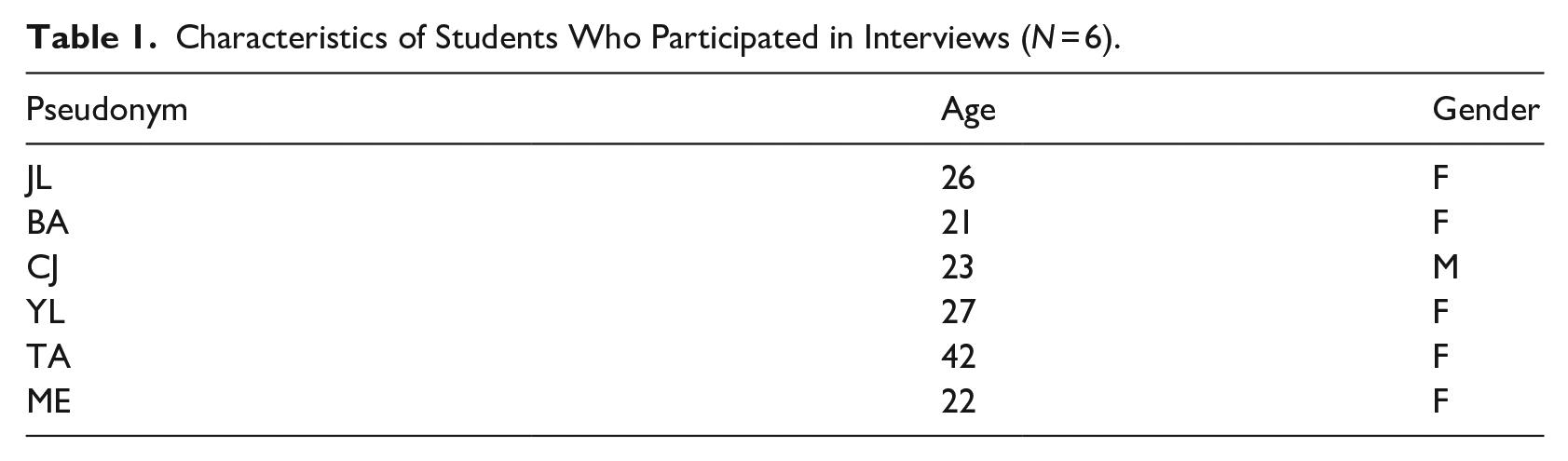
Following the 2023 writing retreat, six students were interviewed (demographic information and pseudonyms are outlined in Table 1). In total, 38 students who attended the 2024 writing retreat completed the online survey (51.4% response rate). Age ranged from 21 to 52 years (M = 26.1 years; SD = 5.59) and 33 were female, 4 were male, and 1 identified as other. Participants were studying various undergraduate courses taught within the Psychology Department at USW, including Psychology (N = 17), Psychology with Criminology and Criminal Justice (N = 8), Psychology with Developmental Disorders (N = 5), Psychology with Counselling (N = 3), and Childhood Development (N = 5).
Characteristics of Students Who Participated in Interviews (N = 6).
Data Analysis
Survey data were analysed using paired-sample t-tests to determine changes in ASP and AAS scores pre-and-post writing retreat. Interview recordings were transcribed verbatim and analysed using reflexive thematic analysis (Braun & Clarke, 2022), a flexible and accessible approach to qualitative data analysis. This method facilitates the identification and analysis of patterns or themes within a given data set (Braun & Clarke, 2012). Reflexive thematic analysis is considered a reflection of the researcher’s interpretive engagement with the data, influenced by (1) the dataset, (2) the theoretical assumptions of the analysis, and (3) the researcher’s analytical skills and resources (Braun & Clarke, 2019). The coding process and theme development are flexible and organic, often evolving throughout the analytical process (Braun & Clarke, 2019). Braun and Clarke (2012, 2022) propose a six-phase process to guide thematic analysis, helping researchers identify the important aspects of the analysis: (1) familiarisation with the data, (2) generating initial codes, (3) generating themes, (4) reviewing potential themes, (5) defining and naming themes, and (6) producing the report.
In the current study, the first and second authors independently familiarised themselves with the transcripts and generated initial codes manually using online diagramming software Lucid Charts. Regular discussions were held to reflect on interpretations and compare coding decisions, which were then refined collaboratively. Codes were developed inductively, with themes generated through an iterative and reflexive process shaped by our interpretive approach. Coding and theme development were not linear but evolved alongside ongoing engagement with the data. The analysis aimed to capture both shared and divergent experiences of participants, with attention paid to nuanced or contradictory perspectives. Reflexive journaling was used by the lead analyst to document interpretive decisions, assumptions, and positionality throughout the analysis.
Results
Quantitative Analysis
A paired-samples t-test revealed a significant difference in ASP scores before (M = 25.8, SD = 3.7) and after (M = 27.2, SD = 3.5) attending the dissertation retreat; t(37) = -2.166, p = .018. There was also a significant difference in AAS scores before (M = 25.1, SD = 8.3) and after (M = 22.4, SD = 8.3) the retreat; t(37) = 2.001, p = .026). This suggests that attending the retreat increased students’ academic self-perception and decreased academic anxiety.
Qualitative Analysis
Reflexive thematic analysis revealed four themes that capture students’ experiences of attending the writing retreat: (1) Learning Community; (2) Demystifying the Dissertation; (3) Academic Self-Efficacy and Long-Term Benefits; and (4) Factors That Affect Engagement. Several sub-themes were identified for each theme, as shown in Figure 1. The following sections discuss these themes in detail and illustrate them with participant quotes.
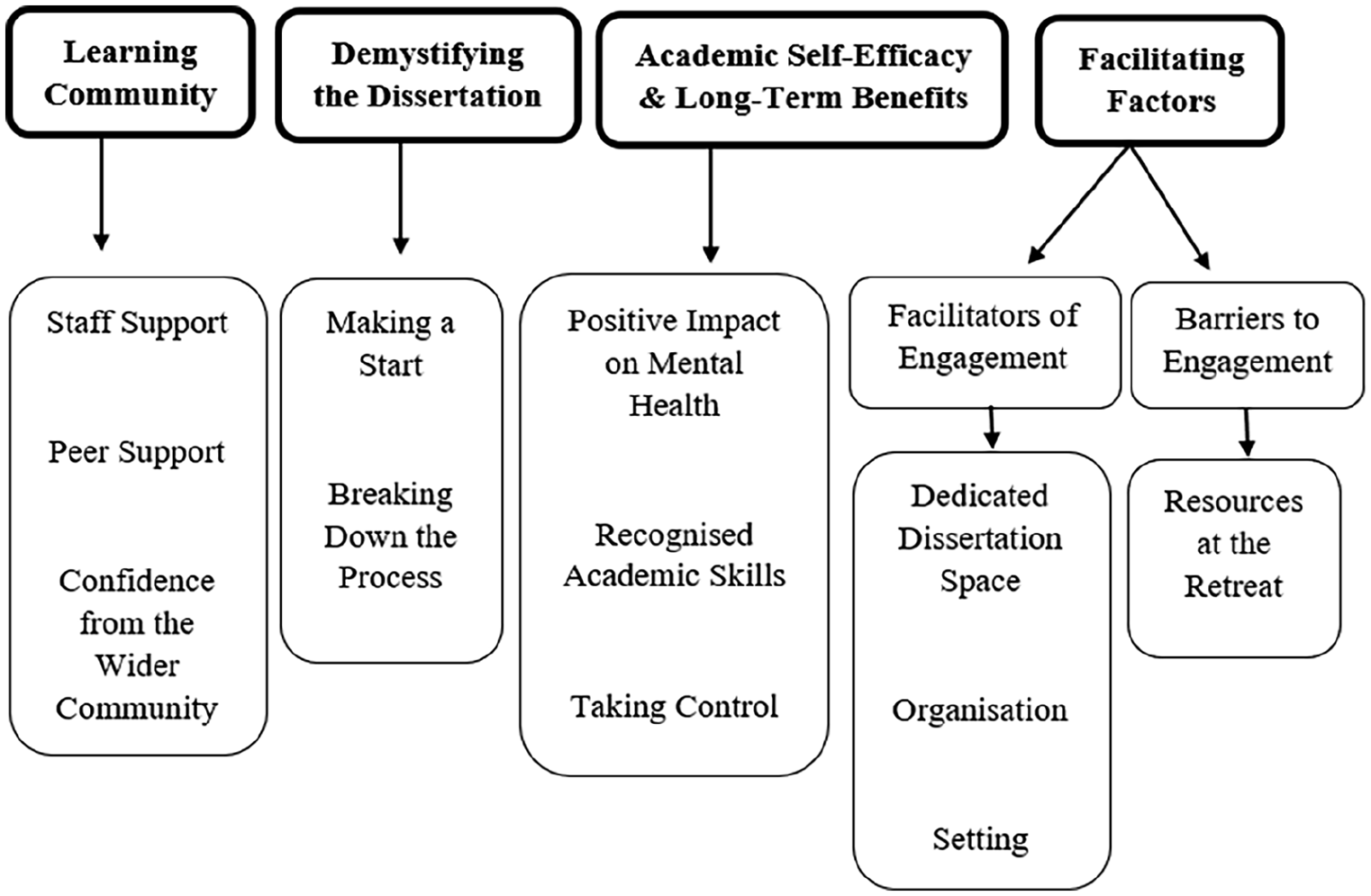
Thematic map of students’ experiences of attending the dissertation writing retreat.
Learning Community
Students experienced a sense of learning community at the retreat and described the benefits of receiving peer and staff support. Being able to work on their dissertation alongside other students was viewed positively, with one explaining that “it felt like we’re all on the right path” (CJ, L213) and another appreciating that “we’re all really good at like supporting each other because we’re all in the same place and we’re all stressed and struggling” (BA, L169). This positive impact was highlighted by another student who mentioned that it was “really helpful to be around students who are doing the same thing” because it meant that they “didn’t feel so alone in the whole process” (ME, L59).
Students also appreciated the availability of staff support. One described the benefits of “just having that time of dedicated support from the staff, there would be somebody there if you needed them, the whole time” (CJ, L179). This meant students could “ask a question if I needed to” (CJ, L173), which was particularly important for those who had previous negative experiences asking for help around progress delays and access to support because “you didn’t have to send him an e-mail and then wait for them to reply” (TA, L18-120). It was clear that students felt they received more support at the retreat compared to traditional learning environments, as staff could “give up their time to help you rather than just talking to you as they’re trying to rush off somewhere” (TA, L118). Students also appreciated the opportunity to sign up to workshops which were “as tailored as possible” (BA, L112). One described a workshop on conducting interviews as “really helpful” because it “reassured me that what I was doing was right so far” and “identified points for improvement for my next stage of interviews” (ME, L54-57). Such workshops increased academic self-efficacy and reduced academic anxiety, as having tutors break down the process “massively helped my confidence” (ME, L63).
Another benefit was building a wider sense of community, as the retreat provided opportunities to meet peers that “are actually on my course that I’ve never met” (TA, L130), as well as “lecturers I’ve never met before” (TA, L25). This was also highlighted by another student who mentioned that one key benefit was meeting “ more lecturers and researchers and people on the masters” who attended the retreat and facilitated workshops, explaining that “It was really good to see that” (ME, L193). Another student emphasised that “everyone was so supportive and just having that general sense of support meant a lot” (BA, L137).
Demystifying the Dissertation
Many students felt that the retreat led to a better understanding of the dissertation components, as well as how to plan and approach the time they had left. One explained that the learning activities were successful at “breaking it down and not just seeing it as a 10,000-word essay” (ME, L49). Others mentioned increased understanding on key aspects such as “participant recruitment” (TA, L74) and structuring “dissertation headings” (CJ, L56). Overall, the retreat provided a sense of relief for students, as they “could actually see I’d done something” (TA, L101) and realised they were “actually on track” (TA, L74).
Students felt better prepared to complete their dissertation after attending the retreat, as workshop activities and dedicated writing time encouraged them to “get work done” and “make a start” (CJ, L200). One key benefit was being able to make progress without distractions, as “it was time away to dedicate to the dissertation” (BA, L172) and “you could read and focus because it was very quiet” (CJ, L227). These opportunities were particularly important for students with other commitments outside of university, with one explaining that “difficulties in home life make dissertation work challenging” (BA, L94).
Academic Self-Efficacy and Long-Term Benefits
Attending the retreat and making progress on the dissertation had a positive impact on students’ mental health, as it reduced stress and “eased my anxiety getting it done” (JL, L51). This was illustrated by one student, who said that “before Christmas I was having panic attacks because it got so overwhelming, but I got instant confidence” from the retreat (YL, L61). Beyond alleviating stress by prioritising time to complete the dissertation, the retreat had a positive mental health impact by helping students recognise their academic skills. This increased self-efficacy, with one student explaining that a positive outcome of attending the group workshops was “just being told that what I’ve done so far was good and right. Just knowing I have the skills to do it” (ME, L74).
Increased self-efficacy resulted in greater confidence around dissertation completion, and many students felt more motivated to continue working independently following the retreat. One highlighted that they felt “more happy to get stuck in with it now because I know what I’m doing. I’m starting to feel good about it” (ME, L95). Similarly, others expressed that they felt they had more control over the independent piece of work following the retreat, as previously they were “very nervous just to be left to my own devices and not being controlled over such a big project” (TA, L52).
Factors That Affect Engagement
Across interviews, students highlighted factors that facilitated engagement during the writing retreat. Escapism and permission to solely focus on the dissertation was appreciated, particularly for those with childcare and other responsibilities outside university. Being away from such distractions was viewed positively, because it was “a night away from my little one” (TA, L24), “time away to dedicate to the dissertation” (CJ, L172), and “It made me focus back on my dissertation because obviously at home everything else gets in the way” (YL, L25). Regardless of childcare responsibilities, most students appreciated the limited distractions at the retreat as it enabled them to collectively focus on their dissertation. For example, one mentioned that “There was no distraction. Like you had your phone, but it had no signal on it. The internet wasn’t the best, so you couldn’t hook everything up to it. So it was literally you got on with actually doing your dissertation” (TA, L158-160). Further, another student emphasised the absence of technology distractions stating that “it was a lot more peaceful and the fact that there was no TV’s and things like that” (YL, L150). Another important factor was the way in which the retreat was organised. Flexibility and providing a range of learning activities (e.g. workshops, one-to-ones) to choose from had a positive impact, as it meant students “could write whenever we wanted to and for however long we wanted to” (BA, L113). Whereas others appreciated that attendance was “all paid for” (JL, 103) and that “everything was organised and even transport” (YL, 102).
Despite many benefits, students also described barriers that affected engagement and could be addressed during future writing retreats. These often referred to environmental factors, as issues with room temperature, location, and food choice were raised. One student mentioned that the manor house that the retreat was hosted at “was quite cold which was a bit unpleasant” (BA, L189), whereas another explained that the location was “a bit too far away for me to feel comfortable spending the night” (CJ, L181). In addition, whilst limited Wi-Fi was viewed positively by some as it reduced distractions, others felt that it was a barrier to doing work because “there was an email sent around about the Internet and things like that, so everyone was a bit like a wary. I was a bit like am I actually gonna be able to get stuff done.” (TA, L99). Therefore, one suggestion to increase engagement at future writing retreats is setting homework tasks for students to complete in preparation (e.g. searching and downloading journal articles) to ensure they can work productively without Wi-Fi.
Discussion
To the best of our knowledge, this is the first study to explore Psychology undergraduates’ perspectives on using writing retreats to support their final year dissertation. This study adds to the relatively limited body of research on writing retreats for undergraduate students, which contrasts with the extensive scope of evaluations with academic staff and postgraduate researchers (e.g. see Kornhaber et al., 2016 for a review). This mixed-method evaluation highlighted many benefits of using writing retreats to support undergraduates during the final stages of their dissertation. Survey responses showed that students demonstrated significantly higher academic self-perception and significantly lower academic anxiety after attending the retreat – two key factors that undergraduates across many disciplines struggle with during their dissertation completion. These quantitative findings suggest that even short, focused interventions can positively influence students’ confidence and emotional well-being during what is often a stressful and isolating academic period.
Moreover, qualitative interviews exploring students’ experiences revealed additional benefits of the retreat, including: (1) Learning Community, (2) Demystifying the Dissertation, (3) Academic Self-Efficacy and Long-Term Benefits, as well as key (4) Facilitating Factors. The themes identified suggest that writing retreats are a valuable resource for undergraduate students who are completing their final year dissertation for several reasons. The writing retreat evaluated in the current study fostered a sense of learning community through increased staff and peer support, motivated students to break down the process and begin their write-up, helped students recognise their academic skills, reduced anxiety and made the project feel less overwhelming, and provided protected time and space to solely focus on the dissertation. These findings mirror the reported benefits of writing retreats for academic staff and postgraduates (Kornhaber et al., 2016; Tremblay-Wragg et al., 2021) and contribute to the growing body of literature evaluating the use of such retreats for undergraduates completing dissertations in English Language (Cunningham, 2022) and Geography disciplines (Edwards et al., 2020; Sangster, 2023). While many of the benefits align with those observed in experienced researchers, this study underscores the need to consider additional factors when adapting writing retreats for undergraduates who have limited research experience, lower motivation to publish, and less developed academic skills.
Opportunities to Build a Sense of Academic Community
Kornhaber et al. (2016, p. 1224) argue that writing retreats can boost publication output by fostering a “community of practice” within academic institutions. Studies with academic staff and postgraduate researchers indicate that opportunities for social interaction, collegial support, and collaborative work enhance writing motivation and productivity. This finding is echoed in the current study, which supports previous evaluations of undergraduate writing retreats (Cunningham, 2022; Edwards et al., 2020; Rentzelas & Harrison, 2020; Sangster, 2023). Students reported significant benefits from peer and staff support, working together, and interacting with academics and students who they had not met before. Therefore, it is crucial for undergraduate writing retreats to incorporate regular breaks and discussion points alongside dedicated writing time to build these positive relationships. Additionally, students appreciated having staff support and access to a range of academics for questions during writing, a preference also highlighted in previous evaluations (Cunningham, 2022; Edwards et al., 2020; Sangster, 2023). To maximise effectiveness, undergraduate writing retreats should be strategically planned to include a diverse range of academics. As Rentzelas and Harrison (2020) noted, scheduling these retreats can be challenging due to staff availability and other commitments. One potential solution is to hold retreats during quieter periods, such as at the end of term or during breaks between formal teaching sessions. In our study, retreats were held during an “assessment support week” in the Spring term – approximately three months before the Dissertation deadline – when staff workloads were lighter, and students had directed time to focus on assessments. For institutions that do not offer such assessment weeks, an alternative could be to hold retreats at the end of the Autumn term, depending on the timing of the Dissertation deadline.
Enhancing Writing Retreats with Targeted Academic Skills Support
In our study, students valued the addition of supplementary workshops alongside dedicated writing time. The flexibility to choose sessions on data analysis, interpreting findings, and conducting literature reviews was beneficial, as it promoted independence and allowed students to address their specific needs. Students appreciated having dedicated support from staff, as well as the opportunity to sign up to workshops tailored to different aspects of the dissertation, including data collection, analyses, literature searching, and writing skills. Such workshops increased academic self-efficacy and reduced academic anxiety, and this was further evidenced by the significant changes in ASP and AAS scores post-writing retreat. Similar outcomes have been reported in previous evaluations. Edwards et al. (2020) and Sangster (2023) incorporated additional activities into their multi-day writing retreats – such as group tutorials and discussion sessions with staff to address formatting and technical issues. Students in these studies reported increased motivation and confidence in completing their dissertations independently after attending the retreats. In contrast, Cunningham’s (2022) weekly 90-min writing sessions did not include targeted academic skills workshops, and staff who facilitated the retreats also participated in writing during the sessions. While students felt productive and appreciated the “silent space” and sense of academic community during the sessions, a greater number reported that they lacked confidence in time management and protecting their writing space at the end of the academic year (i.e. 48% vs. 56%, respectively). This suggests that undergraduates require more targeted support to develop the skills and confidence needed to maintain progress on their dissertations after a writing retreat has ended.
In addition, Sangster (2023) noted that Geography students valued the balance between writing time, structured activities, breaks, and Q&A sessions with staff. However, students also recommended incorporating brief presentations on qualitative and quantitative research methods to improve future retreats. Similarly, Rentzelas and Harrison (2020) highlighted the need for more support in data analysis and research skills during writing retreats for Psychology students, which is an aspect that undergraduates in various disciplines can struggle with (Dempster & McCorry, 2009; Devonport & Lane, 2006; Olimpo et al., 2018). Together with the current findings, these insights suggest that including workshops during undergraduate dissertation writing retreats is crucial for developing academic skills and sustaining confidence. To be most effective, activities should be tailored to suit the specific needs of each cohort and discipline.
Optimising Resources for Enhanced Productivity and Fewer Distractions
In this study, the impact of unstable Wi-Fi connections on students’ productivity was mixed. While some appreciated the reduced distractions from limited Wi-Fi, others found it hindered their ability to complete academic tasks, particularly those involving literature searches. Whilst it is generally recommended to limit access to potential distractions during writing retreats (Tremblay-Wragg et al., 2021), our findings suggest that a complete lack of connectivity may not suit all students – particularly those in the earlier stages of dissertation development who require ongoing access to online resources. To address this, a potential solution is to implement preparatory activities before the retreat, such as asking students to identify and save relevant literature to their devices in advance. Although efforts were made to use this strategy in our study, some students still voiced frustrations over limited Wi-Fi, while others required additional support with literature searches during the retreat itself. A possible approach for future retreats is to provide Wi-Fi access in some writing rooms while leaving others without it, allowing students to select the environment that best suits their needs and working styles.
Notably, previous evaluations of undergraduate writing retreats have not explicitly reported whether Wi-Fi was available or explored its role in student experience and productivity (e.g. Edwards et al., 2020; Rentzelas & Harrison, 2020). As such, this study offers original insights into a previously under-researched but practically significant aspect of retreat design. The mixed views expressed by students highlight a clear need for further research on how digital connectivity – or the lack thereof – shapes academic focus and outcomes within retreat settings. This contributes to the significance and originality of our findings and offers practical guidance for institutions designing similar interventions.
Several students valued the writing retreat’s location in a country manor house away from campus, noting that it minimised distractions, provided a break from regular life and commitments, and allowed for uninterrupted work. This approach was also used during Edwards et al.’s (202) writing retreat at a rural youth hostel in North England and similar benefits were reported. However, other students in our study found the remote location a barrier to attendance, despite appreciating the organisation and covered transport costs. It is noteworthy that retreats held on university campuses have also shown positive outcomes in protecting writing time, enhancing productivity, and increasing motivation (Cunningham, 2022; Rentzelas & Harrison, 2020; Sangster, 2023). This suggests that the effectiveness of undergraduate writing retreats is more related to minimising distractions and creating a supportive academic community than to the specific location. Therefore, institutions with different resources and limited access to suitable and affordable venues should not be discouraged from hosting retreats on campus.
Strengths, Limitations, and Directions for Future Research
This study makes a novel contribution to the limited research on undergraduate writing retreats, with important implications for academic institutions supporting students in completing their dissertations. A key strength of this study is the use of both quantitative and qualitative methods; enabling the consideration of both the measurable impact of the writing retreat and the students’ experiences in their own words. . By exploring students’ perspectives on the barriers and facilitators to engagement, this study ensures the feasibility and acceptability of undergraduate writing retreats, potentially increasing their impact on academic skills, self-perception, and dissertation progress (Skivington et al., 2021). However, given the differing views between students and supervisors on the dissertation process (Ädel et al., 2024), future research should also include the perspectives of staff who design and facilitate these retreats to ensure the programmes are feasible for all stakeholders involved (Skivington et al., 2021).
Notwithstanding the strengths, there are limitations that should not be overlooked. This study involved a small sample of students from a single discipline, with surveys and interviews conducted on different cohorts, limiting the ability to draw broad conclusions. The voluntary nature of the retreat and study participation may also have led to a sample of highly motivated students more willing to discuss their experiences and reflect on their abilities, potentially skewing the results. This aligns with Medaille et al. (2022), who noted similar limitations in their study of undergraduate self-efficacy. Furthermore, Cunningham (2022) found that some students avoided retreats due to concerns about readiness and pressure to write. Future research should explore the perspectives of students who opt out of writing retreats to better understand how to increase participation, remove barriers, and provide effective support. Despite sample limitations, the findings mirror previous evaluations within other disciplines (Cunningham, 2022; Edwards et al., 2020; Sangster, 2023), further demonstrating the potential for writing retreats to be adapted across various subjects that require independent research projects.
Finally, since post-evaluation surveys and interviews were conducted within two weeks of the retreat, the long-term impact on academic self-perception, anxiety, and dissertation progress remains unclear. Future studies should include follow-up evaluations after dissertation submission to assess the lasting benefits and consider controlled trials to compare outcomes – such as submission rates, retention, and grades – between students who attend writing retreats and those who do not.
Conclusion
This study offers valuable insights into the effectiveness of writing retreats for supporting undergraduates during their final-year dissertation process. The mixed-method evaluation indicates that Psychology students experienced significantly enhanced academic self-perception and reduced anxiety as a result of participating in the retreat. Key perceived benefits included a strengthened sense of learning community, increased understanding of the dissertation components and motivation to write, improved recognition of academic skills, and dedicated time for focused writing. These benefits align with known advantages of writing retreats for academic staff (Kornhaber et al., 2016), but this study highlights the unique challenges faced by undergraduates undertaking independent research for the first time. To maximise the effectiveness of writing retreats in higher education, it is essential to incorporate targeted academic skills workshops and foster a supportive environment through peer and tutor interaction. While this study focused on Psychology undergraduates, its findings are relevant to various degree programmes involving dissertation projects and underscore the need to make writing retreats more widely available in higher education (Little, 2022). Future research should include controlled trials and follow-up studies to enhance our understanding of how to increase impact and engagement. Additionally, exploring barriers that prevent some undergraduates from participating in writing retreats will be crucial for refining these interventions and reaching more students who need additional support.
Footnotes
Acknowledgements
The author(s) thank their colleagues at USW who supported the development and delivery of the writing retreats. Special thanks to all students for giving up their time to complete the survey and interviews.

Funding
The author(s) received no financial support for the research, authorship, and/or publication of this article.
Declaration of Conflicting Interests
The author(s) declared no potential conflicts of interest with respect to the research, authorship, and/or publication of this article.
Data Availability Statement
The data sets used and/or analysed during this study are available from the corresponding author on reasonable request.