



Abstract
Active learning approaches and critical thinking (CT) are crucial in modern higher education systems, for example within US and UK, particularly in the post-digital era of online platforms and ubiquitous Generative Artificial Intelligence (GenAI) tools; however there remains a gap in our understanding of whether and how to teach CT effectively in online settings. To evaluate potential pedagogic benefits of using active learning raise awareness of basic concepts in CT, we examined (n = 344) from a 2-week Massive Online Open Course (MOOC) introducing basic concepts of CT, offered by a leading UK university via the FutureLearn platform. Thematic corpus analysis on participants’ comments generated on the MOOC platform at mid and end points of the MOOC explored whether this MOOC stimulated learners’ confidence in developing some basic awareness of CT and of their own CT capabilities. The results suggest that online CT awareness raising could be successful, if based on effective active learning principles, including good self-regulation, autonomy, willingness to offer peer-feedback and curiosity. We argue that CT capability is most effective through interdependence between learner confidence and curiosity. We propose the Curiosity-Confidence Crank framework to educators to help foster the awareness and development of critical thinking capabilities in active learning environments, as a key tool for supporting student success in a GenAI-ubiquitous world.
Introduction
Critical Thinking (CT) skills are often identified as desirable outcomes in certain Higher Education (HE) contexts (HE) and are currently becoming seen as high priority in a post-digital era of ubiquitous usage of Generative Artificial Intelligence tools (GenAI, Kaur et al., 2025). CT is typically linked to open-mindedness and curiosity, with confidence in handling debates or contradictory claims, and is seen as key to developing advanced cognitive skills or Higher Order Thinking (HOT, Bloom, 1956). Evidence of these kinds of thinking skills are often required to succeed in typical HE class activities and assessments (Cottrell, 2005). Similarly, digitally-supported or online resources are being developed to promote active learning strategies, based on constructivist pedagogic principles, to boost autonomy and self-efficacy (Wright & Furneaux, 2021). However, not all HE contexts provide opportunities for developing critical thinking, perhaps due to broader issues around cultural educational policies and teacher skills training or even simply just available time (Ennis, 2011; Sellars et al., 2018; Shaheen, 2016), leaving an opportunity for identifying suitable accessible pedagogies for building CT effectively, quickly and at scale.
Given that time for face-to-face teaching of academic skills is often limited, online resources such as Massive Open Online Courses (MOOCs) can be a useful resource for introducing a variety of HE academic skills, such as reading or listening (see, e.g. Kaur et al., 2025), founded on effective active learning abilities such as autonomy and self-efficacy. Latterly online MOOCs have also been developed to support students’ CT awareness and skills, though evaluation remains sparse in identifying clear pedagogic benefits, with added implications over how much time may be required for the MOOC activities to yield any evident positive effects.
This study is to our knowledge the first to evaluate a specific short-term MOOC - lasting only a fortnight – designed to introduce basic concepts and CT skills in a typical United Kingdom-based university context; taking an exploratory approach, we use data collected at two points of the MOOC to mine for evidence of participants’ developing awareness of CT, and of perceived effectiveness of the MOOC. Our study aims both to illustrate how far participants could develop some level of CT skills, and to see if the online format fostered participants’ curiosity and confidence as key elements of active learning in terms of autonomy and self-efficacy; we also aim to draw any implications for using MOOC-based learning to support educators where training in CT may be limited, in view of the identified skills gap.
The article is structured as follows: In Section 2, we evaluate key concepts and research around expectations and applications of CT in HE, explaining how we link CT to strategic abilities used in successful online learning, as background for our research questions. In Section 3, the research design and methodology are described in detail. Section 4 presents and discusses the research results. We evaluate our findings in Section 5, identifying limitations of the study, and suggesting implications for future research; this sets the context for our proposed novel recursive three-cycle model connecting curiosity and confidence as key factors in building CT skills. A short conclusion is presented in Section 6.
Background
Expectations and applications of CT
The nature of CT, particularly in Higher Education Institutions (HEIs) in the United Kingdom (UK), is still under extensive debate, but tends to be founded on concepts of CT taken from three different perspectives: trait (natural dispositions), emergent (skill development) and state (awareness and behaviours) approaches (Halonen, 1995). Ennis (1987) adopts the trait perspective which establishes CT as a range of general dispositions and abilities to reflect sceptically in a reasoned way. Missimer (1995) uses an emergent approach to argue that CT is a set of learned and practised skills, which changes as individuals interact with different novel situations. More recently, CT can be seen as a composite skill combining a range of sub-skills and strategic thinking abilities (Dhakal et al., 2023). R. Barnett (1997) and Moore (2011), however, take a state approach in identifying CT at meta-level – this suggests that CT is a ‘loose category taking in diverse modes of thought’ instead of a general skill, better defined as a ‘set of cognitive operations’ (Moore, 2011, p. 271), though these can be difficult to master (Jones, 2015). The state approach, adopted here, is perhaps the clearest vision of CT within typical UK-based HE pedagogy: that is, developing effective CT is a means for HE students to progressively move up the hierarchy of cognitive skills needed in academic contexts to master complex Higher Order Thinking (HOT), as set out in Bloom’s taxonomy of thinking skills (Bloom, 1956, updated 2001). CT is usually incorporated in the higher-order categories of Analysis, Evaluation, Creation as key to making reflective and critical judgments (Munzenmaier & Rubin, 2013). In this study, combining Bloom’s taxonomy with the state view of CT, we define CT as the meta-cognitive process to think about learning and managing information in increasingly complex ways, enabling the thinker to create a well-informed judgment. Alongside this meta-cognitive process, CT also entails the capacity for students to manage complex academic ideas and handle challenging debates within their chosen subject, progressing up the HOT hierarchy to become more successful academic achievers in terms of ultimately expressing coherently presented arguments, based on sound research-based knowledge and interpretations drawing on multiple perspectives (J. E. Barnett & Francis, 2012; Renaud & Murray, 2007).
Developing effective CT takes time and remains challenging even at the end of a typical 3 or 4-year undergraduate or bachelor degree programme; we argue it is not something that can successfully be typically taught in a set of decontextualized lectures, but a process to engage with. Mastering CT can be problematic for any group unfamiliar with HE expectations, even among home students, for example, from disadvantaged backgrounds, according to studies from the USA and the UK (Lillyman & Bennett, 2014). The challenge is even more extreme for students coming on to 1-year postgraduate programmes, usually as international students, operating in a second language, whose home educational training may not have included much CT (e.g. Arum & Roska 2011; Wang et al., 2015). These students are typically expected to demonstrate quick mastery of host institution expectations of CT as part of their MA learning outcomes, in contexts which may not always provide strong scaffolding to support students’ learning, or may not be very inclusive in taking cultural and linguistic diversity into account in academic performance (Lillyman & Bennett, 2014).
Research suggests three main areas of prior educational background difficulty in learning CT skills, notwithstanding any additional linguistic barrier when conducted in a second language. Firstly, different educational cultural expectations can create an important challenge for teaching critical thinking. For example, in Singapore, societal expectations of teachers traditionally centre on respecting teachers’ role as expert knowledge transmitters; critical thinking can be perceived as adversarial, threatening and negative, rather than a sign of academic sophistication (Ennis, 2011). Second, some countries’ education systems and policies may restrict students’ opportunities to participate in discussions and debates, providing little practice in the kind of evaluative skills which are crucial for developing critical mindsets (Sellars et al., 2018). Finally, lack of access to training and skills means that teachers may face multiple obstacles in implementing critical thinking teaching, or the kind of strategic learning abilities that underpin CT and HOT, with only a vague understanding of critical thinking concepts, poor awareness of how to foster sequential scaffolded learning through the HOT hierarchy, a lack of appropriate evaluation of CT-oriented practices (Ennis, 2011).
Overall, it suggests there is a clear need to provide suitable training for both staff and students about appropriate expectations for developing CT in any new educational context, without denying the value of students’ previous expertise (Shaheen, 2016). We suggest that online teaching and learning can be one such training route for introducing CT, particularly if done via large inclusive adaptable formats such as Massive Open Online Courses (MOOCs), founded on clear pedagogic approaches. As well as offering opportunities for learning about CT in terms of the metacognitive process outlined above, we argue that the nature of online learning both in terms of independent and peer-based learning can provide a platform for integrating strategic active learning abilities as part of a student’s developing awareness of CT.
Strategic active learning abilities supporting critical thinking in online learning
Learner autonomy
Learner autonomy is usually taken to refer to the learner ability to take responsibility for her own learning and ‘to plan, organize, and monitor the learning process independently’ (Hedge, 2000, p. 410). Learner autonomy thus fits well within systems for learning CT as a form of HOT (Elder & Paul, 2004; Hood, et al., 2015; Pintrich, 2000), in which the ultimate goal is to build confident and curious learners, focussed on active knowledge acquisition rather than passive knowledge reception. In line with Bloom’s views of learning, D. A. Kolb (1984) argued that the process of learning happens in a recursive cycle through experiencing, reflecting, thinking and acting via a transaction between personal knowledge and social knowledge (A. Y. Kolb & Kolb, 2013), which requires learner autonomy to continue the cycle. This model can be mapped directly on to many online learning tasks, including academic skills such as CT and HOT, if pedagogically designed to include active engagement and peer-based learning (Wright and Furneaux, 2021).
Peer-learning
Another component of knowledge creation as mentioned by A. Y. Kolb and Kolb (2013) is social knowledge, interpreted here in a Vygotskian approach to learning as a social process; thus, higher levels of knowledge and skills can be achieved through the integration of peer-interaction and self-regulated learning (Vygotsky, 1980). Well-designed online-based learning activities which integrate peer-based collaborative tasks have been observed to foster effective and pro-active peer-interaction, facilitating learners to generate diverse ideas, increasing learner engagement and fostering confident positive views of learning as a result (Wright and Furneaux, 2021).
Self-regulated learning
As well as valuing active autonomous learning approaches and using peer-interaction to create shared social knowledge, another crucial element for fostering effective online learning is through self-efficacy or self-regulation (Bernacki et al., 2011; Zimmerman, 2000), defined as one’s own belief in her ability to think, reflect and motivate herself with confidence (Bandura, 1993). To some extent, self-regulation overlaps with or can co-occur with autonomy, in that self-regulated learners tend to have the capabilities to achieve autonomous learning (de Fátima Goulão & Cerezo, 2015). With regard to CT, Ghanizadeh (2017) examined the interrelationships between CT, self-regulating and academic achievement among 196 university students and found that self-regulating exerted a positive impact on CT. We suggest here that successful online contexts aimed at developing CT requires autonomous self-regulation in both individual and peer-based learning, combining the notion of linear HOT development with the cyclic processes of active e-learning.
Online MOOC-based pedagogies to promote critical thinking
As outlined above, effective online learning that incorporate peer-interaction and self-regulated learning can be a valuable way of enhancing learning, often on a large scale, for many aspects of learning academic skills (such as academic writing, Wright & Furneaux (2021)). The rise of Massive Open Online Courses (MOOCs) has provided many opportunities for learning in this way. While certain types of MOOCs can be criticized for reducing academic learning to one-way transmission of set items of knowledge (xMOOCs), other types of cMOOCs (connectivist MOOCs) have been found to foster effective community learning by maximizing learner engagement (Porter, 2014; Raffaghelli et al., 2015; Wright and Furneaux, 2021). A cMOOC learning environment based on constructivist pedagogic principles thus enables participants to be active autonomous learners, self-monitoring and collaborating with others through various activities (Siemens, 2005; Toven-Lindsey et al., 2015). A cMOOC approach assists in a way that students themselves can be knowledge creators: learning happens not only in a one-way transfer of content, but a multi-way networked collaboration between course participants by interacting with peers and educators together (Siemens, 2005). Thus, it appears to be an appropriate tool to facilitate active, self-regulated, socially mediate learning in order to develop CT awareness as well as demonstrate CT processes (Halonen, 1995). The online cMOOC context can also be an effective way to introduce CT concepts and skills to learners in many parts of the world who may not have access to other ways to learn what CT is or how it can be developed (Jin & Cortazzi, 2011). However, recent studies on MOOCs have found mixed results when assessing benefits to participants, or participants’ sense of value of the experience (Bozkurt et al., 2017; Veletsianos & Shepherdson, 2016; Zawacki-Richter et al., 2018; Zhu et al., 2018). Online learning itself can also create difficulties for learners requiring the ability to engage well with online knowledge construction particularly if not well rooted in a clear pedagogic rationale (Heo et al., 2010; Hou & Wu, 2011).
One leading UK university, in partnership with FutureLearn, a UK-based online teaching platform, have transformed an established in-person set of workshops, based on constructivist pedagogic principles, for introducing CT concepts and practice tasks; this curriculum has now been opened up online as a free introductory 2-week (MOOC), with the purpose of introducing basic concepts of CT to domestic and international students new to HE, and to help them adapt to academic expectations of CT for a UK setting. This is much shorter compared to the 6 weeks typical of the majority of MOOCs (Bayne & Ross, 2014), but is nevertheless designed to provide a useful start for students’ CT journey at university by introducing basic CT concepts and skills. The course, Critical Thinking at University: An Introduction (CTAU), utilizes connectivist learning which encourages autonomous learning individually and collectively through the approaches of self-regulated learning and peer-learning, as outlined earlier. Using explicit teaching of CT content, using a specifically-designed CT model, with peer-based tasks to foster active learning and reflection, the cMOOC design aimed to foster both cognitive higher-order thinking skills, as well as meta-cognitive reflective awareness of how to further develop CT (see Supplemental Appendix A for course outline). To date, little research has evaluated MOOC participants’ perceptions of their experiences, to see if such a short MOOC could make any noticeable difference from the students’ perspective, or what lessons can be learned from this type of MOOC to help educators to address the CT training gap identified above (Shaheen, 2016).
This study therefore evaluates if, and potentially how, a specific short-term MOOC introducing basic CT concepts and skills, specifically designed around constructivist learning theories, can provide insights to learners’ growing awareness of CT, and aim to shed light for MOOC educators on ways to improve the advantages and effectiveness of online CT training in future. Our research questions, based on participants’ comments provided via the Critical Thinking at University: An Introduction (CTAU) MOOC platform, are:
1. Did participants show evidence of developing CT during the CTAU MOOC?
a. Is there evidence of participants’ emerging CT using Bloom’s taxonomy?
b. Is there evidence of participants’ emerging CT using the CT model?
c. Is there evidence of participants’ emerging CT using other themes?
2. What are participant perceptions of CTAU?
a. Are there any perceived satisfactions; if so, what are they?
b. Are there any perceived dissatisfactions; if so, what are they?
c. Are there suggestions for improving CTAU or any other themes; if so, what are they?
Method
In order to answer the two main research questions identified in the previous section, a corpus-based research design was adopted to evaluate (a) evidence of participants’ development of basic CT awareness and skills during the 2-week introductory CTAU MOOC, and (b) participants’ perceptions of participating in the CTAU overall in terms of learning about CT.
Participants
In a total of nine runs of 8 weeks each over an 18-month period, 19,511 joined the course (joiners) and 2,002 completed with a completion rate of 90% or more (completers). Of the completers, 344 added substantive comments on the MOOC platform at two points of the online course – these comments were extracted to create the data analysed in two mini-corpora, as explained in more detail below.
In terms of participant data, the MOOC platform does not require submission of much identifying information, such as occupation, L1, gender, stage of study; also, the meta-data did not allow us to connect individual joiner identities to the 344 completers. However, we were able to extract location and age information of the joiners. Almost half of the joiners were from Europe, perhaps because FutureLearn is a UK-based platform; a quarter of the joiners were from Asia; the rest were from Africa, North America, Australia, South America. 2.24% were not specified. Age ranged from under 18 years to above 65 years, though the majority of the joiners were in the range of 18 to 25 and 26 to 35 years with a gradual decline in age range as age went up (Figure 1). Incidentally, this age range indicates to us that confidence with technology, at least in this MOOC, was not a disrupting factor for learners in course content delivery.

CTAU age range.
Data collection
In-course data and post-course survey
In any MOOC, participant comments and interactions during and after any activity on the platform are all automatically stored and recorded in downloadable CSV form; for each activity, every participant is tagged with a unique entry code, whether they post singly or multiple times; codes are then re-generated in every new activity. Overall, each MOOC generates huge if potentially unwieldy datasets. In order to identify participant entries from our MOOC which would be extensive enough to provide useful insights for our research questions, we focussed on data from two specific stages, which could be extracted from the whole record (following similar methodology published in Wright and Furneaux, 2021). The first set of comments were submitted towards the end of the course as reflections on an activity called ‘student tips for developing critical thinking’ (see Supplemental Appendix B for course map).The activity required participants to act as content creators, providing tips to peers on overcoming challenges in developing CT, in order to illustrate what they had learned after previous activities which introduced and explained basic CT/HOT concepts The comments submitted at this in-course stage thus offer insights into participants’ growing awareness of basic CT skills (research question 1). A total of 265 participant reflections on this activity were extracted to form our first corpus.
The MOOC’s post-course evaluation survey comments were then used to generate data for our second corpus, exploring student perceptions of what they felt about the CTAU overall (research question 2). In line with standard FutureLearn MOOC post-course surveys, four topics were provided for participant responses around: (1) New knowledge or skills; (2) Learning applied; (3) Learning shared and (4) Expectations. Likert scales were utilized for all questions: Questions 1 to 3 used a 3-point scale (yes, no or not sure); question 4 used a 4-point scale (worse, met, better or not sure). Two additional open questions were asked to collect qualitative text-based feedback.
After we had created two Excel spreadsheets for each set of data, we identified any multiple contributions from the same participant tagging number; we then created entries for each participant as unique rows, each with an individual ID number, which allowed us to identify any specific entries that merited more in-depth analysis.
Data analysis
Corpus 1: In-course data
To answer the first research question, we used both quantitative and qualitative analysis (following Wright & Furneaux, 2021). Lancsbox, a corpora analysis software developed at Lancaster University, was employed for quantitative analysis of frequency of key terms (Brezina, 2018). Nvivo was selected as the method for screening and analysing data qualitatively because of its flexibility in theme coding.
In our quantitative analysis of key terms, we first identified relative frequencies of key verb lemmas, drawn from Bloom’s six-way taxonomy relating to HOT embedded in the teaching materials throughout the different stages of the MOOC’s learning activities, to answer research question 1a. Next, relative frequencies of key verb lemmas from the simpler three-way CT model linked explicitly to the CTAU teaching and learning activities are analysed to answer research question 1b (Table 1). To answer research question 1c, ngrams, multi-word expressions representing contiguous lexico-grammatical patterns (Brezina, 2018), were examined to see if they illustrated any other themes. Salient contiguous combinations emerged from bigrams (n = 2) and trigrams (n = 3) after an initial reading through Corpus 1 based on their frequencies and semantics. For inter-rater reliability, the first author analysed all data using this three-stage approach; the second author reviewed a random selection of data for confirmatory coding; after two iterations and further discussion, we reached full agreement on the coding outcomes. The selected bigrams and trigrams are used to develop a preliminary coding template (Supplemental Appendix C) to assist further qualitative analysis.
Key verbs of the theoretical frameworks.

For qualitative analysis, template analysis (King, 1994) was employed in three features: defining preliminary codes (derived from ngram analysis), hierarchical coding and parallel coding (King, 2012).
Corpus 2: post-course survey
To answer the second research question, Lancsbox and Nvivo were employed in the same sequence as previously. The data was first analysed using ngram frequencies in Lancsbox to generate a preliminary template (Supplemental Appendix D); this provided the basis for extended qualitative analysis on participant perceptions (following Wright and Furneaux, 2021). Template analysis was further utilized in Nvivo creating preliminary definition codes, then hierarchical coding and parallel coding. This process generated three main themes to address our second research question.
Ethics
Data collection and management conformed to the researchers’ university ethical procedures, and to those set by FutureLearn, to ensure anonymity, confidentiality and security. When participants enrol on a MOOC run by FutureLearn, personal bio-data is collected automatically but anonymously, and participants are informed of this when enrolling; by continuing with enrolment, participants are deemed to have given consent. On this MOOC, participant identifying information is limited to age and location. Participants are also advised to avoid revealing or requesting information which could reveal personal identification during activities where comments or other input are required. All data is owned by the FutureLearn MOOC designer team in conjunction with the FutureLearn central administration team. Data are available as CSV spreadsheet files on request from FutureLearn for research purposes such as this study.
Results and discussion
The results are presented along with discussion in relation to the corresponding research questions. First, a brief quantitative summary of post-course survey ratings is presented to provide an overall picture of participants’ experiences. Questions 1 to 3 are compared together as percentages in bar charts (Figures 2 and 3). Question 4 is displayed as a pie chart to show percentages of responses (Figure 4).
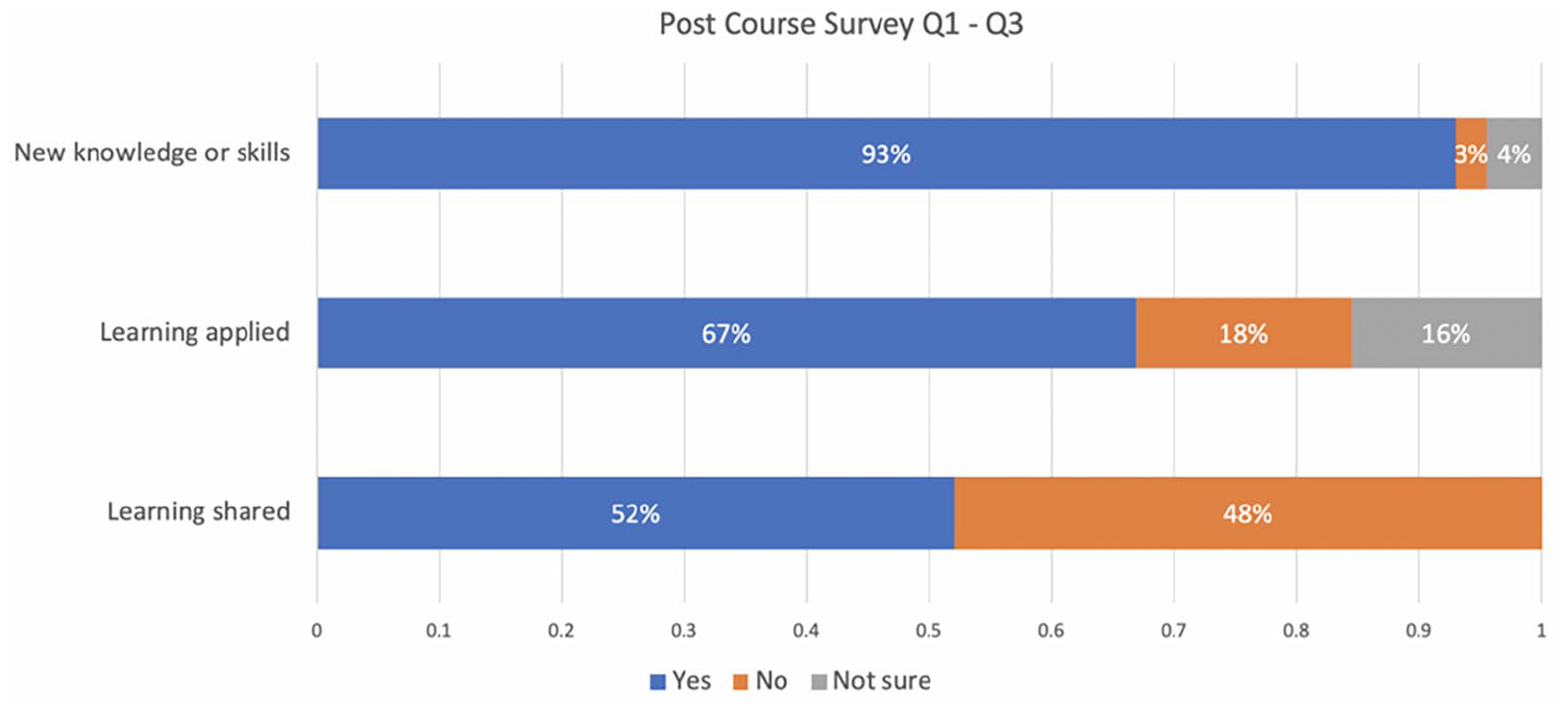
Responses of questions 1 to 3 from post-course survey.
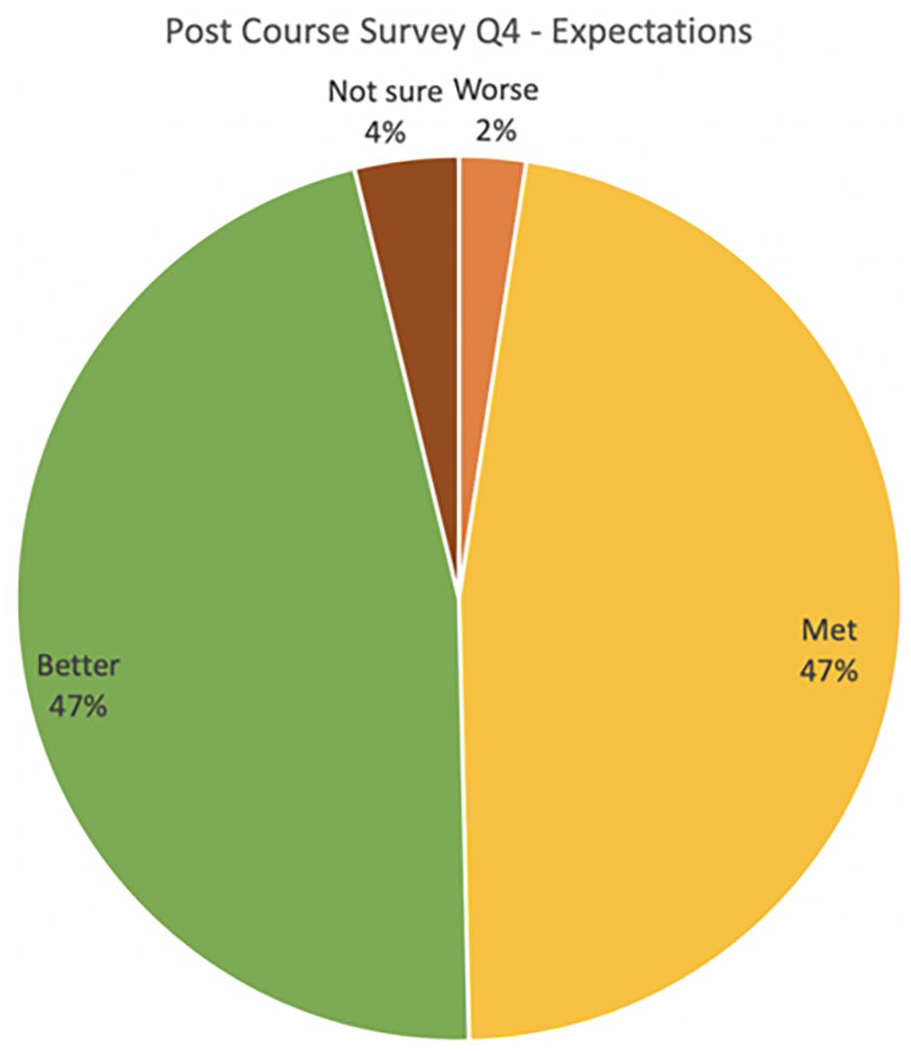
Responses of questions 4 from post-course survey.
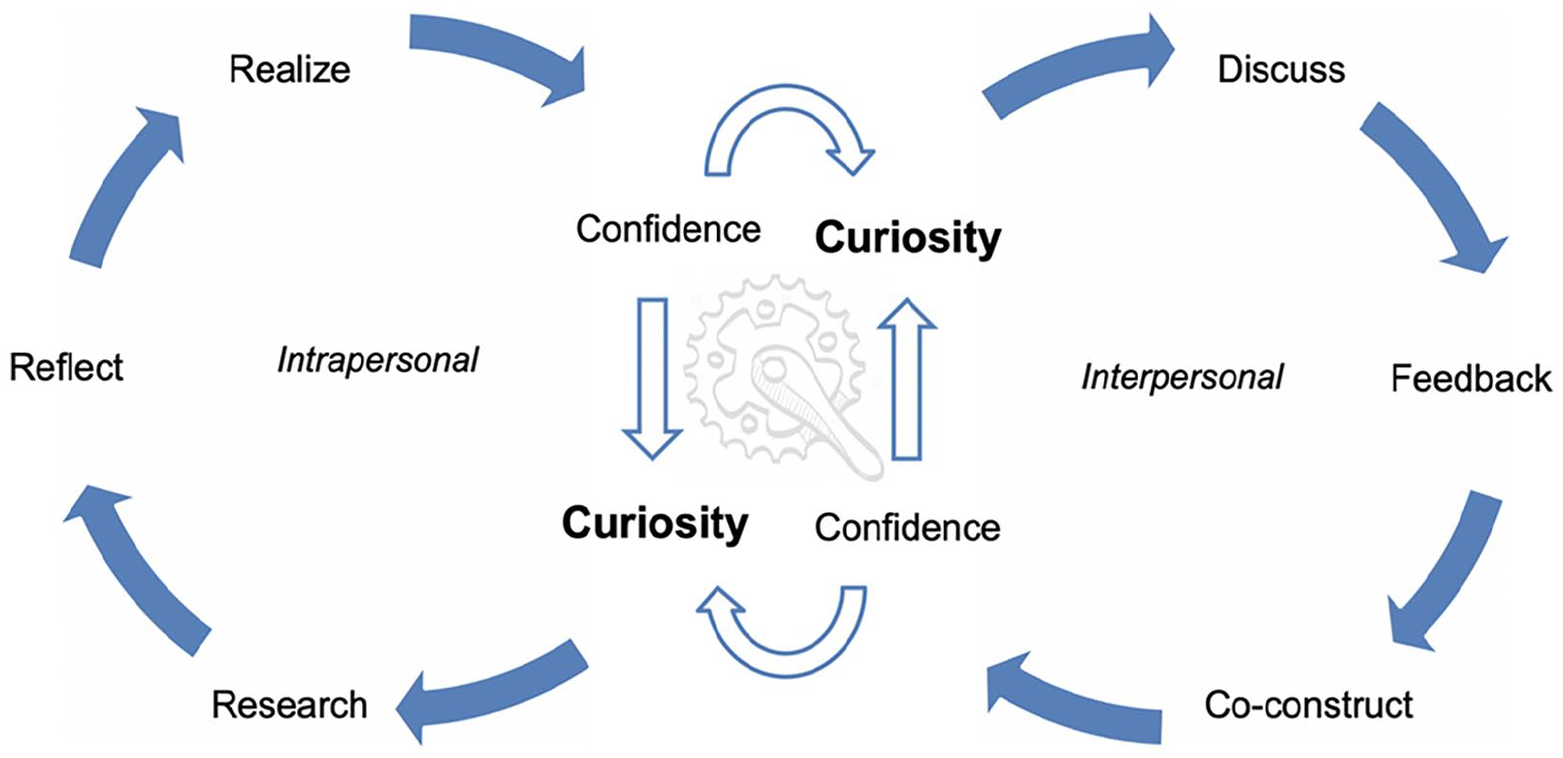
‘Curiosity confidence crank’ to illustrate the CT process.
Corpus 1 and Corpus 2 were then examined in detail to answer our research questions and sub-questions in more depth, focussing on thematic analysis of individual participants’ responses. Research question 1 is answered by analysing Corpus 1, drawn from mid-course activities, to seek evidence of participants development of CT. Research question 2 is addressed by analysing Corpus 2, drawn from course-final evaluations, to examine participant perceptions and any suggestions. Finally, all the findings are integrated to draw out implications and illustrate our proposed Curiosity-Confidence Crank model.
Post-course survey
Based on the post-course survey results, the course seems to have met or did better than 94% of respondents’ expectations; 93% gained new knowledge or skills; 67% applied learning from the course; 52% shared what they learned with other people (Figures 2 and 3). To exemplify these general findings, we then analysed individual comments in both corpora.
Analysing Corpus 1: Overcoming challenges to develop critical thinking
RQ1. Did participants show evidence of developing CT?
RQ1a: Is there evidence of participants developing CT using Bloom’s taxonomy?
As discussed in the literature above, Bloom’s taxonomy is often used to design curriculum and draft learning objectives. We therefore initially screened Corpus 1 for relative frequencies of relevant words, using verb lemmas. As noted in Table 2, there were a few entries, though skewed to the lower end. Therefore, in answer to question 1a, we infer that Bloom’s taxonomy may not be an effective framework to examine participants’ perceptions of any HOT skills they actually develop. Additionally, participants who employed Bloom’s verbs in the comments may possibly have applied them with different semantic context. Therefore, Bloom’s taxonomy is not investigated further in this study.
Relative frequency of Bloom’s verb Lemmas (per 10k).

RQ1b: Is there evidence of participants developing CT using CT model?
The relative frequencies of CT model verb lemmas (Table 3) show evidence of medium-order verb being the most frequently used. Yet, the low frequency overall suggest that although participants were explicitly taught the CT model verbs, they seldom utilized them in the comments.
Relative frequency of CT model verb Lemmas (per 10k).

A post-hoc analysis based on lemma stems (verb, noun, adjective and adverb; Table 4) was searched to confirm the finding for research question 1b. However, the result was not much different from verb lemmas.
Relative frequency of CT model stem word Lemmas (per 10k).

To conclude question 1b, it appears that participants seldom used CT model verbs to express their approaches to overcome challenges in CT. The results cannot be taken to indicate participants’ failure in achieving CT, but it suggests that participants did not employ CT-related verbs as meta-cognitive ways to express learning outcomes, even though the terms were explicitly taught.
RQ1c: Is there evidence of participants developing CT identified in other themes?
Answering question 1c, terms reflecting four themes were constructed after examining ngrams and thematic analysis: (i) CT verbs; (ii) Self-efficacy; (iii) Peer-learning and (iv) Skills and strategies (Table 5). For the purpose of the analysis, 10 key terms are presented under each theme in alphabetical order/ Some key terms appeared across different themes. Two examples of individual participant comments reflecting each theme are then provided below Table 5, with participant ID numbers. All comments are left as originally worded.
(1)
31: To apply the critical thinking model descriptive, analytical and evaluative stage when making questions to any topic. It helps a lot.
123: Critical thinking encourages you to be constructive, by considering the strengths and weaknesses of a claim and differing sides to an argument. It helps you to clarify points, encourages deeper thought and allows you to determine whether information that you come across is accurate and reliable. This helps you to form your own judgement, and drives research forward.
(2)
81: Never give up. Our brain is amazing and it just needs practice. We all are human beings and then we all have the same opportunities to overcome our fears and to achieve our goals.
153: Requires the ability to reflect on one’s own beliefs as well as someone else’s ideas and then see the connections between those things and then to become a self critical of your thoughts and actions.
(3)
131: For my part, I believe that critical thinking is not to be afraid of uncertainties that appear in study and life. It’s advocated to ask questions actively in class and join in social connections, such as clubs, after class.
252: Never shy away, keep building knowledge about the subject which involved critical thinking, ask questions to your tutors and discuss your learning with your co-learners.
(4)
37: I would advise anyone to get into the habit of keeping your notes orderly. There is no point in keeping copious notes if you can’t find them when you need them. Critical thinking is an orderly process and requires order in your note-keeping as well.
249: Practice, practice, practice and keep things simple. Take one course like this one, once finished practice and then take another short course or take out a book on critical thinking. Do all of the exercises. During break times take time out to practice critical thinking and then it will become totally second nature.
Themes emerging from Corpus 1.
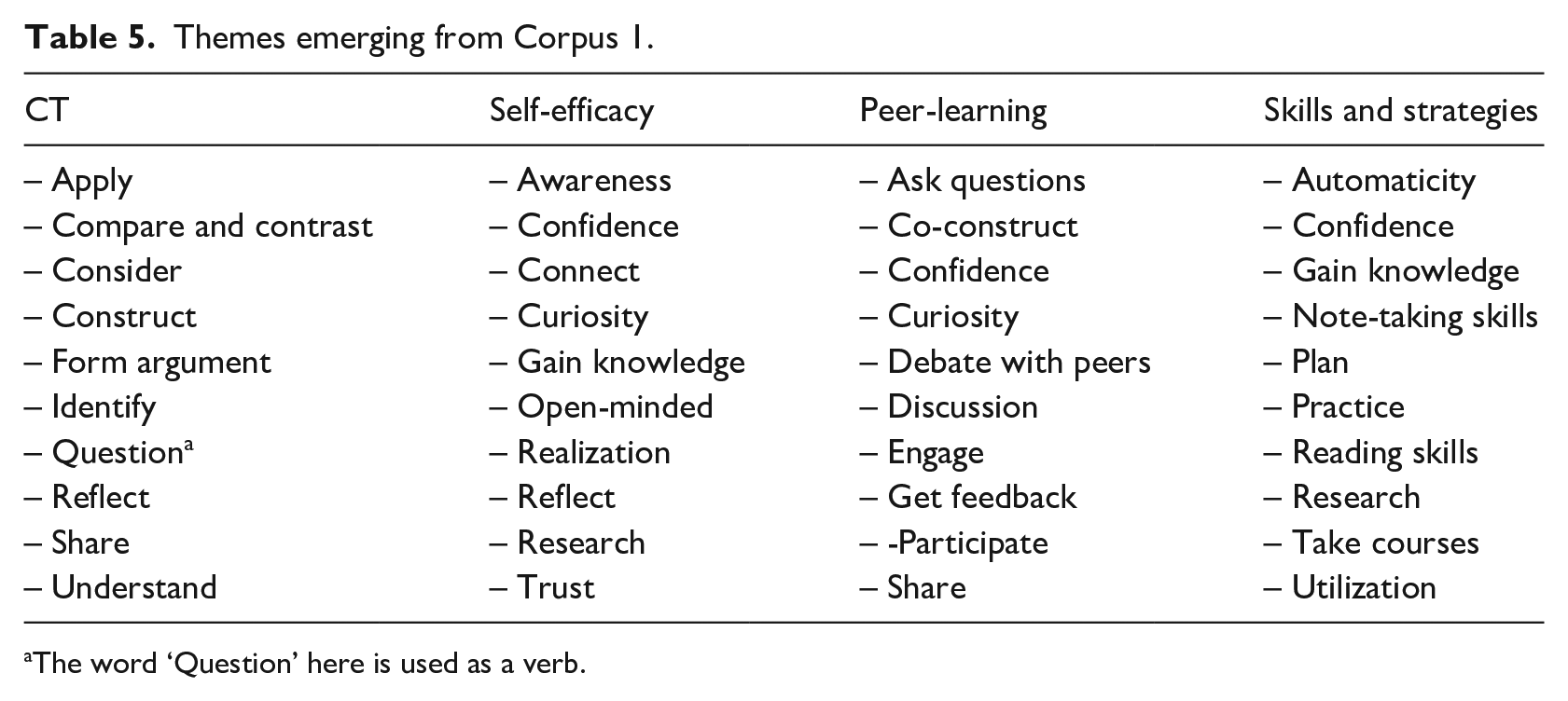
The word ‘Question’ here is used as a verb.
Across the Corpus 1 dataset, it seems that participants did not specifically employ Bloom’s verbs nor CT model verbs, but their comments revealed evidence of CT or HoT development in other ways. Frequently-used key terms reflecting HOT employed by participants other than ‘evaluate’ were: ‘construct’, form argument’ and ‘share’. This suggests participants may be aware of practicing CT (in terms of competence) without reflecting the specific vocabulary taught by the course (in terms of performance – using Mentkowski’s (1991) distinction). Participants also appear to have demonstrated meta-cognitive awareness, through self-efficacy strategies to help their CT development. Participants showed evidence of reflecting on their own beliefs to overcome the challenges in CT development in Corpus 1 through the quality of self-efficacy. Additionally, the comments displayed the value of peer-learning through participating in knowledge co-construction, by actively asking questions and giving feedback in discussion. This supports the assumptions of cMOOC pedagogy, in which students themselves can be content creators by interacting with peers in creating knowledge. Echoing A. Y. Kolb and Kolb (2013), the transaction between individual knowledge and social knowledge fostered the application of various skills and strategies; in turn this proactive attitude boosted the development of CT.
Overall, we found clear evidence of participants developing awareness of CT and practising CT during the MOOC activities. The findings further show that participants advocated awareness and recognition of the importance of transforming from a passive knowledge receiver to an active and confident knowledge builder both individually and collectively. The social learning approach suggested by Vygotsky (1980), built into the cMOOC pedagogic design of this CTAU MOOC, thus seemed to be effective as a context for integrating peer-interaction and self-regulated learning to build CT, even in the short 2-week period of the MOOC.
Corpus 2: Course-final evaluation comments
RQ2: What were participants’ perceptions of CTAU?
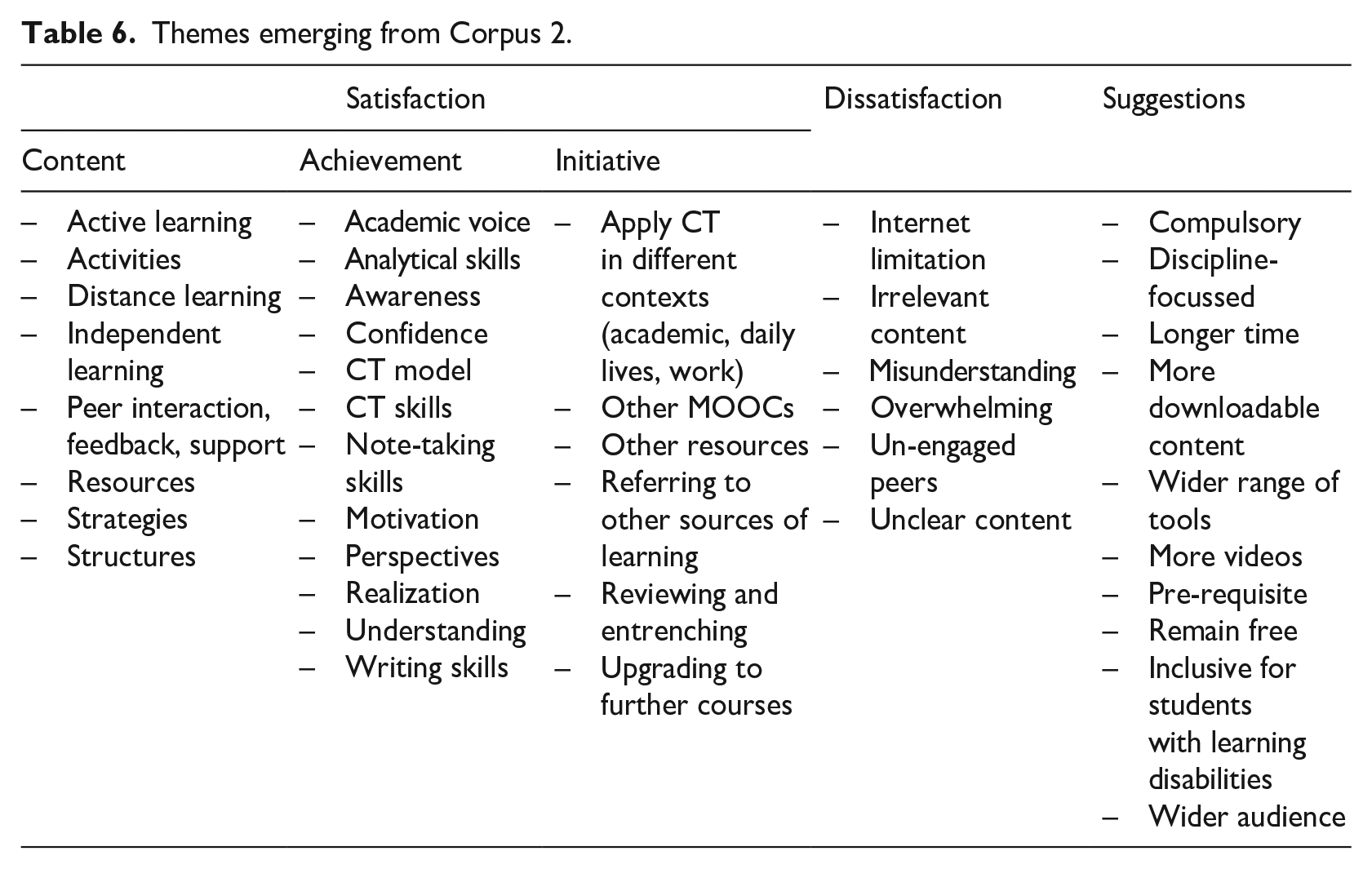
Reviewing course-final evaluation comments, 93% were positive, while 5% denoted dissatisfaction and 2% were suggestions. Several themes with mixed attitudes were generated at the first round of template analysis. After four rounds of data separating and examining, in which the two researchers continually compared data, to reach 100% agreement, three main themes were constructed: a) Satisfaction with three sub-themes, b) Dissatisfaction and c) Suggestions (Table 6). Since these matched our three sub-questions (identifying comments around satisfaction, dissatisfaction, suggestions and other themes), the data will be presented to address RQ2 as a whole. The themes are further illustrated with example comments below.
(i)
40: This course has truly been enriching! The challenging exercises gave us hands-on experience on assessment. John Sanford mentioned that this course is both interesting and demanding. I must add that the demand part made us active learners. Thank you to the University for this chance to experience your high standard of teaching!
86: This has been an invaluable course. Have gained a lot from the lectures, reading the articles and from the peer review and the comments of other learners. Thank you to all involved.
(ii)
93: Thank you very much. I learned a lot from this course. It was fun, very useful and especially improve my analysis skill to be more critical and systematical.
183: This course deeply expanded my view of critical thinking, it provided me with more than just a definition and examples. But also new techniques and ways to critically think, and new disciplines to critically think in.
(iii)
16: Really interesting and helpful course, can’t wait to put my new critical thinking skills to use within my current studies as well as in the wider world. thank you for creating such a fantastic course!
58: I will be looking back on this course to remind myself what and how to write my assignments, in case I get stuck. I would definitely recommend this course to any university, either undergraduate or postgraduate; the amount of help and insight I have gained from this is unbelievable.
(b)
122: I have found it disappointing that people aren’t engaging in much discussion. Perhaps it is difficult to make this kind of material something to discuss, but it seems quite a few people are just posting and moving on through the course without going back to see other people’s comments or even respond to comments to their posts.
152: Very good and generally easy to follow. The only part that I found awkward and didn’t complete was the referencing exercise. It wasn’t clear enough for me what was expected and not having done this before frustrated me that I didn’t complete it. Overall, enjoyable and liked the interaction of reading comments and seeing other knowledge hungry individuals. Keep it up everyone. . .good luck with your studies or whatever you use this for.
294: Due to 2G internet service in [xx place], I couldn’t listen all video lectures.
(c)
48: Thank you for a great and useful time. Please consider leaving this course open indefinitely without charge. We truly appreciate the potential that it is ever-evolving and look forward to having access to it as it blooms :)
67: I enjoy this course very much, I do believe it should have been 3 weeks with the middle week dedicated to a lot more practice, other than that i have no issues. Thank you future learn of course I will be back.
105: You have done a smashing job in 2 weeks time. It is a useful course and should probably be mandatory in schools, colleges and universities around the world.
266: The content is very good, comprehensive. The time is also very normal. But there should be more videos so that message can be cleared very quickly rather reading articles
308: I like the way you introduce your activities. It sets the tone, even if it’s not directly focussed on your discipline. . .please modify. Thanks
366: Very useful! It would be nice to get more examples of tools like the critical thinking model you gave us at the start!
Themes emerging from Corpus 2.
Evaluation and implications
This study investigated a short 2-week MOOC based on constructivist pedagogy to introduce participants to the basic principles of Critical Thinking (CT) linked to Higher Order Thinking skills (HOT) such as Analysis and Evaluation, as expected in a typical UK university. Aimed at those new to study in this kind of university setting, in fact the participants revealed a wide mix of levels of educational experience, and a readiness to engage with the process of developing CT. Comments gathered during the course tasks which we had access to showed clear evidence of developing cognitive and metacognitive awareness of HOT, as well as evidence of proactive self-regulation, active learning and peer collaboration, which we argue underpin successful CT (Ghanizadeh, 2017; Hew, 2016; D. A. Kolb, 1984). Some dissatisfied comments were related to unclear content and un-engaged peers, along with some individual cases of misunderstanding and limitations around internet access, which were not in the course designers’ control. Desire for longer and more discipline-specific courses were of notable interest, particularly recalling that not all participants were the target audience. This suggests a gap in delivery of more extensive CT training, targeting audiences in different disciplines, which may be worth pursuing, provided that clear pedagogic principles underlie the design.
Several limitations surfaced during the study. First of all, the quizzes and interactive exercises were hosted on a third-party service, making some parts of the course data inaccessible to us. Therefore, the evaluation of student perceptions and learning outcomes were based on elements from certain key steps. Future research may look into other steps of the course to investigate comments and activities which may shed light on other stages of CT awareness development. Similarly, to get a fuller picture of peer-interactions, patterns of likes and replies to comments could be analysed and interpreted in future research. Secondly, any individual participant’’s references to benefits or dissatisfactions could not be extensively examined due to the data-driven corpus approach. A more qualitative participant-based approach focussing on individual case studies, for example using independent measures of CT alongside experiential comments gathered independently of the MOOC platform, could provide more in-depth and focussed insights in future. Finally, it was impossible to track completers throughout the duration of the course; however, we believe it is reasonable to draw the generalization that the completers represented the population of joiners based on the analysis of the biodata, and that the completers’ comments therefore represent the participant cohort in general terms.
Despite these limitations, we argue that some clear themes can be observed from our data. First, intra-personal ‘confidence’ could be identified as one of the most prominent terms for overcoming challenges to CT found in Corpus 1 (mentioned in self-efficacy, peer-learning and skills & strategies; and in the achievement theme in Corpus 2). Secondly, an intra-personal combination of active learning, self-efficacy and peer-learning is valued – which we term as academic ‘curiosity’. We argue that confidence and curiosity can be linked in a progressive cycle, starting not with ‘knowing about content’, but in fact bolstered by participants’ own active engagement, taking ‘curiosity’ as the trigger that fosters confidence in mastering the challenges of CT. Given challenges facing HE pedagogies in the era of generative AI, we believe it’s timely to find effective tools that foster individual students’ capacity to develop responsibility and integrity in their studies.
Derived from previous research and our study findings, we thus propose here a novel recursive three-cycle model (two main cycles and one inner cycle) to describe the moves through the CT process – the Curiosity-Confidence Crank. As illustrated in Figure 4, we suggest that curiosity and confidence act as together as the crank that keeps the intrapersonal and interpersonal wheels spinning. Curiosity triggers the process and arrives at an increased confidence level. The increased confidence level then feeds into curiosity and keeps the CT vehicle moving forward. The CT process ultimately requires less effort after consistent practices which result in automaticity. The Crank thus represents our interpretation of successful student engagement in the MOOC content and process – summed up by one participant, noted in Corpus 1:
218: My main advice is very simple: practice, practice, practice. Find what helps you most and what you are most comfortable with doing; whether it is participating in study groups, challenging yourself to ask at least one question in a lecture or participate in debates, the most important thing is to keep working on yourself. You do not get confident to engage critically overnight, it is hard work, and it will acquire some time. However, once you have automatized this skill, it will become like a part of your own personality. There will be little to no effort needed to think critically about something you have read or heard, it will simply happen naturally.
Conclusion
This study is the first, to our knowledge to analyse the potential for Critical Thinking (CT) development during a short-course MOOC, evaluating a specific MOOC offered in a UK setting – ‘Critical Thinking At University - an Introduction’ (CTAU). The course was aimed at students unfamiliar with university expectations of CT, to introduce some basic notions around higher order thinking and meta-cognitive awareness of CT. By analyzing two corpora of participants’ comments extracted from the MOOC platform during- and post-course, findings suggest that even within the 2 weeks of the CTAU course, participants had mastered some CT skills, and built some meta-cognitive awareness of how to develop CT in the future. The majority of comments (93%) indicated satisfaction with the course, suggesting the value of the CTAU course’s constructivist pedagogical approach. However, students’ sense of how to develop CT were not seen as purely linear from ‘less to more’ knowledge - the Curiosity-Confidence Crank model is proposed here to demonstrate the cyclical interaction between participants’ ability to engage and to learn CT. The model stresses the significance of learner curiosity and confidence level acting together as the engine to achieve active autonomous learning and foster CT development individually and collectively. Participants also voiced the demand for longer and more discipline-specific training in CT, which provides an opportunity for future pedagogic design by universities and MOOC-based educators. In view of the recent exponential rise in availability of Generative AI, we encourage educators to use the affordances of online learning to develop suitable training courses such as MOOCs to support CT learning, and suggest the Curiosity-Confidence Crank can be a useful framework to illustrate the importance of developing CT and HOT skills in an AI-ubiquitous world.
Supplemental Material
sj-docx-1-alh-10.1177_14697874251329335 – Supplemental material for Applying the curiosity-confidence crank: Building critical thinking in higher education through a massive open online course
Supplemental material, sj-docx-1-alh-10.1177_14697874251329335 for Applying the curiosity-confidence crank: Building critical thinking in higher education through a massive open online course by Jiayu Chao and Clare Wright in Active Learning in Higher Education
Supplemental Material
sj-docx-2-alh-10.1177_14697874251329335 – Supplemental material for Applying the curiosity-confidence crank: Building critical thinking in higher education through a massive open online course
Supplemental material, sj-docx-2-alh-10.1177_14697874251329335 for Applying the curiosity-confidence crank: Building critical thinking in higher education through a massive open online course by Jiayu Chao and Clare Wright in Active Learning in Higher Education
Supplemental Material
sj-docx-3-alh-10.1177_14697874251329335 – Supplemental material for Applying the curiosity-confidence crank: Building critical thinking in higher education through a massive open online course
Supplemental material, sj-docx-3-alh-10.1177_14697874251329335 for Applying the curiosity-confidence crank: Building critical thinking in higher education through a massive open online course by Jiayu Chao and Clare Wright in Active Learning in Higher Education
Footnotes
Data availability statement
Anonymized datasets will be uploaded to the OSF to comply with ethical open science principles
Declaration of conflicting interests
The author(s) declared no potential conflicts of interest with respect to the research, authorship, and/or publication of this article.
Funding
The author(s) received no financial support for the research, authorship, and/or publication of this article.
Ethics statement
This submitted manuscript is an original work, has not been published before, or posted electronically and is not being considered for publication anywhere either in printed or electronic form. Data collection and management conformed to the researchers’ university ethical procedures, and to those set by FutureLearn, to ensure anonymity, confidentiality and security. All data is owned by the FutureLearn MOOC designer team in conjunction with the FutureLearn central administration team. Data are available as CSV spreadsheet files on request from FutureLearn for research purposes such as this study.

Supplemental material
Supplemental material for this article is available online.
Author biographies
References
Supplementary Material
Please find the following supplemental material available below.
For Open Access articles published under a Creative Commons License, all supplemental material carries the same license as the article it is associated with.
For non-Open Access articles published, all supplemental material carries a non-exclusive license, and permission requests for re-use of supplemental material or any part of supplemental material shall be sent directly to the copyright owner as specified in the copyright notice associated with the article.
