



Abstract
To create a socially just teaching method in higher education (HE), we used Fraser’s social justice framework to create a new pedagogical method called student voice for social justice (SVSJ). SVSJ emphasizes student voice and empowerment by developing a co-constructed learning space where students can influence the procedure and content of the class. Applying a participatory action research (PAR) methodology, we explore the skill development of students engaged in SVSJ. Students highlighted five primary learning outcomes (self-learning, critical thinking, knowledge generation, cognitive development, and expression of voice) in the interviews as well as challenges in implementing the model. By employing SVSJ, students’ recognition and representation of their identity groups are enhanced, and the knowledge held by them is redistributed to peers and the lecturer through active participation. In addition, they are equipped with skills that can empower them in their education and future life.
Introduction
Scholars have argued that traditional education has failed to prepare students for high-level skills that will be needed for work in the 21st century and lifelong learning. Employers reported that 58% of high school graduates lack self-direction, 70% lack problem-solving skills, and 73% lack leadership abilities (Mok and Qian, 2018). Moreover, COVID-19 disrupted education systems and changed the world of work by emphasizing soft skills. For online learning, “[m]any students at home/living space have undergone psychological and emotional distress and have been unable to engage productively” (Pokhrel and Chhetri, 2021: 135). Many students were not able to participate in online learning effectively which has negatively influenced their learning and preparation for future work.
This project aimed to explore how/to what extent Nancy Fraser’s social justice model could be implemented in higher education (HE) classrooms. The result was the development of the student voice for social justice (SVSJ) pedagogical method. SVSJ was developed based on the social justice model of Nancy Fraser (Fraser, 2007, 2008a, 2008b, 2013) that includes dimensions of (re)distribution, recognition, and representation. SVSJ is based on placing student voice at the center of the pedagogical method (Briffett-Aktaş et al., 2023) to create a socially just educational experience in HE across disciplines. Using participatory action research (PAR), students engaged in co-creating and co-investigating topics to develop individualized course content. Working in small groups, students examined the course learning outcomes and sought to add to the topics being covered by the lecturer that represented their identity groups, thus creating space within the classroom for student recognition and representation. After working to create a learning facilitation activity based on the chosen topics, the students’ knowledge was then redistributed to their peers and the lecturer.
Although the examination of soft skills was not included in the original research aims, through semi-structured interviews with a sample of students from each class, it became evident that soft skill development had occurred as a by-product of SVSJ implementation. In this case, SVSJ resulted in achieving important learning outcomes for students in the areas of self-learning, critical thinking, knowledge generation, cognitive development, and expression of voice. Conducted in an online learning environment due to COVID-19 restrictions, SVSJ also addressed some of the challenges and concerns highlighted by the students around inequality in HE contexts and difficulties with online learning. Although these issues would likely not be present in a traditional face-to-face classroom, it is important to demonstrate how versatile SVSJ is, in terms of how it can be implemented in different teaching modes across a variety of disciplines and the role it may play in addressing some of the scholarly concerns outlined above.
Conceptual framework
Fraser’s framework of (re)distribution, recognition, and representation was applied to an educational setting to create a socially just pedagogical method (SVSJ). In this case, what Fraser refers to as (re)distribution, in economic terms, can be modified to knowledge (re)distribution in the classroom. Cultural recognition remains primarily the same. All students (or “members of society” in Fraser’s terms) are recognized as being valuable knowledge holders who can and should contribute to the exchange of knowledge in the classroom context. Finally, students should be able to choose the identity groups they want to represent within the classroom. Their voice, therefore, is an important aspect of how students represent themselves and the cultural, linguistic, and socioeconomic groups, etc. that they belong to and choose to represent. When the three dimensions combine, this is what Fraser refers to as “the principle of parity of participation [whereby] justice requires social arrangements that permit all (adult) members of society to interact with one another as peers” (Fraser, 2013: 164) (see Briffett-Aktaş, 2021; Briffett-Aktaş et al., 2023).
During SVSJ implementation, students came to recognize their positions in the power dynamics of the classroom and worked toward creating a more equitable power structure in collaboration with the lecturer. Traditionally, educators serve as gatekeepers and hold “knowledge monopolies,” as specialists in a particular subject. They have the authority to assess students’ work and provide feedback for the improvement of student learning. With the implementation of SVSJ, the functions and roles of educators and students are placed on a more even platform, giving students the power to influence their courses’ content via active participation within the perimeters of the course as set out by the higher educational institution (HEI). This framework places the power in the hands of the lecturer and their students and, as a by-product of SVSJ, provides students with opportunities to enhance their intellectual and social development through self-regulated and shared learning.
Self-regulated learning as a key element of SVSJ is defined as students co-constructing the meaning of learning independently (Wang et al., 2013) while being involved in the learning processes by choosing topics, designing learning materials, and facilitating a lesson. Self-learning refers to individual students who, by their own initiative, undertake inquiry (Mou, 2021). During this period of inquiry, what students choose and choose not to include in their topics to be taught requires critical thinking skills to be employed. While possessing a healthy skepticism, students need to analyze and evaluate course content topics, provide suggestions, and/or challenge inequalities and/or inequities that they identify within the course. Critical thinking skills are referred to as being “. . .reasonable and reflective thinking that is focused upon deciding what to believe and do” (Norris and Ennis, 1989: 3), and as having “multiple perspectives” (Fairbrother, 2008) including a “healthy skepticism” (Lipman, 2012). Such thinking challenges the policies or ideas that are traditionally considered politically correct but may still negatively impact people (Ylimaki, 2011) and evaluates the outcomes of one’s thinking processes critically (Halpern, 2002).
By encouraging students to participate in this type of knowledge examination, cognitive development also occurs. Cognitive development is defined as students learning about themselves and the world around them. It emphasizes how students think as well as the development of knowledge, skills, and depositions. According to sociocultural theory, one’s surrounding environment and social interactions play a critical role in cognitive development (Vygotsky, 1978). Cognitive structures that are developed help students make sense of the world and understand the complexity therein (Tennant, 2006). In this case, students developed their cognitive abilities through interacting with the course content, peers, and the lecturer while working in their small groups and teaching the lesson. As a result, student voice was an important aspect of the pedagogy and enhanced the cognitive development that occurred.
Student voice is understood as the ability of students to express themselves while participating meaningfully in their education and creating spaces for students “to take a more active role in shaping or changing their education” (Seale, 2010: 995). “Participation is strongly signaled by student voice” (Burke and Crozier, 2013: 35), most commonly through verbal communication, although this may not always be so. By promoting student voice, students may participate in creating content for their courses, as well as creating respectful dialog and work environments within their small groups and later within the whole class as the teaching activities commence. Through the process of engaging in discussion and exchanging ideas, students enhance their critical thinking skills through exposure to other ways of thinking and knowing. The knowledge that is created and/or shared in this context relies on communication between stakeholders. All of the above processes result in cognitive development through the student voice environment nurtured in the classroom.
Even though SVSJ emphasizes student voice and active engagement, online learning in general poses challenges for students. Studies indicate that some students find online learning difficult to manage and the dropout rates of online learners increased due to a lack of concentration (Kim et al., 2017; Malkawi and Khayrullina, 2021). Kember (2016) suggests that motivation between different levels of education is linked. “The motivations, conditioning and contextual factors which inspired them at school are also likely to apply at university” (p. 124). The school, home, and social cultures during childhood and adolescence work in tandem to affect students’ concentration and motivation. These factors then carry over into students’ university studies. In this study, SVSJ implementation assisted students in overcoming common challenges with online learning while developing and nurturing desirable 21st-century skills (self-learning, critical thinking, knowledge generation, cognitive development, and expression of voice).
Methodology
A PAR methodology was employed (Giannakaki et al., 2018) to promote students’ participation in the research with an emphasis on improvement and evaluation of practice (Cohen et al., 2011: 345–6) via action and reflection stages. In this project, observation and reflection occurred in two ways. First, the lecturers observed the group work of their students, and each lecturer observed the other’s teaching facilitation classes. Secondly, the participants observed their group members during the small group work and later observed their classmates during the teaching facilitation. It was through these observations on the action (pedagogical implementation) that reflection occurred. A combination of focus groups and individual semi-structured interviews was employed in this study to gain an understanding of participants’ reflections on their experiences (Rabionet, 2014). The participants for this project comprised the students of the researchers and the project commenced in the 2020–2021 academic year. Ethics approval from the university was obtained prior to the semester beginning in September 2020 (ethical review ref. No.: 2019-2020-0347).
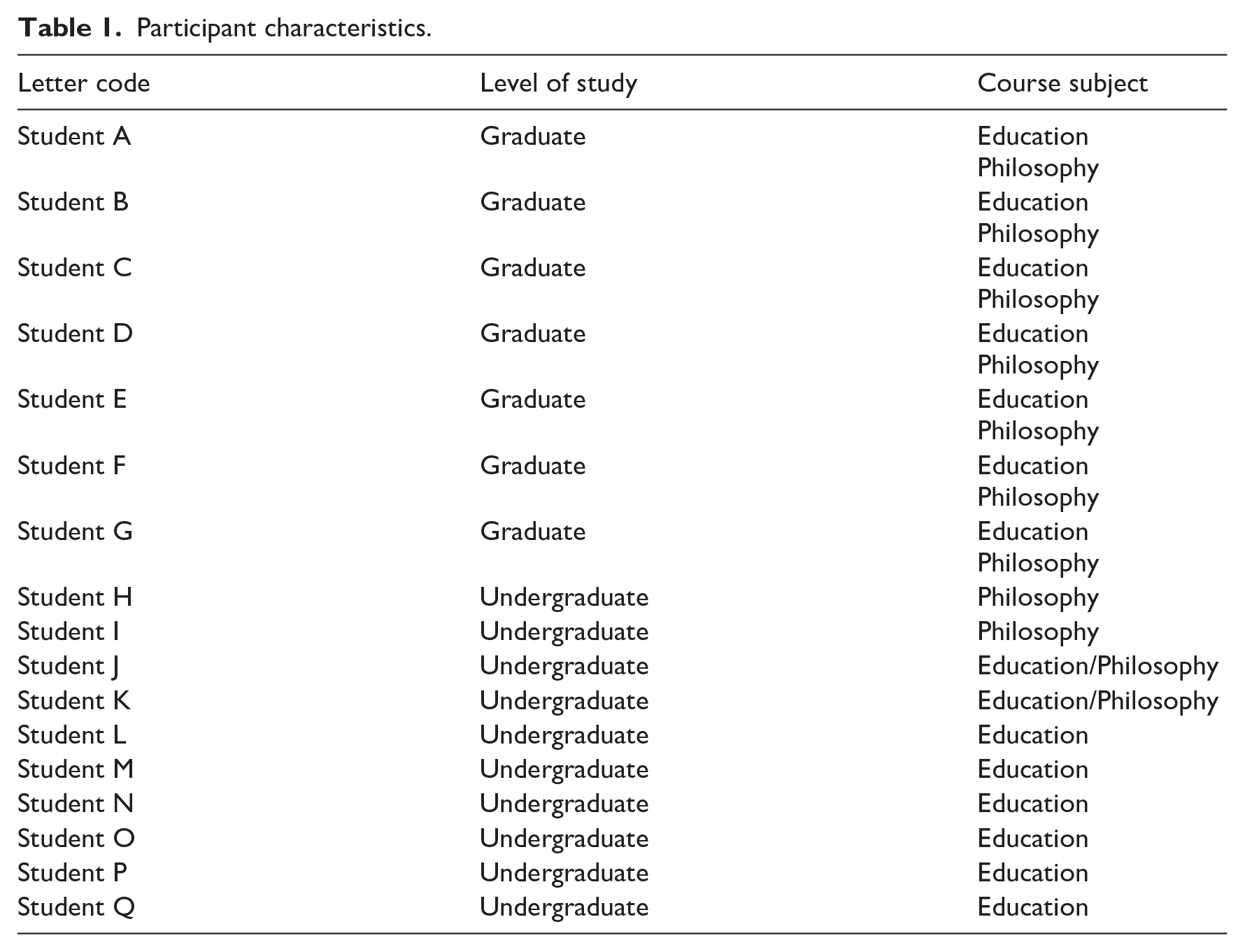
A total of six education and philosophy courses (187 participants) were involved in the project, including undergraduate and graduate-level courses. These courses did not include social justice topics within the purview of the course content, but social justice was used as a foundation for creating the teaching method and the classroom design procedures. Each class was given a brief introduction to the project in the first class of each semester. The planning and teaching sessions should not be included in the course assessment. If the lecturer wishes to include this activity in the participation grade, alternative ways to achieve these grades elsewhere in the course should be provided to students. Students must be free to refrain from participating if they wish without fear of academic consequences. Those who were willing to participate formed small groups and began to examine the outcomes of their course. The small groups then discussed what topic they felt was important to be included and began to plan their teaching activity around that topic. Between two and three classes were left free mid-semester for the teaching/learning facilitation to occur. At the end of the semester, students were asked if they would be willing to participate in an interview or join a focus group. Two to three participants were interviewed from each class (see Table 1). The graduate students completed the method twice in different classes. The undergraduate participants completed the method once in the classes outlined below. In total, there were 13 interviews and two focus groups with two students in each group, for a total of 17 participants being interviewed. To ensure multiple perspectives were included, questions were posed, such as ‘Can you explain the process of deciding your chosen topic and how the planning occurred?’, ‘What were some difficulties you experienced?’, and “How can the method be improved?” Participants were informed about ethical protocol and their participation was voluntary. They could withdraw or stop the interviews/focus groups without penalty. The interviews and focus groups proceeded via Zoom after obtaining informed consent for audio recording.
Participant characteristics.
Grounded theory was employed to construct complex theories through coding, sampling, memoing, and sorting the interview and focus group data to establish a constant comparison between data sets. (Charmaz, 2014; Chenail, 2011). The interview transcripts were uploaded to NVivo and initial coding was conducted for each transcript. To triangulate the data, the research team met regularly after the initial coding was completed and conducted focused coding to “sift, sort, synthesize, and analyze” (Charmaz, 2014: 138) each coded transcript. After all transcripts were coded, the team had several meetings to consider all transcripts as a whole data unit. During these meetings, memos were written to connect codes across and between transcripts of different participants. This process occurred between individual interviews, focus groups, and courses until the data were saturated, and elements of social justice theory, identified by the participants, were validated through comparisons with other interviews and focus groups. During the second semester, the same process was followed, however, the data set from semester one was also considered after the initial coding had been completed from semester two. In the meetings held during this period, memos were written to connect codes across and between transcripts of participants across semesters. Throughout this process, soft skills development and challenges became evident from the data analysis.
Findings
Learning outcomes of SVSJ
Five primary learning outcomes (self-learning, critical thinking, knowledge generation, cognitive development, and expression of voice) were highlighted by the participants as additional skills acquired from SVSJ implementation (see Figure 1). Through the development of these additional outcomes, SVSJ may have more significant implications for socially just education in HE than was initially expected by the researchers.
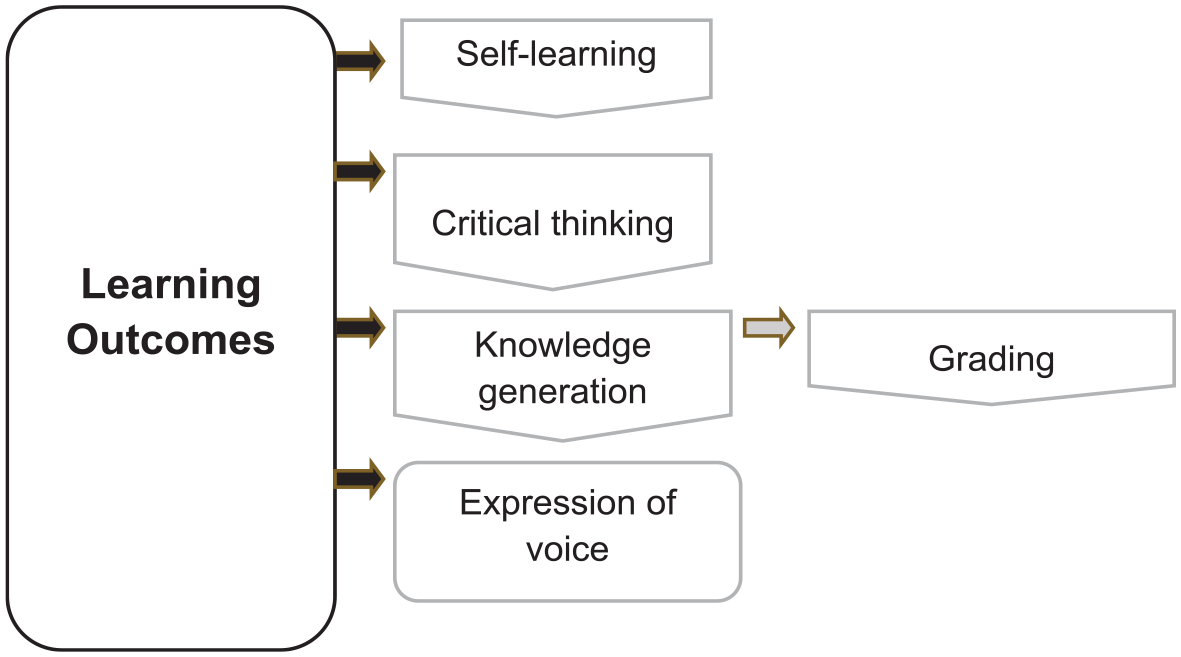
Learning outcomes of SVSJ.
Self-learning
Self-learning was of paramount importance because it was not only the students who were responsible for choosing topics and areas of inquiry in the course content but how the teaching occurred was also at their discretion. In this way, SVSJ was found to foster self-learning and the sharing of that knowledge with peers.
The lecturer showed us how to learn from ourselves. . .I think that’s one thing that good teachers are able to provide for their students. I teach you but that doesn’t mean that I have to teach you all the time, you have to teach yourself as well. (Student K)
When students were taking out time to learn on their own, it brought out the good in the class. It’s a better method of learning because students are using skills to learn on a daily basis. This method should not just only be used in such courses, but I think in the majority of courses. (Student B)
Student K believes that the lecturer taught students how to learn independently and effectively. To be effective in self-learning, however, as Student B posits, it must be complemented with daily practice. Through the practice of self-learning, students can come to master the skill and potentially apply it to other areas of their lives and learning.
Critical thinking
Participants highlighted that SVSJ allows them to practice what they have learned in their studies and to develop critical thinking skills. Reflection and critical thinking help students understand meaning beyond texts and people’s opinions. The participants in this study emphasized how learning to think critically would be beneficial to their education, daily lives, and future careers.
During the presentation and discussion time, it helped me to criticize what I learned before. What I heard during the presentations helped me to make an internal link of my knowledge. . .We had discussions and it’s a time for us to train our critical thinking ability. This training can enhance our ability and critical thinking which will benefit us. (Student A)
We have a chance to talk with students from different cultural contexts. We always have different opinions, especially when we talk about a topic and the students from different cultural contexts express different perspectives. It is a good way for me to express myself and practice my critical thinking. (Student G)
All students viewed being exposed to different perspectives as a positive experience which helped them develop skills that could be applied outside of the classroom. In this way, SVSJ can foster active participation and critical thinking through the expressions of multiple voices. Through SVSJ, students felt that they were able to put this skill into practice, increasing their development of critical thinking skills and generating new knowledge for the lecturers and peers alike.
Knowledge generation
Students were able to broaden their thinking and understanding of the world and educational issues through their interactions with peers and lecturers. SVSJ emphasizes student voice and self-regulated learning, which facilitates knowledge generation among students and lecturers. Several students gave positive feedback regarding the knowledge generation that occurred in group interactions while preparing for lesson facilitation. Students were not only receivers but also providers and generators of knowledge to their group members and the class as a whole later in the teaching activity. The knowledge generated assisted student learning and helped deepen understanding. Internalizing the knowledge produced helps the information become more meaningful.
I’ve learned some ethics theory or philosophy before. I meant to make these kinds of theories or information become my knowledge. But doing some criticism of it, which helped me to make this kind of knowledge belong to me. . .Like making some internal link of my knowledge that makes my knowledge more whole. (Student A)
Learning is [like] a community rather than like a one-way activity. Community learning is. . . students can learn from students, and teachers can learn from the students. (Student C)
The interview data demonstrate how facilitating lessons helped students own and construct knowledge as a community activity. By doing so, students linked their prior knowledge with new knowledge to have a more comprehensive understanding of topics. Student C highlighted the knowledge generated between groups of students and the lecturer, in which different participants come together and group knowledge acted as a platform for learning.
We provide knowledge to each other. Peers also learn from us, but we can also learn from them because there are a lot of interactions going on. With our classmates, we’re having this knowledge exchange. (Student J)
The student-led activity allows all stakeholders to interact, generating new knowledge for all parties to benefit from within course purviews. It seems that knowledge generation is strongly connected with the participation level and interaction between the students and the lecturer. Promoting self-learning, critical thinking, and knowledge-generation skills in students through active participation may also increase students’ cognitive development beyond the course material or topic.
Cognitive development
The cognitive development of students emphasized how students think as well as the development of knowledge and skills gained through the implementation of SVSJ.
When it was the students’ turn to share different topics, we could think from those different perspectives that the lecturers talked about (different theories) and incorporate them into the topic that another group was discussing. . . it felt like whatever I’d been learning in the previous few weeks is coming into play now. I can think from different perspectives. (Student C)
Creating a course that is open, free, and dynamic for the exchange of ideas, beliefs, and perspectives can positively impact students’ development in multiple domains. Without having any limitations, students are free to expand their learning outcomes beyond the outcomes of any particular course and create new knowledge that may otherwise be omitted in course content. The process of self-learning (individually and in small groups) allows students to develop and practice critical thinking skills while generating new knowledge, thus increasing their cognitive abilities. Likewise, having students teach their peers and the lecturer gives them valuable practice in expressing their voices, in terms of what they share and how they go about sharing it.
Expression of voice
Students were able to recognize and appreciate that online learning may help to maintain connections between students/lecturers and may promote a more comfortable environment for the expression of student voice. Using technology also allows students to stay connected without geographical restrictions and can maximize communication between students.
So I think that in the pedagogy. . . voice is very important because, not just in class, even after the class finishes when you are working on those activities with your groupmates. You’re sharing a lot of opinions (Student B).
Online learning enhances my voice because I feel [it is] easier and more relaxed to express my opinions in online learning. (Student G)
Participant B outlines nicely the extent to which voice plays a pivotal role in SVSJ. Student G also makes a pertinent point that maintaining multiple means of expression of voice should still be available to students once back on the physical campus.
Challenges in SVSJ implementation
The important skills that were developed by employing SVSJ are substantial and important for students’ future lives. There were also some challenges identified that we have broken down into course-specific challenges, (online learning, language differences between students, and how this impacted inclusion in group work) and general online learning challenges (concentration and motivation).
Challenges of online group work and tracking peer learning online
Working in online groups and teaching peers online proved difficult for some students. Working collaboratively and engaging in collaborative work means that everyone must take responsibility within the group. Student J highlights the difficulty when members of the group did not complete their portion of the work promptly.
Sometimes we do get upset because they (peers) always leave it to the last minute. But when it’s face-to-face . . .we sit down and work on it together. (Student J)
Student J identifies inequality in the contributions being made by group members and suggests that issues of group contributions may not be as prominent in a face-to-face setting.
If students choose not to turn their cameras on during class or when working in their groups, the lack of facial cues seen in online environments may be an inhibiting factor in building bonds with classmates. Once the students finished their lesson planning and began to participate in the teaching and learning facilitation, the online platform of the classes brought to light issues of tracking peer learning online.
We were excited about teaching the lesson to our classmates and the great thing was, we know some of them got that excitement as well, and they were able to respond, but some of them did not respond. We do not know if they were able to understand our lesson. That’s one very big issue. (Student K)
I have no clue whether our peers understand the topics or not. In a traditional classroom, I could at least see their faces. If they act confused, I would elaborate or explain. (Student Q)
Since the courses were carried out online, it was difficult for peers to ensure students’ learning progress.
Language differences: learning, participation, and inclusion
In diverse classroom settings, language differences may present challenges whether online or face-to-face. Since the participants in this study come from diverse backgrounds, they had different first languages with different language abilities in English, Cantonese, and Mandarin. Language differences can strengthen or diminish cultural recognition. All courses taught for the project were English Medium of Instruction (EMI), however, the English language levels of students varied. The language differences became obvious during group discussions. During the small group work in class, students were able to speak in their preferred language, but not to the exclusion of others in the group, and any whole class discussion was conducted in English. Because of the linguistic diversity, issues related to student voice, learning, and participation did arise.
The language ability of students may affect their learning and participation in class and during group work. Groupmates who had a higher language ability sought to include their peers through translation.
While the other students were talking in English, I noticed the girl who is from Mainland China, she would just sit there and listen to us. I felt bad because I did not want anybody to be left out of the discussion. I tried my best to explain or translate what we were saying. It takes a lot of initiation and patience, but at last, we worked it out. (Student B)
Student B “noticed” the behavior of another student and took the necessary steps to provide an inclusive environment.
The politicization of language may also be an issue in some contexts. During this study, this was the case in some situations. For other groups, members’ linguistic abilities were prioritized over the political implications of using a particular language.
The guy speaks Putonghua (Mandarin Chinese). I don’t like that. In general, the first impression I get if he or she is speaking Putonghua, I do not think he is a good man or she is a good woman at all. Maybe this kind of feeling makes me not very fond of talking in Putonghua. But if it is important I have to use it. I will use it. (Student A)
Viewing prejudice against Mandarin-speaking people reflects socio-political issues rather than language issues. These attitudes could hinder student voice and inhibit the creation of a socially just educational experience. Using the common language among group members ensured all students understood the activity and were able to participate and share ideas. Student E stated, “Mostly we use Chinese in our group discussion, but when we talk to you, we have to use English,” while Student I stated “I know most of us are born in Hong Kong. We use Cantonese to communicate. But if there’s a student from the mainland, we use Mandarin.” Students changed the language they spoke according to the group dynamics, however, as Student I explained, language choice may depend on the identities of the group members.
Even when language differences occur between members of a group, it is possible to ensure participation by creating inclusive environments. Although this did occur for the majority of the time, there was one case where inclusive practices did not occur. Student H, a non-Chinese speaker, did not participate in any meaningful way in their group because of the language differences. Their group consisted of Chinese speakers and because they did not speak English in the group planning, exclusion did occur.
In the beginning, when we were all discussing, I just suggested some ideas and they took it into account, but later when I was suggesting, they would continue discussing it in Chinese. I did not know what they were thinking about that. Yeah. . .I actually asked them to speak English, but I was not heard because they continued speaking Chinese. . . I did not feel that I had a voice. (Student H)
In this case, Student H’s participation was limited, and they were not given recognition or representation by the group. This participant’s interview brought to light the need for further explanation to students to ensure that the purpose of this study and the goal of social justice in education was achieved. Every effort was made before the following semester’s classes to ensure that this type of exclusion did not occur again. Students were given more direction about how the interaction between group members should occur to ensure recognition, representation, and participation were granted to all group members.
General challenges in online learning
Two primary challenges (concentration and motivation) posed by online learning were mentioned by most students, however, it was not mentioned in the classes that employed SVSJ. With that being said, lack of concentration and motivation may have impacted the group work dynamics and the lesson facilitation in this study to some extent and for this reason, it is included in the results.
Concentration
Concentration proved to be a difficulty mentioned for students generally in online learning. There may be several reasons for the concentration issues identified. For example, the length of the classes may be problematic (for this study, approximately 3 hours per class). Furthermore, students who are not used to independent learning may struggle with it in HE without prior experience. Although technological issues may also factor into the challenges, the social issue seemed to be of primary concern, particularly regarding cognitive development and learning.
In the online class, most students will not speak in the online discussion breakout room. The discussion part is different and face-to-face is a lot better than online. (Student M)
That’s one of the problems I find because when you want to try to get feedback from other students, I sometimes find it very hard in our Zoom lessons. (Student N)
Lack of concentration may affect the flow of group discussion and engagement in online classes. It should be noted that not all students identified concentration issues in online learning. This may indicate significant differences in students’ learning skills and abilities.
Motivation
A decrease in concentration seems to result in the same motivational trend. The reasons for lower motivation seem to be linked with the online mode of teaching and students’ attitude toward learning.
The students’ motivation to take the course online is lower than taking it face-to-face. It relies a lot on extrinsic motivation about our grade, about our scores. . .it is quite like buying a diploma. (Student M)
Student M implies that the grade they obtained may affect students’ motivation while online learning results in a consumer of education attitude and this in turn may affect students’ attitude toward their learning. Comparing online learning to purchasing a degree will undoubtedly influence the quality of learning that occurs. The attitude with which students approach their education and learning has a great impact on the quality of learning that takes place and the motivation of students to actively engage with the material being presented to them.
Discussion
Soft skill development
Soft skill development is/will be an important aspect of current and future life for students. Scholars suggest that students who have acquired self-learning strategies, for example, are more likely to achieve better academic results than non-self-regulated students. Studies indicate that positive relationships exist between self-regulated learning and learning outcomes (Mou, 2021; Wang et al., 2013) because this skill enhances learning motivation and self-efficacy (Yusuf, 2011). The acquisition of the skill of self-learning may have positive implications beyond any one course. It is a skill that allows students to become responsible for their learning and that of their peers because they engage in sharing key findings from their inquiry with the wider class. Another important learning outcome that stemmed from SVSJ’s self-regulated learning was the development of critical thinking skills, as students needed to critically evaluate material and ideas in their self and group study.
Although definitions of critical thinking skills are broad in scope (Halpern, 2002; Lipman, 2012), developing critical thinking skills in students should be a priority for lecturers when implementing SVSJ. This skill is of particular importance when the student population is diverse in terms of background, language, culture, etc. Students from a variety of cultural contexts and identity groups may provide different perspectives, which are necessary for exposing students to new ideas and ways of being as well as nurturing critical thinking skills. Critical thinking skills increase students’ awareness of a variety of issues and may encourage students to ask open-ended and possibility-oriented questions to their peers and the lecturer (Wong et al., 2022). In addition, they may seek collective effort via negotiating, exchanging ideas, and compromising to achieve more just societies/environments. Being reflective and considering different perspectives and their validity can do much to improve critical thinking skills (Norris and Ennis, 1989) and help mediate what knowledge is being generated in the classroom. The knowledge generation that occurs during SVSJ implementation is different from traditional education models in that students can participate in knowledge generation instead of receiving knowledge solely from the lecturer (see Freire, 1996 for further description of the “banking” style of education). Active participation is important to gain additional skills from SVSJ. These processes (self-learning, critical thinking, and knowledge generation) result in the cognitive development of students because they are learning more about themselves and how/what they think, and the world around them (what their peers know and think).
The foundation of soft skill development in SVSJ relies on students’ abilities to express their voices in varied ways. Feinberg (1998) states that “to encourage multiple voices and beliefs involves a highly complex set of understandings that includes knowledge about people and the various ways in which they hold beliefs” (p. 221). Student voice is not only verbal but can also emerge in different ways. For example, Burke (2008) suggests that writing is a valid means for students to express themselves because the written word is reflective of one’s identity and knowledge. In addition, genuine choice will impact student voice because students should have a genuine choice to express themselves (or not). In addition, the lecturer, when implementing SVSJ, should not privilege “a standardized form of expression and [should not be under the impression] that unrepresented groups lack the capabilities to express themselves” (Duffy and Bailey, 2010: 3). Instead, an environment of mutual respect for others should be developed to avoid these potentially harmful attitudes.
To achieve successful implementation of SVSJ, the redistribution of knowledge, recognition of students as important knowledge holders, and creation of space for identity representation are foundational. The students met these goals by employing the skills of self-learning and critical thinking about the knowledge that they possessed and shared within their groups. In this way, new knowledge was generated, by sharing, combining, and expanding previous knowledge from members of groups. Through the complex processes described above, cognitive development occurred through social and intellectual interactions that were accommodated through student voice definition expansion (see Briffett-Aktaş et al., 2023).
Challenges in SVSJ implementation
The primary challenges identified in SVSJ were sometimes online-based. These challenges are related to the issue of ensuring equality in contributive justice (Sayer, 2009) which may influence the efficacy of the whole group’s work. The type and distribution of work in this project was left to the students, and therefore, may result in unequal distribution of skilled and unskilled tasks, something that lecturers may need to be aware of and address before SVSJ implementation. Another challenge expressed was in monitoring student understanding during the teaching facilitation activities. Reflecting on this issue, the lecturers informed students about the expectation of engagement during their peer teaching classes at the beginning of the next round of PAR projects. This seems to have helped, as similar feedback was not given afterward. This brings to light the need for reflection from all parties. Reflection can enhance the overall implementation of SVSJ to ensure that authentic knowledge distribution, recognition, and representation are occurring effectively.
Recognition of others in the group and acceptance of others’ linguistic abilities also played an important role in SVSJ. Inclusive working environments and cultural/linguistic recognition among group members could help strengthen relationships among peers and may help overcome some challenges (such as feeling disconnected from peers) experienced by online learning. “Participation in education involves going beyond access. It implies learning alongside others and collaborating with them in shared lessons. It involves active engagement with what is learnt and taught, and having a say in how education is experienced” (Booth, 2003: 2). Participation gives students access to their peers’ ideas and thoughts through engaging and collaborating actively. If inclusive work environments are prioritized, cultural/linguistic differences can be overcome.
One student pointed out their dislike of using Putonghua (Mandarin) and perceived Mandarin speakers as being bad people. Civic culture in society may be imitated by students. Lack of respect for Mandarin speakers may create prejudice and coexistence issues which could hinder rather than facilitate the development of just societies and institutions, including HEIs. “Participation as inclusion requires respectful, mutual relationships in the groups and active listening to each other’s statements” (Frykedal and Chiriac, 2018: 191). This implies that what students have learned in HE (respect and active listening to “the other”) could influence other social institutions, now and in the future. The key to socially just education is the inclusion of all students in any space in which human interactions take place regardless of their differences. SVSJ emphasizes the role of student voice in the pursuit of justice by reducing the unequal distribution of knowledge and power. Accommodating student voice encourages students to tackle existing issues in education and communities in respectful and active ways. Students, therefore, are change agents who can respond to social, economic, and educational injustices (Rayón et al., 2023) thereby improving the quality of life of all students.
The issues of concentration and motivation are iceberg problems that may arise from a lack of face-to-face social interactions with peers. Employing the SVSJ framework, students working in groups did encounter challenges, but SVSJ also provided opportunities for them to stay connected with peers. In SVSJ, self-regulated learning is emphasized, which helps nurture students’ learning skills, abilities, and attitudes. Recognizing issues of concentration may help lecturers to adopt new practices that can help assist their students with this difficulty, particularly in online settings. Likewise, understanding the connection between concentration and motivation is integral to helping students in their learning journeys. Developing soft skills may increase student motivation for online learning situations (Tseng et al., 2019). It is important to recognize that student motivation (whether internal or external) may be educationally and/or culturally based. If students are taught from a young age that external rewards are important educationally, they will likely have the same motivation in HE (Kember, 2016).
Conclusions and recommendations
Through the implementation of SVSJ, students recognized the importance of self-learning by developing lines of inquiry and then distributing that knowledge to peers by working in collaborative groups. Through group interactions, critical thinking became an important skill to employ. By interacting with others from different backgrounds, students were able to broaden their perspectives and develop their cognitive abilities. This process, in turn, led to the production of new knowledge, both within groups and within the larger class once the learning facilitation was occurring. In the small group work and the larger class, students were able to practice the skill of expressing their voices.
Although this was a small study, students seemed to benefit from this project. In an HEI, it is possible to implement this course design because the students can understand the learning outcomes of courses and creatively approach their education to participate in the pedagogical planning process. This study was undertaken in a cultural context that does not always promote student-centered learning, however, the students who participated enjoyed the ability to influence the courses they were taking and co-create a unique course. That being said, this approach may need further inquiry into the strengths and limitations of SVSJ as a student-centered pedagogical method (Pantiru et al., 2012). In the future, applying SVSJ to different levels of education and disciplines may do much to nurture student voice and provide a socially just education at all levels that enhances soft skill development.
Footnotes
Correction (June 2023):
The reference of Mok and Qian, 2018 has been added to the text and the reference list.
Declaration of conflicting interests
The author(s) declared no potential conflicts of interest with respect to the research, authorship, and/or publication of this article.
Funding
The author(s) disclosed receipt of the following financial support for the research, authorship, and/or publication of this article: Faculty of Education and Human Development (FEHD) Innovative Teaching (Beyond e-Learning) Grant 2019/20 from The Education University of Hong Kong and the Anti-Epidemic Fund (AEF) 2.0 (SERIAL NO. FEHD-IE-13) from the Government of Hong Kong.
