



Abstract
The Paper Chase model is a synchronous collaborative approach to manuscript development. Through a structured and team-based design, authors participate in a “marathon” of writing, editing, revising, and submitting their publications within a specified period. This active-learning approach is considered a high-impact practice by engaging students in research dissemination through a collaborative project. This study sought to evaluate the feasibility and acceptability of a virtual Paper Chase exercise. We conducted the Paper Chase with six teams led by multidisciplinary faculty (with 24 undergraduate students and four graduate students). All participants were given pre-and post-surveys, with both open- and closed-ended questions. Results indicated that the process increased cooperative and problem-solving components of group work attitudes, increased participants’ confidence in writing skills, increased understanding of research processes and that participants appreciated putting their skills immediately into practice. Participants identified strengths as well as opportunities for improvement in online modules and facilitation. The process was effective in that half of the manuscripts were submitted to peer-reviewed outlets within 90 days of the event. The positive evidence for learning in the virtual Paper Chase model supports future applications and may strengthen the involvement of students in research dissemination. Additional research may expand upon the findings by assessing group work dynamics, quality of final products, and conducting the process in a hybrid model.
Keywords
Introduction
High-impact practices (HIPs) in higher education provide students with deep learning experiences intentionally designed for significant intellectual engagement levels and improved outcomes among historically underrepresented students in the academy (Kuh and O’Donnell, 2013). There are 11 HIPs endorsed by the Association of American Colleges and Universities, including collaborative projects and involvement in undergraduate research. The synergy to develop and implement HIPs in higher education is encouraging but demands educational policies and practices are high quality (Hensley and Davis-Kahl, 2017). Features of a HIP may include interactions with faculty and peers, experiences with diverse viewpoints, frequent and constructive feedback, public demonstration of competence, relevant real-world applications, a significant investment of time and effort over an extended period, and expectations set at appropriately high levels, among others (Hensley and Davis-Kahl, 2017). This paper details the methodology and evaluation of a HIP to engage students in a collaborative research dissemination experience.
Involvement in research dissemination
Student involvement in academic research has numerous benefits for their subsequent academic and professional careers. Training benefits include tangible skills (e.g. understanding primary literature, scientific writing), mentorship, and clarification of a career path, in addition to intrapersonal benefits like self-confidence (Lopatto, 2007). Additional benefits, like increasing interest in a STEM career, come from engaging students in the research culture through publishing findings and attending conferences (Russell et al., 2007). Although prioritized in curricula and at the university, writing skills for students are not often focused on developing peer-reviewed journal manuscripts (Clughen and Connell, 2012). If students have exposure to academic writing in the form of developing peer-reviewed content, they are better positioned to understand and value peer-reviewed literature. Being engaged in research sharpens students’ analytic skills and critical thinking abilities (Lei and Chuang, 2009) and strengthens their subsequent research contributions (Horta and Santos, 2016; Van Dijk et al., 2014). While data collection skills are valuable across academic and community organizations, a notable gap exists in the training of undergraduate students with skills for the in-depth interpretation of findings and the dissemination phase of research. Developing these skills is important for building a workforce that can engage with the evidence base and professionally communicate for policy change, program implementation, scientific advancements, and beyond.
Publishing research articles is a key dissemination method and metric of the research faculty’s success (Hopkins et al., 2013). The pace of innovation (Morales et al., 2017) and hiring, promotion, and tenure (Potter et al., 2011; Van Dijk et al., 2014) provide an impetus for publishing research findings in a timely way. Publishing with students benefits faculty mentors by increasing their publication productivity which can have a significant career impact (Petrella and Jung, 2008; Wuchty et al., 2007). One potential barrier to both student representation in the sciences and faculty publication productivity is the length of time and mentorship required in preparing manuscripts, due in part to competing priorities (Nosek and Bar-Anan, 2012). Collaborative writing exercises may be a solution for overcoming time and mentorship hurdles for faculty and students alike.
Collaborative writing
Collaborative writing is considered a high-impact practice by the Association of American Colleges and Universities (Kuh, 2008). The Social Cognitive Theory supports a reciprocal advantage of students entering collaborative group work online with high self-efficacy, which improves the collective efficacy of the group and in turn facilitates group effectiveness (Du et al., 2019), reinforcing individual self-efficacy through mastery experience, vicarious experience, social persuasion, and physiological states (Bandura, 1986). Active learning approaches that include team or group work have been shown to increase learning (as measured by test scores) (Foldnes, 2016) and may push students to achieve more as compared to individual work (Hassanien, 2007; Springer et al., 1999). Further, writing in collaborative formats can “promote deeper learning (Quitadamo and Kurtz, 2007), encourage students’ initiative, creativity, and critical thinking (Cliff Hodges, 2002), help students to work jointly on shared objectives” (Caspi and Blau, 2011; as cited in Limbu and Markauskaite, 2015). Collaborative writing can also reduce some of the concerns for less experienced writers across areas of research (Cameron et al., 2009), such as self-doubt and perfectionism. Group-based writing is often perceived as beneficial by students (Shehadeh, 2011; Winter and Neal, 1995), but may entail common issues such as “passengers” (members who minimally contribute) and collective assessment (a common grade for all group members regardless of effort) (Scotland, 2016). An emerging model to mitigate these issues and increase accountability is a Paper Chase collaborative writing exercise.
The Paper Chase model
The Paper Chase model is a synchronous, collaborative approach to manuscript development and publication designed to expedite and streamline the writing process (Schaumberg et al., 2015). Intending to increase the pace of scientific writing, participants engage in synchronous writing compared to a sequential approach most commonly used in research dissemination. Through a structured and team-based design, authors participate in a “marathon” of writing, editing, revising, and submitting their publications within a specified period (e.g. two consecutive working days without interruptions). This concept is beneficial because the time to publication is shortened by bringing all contributing authors into a shared intellectual space to create. The Paper Chase practice reinforces the collaborative nature of research, resulting in a publishable product that offers true co-authorship. Writing retreats provide a similar approach to the Paper Chase model and have demonstrated enhancing writing confidence and motivation while advancing career prospects (Scherman, 2019).
The Paper Chase model includes the following steps (adapted from Schaumberg et al., 2015): (1) Preparation: identifying data, and research questions. (2) Writing: rotation of authorship roles in a predetermined order with structured time blocks, real-time discussions of issues. (3) Submission: editing by the team, submission to a journal. The synchronous rotating roles during the writing process may include literature search/introduction, methods, results, discussion, references, and journal formatting. Each member is included by starting and ending with a different section so that the revision process is integrated as sections are rotated around within the team. Prior publications point solely to an in-person experience for a Paper Chase.
Although a virtual Paper Chase modality may be best positioned for broader inclusion of marginalized students and offer flexibility for faculty and students alike, to our knowledge a virtual Paper Chase model has not been evaluated. If successful in the virtual training space, this model may offer a new approach to classroom group work assignments that are writing intensive, where students are simultaneously writing in groups on various sections of the assignment and are then tasked with developing cohesion in the narrative by making contributions and refining sections during the multiple rotations.
Purpose
The COVID-19 pandemic prompted the virtual adaptation of the Paper Chase training and implementation. This study sought to examine the effectiveness, acceptability, and feasibility of a virtual Paper Chase implementation practice for faculty and students to develop a research manuscript for publication in a peer-reviewed outlet. We propose this virtual program as a type of active learning in that students demonstrated agency in their learning (Lombardi et al., 2021) by practicing writing and dissemination-based activities through online training modules before a collaborative skills demonstration: the culminating team-based writing Paper Chase event.
Methods
Design
A broad overview of study methods is provided in Figure 1. This virtual Paper Chase training pilot program was conducted with six teams, each consisting of one faculty member and four to six students selected from a large southeastern university. The teams were determined through a competitive application process detailed under the participants’ section to best match skills, interests, availability, and readiness for this intense writing activity. This training focused on the skills of research dissemination rather than earlier activities of research (e.g. data collection).
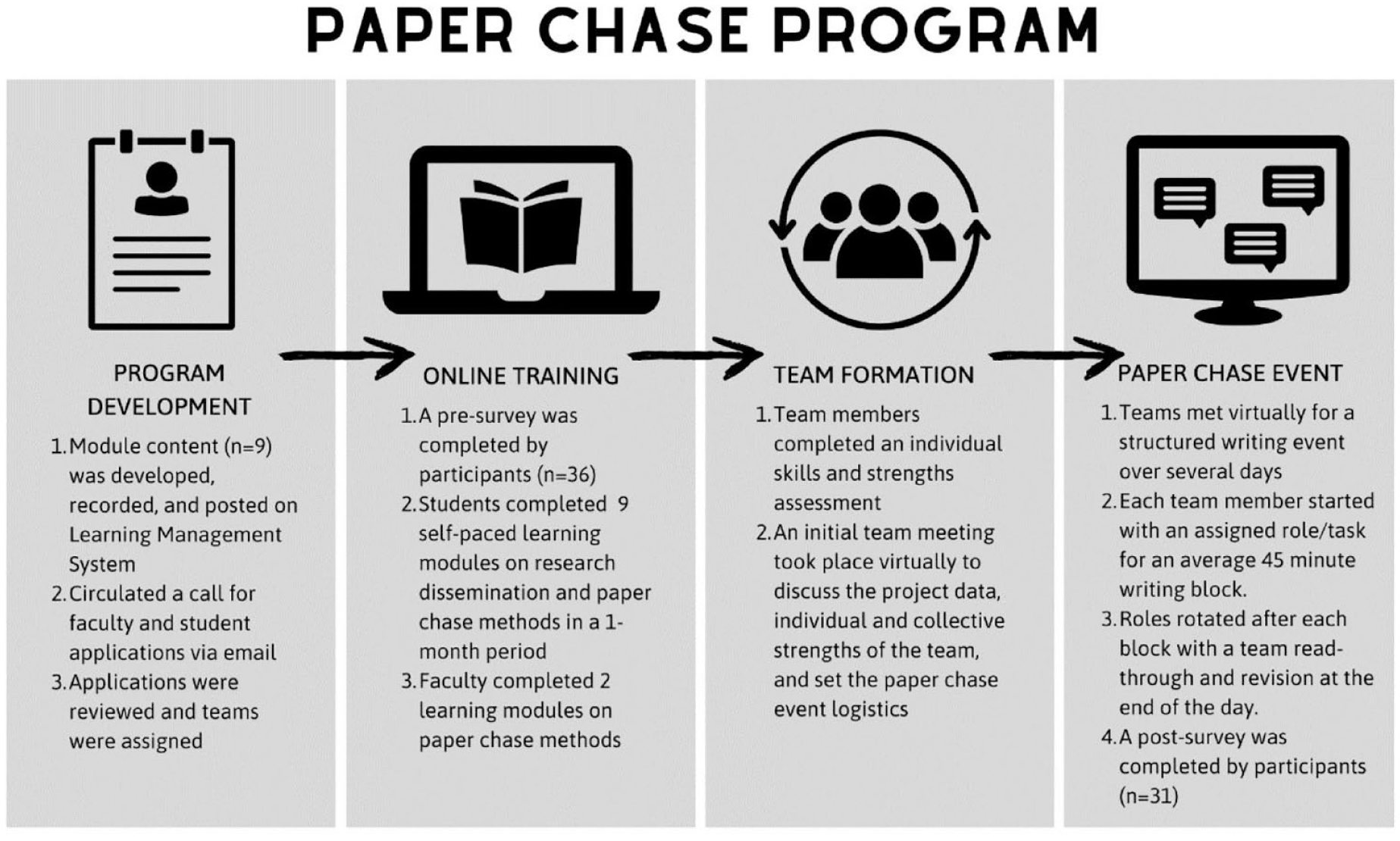
Overview of the virtual Paper Chase training program.
The Paper Chase program was designed by two junior faculty (AD, JB) and all writing teams were facilitated by those faculty and one doctoral student (LK). The program designers and facilitators each had prior Paper Chase experience resulting in a total of five manuscripts submitted for publication in peer-reviewed journals. All facilitators identified as white, cis-gender women. The doctoral student was an international student.
To be considered enrolled in the training program, all participants were asked to complete a pre-questionnaire administered through Qualtrics. Then, participants completed self-paced, asynchronous training modules via a learning management system (i.e. Canvas) within 2 weeks. The modules were faculty-developed (AD, JB), informed by best practices, and included the following topics: (1) Individual and Group Skills and Functioning; (2) Paper Chase Logistics; (3) Literature Search; (4) Writing Basics; (5) Editing; (6) Citation; (7) Journal Logistics; (8) Troubleshooting; (9) Infographic Development. Each module contained a recorded lecture (10–25 minutes), a multiple-choice quiz with five questions, and an activity (e.g. create an infographic). While student participants were required to complete all modules, faculty participants were asked to complete at least three specific modules to be prepared for the Paper Chase event. Participants needed to score at least 80% on the quiz to progress through the training course, with multiple attempts permitted.
As part of Module 1, all participants completed a skills and strengths assessment to identify personal contributions and shortcomings offered to a team environment. Upon completion of assigned modules, the teams held an initial 60-minute introductory meeting to discuss the research project. A facilitator (JB, LK) centered part of the conversation around the results of the individual skills assessment and discussed effective group dynamics since most members of the team were not familiar with the project or had not previously worked together. Faculty members were asked to identify a target peer-review journal for the manuscript. Lastly, the team scheduled a collaborative Paper Chase event (between 4 and 5 days) to take place on Zoom. Participants prepared by reading relevant literature, or in some cases, the study protocol or grant document. Along with a facilitator (AD, JB, LK), teams met in 3–6-hour sessions on Zoom, with rotating authorship roles with an average time block of 45 minutes. Facilitators moderated time, managed troubleshooting during the Paper Chase, and guided the team along the writing process with goal-setting strategies. Facilitators also compiled author contributions after each day’s work for team review and editing, and then separated and assigned sections of the paper for the beginning of the next day to provide each author with edits to work through at the beginning of the first writing block. All teams completed their Paper Chase event within the same 2-week period.
After wrapping up the Paper Chase event, participants were emailed a link to complete the post-questionnaire in Qualtrics within 1 week. Teams were encouraged to submit their manuscript to a target journal between June and December 2021. Some projects involved co-authors who were not participants in the Paper Chase event, so flexibility was provided to allow input and revisions from external collaborators.
Participants
Faculty participants were university instructors with research data available for dissemination. They were recruited first through word of mouth, and subsequently via announcements emailed through the institution’s Office of Undergraduate Research listserv. Interested faculty participants completed an application with their demographic information, academic unit, a proposed research project abstract, and if there were recommended students or collaborators (e.g. research assistants) for inclusion in the training. Faculty were selected based on representation across gender and race as well as an academic unit, availability of data, and marketability of the data set to undergraduate students.
Similarly, student participants were recruited through word of mouth, academic program coordinator emails, and the institution’s Office of Undergraduate Research listserv. Interested student participants completed an application with their demographic information, reasons for interest in the training program, previous research experience, and ranked preferences of faculty’s project abstracts. Students submitted a writing sample as part of the application. A degree of choice was provided to students as they selected their preferred projects in ranked order based on the project abstracts. Applications were reviewed and scored with a rubric by two faculty members. Considerations included the student’s contribution to diversity (e.g. representation in gender), written communication skills, application of Paper Chase techniques in plans, and previous research experience. The highest scores were organized by project preference and offers for participation were made. Some, but not all student participants, had previous experience with the research project from which data were being used for dissemination.
Measures
Pre-event questionnaire
Participation in an anonymous pre-survey was considered a requirement for all Paper Chase team members. Participants received a pre-survey via Qualtrics with electronic consent before proceeding. After completion of the consent document, participants advanced to the 45-item questionnaire. To start, five basic demographic questions were asked (i.e. age, race/ethnicity, gender, degree program). Following, a 5-item adapted version of the Farrah (2011) measure assessed writing confidence with a 5-point Likert scale measuring agreement with various statements. For example, “I feel confident in properly referencing existing literature,” with options five options ranging from “Strongly Disagree” to “Strongly Agree.” Attitudes toward group work were assessed using an adapted 17-item version from Marks and O’Connor (2013) and eight items from Farrah (2011). Since the nature of the Paper Chase program is based on the success of cooperative learning groups, attitudes toward group work were critical to capture. For example, “Having completed group projects, I feel I am more cooperative in my writing” was posed, since individually the students are responsible to complete writing tasks, but through Paper Chase team collaboration, the unit revises the paper until it is publishable. Past group work learning experiences may not have been structured in a way that fostered cooperation among group members (Brame and Biel, 2015). Three additional items assessing learning were crafted to reflect the goals of the project, such as, “I understand the process of submitting a manuscript to a peer-reviewed journal.” Two questions regarding accessibility of technology for the virtual program were asked, along with five items measuring self-efficacy for learning on a virtual platform were added to the questionnaire to assess feasibility and acceptability.
Post-event questionnaire
Following completion of the Paper Chase pilot program, students and faculty were invited to participate in an anonymous 57-item post-survey to support the evaluation of the project. Participation was not mandatory but encouraged. The survey began with a basic question about the role (e.g. faculty). The previously assessed measures of confidence, self-efficacy, and group work attitudes from the pre-survey were presented. To evaluate the program content, participants responded to eight questions regarding the virtual modules with a 5-point Likert scale ranging from “Strongly Disagree” to “Strongly Agree.” For example, “The training videos were informative.” An additional statement, “I did get sufficient guidance and understood the tasks that I was assigned to work on during the Paper Chase writing event,” was posed to further understand participants’ views on the facilitation of the Paper Chase. Finally, 10 open-ended questions were asked for participant feedback about the facilitators, recommendations, suggestions for improvement of the program, and beneficial aspects of the training.
Analyses
Participant data were not matched across the surveys; thus, data were analyzed at the aggregate level. Qualitative responses were analyzed using content analyses (Hsieh and Shannon, 2005) in Excel by two trained coders (AD, JB). A preliminary codebook was created by JB during an initial read-through of all responses, which was refined and reviewed by AD. Coding entailed identifying the underlying content within the response and then aggregating concepts to form themes. Each question was coded separately, except “Suggestions” which included both participant suggestions for changes to the online modules as well as the Paper Chase process overall. Disagreements in coding were discussed until a consensus was reached. Frequencies of qualitative responses were calculated based on the theme, with the denominator based on how many participants responded to that question.
Quantitative data were analyzed using SPSS Statistics (IBM). Frequencies and mean distributions were performed to describe the sample. Additional one-sample t-test analyses were performed to evaluate mean changes from pre- to post-survey. Means and standard deviations are reported throughout. To assess the effectiveness of the training program content, students’ pass rate (80%) within two attempts on the nine module quizzes was recorded.
Results
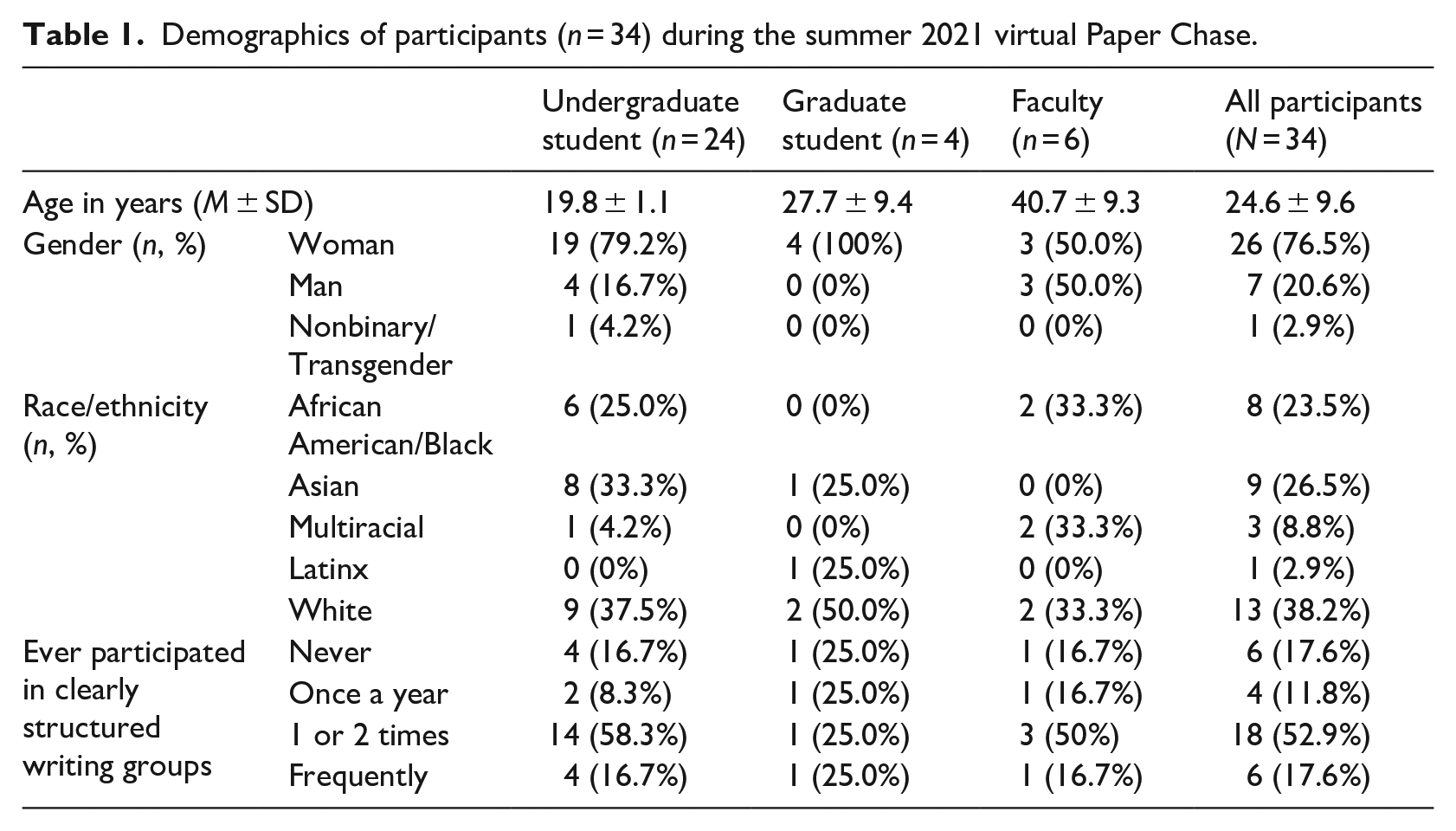
Details regarding the acceptability and feasibility of the Paper Chase training program are outlined in this section. A total of 34 participants enrolled in the pilot program. Table 1 details the demographics of all participants. The majority of the 24 undergraduate students identified as women (n = 19, 79.2%), and one identified as non-binary/transgender (n = 1, 4.2%). The undergraduate students were racially diverse with 33.3% (n = 8) identifying as Asian, 25% (n = 6) African American/Black, 37.5% White (n = 9), and 4.2% Multiracial (n = 1). All four graduate student participants identified as women (100%) and half identified as White (n = 2, 50%). Of the six faculty leads, the majority identified as a racial minority (n = 4, 66.7%). The average age of faculty participants was 40.7 ± 9.3 years and they were based in the following disciplines: English, kinesiology, public health, earth sciences, and education. We report faculty and student responses together due to low subsample counts.
Demographics of participants (n = 34) during the summer 2021 virtual Paper Chase.
Program effectiveness
This training program was effective in fostering a collaborative working environment for researchers to disseminate their findings. Every group finished the training with a completed final draft of a manuscript. Of the six Paper Chase teams, 50% had submitted their manuscripts for publication within 90 days of the event. Some teams were delayed on this target due to incorporating external collaborators’ feedback before submission. Over half (66%, n = 4) of the manuscripts produced in the Paper Chase training program are currently under the revise and resubmit process of peer review, on target for publication within a year of the training program.
Online modules
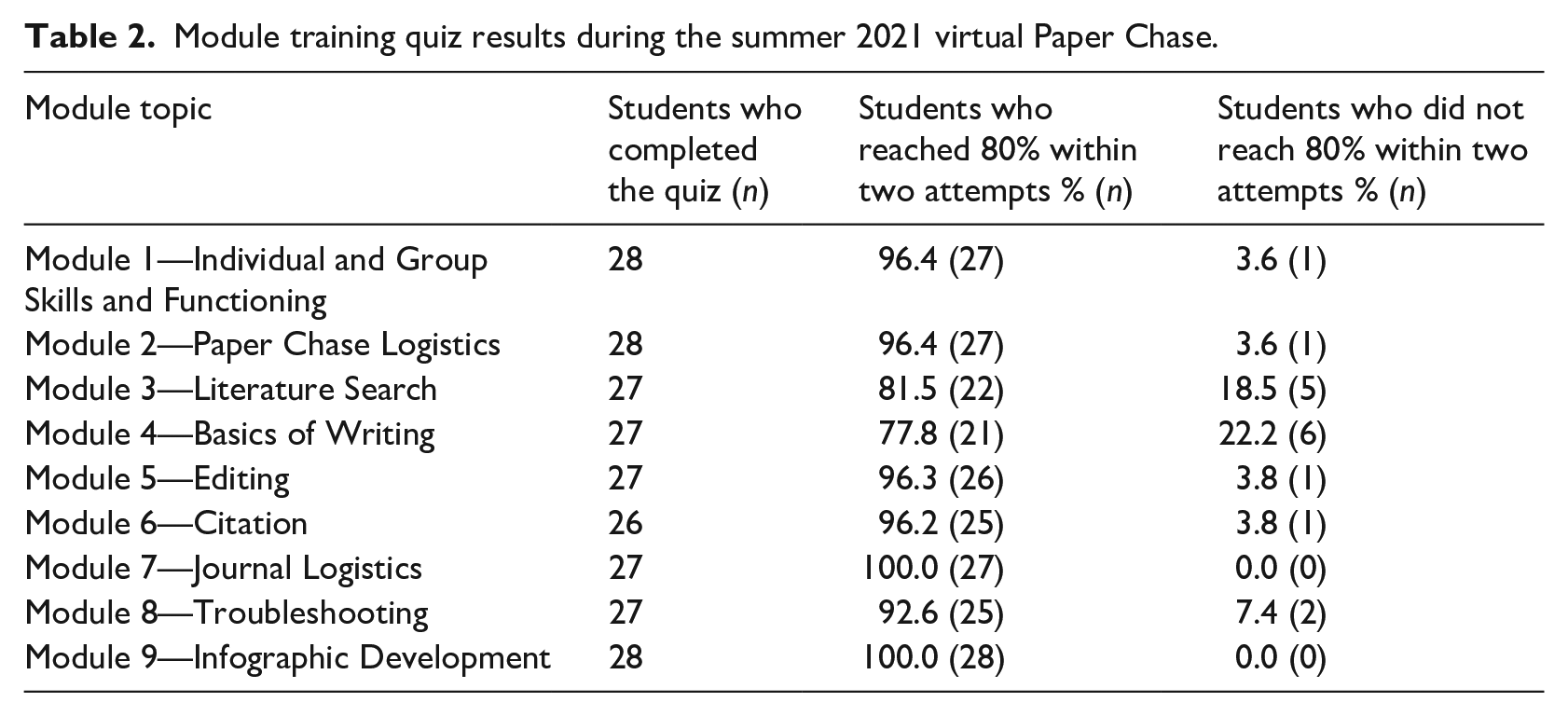
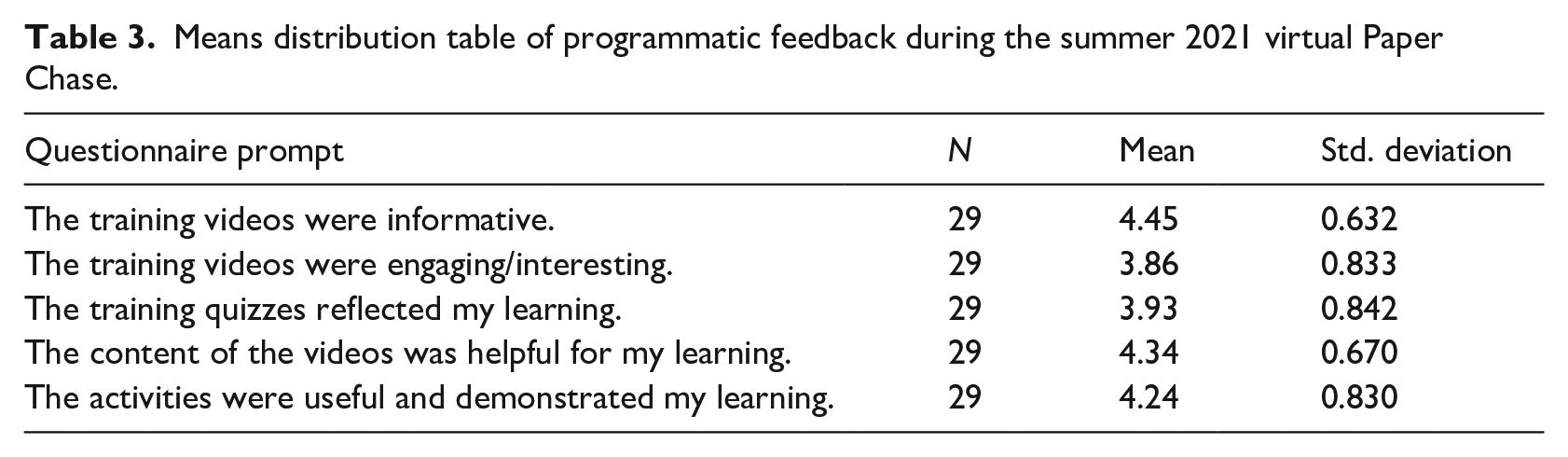
Within each of the nine online learning modules, students were asked to complete a knowledge quiz with a pass rate of 80% to move on to the next learning module. Students had unlimited attempts to take the quizzes. We assessed module difficulty by the percentage of students who were able to pass within two quiz attempts. Most of the modules had a high pass rate (see Table 2). However, the pilot study facilitators will revisit the training content and quiz items for Modules 3 and 4, where more than 18% of the participants were unable to pass within two quiz attempts. Overall, participants reported positive affect toward the online training components of the program. Table 3 provides the means and standard deviations for items where participants indicated their level of agreement from “Strongly Disagree (1)” to “Strongly Agree (5).”
Module training quiz results during the summer 2021 virtual Paper Chase.
Means distribution table of programmatic feedback during the summer 2021 virtual Paper Chase.
In what went well, qualitative respondents (n = 27) reported that the online modules were most helpful (40.7%, n = 11) for being able to practice the topics discussed through activities, and quizzes that helped incentivize attention saying, “In the activities, we got to apply the concepts taught in the videos. It was helpful having this sort of practice” (undergraduate); and, “The most beneficial things were the quizzes at the end so I could review what we did. It also helped me pay attention during the module because I knew there would be a quiz” (undergraduate). Over a quarter of respondents (25.9%, n = 7) also reported that the online training modules provided necessary preparation for the Paper Chase process and writing. “The most helpful part of the training modules was the explanation of the paper chase project and process. . .It helped me better understand the project and my role as a participator and deeper explore group collaboration” (undergraduate).
Program facilitation
Ultimately, participants felt supported with sufficient guidance and an understanding of tasks that were assigned during the Paper Chase writing event (M = 4.21, SD = 0.568). From the qualitative responses (n = 27), over half of respondents (51.9%, n = 14) reported that having different facilitators was helpful. They appreciated changes in approach (n = 3), perspectives (n = 3), and strengths (n = 2). “I think rotating facilitators helped to have a new perspective each writing day and helped us to have a fresh start” (undergraduate). The facilitators also provided variety. “In a job that felt monotonous at times, it was enjoyable to have new people bring new energy and slightly varied structure” (undergraduate). Some participants felt that having the same facilitator throughout (14.8%, n = 4) would be preferable.
Group work attitudes
Regarding their experience with structured writing groups, the majority of the total sample (70.6%, n = 24) reported participating in this group writing more than once a year, fewer (n = 4, 11.8%) participated once a year, while only six participants (17.6%) had no prior experience. Before the start of the training, participants felt prepared to be contributing group members to writing projects (M = 4.44, SD = 0.66).
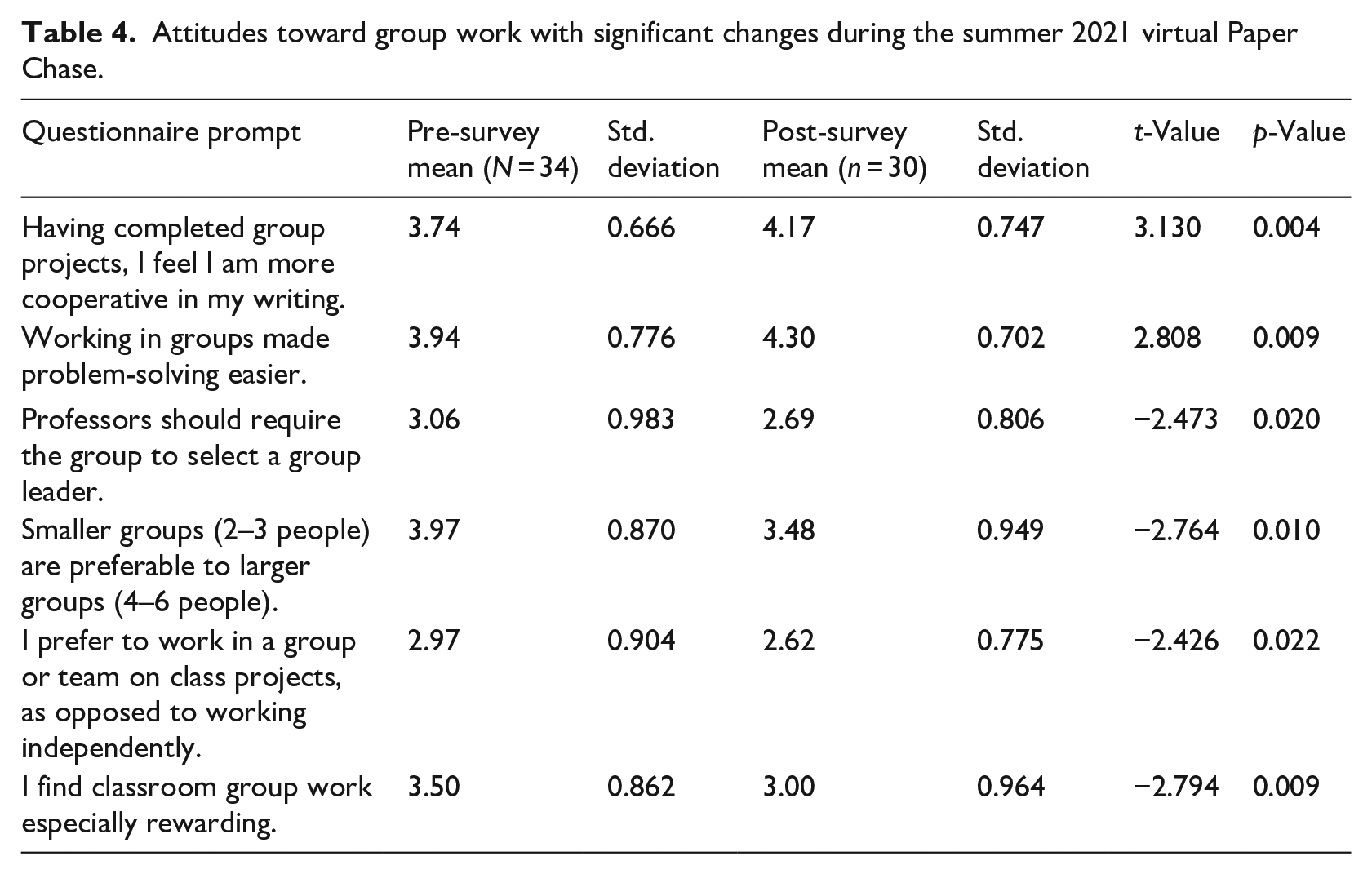
Table 4 summarizes the significant changes in the mean responses of participants regarding collaborative group writing. Participants noted a significantly positive change in agreement regarding two of the groupwork attitude questions indicating the Paper Chase training program helped participants feel more cooperative in their writing (t = 3.13, p = 0.004) and made problem-solving easier (t = 2.81, p = 0.009).
Attitudes toward group work with significant changes during the summer 2021 virtual Paper Chase.
Confidence and self-efficacy
Participants indicated a strong level of agreement with statements around confidence and self-efficacy at both periods, thus limiting our ability to detect growth in these areas. When asked to respond freely to a prompt about how participants would use the skills from the Paper Chase training in the future, nearly half (44.4%, n = 12) discussed writing skills. One component of participants’ confidence related to their understanding of academic writing. “The Paper Chase gave me insight about the manuscript writing and submission process. It also showed me a different form of academic writing” (undergraduate). Within this category, some participants perceived improvements in their general writing and editing skills. “It helped me gain confidence in my writing and editing skills and made me work more efficiently” (graduate). The writing structure, including time blocks, was a key component of this, as described by one participant who stated, “It expanded my skills [as]this was my first time doing research under a pressure of time constraint and pressure of not letting people down. I was able to push myself and learn to think and write faster” (undergraduate). Over a third (37.0%, n = 10) mentioned interpersonal skills, including accountability and engagement. “I had never worked on a project in a truly collaborative sense.” (undergraduate).
Faculty perceptions
As noted previously, the results are predominately focused on the student experience, given the small sample size of faculty involved in the program (n = 6). However, we did capture noteworthy perceptions to share from the faculty’s role in the Paper Chase. Faculty reported that the experience taught them how to teach writing and enjoyed the experience of getting to work with other faculty and students on research. One faculty member said the process assisted not only in dissemination but “thinking through ideas” (faculty). Faculty, like students, said the facilitators were essential for this process. “Their [facilitators’] guidance and leadership made all the difference” (faculty). The Paper Chase’s process gave structure for faculty in sharing the writing workload, especially with non-researchers. “It improved my ability to delegate tasks and alternative methods to discuss research with a layperson” (faculty). Some faculty were pleasantly surprised by students’ abilities to contribute to the manuscript. “I was very impressed how [a] student with little to no background on the subject did such a good job writing” (faculty). The modules may have assisted in practicing writing skills, as one faculty member described, “The most beneficial aspect of the online training modules were the low stakes activities to practice the content learned in the videos and the quizzes that reinforced the content” (faculty).
In addition to strengths, the faculty had suggestions for improvement. Faculty members recommended how to better organize the modules, such as creating new modules based on identified gaps from the survey. “One example might be a breakdown video of actually how the Paper Chase would work, in terms of 45-minute writing block, break, etc.” (faculty). Faculty in teams with students who did not attend all of the writing blocks wanted a stronger commitment from students. “We had students who were in the process of taking courses and working hours that were not conducive to the set time we were trying to accomplish the work. People need to be more upfront about their commitment so that they are not overloading their time” (faculty). This may have been especially challenging given that one faculty member described appreciating how the structured Paper Chase process increased commitment and accountability in writing among the team. When a member was not present, this could have affected team dynamics and the sense of commitment.
Benefits of the Paper Chase
The results of a t-test revealed a statistically significant increase in participants’ understanding of this research dissemination process after our program by agreement with the statement, “I understand the process of submitting a manuscript to a peer-reviewed journal,” from pre- (M = 3.21, SD = 1.225) to post-program (M = 4.40, SD = 0.621, t = 10.488, p < 0.01). Nearly one-quarter (22%, n = 6) said they would recommend this to anyone. “If we could do it in these groups, where everyone is unfamiliar with one another, I think anyone can!” (graduate). Nearly half (42%, n = 11) of respondents discussed the benefit of learning about writing, editing, and dissemination skills and then putting them into practice relatively quickly through the Paper Chase event. “Actually, completing the different task [sic] during the manuscript writing process was the best way to practice skills, especially when it came to EndNote and editing” (undergraduate). The practice for future work or teaching was reported as a benefit of the Paper Chase process by nearly a quarter of respondents (23%, n = 6). “Using these skills are great practice for my future writing, research, and preparations for graduate school” (undergraduate). “Helped me think about how to teach writing” (faculty). The structured writing process with consistency across team members as well as writing pressure was another benefit (15%, n = 4). Participants appreciated having facilitators (16%, n = 4). “The presence of a facilitator made the Zoom meetings very efficient. They helped to keep team members on task and assisted in smooth transitions from one timeframe to another” (undergraduate).
Suggestions for change
The most commonly reported suggestion was shortening videos, and breaking difficult modules into multiple sections (36%, n = 10). This was especially reported for the EndNote module. “It may be helpful to have more than one activity for the more difficult modules, such as learning how to use Endnote” (undergraduate). Nearly a third (32%, n = 9) wanted more preparation for their research project, with being able to read more materials in advance and ensuring the faculty’s data were prepared for the write-up. “I would build in more time for the research team to discuss the research topic during the meeting times. Because the students were not involved in the actual data gathering and early research process, they are not as familiar with the processes and methods used” (undergraduate). As the facilitators determined the Paper Chase times upon receiving the team’s schedule, some participants (14%, n = 4) recommended pre-structured time blocks. “Making an emphasis on the time commitment and perhaps scheduling the writing blocks earlier in the process to ensure people have this designated in their schedule” (graduate). A smaller number of participants (11%, n = 3) suggested that the sections of a manuscript be included in modules as well as the process be adaptable for atypical manuscript structures, such as those from humanities.
Discussion
Outcomes
Overall, this training program was considered an effective collaborative writing exercise, as all writing teams produced a final draft of a manuscript at the end of the program. Three of the six manuscripts are currently under review in peer-reviewed journals and another one is being repurposed for a different audience. Referring back to the literature noting the career benefits of involving students in the research process, the long-term effects of publishing manuscripts can be measured by journal impact factors, citation metrics, and publication credits to co-authors which may translate to graduate education or career advantages. This impact is particularly important for faculty and graduate students, who are often reliant on publication productivity as an indicator of career success (Chase et al., 2013; Gazza et al., 2013).
In addition to the tangible deliverable of writing an academic manuscript, this program was considered successful in engaging students in the high-impact practices of collaborative projects and undergraduate research (Kuh and O’Donnell, 2013). Students reported that they would use the structured writing skills in other writing tasks. Previous research has documented challenges of student collaborative writing, especially in virtual environments (Nykopp et al., 2019). Successful undergraduate collaborative writing processes, namely having a leader and balanced participation (Olson et al., 2017), are capitalized upon in the Paper Chase process. Having more students and faculty trained in this type of approach may transfer to their class and future graduate work. Rather than a scaffolding approach to learning, the Paper Chase method applies a synchronous, collective experience to learning and improving skills together.
Through structured writing blocks and assigned tasks, students were accountable for the overall progress of the group, reflective of Social Interdependence Theory (Forslund Frykedal and Hammar Chiriac, 2018). Similarly, group leadership is important for overall group functioning. In typical research practice, the principal investigator or lead scientist may take on a leadership role for the writing team, but we aimed to reduce power dynamics (Forslund Frykedal and Hammar Chiriac, 2018) within the collaborative writing environment and used an outside facilitator approach which seemed to have favorable benefits. We believe this also allowed the faculty lead to offer expertise and meaningful contributions within the written manuscript rather than spending valuable time advising students.
Group work in higher education promotes learning and socialization but can be fraught with unpleasant experiences for learners if group dynamics are not in sync or when grade achievement is contingent on group success (Maiden and Perry, 2011). In our pilot program, we assigned teams without the consideration of group dynamics, which is likely similar to classroom approaches. With the understanding that such an assignment could lead to group dynamic issues, we specifically asked participants to complete and share the results of an individual skills and strengths assessment as a first step in establishing team expectations. By recognizing and valuing individual differences at the start, we aimed to create a more inclusive group learning environment. Fostering positive interdependence between the participants was another high priority in developing inclusive and collaborative processes (Forslund Frykedal and Hammar Chiriac, 2018). We did not facilitate group formation time outside of the Paper Chase writing process. Student participants reported a desire for more time acquainting themselves to the research, which could also be done in tandem with developing initial group rapport.
Virtual training for research dissemination
As institutions of higher education seek to prepare students for increasingly complex and multi-sectoral problems (Risopoulos-Pichler et al., 2020), interdisciplinary collaborative writing may be instrumental. Virtual modes of collaboration may build skills for resilient academic work (e.g. in the context of social quarantine) and facilitate collaborative support for a dispersed team.
In terms of the online training modules, participants reported positive feedback on the content provided. A key recommendation was that participants recommended shorter video segments. We may also adapt from the “talking head” videos (using voiceovers with slides) to “learning glass” videos (the speaker illustrates notes while speaking) based on literature supporting more engaging modalities for asynchronous online lectures (Choe et al., 2019). Notably, participants in this study reported that the video demonstrations of literature searches and EndNote were helpful. Within the training modules, students also exercised their knowledge retention with brief quizzes and activities, which participants reported as useful. In an online learning environment, providing a variety of skill exercises and assessments with timely feedback from the facilitators are considered effective, best practices (Martin et al., 2019). The online training course was organized in a modular format with clear learning objectives and content alignment, another best practice for online education (Martin et al., 2019).
From a quality improvement standpoint, there are several considerations. Faculty were asked to mentor students in their research through this Paper Chase modality. We did not train faculty on mentoring students, so adding this to the virtual modules or partnering with existing mentorship workshops or training may better prepare faculty for this aspect of the Paper Chase exercise. Content feedback identified the reference management software (RMS) as the most difficult module for participants. RMS assists students in navigating volumes of research, staying up-to-date, and managing copies of articles (Kim, 2011; Speare, 2018). However, as our participants described during the process, there are numerous barriers to RMS use (e.g. time to learn the software, difficult interfaces) (Speare, 2018). We used EndNote, one of the most popular RMS (Speare, 2018), but perhaps a different program would have interfaced better with a simultaneous collaborative writing process (e.g. Google Docs). Reducing such technical barriers to the Paper Chase exercise should be a goal for future iterations.
Attitudes toward collaborative group experiences
This study provides evidence for an acceptable and feasible virtual Paper Chase program. Collaborative group work is a common practice in higher education, within the classroom and externally through research, student organizations, committee work, etc. It was not surprising that the majority of our sample had prior experience with a structured writing group. However, a notable attitude change was observed at the end of our program, where participants reported feeling more cooperative in writing and at greater ease with problem-solving within groups. This is an important, positive outcome that highlights the benefits of thoughtful and organized team-based learning. One key strength of this writing exercise is the facilitated rotation of manuscript sections, rather than the team dividing sections to be completed by a single team member without much revision or polishing before finalization.
Research shows that organized or team-based learning is viewed positively by students when active learning pedagogies are used in the classroom (Hyun et al., 2017). Although previous work has primarily focused on traditional classrooms (Prince, 2004), elements of this active learning Paper Chase model can be incorporated into these classroom spaces. However, the barrier of cost and time to make these integrations should be considered. Team-based learning “represents an even more intense use of small groups. . . to develop and then take advantage of the special capabilities of high-performance learning teams” (Michaelsen et al., 2004: 7; Swanson et al., 2019) It requires students to think and reflect on a higher level (Swanson et al., 2019) while also effectively listen to the ideas and desired contributions of the people on their team. This type of training and collaborative writing exercise did not change the participants’ perceptions of classroom-based group work because our targeted emphasis was on research dissemination and not earning a grade. However, the skills and experiences learned in this program are transferrable to spaces outside of research and provide an opportunity for us to explore alternative examples in future revisions of the module content.
Strengths and limitations
We evaluated this training program in a virtual format to expand the evidence base; our experiences may not apply to in-person Paper Chase events or classroom exercises. Notably, all of our implementation and facilitation teams were trained in social sciences research. Though our skillsets transferred to bench science, we were less equipped to facilitate research in the humanities. The online training modules described conventional manuscript formats and the Paper Chase roles were built around these traditional manuscript sections. Projects in other scientific fields may benefit from including team members familiar with other disciplines to guide those processes. At a minimum, the training modules should address a wider variety of research dissemination. Additionally, our faculty and student participants were diverse in race/ethnicity. We did not assess whether participants were first-generation college students. First-generation students experience barriers and marginalization (Ellis et al., 2019), which may limit their involvement in research.
Our groups were largely unacquainted with one another, and students were mostly unfamiliar with the research project. This may have limited group dynamics around communication and trust, though we conducted synchronous team meetings via Zoom before the writing event to help build trust as other research suggested (Du et al., 2019). Although we found positive results in outcomes, acceptability, and feasibility, Paper Chase processes are often intended for teams who are familiar with the research project and would likely be less challenging. We included students with less research experience and were able to evaluate the program in this unique context. For future iterations of this training program, we plan to expand our evaluation to include measures of satisfaction with the final manuscript draft and perceptions of the group collaboration process to draw stronger conclusions about the effectiveness of this model, as well as group confidence and collective efficacy measures. Collectively, our participants began the program with high self-efficacy and confidence around writing practices, research processes, and online learning, which may have been a byproduct of recruiting through existing research programs offered at the institution.
Logistically, we experienced difficulties with scheduling the writing events as we set the meeting dates after forming teams; we recommend establishing meeting and writing event dates before team selection to minimize scheduling issues. We were only able to evaluate the outcomes shortly after the program’s end, but we anticipate the results of being involved in research dissemination may have an impact on students’ future academic and professional careers. Future research may evaluate the longitudinal impacts (e.g. graduate/career track, publication record) of students involved in the Paper Chase program with a comparison group of students who did not engage in research dissemination during their undergraduate experience.
Implications
Applying a Paper Chase approach may help faculty with involving a larger number of undergraduate students in research dissemination efforts, even if no extensive mentorship is possible. Writing groups offer faculty the opportunity to use the skills learned from this project, for their research practice (Skarupski and Foucher, 2018), while receiving peer support (Chai et al., 2019) for increased productivity. Additionally, this model can be used to help students increase their self-efficacy concerning an unfamiliar research topic. Beyond manuscript development, the shared responsibility and management of group dynamics may benefit other course processes. Faculty mastery of this type of structured writing process may transfer to other domains of active learning, such as group assignments or collaborative community partnerships.
The value of virtual learning through the Paper Chase process has implications for traditional educational settings. This practice can be integrated into courses that are designated as writing-intensive and require a structured writing product as part of the course assessment (Sasa, 2020). In all educational environments, the possibility of virtual active learning models for instruction opens opportunities for greater pedagogical value. For example, educators in university settings with the capacity to support virtual learning could implement the Paper Chase process in a modified way to teach a variety of research-based courses and classes. A modified Paper Chase model could be used to teach research writing and could include various configurations of students, not only in one course but even across sections of a particular course. Such approaches could be adapted to show Paper Chase participants researchers’ datasets, statistical analyses, research processes, and research themes as a way to deepen knowledge and writing skills. Particularly, graduate schools and programs may consider implementing training and coordinating Paper Chase exercises for the established career advantages of students graduating with publication authorship.
Lastly, there are key features of this virtual training model that make implications for continued engagement possible. First, by experiencing the entire process in a virtual environment these practices are portable beyond the university setting. This particular Paper Chase process involved faculty and students from one institution, however, given the virtual nature of this process, it is easily accessible across multiple institutions, including virtual writing projects with teachers at K-12 schools (Kim et al., 2022; Moore-Adams et al., 2016). Furthermore, while this method could work in building bridges across states and even countries, an obvious and simpler implication would be to employ it in more localized settings. For example, setting up Paper Chase projects across institutions within the same state, as well as facilitating engaged scholarship projects with institutions of higher learning and local non-profits, businesses, public schools, and the government would enhance connectivity among local leaders in the research process.
Future directions
This study demonstrated success in a virtual format of the Paper Chase. Hybrid models may be a promising future direction as participants appreciated the collaborative components of the process, which may be enhanced through in-person work. Future studies would benefit from an expansion of what we assessed both pre-and post-project. For example, to achieve the goals of increasing student research involvement, assessing first-generation status may identify unique barriers created or addressed through the Paper Chase process. The process may also develop an understanding of the culture of science and writing peer-reviewed articles among participants. Additionally, while we focused on assessing attitudes, self-efficacy, and individual skills as part of a collective whole, we did not include measures of trust and other important group dynamic traits, like the perception of leadership (Du et al., 2019). Future studies would benefit from evaluating the effectiveness of the Paper Chase model in improving group dynamics. Research examining the transferability of a structured group writing process modeled from this Paper Chase to other active learning strategies may capture needed adaptations.
Conclusions
This study demonstrates success in applying the Paper Chase model to teams largely unfamiliar with one another and in a virtual format to engage students in research. Faculty, as well as undergraduate and graduate students, report acceptability, increases in knowledge, and feasibility of the program. Confidence and self-efficacy in writing improved across the sample, indicating positive benefits of participation in a collaborative writing format. Future Paper Chase exercises may benefit from applying our lessons learned and faculty may incorporate similar facilitation or synchronous writing exercises for group assignments in their classes. Exploring group dynamics and perceptions of inclusivity in the Paper Chase practice would be a logical next step with implications for approaches to group work in higher education.
Footnotes
Funding
The author(s) disclosed receipt of the following financial support for the research, authorship, and/or publication of this article: This work was supported by the Office of Undergraduate Research at the University of North Carolina at Charlotte; and the Women + Girls Research Alliance Seed Grant.
