



Abstract
Although there is growing evidence that the flipped classroom approach (FCA) positively impacts the student learning experience and outcomes, much less is known about the educator’s experience. This study aimed to explore how educators across several disciplines in a regional Australian University describe their experience of using the FCA. Qualitative description methodology guided the research whereby individual face-to-face semi-structured interviews collected qualitative data from educators who had used the FCA in the previous 4 years which was then analysed using reflexive thematic analysis. Eleven educators across seven disciplines were recruited, eight of whom had fully and three partially flipped a course. Four broad themes described the educator’s experience of the FCA namely, the environmental influence, preparation and implementation, emotional response and metacognition. There were 20 sub-themes across the four themes. Educators in this study were both ambivalent and internally motivated by the FCA, valued scholarly and institutional support, highlighted the importance of reflexive teaching practice and appreciated the affordance of more active learning opportunities in class. The human aspect of competing emotions was clear when implementing the FCA. Educators need to prepare themselves for the emotional investment that accompanies the FCA, to be responsive and adaptive in what and how content is delivered. Institutions should provide adequate support to cater for both the well-being of educators as well as the practicalities of implementing the FCA.
Keywords
Background
The flipped classroom approach (FCA) has increased in popularity in the higher education sector over the last decade (Akçayır and Akçayır, 2018; Brewer and Movahedazarhouligh, 2018; Fisher et al., 2021; Lundin et al., 2018). This teaching innovation has been enabled by advances and uptake of learning technologies (Lo, 2018; Lundin et al., 2018). Increasingly institutions are investing in the design and delivery of learning that enables students to access learning face-to-face, online or via a combination of these delivery modes, more commonly referred to as blended learning (Lee et al., 2017; Rasheed et al., 2020). This approach has become ubiquitous in the last 2 years as the global pandemic provided a vector for an increase in technologically-enabled learning.
The FCA combines independent and interactive face-to-face learning events designed to actively engage students in learning and optimises student learning experiences and outcomes (Arif and Irfana, 2019; Jong, 2019; Westermann, 2014). Foundation content traditionally delivered in-class is provided asynchnronously online for students to complete independently before attending interactive face-to-face or synchronous online workshops designed to consolidate learning through collaborative experiences and extension activities (Bates and Gilchrest-Dunnam, 2017; Bergmann and Sams, 2012a, 2012b; Brewer and Movahedazarhouligh, 2018). Digital technologies are a primary feature of the design and delivery of the FCA (O’Flaherty and Phillips, 2015) and the design and facilitation of the FCA call on a broad scope of paedagogical knowledge and technology skills by the educator (Lo, 2018; Xu and Shi, 2018).
The FCA aligns with tenets of constructivist learning and teaching perspectives where learning is student-centred, and the educator’s role is as a facilitator of active-learning methods (Comber and Brady-Van Den Bos, 2018; Lo, 2018; O’Flaherty and Phillips, 2015; Persky and McLaughlin, 2017; Xu and Shi, 2018). O’Flaherty and Phillips (2015) emphasise the importance of the educator’s understanding of paedagogy when moving to the FCA to ensure high-quality learning experiences. The delivery of the FCA requires a shift in the role of the educator from the traditional ‘sage on the stage’ who lectures to being a learning facilitator or ‘guide on the side’ (Berrett, 2012; Hollis et al., 2010) and a considerable investment of resources by educators to do so effectively (Brewer and Movahedazarhouligh, 2018). A scoping review on the use of flipped classrooms in higher education (O’Flaherty and Phillips, 2015) also reiterated the importance of institutional support for resource development as well as information technology (IT) and technical support for educators when implementing the FCA.
To date, the majority of empirical research related to the FCA has focussed on the student experience (Abeysekera and Dawson, 2015; Comber and Brady-Van Den Bos, 2018; Rotellar and Cain, 2016; Tate et al., 2018) which has provided evidence that the FCA can positively impact the student learning experience and outcomes (Akçayır and Akçayır, 2018; Hew and Lo, 2018). There has been some, but much less research about the FCA from the perspective of educators (Chellapan et al., 2018; Long et al., 2017, 2019, 2020; O’Flaherty and Phillips, 2015) with most being US-based small studies from single institutions conducted over the last 5 years. A systematic review on the challenges and advantages of the flipped classroom (Akçayır and Akçayır, 2018) included 71 papers of which only six focussed on the educator’s perspective or experience. Key perspectives raised by educators included that the FCA was time-consuming, it had a higher workload, a supportive computer-mediated communication space is important to manage synchronous and asynchronous tasks, and planning the sequence of activities was important. Benefits of the FCA for educators reported elsewhere include: the ability to share and/or reuse standardised lectures amongst educators can afford faculty more time to address challenging or confusing concepts (Bergmann and Sams, 2012a, 2012b; Hall and DuFrene, 2016), it is a fun and creative way of teaching (Hall and DuFrene, 2016) and it allowed engagement with all students which is viewed as a benefit for the educator not just students (McCarthy, 2016). Professional development in the design and implementation of the flipped classroom was viewed as a supportive strategy and taking a staged approach by partially flipping a course when starting was recommended to help manage the workload (Marks, 2015). Similarly, others recognise the importance of educators being upskilled in the technical skills required for the development of online learning material such as video recordings and narration (McCarthy, 2016), the use of multimedia and technology (Erofeeva and Sokolova, 2018), as well as being provided with ongoing support and resources when implementing the FCA (McLaughlin et al., 2016).
A qualitative study (Long et al., 2017) (n = 8) using interviews explored the perceptions of college instructors from a large US university on the use of the flipped classroom, including those that have implemented the flipped classroom approach (n = 4) as well as those that have completed training on flipped classroom but not yet implemented it (n = 4). There was consistency in the way the flipped classroom was defined and described. Benefits identified included the perception that students would be motivated to learn, there would be more time during class for active learning and more opportunity to provide immediate support to students. Identified challenges included students’ potential lack of preparation for class, the possibility that not all students would enjoy active learning and collaborate effectively and the considerable preparation time and effort required for instructors to prepare. An exploratory study (Chellapan et al., 2018) (n = 84) used a quantitative survey to identify factors influencing tertiary educators’ decisions to adopt the FCA across three New Zealand universities. They found that positive response to using technology, valuing students’ active learning and interest in the pedagogical benefits of the approach to be the key reasons for adoption.
A US qualitative case study (Long et al., 2020) explored three instructors’ experiences and perceptions of adoption of the FCA and found the key benefits were enhanced student engagement in active learning and increased understanding of content. The need to allocate more time in class to reinforce pre-class learning, support for students to develop good learning habits and technical, peer and paedagogical support for educators were identified as necessary for success in implementing the FCA. Another US-based quantitative study (Jong, 2019) (n = 152) surveyed social science academics to ascertain their concerns about adopting the FCA. The survey explored the pedagogic design of learning materials, time and energy associated with the development of pre-class learning resources, adequate professional development training in the approach and the workload implications for early adopters of the approach. Finally, a quantitative study (n = 287) in a US University found that performance expectancy of the adoption of the FCA and efficacy in educators’ use of technology as part of the flipped design were strong predictors for the adoption of the FCA (Long et al., 2019).
In 2020 the lockdowns resulting from the Covid-19 global pandemic necessitated higher education to pivot quickly to online delivery of learning materials, previously been delivered face-to-face (Zawacki-Richter, 2020). As a result, online teaching is now more common in mainstream higher education. Institutions are considering how to maintain the gains made in online education while also exploring new and safe ways to resume on-campus teaching (Petronzi and Petronzi, 2020). These shifts highlight that the FCA has the potential to become the new standard in higher education (Ellis et al., 2020).
The objective of this study was to explore the FCA, beyond the established understanding of the impact on students, focussed on the educator's perspective. Enhanced understanding of the experience of teaching innovations, such as the FCA, from the educator's perspective, is critical given educator's role in adopting and sustaining such innovations (Fuller, 1969; Jong, 2016; Lai et al., 2018). As such, research is needed on educators’ perspectives of the experience of the flipped class approach (Brewer and Movahedazarhouligh, 2018; Chellapan et al., 2018; Jong, 2019; Long et al., 2017, 2019; O’Flaherty and Phillips, 2015). The research question guiding our study was: How do educators across several disciplines describe their experience of using the FCA in a higher education setting?
Methodology
Design and approach
A qualitative description design was selected as this methodology seeks information directly from those with a shared experience of the phenomenon (Bradshaw et al., 2017). Qualitative description requires staying close to the data collected rather than seeking a deeper level of interpretation that is aligned with other interpretive methods such as phenomenology and grounded theory (Sandelowski, 2000). Reflexive thematic analysis was used to analyse data and derive the description of a shared experience inductively (Braun and Clarke, 2021). The authors of this paper are allied health and health promotion educators; therefore, the data analysis has been examined through this lens.
Setting and participants
Purposive sampling was utilised to recruit educators at a regional Australian university for this study. Educators who had used FCA in their teaching within the previous 4 years (2012–2015) were eligible for inclusion in the study. Fourteen potential participants were identified and invited to participate in the study via email invitation. Eleven participants consented to participate in this study (n = 11).
Participants in this study were all early adopters of the FCA at the institution and had either fully or partially flipped courses they were coordinating. Qualitative description most commonly incorporates maximum variation sampling to gain broad insights and rich information (Sandelowski, 2000). To achieve the best possible maximum variation sampling we invited educators from different disciplines with varying levels of experience in higher education, who taught across a range of subjects and used different approaches to integrating an FCA into their teaching. Purposeful sampling resulted in maximum variation in research participants. Volunteer educators were initially invited via their work email by the principal investigator (JT) and 11 provided informed consent. Ethics approval was sought from the University of the Sunshine Coast, USC Human Research Ethics Committee (A13501).
Data collection
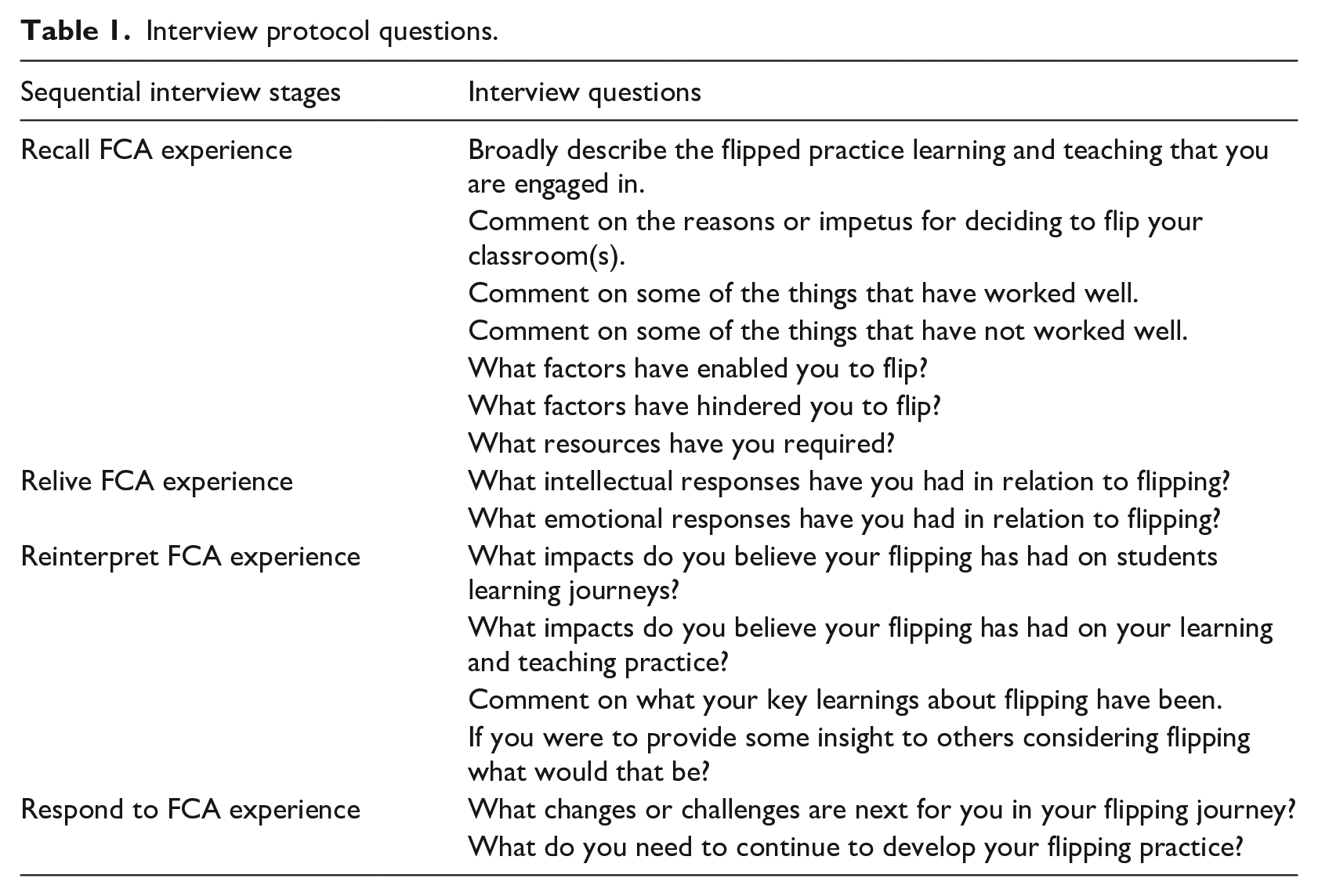
Data were collected in late 2015 using an individual face-to-face semi-structured interview method whereby participants were invited to reflect on their experience of using the FCA in their teaching. Interviews were conducted by one researcher (JT) and each took approximately 30 minutes. The interview protocol (Table 1) was based on a structured reflection process adapted from Gibbs Reflective Cycle (Gibbs, 1988) and comprised four broad sequential stages.
Interview protocol questions.
Interviews were audio-recorded and then transcribed verbatim by a professional transcription service. Participants were provided with a copy of their interview transcription via e-mail to review and amend before analysis (Liamputtong, 2017). To facilitate anonymous analysis all transcripts and records were de-identified using pseudonyms. Participants were made aware and accepted that in some cases unique stories and rich description may allow re-identification through familiarity by the researchers.
Data analysis
Data analysis was completed by two researchers (MV and HW) using qualitative description (Sandelowski, 2000). The method is suited to the description of a phenomenon, in this case, using the FCA in higher education. Using Qualitative Description allows inductive data analysis which is not guided by a theory or framework and thus allows the opportunity for new or unexpected understandings (Sandelowski, 2000).
Two transcripts were analysed and coded collaboratively by two researchers (MV and HW) to gain consensus on the method and depth of analysis. Coding was managed using NVivo 12 qualitative software programme (QSR, 2020) which involved highlighting quotes that described the experience and assigning a code or label to each quote. Initial coding resulted in the identification of 108 codes that were arranged into 22 categories. Categories were compared and contrasted by two researchers (MV and HW). This was followed by both researchers analysing a third transcript independently and comparing and contrasting their analyses. Consensus on final codes was agreed and the process was replicated to analyse the remaining transcripts. Inductive coding allowed for the addition of new codes as required. Upon completion of coding, two researchers compared and contrasted their analyses and identified the most salient codes across the whole data set. Three researchers (HW, MV and AH) interrogated these preliminary findings with constant reference to the verbatim quotes. The team discussed and re-arranged the codes into descriptive themes and subthemes. The third researcher (AH) then analysed two transcripts using the refined set of descriptive themes to triangulate the analysis process. Minor changes were made to the names and arrangement of themes. The final set of themes and sub-themes underpinned by verbatim quotations was reviewed and agreed upon by the entire research team.
An audit trail detailing all steps of the analysis and decision-making process was completed using a joint reflexive diary (Wolf, 2003). The reflexive diary was used to check researchers’ influence on data analysis (Finlay and Gough, 2003) and to ensure the analysis was based on the participants’ words (i.e. verbatim quotes) and not the researchers’ assumptions.
Findings
Participant characteristics
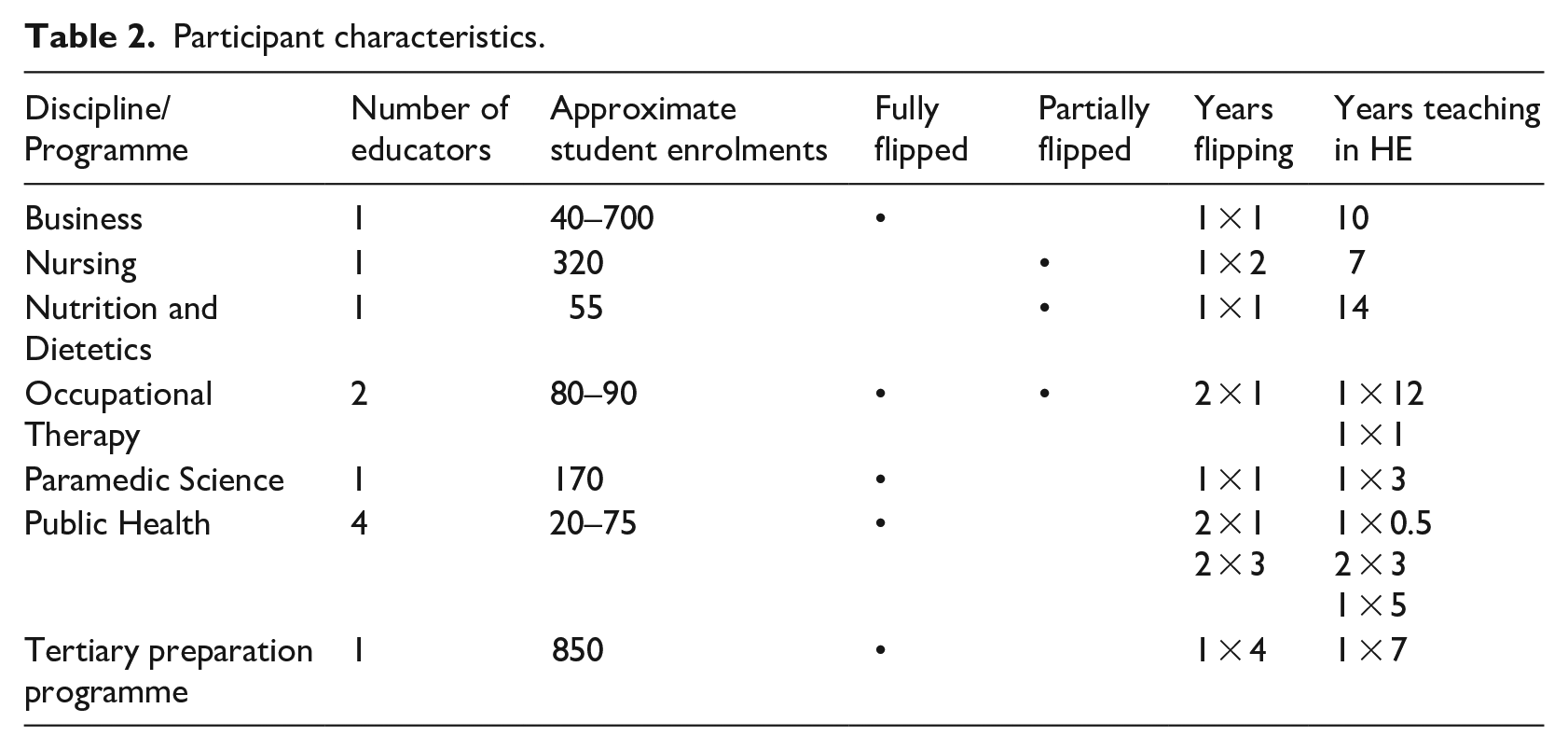
Eleven educators across six disciplines and the Tertiary Preparation Programme participated in the study, of which two were male. The majority (n = 9) held a junior academic level position. Eight (73%) educators fully and three (27%) partially flipped their course(s). Those that partially flipped chose either the lecture component (n = 1), discrete weeks (n = 1), or content they deemed amendable to the FCA (n = 1). Educators’ years of teaching in higher education ranged from 1 to 12 years and in the FCA the first time through to 4 years (Table 2).
Participant characteristics.
The educators’ experiences of the flipped class
The research question guiding this study was ‘How do educators across several disciplines describe their experience of using the FCA in a higher education setting?’. In answer to this question four broad themes relating to the educators’ experience of the FCA were developed through the qualitative description analysis process. The themes were: (1) the environmental influence, (2) preparation and implementation, (3) emotional response and (4) metacognition, with 20 sub-themes as illustrated in Figure 1.
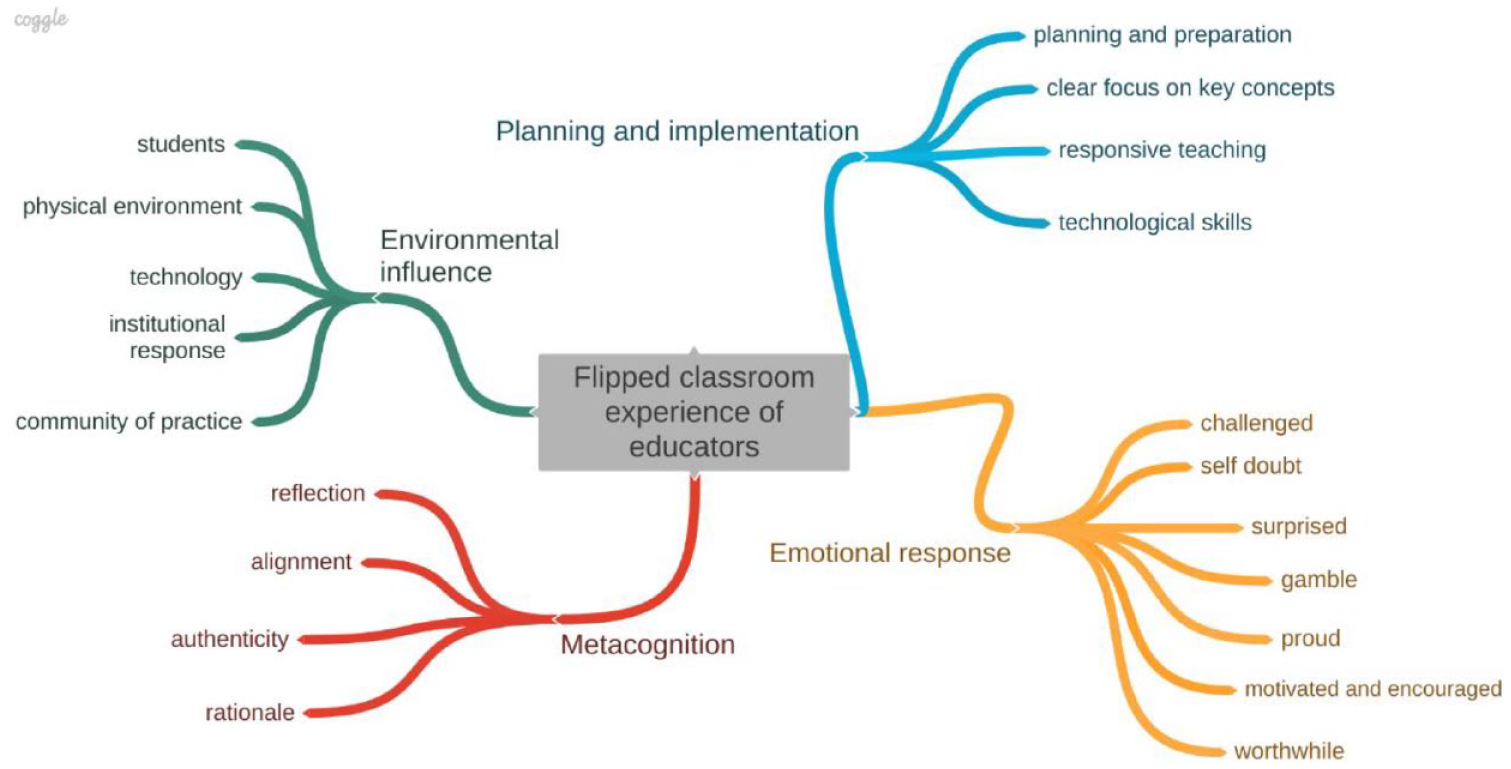
Visual representation of themes and sub-themes of educators’ experiences of the flipped classroom.
Environmental influence
This paper aimed to describe educators’ experience of using a flipped classroom, therefore this is the focus of the thematic analysis. The theme ‘environmental influences’ is briefly described with emphasis placed on sub-themes that focus on the educator’s experience. Five environmental influences were identified in our study: students, physical environment, technology, institutional response and community of practice.
Educators stated that students described their experience of learning using the FCA both positively and negatively. Nine participants described some resistance or pushback from students who disliked the change in the teaching approach. On the other hand, there was a rich description of student successes through FCA teaching including deeper learning and higher levels of engagement. Educators described how they observed the FCA increased collaborative learning and engaged students in becoming more responsible for their learning, ‘I was sometimes reluctant to break them up and give them a break if they were on a roll. They were doing such good work and having such great discussions’ (Emma).
Well designed and resourced physical spaces, ‘where you’ve got really good rooms, desks that easily move around, space where students can spread out and talk’ (Isabelle) were seen to positively impact the flipped classroom. On the other hand, inadequate spaces detracted from the learning experience.
An institutional response to flipped classrooms which included appropriate resourcing (such as technical support) was identified to positively impact the educator’s experience. Lack of resourcing and flexibility were identified as barriers to implementing the FCA, as illustrated by this educator: [I]f you make a choice that’s on the other side of the fence of what the university is saying it wants you to do, so which [computer] program to use, you’re on your own and that maybe I’d like to see a bit more flexibility there. Maybe that’s a resource issue. (Cassey).
Throughout the interviews there were discussions about the challenges faced with technology as a tool, and, ‘. . . technology were sometimes the things that fell apart’ (Cassey). Emma reiterated, ‘. . . we had a lot of technology breakdowns in one of our rooms. That really hampered your ability to progress the class’. Educators’ own confidence and skills in the use of technology were seen as barriers as described by Emma, ‘So I’m not super confident in new technology, so I had to learn a lot of that’.
On the other hand, educators also pointed out the value of technology in enriching learning and enhancing and the application of theory.
[Y]ou just can’t describe it in words for our course. Some of the things you can see, 'in a video or something like that. So all the advances in technology are a big enabler for this (Emma)'.
Educators being consistent in their use of technology was identified as useful in contributing to building confidence in students’ technological skills, particularly ‘those that were technophobic’ (Lauren). Having a community of practice of peers who offered each other support was valued highly and positively influenced educators’ experience: So there’s some really great feedback and connection. I have with those people and the course wouldn’t be where it is today if I didn’t have that slightly more outside input to me. So that’s been really good (Brett).
Planning and implementation
In this theme, educators spoke about the actions of implementing the FCA beyond the mechanics of how to flip. Flipping involved extensive planning and preparation which was unanimously described as time-consuming, ‘it needs a lot of planning. It takes a lot of work to get everything ready’ (Karla). Similarly, Samantha described, ‘when I first set up my flipped classroom . . . (it was) eating into Christmas holiday time. . . Because I simply didn’t have any other time to do it’.
Participants described that when flipping, it was essential to identify the key concepts and maintain a focus on these rather than focussing on content. Emma illustrated this saying, ‘(it) made me think more about what are the key messages and key concepts I want them to have when they hit that classroom’. This concept was echoed by Karla, Cassey, Lauren, Sharon and Sophia. Kim identified that this approach created ‘clarity and direction of my course’. There was even talk of ‘streamlin[ing] it and strip[ping] it back [to] make it really potent around that one concept’ (Sophia).
An interesting element that emerged in this theme was the need to be adaptable or flexible while teaching. This included the need to adjust teaching ‘in the moment’ (Sophia), as well as making changes to teaching over time. This flexibility is required, ‘when students go on journeys that you didn’t expect them to go or ask questions that you’re not prepared for and may not have done any preparation on’ (Isabelle). There was a sense that teaching was constantly changing when teaching in a flipped classroom. Sharon and Sophia spoke about requiring ‘a backup plan’. Similarly, Cassey and Derek mentioned the need for a ‘workaround’ when things changed. Sophia described the experience as dynamic and, ‘It’s a lot more kind of in the moment. I think it allows you to have your finger on the pulse a bit more about where people are at’. The flipped classroom, ‘allows you to be responsive not reactive’ (Sophia).
Adaptability was also related to changes over time. Educators described how they changed their flipped classrooms across weeks and semesters with reported improvements. Karla said, ‘I felt like I had got more smarter by second semester . . . I have learned what I did wrong’. Teaching in a flipped classroom was also described as, ‘never a finished product. It’s always going to need tweaking and moving and building’ (Samantha). Brett who had been flipping for the longest time of all participants said, ‘(it) has been a long journey . . . that it’s not going to work perfectly overnight’.
The experience of the FCA involved developing technology skills. Many participants spoke of how their technical skills were developing and that they felt the requirement for ‘software upskilling’ (Emma), and that ‘IT skills. . . (are) something I will need to work on’ (Karla).
Emotional response
Teaching in a flipped classroom was described as an ‘emotional rollercoaster’ with emotions that, ‘ranged from extreme frustration to just feeling on top of the world’ (Isabelle). The experience was stressful and challenging, ‘It’s a challenge . . . the workload and the stress level involved’ (Brett). Derek echoed this with his feelings of, ‘anxiety and the frustration leading up to the first flip’. Educators felt they were under pressure and reported to be ‘working quite hard . . . really exhausting’ (Lauren). At times it was frustrating, especially when there are, ‘some people [students] in the group that have done the work and some that haven’t’ (Sophia).
Some educators described having self-doubt and reported feeling ‘nervous’. In contrast, others described feeling comfortable and confident. Derek and Emma attributed confidence to previous successful flipping. The experience was also described as fun with reports of being ‘happy’ and ‘enjoying’ the flipped classroom: You walk out of that workshop and everyone is just high energy, you know that they’ve done lots of learning, oh, I can actually do this stuff and teach. You feel really great about it and all that work was really good (Isabelle) .
These positive experiences were also described as ‘surprising’. Some educators admitted they were unsure of their competence in flipping and their students’ responses. Using the flipped classroom was considered risky or a ‘gamble’. However, educators were also proud of their implementation of the flipped classroom.
I was stunned that I pulled it off. I was really [laughs]. I was really - because like I said, I was a bit frightened about it, but just the more online, the technical thing. Because IT is not my thing (Emma).
Overall educators were motivated or encouraged by their experiences and committed to continue using this approach. ‘Although it’s hard work, you know that it’s worthwhile at the end of it, because you do get such good results’. (Brett). Participants used words and phrases like ‘I was happy’ (Sharon), ‘invigorating’ (Emma), ‘highly stimulating’ (Derek), ‘fun’ (Emma, Cassey), ‘enjoying it so much more’ (Samantha), ‘I really liked it’ (Sophia), ‘thoroughly recommend it’ (Brett), ‘[I] enjoy class’ (Cassey) and ‘satisfying’ (Sophia).
Metacognition
Teaching in a flipped classroom was described as, ‘really important that you constantly think’ (Sophia). It follows, therefore, that reflection was necessary. Reflection was linked to the need to adjust and adapt which was mentioned in the earlier theme of Planning and implementation. Brett said, ‘we were always modifying and changing and reflecting on what we’d done’. Similarly, Kim identified: . . .we’re really analysing our own practice. . . the flipped classroom has helped me analyse everything. I find it’s actually really helped cement not just my course . . . but how I do everything as an educator.
Thinking also included considering the alignment of content with each week’s learning outcomes. Participants explained that the FCA required, ‘getting better with the alignment . . . and having that common thread through pre-class, in-class and post-class’. (Sophia). Educators spoke about how using the FCA leads to an increased focus on authentic learning activities which meet the intended learning outcomes. Authentic learning activities included case studies, application activities, as well as inviting contributions by industry partners and other experts. Those who worked in health-related professions particularly valued the inclusion of group activities and discussions and the ‘opportunity in practice speaking to a group’ (Sophia).
Although the data gathered provided support for the FCA this was not considered the only way to teach. Participants described that they had thought deeply about their rationale for using a flipped classroom and recommended, ‘only flip it if you’ve got a reason to’ (Derek) and when it ‘made sense’ (Lauren). Samantha explained, ‘it’s all about having rationale. It’s being able to say, I did this because. . .’.
Discussion
The purpose of this study was to explore educators’ experience of using the FCA in a higher education setting and to answer the research question How do educators describe their experience of using the FCA in a higher education setting?
The FCA has gained popularity in the higher education sector over the last decade, and this was enabled by the increased adoption of learning technologies (Lo, 2018). This paper described educators’ experiences of using the FCA in a higher education setting. The key findings included the development of four broad themes namely, the environmental influence, planning and implementation, emotional response and metacognition which will now be discussed in the context of previously reported literature.
Environmental influences
Similar to previous findings, environmental influences were identified as a key contributor to the success of the FCA (Akçayır and Akçayır, 2018; Hajhashemi et al., 2016; O’Flaherty and Phillips, 2015; Tate et al., 2018). Three key environmental influences identified in our study were student influence, technology and institutional support.
Consistent with previous research, educators reported that when they used the FCA many students demonstrated higher engagement, deeper learning and increased in-class collaboration as well as being more responsible for their learning (Bhagat et al., 2016; Burke and Fedorek, 2017; Foldnes, 2016; McLean and Attardi, 2018). Educators also reported that in some cases there was pushback against the FCA. Previous research has identified that some students find FCA too time-consuming (Smith, 2013) and some report the need for additional support and guidelines to navigate their learning activities (Chen et al., 2015; Wanner and Palmer, 2015). These student experiences may be the reason that some educators in our study experienced pushback from their students.
Similar to others (Akçayır and Akçayır, 2018), our study found technological support and access crucial in the successful implementation of technology-enhanced flipped classrooms. Educators' technological skills, confidence and belief in the value of technology as part of instructional practice were key issues raised and support the findings of others (Ajjan and Hartshorne, 2008; Ertmer, 2005).
In our study, educators wanted strong institutional support while adopting and implementing the FCA. This was expected as others have identified the importance of institutional support when implementing the FCA (Long et al., 2020; McLaughlin et al., 2014; O’Flaherty and Phillips, 2015). One of the ways this was achieved was through the serendipitous emergence of a community of practice. Through the FCA community of practice were able to share ideas and resources to help each other with the implementation of FCA. Similarly, Seyedmonir and colleagues (Seyedmonir et al., 2014) found that a community of scholars helped overcome the barrier of having limited resources such as course designers and technology experts as they introduced the FCA in their teaching.
Educators in our study reported that in the lead up to delivering courses using the FCA more time was required for planning and implementation. This factor is related to the finding that educators needed to redesign the curriculum to suit the structure of the FCA and improve their technology skills to deliver learning materials at an acceptable quality. It has been reported that the FCA requires approximately six times more time to prepare learning materials compared with traditional course preparation (Wanner and Palmer, 2015).
Furthermore, the educators in our study reported that using the FCA led to the use of more active teaching approaches in their face-to-face classes. This is another positive benefit arising from the FCA. However, considering the time commitment already given to the development of FCA learning materials, the additional time required to develop in-class active learning may not be fully recognised. Our finding is supported by Parmelee and colleagues (Parmelee et al., 2020) who described significant time investment in faculty development and course material development while undertaking the redevelopment of a health science curriculum to a lecture-free curriculum with active learning strategies.
Emotional response
In our exploration of the literature, we found minimal discussion only about the emotive aspect of FCA teaching. Previous research has found that before re-designing their courses, educators reported having some concern about student engagement in the FCA and anticipated experiencing feelings of ‘disappointment’, ‘challenge’ and ‘concern’ (Jong, 2016; Long et al., 2017). Our findings revealed that for educators there were two sides to the experience of teaching using the FCA; ambivalence and motivation. On one hand, the FCA is ‘challenging’, with time pressure and technology frustrations, and on the other hand, it was described as ‘fun’, and educators were ‘proud’ of the outcomes and that they were motivated by the approach.
There is evidence that the FCA presents both challenges and rewards (Akçayır and Akçayır, 2018). Our analysis revealed that educators experienced a sense of achievement that helped engage and sustain them as educators, indicating that for them, the FCA was inherently motivating. Lai et al. (2018) found that educators with high perceived self-efficacy and intrinsic challenge motivation, are more likely to continue to use the FCA despite barriers. However, having an extrinsic compensation motivation has been shown to predict continuance for flipped teaching (Lai et al., 2018). Our findings align with others that showed that for the adoption of paedagogical innovations, educators’ concerns need to be acknowledged and addressed to ensure sustainable practice (Chuang et al., 2018; Fuller, 1969; Jong, 2016).
The FCA presents significant workload implications and consequently, the sustainability of the educator is an important consideration. It is therefore imperative that there is not an over-reliance on intrinsic motivation to sustain the FCA. Rather, the decision to adopt the FCA needs to be based on sound paedagogical reasoning, supported by institutional recognition of workload, appropriate technologies, skill development and extrinsic motivators such as recognition of learning and teaching excellence. Sustained intrinsic and extrinsic drivers will continue to push educators towards experiencing that sense of achievement through the FCA.
Metacognition
Our participants explained that using the FCA necessitated creating better ‘alignment’ between curriculum and learning outcomes, and ensuring that there was a ‘common thread’ through each week’s learning materials. These findings highlight that an educator’s understanding of paedagogy is paramount when selecting the FCA. The FCA is guided by social constructivist approaches whereby the curriculum is designed to constructively align with the course learning outcomes. The development of clearly aligned learning activities in pre-, in- and post-class provides scaffolding to frame learning components and support students to contextualise their learning (Lo, 2018).
The analysis of interviews revealed that as a consequence of the FCA educators used more active learning methods and authentic learning experiences in face-to-face classes. This transpired due to pre-class flipped learning materials (i.e., videos, quizzes and other online interactive activities) providing scaffolding for learning and laying the foundation for students to contextualise their learning during class. Active and authentic learning aligns with transformative approaches to curriculum design (Garrison and Kanuka, 2004) and this explains why the educators in our study reported that the FCA enabled them to be ‘a lot more in the moment’ and have their ‘finger on the pulse’ during classes.
Teaching using the FCA was depicted as a reflexive process. Participants in our study highlighted that they found it important to ‘constantly think’, ‘analyse practice’ and ‘modify and change’ to continually improve not just their immediate but ‘how I do everything as an educator’. While it is well established that sound teaching practice requires reflection and constant adapting (Mathew et al., 2017) our study has demonstrated how the FCA inherently requires the educator to engage in these practices. Our findings demonstrate that the FCA has contributed to the development of the educators’ quality learning and teaching practices.
Global trends
When this study was conducted the FCA was considered innovative, and the participants selected in the study were innovators themselves. The global pandemic has however been heralded as the cause of global innovation with a greater shift to technology-enabled teaching practices including FCA. The rapid adoption of online learning during the global pandemic (Ellis et al., 2020) and the desire in higher education to resume on-campus learning (Petronzi and Petronzi, 2020) indicate that FCA has the potential to become the new normal in higher education.
Limitations and future direction
The primary limitation to this study is the collection of data 7 years ago which may be perceived to be old. However, due to paucity in the literature on the experiences of educators of the FCA, the findings still provide a valuable contribution to the current body of evidence. Furthermore, an increase in online learning post-pandemic enhances the potential uptake of the FCA by educators highlighting the currency of the findings of this study. In fact, a recent study conducted in 2020 on the experiences and perceptions of three instructors on the FCA aligns with some of our key findings (Long et al., 2020).
This study was conducted at a single institution and most educators were early adopters of the FCA which limits the transferability of the findings. Nevertheless, novel insights were achieved and highlight the unique challenges faced and the successful strategies implemented by educators in the current study which may be useful to those currently implementing or planning to adopt the FCA.
A strength of this study was the in-depth exploration of educators' experiences of implementing an FCA before the pandemic based on a reflective framework, rigorous data analysis processes and researcher reflexivity to limit researcher bias. Further research is warranted on the impact of COVID-19 on educators’ perspectives on implementing the FCA during and post-pandemic, as well as their experiences of implementing FCA in an online-only setting.
Finally, the recent COVID-19 pandemic resulted in a rapid uptake of online learning and teaching with the flipped classroom well placed to be applied to an online environment. It therefore would be worthwhile to revisit the uptake of FCA by educators in a post-pandemic environment.
Conclusion
This study explored how educators across several disciplines in one higher education institution described the experience of using the FCA. Four key themes; environmental influence, preparation and implementation, emotional response and metacognition, depict the core experiences of the educators in our study. Emotional response as a key component of educators’ experiences when adopting the FCA was a novel finding of this study. An overarching thread that linked these themes was that the FCA was worthwhile, despite the emotional roller-coaster, because it prompted reflexive and responsive teaching. Exploring educators’ insights into the experiences of designing and delivering education using the FCA supported the application of paedagogical practices which include designing constructively aligned curricula and integrating active learning methods and authentic learning experiences.
Footnotes
Acknowledgements
The authors thank participants in this research for sharing their teaching experiences.
Declaration of conflicting interests
The author(s) declared no potential conflicts of interest with respect to the research, authorship and/or publication of this article.
Funding
The author(s) disclosed receipt of the following financial support for the research, authorship, and/or publication of this article: Research for this study was supported by a grant from the University of the Sunshine Coast, Centre for Support and Advancement of Learning and Teaching.
