




Abstract
Various factors have contributed to conceptualizing the altiplano as an “extreme” and hostile upland environment, where niche lifeways such as camelid herding are part of the limited human presence. Consequently, Andean herders are often portrayed as merely exploiting the ostensibly self-sustaining altiplano pastures and peatlands. This viewpoint is reinforced by the low visibility of material culture associated with and derived from pastoralist lifeways. To revisit this essentialist and ecologically inclined perspective, we argue that pastoral practices in Andean bofedales (high Andean peatlands) involve active and significant water and vegetation management interventions. These interventions, driven by collective labor, not only enhance but also expand peatland resources for livestock. To support this argument, we present findings from Surire, Mulluri, and Parcohaylla (Chile), where ethnographic research was integrated with archaeological surveys and geospatial methods. These approaches allowed us to characterize active and abandoned hydraulic installations and evaluate their role in shaping pastoral landscapes. We offer a reimagined perspective on bofedales, framing them as cultural landscapes shaped by collective pastoral labor through hydraulic management practices. These landscapes sustain livelihoods, promote social cohesion, and are deeply embedded with Aymara cosmopraxis, reflecting the relational dynamics of humans, animals, and the environment in co-nurturing practices.
Introduction
High Andean peatlands, locally known as bofedales, champeales, juqhu, potreros, ciénagos, and vegales, are key pastoral ecosystems that sustain life across the arid puna by providing water supply and essential fodder for Andean camelids (White-Nockleby et al., 2021). Although long perceived as purely natural formations, bofedales are now increasingly recognized as complex socio-natural systems whose sustainability and vitality rely on the intertwined agency of humans, sacred mountains, camelids, water, vegetation, and Pachamama (Flores Ochoa, 1977; Palacios, 1977; Van Kessel and Condori, 1992; White-Nockleby et al., 2021; Yager et al., 2021). Paradoxically, what has long been portrayed as pristine “nature” is in fact the living outcome of centuries of human–animal–environment interactions that nurture and even expand these wetlands. Upland camelid pastoralism, defined by its seasonal mobility and collective labor, plays a crucial yet underappreciated role in their development and upkeep (Prieto, 2015; Verzijl and Quispe, 2013). Humans and camelids shape these landscapes through grazing, trampling, and irrigation. Additionally, humans engage in ritual practices that synchronize their activities with monsoon-driven changes in water and vegetation (García, 2021; Villagrán and Castro, 1997; Yager et al., 2008). This approach frames bofedales as relational, socio-natural, and co-produced spaces, where practices actively transform hydrological and ecological processes, providing tangible evidence of the material effects of pastoral labor (Prieto, 2015). The emerging understanding of bofedales from geographical, archaeological, and anthropological perspectives aligns with previous research on other types of cultivated landscapes in South America (e.g. Arroyo-Kalin, 2015; Denevan, 2001; Erickson, 2018).
Bofedales are located within the Andean altitudinal belt at elevations ranging from 3100 to 5600 masl and are found across southern Peru, south-western Bolivia, northern Chile, and north-western Argentina (Izquierdo et al., 2015; Ruthsatz, 2012; Squeo et al., 2006). These encompass diverse plant communities, including Juncaceae, Cyperaceae, and Asteraceae families. Cushions of Oxychloe andina (known as paco, male puku, ork´o puku) and Distichia muscoides (female puku, kachu paco, or kulli puku) are relevant. These vegetational formations are often distributed like archipelagos across the highlands. Despite their fragmented distribution, bofedales cover approximately 150,000 ha in the Andes (Meneses et al., 2019; Ruthsatz, 2012; Squeo et al., 2006; Villagrán et al., 1999).
Andean indigenous pastoral communities (e.g., Aymara, Quechua, and Likan Antai) possess a deep ecological knowledge of bofedal management, conservation, and expansion, rooted in traditions that extend to pre-Hispanic times (Domic et al., 2018; Erickson, 2018; Lane et al., 2022; Vining and Williams, 2020). This management involves year-round and seasonal specialized water management tasks, and the establishment of hydraulic infrastructure, including irrigation canals, pipelines, pumps, ponds, and reservoirs. These features are built by digging ditches, erecting dry stone walls as barriers, building reservoirs, and turfing plant patches (Lane, 2014; Lane et al., 2022; Palacios, 1977; Prieto, 2015; Quesada and Lema, 2009; Verzijl and Quispe, 2013; Yager et al., 2021). Considered diachronically, these hydraulic structures constitute a significant material record for archaeology, informing understandings of irrigation techniques and the social organization of water management over time. Nevertheless, this materiality entails notable methodological challenges due to its low visibility and its ephemeral, multi-temporal character, which are addressed in this paper.
Along with water management, transhumance allows these high-altitude peatlands to recover during periods of reduced human and livestock activity, promoting plant regeneration (García, 2021). Camelid herds significantly contribute to bofedal maintenance through their grazing. Their trampling, coupled with surface water flow, supports seed dispersal and enriches the soil. By feeding on tall herbage, camelids clean the peat (champeal), while their dung naturally disperses seeds and acts as a low-impact fertilizer (Yager et al., 2008). This integrated system effectively enables livestock to “weed,” “fertilize,” “sow,” and “harvest” their fodder, highlighting the mutually adaptive interaction between pastoralism and bofedales.
Aymara bofedal management practices are intertwined with social and ritual dimensions that involve communal labor, rituals devoted to water springs, and the veneration of culturally and religiously significant peaks and hills (mallkus or achachilas) (Dransart, 2002; Van Kessel and Condori, 1992). Together, these symbolic and functional practices contribute to the improvement, preservation, and expansion of bofedales, supporting well-nourished herds that produce high-quality fibers from llamas (Lama glama), alpacas (Vicugna pacos), and bovids introduced during the Spanish colonial period (16th–19th centuries) (Flores Ochoa, 1977; Palacios, 1977; Yager et al., 2021).
Building on the tradition that approaches bofedales as socio-ecological systems, this study deepens the understanding of the social practices embedded in such relational perspectives, and of the perception of bofedales as active entities for the Aymara people. By documenting management practices and their historical, technological, and sociocultural dimensions, this work aims to challenge the traditional divide between natural and cultural systems. It proposes that bofedales be conceptualized as co-constructed systems shaped by multiple agents, emphasizing the dynamic and ever-evolving nature of the environment as a product of ongoing interactions, reproductions, and movements. Based on an ethnographic approach and on concepts such as cosmopraxis (De Munter, 2016) and “lines of life” (Ingold, 2018), it is possible to suggest that the social practices and decisions around the bofedal transcend human agency. Aymara actions of care and management of animals and nature reflect the particular ways in which herders relate to different entities or agents that influence human life, including mountains, ancestors, and specific places.
Before intervening in the waters and soils with shovels and picks, Aymara herders offer gifts to the hills and ask permission from Pachamama. Through these rituals, the Aymara myths of origin, reciprocal relationships, and the commitments they maintain with these entities are continually renewed. From an ontological perspective, social practices linked to the bofedal can be understood as cosmopractices, since human actions are always interactions with other beings through which multiple mutual affections and agencies unfold, none of which are exclusive to humans (De Munter, 2016). These management practices also consider the other beings that inhabit the bofedales, such as plants, wild animals, and microorganisms, which contribute to bofedal fertility and regeneration. This framework reveals a network of social relationships enacted and sustained in these spaces, showing the continuous emergence and transformation of nature through the integration and interaction of its various components (Ingold, 2018).
This perspective offers a more nuanced understanding of human–environment relationships and highlights the importance of integrated and collaborative approaches to the management and conservation of bofedales. Our study contributes to this discussion through a detailed analysis of practices that combine material and immaterial dimensions of the bofedales of Surire, Mulluri, and Parcohaylla in northern Chile. It draws on ethnographic data collected through first-hand observations and oral histories, complemented by spatial and archaeological methods focused on the material culture of irrigation, which serves both as a foundation for daily practices and as an archive of memories for those who nurture these landscapes. To grasp the complexity of bofedal management and its historical significance as a cultural legacy, the study establishes contextual and semantic relationships while introducing the concepts of water nurturing (crianza del agua) and bofedales as relational spaces.
Bofedales as relational spaces
This work highlights the tension between culture and nature, a fundamental opposition in modern knowledge that has a series of implications, starting with the ideas of evolution-progress with anthropocentrism and the exclusivity of humans as agency-bearing beings (Descola, 2012). Under this paradigm, the social and cultural are seen as active, while the natural is passive, that is, what sustains or serves human subsistence. This logic has permeated all modern knowledge in terms of the understanding of practices, experiences, and places, and archaeology has not been immune to this opposition (Troncoso et al., 2022).
In contrast, we propose that this opposition is neither universal nor characteristic of communities throughout time. We know that, ethnographically and historically, there are different forms of relationships and articulations between those beings who exist in the world (Lema, 2014). Aymara ethnographic accounts provide an ontological positioning in this regard, offering important clues for understanding and rethinking the definition of the bofedal, for the archaeological interpretation of the corresponding material culture, and the practices associated with each. From there, we can ask ourselves: what is a bofedal? How do beings and materials interrelate in the social life of a bofedal? We understand the management and care actions as cosmopractice (De Munter, 2016), since human action always occurs in relation to other beings, generating multiple affections and agencies that extend beyond the human. As de Munter notes, “living is always becoming in relation with others” (De Munter 2016: 631).
Cosmopraxis is not limited to ritual or ceremonial activities but encompasses diverse dimensions, including biodiversity, technology, and the symbolic relations with peatlands and water, which scholarship has often treated as separate domains. Consequently, the concept of cosmopraxis attempts to move beyond the idea of “worldview” (in Spanish cosmovisión), which is usually anchored in the representational plane, in the world of ideas and the symbolic or immaterial, disconnected from the world of practice. From this perspective, the cosmological does not exist in itself but is structured through relationships, experiences, and social practices that occur in habitation, thereby altering and structuring the corresponding materiality (Troncoso et al., 2022). Andean communities offer multiple examples of cosmopractices, particularly in relation to the role of the mountains, which are fed with vegetal and mineral offerings considered “food for the mountains” (García et al., 2018: 546). These beings are petitioned for successful harvests and are ritually nourished. Even pre-Hispanic settlements and contemporary constructions such as churches, corrals, and ceremonial enclosures are often oriented toward them, with openings and entrances aligned in their direction (Castro, 2009; Dransart, 2002; Martínez, 1989). Mountains possess the power to influence human destiny and life more broadly. In Aymara, a series of terms express these relationships, such as mutual nurturing (uywaña), which challenges modern definitions of nature and culture by emphasizing reciprocal care and co-existence.
Viewing nature as a constantly produced entity transformed through human agency reveals bofedales as assemblages where dialogic actions and mutual impacts between humans and non-humans interlink (Ingold, 2011; Lema, 2014; Troncoso et al., 2022). This interdependence gives ecological practices ethical and political dimensions, fostering responsibility toward herds and what is known as nature, and requiring attentive care and breeding practices. Just as plants and microorganisms are affected and transformed by grazing practices, non-human agents nourish humans, sustaining their lives and enabling them to thrive (Lema, 2014). Furthermore, we can also propose the idea of nurturing or “breeding the water,” for which several types of infrastructure are built to facilitate irrigation (e.g. canals or dams). The idea of water nurturing illustrates how irrigated pastures sustain animals that are later transformed into meat and wool, materials herders use to produce textiles and clothing (Dransart, 2002). Within this multispecies web, “one must know how to breed and how to let oneself be bred” (Van Kessel and Condori 1992: 10). In this sense, all beings participate in processes of mutual breeding and transformation (Lema, 2014).
In Aymara, the term for mutual nurturing, uywaña, refers to the reciprocal relationships through which humans nurture, are nurtured, and allow themselves to be nurtured by others (Van Kessel and Condori, 1992). The term for living entities (uywiri) describes beings such as hills or mountains that protect a community by providing and sustaining human life, and that are in turn nourished by humans through offerings such as animal sacrifices (wilanchas), ritual tables (mesas), and offerings (pagos) made to the mountains and to Pachamama (Fernández, 1995; Martínez, 1989). Similarly, uywaña is the term that defines the relationship between herders and camelids. This uywaña nurturing differs considerably from the word defining the relationship with sheep, awatiña (to herd) (Kent, 1988). According to Kent, a herder from Puno (Peru) stated in the 1970s, “we nurture the animals, and the animals nurture us” (Kent 1988: 33). According to this linguistic distinction, humans and camelids are herded together, fostering a symbiosis between them that is not present in the relationship established with Eurasian livestock.
Thus, in this mutual nurturing, humans necessarily become interwoven with a set of places, beings, and materials; living is possible thanks to the relationships maintained with this array of entities. In this interconnection, humans are affected and transformed as they must attend to the needs of the organisms and living spaces they nurture, just as these also influence and have agency over human becoming (Ingold, 2011; Troncoso et al., 2022).
To ensure its healthiness, the peat must be guided, cared for, and nourished, like a living body (Young man, Visviri, 2024). Irpa is the irrigation using a canal in Aymara (Palacios, 1977), which also means “to guide” and “to guide animals” (Arnold and Yapita, 1998). Interestingly, irpa is also used as a suffix to construct multiple words that have in common the idea of flow (Gilles Rivière, 2022, personal communication; Laime et al., 2020) and herding. For example, irpar or irpaska is the marriage between young llamas during the señalakuy or floreo ceremony (Elizaga, 2022); irpaqa means to ask for the bride’s hand in marriage (Laime et al., 2020). This term also designates a young bird while it is being bred. This reveals a semantic link between the paths that humans and animals follow to become persons, and the practice of channeling water through the canals that irrigate and revive the peatland.
Ingold’s (2018) concept of the “line” provides an effective lens through which to examine the complex and dynamic relationships that shape the bofedal phenomenon. The bofedal is formed through an assemblage of humans, animals, plants, microorganisms, climatic forces, and water, all intertwined as distinct lifelines. Within this context, irpa functions as a line that articulates and stimulates the fertility and sociability of the bofedal. It is an expression of cosmopraxis that transcends the exclusively human.
Study area and contemporary transformations
The study area lies within the Dry Puna ecoregion of the south-central Andes (Núñez and Santoro, 1988), in the highlands of the Arica and Parinacota Region, northern Chile, at more than 4000 masl. It encompasses the pastoral territories of Mulluri, Surire, and Parcohaylla, located near 19° S and 69° W (Figure 1). Location of Mulluri, Surire, and Parcohaylla (red dots) in the puna of the Arica Parinacota region, Chile. Map: authors.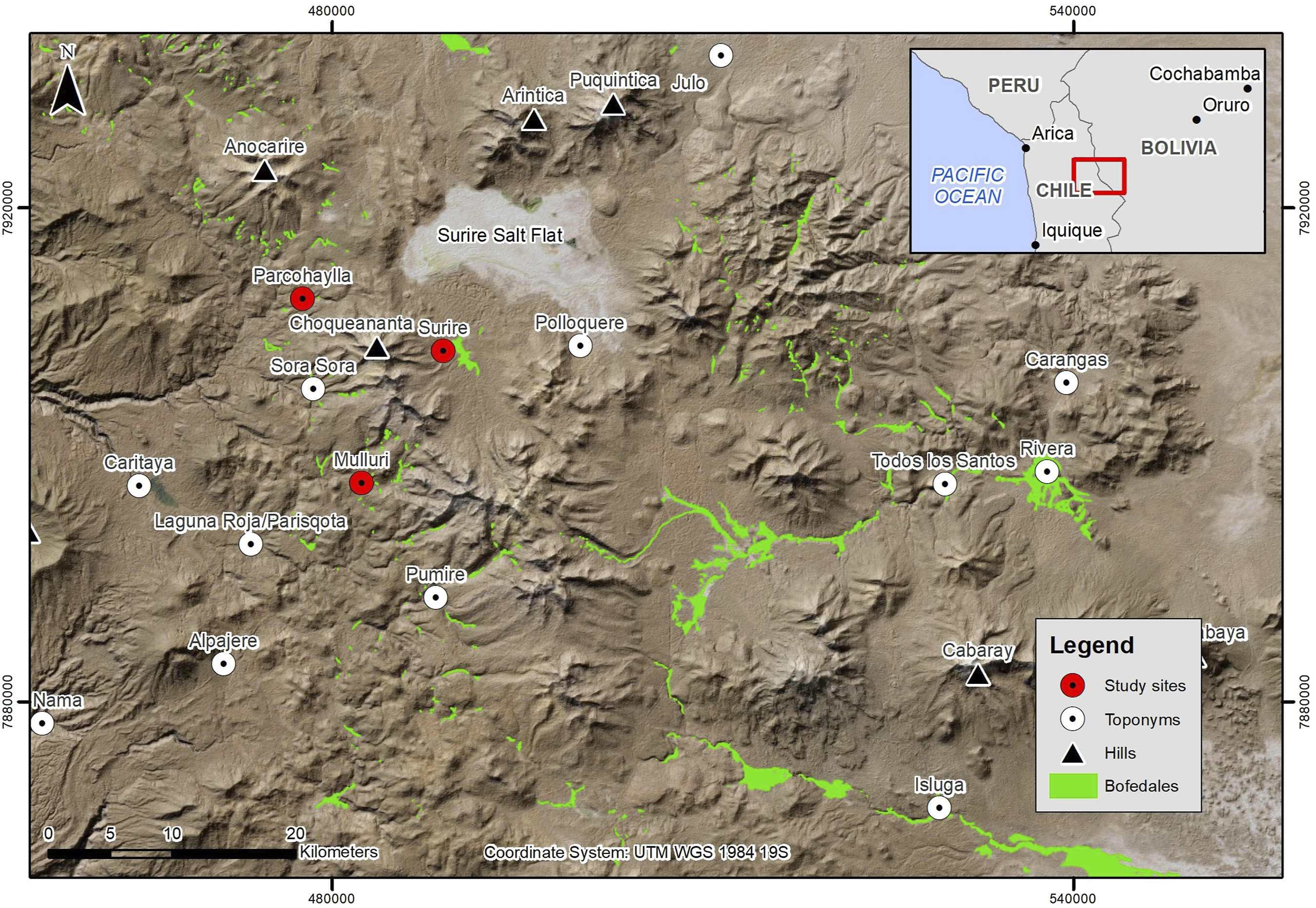
Mulluri, Surire, and Parcohaylla herders have had a historical and territorial connection with the highlands of neighboring geopolitical regions of Tarapacá (Chile) and Oruro (Bolivia) and, more generally, with the ancient Carangas Aymara cultural region (Dransart, 2002; Rivière, 1982). While the Mulluri community has its origins in the colonial period, at least (García, 2021), the history of Parcohaylla has not yet been studied. Oral histories indicate that the families acquired the currently settled lands of Parcohaylla after the Saltpeter War (1879–1883). While the rich historical memory of the Surire community members links their settlements with Arajj Saya or the upper half of the Isluga territory (Comunidad de Santo Tomás de Isluga, 2018; Martínez, 1989). Across these regions, herders maintained close ties with farmers in the valleys at lower altitudes, particularly Esquiña, Camiña, and Nama. During the second half of the 20th century, most herders migrated to the coastal valleys and cities of the Arica, Parinacota, and Tarapacá regions (Eisenberg, 2013; Gundermann, 2018), leaving much of the bofedal irrigation infrastructure abandoned. The Aymara language was nearly lost during this process, with older community members interviewed for this study only partially understanding and remembering it. As in other parts of the Andean highlands of Bolivia and Peru, Aymara people today often move between urban and rural areas (Damonte, 2011).
Nowadays, in Mulluri, there are no inhabitants and no livestock, however, people return every year to celebrate the Virgin of Nativity. The livestock gradually perished due to measles, intestinal parasites, and predation by pumas (Puma concolor) and foxes (Lycalopex culpaeus). As a result of herder migration, along with other environmental and geopolitical factors, many of the Mulluri bofedales have suffered degradation and drying, directly affecting their biodiversity (Yager et al., 2021). Although herding is no longer a daily practice for many, it remains a world of inherited representations that shape how people think and relate to animals (Bugallo and Tomasi, 2012). The absence of active irrigation and bofedal management between the 1980s and 2000s left many areas severely deteriorated or entirely lost. Historical accounts from the 1960s indicate that about 10 families kept livestock in the bofedales near Mulluri. This is consistent with historical census data indicating that in 1943, Mulluri had 56 inhabitants living in eight households and maintaining around 2000 llamas and 180 alpacas (Keller, 1946). Earlier census data show that Mulluri had 80 inhabitants in 1892 and 60 in 1883 (Castro, 2010). However, due to the highly mobile nature of herders and the challenges in accessing their settlements and areas of activity, these historical figures should be used with caution.
In Mulluri, two large bofedales stand out, together covering approximately 1.26 square kilometers. Their management required significant labor and coordination, as both were worked simultaneously. One includes a 4.5-km canal along its northern edge, remnants of which remain visible today. Accounts vary on the time required to build and maintain these canals, with estimates ranging from one to four days. However, these activities ceased 40 years ago, and greenery is confined to the area around the springs. Notably, in 2010 and 2012, the community irrigated a small portion of the main Mulluri bofedal (6 sq km) near the village. This same ditch and intake were revisited and repaired in 2021 by officials from Chilean National Forestry Corporation and Chile’s National Indigenous Development Corporation (CONAF-CONADI) as part of an ongoing regional program aimed at bofedal restoration.
In Surire, collective work on bofedales ceased during the 1980s. From the 1943 census, it is possible to establish that Surire had two houses and 14 inhabitants who managed a livestock population of 1413 camelids (Keller, 1946). Oral accounts suggest that until the 1970s, four families lived there and actively collaborated to maintain water intakes and clean the canals. The main bofedal (12 sq km) featured five water intakes and a major canal extending 2.1 km along its eastern edge. Each family originally managed herds of up to 1000 llamas, but these numbers declined to 500 and eventually to 200. Nowadays, only a small portion of the main bofedal is actively managed. This work is carried out by two community members who are occasionally assisted by relatives visiting from urban areas. In November 2022, the main intake at Calaconta, unused for more than 30 years, was restored and returned to operation (Figure 2). Hydraulic devices or architectures: tomas (a)–(f), cequias and pongos (g)–(h). Photos: authors.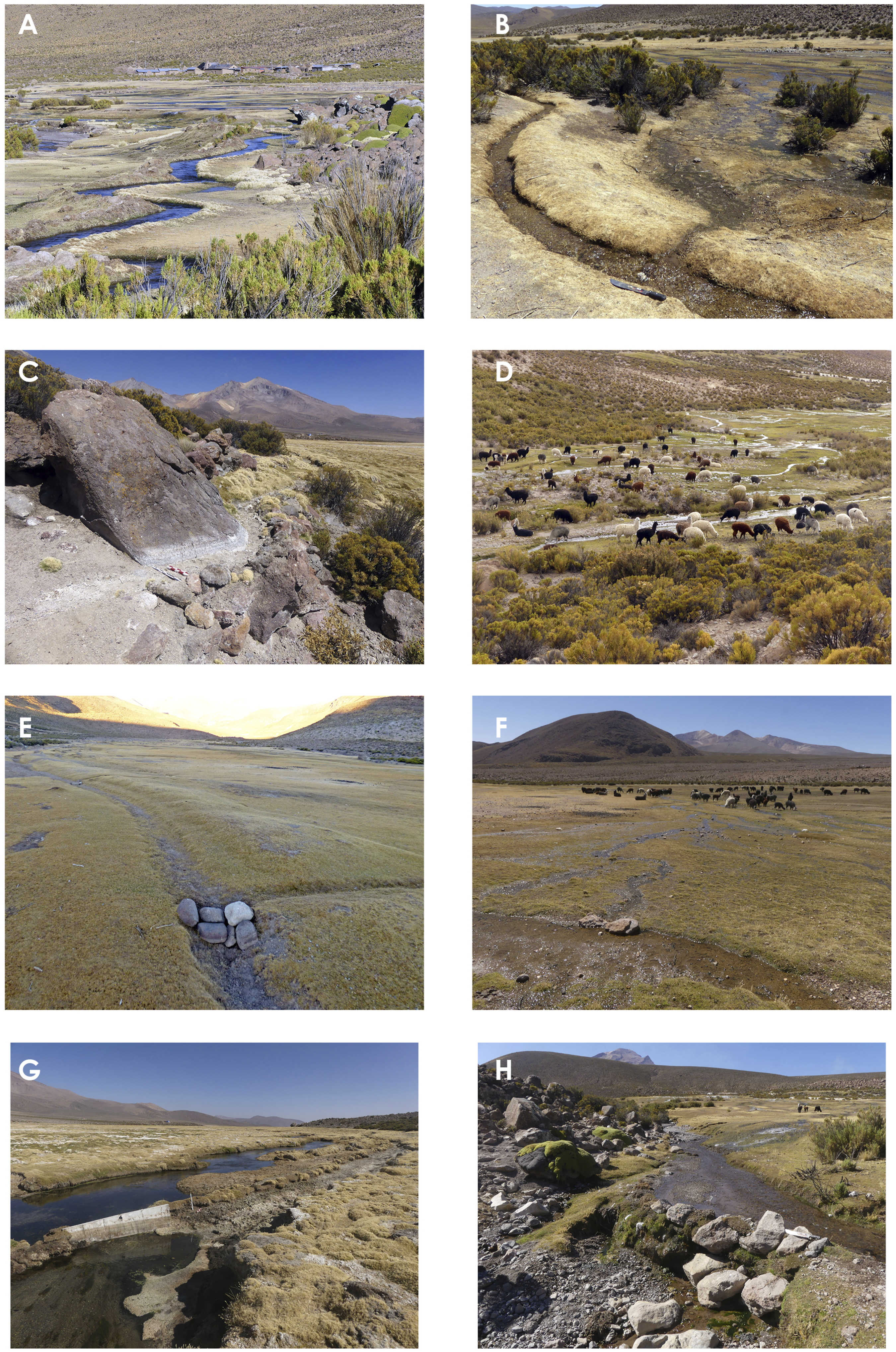
Unlike the previous cases, the Parcohaylla bofedal (2 sq km) continues to be irrigated and managed collectively, although at the family rather than the communal level, and it remains in good condition. The three families residing in the village work independently, without necessarily coordinating with one another, to maintain the three intakes that feed the bofedal. Unfortunately, no 20th-century census data are available for the community. In the 1960s, oral accounts indicate that approximately eight families maintained smaller herds compared to those in Mulluri and Surire, aligning with the smaller size of the bofedales in this area. Each family kept up to 100 head of livestock, including llamas, alpacas, and sheep. In the past, families would coordinate in advance to spend one or two days irrigating the main bofedal and other nearby bofedales.
Nowadays, young people living in the city return to help their parents, invest in livestock, and occasionally visit the village. Parcohaylla has also been part of the CONAF-CONADI program, with efforts focused on restoring several bofedales and encouraging residents to maintain these traditional practices (supplementary material).
Methods
Between 2020 and 2023, we conducted ethnographic research to document local management practices of bofedales, their seasonality, and perceptions of landscape change and degradation. This effort included interviews, corroboration of oral accounts in the field, and participant observation. Approximately 25 people from the three communities participated in these research activities. Some of the participants currently manage bofedales, while others reside in the coastal city of Arica and nearby valleys. Individuals who explicitly authorized the use of their names are identified accordingly. In all other cases, only gender and age range are included (e.g., “Adult woman,” “Young man”), along with the location and year of the interview. When interviews were conducted away from their territories (i.e., Arica or nearby valleys), the community to which the interviewee belongs is specified, followed by the location where the interview took place (e.g. Demetrio García, Mulluri community member, Pampa San Martín, 2022).
Additionally, we documented the irrigation activities conducted by local herders as part of government-led agreements with CONAF-CONADI. This program, launched in 2019, aimed to address the challenges of abandonment and labor shortages in the management of bofedales. The initiative involved the irrigation and upkeep of bofedales by teams of local herders hired explicitly for these tasks. Annual goals were set for constructing new irrigation canals and maintaining existing ones. Fortunately, these efforts have played a crucial role in mitigating the deterioration of the bofedales.
To complement the range of methods employed in this study, we conducted an on-site archaeological survey and indirect observations during our ethnographic fieldwork, enabling us to gather detailed knowledge about bofedales. The survey follows what has been proposed by Sitzia et al. (2025) and García et al. (2024). Following their protocols, the irrigation canals, once identified in the field, were mapped upstream and downstream using handheld GNSS devices. Key features—such as canal hierarchy, width, construction techniques, materials, and their associations with other archaeological sites—were documented through photography and recorded in field forms. This methodology not only provided a means to cross-reference oral accounts regarding the conservation status of the bofedales but also generated new lines of inquiry for our ongoing ethnographic research.
Similarly, we applied remote sensing methods to refine and expand the results obtained from the ground survey. This approach integrated geospatial techniques, aerial image interpretation, and hydrological modeling. Photogrammetric flights over the bofedales were conducted with a DJI Mavic Pro 2 drone, yielding orthomosaics and digital elevation models through structure-from-motion photogrammetry using Agisoft Metashape 2.2. The orthomosaics, at approximately 5 cm per pixel, were employed in ArcGIS Pro 3.2 to vectorize linear hydrological features and identify hydraulic installations. At the same time, a false-color Decorrelation Stretch orthomosaic processed in ENVI 4.6 enhanced the distinction of vegetation, water, and bare soil. The digital elevation models, at roughly 8–11 cm per pixel, were utilized in ArcGIS Pro 3.2’s hydrology toolbox to model natural streams and establish their hierarchy by applying an accumulation threshold of 5000. Consequently, a network of natural and anthropogenic hydraulic systems and relevant points was generated by combining ground survey data with remote sensing.
Nurtured bofedales
The interviewees noted that in Mulluri, Surire, and Parcohaylla, champeales are “created and partially created.” Oral accounts and field validation differentiated among bofedales found in highland grazing lands based on their level of human intervention. They are categorized as “unmanaged,” “managed,” and “created.”
Managed and created bofedales tend to be located on plains, whereas unmanaged ones are found on steep slopes and are generally smaller, appearing as scattered patches across the landscape. Managed bofedales cover large areas that require artificial irrigation and are therefore associated with hydraulic infrastructures such as intakes and canals. In contrast, unmanaged bofedales lack irrigation structures and depend exclusively on the flow provided by natural springs. Although unmanaged, these bofedales are still used for grazing domestic herds and are thus integrated into herding mobility circuits and management strategies. Their use allows managed and created bofedales to rest, preventing overgrazing and enabling their recovery. In this way, unmanaged or “natural” bofedales also form part of the pastoral landscape, once again challenging the conventional nature-culture divide.
Created bofedales refer to areas modified through the systematic channeling of water and irrigation over several years, where previously only sparse vegetation, such as various grass species (tolas), existed: “Whenever there is water, and at the appropriate time, a bofedal can be created. It is quite a bit of work, and it needs to be taken care of” (Demetrio García, Mulluri community member, Pampa San Martín, 2022).
First, the herders go to mensurar, which means making observations and measurements of the topography to choose a suitable location. Second, they construct the toma (intake). The concept of toma comes from the Spanish word “tomar,” meaning they are literally used to “take” water, diverting it from its source towards the main ditch and then distributing it throughout the bofedal. Generally speaking, tomas correspond to live canal dams arranged transversally on the course of a river or stream (Figure 2(g)–(h)).
Subsequently, a canal is traced to convey water to the desired pooling area, equipped with peat (champa) and stone gates (pongo) to control the water flow. The irrigation method is riego tendío, where water flows freely, flooding the future champeal. The bofedal is irrigated from August until the beginning of the monsoon season. If it does not rain, irrigation continues. In April, artificial irrigation must be cut off, meaning the pongos are closed, and the excess water is drained into the river (Figure 2(a)–(f)). Continued irrigation during the winter months may result in frost formation, which can adversely affect the champeal. The following year, the process is repeated. After two years, the bofedal begins to sprout. The grass that used to grow in the new area rots and dies as the champeal compacts and kills these plants. In three or four years, cattle can graze on it. If irrigation is not sustained by herders, the newly created bofedal dries up, highlighting the concept of “fodder chacras” coined by Lane (2009). The following quotes illustrate local perspectives on these practices: In Parcohaylla, there are parts that are human-made and parts that are natural. Sora Sora [bofedal in the territory of Mulluri], was human-made, but now it's completely natural, and look, uh! [emphasizing pause], it is entirely dry. And now, to restore that you should be working there for a month. Yes, it can be recovered, but you must live there. It is indeed a lot of work (Demetrio García, Mulluri community member, Pampa San Martín, 2022). In Mulluri, a portion of it is human-made. Everything in the village area is for irrigation, and those champeales are human-made. It used to be full of tolas… There is no need for transplanting here. It is because, for sure, the same water carries some little seeds; the water itself brings them, it shows itself, and it grows on its own (Adult man, Parcohaylla, 2023).
Historical memory on management and cyclical practices
Each August, when the bofedal has thawed and begins to regrow, families gather in the peatlands to carry out their seasonal tasks. Depending on the area to cover, the work could take anywhere from a day to a week. Since the monsoon rains occurring between December and March destroy the irrigation infrastructure, it must be restored every year. In this process, herders build upon the remnants of the previous year’s structures, which act as material reminders to guide their collective labor (Figure 3). At the same time, they reflect on and invoke the memory of their ancestors who once worked on the same land. In the bygone era of rural communities, the irrigation of champeales was governed by a series of reciprocal obligations amongst families within the community (ayni), wherein livestock keepers were obliged to irrigate the champeales they utilized for grazing. Several narratives corroborate the cultural significance of these obligations. In years gone by, irrigation was mandatory because people relied on it to provide food for their animals. Those who didn’t have any obligations were expected to employ a worker... Men, women and anyone else with animals had to participate, as they had to contribute to the task. (Demetrio García, Mulluri community member, Pampa San Martín, 2021) I believe [irrigation] is important because in the past, they had their animals, and they had to irrigate the champeales; it was like an obligation they had to fulfill. But now that people have left, it’s been left abandoned. (Ángel García, Mulluri, 2021) We have to get the water so that the bofedal turns “green,” otherwise it would not be possible; everything would be brown. It is our duty to get the pipe so we can irrigate and feed the little animals (Nelly Bisa, Parcohaylla, 2021). (a) Parcohaylla bofedal during the dry season (September 2022). The photograph shows community member Mrs. Nelly Bisa maintaining the irrigation ditch. (b) Anocarchave bofedal, located in Parcohaylla territory, during the dry season (September 2022). In the photograph, the Aranibar Bisa family is extracting the intake and cleaning the ditches. (c) Janure bofedal, in Parcohaylla, during the dry season (September 2022). Nicolás Brañez, a young community member hired by CONAF, is shown extracting the intake and cleaning the ditches. Photos: authors.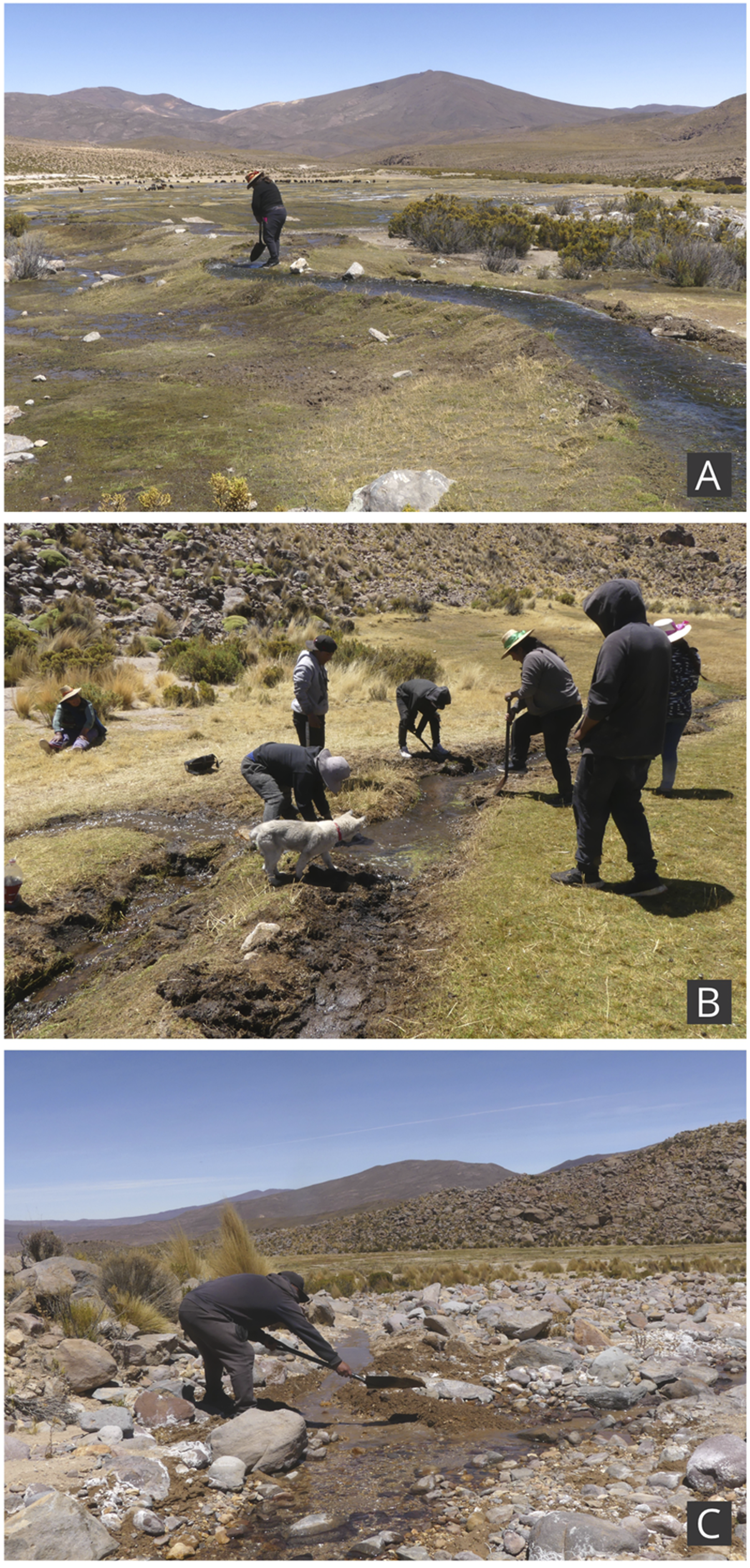
Work in the bofedales was organized corporately, both at the family and community levels. Figure 4 illustrates the form taken by a managed bofedal, with its different hydraulic arrangements and spatial distribution. At the top is the spring, where the water feeding the bofedal originates. The spring forms a stream, which is redirected with a small dam (toma). From that point, water flows through a main channel that community elders called cequia, from the Spanish acequia, or irpa, which is traced on the edge of the bofedal. Generally, in each bofedal, there is more than one intake and more than one main irrigation channel. Smaller canals branch out from the main ones, distributing water inside the bofedal. This flow is regulated by the presence of gates known as “pongos” (Figure 2(e)–(f)). The diagram illustrates the shape of a managed bofedal with its different hydraulic arrangements and spatial disposition. Figure: authors.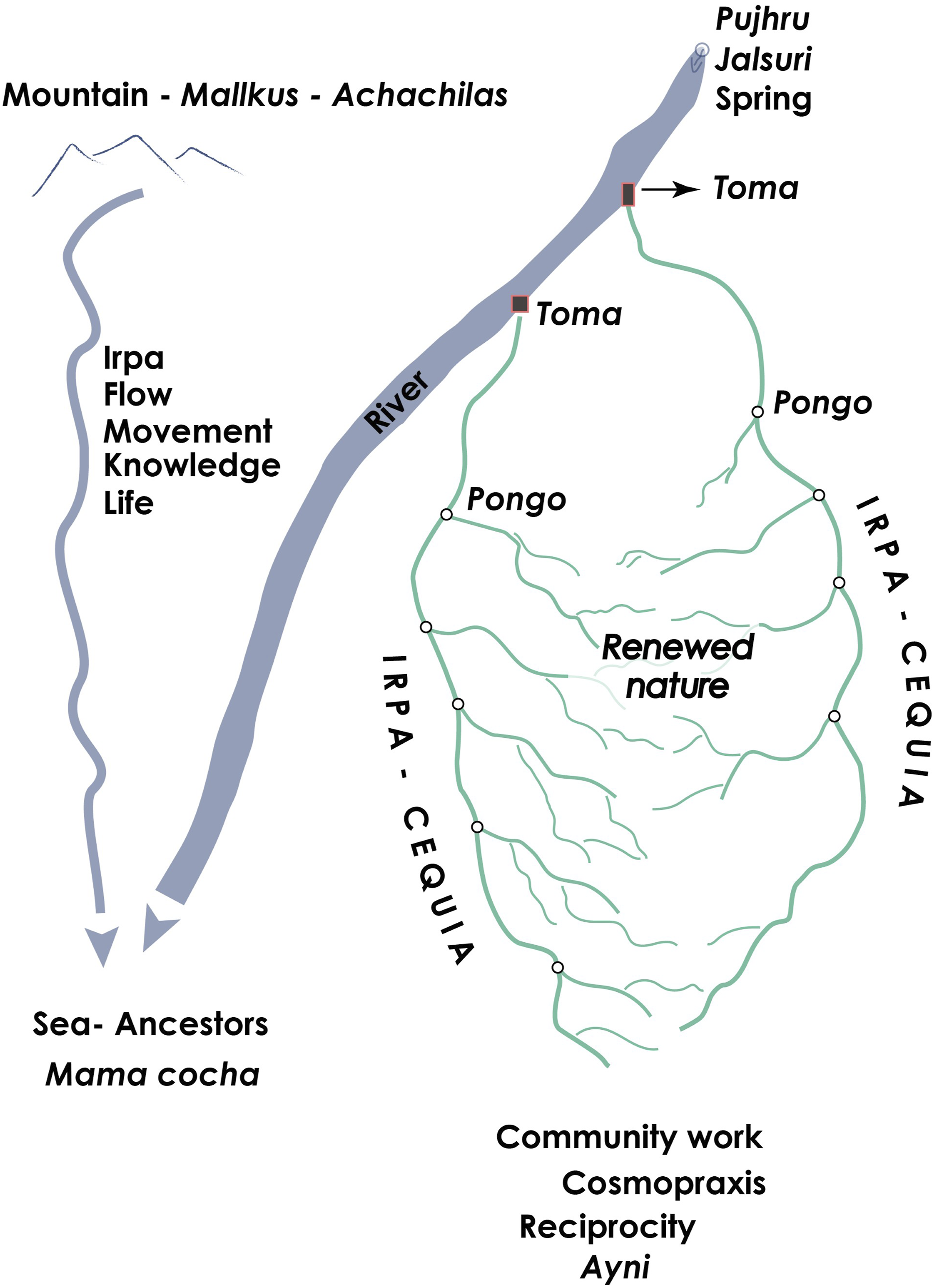
The water that feeds the bofedales originates from sacred mountains, emerging as springs known in Aymara as hole (phujru) or spring (jalsuri). These hold high ritual importance, as they are regarded as openings through which life emerges, making life in these territories possible. They are considered “living” places, capable of becoming dangerous if not treated with respect and given what they need. For this reason, during August, the month of the Pachamama, herders perform rituals to seek permission before beginning their work. Before digging, they ask forgiveness in Aymara, saying, “Holy earth, Pachamama, I am going to harm you with my pick.” They then make a small hole, place an offering, and cover it, believing that no harm will come to them. These rituals also include offering coca leaves and alcohol, making payments (pagos) to Pachamama, and performing animal sacrifices (wilanchas).
After the ceremonies, the intake (sacar la toma) had to be dismantled. Intakes function as small dams built transversely across rivers or streams. They are generally constructed with living champa (soil blocks) but may also be made of dry yareta (Azorella compacta) or alignments of stones sometimes packed with straw (Figure 2(g)–(h)). These structures are key devices that materialize the social and spatial organization of irrigation. They also embody herders’ hydraulic knowledge and serve as indicators of landscape transformation, particularly when strong river flows deepen channels and force the relocation of intakes to higher positions. In recent decades, increased torrential rainfall associated with more frequent extreme weather events (Sarricolea and Romero, 2015) has produced dramatic landscape changes. Field observations confirm that streambeds have eroded, forming deeper gullies.
From the intakes, the herders guide the water with their digging bar and shovel through the main canals (irpas) that border the bofedal. Normally, these are simple trenches dug into the peat or soil outside the bofedal. In Surire and Mulluri, some segments are built with dry stone walls (Figure 3(c)). The irpa enables irrigation, like the vascular system of a living being, to sustain the nurturing of water that feeds the pastures nourishing llamas and alpacas, and through them, the social and economic reproduction of the community as a whole. The irpa thus becomes an axis of nourishment, a lifeline (Ingold, 2018) that connects diverse agents and stimulates the fertility of the bofedal.
From the main irpas, secondary and tertiary canals are traced. Their morphology varies: some are straight, others meandering; some are highly formalized and dug into the peat, while others follow natural runoff channels that merge with the irrigation network (see insets, Figure 5). Upstream, additional water is directed into the canals to increase their carrying capacity. These canals enable the distribution and controlled flooding of the champeal, with flow regulated by gates or pongos (Figure 2(e)–(f)). Above: Surire bofedal (green) showing hydrological modeling (light blue) and irrigation channels (acequias, red). Water intakes (bocatomas) are marked as white points. Below: insets showing acequias mapped from ground-truthing and remote sensing on a drone orthomosaic, with hydrological modeling from a drone-based digital elevation model. Maps: authors.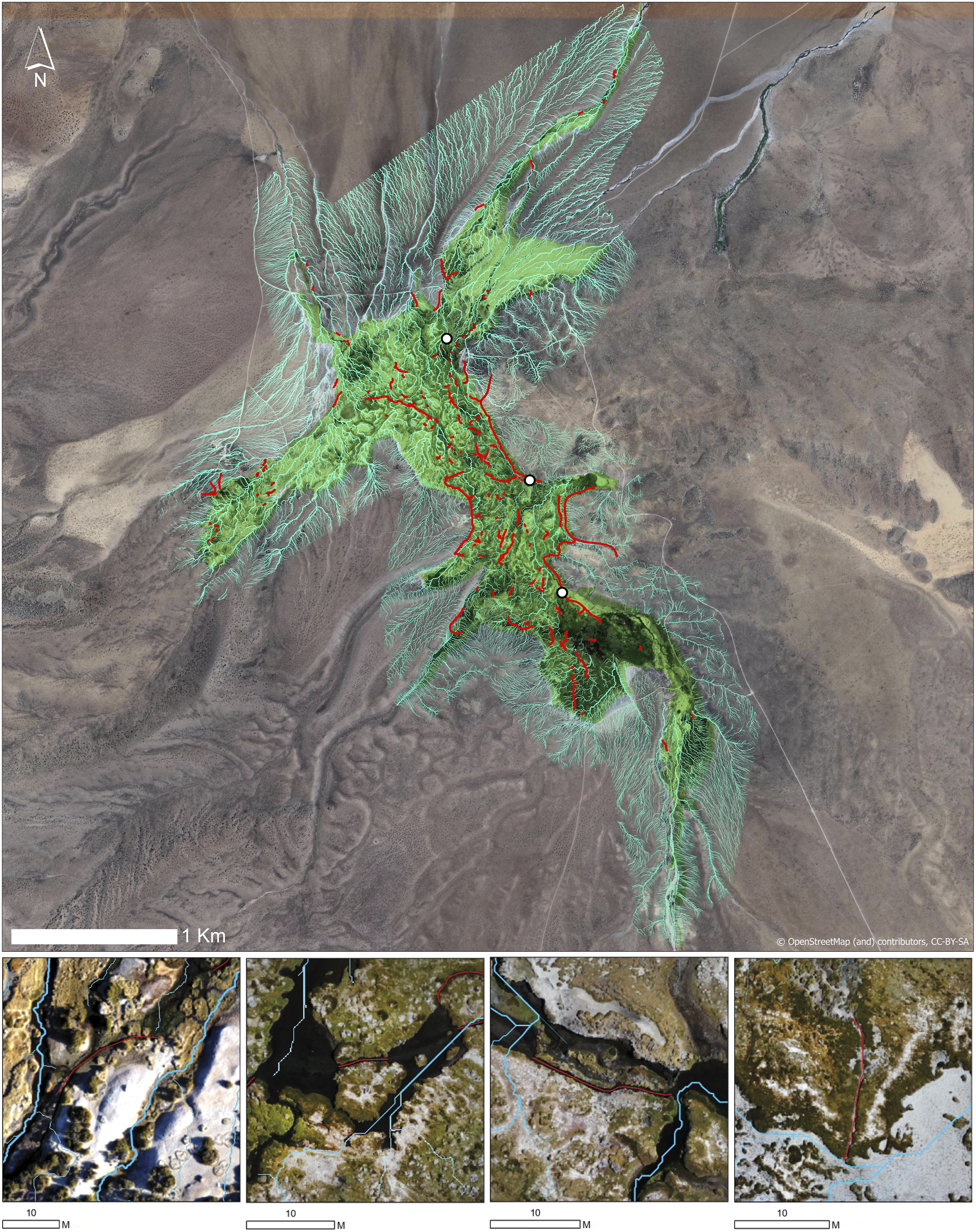
Pongos are simple devices made of stone, fragments of champa, or dry yareta. They are located at the points where the secondary irpas branch from the main canal. In Aymara, pongo means “gate.” These structures perform a fundamental function, as opening or closing them regulates the flow and velocity of the water. The irrigation rhythm depends on their operation and varies according to the characteristics of each bofedal. Larger bofedales are irrigated in sections, with the pongos opened and closed sequentially until the entire area is covered—a process repeated throughout the monsoon.
In Surire, the canal originating from an intake called Kalaconta flows 4 km before emptying into a small reservoir, a lagoon-like structure that appears to be artificial, covering approximately 0.36 ha. This reservoir is located in a corner within the bofedal, near the settlement of Ajaicota (in Aymara, qota means lagoon). In this context, both the water flowing through the canal during the dry season (Lupi pacha) and the summer rains during the wet season (Jallu pacha) supply the lagoon. From there, you have to send water to fill that little lagoon... Yes, the canal we're going to see, that one used to irrigate here, all of this, it would fill that lagoon; flamingos used to come to that lagoon too. Now, since it rained, there's some water in it. From there, it continues to irrigate, and after that, it fills another little canal (Teodora Castro, Surire, 2022).
Management practices involve a series of tasks carried out throughout the annual cycle, with the dry season, or Lupi pacha (August–November), demanding the greatest dedication to the bofedal. In a typical year, the peatlands rest during the cold season (Thaya pacha), while herders and their animals move to lower altitudes (García 2021), practicing what is known as costeo mobility. Herders in Mulluri refer to this period as “pasture time” (March–August), when the rain-fed pastures grow and mature for the animals. When herders and their livestock return to the high puna, they open the tomas and clean the canals. In August, the bofedales begin to thaw and start to regrow. Irrigation continues day and night from September onward. Depending on their size, the bofedales take between two and eight days to become fully saturated. In Mulluri, local accounts recall that by the feast of the Virgin of the Nativity (8 September), the bofedales were already green. However, herders perceive that the climate has changed considerably in recent years, making it increasingly challenging to predict seasonal patterns. They report that frosts now start as early as April and last up until November, disrupting the timing of traditional practices. In response, herders remain flexible and adapt their management strategies to the particular conditions of each cycle (Figure 6). Annual cycle of the bofedal, with different practices during the dry season (Lupi pacha), rain season (Jallu pacha), and cold season (Thaya pacha). Figure: authors.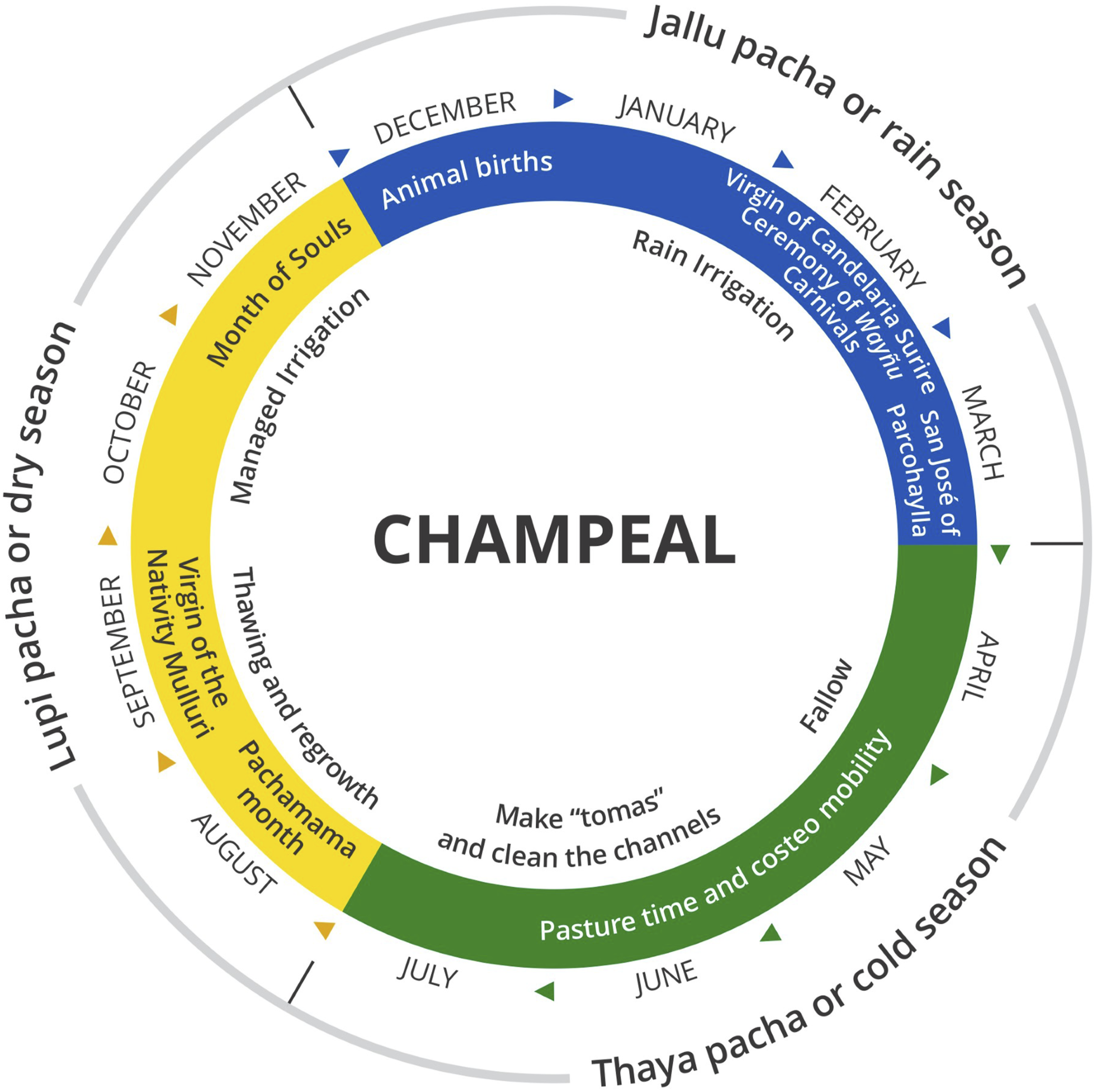
Concluding remarks
Centuries of collective and cyclical labor have produced a pastoral landscape where bofedales remain visible as enduring traces of the region’s herding history. Rather than pristine or purely natural formations, these wetlands have been continuously shaped through cosmopractices: social and ritual actions that involve relationships and agencies extending beyond the human. Herders and camelids have been central to the creation and persistence of these ecosystems, while their maintenance also relies on other beings within the territory, including sacred mountains, herd guardians, Pachamama, water, and vegetation, who offer their gifts so that life may continue.
Through these relationships, herders extend the social world to encompass the non-human, nurturing reciprocal bonds and commitments enacted through ritual acts, especially during August, the month dedicated to Pachamama and the time when interventions and irrigation in the bofedales begin.
From an archaeological perspective, these practices have left enduring material imprints on the landscape, where human and non-human agencies are entangled in the making of hydraulic structures and ecological forms. The integration of geomorphological and hydrological patterns shows that the canal networks incorporate natural runoff and watercourses, making visible the close articulation between human intention and environmental process. Rather than reflecting a strict separation between nature and culture, the bofedales embody their ongoing entanglement, demonstrating the futility of drawing clear boundaries between what is natural and what is human-made.
The role of humans, herds, and other beings that inhabit the bofedales invites us to consider nature not as a fixed or static entity, but as something continually produced and reproduced through ongoing interactions and movements. A member of the Mulluri Aymara community exemplifies this by stating: The bofedal is a vast ecosystem where every being plays a role. That is its essence. Wild animals, those we raise, and we ourselves are all integral parts of this system. This reflects a worldview in which we are all interconnected and dependent on one another—this is simply the way it is (Adult man, Mulluri community member, Azapa Valley, 2021).
The managed and created bofedales include irrigation features built by herders to support their upkeep and water distribution. Their vitality endures as long as these socio-hydrological processes and reciprocity between human and non-human agents remain connected to the living cultural practices of exchange and care (Lema, 2014; Van Kessel and Condori, 1992). The Aymara concepts of irpa and uywaña embody these ideas of flow and interconnection. Both are central to the cosmopraxis (De Munter, 2016) and to the language that expresses the nurturing (crianza) of the bofedales.
The network of relationships that emerges in the bofedales establishes a continuity between social and ecological spheres, where human sociability involves and relies upon interconnections with the non-human entities that also inhabit and “work” in the bofedal. The water that irrigates the bofedal emerges from the subterranean world at highly ritualized points (jasuri, pujhru). From there, it is captured and directed by herders through a hierarchically organized canal system, which distributes water across the bofedal like veins in a living body. Just as animals and people have their nurturing spaces in corrals and homes, water is “nurtured” within these canals, with its flow and rhythm regulated by the opening and closing of pongos. Following Ingold (2018), these processes highlight the relational and dynamic interactions that sustain the bofedal as a socio-ecological system.
When these movements are interrupted, the lifecycle of the bofedales is transformed and can be fully dismantled, even leading to the death of the peat. The living body stops irrigating itself, becomes sick, and gradually dies. In this work, we have explained how the geopolitical and socio-economic phenomena of the 20th century triggered massive and accelerated migrations of the local population, who had for centuries or millennia implemented diverse practices for managing the bofedales. Neglect and drought have altered the pastoral landscape, resulting in significant degradation or demise of extensive tracts of bofedales, particularly in Mulluri, where livestock rearing is no longer practiced.
By recognizing nature’s ongoing transformation through the intertwining and permeation of its various components, this perspective offers a nuanced understanding of the relationships between humans and the non-humans in the production of nature. It also highlights the need for more integrated and collaborative approaches to environmental management and conservation efforts, particularly those fostered by government institutions.
The intricate and long trajectory of bofedales, as remarkably co-created ecosystems, demonstrates the profound significance of ancestral knowledge and technologies. Such information is an indispensable toolbox, equipping us to confront the ever-intensifying challenges posed by the water crisis and the impacts of climate change. However, these traditional practices are often/historically overlooked in public policies, particularly in the face of extractive industries whose activities threaten these ecosystems (Prieto, 2015). Conservation measures frequently rely on exclusionary approaches, disregarding the agency of herders in the production and conservation of bofedales (García et al., 2021). It is therefore crucial to make visible and incorporate the language associated with these nurturing actions, as it introduces terms that foster a cosmopraxis, decentering anthropocentric and economistic perspectives that have negatively impacted these ecosystems. Addressing these challenges requires a political shift that recognizes and integrates herders’ knowledge and practices into conservation and development strategies.
Supplemental Material
Supplemental Material - Bofedales as relational spaces: Irrigation and nurturing practices in a pre-Hispanic pastoral landscape, South Central Andes
Supplemental Material for Bofedales as relational spaces: Irrigation and nurturing practices in a pre-Hispanic pastoral landscape, South Central Andes by García B Magdalena, Adrián Oyaneder, Luca Sitzia, Manuel Prieto in Journal of Social Archaeology.
Footnotes

Funding
The authors disclosed receipt of the following financial support for the research, authorship, and/or publication of this article: This study is supported by the following Agencia Nacional de Investigación y Desarrollo (ANID) projects: Fondecyt de Iniciación 11200212, Fondecyt Postdoctorado 3210151, Fondecyt Regular 1201527, MILENIO NCS2022_009, and MILENIO NCS2022_024.
Declaration of conflicting interests
The authors declared no potential conflicts of interest with respect to the research, authorship, and/or publication of this article.
Supplemental Material
Supplemental material for this article is available online.
Author biographies
References
Supplementary Material
Please find the following supplemental material available below.
For Open Access articles published under a Creative Commons License, all supplemental material carries the same license as the article it is associated with.
For non-Open Access articles published, all supplemental material carries a non-exclusive license, and permission requests for re-use of supplemental material or any part of supplemental material shall be sent directly to the copyright owner as specified in the copyright notice associated with the article.
