



Abstract
This article critically examines the historical role of economically vulnerable populations in Dutch archaeological fieldwork from the 19th century to the present. It argues that the professionalization and expansion of archaeology in the Netherlands was fundamentally reliant on various forms of precarious labor, from informal ‘treasure digging’ driven by hunger to institutionalized state-sponsored work relief schemes and, more recently, the competitive commercial sector. This research uncovers a persistent pattern of power imbalances and overlooked human costs. While the Malta Treaty fundamentally altered the field’s structure, it has not eradicated this legacy; in many ways, it has simply reconfigured it.
Introduction
The history of Dutch archaeology has, as in the rest of the world, matured into an established subdiscipline, particularly since the late 1980s (e.g., Trigger, 1989: v). This reflexive turn represents a significant departure from earlier ‘internalist perspectives’, which traditionally chronicled the linear progress of archaeological thought while largely ignoring the broader socio-political, economic, and practical aspects of excavation (Díaz-Andreu, 2007: vii; Irving, 2024). It is now widely accepted that understanding this historical context is indispensable, as archaeologists’ own beliefs and practices invariably shape the questions they ask and the conclusions they find acceptable (Amkreutz, 2020: 9). Yet, while the history of Dutch archaeology has received considerable scholarly attention—focusing on its antiquarian traditions, nationalistic motives, and institutional growth (e.g., Eickhoff, 2003, 2005; Halbertsma, 2003; Raedts, 2017; van Oeveren, 2023; Verhart, 2022a)—the material and human costs of its development remain a critical blind spot.
Following international scholars, this article highlights that blind spot by examining the role of economically vulnerable populations in Dutch fieldwork. A growing body of research confronts the discipline’s power structures, such as the persistent division between ‘mind’ and ‘hand’ that devalues physical expertise and renders labourers invisible (Shepherd, 2003: 89). This exclusion is reinforced by a ‘persistent cognitive dissonance’ among archaeologists who frame local knowledge as ‘unskilled manual labor’, thereby perpetuating colonial or class-based hierarchies (Mickel, 2021: 34; Holley-Kline and Mickel, 2024). These dynamics appear globally, from the Levant (Irving, 2017; Meskell, 2000: 232; Mickel, 2021) and South Africa (Shepherd, 2003) to Guatemala (Díaz and Williams, 2024). Similarly, state-sponsored initiatives in the United States, like the Works Progress Administration (WPA) and Tennessee Valley Authority (TVA), mobilized unemployed groups for massive excavations marked by harsh social hierarchies (Lyon, 1996; Sullivan et al., 2008) and significant data backlogs (Means, 2015).
This paper applies these critical insights to the Dutch historical trajectory, building upon arguments that heritage is a socio-economic, not just a political-cultural, resource (Claassen, 1993; Irving, 2017). Its aim is to lay bare the structural use of archaeological labourers and show that such disparities were embedded in the field from the start. We often tend to concentrate on changes in discussing archaeological history, whether that be methodology, theory, or policy (Kristiansen, 2014; Plets et al., 2021; Willems, 2007). These are of course important considerations that profoundly impact how archaeology is practiced. Nevertheless, I would like to argue that a historical lens to the social history of archaeology also shows an important continuity. Whether it is a 19th-century farmer excavating out of hunger, or a 21st-century archaeologist in a ‘cut-throat’ competition, both are responding to the economic imperatives of a discipline built on a foundation of precarious labour.
This approach challenges the assumption that archaeologists have exclusive rights as stewards of the past. Local engagement with heritage, such as using ancient stones for building materials, can be reframed not as destruction, but as a rational economic choice and a continued part of a place’s social biography (Hamilakis and Anagnostopoulos, 2009: 78). Likewise, Claassen’s (1993) analysis of a WPA excavation complicates simple narratives of exploitation, showing that such labour could be a useful, though not egalitarian, survival strategy.
Therefore, this paper considers the excavation a ‘concentration of knowledge, voices, and interpretive narratives’ (Berggren and Hodder, 2003: 427) and acknowledges alternative engagements with the material past (Hamilakis and Anagnostopoulos, 2009: 72). It highlights the double standard of condemning local, necessity-driven excavations while overlooking the far greater destruction of large-scale colonial archaeology.
Although I will exclusively attend to domestic exploitation, I would like to acknowledge the important work done by Bloembergen and Eickhoff. In their study on the Oudheidkundige Dienst (Archaeological Service) in the Dutch East Indies, Bloembergen and Eickhoff discuss the exploitation of Indonesian labourers during archaeological excavations, supported by the power abuse of Javanese elites. They also pay close attention to importance of skilled Indonesian foremen (Bloembergen and Eickhoff, 2011, 2015). Such broadening of attention is essential for developing a more inclusive and ethically grounded understanding of archaeological practice (Rizvi, 2020: 93).
In order to build a similar argument in the domestic Dutch context, I first explore the 19th century to establish the foundational link between financial insecurity and excavation work. From there, I follow how the large-scale, state-sponsored work relief schemes of the early-to-mid-20th century were able to institutionalize this dependency under figures like Albert Egges Van Giffen. I conclude my analysis with the transition into the modern commercial market, demonstrating how the economic drivers changed while the underlying precarity of the workforce persisted.
Early period: Archaeology and vulnerable labor in the 19th century Netherlands
Within the long Dutch antiquarian tradition, early collecting was often driven by proto-nationalistic motives to substantiate Roman lineage claims, a practice that sometimes led to forgery (Eickhoff, 2003; Halbertsma, 2003; Langereis 2001; Raedts, 2017; Van Oeveren, 2023). During the 19th century, nationalism continued to play a significant role, shifting focus from a mythical Roman or Batavian past towards a ‘deeper' Germanic prehistory, with features like megalithic hunebedden becoming national symbols (Van der Woud, 1998: 41–52). The discipline’s formal institutionalization began with the 1815 appointment of Caspar Reuvens as director of the State Museum of Antiquities in Leiden (the present-dayRijksmuseum van Oudheden, or RMO) and the world’s first professor of archaeology. Reuvens set a high standard for fieldwork, emphasizing meticulous recording and interdisciplinary analysis (Halbertsma, 2003).
In 1827, he conducted the first scientific excavation in the Netherlands at Forum Hadriani, a Roman settlement in present-day Voorburg (Halbertsma, 2003: 112, 117). The Dutch government had acquired the Arentsburg estate, where the excavation took place, a year prior, providing lodging for Reuvens, his family, two students (Van der Chijs and Leemans), and two draughtsmen (Brongers, 1974: 192). Although Reuvens’ notebooks offer limited insight into the daily lives of the excavators, it is evident that the workforce was drawn from neighboring villages, particularly during periods when agricultural work was scarce. By deliberately hiring ‘fathers of large families’—whom he deemed most reliable for their need to provide—Reuvens instrumentalized existing disparities and embedded socio-economic hierarchies into archaeological practice from the start (Brongers, 1974: 192). When progress faltered, Reuvens introduced a ‘finder’s bonus’ system, intending to foster competition among excavators and accelerate the work. This system inadvertently created a competitive environment among impoverished locals, potentially exacerbating pre-existing economic vulnerabilities by making their meagre income contingent on the discovery of artefacts (RMO, 1827) (Figure 1). Diary of the Arentsburg excavation. Rijksmuseum van oudheden, Leiden: 19.02.01/53, RA 27: “Dagboek van de opdelving op Arentsburg 1827–1828,” date 1827–1828. Photo: author.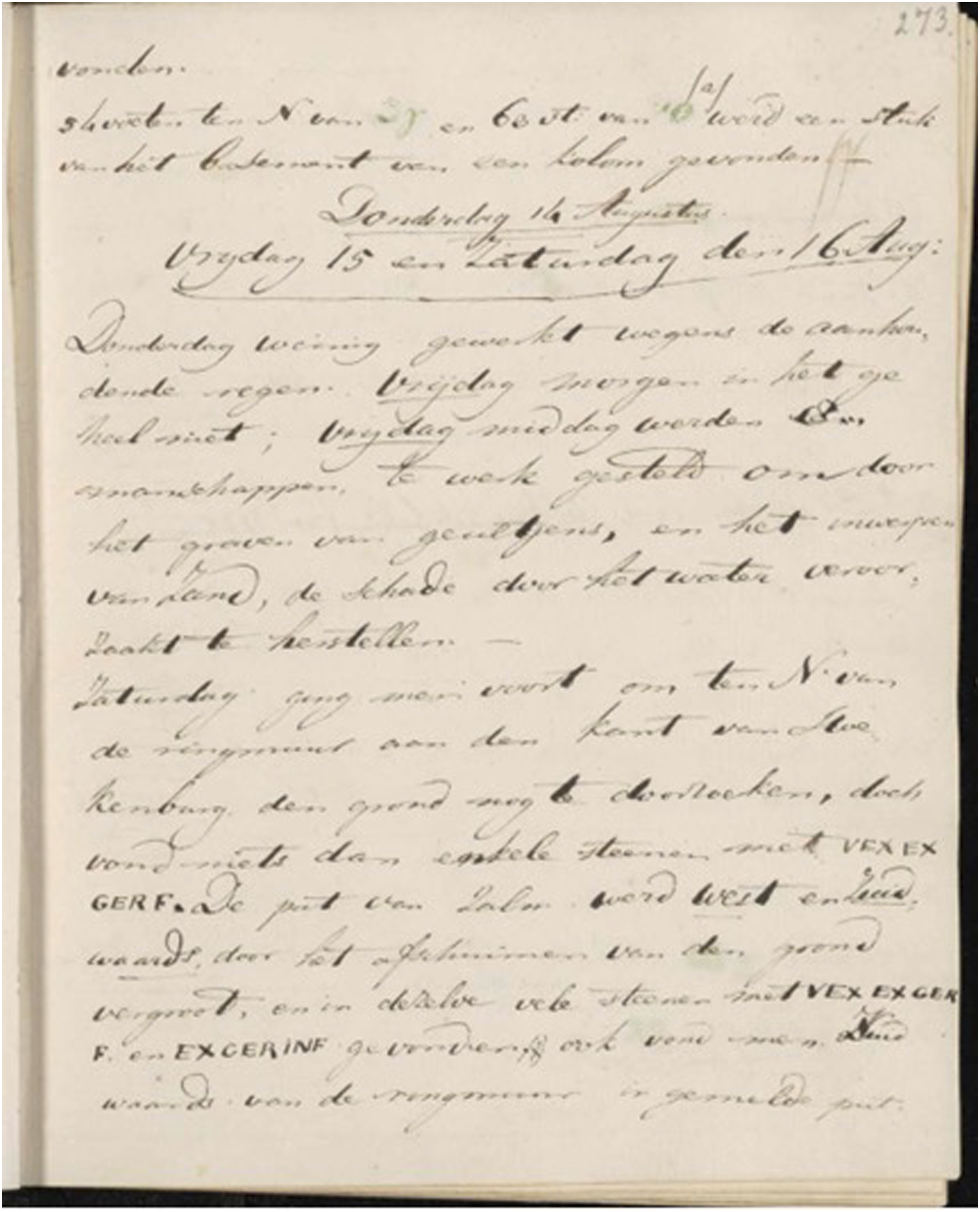
Similar to Reuvens, schoolteacher P.N. Panken conducted excavations in regions like the Kempen, inspired by the Historische Verhandeling over de Kempen. The Provincial Society of Arts and Sciences funded some of these digs (Panken, 1844: 7). Panken utilized local residents for the physical labour of digging, occasionally consulting a physician for bone identification. His reports reveal a clear social hierarchy: ‘heeren’ (gentlemen) observed and conferred with Panken (1844: 13) while local farmers and laborers performed the strenuous work. Panken noted that the concept of ‘schatgraven’ (treasure digging) prompted many locals to start their own excavations. While this led to numerous discoveries, Panken (1844: 13) described significant damage to archaeological material.
When Reuvens and Panken describe their labourers, it is done with a critique of their perceived inability to appreciate the cultural value of the objects, serving as obstacles to the emerging scientific discipline. The emerging concept of ‘treasure digging’, though leading to destruction from a disciplinary perspective, represented a rational economic activity for the labouring class. For these individuals, driven by financial necessity, the potential monetary value of an object as ‘treasure’ far outweighed the abstract, scientific, or cultural heritage value championed by the educated elite. The resulting destruction of artifacts was, therefore, not simply a failure to appreciate cultural worth, but a direct consequence of a competing value system rooted in economic survival and a result of the competitive nature instrumentalized by Reuvens through this bonus-system.
To gain a more intimate understanding of the labourers involved and the socio-economic forces driving their participation, I would like to turn our attention to the second major excavation of the century: the excavation in Wijk bij Duurstede, a small town in the heart of the Netherlands. Following Reuvens’ passing, Conrad Leemans succeeded him as director of the Rijksmuseum van Oudheden. This period was marked by severe economic hardship, including harsh winters and a devastating cholera outbreak in 1840–1841, which plunged many inhabitants into profound poverty and created a need for any available income (Lintsen, 1993; Santen, 2004). Concurrently, a royal decree, issued after a widespread cattle plague, prohibited the use of contemporary animal bones as fertilizer due to health risks. This inadvertently skyrocketed the market value of historical bones, which were exempt from the ban, making them a scarce but permissible and highly sought-after source of income for the impoverished population (Van der Veur, 1842). This created fertile ground for an informal excavation economy.
It was within this context that clergyman Johannes Catharinus van der Veur observed the entire impoverished population of Wijk bij Duurstede—‘men, women, children, the elderly, and the disabled’ 1842: 44)—engaging in digging activities in and around the town.
While ostensibly digging for bones to be sold as fertilizer, numerous antiquities, including coins, fibulae, silver arm rings, iron spears, and a statue of Minerva, were also unearthed (Janssen, 1842). These antiquities were subsequently purchased by the local elite, including landowners who also sat on the town council, creating a localized patronage system that further entrenched the reliance on impoverished labour. For example, local inhabitant Gerardus Jacobs received 60 guilders for a chest of artefacts (roughly a month’s wage for an average laborer at the time) (Van der Veur, 1842: 44). An informal economy literally emerged from the ground, with clandestine bone buyers quickly opening shop, trading large quantities of bones (Van der Veur, 1842: 44). Van der Veur’s description captures the daily ritual and desperation: Scarcely had the short day been announced by sunlight, or groups of united households were seen leaving the city with baskets, wheelbarrows, containers, kettles, and carts; the as yet untouched ground was turned over, spades driven were deemed promising, and soon, the majority of the diggers disappeared beneath the surface. (1842: 45).
Similarly to Reuvens and Panken, Van der Veur was also shocked by the perceived inability of the inhabitants to appreciate the cultural value of the objects: Three individuals, who had jointly discovered a dish adorned with inscriptions and imagery, embarked on a journey to offer me this elegant and significant artefact for sale. However, a disagreement arose among them regarding the division of the proceeds from this dish, after which the one who held [the dish] in his hands, weary of the dispute, forcefully hurled the valuable dish onto the stones, exclaiming, “Now we all have an equal share.” (1842: 44–45).
This scramble for economic resources sometimes led to disputes and even violence among the hundreds of diggers, as reported by field warden Johannes Philippus de Ronde, who documented conflicts over pilfered sacks of bones and antiquities, and stolen provisions (HUA, 1940). In response, locals formed larger collectives, appointing guards to protect their pits during freezing nights, demonstrating tactical cooperation (Van der Veur, 1842: 45, 46).
Upon learning of the Wijk bij Duurstede diggings, RMO director Conrad Leemans corresponded with authorities, stressing the site’s cultural value and the need for the RMO’s presence and funding (Janssen, 1842). Leemans declared the finds were of ‘inconceivable significance’ with profound national importance for the ‘ancient history of our country’ (Janssen, 1842). This intellectual framing asserted the RMO’s scientific authority over the informal, economically motivated digging by locals, positioning the museum as the rightful controller of the archaeological process.
As the century progressed, municipalities like Wijk bij Duurstede began to formalize this labour together with museums like the RMO to control the excavations (Boone, 1956). During the severe winter of 1879–1880, poverty again fuelled bone digging, prompting the municipality to create a ‘Commission for Loans and Prevention of Poverty’. This commission managed excavations as a temporary work scheme, while also aiding archaeological research (RAZU, 1891). This initiated the integration of state-sponsored work relief into Dutch archaeological practice, foreshadowing the large-scale use of unemployed individuals in 20th-century excavations (Figure 2). Food stamps handed to excavators. Photo: RHC Zuidoost Utrecht (1891) commissie ter voorkoming en leniging van armoede te Wijk bij Duurstede (047), inv. Nr. 2. Wijk bij Duurstede: RHC Zuidoost Utrecht. RAZU.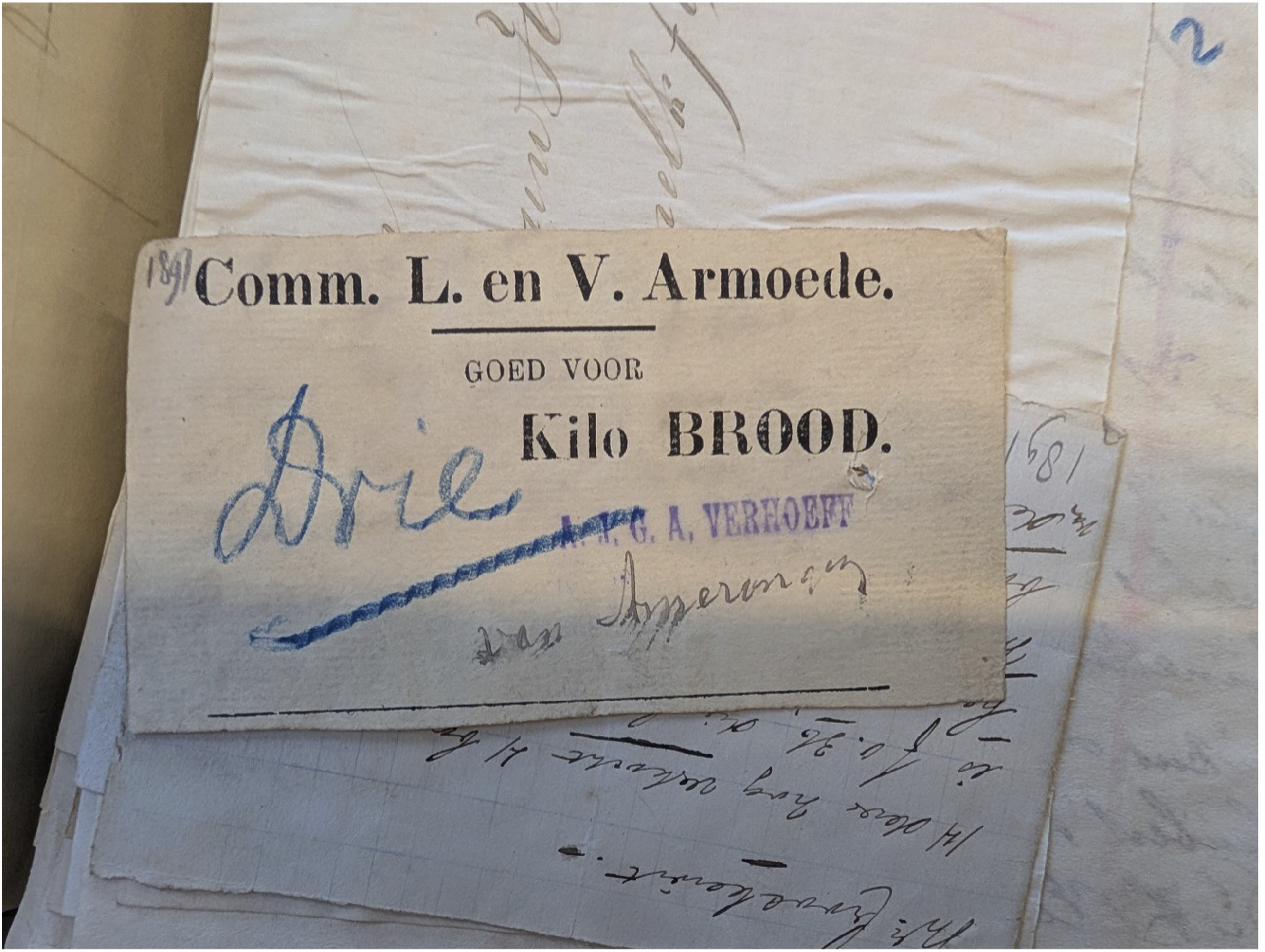
This situation exposed a fundamental tension between the preservation of national heritage and the assurance of individual livelihoods. While the RMO pressured authorities to halt the ‘treasure diggers’, local officials saw the informal excavations as a way to keep their impoverished population afloat. In the historiography describing these excavations, the ‘treasure diggers’ are always portrayed in a negative light. It is noteworthy that archaeologist Wim van Es, in his historiographical review of the excavation, is the one scholar who attempts to introduce an ethical nuance (Van Es and Verwers, 1973: 480). Van Es is nowadays frequently criticized for his work as being a textbook example of the ‘Romanization’ paradigm in Dutch archaeology. While not rejecting that critique, I would like to argue that we sometimes tend to neglect these small interventions and that such a minute comment enriches the ethics in archaeology in a way which extends beyond the critical theoretical framework on which we often focus our attention (Pétursdóttir and Sørensen, 2023).
1907–1945: Institutionalized coercion
The municipal work schemes of the late 19th century were precursors to a more systematic and expansive use of state-managed labour. In the period from 1907 to 1945, this practice accelerated dramatically, marking a new phase of institutionalized coercion. The formalization of Dutch archaeology during these years was enabled by the systematic reliance on state-sponsored labour relief. The academic and scientific aspirations of the discipline were thus built directly upon the physical hardship of a workforce deemed surplus to the industrial economy, ingraining these coercive schemes into the very fabric of how archaeological fieldwork was organized and executed.
Holwerda and the ‘voorgraver’ system
The early stirrings of this institutionalization and its inherent labour dynamics can be clearly seen in the systematic approach adopted by Jan Hendrik Holwerda, then director of the RMO in Leiden. From 1907 to 1909, Holwerda conducted extensive and increasingly organized excavations on the royal domain in Epe-Nierssen, Gelderland. Holwerda employed the RMO’s mobile ‘opgravingswagen’ (excavation wagon), a distinctive white, wheeled garden shed that served as his field office and shelter from the elements (Toebosch, 2004: 43). In stark contrast to the director’s relatively comfortable provisions and dedicated workspace, the laborers themselves, often working for a meagre daily wage of 90¢, had no such amenities. They were left to construct rudimentary huts of branches and leaves for shelter and rest (Toebosch, 2004: 43–44) (Figure 3). On the left, RMO director J.H. Holwerda speaks with a visitor, Reverend D.I.C. Heldering of Nijbroek; both men are smoking cigars. To the right stands a group of excavators, including the foremen A. Bosch (second from left) and A. Scholten (second from right) (see also Verhart, 2001: 51, 124). Photo: Rijksmuseum van Oudheden, Leiden, bak nr. 03/071, neg. nr. C_0218.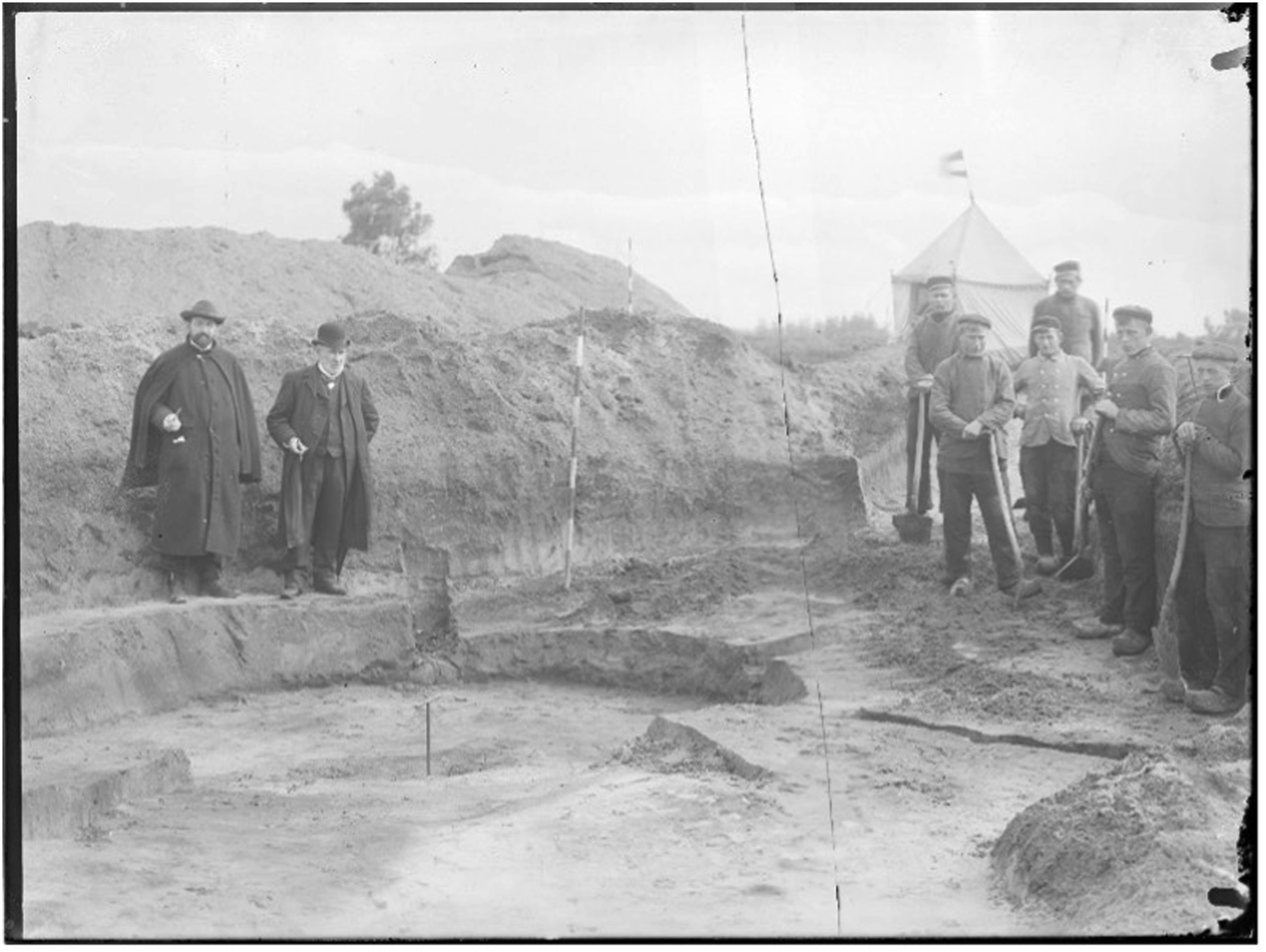
Holwerda’s workforce consisted of approximately fifteen local ‘jongens en mannen met de pet’ (lads and capped men), a colloquial term reflecting their working-class status and lack of formal education (Toebosch, 2004: 43). These were individuals primarily drawn from agricultural backgrounds, whose seasonal unemployment often pushed them towards such temporary, physically demanding labour. Among them, young men like A. Scholten and A. Bosch proved to be quick learners and skillfully traced archaeological excavation pits. Their talent was eventually noticed by Holwerda, who formalized their role as permanent ‘voorgravers’ (field foremen) for the RMO (Toebosch, 2004: 43). This acknowledged their practical expertise yet simultaneously codified their subordinate position within the archaeological hierarchy. For 40 years, Scholten and Bosch would travel the country with RMO archaeologists, travelling by train from one excavation to another. Holwerda sat in comfortable first-class compartments, while the ‘voorgravers’ and their colleagues were relegated to the crowded third class (Toebosch, 2004: 43). The formalization of roles, while providing some recognition, simultaneously created a rigid hierarchy that often failed to fully acknowledge the invaluable on-the-ground expertise these labourers developed over decades (Waterbolk, 2019: 51). The loss of these highly skilled, experienced field foremen, who possessed an intuitive understanding of stratigraphy and local conditions, represents a significant rupture in the transmission of practical archaeological knowledge (Waterbolk, 2019: 81–85).
Van Giffen, the BAI, and the state-sponsored labour model
The establishment of the Biologisch-Archaeologisch Instituut (BAI) in Groningen marked another significant step in Dutch archaeology. Van Giffen founded the BAI in 1920 as a direct counterweight to the RMO in Leiden, fueled by a deep-seated intellectual and personal rivalry between Van Giffen and Holwerda that had festered during Van Giffen’s earlier tenure as Holwerda’s assistant (Verhart, 2022a: 419). It was Van Giffen's aim to pursue large-scale fieldwork across the northern Netherlands (Verhart, 2022b).
The excavation of the Laudermarke urnfield near Hooghalen was such a large-scale project. Initiated in the 1930s, this project uncovered substantial Iron Age finds and prominently showcased Van Giffen’s innovative systematic excavation techniques (Waterbolk, 1976: 136). Van Giffen (1972: 11) followed the example of his German colleague: Dr Siegfried Loeschcke, whom he visited in 1932. Loeschcke was then leading an excavation of the Tempelbezirk (Temple District), a monumental undertaking financed through the German ‘Arbeitsdienst’ (Labour Service), a state-sponsored form of work relief primarily designed to absorb post-WWI unemployment. Van Giffen was impressed by the sheer scale of the excavation and, crucially, by its financing model. He recalled his conversation with Loeschcke: Now, I stayed with him and I said: “God, colleague, I don’t understand how you can finance this”. He replied: “Hat eine Milione gekostet, und kostet noch so ein Paar” [It cost a million, and will cost a couple more.] Anyway, he managed to do it with forced labor of the Arbeitsdienst. (Van Giffen, 1972: 11).
Just five days after his visit, Van Giffen contacted J. Buiskool, the National Inspector of Work Relief in the Netherlands. Van Giffen later recounted their conversation: ‘“How many do you need?”, “One hundred and 60”, I say. “Fine, I got 160”’ (1972: 12).
Immediately following this, Van Giffen, through a colleague in Hannover, arranged for an assistant (Dr H. Schroller) to manage the massive influx of workers and coordinate the large-scale research. Buiskool, an ardent advocate for the expansion of work relief and enthusiastic about the potential for archaeology to absorb unemployed labor, ensured Van Giffen received an additional ‘9000 man-days’ from the Ministry of Social Affairs: ‘You could do what you wanted with them', Van Giffen remarked, ‘for me, that was also a feeling of satisfaction given the rivalry with Leiden... Then I could start doing major research' (1972: 12). During the severe crisis years of the 1930s, marked by rampant unemployment, poverty, and hunger, he received a substantial 45,000 guilders for emergency excavations via the work relief system—an enormous sum at the time—which effectively cost him nothing in terms of direct labour expenditure (Waterbolk, 1976).
Van Giffen’s casual remark, ‘you could do what you wanted with that', reveals an uncomfortable indifference to the human cost and hardship inherent in such state-sponsored labor schemes. Especially if we take into consideration the ethics of the national Inspector of Work Relief. Buiskool viewed long-term unemployment not as a systemic societal failure but as morally corrosive, famously coining the derogatory term ‘beroepswerklozen’ (professional unemployed) to belittle those dependent on state support. He considered such dependency ’demoralizing and degrading’ for both the individuals and society at large (Beunders, 1989). Buiskool used this punitive ideological stance to justify the arduous and often degrading conditions under which these individuals were compelled to work. Housing provided to these workers was often rudimentary and profoundly inadequate; labourers in Buiskool’s ‘projects’ were crammed into makeshift barracks, frequently lacking basic sanitation, adequate heating and proper comfort. One individual likened the sleeping quarters to a ‘coffin without a lid’, combined with widespread complaints about inadequate and unhygienic blankets (Tribune, 1931). Punishments for alleged infractions, such as absence during illness or even minor acts of perceived insubordination, were severe and arbitrarily enforced, ranging from wage deductions that further impoverished families to week-long starvation or dismissal. Buiskool's dictatorial control over the lives and labor of the unemployed earned him the chilling nickname ‘Groningsche Mussolini’ (Mussolini of Groningen) (De Tribune, 1931; Nieuwe Provinciale Groninger, 1934) (Figure 4). This photo shows excavators who were part of the relief work program. Van Giffen noted “Many people, birds of the most diverse plumage. Even a piano tuner handled a spade here - a sign of the times. What a richness of variety” (Waterbolk, 1976: 137). Photo: Rijksuniversiteit Groningen, Groninger Instituut voor Archeologie.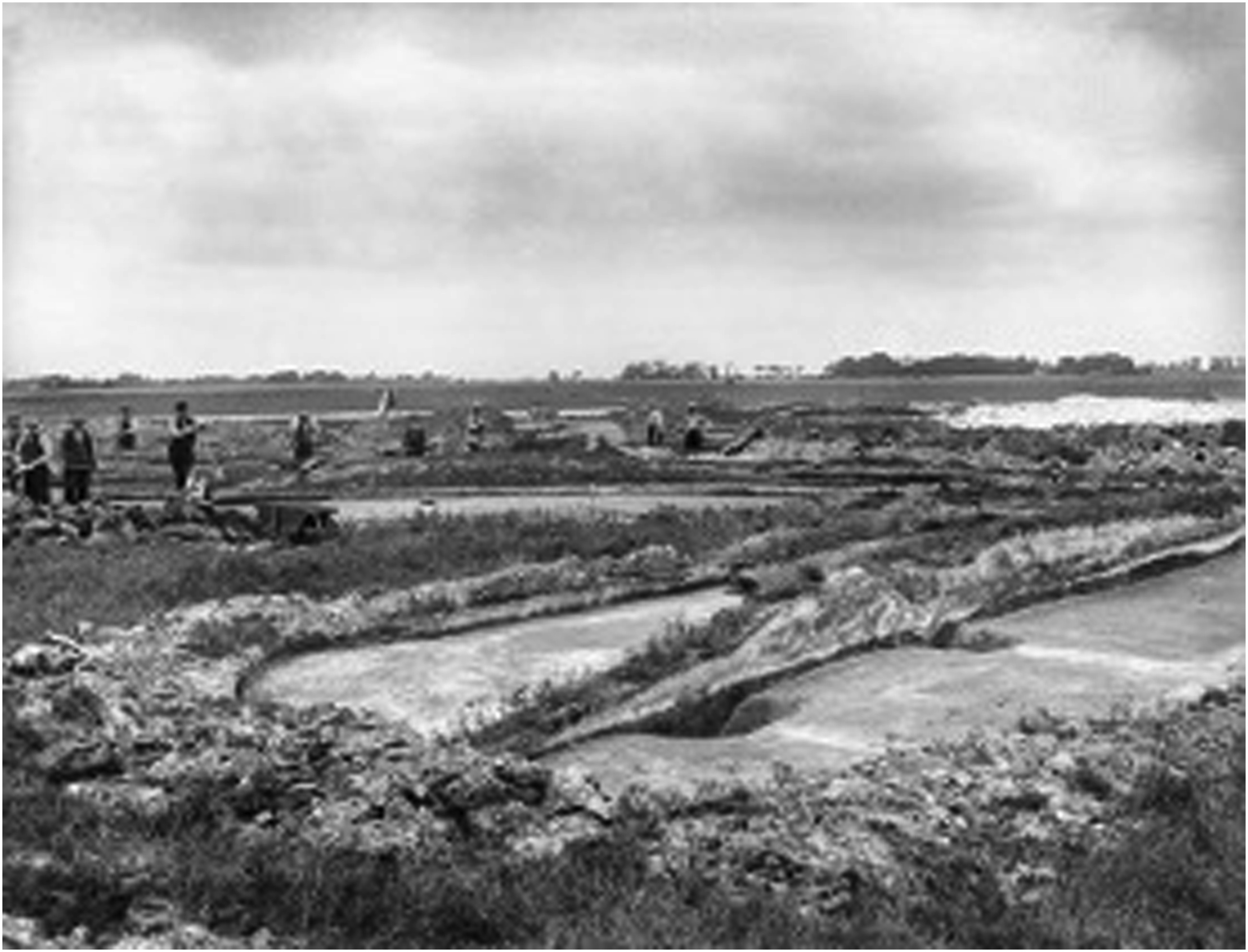
Reports of ‘disturbances’ in the press and the subsequent deployment of the Marechaussee (military police) to quell protests indicate the scale of the disruption and the systemic tensions inherent in the work relief system (De Tribune, 1931). Later, Buiskool excused his behaviour by calling himself a ‘kwajongen’ (rascal) (Nieuwe Provinciale Groninger, 1934).
After the war, the Groningen-based BAI would indeed become one of the world’s leading archaeological institutes, successfully diverting much of the academic prestige from the RMO in Leiden (Verhart, 2022b: 222). Yet, this international acclaim and the methodological innovations for which Van Giffen was celebrated were built upon a foundation of invisible labour. Without the systematic exploitation of these vulnerable workers, the career of Van Giffen, the ascendancy of the BAI, and the subsequent trajectory of large-scale, state-funded archaeology in the Netherlands—which largely followed his model—would have been inconceivable. The scientific ‘progress’ was indelibly linked to, and subsidized by, social hardship.
Another extreme instance of forced labour is found during the Second World War in the Netherlands. This occurred particularly through the activities and affiliations of the Dutch prehistorian F.C. Bursch (Eickhoff and Nuijten, 2023: 194, 201). Bursch, who became director of the newly established State Service for Archaeological Investigations (RBOB) in June 1940 under the German occupation, increasingly collaborated with National Socialism and its pseudoscientific ideological tenets (Verhart, 2022b: 703–704). This collaboration culminated in Bursch’s direct involvement with the infamous SS-Ahnenerbe, a pseudo-scientific Nazi organization explicitly created to instrumentalize archaeological and anthropological research to lend spurious academic legitimacy to its racial ideologies, particularly regarding Aryan supremacy and territorial expansion (Verhart, 2022b: 621). In 1943, under the explicit auspices of the Ahnenerbe, Bursch undertook a notorious ‘study trip’ to the occupied Eastern territories, specifically Ukraine. This expedition, while ostensibly for archaeological research, operated within the brutal and genocidal context of the Nazi occupation, where millions were being systematically murdered or enslaved. The ‘archaeological work’ conducted by Bursch and his SS associates directly exploited the local population through forced labour. Ukrainian civilians, often prisoners of war or civilians rounded up from occupied villages, were compelled to perform the arduous physical labour of excavation under duress and inhumane conditions (Eickhoff and Nuijten, 2023: 194).
1945–1985: Social labour and the emergence of developer-led archaeology
The immediate post-war years saw a significant consolidation and formalization of state archaeological services, moving towards a more unified national approach. In 1946, the various existing state archaeological entities, including the aforementioned RBOB, were merged to form a single Rijksdienst voor het Oudheidkundig Bodemonderzoek (State Service for Archaeological Investigations, or ROB), which officially commenced its operations on 1 January 1947 (ROB, 1947: 1). The ROB and Dutch universities continued to extensively utilize various state-sponsored employment schemes, which were direct conceptual and operational continuations of the pre-war work provision programs. Early post-war correspondence between the Ministry of Education, Arts and Sciences and the ROB’s new director, Van Giffen, explicitly encouraged the archaeologist to implement his successful pre-war methods of using work relief programs at the ROB (Nationaal Archief, 1950). Furthermore, the ministry significantly streamlined the bureaucratic process, stating that they would no longer require specific approval from the social service for each new project; these matters could henceforth be handled directly by Van Giffen, granting him considerable autonomy and a streamlined path to large-scale labor procurement (Nationaal Archief, 1950). Similarly to Siegfried Loeschcke’s use of these programs after the First World War, these schemes were vital for executing large-scale archaeological projects at a time when regular institutional budgets were consistently insufficient to hire a large enough contingent of professional excavators at competitive market rates (Van Giffen, 1972). The reliance on such subsidies became a fundamental operational model. P.J.R. Modderman’s 1952 rescue excavation of 44 barrows at Ermelo, for example, was notably conducted with 15 unemployed workers (Bakker, 2001: 49). In an interview with Herbert Sarfatij, Van Giffen himself would later reflect, ‘unemployment was to be the basis for archaeology, as it was in the beginning of the thirties' (Sarfatij, 1972: 77), underscoring the deep and continuous institutional link between archaeological fieldwork and state unemployment measures (Figure 5). This photo shows excavators who were part of the relief work program. Van Giffen noted “Many people, birds of the most diverse plumage. Even a piano tuner handled a spade here - a sign of the times. What a richness of variety” (Waterbolk, 1976: 137). Photo: Rijksmuseum van Oudheden, Leiden bak nr. 03/052, neg. nr. C_0212.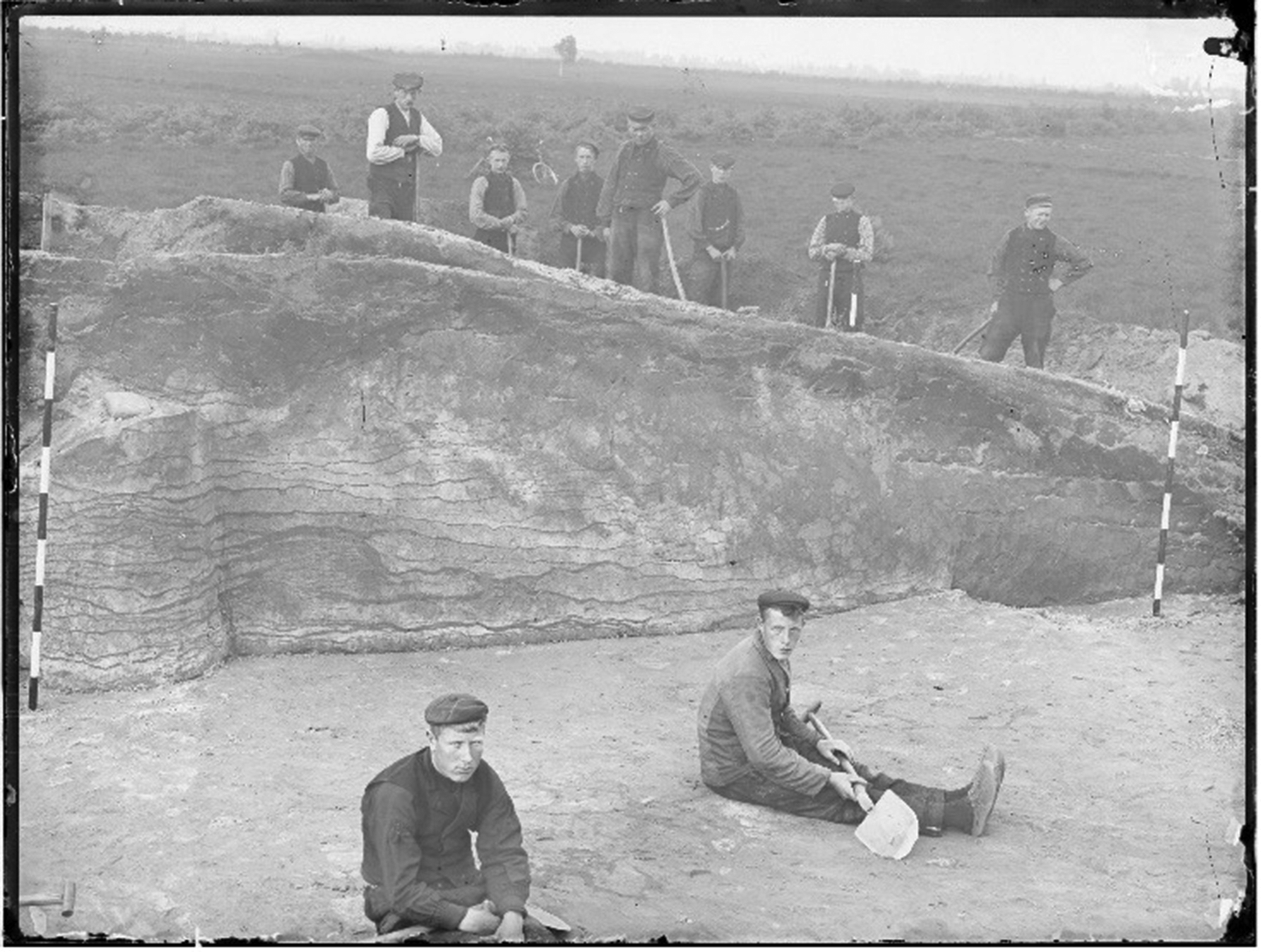
The mechanics of post-war social labour and bureaucratic dehumanization
Different schemes evolved over the decades, adapting to changing economic conditions and social policy objectives. In the 1950s and 1960s, the Dienst Aanvullende Civiel-technische Werken (Service for Supplementary Civil Engineering Works, or DACW) was a popular work provision scheme, offering a steady supply of labor for extensive projects like the major excavations at the Vrijthof in Maastricht (ROB, 1968: 59) and the sprawling Dorestad project (ROB, 1985: 101). Similarly, the Dienst Uitvoering Werken (Works Implementation Service, or DUW) was particularly crucial for absorbing persistent rural unemployment exacerbated by the rapid agricultural mechanization and scaling-up after the war (Waterbolk, 2019: 80). From 1969 onwards, the DACW was largely replaced by the ‘E-objects’ subsidy (ROB, 1983: 95). This new scheme specifically targeted certain groups of unemployed individuals based on criteria such as education level, gender, age and health status. Critically, it provided the ROB with a 105% reimbursement of wage costs from the state. This effectively provided labour at zero cost to the archaeological institutions, allowing for ambitious, large-scale fieldwork otherwise financially unattainable and incentivizing the continuous intake of subsidized labour (ROB, 1983: 95). Workers were deployed on a project-by-project basis, often moving between sites as funding or project needs dictated (ROB, 1983: 95).
Alongside this highly formalized system of state-funded unemployed labour, a parallel and increasingly structured system of volunteer labour emerged, primarily driven by growing public interest in archaeology. From the late 1960s, ‘werkkampen’ (work camps) organized by youth organizations like the Nederlandse Jeugdbond ter Bestudering van de Geschiedenis (Dutch Youth Association for the Study of History, or NJBG) and amateur societies such as the Archeologische Werkgemeenschap Nederland (Archaeological Working Group Netherlands, or AWN) were formally integrated into large ROB projects. These volunteers performed essential, often tedious, and labour-intensive tasks like sieving topsoil for small finds, cleaning artefacts, and rudimentary documentation (ROB, 1965: 19; ROB, 1967: 48; ROB, 1969: 63). Their contribution freed up paid staff for more specialized activities, especially for the ‘voorgravers’.
In 1981, the different programs were merged into one scheme, the ‘Regionale Werkvoorzieningsschappen’ (Regional Social Employment Schemes, or WSW), which meant that the ROB had to pay more for work provision labourers out of its own pocket and provide better guidance, which severely impacted the workload (ROB, 1984: 107). The 1983 report, for instance, explicitly compared the cost of the Dorestad excavation in 1970 (which had extensively utilized DACW labor) to the cost of the same type of labour in 1983 (when WSW labor was employed). The calculation revealed that the effective labour costs had increased by eight times (ROB, 1985: 102). This massive increase in labour expenditure meant that what was previously a virtually free or very low-cost resource for archaeology now incurred significant operational costs. The financial pressure became so intense that the ROB even had to temporarily halt all excavations two years earlier (ROB, 1983). Simultaneously, on 1 April 1979, the ROB itself implemented new Human Resources policies, including performance reviews for not only the provisional workers but also their supervisors, as directed by the Ministry (NA, 1978).
These various schemes included individuals with mental and physical disabilities, and even psychiatric patients, who were routinely deemed suitable for placement in ‘Type A’ and ‘Type B’ work categories. ‘Type B’ specifically encompassed archaeological excavations (Eemland, 1955: report from May 9). This practice allowed archaeology to continue benefiting from a readily available, often disempowered, labour pool. However, the assessment reports from the Municipal Social Service (GSD) of that era exhibit a consistently and disturbingly condescending, insulting, and discriminatory tone. They reveal the pervasive bureaucratic mechanisms that functioned to render these workers ‘other’, effectively stripping them of their dignity and autonomy within the system. Workers were frequently labelled with dehumanizing caricatures that reduced them to their perceived shortcomings: ‘according to the workshop management, the aforementioned epileptic is so disturbed that he requires a strictly individual approach and constant supervision to thereby limit the disruptive influence on others’ (Eemland, 1965, report from 21 September 1965). Other individuals were dismissively characterized as ‘indifferent’, ‘somewhat dim and stubborn’, ‘a failure’, ‘stupid-looking’, ‘a small, friendly, chubby girl, who reacts very childishly for her 18 years’ (Eemland, 1965, report from 21 September 1965).
These derogatory descriptions justified the lack of respect and dignity afforded to these labourers, perpetuating a cycle of societal exclusion. These workers—individuals named ‘Hendrik’, ‘Cornelis’, ‘Olivia Fernanda’, and ‘Adriaan’, among countless others whose identities are now lost to history—were kept under tight control. Their already precarious financial stability was constantly threatened by the prospect of repercussions for perceived underperformance, creating a climate of anxiety and fear. Other performance reports from the 1960s indicate that most labourers were frequently labelled as ‘unmotivated’ and were financially penalized if they did not work hard enough, potentially exacerbating feelings of alienation, resentment, and a lack of investment in the work, echoing the same financial leveraging seen under Van Giffen and Reuvens (Eemland, 1965, report from 10 October 1965).
The combination of the vulnerable position of many workers, coupled with the likely stressful, if not overtly harsh, treatment by supervisors and the dehumanizing bureaucratic language could lead to dangerous situations: on 13 April, ‘a peculiar man who must be considered mentally deficient’ allegedly became aggressive towards his supervisor, who, according to the work provision report, had simply walked past him (Eemland, 1964). The document recounts: He came near [name of accused worker], who suddenly grabbed a knife readily available as a tool and, uttering a threat along the lines of: “I’ll run you through with the knife”, made a stabbing motion in his direction. The supervisor was able to disarm him, but could only disengage himself from the accused with difficulty and sustained several scratches to the face in the process. (Eemland, 1964)
According to the document, dangerous outbursts of anger following teasing or pent-up frustration were considered ‘part of the accused clinical picture’, shifting responsibility away from the work environment onto the individual’s mental state (Eemland, 1964).
Stigma, dependency, and the economic consequences of social labour
Research by sociologist Jan Terpstra (1985) on work provision in other contexts sheds some light on the experiences these workers likely felt during their archaeological fieldwork after this legislative change. Terpstra (1985: 161) argues that, for many, employment under these schemes remained a negative experience, marked by stigmatization and a poor self-image. Participants often felt labelled as ‘unusable’ or ‘handicapped’, reinforced by negative reactions from their social environment and limited progression into regular employment (Terpstra, 1985: 177). In some cases, this system led to social isolation and dependency, with the provision experienced as a final destination rather than a stepping stone. Workers felt coerced into participation, further strengthening negative associations. Terpstra (1985: 179–182) concludes that social work provision, partly due to internal social hierarchies, inadvertently promoted marginalization rather than fostering integration.
Faced with this severe budgetary pressure and the loss of what was formerly a cheap and abundant labour force, the ROB had no simple replacement and was forced to fundamentally adapt its operational strategies. On the one hand, it continued to utilize WSW labour via the RWS despite the higher costs since this remained more cost-effective than fully market-rate labour; indeed, the ROB even vigorously attempted to regain its former ‘free’ status through lobbying efforts (ROB, 1990). Throughout the 1980s, the work provision scheme amounted to around 95% of ‘productive hours’ of all employees at the ROB (ROB, 1991: 137).
1985—Present: RAAP’s development and the dawn of commercial archaeology
Everything changed with the establishment of the Regionaal Archeologisch Archiverings Project (Regional Archaeological Archiving Project, or RAAP). The RAAP originated in the autumn of 1983 as a university initiative (specifically at the Institute for Pre- and Protohistoric Archaeology, IPP in Amsterdam) aimed at addressing critical data backlogs in archaeological monument care, with which the ROB’s Department of Description and Heritage Management notoriously struggled (Eickhoff, 2005: 10). The Central Archaeological Archive (CAA), managed by the ROB since 1947, was an essential starting point for heritage preservation, but archaeological monument care was widely acknowledged to be underdeveloped in the Netherlands (Eickhoff, 2005: 10).
The birth of RAAP: From work provision to commercial contracts
The RAAP followed the same structure of work provision as we saw earlier. This time the organization cooperated with the regional employment office of Amsterdam (Gewestelijk Arbeidsbureau) in Amsterdam, thereby securing subsidized labour. This initial setup provided positions for approximately 20 field technicians and archaeologists, and the university made workspace available in the former Anatomy Laboratory (Eickhoff, 2005: 10). Although the WVM scheme was officially set to end on 1 January 1986, RAAP successfully obtained the status of a ‘Bijzonder Regionaal Project’ (Special Regional Project), necessitating the exploration of private funding sources (Eickhoff, 2005: 10). Around 1985–1986, the ROB showed interest and provided financial resources for research in the Zuid-Hollandse Krimpenerwaard, marking RAAP’s pivotal first venture outside Noord-Holland (ROB, 1987). Soon thereafter, lucrative commissions from major state infrastructure bodies like Rijkswaterstaat and the Ministry of Defence followed (Eickhoff, 2005: 10).
The RAAP’s activities expanded significantly, notably into Germany, and particularly in the states of Rheinland-Westfalen and Brandenburg, starting in 1991 (Eickhoff, 2005: 27). By 1992, a substantial 36.8% of RAAP’s project income originated from Germany (Eickhoff, 2005: 27). Here, the company gained its first direct experience with intense commercial competition in a largely unregulated market. Initially, RAAP did not express excessive concern, believing that competitors, despite offering lower prices, would eventually price themselves out of the market due to their less professional and less methodologically sound approaches (Eickhoff, 2005: 27). However, the competitive struggle proved far more intense and cutthroat than anticipated, pushing the company to operate under severe financial constraints and compromise its own standards. In Brandenburg, RAAP faced competitors openly using ‘cheap labour’, specifically identified as ‘Albanians, Mongolians, and Poles’, who were likely undocumented or poorly paid migrant workers who did not speak to local language and were profoundly vulnerable (Eickhoff, 2005: 27, 28). Similarly, employees of RAAP often worked ‘days and nights’ to meet unforgiving deadlines (Eickhoff, 2005: 29). Furthermore, extensive travel was required. A constant lack of basic necessities such as healthy food, spades, and boots is testimony to the many cost-cutting measures of the time (Eickhoff, 2005: 29).
The era of large-scale, state-sponsored work relief in Dutch archaeology concluded with the far-reaching organizational reforms around the turn of the millennium. The ROB transitioned into the Cultural Heritage Agency of the Netherlands (Rijksdienst voor het Cultureel Erfgoed, or RCE) in 2006, shifting its focus from direct fieldwork to policy, knowledge management and oversight. Concurrently, its field service components were largely privatized, leading to the rapid rise of commercial archaeology as the dominant mode of archaeological practice in the Netherlands. This shift, accelerated by the 1992 Valletta Treaty, has been intensely debated, often framed as a conflict between ‘socialist’ and ‘capitalist’ models (Kristiansen, 2009; Willems and van Den Dries, 2007). In the Netherlands, this led to a highly specific market-driven system where archaeology became tied to spatial planning and developers were made responsible for funding research. This transformation directly impacted archaeological labor. While it has led to ‘high production’, intense competition on price has often resulted in ‘declining content quality’, with reports reduced to simple descriptions rather than in-depth analysis (Raad voor Cultuur, 2012: 12). In this new configuration, the developer wields significant economic power, creating a situation where they are ‘both judge and jury’ over the archaeological work (Zorzin, 2011: 132). The professionalization that accompanied this shift also led to a routinization of methods that, while intended to standardize practice, could be used by ‘relatively unskilled excavators’ with minimal room for on-site interpretation (Berggren and Hodder, 2003: 424).
While the advent of developer-led archaeology has indeed drastically reshaped the field, a fundamental continuity persists. The very act of large-scale excavation is, and has always been, inherently capital- and labour-intensive. The historical evidence presented demonstrates that Dutch archaeology, in its various institutional forms, could not have developed as it did without the large-scale deployment of society’s most vulnerable populations, often under extremely poor conditions. The structural reliance on a precarious workforce is not a new phenomenon of commercialization, but rather a deeply embedded legacy. The economic logic may have shifted from instrumentalizing the ‘deficient’ unemployed to contracting the ‘most efficient’ commercial unit but the outcome for labourers at the bottom of the hierarchy remains characterized by instabilities.
Conclusion
This article has traced an unbroken thread of structural dependence on cheap, vulnerable, and precarious labour running through the history of Dutch archaeology. Archival sources demonstrate that the discipline’s growth and scientific developments were fundamentally reliant on the exploitation of structural social and economic disparities. Whether it was the impoverished ‘treasure diggers’ of the 19th century driven by necessity, the coerced participants in 20th-century state-sponsored work relief schemes, or the fieldworkers facing the pressures of today’s hyper-competitive commercial sector, the physical excavation of the past has consistently been carried out by those in precarious positions. The ‘mind/hand’ dichotomy, as identified by scholars like Shepherd and Mickel, systematically privileged the intellectual labour of the archaeologist over the essential physical and often skilled labour of the excavator. This is starkly visible in the dehumanizing bureaucratic language of work provision schemes, where individuals were reduced to insulting caricatures or the views of figures like J. Buiskool, who derided the unemployed as ‘morally corrosive’. This legacy of devaluing practical skill finds a modern echo in the developer-led era. The economic logic has shifted from the direct instrumentalization of the unemployed to contracting the most price-competitive commercial unit, yet the outcome for labourers often remains precarious. In the current market-driven system the declining quality creates new vulnerabilities, where tight deadlines and cost-cutting measures compromise both the quality of research and the working conditions of archaeologists. Therefore, exposing this long history of precarious labour is not merely an academic exercise but an ethical imperative for contemporary archaeology. The accounts of Reuvens leveraging the poverty of his workers or Van Giffen’s casual indifference to the human cost of his ambition are not footnotes to a triumphant story of scientific progress. They are the very foundation upon which that progress was built.
Footnotes

Funding
This paper derives from the project ‘Constructing the Limes: Employing citizen science to understand borders and border systems from the Roman period until today’ (C-Limes), funded by the Dutch Research Council (NWO) as part of the Dutch Research Agenda. (2021-2026, Project number: NWA.1292.19.364).
Declaration of conflicting interests
The author declared no potential conflicts of interest with respect to the research, authorship, and/or publication of this article.