



Abstract
The largest mound in Scandinavia is the 6th-century Raknehaugen, present-day Norway. Although usually associated with power and hierarchy, an alternative interpretation relates Raknehaugen to climatic crisis and widespread crop failure. This paper explores the latter hypothesis with reference to recent work on joint ritual action, solidarity and group identity, and the archaeology of emotions. I introduce the archaeology of emotions to long-standing debates on the turmoil of 6th-century Scandinavia, and explore the bodily aspects of monument construction as a way to approach the social and political dimensions of group emotions.
Introduction
Scandinavia and other parts of Europe suffered a series of dramatic changes in approximately the middle of the 6th century AD, possibly related to climatic deterioration and widespread famine (Gräslund and Price, 2012). The event was accompanied by major changes in ritual life (Andrén, 2014): vast amounts of gold were deposited between the 3rd and 6th centuries, in contexts such as bogs, rivers, boulder fields, and burials. Deposition peaked at the approximate time of the mid-6th-century cooling and was then drastically reduced (Hedeager, 2011: 144; Price and Gräslund, 2015). This coincided roughly with construction of larger earthen monuments—mounds—than Scandinavia had ever seen before (Price and Gräslund, 2015: 121): in Peter Bratt's (2008: 31, 66) study of mounds in Mälardalen, present-day Sweden, he found, first, that 89% of the mounds could not be dated. Second, that 22 out of 23 datable mounds with diameter higher than 20 m date to between the 6th and 10th centuries. This number includes 6th- or early-7th-century giants of up to 80 m in diameter, such as Västhögen and Östhögen in Gamla Uppsala, as analysed by John Ljungkvist (2013: 38, 45, 57; Ljungkvist and Frölund, 2015). The chronology of mounds in Mälardalen is generally believed to resemble that of areas such as Østlandet and Trøndelag in present-day Norway, as argued by Dagfinn Skre (1996: 463) and Geir Grønnesby (2019: 200), and across central and western Sweden, as shown by Bratt (2008: 34). Mound construction emerged in these areas long before the 6th century AD. However, whereas gold deposits show a gradual increase followed by peak and sudden decline (e.g. Hedeager 2011), mound construction increased gradually, boomed at the approximate time of the 6th-century crisis, and was maintained into the following centuries (e.g. Bratt, 2008; Grønnesby, 2019; Skre, 1996). What are the social implications of this recognised move from the ritual deposition of gold objects to mound building? And can we relate this change to the impacts of these dramatic climatic and environmental events and impacts?
This paper uses archaeological evidence from Raknehaugen, the largest mound in Scandinavia, based partly on unpublished material from the archives of the Museum of Cultural History in Oslo. It explores, first, how gold and mound construction afforded and allowed for inclusion versus exclusion, and active versus passive agents. Second, it examines the referential qualities of gold versus those of the materials of Raknehaugen. Where previous publications interpret Raknehaugen as a symbol of royal power (e.g. Brøgger, 1917; Skre, 1996), or alternatively as a ritual response to famine and crop failure (Kaliff and Østigård, 2020; Price and Gräslund 2015), I build on the latter hypothesis to explore interaction amongst the mound builders. The paper draws on studies that move beyond reductionist assumptions of monuments as evidence of individual power to explore how monuments and monument construction affects worldviews and social structures (Hamiliakis, 2013; Hogue, 2021; Sanger, 2024; Smyth et al., 2025; Van Dyke, 2017). Referencing Matthew Sanger’s (2024) recent work on mass congregation and the politics of group emotions, I explore the archaeology of emotions as a way to approach the social implications of monument construction in times of turmoil.
Scandinavia and the cooling of AD 536
The question of what happened in Scandinavia in the 6th century is one of the most long-standing debates in Scandinavian archaeology. The hypothesis for sudden, dramatic changes was originally suggested in 1869 (Rygh, 1869: 179). Early works describe widespread changes in technology and burial praxis, such as the sudden and almost total abandonment of pottery in the area where Norway is today (see Shetelig, 1912: 164). Later studies point to sudden linguistic change (Barnes, 1998), and changes in ritual symbology as possible indicators of changes in politics and religion (Andrén, 2014: 185–86). In 2012, Bo Gräslund and Neil Price (2012), building on Morten Axboe (2007), compared this archaeological evidence with a wide range of textual and environmental indicators for sudden, dramatic, long-lasting, and repeated cooling beginning in AD 536. The event was probably caused by recurring clouds of volcanic dust that veiled the sun and prevented solar radiance from reaching the ground (Gundersen, 2021: 44–50). Gräslund and Price (2012: 433) suggest that the population in Scandinavia was reduced by 50% in the years that followed, and argue that the event was the historical background for the myth of the Fimbulwinter, the prelude to the end of the world in Norse mythology.
Scholars such as Grønnesby (2019: 57) and Ingar Gundersen (2021: 79) explore regional variation to argue that Gräslund’s and Price’s estimate is too generalized. Gundersen (2021) and others (e.g. Stamnes, 2017) demonstrate that the effects of the 6th-century cooling depended on a complex set of factors such as local climate, farming strategies, topography, and social organization. To what extent crops failed and the effects of eventual crop failure might therefore have varied from place to place (Gundersen, 2021; Stamnes, 2017). Grønnesby (2019) and others (e.g. Fredriksen et al., 2014; Gjerpe, 2023) emphasize the complexity of cause and effect in the longer span of Iron Age Scandinavia, and state that the entire 6th century, not just the 530s–550s, was a time of unrest. These observations are often presented as critique of Gräslund and Price’s work, which seems unfair, as Gräslund and Price (2012; Price and Gräslund, 2015: 118) repeatedly make the very same observations themselves. There is thus general agreement that the cooling of AD 536 was not the single phenomenon that caused the turmoil of 6th century Scandinavia, but might instead be described as fuel for fire that was already burning.
In addition to the dust veil of AD 536, suggested causes for turmoil include but are not restricted to overpopulation, exhausted soils, erosion, plague, and hordes of mercenaries returning home from continental Europe (e.g. Gräslund and Price 2012). All of these could significantly reduce societal resilience to cooling and widespread crop failure. The rumour of mass starvation may also have been terrifying to people that did not themselves starve, and widespread famine created by the cooling of AD 536 may have sent hordes of desperate people on the warpath, with potentially devastating results. Burial and settlement studies indicate widespread demographic decline (see Loftsgarden and Iversen, 2024 for a recent discussion), and disappearance of the sun in a cloud of dust was probably a horrifying experience, considering that the sun played a central role in early-6th-century ritual life (Andrén, 2014: 185). In all, it is generally agreed that the events of the 6th century AD may have caused a sense of impending disaster across Scandinavia, even though actual casualties and the role played by cooling versus that of other, contributing factors is a matter of debate (see Andrén, 2014; Gräslund and Price, 2012; Grønnesby, 2019; Gundersen, 2021; Loftsgarden and Iversen, 2024).
Raknehaugen
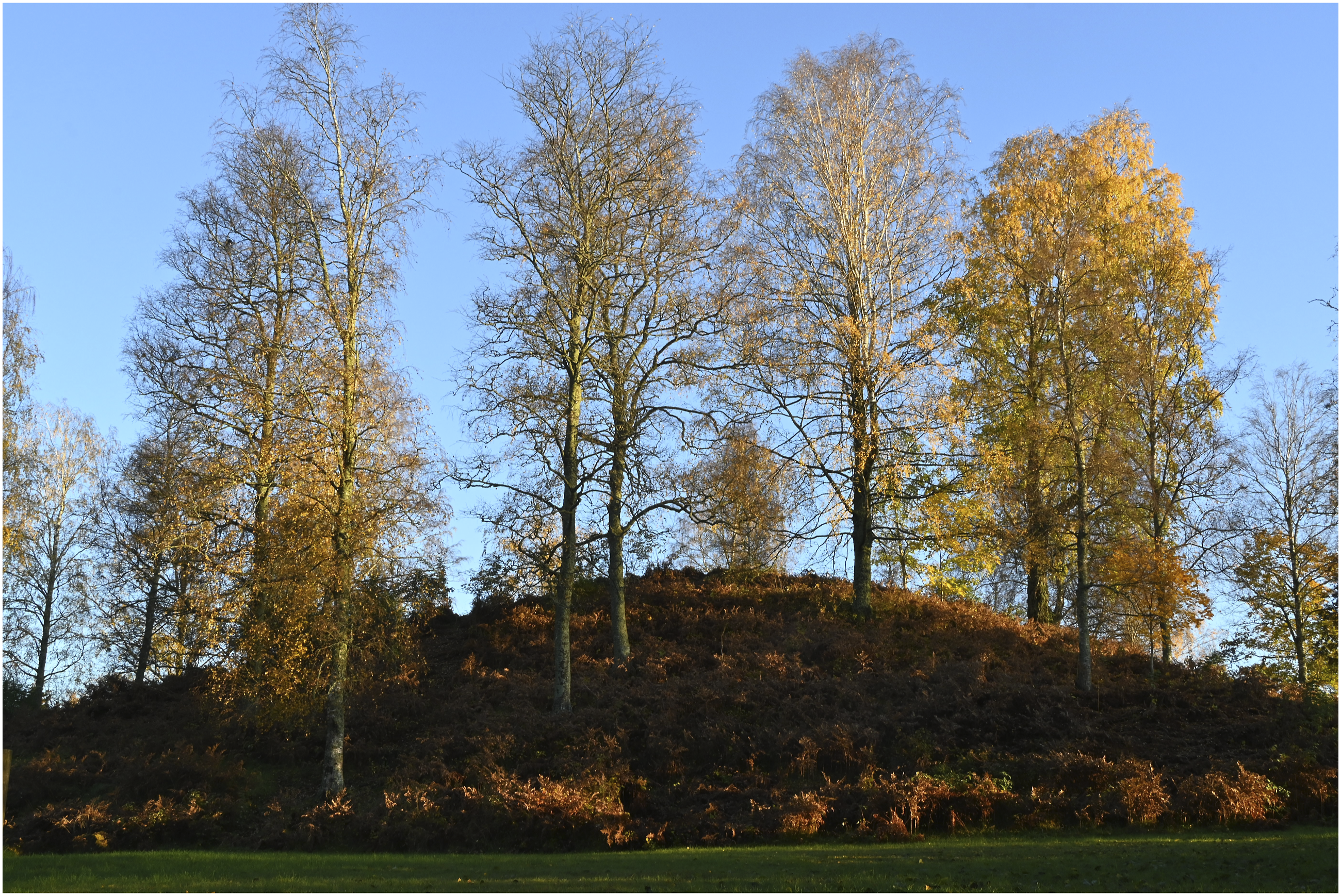
The 6th-century mound Raknehaugen is the largest mound in Scandinavia. The mound is approximately 95 m in diameter and 15 m tall (Grieg, 1941: 4, see also Skre, 1996: 453–55) and lies in the Romerike area of Østlandet, present-day Norway (Figure 1, Figure 2). Map of southern and central Scandinavia showing the location of Raknehaugen and Mälardalen. Map: author. Raknehuagen. Photo: Kirsten Ropeid. Used with permission.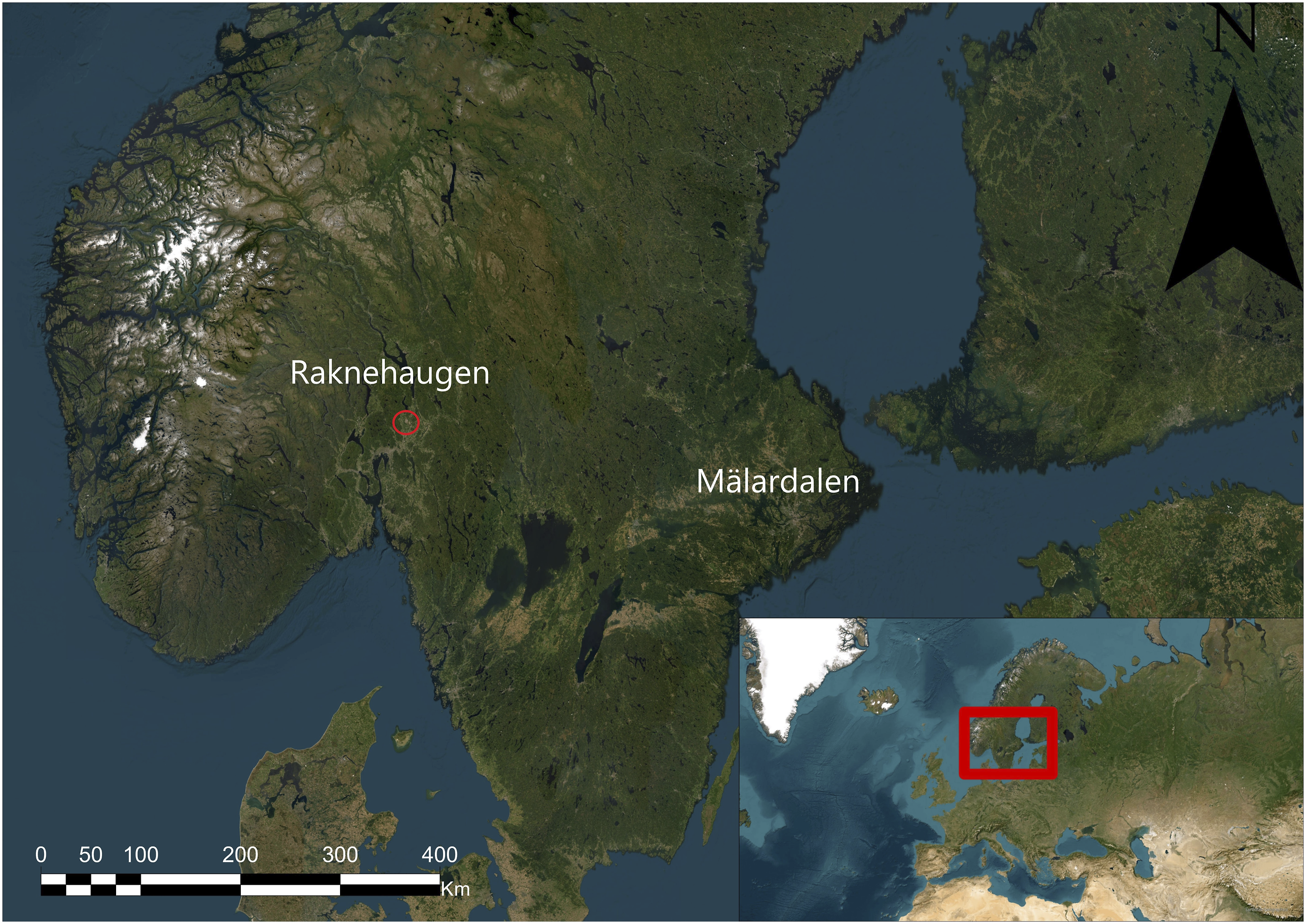
Raknehaugen has been excavated twice, in 1869–70 and in 1939–40. The excavations revealed that the mound was made of three layers of timber trunks covered and intersected by thick layers of sand, clay, and other matter (Grieg, 1941) (Figure 3). The excavators estimated that the upper layer contained 25,000 logs (Grieg, 1941: 11). The total number of logs has not been estimated, but the total amount of timber was estimated at 4000 m3 (Skre, 1996: 458). Section drawing of the central part of the lowest layer of timber trunks. Note the ‘fire pits’, listed as ‘Trekullrester’. Photo: Museum of Cultural History, Oslo, Archives, Raknehaugen, Materiale fra Griegs undersøkelse 1939–1940.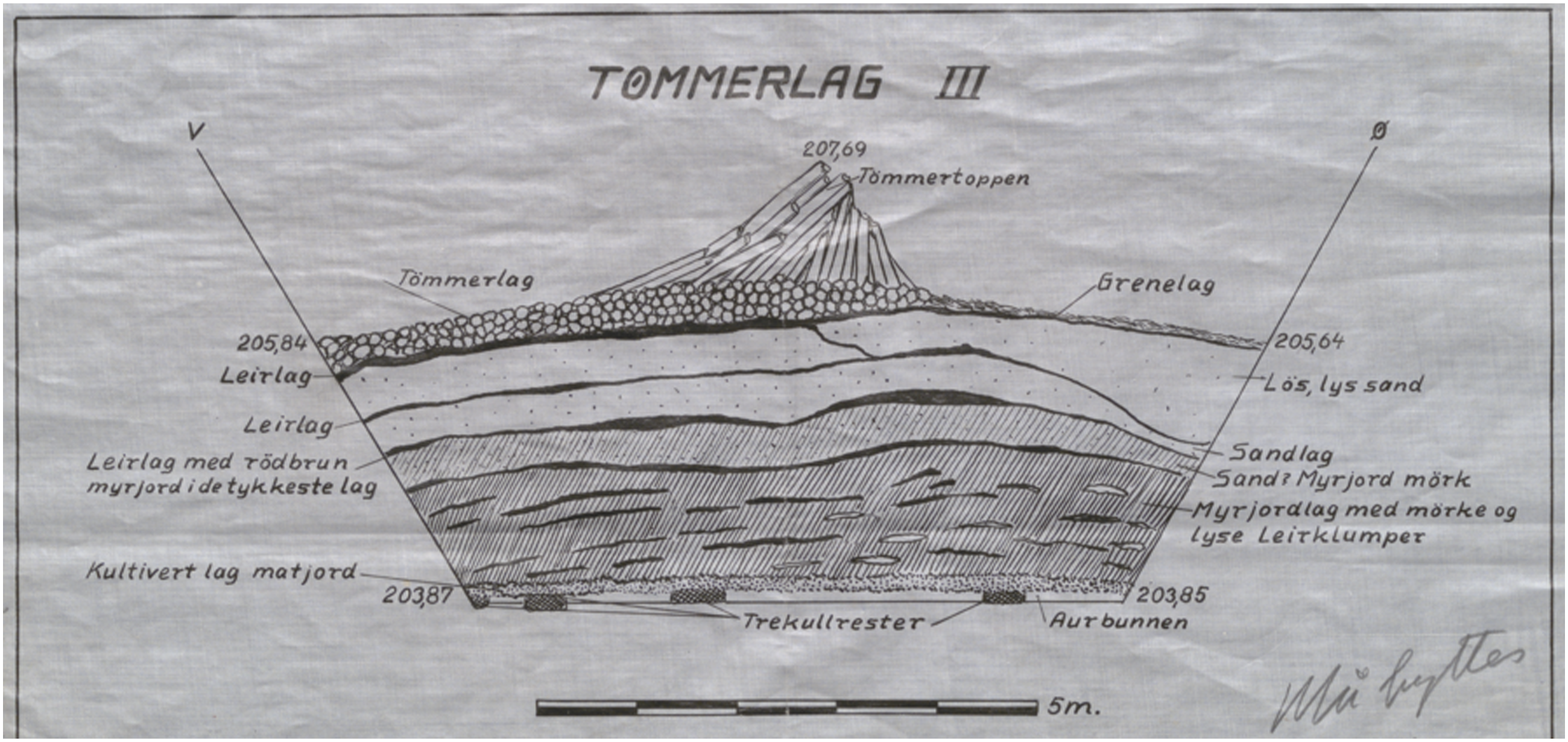
A selection of 100 logs of pine from Raknehaugen was analysed by botanist Asbjørn Ording (1941), and 68 logs of pine, 24 logs of birch and 20 logs of alder were analysed by botanist John Johnsen (1943: 59). Analysing growth rings, Ording (1941: 114) found that 97% of the timber in his sample was felled in a single winter. The remaining 3% of the logs were felled up to five years before that winter (Ording, 1941: 122). Johnsen’s study confirmed the general outline of Ording’s results, however, two logs in Johnsen’s study were probably cut the year after the winter of the main felling (Johnsen, 1943: 40–48), presumably in the following summer.
Timber from the main felling was found in every timber layer in Raknehaugen (Johnsen, 1943: 120; Ording, 1941: 114). Absence of fractures related to exposure from cold, dry air suggested the timber had not been exposed to a second winter after the main felling (Ording, 1941: 124). Mounds cannot be made in Romerike in the winter because the ground is frozen and covered by thick layers of snow. Together, the evidence strongly indicates that almost all the trunks were cut in a single winter and that the entire mound was made between the late spring and the early autumn of the following year, as argued by Ording (1941: 114, 122, 124) and later analysed by archaeologist Skre (1997: 26). Radiocarbon dating of the timber indicates that the mound was raised at some point of time between AD 533–551 (Skre, 1997: 31).
Burial or no burial?
In Scandinavian languages, the general term for human-made mounds is burial mounds (gravhaug/gravhög/gravhøj). The term has been criticised by scholars such as Terje Gansum (2004). Gansum observes that whereas burials have been found in certain mounds, other mounds contain no burials and no other clear indication of commemoration of the individual dead. Ascribing funerary purposes to these mounds is therefore a reflection of what we as present-day scholars expect mounds to contain rather than what the evidence tells us of these mounds, as argued by Gansum (2004: 201).
Other studies make similar lines of reasoning for a range of other contexts that are nominally described as funerary. Human remains in late prehistoric Scandinavia were deposited in a seemingly endless variety of ways, sometimes without respecting the integrity and individuality of the body. This indicates, according to a growing range of authors (e.g. Eriksen, 2020; Østigård, 2013), that not all contexts with human remains served commemorative purposes. For example, scholars such as Anders Kaliff (1997: 119) and Marianne Hem Eriksen (2016, 2020) argue that human remains in settlement contexts could sometimes act as gifts to the settlement, in much the same way as other depositional artefacts did. Sarah Tarlow argues in a similar vein that human remains in Scandinavian mounds and other contexts could sometimes act as ‘ritual fertilisers’, (1995: 138) i.e. artefacts that could enhance the power of rituals and ritual structures.
The research history of Raknehaugen is illustrative for this debate. Anton W. Brøgger, who supervised the excavation in 1939–40, had previously made the case that Raknehaugen was a royal burial (1917: 12–13), however, thorough excavation revealed no grave. This led to suggestions that Raknehaugen was a cenotaph or perhaps an ‘assembly-mound’, i.e., sanctuary and podium for communal assembly (Grieg, 1941). A collection of highly fragmented bones from a pit that was found in the excavations in 1939–40 were later analysed osteologically and determined to belong to several species, including human (Sellevold, 1992). This was generally seen to confirm Raknehaugen as a royal burial mound (e.g. Gjerpe 2023: 147; Hagen 1997; Skre, 1996: 468).
Attempting to quantify the power of the hypothesized king, Skre (1997: 27) estimated that the construction of Raknehaugen required at least 30–60 people working full-time to cut and to transport timber in the winter, and 450–600 people working full-time for six summer months to create the mound itself. All these people needed food, catering, and other supplies, which means that thousands of people were indirectly involved (Skre, 1996: 460). These are minimum numbers that assume that the task was done as cost-efficiently as possible; actual numbers might be significantly higher.
The magnitude of labour and other resources involved in the construction of Raknehaugen made Skre (1996) conclude that the domain of what he interpreted as the king in Raknehaugen extended to the entire Romerike area. His interpretation fuelled a tradition for interpreting 6th-century mounds as an indication of concentration of power, culminating in Viking Age kingdoms some three centuries later (e.g., Bratt, 2008; Grønnesby, 2019; Iversen, 2017), however, in 2015, radiocarbon dating of the human remains from Raknehaugen produced a surprising date of 3020 ± 30 BP (Beta-429,638: C27077BJGA, with 95% probability), as described by Bjarne Gaut (2016: 210). This suggests that the bones were approximately 1700 years older than the mound itself, and thus from the Bronze Age.
Section drawings from the excavation in 1939–40 show that the pit containing the bones lay beneath the turf that the mound stands on (Figure 3). This might indicate that the relation between the pit and the mound is accidental, however, the excavation report states that the turf underneath the centre of the mound cut through the turf in the periphery (Grieg, 1940: 72). This implies that turf was taken away before the mound was made and new turf brought in, or the same turf put back. It may be that the pit was dug, and ancient bones were deposited after the turf was cut off, but before the new turf was placed back. Alternatively, if the pit was already there, the people working the turf must have seen the pit as they cut the turf away. This way they might have been aware that the mound was resting on an ancient burial. Either way, a gap of some 1700 years between the bones in the pit and the mound itself shows that the pit was not the burial of a 6th-century king. If the relation between the mound and the bones was intentional, the bones could instead have hypothetically been a gift to the mound, as in the examples referenced above.
A different but not contradictory interpretation of Raknehaugen was suggested by Price and Gräslund (2015: 121) and by Kaliff and Terje Østigård (2020: 240–46). These scholars point out that the construction of Raknehaugen correlates with the cooling of the mid 6th century, and suggest that the mound was made as an appeal to the gods in response to the hazard. Similar arguments are made for the 6th-century peak in deposition of gold in offerings (Price and Gräslund, 2015). Central to this argument, and to the general debate on Scandinavia in the 6th century (e.g. Andrén, 2014; Axboe, 2007), is the hypothesis for widespread dread. In this respect it is curious that the debate on the events of AD 536 has so far, to my knowledge, not engaged with the archaeology of emotions.
Emotions, monument construction, and the construction of society
Early works on the archaeology of emotions were mainly concerned with private, individual emotions, e.g. in Tarlow’s (1997) pioneering studies on death and mourning. Later works ventured to study emotions at group level (e.g. Creese, 2016; DeMarrais, 2011; Harris and Sørensen, 2010; Houston, 2001; Norman, 2015). Recent work by Sanger (2024) references the sensation of awe to explore how emotions can create a sense of solidarity and group identity in dispersed populations. Citing a wide range of psychological research, Sanger defines awe as ‘the emotion that arises when an individual encounters something immense that surpasses their typical scale of perception’, (2024: 1467) often leading to a form of sensuous overload. The sensation of awe is strongly associated with the sublime, and will often result in a sense of being part of something bigger than the self. This way, a sense of awe can create a strong sense of belonging, and create emotional ties, especially with people that were present at the time when the sensation was felt.
Sanger applies the study of awe to Poverty Point, a site in present-day Louisiana. Poverty Point was built by vast congregations of hunter-gather-fisher groups that assembled for activities including the construction of a complex series of monuments (Sanger, 2024). According to Sanger (2024), awe was produced at Poverty Point in at least two ways: first, by the scale and complexity of the monuments. Second, by the size and the heterogeneity of the congregation that assembled for the construction of these monuments, which differed strongly from what these small groups of hunter-gather-fishers experienced in their day-to-day lives. A sense of awe arising from these assemblies, argues Sanger (2024), worked to create a sense of unity and shared identity in dispersed populations across vast areas, spanning much of the Eastern Woodlands of North America.
Sanger’s emphasis on joint ritual action offers a link between the archaeology of emotion and the work of Émile Durkheim and the tradition that he founded (see also Creese, 2016). Importantly, Durkheim too argued that shared action is central in the creation and re-creation of solidarity and shared identity. He stated: Society can make its influence felt only if it is in action, and it is in action only if the individuals who compose it are assembled and act in common. It is through common action that it becomes conscious of itself and affirms itself; it is above all an active cooperation. (2008: 313)
When applied to 6th-century mounds, Durkheim’s interest in joint action implies, first, that the construction event was not simply a means of finishing the mound. The construction process, and social relations emerging from this process, might instead have been an aim in itself, as argued by Durkheim-inspired scholars such as Christina I. Leverkus (2021) and myself (Sæbø 2024). Second, social archaeology in Scandinavia, and to some extent internationally, has a long history of seeing the concentration of power as a premise for monument construction and other large-scale endeavours (as critically observed by e.g. Smyth et al., 2025; Thurston and Fernandez-Götz, 2021). A Durkheim-inspired perspective, as recently applied in the study of Scandinavian mounds (Leverkus, 2021; Sæbø, 2024), suggests on the other hand that non-elites had reasons to engage in monument construction on their own initiative, because participation in large-scale joint action could foster a sense of unity and shared identity (see also e.g. Gustavsen, 2024; Gustavsen and Cannell, 2024). Similar arguments concerning the role of mutuality, rather than top-down command, in late prehistoric Scandinavia have recently also been made with reference to other large-scale projects, such as fortification (e.g. Borak, 2019), land management (e.g. Gjerpe, 2023), and urbanisation and long-distance trade (e.g. Sindbæk, 2007).
Sanger’s reference to the emotion of awe adds to the Durkheimian tradition in at least three ways. First, with the observation that experiencing a sense of awe makes us more willing to accept, and to cooperate with, strangers (Sanger, 2024: 1470), facilitating exactly the kind of joint action emphasised by Durkheim. Second, the strongest sensations of awe are associated with situations that diverge from the normative to the extent that they call for some form of accommodation and reconfiguration; spiritually, logically, emotionally, or otherwise. This represents an implicit break with the Durkheimian tradition, because the Durkheimian tradition tends to explore how worldviews and social structures are maintained. Sanger (2024: 1470), on the other hand, stresses that the need for accommodation and reconfiguration that often emerges from a strong sense of awe, as well as the chemical reactions occurring in the brain while experiencing a sense of awe, facilitating considerable malleability in worldviews and social relations. Rather than maintaining preexisting structures, a sense of awe might thus inspire the formation of new beliefs and social units. Third, although the conditions that may trigger a sense of awe and the wider implications of awe are historically and individually situated, depending on factors such as the prior experience of the people involved, the capacity for a sense of awe is a cross-cultural aspect of the human brain (Sanger, 2024: 1468). Together, these observations imply that to come together and to reshape worldviews and social arrangements in the context of large-scale joint action is a cross-cultural capacity arising from the chemistry in our heads (Sanger, 2024).
Awe and the material allowances of mound construction
At least four aspects of Raknehaugen relate the mound to Sanger’s (2024) study of awe at Poverty Point. First, the size of the mound could have inspired awe. Second, Price and Gräslund's (2015) and Kaliff and Østigård's (2020) hypothesis for Raknehaugen as a form of sacrifice to the gods in response to widespread dread suggests an association with the sublime. Third, the weakening of the sun in AD 536 may itself have called for certain levels of reconsideration of previous beliefs and presumptions, and the need to accommodate for the event could have forced 6th-century Scandinavians to reconsider their worldviews and social structures, as argued by scholars such as Gräslund and Price (2012) and Anders Andrén (2014). Fourth, let us explore how Sanger’s and Durkheim’s lines of reasoning relate to the material allowances and affordances of mound construction versus deposition of artefacts.
Most of the jewellery and other artefacts that were deposited in Scandinavia in the 3rd to the middle of the 6th century AD were so small they could fit in a hand (Figure 4). In theory, every object in a 3rd- to mid-6th-century depositional context could have been deposited by a single person. Alternatively, deposition could have been a public ritual, as argued by Marie D. Amundsen (2020: 211–12). In this latter case we might imagine a large congregation passively watching as one or a small number of people actively carried out the rituals that would eventually lead the artefacts to the ground. Spiral pearl of gold. Detector-find from approximately 600 m west of Raknehaugen. Typologically dated to the 5th to early 6th century AD. See https://www.unimus.no/, C59747. Photo: Birgit Maixner/Museum of Cultural History in Oslo. Published under CC BY-SA 4.0.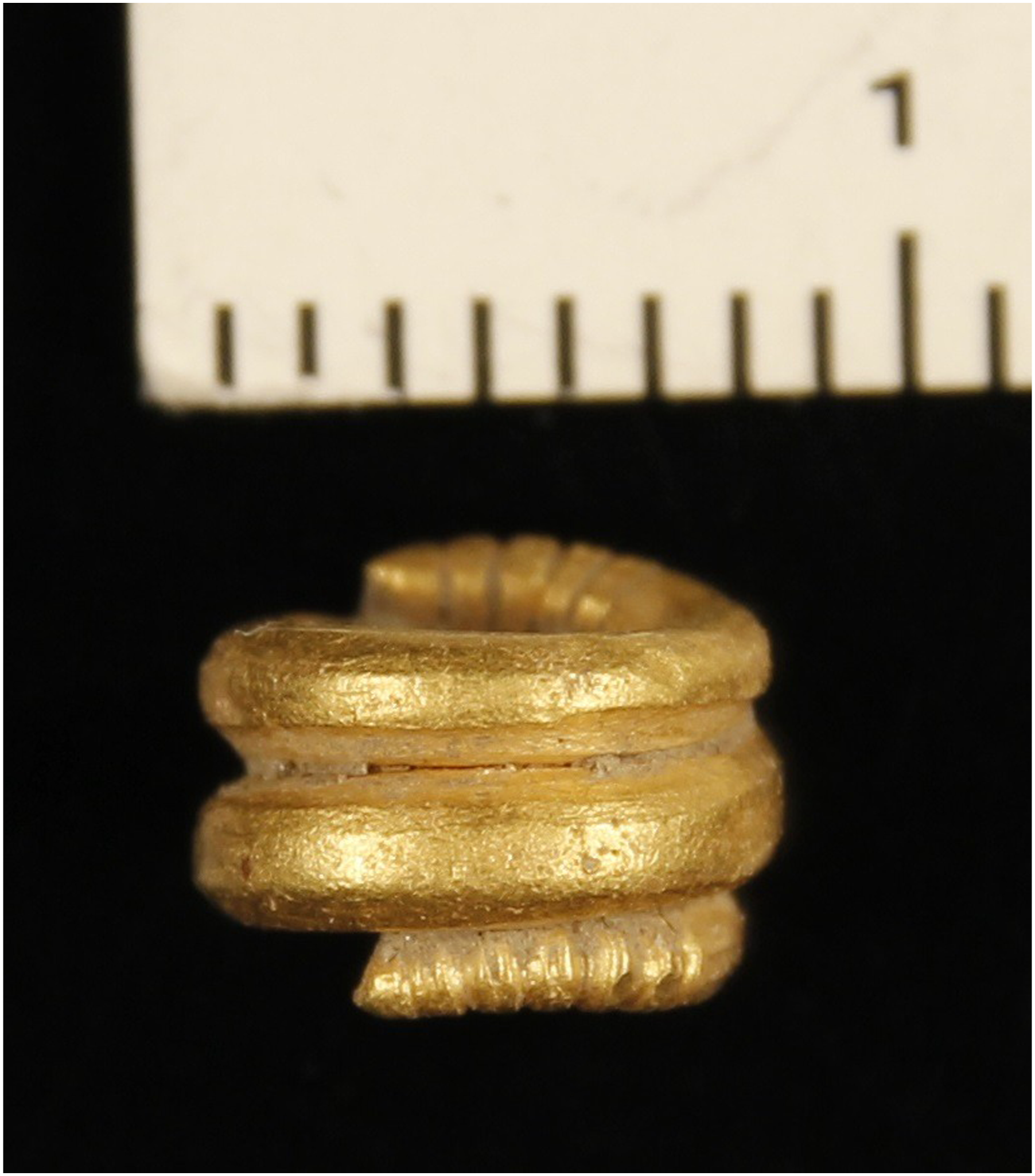
With mound construction the situation was entirely different: Raknehaugen could only have been made by a congregation of thousands, as indicated above. In 6th-century Norway there were no towns, and few or no villages. The major part of the populace lived in dispersed settlements, with restricted day-to-day interaction with people from outside the household (Eriksen, 2019: 111). The scattered character of 6th-century settlements and the vast numbers of people needed for the construction of Raknehaugen means, first, that not all people who met at the construction site knew each other personally. The construction crew was therefore to some extent a congregation of strangers. Second, just as in the case of Poverty Point, most of the people that made Raknehaugen were living too far away from the construction site to allow them to return home at the end of the day. They would have to lodge somewhere near the site, possibly in communal lodgings. This would allow for day-to-day execution of a wide range of shared activities. Just like Sanger (2024, 1477) does in the case of Poverty Point, we might speculate that activities at Raknehaugen could include actions such as cooking and eating together, singing, dancing, and storytelling, all of which could foster a sense of unity and attachment. Third, the dispersed nature of 6th-century settlements means that to 6th-century people, an assembly of hundreds or thousands must have been a profound contrast to what these people experienced in their day-to-day lives, possibly producing a sense of awe comparable to what Sanger (2024) describes for Poverty Point.
Another difference between deposition of gold and mound construction lies in their bodily aspects. Mound construction required trees to be felled, logs hauled, and matter piled up. All these tasks would leave marks on people’s arms, hands, and backs, and produce what Yannis Hamiliakis, analysing a comparable case from Bronze Age Crete, describes as ‘sensorial assemblages’ (2013: 170) with potential to incorporate a wide set of memories and affects. In the case of Raknehaugen, these assemblages would include but not restrict themselves to the smell of newly hewn wood and newly dug soil, the smell of one’s own sweat mixed with that of one’s peers, and the sound and sight of hundreds or thousands of people working together. The weight and bulkiness of the matter involved did not allow people to be passive; everyone would have to take an active part, or the mound would have been much smaller than Raknehaugen. The time-dimension of the project (see Ording 1941, referenced above) means that people would be assembled to act in common for the greater part of a year. People in 6th-century Scandinavia assembled seasonally for a range of purposes including political debates, communal rituals, and games (e.g. Ødegaard, 2018), but none of these could offer levels of long-term joint action comparable to the time and the workforce required for the construction of large mounds. The turn from gold to mounds was thus a turn from a material that allowed for small congregations, and differentiation between active and passive, to material engagements that allowed for none of the above. The construction of Raknehaugen was, above all, an act of large-scale, long-lasting, and active cooperation.
Sarah Semple et al. (2021: 134, 252–3) point out that cooking and feasting was a recurrent phenomenon on Scandinavian assembly sites and interpret communal feasting as a way to foster unity and group identity. The reports from the excavations of Raknehaugen are full of references to animal bones. The bones were found scattered across the mound, in many different layers. Cutmarks suggests the bones were food remains (e.g. Grieg, 1940: 116–20). The animal bones from Raknehaugen were, unfortunately, not examined by a specialist. However, examples analysed by Kaliff and Østigård (2020: 256–270) and by Semple et al. (2021: 259) indicate that ritual deposits of remains from communal feasting is a recurrent feature of Scandinavian mounds. These observations support Grieg’s interpretation of the bones in Raknehaugen, as they show that Grieg’s observations are in line with a wider tradition of mound construction in Scandinavia. From this perspective, the bones in Raknehaugen suggest, first, that the people that made Raknehaugen were eating together, and probably also feasting together at pivotal moments in the project. The scattered location of the bones, across many layers of the mound, suggests that this occurred more than once. Second, combining Semple et al.’s (2021) interpretation of feasting at assembly sites with Hamiliakis’ (2013) interpretation of feasting in Bronze Age Crete, and applying them to the animal bones in Raknehaugen, suggests that eating and feasting together, and the emotions and sensorial experience involved in communal consumption, mattered to the extent that residues of these acts of community-making were baked into the very substance of the mound.
From the outside world to familiar places
No gold was mined in Scandinavia in prehistory or early historic times. Gold is generally assumed to have reached Scandinavia as a result of military campaigns in the service of and against the Romans, and through elite networks of gift-giving northeast of the Limes (e.g. Arrhenius, 1990; Axboe, 2007; Hedeager, 2011). Lotte Hedeager (2011: 195) interprets the iconography of 5th- to early-6th-century golden jewellery as indications of shamanistic rituals, as practiced in Hunnish aristocratic circles. She suggests gold, and esoteric knowledge represented in the iconography of golden jewellery, played a crucial role in pan-Germanic elite milieus inspired and initially ruled by the Huns (Hedeager 2011). From this perspective, gold was an explicit reference to a world that most Scandinavians had probably never seen. The size of the relevant artefacts imply that the iconography was decipherable only to those that got to see them up close (Figure 5). Raknehaugen, on the other hand, was plain for everyone to see, and made of materials that the people of 6th century Romerike were dealing with on a day-to-day basis, such as sand, clay, and timber (Figure 3). Fifth- to early 6th-century golden jewellery from Eidsvoll, Romerike. The small size of the artefact means the iconography may only be discerned from up close. See https://www.unimus.no/, C11521. Photo: Kirsten Helgeland/Museum of Cultural History in Oslo. Published under CC BY-SA 4.0.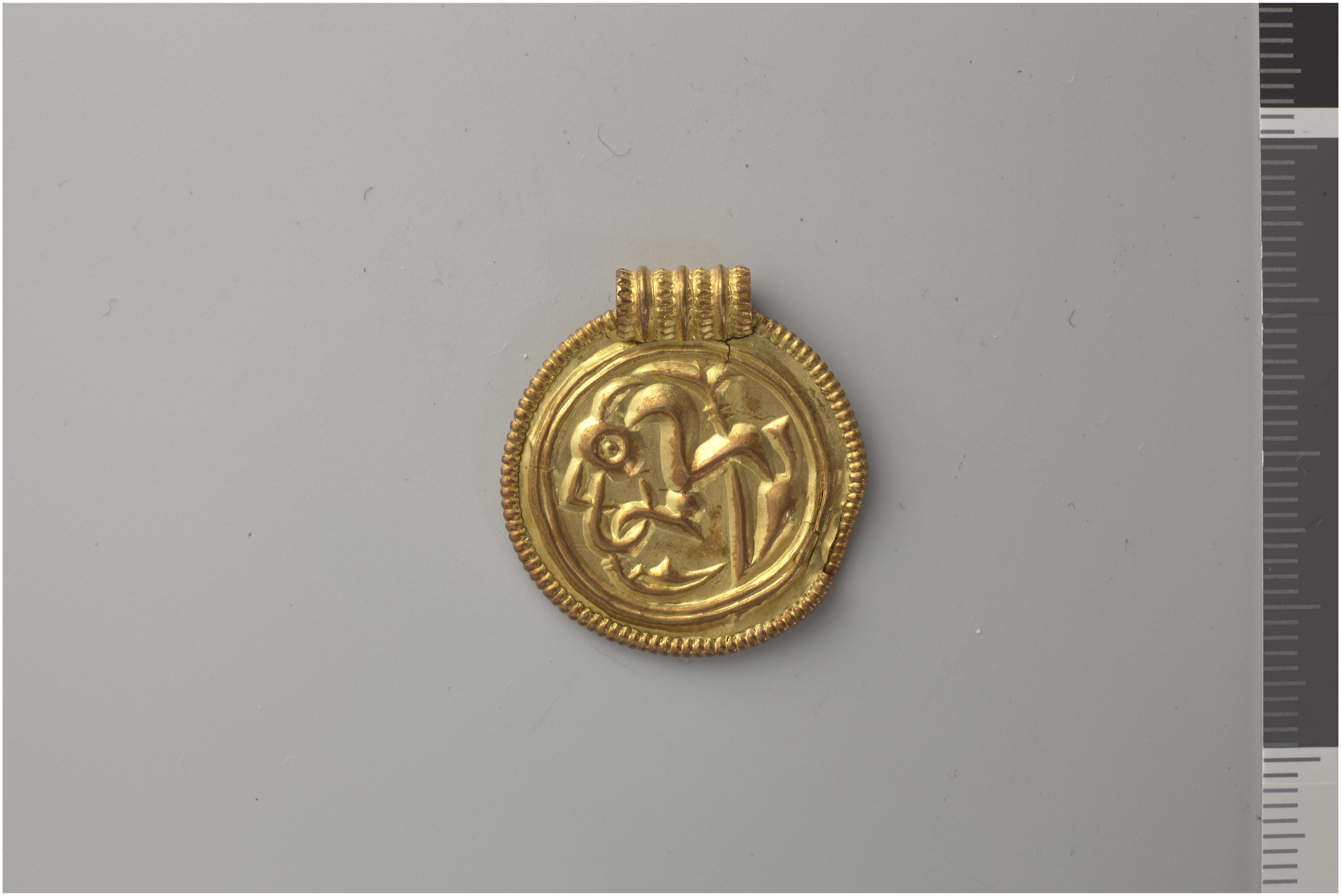
Ording’s study of the timber from Raknehaugen showed that the timber came from trunks that were heavily twisted and bent by the wind. This is characteristic for trees that grow in isolation, e.g. on dwellings (Ording, 1941: 94, 127). The amount of timber in Raknehaugen and the fact that the trees grew one by one suggests that trees may have been gathered from vast areas. Long-distance transport is also indicated by holes cut towards the end of many logs from Raknehaugen (Figure 6). The holes would have facilitated long-distance transport by allowing a rope or a chain to be looped through the holes. Log from Raknehaugen. Note the holes at either end. Photo: Museum of Cultural History, Oslo, Archives, Raknehaugen, Materiale fra Griegs undersøkelse 1939–1940.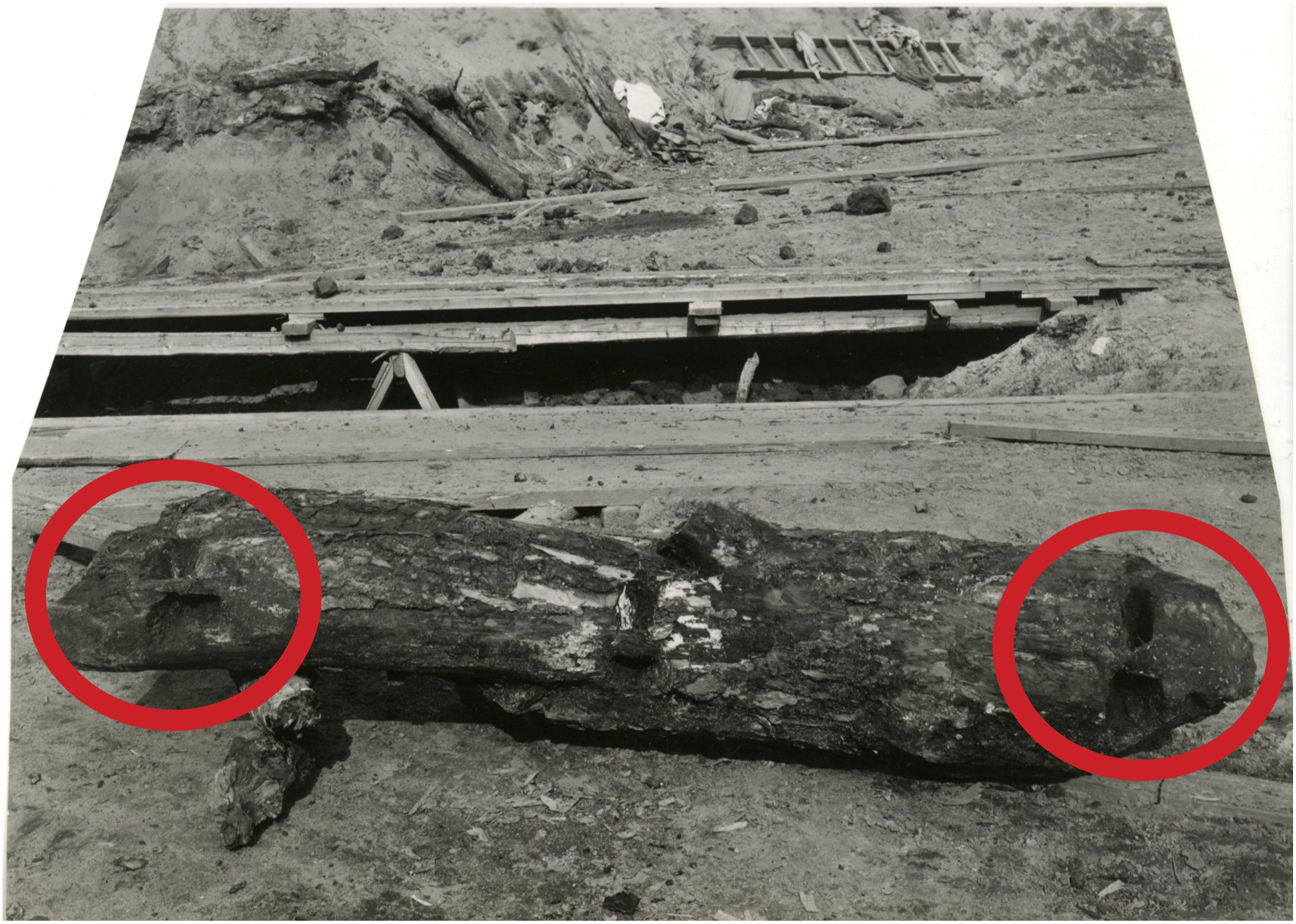
Scholars such as Rebecca Cannell, 2021a, 2021b; see also Gansum and Østigård, 2004; Myhre, 2015) argue that the materials selected for the construction of Scandinavian mounds were never random, but could instead act as references to a wide range of aspects such as cosmological concepts and the places materials were drawn from. Her line of argument is interesting in relation to the wind-blown character of the trees in Raknehaugen. If some of the trees in Raknehaugen came from dwellings, as suggested by Ording (1941), they may be so-called ‘farmyard trees’. The farmyard tree is important in modern-day Scandinavia as a symbol of the family and the prosperity of the family. Textual sources indicate that the concept dates back at least to the Viking Age (AD 800–1050) (Steinsland, 2005: 107), possibly earlier. However, not all the trees in Raknehaugen could have been farmyard trees, simply because the number of trees in Raknehaugen exceeds even the most ambitious estimates of the population of 6th-century Romerike. Remaining trees could have come from fields and pastures, as suggested by Ording (1941: 127). Importantly, all of these—farmyard trees as well as trees from fields and pastures—were familiar parts of landscapes that people interacted with on a day-to-day basis. This way, the timber of Raknehaugen was literally thousands of pieces of people’s landscapes and everyday life, united and stacked together in three large piles, as a reference to, and possibly, a symbol of these places and the people that lived there.
Gold, mounds, and memory
Several researchers associate Scandinavian gold deposits with creation of public memory and ritual landscapes (e.g. Amundsen, 2020: 206; Hedeager, 2011: part 4; Zachrisson, 1998). The same case is often made for mounds (e.g. Lund, 2021; Stenholm, 2018; Thäte, 2007), however, a difference between the memory-aspect of deposition versus that of mound construction is that deposition left few or no lasting, visible, or tactile marks on the landscape. This means that deposits were effectively erased from the landscape once oral memory waned, as explored by Axboe (2007: 121). Mounds, on the other hand, were able to perpetuate oral memory (see e.g. Lund, 2021; Stenholm, 2018; Thäte, 2007), allowing the mound to work as what Ruth Van Dyke and Timothy Hogue, writing about the North-American Southwest and the Iron Age Levant respectively, refer to as durable ‘anchors’ of memory (Van Dyke 2017) and social relations (Hogue 2021). A mound is a message to the distant future, which may have appealed to people that hypothetically saw oral memory threatened by major turmoil. From this perspective, the 6th-century boom in construction of major mounds, at Raknehaugen and elsewhere in Scandinavia, might suggest increased desire for remembrance and for leaving a mark in the landscape that would remain even if oral memory failed.
The dominant species of tree in Raknehaugen were pine and birch (Ording, 1941: 93; Johnsen, 1943). Pine is a very durable material. The trunks in Raknehaugen came from trees that were cut between one and one-and-a-half meters above the ground, which is unusually high (Ording, 1941: 95). The trunks of trees cut one-and-a-half meters above the ground must have been strikingly visible, considering that the trees had grown in an open landscape and/or at dwellings. This means that for decades after the construction of Raknehaugen, moving through Romerike was to travel through a constant reminder of the construction event, represented by one to one-and-a-half meter-tall tree trunks scattered across pastures, fields, and settlements. These trunks could allow people to point to the trunks to showcase their contributions to the construction of Raknehaugen. The trunks can also potentially have served as a constant, tactile reminder that the place itself was literally and symbolically made part of the mound.
Concerning remembrance and memory-production, it must be noted that the 6th-century boom in construction of mounds with diameters higher than 20 m correlates with a massive decline in archaeologically visible burials. Decline in archaeologically visible burials is probably to some extent the result of reduced populations, as discussed above. However, in many parts of Scandinavia, reduction of archaeologically visible burials exceeds even the direst suggestions for mortality and emigration. Kjetil Loftsgarden and Frode Iversen (2024) show that the number of archaeologically visible burials in present-day Norway fell by 75%, compared to Gräslund and Price’s (2012) suggestion of 50% demographic decline. This could indicate that the reduction in archaeologically visible burials to some extent also indicates shifting mentalities.
Shifting mentalities are perhaps best seen at sites such as Borre in Vestfold, Østlandet, as analysed by Leverkus (2021). Borre was severely damaged by road and railroad construction as well as agricultural activity from at least the 19th century onwards, and the site is far from fully excavated. With these limitations in mind, Leverkus, building on Myhre (2015), demonstrates that many comparatively small burial mounds and other burial markers were made at Borre in the period leading up to the 6th century. The mounds that were made at Borre from the 6th century onwards are, by contrast, among the largest mounds in the Østlandet region, with nine mounds of between 34 and 45 m in diameter known today. Trees and other matter were assembled from across the landscape, which Leverkus (2021: 72–73), building on Myhre (2015), interprets as a symbol of what she sees as the communal nature of the Borre mounds. This is an interesting parallel to the Raknehaugen mound, as in both cases we see that matter was assembled from a range of locations, hypothetically carrying strong symbolic connotations to these locations and the people living there (see above). As with Raknehaugen, the earliest of the monumental mounds at Borre show no conclusive evidence for burials, as discussed by Lars Gustavsen and Cannell (2024: 214). If mounds were used in memory production, which is generally accepted in Scandinavian archaeology (e.g. Lund, 2021; Stenholm, 2018; Thäte, 2007), the widespread reduction of comparatively small markers for the individual dead in favour of large, community-wide engagements with no clear indication of burials, as at Borre, in Raknehaugen, and elsewhere, could indicate that being remembered in 6th- and early-7th-century Scandinavia was increasingly about being remembered not as individuals but as parts of groups.
Concerning Borre, it should be mentioned that the chronology of the site is not fine-grained (see Leverkus, 2021; Myhre, 2015), and the beginning of the tradition for building large mounds at Borre cannot be ascribed to the time of the dust-veil of AD 536 specifically. If the large mounds of Borre were a response to societal anxiety, as implicitly argued by Leverkus (2021), the mounds might therefore relate to the general turmoil of the longer 6th century AD rather than to the events of AD 536 in particular. This might also be the case with mounds elsewhere that were made in the decades leading up to the crisis of AD 536, as well as mounds made later in the 6th and in the early 7th century AD.
Returning to Raknehaugen, the durability of the mound is interesting in relation with the Bronze Age human remains found beneath the mound. Together, the mound and the antiquity of the bones—if the relation between the bones and the mound was indeed intended, as discussed above—united the ancient past and the distant future, hypothetically reflecting desire for stability. Hypothetically, the bones could also have acted as symbols of shared, ancient ancestry, and thus be yet another expression of a desire for community and belonging.
Tools, gold, and a regional perspective
The excavation of 1939–40 found plough marks in the ground beneath Raknehaugen (see Skre, 1997: 15). In the mound itself there were apple seeds (Grieg, 1940: 119), applewood (Johnsen, 1943: 25), and a wooden plough (Grieg, 1939: 253; see Reiersen, n.d.). Ploughing initiated the construction of many mounds in Scandinavia (Rødsrud, 2020). Bjørn Myhre (2015:179–80), referencing ploughing and mound construction at Borre, interprets this as a fertility ritual. I have previously made a similar interpretation for cases of farming equipment in 6th-century mounds (Sæbø 2020). Applying Myhre’s and my lines of reasoning to the plough marks and the plough in Raknehaugen suggests that the mound served for rituals associated with regeneration and agriculture. Apple seeds and applewood might point in the same direction, as the apple was a sign of regeneration in Norse mythology (Steinsland, 2005: 241–42). This might potentially be yet another reference to the cooling of the 6th century, as agricultural rituals might potentially reflect communal fear of crop failure.
Absence of non-ferrous metal artefacts and clearly defined graves seems to be a general trait for the large mounds of mid-6th to 7th-century Østlandet (e.g. Gustavsen and Cannell, 2024: 214). In this sense, the large mounds of Østlandet seem to contrast with those of certain other parts of Scandinavia, such as the Mälardalen region of present-day Sweden. Bratt (2008: 62) points out that 97% of the excavated mounds in Mälardalen contain human remains. Bratt (2008: 82) also shows that the largest mounds in Mälardalen are also the ones with the highest quantities of gold, as in the 6th- or early-7th-century mounds Östhögen and Västhögen in Gamla Uppsala (for Gamla Uppsala see Ljungkvist, 2013; Ljunkgvist and Frölund, 2015). Construction of large mounds was drastically increased in approximately the middle of the 6th century, and deposition of gold drastically reduced; however, any gold still in circulation had a high chance of ending up together with human remains in a large mound (see Bratt, 2008: 82–85).
Bratt (2008: 162) interprets the increase in construction of large mounds in 6th-century Mälardalen as reflecting the emergence of new elites. His interpretation seems to build on a three stage premise: first, that the human remains in the Mälardalen mounds were not ancient at the time when the mounds were made. Second, that the deceased was part of the elite. Third, that the gold in the large mounds was not collectively owned but was a personal belonging of the deceased, an heir, or some other part of the elite. In many cases we cannot test these premises, i.e. because many mounds were dated by typology only. However, assuming Bratt’s premises are correct, the elite and their gold were literally, also probably symbolically, at the centre of the societies of mound-makers that emerged in Mälardalen in the wake of the 6th-century turmoil. The Mälardalen mounds, just like Raknehaugen, relied on large-scale active cooperation and might reflect similar sentiments for community and belonging, yet from this shared backdrop it might be that the political consequences of the Mälardalen mounds were very different from those of Raknehaugen. In Raknehaugen, and elsewhere in Østlandet, the absence of metalwork and of burials of the recent dead allows for the hypothesis that an association with lineage and personal wealth was actively avoided in favour of communal bonds fostered by joint action. In Mälardalen, by contrast, wealth and lineage was seemingly at the centre of large-scale joint action. A larger, cross-Scandinavian study is outside the scope of this inquiry, but the contrast between Mälardalen and Østlandet shows that the wider implications of 6th-century mound construction was by no means pre-determined.
Conclusion
The construction of Raknehaugen was an immense task engaging thousands of people from across vast areas. The seasonality of the project—evident from Ording’s (1941) observation that the timber in Raknehaugen showed little sign of drying from exposure to air, and the climate of Romerike, which does not allow for mound construction in the winter—suggests the entire mound was built in a single large-scale event. Price and Gräslund (2015) interpret the construction of Raknehaugen, and peak in deposition of gold, as appeals to supernatural powers in relation to the climatic crisis and other events of the mid-6th century. While building on their interpretation, I argue that deposition and monument construction were very different forms of response, resulting from and producing different, possibly opposing sentiments and social effects. Gold and other artefacts could be handled by a small, exclusive group of people, whereas Raknehaugen and other 6th- and 7th-century monuments could only be made by large-scale joint action. Referencing Sanger’s (2024) exploration of the societal effects of group emotions and stressing the bodily aspects of deposition versus mound construction, I argue that the active, long-lasting, laborious cooperation required to construct a monument like Raknehaugen could foster a sense of unity and belonging in dispersed populations. Trees and other matter were hauled from across the plain, hypothetically as references to the places they came from and the people that lived there, and tree-trunks were left scattered across the landscape, hypothetically serving as tactile reminders of the event. Residues of eating and feasting were baked into the very substance of the mound, possibly representing the community-building aspect of feasting and other festivities. In Raknehaugen and in other monumental mounds of 6th- and early-7th-century Østlandet there is no clear indication of burials. Previous scholarly attempts at linking these mounds with an idea of lineage, be it ‘royal’ or otherwise, is thus at odds with the evidence. Questions remain as to who prompted the work of large-scale groups, but arguably the mound building here, and elsewhere, was a collective social response to crisis, and if linked into the evidence for agriculture, perhaps connected to a desire for stability and attachment to others in the face of increasingly tumultuous conditions fuelled by the effects of the dust-veil of AD 536.
Perspectives presented in this paper and in the referenced literature (e.g. Sanger, 2024) question earlier scholarly assumptions of scale as evidence of individual power, emphasising instead the capacity of large-scale joint action for the creation of unity and emotional bonds. Turning from gold to increased construction of large mounds was to turn from a material that allowed for small congregations and separation between the active and the passive, to a material that allowed for no such thing. What mattered to the construction of Raknehaugen was, above all, large-scale active cooperation.
Footnotes
Acknowledgements
My thanks go to Professors Sarah Semple and Julie Lund for reading and commenting on this manuscript, to the editors and the reviewers of the Journal of Social Archaeology, and to the staff and students at Durham University, where these ideas were first presented.

Funding
The authors received no financial support for the research, authorship, and/or publication of this article.
Declaration of conflicting interests
The authors declared no potential conflicts of interest with respect to the research, authorship, and/or publication of this article.