



Abstract
Twenty-four years ago, the National Heritage Resources Act, No. 25 of 1999 (NHRA) was enacted in South Africa. This was a moment of change, when the heritage of those marginalised during the colonial and Apartheid eras would finally be given its rightful place on the national heritage list. There was a sense of optimism amongst politicians that the African past was finally to be recognised in an inclusive and representative future. This was echoed in archaeology, given its central role in uncovering and telling the story of precolonial South Africa. The discipline slowly opened its doors to academics of all ethnic groups and new perspectives were identified. But an examination of the practical consequences and impact of this progressive legislation for transforming officially declared heritage in the past 24 years shows surprisingly little change in the overall body of recognized, listed heritage. Recent studies of transformation in South African archaeology have focussed on institutional transformation; possible transformation of the types and frequency of sites declared as national and provincial heritage sites has not yet been examined. It is this issue which our paper addresses. The paper presents analysis that relies on the South African Heritage Resources Information System (SAHRIS) database covering the period 1936 to mid-2022. Whilst sites associated with European colonialism still predominate, there has been a change in the frequency of types of heritage declared since 1999, with an increase in sites associated with the Black liberation struggle. Yet the list remains very unbalanced, with only a single heritage site connected to the precolonial past of Black South Africans having been declared as a national heritage site since 1999. We discuss and classify the types of heritage declared since 1999 and suggest reasons for the distortion.
Keywords
Introduction
Our heritage celebrates our achievements and contributes to redressing past inequities. It educates, it deepens our understanding of society and encourages us to empathise with the experience of others. It facilitates healing and material and symbolic restitution and it promotes new and previously neglected research into our rich oral traditions and customs.
The preamble to the National Heritage Resources Act 25 of 1999 (NHRA) speaks of the need to recognise heritage marginalised during the colonial and Apartheid era in South Africa and provides the legislative tools with which this might be done. Have the types of heritage declared 1 to be of national significance in fact changed in the democratic era? Is the declared heritage list now more balanced than in 1990, when Frescura (1990) found that under the National Monuments Council of South Africa (1936–1989), “97% of all declared monuments reflect the values of the immigrant white community whilst the remaining 3% represent the art, architecture and artefacts of 84% of this country’s Black African population”? Other studies have put the percentage of national monuments of European colonialism higher, at 99% (Deacon, 1993; Ndoro and Pwiti, 2001). Deacon (1993), whilst acutely aware of the practical difficulties of listing archaeological sites—they are often less palpable than colonial buildings and thus harder to use and protect—was nevertheless optimistic that archaeologists could make a difference in promoting a conservation ethic and educating the South African public. However, two decades later, as presented here, 88% of declared heritage in South Africa is still related to European colonialism and is concerned mainly with buildings (Reddy, 2023).
The #RhodesMustFall protests that evolved in South Africa in 2015 and spread to other parts of the world demonstrated the powerful symbolism of sites and monuments today and drew attention to the public perception that there had been a failure of transformation (Ndletyana and Webb, 2017; Shepherd, 2020). “In a tenuous, transforming society, monuments, like other identity symbols, warrant attention owing to their ability to invoke deeply-felt sentiments and moral imperatives, to inflame powerful emotions, and even to lead to violence” (Marschall, 2009: 2).
In the years following South Africa’s first democratic election in 1994, the Arts and Culture Task Group, mandated with “formulating recommendations for a new arts and culture dispensation consistent with non-racist, non-sexist and democratic ideals” (South African Government, 1996: Point 8), was advised by the National Monuments Council to retain all national monuments previously declared (Marschall, 2009). All former national monuments were graded as provincial heritage sites (Grade 2) rather than as Grade 1 (National Heritage Sites) so as to “create an opportunity for redress and re-assessment of significance” (Deacon, 2015: 3). The inheritance of the national monument list and the subsequent failure to reassess it mean that the only way to transform the declared heritage list is to inscribe more sites of types that are not of European colonial origin.
To explore possible transformation, we identified and quantified the types of heritage that have been declared as national and provincial heritage sites since the NHRA was enacted on the 28th April 1999. We found that whilst the list is still dominated by European colonial heritage, less heritage of this type has been declared in the post-1999 period. Most of the newly declared sites relate to the liberation struggle. Archaeological sites remain underrepresented. The paper presents the data and thoughts on why this might be so.
Transformation in archaeology
Southern Africanist archaeologists have examined the transformation of archaeology in South Africa by reflecting on: the historical roots of inequality in the development of the discipline (Shepherd, 2002a, 2003a, 2003b, 2015), institutional transformation in demographic terms (Ndlovu, 2009; Ndlovu and Smith, 2019; Shepherd, 2003a, 2005), the archaeology curricula at tertiary institutions (Shepherd, 2003a, 2005), and the lack of transformation within heritage management (Ndlovu, 2011a, 2011b; Ndoro and Pwiti, 2001). Transformation in southern Africa more widely considers forefronting indigenous knowledge systems (Pikirayi, 2015), restitution of cultural property (Musonda, 2013), and challenging traditional Western interpretations of archaeology and heritage (Chirikure, 2020; Jopela, 2011; Shiningayamwe, 2023). Here we looked for an expected increase in declared heritage related to indigenous 2 South Africans since 1999.
Method
Our data comes exclusively from the South African Heritage Resources Information System (SAHRIS), the online, interactive database established by the South African Heritage Resources Agency (SAHRA) in 2012 to hold all documentation related to South Africa’s national estate (Mlungwana, 2015; Mlungwana and Jackson, 2017; Smuts, 2015; Wiltshire, 2013). The data held by SAHRIS includes archaeological surveys, archival documents, heritage impact assessments, permit applications, and archived reports dating from the 1980s (Wiltshire, 2013). The database has potential biases. Funding, staffing, and skills have led to varying levels of its use and adoption among the nine Provincial Heritage Resources Authorities, so it may not be a complete record of all declared heritage sites. Nonetheless, it remains the most extensive searchable heritage database accessible to the public, making it the most suitable source for the analysis.
Data extraction took place from March to May 2022. Within SAHRIS, the data comes from the category “Declared Sites”. 3 Because the three-tier grading system did not exist before the NHRA came into being, it could not be used for comparison to sites declared before 1999. This study captures statistics on only Grade 1 (national) and Grade 2 (provincial) sites.
Each site was then classified based on these four definitions: The decision to designate all heritage originating before the onset of colonial influence as “precolonial” was an obvious one, primarily because this nomenclature is widely adopted in academic discourse (Alexandrino Ocaña, 2023; Giblin et al., 2011; Mazrui, 1983; Murombedzi, 2003). This category of heritage refers to the cultural, historical, architectural, and material legacies left behind by colonial powers in regions and territories they once controlled (Ndlovu, 2011a, 2011b). Colonial heritage often includes buildings and monuments because of colonial perceptions that heritage was physical in nature (Whelan, 2019). “Postcolonial” pertains to the time following the colonial era, while “postcolonialism” is the theoretical framework that offers an ideological critique of colonialism and the knowledge systems it engendered (Abrahamsen, 2003; Burney, 2012; Gosden, 2002; Quayson, 2002). As such, this category is both and looks at heritage that presents a distinctive challenge to the colonial paradigm.
The data were cleaned to remove duplicate entries and undated sites. Sites that had changed in status from provincial to national heritage were counted as two separate sites. The distribution of each of these categories across the nine provinces, the heritage legislation under which most heritage was gazetted, and the number of sites in each category gazetted since 1999 were calculated. As a measure of transformation, all sites declared since 1999 were categorised according to the four categories above, and the total number of colonial heritage sites was compared to the combined total of postcolonial and precolonial sites.
Results
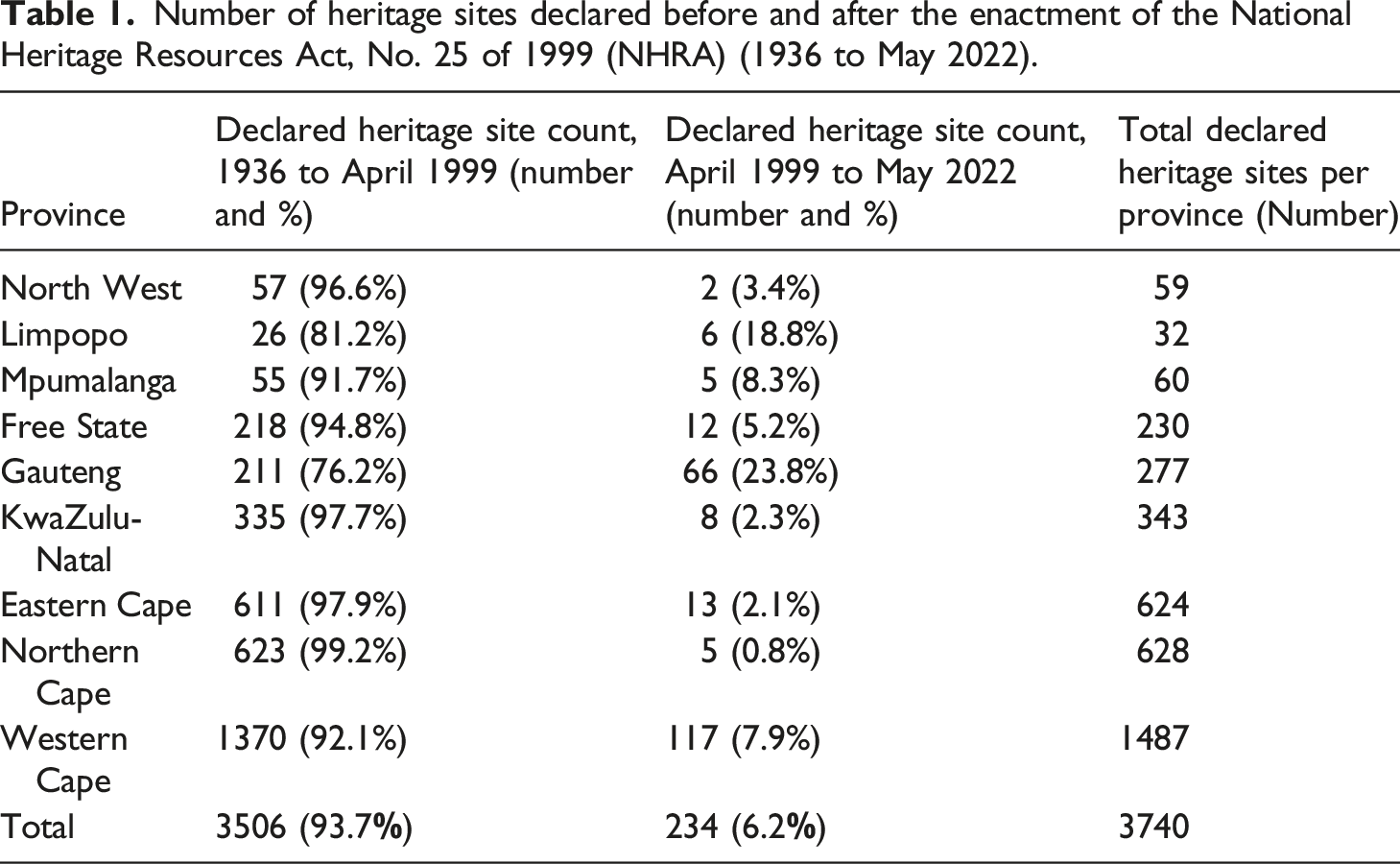
Number of heritage sites declared before and after the enactment of the National Heritage Resources Act, No. 25 of 1999 (NHRA) (1936 to May 2022).
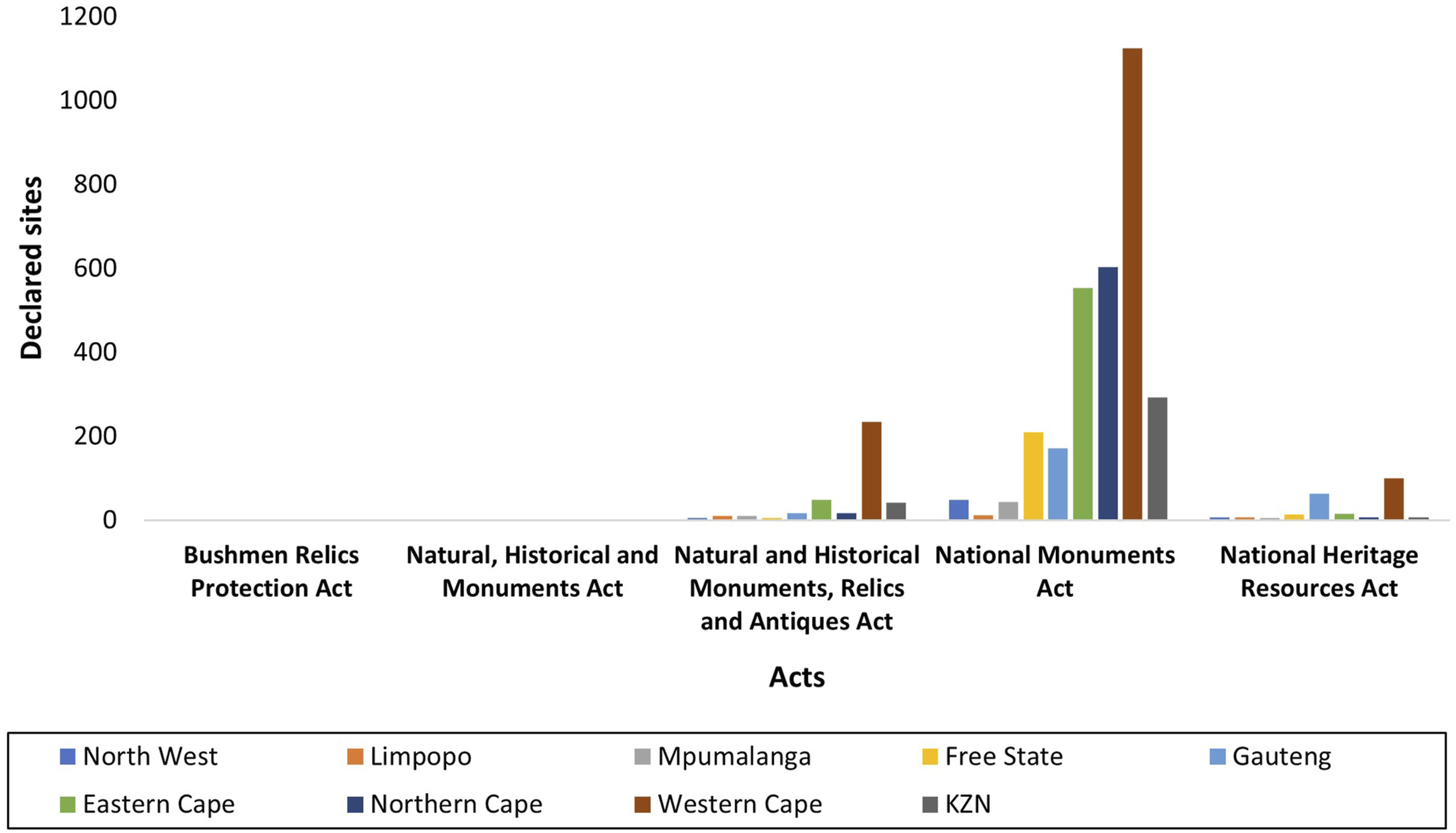
The number of declared sites per province under the different Acts for heritage protection.

(a) The categories of declared heritage per province by year. (b) The categories of declared heritage per province by year. (c) The categories of declared heritage per province by year.
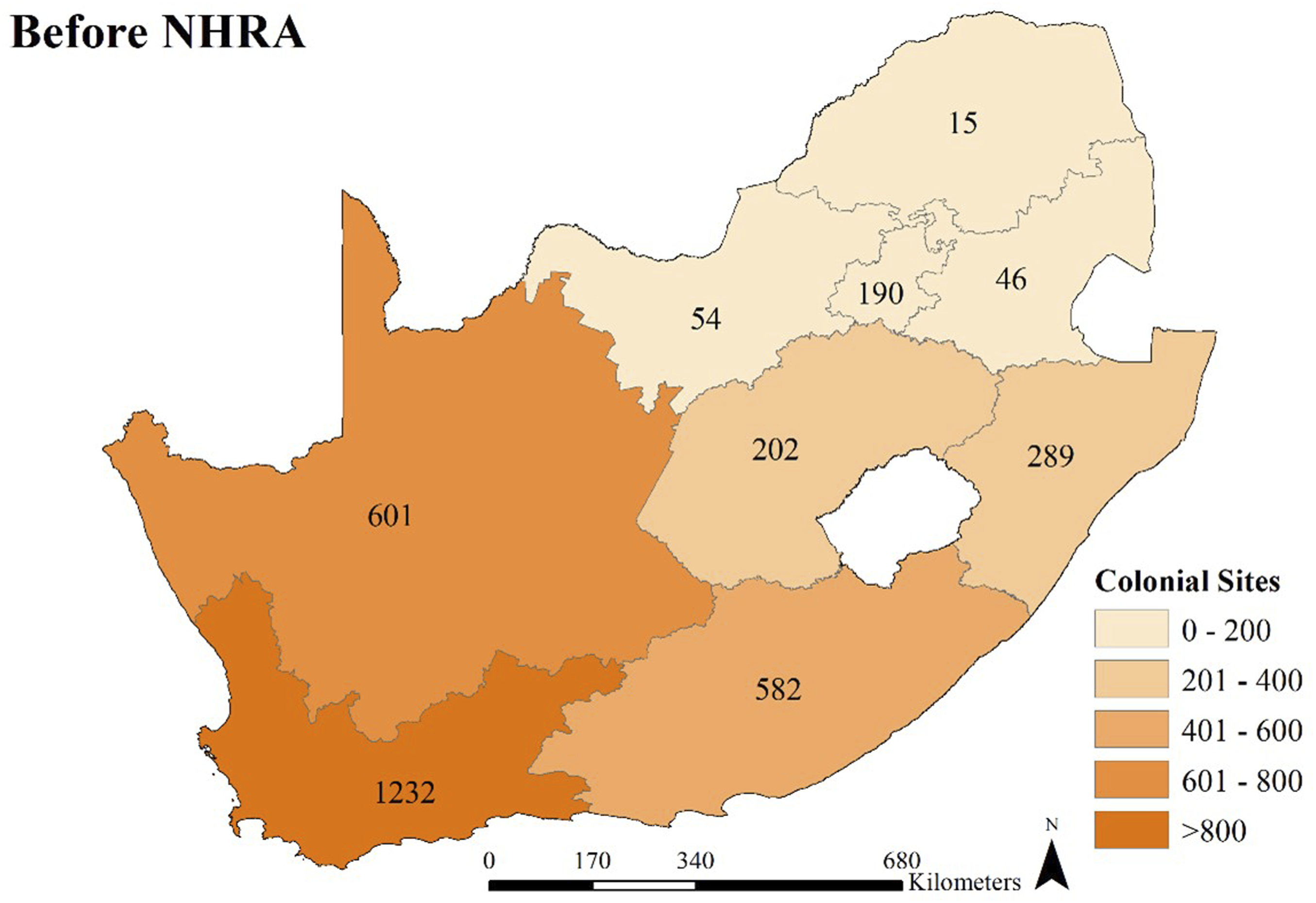
Colonial sites declared before the National Heritage Resources Act of 1999. Note that these provinces would have not existed prior to 1994.
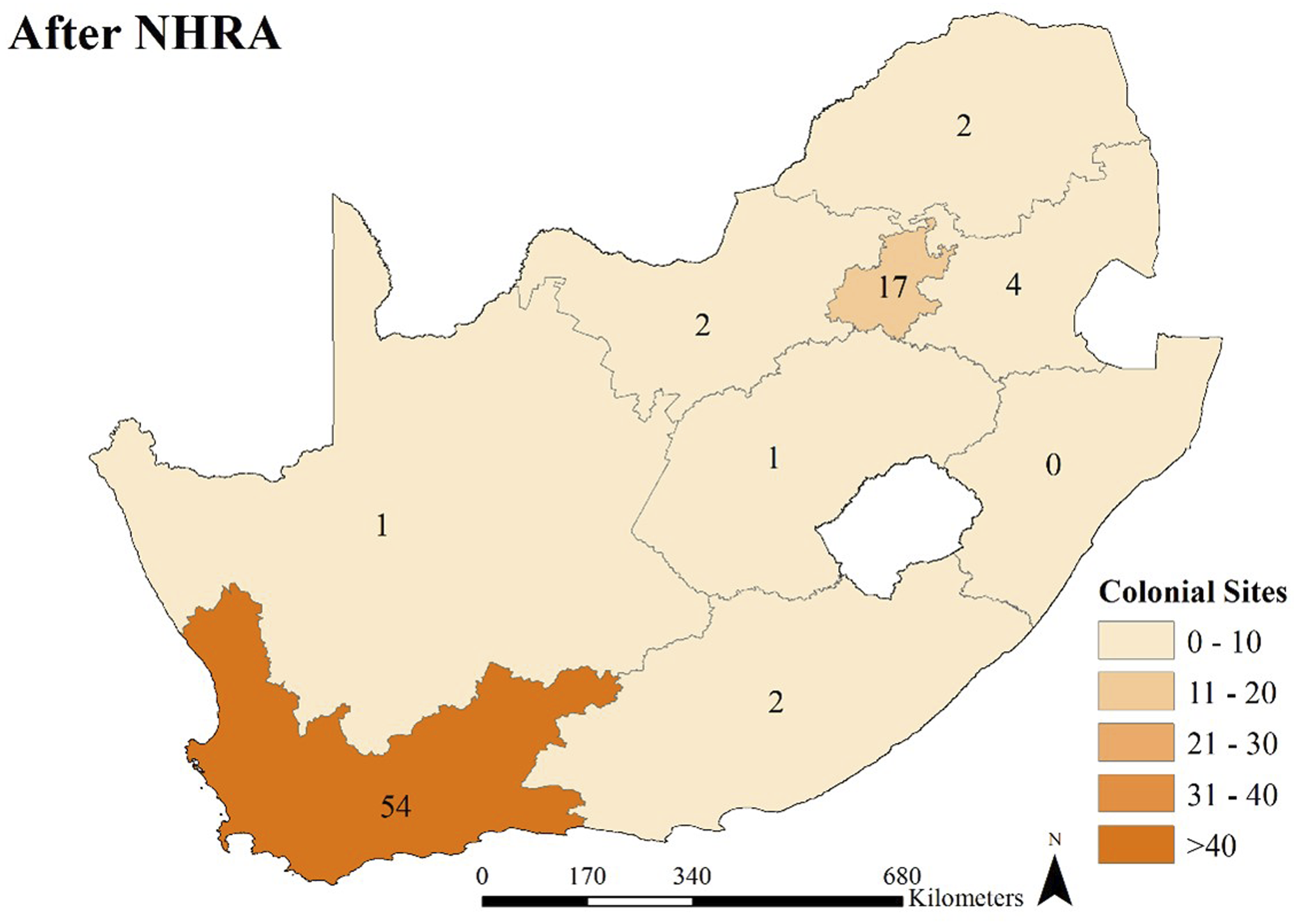
Colonial sites declared since the NHRA of 1999 by province.
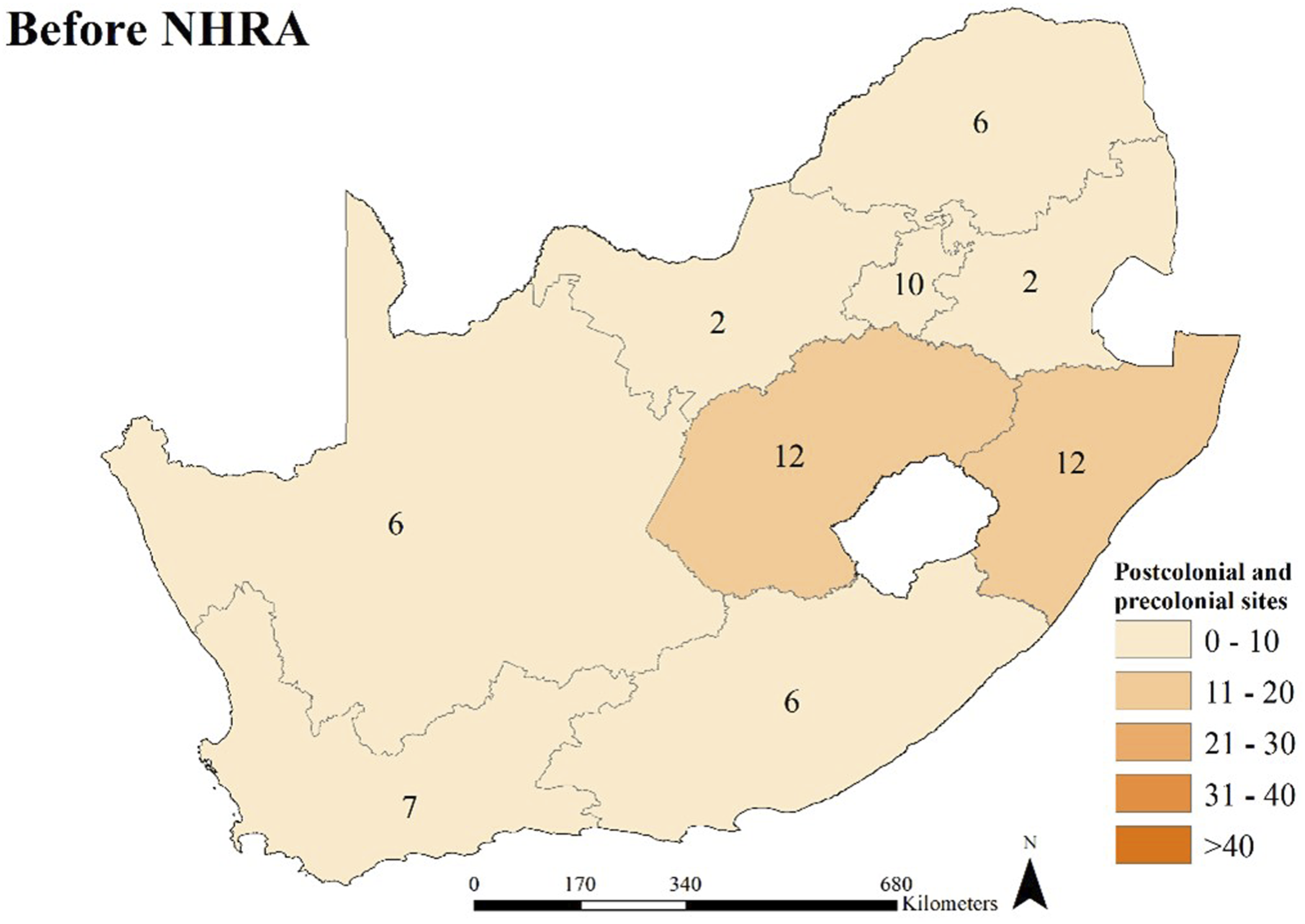
Precolonial and Postcolonial sites declared before the NHRA of 1999. Note that these provinces would have not existed prior to 1994.
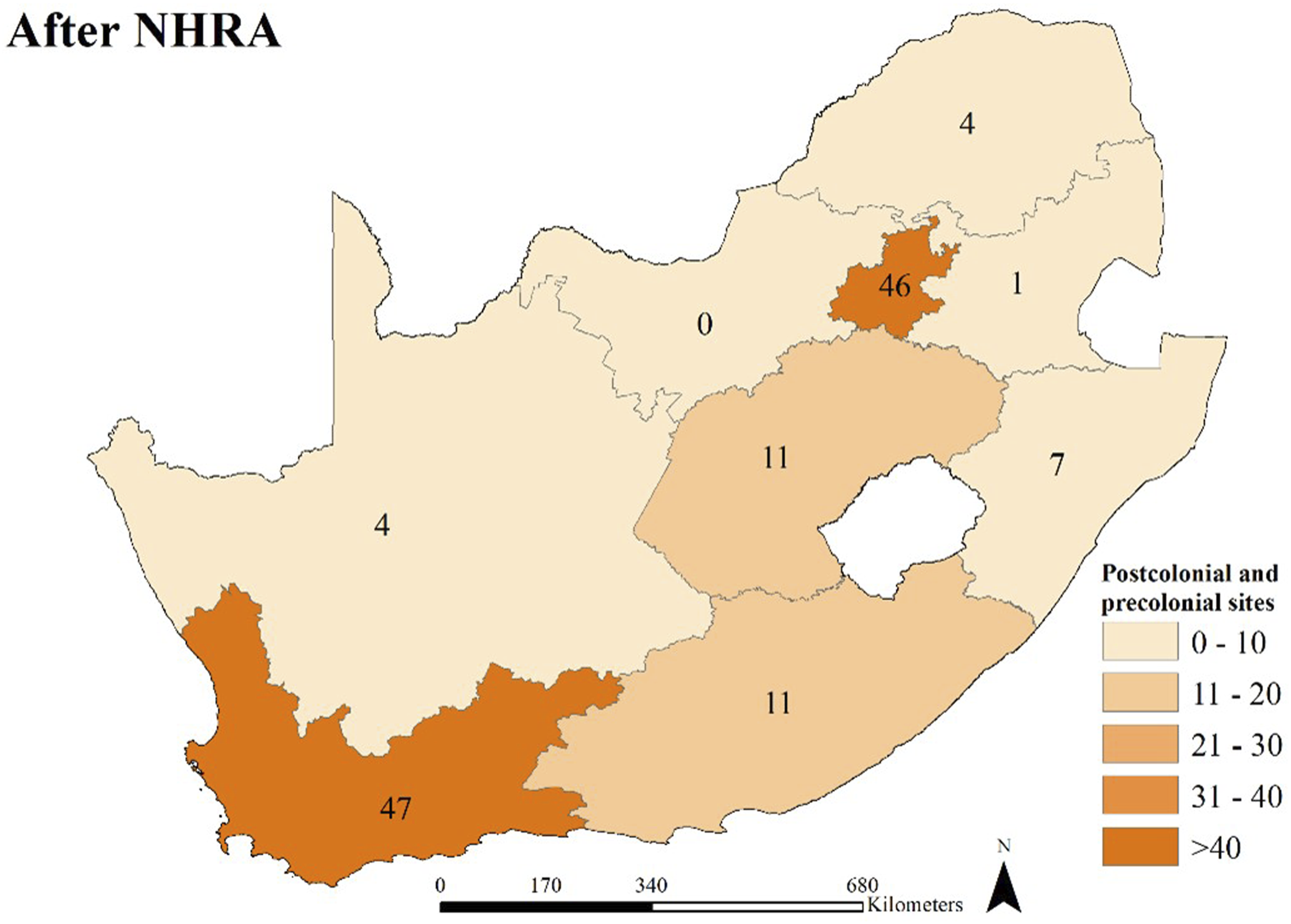
Precolonial and Postcolonial sites declared after the NHRA of 1999 by province.
Showing type of heritage declared since the enactment of the National Heritage Resources Act, No. 25 of 1999, by province.
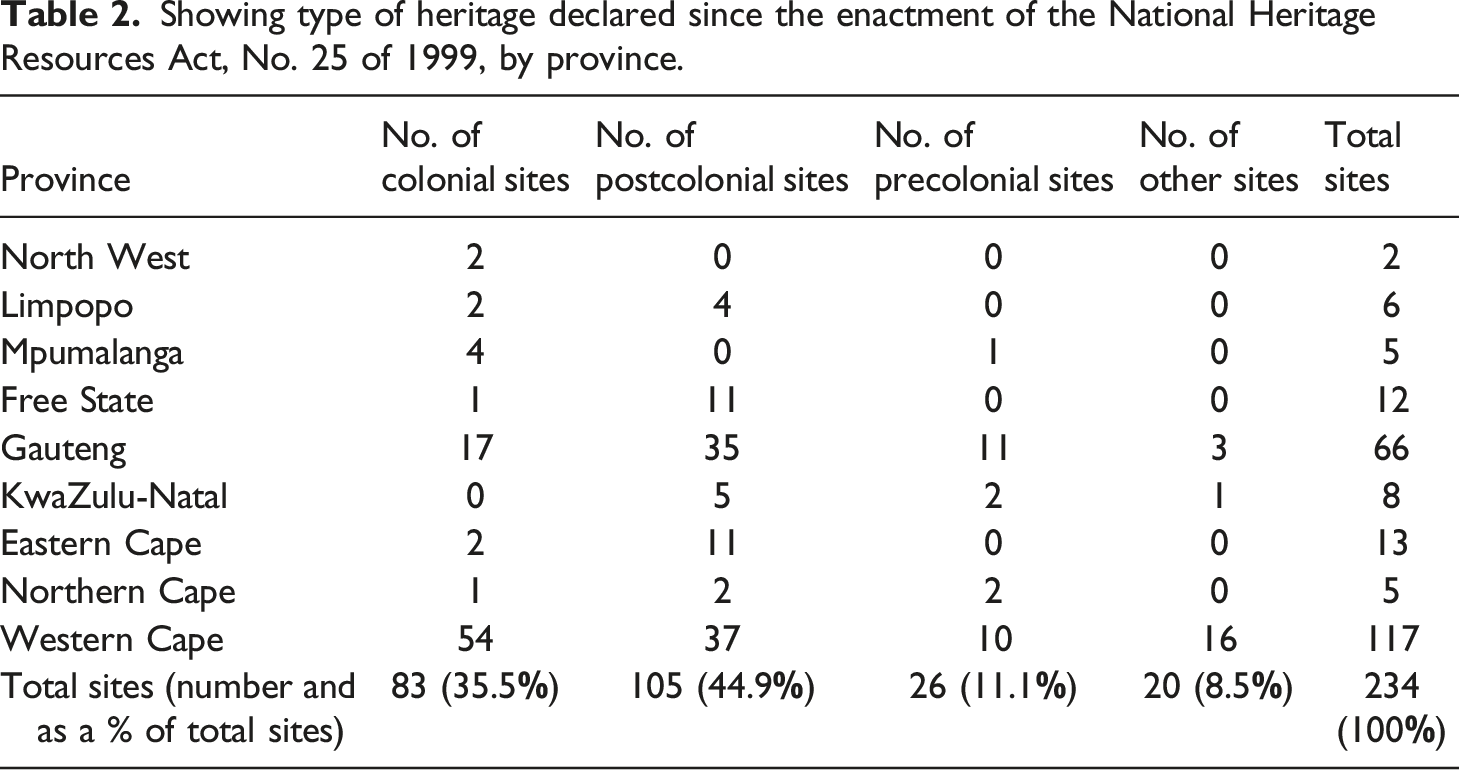
Of the 56% post- and precolonial sites, only a single site is related to the precolonial heritage of Black South Africans. Very few are related to precolonial KhoeSan heritage. Most sites are postcolonial and are related to the liberation struggle against the Apartheid regime.
The pace of inscription of sites has slowed dramatically since the NHRA. An average of 55.7 sites were gazetted per year prior to the NHRA and only 9.6 sites gazetted per year post the NHRA.
The statistics for each of South Africa’s nine provinces are shown below.
North West province
The province has 59 gazetted sites. Their declaration range is 1937 to 2000. Most of these sites were declared under the National Monuments Act, No. 28 of 1969. The distribution of categories is: Precolonial sites (3.4%), Colonial (94.9%), Postcolonial (0.0%), and Other (1.7%).
From the time of the implementation of the NHRA, only two sites (both Colonial) have been declared in this province.
Limpopo province
The province has 32 gazetted sites. Their declaration range is 1936 to 2007. Most of these sites were declared under the National Monuments Act, No. 28 of 1969. The distribution of categories is: Precolonial sites (18.8%), Colonial (53.1%), Postcolonial (12.5%), and Other (15.6%).
From the time of the implementation of the NHRA, only six sites (four Postcolonial and two Colonial) have been declared in this province.
Mpumalanga province
The province has 60 gazetted sites. Their declaration range is 1954 to 2003. Most of these sites were declared under the National Monuments Act, No. 28 of 1969. The distribution of categories is: Precolonial sites (5%), Colonial (83.3%), Postcolonial (0%), and Other (11.7%).
From the time of the implementation of the NHRA, only five sites (four Colonial and one Precolonial) have been declared in this province.
Free State province
The province has 230 gazetted sites. Their declaration range is 1937 to 2016. Most of these sites were declared under the National Monuments Act, No. 28 of 1969. The distribution of categories is: Precolonial sites (4.3%), Colonial (88.3%), Postcolonial (5.7%), and Other (0.4%).
From the time of the implementation of the NHRA, 12 sites (11 Postcolonial and one Colonial) have been declared in this province.
Gauteng province
The province has 277 gazetted sites. Their declaration range is 1936 to 2019. Most of these sites were declared under the National Monuments Act, No. 28 of 1969. The distribution of categories is: Precolonial sites (6.5%), Colonial (74.7%), Postcolonial (13.7%), and Other (5.1%).
From the time of the implementation of the NHRA, 66 sites (11 Precolonial, 17 Colonial, 35 Postcolonial, and three Other) have been declared in this province. All of the precolonial sites are fossil hominid sites.
Northern Cape province
The province has 628 gazetted sites. Their declaration range is 1936 to 2020. Most of these sites were declared under the National Monuments Act, No. 28 of 1969. The distribution of categories is: Precolonial sites (1.1%), Colonial (95.9%), Postcolonial (0.5%), and Other (2.5%).
From the time of the implementation of the NHRA, five sites (two Precolonial, one Colonial, and two Postcolonial) have been declared in this province. Both precolonial sites are associated with Stone Age archaeology, including rock art.
KwaZulu-Natal province
The province has 343 gazetted sites. Their declaration range is 1936 to 2020. Most of these sites were declared under the National Monuments Act, No. 28 of 1969. The distribution of categories is: Precolonial sites (3.5%), Colonial (84%), Postcolonial (2.0%), and Other (10.2%).
From the time of the implementation of the NHRA, eight sites (two Precolonial, five Postcolonial, and one Other) have been declared in this province. Both precolonial sites are associated with Stone Age archaeology, including rock art.
Eastern Cape province
The province has 624 gazetted sites. Their declaration range is 1936 to 2018. Most of these sites were declared under the National Monuments Act, No. 28 of 1969. The distribution of categories is: Precolonial sites (0.5%), Colonial (93.6%), Postcolonial (2.2%), and Other (3.7%).
From the time of the implementation of the NHRA, 13 sites (two Colonial and 11 Postcolonial) have been declared in this province.
Western Cape province
The province has 1487 gazetted sites. Their declaration range is 1936 to 2021. Most of these sites were declared under the National Monuments Act, No. 28 of 1969. The distribution of categories is: Precolonial sites (1.1%), Colonial (86.5%), Postcolonial (2.6%), and Other (9.9 %).
From the time of the implementation of the NHRA, 117 sites (10 Precolonial, 54 Colonial, 37 Postcolonial, and 16 Other) have been declared in this province. The precolonial sites are all related to the Stone Age period.
Discussion
It is my hope that many new heritage sites will be identified and proclaimed. (Ms B. Mabandla, Deputy Minister of Arts, Culture and Science, in the introduction to the Arts and Culture White Paper, 1996)
Our study picks up from Deacon’s (1993: 121) illuminating discussion of sites declared as National Monuments since 1936, which noted the low numbers of “non-colonial heritage sites”. In explanation, Deacon (1993) draws attention to the following: first, that national monument status was largely given to non-colonial heritage sites as a protective measure because of their low status due to their dislocation from their makers and the lack of education surrounding them. Second, that these sites are less useable, in contrast to colonial buildings that could be repurposed and maintained, and third, that because all sites were afforded protection by the legislation of the time, it was considered unnecessary to declare non-colonial heritage sites as national monuments (Deacon, 1993).
Deacon’s (1993) focus was on tangible heritage: saving sites from deterioration and destruction; declaring sites where consultation with descendant communities was possible and the public promotion of archaeological sites by archaeologists when this was lacking. This was a lighter time in South Africa’s history; Mandela was soon to be president and hope and reconciliation were in the air. Here we attempt, more emotionally, in harder times, to contextualise the historic setting that allowed some heritage to be monumentalised and other heritage to be disregarded. The declaration of sites gives them status in the minds of the South African public. The lack of change in the list of declared sites means that younger generations of indigenous South Africans continue to inherit a list from a system that extolled White colonial heritage over all others.
Our main findings, for the post-NHRA period are: The low number of precolonial heritage sites gazetted. Only one site related to Black South African precolonial heritage gazetted. The high numbers of European colonial sites gazetted. The high numbers of liberation struggle sites gazetted. The comparatively slow pace of gazetting of sites.
We reflect on some of the factors that might be contributing to these trends.
The low numbers of precolonial heritage sites ever gazetted
The perception is that colonial regimes were happy to recognise sites related to KhoeSan heritage such as rock art sites because “… it was not politically problematic as Bushmen were considered to be a dying nation with a culture going ‘extinct’” (Ndlovu, 2011b: 31; see Imalwa, 2011). The statistics presented here do not support this perceived emphasis on Bushman heritage. Whilst precolonial heritage, in general, was overwhelmingly ignored by the colonial regimes, the most non-colonial heritage declared in the colonial/Apartheid period was related to Black African heritage and not to KhoeSan heritage.
In the period prior to the first democratic elections in 1994, just 36 precolonial sites had been declared (see supplemental material). Fourteen of these sites are related to the heritage of Black South Africans (precolonial and recent past), whilst only 10 sites are related to KhoeSan (Bushman) heritage. The other eight precolonial sites are of deeper time (Early to Middle Stone Age). Four sites are listed as unclassifiable as they were not referenced to any particular group/period on SAHRIS. These results are similar to Deacon’s study (1993). She found the majority of sites of the precolonial period, declared as National Monuments, “date to the Iron Age, or to settlements of black agriculturists in the Transvaal and Orange Free State that were occupied within the last 1000 years” (Deacon, 1993: 121).
In the post-1994 period, only 24 precolonial heritage sites were declared (see supplemental material). The majority of these relate to Early and Middle Stone Age fossil sites (14 sites). KhoeSan-related heritage is represented by nine sites. Just one site relates to Black South African heritage (the connection is tenuous; the site consists of undated rock engravings).
The ethical responsibility of archaeologists as gatekeepers to the past
As far as archaeological sites as national monuments are concerned, there is a perception in South Africa that the practice of declaration enhances the importance of the buildings of the colonial period but ignores the culture of the indigenous people and their descendants for ideological reasons. There may be some truth in this, but legally the National Monuments Act provides for the declaration of any site of historical, aesthetic, scientific or cultural significance, and is not exclusive to European heritage. (Deacon, 1993: 120)
In 1993, just one per cent of all national monuments were not European colonial heritage (Deacon 1993). So why, if the legislation did not exclude the declaration of sites related to indigenous Africans, were they not inscribed? This raises the question: whose responsibility was and is it to nominate sites as national monuments and for what reasons, other than ideological, was precolonial heritage ignored prior to the democratic period? And why does it continue to be overlooked today?
Before the NHRA was enacted in 1999, South African heritage was protected by the National Monuments Act of 1969. During Apartheid (1948–1994), the National Monuments Council members were appointed by the Minister of National Education. This council had the responsibility “to investigate and report to the Minister on – (ii) the desirability of declaring anything to be a national monument” (NMA, 1969: 117). In 1969 this post was filled by J. de Klerk, who served as the Minister of National Education, firstly under Prime Minister Hendrik Verwoerd (“the architect of Apartheid”) and then under John Vorster (Minister of Justice, after whom the notorious police station John Vorster Square was named, where numerous people were detained, tortured, and murdered) (Beckenridge, 2005; Miller, 2018). An insight into Jan de Klerk’s ideology is offered in a letter he wrote to the University of Cape Town in 1968 opposing the appointment of Black South African Archie Mafeje as Senior Lecturer (Hendricks 2008). The appointment of Mafeje was “tantamount to flouting the accepted traditional outlook of South Africa” (Plaut, 2010). The Minister of National Education’s threat to the University of Cape Town’s council, and its subsequent complicity in denying the appointment of a Black South African lecturer, provides insight into the socio-political climate of this period and the context within which nominations of archaeological sites related to indigenous Africans might have been received (see Hendricks, 2008).
We suggest that the paucity of precolonial heritage on the national and provincial heritage list in 1993 is a mirror of South African Apartheid ideology. Lest we forget, indigenous Africans were suppressed at every opportunity, with laws preventing them from deciding where to live (e.g., Group Areas Act, No. 41 of 1950; Natives Resettlement Act, No. 19 of 1954); how to identify (e.g., Population Registration Act, No. 30 of 1950; Promotion of Bantu Self-Government Act, No. 46 of 1959); to vote (e.g., Representation of Natives Act, No. 12 of 1936); to meet (e.g., Riotous Assemblies Act, No. 17 of 1956); to study (e.g., Bantu Education Act, No. 47 of 1953; Extension of University Education Act, No. 45 of 1959); where to walk (e.g., Natives [Abolition of Passes and Co-ordination of Documents] Act, No. 67 of 1952); whom to marry (e.g., Prohibition of Mixed Marriages Act, No. 55 of 1949); where to sit (e.g., Reservation of Separate Amenities Act, No. 49 of 1953); their language of instruction (e.g., Bantu Education Act, No. 47 of 1953); and where to work (e.g., Native Building Workers Act, 1951) (see Landis, 1961).
There was clearly no opportunity for indigenous African heritage to be celebrated under such oppression. The only possibility for indigenous heritage to be declared was for it to be promoted by the White archaeological profession of the time. Kgotleng (2021) recently reminded us that at the conference of South African Archaeologists in 1983, archaeologists rejected a call to denounce Apartheid (see Shepherd, 2003a). Even in democratic South Africa, it is hard for South African archaeologists to entirely rid themselves of this tainted period; for example, see Pikirayi (2015: 535), who writes, “Archaeology has also failed to confront social ills such as racism and critical issues of equity, especially in South Africa, where despite efforts towards adopting a transformative agenda there is considerable resistance by archaeologists” (see Meskell, 2007, 2012).
South Africanist archaeologists 4 have neglected their role of giving legitimacy to precolonial heritage through its formal declaration (see Davison’s [1998] discussion of the institutionalised neglect of African art by national galleries in South Africa). As the privileged gatekeepers to knowledge about indigenous Africans’ precolonial past, South African archaeologists had and continue to have the ethical responsibility to promote, to celebrate, and to elevate it. Jopela and Fredriksen (2015: 262) remind us, “… power asymmetries in terms of the archaeological production and management of the African past still expose the colonial legacies in many aspects of archaeology” (see Abungu, 2006; Giblin, 2012; Schmidt, 2009; Shepherd, 2002b, 2003a; Smith, 2006).
Under the NHRA, any person can nominate a site for consideration for national heritage status, although the Act is very specific about the central role of SAHRA in the identification of Grade 1 sites (NHRA 1999: 20). Why then has the number of precolonial sites declared as national heritage not increased in the post-1999 period?
Inheriting colonialism’s stain
The continued nomination of European colonial heritage to an already skewed heritage list might be explained as a continued inheritance from the past, not only of all the sites gazetted during the colonial period, but also of heritage management practice (Jopela, 2011; Marschall, 2009; Ndlovu, 2011a, 2011b; Ndoro and Pwiti, 2001), and the retention of a mind-set as to what from the past merits conservation (Marschall, 2009; Mokoena, 2017; Smith, 2006). Andrew Hall, Chief Executive Officer of Heritage Western Cape, “recalls the conservation body’s reluctance to transform and the impact of staff turnover, where many individuals with visionary approaches left the organisation and their newly appointed replacements were inducted by remaining staff members into entrenched value systems and established conservation practices” (Marschall, 2009: 38). Hall (1987: 1) reminds us that “[t]he first literate settlers from Europe made this mistake assuming that Africa had little history, and their journals and descriptions are a heritage of misunderstanding.” This misunderstanding is repeated in Frescura’s (1990) interpretation of the types of national heritage sites of non-colonial origin declared (1936–1989). Frescura (1990) states that most sites in this category are either San rock art or archaeological sites, thereby perpetuating the myth that indigenous South Africans possess “little material culture of any note”. This disparaging evaluation of African archaeological sites and their worth has a long history (Hall, 1987). Archaeological undergraduates at South African universities regularly ask why nothing great was invented in Africa (Russell, personal observation). As long as these perceptions remain, South African archaeologists are failing, despite valiant efforts (for example to include archaeology in the South African school curriculum post-1994—see Esterhuysen and Lane, 2013), in their responsibility to adequately celebrate and promote a past upon which their careers are built. Why might this be so?
Archaeology has been slow to transform demographically, and, ironically, although it is built on the past of indigenous South Africans, it is perceived as a White profession (Ndlovu, 2009). Whilst the profession is changing, it is remarkable that to date not a single precolonial Iron Age site has had a Black South African as its principal investigator. Thus, it is not surprising that Black South Africans are not prioritising the nomination of archaeological sites. It is also clear that archaeologists are not nominating sites. This lack of public engagement means that there is little knowledge about the existence and value of archaeological sites (see Pikirayi, 2015). In 1996, the then-Deputy Minister of Arts, Culture, and Science hoped that new heritage sites would be identified and proclaimed, apparently unaware of all those archaeological sites already identified by archaeologists over many decades. The undervaluing of precolonial archaeological sites perhaps contributes to the perceived need for new political elites to create new monuments rather than memorialising ancient ones (Marschall, 2004). With little regard for archaeology and the precolonial past, the emphasis on the gazetting of sites associated with the liberation struggle reflects the power and ideology of the Black South African ruling elite coupled with the international drive by heritage organizations and agencies to fund such projects (Jopela, 2017; Manetsi, 2017).
The dearth of declared precolonial sites in South Africa’s democratic period might also be linked to the emphasis of international heritage agencies and organizations on the promotion of intangible heritage, liberation heritage, and routes of enslaved peoples. For example, UNESCO’s global “Priority Africa” initiative supports the implementation of the Convention for the Safeguarding of the Intangible Cultural Heritage in Africa, which has to date given US$4.8 million from the Intangible Cultural Heritage Fund to African signatories (similar too is the African Union’s 2063 Agenda with an emphasis on heritage and socioeconomic development). The funding that accompanies these initiatives steers the direction and priorities of African governments and filters down to Africa-based heritage professionals, inevitably taking attention away from archaeological sites on the continent. Coupled with this, the last 15 years have seen an increased critique of the colonial origins of African archaeology and the lingering effects of this on the discipline’s practise. This negative press also contributes to the move away from archaeology to heritage by the continent’s next generation of practitioners, although this is hard to quantify (Chipangura, 2023; Karega-Munene and Schmidt, 2010; Lane, 2011; Manyanga and Chirikure, 2017; Musonda, 2013; Pikirayi, 2015).
Liberation struggle heritage and the politics of inclusivity
The NHRA recognizes the importance of preserving and commemorating sites, structures, and objects that are associated with the country’s liberation struggle against Apartheid and colonialism (Section 3[3i]). These sites (e.g., former political prisons, historic meeting points, and key locations related to the struggle) hold significant historical and cultural value as they symbolize the efforts and sacrifices made by individuals and communities in the fight for freedom, equality, and justice. This idea of giving attention to the atrocities of the past aligns with the political state of South Africa that seeks to give agency to marginalised groups. This can be seen through the National Development Plan, Land Reform and Restitution, Truth and Reconciliation Commission, and more. Since the enactment of the NHRA, a total of 105 postcolonial sites were declared. Among these, 101 sites are linked to the idea of liberation from Apartheid in some way. This focus on previously neglected liberation history is a positive step but should not be allowed to overshadow other important parts of indigenous heritage. South Africa is not unique in this regard: in neighbouring Mozambique and Zimbabwe, the promotion of liberation heritage is well documented (Fontein, 2009; Jopela, 2017; Mataga, 2019; Mubaya et al., 2015).
Provincial heritage agency competency
The NHRA ideal that the power to inscribe and to manage sites should be devolved to provincial heritage authorities has not been realised. SAHRA still oversees many of these functions (Deacon, 2015; Ndlovu and Smith, 2019). No correlation was found between the number of sites inscribed and provincial competency. The Gauteng (46 sites) and Western Cape (47 sites) provincial authorities are outperforming the other provinces in terms of transformation of heritage declared. The Western Cape, KwaZulu-Natal, and Eastern Cape Provincial Heritage Resource Authorities have had the strongest institutional capacities since 1999. Yet KwaZulu-Natal and the Eastern Cape have declared only seven and 11 postcolonial/precolonial sites, respectively, whilst Gauteng has declared 46 sites despite the fact that Provincial Heritage Resources Authority Gauteng (PHRAG) has not been declared fully competent by SAHRA.
Concluding remarks
The underrepresentation of precolonial sites on the list of declared heritage in South Africa in the post-1999 period surprised us. The enactment of the National Heritage Resources Act, No. 25 of 1999 appears to have had no impact on rebalancing this list. Although no South African is excluded from nominating a site for national heritage status, South Africa’s history has disconnected many indigenous South Africans from their past. Perhaps the ultimate ethical responsibility to address this lies with professional archaeologists working in South Africa. The minimal part played by archaeologists in determining declared heritage through their lack of participation both in the nomination of sites and in the education of the South African public on the presence and importance of precolonial sites is evident. It is possible that the changing demographics of the profession may remedy this deficit. In December 2023, we looked at staff profiles of the four South African universities that teach archaeology: permanently appointed Black, Coloured and Indian staff members make up 50% of archaeologists at the University of Pretoria, 36% at the University of the Witwatersrand, Johannesburg, 43% at the University of Cape Town, and 40% at the University of South Africa (UNISA). The majority are junior appointments. But perhaps this is too naïve an assessment given the larger global forces that are at play in the heritage sector, influencing governments on the continent and shaping the work of Africa-based archaeological and heritage practitioners by deciding which heritage is fundable. This is seen in the current South African governments’ focus on Liberation struggle heritage, the most-gazetted type of heritage under the Act of 1999. “Redressing past inequities” (NHRA, 1999: 3) for the ruling party has meant focusing on several high-profile, state-sanctioned projects, which Meskell and Scheermeyer call “heritage pageantry”; it has proved much easier for the ANC to “bolster state pageantry with heritage monuments” than to fulfil the National Heritage Resources Act’s promise to indigenous South Africans (Meskell and Scheermeyer, 2008: 170). A further complication in the recognition and nomination of archaeological sites, despite the best intentions of archaeological professionals, is the reluctance of landowners to be part of a process that might possibly lead to land claims by descendant communities (De Beer, 2006). This might be the reason for the predominance of Early/Middle Stone Age sites declared since 1994 (58%) compared to those associated with Black South African descendant communities, at just 0.04%.
In explaining the imbalance of the then-National Monuments List, Deacon (1993) draws attention to the ephemeral nature of archaeological sites: frequently they are found underground, and their valuable parts are transported to laboratories and ultimately collection stores, leaving little trace on the landscape. Thus, colonial buildings dominate the declared list because they are tangible objects (Deacon, 1993). The counter to this argument is to consider sites such as the South African battlefields where wars were fought between the Zulu, British, and Boers in the 19th century. These have managed to capture the public’s attention as popular tourist destinations despite their ephemeral traces (Proos and Hattingh, 2020; Venter, 2011). Similarly, intangible heritage has managed to gain global prominence. It is surprising that colonial buildings continue to be declared, not only because of their dominance on the list but also because of the repetitive nature of these nominations: the same architectural style is nominated repeatedly. One way to cut back on the lists of colonial buildings would be to follow the World Heritage nomination principle that only selects outstanding examples of a particular kind of heritage.
We were also surprised to find that the heritage of KhoeSan-related peoples was not privileged above that of Black South Africans by the Apartheid/colonial regimes. In fact, all precolonial heritage is underrepresented; this is not surprising given the socio-political backdrop of South Africa (1936 to 1994). Future research could profitably examine more closely the nomination process and who is nominating (information about which was not available online for the purposes of this study) and undertake interviews with heritage staff. Who are the decision makers? What procedures are followed in deciding what is gazetted? What types of heritage have been declared at provincial Grade 3 level? What is the role and competency of the Provincial Heritage Agencies in declarations at provincial level? How does declared heritage compare with World Heritage property in South Africa?
It is hard to be optimistic about much in South Africa in 2023. The country is crippled by rolling blackouts and water outages; food prices and unemployment and crime rates are high, and corruption is widespread. Heritage and the nomination of sites are unlikely to be on the minds of South Africans. This is a privilege for the few. This paper was written in the spirit of reflection, self-reflection, and accountability.
Supplemental Material
Supplemental Material - Decolonising archaeology in South Africa: two decades after the National Heritage Resources Act of 1999
Supplemental Material for Decolonising archaeology in South Africa: Two decades after the National Heritage Resources Act of 1999 by Kerry-leigh Reddy and Thembi M Russell in Journal of Social Archaeology
Footnotes
Acknowledgements
We thank Albino Jopela and four anonymous JSA reviewers for their insightful and constructive comments on the manuscript, and the South African Heritage Resources Agency for assisting us with technical issues around accessing data on SAHRIS.
Declaration of conflicting interests
The author(s) declared no potential conflicts of interest with respect to the research, authorship, and/or publication of this article.
Funding
The author(s) received no financial support for the research, authorship, and/or publication of this article.

Supplemental Material
Supplemental material for this article is available online.
Notes
Author biographies
References
Supplementary Material
Please find the following supplemental material available below.
For Open Access articles published under a Creative Commons License, all supplemental material carries the same license as the article it is associated with.
For non-Open Access articles published, all supplemental material carries a non-exclusive license, and permission requests for re-use of supplemental material or any part of supplemental material shall be sent directly to the copyright owner as specified in the copyright notice associated with the article.
