



Abstract
During the Colonial Period, Maya communities underwent significant social and religious transformations. This paper investigates how the Maya communities of Lamanai, Belize maintained resilience in the 16th century. By examining ethnohistorical and archaeological evidence at Lamanai, especially zoomorphic effigies at two Christian churches, the study demonstrates that resilience was not solely a product of human agency but also arose from engagement with other species and materials. Drawing influence from process philosophy, this paper redefines resilience as a dynamic and creative process encompassing active adaptation, reorganisation, and transformation. It argues that the ability to cross boundaries is essential to resilience. Maya communities were able to transcend the boundaries of properties, entities, realities, and cultures, which enabled them to re-envision their relationships with others and the world. Boundary-crossing allowed them to navigate complex changes with ease and integrate diverse cultural elements into their identity, ultimately fostering resilience in the face of colonial challenges.
Introduction
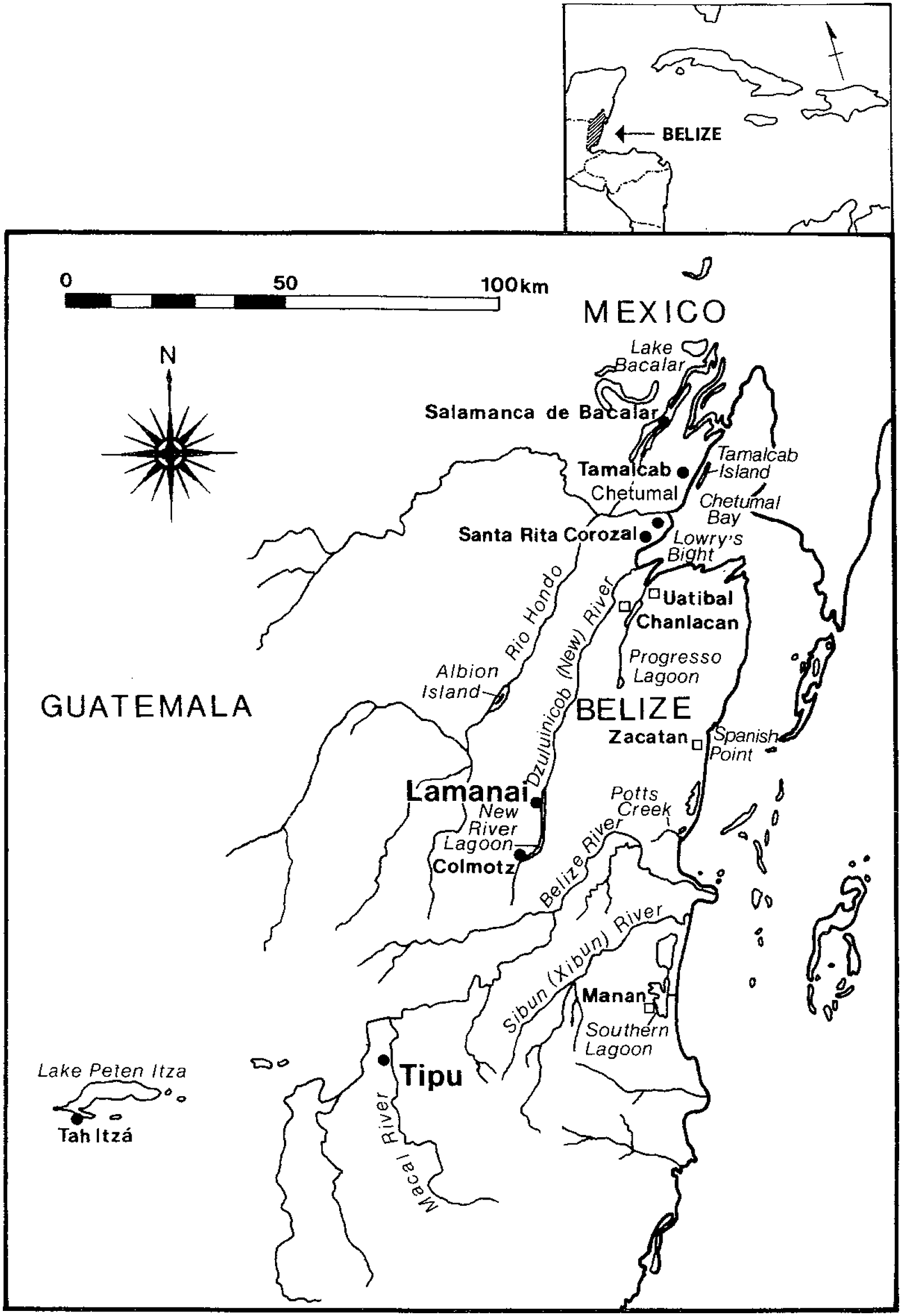
The 16th-century Spanish colonisation prompted significant demographic, social, religious, and cultural changes within Maya communities (Restall and Lane, 2018). Despite widespread Christianisation (Graham, 2011; Graham et al., 2013), these communities preserved Maya beliefs and practices (Jones, 1989, 1998). This can be seen, for example, from the ritual effigies (e.g., Figure 1) deposited in the Christian churches at the Lamanai site in Belize (Figure 2) in the 16th century. Figure 1 shows a Maya-style effigy depicting a creature with a crocodile body, deer antlers, and a human head emerging from the opening maw of the crocodile, showing both continuity with the Maya practice and adaptation to Christianisation. By analysing such effigies and other related material culture from the Lamanai site in Belize, I will show that these hybrid objects allowed Maya communities to cross boundaries, and that the capacity of boundary-crossing was crucial for developing resilience amid colonial upheaval. Crocodile-deer effigy with human head peering out of the opening mouth, LA 833/1, from John, 2008: Figure 4.8d. Drawing by Louise Belanger. Map of northern Belize showing the location of Lamanai and nearby sites, from Graham, 2011: Map 2.3. Drawing by Debora Trein and Emil Huston.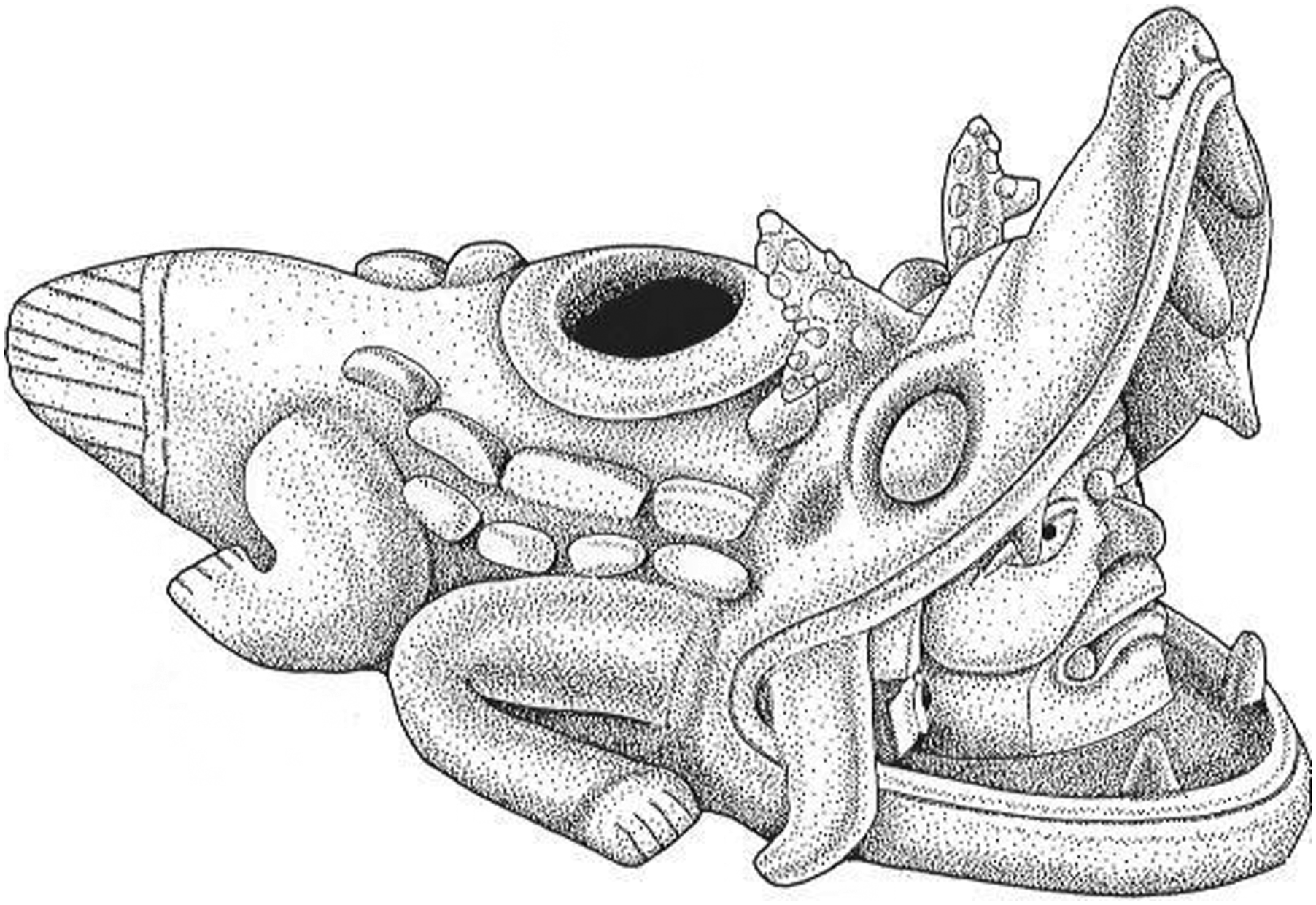
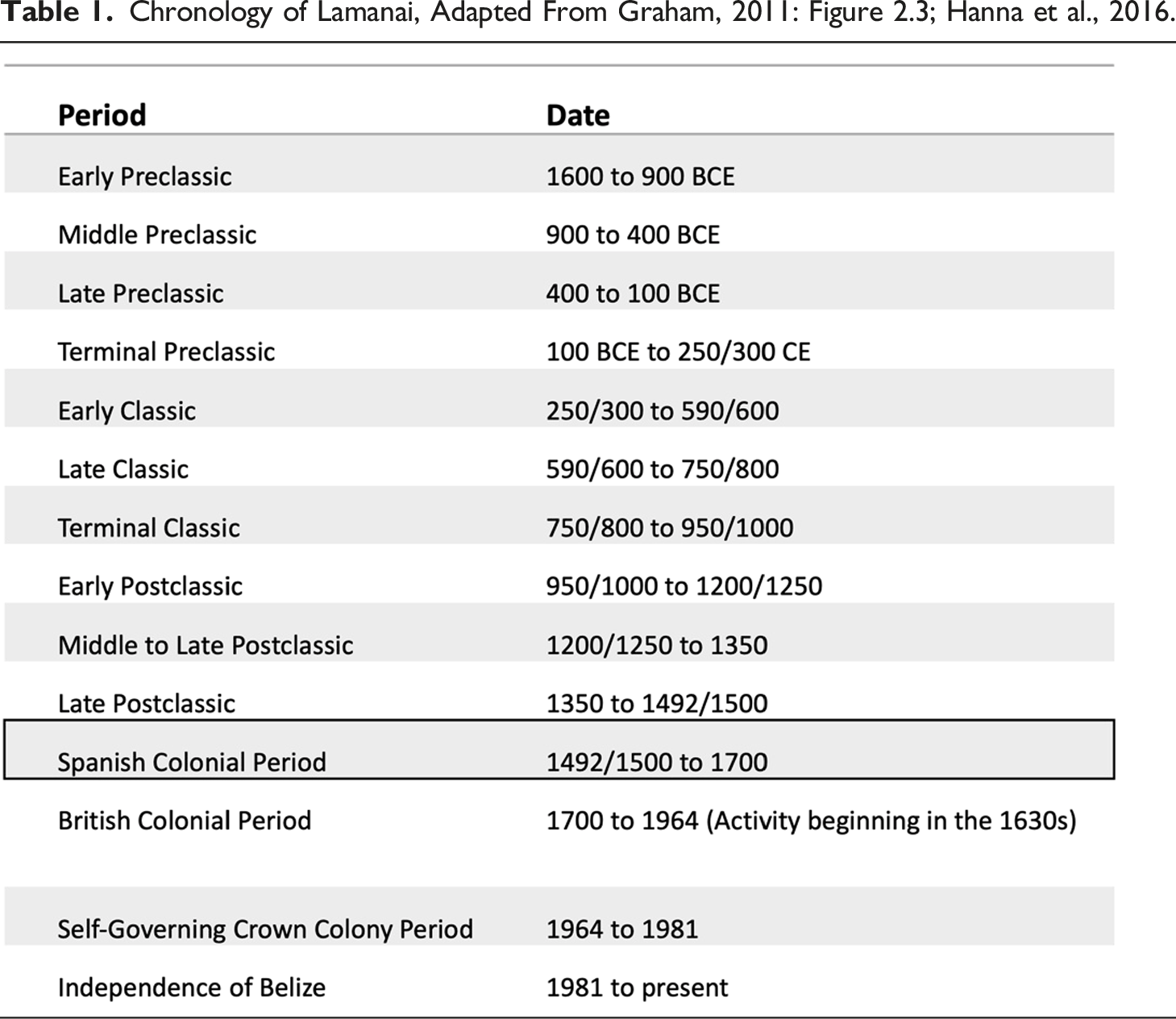
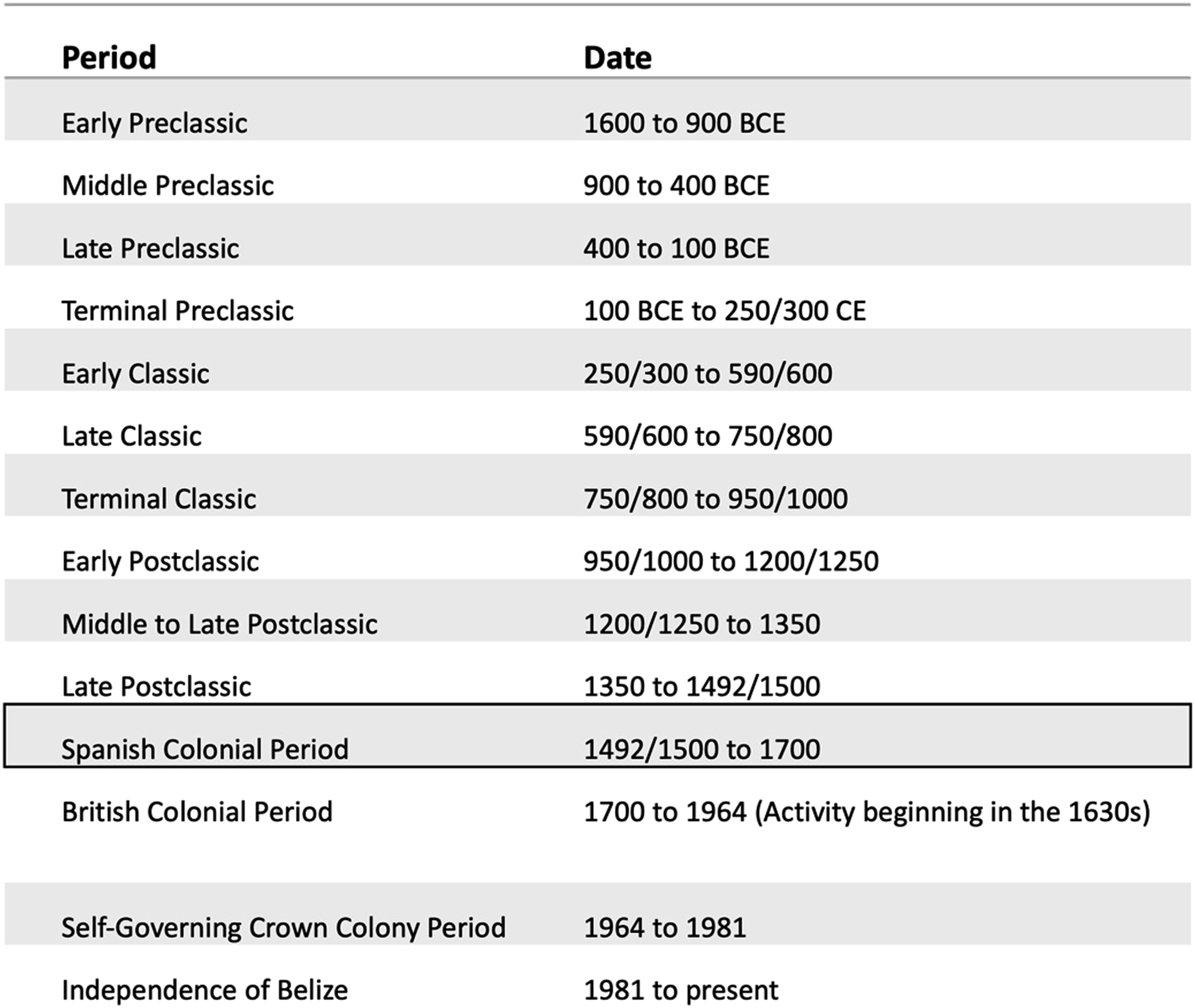
Chronology of Lamanai, Adapted From Graham, 2011: Figure 2.3; Hanna et al., 2016.
During the era of colonisation and Christianisation, Maya communities at Lamanai experienced substantial social and religious transformations. Two churches, YDL I and II (Figure 3), were constructed at Lamanai, where Maya-style effigies were meticulously deposited in Christian sacred spaces or along the axis of church stairs. These churches maintained their ritual significance even after the Spaniards left (Graham, 2011: 208–224; Graham et al., 2013: 164). Children in the nearby town of Tipu (Figure 2) were buried with Spanish jewellery, including glass bead bracelets, silver earrings, and jet pendants, potentially as rewards for mastering religious catechisms (Graham, 2011: 22–25). Even after the Spanish retreat, Maya communities continued adhering to Christian burial practices rather than Postclassic customs (Graham et al., 2013: 173). Churches at Lamanai. (left) Reconstruction of YDL I and YDL II, Lamanai, looking northeast, drawing by Claude Belanger and Louise Belanger, from Graham, 2011: Figure 8.3 and 8.4. (right) Plan of the church zone at Lamanai, drawn by Claude Belanger, from Graham, 2011: Figure 8.8.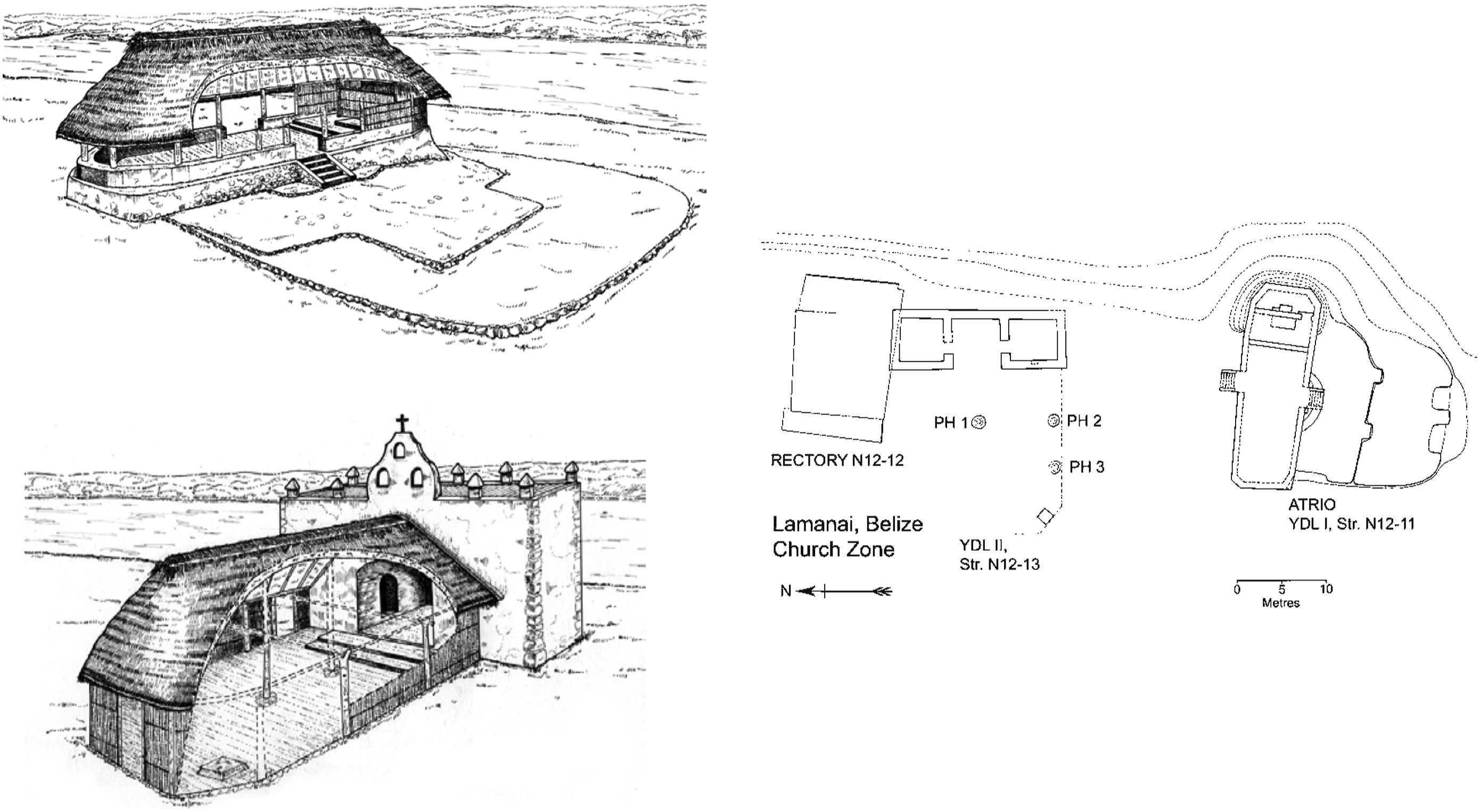
Despite these changes, the Maya communities at Lamanai exhibited resilience, preserving some Maya practices while adapting to their Christian life. Grant Jones synthesises archaeological, historical, and demographic evidence to argue that the Itza Maya priests preserved and manipulated Maya rituals and historical traditions to resist colonialism and adapt to Christian life (Jones, 1989: Chapters 5 and 7). Archaeological evidence at Lamanai further demonstrates such resilience. Excavations of the site reveal indigenous rituals carried out within the churches. Stelae were erected, and cached at the base of these stelae were zoomorphic effigies reflecting Maya style (Figure 4). Effigies found in the two churches at Lamanai. (a) Crocodile-like effigy beneath Stela 4 erected in the nave of YDL II, LA 423/4, L = 9.7 cm, from John, 2008: Figure 4.8c. (b) See Figure 1. Crocodile-deer effigy with human head peering out of the opening mouth, LA 833/1, from John, 2008: Figure 4.8d. (c) Two-headed effigy with a human head emerging from the opening mouth, the northern part of the nave of YDL II, Cache N12-13/5, LA767/1, L = 20.8 cm, from John, 2008: Figure 4.8b. (d) Centipede-lobster effigy from Cache N12-11/3, LA3035/1, L = 21 cm, from Graham, 2011: Figure 8.19. Drawings by Louise Belanger. (e) Crocodile effigy with a barbed fish mouth, LA 757/1, from John, 2008: Figure 4.8e. (f) Shark zoomorphic effigy, Gann 09.0594, from National Museum of the American Indian, Smithsonian Institution.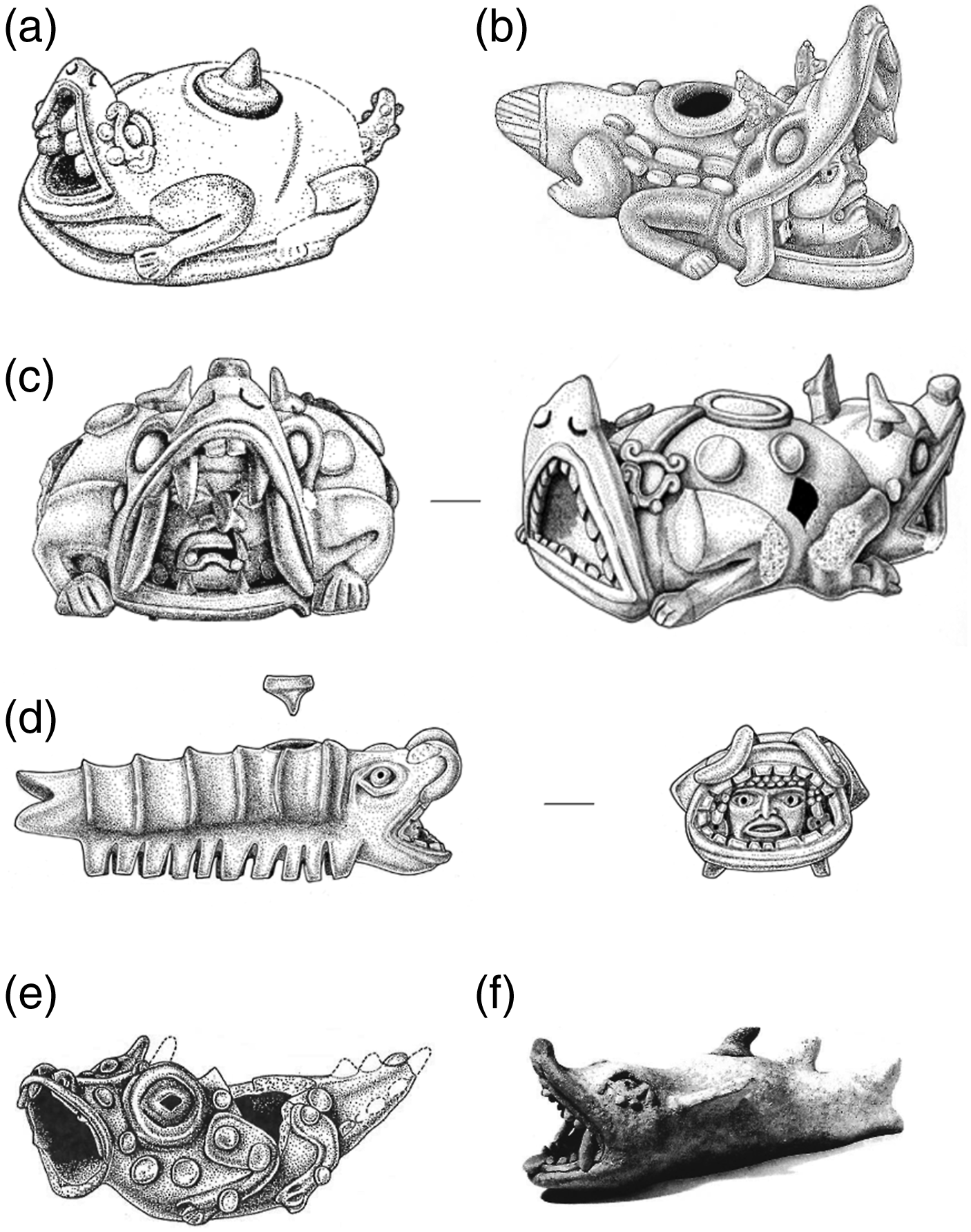
Amidst periods of upheaval and transformation, communities at Lamanai preserved some Maya practices while undergoing adaptations. How did they maintain resilience despite significant social and religious change? To address this question, I first critically examine resilience theory and propose a process-oriented perspective on resilience. Despite drastic social and religious changes, some Maya practices were preserved, especially shown in the effigies found in the churches (Figures 1 and 4). I analyse these effigies and related material culture in the Maya world to indicate how they can provide insights into understanding the resilience of the Maya communities at Lamanai during Christianisation in the 16th century.
Resilience theory
The concept of resilience has attracted interest from various disciplines, including engineering, ecology, psychology, social work, politics, and international relations (Bollig, 2014: 253–254; Bourbeau, 2018: 19–20). Resilience theory describes ‘the ability of groups or communities to cope with external stresses and disturbances as a result of social, political, and environmental change’ (Adger, 2000: 347). Although there is no unanimous definition of resilience (Brand and Jax, 2007; Bollig, 2014), discussions typically emphasise aspects such as absorbing disturbances, recovering from shocks or hazards, withstanding change, and renewal and reorganisation (Løvschal, 2022: 196; Folke, 2006: 259–260).
Archaeological application of resilience theory emerged in response to collapse studies, shifting focus from collapse as the ultimate cultural and societal breakdown (Tainter, 1988; Cowgill and Yoffee, 1988; Diamond, 2005) to continuous events that followed a collapse, such as recovery, reorganisation, and transformation (Faulseit, 2016; McAnany and Yoffee, 2010; Middleton, 2017). Redman (Redman, 2005; Redman and Kinzig, 2003) introduced ecological resilience theory to archaeology to understand societal transformations, particularly in reaction to climatic changes, using concepts such as the adaptive cycle and panarchy (Gunderson and Holling, 2002). These concepts have become popular analytical tools for examining climate and ecological change as well as societal transformations (for reviews of resilience theory in archaeology, see Bradtmöller et al., 2017; Løvschal, 2022). While the archaeological application of ecological resilience theory has moved beyond collapse narratives and illustrated the aftermath of significant changes, it often views societal changes as consequences of environmental change (e.g. Weiberg and Finné, 2018; Carolin et al., 2019; Manning et al., 2020). This paper aims to develop a resilience theory in the context of significant social change, specifically 16th-century Maya colonisation, and presents three critiques of current research on resilience in archaeology.
First, resilience theory in archaeology is predominantly anthropocentric and often overlooks indigenous ontologies, as highlighted in a recent review article (Løvschal, 2022: 200–202). While environmental factors are considered agents, there is a clear divide between nature and culture. However, indigenous worldviews usually do not hold such a divide (Descola, 2013; De Castro, 2014; Kohn, 2015; Alberti, 2016; Gillespie, 2021; Halbmayer, 2021). Current resilience research concentrates on human behaviour in response to changes, neglecting how humans engage with materials and other species. Instead, an archaeological theory of resilience should heed how people perceive their surrounding world and interact with the world when facing significant changes.
Second, current archaeological research on resilience tends to emphasise equilibrium and reaction. Resilience is often perceived as returning to a previous stable state or maintaining the same function. A widely cited definition of resilience states that resilience is ‘the capacity of a system to experience shocks while retaining essentially the same function, structure, feedbacks, and therefore identity’ (Walker et al., 2006: 2, my emphasis). However, Holling (Holling, 1973; Walker and Cooper, 2011: 146), who pioneered the idea of ecological resilience, rejected the idea of returning to a previous equilibrium (or ‘engineer resilience’) because it overlooks the complex dynamics within the system. Instead, Holling defines resilience as the ability to remain cohesive during extreme disturbance (Holling, 1973: 17), allowing for the possibility of not only returning to stability but also transformation and reorganisation (Folke, 2006: 259–260). Nevertheless, Holling’s definition remains reactive. Resilience can also encompass social and intellectual mechanisms that help prevent or mitigate future challenges, such as building storage facilities and diversifying resources (Flohr et al., 2016; Bogaard et al., 2017) or maintaining long-distance social networks (Torrence, 2016). It may also involve particular ways of thinking that assist people in navigating dramatic transformations, as I will demonstrate in the case of Lamanai. Resilience is not merely about equilibrium, reaction, and ‘bouncing back’. It also involves transformation, proactivity, and ‘bouncing forward’.
Third, resilience is often defined as a trait, capacity, or ability. In a review of the concept of resilience, Bollig (2014) lists 12 definitions of resilience, all of which describe it as a property or capacity. This suggests that some individuals or societies possess resilience while others do not. Such an approach risks blaming the victim: those unable to react resiliently are held responsible. A typical example is Jared Diamond’s book Collapse, which implicitly blames societies—including Rapa Nui, Pueblo, Classic Maya, and Greenland Norse—for deforestation and a lack of resilience (Diamond, 2005). Viewing resilience as an individual or societal capability extends beyond ecological resilience to fields such as psychology, where research used to be individual-based and ability-focused (Bourbeau, 2018: 25–26). This trend was closely linked to neoliberal idealism, emphasising individual independence over community and societal welfare (Walker and Cooper, 2011: 150–157). Brad Evans and Julian Reid argue that resilience theory is dangerous because it distinguishes people who have the ability and power to manage risk and challenges from those ‘who are asked to live up to their responsibilities by accepting the conditions of their own vulnerability and asking not of the social’ (Evans and Reid, 2013: 96). Resilience creates ‘contemporary regimes of power which hallmark vast inequalities in all human classifications’ (Evans and Reid, 2013: 92).
In recent decades, scholars have begun to de-individualise resilience, particularly in psychology and social work. They have adopted concepts of resilience that emphasise process over ability (Bourbeau, 2018: 30). For instance, Suniya Luthar defines resilience as ‘a dynamic process encompassing positive adaptation within the context of significant adversity’ (Luthar et al., 2000: 543). Similarly, Ingrid Schoon regards resilience as a ‘dynamic process whereby individuals show adaptive functioning in the face of significant adversity’ (Schoon, 2006: 6). A consensus has emerged in psychology that resilience should not be seen as a trait or ability but rather as a process.
Translating psychological resilience theory into archaeology can be challenging, but the emphasis on process is valuable. A process approach to resilience resonates with the main themes of Process Archaeology (P-Arch), based on process philosophy (Malafouris et al., 2021; Gosden and Malafouris, 2015). Process philosophy, advocated by Alfred North Whitehead, H.L. Bergson, C.S. Peirce, and J. Dewey, challenges conventional static and substantial metaphysical views, directing focus towards the dynamic nature of existence. Process philosophers maintain that a comprehensive philosophical understanding of reality should primarily encompass becoming rather than being. Process philosophy invites us to think about boundary-crossing: things are not static, and their boundaries are perpetually open to making and remaking (Rescher, 2000; Seibt, 2022). The connection between process philosophy and archaeology initially emerged through James Maffie’s adoption of process philosophy to interpret Aztec thought (Maffie, 2013). The exploration of process thinking within archaeology was pioneered by Gosden and Malafouris, who developed the theory of Process Archaeology (P-Arch) (Malafouris et al., 2021; Gosden and Malafouris, 2015; see also Bogaard et al., 2021; Leadbetter 2021). P-Arch views archaeological materials as dynamic, sentient, situated, and ever-changing rather than static and inert objects. The boundaries of entities are neither fixed nor inherent but fluid and contingent.
A process approach posits that resilience is not an innate ability or trait of an individual or society but a dynamic, evolving process developed and transformed during continuous engagement with ever-changing material surroundings. The process approach addresses previous criticisms of resilience theory: it avoids blaming the victim; incorporates a temporal dimension of resilience, enabling us to understand changes; acknowledges indigenous ontology and the agency and sentience of materials and other species; and allows room for proactive and transformative actions. Here, I adopt a process approach and define resilience as the dynamic process through which individuals or communities cope with and adapt to stresses and disturbances, renewing, re-organising, and developing themselves during their engagement with their ever-changing material surroundings.
Resilience differs from other constantly ongoing dynamic processes in that it represents a creative palimpsest. It is not a transcription or repetition of the past, though it manifests traces of persistent features of the past. It creates new meanings, cultures, and identities to adapt to the changing environment. Drastic social and religious transformations occurred during the 16th century for the Maya communities at Lamanai. Yet, traces of Maya features were preserved with new cultural significance created, especially shown in the zoomorphic effigies (Figures 1 and 4).
Why were some cultural and religious elements preserved and recreated while others were not? To answer this question, I analyse and interpret these effigies (Figure 4), particularly the crocodile/deer/human effigy shown in Figure 1. These effigies all have something in common. They all show features of boundary crossing: they cross the boundaries of properties (e.g., animals living both on land and water), entities (mutual becoming of animals and humans), realities (real life and subjunctive world), and cultures (Maya and Christian). I argue that these effigies were preserved and reproduced for their boundary-crossing abilities, and this boundary-crossing process of cultures, realities, entities, and properties allowed for a smoother adaptation to, and coping with, the period of change for Maya communities. I will start by analysing the crocodile/deer/human effigy shown earlier (Figure 1) and other ritual objects at Lamanai and interpret them in a broader Maya context. Section 3, outlined in Figure 5 as a signpost, will explore the four aspects of ritual as a boundary-crossing process. Signpost of Section 3, adapted from Figure 1.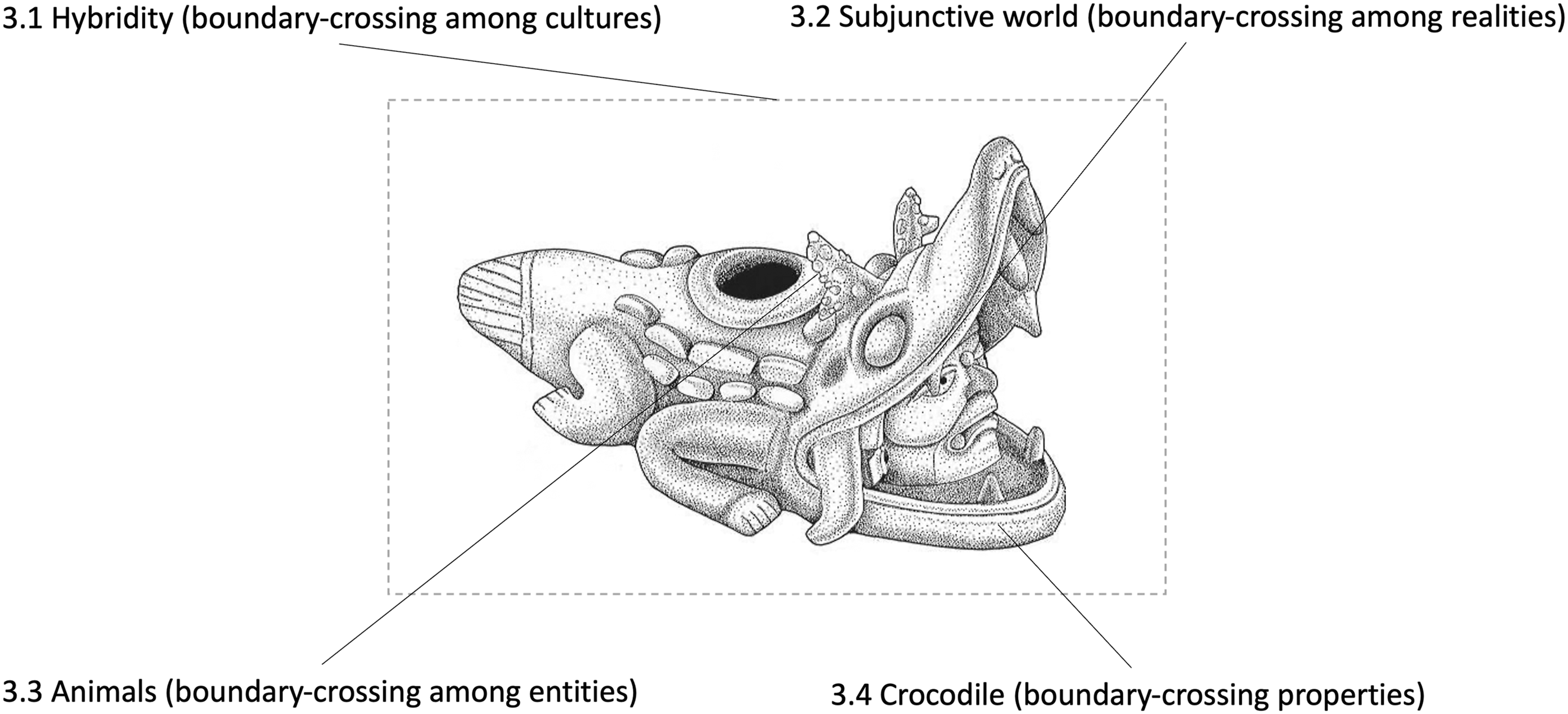
Ritualisation as resilience at Lamanai
Hybridity: boundary-crossing among cultures
At Lamanai, religious practices exhibited a hybridity of identities. The two churches, YDL I and II (Figure 3), maintained their ritual importance even after the Spaniards left; meanwhile, stelae were erected, and Maya-style zoomorphic effigies were buried at the base of the stelae in these Christian sanctuaries (Graham, 2011: 208–224; Graham et al., 2013: 164). Even after the Spanish withdrawal, individuals in Maya communities voluntarily adhered to Christian burial customs, positioning the deceased supine, with heads to the west and facing east (Graham et al., 2013: 173). The boundaries between Christian and Maya cultural forms are permeable. Culture is not a set of fixed features but a process: it is perpetually in a state of flux, characterised by change, liminality, amalgamation, and interconnectedness.
Maya-style crocodile/deer/human effigies deposited at Christian churches cross the boundary of Christian culture and indigenous beliefs. The ritual activities involved more than merely experimenting with or fusing different cultural forms. They were deeply connected to individual identities, expressing a social process of diversity or multiple identities. The boundary-crossing of cultures showed a ‘middle ground’ (White, 2010; Gosden, 2004: Chapter 5), a ground of ambiguity and relatedness, of ‘both-and’.
The boundary-crossing of cultures enabled the people of Lamanai to be flexible and open to transformation in a time of profound change. If they had totally acculturated to the Christian culture, they would have lost their cultural identity. Yet if they had outright rejected Christianity, they would likely have experienced more difficulties with the colonisers. The ability to be ‘in-between’, to be ‘both-and’, was key for the resilience of the local community at Lamanai. It allowed them to embody not just a single identity but a multitude. It allowed them to navigate complex changes with ease, integrating diverse cultural elements into their identity. Resilience here is not merely a persistence of the previous equilibrium but a dynamic process of reorganising their belief systems and recreating traditions with new meanings.
Subjunctive worlds: boundary-crossing among realities
What makes boundary-crossing among cultures possible or more accessible? Maya worldviews allowed for the possibility of crossing the boundary of realities, creating a subjunctive, ‘as if’ world. This means that the Maya communities at Lamanai were not fixed in a particular world, and they were able to negotiate their identities. Rather than fixating on a single reality, people at Lamanai could establish a shared, conventional ‘as if’ world. The subjunctive worlds provided opportunities for individuals to refine and redefine their relations with others and the world, making it possible to be both Christian and Maya and promoting their resilience in the face of drastic social change.
The ability to cross the boundary of realities is shown in the crocodile/deer/human effigy. The depiction of a human face emerging from the opening mouth of a crocodile (Figure 5) does not imply a specific human entering the actual crocodilian maw. Instead, it portrays a subjunctive world, transcending the boundaries of reality. Many Maya rituals employed fermented alcoholic beverages and hallucinogenic substances to facilitate access to alternative or subjunctive worlds (Houston, 2001: 211–212).
The open-mouth motif was important for demonstrating the crossing of realities. The open maws of crocodiles and serpents or open shells were considered the portal to the netherworld (Schele and Miller, 1992: 116). This motif was common in Lamanai material culture, including pottery and architecture (Figures 4 and 6). Architectural forms mimicking the open maws of serpents and crocodiles were also believed to have liminal qualities and transformative power, symbolising the entrance to an altered reality (Graham, 2011: 265–272). Opening-mouth motif in Lamanai material culture. (a) Pottery maskette with the open maw of a crocodile, in Structure N10-2, ca. 12th century, drawing by David Findlay, from Pendergast, 1981: Figure 10. (b) Pottery vessel of a man emerging from the opening of a shell, Cache P9-26/1, LA 411/1, ca. 14–15th centuries, drawing by Louise Belanger, from Graham, 2011: Figure 10.4. (c) South stair side of Structure N9-56 with a human head emerging from the opening mouth of a creature, possibly a crocodile, late 5th-early 6th centuries, from Pendergast, 1981: Figure 9.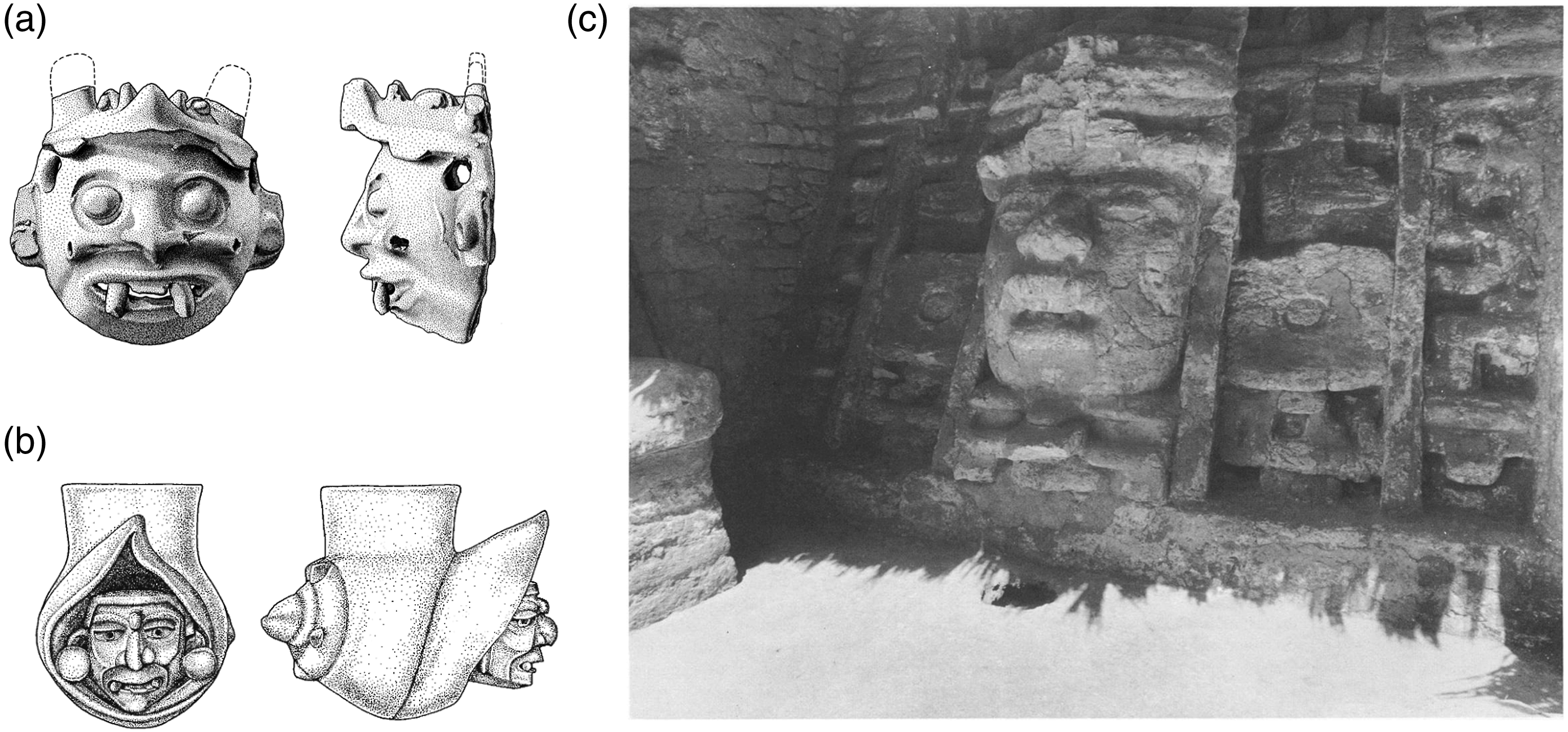
Openings in non-living landscape features, such as caves and cenotes, were also crucial for blurring the boundaries of realities. Maya communities inhabited landscapes characterised by Cretaceous limestone, which formed numerous caves. These caves resembled open mouths, with stalactites inside appearing like dangling fangs, as demonstrated in the cave at the Actun Isabella site in western Belize (Moyes, 2020: 289–290). Numerous liminal rituals took place in caves due to their inherent boundary-crossing propensities (Stone, 1995: 131–154; Moyes, 2020: 294; Moyes, 2006: 73–75).
The ability to cross the boundaries of realities, as shown in the effigies at Lamanai, allowed the local community to explore the potential of an ‘as if’ world. This ‘could be’ or ‘as if’ world enables them to reimagine and negotiate their relationships with other individuals and the world around them. Crossing the boundaries of reality is not a breach of social norms; rather, it represents a collectively accepted alternation or a ‘play of trope’ (Fernandez, 1986). In his Persuasions and Performances, Fernandez defines the ‘play of trope’ as ‘the metaphoric assertions men make about themselves or about others’ (Fernandez, 1986: 24), assertions that can guide human performance. Metaphors such as ‘life is like a race’ do more than merely describe life. They influence behaviour and offer a script for action. They create a socially accepted scenario as if life were a competition and people must prepare to succeed. Similarly, the altered realities provide a generally accepted metaphor or ‘as if’ world, enabling participants to navigate various social interactions and life experiences and therefore promoting the resilience to cope with changes during the Colonial Period. Resilience is not merely a result of human agency but also involves material engagement with other species and the surrounding landscape, such as caves and cenotes.
As Seligman et al. put it (2008: 23): [W]hat constitutes society—what makes the social a sui generis entity, irreducible to any other—is precisely a shared ‘could be’, a mutual illusion of the sort that all rituals create. To a great extent, this is what symbols do more than anything else: they represent a ‘could be’. This shared ‘could be’ (or sometimes, ‘what if) is the nodal point where members of a society come together as symbol users.
When the local communities at Lamanai were experiencing changes imposed on them during the Colonial Period, they could be liberated from a monolithic reality, unveiling new potentialities for alternative realities. Boundary-crossing among realities made possible the boundary-crossing of cultures as it showed people at Lamanai what could be: they did not need to choose between being Maya and being Christian; they had multiple potentials. The ability to cross the boundary of realities was important for maintaining resilience because it allowed the Maya communities at Lamanai not to be fixed in the reality of colonisation and Christianisation but to enter the subjunctive world and reorganise their order of life.
Animal: boundary-crossing among entities
We can trace the boundary-crossing of realities to Maya ontology. Maya understandings of the world transcend the contemporary taxonomy of species and extend ‘personhood across apparent natural disjuncture, including those between animals and plants’ (Meskell and Joyce, 2003: 89). The world is in the constant process of making and transforming. The boundary of entities is blurred, and the hybridity of humans and animals is well-documented in Maya art (Meskell and Joyce, 2003: Chapter 5). Ontologies are fixed within categories but rely on the intersecting corporeal boundaries among different animal subjects (Gillespie, 2021). The bodily potentials of various beings merge, intertwining in the ritual context to embody diverse sources of power.
The boundary-crossing among entities is evident from the zoomorphic effigies shown in Figure 4. Features of sharks, felines, centipedes, lobsters, and other species are merged into hybrid creatures. For the crocodile/deer/human effigy (Figure 5), the main body is a crocodile, but it also has antlers of deer and a human head emerging from the opening mouth of the crocodile. Multi-species hybrids are often identified as ‘earth monster (creatures representing the surface of the earth)’ and ‘celestial dragon (animals arching over the upper sky)’ (Stone, 1985), with features of humans, reptiles, crocodiles, deer, jaguars, and so on, blurring the boundary among different species. Crocodiles can also form hybrids with plants, especially ceiba, one of the tallest trees in Mesoamerica. The hybridity of crocodile and ceiba trees may embody the axis mundi, indicating cosmic centre and order (Rice, 2020: 231).
Central to Maya ontology is the concept of k’ex, or ‘substitution’ (McLeod, 2018). K’ex is the process of: ‘[…] one entity’s taking on the essence of another, and in this becoming the being represented. One did not, however, lose one’s individual essence in taking on or becoming part of the substituted entity’ (McLeod, 2018: 148, original emphasis). Through k’ex, new entities emerge from the old. For instance, a human can acquire the essence of a jaguar during the battle to gain its prowess while keeping their human identity. The Tzotzil and Tzeltal Maya concept of ch’ulel, a pool of living essence, further highlights this fluidity. Each person receives some essence from birth and can retrieve other living essences from the pool during their life and return them to the pool after death (Vogt, 1969: 370). Plants and animals are not merely understood as instrumental resources, means of exchange, or miniature expressions of society and culture. Instead, they can become part of humans, and humans become part of other species, in the process of k’ex. Different species and entities are in the process of mutual becoming, blurring the ontological boundaries among various entities (Gillespie, 2021; McLeod, 2018: Chapter 4).
The Maya concept of k'ex involves boundary-crossing among entities, as seen in the concept of wahy (pl. wahyoob, formerly written as way and wayab), usually translated as ‘animal co-essence’ or ‘spirit companion’ (Houston and Stuart, 1989). Wahyoob sometimes appeared in Maya rulers’ names as an extension of their personhood (Gillespie, 2001: 81–82), as the ruling names Bird Jaguar and Shield Jaguar at Yaxchilan attest (Taube, 1992: 33). The wahy and the owner were mutually constituted such that if either one was injured or destroyed, the other fell ill or died (Thompson, 1958: 271–277). Meanwhile, the owner and wahy themselves could be an assemblage of different entities. A wahy could be a hybrid of many animals, and the owners of wahy could be not only individuals but also royal families or communities (Calvin, 1997). The royal courts in Dzibanche and Calakmul usually had serpents with deer antlers as their wahyoob. Tikal noble families were associated with the jaguar-shaped creature as their wahy (Stuart, 2020: 193–194). The connection with powerful and awe-inspiring animals also granted power and authority to the owners, enabling the owners to wield power through their wahyoob (Stuart, 2020: 195–201).
The boundary-crossing process among entities in Maya rituals extended beyond animals and plants to encompass non-living things. The practice of carving images of Maya kings and erecting stone monuments represented a boundary-crossing process. The ‘kings of stones’ (Stuart, 1996) were not merely the depiction of kings but rather an extension of their personhood (Gillespie, 2001: 85). They were named, clothed, and fed (Stuart, 1996: 156–157). They were venerated as an ancestor, and in some cases, ‘newer sculptures were installed in visual and physical dialogue with them’ (O’Neil, 2010: 164). In warfare, these stones were ritually destroyed and removed from their original royal context, not merely as the smashing of stones but as the mutilation and decapitation of the previous royals’ extended personhood (Harrison-Buck et al., 2016: 87–88). Stela 9 at Lamanai, for example, was deliberately mutilated as an attack on the previous rulers (Pendergast, 1988). The extension of personhood is also evident in name-tagging practices. When objects were carved with their owners' names, they became more than mere possessions and transformed into inalienable parts of the owners' personhood (Burdick, 2016; Houston and Taube, 1987; Stuart, 1989).
The idea of boundary-crossing among entities was helpful for maintaining the resilience of people at Lamanai. As emphasised before, resilience is a dynamic process of creation and reorganisation. In this process, individuals and groups do not merely demonstrate the ability of persistence but, more importantly, keep changing. People at Lamanai were not bounded by the limits of human bodies but could extend their life into the broader world around them through the process of k’ex. The ability to cross the boundary of entities was the prerequisite for boundary-crossing among realities. It allowed the Maya communities at Lamanai to be someone or something different, to extend their personhood by engaging with other animals and objects. Boundary-crossing among entities gave them access to the power and vitality of other species and materials to cope with the challenges of social and political change during the Colonial Period.
Crocodiles: boundary-crossing properties
Finally, the properties of humans and things are either altered or otherwise emphasised. Features of humans and things that lie between the boundaries are highlighted in the zoomorphic effigies, demonstrating a liminal state. Liminality is the experience of being on the threshold, a state of betwixt and between (Gennep, 1960: Chapter 1; Turner, 1967: 93–111). Liminality relies on the boundary-crossing features of animals and things. At Lamanai, such features can be observed in the lobster and centipede motif (Figure 4(d)). Lobsters can inhabit murky environments in oceans or muddy shorelines. Centipedes have long rear legs that resemble antennae, blurring the distinction between the head and the end of the body (Stone and Zender, 2011: 179). These characteristics, representing vague boundaries, are emphasised in ritual activities and are made into figurines within the sacred context of churches.
Another, perhaps more significant, animal embodying cross-boundary features is the crocodile (Figure 4(a)–(c); Figure 6). The site name Lamanai, which is thought to mean ‘submerged crocodile’ (Pendergast, 1981: 32, 38), indicates the significance of this animal. As amphibians, crocodiles can cross the habitual boundary of land and water, as depicted in myths where the earth is supported by a giant crocodile (or fish or turtle) floating on the primordial sea (Stone and Zender, 2011: 183). In the Maya worldview, the universe comprises three layers: heaven, earth, and the underworld in the dark water (Schele and Freidel, 1992: 66). A Late Preclassic cache from Cahal Pech can illustrate these three layers. The sky is represented by an ancestor's skull, the earth by artefacts beneath the skull, and a watery underworld by animal remains at the bottom (Awe, 2013: 38–40). A shell crocodile figurine is situated between the layers of earth and the underworld, signifying the crucial crocodilian attribute of crossing boundaries between land and water and, metaphorically, between the living world on earth and the watery underworld. Crocodiles exist in a liminal state, full of potential to enter either world.
Because of the boundary-crossing properties of crocodiles, they were often depicted as bicephalic (two-headed), symbolising their dual habitats (Rice, 2018: 718–719). One head typically displayed deer antlers and a star (Venus) in its eyes, earning the moniker ‘Starry Deer Crocodile’, which Stuart argues is associated with celestial movement (Stuart, 2005: 72–73). Crocodiles inhabit the boundaries between the bright world of land and the dark underwater realm, connecting to the celestial movements that bring light and darkness.
In a Maya creation myth, as documented in the Books of Chilam Balam, the Earth Crocodile (Itzam Kab Ayin) threatened to annihilate the world with a flood. The world was stuck in a liminal phase between destruction and rebirth. But the crocodile was stopped, decapitated, and transformed into the earth's surface (Craine and Reindorp, 1979: 117–118). At the Postclassic ritual platform Structure N10–10 at Lamanai, most zooarchaeological remains were cranial bones, including crocodile skulls, while less than 25% of the bones were from meat-bearing body portions (Stanchly, 2007: 11). The faunal data suggest that cranial bones may have been used in rituals related to the creation myth in which the crocodile was decapitated. The ability to cross the boundary between land and water was linked to crossing the boundary between different layers of the universe and destruction and creation in the myth. The liminal state of uncertainty was achieved through the affordance and materiality of crocodiles, and such a liminal state of uncertainty was what the Lamanai people constantly experienced during Christianisation.
Resilience for the Maya community at Lamanai during the Colonial Period was not about remaining unchanged or returning to the previous equilibrium but about constant change. Resilience was a creative ground. It meant reworking Maya practices while creating new cultures, new identities, new possibilities of life, and new relationships with the material world around them. Many social and religious transformations occurred in the 16th century at Lamanai, yet some practices were kept, especially seen in the zoomorphic effigies. These effigies were not just copies of the past, but a creative palimpsest, a rewriting of the traditional ritual script and recreation of meanings when deposited in the Christian churches.
The dynamic process of resilience at Lamanai relied on the boundary-crossing abilities displayed in the zoomorphic effigies. Let us return to the crocodile/deer/human effigy (Figures 1 and 5). This Maya-style effigy was carefully deposited in the Christian sacred space, showing the boundary-crossing of cultures. The ability to cross the boundary of cultures allowed the community at Lamanai to be both Maya and Christian without losing their cultural identity or confronting the pressure from the colonisers. Boundary-crossing among cultures relied on the boundary-crossing among realities in the Maya worldview, as it allowed the communities to enter a subjunctive world, to experience other possibilities. The human face emerging from the opening mouth of a crocodile does not depict a realistic scene but a subjunctive world, a world where Maya communities may not be trapped in colonial realities but can reconnect with their ancestors and the surrounding natural world. And these two boundary-crossing abilities then rely on Maya ontology to blur the boundaries of different species and materials. This effigy does not depict a fixed entity but a process of mutual becoming among crocodile, deer, and human. And all the boundary-crossing abilities boil down to the affordance and materiality of the natural worlds surrounding them, especially when seeing animals like crocodiles that can survive in two realms of life. Maya communities, too, can survive with different realities and cultural identities. Resilience was achieved not solely through human agency but also through participation and engagement with other species and materials. The material settings of the ritual activities at Lamanai—the crocodile features, the trans-entity motifs, the ‘as if’ world—prepared individuals to cross the boundaries of realities and cultures, allowing and expecting them to embrace both Christian and native identities.
Conclusion
This paper examines the resilience of Maya communities during the dramatic transformations under Spanish colonial rule, focusing on the site of Lamanai in Belize. It aims to contribute to the theory of resilience and the understanding of the resilience of the Maya communities at Lamanai during the Colonial Period. Resilience theory in archaeological research is often anthropocentric, typically considered as a reaction to disturbances and as a trait or capability of specific individuals or communities. In contrast, I take a process approach influenced by process philosophy. I define resilience as the dynamic process of individuals or communities coping with and adapting to stresses and disturbances and renewing, re-organising, and developing during their engagement with ever-changing material surroundings. I argue that the ability to cross various boundaries was instrumental in maintaining the resilience of the Maya communities at Lamanai during the 16th-century Colonial Period because it opened up possibilities of life. It offered Maya communities the opportunity to reimagine their relationships with others and the world, presenting possibilities to resolve opposition and conflict inherent within boundaries.
Ritualisation as a means of resilience remains pertinent in our contemporary era. All too frequently, the modern world has made boundaries rigid: territories, identities, ideologies, religions, political views, economic orientations, theoretical approaches, and so on. We tend to recognise the world as fundamentally fractured and disconnected. By recognising that we are a process rather than a fixed entity, by being open to remaining fluid and crossing rigid boundaries, we can find the means to navigate the unfolding complexities of our current era. Boundary-crossing, as a way of maintaining resilience, urges us to make and remake, kindle and rekindle, our relationship with other people and other things in the world, to dwell within this disintegrated world by remaining open to various cultural identities and subjunctive worlds of possibilities, to face the ineludible ambiguities of our existence.
Footnotes
Acknowledgements
I would like to express my profound gratitude to Alexander Geurds, Chris Gosden, Elizabeth Graham, and Michael Leadbetter for their invaluable insights and thoughtful comments on this paper. I am grateful for the reviewers’ comments and constructive criticisms that made my arguments clearer and stronger. Any remaining errors in this work are, of course, my own.
Declaration of conflicting interests
The author(s) declared no potential conflicts of interest with respect to the research, authorship, and/or publication of this article.
Funding
The author(s) disclosed receipt of the following financial support for the research, authorship, and/or publication of this article: This work was supported by the Fundamental Research Funds for the Central Universities and the Research Funds of Renmin University of China (19XNL010).
