



Abstract
The Brazilian colonial context led the Tupiniquim, an Indigenous group, and the Portuguese, a colonizing group, from the São Vicente area to connect with two places in Rio de Janeiro. In this scenario emerges the genealogy of two Tupiniquim women of the 16th century from São Vicente, which allowed us to trace six generations of women who formed kinship relationships with Portuguese men. They moved to Rio de Janeiro to create the Cara de Cão fortification and Camorim sugar plantation. They were members of the communities that appropriated and transformed Portuguese coarse ware ceramics into what is now termed Paulistaware. This article shows a new understanding of the social role of Indigenous women and the entry of European men into symmetrical gender relations based on the logic of Tupiniquim social collaboration. Tupiniquim women initially produced Paulistaware before 1550. After 1600 these ceramics were also made and consumed by people from the African diaspora and others from outside, adding decorative elements found in São Paulo and Rio de Janeiro. The intensive analysis of archival data breaks the traditional model of homogenization and Europeanization of historical processes and events, highlighting the itinerancy of practices and mobility of people.
This article presents a historical archaeology study of Tupiniquim women who were silenced by academic research and colonial mindsets, making them invisible or insignificant. They and their descendants have been omitted from historical narratives as food sovereignty managers, materiality producers, healers, elders, and even as mothers, stereotyped by a selective academic imagination, which since the 17th century has chosen archival sources with essentially masculine aspects (Sallum, 2023). These women were disregarded as active members in decisions and practices of sociability, internal and external to their communities, including political and warrior activities.
Indigenous women were largely omitted in Brazilian archaeology theory and practice, as were African American women in gender archaeology research (Franklin, 2001). To counter this trajectory, we agree that: (i) gender and sexuality are central to understanding colonial projects (Voss, 2011) and early globalization (Montón-Subías, 2019); (ii) “gender has drawn our attention to such processes as the establishment of social alliances and the social” (Conkey, 2003: 872); and (iii) “there is no [established] formula” in gender studies; the best strategy is to combine the theories/methods of different human sciences to understand the local specificities, considering that Western assumptions tend to homogenize gender relations from their own perspective (Battle-Baptiste, 2011).
The Tupiniquim people live in a part of the current Brazilian states of São Paulo and Paraná, covering about 2000 years of occupation through to the present (Figure 1). Archaeological data show a connection network of practices and materialities in the past, with pottery being a female practice, preserving stylistic features. Historical and anthropological data explain long-term pottery standardization via the decision by the female ceramicists of the present who were still guided by a “tenacious attachment to the traditional forms of our potters, which can be attributed to a spiritual motivation. Conscious of the tradition, they remain faithful to it, transmitting their knowledge in the same way” (Scheuer, 1976: 6). Tupiniquim territories in the states of Southwest Brazil.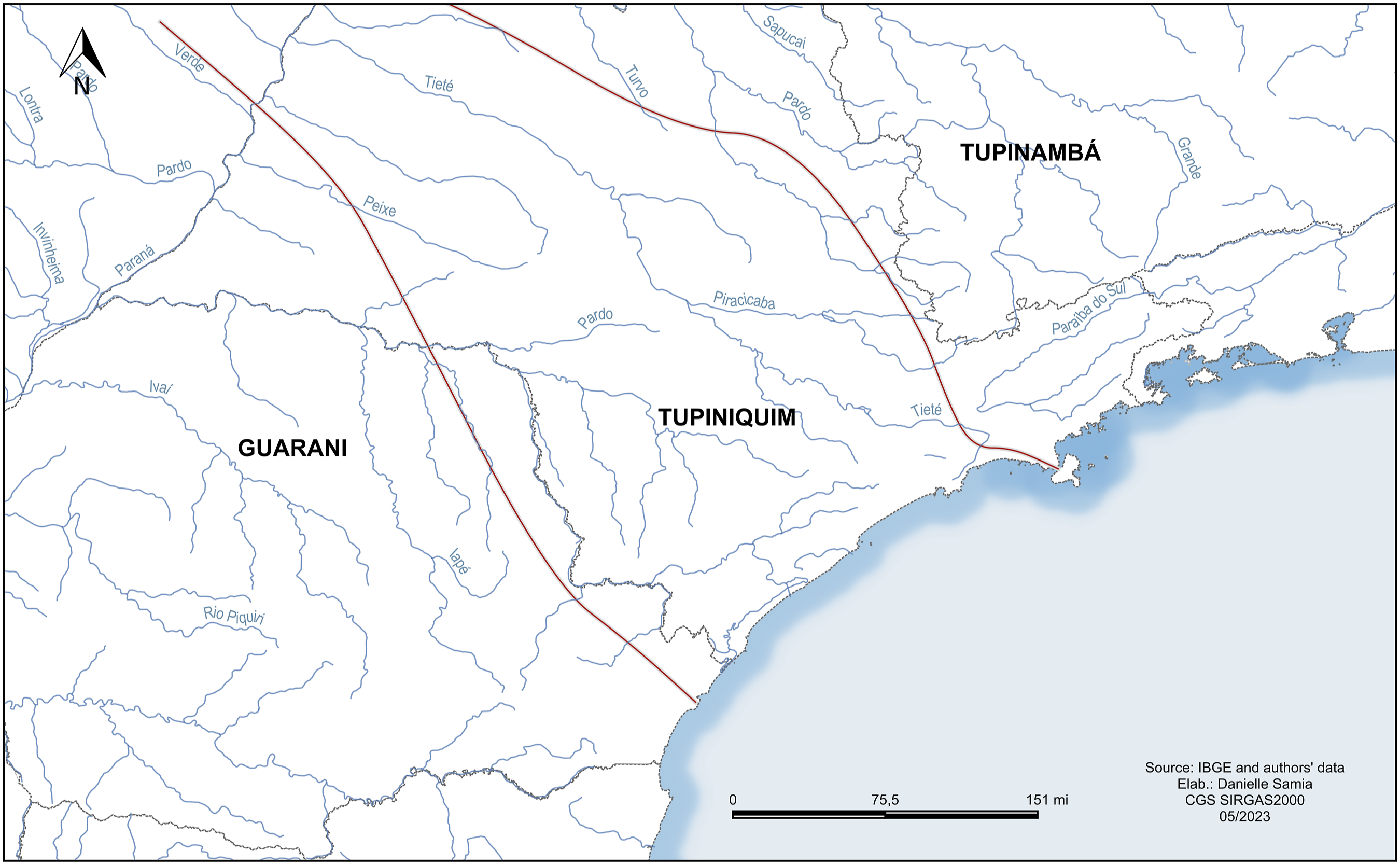
The different times and places of social relations of Tupiniquim women were also omitted from these histories and are now slowly changing through a decolonizing agenda. This is a “memoricide” with multidirectional and deleterious effects to overcome, especially the archaeological–historiographical compression that leads to the misinterpretation of the role of social relations processes and events, by occupying supposed demographic voids with people displaced by colonialism. This has impacts on local and regional histories, Indigenous sociability, politics, and gender relations, as well as the participation of women in the production of materialities. The decompression of the archaeological record associated with local history studies corrects or reduces errors reproduced uncritically in Brazil, ignoring those who effectively participated in the creation, production, and consumption of materialities. By ignoring the Tupiniquim women and their alliance relations, many archaeologists considered that the material culture produced in the first decades of colonial interactions would have been made by people who arrived after 1600, especially in the African diaspora.
We consider that the arrival of Europeans and African diasporic peoples did not interrupt or stop Tupiniquim history and that of its territorial neighbors, Tupinambá and Guarani (Figure 2), or restart new stories. We follow the perspective that Europeans and Africans “arrived and became caught up in the tide of Native events and processes, the currents of Native history,” as Barr (2017: 204–205) noted in the case of Caddo and Pueblo in North America. Ideas like this inspire our review of written/archaeological sources to look for new possibilities to understand the social role of women (Sallum and Noelli, 2020; Peixoto et al., 2022). These include the following positions: (i) there was no cultural loss for the Tupiniquim; (ii) the Tupiniquim were not a blank slate upon which to inscribe colonialism; (iii) the process was not the result of interactions of homogeneous entities (the “Tupiniquim,” the “Portuguese”) but specific communities and groups of them; and (iv) Europeans were a demographic minority in the first 200 years of their presence. To be able to inhabit these Indigenous lands and cultural contexts, the Portuguese had to adapt to gender norms from the collaboration and politics of regard framed by the sociability of Tupiniquim, without which it would be impossible to live among the Indigenous (Sallum and Noelli 2021b), as we explain in this paper. Tupiniquim–Portuguese communities in the 16th century, in the current Brazilian states of São Paulo (SP), Minas Gerais (MG), and Rio de Janeiro (RJ) (authors’ design).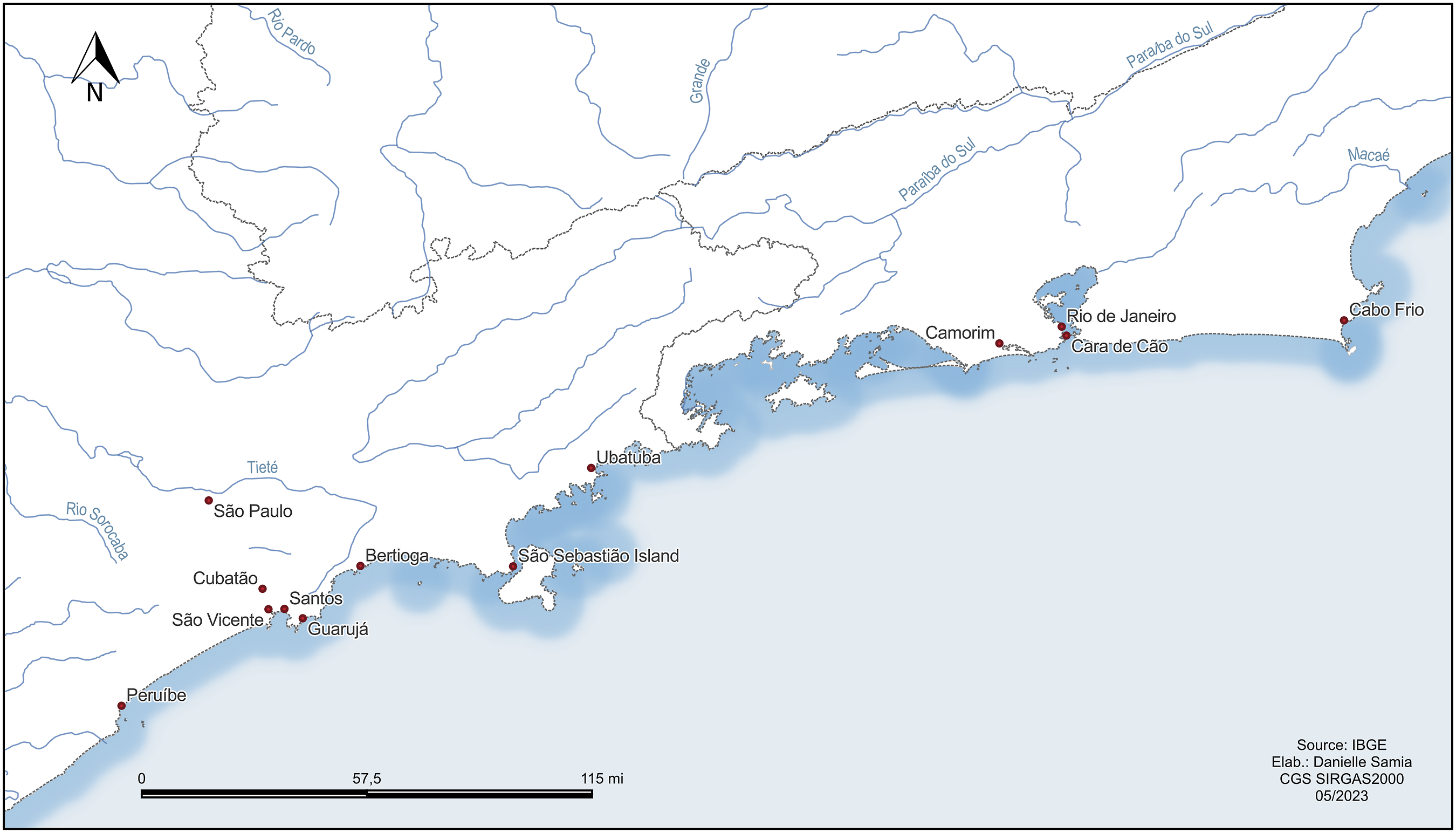
The above ideas ground our perception of the social role, gender relations, and decisions of Tupiniquim women who transformed materiality to avoid the traps of arguments of cultural loss and the supposed automatic effects of colonialism. By abandoning the acculturation formula of coloniality, we realize aspects previously ignored by archaeologists, historians, and anthropologists. This paper brings new historical and social data. The novelty is also for Brazilian researchers, unaware of “how” the newcomers “became caught up in the tide” of Tupiniquim social and material life.
Such perspectives help to understand the mobility of Tupiniquim communities of practice from the São Vicente area to two places in Rio de Janeiro as an example to model mobility of such practices in a large region in the 16th and 17th centuries. The first mobility was the invasion of Guanabara Bay in 1565–67 to expel the French, authorized by Tupinambá/Tamoio people to settle and trade, which initiated a war action followed by genocide, enslavement, and the escape of thousands of people. The second mobility was the occupation of invaded areas by people and communities from various places, including the Tupiniquim.
Articulating archaeological and written data, we situate people and materialities in specific processes and events in the time and space of Tupiniquim–Portuguese relations to: 1. Define a ceramic ware that began to be produced in the São Vicente area in the first half of the 16th century, from whence it was shared by the constellation of communities; its production persists to the present. 2. To demonstrate significant aspects of such relations that did not result from the colonizer-colonized binary, but from the articulation of common interests that formed alliance and kinship presence in these itinerancies. 3. To show that Tupiniquim–Portuguese gender relations were not oppressive but were in accordance with the norms of Indigenous sociability.
Paulistaware
We chose ceramics because they are common in Brazil, allow us to find and to date places, and offer insight into other intergenerational production/consumption practices that connect the past to the present. By crossing and analyzing archaeological, historical, and genealogical data, we define a set of ceramics called Paulistaware, created from “Portuguese coarse ware appropriated and transformed in the 16th century by Tupiniquim women from the São Vicente area for use in colonial settlements, which their descendants and newcomers reproduced until the present day in the southeast region of São Paulo” (Sallum and Noelli, 2020: 551). This definition is an inclusive notion that considers the itineracy of ceramics through social and cultural dynamics (Joyce and Gillespie, 2015). With the archaeological records from two Rio de Janeiro sites discussed in this paper, we can conclude that Paulistaware was created before 1550 (Peixoto et al., 2022; Sallum, 2023).
The pottery’s name refers to residents of São Paulo, called Paulistas since the 17th century (Sallum and Noelli 2021b). In this sense, calling it Paulistaware as an alternative to Tupiniquim ceramics is a way of including all the generations of potters and users whose lineages continue to the present, both those who currently consider themselves Tupi and Tupi Guarani on the Peruíbe coast (Mainardi, 2017; Sallum and Noelli, 2022; Noelli and Sallum, 2023) and others that do not consider themselves descendants of Indigenous people (Figure 3). The investigation of the historical process must consider the itinerancy of Paulistaware, initially produced by Tupiniquim women and, after the 17th century, also made and consumed by people from the African diaspora, who added decorative elements found in São Paulo and Rio de Janeiro sites (e.g., Agostini, 2010; Munsberg, 2018; Trindade and Souza, 2022). Paulistaware from Casa do Barão Museum, São Vicente (São Paulo). Photos: F.S. Noelli and M. Sallum.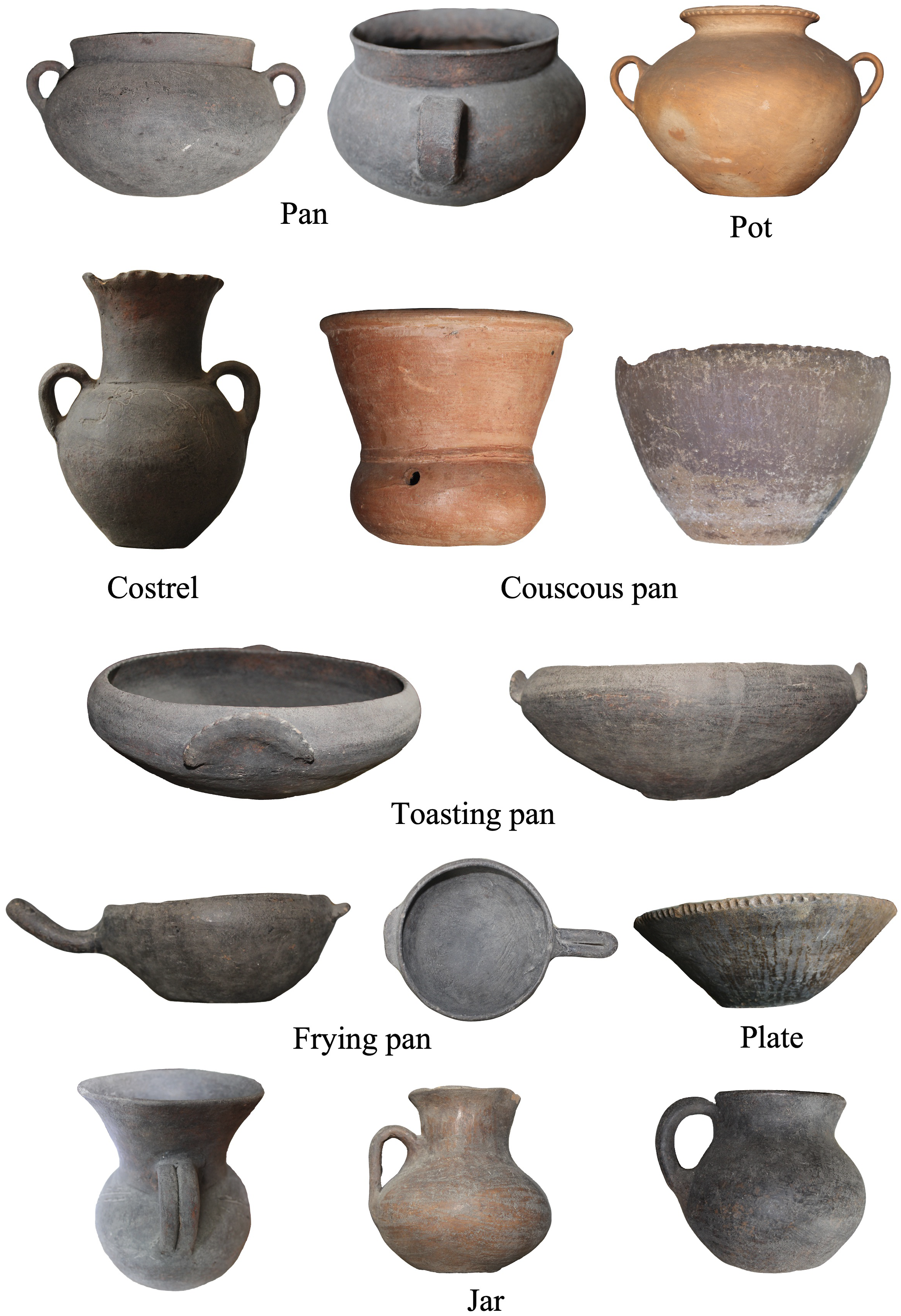
Tupiniquim–Portuguese relations
The São Vicente area had free and captive people. The free ones were Tupiniquim and Europeans, predominantly Portuguese men. The captives were Guarani, Tupinambá, and other Indigenous populations captured and enslaved in wars brought to their territories by the Tupiniquim–Portuguese alliance. In Rio de Janeiro the captives were eventually Tupiniquim and Guarani and other Indigenous populations captured and enslaved in wars brought to their territories by the Tupinambá–French alliance.
All Tupiniquim people were not subdued, and some became relatives and allies of the Europeans after 1502. Their descendants integrated most of the key posts of the plantations and bureaucracy in São Vicente and Rio de Janeiro. Two Jesuits who lived for decades among the Tupiniquim summarize almost a century of relations: in 1584, they were among the “more political” Indigenous people in Brazil (Anchieta, 1988: 314), and in 1595, they “entered with us through the land of São Vicente, some who call Tupiniquim, these sheltered us well and will never have war with the Portuguese” (Soares, 1965: 7).
Tupiniquim agroforestry communities produced food, medicinal drugs, raw materials, and various types of material culture. The plantations of the 16th and 17th centuries essentially produced goods, like sugar, while depending on the agroforestry fishing and husbandry animal communities to feed free and captive people. This meant that plantations needed significant contingents of free people to engage in collaborative work for agroforestry and goods production, surveillance, and feeding captives. Possibly, Tupiniquim women managed the agroforestry system, but they would have other occupations, such as producing materialities and taking care of children, and Tupiniquim men were divided between many obligations, including obtaining protein, surveillance, and slave-driving the captives. And, regularly, many free men went away for months to war to procure more captives for plantations and the slave trade (Monteiro, 2018).
Our source criticism allowed us to understand that Portuguese, specifically, and Europeans, generally, entered Tupiniquim sociability and embraced Indigenous gender practices. Such a situation lasted for 200 years or a little more, depending on the area, where the relationship was based on kinship, politics, and collaboration, called “mutirão” in Brazilian Portuguese: “an autonomous self-regulated collective organization of jointed effort” (Filadelfo, 2022: 1). Therefore, we consider the sources of the bureaucracy and the personal written as representations of double meaning. On paper, the Portuguese complied with the kingdom’s land laws. However, the land belonged to the Tupiniquim community where the Portuguese lived; over time, property was divided among descendants. For Tupiniquim people, the self-determination of their community was articulated by kinship and alliance with other communities, forming constellations that were the foundation of their policy. For this reason, only a few cities had grown by the 18th century. They did the same in kinship, registering monogamous relationships to disguise other forms of kinship according to Tupiniquim norms.
These practices were at the core of the Paulistas’ autonomy. The Paulistas followed only those royal orders that interested them and kept away members of the high nobility, the church, and the bureaucracy. In 1693, a Portuguese governor, displaced among the “nobles” of Rio de Janeiro, many of them descendants of Paulistas who had conquered that land in 1565–73, declared that he was unhappy that the Portuguese were like the Indigenous: “raised in the forest of their plantations and swiddens, they arrive in the city once a year, they only get together all on election days” (Fragoso, 2007: 44). In 1697, a newly arrived Portuguese bishop reported a dialogue with the Paulista military leader Domingos Jorge Velho: he “is one of the most savage … when he talked with me, he brought an interpreter, because neither can he speak nor is he different from the most barbaric tapuia [native]. He claims to be a Christian but has seven Indian concubines, even though he married recently” (Ennes, 1938: 353).
In the case of the Camorim sugar plantation, the written records show that its development resulted from the decision and articulation of the strategic interests of a group of Indigenous relatives and allies from São Vicente. These were Tupiniquim women and men and their descendants with Portuguese and other Europeans, and perhaps some Portuguese who decided to navigate the 180 nautical miles to Guanabara Bay, whose mouth is Rio de Janeiro. The reason for this mobility was to strengthen the alliance between families in both places, an opportunity for several businesses in the Atlantic World. It is a complex situation that needs to be understood in order to see how this alliance worked, as Tupiniquim communities were not subjected to the Portuguese (Sallum and Noelli, 2021a). Therefore, the notion of an encounter between two homogeneous entities with the supposedly stronger subjugating the weaker is irrelevant here (Pezzarossi and Sheptak, 2019).
These Tupiniquim came predominantly from neighboring territories on the south coast, situated in the São Vicente area, where Santos, Cubatão, Guarujá, and Bertioga are currently located. They set off to Camorim around 1594, a little over 30 years after hundreds of people from that area had made the same journey to actively participate in the invasion and conquest of Guanabara Bay in 1565–67. The move to the plantation was another event that generated mobility between the two places. Women from lineages of agroforestry and pottery practice communities took part in this mobility. The result of what they produced was transformed over time into part of Camorim’s archaeological record. The significance of these women to history is multi-directional, and given that their descendants still inhabit the region, they have an impact to this day.
Landscapes and people of the Rio de Janeiro hinterland
The Camorim lies in the Jacarepaguá Lowlands (Figure 4). The area has a forested surface of approximately 55 square miles, forming a complex landscape framed by the semicircular mountains that make up the Pedra Branca and Tijuca Massifs, with altitudes of up to 0.6 mi., forming different ecosystems (Rego, 2010). At approximately 5.60 mi. by 4.35 mi. in its largest axes, this plain soon aroused the interest of colonizers due to its suitability for agriculture. Rio de Janeiro area in the 16th century and places cited (authors’ design).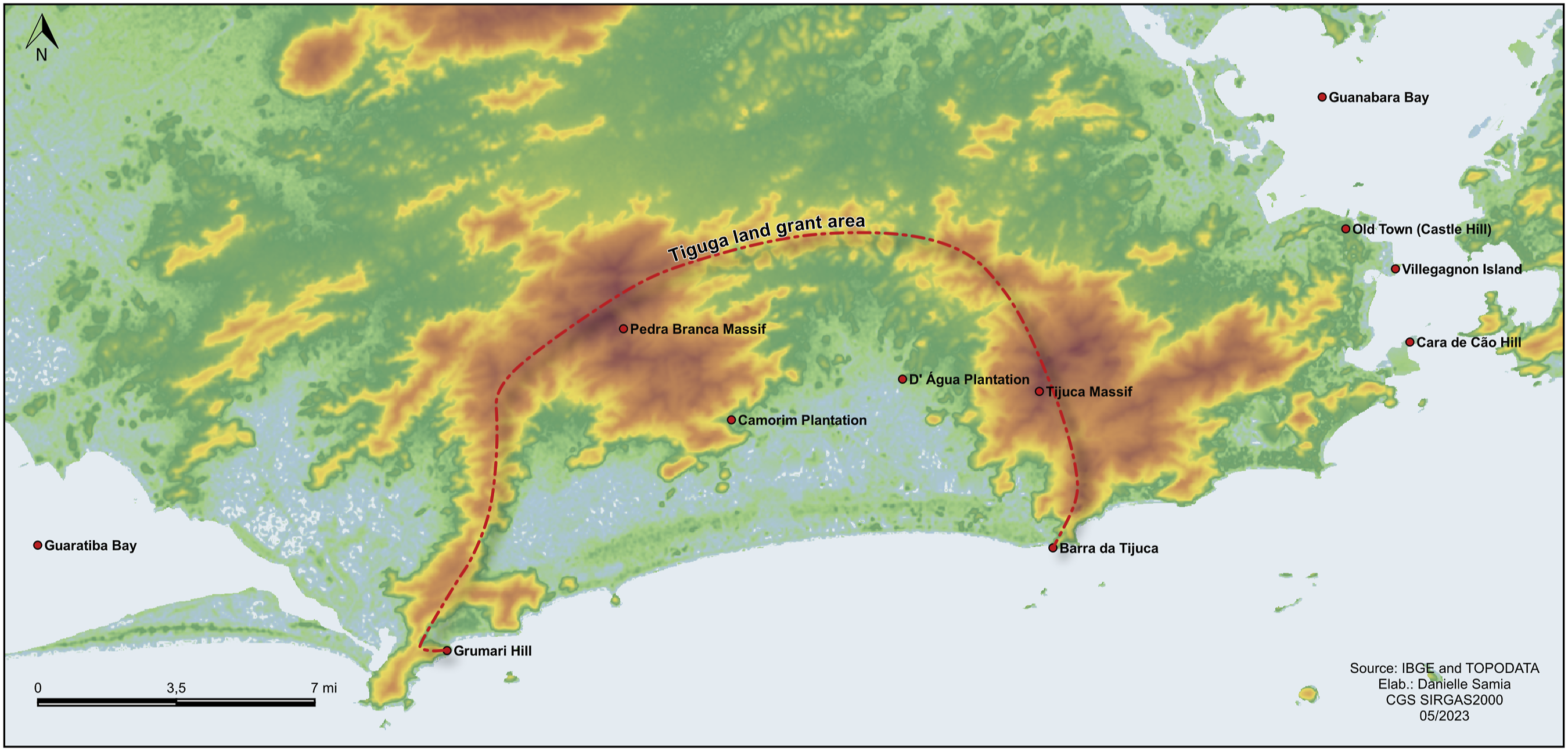
Over the last 430 years, the plain’s vegetation canopy has been impacted by environmental management strategies that gradually increased the anthropogenic areas: first, the plain was cleared to manage vegetal food and insert sugarcane plantations and livestock; two centuries later, the sloping hills were cleared for coffee plantations. This increased transformation of portions of the forest into firewood for urban supply devastated the forests of Tijuca from the 18th century up to now. The reforestation of Tijuca created fallow ground for recovery, and currently there are different stages of vegetational succession to urbanization.
Therefore, over time, the appearance of this landscape has undergone several transformations. In the 1920s, it was known as the Sertão Carioca (Rio de Janeiro Hinterlands), as it characterized a way of life integrated with the Atlantic Forest ecosystem where there lived “a hard-working, very Brazilian population” (Corrêa, 1936: 24). Corrêa emphasized that this erasure was not only academic but also a consequence of colonialist policy itself, whereby social inequality was reinforced. He made an inventory of traditional knowledge, in which we see the articulation of Indigenous, African, and European practices, with correlates that may be found in the traditional communities of Rio de Janeiro, São Paulo, Paraná, and Minas Gerais. Such correlates need to be investigated in their historical, anthropological, and linguistic meanings, as well as the memory of the present people, revealing the sharing of practices from different times and places.
Despite the strategic importance of the Jacarepaguá Lowlands for colonialist interests, its social trajectory was addressed academically in an unbalanced manner (Peixoto, 2019). Many historians, sociologists, and geographers established the general lines of its occupation by focusing primarily on the colonial bureaucracy of land tenure processes and people from the Portuguese elite who “populated” it. However, there exists scarce research into the role of women and the people who worked to transform the forest into numerous sugar mills and other urban, rural, and road structures between 1580 and the present. Even rarer are studies on the Tamoio (also known as Tupinambá) and Temiminõ (also known as Margaiá), people who occupied Guanabara Bay when the Europeans arrived. This research was dedicated to understanding Tamoio anthropological aspects (Beltrão and Laraia, 1969), generalities of the early European presence (Mendonça, 1991), and how the Temiminõ were aligned with the Portuguese (Almeida, 2000).
The homes of this majority population became known thanks to recent interdisciplinary geographic and sociological research that promisingly looked at the processes of housing associated with extractivist strategies and agroforestry in the Jacarepaguá area, which only took place just a few years ago. Near the lowland mountains, in the Pedra Branca massif, 1170 coal kilns distributed over 120,000 square yards have been identified, as well as 104 residential sites, with a long-term survey currently in progress (Oliveira and Fraga, 2020). This research has revealed shared practices of occupation and environmental management among the coastal territories from the south of Rio de Janeiro to Paraná, which allow for understanding both the long duration of subsistence strategies and daily life (Schmidt, 1958; Scheuer, 1976; Begossi and Figueiredo, 1995; Hanazaki et al., 2000; Adams, 2000; Peroni and Hanazaki, 2002).
One of the authors of this article (Peixoto, 2019) focused archaeological research on the occupation of Jacarepaguá stemming from the installation of sugar plantations, analyzing their implantation in the landscape and investigating the Camorim region more thoroughly. The archaeological excavations carried out (Peixoto and Lima, 2020a, 2020b) in an area close to the Camorim River revealed the foundations of what was probably the draining house, one of the buildings of the sugar production complex, and an adjacent area for discarding materials, relating to the first decades of the sugar mill’s operation, between approximately 1594 and 1667, where, among other materials, hundreds of ceramic fragments were recovered.
From São Vicente to Camorim through Guanabara Bay
Before getting to the Camorim, it is necessary to understand aspects of the historical process that allowed it to exist. We shall see two cases of communities that moved from the Captaincy of São Vicente to Rio de Janeiro, in 1565 and from 1594 onward, and in two different situations, but motivated by similar social relations.
From a perspective whose aim is to decolonize the narrative of the European presence in Guanabara Bay, it is understood that it was the Portuguese and French Europeans who entered the Tamoio and Temiminõ communities, and not the other way around. The Portuguese joined these agroforestry communities as “others,” integrating Indigenous relations of alliance (Pastor, 2015). From 1502 onwards, these Indigenous people identified advantages in the relationship with the Portuguese, and this remained so until the 1540s, when some Tamoio were captured and handed over to the Tupiniquim of São Vicente (Staden, 1557: ch. 24). The response of the constellation of Tamoio communities between Cabo Frio and Ubatuba was to break off relations with the Portuguese, even if they did eventually negotiate with them. After that, in 1555, the Tamoio allowed the construction of the French fort on Villegagnon Island in Guanabara Bay; war and fighting occurred over the next 10 years at various places along the coast, mainly in the São Vicente area.
In 1560 began a two-phase, seven-year war (Mendonça, 1991), ending with the invasion of Guanabara Bay, which was only possible because of the articulation of Tupiniquim and Portuguese interests. The first attack was to destroy the fort and expel most of the French, and subsequently to subjugate the Tamoio communities. It was to be a genocidal campaign that lasted until 1573 and saw the persecution of resistant strongholds between the Ubatuba and Cabo Frio. The war and a sequence of epidemic events affected the Tamoio resistance more severely, ultimately forcing them to abandon the coastal areas after 1567 to head inland (Sousa, 1938), where their relatives and allies were located in eastern Minas Gerais. The unfolding of these events and the consequences of forced mobility by continuous extermination expeditions to the pockets of resistance against colonization resulted in a scarcity of individuals self-identifying as Tamoio.
The event began to erase the previous Tamoio demography of what would become known as Rio de Janeiro, populated by the displacement of people from different locations since 1565, except for the Temiminõ communities, who were allied to the Portuguese. The situation is equivalent to Wolfe’s (2006: 388) perspective on colonialism: “elimination is a consequence forced upon those who stood in the way of the colonizers, for territoriality is the specific and irreducible element of colonialism, an objective that leads to ethnic, religious, ‘racial’ and intellectual erasure.”
There were two wars in the written sources, the one emphasizing European accomplishment, and the other, which was the invisibilized war of revenge between the Tamoio and the Temiminõ, and between the Tamoio and the Tupiniquim, and started long before the Europeans’ presence (Cunha and Castro, 1985). Beyond Portuguese objectives, it is necessary to understand what led to the engagement, as was the case for the Tupiniquim people of São Vicente, including their prominent role for seven years, and subsequently, the building and history of the settlements.
From 1567 onwards, the European narrative of the construction of the “colony” featured several Portuguese protagonists, distributed in groups of strategic alliances and kinship, coordinated in different ways to achieve their interests. As Fragoso (2003: 19) showcased, it was complicity that brought together “bands” in the “web of alliances that the families of the tropical nobility created among themselves and other social groups, whose aim was to achieve or maintain political hegemony.” This web branched out across the Atlantic, also nourishing their families and the group around the Portuguese throne with the booty.
The “other social groups” were mostly made up of unenslaved Indigenous allies and relatives of the Portuguese and other Europeans outside the nobility and the bureaucratic system, and enslaved people (whose population size is hard to estimate). The Portuguese way of writing documents and accounts is lacunar, succinct, and tends to erase data about Indigenous, African, and European, requiring a hermeneutic approach to trace the history of those people in the first decades of Rio de Janeiro. Moreover, the issue of semantics needs to be overcome, both to understand the demographic meaning in the text and to relativize homogeneous entities, such as the “Portuguese” and the “Indigenous,” to understand individual and collective idiosyncrasies (Sallum and Noelli, 2021a). This approach uses these gaps to bring to light, for instance, new understandings about demography, social relations, production and consumption of materiality, and land use; in other words, to abandon narratives focused exclusively on European men on a quest to overcome the erasure of Indigenous and African men and women.
The hermeneutic and semantic analyses of the written sources suggested by Melià (1986) allow for estimating demography in documents without numerical data and to understand the meaning of the ancient texts, such as the social and political role of the people and their articulation with the Indigenous communities to fulfil their objectives. It also allows us to verify that an “Indigenous” or “European” person can mean someone plus their family, considering a conservative minimum size of four individuals (parents and two children), which can be protracted to an extended family, depending on the case.
Let’s take the Portuguese Jorge Ferreira, for instance, who, from 1531, lived 52 years in the Tupiniquim communities, with whom he took part in the invasion and conquest of Rio de Janeiro. Through him, we have access to a rare document, which, when compared to others, sheds some light on the demographic significance of a Tupiniquim or Portuguese head of an extended family creating descendants, coming to power in Indigenous society, articulating collaborations in agroforestry communities, and developing a plantation. The analysis may be deployed to quantify or estimate the size and type of the network of relationships, and to show how much one character may reveal about the history of many other people who are otherwise invisible in the written sources. Traditional historiography represents Ferreira as the prototype of patriarchalism, a young noble warrior married to a “mameluca” (offspring of an Indigenous person with a Portuguese) who owned a land grant near São Vicente, one of the Tupiniquim leaders in defense against the Tamoio and the wars of Rio de Janeiro (Franco, 1954; Belchior, 1965: 208–210). When declaring his services to the king in 1573, Ferreira shows what it would mean for a European “to be” among the Tupiniquim demographically. They would not be one person among others: instead, in social terms, it meant someone within a network of alliances and/or kinship. Therefore, a Portuguese would generally equate to many more people. For instance, Ferreira (1937: 265) recalled that he came to Rio de Janeiro to wage war against the French and the Tamoio, our enemies, himself [...] a captain in São Vicente, this city [Rio de Janeiro] being at war, he [came] to help with many people, provisions, and weapons, with his children, grandchildren, and brothers-in-law, as well as relatives and friends, he came with all [his] house, wife, children, servants, and family to help populate and ennoble this land.
Whether Indigenous or European, the capacity for blood-related and affinity aggregation depended on the prestige reiterated by the continuity of the “politics of regard” vis-à-vis the collective (Kelly and Matos, 2020), which was in no way equivalent to the individual’s position in European society. The notion of the “politics of regard” integrates the logic of kinship, friendship, and alliance relations of many Indigenous peoples in South America, both among communities and allies and with people from outside, operating on their daily life of collaboration and self-sustainability, something to be repeated continuously throughout existence. The rupture of this policy leads to conflict and, in the case of the Tupiniquim and other people speaking Tupí languages, to a war of revenge. In the colonial period, conflict and war erupted every time the Portuguese and other Europeans broke such agreements. Therefore, not collaborating, not being a reference, or not having the regard of others equated to losing one’s humanity, as we have already documented in the relations of part of the Tupiniquim and the Portuguese in São Vicente (Sallum and Noelli, 2021a). The Tupiniquim sense of prestige had nothing to do with Portuguese social inequality; this applied, while he was not aristocratic, to Ferreira’s close friend and father-in-law João Ramalho. This man had prestige among the Tupiniquim: “his entire life and that of his children is in accordance” with that of the Indigenous peoples, and “he is well known and connected to the” hinterland Indigenous communities (Nóbrega, 1956: 498).
Joana Ramalho (daughter of João Ramalho) (Figure 5) was married to Ferreira for 51 years in a polygynous relationship, like her relatives. Like all Tupiniquim women, she engaged in collaborative relationships between genders, with equivalent powers and leadership abilities (Sallum and Noelli, 2021a). However, to join the Ramalho family, Ferreira would have needed to be publicly recognized for his personal merits to obtain prestige, family, lands, and the like, since his Portuguese privileges of nobility and land titles were not valid in the Tupiniquim community. The challenge lies in understanding how Ferreira managed to meet the requirements of becoming a Tupiniquim leader and to achieve the prominence he attained with maturity. Before reaching such positions, he needed to acquire status by collaborating in the daily activities of his father-in-law and his kin, including the war of revenge, seeking opportunities to become a “killer” to renew his public prestige; and like all Tupiniquim, he had to “acquire new names and the requirements to establish his domiciles, as women ‘refused those who did not kill’” (Cunha and Castro, 1985). Ferreira’s community bordered that of the Tamoio, a propitious location to gain public prestige by fighting them annually, as reported by the sources between 1549 and 1560, which placed him among the first the Tamoio aimed to capture to avenge their dead. This circumstance mobilized the Tupiniquim to go to war in Rio de Janeiro. Joana Ramalho genealogy.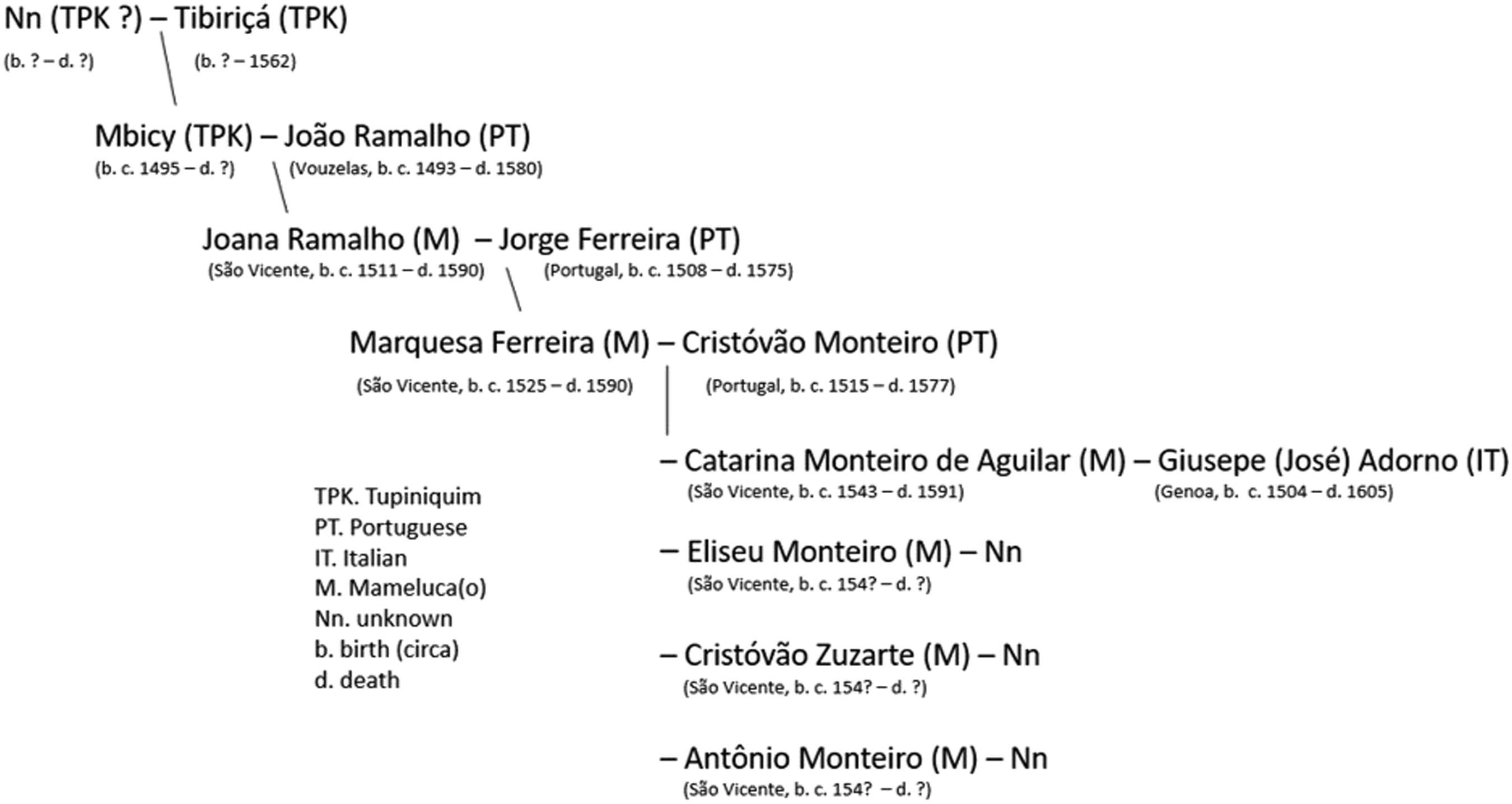
Breaking with traditional explanatory patterns that erase women, we aim to highlight the collaboration between genders as the backbone of Tupiniquim communities (Sallum and Noelli, 2021b). Joana Ramalho represents the common profile of a Tupiniquim woman who actively integrated her communities of practice, managing the agroforestry fields and enabling food security and various materialities, including Paulistaware. Joana should not be considered a Portuguese aristocrat to be served, but instead, someone who set an example of sharing practices and knowledge systems transmitted between generations as a reference in a community of craft production whose length lasted varying amounts of time, depending on the community: for some until the end of the 17th century, for others until the present.
While more could be said about the life of Joana and Jorge in collaboration with the community, and in active participation in the colonial world, it is important to place them with their family and relations in Rio de Janeiro’s “Cidade Velha” (Old Town) between March 1565 and the second half of 1567. Over two years (Salvador, 2010: 202), Jorge Ferreira, followed by extended family and allies, settled in a fortified camp between the hills Cara de Cão (Dog Face) and Pão de Açúcar (Sugar Loaf), from where they would depart to attack Tamoio communities. There were several other Tupiniquim and Portuguese from São Vicente with similar relations to Ferreira and Joana Ramalho (e.g., Belchior, 1965; Franco, 1954).
The fact is that not only did women take part in the invasion of Rio de Janeiro, they were also threatened with being imprisoned and devoured by the Tamoio when they and the French attacked the Old Town during its construction in the first half of 1565 (Caxa, 1960). Some years after moving to the Morro do Castelo (Castle Hill), when most of the men had left to enslave people in faraway lands, they repelled an attack by the Tamoio and the French: “The women of the Portuguese, dressed as men and armed with their flags and drums, led by their female captain, showed themselves and gesticulated so the French would see them on the beach” (Soares, 1965: 7). Before the attack in 1565, Anchieta (1960: 247, 252, 249) described the initial moments of the Cara de Cão settlement and the lack of supplies that affected the invading forces: especially the Indians thought it was a disturbance to not to have anything to eat, and that inside Rio, with the combat they expected from the Tamoio, they would be able to withstand hunger better, and would start to make allotments and fence off the area where the settlement was established, where the settlement would be founded ... the last [day] of February, they began to create allotments with great fervor and to cut wood for the fence, paying no heed to the Tamoio or the French. [After a month] they planted some vegetables and yams and decided to go to some of the Tamoio fields to get some manioc to eat, and the branch of it to plant.
The settlement area was sparse and sandy, covered with sandland forest. There was a “bad water lagoon” (Anchieta, 1960), an indicator of a swampy place, reducing the area for building and planting, since the “yams” do not tolerate swampy or poorly drained soil. These limitations were probably overcome with the settlement on the Cara de Cão hillside, in clearings where firewood and timber were extracted for construction and the defensive fence. The planting was done by the women, who were responsible for this part of the agroforestry management once the trees had been felled, and who also had to carry out other aspects of the logistics of the settlement and the war, with some of them probably taking part in combat.
This collective left material evidence that was found in the historical and archaeological research carried out by Simões (2020) in the Old Town and Cara de Cão. They are archaeological records dated between the end of the 16th century and the middle of the 17th century, when the place was abandoned, seemingly having “plunged into a deep slumber” with the transformation of the place into a military base (Simões, 2020: 92). The records around the Cara de Cão area show evidence of a settlement pattern like the one mentioned above, in the Pedra Branca Massif, with the slopes of both places serving as areas of extraction, and when the topography of the slopes configured plateaus, they were transformed into clearings for residences and for the management of plantations.
The management was recorded in an image rescued by Simões (2020: 82), representing the settlement of Rio de Janeiro before the move from the Old Town to Castelo Hill. Another important result (Simões 2020: 95–104), which confirms the presence of Tupiniquim women at the hillsides, is the 200 fragments of Paulistaware featuring pre-colonial and colonial technology with European elements found in the settlement area, whose characteristics are detailed below.
The Camorim plantation
In 1610, Jesuit Jácome Monteiro (1949: 397) reported that between Guaratiba Bay and Rio de Janeiro was “a harbor crossed by a river that comes down from the hinterlands, named Pojuca [sic] ... In front of the Pojuca is a lagoon […]; it is named in reference to two sugar mills it aids and supports.”
He recorded the landscape of Barra da Tijuca by referring to the d’Água and Camorim plantations, situated near the “kamuri” lagoon (the Tupiniquim name for bass fish), which were owned by the brothers Martim and Gonçalo Correia de Sá and operated in the immense “Tiguga” land granted in 1594 (Figure 4). The possession occupied the entire Jacarepaguá Lowlands, between Barra da Tijuca and Grumari Hill on the coast, and inland, it reached the center of the arc dividing the waters of the Tijuca and Pedra Branca massifs (Sesmaria, 1967: 38; Rudge, 1983: 11–12). However, it had already belonged to the brothers Sá, the “largest landowners of Rio de Janeiro” (Belchior, 1965: 413). It is also worth remembering that in 1590, there were about 280 Europeans in the Portuguese community in which the Sá lived (Carrara, 2014: 7), most of whom were men married to Indigenous women.
The genesis and early history of the Camorim resulted from the strategic marriage between Gonçalo and Esperança da Costa. Born in the Captaincy of São Vicente (c. 1580), Esperança descended from five generations of Tupiniquim and “mameluca” women. As for her male ancestry, only Esperança’s father was not Portuguese, but a mameluco (Leme, 1905: 112–113) (Figure 6). Esperança da Costa genealogy.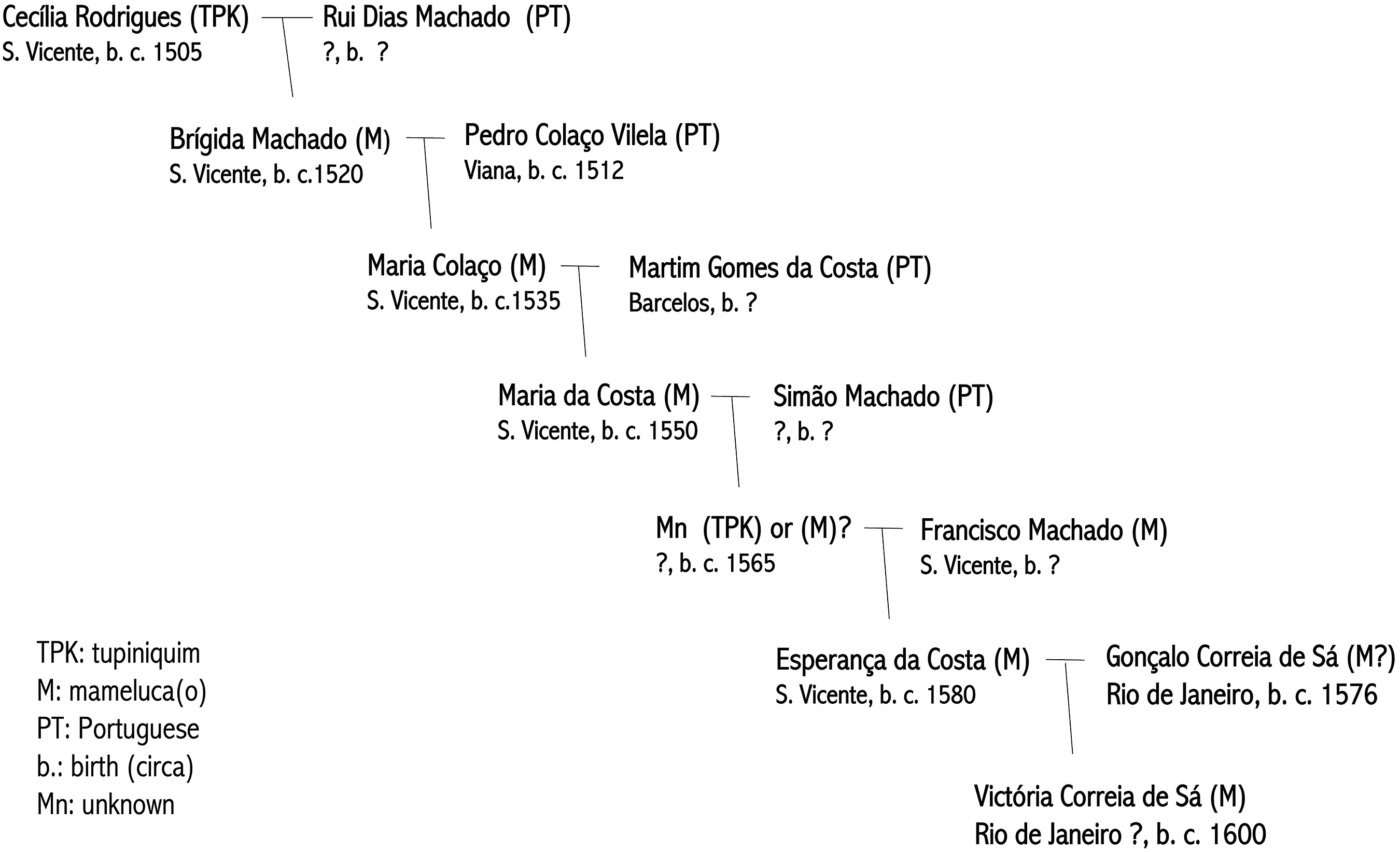
The date is not known, but their union was around 1594, when Gonçalo would have been with Martim on raids to enslave people in the Tamoio territories in Paraíba River (Knivet, 1906). To marry, it was not enough to settle interests between families in the Portuguese patriarchal mode; Gonçalo had to engage in the Tupiniquim way of life. This included building a reputation to be accepted in an agroforestry community through collaboration, kinship, and affinities, multiplying the ability to manage natural resources, and exploiting the energy from unenslaved and enslaved people to operate his new sugar plantation. Gonçalo acted to be included in Esperança’s family and among her kindred, and, to remain among them, exercised a politics of regard, reiterating collaborative practices and actions, including killing in the revenge war for Tupiniquim interests. It was the only option for bringing the Tupiniquim to Jacarepaguá and forming the first community to build Camorim, occupying the key posts in the management of the plantation. Another strategy used was to maintain alliances with the São Paulo band, formed after the invasion of Guanabara Bay; these articulated multiple endeavors, including capturing and enslaving people and investing in expeditions from Rio de Janeiro and São Vicente, in which Martim appears from 1594, and then Gonçalo, when they were around 19 and 17 years old, respectively (Franco, 1954: 345).
This genealogical research has been ongoing since 2020 (Sallum and Noelli, 2021a), but there is enough information to show that parts of the complex kinship network had relocated from São Vicente. The goal is to explore the Tupiniquim and Portuguese genealogy and kinship records, “looking not just at a typical family tree but rather looking at genealogy through webs of interconnected kin” (Supernant, 2021: 368) focused on women. For instance, in 1628 and 1638, people from Esperança’s maternal lineage lived in the Camorim area (Rudge, 1983: 27, 36). The will of Victória Correia de Sá shows unenslaved and enslaved people who lived in Camorim (Rudge, 1983: 36), opening possibilities for the future mapping of people who lived and left descendants on the estate between 1594 and 1667. We do not yet have found serial data on the demography of unenslaved and enslaved Indigenous and African people.
Paulistaware: women’s networks of relationships and practices
The Cara de Cão and Camorim Paulistaware resulted from agency, practice, and knowledge transmission by women in different times and spaces. Their itinerancy from São Paulo to Rio de Janeiro allows us to understand the maintenance of everyday practices based on gender symmetry between Tupiniquim women, Portuguese men, and their “mixed” descendants, derived from social relations in self-sustaining agroforestry communities. For the Tupiniquim people, the sexual division of labor, gender, and the performance of tasks was polymorphic. The characteristics of the division of functions were maintained until the present. People lived by a logic different from the standards imposed by colonial morality, which was generally silenced or misdescribed, resulting in oblivion about the practices and manifestations of Indigenous women.
Production characterization of the three ceramic contexts.
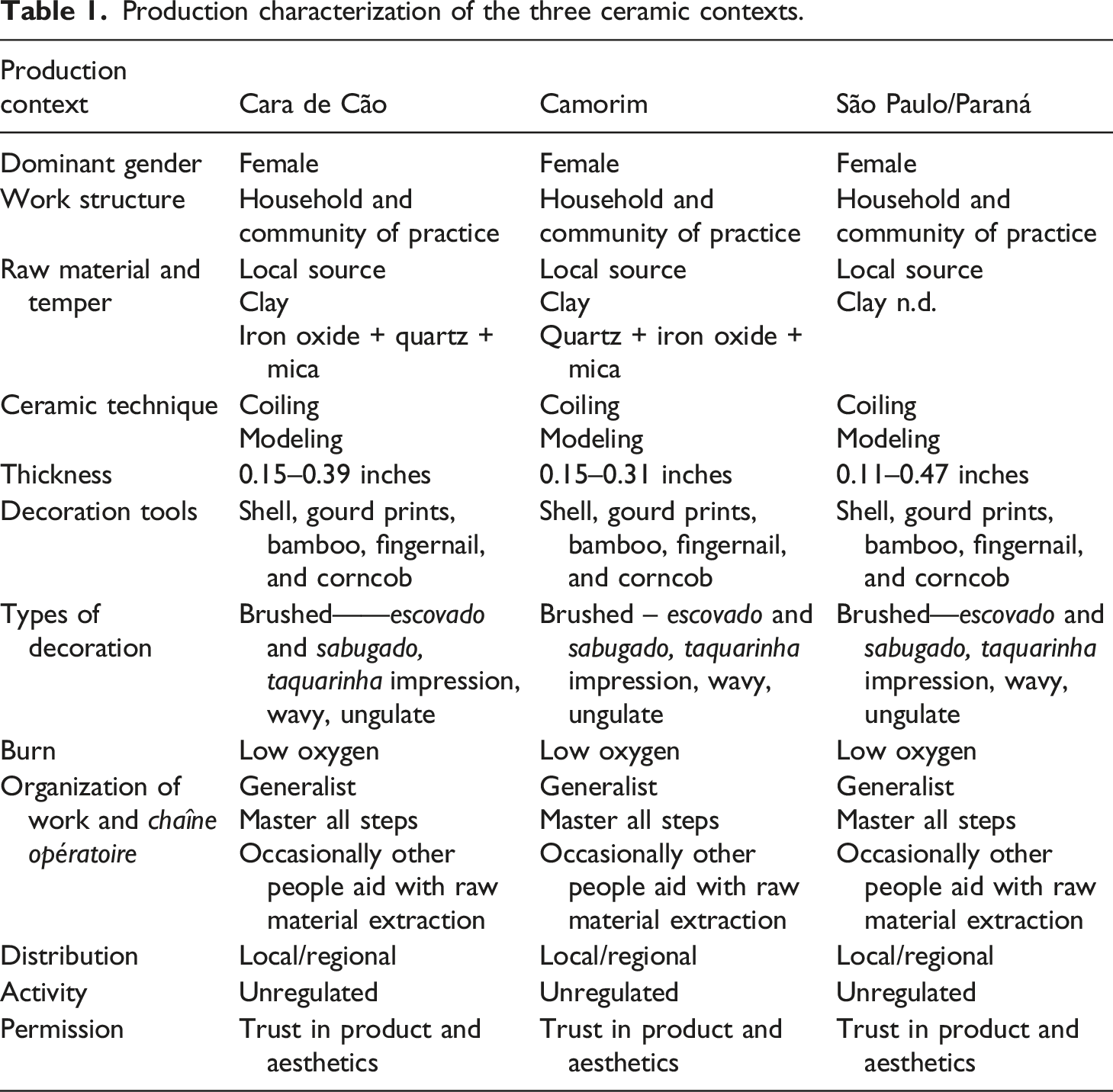
Figure 7 compares three assemblages of Paulistaware: (1) Cara de Cão (16th century); (2) Camorim (16th and 17th centuries); (3) São Paulo and Paraná (16th to 20th centuries). Types of surface treatment: (a, b, c) taquarinha impression; (c) taquarinha impression Apiaí (Magrini, 2019); (d, e) wavy incised lines, lathe; (f) wavy incised lines, sabugado, cordel, Morrinhos site (São Paulo), São Paulo Archaeology Center collection (Munsberg, 2018); (g) cord with taquarinha print; (h) cord with taquarinha print, Antonina (PR); (i, j) corrugated; (k) corrugated (SP) (MAE-USP collection); (l, n, o) sabugado; (m, p) sabugado, Peruíbe (Sallum, 2018); (q) apparent roll; (r) plate superimposed on the neck wall with horizontal and diagonal incised lines (Itapeva) (Araújo, 2011); (s) lathe, horizontal and diagonal incised lines; (t) apparent scroll, diagonal incised lines, Santos (Robhran-González and De Blasis, 2012); (u) apparent roll, diagonal incised lines. The images of Cara de Cão and Camorim columns are from Simões (2020) and Peixoto (2019), respectively.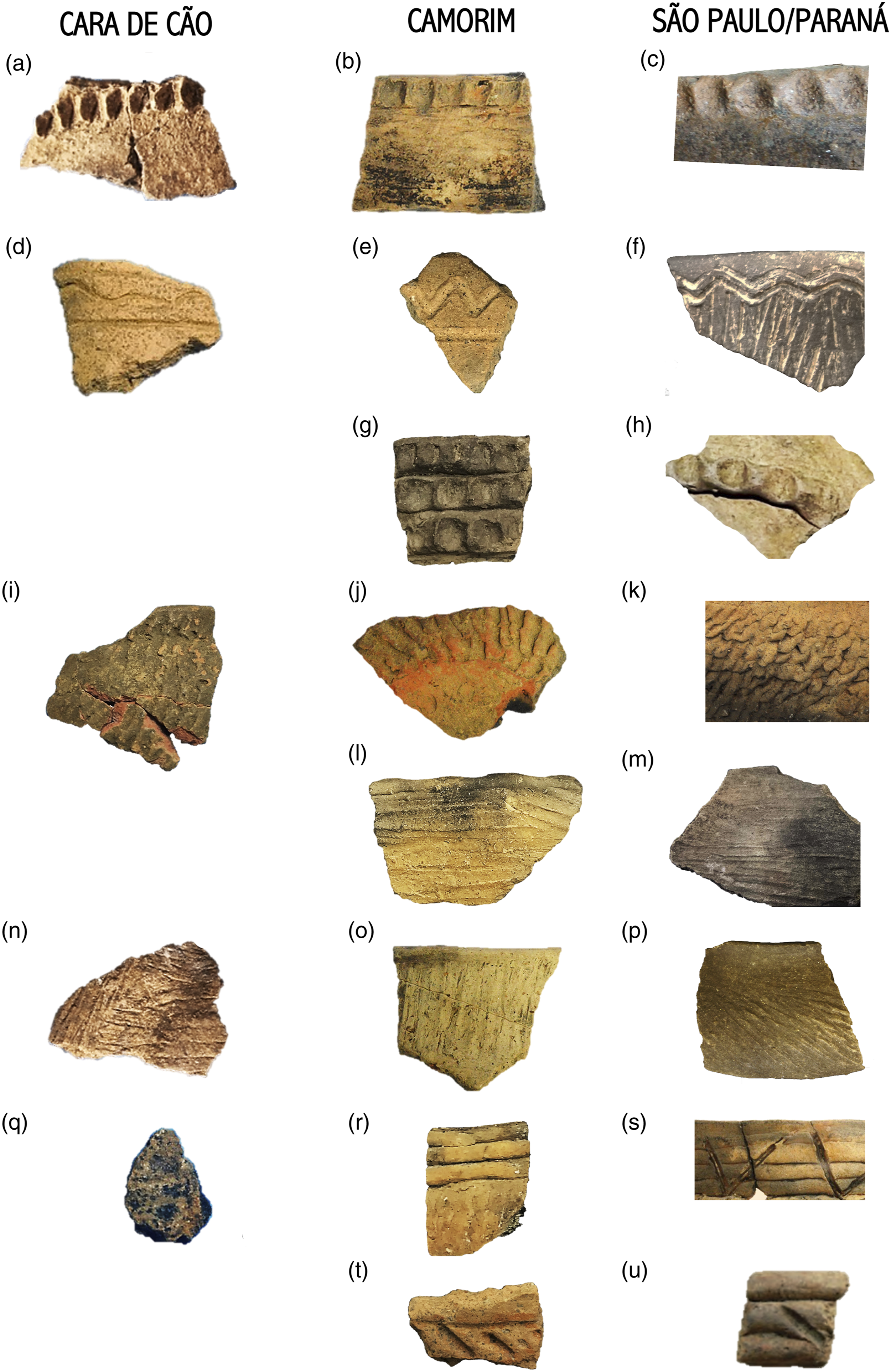
Comparatively, the ceramics of Camorim, Cara de Cão, and many places in São Paulo and Paraná were produced with the same technology, morphologies, and decorations (Figures 7 and 8). The paste was obtained locally at both sites in deposits with similar mineralogical characteristics. At both sites, the manufacturing technique is coiling and modeling (sometimes the base is modeled, from which the first coil departs; sometimes, the whole vessel is modeled, especially when the size is small). The highest frequency at both sites is the direct vertical edge, followed by the inverted rim (Camorim) and everted rim (Cara de Cão). Handles and wings: (a, b) cuipeva marks Peruíbe (Sallum, 2018); (c) handle with red paint; (d) wing with red engobe and shell print, Brotas (Sallum et al., 2018); (e, f) twisted handle; (g, h) handle with taquarinha print; (i) handle with taquarinha print; (j) handle with taquarinha print, São Vicente (MAE-USP collection). The images of Cara de Cão and Camorim columns are from Simões (2020) and Peixoto (2019).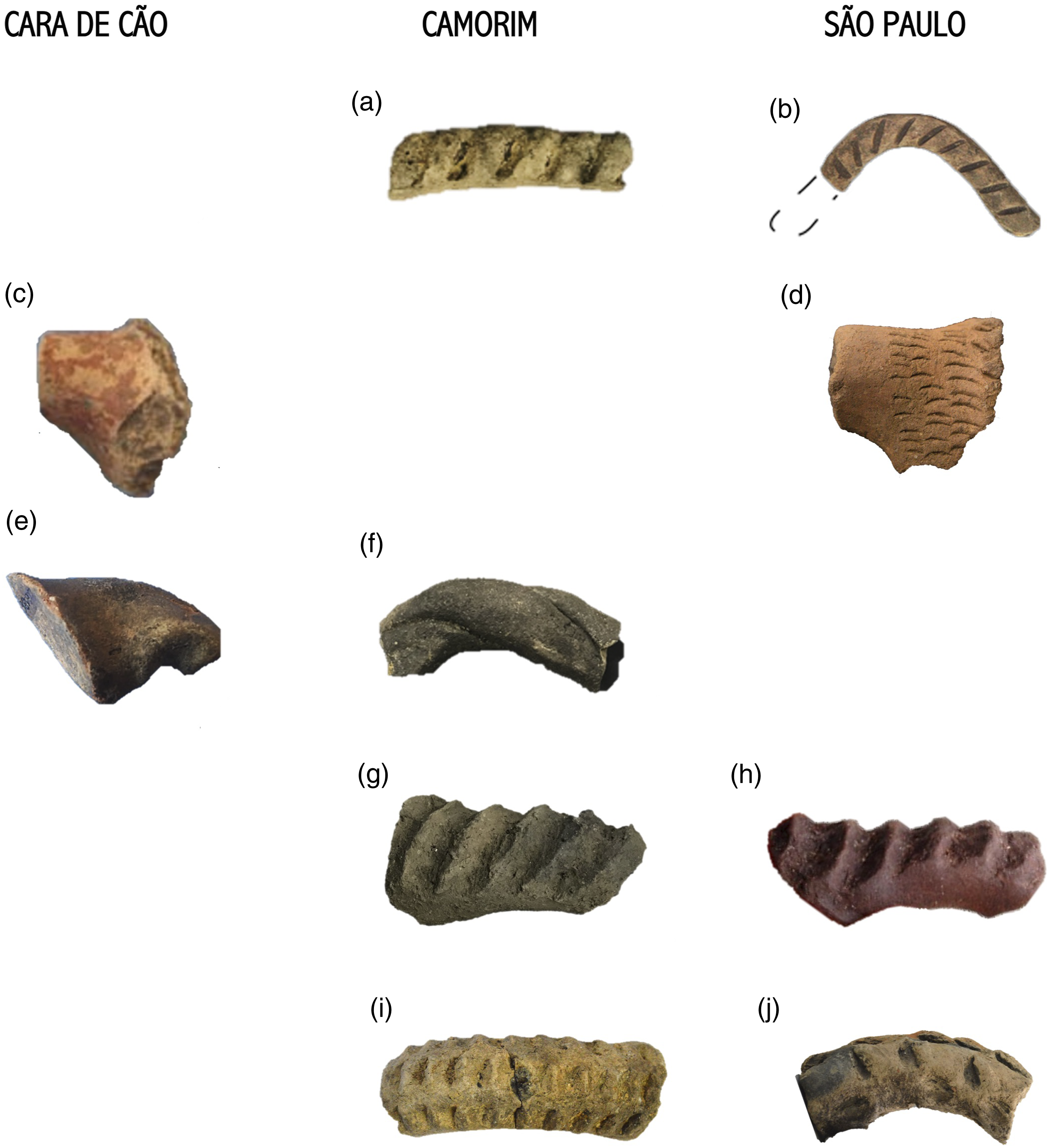
The surface treatment analysis was based on Scheuer (1976) and Sallum (2011). Some pots have the neck or shoulder surface covered with a plate of minimal thickness, sufficient to be decorated with diagonal incised lines over horizontal incised lines (Figure 7(c)), as a re-reading of the ridging present in medieval Portuguese coarse ware (Noelli and Sallum, 2019: 716).
The taquarinha-style stamping described by Scheuer (1976) is a decorative technique applied when the surface is not yet “leather-hard,” and may result in many variations, which will depend on the diameter of the taquarinha cylindrical section, the force applied by the potter, and the angle of application, so the researcher must be careful not to erroneously associate it with other techniques. The same could be said of the shell and gourd prints, which leave fingernail marks. In Brazilian archaeology, the brushed technique known as escovado or sabugado was documented by Scheuer (1976: 36) as a technique produced by a multi-pointed instrument, or with sections of corn cob with a burnt surface for greater rigidity, called scratched and cobbed by the potters of São Paulo. As the cob surface is variable, the treatments result in distinct appearances (Figure 9). Some practices of women potters in São Paulo. (a) pottery kiln; (b, c, e) coiling technique; (d) wavy; (f) corncob.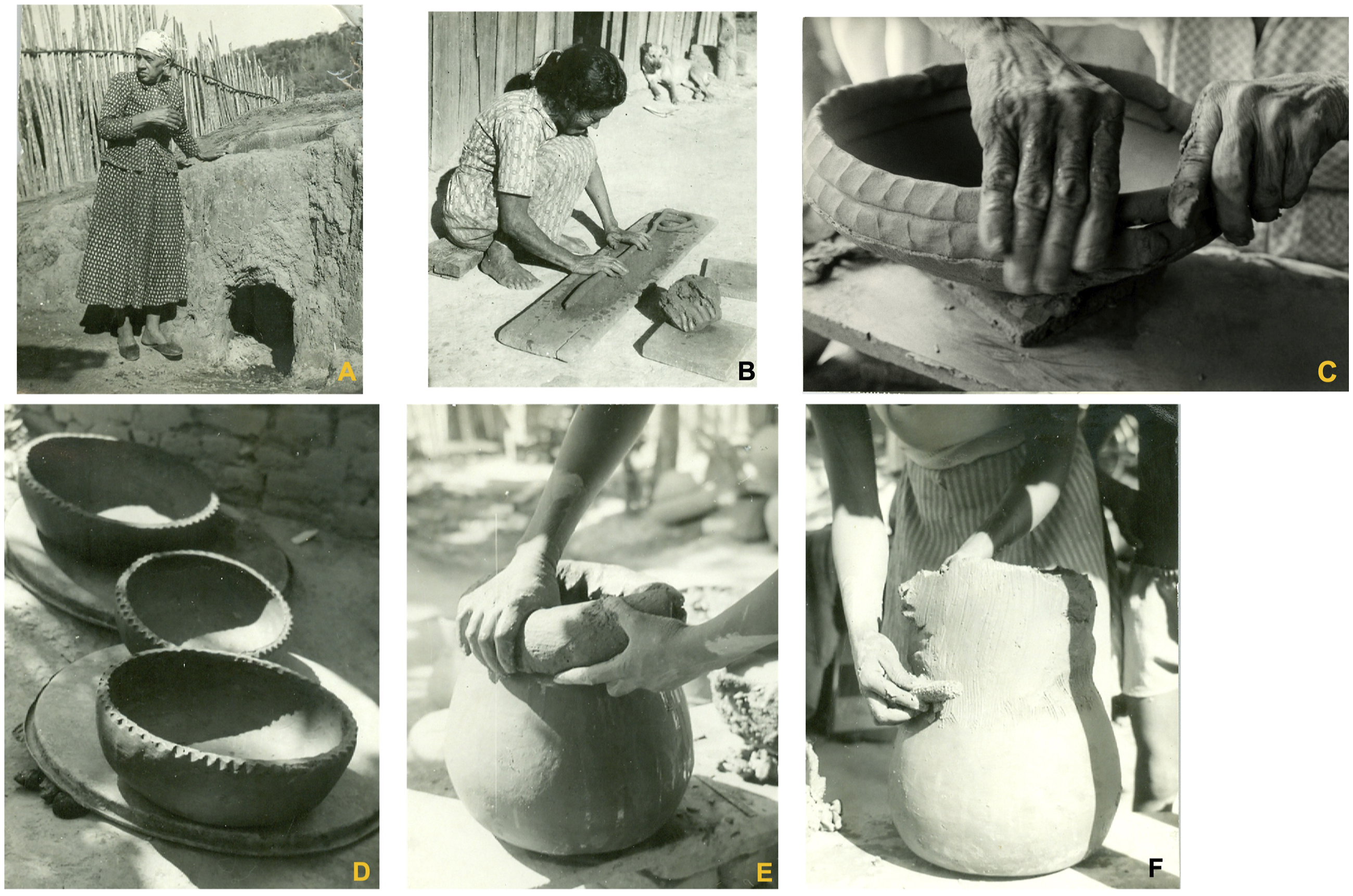
Petrographic analysis has shown that these vessels were produced locally using sediments from the site area (Peixoto, 2019; Simões, 2020). Thus, the ceramics from the Rio de Janeiro sample largely exhibit defining aspects of Paulistaware (Table 1), possessing “paradoxically, a standardization marked by high morphological variability and combinations of surface treatments,” a variability that “resulted from countless combinations of a vast repertoire” transmitted to each new generation of ceramists, standardization being “the variability itself, to such an extent that difference was the norm that made morphologies so similar for so long” (Noelli and Sallum, 2019: 711).
Final considerations
The beginning of the Camorim plantation dates back to the late 16th century, with a history that continues in the present with a community (Cáceres 2014), representative of what has been called the “archaeology of persistence,” with stories of people “intentionally articulating certain relative practices and identities in light of new economies, politics and social realities […] effectively uniting past and present in a dynamic and unbroken trajectory” (Panich et al., 2018: 11–12). It currently houses people who have inherited multiple memories, both of slavery and free labor, with family histories of the life and practices of the past that intersect with their own in the present, constituting a mosaic of resistance, survival, and persistence (Rubertone, 2020) against the accentuated gentrification process the region has been subjected to for decades (Peixoto, 2015).
The traditional knowledge of Camorim resulted from the articulation of Indigenous, African, and European practices and knowledge, shared in the constellation of communities in the Brazilian Southeast. There are numerous correlates of this way of life in the Atlantic Forest, documented over 400 years. Thus, based on the assumption that there was sharing of activities and materialities that connected different times and places, our approach sought to understand ceramic-making and the relationships between working enslaved/captive people that formed the various phases of this community over the centuries. Such knowledge has been passed down through the generations, and its preservation stems from the resilience of the people, especially the women, who have maintained numerous practices for the sustainability of the sugar plantation community, balancing the workload between commercial productivity, food security, and the maintenance of materiality.
Our combination of analytical methods of written, visual, and archaeological sources “that were previously separated by an arbitrary division between prehistoric and historical archaeology” (Schneider et al., 2022) illuminated the perception of the presence of Tupiniquim women and their descendants in the long-term history of São Paulo and Rio de Janeiro. In this way, we find a method to recognize the eligibility of Europeans to be accepted and engage in an alliance or join an Indigenous family through kinship. Such circumstances are decisive in understanding the sociability between Tupiniquim and the Portuguese. However, we agree with Silliman (2020: 51) that “much remains to be done to ensure that colonialism includes the study of colonizers.”
Footnotes
Acknowledgments
The authors would like to thank the editors of the Journal of Social Archaeology, especially Lynn Meskell and the peer reviewers for their suggestions to improve the paper. Special thanks to Steve Silliman for the careful comments. The authors would also like to thank the Department of Anthropology of UMass–Boston, especially Ping-Ann Addo and Daniela Balanzátegui Astolfo Araujo—coordinator of FAPESP Thematic Project 2019/18664-9; Danielle Gomes Samia for the maps and friendship; Carlos Fabião, Tânia Casimiro, and Carolina Guedes; José Luiz de Morais for the useful information in the revision of map 1; and the Camorim community for their support and constant inspiration.
Declaration of conflicting interests
The author(s) declared no potential conflicts of interest with respect to the research, authorship, and/or publication of this article.
Funding
The author(s) disclosed receipt of the following financial support for the research, authorship, and/or publication of this article: Brazilian funds financed this work through FAPESP–São Paulo Research Foundation (grants 2019/17868–0 2019/18664–9 2021/09619-0). Portuguese funds through FCT–Fundação para a Ciência e a Tecnologia (grant 2020.05745.BD).