



Abstract
Old Dongola, with a history reaching back to the 5th century AD, was originally the capital of Makuria, one of the three medieval Nubian kingdoms. After the collapse of Makuria, its capital city saw migratory movements and political changes that resulted in the emergence of new power relations. In the 16th and 17th centuries, the city was the seat of a local ruler subordinate to the Funj Sultanate. New communities that emerged in this setting inhabited the city until the colonial era. This paper examines the ways in which Funj-period households, as fundamental social units in Old Dongola, were mutually constitutive with houses, engaging with their spatiality and materiality through social practices. The authors investigate domestic labour, which was an essential factor in the negotiation of social differences and identities within the household. Differences in building techniques are analysed to compare various ways in which dwellers engaged with houses and to assess their implications for social differentiation within the city.
Introduction
In the 16th and 17th centuries AD, Old Dongola, the capital of one of the kingdoms subjugated to the Funj Sultanate, was densely built up with domestic compounds. This paper undertakes a thorough examination of domestic spaces, building techniques, activity areas and spheres of interaction, and household resources, as well as the lifecycles of houses.
The main objective of this paper is to offer insight into the manner of dwelling practiced by the inhabitants of Old Dongola between the 16th and the 17th century. The paper seeks to demonstrate how ties between people, objects and architecture enhanced or inhibited interpersonal relations, both among members of one household and between neighbouring domestic compounds. Discussed below are the possible uses of houses and their potential roles in the maintenance of intergenerational ties, transfer of knowledge and the building of power relations. The paper also considers ways in which the use of different building techniques and materials, as well as adaptation of space, contributed to the expression and creation of identities and affected social ties.
Old Dongola: the archaeological and historical setting
Old Dongola is located on the right bank of the Nile, halfway between the Third and the Fourth Cataracts, in the territory of modern Sudan (Figure 1). From the 5th to the 14th century, it was the capital of Makuria, one of the Christian Nubian kingdoms, and the seat of a bishopric. After the decline of the kingdom of Makuria, Old Dongola became the centre of a smaller, local polity—the kingdom of Dongola, which, from the 16th to the 19th century, remained under the dominion of the Funj Sultanate of Sennar (for more on the history of Old Dongola see Obłuski and Dzierzbicka, 2021). At that time, it also became a centre of operation of Sufi teachers. Location of Old Dongola (D. Zielińska, S. Maślak), orthophoto of the citadel area, sector 1, with a plan of the excavated area with marked zones 1.1 and 1.6 (A. Chlebowski, A. Wujec/© PCMA UW). 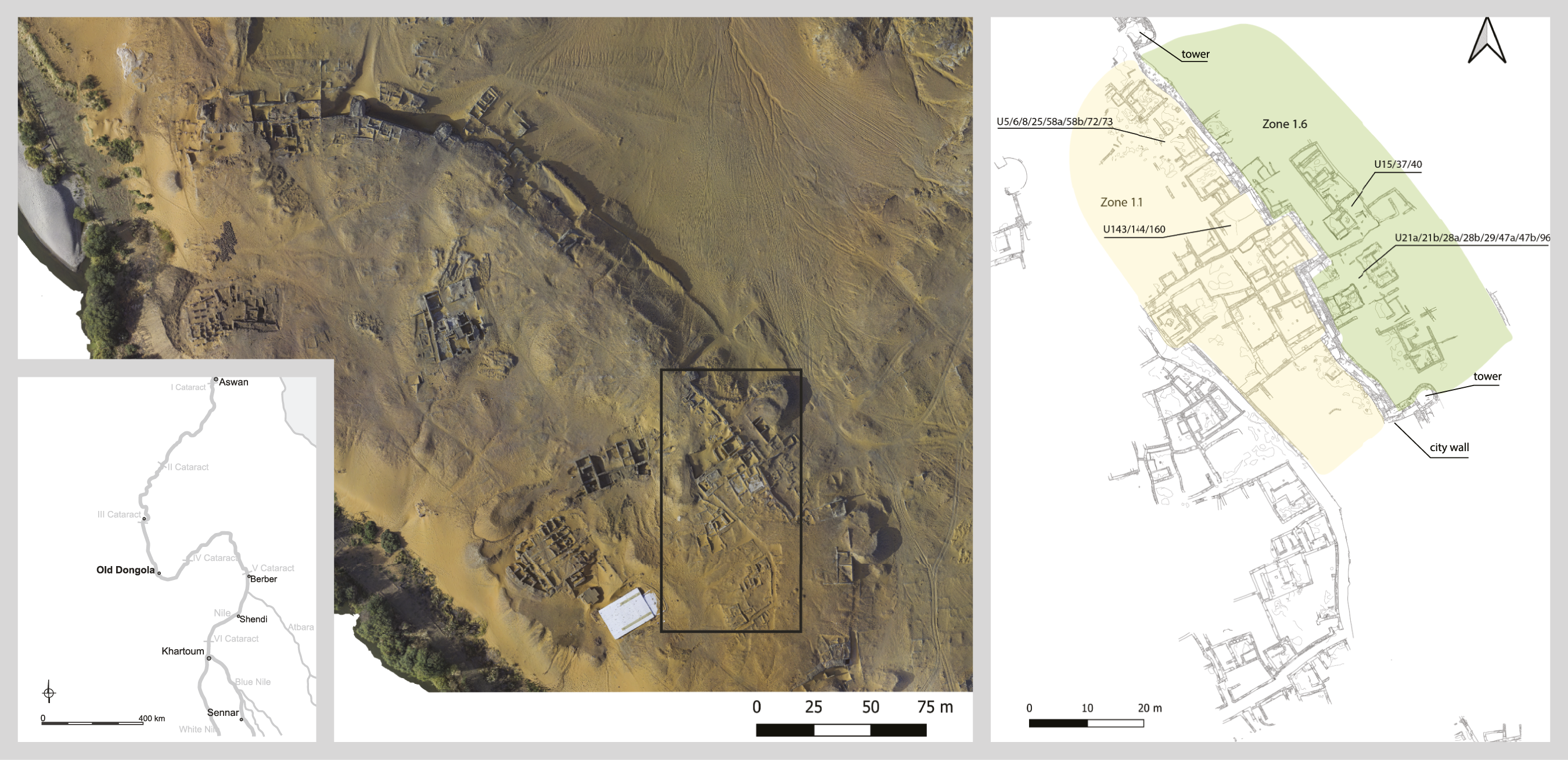
Insight into the city’s life in the latest period of its occupation is possible thanks to research conducted within the framework of the multidisciplinary project “UMMA—Urban Metamorphosis of the community of a Medieval African capital city”, a European Research Council “Starting Grant” programme headed by Artur Obłuski that has been carried out since 2018. The main chronological foci of the project are the time of transformation of Old Dongola from a Christian community into a new socio-political entity and the period that followed, spanning from the 16th to the 19th century.
In recent years, archaeological investigations at Old Dongola have focused on the citadel—the central part of the site surrounded by an enclosure wall (Figure 1). In the Makurian period, it was the location of most of the city’s official buildings, including a royal palace and churches. Subsequently, when the Funj Sultanate came to dominate the Middle Nile Valley, this area became densely occupied with houses built both within and outside the enclosure wall (see Obłuski et al., 2021; Obłuski and Dzierzbicka, forthcoming).
Houses and households
A household, following a definition applied in archaeology since the 1980s, is an activity group engaged in production, consumption and reproduction, as well as co-residence (see Ashmore and Wilk, 1988: 3–4). The latter part of the definition, however, cannot necessarily be applied cross-culturally, because groups living under a common roof may constitute different households in some cultures, while in others a household may dwell in several adjacent buildings (Wilk and Rathje, 1982: 620). Presently, a household is commonly identified as a social unit defined by the activities and behaviour of co-resident groups extending beyond the space of the house (Beaudry, 2015; Bolender and Johnson, 2016: 66). Thus, households may comprise collectives entangled with other social groups from outside the house, e.g., in the forms of agrarian or craft production, rather than units defined by co-residence (see Jervis, 2022). This paper draws on the notion that houses, as well as people inhabiting them and all the objects and relations holding them together, make up heterogenous assemblages (DeLanda, 2016: 20) that mutually constitute one another (Hutson, 2010: 112). Therefore, the materiality of buildings plays a vital part in the creation of the community inhabiting them (Bourdieu, 1973). Houses, apart from bringing the groups that inhabit them into being and vice versa (McGuire, 1992, in Hutson, 2010: 112), carry symbolic meanings that play an important role in the formation of the self (Bourdieu, 1973).
According to Amira Osman, in northern riverain Sudan, the Arabic word bayt does not always refer to a building, but can also relate to a family or wife, or is understood as the women’s domain (Osman, 2004: 95). Moreover, division of space can be religiously inspired along gender lines and expressed in the division of private (harem) and public (diwan) (Elzein, 2004: 62). Such symbolically charged spaces become places of socialisation for certain groups of people, leading to the creation of relational identities. The entanglement of people and houses may be observed in metaphors comparing spaces in a house to female body parts, as expressed, for instance, in funerary practices. Anthropological studies in the modern Hofriyat village in the Shendi District of northern Sudan have shown that miscarried foetuses were buried in a courtyard, identified with a woman’s womb, and newborns by the entrance to a house, which symbolically represents the vagina (Boddy, 1989: 68).
Apart from conceptual associations made by dwellers between the houses and themselves, the everyday sensual perception of the built environment becomes a fundamental component of dwellers’ lives (Ingold, 2004); it becomes ingrained in the sensory memories of humans and non-discursive notions of domestic comfort and of what a house should be like (Dalton, 2017). Furthermore, buildings can mediate social identities between generations of house-dwellers as a result of the participation of children in the bodily experience of their ancestors, by inhabiting the same architectural settings (Meskell and Joyce, 2003: 51). Family memories can also be transferred through re-enacting household rituals and practices (Rowlands, 1993). Especially significant is the process of house construction, which in many cases is seen as an ongoing action, one that requires constant modifications and maintenance of the existing structures and is considered inseparable from dwelling (Ingold, 2000: 172–188).
Houses constitute a backdrop for everyday tasks. As such, they are crucial for the creation of relational identities, as their architectural features mediate, enhance or limit relations between occupants. Houses also serve as “spaces of experience” (Gosselain, 2016) for domestic groups of practice, and give dwellers a sense of identity and belonging that develops together with practical knowledge (see Wendrich, 2013). The activities of such groups involve incorporation of new members of domestic communities (e. g. children and newlywed spouses) through the transfer of knowledge. Such a process related to craft, like grain grinding and basketry making, occurs directly through practice: not verbally, but rather through bodily practice in specific spaces that can be found in all houses, such as those discussed in this paper.
Dwelling in old Dongola
Old Dongola in the Funj period comprised various residential quarters with dwelling compounds 1 overlying previously existing churches and Makurian official buildings (Godlewski, 2018: 26, 69; Obłuski and Dzierzbicka, 2021: 71). Unearthing numerous such compounds has allowed us to investigate the lives of their dwellers and their entanglement with the built environment. Extensive excavations within the Dongolese residential quarters have enabled analyses of the functioning of particular houses, as well as of their diachronic development.
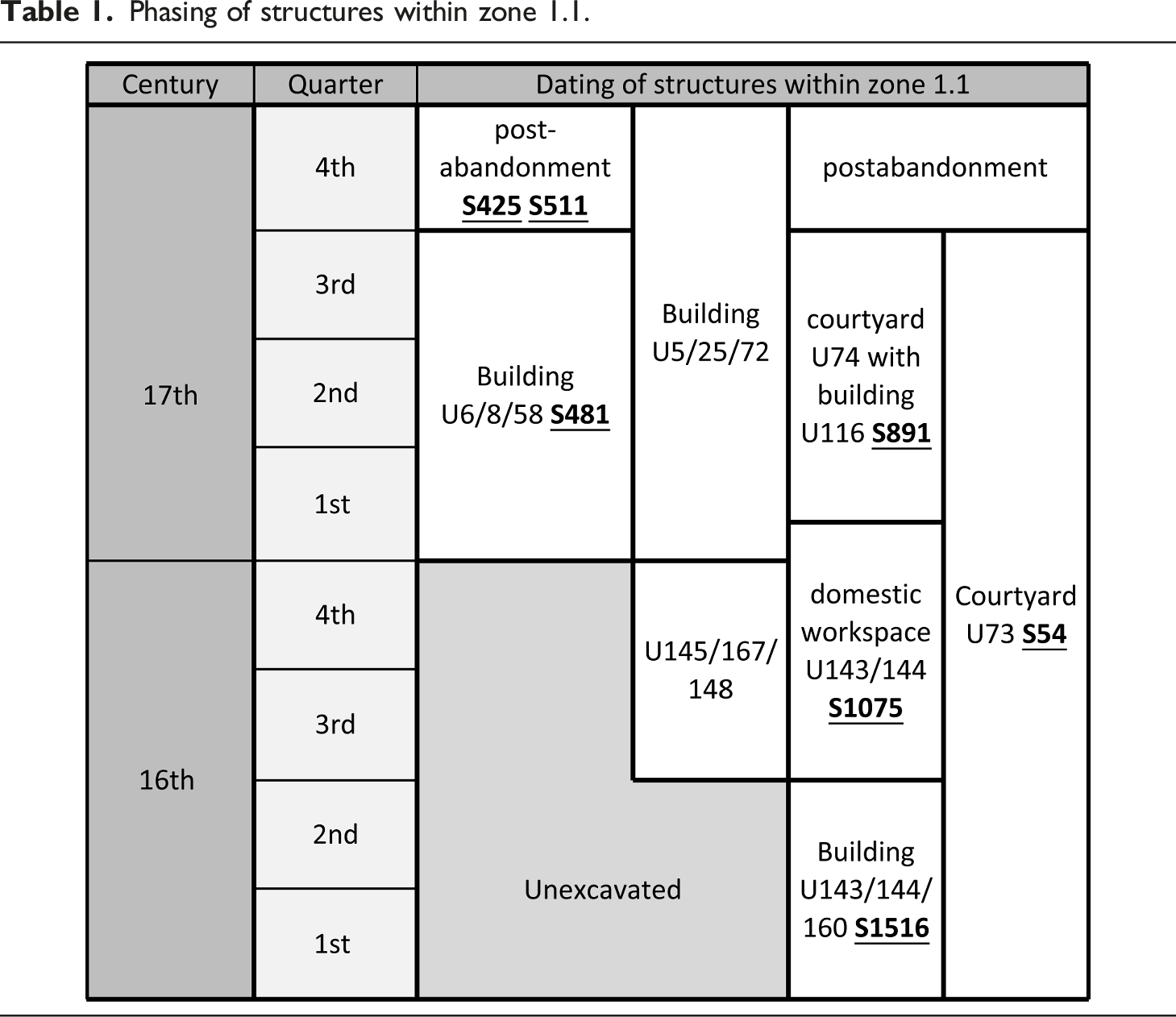
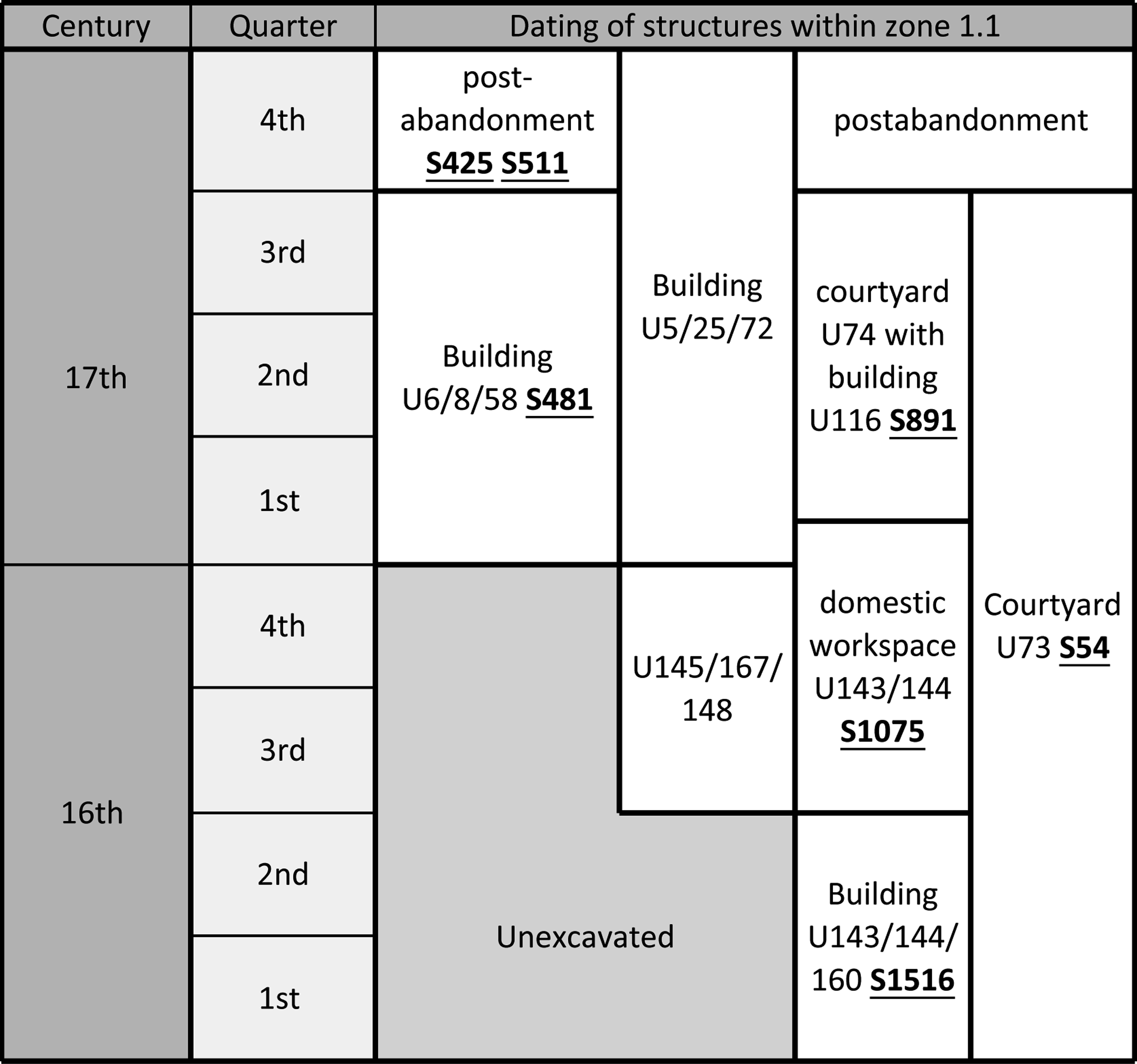
Phasing of structures within zone 1.1.
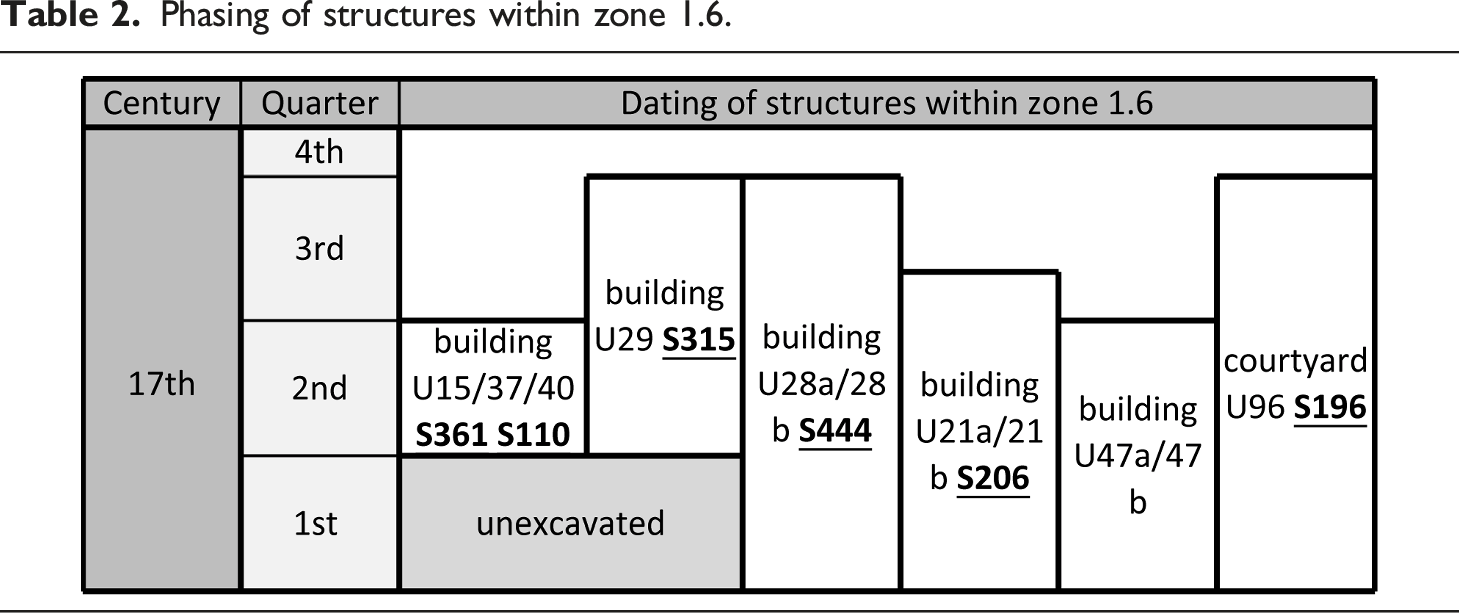
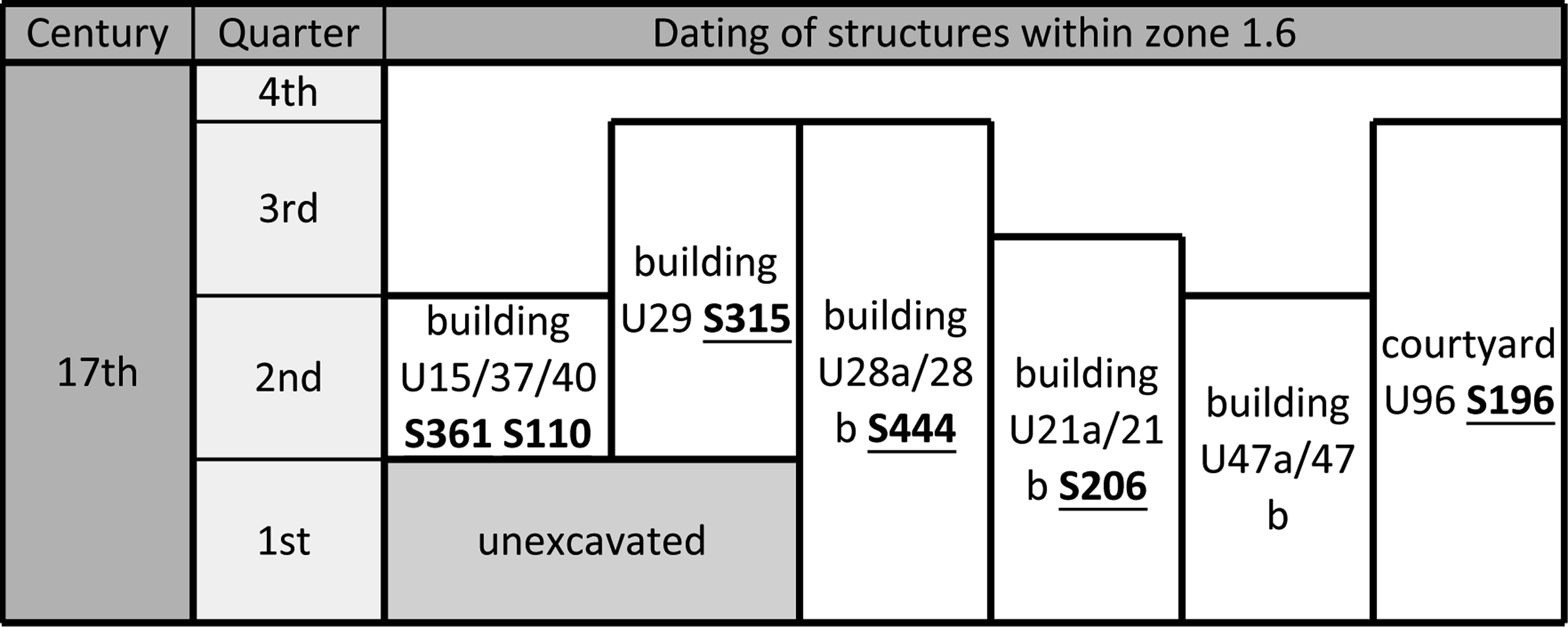
Phasing of structures within zone 1.6.
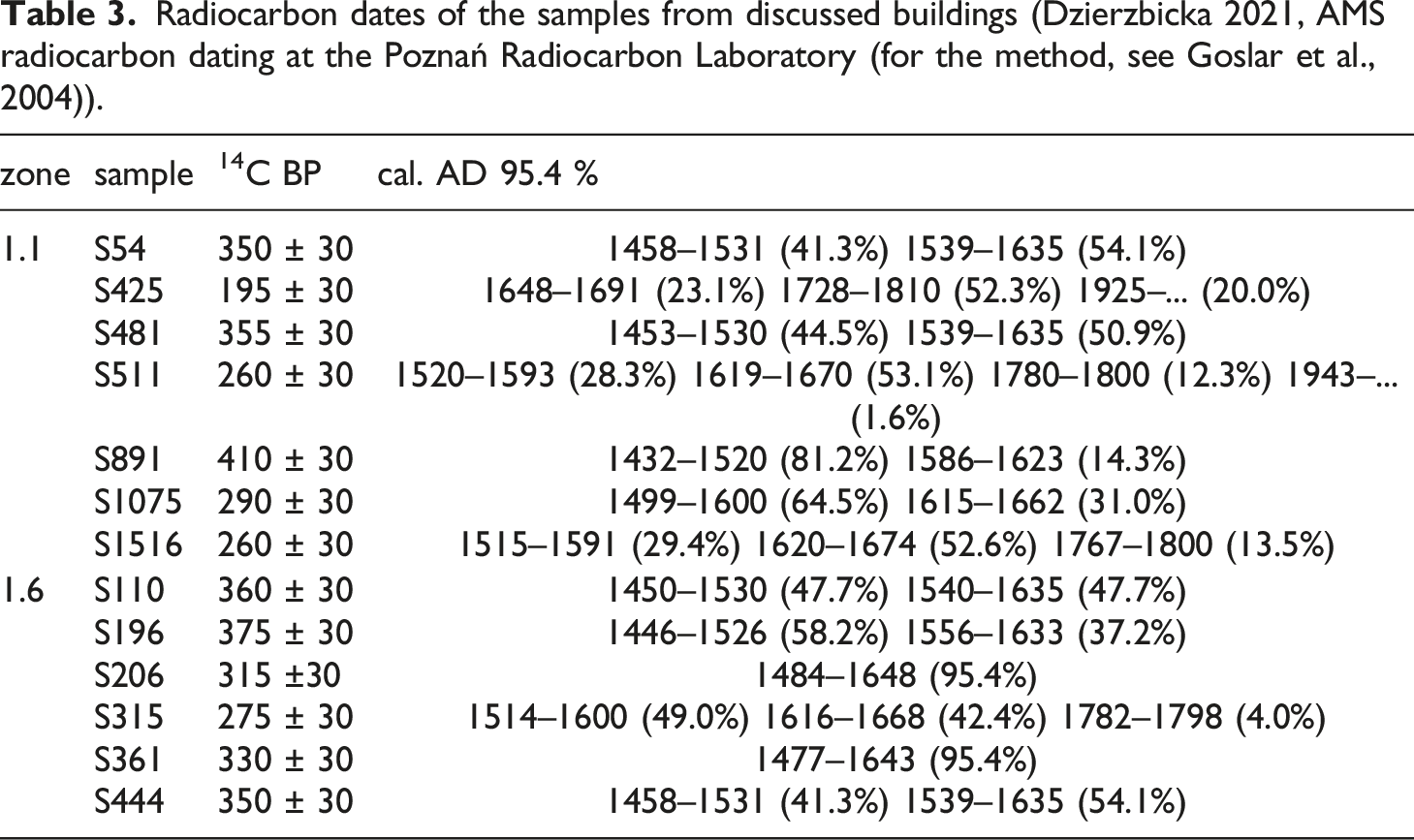
Radiocarbon dates of the samples from discussed buildings (Dzierzbicka 2021, AMS radiocarbon dating at the Poznań Radiocarbon Laboratory (for the method, see Goslar et al., 2004)).
In the analysed compound excavated in zone 1.1, all unearthed buildings shared one large, rectangular courtyard (U73), 2 most likely originally accessible from a street to the south. It seems that throughout its period of occupation, U73 served as an open space used for various household activities including cooking, keeping livestock and storage (Deptuła, forthcoming). The courtyard was in use for at least a hundred years, and during this time it was connected with different buildings, not all functioning at the same time. The earliest was U143/144/160, which later, after some refurbishment (see below), became a domestic workspace of house U145/167, constructed to the south of it. Subsequently, two new buildings were erected: U5/25/72 and U6/8/58a/58b. In the final phase, the only space still used for living was U5/25/72, while relics of other structures in the vicinity were re-used as places of refuse disposal (Table 1).
The excavated area in zone 1.6 comprised two compounds with wattle-and-daub houses grouped around courtyards. Compound U21a/21b/28a/28b/29/47a/47b/96 featured four dwellings that shared a common courtyard, U96. The other complex, U15/37/40, was located north of the latter. It comprised a large courtyard, U40, a centrally located house, U37, accessible from the courtyard, and a domestic workspace, U15 (Table 2).
Construction and organisation of a household
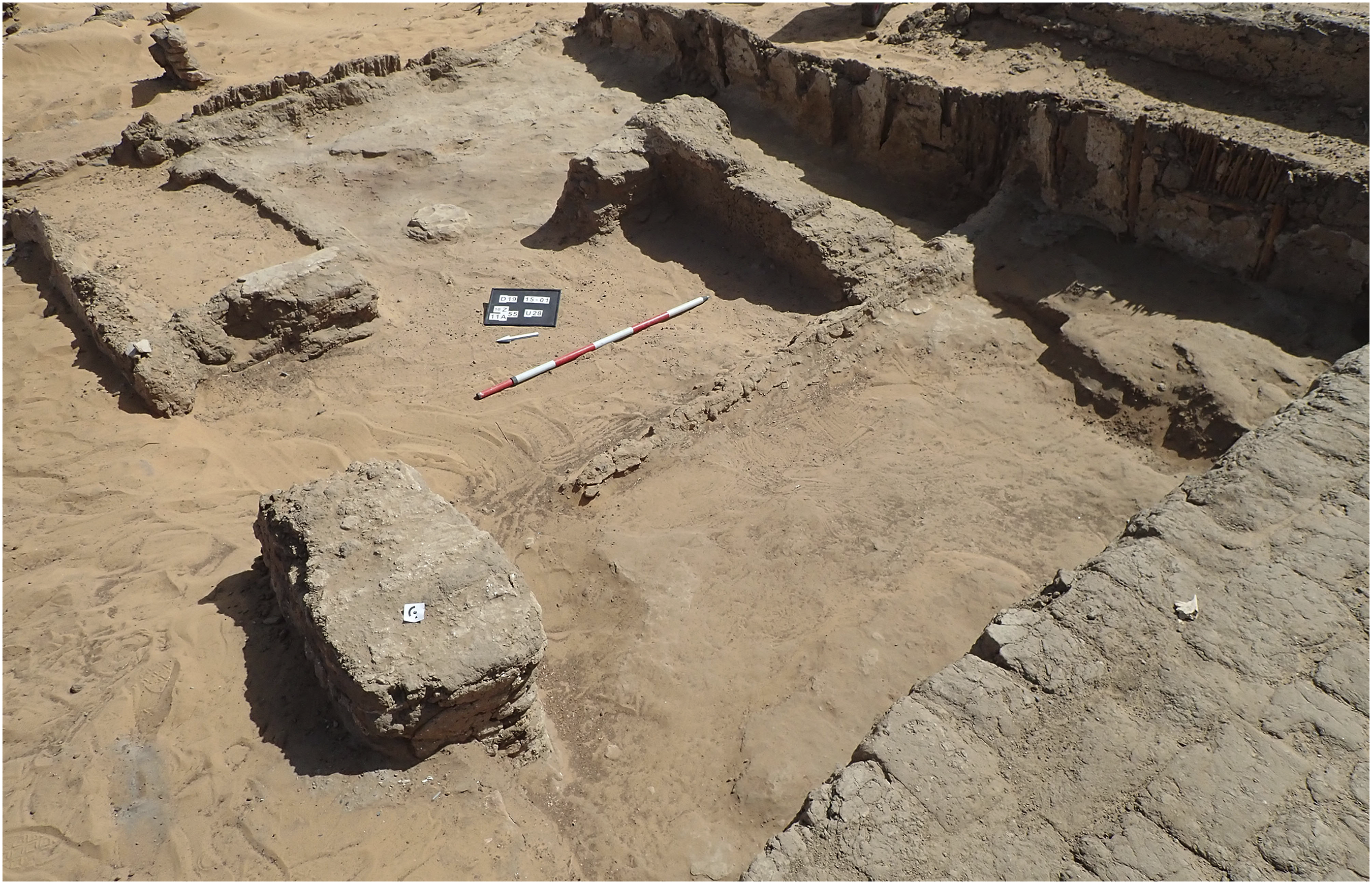
Dongolese houses were built using two different techniques, both relying on freely available materials. Without a doubt the most popular building material was sun-dried mud brick (Figure 2), but during excavation a new type of construction, previously unrecognised in this area, was recorded (Wyżgoł and Deptuła, 2020). This building technique uses twigs and mud as the main building material and is known as wattle-and-daub (Figure 3). The main difference between buildings constructed using the two techniques is their size. On average, houses made of mud brick measure circa 38 m2 in area, with some reaching up to 135 m2 (Obłuski et al., 2021). Wattle-and-daub houses measure on average circa 21 m2. Initially, the wattle-and-daub houses appeared to be concentrated in a single quarter outside the city walls (Wyżgoł and Deptuła, 2020). Further evidence showed, however, that they occurred also within the walled area (Obłuski and Dzierzbicka, forthcoming). Aerial view of building U58a/58b (A. Chlebowski/© PCMA UW). Aerial view of building U28a/28b (A. Chlebowski/© PCMA UW).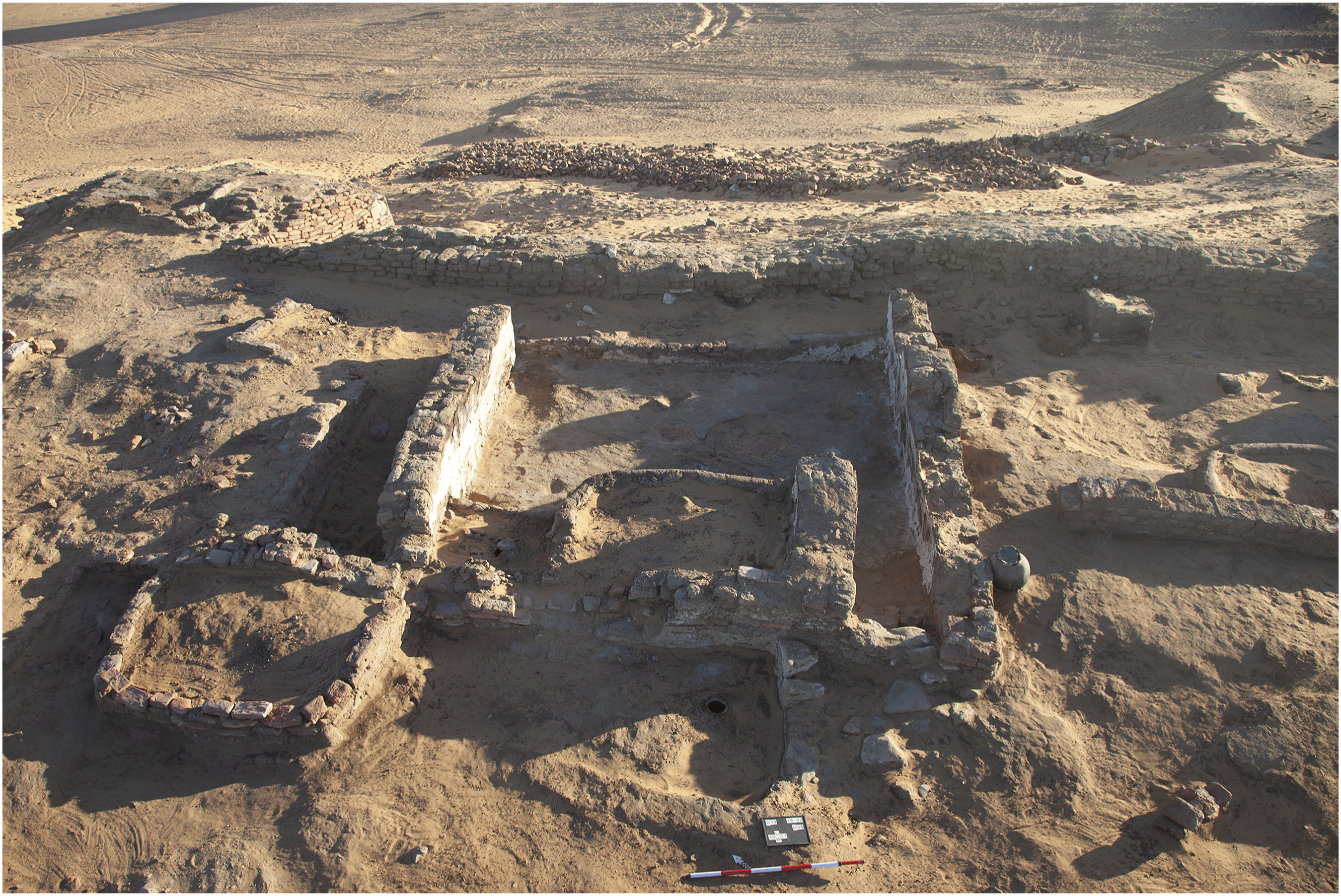
All the excavated houses, except one, were single-story and had flat roofs supported on a wooden framework covered with reeds, palm leaves and mud (Obłuski et al., 2021: 240).
The unearthed dwellings, although constructed via two distinct building techniques and exhibiting variability in size, did not differ significantly in terms of layout. A typical house comprised two interconnected rooms: a large one in the front and a long and narrow space in the back (Figure 2, Figure 5). Worthy of note is the lack of narrow back rooms in wattle-and-daub dwellings (Figure 3, Figure 6). However, there are also some departures from this pattern in the case of sun-dried brick houses (e.g., U6 and U5 both lack a narrow storage room (Wyżgoł, 2021b: 46; Deptuła, 2021a: 50)).
The main room was usually furnished with several benches, with the largest one always located next to the main entrance and screened off with a stub-wall. Another recurring element was an oblong bench located along one of the walls and used as a base for storage bins. The purpose of such benches was identified thanks to several examples bearing fragments of storage vessels or negatives thereof. Additional, smaller benches were often added to the largest one or next to other walls. The interiors also featured benches with embedded stoves, as in U6 (Wyżgoł, 2021b: 46). Dwellings with similar layouts are also known from other sites in the Middle Nile Valley, especially in its northern part: Gergetti Island (Vila, 1977: 32–37), Kayendi (Vila, 1978: 81–85), Soumbout (Vila, 1978: 29–30) and Jebel Kadamusa (Osman et al., 2012: 187–194), and were still widespread in northern Sudan in the 20th century (Dirar, 1993: 389).
In both types of architecture, the same manner of interior surface finishing was observed. Typically, floors in the main domestic spaces were made of tamped, wet-laid, smoothed mud, and they were whitewashed with white desert clay. Also, all walls within such rooms were plastered and whitewashed. By contrast, walls of courtyards, storage rooms and spaces used for food preparation lacked whitewash and the floors were composed of a tamped mud with organic matter.
In rooms with plastered floors, consecutive floor layers were very often observed lying directly atop one another, with only small anthropogenic layers in between, suggesting that interiors were regularly cleaned. There is no difference in the quality of wall and floor finishes applied to brick and wattle-and-daub houses, but variability can be observed in the number of layers applied on the walls, which in the case of wattle-and-daub houses was significantly less. Such variation is predicated on the shorter life cycle of these buildings, as they were made of less durable materials, which allowed for only limited refurbishment (Obłuski et al., 2021: 238).
All houses discovered in Old Dongola were similar in terms of elementary spatial and functional organisation. A division into “clean” and “dirty” spaces seems to be the basic symbolic criterion of spatial division. It is indicated by the fact that only the main rooms were whitewashed and apparently regularly swept, while occupation layers composed largely of rubbish accumulated in storage rooms and courtyards (Wyżgoł, 2021b: 41–50, Wyżgoł, 2021c: 187–193).
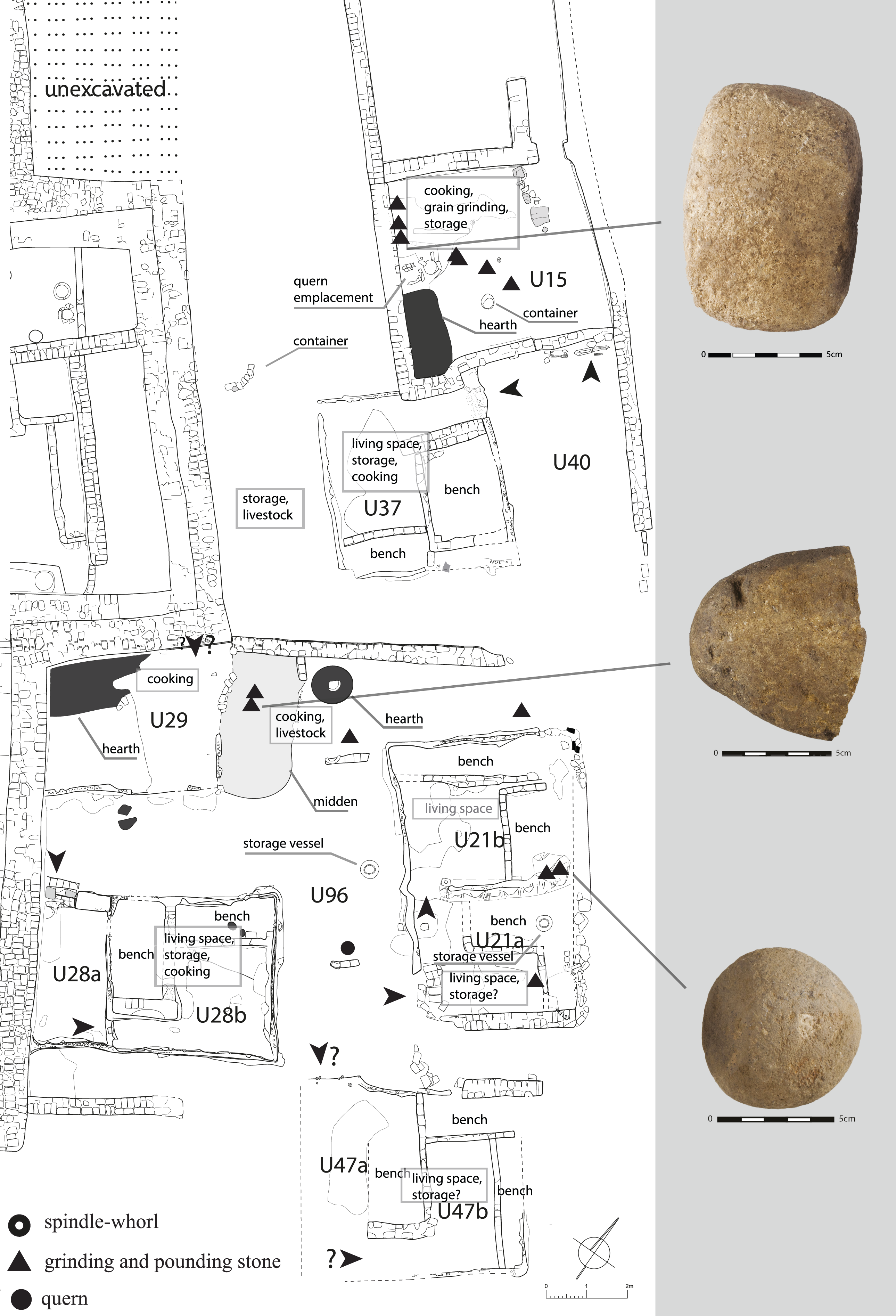
Apart from the above discussed spatial and conceptual dichotomy, certain rooms and open spaces could be associated with particular functions. The largest, main room must have been a multifunctional space, where most daily activities would have been performed (Figure 2, Figure 3, Figure 5, Figure 6). It is impossible to trace them all, since floors were apparently often cleaned and re-plastered. In most houses, this room was furnished with an oblong bench serving as a stand for storage bins, as is indicated by relics or negatives of such vessels discovered on the upper surface in some examples (Wyżgoł, 2021c: 187–193). The bins were most likely intended for storing grain, which is suggested by the presence of round openings in their bottom parts (Godlewski, 2018: 176). Activities invisible in the archaeological record, such as sleeping, resting and recreation, can be connected with the large bench, screened off from the main entrance and thus forming a private space out of public view (Obłuski et al., 2021: 240).
The long and narrow room located in the back of the house (Figure 2, Figure 5), and accessible only from the main room, was evidently used for storage. There were usually no special equipment or fixtures present, and in the accumulated floor layers fragments of cooking vessels, stone tools and basketry predominated, along with an abundant admixture of organic material (Wyżgoł, 2021b: 41–50; Wyżgoł, 2021c: 187–193; De Lellis et al., 2021: 86–95).
Another often recurring space preceded the main room and formed a kind of vestibule (Obłuski et al., 2021: 242). It can be assumed that the main function of the smallest and unfurnished ones, like in U28b (Figure 6) (Deptuła, 2021b: 203), was to ensure privacy for the larger rooms they preceded. More elaborate examples were equipped with benches and stoves (U72) (Figure 5) (Deptuła, 2021a: 54).
In all recorded houses, courtyards played an important role as food processing spaces, as attested by numerous stone grinders and querns both embedded in mud emplacements and/or loose. In addition, storage vessels and hearths were found in most courtyards, and sorghum and wheat grains were observed in botanical samples from occupation deposits (De Lellis et al., 2021: 95; Maślak and Deptuła, 2021: 136; Deptuła, 2021b: 208). Other household activities were scarcely attested; e.g., spinning was indicated only by isolated finds of spindle-whorls. Therefore, courtyards most likely served as the main domestic workspaces. These sometimes functioned alongside separate rooms in houses, such as U8 (Wyżgoł, 2021b: 45) and U15 (Wyżgoł, 2021d: 193), which were also found to contain querns, clay bins and hearths (Figure 5, Figure 6).
Life cycle of a house
The longest sequence of use could be observed for house U143/144/160 in zone 1.1. It was possible to investigate its functioning from its construction through abandonment and resettlement, until the final abandonment and transformation of the whole area into a rubbish dump. The house was built directly atop an earlier structure dated to the late Makurian period (Deptuła, forthcoming).
In the earliest phase (Phase 1) (Figure 4), the house had a layout typical for Funj-period dwellings in northern riverain Sudan (cf. above; for more information see Obłuski et al., 2021). It comprised two interconnected rooms (U144 and U143) and a small, fenced courtyard in the front (U160), accessible from a larger courtyard (U73) shared with other compounds (U6/8/58a/58b/73 and others). U143 was a large, rectangular room furnished with two benches, while U144 was long, narrow and devoid of furnishings. The fenced courtyard was trapezoidal in shape and most probably not covered with a roof. Lifecycle of the house compound 143/144/160 located within zone 1.1 (A. Wujec /© PCMA UW).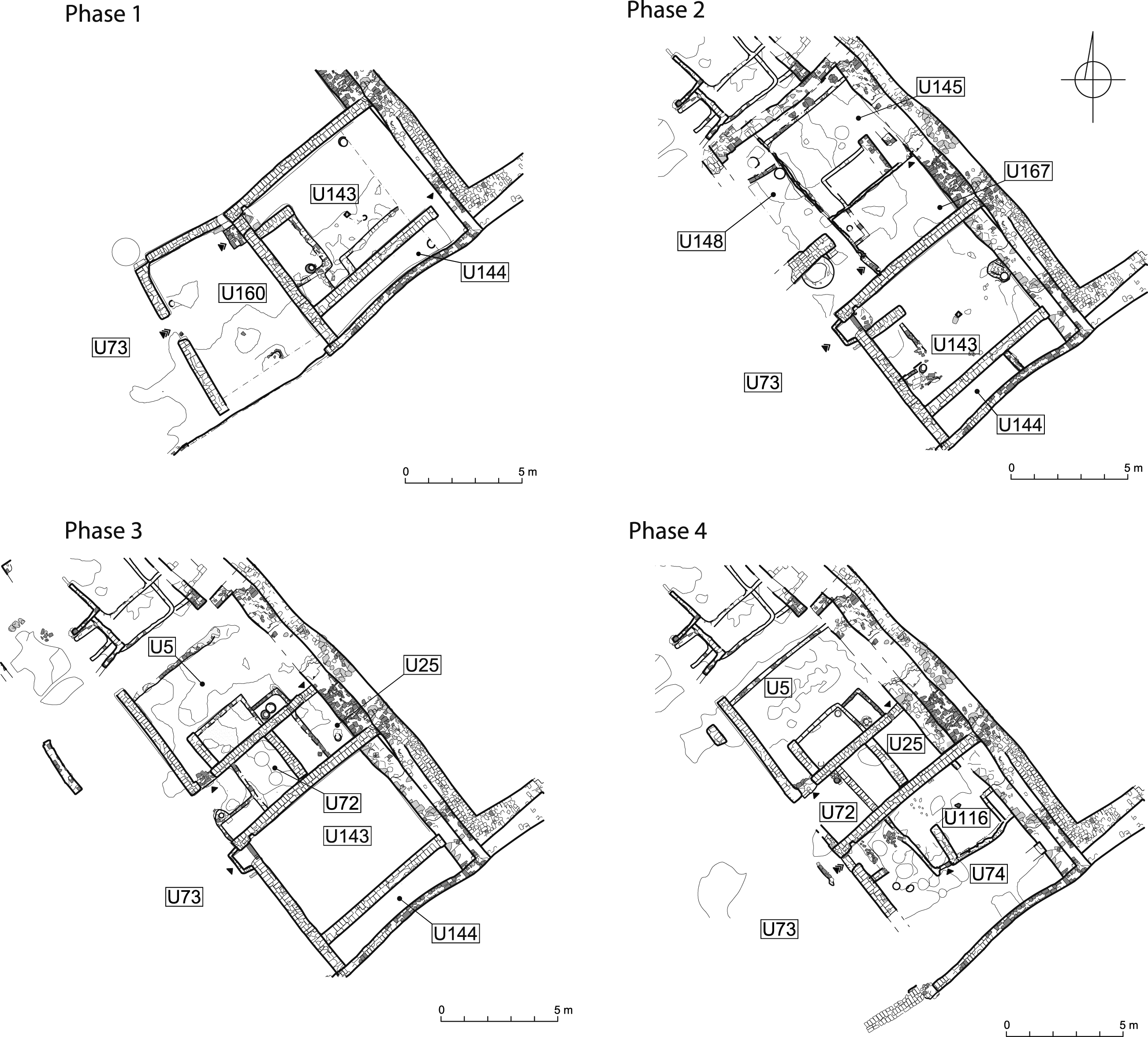
Later (Figure 4), when courtyard/vestibule U160 was no longer in use, a major refurbishment took place in U143/144 (Phase 2). A new wall was added along the eastern wall of the house, blocking the original doorway between U143 and U144 and making the latter room accessible (if at all) only from above. In this phase, the floor level rose significantly, and a new bench was constructed directly atop the previous one, repeating its shape and size. The same tendency to repeat the arrangement of benches was also visible in other investigated houses (viz. in room U5 in house U5/25/72). The arrangement of the interior was, however, not definite, as some houses bore traces of several rearrangements of benches, the best example being house U6, where the layout was changed at least six times by the addition and enlargement of benches. Beside architectural alterations, it was also possible to observe changes in the function of U143, which became a domestic workspace and cooking area connected with house U145/167, located in the vicinity. In this phase, U143 was no longer a space intended for storage and sleeping, like other main rooms in Dongolese houses, but it constituted a domestic workspace definitely connected with cooking, as is indicated by several accumulations of ash with firedogs and cooking pots in situ. Spinning also possibly took place inside the room, as two spindle whorls and a bundle of yellow textile were discovered. The end of house U143/144 was marked by a fire, which caused the wooden roof to collapse, sealing intact deposits left behind by the dwellers (Deptuła, forthcoming).
After the fire, the space of house U143/144 was resettled. Initially, only a new layer of flooring was laid without any traces of specific activity (Phase 3), but soon the whole space entirely changed its function (Phase 4). The inhabitants adapted the area delimited by the walls of the house as a place to build a new dwelling consisting of a courtyard and a small wattle-and-daub building (U116) intended for sleeping (similar in layout to the main rooms in sun-dried brick houses) (Figure 4). All other activities took place outside, as is indicated by a multipart kitchen area located in the southwest corner of the courtyard, comprising at least seven successive hearths. After abandonment, the area was used as a rubbish dump by dwellers of surrounding houses; there are no traces of later occupation (Deptuła, forthcoming).
Fewer changes could be observed in the area of wattle-and-daub houses outside the city wall, most probably due to their shorter lifespans, but even there abandoned buildings were re-used either as domestic workspaces (U15) or as places of refuse disposal (U27 or U37) (see Wyżgoł and Deptuła, 2020).
Sudanese houses and domestic work in written sources and ethnography
Ethnohistoric sources from the 18th and 19th century provide scarce descriptions of household and spatial organisation in the part of the Middle Nile Valley controlled by the Funj Sultanate. Some of them, however, shed light on certain aspects of domestic life by indicating who carried out various household tasks, especially food processing. They suggest that all chores connected with food preparation were performed by women (Bruce, 1805: 514; Burckhardt, 1822: 45–46; Hoskins 1835: 193). This corresponds well with modern ethnographic accounts from Sudan, where kitchen areas are considered as female spaces and food preparation a female activity (Dirar, 1993: 186). Also, the kitchen was (and continues to be) the place where married women performed one of their most intimate activities—the smoke bath (dukhan) (Kurcz, 2007: 133; Welsh, 2013: 11; Bradley, 1992: 51). Accounts of other tasks are rather incidental and do not describe these activities as gender-specific.
According to ethnographic data, houses in the territory of Sudan are often organised by sets of oppositions, although the gendered separation of houses into private (women’s) and public (men’s) spaces common throughout the Muslim world may not be fully accurate for Sudan (Wyżgoł, 2021a: 107). The division of space can also be seen in the presence of separate rooms for entertaining male guests of the house, and both areas, private and public, often have separate entrances to allow women to circulate freely. The latter pattern is attested in ethnographic studies from various locations: Kenuz (El Hakim, 2008: Figures 30 and 32), the village of El Ghaddar adjacent to Old Dongola (Kurcz, 2007: 87), the village of Buuri al Lamaab near Khartoum (Barclay, 1964: 4), Hofyiat village in the Shendi area (Boddy, 1989: 71) and Wadi Halfa (Wenzel, 1972: 21). This kind of division is also associated with the location of guestrooms accessed from public courtyards—diwan, saloon or mandara, intended exclusively for male visitors (Wenzel, 1972: 21; El Hakim, 2008: 13; Dalton 2017: 367). Gender division of sleeping spaces is unattested in written sources concerning the Funj Sultanate. Even though a spatial separation of genders is clear from the accounts of Burckhardt, it generally does not pertain to sleeping. He described houses in Shendi and Berber, but in his account rooms could be divided into public and private, not male and female. Furthermore, he mentioned family and guest rooms but never separate rooms for men and women (Burckhardt, 1822: 212). According to travellers (Burckhardt, 1822: 214; Hoskins, 1835: 256), sleeping was also one of the activities that was moved outside into shared courtyards in hot seasons. In modern northern riverain Sudanese houses, the division of household space into rooms used exclusively by women or men does occur, along with separate gendered entrances (Osman, 2004: 95–97; Barclay, 1964: 4; Boddy, 1989: 71). Although such division was also observed among the reed dwellings of inhabitants of Ottoman Nubia in the 19th century (Burckhardt, 1822: 141), the houses in Old Dongola show no such features. Another division, into clean and dirty courtyards, the latter connected with domestic work and keeping animals, was observed in 19th-century Berber (Burckhardt, 1822: 212) and in modern houses in Kenuz (El Hakim, 2008: 12).
Domestic work, according to some ethnographic studies in modern Sudan, was performed solely by women (Barclay, 1964: 13), especially when it was connected with food preparation (Dirar, 1993: 186; Kurcz, 2007: 92). Conversely, men’s tasks were associated with activities performed outside the house, especially with agriculture (Osman, 2004: 95; Barclay 1964: 13–16). Consequently, in northern riverain Sudan, domestic space is for the most part seen as the domain of women, and the word bayt, with its basic meaning of “house”, is also often used as a term for the women’s domain within a house (Osman, 2004: 95). Even though women also have responsibilities outside the house, like provisioning the household with water and fodder for animals, their primary tasks relate to food preparation for the family (Weschenfelder, 2006: 85; Barclay, 1964: 13). Exceptions to this general pattern cannot be excluded: an anecdote recalled by Hoskins mentions a man grinding grain—doing work which would have normally been his “lazy wife’s” task (Hoskins, 1835: 193). Also, household slaves (for a discussion of slavery in the Funj Sultanate, see Nugud et al., 2013: 37–59) may have transcended gender norms, performing tasks like milling grain regardless of their gender (Krump, 2001: 243), or specific slave or ex-slave work, such as brewing (Burckhardt 1822: 214).
Discussion
Spheres of interaction, formation of identities and transfer of knowledge
Spaces for tasks vital for the subsistence of a household, namely food preparation, from grain grinding to baking, are attested in the majority of the investigated dwelling compounds. According to available written accounts, they were performed mostly by women. The association of domestic work, especially cooking, with women is also clear from more recent ethnographic data (see above). Nevertheless, inferring labour division from simple ethnographic analogies is prone to subjectivity (see Wylie, 1985) and requires historical contextualisation. As already suggested (Wyżgoł, 2021a: 108), in the case of the Middle Nile Valley, a direct historical approach is a valid method of corroborating such interpretations. Cultural continuity in this area is observed across language, technologies of food production and religion (Hasan, 1973: 142–145; Shinnie and Shinnie, 1978: 107; Adams, 1986; Ceccarelli-Morolli, 1998: 67–72; Kurcz, 2007: 60– 61; Wodzińska, 2015: 243–244). Cultural and ethnic changes since the Funj period have been very limited until recently and mostly connected with political change, including the conquest of Nubia by Mohammed Ali and the subsequent colonial domination of the region by the British Empire (1898–1956). The Islamic context (see Insoll, 1999: 60–92) of Funj-period Old Dongola and the application of the direct historical approach (see Wyżgoł 2021a) in this study make it possible to associate food-processing areas, mainly courtyards and rooms equipped with hearths and querns, with women.
Examples of spaces intended for food processing are U8 and U15, separate rooms connected directly with a courtyard (Figure 5, Figure 6). The lack of doors and proximity to the courtyards frequented by house dwellers and guests alike enabled interactions similar to those recorded by Burckhardt, when women participated in conversation with men and their guests while preparing bread (Burckhardt, 1822: 46). Similarly, room U143 was used by the dwellers of the wattle-and-daub house U145/167 (Figure 4) and very likely by a larger group of women, judging by the size of the space in comparison to the total area of the house. The four querns and four hearths located there also suggest that a group of women, possibly from adjacent houses, worked in this space at the same time. However, the area where the other houses were presumably located was not preserved due to erosion. Other activities attested in room U143 were spinning and textile production. Furthermore, the lifecycles of the compounds within the city walls show that the inhabitants of house compounds used spaces in older, abandoned houses. This was the case of house U145/167, whose inhabitants used the area of abandoned house U143/144/160 as a domestic workspace (Figure 4). Likewise, the area of house U58a/58b was used by the inhabitants of house U5/25/72 (Figure 5). Embedded querns and hearths indicate that certain spaces fixed the work of the inhabitants in one location, determining workspaces, movement of people and areas of interactions. Nevertheless, house dwellers also actively adapted spaces, regardless of their form, as in the case of the abandoned houses. Therefore, the organisation of space showed a certain fluidity and did not necessarily follow the predetermined architectural forms, but in several instances responded to the current needs of the house inhabitants. Activity areas within the house compound U5/6/8/25/58a/58b/72/73/143 (A. Wujec/© PCMA UW). Activity areas within the house compounds U21a/21b/28a/28b/29/47a/47b/96 and U15/37/40 (A. Wujec/© PCMA UW).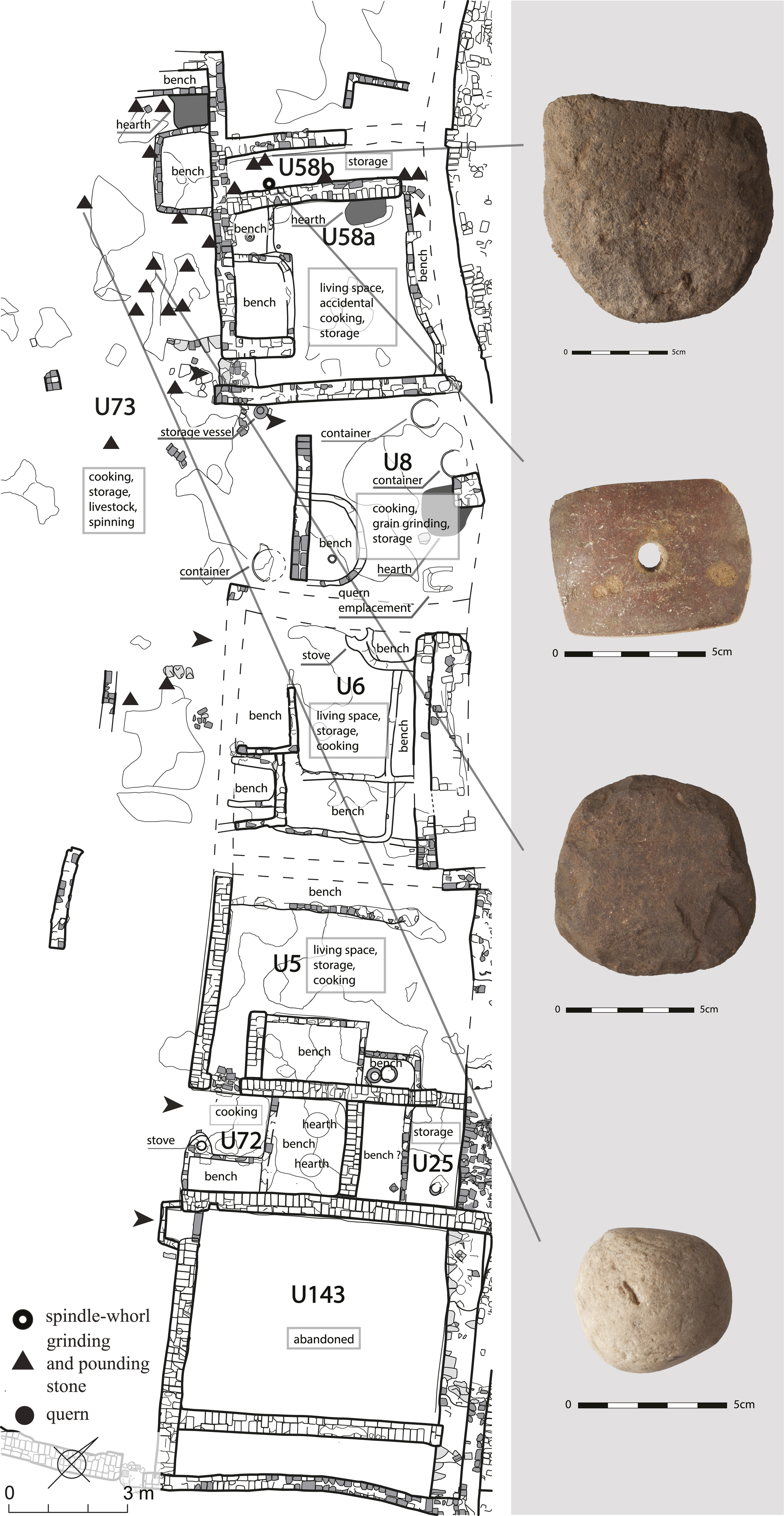
The spaces of experience of a household’s women were also vital in the transfer of knowledge. The existence of a single space for food preparation per compound indicates that women of different ages and statuses who were part of one household or co-resident households worked together, very likely supervised by the oldest woman in the compound—the habouba, whose position in the family was recorded in the Funj Sultanate (Spaulding, 2007: 27). Apart from age, her identity and status derived directly from the supervision of collective work performed by women of lesser experience and aptitude. Other spaces of experience of domestic communities of practice were local markets (souks). Such a market operating in the vicinity of Old Dongola was mentioned in a 17th/18th-century letter found in the city (Wyżgoł, forthcoming). A description of such a market can also be found in Johann Burckhardt’s accounts, where he stated that inhabitants of villages around cities, as well as nomads roaming in their vicinity, sold their products, like mats, baskets and ceramic vessels (Burckhardt, 1822: 279–284). The varied origin of vessels used in Old Dongola, some of them produced far from the city, is suggested by ceramic studies (Danys, 2022: 69). This likely reflects patterns in the local circuit of exchanged goods, which included pottery vessels. Furthermore, the places of acquisition of the pots may have been locales of microregional homogenization of the cooking utensil repertoire (see Gosselain, 2016: 47), which is also visible in ceramic material from the site (Danys, 2022). Collecting a proper kitchen assemblage (bowls, baking plates, jars, stone tools) required, again, a certain amount of experience, and this knowledge was also transferred among the group of co-resident women. The above identification of spaces of experience shows that food preparation apparently revolved around shared spaces within house compounds, but also required social interactions on a different scale. It was also the best observable ground for negotiation of gender identity and the position of women within a household. Daily interactions of women from one or several co-resident households must have enhanced kinship ties, contrary to inter-family female interactions during communal activities in public spaces accessed by women of different, non-co-resident households. The latter most likely occurred mostly at local markets.
The entrances to workspaces were located directly facing the street from which the courtyard was accessed. This is the case of U58 (the side of the compound with the presumed gate is not preserved) (Figure 5) and house U37 in compound U15/37/40 (Figure 6). Such a location of the entrance suggests that the work performed there was highly visible and exposed to outsiders. Also, in houses that lacked special rooms for cooking and grain processing, both activities were performed directly in open courtyards, as in the case of U96 (Figure 6). The presence of women directly in the front parts of houses U143/144/160 and U21a/21b/28a/28b/29/47a/47b/96 provided a space from where they not only were able to observe most of the house, but also very likely exercised control over the compound by watching the entrance. The occurrence of benches in the courtyard (Figure 5) indicates that they were also places for spending time and possibly also receiving guests, especially given the lack of a diwan (see above). The apparently free movement of women in the front area of the house increased their social interactions, allowing for their interaction with visitors and guests. Moreover, female engagement in food preparation was highly visible to guests and other house dwellers. Performing certain tasks observable by an audience created a connection between domestic space, women’s activities and their identity, consequently affecting social perception of gender tasks (see Budden and Sofaer, 2009: 213). Such spatial organisation may suggest that religion was a factor of secondary significance in defining domestic space. The anticipated physical division of the house into an isolated female part, harem, and a space for entertaining male guests, diwan, observed in the Ottoman part of the Middle Nile Valley (Alexander and Adams, 2018) and in modern-day Sudan (Elzein, 2004: 62), apparently did not occur.
Construction of houses and their entanglement with dwellers
Building a house involves active and passive choices, some deriving from lived experience (Hutson, 2010: 113–117), others from adapting the structure to pre-existing architectural settings and individual needs. This is clearly visible in Dongolese houses, which repeat the layout of earlier houses with few adjustments. It must be assumed that knowledge of house construction was transmitted from one generation to another orally, by shared practice, or simply through experiencing existing architectural forms. The houses in Old Dongola were almost never built in an empty spot, without any previous structures visible above the ground. Most of them adapted earlier walls, as in the case of houses U5/25/72 and U143/144/160 (Figure 4). This indicates that an outline of a house was never simply conceived by the builders/dwellers (see Spencer, 2015: 200–203), but was also partially determined by the available space and the most efficient reuse of standing walls, either as the walls of the new house or as their foundations. Moving to a different place to build a new house was, in such instances, more burdensome for the inhabitants. Moreover, the properties of Nile silt as building material, when confronted with the sporadically occurring but torrential rains in the region of Old Dongola, obliged house dwellers to care for the houses. For example, house U143/144 was refurbished and rebuilt within the same exact outline, as well as replastered and repaved, for over 100 years (Table 1, Table 3), or around three to five generations, indicating significant investment in place (see Dueppen, 2015: 22). Such examples show that architectural space may have been used also as a means of inscribing collective memory in the built environment by re-building and maintaining a house on the same spot. It was very likely this process of inheritance and curation of houses that led to their conservative layout: houses were inhabited by several successive generations, so the layout of new houses was an effect of reproducing internal memories of a family (see Rowlands, 1993). The idea of a square room with benches, at least one for sleeping and an oblong one for storage bins, a narrow storage space located behind the square room and, in some cases, also a vestibule, like in house U143/144/160, proved to be very long-lived.
Apart from building material and technique, the main difference between sun-dried brick and wattle-and-daub houses found in Old Dongola was the various ways in which their dwellers were entangled with them and their materials. Lives of the wattle-and-daub houses seem to be shorter, most probably lasting no longer than one generation (up to ca. half a century) (Table 2, Table 3), with far fewer refurbishments. While for sun-dried brick houses numerous adjustments and major renovations could be observed, wattle-and-daub houses, e.g. U37 and U21, had only one floor with no traces of replastering comparable to the brick houses. This indicates that houses “died” when their dwellers and builders passed away or moved out. The question remains open as to whether that was caused by difficulties arising from the properties of the building material, which was ill-suited for refurbishment and perishable, or certain habits of the dwellers, telling them to build a new house every time a new household was founded. It seems that only one generation lived in a wattle-and-daub house, so the enculturation of dwellers within a single house was rather short, unlike brick houses, where more than one generation lived in the same building, sharing the memory inscribed in the architecture. Houses hold their inhabitants together (see Hodder, 2012: 14), so people living in the wattle-and-daub houses were likely to maintain more flexible kinship relations and, effectively, the relations within their households were less dependent on the building materials and their durability.
Household resources and spatial dichotomies
Inclusive space for communal work stands in contrast with concealed spaces for storage, which bolster the position of people in control of the resources. The provision of storage spaces varied within and between house compounds. The most widespread type of storage was in clay bins erected on an oblong mud brick bench located in the main room. Storage benches were identified in each house discussed above, and differed only in size. Another means of storage were bins usually located close to the kitchen spaces, as within and in front of U8, in U15 and in courtyard U40 (Figure 5, Figure 6). Lastly, the most concealed storage areas were the narrow spaces located behind the living rooms, in 20th-century Sudanese Arabic referred to as gatee (Dirar, 1993: 389).
Therefore, it seems very likely that in Old Dongola a different level of privacy can be assigned to each kind of storage facility, based on its physical features or even the distinction between private and communal. While the bins on benches should be considered as a way of storing staples belonging to inhabitants of a single house, free-standing bins located in public spaces must have been available to the whole domestic compound. The only variability between houses in terms of storage areas is the presence or absence of the narrow storage room. It might be assumed that these were present only if a family possessed enough goods to store in this way. At the same time, these rooms are the most concealed within the house. Their location suggests that they contained personal possessions, and access to them was restricted even for other dwellers of the compound. The repertoires of objects recovered from storage spaces are quite similar across different houses, and comprise mostly bowls, baking plates and jars, as well as stone tools including pounders and grinders. In addition, a quern and a spindle-whorl were found in U144. In the houses analysed in this paper, hardly any of the vessels were completely preserved, but an analogous room from house U26a/26b, in the area where house U37 was later built, contained three intact vessels found in situ: a bowl and two storage jars, as well as a quern and a flat stone vessel (Wyżgoł, 2021c: 187–192).
The lack of whitewash in storage rooms suggests that they were symbolically considered as “dirty” spaces of the house, even though possible practical reasons, such as protection against vermin, would favour whitewashing the walls of spaces intended for food storage. During his research on indigenous fermented foods in Sudan (along the Nile, mainly north of Khartoum), Hamid Dirar documented a practice of preparing dried fermented meat (sharmout) in such rooms, which had once served for keeping family staples, such as grains, legumes and vegetables (Dirar, 1993: 389). A general lack of spaces of this kind in the wattle-and-daub houses may suggest that the families occupying them were relatively less wealthy than the inhabitants of brick houses, or they had a different way of accumulating wealth. This absence might also be attributed to their lifestyle and system of values, e.g., nomads would have been more interested in possession of livestock than of immobile goods kept in storage (see Bradley, 1992). In such a case, namely if the household resources extended beyond the house, the archaeological basis for comparison of the relative wealth of the dwellers of the wattle-and-daub and brick houses would be limited. Finally, the use of wattle-and-daub houses might have been periodic, so investment in a large storage space might have been unwarranted.
Conclusion
In this paper we have explored the ways in which households interacted with domestic spaces and materials through daily practice, and how they affected one another. One of the focal points was localized domestic work and its role in negotiations of status and transfer of knowledge. We have also examined the entanglement of dwellers with spaces and materials and the way they mediated social relations.
Domestic work traced in the archaeological record of Old Dongola appears to be attributable almost exclusively to women, who, according to ethnohistorical writings and ethnographic analogies, were in charge of such tasks, mostly food processing. The food preparation area, shared by dwellers of all houses within a compound, favoured close interaction between the women of the household, enhancing kinship ties within a domestic compound. It also favoured strengthening the position of experienced and skilled women, most likely the oldest habubat, who controlled the transfer of knowledge and assignment of tasks. The central role of women within a house compound, allowing them a certain control over domestic space, is indicated by the localisation of female spaces; in most cases they occupied the front parts of houses and were easily accessible from the compound entrance or from other houses. The high visibility of female work additionally acquainted other members of the community with their tasks and allowed symbolic associations of space, work and gender. A further symbolic meaning may have been related to the division of space into private and public areas, attested by the occurrence of concealed storage rooms in some houses, as well as by the possibly related clean-dirty dichotomy.
Materials used in the construction of Dongolese houses—Nile silt, white desert clay and palm wood—encumbered people with an obligation to continuously care for them, as shown by frequently recurring replastering and the re-use of earlier structures over extended periods. Architecture did not always define the use of domestic space. Although some spaces were likely assigned to specific functions, e.g., kitchens were built with embedded querns or bins, the organisation of space was rather fluid and susceptible to change, as abandoned rooms were usually adapted into workspaces. The materials used were also the main difference between households inhabiting two types of houses attested in Old Dongola–made of mud bricks and wattle-and-daub. Despite the fact that the people who constructed brick buildings and wattle-and-daub houses shared the same idea of how a house should look (see discussion in Wyżgoł and Deptuła, 2020), the lifecycles of the two types of houses were significantly different. The brick houses evidently lasted for three to five generations of dwellers, while the wattle-and-daub ones lasted for only one generation. Consequently, the former required a significant investment but allowed the mediation of family memories and social ties over far longer periods of time. In contrast, the entanglement of the wattle-and-daub houses with their dwellers was weaker, ruling out enhancement of household relations through the extended use of houses. Additionally, the lack of storage rooms in wattle-and-daub houses may indicate that their dwellers were more mobile and their households were less attached to place.
Footnotes
Acknowledgements
The fieldwork at Old Dongola was conducted under the auspices of the Polish Centre of Mediterranean Archaeology, University of Warsaw, within the framework of the project “UMMA. Urban Metamorphosis of a Medieval African City”, headed by Dr Artur Obłuski. We wish to thank Dr Dorota Dzierzbicka and Dr Robert Stark for correcting the English of this paper and Dr Artur Obłuski, Dr Dorota Dzierzbicka and two anonymous reviewers for valuable comments.
Declaration of Conflicting Interests
The author(s) declared no potential conflicts of interest with respect to the research, authorship, and/or publication of this article.
Funding
The author(s) disclosed receipt of the following financial support for the research, authorship, and/or publication of this article: This project has received funding from the European Research Council (ERC) under the European Union’s Horizon 2020 research and innovation programme [grant agreement no. 759926]. The publication of this article in Open Access was financed by the University of Warsaw within the framework of the internal grant system: "Excellence Initiative – Research University" programme – IDUB.
