




Abstract
In the 7th and 6th centuries BCE, Sicily saw migratory movements to and on the island, new power relations, and intercultural interconnections. In this environment, new communities emerged, existing communities were reconfigured and both were challenged to negotiate their lifeworlds. Drawing on concepts of community, locality and resilience, this paper examines how local communities in southern Sicily formed, consolidated their cohesion and demonstrated resilience, by taking a closer look at two sites and their burial grounds. Castiglione di Ragusa was located in a culturally diverse microregion, and yet the community maintained a steady consistency in burial practices and assemblages, while the community of Butera merged vessel depositions, cremations and differential body treatment in unique funerary conventions. The paper concludes that both communities mobilised social practices, material culture and cultural knowledge to create localised differences and built on these differences to forge and maintain a sense of belonging and boundedness.
Keywords
Staying local in a dynamic world
What makes local communities resilient in environments of movement, exchange and transformation? Paradoxically, this question has been only tangentially addressed in Mediterranean archaeology. Following the postcolonial critique, local communities have become the primary lens for analysing Early Iron Age–Archaic intercultural interactions in the Mediterranean, particularly in the wake of what has traditionally been termed ‘Greek colonisation’. Studies, both theoretical and empirical, of how communities adopted objects, practices and ideas and adapted them locally have become immensely prolific (e.g. Hodos, 2020, 2006; van Dommelen and Knapp, 2010). These approaches have irrevocably dismissed simplistic notions of ‘Greeks’ from coastal polities confronting or intermingling with ‘indigenous’ populations in the hinterlands, where an asymmetry of power promoted acculturation to Greek ways of life.
However, although postcolonial approaches allow more nuanced understandings of local intercultural dynamics (Ulf, 2009), they often suffer from two shortcomings. Firstly, while it is alluring to model the Mediterranean in the 8th to 6th centuries BCE as an early globalised world, marked by a high degree of connectivity, mobility and fluidity, this narrative privileges change and transformation over continuity and persistence. Many people were indeed on the move and experienced a dramatically dynamic world in this period, but the ‘vast number of people continued to live in bounded environments that were formative to their everyday social, economic, and mental positioning’ (Beck, 2020: 7). Secondly, ‘local communities’ is used as a shorthand for avoiding contaminated notions like ‘indigenous’ and ‘native’ or ethnic labels borrowed from ancient Greek and Roman sources, and rightly so, but it usually lacks the conceptual underpinning that would endow the term with analytical value in its own right.
Taking ‘local communities’ as its subject and scope, this paper begins by unpacking and conceptually substantiating the two elements of the term, building on the well-established archaeology of communities and the burgeoning fields of locality and resilience thinking. This conceptual framework is then applied to a case study from Archaic southern Sicily which zooms in on two sites and their burial grounds. Both sites reflect local communities that creatively mobilised social practices, material culture and cultural knowledge, and I argue that they did so to create localised differences in dynamic environments, drawing on these differences to forge and to maintain a communal sense of belonging and boundedness.
Conceptualising local communities
Since the 1990s, the archaeology of communities has deconstructed common-sense notions of communities as universal social units on the supra-family level (Mac Sweeney, 2011; Steidl, 2020; Varien and Potter, 2008; Watts Malouchos, 2021; Yaeger and Canuto, 2000). It has undermined the idea that a ‘community’ is an almost natural outcome of living together at a site, i.e. of co-residence, face-to-face interactions, proximity and propinquity, as well as shared material and non-material culture. Instead, it has stressed the interactional and ideational aspects of community building. As an ‘ever-emergent social institution’ (Yaeger and Canuto, 2000: 5), ‘community’ is enacted through repeated social interactions and presupposes feelings of commonality, cohesion and affiliation within a group which attenuate social differences and differentiation but do not abolish them (Mac Sweeney, 2011: 38).
For approaching community formation, most archaeologists seek spatial and material correlates of past interactions and copresence, or of ‘practices of affiliation’ (Isbell, 2000: 258) and ‘enactments of community’ (Mac Sweeney, 2011: 37). Recently, Catherine Steidl (2020) has proposed focussing on shared maintenance practices in households and settlements, shared ritual practices, for instance, at cult and burial places, and shared social experiences, ranging from everyday encounters to festive gatherings. This focus combines ‘aspects of natural and imagined communities that articulate place-making with communal identity-making’ (Watts Malouchos, 2021: 22) and sees communities as mental abstractions built on the experience of human-to-human interactions. Yet engagements and entanglements with landscapes, locales and monuments are also vital for stabilising communities, fostering an ‘embedded historicity in the relationships between people and places’ and connecting ‘communities from one time period to communities in another’ (Johnson and Schneider, 2013: 231).
The label ‘local’, applied to communities, refers to their spatial setting (van Dommelen et al., 2005), but also, in the ideational sense, to the influences determining their formation and reproduction. In spatial terms, archaeologist Tamar Hodos understands the local horizon as the ‘place where someone lives his/her everyday life, or an individual’s day-to-day environment’ (Hodos, 2020: 28). In the more ideational sense, historian Hans Beck takes the local as subsuming ‘all expressions of local culture, knowledge production, and communal conviction, each one in relation to the local horizon that inspires it’ (Beck, 2020: 6). Yet local life is not simply determined by a pre-existing setting and the essential properties of a particular place, nor does it require the exclusion of external influences. Decisively, Hodos emphasises that local life emerges from the ‘active ways in which shared practices and localised differences are created and perpetuated’, entailing the ‘resurgence of localised identity through considered adaptation of new and traditional things and ways in reaction to increasing connectivities’ (Hodos, 2020: 219, xiii–xiv).
Anthropologist Arjun Appadurai conceptualises what he terms ‘locality’ in a way that comes close to concepts of community. He conceives locality as ‘a complex phenomenological quality, constituted by a series of links between the sense of social immediacy, the technologies of interactivity, and the relativity of contexts’ (Appadurai, 1996: 178). By the ‘relativity of contexts’, Appadurai means the way in which the local horizon and translocal contexts take shape mutually by infiltrating and informing each other, just as communities can engender mutually constituent sentiments of ‘us’ and ‘them’. His ‘social immediacy’ recalls the ideational principles upon which communities act, i.e. commonality, solidarity and affiliation, while his ‘technologies of interactivity’ are the interactional mechanisms of their formation, operating as ‘ways to embody locality as well as to locate bodies in socially and spatially defined communities’ (Appadurai, 1996: 179).
Taking these strands together, ‘communities’ can be regarded as ‘local’ when they rely on a sentiment of belonging to a spatially confined group. This definition overlaps with Naoíse Mac Sweeney’s term ‘geographic community’ (2011: 32–41), which describes ‘an imagined community, a realized community, and an emplaced community all at once’ (Mac Sweeney, 2011: 20). ‘Imagined community’ and ‘realized community’ refer, respectively, to the ideational and interactional principles upon which communities are built, while ‘emplaced community’ refers not only to residential proximity, shared space and territorial boundedness, ranging from agglomerated households to the supra-site level, but also to the focal places around which communities crystallise. In this sense, local community formation is mediated through, though not bound to, space and place.
To Mac Sweeney’s idea of a ‘geographic community’ we can now add a temporal dimension. The repertoires of social practices, material culture, cultural knowledge and communal conceptions which local communities devise—more generally, their social structure and cultural texture—can be reproduced over time. It is in relation to community reproduction that this paper draws on recent resilience thinking. According to the definition from the ‘Archaeomedes’ project, community resilience is the ‘capacity to adapt to external change, but also to produce or adopt technical and cultural innovations, ensuring the perennity of a social group in its environment, consisting of both the natural milieu and other, competing social groups’ (Robert, 2021: 147). In this sense, ‘resilience’ refers to a community’s self-organised ability to absorb, or even use and benefit from, change while continuing to exist and retain its social and cultural characteristics, hence balancing persistence with adaptability and transformability (Folke et al., 2010).
Zooming in on Archaic Southern Sicily
Archaic Sicily, with its autochthonous population, Greek polities and Phoenician presence, is a key region for discussing intercultural interconnections in the Mediterranean (e.g. Antonaccio, 2010; Booms and Higgs, 2019; Hodos, 2006; Leighton, 2020; Shepherd, 2021, 2014). Castiglione di Ragusa (Figure 1), the first case-study site, lies on one of the last foothills of the Monti Iblei, overlooking the plain of Vittoria. The settlement appeared at about the same time as nearby Greek Kamarina, a sub-colony of Syracuse founded in the early 6th century BCE, decades after Syracuse had already extended its influence inland by establishing Akrai (663 BCE) and Kasmenai (643 BCE). Allegiances were not clear cut, however, as Castiglione may have sided with Kamarina against its mother city in the mid-6th century BCE. Butera, the second site, is situated on a steep outcrop 15 km inland from Greek Gela. According to later literary sources, Gela colonised its hinterland soon after its foundation in 689/88 BCE, sacking two ‘indigenous’ sites and establishing a new settlement (Fischer-Hansen, 2002), but the archaeological evidence points to a more complex reality. Southern Sicily with the main sites mentioned: (1) Castiglione di Ragusa, (2) Ragusa, (3) Monte Casasia, (4) Butera, (5) Rossomanno, (6) Monte Bubbonia, (7) Polizzello, I Kamarina, II Akrai, III Kasmenai, IV Gela, V Syracuse, VI Megara Hyblaia; based on https://maps-for-free.com/.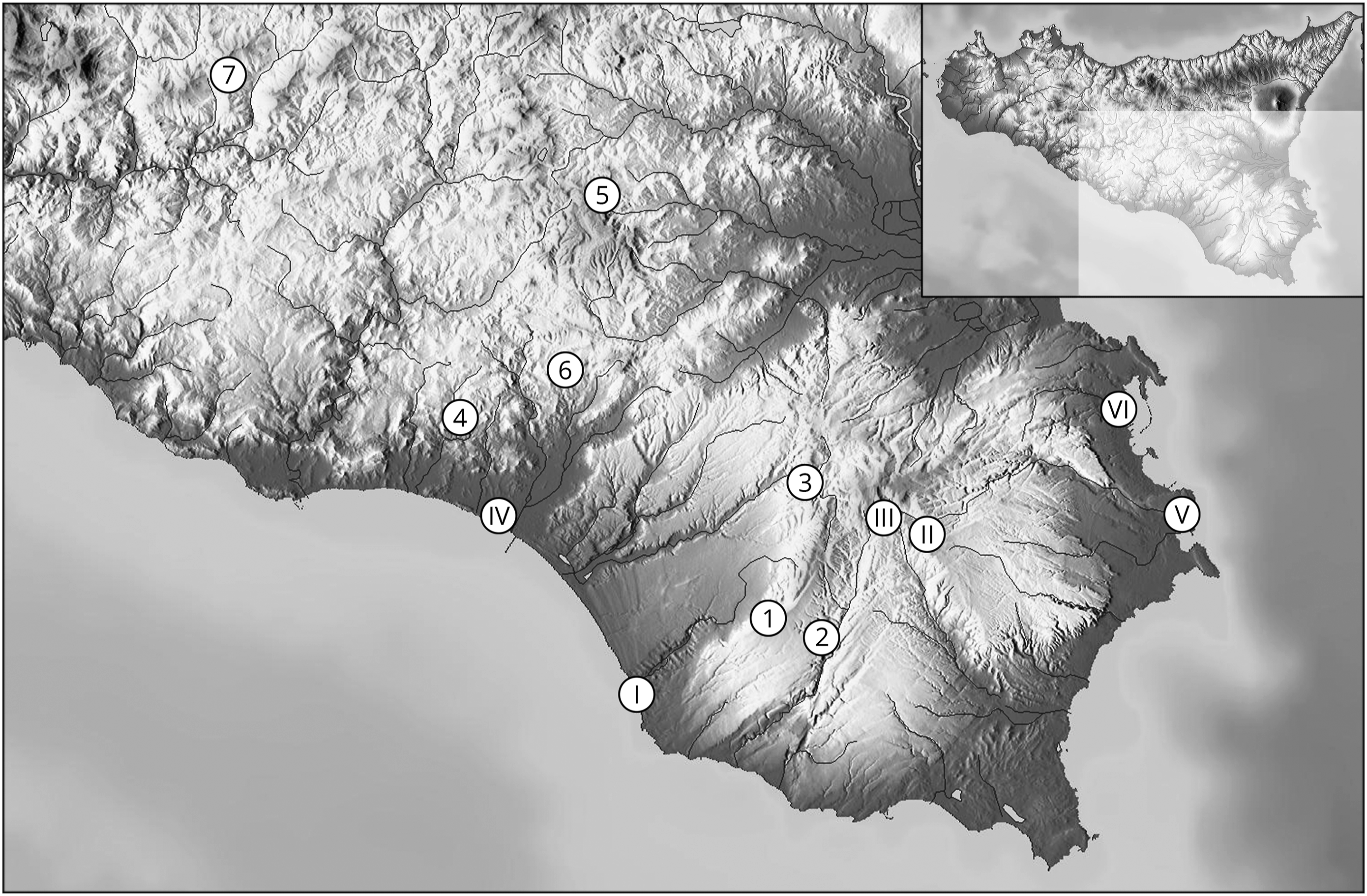
Like a number of other hilltop settlements, Butera and Castiglione existed prior to, but increased considerably with, the establishment of Greek settlements on the coast. During this period of massive migration to and within the island, of negotiations of power and reorganisations of communities, many of these sites have been interpreted as outposts of expansionist Greek polities—Butera, for example, as a satellite site of Gela (Adamesteanu, 1994–95). Melanie Jonasch (2020) made a powerful case against this model, arguing that Butera and other hilltop sites had limited value for consolidating territorial control but were ideally positioned to provide the coastal polities with the produce, craftwork and manpower they needed. These demands were capitalised on by both locals and migrants, who settled down at pre-existing hilltop sites. These, in turn, increased and thrived until the late 6th–early 5th century BCE, when most, including Castiglione, were abandoned. It was only then, after generations of mutual dependence and benefit, that the Greek coastal polities consolidated territorial control and established clear power relations with their hinterlands (De Angelis, 2016: 161–164).
The Castiglione plateau is home to two burial grounds. On its northwest-to-southern slope, the so-called ‘western cemetery’ forms a densely occupied funerary zone. Excavated in the 1950s and again, more intensively, from 1969 to 1971, it comprises almost 300 tombs, of which 61 rock-cut chamber tombs and 86 pit graves have been published (Mercuri, 2006, 2012a, 2012b). The eastern burial ground is located only 800 m away, at the foot of the south-eastern slope, but it presents a sharply contrasting picture to the necropoli occidentale (Di Stefano, 2001–02, Di Stefano, 2006). At Butera, Adamesteanu (1958) excavated an extensive necropolis on Piano della Fiera, a saddle at the north of the main outcrop, and adjacent zones. The necropolis comprised 15 Early Iron Age–Early Archaic chamber tombs, 164 graves dating mainly from the 7th century BCE, and around 80 Hellenistic tombs. The number of depositions and the state of the bones were recorded, but no anthropological data. Some skeletal material from the western necropolis of Castiglione has been analysed, but the dataset offers limited information (Mercuri, 2012a: 31–32; Sulosky Weaver, 2015: 89–99). From the eastern burial ground, however, accurate data from a complex tomb has allowed funerary and post-funeral practices to be traced.
Local communities at Castiglione di Ragusa
Localising funerary conventions
Castiglione is one of the few sites of Archaic Sicily that provides both funerary and settlement evidence (Figure 2). The ridge of the plateau was settled in the early 6th century BCE and abandoned towards the end of the century, with a limited revival in the late 4th century BCE (Mercuri, 2012a: 287–293; Di Stefano, 2016). Enclosed by a fortification wall with gates, the settlement was organised along a main street, from which alleys gave access to residential quarters. Rectangular houses clustered around paved courtyards with circular stone structures that seem to have served as silos for the adjacent households. At the highest point of the plateau stood a rectangular building within an enclosure, which has been identified as a shrine. Partly constructed of ashlars and featuring setting lines on the lower course of the walls, it is the only monumental building known so far at the site and the only one built with technologies from the coastal cities. Apart from this precinct, the settlement differed significantly from Greek models of urban layout and domestic architecture. Castiglione di Ragusa, discussed archaeological features on a digital terrain model (DTM) with 2 × 2 m resolution: 1 western necropolis, 2 eastern burial ground, 3 residential quarters, 4 fortification, 5 potential cult building; features: after Mercuri (2012a), Di Stefano (2016), Di Stefano (2006); data: Regione Siciliana – Assessorato del Territorio e dell’Ambiente – Area 2 Interdipartimentale – Nodo Regionale S.I.T.R, 2019 (LiDAR data: flight 2007/2008, 2008); EPSG 3004; map: Dominik Hagmann.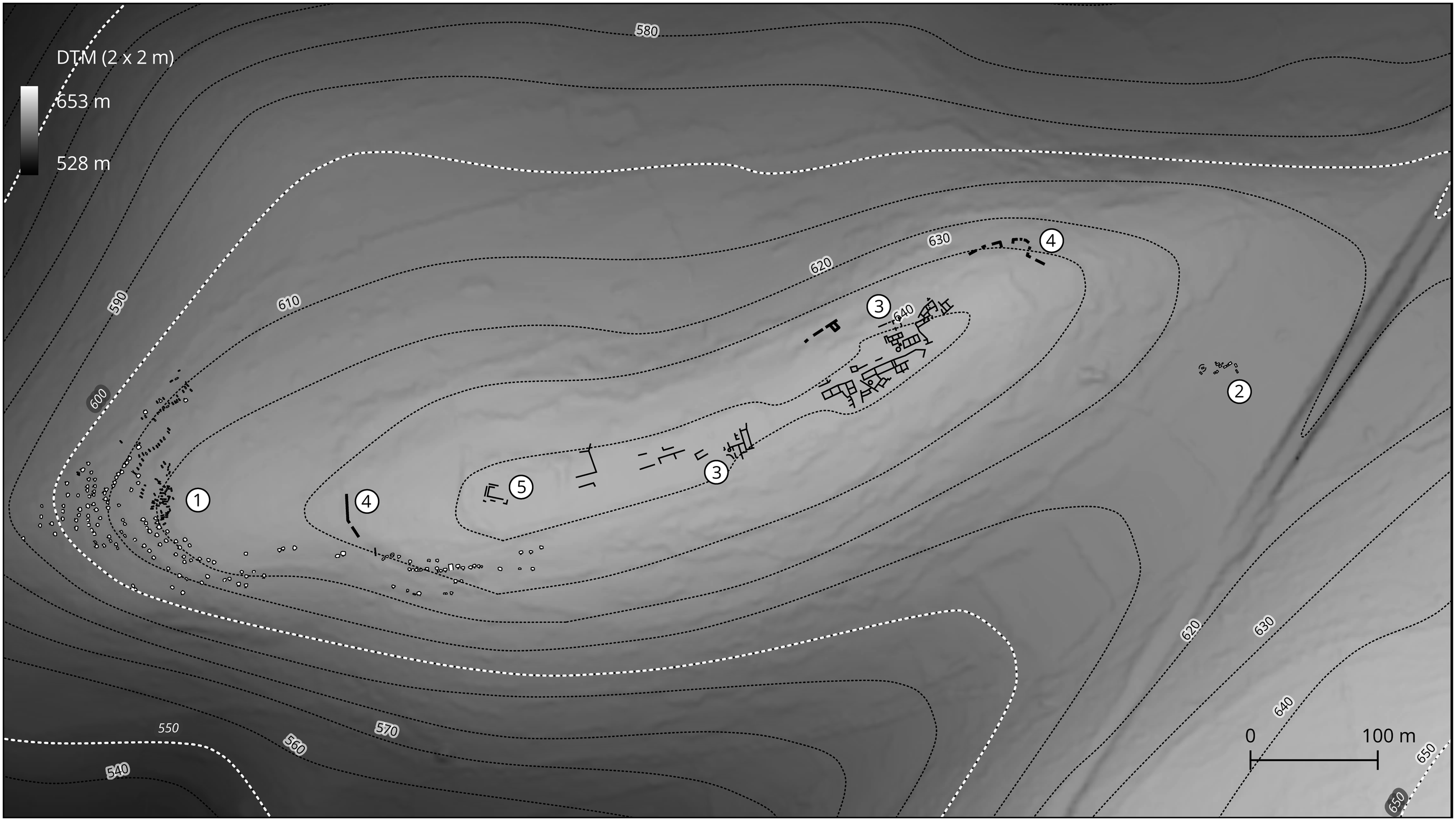
The appearance of the plateau is shaped by the extensive necropoli occidentale (Figure 3; see Supplementary material: sheet 1; Mercuri, 2006, 2012a, 2012b). Rock-cut chamber tombs, or grotticelle, are mainly situated on natural terraces along the steep western and southern slopes of the plateau, whereas the pit graves, or fosse, took advantage of the higher and flatter areas to the west of the settlement. The necropolis crystallised around a series of Early Bronze Age chamber tombs from the first half of the 2nd millennium BCE (Castelluccio horizon). Most of the prehistoric tombs were reused in the 7th and 6th centuries, and the newly installed tombs reiterated their layout (Mercuri, 2012a: 29). When the burial ground was readopted remains a matter of debate, conclusions depending on what is assumed to be the earliest material and how it is dated. Most recently, the readoption has been dated to the second quarter or middle of the 7th century BCE (Frasca, 2015: 155–158; contra Mercuri, 2012a: 21, 35–36). What is clear, however, is that the establishment of the necropolis predated the earliest settlement evidence, with most of the burials dating from the late 7th and 6th centuries BCE although some assemblages extend to the first quarter of the 5th century BCE. Castiglione di Ragusa, western necropolis; after Mercuri, 2012a: fig. 4.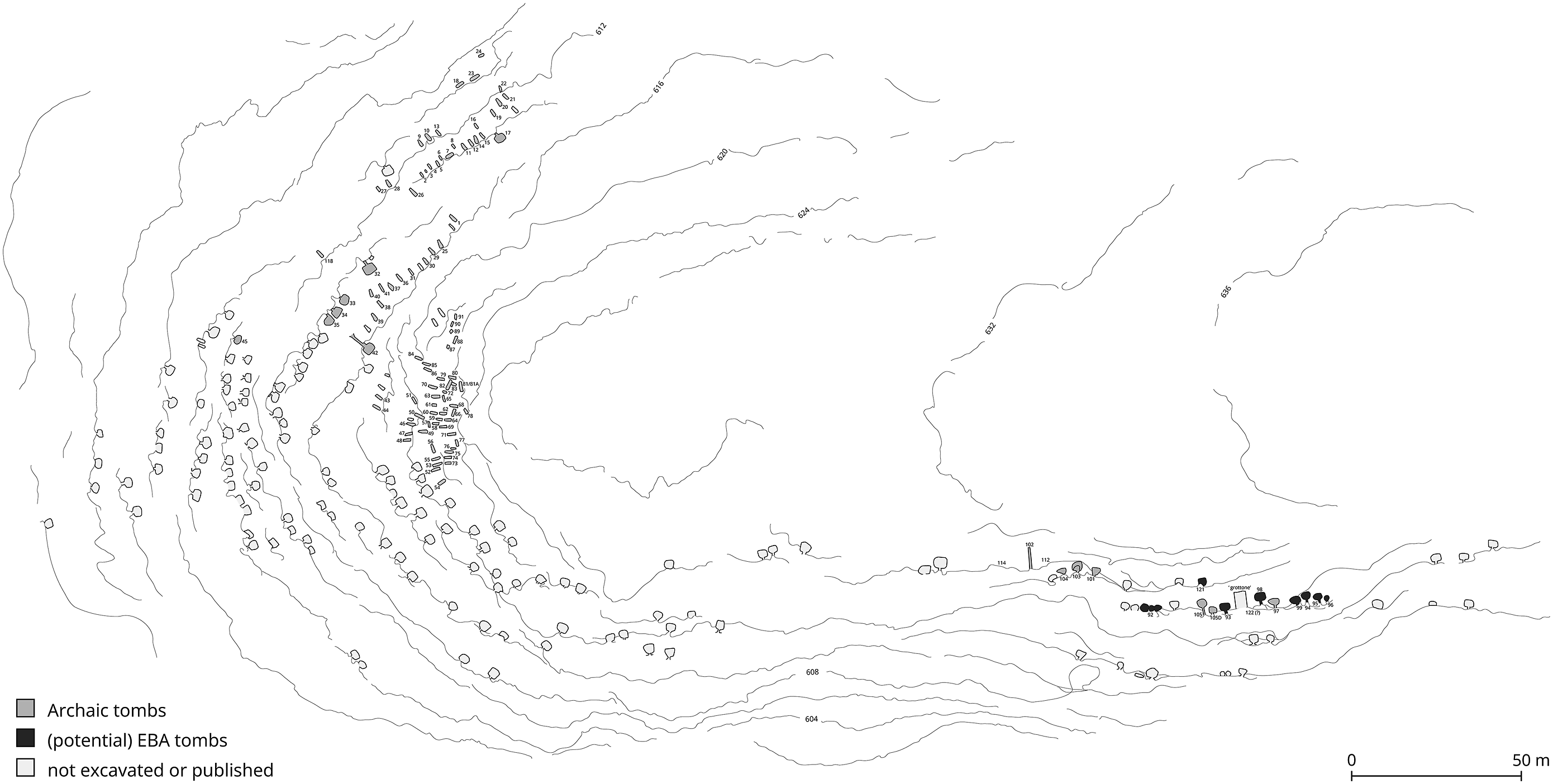
The grotticelle show long use-lives, some spanning the entire timeframe of the necropolis and attesting to cycles of funerary practices. In one grotticella (G101), the vessels deposited with the final inhumation were placed beside or on top of the redeposited remains of five individuals. In another (G122), the last two depositions were placed on top of previous assemblages, including 17 skulls. Objects and bones were often accumulated on benches, while elsewhere successive depositions resulted in vessels covering human remains (G103, G104, G111) or being used as containers for re-deposited bones (G104). As for the number of individuals deposited, the estimation based on post-cranial remains is much higher than the number of skulls would suggest (Mercuri, 2012a: 31–32). The discrepancy results not from funerary practices, but from past post-burial re-arrangements, incomplete bone collection and the methodological challenges of estimating minimum numbers of individuals. At least the average of eight to nine skulls from Archaic grotticelle, with three graves (G33, G34, G35) having only a single deposition and two burials, respectively, suggests fewer depositions compared to prehistoric tombs.
As well as chamber tombs, roughly carved pit graves were, and continued, in use from the start of the necropolis. Most of these fossa tombs seem to have been used for single burials, which resulted in fewer objects being deposited than in the multi-use chamber tombs. Some, however, contained over 30 vessels, covering the deceased, apparently drawing on a mode of deposition from the chamber tombs (Mercuri, 2006: 380, 2012b: 286). Chronological discrepancies and dislocated bones indicate that at least some fosse were also reoccupied (F1, F40, F69, F86). With practices varying within the tomb types and found in both, the differences between them are blurred, and they are further attenuated by the overall consistency in grave-good assemblages.
Both tomb types shared the same spectrum of grave goods, reflecting low interest in imported items (Mercuri, 2012a: 21, 24, 33–82). The assemblages tended to be dominated by local pottery, with matt-painted vessels accounting for almost 40% of all grave goods, mostly consisting of standard sets of amphorae with bowls or cups stacked on top of them. Most of the imported vessels, 23% of all the grave goods, were Corinthian, or imitations thereof, and comprised mainly aryballoi, cups and exaleiptra, and kothones. Attic vessels did not find their way into the assemblages until the last quarter of the 6th century, and then only in small numbers, making up about four per cent of the grave goods, and in a very limited spectrum of shapes. Vessels from Laconian workshops, such as kraters and krateriskoi, were few and far between. Most common were lamps, ‘Ionian’ cups, of which there were more than 100, and trefoil jugs, originating from both hinterland and coastal workshops.
Contextualising community
The western necropolis was situated in a wider funerary landscape where its steady consistency was confronted with dynamic heterogeneity. The small eastern burial ground at the other side of the Castiglione plateau, encompassing 21 tombs, adopted different tomb types and divergent funerary practices (Figure 4; see Supplementary material: sheet 1; Di Stefano, 2001–02, 2006). Plain pit graves, some of them covered with stone slabs or mounds and one marked with a stela, co-occurred with stone-lined pits, one cist grave, five inhumations in storage containers (enchytrismoi), three trench graves covered by gabled stone slabs and one covered by roof tiles (a cappuccina). Most prominent was a pit grave encircled by a stone structure of about 4 m in diameter (tomb 12; Di Stefano, 2006, 2010, 2012), which may have served as an enclosure but could also hint at a now-vanished mound or a dry-stone chamber with a pseudo-vault (Pancucci and Naro, 1992: 146–147). Castiglione di Ragusa, part of the eastern necropolis with tomb 12; after Di Stefano (2006): 361 fig. 8 and Cordano and Di Salvatore (2002): 31 fig. 17.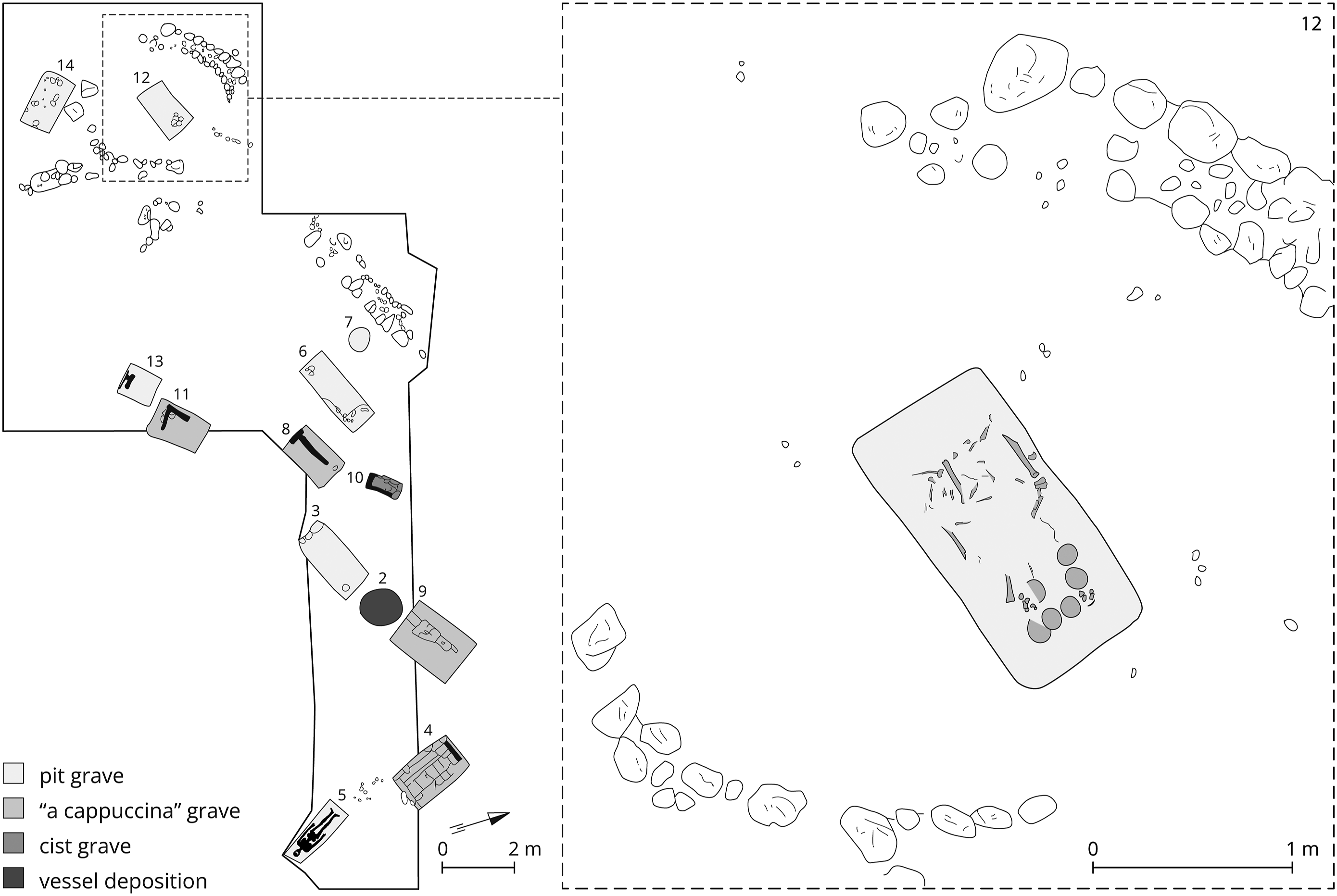
At the edge of this pit grave, seven skulls and a mandible from an eighth individual were arranged in two rows, while the pit itself contained the remains, excluding crania, of eight individuals: six adults, three of whom were identified as male, and two children (Duday, 2006). Most skeleton parts were present but heavily mixed, suggesting secondary depositions. Two of the skulls still had the upper cervical vertebrae attached, indicating that they were re-arranged when the bodies were at a different stage of decomposition from the others. At the western end of the pit was a pottery assemblage consisting of a Laconian krater, cups and jugs, dating from the first half of the 6th century BCE. Since the vessels were on the same level as the skulls and partly covered the remains in the pit, it has been argued that they were deposited during the post-mortem procedure when the skulls were re-arranged and put on display (Di Stefano and Ventura, 2011).
Also from the eastern burial ground comes the so-called ‘Guerriero di Castiglione’ (Figure 5; Cordano and Di Salvatore, 2002; Giangiulio, 2010; Mercuri, 2012a, 90–92; Shepherd, 2011, 2014). Although a contextual association is lacking, this sculpted limestone monument probably decorated the central tomb. The front is carved with a bas-relief of a horse and the lower part of a mounted warrior carrying a lance and a shield. On the underside is a relief of another horse. On the right is a bull’s head and on the left the head of a sphinx, while a massive human head in the round crowns the centre. The latter has been interpreted as representing the head of the warrior who appears in relief. A Greek dedicatory inscription in the corner of the sculpture consists of four lines running from right to left, reading: ‘for Pyr(r)hinos, son of Pytik(k)as; Skyl(l)os made it’ (Dubois, 2008: 101–102 n. 44). Castiglione di Ragusa, ‘Guerriero’ sculpture; photo: Peter Oszvald, copyright: Kunst- und Ausstellungshalle der Bundesrepublik Deutschland, Bonn and Assessorato dei Beni Culturali e dell’Identità Siciliana – Parco Archeologico di Kamarina e Cava d’Ispica – Ragusa.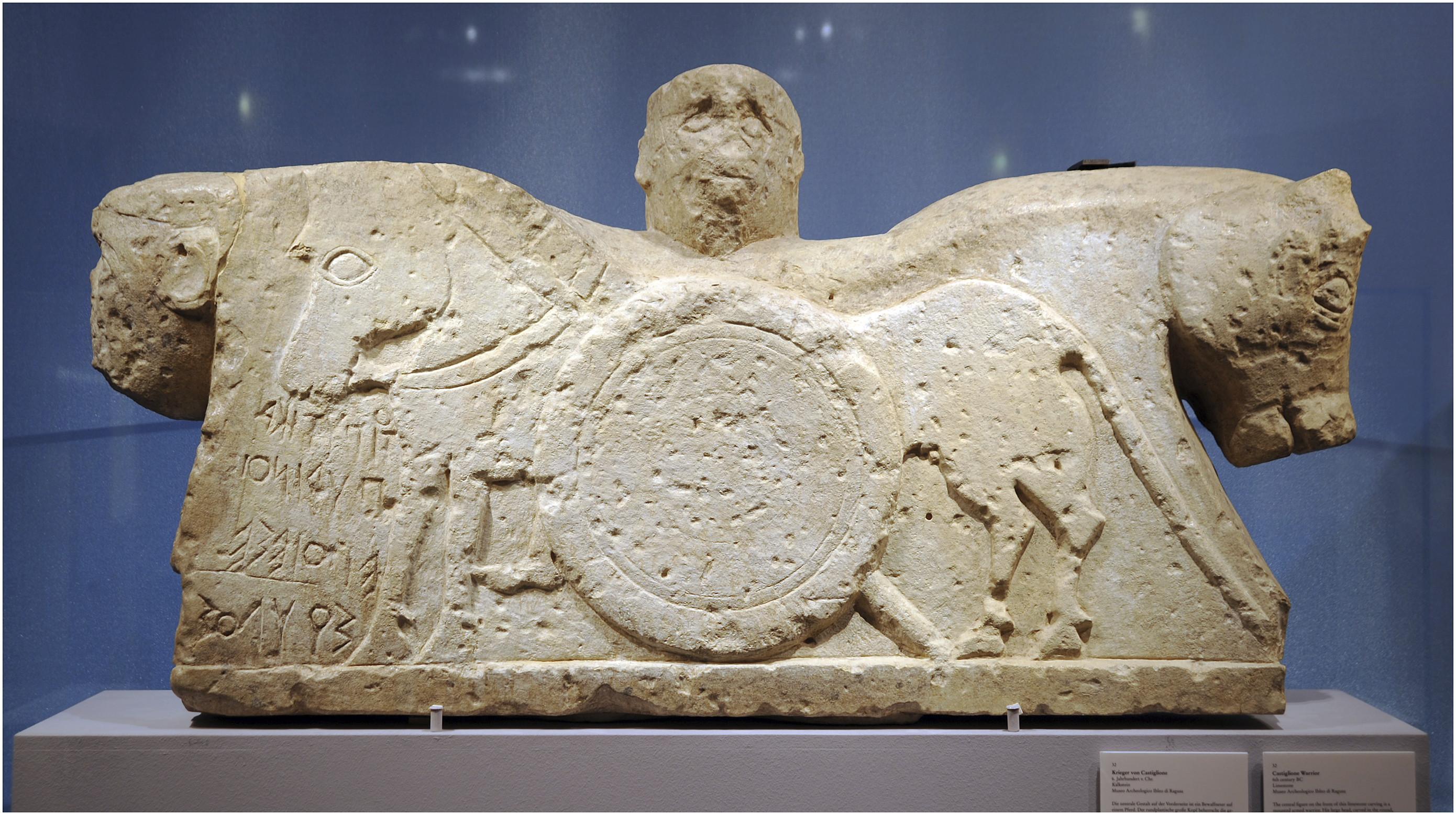
Based on the model of Greek expansionism, Pyrrhinos has been identified as a Greek mercenary or military leader who was honoured by the ‘indigenous’ community. Alternatively, he has been regarded as an individual whose identity was as hybrid as the ‘mixed’ artistic style of the sculpture. It has been assumed that the sculpture was made in a Greek workshop for display in Castiglione, roughly in the second half of the 7th or early 6th century BCE, but the monument witnessed a more complex use-life and seems, in fact, to have been transferred to the hinterland rather than initially set up there (Heilmeyer, 2009). At some point, the back of the block was chipped, damaging not only the relief on the bottom but also the mounting holes that originally allowed a setup as a lintel or architrave. Most crucially, however, the head on top was not original but the result of extensive reworking. While it is plausible that the sculpture came from a Greek workshop, the remodelling probably took place at Castiglione and arguably adapted the monument to its new funerary context, with the head referring to the skulls exposed in the tomb.
Dynamic heterogeneity emerges even more clearly in the wider microregion. In Ragusa, situated 9 km southeast of Castiglione, the burial ground of Rito comprises almost 80 tombs, mostly pit graves with accurately cut cover slabs, cist graves, sarcophagi and enchytrismoi burials from the second to the last quarter of the 6th century BCE (see Supplementary material: sheet 2; Di Vita and Rizzo, 2015; Frasca, 2015: 107–111). The tombs contained a wide spectrum of grave goods, including Corinthian kotylai, exaleiptra and pyxides, Laconian jugs and cups, Attic skyphoi, lekythoi and kylikes and, though in lower numbers, statuettes and strigils. An underground ashlar chamber held an extraordinary assemblage, dating from the third quarter of the 6th century BCE (tomb 2). It included a splendid Attic black-figure lekane, the only piece from the ‘Ragusa Group’ workshop to have been discovered in the central and western Mediterranean. Also present were a band cup and a trefoil jug from Athenian workshops, and, from Laconia, a cup from the workshop of the Arkesilas Painter and a Droop cup. However, both the hypogeum and half of all the Rito tombs also contained matt-painted vessels, mainly amphorae similar to the ones from Castiglione, often combined with a bowl and a jug.
The Rito burial ground also yielded two pilaster capitals and a mid-6th-century BCE statue of a seated lion. Other fragments of sculpture were discovered at the Cuciniello burial ground in the southern part of Upper Ragusa: a sphinx, a quadrupedal animal, either a lion or a bovine, and a horse’s muzzle (tomb 15; Di Stefano, 2006: 365, 2012: 258–260). One of the Cuciniello tombs was enclosed by an L-shaped ashlar structure, probably the foundation of a monument, and another contained a piece of a Doric column (tombs 10 and 1). Three fragmentary stelae were also found, one of which was inscribed with the phrase oimoi (tomb 15), a formulaic expression of grief which was locally specific to Selinous (Brugnone 2008). From the contrada Rose and the contrada San Martino came two Late-Archaic stelae, both found next to grotticelle, the latter with the inscription ‘Aiskhylos, son of Gorgos’ (Scerra, 2018; Scerra and Agostiniani, 2017). Probably from the area of Ragusa is the ‘Comiso stele’, on which a certain Philos laments his parents’ deaths. Opinions differ as to whether the father’s name, Apelos, Katelos or Elos, is ‘non-Greek’ or ‘Greek’, but the epigram is a perfectly Greek elegiac distich (Dubois, 1989: 140–141 n. 127; Mercuri, 2012a: 92–3).
Local communities at Butera
Burying bodies and body parts
At Butera, remains of a settlement from the mid-8th to the mid-7th century BCE were found on a terrace beneath the south-western slope of the plateau known as contrada Consi (Adamesteanu, 1958: 501–525). The settlement associated with the main phase of the necropolis remains unknown, however. Survey material at least points to ongoing habitation at contrada Consi during the 7th and 6th century BCE, followed by a gap in occupation until the early 4th century BCE (Bergemann, 2010: 134–138). Approximately 260 tombs have been excavated on the Piano della Fiera saddle and in adjacent zones. They were divided into four ‘strata’ corresponding to the main phases of the site, which were also reflected in the way some of the tombs at Piano della Fiera were layered on top of each other (e.g. Adamesteanu, 1958: 222–223, 463–464).
The ‘first stratum’ consisted of rock-cut chamber tombs housing from one to four burials. In contrast to Castiglione, no Bronze Age predecessors were found. The first grotticelle dated from the second half of the 9th century BCE and most continued in use until the early 7th century BCE (Pantalica Sud and Finocchito horizons) when the ‘second stratum’ tombs appeared. Their emergence did not necessarily imply a break in the use of older tombs, however (Burkhardt, 2013: 135). For instance, one grotticella was reoccupied in the late 8th or early 7th century BCE, not long before the entrance was filled in and two 7th-century tombs were constructed on top of it (tomb 165; Lo Schiavo, 2010: 436). A grotticella from contrada Consi contained vessels modelled on Protocorinthian prototypes, together with matt-painted vessels; both types of pottery found close parallels in ‘second stratum’ assemblages (tomb 177; Panvini, 2003: 61–63; Lo Schiavo, 2010: 436, 766). Another rock-cut tomb was used for four burials over almost a century, with the most recent grave goods extending to the second half of the 7th century BCE (tomb 175; Guzzone, 1998: 232–233), and it is possible that others, still undiscovered, also continued to be used after the early 7th century BCE, although most of the known grotticelle were abandoned then.
Ranging from the second quarter of the 7th to the early 6th century BCE, the ‘second stratum’ graves represent profoundly new tomb types and funerary practices (Figure 6; see Supplementary material: sheet 3). Apart from two pit graves (74, 75), the deceased were consistently deposited in storage containers, such as amphorae, pithoi or jars, in plain or matt-painted ware or with ‘plumed’ decoration (a flabelli or piumata). This uniformity contrasts with the diversity of funerary practices, encompassing inhumation, secondary cremation and partial cremation. With almost 80 examples, secondary cremations were by far the most frequent. Some urns were placed in the cremation pits, filled with ashes, charred bones and sometimes sherds, suggesting that some grave goods were burnt with the corpse. The almost 60 vessel inhumations, meanwhile, were not only of infants and children, as was common in both inland and coastal Sicily, but also of adults. Both could be accompanied by dress items, like fibulae, rings, amber beads and necklaces, as well as knives. Butera, part of the Piano della Fiera necropolis and schematic reconstruction of the containers deposited within the burial chamber 138; plan after Adamesteanu (1958): fig. 24, vessel shapes after Guzzone (1985–86): plates 1–2.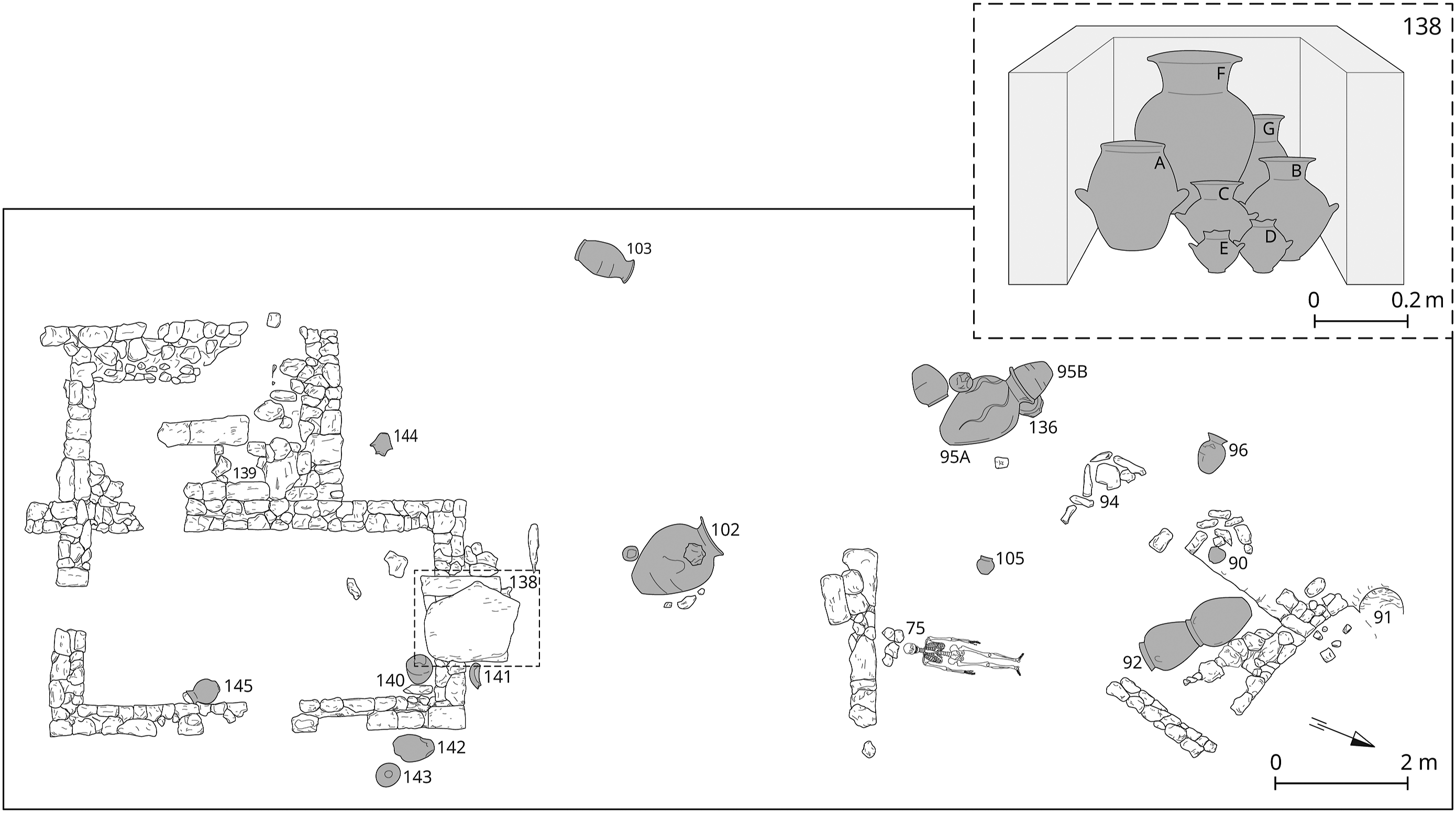
Inhumation and cremation merged in practices which are subsumed under the term akephalia or ‘headless’ burial but which could involve a variety of body treatments (Mercuri, 2001: 7–10; Guzzo, 2020). At Butera, seven vessels contained unburnt crania but no traces of the post-cranial bodies. In the case of infant burials, this could have been due to bones being missed during the excavation, but circumstantial evidence points to partial deposition rather than decomposition. In one amphora (tomb 13), a skull was placed on top of a jug, and the small dimensions of another amphora would have made the deposition of an integral body, even that of an infant, impossible (tomb 160, cf. 78). Sixteen tombs contained partial cremations, with charred bones and unburnt skulls deposited either in a single container or in separate vessels. For instance, one stamnos contained two skulls and several vessels, including two jugs holding burnt bones and ashes (tomb 93). Another container housed an isolated cranium, while an amphora placed horizontally in the opening contained burnt post-cranial remains (tomb 118).
Both skull depositions and partial cremations are generally regarded as the products of a multi-stage mortuary procedure in which the head was removed from the body and the body incinerated, after which either the ashes were reunited with the unburnt skull for deposition or only the skull was buried. However, various other practices materialise in similar ways in the archaeological record (Rebay-Salisbury, 2015). These include pre-funeral preparations of the body and funerary rites, such as partitioning the corpse and treating the separated parts differently or the incomplete cremation of the whole body. Partial cremations can also result from the use of fire in food offerings and funerary meals, as well from manipulations sometime after death and burial. At Butera, further questions arise, such as whether or not the skulls and charred bones deposited together belonged to the same individuals and how many individuals are concealed among the cremated remains (Mercuri, 2001: 14).
Assembling the deceased
The Butera assemblages attest to repeated funerary practices that resulted in containers holding multiple depositions and spatial associations between different burial vessels. Vessels might contain from two to six inhumed individuals and sometimes also cremated remains, while up to four unburnt crania could be deposited in vessels that also contained partial cremations. Exemplifying spatial links, two storage jars containing a total of 10 uncremated subadults were placed leaning against each other, while a basin at their feet held cremated remains (tombs 27–29). An amphora containing a skull and covered by a rubble mound was placed in the opening of a container with an inhumation (tomb 78). In another case, a pithos and an amphora were placed facing each other, the first containing an adult and the second a child (tombs 95, 136). Buried vertically in the ground at their feet was an amphora holding another subadult, and next to them was a smaller amphora filled with burnt remains, along with vessels deposited externally as grave goods.
Burial features could be grouped together; for example, several containers could be encircled by pebble stones. One such cluster included five large storage vessels, one of which held an inhumed newborn, while the other four contained partial cremations and one skull each (tomb 21; cf. tombs 3, 32, 109, 117, 132, 147). Two adjacent niches, formed by oblong stone slabs, held containers stacked on top of each other. The first niche contained at least one pithos, two amphorae and one stamnos, with burnt remains in one vessel and the bones of a single individual in another (tomb 90), while the second niche held four containers filled with charred bones and ashes and other vessels without remains (tomb 94). Next to these structures, a dry-stone enclosure framed a supine burial covered by the halves of a bisected pithos (tomb 92), thus mixing the practice of enchytrismoi with plain inhumation.
This complexity culminated in a burial monument with an open-air enclosure and a ‘megalithic’ chamber with a detachable front slab (Figure 6; tombs 138/139; Guzzone, 1985–86). Inside the chamber, seven containers were deposited. A piumata pithos (A) contained a skull and both charred and unburnt post-cranial bones. Four amphorae were stacked on top of each other, one housing the bones of an infant (B) and the others (C–E) ashes and extensively or partially burnt bones. At the back of the chamber stood a large pithos (F), which, again, held burnt bones and non-cremated infant remains, but also five unburnt crania. Under the pithos was an amphora (G) with burnt remains. The containers also held a small number of dress items and, in two cases, knives. Only the pithos contained further grave goods: two cups and two jugs, two amber beads and five glass paste objects, but more vessels, dating from the third quarter of the 7th century BCE, were deposited above and between the containers. In a second, adjoining dry-stone structure, an amphora contained subadult remains at the bottom, two crania above them and another at the top (tomb 139). Further urns nestled up against both enclosures, broadly dating from the 7th and early 6th centuries BCE (tombs 140–144).
Based on the evidence, at least eight individuals were buried in the central monument, but the number could have been higher as the burial practices are not entirely clear. While the subadult skeletons indicate enchytrismos inhumations, the burnt bones and ashes in containers C–E and G are usually associated with the five crania from the pithos (F) (Guzzone, 1985–86: 12–13). However, they could also have been full secondary cremations, while the pithos held skull depositions. In the case of the piumata pithos (A), the coexistence of burnt and unburnt bones may indicate either incomplete cremation or differential body treatment.
Contextualising community
The combination of vessel depositions, cremations, and differential body treatments at Butera represents a local singularity in Archaic Sicily. It has nevertheless stirred a lively debate as to whether the diverse burials reflect more widely used ‘indigenous’ practices or ‘Greek’ models transmitted to the hinterland (Burkhardt, 2013: 129–137; Guzzo, 2020; Mercuri, 2001; Shepherd, 2005). At inland sites, dislocated or ‘missing’ crania in chamber tombs have been taken as evidence for akephalia inhumations, but in most cases they seem, in fact, to have been due to later rearrangements or modern looting (cf. Falsone et al., 1993; Cottonaro, 2018). A prominent case of intentional body manipulation is tomb 12 from the eastern burial ground at Castiglione, yet it differs significantly from tombs in Butera in terms of when the skulls were separated from the body and how the post-cranial parts were treated.
The closest parallel with regard to funerary diversity comes from Archaic Monte Rossomanno, 35 km northeast of Butera (Draià, 2020: 78–80). There, more than 130 crania were found lined up in a dry-stone enclosure and at least 12 skulls in a second structure; in another burial context, three isolated skulls were placed in a basin. The necropolis also included tombs within stone circles, with the human remains resting on burnt material and the ledges of the pits showing traces of fire, possibly indicating primary cremations. Enchytrismos burials, tile-covered inhumations, and ustrina, or cremation sites, though of unknown date, were also documented. With evidence of various cremation practices and potentially of differential body treatment, Rossomanno resembles Butera. However, its ‘campo di crani’ did not include depositions in storage containers.
As for parallels with the Greek necropoleis, cases of supposed differential body treatment are limited to a very few examples, all of which were reported from excavations conducted around 1900 and most of which are more likely, in fact, to have resulted from disturbances, decomposition or the tombs being cleared for reuse (Mercuri, 2001; Lambrugo, 2013: 391). Moreover, cremation practices at Butera bear only limited similarities, if any, to the most likely source of influence, Gela (Lambrugo, 2013: 385–396). Although incineration was more frequent at Gela than in other coastal necropoleis, inhumation remained predominant. By contrast, secondary cremation accounts for about half of the tombs at Butera, whereas primary cremation, as in Gela, was never practiced. Finally, while vessel inhumation for adults was the norm in Butera, it was extremely uncommon in Gela. Butera has also been compared to Priniàs on Crete, where some burial vessels seem to have contained isolated skulls (Burkhardt 2013: 135–137; Rizza, 1984–1985). The evidence is rare and limited to subadult burials, however (Mercuri 2001: 27–30), and although Thucydides (6. 4. 3) claims that the settlers of Gela originated from Crete and Rhodes, the specific link to Priniàs is conjecture.
In term of architecture, the Butera burial monument finds a parallel in three tombs on nearby Monte Bubbonia, viz. two stone chambers and a dry-stone enclosure with a room for burials and an open-air forecourt, all containing inhumations and 6th-century finds (Pancucci and Naro, 1992: 149–152). In its basic structure, the Butera monument also resembles other graves at inland sites. In the eastern necropolis of Polizzello, for instance, two adjacent Early Iron Age–Archaic tombs shared a forecourt which enclosed an altar-like structure, deposits, and a pit with burnt bones (sector A, tombs 5/5A). In another zone, the entrances of two tombs were accentuated with a line-up of oblong stones, while on the other side there was a platform and a dry-stone enclosure with benches, perhaps for accommodating communal gatherings (sector B, tombs 24/25; Öhlinger 2021: 194–195). More generally, the entrances to grotticella tombs, like those in Castiglione, often have a forecourt, and the Butera monument might be seen as converting a rock-cut chamber tomb into an aboveground chamber, with the enclosure emulating the open space in front of it (Guzzone, 1985–1986: 22).
Change, resilience and local communities
Based on the model of Gela colonising its hinterland, Butera has been associated with a ‘Greek’, ‘mixed’ or ‘Hellenised’ population. Similarly, the evidence from Castiglione gave rise to the idea of cohabitation, with the warrior monument from the eastern burial plot indicating a ‘Greek’ presence, while in the ‘indigenous’ western necropolis, ‘Greek influence was at its minimum’ (Fischer-Hansen, 2002: 165). Shepherd (2014: 130–131) has dismantled any such interpretation of the Castiglione sculpture by pointing out the ‘impossibility of assigning any clear ethnic affiliation’ to the tomb and its occupants. Rather, the tomb ‘appears to be not ethnically-based at all, but rather a deliberate selection of burial features from a range of traditions that were nowhere common but always distinctive’. This holds true for the Butera tombs and their locally distinct practices as well.
Instead of searching for evidence of separate ethnic identities, both sites can be studied to discover how local communities formed and endured in colonial settings. With only a few tombs pre-dating the establishment of Greeks at Gela and the sub-colonies of Syracuse, respectively, the hilltop sites of Butera and Castiglione emerged, or at least received a significant population boost, as a result of colonial contacts. The communities may have been formed or reinforced by people of either local origin or migrant background who were attracted by the economic and social opportunities opened up by the establishment of Greek polities (Jonasch, 2020: 208), thus mirroring a tenet of resilience thinking, viz. the human capacity to respond to situations of uncertainty and instability by creating new social structures such as communities (Robert, 2021: 129–130).
Following their formation or substantial reconfiguration, both communities began, and continued, to engage in the negotiation of collective identity, a process which manifested itself in the settlement layout of Castiglione. As at other hilltop sites, its fortification reflected conflict and the need for security in Archaic southern Sicily, but also entailed the ‘community-building effect of a collective construction project, of a widely visible landmark of local identity, and of a demarcation line’ in the landscape (Jonasch, 2020: 198). In this sense, the town defences can be seen as articulating a statement of self-identification and stabilising social coherence, as can the silos within the settlement, which would have served as a communal infrastructure, involving maintenance practices and daily encounters, and the cult building, engendering shared ritual practices and social experiences (cf. Steidl, 2020: 31–32).
Most of all, the funerary arena would have served community building. The cemeteries at the two sites show how the local communities responded to changes in the world around them either by mobilising available local knowledge or adapting new cultural resources. The former strategy may have been at work at Castiglione with the revival of the western necropolis and the reuse of Bronze Age chamber tombs, which would tie in with the legacy of the place and the use of ‘material bridges’ to form a ‘longitudinal community […] of entangled people and more durable objects, places, and landscapes’ (Yaeger, 2021: 238). With its consistent tomb types, funerary practices and grave-good assemblages, the western cemetery shows no significant changes over more than a century and a half. The uniformity in the way the community buried their deceased glossed over social differentiation, emphasising instead internal integration and cohesion. Outwardly, it formed a buffer against the upheavals that are manifested in the funerary landscape of the microregion, as well as in Castiglione’s eastern burial ground, which perhaps reflects a dissenting group within the local community.
At Butera, the local community performed a rapid and radical shift by integrating vessel depositions, cremations and differential body treatment into their funerary practices. Vessel deposition for subadults was common to both inland and coastal Sicily, but in Butera it was adopted for all burials, irrespective of the age of the deceased and the funerary practices applied. Incinerations occurred in the Sicilian hinterland in the 6th century BCE, and their ratio progressively increased, but in the 7th century BCE, they were virtually absent elsewhere. Similarly unique was the practice of partial cremation. The Butera community thus devised a concoction of conventions that made it a local outlier, creating focal places for repetitive gatherings, such as the funerary precinct and other repeatedly used burial features. Rather than persistence in old ways, it may have been the communal negotiation of an abrupt change in practices, and perhaps also in beliefs about the body, death and individuality, that fostered commonality and cohesion. The sites differed in the strategies applied, but what united them was resilient community building, energised by localised differences within an environment of change.
Supplemental Material
Supplemental Material - Staying local: Community formation and resilience in Archaic Southern Sicily
Supplemetary Material for BStaying local: Community formation and resilience in Archaic Southern Sicily by Matthias Hoernes in Journal of Social Archaeology
Footnotes
I am grateful to Erich Kistler, Peter van Dommelen, Christian Heitz and Birgit Öhlinger, who invited me to an Innsbruck-based conference where I presented a preliminary version of this paper. Melanie Jonasch, Brigitte Rath and the anonymous reviewers were tremendously helpful in sharpening my argument, as were Isabel Aitken and Ayla Çevik, who carefully corrected my English. Mario Cottonaro, Giovanni Di Stefano, Eleonora Draià, Melanie Jonasch, Laurence Mercuri, Antonella Pautasso, Saverio Scerra, Catherine Steidl and Francesca Valbruzzi kindly provided me with information and papers. Laurence Mercuri, Giovanni Di Stefano, the Kunst- und Ausstellungshalle der Bundesrepublik Deutschland and the Deutsches Archäologisches Institut Abteilung Rom supplied me with images. Bianca Zerobin helped me with figures 3 and 4, Dominik Hagman with figure 2.
Declaration of conflicting interests
The author(s) declared no potential conflicts of interest with respect to the research, authorship, and/or publication of this article.
Funding
The author(s) received no financial support for the research, authorship, and/or publication of this article.

Supplemental Material
Supplemental material for this article is available online.
Author Biography
References
Supplementary Material
Please find the following supplemental material available below.
For Open Access articles published under a Creative Commons License, all supplemental material carries the same license as the article it is associated with.
For non-Open Access articles published, all supplemental material carries a non-exclusive license, and permission requests for re-use of supplemental material or any part of supplemental material shall be sent directly to the copyright owner as specified in the copyright notice associated with the article.
