




Abstract
Ethical consumption can take different forms, each with its own justifications and underlying rationales. While countries in north-western Europe have well-established mechanisms for promoting ethically labelled products, the situation is different in many other regions across the world. This paper examines ethical consumption in Sweden and Iran to identify the societal factors that influence the phenomenon. Employing social practice theory and a multilevel perspective, the empirical study explores the assumption that ethical consumption develops in an interplay between different levels and between different social actors, which can both challenge and rely on existing capacities. Data was generated from 34 semi-structured interviews with citizens in both countries. Expanding beyond micro-level factors, this study makes a dual contribution to the field of ethical consumption. First, it offers insights into the diverse ethical perceptions related to consumption across societies, broadening the understanding of various aspects of the phenomenon. Secondly, it sheds light on the role of societal regimes in the emergence and adoption of ethical consumption.
Introduction
Ethical consumption involves making choices that consider others’ living conditions (see Barnett et al., 2011; Johnston et al., 2011; Karimzadeh and Boström, 2023; Lee and Cho, 2019; Li et al., 2020). Through the wide spectrum of activities, it aims to mitigate inequalities affecting human beings and alleviate their hardships, while also preventing degradation of non-human entities. When others refers to human beings it may include people within one’s society, such as labour workers, farmers, local producers and retailers, and distributors, or living in other societies and also future generations; and when others refers to non-humans it includes animals and larger ecosystems (Carrington et al., 2021). In addition to environmental sustainability, unfair trade practices and exploitative working conditions (Carrigan et al., 2004; Pellandini-Simányi and Gulyás, 2019), social inequalities (Wiederhold and Martinez, 2018), social concerns (Costa Pinto et al., 2020) and inadequate consumption policies, which are no longer acceptable to groups of people (Micheletti, 2003) are among the issues addressed by this phenomenon.
Institutional support in affluent nations has stepped forward to publicize ethical consumption. A typical example is the promotion of ethically labelled and certified products (see Boström et al., 2019). Civil society groups, international institutions, local governments, and manufacturing units have contributed to various efforts, resulting in the emergence of practices such as boycotting and buycotting, the latter of which includes practices such as fair trade in north-western Europe ( De Moor and Balsiger, 2019). In light of the available knowledge, much of our understanding of ethical consumption exhibits a notable geographical bias, primarily reflecting consumer actions in Europe and North America, leaving the question open regarding the extent and characterization of ethical consumption in other parts of the world. Recent studies in regions such as South America (Ariztia et al., 2015; Portilho and Micheletti, 2019), the Middle East and North Africa (MENA countries) (Elhoushy and Lanzini, 2021; Oosterveer et al., 2019), Southeast Asia (Kantamaturapoi et al., 2019; Lei et al., 2019) showcase the benefit of identifying a variety of forms of ethical consumption in non-Western cultures and structures.
This study explores ethical consumption at the intersection of practice theory and the multilevel perspective to further understand how existing structures facilitate or constrain this phenomenon. This combined framework contributes knowledge regarding the relationship between ethical consumption and dynamic processes involving socio-technical regimes in different societies, including social norms, markets, technology, culture, and policy. The analysis is based on empirical material from Sweden and Iran: countries governed by different socio-technical regimes. Whereas Sweden may appear as a frontrunner in ethical consumption, at least in some respects (see De Moor and Balsiger, 2019), the case of Iran, indicates that ethical consumption is neither widespread among the public nor adequately addressed in the national market and academic research. Moreover, it is sometimes adversely affected by factors such as social dissatisfaction (Karimzadeh, 2022), much like in other contexts within the region (see Issa and Al Abbar, 2015). Nevertheless, while market-oriented ethical consumption may not be as prevalent in Iran as in Sweden, ethical consumption cannot be totally disregarded, because of the historical prevalence of ideas around morality, ethics, and benevolence in all aspects of life in the Iranian culture. Accordingly, a cross-cultural empirical study investigating the role of existing socio-technical regimes in supporting, limiting, or redirecting consumers’ ethical concerns will contribute to a broader understanding of the phenomenon of ethical consumption, which is the aim of this paper.
The paper is structured as follows. In first part, we elaborate on our theoretical framework, making an argument for a combination of practice theory and a multi-level perspective. The next section outlines the methodological approach utilized in this study. Following that, we present our analysis of the collected data. In this section, we analyse data according to three practice elements; material, competence and meaning and their position in the greater socio-technical regimes in each society. Finally, we provide a comparative discussion of ethical consumption in the two studied countries focusing on differences and how they are influenced by societal contexts.
Theoretical point of departure
Any attempt to make sustainable changes in consumption culture requires a holistic approach. This includes understanding it as a practice which takes place within a complex system of factors such as social relations, material infrastructures and societal institutions. Due to the complexities of understanding the formation and changes of consumption practices, we find it necessary to reject an exclusively horizontal (flat) understanding of practices. Rather, we adopt a combination of practice theory (PT) and multilevel perspectives, which have been suggested and applied in several consumption studies recently (see Chen et al., 2022; el Bilali, 2019; Gram-Hanssen, 2011; Karimzadeh and Boström, 2022; Keller et al., 2022; McMeekin and Southerton, 2012; Watson, 2012). By doing so we avoid the common approach of studying ethical consumption at only one level, horizontally (flat ontology), where only practices themselves are considered the relevant unit of analysis (for this debate, see e.g. Gram-Hanssen, 2011; Keller, 2022; Shove, 2023). Rather, there is much analytical leverage to gain by examining how ethical consumption, in different contexts, can be influenced by the interplay of factors from the macrolevel (e.g. climate change, globalization), the mesolevel (e.g. social norms, regulations, policies, social movements, availability, and markets) and the microlevel (e.g. consumers’ concerns, competences, choices and practices).
According to this framework, we argue that interdependent social regimes that embed consumer practices influence (either facilitate or impede) them and in turn, individual practices can cause changes in these established regimes. Multilevel perspectives (Geels et al., 2015) outline a vertical analytical frame to highlight the interconnectedness of factors creating change at the micro, meso and macro levels. The main emphasis is (indirectly) on the role of regimes in shaping and guiding consumption practices, either when they are stabilized and defend the status quo or when they are destabilized by macro changes and subsequent micro initiatives. Regimes are the “locus of established practices and associated rules that stabilize existing systems” (Geels, 2011: 26). According to this perspective, the necessary dynamics for initiating a change in practice occur within the inherent capacities of the system.
A practice implies repetitively executing an activity. Practice theory distinguishes between practice as performance and practice as entity. As an entity, a practice is something that can be explained analytically by its components, while as a performance it is enacted by practitioners (see Gram-Hanssen, 2021; Watson, 2017). Although originally developed from assumptions around a strict focus on practices as the only relevant unit of analysis – a flat ontology which we argue needs to be rejected– we nonetheless argue it is instructive to apply the element-based approach derived from Pantzar and Shove (2010). Accordingly, we use their notion of material, competence, and meaning, seen as three key elements of a practice, which play an equally important role in holding practices together. Socio-technical regimes, play a role in the creation and maintenance of these practice elements and therefore, practices cannot be understood independently of them.
Material includes tools, technologies, and infrastructures that facilitate a particular practice (Shove et al., 2012; Shove and Pantzar, 2005). We suggest tangible materials must be complemented by intangible forms of resources such as trust-based relationships as they also play crucial roles in the development of ethical consumption (see Casais and Faria, 2022; Wang et al., 2021). Material, understood in this overall broad sense, ought to be seen as a crucial factor in shaping consumers’ perceptions of ethical consumption and is, in turn, influenced by economic, institutional and other contextual factors (see Gram-Hanssen, 2021).
Competence refers to the specific skills and practical knowledgeability (Shove et al., 2012) needed to perform a practice. Different social upbringings result in different skills (Gram-Hanssen, 2021). Although possessing competence in an area and caring about social and environmental issues can encourage individuals to consume responsibly (Papaoikonomou et al., 2016), due to the connections that this element has with other elements of the practice and the connections that ethical consumption has with other social practices, fostering competence is not always straightforward. It is shaped by wider social relationships and communities and therefore involves knowing how sociotechnical regimes can be used to develop ethical consumption.
According to Shove et al. (2012:23), meaning refers to the “social and symbolic significance of participation at any one moment” and includes motivational knowledge, emotions and mental activities (Ibid), as well as ideas, aspirations, and shared understandings in a group of people (Pantzar and Shove, 2010). The same practice can be very differently understood among different segments of social groups and different societies (Gram-Hanssen, 2021).
To establish any form of ethical consumption some degree of integration between the elements of practice is essential. This combination is itself a result of social processes in a specific societal context. A multilevel viewpoint is required to understand differences, as practice emerges within complex social systems encompassing culture, technology, politics, and the economy, but can also impose changes on these systems. Historical dynamics play a crucial role. For instance, in Western societies such as Sweden, civil society organizations – through conflicts, negotiations, and collaboration with other societal actors – participate in creating arrangements for ethical consumption practices. Established social capacities facilitate choosing ‘ethically’ labelled commodities. However, while ethical consumption arrangements were developed and promoted in Sweden, it has been institutionalized in a strikingly ecomodernist style; that is, emphasizing market-based solutions (Boström, 2003). More radical approaches have been relatively absent, although in recent years greater attention has been paid to more critical sufficiency-based approaches which include finding alternatives to consumption (consuming less) rather than alternative consumption (Callmer and Bradley, 2021; Persson and Klintman, 2022).
Methodology
Profile of participants.
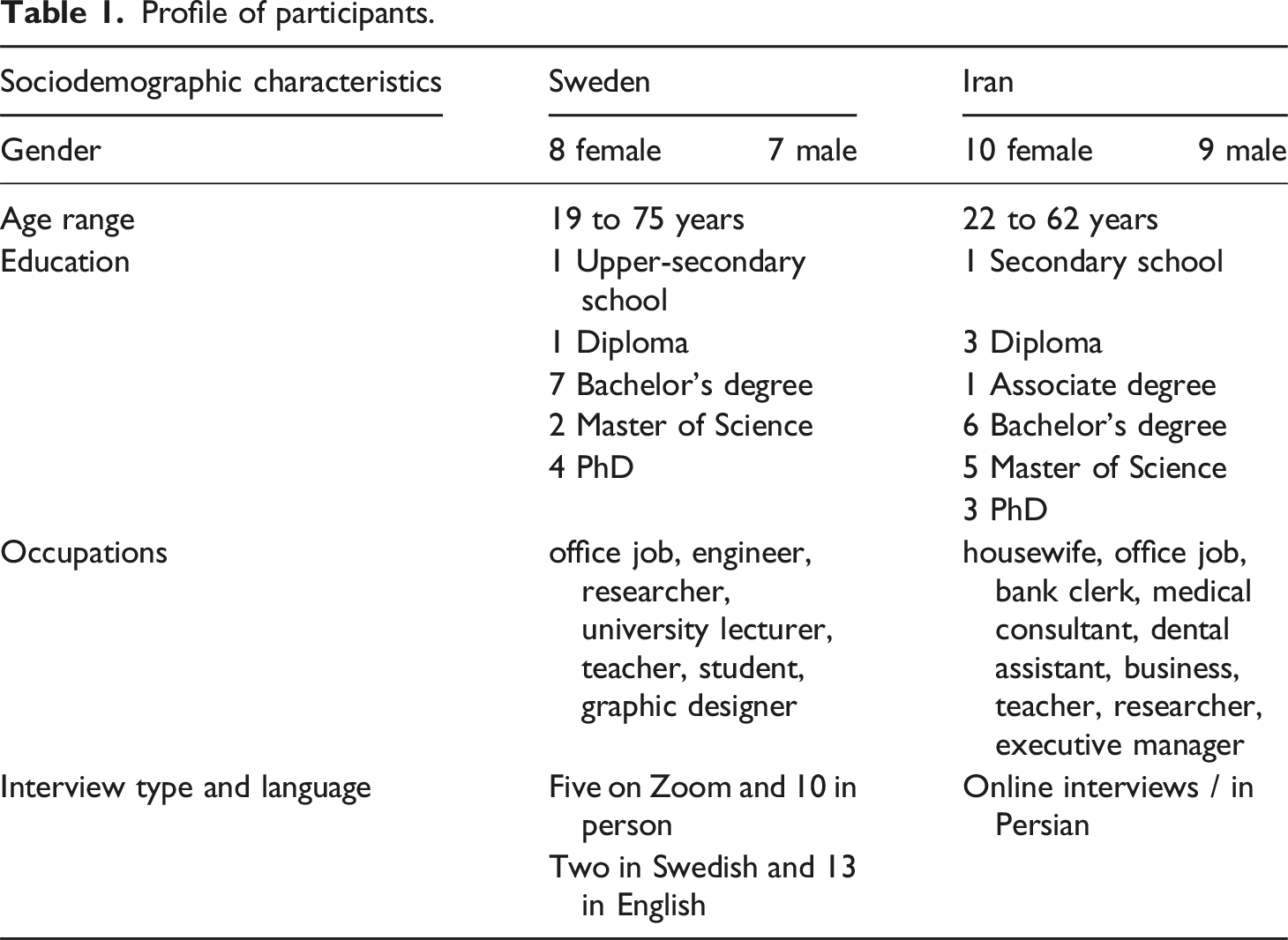
The interviews were based on a semi-structured design (Creswell and David Creswell, 2018), though in a more conversational style. Participants were asked questions focusing on three sections: (1) choices/reflections associated with their consumption practices, how they decide about their purchasing choices, usage of goods, and post-consumption practices including recycling. This section also included questions about activities related to consumption refinement and reductions and whether interviewees are engaged in such changes in their everyday practices or not; (2) reflections about if and how their consumption practices are influenced by their existing societal context in terms of, for instance, cultural norms, rules and regulations, markets, and technology. They were asked to explain it by using examples from their own life or from others’ experiences within their social network; and (3) what forms of ethical consumption they are familiar with and use. We did not use the term ethical consumption in our interviews. Instead, the interview guide included several questions concerning topics often considered important in discussions around ethical consumption, adapted to each of the two countries. We used a flexible interview approach, allowing for follow-up questions based on the interviewees’ answers.
Some follow-up questions were tailored to delve further into specific aspects. For instance, as food market in Iran provides more national and local food, Iranian participants had more things to say about these topics, including how they understand this market regime and how they interact with its different actors (farmers, producers, retailers). However, participants from Sweden, without being asked, were more inclined to talk about, for example, food and vegetables imported from South America and southern Europe and many referred to ongoing conversations in social media. Pointing out such disparities between the two countries provided an opportunity for us to better investigate the role of social regimes; firstly, in shaping the resources, competence and meaning of ethical consumption for people, and secondly, in either encouraging or discouraging people from engaging in such practices.
Findings
In the Swedish sample Ethical consumption was associated with a range of practices prioritizing environmental sustainability and social responsibility. These practices include choosing food and dairy products that are certified as fair trade and environmentally friendly, opting for second-hand items whenever possible, choosing electric cars and bikes for transportation, and substituting vegetarian options for meat consumption. Interviewees in Sweden explained that these products and services are conveniently available through formal channels such as the market, and the systemic and institutionalized support make it easier for them to consciously adhere to ethical consumption criteria. In essence, the market serves as a means for consumers to partially fulfil some of their concerns about everyday consumption practices.
Ethical consumption in Iran is associated with activities rooted in human interactions rather than human-nature relations. This makes sense because it reflects the common perception that individual consumption habits are not often directly linked to being a significant cause of environmental degradation. Instead, policies and regulations are typically perceived as the primary mechanisms for addressing environmental issues, leaving individuals with limited opportunities to actively participate or influence outcomes. Therefore, the ethical consumption realm in this context tends to focus on interpersonal relationships that develop naturally.
A common concern among participants from both countries was the general issue of overconsumption and its harmful impact on the environment, emphasizing the need to rethink consumption habits. However, participants from each country expressed different views on the mechanisms to control overconsumption and had varied opinions on the effectiveness of policies and regulations.
To further explore these differences, we use the “element-based” approach in the following analysis of our data.
Material: having access versus not having access to infrastructures and resources
Materials vary depending on societal capacities. Having access to ‘ethically’ labelled products in the marketplace plays a crucial role in enabling Swedish consumers to make ‘ethical’ choices, however, it doesn’t ensure the fulfilment of ethical consumption. It must be integrated with other elements of practice too for effective results. Sweden is well-equipped with the required infrastructure to support accessibility to eco-labelled, organic, and fair-trade products. Additionally, it is more common in Sweden to provide detailed information on the origin, composition, and carbon footprint of products, as well as the working conditions within producing companies. All these tangible and intangible materials facilitate decision-making for people.
For several Swedish consumers, labels on product packages function as signs that simplify their thinking process and help them make conscious decisions. Availability accompanies trust. “…I think I trust the Swedish food regulations or the EU’s regulations… I don’t worry so much about the quality… I think it (their product) is ethical/legal…” (SM-P5-29). To this participant, ‘ethical’ is close to legal. This participant continued by saying that when something is presented legally in the marketplace (material), it implies that it is also ethical. Another Swedish man responded similarly: “… I have trust in the Swedish process. I trust that the Swedish farmers are doing a great job. They don’t use unnecessary pesticides … I think the best thing is the label… if I see a symbol that I recognize, I know it’s fair, and that’s enough for me (SM-P7-19). Those examples illustrate a strong level of trust in institutions, but can also be seen as reflecting a tendency to be ignorant or overly relaxed about such matters (see Boström and Klintman, 2007 on blind trust towards eco-labelling).
In contrast, in response to a question about organic products and eco-labelling in Iran, one participant said: “… I don’t trust the producers because of the lack of infrastructure. You can’t claim you’re producing organic things independently. How? Where do you produce them? I have to see it or trust the policy. None of this exists, and therefore I don’t trust the products…” (IM-P2-42). Another participant said: “… farmers add chemicals to the soil to make fruit bigger or vegetables grow faster. Meat is full of antibiotics and so on” (IM-P15-62). Similar opinions were repeated by several other respondents. It indicates that they don’t see the market as a place – or a resource – to demand change. People encounter messages that their agricultural system heavily relies on chemical inputs, as reported by Forouzani and Karami (2011). It compounds consumer scepticism about organic farming claims.
The interviewees’ starkly contrasting statements illustrate the significant difference in access to material – here understood as an infrastructure of options and resources - perceived to be ethically trustworthy in Sweden and Iran. With limited access to material – in this case not having proper access to ‘ethically produced’ products or other alternatives, as well as trustworthy information about it – Iranian consumers face more challenges than Swedes in finding their ways to consume ethically. Previous research also confirms that in a social system that provides a limited assortment of ethically framed goods and services the creation of such phenomena requires more creative and individualized initiatives (see De Moor and Balsiger, 2019). Financial situation should also be taken into consideration when it comes to resource availability. One Iranian participant mentioned: “… you can be a responsible consumer as long as you have a stable living situation. Otherwise, it’s very fragile” (IM-P15-62). Financial instability has always been one of the main obstacles in pro-environmental practices (see Wiederhold and Martinez, 2018) but doesn’t necessarily mean that lower-class people completely put aside environmental or social concerns (see Johnston et al., 2011) as we also identified in our study (see below sections).
Competence: do I know what to do?
Competence in our study refers to skills and know-how to perform a practice. It is supported by available education and ways of obtaining knowledge rooted in society. Swedish interviewees noted that they have a foundational understanding of consumption-environment issues particularly regarding labels and their significance, the effects of human actions on the environment, and the individual’s role in driving change (competence). They also talked about numerous public campaigns organized by civil society actors and public authorities with the aim of educating citizens about these issues. A young Swedish man indicated: “… I think in Sweden, you’re almost like brainwashed from the moment you’re born… think about the environment in kindergarten, in the preschool where I worked … they talk about [the environment] all the time, environment this, environment that… almost all the preschools in Sweden, you learn what they [labels] are, what they mean when you have them … so we have a lot of like emblems to show if it’s processed in a good way or not. And you [as a producer] need to be approved by the government, to get this approval. So it’s a long process where scientists look into what they’re doing, from the first to the last step, to get it (SM-P7-19). In some cases, especially younger participants were even proud of themselves for being enough aware of such questions. Regardless of all the advantages of being aware of such issues, and fostering competence and skills, a risk is that this could lead to overconfidence in the system of provision as well as market solutions, potentially resulting in continued unsustainable volumes of consumption. Because of excessive consumption, Sweden has a larger climate and ecological footprint than developing countries (see e.g. Akenji et al., 2021) and Swedish citizens generally face a steep learning curve when it comes to building practical competences that are more oriented toward sufficiency-based lifestyles and approaches, which include activities such as consuming less, sharing goods and services in communities, repairing goods, and developing various DIY solutions (Boström, 2022).
For Iranians, competence is shaped by the prevailing societal system, primarily through training and education. However, it is perceived to be lacking in terms of ethical consumption. One participant indicated “… I don’t know why we don’t have a plan or regulation for these things [ethical considerations in consumption]. What have the people in charge of these things done about it so far? They say they know more than us and that it would be better for us if we handed over the administration of the country to them. We have done so, but they have no plan for these issues. Why don’t they inform and educate us about these things? … as long as there is no regulation, nothing will change. We need a top-down policy to change a pattern. If you see any small sense of responsibility among people, it is a personal thing…” (IM-P3-29). This quote can be seen as a reflection of the absence of competence and skills, which in turn reflect the absence of systematic development to facilitate the development of competence and skills.
Likewise, the following quotes from Iranian participants are examples of emphasizing differences when it comes to obtaining knowledge and skills from the education system and other sources of learning: “… I believe there is no willingness to address environmental issues at the policy-making level. And therefore, no plan for how to link these things to our education system…” (IM-P2-42). “… our officials have no wish to solve our environmental challenges. When we people see the problems, we lose our motivation … Without an active state, individuals are not enough to make changes… the only way out is to replace old, ineffective policies, and try to inform people about these things as best we can (IM-P15-62).
Meaning: what makes sense to me?
In this section, to demonstrate how ethical consumption practices are interpreted, perceived and applied differently in each country the meaning will be discussed under three categories: consumption volumes and forms, buying second-hand goods, and household waste separation.
Volume and form of consumption
16 out of 19 Swedish participants indicated that the consumption volume in Sweden is too high. One woman mentioned: “…the average Swede lives as if we have four planets… I think it’s a very painful insight for Swedish society – to realize that we have to reduce our consumption. In many ways, not only in holiday travel. That can be just one example…” (SF-P6-74). She believes that they are almost trapped in excessive consumption, which completely contradicts the common image of Sweden as a pioneering country in the fight against climate change. Similarly, a man said: “… even if you’re a good and environmentally friendly consumer, you’re still above the limit if you want to be a sustainable consumer as a European citizen. Even if you eat less meat, don’t have a car, or use less plastic, because of the production system and bringing things from abroad, in the end, you’re still above where you should be [exceeding sustainable levels of consumption] …” (SM-P4-33).
If we look at one particular issue, meat consumption, most of the Swedish participants said that they had reconsidered their meat consumption because of environmental concerns, at least at some time during their lives. “… for a while, I didn’t eat meat. Yes, mostly just for climate reasons. And then when I went on my exchange to Singapore, I decided that I wanted to be able to eat anything, and after coming back I still eat meat sometimes. And enjoy it, of course.” (SF-P13-27). Interestingly, almost none of the Iranian participants identified themselves as vegetarians. While some individuals said their childhood dietary habits were better than their current ones in terms of the variety of vegetables consumed and the methods of preparation, they placed no particular emphasis on the exclusion of animal protein as an ethical aspect. Some participants, particularly male ones, dismissed vegetarianism as nonsense, arguing that the body requires animal protein for optimal health. For several participants, what is crucial is adhering to a balanced lifestyle that incorporates everything in moderation without excessive indulgence. One Iranian participant said: “I believe that if we keep a balance in everything, we will not harm the environment or society. It’s a cycle. We can eat meat; we can enjoy life by keeping balance. There is no need to be entirely a vegetarian or a carnivore. We can have both. But everyone should consider that maintaining balance is important” (IF-P14-47).
Keeping balance is a fundamental and deeply ingrained concept in Iranian culture. It holds that if one avoids overdoing or underdoing things, balance will be maintained with and in nature. In this philosophy, it makes more sense to maintain a balance in one’s use of resources at the right time and in the right amount than to abstain from them. Both nature and the human body should be kept in equilibrium, and neglecting basic needs (in this case, which interviewees interpret as eating meat) would upset this delicate balance. This idea puts forward a notion of ‘ethics’ that may go beyond the current Western understandings of ethical consumerism. Adhering to this idea has become increasingly difficult in today’s complex societies, and it is unrealistic to expect individuals to be cognizant of all the detrimental consequences of their actions. Nonetheless, equilibrium can be achieved in one’s personal life by abstaining from excessive consumption and refraining from insufficient consumption. This perception has some resemblance to the idea of the consumption corridor in the literature, which suggests that remaining within planetary boundaries can lead to a sustainable society and environment (see Fuchs et al., 2021).
Second-hand consumption
The Iranian participants partially expressed reluctance to second-hand shopping for various reasons. Mending clothes and repairing broken things, however, were more common among them. One source of the Iranians’ reluctance is the negative social-psychological stigma associated with second-hand consumption in their culture, especially clothing. For example, a woman said: “… I don’t have a good feeling about it. We normally think second-hand is for those who can’t afford their living costs. I remember once we bought a second-hand sofa, and after a short time we returned it. We didn’t even mention to the people around us that it was a second-hand sofa… (IF-P1-35). Fear of losing social prestige constitutes a barrier to overtly buying second-hand goods among some participants. However, because of the volatile economic situation in Iran, there has recently been a notable increase in the popularity of second-hand markets using digital platforms. Although more people are now interested in this market than before, none of the Iranian participants mentioned environmental concerns as motivation.
In addition to the unpleasant socio-psychological feelings, there are other inhibiting factors to second-hand consumption. “…I don’t know if the previous owner sold it [intentionally] or if it’s stolen (IM-P2-42). The second-hand market is associated with a lack of transparency, and therefore they choose to avoid it as much as possible. There is a cultural/ethical principle at work here. In Iranian tradition, it is seen as unethical to use other people’s belongings if you are not aware of the previous owners’ true feelings at the time of handing over the things. According to them, people may have had their belongings taken away for reasons such as poverty, robbery, or having to flee the country due to feeling insecure. In such situations, behaving ethically means refraining from engaging in activities involving items of unknown origin.
On the other hand, and in line with growing debates about excessive and wasteful consumption, Swedish participants described the second-hand market as fun, entertaining and exciting, as well as an economical choice. They frequently referred to environmental concerns as a motivation to promote second-hand consumption though financial considerations also play a significant role in the development of this market (for similar findings, see Bohlin; 2019; Persson & Klintman, 2022). One Swedish participant indicated that second-hand is “… the first option to look for, and then if I can’t find what I want, I’ll buy it from a normal store…” (SF-P13-27). Interestingly, a Swedish man was a bit dissatisfied with the limited variety of second-hand clothes for men: “… I bought some clothing in second-hand shops. I think that second-hand in Sweden is very directed towards women. If you go into second-hand [shops], it’s like all these women’s things, women’s clothing, women’s shoes and you have a small section for men (SM-P7-19). Arman and Mark-Herbert (2022 suggest when it comes to buying second-hand things, Swedish people do it out of concern for the environment because of their more developed environmental education and facilitating systems. Nevertheless, the impact of this market on the prevention or maintenance of overconsumption needs further research.
Household waste separation
Household waste segregation is a topic worth considering to better understand how the meanings of ethical consumption connect with the other elements of material and competence. Almost all participants from Sweden said that they separate their household waste and see it as a routine practice. Some of them have no serious pro-environmental motivation for doing it but rather do it out of habit and is an easy practice given the well-organized support that municipalities provide to citizens to begin the recycling cycle from home. “… Yeah, [I do it] as much as I can… the recycling station is nearby, it’s quite easy to put plastics in one bin, cardboard and glass and stuff like that. Yeah, I trust that it will be recycled (SM-P8-49). Consumers engage in the practice because they know there is a supporting system (material), that requires minimum effort (competence), and it makes sense to be engaged as they perceive it as partaking in collective responsibility (meaning). Given the institutionalisation of waste segregation, one can argue it is not a strong proof of environmental concern and may reduce the role of meaning. However, home waste separation makes sense because of the waste management system of the country. “… if I do my good work at home, yes, the government will take care of the rest for me, and that’s really good (SM-P7-19).
For the Iranian participants, however, it functions differently. Most of them are generally not engaged in this practice because they find it meaningless in the current situation as there is no practical waste management plan in place to take care of the separated waste. Some, however, are engaged for individual philanthropy reasons. One interviewee says: “…I segregate because some people make money from them. I use transparent plastic bags to help collectors see each bag’s content. I have also heard someone write a short note on each bag about the content… It is a small help… It is a way for some people to make money (IF-P9-36). Another person said: “… I segregate waste because I know child workers go into big bins and look for plastics, papers, metal and so on. I put my waste in bins separately to help those people. I don’t want them to become dirty when they are looking for these things” (IF-P5-22). Interestingly, similar reasons prevent some others from engaging in household waste separation. “… no, I don’t separate waste. Because of this economic situation, as soon as you put your waste in bins, people who make money from this [waste] will separate it… Even if we separate our trash, what happens to it?… there’s no proper mechanism for the rest of the work (IM-P3-42). Household waste separation does not make sense to many Iranians because they believe that their effort will not lead to any result. Statistics supporting their opinion indicate that burying waste is the primary method of waste management in Iran, and only 8% of municipal waste is recycled (Pakpour et al., 2014).
Discussion
Ethical consumption among the Swedish interviewees is mainly interpreted as an environmentally oriented practice such as buying eco-labelled, second-hand goods, using electric cars and dealing with overconsumption challenges, including eating less meat. The role of well-developed environmental education, civil society and grassroots organisations, as well as Sweden’s welfare system (Pecoraro and Uusitalo, 2014), explain why Sweden has a higher profile in ethical consumption in comparison to Iran. These societal capacities create materials, meanings, and competencies that facilitate ethical consumption. In Iran, environmental concerns related to consumption are either not part of the conversation or are still in their infancy. As a result, Iranians tend to prioritize other aspects, such as philanthropy, over environmental considerations when it comes to ethical consumption. For them, ethical consumption encompasses behaviours that take into account the living conditions of people they know personally or who live in their immediate surroundings. These differences are due to complex networks of elements within the social setting, which can be explained by two interconnected dynamics:
The first dynamic regards how the creation of different forms of ethical consumption is to a significant extent shaped by the gradual institutionalization and mutual integration of practice elements. Having access to materials in the marketplace and trustworthy information through, having the competence and skills to use the material, and perceiving a meaning in the performance of such practices are crucial factors in further developing ethical consumption. This reading of the creation of ethical consumption implies that, in a given society, consumers’ choices are shaped by institutions and modes of production (see Chatzidakis et al., 2021). In other words: socio-technical regimes encompassing the supply process and market dynamics can either prevent individuals from actualizing their consumption-related considerations, as observed in many cases in Iran (e.g., not having access to resources such as trustworthy information and lack of competence) or enable them to do so, as exemplified by some cases in Sweden (e.g., developing fair trade market, environmental education, normalizing buying second-hand goods, and also facilitating household waste separation). Activities such as recycling, buying fair-trade and second-hand things, biking and so on seem to Swedes to be the routine performance of a common lifestyle within ethical mindsets. Consumers are not simply passive bearers of ethical consumption (i.e., automatically determined by socio-technical regimes). Instead, they actively engage in fostering ethical consumption and are creatively creating new pathways. In this dynamic process between innovation at the level of niches and structural/cultural impact at the level of regimes, the accumulation of different performances recreates different versions of ethical consumption across time and space (Hargreaves, 2011; Karimzadeh and Boström, 2023; Watson, 2012).
What makes this dynamic interconnectedness possible in Sweden is the alignment of policy intervention with grassroots mobilization, such as the environmental movement and engaged consumers. This collaboration facilitates the creation of systems for ethically produced materials, leading to an effective configuration of the elements of practice. Although Swedish participants pointed out some criticism of their country’s environmental policies, several expressed a belief that their society is one of the best organized in the world when it comes to labelling, the market for organic products, fair trade, recycling, and green transportation. In Sweden, the required components for fostering ‘ethical consumption’ exist (Arman and Mark-Herbert, 2022) and mutually reinforcing, hence enabling individual consumers to participate. These components include: the market that offers eco-labelled products; the infrastructures that facilitate their waste management (such as easy access to recycling systems); the role of media, campaigning, and both formal and informal education system (e.g., schools and civil society/public campaigns); regulations like the EU regulation on organic laballing which ensure transparency in production systems; and civil society networks that encourage social vigilance on these matters. Nevertheless, this system still largely remains within an eco-modernist neoliberal environmental governance frame (see Isenhour, 2010) rather than a more radical one.
In connection with the previous explanation, the second dynamic explains why ethical consumption has more individualized and case-by-case manifestations among Iranian participants. Given the social structure, consumers ascribe particular meanings to ethical consumption, which is more person-oriented, and therefore create customized forms of material and competence to make sense of the practice. In such a situation, it is very difficult to link elements of practice to each other because they lack support from the ruling socio-technical regimes; therefore, the duration of actions is short and no long-term significant effects are expected. Instead, they have personal definitions, unwritten rules, and small-scale resources. Align with previous research (see Hasan et al., 2023), philanthropy is the main motivator of Iranian consumers when they think and act ethically. For instance, for ordinary consumers in Iran, fair trade does not mean supporting farmers in other countries thousands of kilometres away. They do not even have access to so-called fair-trade products such as bananas, coffee, or tea offered in European markets. To them, fair trade means supporting a local retailer, a young shopkeeper, or an old seller who runs a small shop in the middle of nowhere in the countryside. Moreover, ethical consumption manifests itself in buying ‘unnecessary’ things from sellers who need to sell something to meet their living expenses. For them, purchasing groceries from local shops instead of chain markets, which are swallowing up retailers, embodies ethical consumption. To be sure, this type of locally oriented buycotting exists in Sweden too (supporting local business) but may not be the most typical way of expressing ethics through consumption.
Conclusion
This study deepens our understanding of ethical consumption in two ways. First, it sheds light on the role of sociotechnical regimes in facilitating or hindering ethical consumption. Secondly, and relatedly, it allows us to identify the disparities in the perception of ethical concerns among people in different societal contexts. The study achieves its main objective by demonstrating that Iranians- and potentially other non-Western nationalities, about which we know less regarding ethical consumption- do consider ethical issues in their everyday consumption, however, they do so in ways that differ from the established forms of the phenomenon in Western cultures, such as Sweden, and likely in a more fragmented and less institutionalized manner.
We suggested that the valuation of and practice of ethical consumption by members of society are influenced by dynamic relationships between factors at multiple levels. Hence, we reject the flat ontology contained in typical practice theory. This does not prevent us from using such an approach. The development and routinization of practice indeed require essential elements (material, competence, and meaning) that are created and developed through the interplay of macro-, meso- and micro-level factors. We found that ethical consumption is more systematically developed/integrated in Sweden than in Iran for the following reasons. In Sweden, it can be achieved through a productive synergy of agency and structure. When new meanings are ascribed to consumption patterns to make it more socially and environmentally friendly, new demands are created and call for associated materials (e.g. market availability). This is followed by new skill/competence (e.g. knowledge about socio-environmental consequences of consumption, knowledge about labels and their meanings, knowing how to repair or share goods) in how to take advantage of such materials. Important to stress is that this does not necessarily mean that individual consumption has less negative impact on the environment in Sweden than in Iran. An eco-modernist approach to ethical consumption (see Boström 2003) competes with more radical sufficiency-based approaches in Sweden (Callmer 2019) because there is still a lack of integration among practice elements to facilitate the mainstreaming of ethical practices for countering excessive consumption.
We conclude that ethical consumption may spread among a larger group of people in a society when the elements of practice are synchronized/integrated over time. Otherwise, it arises as individual discrete actions that are less likely to turn into practices and become social norms, as they fail to forge links with other practices related to the dominant sociotechnical regime of a society.
A key implication of our findings is that ethical consumption needs to be understood in relation to specific contexts and circumstances and therefore cannot be either comprehended or implemented universally in the same way. Due to the ethical load of the concept, it should be discussed from different angles (e.g., ethical consumption for whom? promoted by whom? expressed in which ways through what means and with what related cultural meanings? with what constraints, opportunities, and dilemmas?). What is certain is that the definition and conception of ethical consumption is not coming to a historical end and will continue to attract scholarly attention, hopefully in many more geographical contexts than have been covered in the literature to date. The second implication is that by drawing on a combined theoretical framework we argued that ethical consumption is not merely an individual decision taken by well-informed people about environmental and social issues. Instead, its development largely depends on the societal regimes and their capacities to facilitate such alternative consumption, which key actors in society can strategically and creatively build on and even try to reconfigure. In countries like Sweden, a core challenge for the coming decades would be to switch towards more of sufficiency-based consumption. In countries like Iran, a key challenge would be to initiate more coordinated (less fragmented) efforts of ethically conscious consumption, for example by more strategically linking to existing cultural ideas such as that around the notion of balance. Thus, the convergence of interactions among societal contributors enables a greater number of people to engage in conscious consumption, fostering a broader commitment to ethically informed decision-making.
Footnotes
Declaration of conflicting interests
The author(s) declared no potential conflicts of interest with respect to the research, authorship, and/or publication of this article.
Funding
The author(s) disclosed receipt of the following financial support for the research, authorship, and/or publication of this article: This work has received funding from the European Union's Horizon 2020 research and innovation programme under the Marie Skłodowska-Curie; grant agreement No 101022789. The funders had no role in study design, data collection and analysis, decision to publish, or preparation of the manuscript.
