



Abstract
Food consumption is being reconfigured as a consequence of consumers’ ethical concerns. While preferences and tastes may be influenced by broad ethical positions, constructions of social identity also reflect shifts in food consumption. Important tools within this nexus are ‘future foods’, produced through novel technologies such as artificial intelligence or genetic editing, supporting consumers in the construction of identity markers. Through 24 (n = 121) focus groups in rural and urban Australia, we explore to what extent future foods contribute to alleviate tensions between broader ethical principles and consumer identities. We argue that the collective discourse around future foods has the potential to shift the culture of food ethics in the future, enabled through three moral identity markers. Specifically, identities of citizen-consumption that view ethics as ‘eating for change’; nationalism as a form of patriotic morality that encourages the consumption of national brands and protectionism; and nostalgic knowledge and historical identities of the past to reconfigure ethical ideals for the future. These discursive identity constructions shed light on how consumers may redefine food ethics in the future, legitimising citizenship through demonstrating virtue, patriotism as loyalty to social groups, and nostalgic capturing of history to ‘ethicise’ the future.
Keywords
Introduction
Over the past few decades, socio-cultural research has emphasised unique evolutions in food consumption. An increasing number of consumers are participating in cultural systems of ethics, exhibiting enacted moral work towards food available to consumers (Balderjahn et al., 2023; Lehtokunnas et al., 2022; Salonen, 2023), whilst also negotiating resistance or cooperation with wider institutional systems to assert social and market power rights as consumers (Domaneschi, 2012; Harrison et al., 2006). Shifts from consumption being regarded as a rational behavioural choice have evolved to food playing an important role in cultural and social processes for consumers (Bartels and Onwezen, 2014; Ulver-Sneistrup et al., 2011). An important facilitator in this regard is food ethics, substantiated from broader approaches to consumer ethics (Chatzidakis et al., 2021). Food ethics occur as an overarching cultural discourse that incorporates various instantiations of consumer morality that shape the public sphere (Johnston et al., 2011). Ethical undercurrents within the food system have the potential to disrupt existing forms of diets, lifestyles, identities, rituals, and practices in consumption (Salonen, 2023).
We extend the theory of food ethics to elaborate on how ‘future foods’ support consumers to construct moral identities. Specifically, future foods, defined as foods produced using novel food technologies (e.g. big data, artificial intelligence, robotics, controlled environment agriculture, and genetic editing) (Siegrist and Hartmann, 2020), act as tools to construct identity markers and appoint social memberships (Fozdar, 2021; Grosglik, 2017). To explore this, we rely on the intersection of food ethics (Johnston et al., 2011) and social identities (Tajfel, 1978) across three themes that signal moral identities: (1) ethical consumption as a form of citizenship (Johnston et al., 2011); (2) political ethics in the form of nationalism (Onstenk, 2023); and (3) ethical knowledge in the form of nostalgia (Cutcher, 2008).
Across these themes, we explore future food consumption amongst both rural and urban groups in Australia, using the following question to guide our research: How do rural and urban Australian consumers view the role(s) of novel food technologies (and their associated future foods) in constructing social identities? Australians have been shown to act as agents for ethical change through growing their own household foods as a form of anti-consumption (Keegan and Breadsell, 2021), while further, showing differences in asserting ethical influences in the marketplace as consumers (Domaneschi, 2012; Júnior, 2020). We explored our research question through focus groups (Gamble and Kassardjian, 2008; Vidal et al., 2013), uncovering three moral identity markers: (1) both rural and urban participants engage in ethical demonstrations of ‘citizen-consumption’ via symbolism, such as organic or non-GMO to display ethical principles, with beliefs that preferences for food may shift ethical choices in the future; (2) nationalism used as an ethical tactic that displays group membership and patriotism in food consumption through moral work such as protectionism; and (3) capturing nostalgic knowledge to one’s ethical identity in past times, reconfiguring ethical ideals for the future. These discursive identity constructions shed light on how consumers may redefine food ethics in the future.
Theoretical framework
Theory anchored in food ethics conceptualises food as a cultural conduit to enact consumer undercurrents such as civic mobilisation (Fozdar, 2021), grassroots food sovereignty (Sage, 2014), ethics-based consumption (Thompson and Kumar, 2021), and community-supported agriculture (Thompson and Coskuner-Balli, 2007). In this vein, consumers become determining agents affecting and influencing the social and cultural processes of food consumption (Lehtokunnas et al., 2022). Consumer ethics begins broadly from research exploring the intersection of ethics and culture (e.g. Chatzidakis et al., 2021). More recent traditions focus on themes such as social identities to determine the nature and scope of ethical consumption (Papaoikonomou et al., 2016; Ulver-Sneistrup et al., 2011). Previous research exploring food ethics suggests that food consumption helps to ameliorate consumer identities within social groups (Carolan, 2022). In this way, food culture and the social environment in which it is consumed become a mirror that reflects both individual and collective forms of ethics (Júnior, 2020), as well as marks of membership in cultural groups (Fozdar, 2021). Ethical food consumption can help us view the relationships consumers construct between various identities to solve social or cultural issues (Johnston et al., 2011).
Social identity theory has been recognised as central to the construction of the self (Belk, 1988; Papaoikonomou et al., 2016; Weber and Francisco Maffezzolli, 2021). Social identity is defined as an ‘individual’s knowledge that he [they] belong to certain social groups together with some emotional and value significance to him [them] of this group membership’ (Tajfel, 1972: p. 292). Within ethics, social identity theory helps extend the ideological, symbolic, and socio-cultural aspects of ethics (Chatzidakis et al., 2021), to pinpoint dynamic relationships between social groups and identity markers that help guide members’ consumption, thus integrating the theory of the role of self and identity in group and ethical phenomena (Turner et al., 1987). Within food consumption, social identity theory is integral to understanding food consumption choices in relation to social environments. The sociological perspective of food consumption has evolved through a lens of conspicuous consumption that draws on social class and distribution dictated by the bourgeoisie (Ferguson and Zukin, 1995), to institutions and technologies informing what and how food should be grown, distributed, and consumed (Domaneschi, 2012).
Australia has been through a vast number of technological changes within its food system to battle extreme climates, water scarcity, and natural disasters, while maintaining status as a key agricultural producer (Fleming et al., 2018). Australian consumers may exhibit unique social identity constructions in food consumption due to their national or cosmopolitan identities that have been shown to influence domestic purchasing (Fozdar, 2021), whilst also romanticising personal connections to local products (Germov et al., 2011). In Australia, the split between rural and urban in consumption choices has become a perennial lens through which cultural researchers explore the similarities or differences between such groups (Meyer et al., 2012; Ziersch et al., 2009). Differing social identity formations may be formed broadly under certain identity markers that provide self-reference guidance (i.e. ethnicity, nationality, social class, and age) (Weber and Francisco Maffezzolli, 2021; Tajfel, 1978; Reicher et al., 2010). For instance, consumers have been shown to engage in food waste initiatives as forms of engaging in civic identities for change (Keegan and Breadsell, 2021).
Furthermore, these identity markers may show up through trends of buying locally to support proximate communities and immediate shared cultures. For example, campaigns such as ‘Go Local First’ or ‘Buy Australian’ shed light on the convictions of consumers to support nation-branding and to see patriotic identities as a foundation of consumption that help display ethical signals (Castelló and Mihelj, 2018). Understanding identity markers of Australian consumers adds to knowledge of consumers’ anxieties related to their future consumption. When consumers consider consumption states as a base for discourse, they consider current identities in the context of events and contemporary issues, with the undercurrent that identities and ethics may evolve in the future (Sheth, 2020). In this regard, future foods have several critical ethical differences not known today that may shape or influence moral identities around food consumption. For instance, cell-based meat may cause tension between the identity of ethical vegans, animal rights vegans, or omnivores who consider the tradition of cooking meat integral to their culture (Kerslake et al., 2022). By integrating food ethics and social identity as a lens to the consumption of future foods, researchers can better understand how moral identities may shift broader ethics in the future.
Methods
The data were drawn from 24 focus groups (n = 121) in Australia as part of a broader research initiative exploring the attitudes and perceptions of Australian identities in relation to novel food technologies and their associated future foods. The method included online focus groups (90 min), which are useful in enabling participants to consider future implications (Vidal et al., 2013), expose collective discourse that sheds light on social identity (Munday, 2006), and explore constructions of group discourse and narratives (Barbour, 2008). Participants engaged in talking about their views and imagined interactions with the technologies, resulting in the collection of rich descriptions that unveiled to us their constructions of responses to each technology (Macnaghten, 2021). Further, online focus groups allowed for the exploration of participants’ cognitions, with the aim of moving beyond intent, to emotions, and the revelation of underpinning values (Fozdar, 2021).
Research has shown that differences in attitudes and cultural constructions towards future food production techniques may exist depending on where participants lived, specifically their physical proximity to, or distance from, horticultural food production (Meyer et al., 2012). Therefore, our participants were recruited who lived within close proximity to major food-growing areas in each market, as well as participants who resided in urban centres. We conducted the focus groups in the major urban capitals of Brisbane, Melbourne, Perth, and Sydney and in rural areas within Victoria, New South Wales, and South Australia. Each group had a demographic representation of ethnicities, age, and gender. Participants’ ages ranged from 18 to 65. As the research was to explore constructions of identity, representativeness or generalisations are not claimed, as the goal was to generate discourse between participants which reflected their own experiences (Fozdar, 2021).
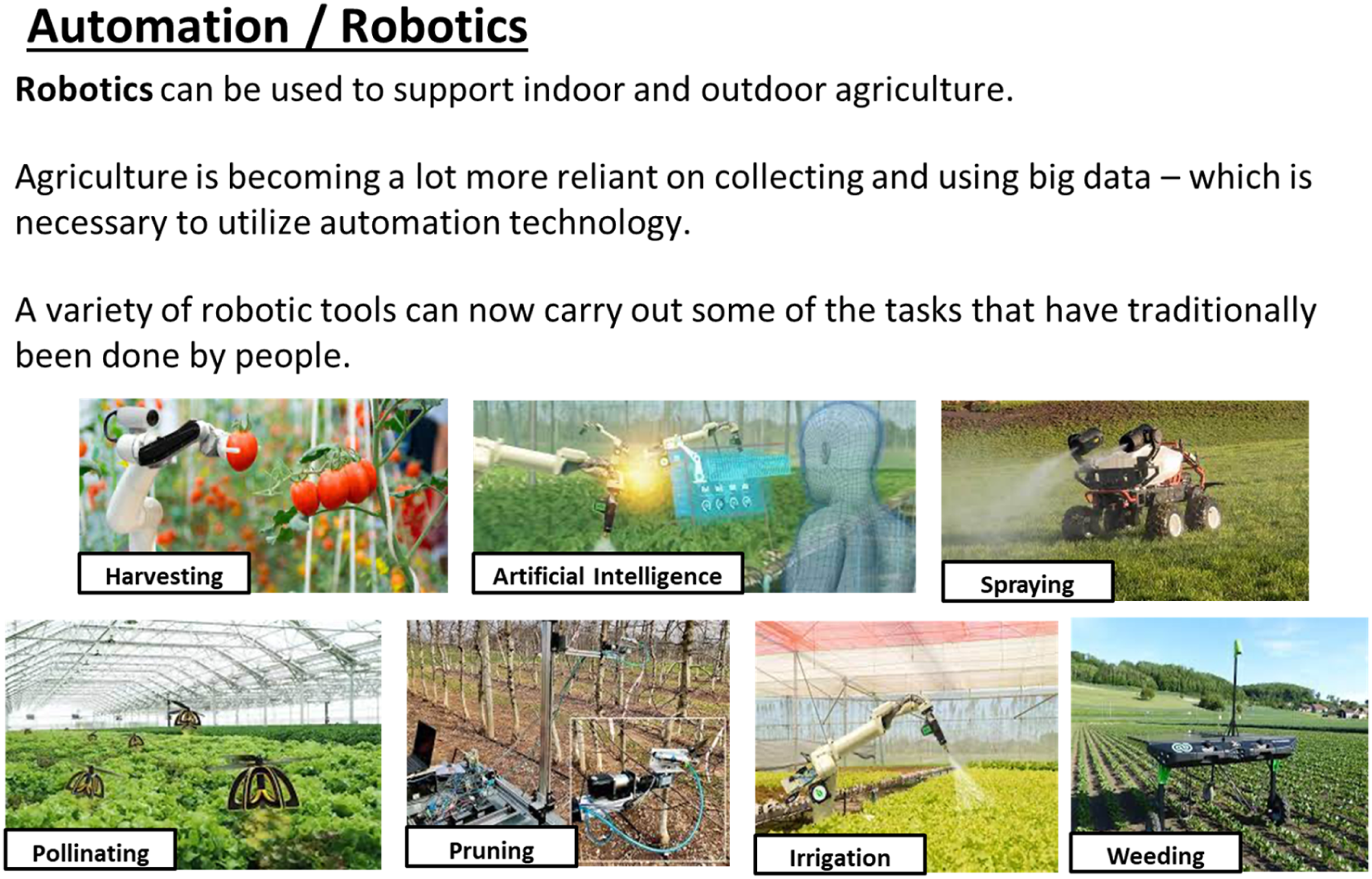
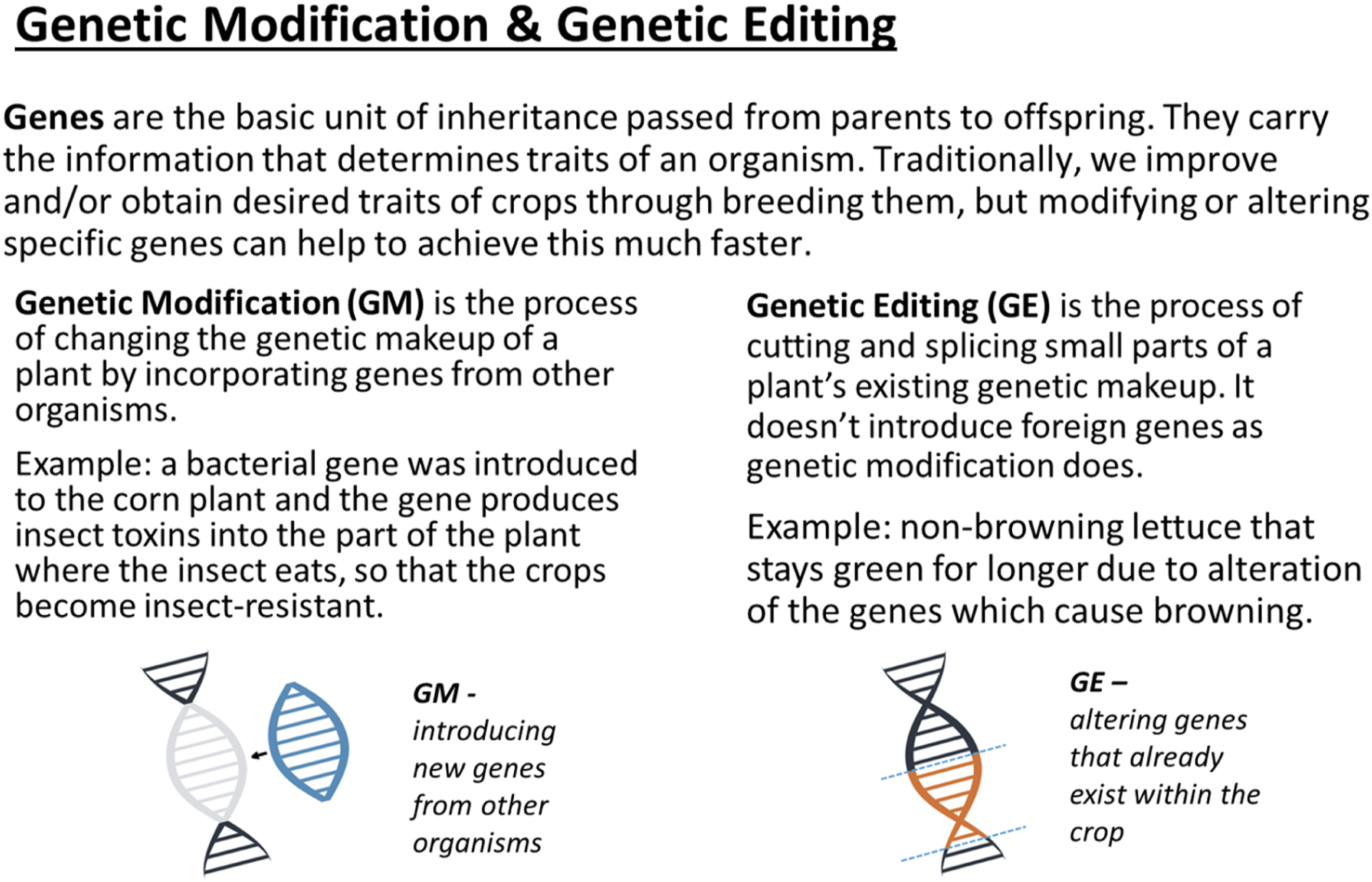
A set of three different technologies was used to elicit novel future food technologies (Figures 1–3). The technologies were selected by the researchers for two reasons. First, the researchers reviewed literature on new food technologies to come up with a list of food technology categories (Siegrist and Hartmann, 2020). Second, the researchers ran four pilot focus groups with both younger and mature cohorts to ask them how familiar they were with the technologies and if they triggered open thoughts and narratives of the future, food in the future, and their identities alongside the technologies. It was discovered that participants did not have extensive knowledge about the technologies and were told that they would merely be discussing their perceived ideas about the new technologies alongside their identities. Participants were explicitly told there was no correct answer and that imaginations of the future alongside such novel technologies were the key purpose. Cueing participants in this way supported participants in knowing that they did not need to have any prior knowledge of the technologies, which was useful in enabling participants to project and imagine various circumstances (Vidal et al., 2013). We adjusted these learnings from the pilot focus groups and brought forward the consistent narrative into the focus groups. Controlled environment agriculture concept. Automation / robotics concept. Genetic modification and genetic editing concept.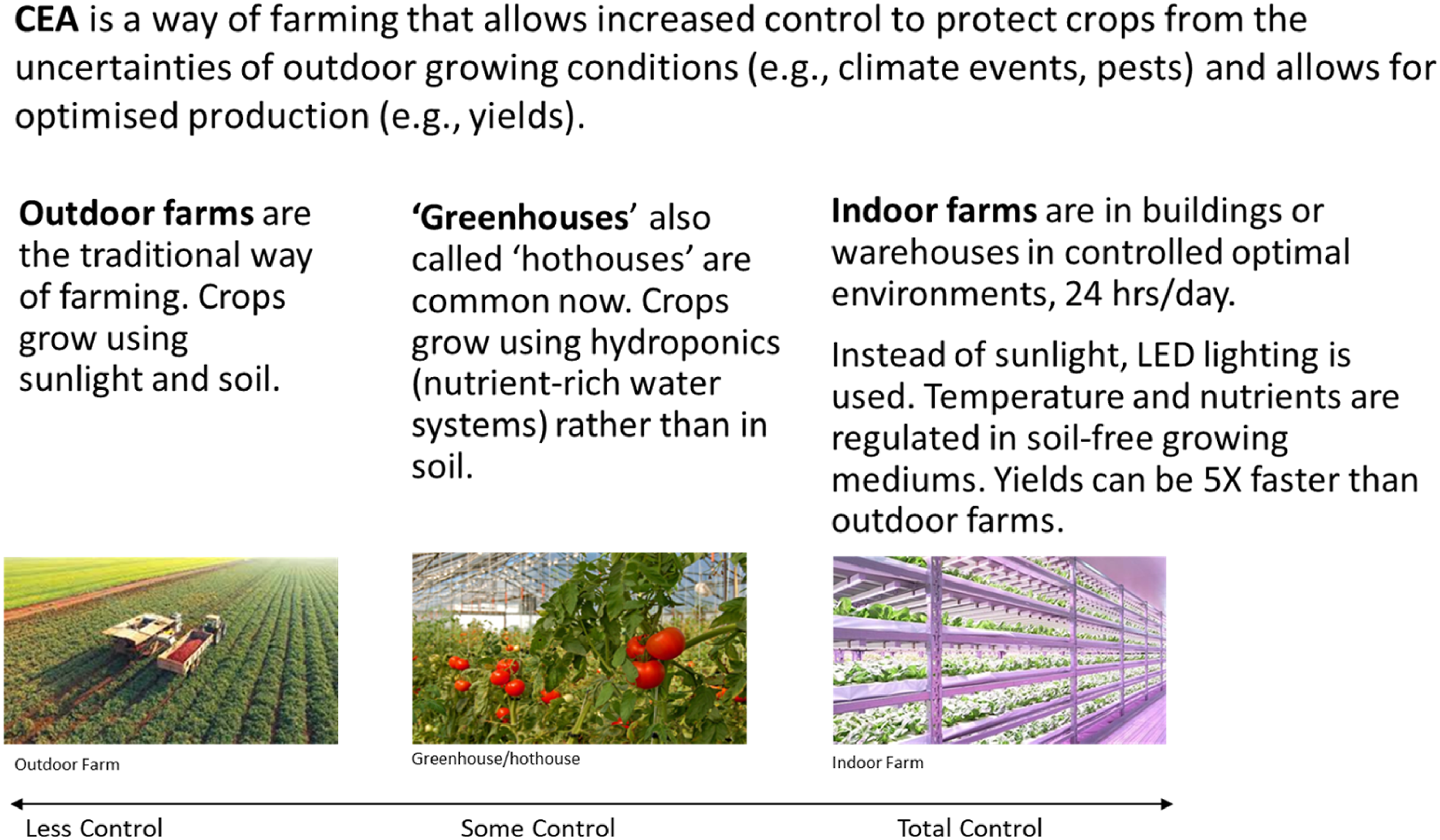
During the focus groups, two moderators asked participants about how the technologies made them feel, including the roles of the technologies/foods, emotions, and interactions to elicit discourses about identities (Weber and Francisco Maffezzolli, 2021). Discussion flowed naturally and the use of online focus groups did not hinder this. The structure was open conversation; however, the moderators did have an interview guide if the discussion was not flowing.
Thematic analysis was conducted with use of open and then axial coding to identify major discursive themes emerging from the data (Braun and Clarke, 2012). A group of three researchers was involved in an iterative coding process to identify key themes. The researchers worked closely together identifying and contesting patterns and collaborating on definitions of codes. Open coding is an analysis technique employed to identify the general patterns that convey meanings that reoccur in data. As the initial phase of the coding process, open coding involves applying codes that are derived from the texts of collected transcripts (Strauss and Corbin, 1997). Following the completion of open coding, the focus group transcripts were then axial coded by reviewing the open codes to reveal more definitive themes. Axial coding is the coding technique used to identify meaningful relationships among the open codes, across the entire dataset (Williams and Moser, 2019). In axial coding, the researcher may compare codes or link them together for a more holistic understanding of a wider topic related to the research question(s). With this axial coding technique, we identified overarching themes based on primary patterns that emerged earlier in the open coding process.
Social identity ethical markers in rural and urban Australia
Our findings show that food ethics are enabled through three identity markers: (1) identities of citizen-consumption that views ethics as ‘eating for change’; (2) nationalism as a form of patriotic morality that encourages the consumption of national brands and protectionism; and (3) nostalgic knowledge of the past to reconfigure future ethical ideals. The identities shed light on how consumers may redefine food ethics in the future, legitimising citizenship through demonstrating virtue, loyalty to social groups, and capturing historical knowledge to ‘ethicise’ the future.
The citizen-consumer
Ethics and demand
Consumers assume civic identities by acting out the roles of citizen-consumers through symbolic consumption choices (i.e. green/environmental/organic consumption) (Chaudhury and Albinsson, 2015; Johnston, 2008). For example, organic food consumption has been associated with the promotion of environmental and social responsibility as citizen-consumers (Grosglik, 2017). In contrast, ‘mainstream’ or ‘mass produced’ products signal an ideological tension between the working class, which can only afford to buy mainstream goods, and the virtuous symbolism associated with citizen-consumption (Johnston, 2008). Both our urban and rural participants indicated that, in the future, foods created through future technologies may play the role of mainstream products, since they will be high yield, whilst ‘traditionally’ grown produce may come to symbolise a ‘premium’ natural product, indicating differing downstream demands. For instance, Sally (rural) noted that ‘I think produce that is naturally developed with [traditional] farmers will be a higher quality and higher price. Whereas vegetables that are going to be grown under lighting in mass-produced conditions will mean that the prices are going to be more affordable to people who don't have a lot of income … eventually there'll be different qualities of fruits and vegetables’.
Participants took this further and discussed that purchasing future foods may also be motivated by an urban disconnect to food as more people move to cities. Laura (rural) noted, ‘I'm inclined to think that those inner-city dwellers that have a complete disconnect with where their food comes from, would not have an issue with food grown in plastic tubes. I don't think they'd have a problem with that. But I think people that know about natural food production are saying there are so many chemicals used on food production’. This implies that when consumers become ‘disconnected’ to how food may be grown, there is willingness to accept future foods.
Furthermore, in line with thoughts on social class separation (Johnston, 2008) and ability to engage in the purchasing of ‘premium’ foods (Grosglik, 2017), ethical purchasing to display citizen-consumption may be reserved for those privileged enough to hold ethical beliefs (Miles, 2012). Donna (urban) commented, ‘I think there's definitely the market for the two. I like to cook from scratch. So, I like to have it full of flavour, and if that means I've got to pay a little bit more to get that, then so be it. Whereas yeah, we've got friends who have you know, huge amounts of kids. They've got to feed the hordes … so quantity for them rather than flavour’. Further, having the privilege to pursue such choices may become citizen-consumption of the elite. Todd (rural) mentioned, ‘It could become this elite thing, right? Like fine dining … certain people will pay a lot for that thing. You just end up having separate parts of society enjoying different things’.
Eating for change
Food consumption may become a form of ethos in the future, implying that ‘eating for change’ can be construed as an ethical identity marker of the consumer to function as a citizen (Johnston and Cairns, 2012). For instance, food activists have shown eat-local mobilisation as an individual form of political engagement (Huddart et al., 2018). Both our rural and urban participants noted that food ethics have evolved over time to support multiple choices in how consumers want to vote with their dollars. For instance, ‘I guess it's kind of like the chicken factor. I mean 15 years ago everybody used to buy eggs from chickens that were shoved in cages the size of their heads, and nobody thought anything of it. And now you've got free-range chickens, you've got caged ones, and non-caged. Well, you know what I mean? There's 600 versions of the one thing in the future’ (Jenny, rural).
In addition, participants noted that with increased options of future foods, there would still be ethical considerations made in whether to support future foods. Gerald (rural) stated, ‘There will be big companies who will be able to afford the big technologies and get the big scale … But I would hope as well that smaller producers will be special separate boutique producers that could charge higher … if you are happy with the technologies and the mass production of fruit and veg, you can do that. Or sometimes you would like to have something that is hand grown … so I think it's also about [future] choices’.
Other participants mentioned that ‘eating for change’ may include independent growing in the future, rather than voting with their dollars to either pursue or avoid future foods. Ruth (urban) stated, ‘You don't know how natural it's going to come unless you're walking into your backyard, and, you know, you've got some veggies out the back, and you haven't put anything on it’. Other participants noted that growing their own vegetables may help them avoid artificial ingredients or processes that future foods may incur. For instance, ‘Unless I'm growing it myself, I can't even say if it’s organic, because they're going to have done something to it to get it to that stage’ (Donna, urban).
Nationalism
Supporting the national brand
Another identity marker described as having an influence on social identity has been referred to as nationalism (Castelló and Mihelj, 2018) or consumer citizenship (Polese and Seliverstova, 2020). Nationalism has been defined as a moral orientation that provides a sense of identity and belonging to a national group, helping guide food purchasing consumption towards nation brands over imported products (Fozdar, 2021). Both urban and rural participants were strong supporters of future foods, under a condition that the ‘Australian Made’ national brand be apparent on the products. For instance, ‘Location where it was produced is a big one for me. I try to support Australian farmers and working. If I could get food in the future made with different technologies that was produced in Australia, I’d be all for it’ (Riley, urban).
Furthermore, nationalism views imported products as damaging, as they may have negative impacts on the local economy (Shimp and Sharma, 1987). Amongst our participants, there may be a tendency to avoid overseas products in the future, as some participants mentioned ‘I wouldn't buy anything that's not from Australia’ (Bridgette, urban), because ‘I believe we should rely on local resources rather than on overseas resources’ (David, urban). Many participants saw the opportunity for future foods to help support the Australian brand year-round, without having to buy from overseas out-of-season (since future foods can be made in indoor farms year-round). For instance, ‘I avoid out of season, for example, buying American oranges in the wrong season here. Controlled environments of [future foods] would help support domestic Australian production year-round’ (Angelina, urban).
Local protectionism
Although both rural and urban participants seemed to support the national brand of Australia as a domestic producer, this showed up in different ways. In rural areas of Australia, protectionism was seen as patriotic, as it helped avoid local job loss (Shimp and Sharma, 1987). Often, identities were romanticised as connected to the local economy, to collectively sustain such communities into the future. Brad (rural) mentioned, ‘I'm someone that likes to shop locally to support local, I like to help local businesses. I like supporting businesses that employ [local] people. So yeah, I grew up in the country, so I have a soft spot for farmers. If [future foods] help create jobs, I am happy’. Another participant mentioned, ‘I will pay extra for a big juicy bunch of something that looks beautiful. Just because it's grown locally. Support the local farmers and make sure food in the future does it’ (Ingrid, rural).
We noted such rural constructions of identity aligned with a nationalistic perspective of consumer citizenship – identifying the civic qualities of consumption, wherein goods enable citizens to engage in a national identity through purchasing (Polese and Seliverstova, 2020), defining it as nationalism through which a national narrative and acculturation can be perpetuated through the consumption activities of citizens (Luedicke, 2015). One participant referred to being connected to the local ‘strawberry man’ and this somehow ensured a relationship to local heritage, ‘We've got a lot of produce around us. Like if we go into Cole's and want to buy oranges, we actually don't have any of our local growers in there. So, we can actually go to the orchards, and they have stores, and we can get them that way. Or we have local markets on a Sunday that everyone brings in their produce. And then we also have a truck that's at the local Bunning’s - and he's the local strawberry man. So, everyone goes there for his strawberries because they're you know, they're plump and big and juicy and made in his backyard’ (Monica, rural).
Commercial nationalism
On the other hand, for the urban groups, ‘commercial nationalism’ promoted an effort towards a commercial membership of the country (Castelló and Mihelj, 2018), by addressing convenience issues for participants. If future foods solved hard problems in the future, then urban participants looked forward to these future foods. For instance, ‘I can't find pomegranate, anywhere, like fresh pomegranate, I find that, you know, it's a bit of a first world problem of mine. And I think is there a future issue relating to that? Is it you know, is it floods in Queensland? Is it something you know, I guess there's all these other elements that people go oh, yes, it's because we don't have, you know, fruit pickers and a whole range of things. And we won't have the supply chain … If we had the flexibility to run it we might sacrifice more of what you would consider a natural process. But at the same time, if weather is changing, climate is changing, and we can't guarantee those foods can be produced the way they used to be. And this might give us more control. Then, you know, I'm okay with it’ (Rupika, urban). Some participants mentioned that this is because urban consumers are citizens of a ‘convenience mind-set’ that supports commercial interests, ‘I think that's the big thing that people are getting so used to having everything at the touch of a button; the car turns up at your house; you order something, it turns up. Like if I wait more than five minutes for Uber, I'm like, what's happening? I think that that mind-set will get people over the line to say, hey, I can get a mango in the middle of winter in Melbourne, and it doesn't cost me $14. It's costing me $2. So, like, that will get people over the line. When it comes to convenience they'll get on board pretty quickly’ (Mara, urban).
Nostalgia
Nostalgic ideals to reconfigure the future
Finally, nostalgic ideals portray a paradox between a longing for the past as a form of idealism to reconfigure ethics of the future. Nostalgia as an identity marker includes a longing for the past or a fondness of activities or possessions associated with the past (Holbrook, 1993). Nostalgic ideals were observed to be connected to provenance of sun and soil, traditional farming, primitive practices, and the yearning for turning such practices into something idealistic as technology becomes used widely. However, as many future foods are produced in artificial environments with substrates and LED lights, rural participants noted an emotional yearning for sun and soil. For example, ‘If a robot's picking and planting it, or if it's watered by a robot, without being done by the sun … we don't see it as ideal … that does not represent traditional to us, or what we are used to’ (Catherine, rural). And, ‘I think there'd always be demand for your original soil, grown outside fruit and veg, like in certain types of restaurants or at farmer's markets and stuff like that’ (Shirley, rural). Other participants noted that produce made using traditional growing represented more idealised versions of farming. Ruth (rural) noted, ‘The romantic image of it being grown in a field with the sun and dirt’.
Urban participants also demonstrated a connection to nostalgia, through a sense of romanticism. However, they connected such images with rural areas, rather than urban. For example, ‘Look, it's hard to describe, but I guess it's more often than not when you're talking about beautiful rural [areas] … when you're passing by those farmer’s markets when they're sort of on the side of the road?’ (David, urban). Rural participants also noted this, ‘Just the scenery, I'd much prefer to look out and see yards then a factory. The town is pretty, like hilly pretty vineyards and farming area. There's something about it. That's why we live in the country. I guess’ (Tiffany, rural).
We observed that ideals of processes and products in past times may have a contrasted element as representing a continuity to the identity of an individual (Armstead and McKinney, 2022). In this way, nostalgia becomes an idea of reconfiguring important elements of the past to suit modern and future ideals (Grainge, 2000). Our participants discussed future foods as a potential opportunity to take past representations of knowledge of food production and deliver them as a reconfigured process. For instance, ‘I think kids are so surrounded by technology now that they just see stuff and its part of that world. It's not like something that we see, like say, a little drone that's gonna go and pollinate an apple tree. And you're like, oh, wow – and they're just like, oh, it's a little flying mechanical bee, and that's just like, normal’ (Shohil, rural).
Collective nostalgia to maintain future identities
Important to the food context, collective nostalgia (Sedikides and Wildschut, 2019) may be expressed as a group-associated nostalgia that becomes an imperative way of maintaining a group identity (Wildschut et al., 2014). Most rural participants voiced that there was a community spirit or ‘zeitgeist’ taking over rural Australia, with communities sharing a collective desire to go back to ‘days of yore’. This included farming equipment, ways of growing, and even animals on the farm. For example, ‘I think about um, being on a farm and you know, I suppose in the good old days it was only horses and you know, dogs that rounded up cattle and all the rest … a lot of farmers start to use, um you know, helicopters and small aircraft. But a lot of them now are going back to more traditional things, particularly in Australia, like with Kelpie dogs and all that kind of thing. So, yeah, I think it [future foods] is inevitable, but some farmers may not have the money to have this kind of automation and will want to go the old way’ (Brogan, urban). Maintaining systems of the past as future technologies advance may be a useful way for consumers to hold onto historical identities far into the future. In this way, historical identities can powerfully shape our future identities, as the ethical undercurrents of the past are meticulously maintained and reproduced over time.
Discussion
The current research begun with the premise that social identity factors may influence broader ethical enactments towards food (Balderjahn et al., 2023; Lehtokunnas et al., 2022; Salonen, 2023). From our findings, such identity markers of citizen-consumption, nationalism, and nostalgia revealed identity constructions that aid various ethical stances that share implications for the future consumption of food. For instance, rural participants saw the virtue in locally produced food as a way of reinforcing their patriotism and connection to traditional food practices. In parallel, urban participants utilised their food choices as an expression of ethical stances that signalled their identity. Identity constructions surrounding morality inform the theory of food ethics and present a compelling lens through which to examine how identity shapes food culture (Johnston et al., 2011). As such, the future of food ethics may be intertwined with the collective identities that inform the cultural dimensions of consumption. Participants often discussed overlaps between how ethical consumption is linked with patriotic pursuits or yearning for traditional foods.
Firstly, our participants perceived themselves as moral citizens, viewing ethical consumption as more than just a choice, being an integral part of their identity. They foresaw future foods playing a pivotal role in signalling virtues and demonstrating a future-oriented ethos. Participants, both urban and rural, believed that in the future mass-produced foods might be perceived as unethical, propelling them towards ‘natural’, traditionally farmed foods (Johnston, 2008; Sexton and Goodman, 2022). Moreover, social class may play a significant role in ethical consumption, with ‘premium’ foods marking a distinct social class (Grosglik, 2017). This revealed potential for future class polarisation based on geographical proximity to food production sites (Meyer et al., 2012).
Literature exploring the cultural political economy on the future agenda of cell-based proteins found simultaneous narratives of anxiety towards ‘artificial futures’ occurring with consumers calling for alternative food sources as climate change is feared as problems arising from the Anthropocene (Sexton and Goodman, 2022). Further, displaying or ‘acting out’ ethical performance or civic constructions through symbolic food consumption choices (Chaudhury and Albinsson, 2015; Johnston, 2008) shares similarities of ideological influences that run concurrent with symbolic marketplace events and myths (Humphreys and Thompson, 2014). It is plausible that Australian consumers may explore identities of virtue to absolve anxieties or tensions related to fears of the food system in the future.
Secondly, nationalism was found to be a strong identity marker in our participants’ ethical decisions. They expressed loyalty to their communities and nation by favouring locally produced foods, seeing this choice as both patriotic and protective of local economies (Fozdar, 2021; Neilson, 2010). This ‘soft’ economic nationalism influenced their ethical futures, in which purchasing decisions reflected personal and national identities. Additionally, a form of ‘commercial nationalism’ emerged among urban participants, signifying a globalised, commercial sense of loyalty (Castelló and Mihelj, 2018). Nationalism was observed to come from endowing a sense of loyalty towards social groups, either rural farmers who had a shared culture with close community, or the broad urban ‘market’ as a representation of a commercial national interest.
Alternative research has pointed to orientations and the future of nationalism as political polarisation extends. Polarisation, with nationalism on one end and globalisation on the other, alters socio-cultural dynamics and amplifies consumers to become more socio-politically engaged (Weber et al., 2021). We observed that participants who envisioned themselves as patriots had a strong identity they wanted to embrace in their future political states, dictating that buying locally made food inhabited such loyalty. On the other hand, the ‘commercial nationalism’ promoted a globalised effort towards a commercial membership of the country (Castelló and Mihelj, 2018).
Thirdly, nostalgia for traditional food practices emerged as a strong influence on participants' visions of future food ethics. They connected deeply with historical food contexts, with this emotional attachment informing their future ethical stances. A desire to maintain the 'naturalness' of food from traditional practices was paramount, reflecting a yearning for a bygone era (Pickering and Keightley, 2006). The idea of food-expressing identity is linked to a re-appropriation of the past in food culture (Armstead and McKinney, 2022). Pickering and Keightley (2006) discussed that such reinvention of historical goods is based on renewal of those goods to deal with the uncertainties of what the future holds.
Our participants indeed reconfigured historical notions of what it meant to grow food and also what it means to be a consumer familiar with historical food products when imagining their roles in the future. To be a nostalgic consumer in the future exhibits knowledge of the past. In this way, future food consumption may depend on social class or background (Lyotard, 1984). Small community members or farmers may hold more nostalgia for foods that are at risk of being lost in future times, whilst urban cosmopolitan groups may feel a nostalgia for foods that represent a romantic or mythical symbolism, as they are more detached about realistic growing processes. In summary, our findings contribute to understanding the future of food ethics by examining its relationship with social identity. These insights elucidate the role of identity in shaping a culture of ethics towards future foods.
Theoretical implications
The current research offers three contributions to the theory of food ethics, social identity construction, and the co-option of future foods. Firstly, we contribute an understanding of the cultural meaning of food and its intersection with food ethics (Johnston et al., 2011; Lehtokunnas et al., 2022; Salonen, 2023). We extend the theory of food ethics to include how future foods have the potential to shift food ethics in the near future. Secondly, we build on recent research (Fozdar, 2021) to explore how social identity construction may be informed by ethics as a cultural signal that translates markers of citizen-consumption, nationalism, and nostalgia. Finally, we point a lens on future foods as a material symbol that consumers can co-opt through cultural and social processes to shift the ethical discourse of technology in Australia (Ghosh, 2014; Keegan and Breadsell, 2021; Tonkin et al., 2016).
Market implications
Future foods may play a central role in demonstrating a future-oriented ethos. Australian consumers may explore identities of virtue to absolve anxieties related to fears of future food systems. Marketers and policymakers should take note of this tension and work to promote and incentivise sustainable and ethical food systems, as consumers are increasingly looking for ways to align their identities with such values (Kerslake et al., 2022). In this way, ethical purchasing and social class orientation become closely linked, as consumer groups that inhabit a high disposable income have an ability to purchase ethical products, such as free-range or organic, whilst those with lower incomes must purchase cheaper food that does not have the luxury of ethics baked into the production and supply chain (Beagan et al., 2015). Policymakers should work to bridge the gap between these groups by promoting policies that benefit both rural and urban communities or lower and upper income classes, through tactics such as subsidising sustainable agriculture practices.
Further, policymakers should consider the implication of a growing sense of nationalism amongst consumers (Fozdar, 2021). As in our study, nationalism may be observed to come from endowing a sense of loyalty towards social groups, either rural farmers or the broad urban ‘market’. It is important to consider this finding to promote products that align with either nationalistic or ‘global’ values, such as locally produced food or food that utilises a global supply chain. Finally, as nostalgia plays a key role in food culture, consumers may look to historical or romantic food contexts as a way to deal with uncertainties about the future. Marketers may be able to position food products that tap into this identity, such as heritage breeds and heirloom varieties.
Footnotes
Author’s notes
Author one led the write-up, analysis, and data collection. Author two led the overall design and project. Author three supported analysis and data collection.
Declaration of conflicting interests
The author(s) declared no potential conflicts of interest with respect to the research, authorship, and/or publication of this article.
Funding
The author(s) received no financial support for the research, authorship, and/or publication of this article.
