



Abstract
Urban areas are often seen as central sites for sustainability transformations, and in many parts of the world, cities are striving to be recognised for their sustainability initiatives. An example of a new urban district with a sustainability profile is Rosendal, in Uppsala, Sweden. Based on semi-structured interviews supported by participant-generated photographs, I let the everyday practices residents of this district associate with sustainability be the starting point for studying the different ways in which they understand and enact (un)sustainability. My analysis builds upon a practice theoretical framework, viewing practice as mundane, routinised behaviour shaped by ‘materials’, ‘competences’ and ‘meanings’. By focussing on a set of practices brought forth by the interview participants, namely, growing vegetables, showering and cycling, I pay specific attention to the different roles of materials and how these are co-constitutive of the sociomaterial practices of which they form part. Based on the analysis, I contend that the sociomaterial urban assemblage enables and restricts what comes to count as sustainable, as well as which (un)sustainable practices are performed in everyday life. Further, the ability to think of alternative ways of enacting sustainability in everyday life is both enabled and restricted by present practices due to the situated nature of imagination. If urban districts are to play a central role in sustainability transformations, I argue that living environments should be planned in ways so that new ideas and practices for enacting sustainability may emerge.
Keywords
Introduction
Growing concerns about excessive resource consumption (Wynveen, 2015; Middlemiss, 2018), social inequalities (Agyeman, 2008; Walker, 2012) as well as pollution, environmental degradation and climate change (Denegri-Knott et al., 2018) have resulted in a plethora of initiatives attempting to steer development of societies in what is often referred to as sustainable directions. Since urban areas are portrayed as central for sustainability transformations (Rose and Cachelin, 2018; Castán Broto et al., 2019), cities around the world are attracting attention due to their sustainability initiatives (Miller and Mössner, 2020). One such initiative is Rosendal, an affluent, new and developing urban district located in Uppsala, Sweden. This district is part of the municipality’s agenda to be recognised as a sustainable city, nationally and internationally (Uppsala kommun, 2016; 2017). According to the municipality, significant sustainability work has been done in Rosendal, including: developing an innovative storm water management system and cherishing existing green areas while creating new parks, which are part of the district’s ‘eco-systems services’ (Uppsala kommun, 2019; 2022a). Additionally, the plans for Rosendal included shaping a living environment where leading a sustainable lifestyle should not solely depend on the residents’ active choices, but where options for sustainability in everyday life are enabled through the district’s structure and content. Features in the built environment, intended to enable certain ‘sustainable’ practices, are highlighted in the district’s plans (Uppsala kommun, 2016). These include sustainable mobility infrastructure, where cycling is prioritised, waste sorting facilities, opportunities to grow vegetables, as well as ‘smart’ solutions such as energy-efficient buildings and solar panels. Further, the district’s location, being close to the city-centre and nature reserves, is highlighted as a sustainability feature (Uppsala kommun, 2016).
In this study, I acknowledge Uppsala municipality’s sustainability agenda in Rosendal, while setting out to explore the type of everyday practices residents experience as (un)sustainable. I study practices residents themselves associate with sustainability, and what enables them to, or hinders them from, performing such practices. As these include practices considered sustainable, as well as unsustainable, I use the word (un)sustainable to reflect this duality. Like many other researchers interested in everyday practices and sustainability, I locate this study in the field of sustainable consumption. Within this field, researchers have increasingly departed from practice theoretical approaches to understand and intervene in patterns of consumption (Halkier et al., 2011; Warde, 2014; Welch and Warde, 2015). From this perspective, consumption is not seen as a separate practice, but as embedded in practices (Warde, 2005). Resources are thus consumed as part of such mundane practices as cooking, washing dishes and heating up one’s home, to name a few examples. As this is a study of a new and affluent urban district, it is important to note how the ways such living environments are organised tend to steer practices in resource-intensive directions. It is exactly this resource-intensive nature of many everyday practices (Pink, 2012; Jack, 2020) that has guided me to focus on how they are shaped. Many of them are carried out unconsciously (Gram-Hanssen, 2014) and largely due to convention (Jack, 2020). There is a tendency to regard them as either normative or resistant, as they are understood to either reproduce or challenge the status quo (Pink, 2012). However, Pink (2012) suggests that everyday practices always hold potential for both stability and change. When seeking to understand how practices in Rosendal are shaped, and why these are experienced as (un)sustainable, I depart from this notion of practices as holding potential to change, while acknowledging how the way practices are performed may recreate current circumstances. While people reproduce certain structures by performing practices in specific ways, I argue in line with Behagel et al. (2019) that they can always choose to do otherwise. In this sense, people are not dupes (Jack, 2020), pre-programed to perform practices in specific ways. Moreover, performers of practices are not the only ones embodying agency, as agency is distributed across elements within practices (Sahakian and Wilhite, 2014).
Within practice theoretical approaches to sustainable consumption, researchers often focus on specific practices, for instance, those related to water, energy or food consumption. In contrast, I am interested in the variety of everyday practices residents themselves associate with (un)sustainability. I let these everyday practices be the starting point for the different ways in which (un)sustainability is understood and enacted in Rosendal. There are previous studies across different academic fields focussing on how people understand sustainability (e.g.: Wynveen, 2015; Shirani et al., 2014). However, with the exception of Denegri-Knott et al. (2018), studies have typically not departed from practices. Much like Denegri-Knott et al. (2018), my aim is to study what comes to count as ‘sustainable’ from the perspective of residents. Taking a practice theoretical perspective allows me to consider (un)sustainability in everyday life as something that is being made when certain practices are performed, as opposed to something people merely have perceptions about. I argue that the ways residents perform everyday practices in Rosendal contribute to the district’s sustainability profile. Therefore, residents’ understandings and experiences of everyday (un)sustainability are central when developing districts under the umbrella of sustainability.
I explore (un)sustainability in everyday life among residents of Rosendal through semi-structured interviews supported by participant-generated photographs. This method proved suitable for studying practices in a specific location, while having limited access to observing people in their everyday lives. Asking participants to take photos prior to the interviews, enabled them to choose which practices to discuss, while I was granted insight into the sociomateriality (Orlikowski and Scott, 2008; Gherardi, 2017) of these practices. I apply Shove et al.’s (2012) practice theoretical framework when analysing participants’ accounts and pay explicit attention to the material elements in the practices brought up. I argue that the analysed sociomaterial practices both restrict and enable ideas of what could be, due to the situated nature of imagination (Stoeltzer and Yuval-Davis, 2002). Therefore, urban districts need to be shaped in ways that allow space for new ideas of sustainability, as well as for new practices to emerge.
Theory: Sociomaterial everyday practices
By departing from a practice-based understanding of consumption in everyday life, the practices residents of Rosendal associate with (un)sustainability, become the unit of analysis. When analysing these practices, I build upon the framework developed by Shove et al. (2012), who follow Reckwitz (2002: 249) in viewing practice as ‘a routinized type of behaviour which consists of several elements’. These elements are interconnected and include: ‘forms of bodily activities, forms of mental activities, ‘things’ and their use, a background knowledge in the form of understanding, know-how, states of emotion and motivational knowledge’ (Reckwitz, 2002: 249). I understand the interconnectedness not only as practices being held together by the different elements, but also as indicating how these elements depend on, influence and shape one another. Within Shove et al.’s. (2012) framework, the elements consist of materials, competences and meanings. Using this approach allows me to analyse the elements which certain practices consist of and the various ways these elements are interconnected and shape the practices.
Although the importance of materials within practices has been acknowledged by many practice theorists, Shove et al. (2012) bring the material elements to the fore in an explicit way. This is my main motivation for having chosen to build on their understanding of practices. According to Shove (2017), materials and practices are heavily co-constitutive and intertwined, while materials play different roles within practices; as things in action, as things that are used up or as things in the background, 1 although often being given the same status. Further, the roles of materials in practices are never entirely fixed (Rinkinen et al., 2015). Focussing on material elements is common within the field of practice theoretical approaches to consumption (see, for example: Strengers and Maller, 2012; Spurling, 2021). Jacobsen and Hansen (2021) argue that a focus on materials, especially among researchers building upon Shove’s work, has taken place at the expense of embodied practical understandings. My intention is not to grant priviledge to materials, but rather to show how different materials in the participants’ living environment contribute to shaping (un)sustainable practices.
In my analysis, I pay specific attention to the different roles of materials, while approaching meanings and competences in broader terms. I focus on how different materials, in conjunction with competences and meanings, shape what comes to count as (un)sustainable practices. To better grasp how practices are co-constituted by materials, I turn to the concept of sociomateriality which implies the social and material are co-constituted (Gherardi, 2017; Orlikowski and Scott, 2008). This perspective aligns with understanding agency as distributed across elements (Sahakian and Wilhite, 2014) and acknowledges non-human agency (Bennett, 2010). Although the nature of human and non-human actants differs, there is no reason to privilege human agency (Bennett, 2010) as humans do not control the social world on their own. Sociomateriality overcomes the opposing dualisms between humans and more-than-humans, while elements within practices attain agency due to their interconnectedness (Gherardi 2017). Finding ways to bring forth the often invisible nature of sociomateriality can unpack the consequences thereof (Orlikowski and Scott, 2008). Further, I argue practices both restrict and enable certain meanings of what could be. This resonates with Stoetzler and Yuval-Davis’ (2002) notion of situated imagination, which builds on a critical understanding of standpoint theory and situatedness. They explain how imagination can be understood as situated in the same way as knowledge, in that ‘…our imaginary horizons are affected by the positioning of our gaze’ (Stoetzler and Yuval-Davis, 2002: 327). Partial meanings, shaped within practices, thus influence what is possible to imagine.
There are certain limitations to how practice theory is applied in this study. The most central relates to the focus on everyday practices. Previous studies building on practice theoretical approaches tend to focus on mundane, ‘micro-level phenomena’ (Everts, 2016; Schatzki, 2016). This has led to criticism claiming practice theory fails to account for more structural perspectives (Keller et al., 2022). Yet, certain authors discuss how practice theory can indeed take ‘large’ phenomenon into consideration (Everts, 2016; Nicolini, 2016; Schatzki, 2016), while others have combined practice theory with a multi-level perspective (see Keller et al., 2022 for an overview). The way I have applied practice theory in this study takes a local approach, which makes it difficult to analyse ‘the bigger picture’. Although a more thorough account of how everyday practices are part of recreating and changing structures is beyond the scope of this study, I suggest my focus on everyday practices could benefit from being combined with assemblage theory. This would allow to account for how practices both recreate and alter the sociomaterial urban assemblage (Durose et al., 2022).
Method: Semi-structured photo-elicitation interviews
In order to explore the everyday practices that residents of Rosendal associate with (un)sustainability, I conducted semi-structured interviews supported by participant-generated photographs. I refer to the residents as participants, as I regard the generation of data a collaborative process. I recruited participants by posting interview invitations in two local Facebook groups. Recruiting participants through Facebook naturally poses limitations regarding who the invitation reaches. However, at the time of recruiting participants, these groups seemed to be the most commonly used communication channels in the area.
Prior to the interviews, I asked participants to take 3–5 photographs in their home, or living environment, of something that either enables or hinders them to carry out sustainable practices in their everyday lives. I explained how it was up to each participant to decide how to interpret what an (un)sustainable practice is. In total, I interviewed 13 people and eight of them took part in a follow-up interview. The participants were a mix of genders and ages (20–70 years). Some were students or recent graduates, and others were further on in their career-path. The majority of them were Swedish and of professions suggesting academic degrees. Several of the participants had moved to Rosendal due to being able to obtain a first-hand rental contract, something that is usually difficult in Swedish cities. Others had decided to purchase an apartment, both due to the location and characteristics of the district. Few respondents stated the sustainability profile had influenced their decision to move; nevertheless, all of them expressed interest in sustainability issues. As Rosendal is a new district, both privately owned and rental apartments are more expensive than in other parts of Uppsala. The participants can thus be described as privileged in terms of socio-economic status and evoke Carfagna et al.’s (2014) ‘eco-habitus’. They suggest eco-habitus is displayed among ethical consumers who are ‘more female, whiter, richer, and much more educated than the general population’ (Carfagna et al., 2014: 163). Apart from ‘more female’, the other characteristics could presumably be attributed to the participants. This does not mean participants are frugal, rather that they have the means to make choices guided by ethical and environmental awareness. This study is thus portraying the perspectives of a rather limited group of residents with a prior interest in sustainability.
Due to the COVID-19 pandemic, I conducted the interviews during online video calls using the software Zoom. During each interview, I shared my screen and showed the pictures the participant in question had sent me. We discussed the pictures individually, and I asked the participant to explain how the picture relates to (un)sustainability. This way of including photographs as prompts in interviews is a method commonly referred to as photo-elicitation (Harper, 2002; Soiata and McKee, 2021). By using participant-generated photos, I departed from the emic point of view of the participants (Pretto, 2015). Some argue that people generally find it difficult to talk about routinised and taken-for-granted practices; however, interviews can allow people to reflect upon their practices (Hitchings, 2012). The photos allowed the participants to present specific material aspects in their living environments visually and to describe what practices these were part of and how they were associated with sustainability.
The interviews lasted from half an hour to an hour and were audio recorded and then transcribed verbatim. A first, thematic round of coding resulted in the identification of everyday practices, which could be allocated to eight different groups related to transport, food, shopping, growing vegetables, water use in the home, energy use in the home, waste and wellbeing. The practices were then grouped together based on how participants talked about them (see Figure 1), and I consider them to make up a dynamic ‘web of practices’ (Schatzki, 2010: 130). Each practice was analysed through a process of going back and forth between theory, analysis and writing, where I started out from an emic perspective, gradually moving closer to an etic perspective guided by Shove et al.’s (2012) practice theoretical framework. Further, I paid specific attention to materials by considering the different roles these play within practices and by approaching the practices as sociomaterial (Gherardi, 2017; Orlikowski and Scott, 2008). Stoetzler and Yuval-Davis’ (2002) notion of situated imagination, in turn, allowed consideration of how the sociomaterial practices shape ideas of what could be. An overview of the everyday practices brought forth by participants.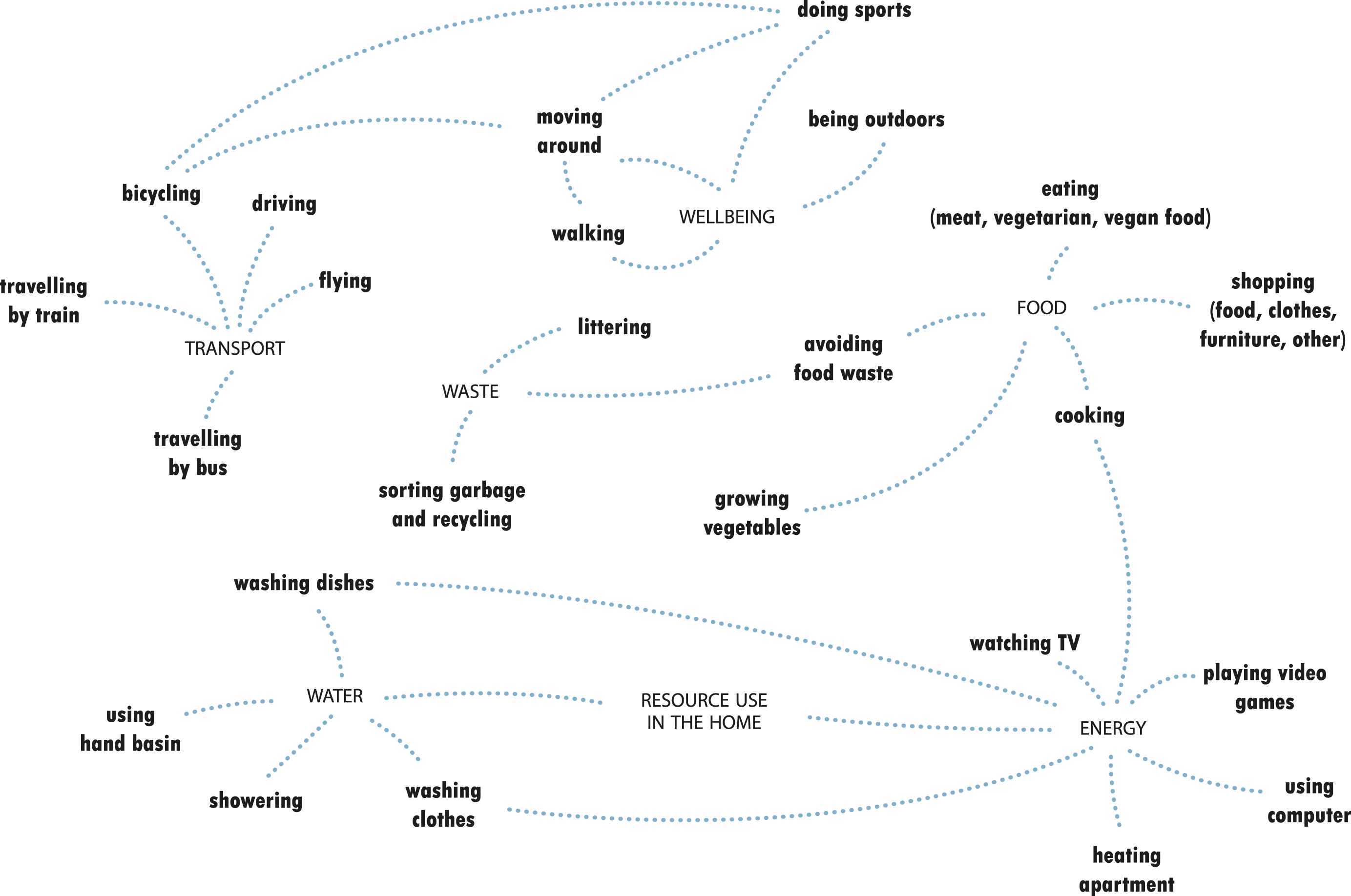
Findings: (Un)sustainable everyday practices in Rosendal
In this section, I focus on presenting how participants have discussed the practices of growing vegetables, showering and cycling. These practices are chosen not only due to them being mentioned in several of the interviews, but also because they give a broad representation of the different types of practices discussed during the interviews. Other (un)sustainable everyday practices mentioned but not discussed in depth here, are presented in Figure 1. I have given the participants pseudonyms to preserve their anonymity.
Growing vegetables – rewarding hobby, restricted by space and sunlight
Participants who associated growing vegetables with sustainability generally cultivated edible vegetables, on their balcony, or at an allotment in Rosendal. Although cultivating is often associated with food practices (see e.g.: Torkkeli, 2022; Tucker, 2019), in this study, it was described foremost as something positive and fun. Based on participants’ accounts, the practice holds meanings of joyfulness and of being a rewarding hobby, and the participants were noticeably proud of their gardens. These findings resonate with Sovová and Veen’s (2020) study among allotment gardeners in Czechia and the Netherlands, further supporting their claim that small-scale cultivation hold similar meanings across different European contexts.
Some of the participants had responded to an initiative organised by the municipality of Uppsala, to obtain a set of pallet collars placed on unused ground in Rosendal. The pallet collars, as materials in the background, along with gardening tools and a water hose as materials in action, were provided by the municipality and seen as enabling elements. One participant in particular, Erik (see Figure 2), greatly appreciated this urban gardening initiative and described how it had led him and his partner to find a new hobby which they enjoyed and found rewarding. Erik: …this is something we think is really fun, we are so very happy. (…) I hope they continue with this in some form. Because it has become a real hobby. A photo of a small urban garden proudly presented by Erik.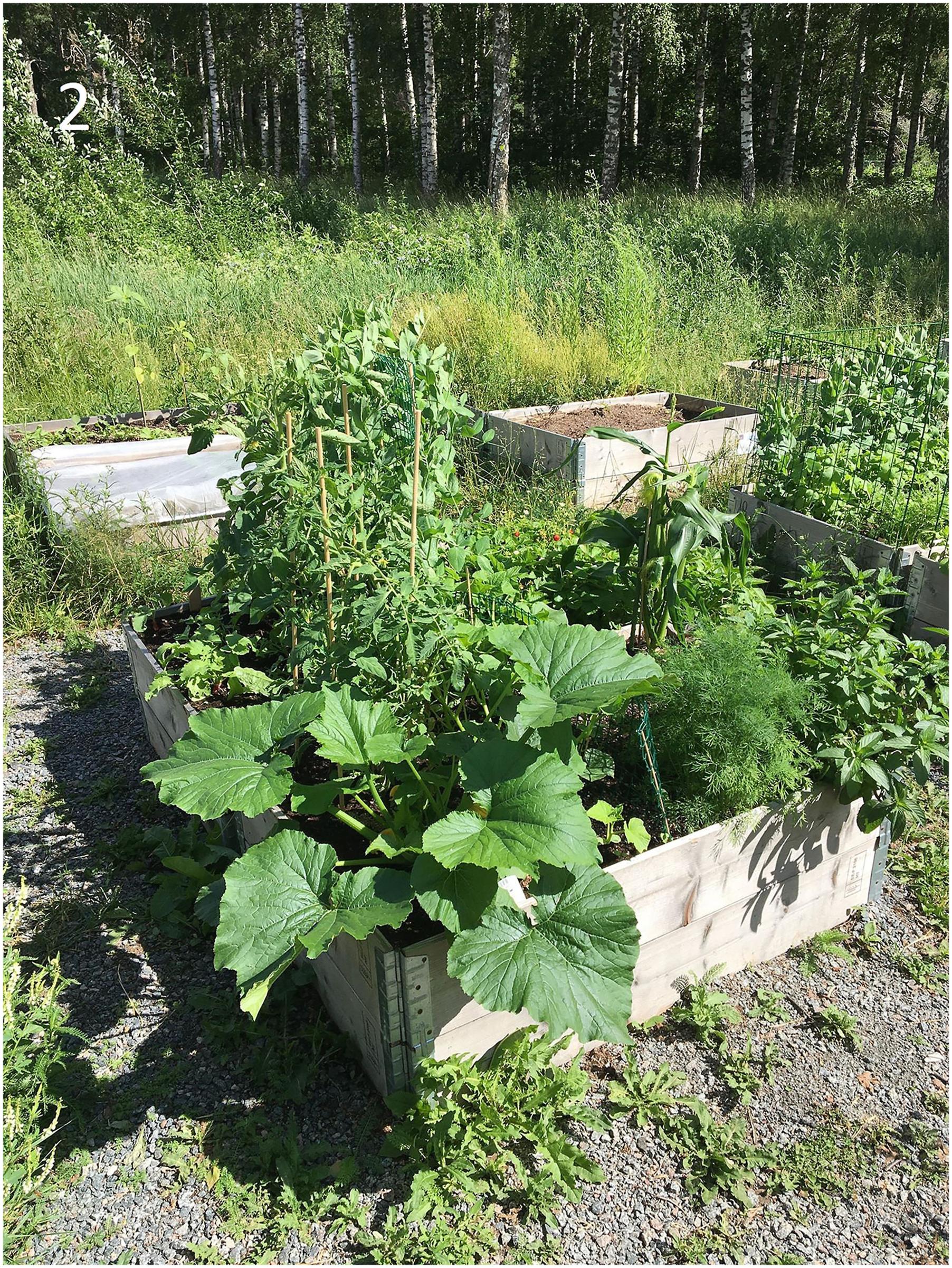
Although the practice of growing vegetables was primarily regarded as a pleasant leisure activity, some participants did regard it as a way of producing their own food. They explained how they were able to avoid buying everything from the store and decrease the purchase of products with long transportation distances. On the other hand, there were participants who reflected upon how cultivating in small urban gardens has limited impact ‘in the larger scheme of things’ when striving towards sustainability; they saw the practice as something that has positive impact foremost for the individuals engaged in it. Corresponding to findings by Maćkiewicz et al. (2021), increased biodiversity resulting from growing vegetables, was also mentioned and described as a sustainability trait. Meanings are thus related to both personal benefits and to contributing to the greater good. Additionally, competences connect to meanings in that competences include the ability to consider cultivation a sustainable practice.
Growing vegetables was thus mostly described in positive terms and as a sustainable practice. However, one participant, Lisa, who was enthusiastic about growing edible vegetables on her balcony, was troubled by the large amounts of water her plants needed, something she considered unsustainable. To tackle this issue, she placed a plastic tub in the shower while washing herself, to collect water for her plants. In this way, she could use water that would otherwise just have run down the drain (see Figure 3). Lisa: No, but I like growing things. Especially edible vegetables. But it does require quite some water [laughter]…so I try economizing as much as possible, so I try to save water. Lisa’s photo of a plastic tub used in the shower to collect water for her edible plants.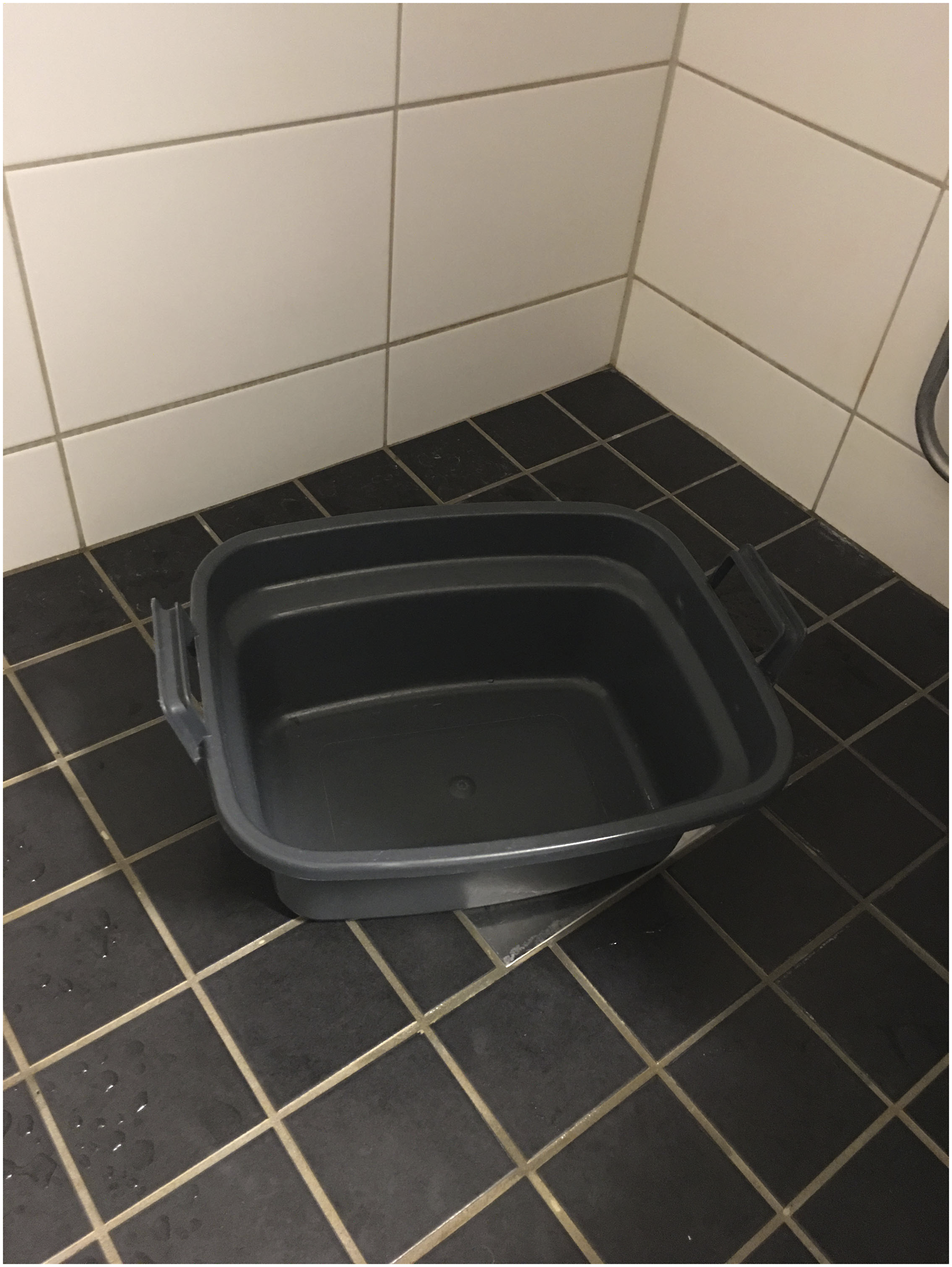
This example illustrates the sociomaterial character of growing vegetables, where the plastic tub is used as a way to overcome what is understood to be unsustainable – in this case, excessive water consumption. I consider this ability, to go beyond default options and find ways of altering practices, as part of competences. The water tub, a material in use, also demonstrates how specific elements can be part of several practices. Showering and growing vegetables are linked into a web of practices through the use of water, a material being used up.
Balconies, as materials in the background, enabled the practice of growing vegetables. However, the size of the balconies and their position with respect to the amount of sunlight received, were highlighted as restricting the possibilities for urban gardening. I consider this ability, to reason around the ways in which the practice is enabled or restricted by materials, a competence contributing to shaping the practice. Participants who felt limited due to space and sunlight, suggested that a community garden in the area could offer residents improved opportunities for growing vegetables, while providing a social activity. They had seen the allotments in the area but were not aware whose initiative this was, nor how one was able to take part. I interpret the suggestion of a community garden as a competence to imagine possibilities to increase urban gardening in the area. The suggestions of making more space for urban gardening and allowing residents to do something together, is tied to the sociomaterial practice of growing vegetables. As imagination is situated in practice, participants are able to imagine other ways of cultivating based on current restricting material elements. Further, community gardens are often seen as spaces that enhance local sustainability through collaboration (see e.g.: Datta, 2019). Rabadjieva and Butzin (2020) show how meanings of certain practice-fields can transfer across locations without direct social interaction, for instance, through images and text in media. Participants are thus likely to have been influenced by travelling meanings associated with community gardens that feed into their imagination of what could be, while both enabled and restricted by the sociomaterial practice of cultivating.
Showering – ‘invisible’ resource consumption
One of the everyday practices linked to resource consumption within the home that featured in many interviews was showering. Showering has been studied due to its resource-intensive nature and used as an example of inconspicuous consumption, in order to demonstrate the usefulness of practice theoretical approaches to consumption (see. for example: Shove, 2003a; Hand et al., 2005). Like other forms of resource consumption taking place as part of practices in the home, participants brought forth how the water and energy consumption embedded in showering was hard to grasp and difficult for individuals to influence due to its ‘invisible’ nature. Although short showers were seen as something to strive towards, participants thought there were too few incentives for them to avoid taking long showers – described as unsustainable and unnecessary luxury. Louise: It is not as if I don’t know I should use less water, nevertheless I stand there and take my long showers, mostly out of convenience.
Louise further explained how she thought it made very little difference if she alone took shorter showers, but if everyone were to do so, it would be strange for her to continue with her long showers. This example demonstrates how practices are reproduced and altered based on what people performing them consider to be normal and convenient (Shove, 2003b). Louise reasoned how she kept taking long showers partly due to water being cheap, and referring to water as a resource ‘that’s just there’. She also thought ‘the system’ needs to change in order for her to be able to change. Additionally, she had studied and worked with questions related to reducing water consumption in households, and was of the opinion that water consumption needs to decrease. Knowing that one should take shorter showers while still doing the opposite, and being able to reason around why, links water – a material being used up – with the competence of reflecting upon the practice of showering. So too is the ability to reason around which way of showering might be considered sustainable or unsustainable.
Louise had at the time of the interview recently moved to Rosendal, and compared her new bathroom to the ones in her previous apartments. She was used to small and unpleasant bathrooms where she rushed to get ready, whereas now she had a new spacious one where she enjoyed taking long showers. For her, this represented everyday luxury and she described her current spacious bathroom as a sanctuary. These notions of luxury and sanctuary align with Madsen and Gram-Hanssen’s (2017) findings where Danish participants associated meanings of comfort and relaxation with their bathrooms. Although Louise was convinced there is a need to reduce water consumption, her current bathroom facilities – materials in the background – were encouraging her to take long showers (see Figure 4). Louise’s bathroom which she described as providing her with everyday luxury.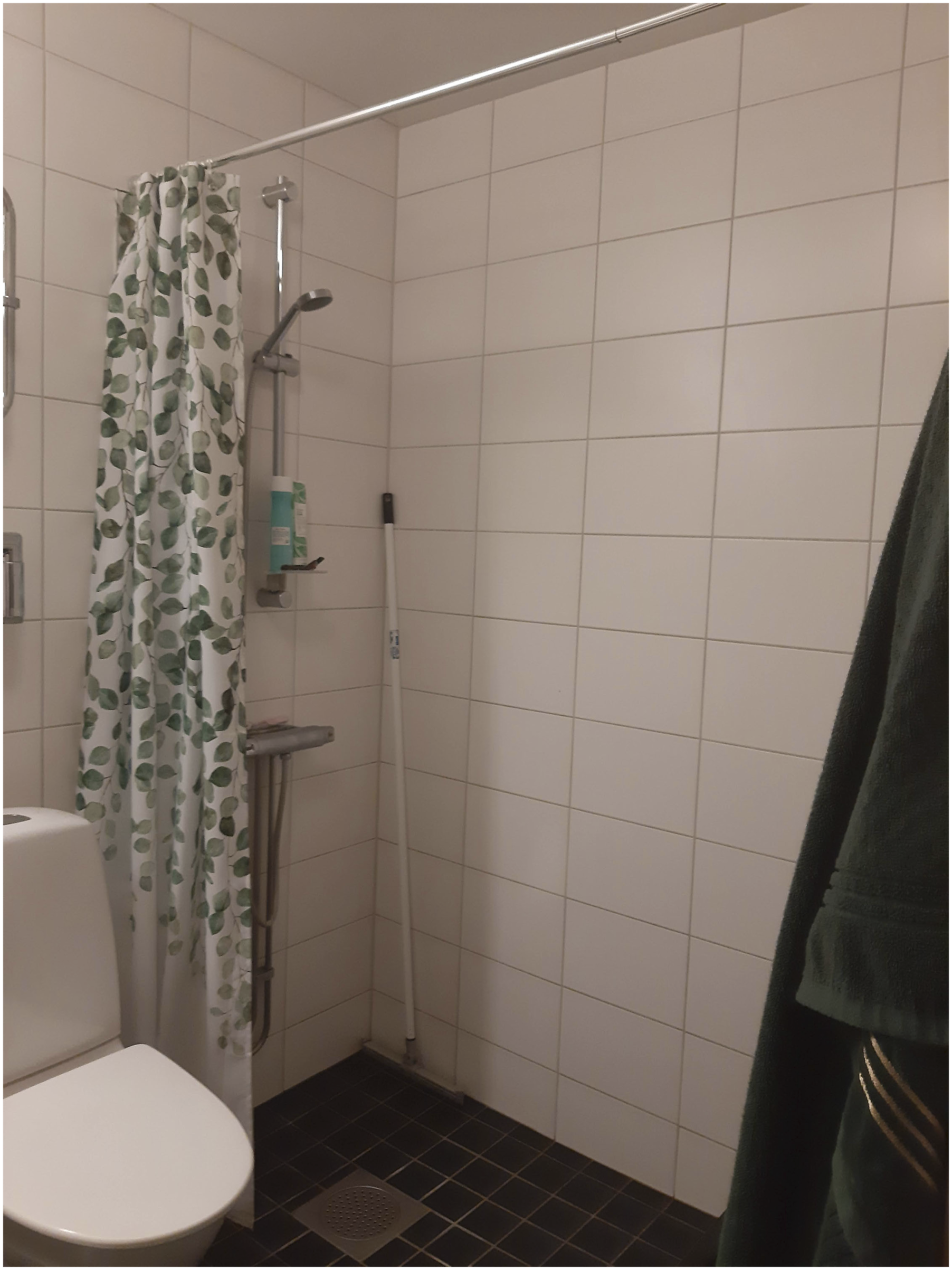
Some of the participants lived in buildings in which taps and showerheads designed for limited water consumption had been installed. These are so-called low-flowing taps and showerheads, where the default option is reduced water flow, with colder water compared to ordinary ones. Opinions towards these materials in use were mixed. The low-flowing devices had made some participants wonder whether there was something wrong with these items. Having realised the shower heads were designed this way in order to save water and energy, certain participants considered them to enable showering in a sustainable way. Others were less convinced. For instance, Lena thought the low-flowing showerheads resulted in longer showers. Lena: Yes, well, the water pressure is low. I have quite a lot of hair. It takes…it is not very convenient, it takes time.
She described how she understood that someone had made calculations proving such showerheads would lead to decreased water use. Nevertheless, she thought she had to use more water when rinsing shampoo out of her hair, as the water pressure was poor. She also described how she would take hot showers in order to get warm during the winter, but how the water pressure and amount of warm water did not suffice. This shows how people involved in practices have expectations towards the technologies they use (Shove, 2003b). For Lena, meanings include expectations about the showerhead, in addition to the comfort of getting warm. In contrast to other studies of showering (see e.g.: Eon et al., 2018; Gram-Hanssen et al., 2020), participants in this study did not bring up meanings of cleanliness. This might be due to the taken-for-grantedness of cleanliness, or that the shower practices performed by participants in this study are held together primarily by other meanings, such as comfort and convenience.
Cycling – a symbol for sustainability, in contrast to driving
Cycling was frequently brought up among the participants as associated with sustainability and without exception described with positive adjectives, and by some even as ‘the right thing to do’. Cycling was put forward as the most sustainable mode of transport, and repeatedly compared to driving a car. Many of the interviewees discussed how they try to avoid driving, something they considered an unsustainable practice. Instead, the bicycle – a material in action – represented an undisputed sustainability symbol, and thus feeds into the meanings of cycling. In contrast to findings by Buck and Nurse (2023), participants in this study did not talk about walking in relation to cycling, nor as a mode of transport. Instead, walking was mentioned mostly as moving about in nature. Despite being associated with sustainable transport, cycling is not only about getting from A to B without needing to rely on fuel or electricity, cycling is also a practice many of the interviewees enjoy doing and they see it as a way to exercise. Sven: You think, yes, I could have taken the car, but it’s a bit better if I take the bike. It’s good for my health, it’s good for the environment and nature, and then there’s less cars crowding the streets.
Sven had taken a photo of his favourite sports bike hung up indoors next to a wallpaper portraying a highway with multiple lanes, full of cars, in what appeared to be a traffic jam (Figure 5). For him, the bike represented everything the car was not: no crowding, no pollution, no sitting still, being unhealthy and waiting. These two materials in use thus shape contrasting meanings where the bicycle holds positive connotations relating to well-being and doing something for the greater good. A study among cyclists in Copenhagen reported similar findings in relation to meanings, with the exception of environment and sustainability (Larsen, 2017). Although being aware of cycling having such connotations, their participants did not consider these as reasons or motivations for their own cycling. Participants in Rosendal might be influenced Uppsala municipality’s promotion of cycling in relation to their sustainability efforts. Sven’s photograph of his favourite bicycle, which stands in stark contrast to the wallpaper portraying multiple lanes crammed with cars.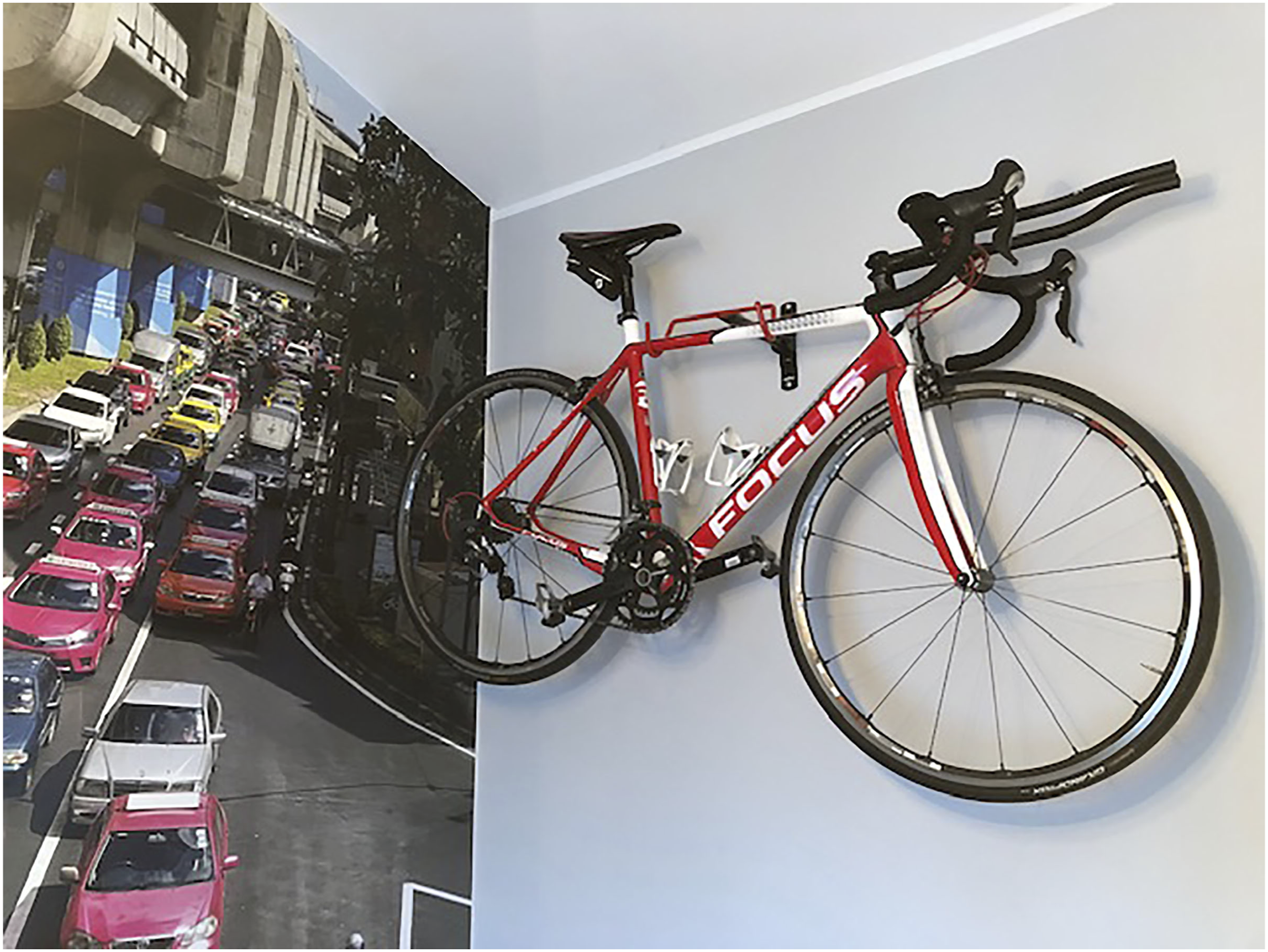
While the joyfulness and convenience of cycling were echoed by many other participants, there were also many for whom cycling was the default option. These participants did not have the option to choose between a car or a bike as they had either decided to no longer own a car, or had never owned one. Most of them thought they did not need a car, and that it was fairly easy to live without one in Rosendal. They illustrated how the location of the district in relation to the city-centre and other parts of Uppsala made it easy to get around the city by bike. Additionally, they talked about how materials in the background, such as good bicycle lanes in the city enabled cycling as an everyday mode of transport. This resonates with other studies (see, for example: Buck and Nurse, 2023; Scheurenbrand et al., 2018; Larsen, 2017) where the perception of the physical infrastructure had a direct link to how easy or difficult cyclists considered the practice to be in different locations. Materials thus shape meanings of cycling in relation to whether these are seen as enablers or hindrances.
That practices are situated (Gherardi, 2017), becomes especially apparent in the practice of cycling. Aldred and Jungnickel (2014) show how meanings associated with cycling align with whether the practice is emerging as opposed to established. In line with their study in four different UK cities, my findings reflect how meanings of cycling are connected to location. Participants talked about the proximity of both services and nature, and how this meant they did not need to travel long distances and could thus easily lead an everyday life without a car. Furthermore, the positive meanings related to enjoyment and convenience also relate to how Uppsala is a city where cycling is established. Uppsala is often described as a ‘cycling city’ and the municipality is continuously looking to improve its status as a cycle friendly city (see e.g.: Uppsala kommun 2022b). The idea of Uppsala being a cycling city was mirrored in participants’ accounts, and in contrast to findings from emerging cycling cities (Buck and Nurse, 2023; Spotswood et al., 2015; Scheurenbrand et al., 2018) participants in this study did not consider the need for special skills an obstable, nor were meanings of danger or difficulty associated with cycling.
A recurring topic was how not owning a car was less expensive (Spotswood et al., 2015) and made life easier. There was one less thing to take care of, with no need to worry about service or other costs. Avoiding the unsustainable character of driving was often portrayed as an added value, rather than the main reason for not owning a car. This was clearly illustrated by Helene, who said she did not want to own a car because she was uncertain she would use it enough to motivate expenses. Meanings of inconvenience and unmotivated expenses thus contribute to avoiding the purchase of a material element associated with unsustainability. She described how it is easy to think of oneself as doing something out of virtue, when in fact the reason might lie elsewhere. Helene: I suppose I think it’s really good I don’t have a car, that I cycle. Although it’s mostly because I can’t afford to buy a car right now. Nevertheless, it’s easy to think: Well done for not having a car…[laughter]
However, Helene was not fully convinced she would never own a car, although she did highlight how cycling was an important contribution towards a sustainable everyday life.
Cycling lanes, cycle parking and service points for bikes were materials in the background, mentioned as both enabling and hindering factors. Another example seen as enabling to some, and restricting to others, were the possibilities to service one’s bicycle. A small bike service point in the inner yard of one participant’s building was described as an enabling factor, while others wished for better service facilities. This ability to imagine how materials in the background could be further improved is here interpreted as a competence. As imagination is situated, it is enabled by and restricted to the current elements of cycling and practices associated with cycling. If the materials enabling cycling in Uppsala were less appreciated, or the meanings participants associate with cycling were less positive, the ability to imagine improvement would most likely take a different direction. Other competences of cycling discussed by participants include the ability to consider the bicycle as a symbol for sustainability, reflecting the different positive connotations of cycling and the ability to reason around the materials enabling or restricting the practice. Furthermore, enabling cycling through material elements such as cycle lanes is expected by the participants. Cycling thus represents a sustainable practice where people experience doing the right thing (Aldred and Jungnickel, 2014), while being enabled to do so by different materials forming part of the built environment.
Summing up and reflecting on the findings
What has been of interest when choosing to focus on the three practices of growing vegetables, cycling and showering, is how participants talk about specific sociomaterial practices they themselves associate with (un)sustainability in everyday life, as well as how these practices are enabled or restricted within their living environment. Often, the same materials are discussed as both enabling and restricting. Yet, materials not only shape the practices of which they form part, they contribute to what comes to count as sustainable in Rosendal. As practices are sociomaterial, and because the area has a sustainability profile, I argue that what comes to count as sustainable is influenced by material elements in the area.
Certain materials are ingrained in meanings of sustainability to the extent that they become symbols for sustainability in everyday life. This was the case especially with the bicycle, a material in use, and the garbage sorting facilities, materials in the background. Although not discussed in depth here, garbage sorting was a practice that participants described as something one is expected to do, and they expected there to be good facilities in place, especially due to the district’s sustainability profile. The presence of materials such as pallet collars for cultivation or bicycle service stations, contributes to reproducing certain ideas of what (un)sustainable practices are. Further, as imagination is situated, current sociomaterial practices associated with sustainability shapes imagination. While participants spontaneously imagined improvements for growing vegetables and cycling, this seemed more difficult when it came to showering. I interpret this as being due to the meanings of comfort and convenience and the materials in the background enabling showering – meanings being too important for participants to give up, and materials being difficult to question as bathrooms in new apartments follow certain standards. Due to the sociomaterialities of the practice, it becomes difficult to think of other ways of showering, or alternatives to showering for that matter.
While participants had the ability to reflect upon enablers and hindrances, as well as imagine possible alterations to practices, practical skills were almost entirely absent. I interpret this as being due to the taken-for-granted nature of the practical skills part of growing vegetables, cycling and showering. However, if the participants had not held ecohabitus (Carfagna et al., 2014) characteristics, the skills required to grow vegetables or cycling might not have been considered self-evident.
Concluding discussion
In this study, I departed from an understanding of consumption as embedded in ordinary everyday practices (Warde, 2005), which hold potential to contribute to both stability and change (Pink, 2012). Applying a practice theoretical lens when analysing the practices of growing vegetables, showering and cycling has allowed me to show how the ways sustainability is made in everyday life depend on different interconnected elements (Reckwitz, 2002). Employing Shove et al.’s (2012) framework, with specific attention to the different roles materials play within practices (Shove, 2017), and coupling this framework with the notion of sociomateriality (Gherardi, 2017; Orlikowski and Scott, 2008) highlighted the different ways materials are co-constitutive of practices. Further, the notion of situated imagination (Stoeltzer and Yuval-Davis, 2002) helped demonstrate how the ability to think beyond current meanings and ways of performing practices is both enabled and constrained due to imagination being situated in practices.
The aim of this paper has been to understand what type of everyday practices residents in an urban district with a sustainability profile associate with sustainability, and what enables residents to, or hinders them from, performing these practices. When considering the type of practices associated with sustainability in everyday life brought forth in the interviews, these can be seen as the ‘usual suspects’. In discussions about what individuals can do in order to ‘lead a more sustainable everyday life’, cycling as opposed to driving a car, choosing locally produced food, and avoiding excessive consumption of resources such as electricity and water are among practices often suggested (see e.g.: Uppsala , n.d.; Naturvardsverket, 2020). Similar practices were discussed in the interviews.
The practices brought forth by participants imply what comes to count as sustainable in their everyday lives. Although there was a slight variation in the practices participants mentioned, they reoccurred to the extent that it appears they have a common understanding of what (un)sustainable everyday practices are. This understanding resonates with Uppsala municipality’s sustainability plans in Rosendal, where those initiatives aiming to support sustainable choices in everyday life include bicycle infrastructure, waste sorting facilities, opportunities to grow vegetables and ‘smart’ energy solutions (Uppsala kommun, 2016). There were also initiatives linked to sustainability from the municipality that did not match the everyday practices discussed. For instance, the storm water management system (Uppsala kommun, 2022a) was not touched upon in the interviews. However, biodiversity and greenery were, according to the municipality, supported by the storm water system, and these features were in turn mentioned by participants in relation to growing vegetables. However, despite some ‘mismatches’, the participants’ and the municipality’s perspectives of what comes to count as sustainable in everyday life align in broad terms. This supports my claim that materials in the living environment not only enable and restrict certain practices, they also clearly play into reproducing ideas of what comes to count as sustainability. The different types of materials in the living environment form part of the urban sociomaterial assemblage that is both altered and reproduced by the everyday practices performed (Durose et al., 2022). Simultaneously, the municipality’s sustainability plans and policies contribute to shaping the urban assemblage, in that they materialise in specific ways.
Although the materials are the main ‘channel’ through which those involved in planning new living environments can contribute to influencing resource consumption as part of everyday practices, the materials shape practices performed by residents in conjunction with meanings and competences. Despite practices always holding potential for both stability and change (Pink, 2012), I argue that common understandings of sustainability restrict change at a larger scale. Regardless of Rosendal’s sustainability profile, the district is an example of how contemporary affluent living environments are commonly shaped. Based on this study, I argue such districts allow little space for performing practices in ways that could challenge current ideas of sustainability in everyday life, since the sociomaterialities only enable practices and imagination of a specific kind. Sustainability initiatives tend to take place in towns and cities because urban areas are commonly seen as sites for sustainability transformations (Rose and Cachelin, 2018; Castán Broto et al., 2019). Nonetheless, if new and developing urban areas are to have a central role in societal transformations by influencing consumption patterns taking place within them, more radical meanings and new ideas for enacting sustainability are needed. Such meanings and ideas would require the sociomaterial urban assemblage of such areas to be significantly different than currently.
Footnotes
Acknowledgements
I would like to thank the participants of this study for taking photos of their living environment and for sharing their views on (un)sustainability in everyday life with me. I also want to thank my supervisors Lotten Westberg and Katarina Pettersson for their support and feedback throughout the writing process, as well as the two anonymous reviewers for their helpful comments on an earlier version of this text.
Declaration of conflicting interests
The author(s) declared no potential conflicts of interest with respect to the research, authorship, and/or publication of this article.
Funding
The author(s) disclosed receipt of the following financial support for the research, authorship, and/or publication of this article: The research was funded by Viable Cities, project number 2018-001888.
Disclaimer
The author takes full responsibility of the views expressed in the submitted article. These views do not reflect any official position of the Swedish University of Agricultural Science nor of the funding source. The author has received verbal informed consent by all participants of this study. The participants have also given their consent for their photographs to be used when communicating the results of the study presented in the submitted manuscript.
