



Abstract
In this article, I investigate the logic underlying household food consumption in Portugal and how it relates to class positioning, like other expressions of culture. Therefore, the paper examines the Bourdieusian hypothesis of homology between the field of food and the configuration of social positions in Portuguese society against the hypotheses that emphasise homogenisation and individualisation of consumption patterns. I start by remapping the Portuguese social space, using an approach inspired by the analysis pioneered by Bourdieu on Distinction and recently taken up by several streams of research. Drawing on the national Household Budget Survey, I then develop a Correspondence Analysis of expenditure on a wide range of foodstuffs. The analysis is supplemented by data from the Second Large Survey on Sustainability in Portugal, seeking to examine patterns in ethical dispositions concerning food and drink in contemporary Portugal and their homology with class. Concluding on a degree of similarity between the space of food consumption and the space of social positions engendered by differences in the overall volume and composition of capital, I close with reflections on the methodological challenges of this approach and on the broader significance of these results for our understanding of consumption in Portugal.
Introduction
Eating is essential for survival. Yet food also bears emotional significance, conveys culture and identity, and is a form of social commentary (Warde, 1997). Preferences and tastes are structured and organised based on reasoning (Fischler, 1990; Poulain, 2017). However, changes in consumption patterns are entwined with broader debates about the role of structural factors in shaping behaviour. On the one hand, some perspectives suggest that, under increasing individualisation, patterns are becoming more heterogeneous, less pinned down by social origins, norms and class culture (Beck, 1992; Giddens, 1992). Some argue that industrial development, market expansion and worldwide trade created year-round availability and lowered food prices, leading to diminished social (and class) contrasts (Mennell, 1985). Others contend that abundance and less stringent social regulation may lead to ‘gastro-anomie’ (Fischler, 1990). Others still underscore a trend toward homogenisation and cultural convergence (Ritzer, 1992). Against them stands the hypothesis of homology between social positioning and the space of culture, inspired by Bourdieu (2010 [1979]), encompassing food consumption and other related practices. A body of literature supports the continued structuring power of economic inequality and symbolic hierarchy in cultural practices in contemporary societies (Bennett et al., 2009; Flemmen et al., 2018; Atkinson and Deeming, 2015; Paddock, 2016; Jarness, 2017).
Within cultural class analysis, issues relating to food have been addressed in the US, UK, France and other countries. Less is known concerning food distinctions in semi-peripheral societies like Portugal. There is a tradition of class analysis (Estanque, 1997; Machado et al., 2003), but few studies address the interplay between class, lifestyle and food. Economic inequality in Portugal remains among the highest in Europe (Farinha Rodrigues et al., 2016). Research shows the consequences of class in Portugal, and structural inequality is both salient and highly reproved, yet there is a tendency to place oneself as middle class, regardless of actual living conditions (Silva et al., 2013). Hence, a unique combination of circumstances heightens the interest in the relationship between social class and food. It is common to think that all the Portuguese eat dried salted cod, but are social differences irrelevant to what they eat?
In this article, I ask: what are the main differences in taste for food and drinks in Portugal? To what extent are they related to the class structure? I test the hypothesis of homology between social space and the space of food consumption against the premises of fragmentation and individualisation of contemporary societies. I use food expenditure data from the 2016 Portuguese Household Budget Survey, conducted by Statistics Portugal, and complemented it with data on taste criteria from the Second Large Survey on Sustainability. I focus on food acquisition, addressing one element of the broader practice of eating (Warde, 2016), which intersects several spheres of social life and encompasses a wide range of activities (from preparation to consumption and disposal). However, food acquisition is unavoidable for families: it is the main expenditure after housing and a proxy for health-related issues (Kearney, 2010) or food poverty (O'Connell and Brannen, 2021).
I draw on Bourdieu’s (2010 [1979]) original approach to the relation between class, food, and taste and on recent work that investigated the validity of his hypothesis in contemporary societies (Atkinson and Deeming, 2015; Flemmen et al., 2018). Starting with a discussion on explanations for trends in consumption and taste, I then construct the spaces of class and the spaces of food and drink consumption in Portugal, followed by an interpretation of their relationship. I conclude with a reflection on the implications of the methods and findings for debates on consumption.
Food in contemporary societies: A space of heightened or diminished differences?
In Distinction, Bourdieu (2010 [1979]) argues that differences in social positioning materialise in all forms of culture and consumption, including food tastes. However, while differences are more pronounced between positions at opposing extremes of the social space, they of tendency, not either/or. The Bourdieusian concept of habitus is essential to comprehending homologies: acting as a generative principle (a scheme of perception and classification), it links structural conditions (capital volume and portfolio) with individual habits (dispositions) across fields. However, even if similar across societies, homologies between fields of social life are specific to given socio-economic realities.
The Bourdieusian model of 1970s French food space is well known. Individuals from working-class backgrounds with energy-consuming jobs and more time-constrained lifestyles preferred substantial, filling foods over finicky, time-consuming meals. This was consistent with attitudes that valued ‘convivial indulgence’: eating without restraint and dismissing concerns about nutritional composition or origin. Conversely, those from the dominant classes stood out for their preference for expensive and sophisticated ingredients, coupled with dispositions valuing presentation and sensorial pleasure. Higher security of capital engendered orientations towards health and the body and an ability to forfeit immediate satisfaction. As interest in ‘healthy’, ‘natural’ or ‘exotic’ foods grew among those with more cultural capital and an ability to master abstract concepts, individuals frequently enwrapped their choices in healthiness and aesthetic discourse. Extremes represented an opposition between the tastes of necessity and freedom and a dispositional antagonism between substance and form. According to capital composition and individual trajectories, intermediate positions combine elements of both. There were contrasts between those from economic fractions of the petite bourgeoisie, who tended to value sobriety and frugality as means to accumulate or preserve capital, and those from culturally rich fractions, who, despite having modest budgets, displayed an orientation towards novelty, originality and arcane knowledge in food choice.
Bourdieu’s account left an imprint on the sociologies of culture and consumption. Mennell (1985) challenged his interpretation, claiming that contemporary contrasts in food consumption are historically trivial. Yet, Mennell’s assertion that food consumption and class are no longer associated has been dispelled by empirical scrutiny (Warde, 1997). Fischler (1990) suggests that increased availability and easier access to food create gastro-anomie. Assuming that contemporary eaters are less constrained by institutions and structures (Beck, 1992; Giddens, 1992), Fischler contends that they are increasingly reflexive. Bombarded by antagonistic discourses on food (from marketing, health experts and others), eaters may be at a loss when choosing what to eat, leading to fragmented consumption patterns. He further argues that alternative diets, food fads and fashions are attempts to re-establish ‘order’ and further evidence of the atomisation and disintegration of food consumption patterns. Unquestionably, the panorama of food consumption and lifestyle continues to evolve. However, Warde argues that asserting whether contemporary eaters/consumers are more volatile is an empirical question. He further adds that this assertion runs against the persistence of staple foods over decades and the not uncommon failure of new products and innovations in the market (Warde, 1997).
The rise of cultural omnivores would be another sign of disappearing class lines. Peterson identified a shift from snobbishness to omnivorousness in the upper classes’ music tastes, and his theory of blurred class-structured boundaries spread fast to cultural analysis (Peterson and Kern, 1996). Yet, recent research shows that distinction-seeking lingers, at times performed through deliberate, confident, even playful, blurring of class divides in everyday practice, especially by elements of the middle and upper classes. For example, through eclectic enjoyment of all sorts of food, from caviar to burgers, and placing a premium on the ‘authentic’ and ‘alternative’, be it ‘ethnic food’ or rediscovered domestic fare (Flemmen et al., 2018; Paddock, 2016; Johnston and Baumann, 2014). From the beginning, there were measurement and comparability issues concerning what cultural omnivorousness entailed (Brisson, 2019). Peterson admitted it could be a methodological artefact (Rossman and Peterson, 2015). Reappraisals of Peterson’s work and influence (Hazır and Warde, 2015; Brisson, 2019), stress the pitfalls of assuming given notions of cultural hierarchy or legitimacy in consumption and contend that symbolic boundary (ies) change depending on the context. Furthermore, it may refer to a recent research question rather than a novel phenomenon (Brisson, 2019: 11).
Food consumption remains a captivating subject (Warde, 2016). A few quantitative studies tap the validity of Bourdieu’s homology hypothesis in wealthy European countries, such as the UK (Atkinson and Deeming, 2015) or Norway (Flemmen et al., 2018). These efforts looked at taste, consumption and expenditure on food beyond voluntarist models of action and choice, drawing on inductive, relational approaches that link the social space with the space of food. Overall, results show that the structure of consumption patterns and dispositions remains shaped by class. However, actual food preferences and correspondences vary depending on national contexts.
Cultural and culinary distinctions in a Southern European country
Seminal research on class and food consumption was first conducted in Western European countries, and subsequent studies mostly focus on wealthy (post)industrialised societies with highly developed (if varied) welfare regimes. Portugal’s path to modernity is shaped by a long right-wing dictatorship that sustained ruralist ideals and anti-democratic institutions, which delayed the industrialisation and development of the Welfare State. The 1974 Carnation Revolution instituted democracy and modernisation accelerated when the country entered the European Community in 1986. These developments buttressed the emergence of the Welfare State and the recent consolidation of the middle classes. Yet, Portugal remains a country with high levels of inequality (Farinha Rodrigues et al., 2016).
Portugal’s food culture is associated with the Mediterranean diet and lifestyle, where seasonality, frugality, freshness and locality are cornerstones (Truninger, 2020). Along with peasant poverty, these factors explain the richness in modes of preparation within such a small country. Among the world’s leading fish and seafood consumers, the Portuguese consume a whopping 70 thousand tonnes of salted cod per year, roughly 20% of the worldwide production (FAO, 2018). Salted cod, cooked in hundreds of ways, is a symbol of Portuguese food culture and identity, a mainstay of everyday and ritual meals (Sobral and Rodrigues, 2013). Although this taste is much older, the historical and political conditions that consolidated cod as the ‘faithful friend’ are intimately tied to food provisioning efforts during the dictatorship. Soups are another staple, the preferred way to ingest greens, and culinary habits convey the colonial legacy through flavours, condiments and spices.
Food consumption in Portugal seems to be diverging from the traditional Mediterranean pattern as a result of global trends and their conflictive impacts (Lopes et al., 2017; Gregório et al., 2020). Meat and processed foods are increasingly eaten. Conversely, there is growing consumption of organic foods and more interest in sustainable and plant-based diets, driven by orientations towards health and environmental ethics (Graça et al., 2019). The role of class in filtering these trends needs clarification. However, researchers identified income and age as factors shaping dispositions concerning what healthy eating means: affluent individuals value diversity; the worst-off associate it with more vegetable intake. Other sources show that the Portuguese place a premium on price above considerations such as quality, taste, nutritional composition or safety (European Commission, 2012, 2019). Such thriftiness may be a token of current material necessity or the remnants of acquired dispositions. Finally, the recent economic crisis widened social inequalities and impacted food practices in Portugal, leading to higher food insecurity (O'Connell and Brannen, 2021).
Sociological research on class and food in Portugal is scarce (Truninger, 2020; Sobral, 2007). Epidemiological research (Gregório, 2015; Lopes et al., 2017) suggests differences in food patterns between the capital-rich health-conscious and the capital-poor high-calorie consumers, calling for interventions to correct consumption via product labelling, taxation and education. Relying on crude measures of differentiation, such as income or education level, they paint a picture that obfuscates that food consumption is embedded in social practices and contexts and not the result of single causal processes. An alternative hypothesis is that the lived reality of social class engenders different needs and standards, ultimately leading to diverging lifestyles.
Data, method and analytical strategy
Descriptive data on foods and drinks*.
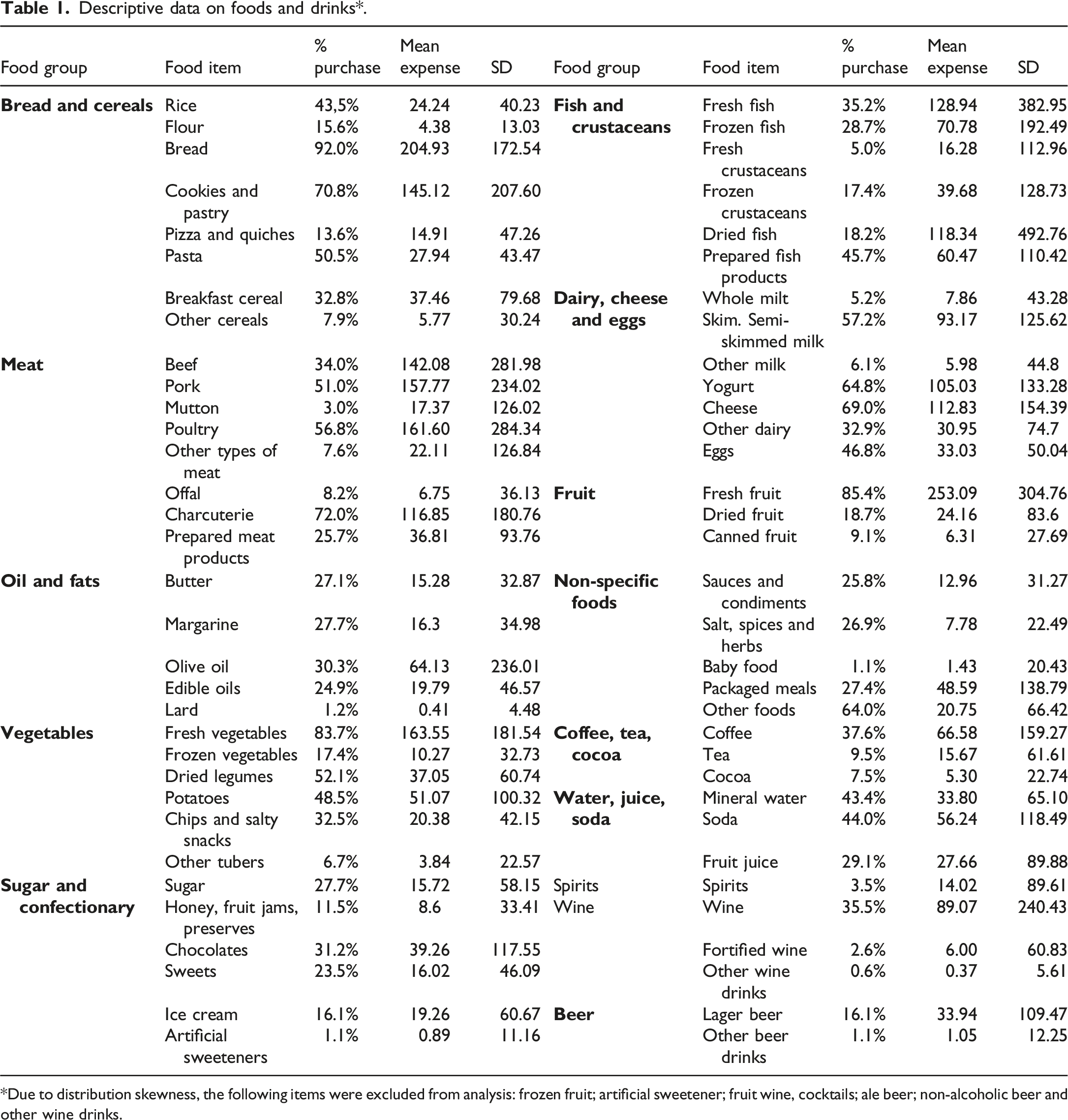
*Due to distribution skewness, the following items were excluded from analysis: frozen fruit; artificial sweetener; fruit wine, cocktails; ale beer; non-alcoholic beer and other wine drinks.
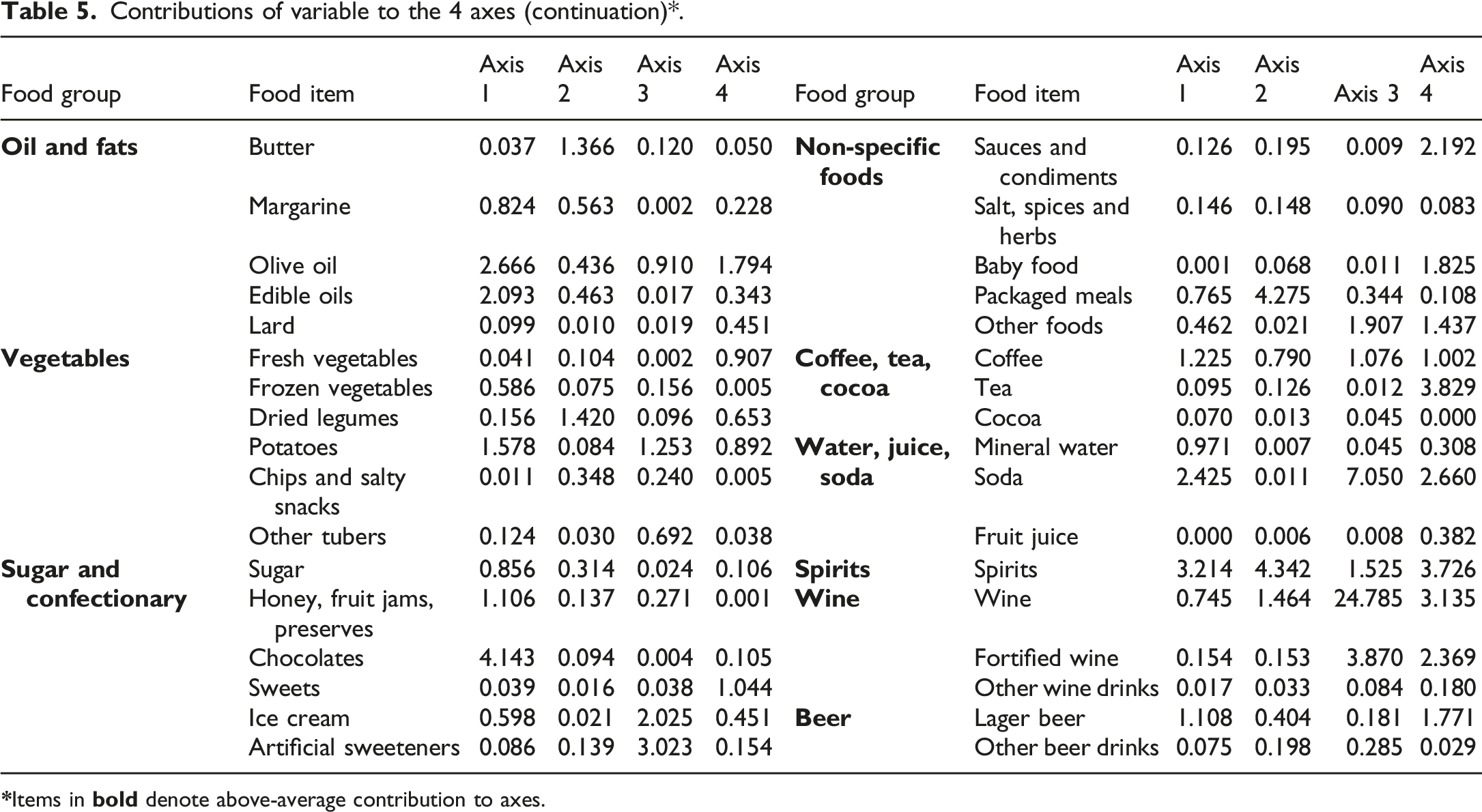
I used a Correspondence Analysis (CA) to investigate the relationship between class and food expenditure. I follow the approach used by Bourdieu before the development of Multiple Correspondence Analysis (a method suited for categorical data). CA is a multivariate descriptive statistical technique adequate for distributions of continuous data in large crosstabulations. It allows us to inductively reconstruct the structure and main divisions within the social and symbolic spaces, making CA suitable for reading relations of meaning and relative value. CA identifies underlying patterns in the data, transforming them into a multidimensional space with 2 to n dimensions (axis). Examining the relationships between the variables included in the analysis and identifying the axes that separate them relationally is done by tracing the relative distances or proximity between them (Greenacre, 2007). The meaning of each axis is an interpretation of the differences between categories at each pole, namely, the relative position of those with above-average contributions (highlighted in bold in Tables 4 and 5).
Foods have no inherent substantive value: the classed nature of consumption imparts meaning and distinction to preferences and dispositions, making specific food consumption relational to all others (Bourdieu, 2010 [1979]). A key advantage of CA is that it circumvents substantialist readings of the relationship between foodstuffs and social categories. Proximities mean conspicuous consumption of a food item by a social group, not exclusivity. To empirically validate this approach, I performed an Ascending Hierarchical Cluster Analysis on all the axes from CA. However, the data does not allow discussions concerning contrasts in the appropriation of specific products according to intrinsic and constructed properties (origin, quality, brand). Moreover, while individual diaries are used, data is organised per household, preventing the analysis of personal expenses. Finally, there is no way of knowing how products are prepared, consumed or wasted. I supplement the analysis with data from the Second Large Survey on Sustainability in Portugal (n = 1.600, hereafter SLLS), specifically a module on what influences decisions when buying food (Truninger (coord.) et al., 2019).
Constructing the spaces
Class and social space in Portugal
I use a class scheme that maximises similarity in overall volume and capital composition. Relying on a systematic classification of occupational codes that vertically differentiates positions in terms of the overall capital volume, it further uses capital composition and ownership of means of production as repositioning criteria (for details, see Supplemental Appendix 1 and Ramos and Carvalho, 2021). The scheme distinguishes positions according to the relative weight of economic and cultural capital, similarly to Bourdieusian inspired-designs (Hansen et al., 2009; Atkinson, 2017; Prieur et al., 2008), and differently from Oesch’s (2006) ‘work logics’ approach.
The social space is parsed into three classes, internally split into class fractions. The dominant class includes business executives and top managers; cultural dominants (university teachers, lawyers and intellectuals); and professionals and white collars (architects, engineers and IT specialists). Intermediate class positions include small business owners and lower-level managers; administrative workers, technicians; and cultural intermediaries (nurses, low-paid teachers; and legal, social and cultural professionals). The Dominated comprise skilled trades (plumbers, electricians, among others), manual workers, sales and customer service workers, and care and personal service workers (healthcare assistants, teacher-aides and waiters).
Some socio-demographics features of class fractions in Portugal.
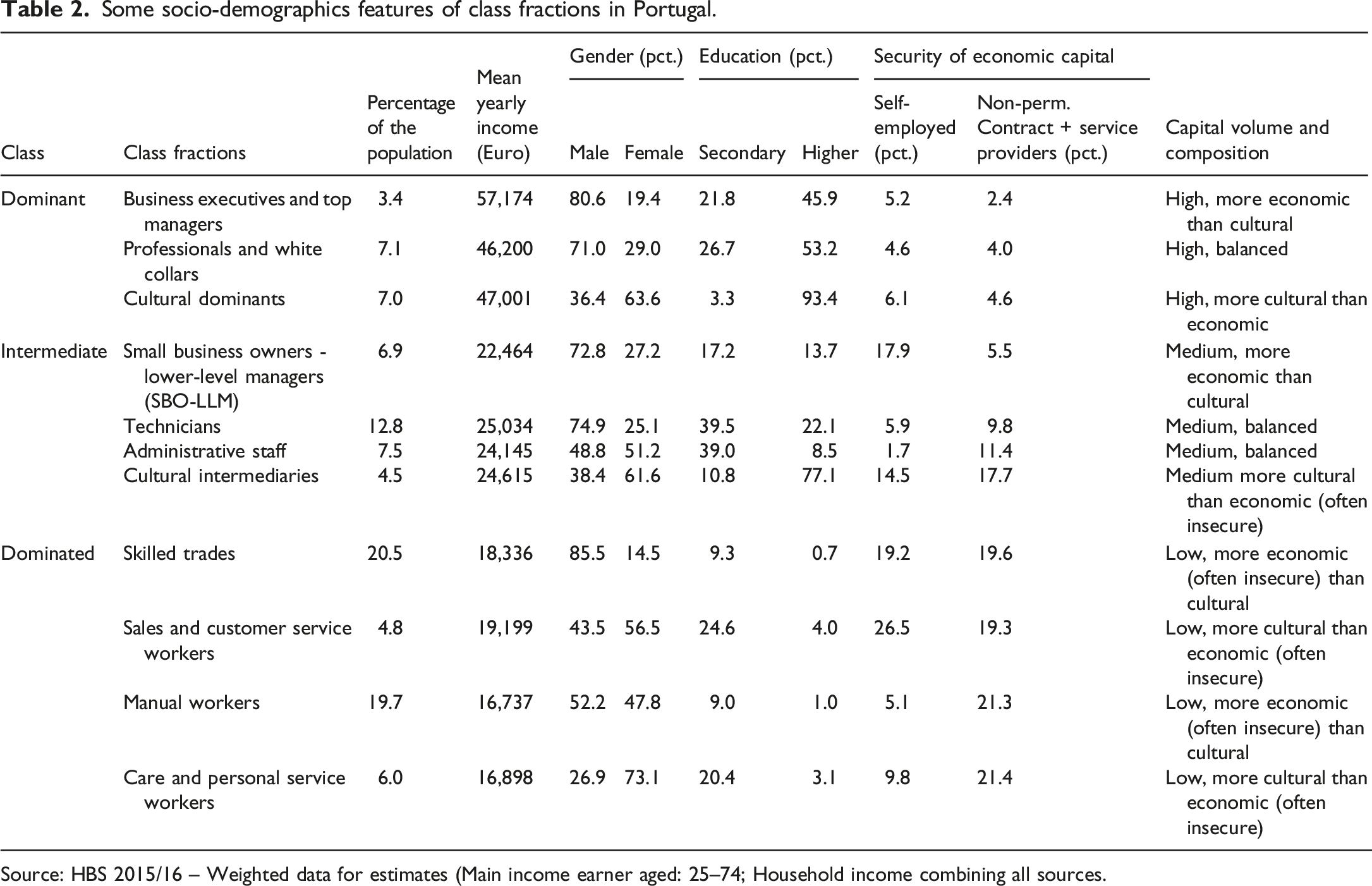
Source: HBS 2015/16 – Weighted data for estimates (Main income earner aged: 25–74; Household income combining all sources.
The space of food in Portugal
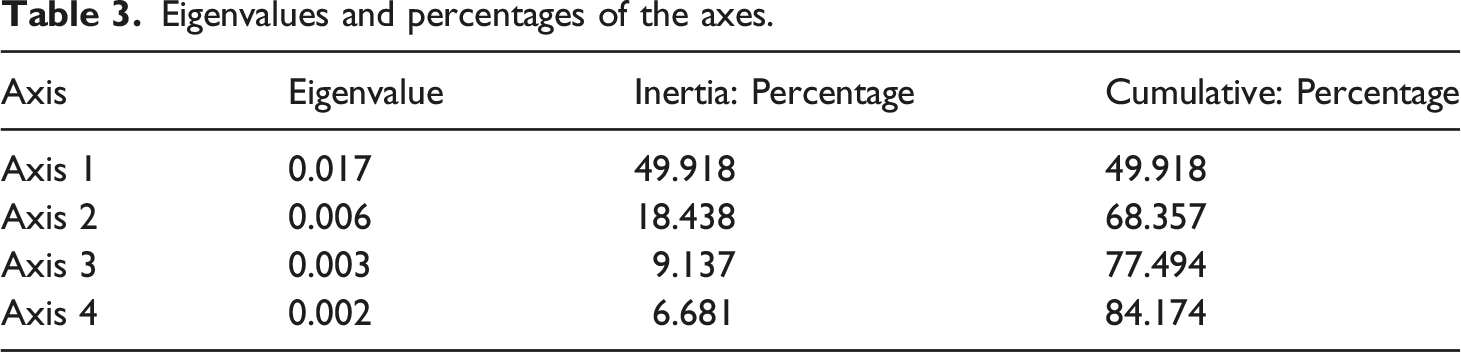
Eigenvalues and percentages of the axes.
Contributions of variable to the 4 axes*.
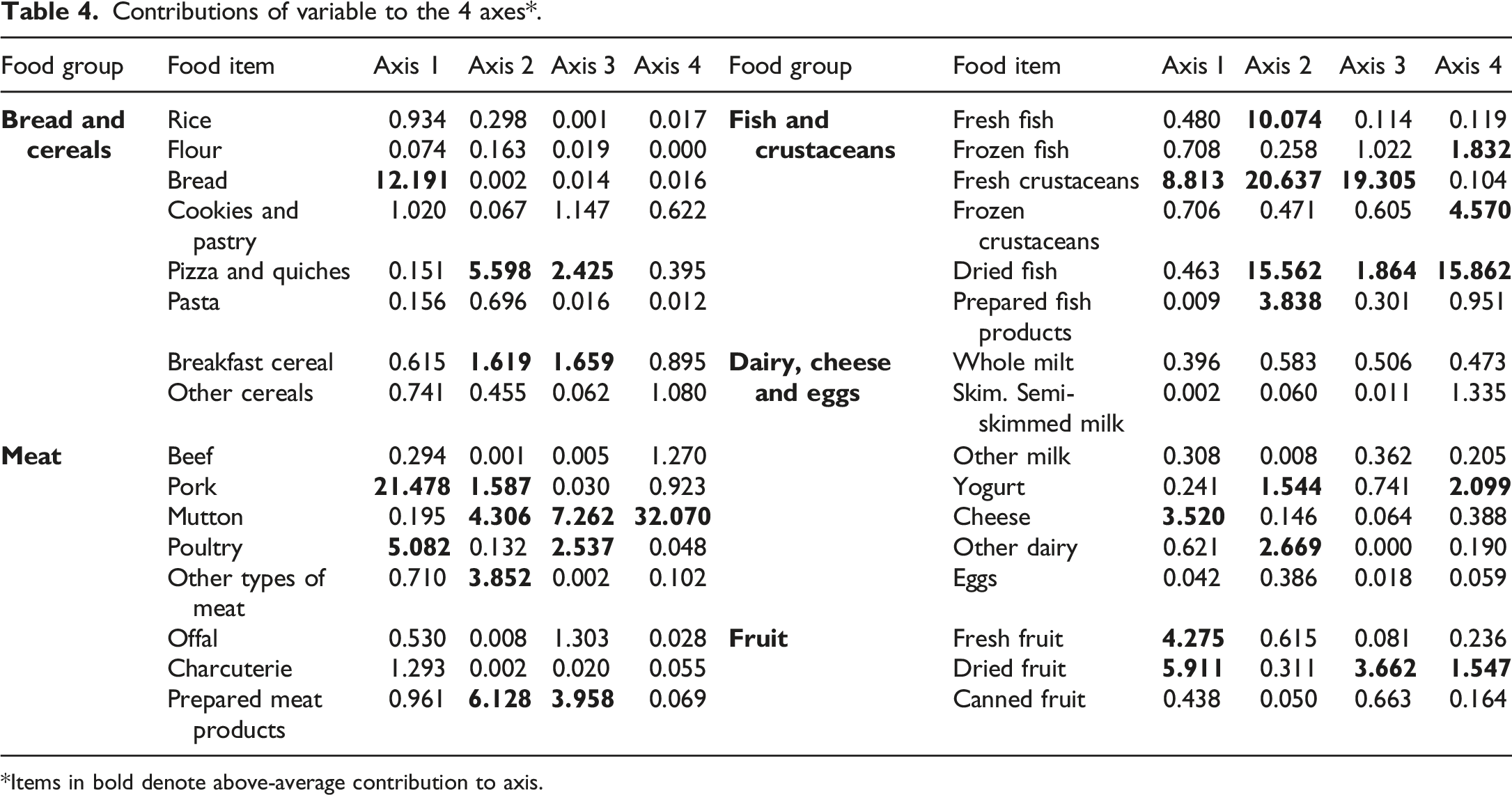
*Items in bold denote above-average contribution to axis.
Contributions of variable to the 4 axes (continuation)*.
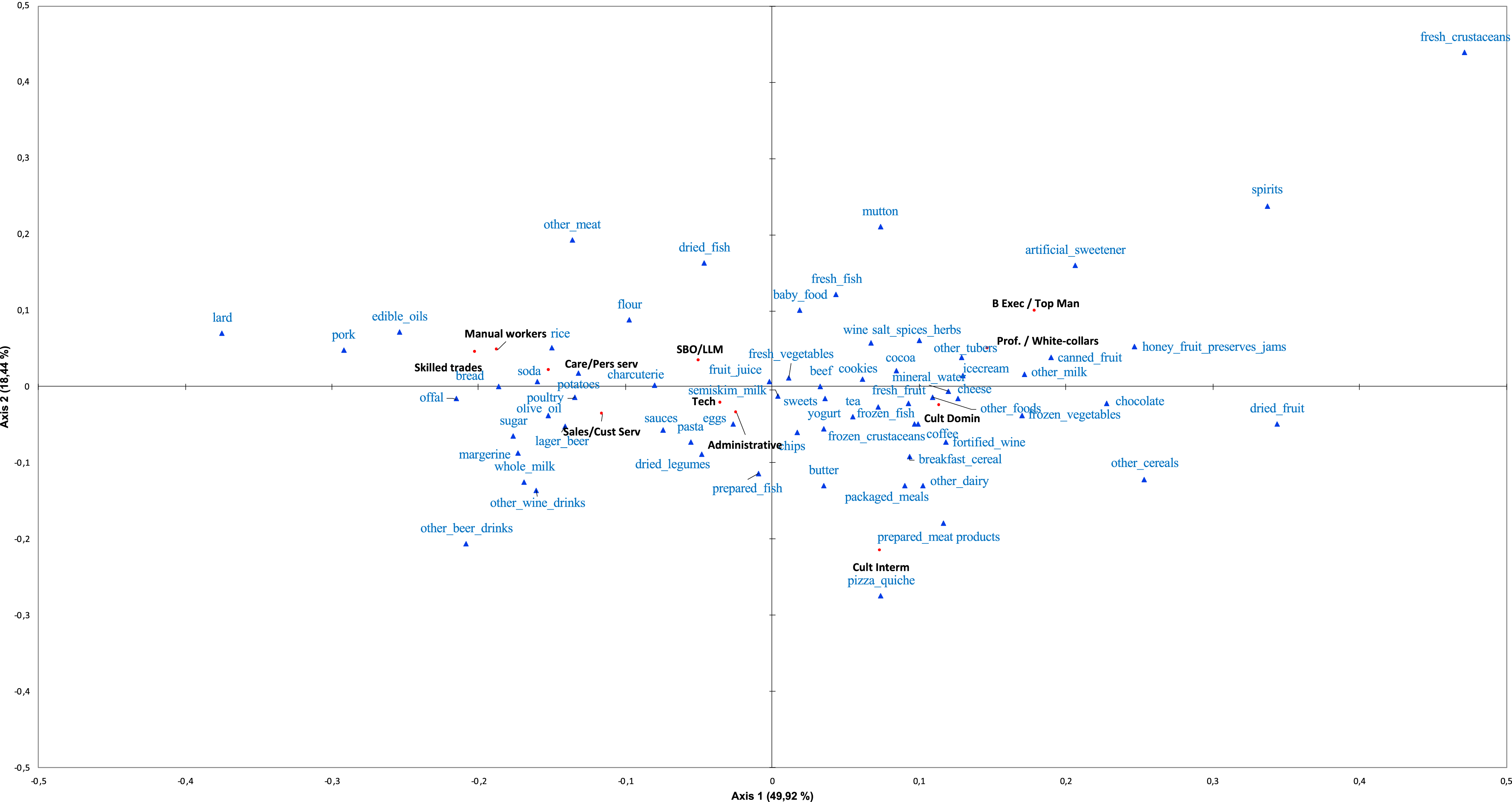
Correspondence Analysis of Household Expenses in Foodstuffs and Class Fractions (axis 1 and 2: all points).
The first axis accounts for roughly half of the variance. It appears to pin staples against delicate and rare products. Closer to one pole (left side of Figure 1), we find cooking and dressing staples (olive and edible oils, lard); cheaper and easier to prepare and consume starches (potatoes and bread). We also find less expensive proteins such as poultry, which is inexpensive in Portugal due to high production levels; pork, a salty, cheap and widely available protein; and offal, often used in rich stews or chicken soup. We also find accessible sources of energy in sugar-rich sodas. At the opposite end of this axis, we find contrasting foodstuffs: fresh crustaceans, the pinnacle of luxury in proteins; and fruits, fresh or dried, such as the expensive pine nuts, almonds, walnuts or dates. In the same region, we find rich products such as chocolate and cheese in their diverse range of types. Concerning drinks, spirits stand out. A breakdown within categories would likely show additional opposition to the appropriation of foodstuffs. However, we interpret this axis as contrasting groceries with rare and exquisite products.
The second axis cuts through the social space with a distinct set of oppositions, accounting for 18.4% of the variance in the original variables. In this axis, we find cereals and dairy, but mainly different proteins (fish, crustaceans and pork). It is unlikely that this opposition distinguishes between heavy and light products; they appear on both sides. On the top of Figure 1, we have crustaceans, mutton and other meats, and fresh and dried fish (i.e. cod). On the opposite pole, we find pizza, prepared meat and fish products, and prepared meals. Hence, the axis appears to oppose foodstuffs more likely to be prepared and consumed according to traditional recipes (more time-consuming) to convenient and easy-to-prepare products. On the same side, there is a preference for yoghurts, other dairy products (including recent additions such as skyr, quark cheese, almond or oat milk) or breakfast cereals. Oppositions to the consumption of different fish products are very telling. The ‘Portuguese taste’ for fish travels across the social space, from a preference for these foodstuffs in their integral (usually more expensive) form to an appropriation of transformed products, which are available on the food market in varied presentations (e.g. tinned sardines or tuna).
The third axis is responsible for 9% of the variance. It conveys distinctions related to drinks, with wine and fortified wine opposing soda and spirits, but also pits high consumption of mutton and dried fish against higher spending on pizza, poultry and crustaceans. Finally, it contrasts penchants for sweetness with higher consumption of dried fruit and artificial sweeteners, in contrast with higher consumption of ice cream. As a result, interpretation is more difficult than for the previous axes, as well as for the fourth axis, which accounts for less than 7% of the variance. In this case, a further opposition in drink consumption is revealed, with higher consumption of wine and tea opposing a propensity to acquire more lager beer, spirits and fortified wine. The axis also contrasts a penchant for dried foodstuffs with a longer shelf life (fish and fruits), with an inclination to spend more on ready-to-consume slurpy substances, such as yoghurt and baby food (thus likely related to generational effects). Finally, the history of these axes seems to be related to distinctions regarding the consumption of alcohol (explored in detail in a later section).
Food and social positioning: A classed taste?
Is there a correspondence between the structures of the food space and the social space? Examining Figure 1, along with Supplemental Appendixes 2 and 3, allows us to identify key features and differences in the composition of food portfolios. The first axis seems to relate to the overall volume of capital, with classes and fractions spread along this dimension of the food space according to that logic. Cheaper, fattier and heavier foodstuffs are associated with dominated fractions. Cooking staples' conspicuousness among these class fractions is likely pinned on conditions of existence that prioritise matter over manner (Atkinson and Deeming, 2015: 886). Conversely, dominant class fractions are associated with lighter and ‘practical’ foodstuffs like fruits and others that are easy to consume or whose preparation is less labour-intensive but more expensive. Such inclinations likely attest to a relative distance from necessity. The case of proteins is illuminating, as pork and fresh crustaceans contribute the most to this axis: they establish a crucial opposition between a satiating, cheap, and fatty meat and the delicate and subtle flavour of seafood, an expensive product, despite its relative abundance in Portugal. While we lack information on modes of preparation and consumption, these foodstuffs lend themselves to highly contrasting styles of appropriation. Keeping in mind that the data refers to at-home consumption, pork is often used in large chunks for roasting or broken down for frying or grilling, whereas seafood is more flexible and suitable for refined and straightforward consumption. In between these poles, we find the intermediate positions closer to foodstuffs whose consumption is not particularly distinctive according to the overall volume of capital (fresh vegetables, eggs, semi-skimmed milk, pasta, dried legumes or beef).
Concerning the second axis, to some extent, it seems to follow the composition of capital and, inescapably, a gendered fracture within the social space. While differences are not so clear-cut and retaining that we are addressing foods bought for home consumption, business executives and top managers, as well as white collars, are more inclined to both light and rich foods, especially in proteins (fresh fish, crustaceans, mutton). Conversely, cultural dominants lean towards pre-prepared protein products (meat and fish-based), packaged meals and cheeses. Cultural intermediaries are closer to prepared meals, pizza, butter, other cereals and other types of dairy). Such a disposition for convenience, a mastery of food trends and knowledge about alternatives is partly shared by administrative staff, technicians, and sales and customer service workers, who are also closer to richer, fattier but more inexpensive products (whole milk or margarine), and more off-beat drinks (wine-based and beer-based). These inclinations differ from the relative asceticism and conservatism of the traditional petite bourgeoisie (Bourdieu, 2010 [1979]: 287–309), a restraint that establishes an ethical distinction vis-à-vis the working classes. Here, such asceticism is demonstrated by the association between SBO-LLM and dried codfish. A bulwark of national food identity, salted cod consumption has a long history with underlying political, religious and ideological overtones (Sobral and Rodrigues, 2013). In what concerns the lower regions of the social space, differences between fractions are less well-defined. In any case, manual workers, the skilled trades, and sales and personal care are conspicuous consumers of edible oils, rice, flour and soda, whereas sales and customer service workers are more inclined to consume other types of fat (olive oil and margarine), lager beer and alternative drinks like Sangria and pre-prepared beer mixers.
Dionysian distinctions
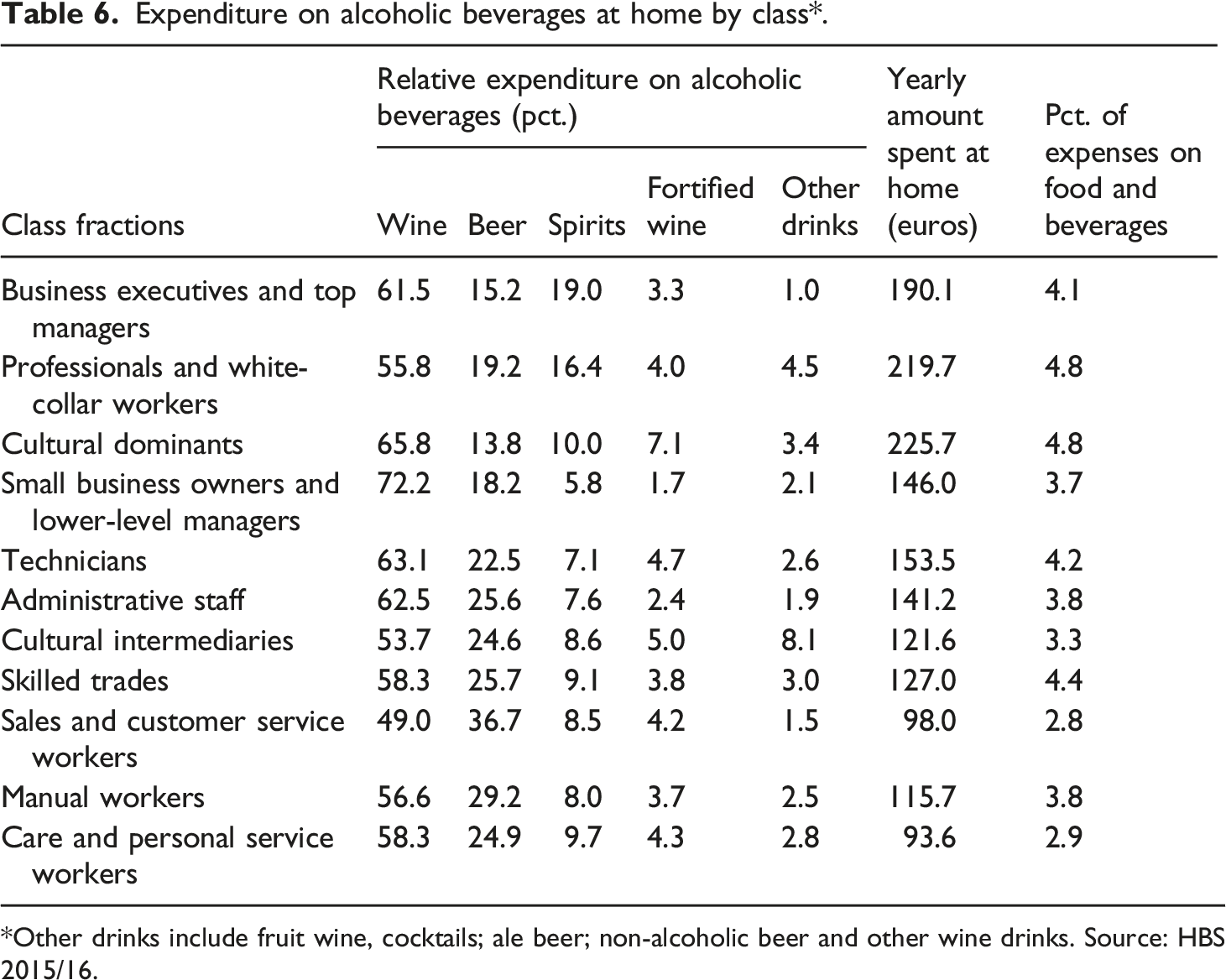
Expenditure on alcoholic beverages at home by class*.
*Other drinks include fruit wine, cocktails; ale beer; non-alcoholic beer and other wine drinks. Source: HBS 2015/16.
Differences in proportional spending on types of alcohol are telling. Relative spending on spirits is highest among the dominant class, especially among business executives and top managers, who spend 19% of their at-home drinks budget and among professionals and white collars (16.2%). Intermediate class fractions, such as administrative staff (7.6%), technicians (7.1%) and SBO-LLM (5.8%), stand in opposition as low spenders in spirits, less so than any intermediate or dominated class fraction. While all class fractions use a large chunk of their drink budget on wine, the highest proportions are expended precisely by these fractions, especially among the SBO-LLM (72.2%) and among cultural dominants (65.8%). These are distinct from cultural intermediaries (53.7%) and sales customer service workers (49%), which are those who spend the least (relatively) on wine.
Beer consumption increases as the overall volume of capital decreases. Sales and customer service workers spend over twice as much on beer as cultural dominants, business executives, and top managers, and almost double the proportion spent by professionals and white collars. Manual workers follow a similar pattern. Fortified wines (including Port and Madeira) account for a non-negligible proportion of expenditure on drinks among the cultural fractions of the dominant and intermediate classes (cultural dominants: 7.1% and cultural intermediaries: 5%), contrasting with their modest quota among the economic fractions (business executives and top managers: 3.3% and SBO-LLM: 1.7%). Consumption of ‘other drinks’, a category that comprises ale and non-alcoholic beer, fruit wine and wine-based concoctions, follows a similar pattern, especially within intermediate positions, where cultural intermediaries spend the quadruple in relative terms to other fractions.
Desires, dispositions and possibilities
HBS data provides strong evidence that household consumption patterns are, at least partially, influenced by material conditions of existence, resulting in tendentially divergent tastes. Another question concerns the criteria presiding over food choices. Health, environmental, animal welfare and other concerns have gained prominence as factors underpinning consumer choice. Institutional agents and market operators contribute to constructing these aspirations. Such is the case of the enshrinement of the Mediterranean diet by UNESCO as part of the world’s Intangible Cultural Heritage, as is the celebration of other staples of peasant food in marketing initiatives conveying timeless, classless and traditional images of food, amenable to middle- and upper-class sensibilities (West and Domingos, 2012). Foods that were part of the taste of necessity for those with little choice are experiencing broader food resignification processes. Steadfastly taken up by the market, these processes often have curious effects: products seemingly unrecognisable by older ‘Mediterranean’ dwellers may be sold with a label asserting authenticity just by using olive oil. Conversely, frugality, a cornerstone of the same diet and a reminder that it was a strategy of seasoned peasants to endure scarcity, is less amenable to being taken up by any market operator.
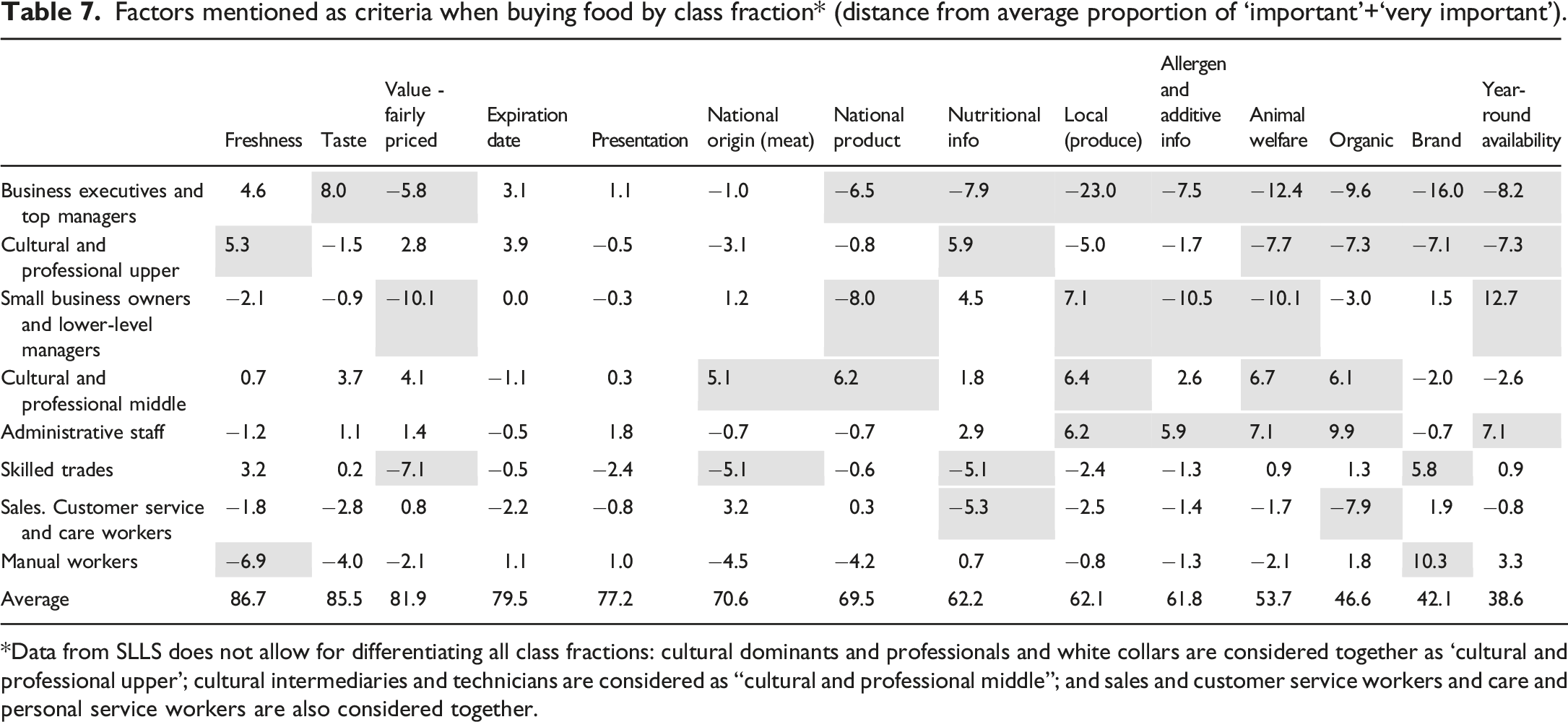
Factors mentioned as criteria when buying food by class fraction* (distance from average proportion of ‘important’+‘very important’).
*Data from SLLS does not allow for differentiating all class fractions: cultural dominants and professionals and white collars are considered together as ‘cultural and professional upper’; cultural intermediaries and technicians are considered as “cultural and professional middle”; and sales and customer service workers and care and personal service workers are also considered together.
Oppositions between fractions, depending on capital composition, are stark, reflecting divergent concerns and orientations towards food consumption. Within dominant positions, business executives and top managers more often emphasise taste, while the cultural and professional upper fractions accentuate the importance of freshness and nutritional info. Amid the intermediate class, the cultural and professional middle, and administrative staff stress animal welfare, organic origin and product ‘nationalism’, concerns that likely reflect knowledge of current scientific and medical discourses on nutrition and environmental ethics. By contrast, the economic fraction of the intermediate class downplays these concerns, as it does with value for money, placing a premium on year-round availability, also a priority for the ambivalent administrative fraction.
Finally, there are disparities in the relative importance of factors among dominated fractions. Freshness is less critical for manual workers than for those in the skilled trades. However, both tend to attribute more importance to brands than sales, customer service and care workers. Conversely, they value nationally produced meats, playing down nutritional info and organic origin.
Conclusions
The results indicate that differences in tastes for food and drink in Portugal are associated with class divisions. As captured by expenditure, the food space in Portugal is structured according to two main dimensions, with a degree of similarity to the social space. Consumption patterns of the upper/dominant classes incorporate higher proportions of leaner, lighter and exclusive foodstuffs. Additionally, their incomes allow access to a broader range of food items. Conversely, filling, starchy and fatty foods stand out in the food portfolios of those in the lower regions of the social space. I interpreted well-defined correspondences as indicators of classed tastes and as a fundamental component of distinct class cultures.
Our contribution challenges the hypotheses of fragmented or individualised consumption, popularised within the reflexivity modernisation theoretical debates, and buttresses the Bourdieusian premise of homology between food space and social space. It adds to a burgeoning body of literature that documents socially structured differences in consumption and taste between social classes across different countries (Flemmen et al., 2018; Atkinson and Deeming, 2015). While there is ground to assert a degree of homology between class positioning and food consumption in Portugal, the relationship is complex and demands cautious interpretation. General tendencies do not mean that every food or meal corresponds to this oppositional aesthetic. Moreover, relevant dimensions of the food space are not considered: product properties (brand, origin); out-of-home consumption, among others. Still, the trends presented are not incidental: they correspond to robust indicators of everyday life. Further exploration of the relationship between class and food in Portugal is desirable, namely, through a more refined assessment of dispositions towards food and eating.
Although finding classed contrasts in food consumption at home was expected, it was yet to be sociologically assessed. Differences are culturally significant and consequential, as they are coupled with diverging ethics regarding food. People are drawn to foods that fit their dispositions and demeanours, themselves rooted in conditions of existence. Rejection of foods may operate according to similar mechanisms, with some shunning items they regard as unfit for ‘people like us’ or that go against their practical orientations (‘making ends meet’ or ‘feeding the children’) (O'Connell and Brannen, 2021). Along with physiological consequences, diets carry significant symbolic baggage and may serve as inclusion/exclusion criteria in social groupings (Flemmen et al., 2018: 19). Public initiatives to promote healthy eating and sustainability must recognise that those closer to necessity are more attached to plentiful and cheap foods, whereas dispositions that value restraint, frugality and forethought develop in contexts that combine relative distance from necessity and mastery of symbolic discourses about the body and the world (Atkinson and Deeming, 2015: 893).
When Bourdieu identified a certain “keenness” among the French upper classes (for champagne, salad, Chinese food), these preferences established a distance from other groups and conferred a refined aura on these items. Not all products retain their premium of distinction after 40 years. Hierarchies of taste are dynamic; changes in food production, availability, distribution, and economic competition are vital to understanding them. As with changes in the properties and practices of agents, appetites evolve. Food items also go through resignification, (de)valuation, and popularisation like other elements of consumer culture. Even food staples of today, like sugar, were once the epitome of distinction.
Consequently, applying a Bourdieusian perspective on food consumption in different contexts is methodologically challenging because the symbolic value of foodstuffs fluctuates over time or may not translate across cultures. CA allows us to establish links between social positions and tastes rather than relying on preconceived notions of taste (goût populaire, moyen, et légitime). An example concerns wine consumption, which seems to have different meanings in Portugal compared to the United Kingdom or Norway. With Portugal being among the world’s largest producers and per capita consumers, distinctions more likely relate to brands, vintage years, and varieties of wine and, of course, a taste for different beverages.
What is more stable is the dominant classes’ orientation towards rarity and exclusiveness and the inclination of the dominated to pursue accessibility and satiation. Dispositions that are more congruent with official nutritional guidelines and discourses, in the case of the dominant and intermediate classes, and those that shun them, in the case of the dominated, act to reinforce social divides. Among the middle classes, struggles for distinction in food appreciation are affirmed through consumption of ‘exotic’ and ‘alternative’ foods (Paddock, 2016), and products attuned to ethical dispositions valuing locality, organic origin or animal welfare. In our case, this inclination is expressed through the keenness of cultural fractions (dominant and intermediate) towards novelty and convenience, which corresponds with their heavier consumption of off-beat foods and drinks and ready-to-eat foods. Conversely, from yesteryears’ peasant fare, the consumption of codfish currently seems to be more salient within the everyday diet of the traditional petite bourgeoisie, which suits dispositions that celebrate food nationalism and availability.
Our study offers a glimpse into the rich and ever-evolving field of food consumption in Portugal and its underlying logic. Portugal is now fully integrated into the European space and remains a deeply unequal society, where class divides are stark. Current trends and events, such as the Ukrainian war, the country’s increasing popularity as a tourist destination, as well as a secondary residence for wealthy foreigners, are likely to impact food consumption and tastes in different ways, offering an ample field of further enquiry.
Supplemental Material
Supplemental material - Food consumption, social class and taste in contemporary Portugal
Supplemental material for Food consumption, social class and taste in contemporary Portugal by Vasco Ramos in Journal of Consumer Culture
Footnotes
Declaration of conflicting interests
The author(s) declared no potential conflicts of interest with respect to the research, authorship, and/or publication of this article.
Funding
The author(s) disclosed receipt of the following financial support for the research, authorship, and/or publication of this article: The work leading to this article was funded by the Fundacão para a Ciência e a Tecnologia through the project reference CEECIND/00864/2018/CP1541/CT0003.

Supplemental Material
Supplemental material for this article is available online.
Note
Author Biography
References
Supplementary Material
Please find the following supplemental material available below.
For Open Access articles published under a Creative Commons License, all supplemental material carries the same license as the article it is associated with.
For non-Open Access articles published, all supplemental material carries a non-exclusive license, and permission requests for re-use of supplemental material or any part of supplemental material shall be sent directly to the copyright owner as specified in the copyright notice associated with the article.
