



Abstract
Representation is key in the politics of mass-mediated consumer society. Although previous research has noted that representation in advertising generates greater societal visibility for people with disabilities, focus has largely been on negative unintended consequences from a psychological or socio-cultural perspective. The purpose of this study is to explore the complexities involved in the making of a collective psyche related to disability, pointing instead to how the psychic and the social are mutually constitutive. By focusing on market-mediated representation in the form of advertising campaigns, we highlight both potentials and pitfalls of social transformation such as reducing stigma. We use, as revelatory cases, two relatively recent campaigns that sought to include people with disabilities on the Swedish market. We build upon Abraham and Torok’s psychoanalytic theorizing to offer a novel approach of studying market inclusion in the context of disability representation. By delineating the “social crypt,” we elucidate two processes by which stigmatized narratives enter the public consciousness: incorporation (i.e., a process by which stigma is reproduced in the collective unconscious) and introjection (i.e., a form of gradual awareness leading to destigmatization). We find that the inclusion of disability in advertising can potentially work to reduce stigma, but also to inadvertently serve as a subtler form of market exclusion by intensifying the cultural semiotics of capitalized ableism.
To crypt is to cipher, a symbolic or semiotic operation which consists of manipulating a secret code, which is something one can never do alone (Derrida, 1986: xxxvi).
Introduction
Stories, according to disability rights attorney McBryde Johnson (2006), are the closest we can come to shared experience. As Holt (2004) has shown, storytelling is the key ingredient in branding as well as in narratives that produce market culture. To this end, it is common for advertisers to draw on the universal template of the hero myth (Campbell, 1949). Yet, it has been noted that such marketing communications tend to affirm heroic agency as a patriarchal, able-bodied experience (Kearney et al., 2019). In this regard, the hero myth could be said to fuel oppression by maintaining a social order by which the hero comes in to save the day, without whom the other would be doomed (Hirschman, 2000). However, as the catchphrase goes, not all heroes wear capes. Everyday people who perform good deeds can show courageousness similar to the fictitious superheroes of popular culture (Featherstone, 1992).
Recently, a photograph went viral (Figure 1). It depicts a young girl in a wheelchair who is awestruck by an inclusive advertisement featuring a woman in a similar chair. As is widely recognized in consumer studies, people constantly negotiate their views of themselves based on their social contexts (Hall, 1997) and “make judgments about how well they are relating to others and/or accepted by others” (Baker et al., 2005: 133). It has also been pointed out that consumers who do not see themselves portrayed positively in the mass media come to sense a lack of acceptance in society, which can affect their self-esteem negatively (De Faria and Casotti, 2019). Disability representation as a resource for positive identification.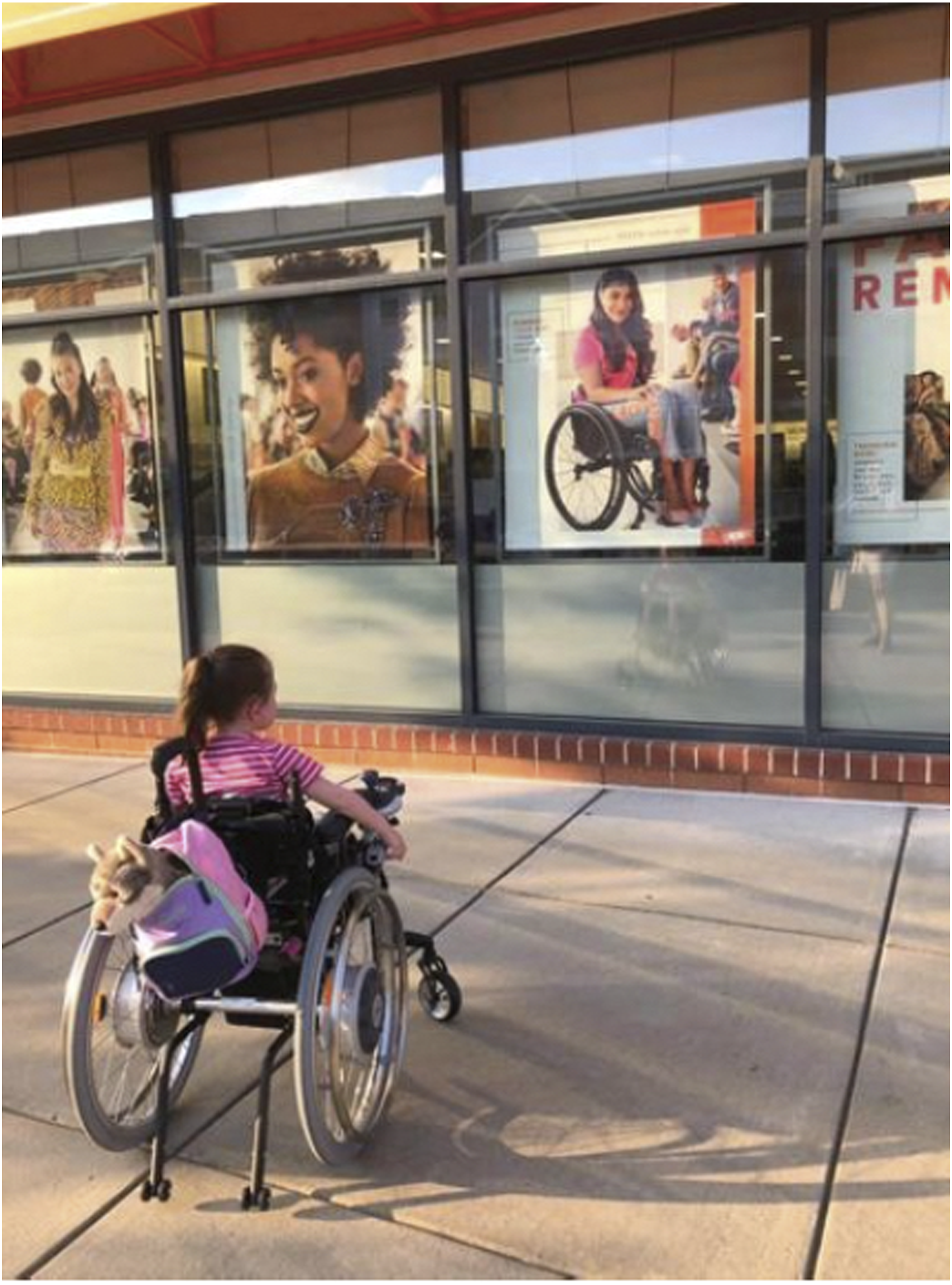
Although there have been recent attempts to represent people with disabilities in more empowering ways, for example, as paralympic athletes (Kearney et al., 2019) or spectacular dancers (Whatley, 2018), many bodily forms remain invisible in mainstream media (Foster and Pettinicchio, 2021). Instead, consumer culture tends to glorify the “supercrip”—a disabled individual whose recognition in society largely depends on the extent to which they are perceived by the public as having defeated their disabilities, thus meeting able-bodied standards (Kafer, 2013). Given the emerging marketization of “wokeness” (Sobande, 2020), a cultural stage has emerged where consumers with disabilities are increasingly included in advertising and brand promotion. Yet, while inclusion in advertising has been often viewed as non-stigmatizing and emancipatory, disabled individuals featured in the fashion system are not simply now appearing in a representational format that has traditionally excluded them, but one in which actors generally have bodies that semiotically serve to fetishize physical fitness and youthfulness (Haller, 2010). Such semiotics embedded in consumer culture are irreducible from a display emphasizing that which is “desirable, employable, acceptable, or valuable” (Wasserman and Bates, 2017: 35) In this study, we place a particular focus on the representation of disability in recent examples of advertising campaigns and critically explore the politics of market-mediation of heroic agency and stigma.
The balance between heroism and victimization is a delicate one. Kearney et al. (2019) point out the need for greater attention to be paid to the role of advertising in the assimilation of new norms and ideal types by marginalized groups. However, despite apparent intentions to integrate more inclusive mythologies into consumer culture (and eventually social praxis), the culture industries are ultimately driven by a profit motive. Inclusive advertisements can inadvertently end up repressing the very marginalized groups they seek to represent (Gurrieri et al., 2013). Such a marketing communications scandal took place recently in the Swedish context (Södergren and Vallström, 2020), and we use it as a revelatory case by employing methods of critical visual analysis (Schroeder, 2006).
For our analysis, we adopt the conceptualization of introjection and incorporation developed by psychoanalysts Abraham and Torok (1994). Introjection denotes the energetic social nature of psychic life, where “the psyche is in a constant process of acquisition involving the active expansion of our potential to open onto our own emerging desires and feelings as well as the external world” (p. 100). The introjection of an experience, even a traumatic one, allows the subject to thus learn, accept, and go on in the world in a complacent way (Kirkby, 2006). In contrast, incorporation is the failure of this social process, resulting in its supplementation with fantasy, which blocks change in the psyche and the notion of self. It can be seen as “the removal of an unbearable reality and its confinement in an inaccessible region of the psyche” (Abraham and Torok, 1994: 102), in which the traumatic cause cannot be integrated to the psyche of the subject, and is entombed in the unconscious where it is “doomed to endlessly repeat the trauma” (Fiddler, 2019: 467). On a macro-level, the distinction between introjection and incorporation advances previous theory by recognizing often disregarded nuances inherent in the internalization of stereotypical representations. We can thus focus on the following research questions: How do stigmatized (or unspeakable) narratives enter the public consciousness in advertising? What are the unintended consequences? Does the outcome of such inclusion hold the potential for destigmatization?
This perspective helps us scrutinize the increasing utilization of disability representation in marketing communications, and how they can counter intuitively further market exclusion by reinforcing stereotypes and perpetuating ideal body type myths (Kearney et al., 2019). Furthermore, research on disability and consumption has typically focused on how servicescapes can be more accessible, or sought to develop frameworks for understanding vulnerability from the viewpoint of the individual consumer. Less focus has been placed on how disability representation in advertising may create opportunities for positive identification (Foster and Pettinicchio, 2021) or transform collective notions on what constitutes the normal and the deviant. To complement these efforts, our study highlights the complex cultural relationship of simultaneously positive and negative implications, and how these become manifest and are negotiated in the collective psyche. In this way, we extend the literature on destigmatization by introducing and defining the social crypt as a higher-order concept that creates a link between the individual psyche and the collective unconscious. We conclude by pondering the possibilities and transformative potential of disability representation in advertising to reduce stigma.
Theoretical background
Perspectives on disability in research on consumer culture
One billion people, or 15% of the global world population, are currently living with disabilities. Yet, many social aspects around disability remain culturally unspeakable. In De Faria and Casotti’s (2019) study, for example, the fathers of people with Down syndrome preferred not to speak, even though their intention was to interview both parents. Selected abortion and assisted suicide are more often regarded as justifiable among people with disabilities (McBryde Johnson, 2006). There are also taboos around disability and sex (Shakespeare et al., 1996).
The seriousness of the situation is recognized in the wealth of research that has emerged to distinguish between different approaches to disability, which include the medical, social, affirmative, and psycho-emotional. In turn, from an advocacy position, cinema has been regarded as a particularly important medium for raising disability awareness (Fraser, 2016). The different academic approaches to disability are aptly illustrated in the cinematic biographical drama Mask (1985), which is based on the life and early death of Rocky Dennis. Following the medical model (Oliver, 1996), Rocky is diagnosed with craniodiaphyseal dysplasia, an extremely rare disorder that causes disfiguring cranial enlargements. For the past 12 years, the doctors have repeatedly told him that his life expectancy is somewhere between three to six months. Meanwhile, the social model (Shakespeare, 2004) is illustrated in how Rocky, on the one hand, is accepted by his mother Rusty’s motorcycle friends, and, on the other hand, is still perceived as deviant by many students in his school. And yet, following the affirmative model (Swain and French, 2000), his life is not depicted as tragic. He remains positive, has hobbies like any other boy his age, falls in love, and lives the best life he can. He does not feel self-pity. In the scene where he first meets the principal—who is initially reluctant to accept him to the new school on the basis of his physical appearance—he charmingly shrugs it off. Lastly, the psycho-emotional model (Higgins, 2020) is illustrated in the depression and personal anguish Rocky has to face, which ultimately costs him his life.
When disability is part of a character’s story, they often become positioned as someone to pity or someone to cure (i.e., the medical model), instead of portraying disabled individuals as full members of our society. Although increased representation may have contributed to the resymbolization of disability from unworthy to worthy (i.e., the affirmative model), this has usually been based on overt sentimentality. In research focusing on consumer culture, it is often environmental and socio-political structures rather than one’s medical impairment that are seen as disabling (i.e., the social model). Recently, Higgins (2020) criticized the social model for overlooking the psycho-emotional barriers and psychological inequalities experienced by consumers living with impairment, rendering them to feel abnormal and inadequate in society.
However, it would seem that most approaches, including the social, are still deeply rooted in the individualized meaning-making and consciousness of the disabled subject. By theoretically bringing the social and the psycho-emotional models together through the psychoanalytic formulation of the social crypt, we can begin to approach market exclusion and stigma as well as the transformative potential of commercial representations of disability from a collective perspective (also Chatzidakis et al., 2021). In the representational context of Mask (1985), for example, the social crypt would help us study the formation of a collective psyche and the internalized behaviors toward disability among Rocky’s peers, which, as we shall see, is the first step in the destigmatization process.
Market exclusion, stigma, and visual representation of people with disabilities
Burgess et al. (2017) note that market exclusion involves barriers to participation in the marketplace relationships and activities, available to the majority of people in a society. It affects the ability of individuals and groups to be adequately represented in the marketplace and has implications for quality of life and social cohesion (p. 491, italics added).
The marginalization of particular groups by society and the market can often be seen developing into zealous ostracism (Downey, 2019). Beudaert et al. (2017) show how market exclusion often results in stigmatization, which, in turn, contributes to discrimination and consumer vulnerability. The literature generally follows the sociological tradition of Erving Goffman (1963), who constructed stigma as a social relation—something that creates a deviation from cultural norms and that arises when individuals are discredited on the basis of personal attributes that are socially devalued, or “reduced in our minds from a whole and usual person to a tainted, discounted one” (p. 3). As Beudaert (2020) accounts, such negative attributes include physical deformities (amputated limbs, scars), character blemishes (mental disorders, sexual orientation), and tribal associations (ethnicity, nationality). Stigma can be extended to consumers with disabilities who are generally perceived as inferior in a market that perpetuates and reinforces normative expectations of consumption (Saatcioglu and Ozanne, 2013). From the ability to open doors to having the “acceptable” habitus of a shopper (Gurrieri et al., 2013), it sets up a clear “marker of otherness in the public space” (Pavia and Mason, 2012: 88).
Although affirmative representations of stigma and vulnerability have proliferated spectacularly in recent years in a broad range of marketing communications (Foster and Pettinicchio, 2021), Beudaert et al. (2016) still report a persistent cultural invisibility of disability, which can create difficulties “by decreasing the empathy of others and the legitimacy of the disability” (p. 61). The social realm is still largely built on ableist semiotics (Kearney et al., 2019). Ableism, in short, is the discrimination of and social prejudice against people with disabilities based on the belief that typical abilities are superior. This ideology is rooted in the assumption that disabled people require fixing. Kearney et al. (2019) focus on how this underpinning leads to various misrepresentations. Although their study is timely and important, the two forms of misrepresentation that they propose (i.e., non-representation and selective representation) do not focus on representations of heroic agency and disability, which is important in the social process of destigmatization (Foster and Pettinicchio, 2021). To amend this, we turn to psychoanalytic theorizing for a novel view based on the collective psyche.
Introjection as a framework for social inclusivity
Following the recent growth of psychoanalytical theorizing in the study of consumer culture (e.g., Chatzidakis et al., 2021), we assess the politics of representing disability in advertising. We focus on how the semiotics of heroic agency is constructed and assess its ableist underpinnings from the perspective of the collective psyche. For this, Abraham and Torok’s (1994) analysis offers a promising conceptual space, as it concerns itself specifically with the link between the inner and the outer, or the “particular way in which a person transforms the surrounding world into a unique experiential world” (Yassa, 2002: 86). The disregard for painful historical realities characterizes individuals as well as the collective level of social groups and can disrupt the lives of entire nations (Matei, 2015). In terms of the inner life of a person, introjection (literally “casting inside”) is the continual process by which the subject replicates and interiorizes the behaviors of the surrounding world. It was first introduced by the Hungarian psychoanalyst Sándor Ferenczi in 1909 and was further elaborated on in Abraham and Torok’s work as an attempt to describe the process of broadening one’s capacity to engage with the world. It is a process by which the “ego is enlarged” (Kirkby, 2006: 466) in a way that the subject can continue to experience and integrate the outside, and thus “opens the path for investment in another object” (Matei, 2015: 40). Applied to the social realm, however, introjection can involve enrichments and progressive ruptures in an ever-expanding socio-political imaginary, whereby the emergence of more inclusive mythologies seems to indicate the potential to challenge stigma (Eichert and Luedicke, 2022).
Summary of the introjective and incorporative processes in Abraham and Torok (1994).
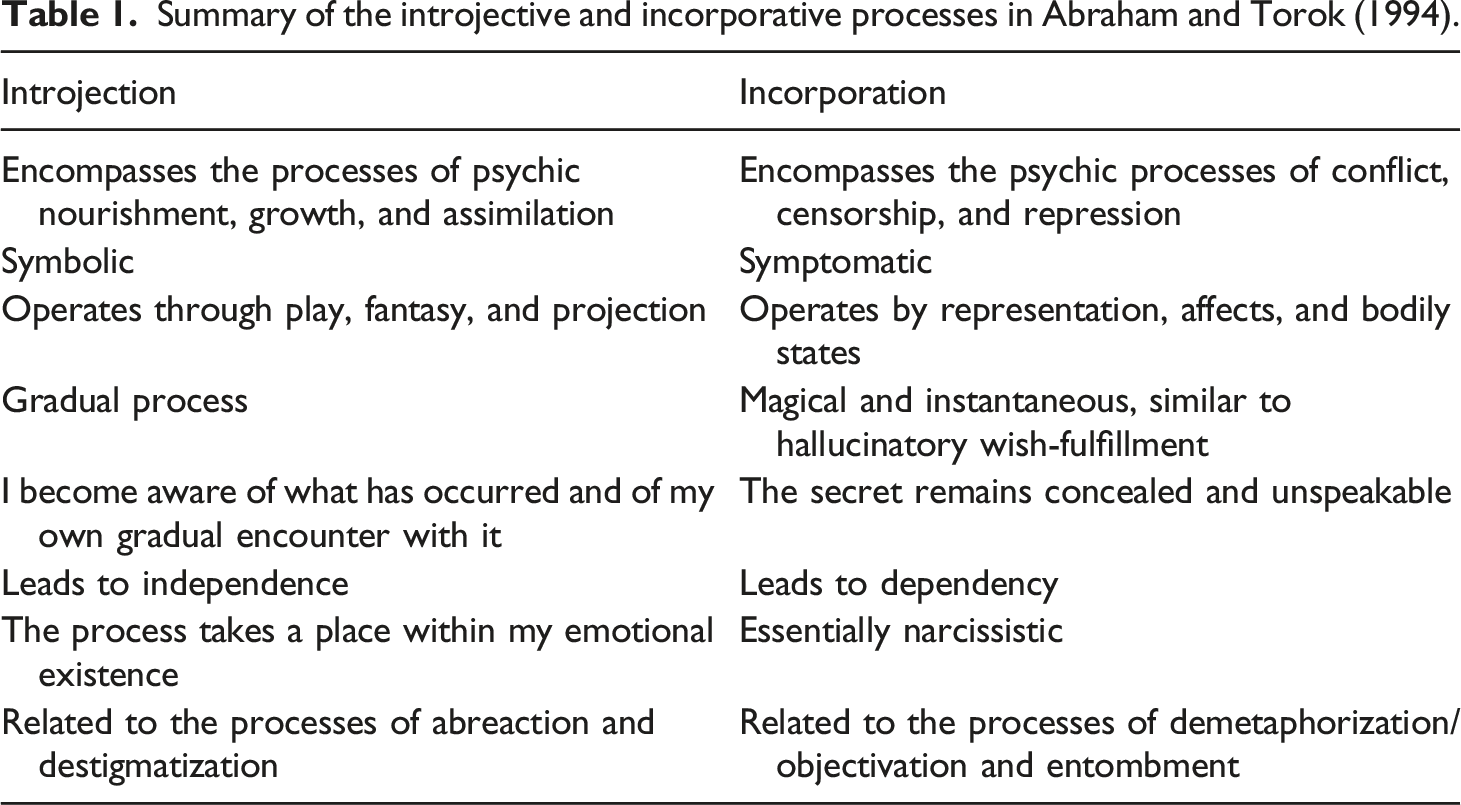
A typical example of introjection might be a dad telling his son “boys don’t cry,” suggesting that a person might assimilate (both positive and negative) elements from their environment and internalize into their way of thinking as part of their identity. In psychoanalysis, however, introjection tends to be referenced in connection to the grieving process of a loved one, often entailing a gradual form of acceptance. Meanwhile, abreaction denotes a revolutionary psychic encounter where the subject relives an experience to purge it of its emotional excesses (e.g., through hypnosis). In other words, through abreaction one can become conscious of repressed traumatic events and find an emotional release that leads to catharsis (Bettany, 2022).
By means of contrast, for Abraham and Torok (1994), incorporation is the obstacle to introjection. “Incorporation,” they argue, “results from those losses that for some reason cannot be acknowledged as such” (p. 130, italics in original). Incorporation is distinct from the gradual process of introjection because it is instantaneous, magical, and denotes a desperate attempt of the psyche to keep that which was previously believed to be securely intact (Radford and Bloch, 2012). Instead of a gradual process of the ego embracing and cathecting the outer world, incorporation is a traumatic response to something too overwhelming, “an immediate solution, a shortcut, the content of which is that the subject literally and concretely devours” (Yassa, 2002: 87) the traumatic object. As Matei (2015) notes, here the “unconscious content remains inaccessible and meaningless” (p. 41). Incorporation is thus a short circuiting that follows a failed introjection, enticing the subject to magical thinking to cover up for what is too traumatic to confront or too unspeakable to say. It manifests in overcompensating denial, or completely displaced or removed activities as substitutions for what cannot be internalized. These can include “fantasies of social acceptance through product purchase” (De Faria and Casotti, 2019: 2261).
Abraham and Torok (1994) make recourse to a literary scenario to illustrate the process of incorporation through the writings of Guy de Maupassant (1850–1893), whose short story At Sea recounts a seafaring incident involving two brothers, in which the younger has to cut off his arm: “You must throw that into the sea at once,” said his brother. But Javel, junior, got angry. “Oh, no! Oh, no! I don’t want to. It belongs to me, does it not, as it is my arm?”
As long as the pestilential arm is kept aboard, the younger brother is able to make believe that his old body is intact. Likewise, Rashford and Bloch (2012) studied incorporation in the context of celebrity deaths. They found that fans compensate for the loss of a celebrity through consumer objects in an attempt to keep the deceased person alive.
Toward a social theory of the crypt
According to Abraham and Torok (1986), what socially takes place in the presence of something unspeakable is the construction of a crypt. For example, whenever something terrible happens to a disabled person, people tend to say, “Who would do that?” or “It’s unimaginable” and then remove it from their minds. As Gehrig (2020) points out, “they cannot bear to imagine it, so our reality remains deniable, though it is as provable as our unseen bodies” (p. 244). On a social level, we argue that psychoanalytic theory can help us understand stigma when disability enters the public consciousness through advertising. The social crypt signifies something unbearable that cannot yet be expressed with the vocabulary available—and thus becomes inaccessible to the gradual work of assimilation—whereby the distinction between introjection and incorporation is a central feature. Thus, the repressed traumas confined to the region of the social crypt create a split between the individual psyche and the collective unconscious from which painful historical realities can disrupt and haunt the lives of entire nations (Matei, 2015). From this perspective, it is helpful to imagine the collective unconscious as a mosaic where new supplements constantly enrich the life of the people.
Derrida (1986) vividly helps us picture such a crypt, which also includes the actual or supposed traumas that made introjection impossible in the first place. In his work the metaphor of the crypt returns insistently. Not having been taken back inside the self, digested, assimilated as in ‘all’ normal mourning, the dead object remains like a living dead abscessed in a specific spot in the ego. [...] The incorporated dead, which one has not really managed to take upon oneself, continues to lodge there like something other and to ventrilocate through the ‘living.’ The living dead [...] is the one who is enclosed in the crypt (Derrida, 1985: 57).
Enclosed in this crypt, it would seem that unspeakable discourses (e.g., infanticide, taboos around sexuality) remain concealed. Incorporation thus creates the conditions for misrepresentation through what could be called acts of (a) demetaphorization/objectivation, which denote the process by which the traumatic experience is (b) entombed in the social crypt—thus remaining concealed as an unspeakable discourse in the collective unconscious—which explains why discrimination against people with disabilities often happens unwillingly. In this view, demetaphorization (i.e., taking literally what is meant figuratively) and objectivation (i.e., pretending that someone’s suffering is not an injury to the social system as a whole) are the two interrelated procedures that correspond to incorporation in consumer culture, exempting market representations from the painful process of recognition and reorganization. Consider the Black Lives Matter protests where the police and counter-protesters would demetaphorize its content (e.g., “All Lives Matter”) to objectivate racism and its impact on society at large; or the low literacy consumers in Adkins and Ozanne’s (2005) study whose suffering is clearly socially embedded. Similarly to how a consumer actively shuns away inconvenient and uncomfortable knowledge of commodity production (Bradshaw and Zwick, 2016), demetaphorization/objectivation denotes the refusal of transformation where we shun the consequences in spite of acknowledging the problem. In this sense, it is compensatory for deficient introjection.
In turn, entombment is the final step of the incorporation process, occurring when such a compensation for deficient introjection is confined to the social crypt, where its meaning remains concealed in the collective unconscious. Life goes on, seemingly as if nothing has happened, and we are likely to take the unspeakable element to the grave. In simple terms, entombment could thus be seen as a repressive process by which some traumatic event or a secret remains unspeakable.
Revelatory cases of incorporation and introjection in advertising
To illustrate our approach further, we use two inclusive marketing campaigns as revelatory cases (Molander et al., 2019) to explore incorporation and introjection of disability semiotics in advertising. First, the Swedish Public Employment Service’s Gör plats! campaign is used to illustrate incorporation. Second, a series of TV spots by Swedish grocery store chain ICA featuring a character with Down syndrome (i.e., ICA Jerry) is used to illustrate introjection. These campaigns were chosen on the basis of the widespread attention they received in Swedish media. In this representational context, we apply a semiotic inquiry in the form of critical visual analysis of market-mediated symbols. In its development in the context of consumption, market-mediated photos and ads can be seen as data that can be studied as rich texts embedded in and connected to a cultural context. By connecting images to the cultural context of their consumption, Schroeder (2006) argues that we can gain a more thorough understanding of how these images embody and express cultural values and contradictions.
Types of impairments as represented by prominence.
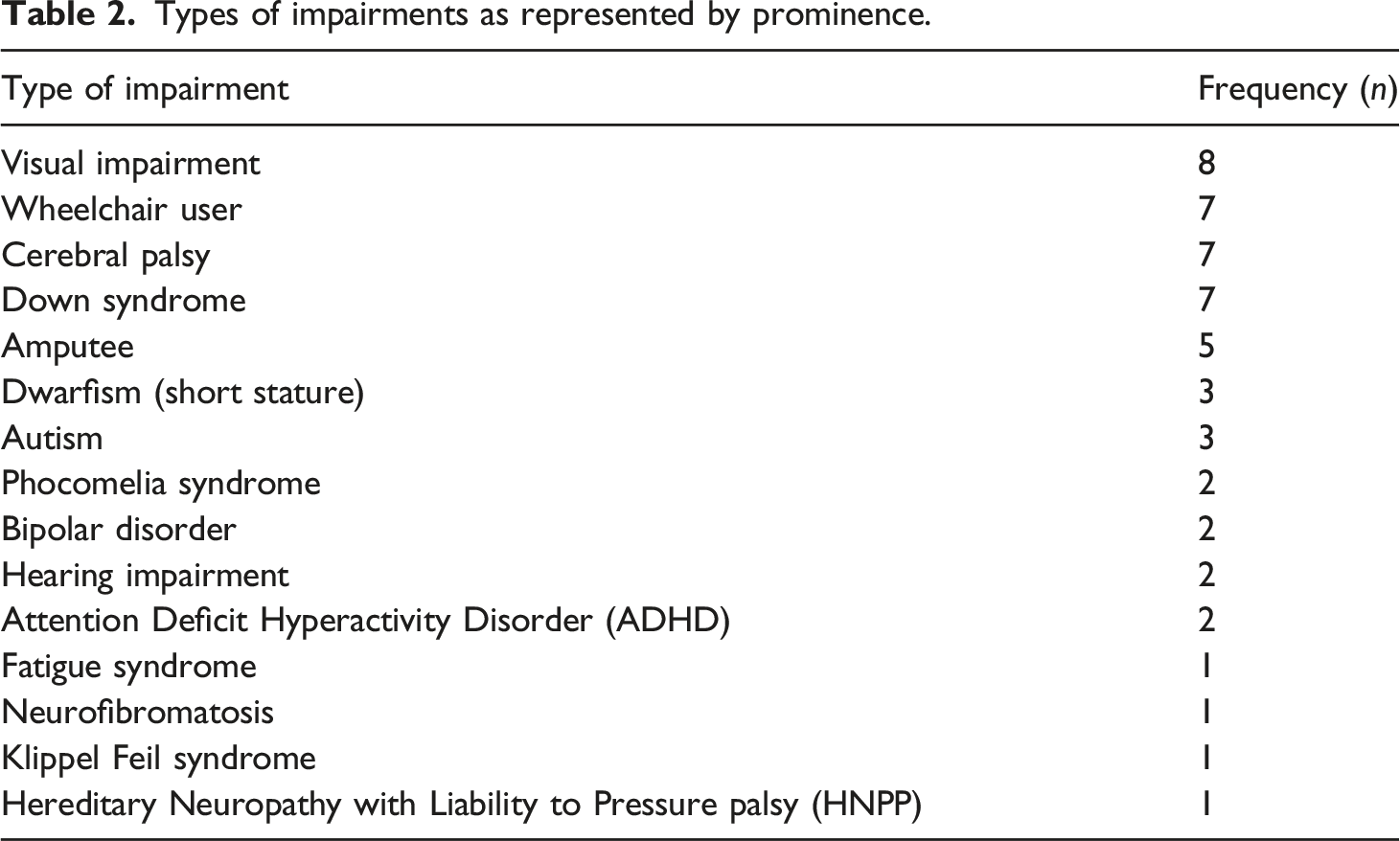
Following the principles of theoretical thematic analysis (Braun and Clarke, 2006), we systematically coded, sorted, and analyzed the data with the aim of identifying common patterns, themes, and sub-themes (also Chatzidakis et al., 2021). We were explicitly interested in examining the applicability of Abraham and Torok’s concepts to the data. We thus remain sensitive to our usage of psychoanalysis as a conceptual repertoire, not a methodological framework. The themes were revised by continuously going back and forth between theory and data.
Findings and analysis
Incorporation and the construction of a social crypt
In our dataset, themes of incorporation of disability arose predominantly from the Gör plats! campaign, through which the Swedish Public Employment Service sought to create job opportunities for people with disabilities (Södergren and Vallström, 2020). However, as detailed in Figure 2, in these ads the faces of the models with disabilities were cropped out and exchanged with the faces of able-bodied celebrities instead. Along with this aesthetic, the message asked the viewer: “would she have become a powerful influencer?” Not only was the face of Natalie Eriksson (@natalieerikssonss), an Instagram influencer with cerebral palsy, exchanged with that of Therese Lindgren (@therese), an able-bodied celebrity influencer, the color of Erikson’s dark skin was altered to match Lindgren’s whiter hue (completely disregarding the fact that Natalie Erikson is already a successful influencer in her own right). Foster and Pettinicchio (2021) refer to this type of incorporation as naïve integration, “sanitizing models with a disability, doctoring their features to conventionalize their appearance, bringing them closer to industry standards and with what consumers are thought to be most comfortable” (p. 4). Ultimately, the Swedish Public Employment Service was legally forced to pay for damages, and Lindgren took to her Instagram to make a public apology. These outcomes are also in line with Mirabito et al. (2016), who note that “discrimination is more likely to arise […] from policies and practices that seem natural but […] have a disparate negative impact on stigmatized groups” (p. 179). In addition, Hamilton et al. (2014) note how stigmatization is interrelated with “wishful thinking that they will soon get a job” (p. 1841). Incorporation of disability in advertising.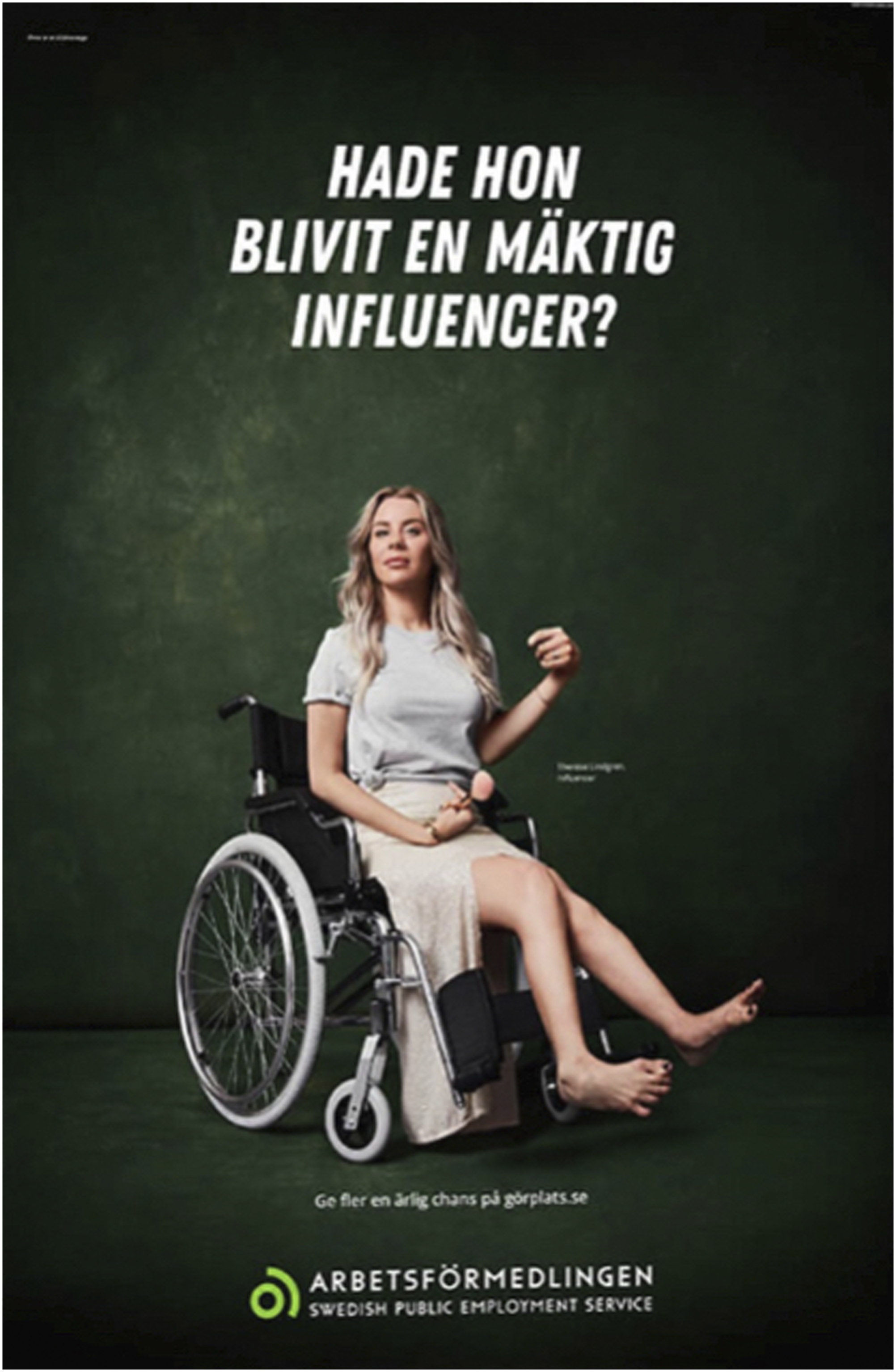
Incorporation may also include overly heroic depictions of disability. Consider a video ad featuring a gloomy rendition of John Lennon’s Working Class Hero to enhance the solemnly morose feeling as it follows the mundane struggles of three people living with disabilities (https://youtu.be/wWG3GCr-yK0). A woman in a wheelchair cannot enter the bus because it is too crowded, a blind man struggles to take a shower, and another man with short stature can barely reach the keyhole as he locks the door to his apartment. Even in everyday tasks, they face vulnerability and discrimination, which they seem to compensate for by performing heroic efforts in their professional lives. As one of the disabled actors in the ad puts it, “the greatest bully is none other than yourself” (https://youtu.be/93TBdlULuJU), pointing to the need for representation, identification, and community.
It would seem that while the promotion of “supercrips” or everyday heroism can encourage consumers with disabilities to recognize their own worth, it often includes elements of demetaphorization/objectivation in line with Abraham and Torok’s (1994) definition of incorporation (Table 1), which will lead to entombment in the social crypt. Excessive praise for engaging in everyday activities is thought to reflect the general low-level of expectations in society toward people with disabilities. Moreover, media depictions of “supercrips” can raise unrealistic expectations for all people with disabilities (i.e., demetaphorization), including those who cannot execute many of the things that, for example, Paralympic athletes can do (i.e., objectivation). Thus, we find that disability representation in advertising that incorporates “supercrip” narratives often works through demetaphorization/objectivation, pretending that the suffering of people with disabilities is not an injury to the social system, for example, through the selective representation of heroic agency. As a counterpoint, returning to the young girl in Figure 1, we argue that this image perhaps represents a broader example of introjection. The two ultimately met in person, and for the child to encounter a confident adult with a similar wheelchair seems to have provided her with a profound feeling of identification and community (Stone, 2019).
Introjection and its potential for destigmatization
Contrary to the campaign by the Swedish Public Employment Service in which the faces of people with disabilities were exchanged with able-bodied celebrities, thus reinforcing stigma in the collective unconscious through “confinement, imprisonment, and (in extreme cases) entombment in the crypt” (Abraham and Torok, 1994: 132), the participation of Jerry (played by an actor with Down syndrome) as a regular character in ICA’s marketing communications could be seen as a more successful example of introjection (Figure 3). He made his first appearance in 2009 (https://youtu.be/FyLKpjjg0jM). In the video ad, his three co-workers are overwhelmed with work, complaining about not having enough staff, when the store manager interrupts (“So I promised I’d recruit someone new; here he is. Say ‘hi’ to our new intern”). The three co-workers stare confusedly at their new colleague, whereupon he—in a cathartic moment of abreaction—shuns, “What are you looking at? Have you never seen an intern before?” Attention is deflected from his disability to his professional role as an intern, which is an important step in destigmatization (Mirabito et al., 2016). Other advertisements see him celebrating Halloween (https://youtu.be/cGVjpEzhuuo), explaining sexual relationships (https://youtu.be/knp5haeN6Co), and cringe at a drinking song (https://youtu.be/eImi9DwSMts) with his other colleagues on seemingly equal terms. Another cathartic moment occurs when two of the able-bodied employees have forgotten what the so-called Cheap Week is about. They ask Jerry to go check with the store manager, but his answer is unintelligible. One of the able-bodied employees says to the other: “This might not be politically correct, but I can’t hear what the man is saying.” However, when he himself goes to check with the store manager, it turns out that he has injured his face and cannot speak. In other words, Jerry’s unintelligible noises were just a reiteration of the store manager’s attempt to speak (https://youtu.be/Jv7FEJ7BAFU). Elsewhere, he is poking fun at the man-of-action hero (https://youtu.be/zGNj45TgewU), and they draw on allegorical puns to announce his return to the series after a period of absence (https://youtu.be/8n0wLGZ_gWI). Previous studies have highlighted how humor can be used to manage stigma in marketing communications (Jensen, 2018). Clearly, this is also the case with disability representation. Consider Maltesers’s New Boyfriend campaign inspired by real-life stories from disabled people in awkward dating situations (https://youtu.be/YgUqmKQ9Lrg), the campaign features a woman with cerebral palsy joking about her love life indicating that humor can be a powerful tool to break down taboos. Introjection of disability in advertising.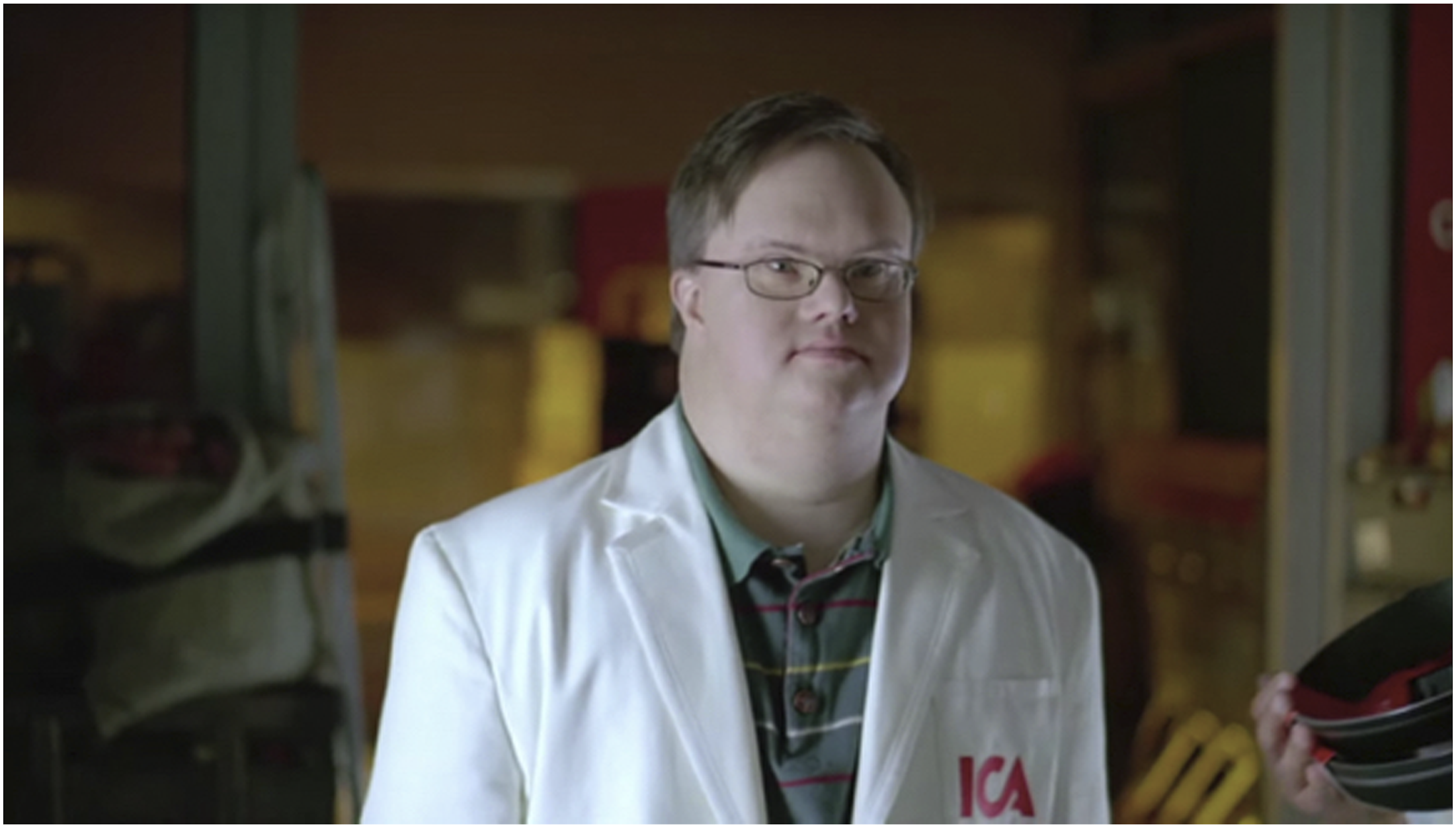
Following Abraham and Torok (1994), introjection is a gradual process consisting of abreaction and destigmatization. Since his debut in 2009, ICA Jerry has featured in more than 50 video ads on national Swedish television. This seems to indicate a gradual process of raising consciousness, both among the audience and his fictitious colleagues, thus avoiding the instantaneous plunge into incorporation that can only function “by way of processes similar to hallucinatory fulfillments” (p. 113). In turn, what is being created is a semiotic opportunity to transform consumer culture through destigmatization. De Faria and Casotti (2019) note that people with Down syndrome are “rarely present in the mass media” and that “non-stigmatized people view a stigmatized person or group as different and relatively inferior” (p. 2238). One of the harmful stereotypes they highlight is the stigma around “the eternal child” (p. 2252), which reinforces an image of people with Down syndrome as “perpetually childlike, dependent and incapable of making autonomous decisions” (p. 2260). From this perspective, “becoming an employee [is] an important antecedent role to becoming an adult” (p. 2256). In other words, it would seem that the introjection of Jerry in ICA’s marketing communications denotes a process of destigmatization as it inverts the myth of the eternally helpless child. It is striking that one of the able-bodied colleagues is playing the childlike character (https://youtu.be/ZkfRGhE0fWo), further contributing to a semiotic of cultural inclusion.
Introjection was not completely absent in the Swedish Public Employment Service’s campaign. One of the videos depicted the working life of four colleagues with severe visual impairments who were employed by a company that the Swedish Public Employment Service had supplied with various resources (https://youtu.be/fAtS_ZfwHi0). As it emphasized the various adjustments made by the employer as well as their assimilation to the work culture as a gradual process, it could be seen to put forth possibilities for introjection by semiotically engaging with processes of abreaction and destigmatization. In terms of abreaction, it shows the cathartic moment when the employer first met with the new workers (“I’d never known anyone with visual impairment before, it was a new experience”), which ultimately leads to destigmatization (“It’s no difference between us and them”).
It is worth stressing that the psycho-social dynamic between introjection and incorporation is by no means limited to the representational context of disability (Chatzidakis et al., 2021). For example, Testa (2021) notes that black representation in top magazines remains a work-in-progress and that change is slow (“in September 2018, for example, Black women covered a majority of top titles. But by 2019, the models on those covers were less racially diverse”). Although introjection denotes a gradual process which by definition is slow, such imperatives can also wane. Instead of “truly embrac[ing] systemic reinvention,” Testa (2021) worries that fashion will fall back into old patterns of treating social progress as a trend. Likewise, it would seem that introjective initiatives can fall back into incorporation.
Discussion
Following a diversity of studies focusing on consumer culture and vulnerability (e.g., Baker et al., 2005; Higgins, 2020; Kearney et al., 2019), our work has engaged with cultural negotiations of disability representation and destigmatization. Aimed at scrutinizing how heroic agency can be construed vis-à-vis disability, we have sought to explore the universal template of the hero myth, which is so often reflected in advertising narratives (Hirschman, 2000). In so doing, we have critiqued its ableist underpinnings and how its aesthetics are proliferating in mass-mediated consumer culture, only now in the context of representing the disabled (Foster and Pettinicchio, 2021).
We have explored representation in consumer culture by showcasing alternatives to the various conventions of misrepresentation that have previously been outlined in marketing and consumer research, such as selective representation (Kearney et al., 2019) and unintended exclusion (Kaufman-Scarborough, 2015). Although “marketing communications is but one component of the visual realm” (Schroeder and Borgerson, 2005: 579), it continues to be an important aspect of the increasingly visual cultural context of consumption (Schroeder, 2006). Thus, our investigation reveals the potential of disability representation in advertising to subvert the ableist gaze without appealing to the “supercrip” stereotype (Kearney et al., 2019).
Furthermore, while our data are limited to Northern Europe, it is worth mentioning its relevance across different regional contexts. In the North American context, for example, there is a whole genre of advertising on Disabled American Veterans (https://youtu.be/1AZa_lR4EZ4) that are culturally produced to fit the mold of the “supercrip” figure. These ads promote military service and patriotic sacrifice that employs the intensification of warrior mythology. Elsewhere, protagonists with disabilities are becoming increasingly prominent in Arab cinema (O’Dell, 2022). It is also revelatory that it is only through narratives of a tireless pursuit of one’s professional aspirations or industrious work ethic that people with disabilities can rise up as “workercrips,” thus standing on the hallowed grounds of the cultural stage of marketization. Although potentially affirmative, these representations have a constant propensity to collapse into incorporation, and to thus depict the disabled as acceptable only when they are constantly becoming something-other than what they are.
The social crypt as a framework for ethical representation and destigmatization
Our study also extends theorizations of destigmatization in consumer culture (e.g., Mirabito et al., 2016) by conceptually moving to the level of the collective psyche, and thus casts light on how unspeakable discourses are culturally repressed. We introduce the concept of the social crypt in the context of consumer culture to denote how actual or supposed traumas become hidden but also reinforced in ways that make introjection impossible. Advancing the psycho-social approach suggested by Chatzidakis et al. (2021), the social crypt could thus be seen as one of the ways in which power and hegemony is legitimated through “the shaping of people’s perceptions and cognitions such that they accept their role in the existing order because they can neither see nor imagine an alternative” (Kearney et al., 2019: 550). For example, “children are not born with the innate ability to understand the underlying context of cultural meanings at work in marketing communications” (Schroeder and Borgerson, 2005: 581), rather, these are assimilated through the gradual work of introjection. To this end, on a cultural macro-level, the distinction between introjection and incorporation as a theoretical lens offers promise as it complements extant research by recognizing social aspects of internalization in the collective psyche. As such, “stereotyped representations can be internalized by those represented” (Kearney et al., 2019: 550).
In addition, the metaphor of the social crypt integrates extant models of disability in consumer research. For example, the internalized oppression discussed by Higgins (2020) seems to denote a failure of introjection, as an emergent finding of this study was the emotion of fear, with many respondents sharing their personal experiences of challenging social norms and bad service to result in “censure,” “disdain,” and “hatred,” leaving them reluctant and fearful (p. 2687).
Indeed, fear that one’s “daughter will become ‘scarier to the public’ and perceived as abnormal and monstrous rather than the beautiful person that she is” (p. 2688) resonates with Abraham and Torok’s (1994) theorizing of the social crypt. Our empirical context illuminates the impact of incorporation on the perpetuation of harmful stereotypes in corporate marketing communications. In it, the semiotics of both hidden and explicit messages is culturally complex. On the one hand, some representations in this context reflect broad, unrecognized ideologies; on the other hand, brands readily utilize “woke” marketing messages in strategically ambiguous ways to constantly rewrite narratives of aspirational individuality rather than making note of any structurally oppressive forces (Sobande, 2020). Our analysis points to incorporation as an inadvertent form of market exclusion. Working through demetaphorization/objectivation and entombment, the incorporated other “buried” in the social crypt continues to leave a mark on the collective unconscious. A recognition of how marketing communications tend to reproduce an ableist gaze can contribute to ways of critically assessing the purported heroic agency of “supercrip” narratives, in which the protagonist is recognized only in so far as the act of overcoming disability itself (Kearney et al., 2019).
Furthermore, the revelatory case of the Swedish Public Employment Service campaign could be said to reinforce cultural semiotics in which people with disabilities have to be productive to be worthy. Not only is there a heroic aspect in how people with disabilities are represented (and thus increasingly and irreducibly commodified) but it is also through the heroic image of work that markets can normalize the disabled and reincorporate them into the fold. All of the above point to inherent tensions in marketing communications and the inclusion and visibility it inadvertently brings about. Already in the original work of Goffman (1963), we find a recognition that when dealing with stigma what “results is not the acquisition of fully normal status” (p. 9), but rather a change of a self with a blemish to someone who is instead characterized by their constant attempts to go on and perpetually fix the blemish. It is notable how even in advertisements, it tends not to be enough to show one’s consumption, but instead one must constantly produce one’s consumption through relentless work, and, typically in the case of disabled inclusion, heroic striving through which one must incessantly construct oneself acceptable for consumption. Indeed, to be recognized in late capitalist consumer culture, one has to be embedded in a social narrative (e.g., “workercrip”). However, these narratives tend to serve a mythic function to legitimize the ideological reproduction of capitalist consumerism. In other words, one is allowed to take part only as something that promises the potential of further intensification of business opportunity. Although the subaltern is thus included, it is only with the price of still affording the benign gaze of the able, the universal charitable position of doing the including. In this way, “acceptance is conditional” (p. 120) and the disabled are expected “not to press their luck” and “test the limits of the acceptance shown [to] them” (p. 121).
Conclusion
We have argued that the cultural consciousness of disability can be potentially raised through an understanding and praxis of introjection. However, while some marketers will likely pursue introjection as a moral imperative, many others will merely incorporate disability semiotics until incentives are realigned or legislation mandates change (Mirabito et al., 2016).
In this article, we have argued that introjection can be seen as crucial for the subversion of heroic agency and the ableist underpinnings it is grounded on. Celebrating visibility and representation rather than feeling pity or inspiration is a critical step in the task of acknowledging the social and psycho-emotional realities of those who live with disabilities, but one that is also becoming increasingly marketized (Södergren and Vallström, 2022). With other initiatives of societal inclusion, disability representation in advertising will be irreducibly recognized by the marketing apparatus looking to escalate its profits. Representation and inclusion will thus inadvertently come with its wager in an increasingly marketized culture, where to be recognized by the narrative in the first place means to be already immersed in the processes of commodification. As such, the introjection that creates the conditions of representation and inclusion may again fall into something akin to cool and distant incorporation, at least in the sense of how all commodified signs are ultimately interchangeable and replaceable.
Although the social crypt itself is a cryptic term, we argue that it is particularly elucidatory for studying the reproduction of stigma in the collective unconscious alongside the more common approaches focusing on myth and ideology. The social crypt could, for example, serve as a useful framework for studying generational trauma (Södergren, 2022). In addition to social issues of representation and marginalization, it would also be interesting to apply Abraham and Torok’s (1994) theory of the crypt to study other phenomena such as the incorporation of brands and commodities in consumers’ identity projects. Indeed, it would be compelling to apply such a perspective on the “authenticity paradox” where consumers depend on brands in their search for their true inner selves (Potter, 2010). Another interesting avenue would be to further analyze the rise and proliferation of “retro” semiotics in consumer culture (Reynolds, 2011). Here, feelings of nostalgia could perhaps be seen as a way for consumers to incorporate the “dear, departed past” (Holbrook and Schindler, 1991: 330). Finally, Abraham and Torok’s (1994) distinction between introjection and incorporation would provide a useful addition to the growing discourse on death in consumer culture (Dobscha, 2016).
If stories indeed are the closest, we can come to shared experience, even if now increasingly emerging from the commercial realm with its own interests, we need more ways to approach the collective unconscious which is ultimately where these stories are filtered from.
Footnotes
Declaration of conflicting interests
The author(s) declared no potential conflicts of interest with respect to the research, authorship, and/or publication of this article.
Funding
The author(s) received no financial support for the research, authorship, and/or publication of this article.
