




Abstract
There is an increased movement toward locating early childhood programs within school environments. However, there remains some tension between long-held perceptions of play and the realities of play-based pedagogies, resulting in increasing pressure for evidence of outcomes in academic skills, such as numeracy and literacy. This study seeks to provide pedagogical examples of how numeracy and literacy skills are operationalized and supported within a play-based early learning environment in Nova Scotia (Canada). Using a photo elicitation methodology, 17 early childhood educators working in Pre-primary Programs with children aged 4-5 years old participated in a series of six virtual focus groups that included information sharing, discussions of photos of the participants learning environments, and participant-led analysis. Participants across all groups shared photo examples of numeracy and literacy learning occurring during child-initiated play and discussed their perceptions of what supported and hindered their ability to support numeracy and literacy learning during play and their ability to share these beliefs and observations. The results provided a range of rich and diverse examples of numeracy and literacy learning through play and the crucial role of the early childhood educator within the context of the school-based early childhood programs.
Introduction
The emphasis on play-based programing in early childhood supports the intrinsic nature of children’s play and exploration, while recognizing the intentionality of educators in creating a supportive learning environment (Nilsson et al., 2018). While learning is inherent to both play and exploration (Nilsson et al., 2018), a commonly held view is that the learning required for school achievement is distinct from play (Bubikova-Moan et al., 2019; Pyle et al., 2020). This perspective has led to increasing pressures of “schoolification” in early childhood environments, placing a perceived emphasis of providing evidence of school readiness rather than taking the time to invest in the process of developing complex skills that are foundational to learning (Patton and Winter, 2022: p. 650). Davis (2018) offers an opposing term, “playification” of a curriculum, in which skills such as curiosity, discovery and competency among many others, are fostered through intentionally designed opportunities for play (Davis, 2018: p. 31). This distinction between the concepts of learning and play has resulted in some misunderstandings on how a play-based program can prepare young children for school entry, specifically as it relates to the development of numeracy and literacy skills. Numeracy and literacy learning in the early years have been a recent subject of interest, often with a focus on more prescriptive programs with explicit and direct teacher instruction (Mason and Otero, 2021; Ontario Human Rights Commission, 2022). Further, the expansion of early learning programs within school environments provides a timely opportunity to provide greater clarity and illustration of children’s learning within play-based environments.
Literature review
Owing to its multifaceted nature, research has defined play as a cluster of characteristics with the common themes being that it is voluntary, intrinsically motivated and open-ended (Gray, 2013). Play can be further described as child-initiated and child-directed (Bertrand, 2022) thus providing opportunities for children to have control of their play – making choices, taking chances and challenging themselves and others (Hewes, 2014). Differentiating between play and play-based learning can be very nuanced. Although some literature points to distinct classifications of play-based learning based on the level of adult involvement (Pyle et al., 2020), for the purposes of this research, we considered play-based learning as the learning that is based in and results from play, specifically, child-initiated play. Child-initiated play is described by (Bullock, 1990), as “active exploration, experimentation, and interaction with others – in an environment that encourages the child’s natural curiosity” (p. 15). This type of play can take many forms, including sociodramatic play, sensory play, risky or rough and tumble play, creative play (art, loose parts play, music, movement) and construction play (blocks).
Within the context of early childhood education (the years prior to school entry, ages 0-5), early childhood educators (ECEs) are able to recognize and support the meaning-making processes that occur in child-initiated play (Nilsson et al., 2018), thus gaining a deeper understanding and appreciation of their role as an active observer, a designer of the play environment and a facilitator of play. Intentionality and scaffolding by educators can allow for “fluid, dynamic, and responsive” (Hedges and Cooper 2018: p. 373) interactions between the child, the educators and their environment, thereby supporting the co-construction of knowledge (Leggett and Ford, 2013). In these environments, the role of the educator is not to be a knowledge provider but to foster the intrinsic desire and skills necessary for the development of independent learning (Dickinson et al., 2019; Gray, 2013; Leggett and Ford, 2013).
Literacy and communication extend beyond oral and written expression to also include multimodal literacies where children make meaning and express themselves through music, movement, dance, storytelling, visuals arts, and symbolic representation (Nova Scotia Department of Education and Early Childhood Development, 2018; Olaussen, 2022; Taylor and Leung, 2020). The concept of embodied literacies as meaning making through play, movement, gesture and sound (Johnson Thiel, 2020; Powell and Somerville, 2022; Thiel, 2015, 2021), underscores the relationship between play-based pedagogies or body engaged pedagogies and the development of creative expression, communication and literacies.
Numeracy is characterized by the ability to work with mathematical concepts and reason with numbers and can be thought of as mathematics in practice (Chigeza and Sorin, 2016; Red River College, n.d). It can be promoted through a vocabulary-rich environment where opportunities for problem-solving, spatial sense, structure and pattern, numbers, measurement, connections and explorations are fostered (Nova Scotia Department of Education and Early Childhood Development, 2018). Early literacy and numeracy skills have been found to be linked to one another, in which children’s early literacy skills can allow them to map their knowledge onto numeracy concepts (Purpura and Napoli, 2015), both of these traditionally academic skills relate to and are predictive of executive functioning in the early years (Schmitt et al., 2017). For the purposes of this research, we looked at how numeracy and literacy were both influenced by the social interactions and cultural context in which they exist (Taylor and Leung, 2020) and how they are often co-constructed by children in their play by combining sights, sounds, touch and movement. This connectivity supports a more socio-cultural perspective of curriculum, acknowledging the agentic role of children, families, educators, and communities in the development of literacy, numeracy, and communication.
Vygotsky believed that play provides a context for children to explore one step above themselves, meaning that they are pushed to explore new concepts or engage in new activities in their play through the process that has become known as ‘scaffolding’ which can occur deliberately or spontaneously through interactions with a ‘more knowledgeable person’ (Smolucha and Smolucha, 2021: p. 1041). In his (translated) words, he says that “in play a child is always above his average age, above his daily behaviour; in play it is as if he were a head taller than himself” (Vygotsky, 2016, translation by Veresove and Barrs, p. 18). He described the zone of proximal development which spans ‘what I cannot yet do, what I can do by myself, and what I can do with assistance’ (Vygotsky, 2016, translation 2016). In a play-based environment, an ECE who observes and responds to the child using this lens of proximal development leaves room for them to come to their own conclusions while also extending their learning. Previous research has shown how this dynamic supports both literacy (Colliver and Arguel, 2018; Friedrich and Portier, 2020) and numeracy (Chigeza and Sorin, 2016; Magnusson and Pramling, 2018). In these studies, children could explore materials with the support of ECEs who suggested or asked questions. However, academic standards have inflicted pressure on children and educators to meet specific expectations that may not necessarily be child appropriate (Dickey et al., 2016; Gray, 2011; Miller and Almon, 2009), minimizing the opportunities for child-initiated exploration. In the Canadian context, educational policy, curriculum and instruction are, in part, shaped by meeting the academic standards of assessment (Klinger et al., 2008). In recent years, a particular emphasis has been placed on the discrete and direct teaching of isolated literacy skills (Ontario Human Rights Commission, 2022). There has been growing attention in some regions toward an emphasis on universal access to “Pre-Kindergarten” programs for children in the year before school entry, often when a child is four or 5 years old (Clifford et al., 2005; Friendly et al., 2021; McLean et al., 2022). Many of these programs follow a play-based curriculum but when located in schools there can be perceived or actual pressure towards direct instruction, often referred to as ‘schoolification,’ that trickles down into early childhood education, overlooking the value of play in supporting early literacy and numeracy (Canadian Children’s Literacy Foundation, 2022). ‘Schoolification,’ described by Patton and Winter (2022), prioritizes adult-determined school-readiness outcomes in young children’s play experience, creating tension for educators who may feel pressured by administrators or parents to ensure young children are ‘test-ready’ for public school entry (Roberts-Holmes, 2021) and, as a result, negating how and what children learn through play (Nicholson et al., 2016).
With the prevalence of direct teaching over intrinsic play, several researchers began calling for the reclamation of children’s right to play (Dickey et al., 2016; Gray, 2011; Miller and Almon, 2009). Vaughn’s (2023) research delved into how the values of care can support student agency, creating an environment that recognizes individual abilities and strengths and where all learners have the potential to thrive. When examining the role of play as a vehicle through which literacy is developed at an early age, Genishi and Dyson (2014, p. 230) describe how “ironically, given its assigned place as antonymic to school learning, play provides the terrain for children’s symbol development, including that of written language.” Reclaiming these early childhood spaces involves the understanding that emerging literacy and numeracy during the early years is supported when children can explore and discover the function and meaning of these tools of communication in their everyday experiences. A play-based environment considers the whole child and, in turn, creates a space that fosters an intrinsic motivation to persist in the development of these skills (O’Neil, 2018: p. 67).
Thomas and Jones (2021) claim that a play-based environment allows the exploration of multi-modal literacies and hence engages children with literacy and numeracy in constructive ways. Haggerty and Mitchell (2010, p. 337) state that “it is through our early experiences of moving our bodies in space and interacting with the material world that forms the basis of our ability to develop abstract concepts through metaphor.” Abstract concepts associated with literacy and numeracy could include symbolic thinking, communicating, storytelling, dramatization and developing an understanding of perspectives other than your own (Haggerty and Mitchell, 2010). As children meaningfully interact with peers and adults in dramatic (pretend) or creative play that involves diverse open-ended art materials, they are refining their skills as communicators, storytellers, writers, problem-solvers, listeners, and talkers (Mehta et al., 2020; Smolucha and Smolucha, 2021) therefore setting the foundational skills of reading and writing (Paley, 2021), numeracy skills such as spatial orientation and the quantification and attribution of objects (Chigeza and Sorin, 2016). These interactions with the environment and with others provide children with an intrinsic motivation to communicate.
Many school jurisdictions have developed various lists of specific foundational skills related to numeracy and literacy learning. As Vaughn (2023) and O’Neil (2018) both highlighted in their research, early childhood educators can feel pressured to teach these skills to young children in ways that are isolated from meaningful and real-life experiences, despite the years of research that support the efficacy of agentic and exploratory learning in early childhood literacy and numeracy practices. Given the decline in play due to an increased emphasis on explicit and direct instruction (Bassok et al., 2016; Repko-Erwin, 2017), more research is needed to specifically demonstrate how play-based early childhood programs support literacy and numeracy, especially within the school-based context. This study aimed to respond to the following research question: How do early childhood educators recognize and support numeracy and literacy during child-initiated play within a school-based early childhood program?
Materials and methods
Research design
Population
The east coast Canadian province of Nova Scotia launched a universal early learning program in 2017, known as the Pre-primary Program which is similarly known as Pre-Kindergarten in other Canadian jurisdictions. Publicly funded, and available to all children in the year before school enrollment (ages 4-5 years old), these programs are located in schools operated by Regional Centers for Education and the Conseil scolaire acadien provincial (CSAP), Nova Scotia’s French first-language school board (McIsaac et al., 2022a). Pre-primary Programs are available in all public schools, with 309 schools in the six regions who agreed to participate in this study. ECEs working in the Pre-primary Program in Nova Scotia follow a play-based program, allowing for child-led opportunities and fostering curiosity, confidence, creativity, and skill building through play (Nova Scotia Department of Education and Early Childhood Development, n.d). The Nova Scotia’s Early Learning Curriculum Framework (NSELCF) that guides the Pre-primary Program, positions the concepts of numeracy and literacy in the early years within the learning goals of “discovery and invention” and “language and communication,” acknowledging the intersectional nature of the two (Nova Scotia Department of Education and Early Childhood Development, 2018, p. 47). Learning is viewed from the perspective that “everything children do has meaning for them” (Makovichuk et al., 2014: p. 84). The NSELCF emphasizes positive attitudes towards numeracy and literacy through learning objectives that prioritize interactions between children, engaging with a variety of meaningful materials and fostering the concepts of symbols and patterns (Nova Scotia Department of Education and Early Childhood Development, 2018). Through this framework, ECEs are expected to apply their knowledge of early childhood development and the individual needs of children to design the environment and select the materials in ways that intentionally encourage and support play and exploration.
Participants
Participant Demographics.
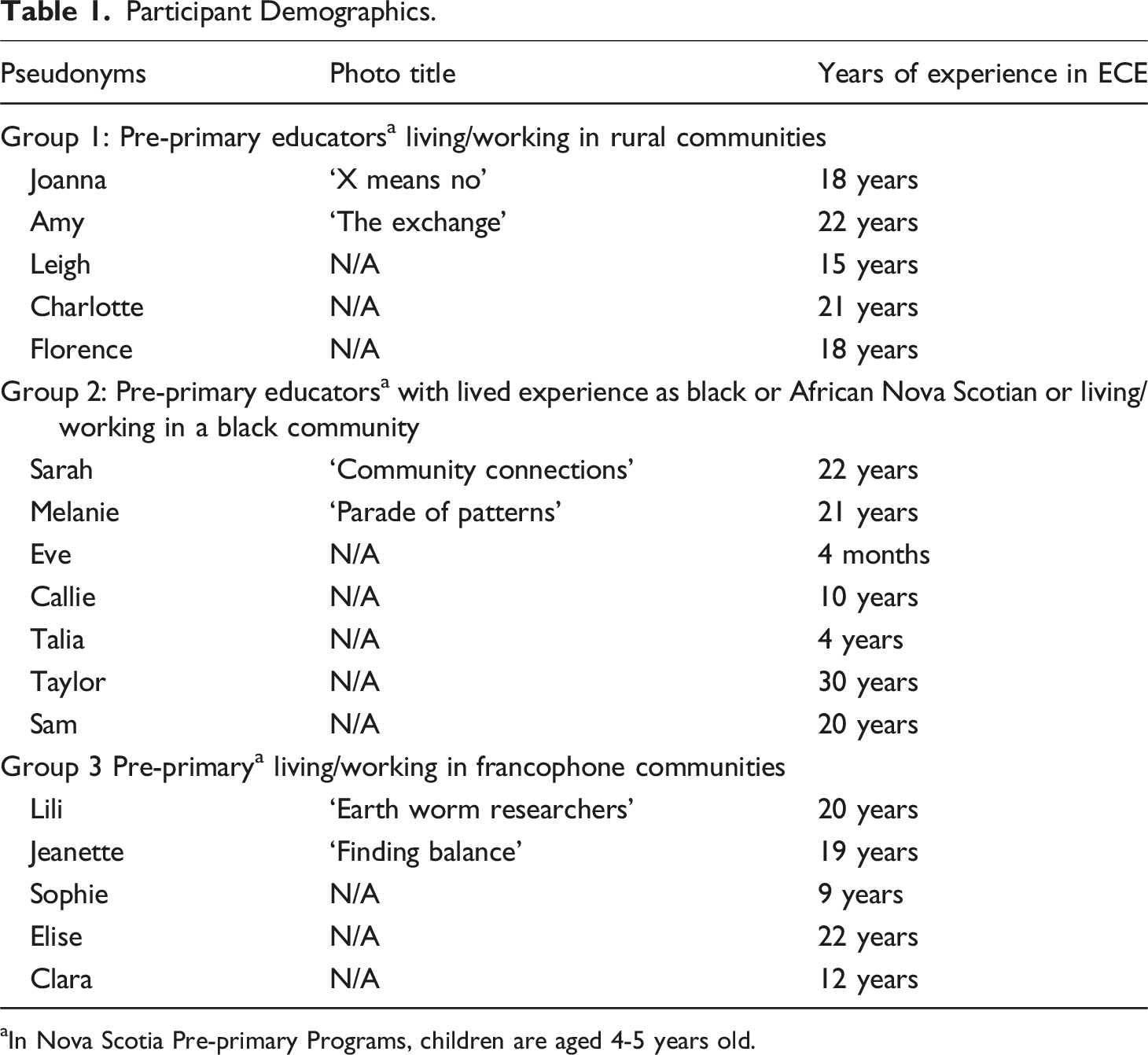
aIn Nova Scotia Pre-primary Programs, children are aged 4-5 years old.
Procedure
Photo Elicitation Interviews
Photo Elicitation Interviews (PEI) are a qualitative research method in which photos are used to elicit discussion during an interview. This study used auto-driven PEI, in which the participants take their own photos that are then used by the interviewer to encourage discussion and information sharing during the interview (Richard and Lahman, 2014; Torre and Murphy, 2015). Auto-driven PEI methodology was valuable to our study both in achieving its purpose and in consideration of our participant groups. Nova Scotia Pre-primary Program ECEs are familiar with the concept of pedagogical documentation, collecting, documenting and interpreting information to assess children’s learning through photographs, videos and anecdotal documentation (McLean, 2022). The nature of pedagogical documentation lends itself to translating how learning occurs through play. Thus, inviting participants to engage in PEI may have provided them with a medium in which they were comfortable, bridging the gap between researcher and participant, by enabling the participant to speak to their own knowledge and experiences and provide insight as to what they value (Torre and Murphy, 2015). This method also has been found to gather more pointed information related to the topic of research (Collier, 1957), allowing for a concrete depiction of what numeracy and literacy looks like in play-based early learning programs.
Data collection
Workshop Description.
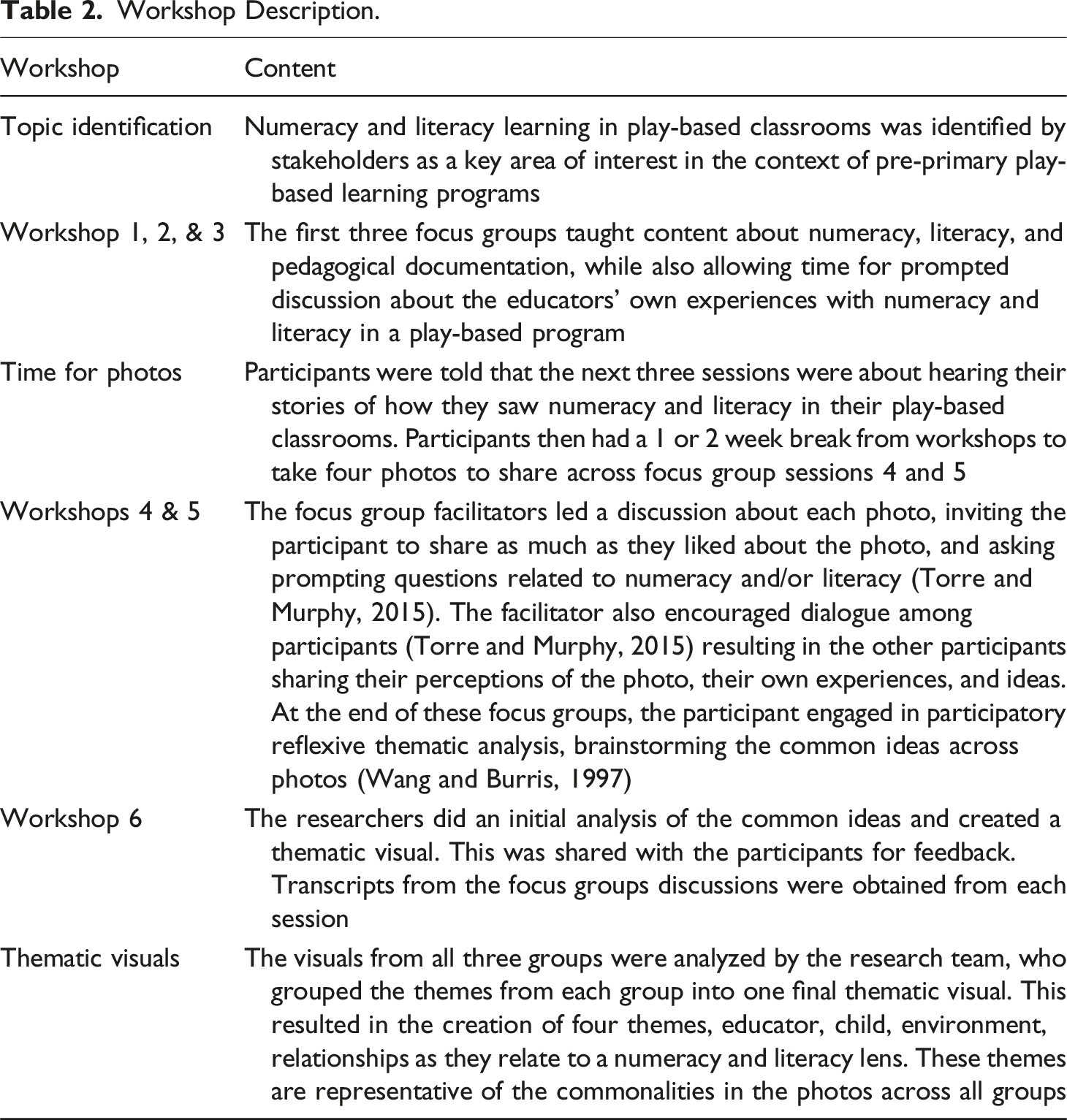
All workshops were audio and video recorded via Microsoft Teams, and transcripts were downloaded from the platform and reviewed by members of the research team. Transcripts from the Francophone group were reviewed by a member of the research team fluently bilingual in English and French. This member of the team coded the data in French to ensure that no context was missed, coded data were then translated using Microsoft Word’s translation function and verified by both bilingual team members for clarity for publication. Due to the translation, all quotes from the Francophone group are not considered direct quotations.
Data analysis
Photos
There are several approaches to viewing photos as data in photo elicitation research. On one hand, a critique of this approach is that photos “become illustration rather than data” (Dockett et al., 2017). Yet, because the viewer knows that these photos are moments of reality, there is perhaps an unwarranted tendency to believe that we can successfully assess the meaning of the photo (Dockett et al., 2017). We followed the approach of past PEI research that emphasizes participant voice, allowing them to interpret the photo, while the role of the researcher is to listen to those interpretations and identify themes (Guillemin and Drew, 2010). Therefore, while we have chosen to share the photos gathered in this study and not analyze them, they are illustrative of the discussion data. We have shown this through the inclusion of participant quotes of their interpretations. In total 64 photos were collected, six were selected for inclusion in this paper to best represent the illustrative examples and interpretations of numeracy and literacy learning occurring through play.
Thematic analysis
PEI is a core component of photovoice methodology (Bugos et al., 2014) which takes a participatory approach to theming data (Wang 2016; Wang and Burris 1997). Throughout the workshops, the participants were encouraged to make meaning of the ideas discussed by reflecting on the photos and discussions across their group, resulting in a visual representation that was shared in practice-based reports (McIsaac et al., 2022b). Since the primary purpose of PEI is to use photos to stimulate discussions (Torre and Murphy, 2015), transcripts of the audio recordings were considered data for the purposes of this paper. The coding process focused solely on exploring the discussion about the photos and participants experiences as ECEs.
Recorded focus group discussions were coded by the researchers using reflexive thematic analysis (Braun and Clarke, 2022). Coding was guided by a concept that emerged from the focus group data, that early childhood educators were viewing their practice and children’s play through a “numeracy and literacy lens” and noticed how often opportunities for numeracy and literacy learning emerged. Therefore, we entered the coding process with research questions in mind of: how do ECEs recognize learning opportunities occurring through child-initiated play; their perceptions of what supported and hindered their ability to support numeracy and literacy learning during play; and what impacted their ability to share these beliefs and observations? We approached the data inductively, allowing codes and themes to emerge from the focus group data to inform the research question. Group coding conducted by the research coordinator and research assistants and mentored by the co-investigators and facilitators, ensured a rigorous data analysis process whereby regular reflexive discussions took place to clarify codes and definitions in reference to the research question (Braun and Clarke, 2022).
Theoretical framework
We approached this study through a lens that combines social constructivism and sociocultural learning theories (Margrain et al., 2019), understanding that humans use multiple modes of communication to make meaning in their worlds (Kress and Selander, 2012) and that knowledge is co-constructed between individuals and their environments (Dodd-Nufrio, 2011). Our study acknowledged these theories in several ways through prioritizing information sharing by both facilitator and participant in the initial workshops; through allowing the participants to share their own knowledge by sharing and discussing photos taken of their environments; and by acknowledging that the children who were featured in the photos and discussions were competently and confidently applying their understandings of literacy and numeracy while interacting with their play environments, a view supported by the Nova Scotia Curriculum Framework’s image of the child (Nova Scotia Department of Education and Early Childhood Development, 2018). This study was grounded in the understanding that participants came to the workshop with a certain amount of preconceived knowledge of numeracy and literacy learning in the early years from their own schooling, beliefs, and interactions in their current environment of a Pre-primary Program, but also that the workshops provided an environment in which these preconceived notions could be strengthened or changed (Dodd-Nufrio, 2011).
Results
First, we will present six photos and accompanying vignettes. These photos will act as illustrative examples for how ECEs viewed numeracy and literacy learning within their play-based early learning programs in Nova Scotia. The vignettes provide the interpretations of the participant photographers, and at other times, the interpretations of other participants in the group. Following the photos and vignettes is a thematic of analysis of how participants viewed and described their perspectives of numeracy and literacy learning through play, what helped or hindered their ability to support this learning, and their ability to share their beliefs and practices with others.
Each of these vignettes represent examples of child-initiated play that occurred in learning environments that were well-equipped with a variety of open-ended materials that could be used in various ways. These materials included what could be thought of as traditional literacy and numeracy props (e.g., writing utensils, paper, counters, measuring tools, and included typical classroom materials such as art supplies, blocks, loose parts, dramatic play props). Children in these vignettes were not directed in their play by adults, although adults were present and available to answer children’s questions or comment on their activity.
Descriptive illustrations of numeracy and literacy learning through play
The following photos act as illustrative examples for how the ECEs viewed numeracy and literacy learning within their play-based early learning programs in Nova Scotia. All of the following names are pseudonyms (See Table 1).
X means no
Joanna shared a photo of a spontaneous activity that occurred in their outdoor learning environment (Figure 1). They observed a child playing with the paintbrushes and buckets filled with water that had been placed in the gazebo. Joanna explained, “I just let them go and see what they do with it, usually they wash trucks or paint on walls.” However, Joanna noticed a shift in one child’s play, stating “[The child] then stopped and started making Xs in a box that surrounded them.” X Means No.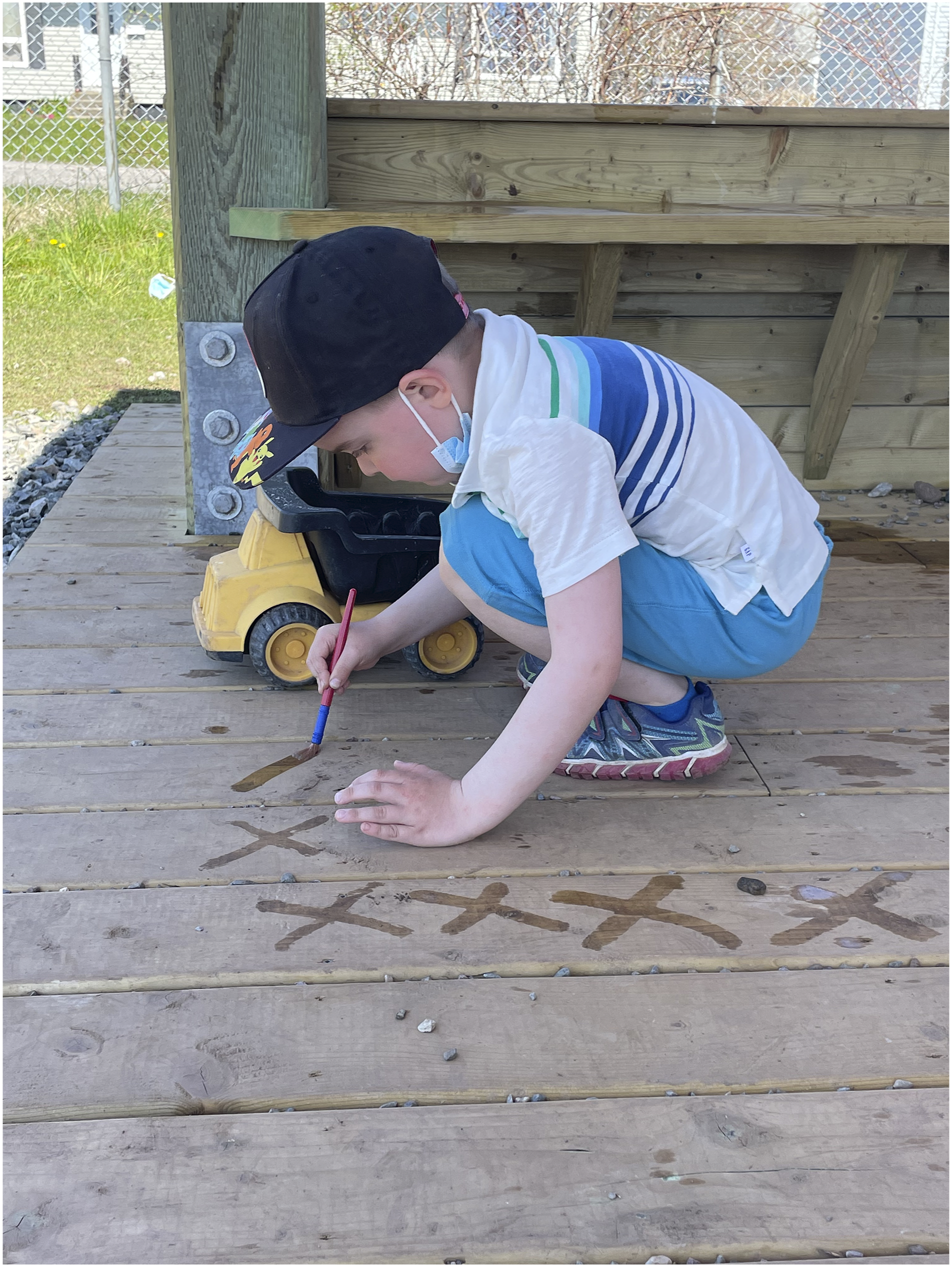
Fully immersed in play, the child developed their own rules and ideas about their project. For example, another child attempted to join the play, but was told “No, you can’t come past the X, X means stop. This is my fire station and I’m the fireman.” The two children negotiated how the other could join in on the play. Joanna shared their own thoughts about the symbolic representation of the letter X “I thought it was pretty neat that [the child] used Xs as a symbol for ‘no’,” and further reflected on the children’s communication and counting skills, “they were counting and using symbols as communication… first [the child] was showing [the other child] that the X meant you can’t enter, but then counted every X and told [the other child] how many Xs they needed to put around themselves so that they could make their own fire station.”
Joanna initially chose to share this photo to highlight the spontaneity of the activity, but it also sparked some reflection on what they knew about the child’s interest in letters. One of the other participants pointed out that this imaginative play may have been representative of examples of literacy that the child has seen in their everyday life “[The child] used symbols to convey meaning and made up rules. They’ve clearly been paying attention to their surroundings by using a symbol to show that there’s no entry.”
Finding balance
When sharing their photo, Jeanette described the materials that they had intentionally included in the play space, “My science material is in this area, it’s loose parts. I have some instruments: my magnets are there, my hourglasses are there, my scale is there, […] my beakers are there.” The scale and the rocks were intentionally placed to see how the children would interact with the materials. One morning, the child in Figure 2 approached Jeannette expressing interest in how to use the scale, “[The child] had used the basket of pebbles often, but this was the first time they used the scale.” Jeanette scaffolded the child’s learning by explaining the purpose of a scale, “I told [the child] that it is a tool that is used to measure and to discover balance. I pointed out the small arrow and when the two arrows meet, it means that it is equal on each side.” Finding Balance.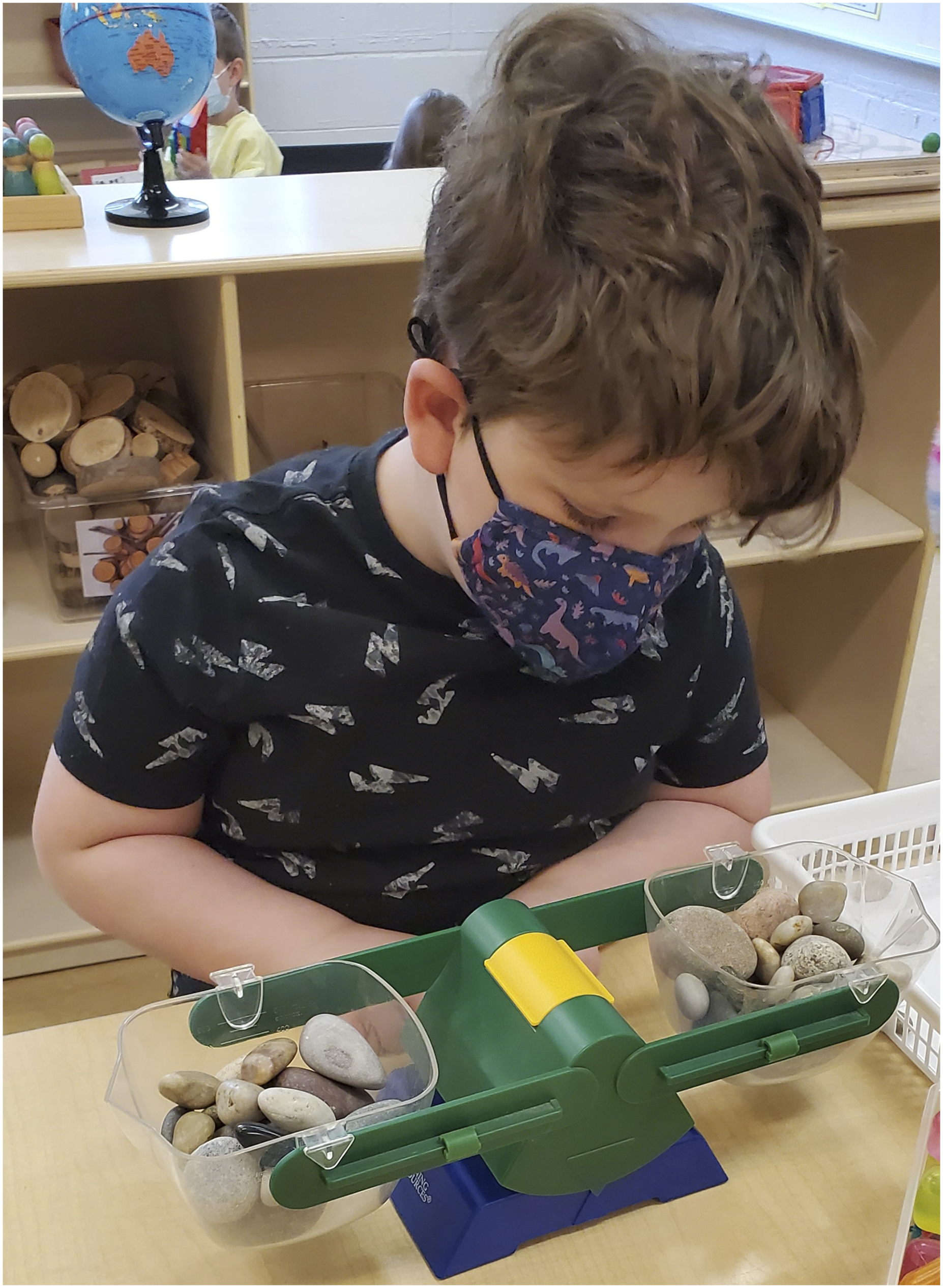
Jeanette described the child as persistent and focused. The child began a process of adding and removing rocks as needed, “[The child] put them in, but it was never equal. [The child] would empty [the scale], and then fill it, but they didn’t put the same on both sides, so it was never equal.” As the child was problem-solving, Jeanette overheard them saying, “Ahh, it’s still not working.” Jeanette observed that the child persevered with the activity until they were successful in finding the balance (which can be seen in Figure 2):
What [the child] started to do in the end was instead of
re-emptying,
then putting them back…they left the rocks there, and they transferred them from one side to the other, then observed [and] finally found balance.
The participants in this workshop discussed the child’s thought process even though they did not verbalize what they were doing. They felt that through the educator’s observations, they could theorize that the child was noticing and comparing the size and weight of the rocks and the difference that was made in balancing the scale. One other participant reflected on Jeanette’s photo saying, “It’s difficult because we don’t want to make that link, but [the child] is showing that they noticed it. That they saw how it affected [the balance].”
Earthworm researchers
In Figure 3, the educator observed children digging worms from the ground and decided to draw on their curiosity and knowledge. The children were discussing the length of the worms that they were finding and comparing, “one is small, this one is big.” The educator, Lili responded to the children’s discussion by suggesting that they measure the worms and gave the children measuring tape. Lili explicitly describes the group effort of the children: “…what I found interesting, is that the roles were defined. They were earthworm researchers. There were those who reported that there were earthworms, some who monitored the earthworms, some who measured [them], some who wrote down the data […] it was really a big team effort.” Earthworm Researchers.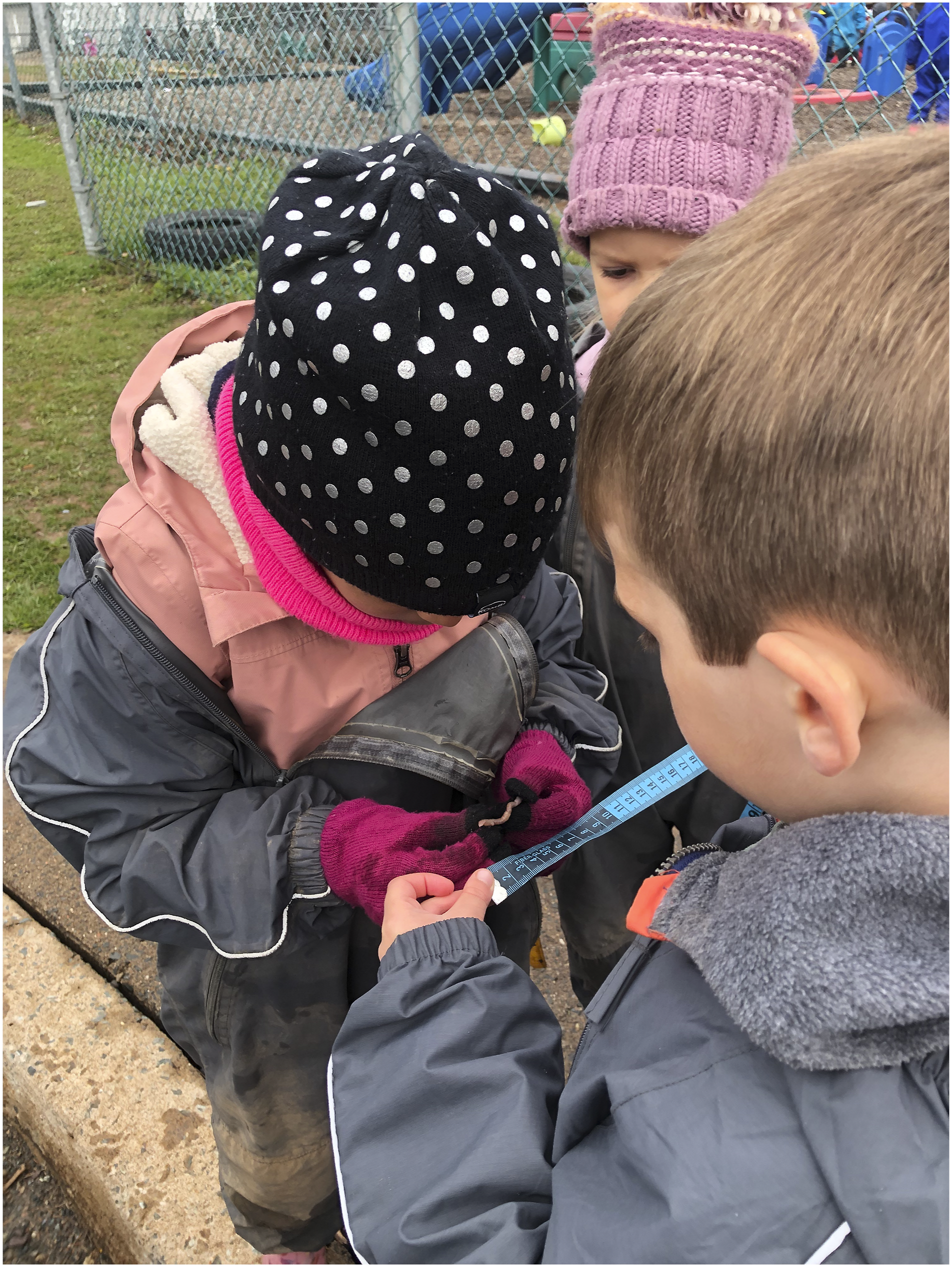
Lili supported the children’s interest in the outdoor learning environment by providing them with the tools and helping them with the measurements, “we took statistics of the earthworms. One was 7 cm long, 9 cm—the biggest we found was 10 cm.” The children’s interest in measurement continued into the indoor learning environment and they made worms out of cardboard, which they also wanted to measure. The participants in this workshop discussed the children’s communication and inquiry about the difference between centimeters and inches during this activity.
Community connections
Located in an inner-city school with access to outdoor spaces in the community, Sarah shared that they often took their group of children on walks. They had previously played a game of ‘I Spy’ and having observed the children’s interest, Sarah decided to extend on the activity which led to the walk seen in Figure 4, “I said, ‘I have notebooks and markers, if anybody wants to write down numbers when they see them’ and everybody wanted one.” Sarah altered the rules of ‘I Spy’ to encourage the children to take note of numbers in their community, “I said, ‘anytime you see a number, we’re going to stop, and you can point it out. If you want to write it down, we’ll wait for you, or we could talk about it’.” Community Connections.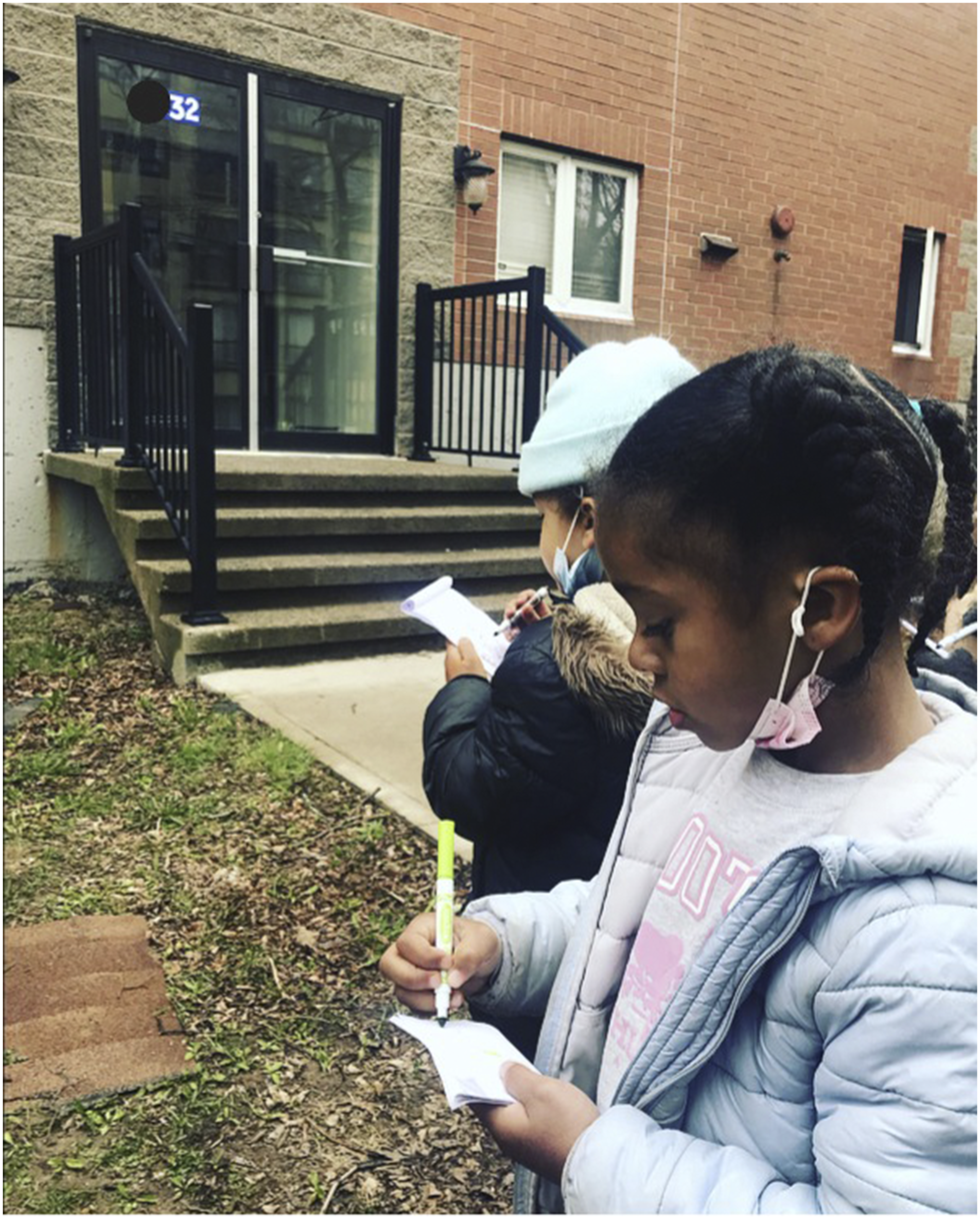
This activity prompted meaningful conversations between the children and the educator. For example, the children had many questions: “They were asking why there are numbers on houses, and I said, ‘that’s a great question, have you seen the same numbers on any house?’ and they said, ‘no, they’re all different’.” Sarah went on to explain the purpose of civic numbers, opening conversations that allowed children to make connections between numbers and their world. This activity also provided an opportunity for the children to learn new words: “It also extended their literacy knowledge with some new vocabulary such as ‘apartment, university, pharmacy and transit.’ We found numbers everywhere, the school, the pharmacy, on cement trucks, transit buses, street signs, apartment buildings, and a variety of street signs.”
While Sarah had set intentions for this activity, they gave the children the choice of how they wanted to engage, “Some of them chose not to draw numbers… so it was completely optional. They had the freedom to stop and take their time to write. Everyone was very patient with each other and gave each other the courtesy to write a number or to talk about it.”
Parade of patterns
Upon Melanie’s turn to discuss their photo (Figure 5), they acknowledged their initial hesitancy in including traditional worksheets in their classroom. However, their observations of the children changed their mind: “I started watching how the kids were manipulating and using it in other ways,” and decided to keep the worksheets in the learning environment. Melanie further explained how the learning environment allowed for children’s freedom to use this activity how they liked, “We keep them on our shelf, with our loose parts and our play dough so they can dig them out, they can trace them, they can write on them.” Parade of Patterns.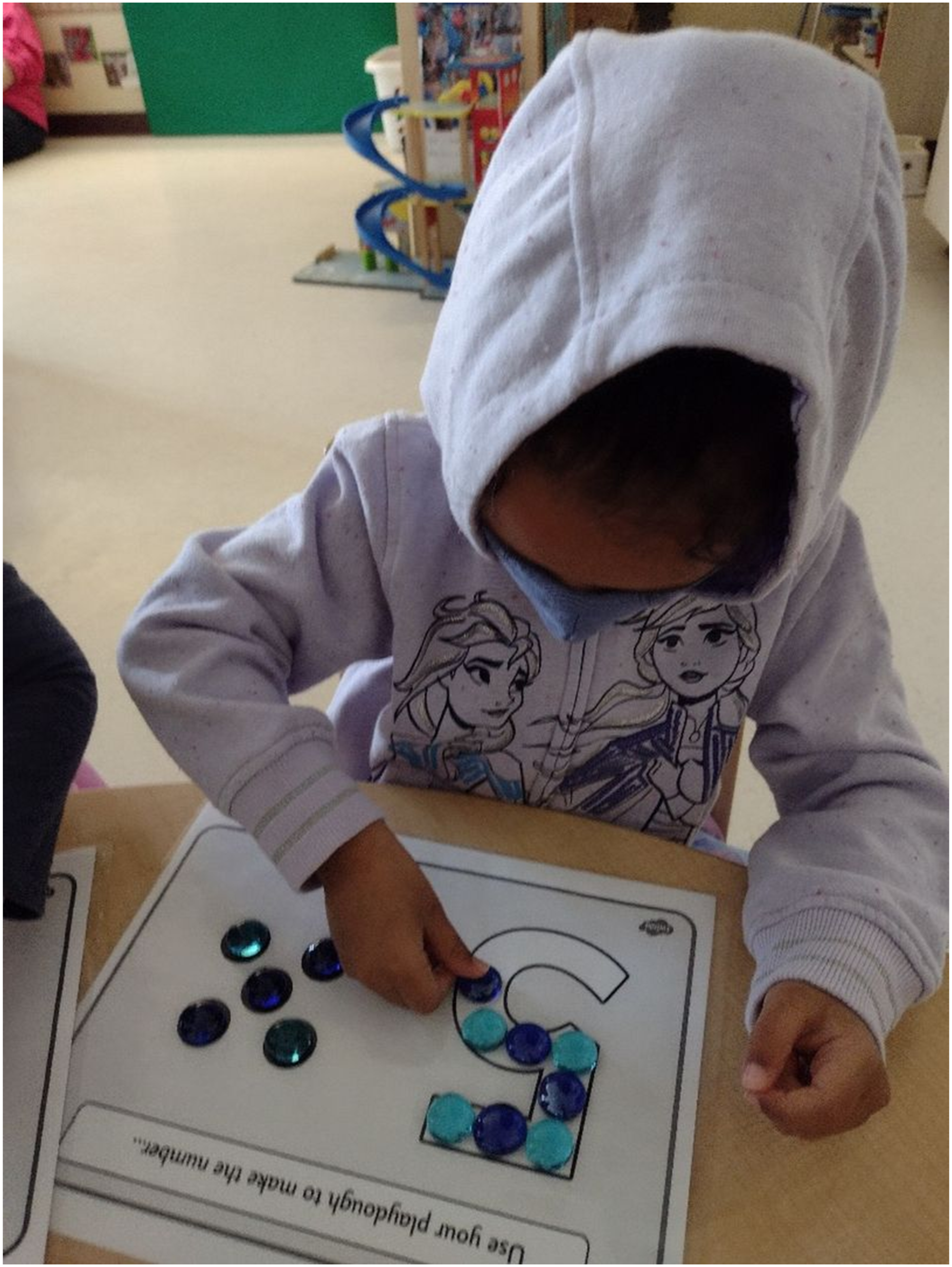
Melanie observed how one child chose to interact with the materials, “[The child] got our loose parts off the shelf and began lining them up… [the child] was making a pattern with them, they were alternating the colors.” Melanie also observed enumeration and problem-solving, “[The child] was counting them to see if it worked out to be 5 to fill it in […] When they got to the five they said, ‘nope got to get more’, and just kept counting as they put the stones on.” Other children joined in the activity with the child which led to conversations between each other, “They went and got their own number cards off the shelf […] they were helping each other figure out what number they had. A child said, ‘count them again and we’ll count slower’.”
The exchange
Noting the children’s current interest in playing ‘store,’ Amy had recently included a variety of loose parts in the dramatic play area to extend their play, “They’ve been using [large blocks] as walls or like an actual shelf to set up different things, there’s been numerous shops… They’ve been using their imagination with it.” Amy shared some context about Figure 6, “The child began to set up shop to sell some lemonade… they found a shelf and placed a wooden cash register, a collection of wooden cylinder logs and an orange plastic frying pan down on it”. Another child joined in on this play and it evolved into an imitation of a real-life exchange of goods where the logs were symbolic representations of money. Amy described the play by saying, “It’s imaginative play, and this play that they’re doing is fostering a mathematical understanding of how exchanging works.” This interest had also extended to the children’s outdoor play as Amy noticed that the children often found different spots to set up their shops and use nature and outdoor loose parts to sell, “they’ll use pinecones, grass, pieces of branches and in this space, gems are typically used as money.” The Exchange.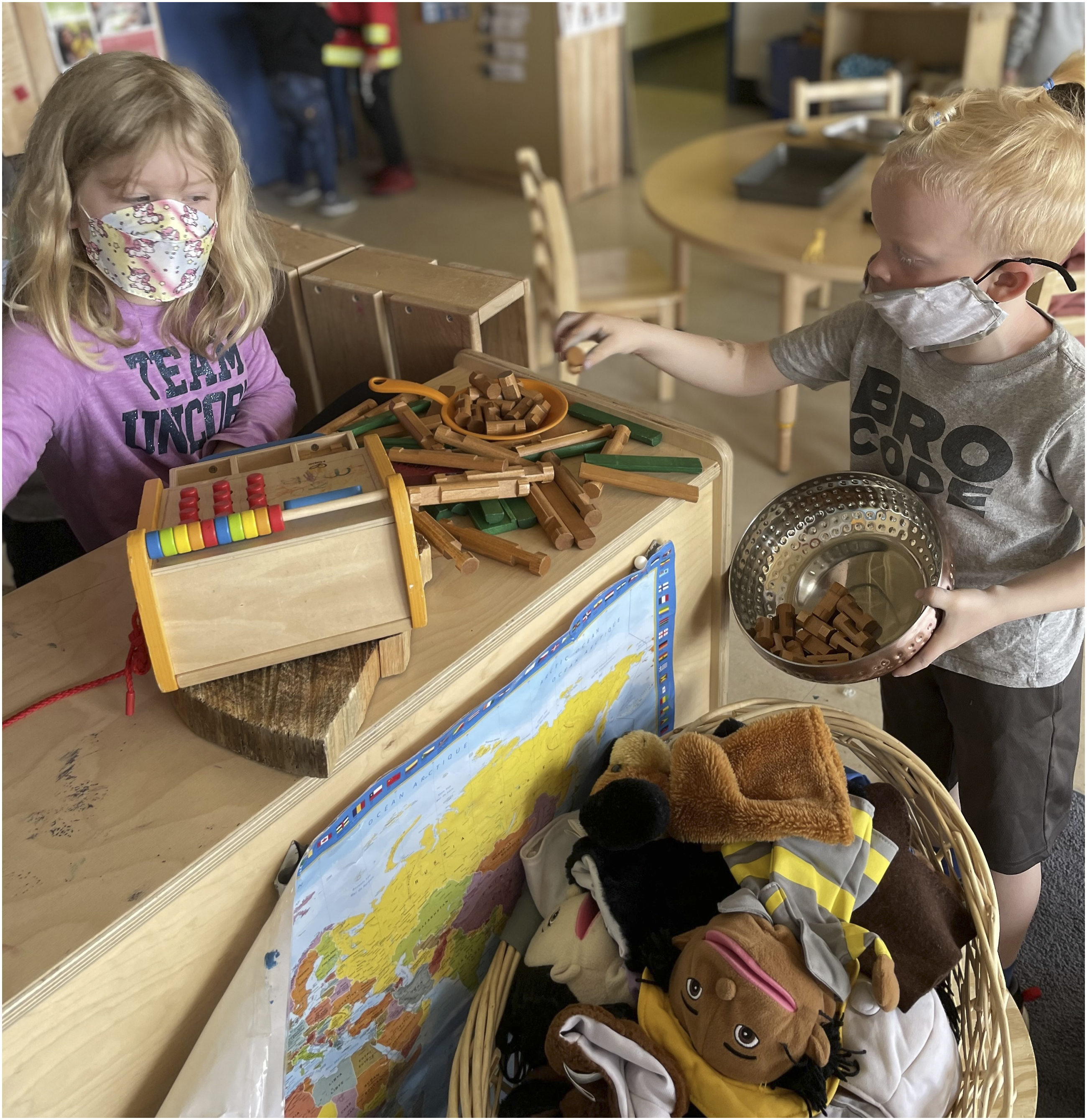
An analysis of the influences on numeracy and literacy learning through play within school-based programs
The following section outlines themes that emerged from participants’ descriptions of numeracy and literacy through play within a school-based early learning context.
Preconceived knowledge and expectations of children, numeracy and literacy
Throughout the workshops, participants shared their perspectives of children as proud, focused, confident and capable and reflected on their interactions with the materials/environment as being spontaneous, and child-led. One educator described how they viewed child-led learning: “…giving them a sense of belonging has really helped me. It prevents me from overthinking…we make a team. The children know they’re part of the learning, they see themselves as teachers and are proud of it.” Eve.
In tandem with child-led learning, there were also discussions amongst all groups about the level of intentionality and reflexivity that is put into their role as educators: “Understanding that process of planning and reflecting and being intentional with the materials we have, I think is an important piece to what we're offering children. So, it's not just enough to have the right materials, the rulers and stuff, if we're not scaffolding on their experiences and reflecting with them. That process is very key” Leigh.
Participants shared their perception of external pressures and tensions present when working with children who attend Pre-primary Programs and the expectations to prepare children for school: “We've gotten compliments and praise from the primary teacher […] But I still sometimes hear the comments about ‘they're just playing’ or ‘all they're doing is playing, right?’ I think that they do see the value in having them in the school to learn the structure of a school, to learn where everything is, to meet the teachers ahead of time, so the teachers can become familiar with them. But I don't think that they see the product that comes from playing.” Florence.
Similarly, one educator reflected that they typically choose to take photos for ongoing documentation of children’s learning that depict standard examples of numeracy and literacy as they feel it is what parents want to see:
“A parent who sees their child write the alphabet from A to Z, or who sees their child write words, that's something tangible that can be seen and verified. Whereas a child who develops a solid interest in reading, in books, in words, in the meaning of words, in coherent stories, well it's harder to show and prove that… it's worth something that your child has built a book, even if it's scribblings and not real words, it's worth something because it's anchoring an interest, a love, a motivation towards literacy that will follow [the child].” Jeanette.
Participants also briefly reflected on their experiences within the communities where they live and work. Those identifying as Black, African Nova Scotian or working in those communities spoke about the importance of understanding cultural differences and recognizing bias. One educator spoke about recognizing children’s feelings when they may be entering a new early learning space for the first time, and how they foster a caring environment through play. This educator then shared how they helped a new child find his confidence through play: “I noticed that [the child] loves Lego, anything in the block area. So, I brought out that area of interest. I focused on it to bring out his confidence. Once they get that, it can fit in every aspect of learning and relationships.” Eve. Those in the rural communities spoke about the challenges of the dual relationships that they sometimes held within the community, but also the access to opportunity that these relationships offered: “…One [parent] donated a big garden box that we could store our outside toys in and a big bag of soil. That’s what started our gardening. So, they’re so willing to just donate and make the program fun for their children.” Florence.
The context of the professional environment
A commonly discussed topic among participants was the contextual features of the professional environment. The educators spoke of the level of interest or understanding of Pre-primary from others in their schools. This involved having Pre-primary and teacher colleagues who asked questions, visited their space, or supported them in finding materials to support play-based learning. Another topic of discussion was the educator’s role in setting up the environment and the atmosphere of their classroom, “…My children know that the classroom is theirs as well. They'll ask to bring things in from outside that they've worked on, or they know they can go to the cupboard and look, and if they can't find it, we'll write it down and see if we can find it. It does empower children to feel that they're important, that they're not just there.” Melanie.
In addition, Francophone educators perceived it as one of their duties to prepare children to enter the school system: “We can’t forget that in Grandir en Français [Francophone Pre-primary Program] one of our overall goals is to support French language learning so that the children will be successful in primary. I know we’re not supposed to present ourselves as preparation for primary, but it still a part of what we do in the program, to grow the French language.” Elise.
Showcasing the numeracy and literacy lens
Throughout the workshops, participants shared how they used documentation to show parents how their children were playing and learning, and the related opportunities and challenges. One participant spoke about the function of documentation for their program: “…It's the tool we use like to engage in reflective practice. It allows us to get to know and understand children's thought processes. It's a way we involve families in collaborating... We then use that information to inform our curriculum decisions to set goals for children.” Leigh.
When discussing the realities of creating documentation in practice, more challenges than opportunities were identified. The main challenge was finding the time to complete this documentation to their standards: “I like to observe in the moment then take notes—I have plenty of those. It may be a personal challenge, but if I want to make documentation for families, especially post in the classroom for the children to see, I want it to be well done. But to have time to write...” Elise.
During the final workshop, participants shared their experiences in documenting children’s numeracy and literacy through play throughout the project. Participants had designated time to reflect on children’s play through the photos they took and shared, and they described feeling more in tune with what was always happening in their environments: “...You see literacy and math all the time, just the kids doing it on their own. But how much I see now just by doing [the workshops] … they’re so beyond where I even thought that they were.” Charlotte. One group discussed how their participation in the workshops was like putting on “glasses” for the week to observe and reflect on how their children engaged with numeracy and literacy during play: “I loved the sharing, not just the photos, but just getting everyone’s point of view… It was like in my head for the whole week and it changed the way I saw things. I don’t know, it was like something woke me up…” Jeanette.
Discussion
This study aimed to show how numeracy and literacy is recognized and supported during child-initiated play from the perspectives of ECEs through the use of PEI. The results provided a range of rich and diverse examples of numeracy and literacy learning through play and the crucial role of the ECE within the context of the Pre-primary Program in Nova Scotia schools.
Documenting the many ways that numeracy and literacy co-exist and happen organically in children’s play appeared to highlight the intentionality of the choices made by ECEs working in school-based settings as they relate to play materials, activities, discussions with children, and the design of the daily schedule and learning environment. As evidenced in the photos, participants’ attention to the environment and more specifically, the intentional choices made regarding the availability of materials that supported numeracy and literacy (e.g., clipboards, pencils and other mark making materials, blank paper, loose parts, portable [small size] alphabet charts, notebooks, measuring tapes, dramatic play materials) became evident. This intentionality has been highlighted by (Leggett, 2023) who describes educators’ decisions surrounding their environments, viewing their role as setting up the environment for children to explore, and co-constructing experiences through observing, documenting and reflecting. A play-based program removes the expectation for children to engage with materials in a specific way or achieve certain results, and in turn, children are more likely to combine and interact with materials in a way that expands their meaning making (Wohlwend, 2008).
The participants discussed tensions that they perceived between their own image of the child, how they saw children’s numeracy and literacy learning through play and what they felt parents and other stakeholders expected to see. Considering the increased tension of expectations for early childhood programs to foster school readiness, participants in this study also shared the desire to avoid risk and ease concerns of parents and others by sharing documentation of what they felt were standard examples of numeracy and literacy (Patton and Winter, 2022; Rogers, 2010). However, throughout this project, participants felt they could share a wider range of photos that communicate children’s early numeracy and literacy learning within their play-based environments.
The use of photos and reflections during the focus groups emphasized the role that pedagogical documentation played in helping participants understand and describe their observations (McLean, 2022). The ECEs spoke of engaging in deeper reflection and seeing numeracy and literacy happening in unexpected places and how these explorations may have gone unnoticed by them if they had not been observing the play from a ‘numeracy and literacy lens.’ Similar to another study, which found that photo documentation in professional learning communities encouraged a shift in how participants viewed children’s capabilities and learnings (Damjanovic and Blank, 2018), participants in the current study explained how the children’s numeracy and literacy play, and the subsequent documentation of this play, assisted them, and others, in authentically investigating the children’s interests and experiences with numbers, letters, storytelling, verbal and non-verbal language and fluency- all of which can be considered as pillars of emerging literacy and numeracy (Bouley, 2009). These early learning environments become places where children are provided with the time, space, materials, and opportunities that support numeracy and literacy in meaningful and functional ways.
Finally, the participants described the value of coming together to share and reflect during the focus groups that were a core component of this study. It was during these discussions that the participants, who did not all know each other prior to the research study, were able to gain insight and ideas from each other while sharing experiences, contextual challenges, and encouragement related to their efforts and successes in supporting the numeracy and literacy development of young children. In addition, discussions around their community experiences provided some context to the social and cultural contexts influencing their play-based environments (Taylor and Leung, 2020) and subsequently, numeracy and literacy. Boonstra et al. (2022) had similar findings, demonstrating that participants in a professional learning group who had established trust were more likely to ask questions, and ask for advice from their group. The format of the workshops associated with this research study allowed for this trust building, where participants got to know one another through discussion during the first three online sessions before moving on to photo sharing. As educators in preschool settings and in the primary grades grapple with the tension of providing direct literacy and numeracy instruction while at the same time allowing for child-initiated play, professional learning groups like these can serve to encourage the discussion of ideas, challenges, and the sharing of knowledge.
The strengths of this study included the participatory action research model, where the participants were engaged in an ongoing professional learning groups through PEI that enabled them to make meaning of their learning. Participants represented diverse lived experiences, including those among communities with increased pressure towards language and teacher-directed learning. Although this study was conducted in a Canadian early learning setting, the findings of this study may be transferable to other early childhood programs based in school settings through the demonstration of how play supports numeracy and literacy. This could support efforts to enable greater ‘playification’ (Davis, 2018) and mitigate pressures on early childhood programs toward teacher-directed instruction (Rogers, 2010). As the participants in this study volunteered to take part during their own time, they likely represented ECEs who already understood the value of play-based learning and had a foundational practice in pedagogical documentation. As a result, the perspectives might not be fully representative of all ECEs working in an early childhood setting. Future research could explore the process with a greater diversity of ECEs with varying levels of training and experience and explore relationships between early learning programs and early elementary to demonstrate how play can support academic outcomes within this school context.
Conclusion
The intentionality of the educator working in a well-designed environment combined with the competence and curiosity of the child creates opportunities where numeracy and literacy become an essential and natural component of the play. The actions and behaviours of both adults and children are recognized as being integral to multimodal methods of communication, and, subsequently, these methods of communicating create and are supported by strong relationships between and among children and adults.
Using pedagogical documentation to reflect and explore children’s play through a numeracy and literacy lens led to deeper understandings of how a play-based environment can support these types of learnings. This type of reflection also broadened the concepts of numeracy and literacy play to the participants who, in turn, reported how they intentionally created more opportunities for this type of exploration and learning. Further work in this area could explore the commonalities and intersectionality between prescribed learning outcomes/ predictors of emerging literacy and numeracy and children’s play behaviour in these areas, including children and educators from diverse linguistic and cultural, backgrounds. This would aid in the authentic assessment of children’s learning and, most importantly, recognize that, for all young children, communicating through numeracy and literacy can and will be done in ways that are meaningful, functional, and natural.
Footnotes
Acknowledgements
The authors would like to thank all participants for sharing their experiences and practices in early childhood and the support from the Nova Scotia Department of Education and Early Childhood Development for this research.
Declaration of conflicting interests
The author(s) declared no potential conflicts of interest with respect to the research, authorship, and/or publication of this article.
Funding
The author(s) disclosed receipt of the following financial support for the research, authorship, and/or publication of this article: This research was funded by the Margaret and Wallace McCain Family Foundation and was undertaken, in part, thanks to funding from the Canada Research Chairs program.
