




Abstract
In Australian schools, approximately 20% of young children are emergent bilinguals, who are simultaneously developing their home languages while learning through English. While many teachers recognise the benefits of multilingual teaching approaches in culturally and linguistically diverse classrooms, there remains a significant level of uncertainty about how to enact them. These approaches depend heavily on teachers’ ability to leverage young learners’ cultural and linguistic funds of knowledge, as well as to apply pedagogies that engage the full range of their linguistic abilities. To effectively develop these strategies, many teachers require additional support. This paper presents a study in which researchers collaborated with a classroom teacher to initiate a multilingual storytelling project aimed at children aged six to seven. The objective was to explore the potential of multilingual storytelling to engage young emergent bilingual learners in early reading and writing activities. Our findings indicate that this pedagogical approach, rooted in the principles of translanguaging, significantly enhanced the students' engagement with literacy. By validating their home languages and cultural identities, the project provided strong support for their oral language development, demonstrating the effectiveness of integrating multilingual practices in the foundational years of education.
Keywords
Introduction
One of the foremost professional standards for teachers in Australia is Standard 1.3, “… to know their children and how they learn”, including children with diverse linguistic, cultural, religious, and socioeconomic backgrounds (AITSL, 2014). This standard is significant since one in five children in Australia comes from a Language Background other than English. In New South Wales, where the study occurred, this figure rises to one in three (Centre for Educational Statistics, 2021).
Over the last two decades, support for English language learners across the country has “faltered” (ACTA, 2022: p. 4), a deficit also evidenced by the lack of a national policy framework to address early multilingual education (Jones Diaz et al., 2022). Standard Australian English teaching resources and assessments are the norm in most Australian classrooms, and teachers have been under pressure to have their children achieve academically as monolingual English speakers (Jones Diaz et al., 2022). As a result, literacy work with young learners has often been heavily form-focused, with an emphasis on phonics, handwriting, and spelling.
In recent years, however, there has been increasing recognition of the need to support plurilingual learners with more culturally responsive practices (Ladson-Billings, 1995). These practices, which favour a funds of knowledge approach (Gonzalez et al., 2006), draw upon the rich cultural knowledge and language skills that plurilingual young learners bring to their places of learning. This shift in approach offers great promise for the future of multilingual education in Australia (see Duarte, 2018; Ollerhead, 2019; Ollerhead et al., 2018).
This article contributes to this important field of research. It reports on a study in which we worked with a classroom teacher to implement a multilingual storytelling project with young Year one learners. The study aimed to investigate the potential of multilingual storytelling to engage children in early reading and writing activities.
To contextualise our study, we first review the important contribution of pedagogical translanguaging as a theoretical and pedagogical framework for supporting the learning of emergent bilingual children in diverse Australian classrooms. We then discuss the origins and pedagogical aims of the multilingual storybox project, before going on to demonstrate its role in supporting and sustaining children’s interest and engagement in early literacy work.
In this paper, we use the terms emergent bilinguals and English as an additional language or dialect (EAL/D) learners interchangeably. Referring to children as emergent bilinguals emphasises the unique cultural and linguistic strengths that they bring to their learning. In addition to acquiring the English language and learning new content through English, they continue to develop their heritage languages in their homes and communities (Ortiz et al., 2023). Making space for these children’s full linguistic repertoires can result in academic, cognitive, and social benefits (Cummins, 2000, 2005). At the same time, we use the term EAL/D when referring to how these learners are officially recognised within the Australian curriculum (2015). In Australia, EAL/D learners are those whose first language is a language or dialect other than English and who require additional support to develop proficiency in Standard Australian English.
Theoretical framing: Pedagogical translanguaging
Pedagogical translanguaging, a powerful theory and concept, equips teachers to build a multilingual ecology where all learners can thrive. The term, originating in Welsh bilingual education in the 1980s, was coined by Cen Williams as ‘trawsiethu,' or ‘translanguaging' in English (Lewis et al., 2012). This concept, which refers to the planning and use of two languages within the same lesson, has been recognised for its pedagogic potential in EAL contexts in the US and the UK (Garcia, 2009; Garcia and Wei, 2015). Translanguaging describes the natural linguistic behaviours of multilingual speakers, who seamlessly alternate between different languages, drawing on their entire linguistic repertoire to convey meaning, express ideas, and negotiate understanding. This practice allows them to become more effective communicators, construct their identities, and navigate various cultural environments, illustrating the interconnected nature of language in daily life.
Pedagogical translanguaging is specifically designed for educational settings where teachers purposefully plan to include children’s complete array of languages to enhance communication and learning. This inclusive approach is based on the idea that emergent bilinguals regularly and naturally use all their languages to make meaning in the world (Pacheco and Miller, 2015). A translanguaging framework conceptualises a bilingual person as not ‘two monolinguals in one' but a unified whole using language flexibly and creatively within different social situations. These languages are part of one linguistic system an individual strategically accesses depending on the context.
In the early literacy classroom, translanguaging pedagogies can support emergent bilingual learners in a variety of ways, such as by opening up access to their background knowledge (Sayer, 2010), helping them learn new vocabulary (Cunningham and Graham, 2000), increasing understanding about the features of the language, resulting in metalinguistic talk about language (Jimenez et al., 2015).
Besides these academic benefits, pedagogical translanguaging can help build meaningful connections between learners’ home and school lives (Rowe and Miller, 2016). Pedagogical translanguaging ensures that emergent bilinguals' varied language and social practices are not seen as standing outside of their school experiences but understood as being fluid and unified with school practices (Celic and Seltzer, 2013; Creese and Blackledge, 2010; Garcia et al., 2017).
Considering Cummins’ (2011) insight that engagement in literacy is a key predictor of future literacy achievement for young learners, we designed our research study around a multilingual storybox project intended to engage and inspire learners in enhancing their oral and written language skills. In the next section, we will detail the origins and design of the multilingual storybox utilised in this study.
The multilingual storybox project
Multilingual storyboxes were initially developed in 2010 by one of the authors and a colleague as part of their work supporting teachers to develop the language and literacy skills of young EAL/D children, particularly those from refugee backgrounds. The boxes were informed by Eve Gregory’s (2008) approach to reading for young emergent bilinguals, with its story-pack of resources and ideas (p.191); further, they were designed to encourage creative and playful responses to storytelling. Research confirms that engagement in symbolic and sociodramatic play enhances cognitive and social development, allowing children to rehearse and consolidate new language structures through collaborative and imaginative make-believe play (Cremin et al., 2017; Dyson and Genishi, 1994; Flint, 2018; Gregory et al., 2004; Welsch, 2008). The pedagogy of multilingual storyboxes identifies stories as central to human thought and development (Bruner, 1986; Dyson and Genishi, 2013; Rosen, 1986) and adopts a sociocultural approach to language learning, recognising the importance of oral interaction and effective scaffolding for language learning in the classroom. ‘Scaffolding' refers to the support and guidance provided by the teacher to help children learn new concepts and skills, gradually reducing this support as children develop their understanding (Cummins, 2000; Gibbons, 2009).
From the beginning, all boxes contained core dual language storybooks (Sneddon, 2009) chosen where possible in the children’s languages. These storybooks relate to an identified theme, such as food, animals, or traditional tales. They also contain related toys, puppets, craft materials, dress-up costumes, and resources to support and extend children’s meaning-making through their growing use of English. Communicative activities, such as role-playing, storytelling, and group discussions, are included to encourage children to use English in a meaningful context and to develop their language skills.
Since 2010, the boxes have evolved in function and form. While still providing a vehicle for English language learning, they have developed a more active focus on children’s voice, encouraging learners (and families) to tell their own stories of lives outside the classroom and using home languages as funds of knowledge to share with the school community. Funds of knowledge refer to the rich cultural and linguistic resources that children bring from their homes and communities, which can be leveraged to enhance their learning experiences. The storyboxes now aim to create opportunities to recognise and include the contributions of culturally diverse populations (da Silva Iddings and Reyes, 2017; Lopez-Robertson, 2017) and to strengthen the identity of emergent bilinguals as capable learners (Esteban-Guitart and Moll, 2014).
In the current context of Australian schooling, where literacy in the home is often seen to be an inferior version of school literacy (Cruickshank, 2004), we recognise the need to establish the value of those cultural and linguistic resources brought to the classroom by EAL/D children (Feez and Harper, 2021), and to provide all teachers with an accessible and flexible pedagogical resource.
The core text in the multilingual storybox adopted for this study is the book Lima’s Red Hot Chilli by David Mills (1999) (see Figure 1). The picture book tells the true story of a young Indian girl who eats a chilli to satisfy her hunger after school, only to feel fireworks exploding in her mouth; the remainder of the book tells of the attempts made by each family member to help her cool down. Initially, the pedagogical emphasis is on telling an engaging story, encouraging the children to interact with new ideas, grammatical structures, and vocabulary. The focus of this story is food, in particular, the different kinds of food available in the home. The storybox contains play food, puppets, and materials that allow children to develop their understanding by acting out and innovating on the storyline, as well as flashcards and language resources to build vocabulary and encourage interaction. The aim is to encourage children to draw on their funds of cultural and linguistic knowledge and experience of family cooking and meal times and their favourite foods in their responses to the story. The multilingual storybox with contents: Lima’s Red Hot Chilli dual language books, puppets, play food, flashcards.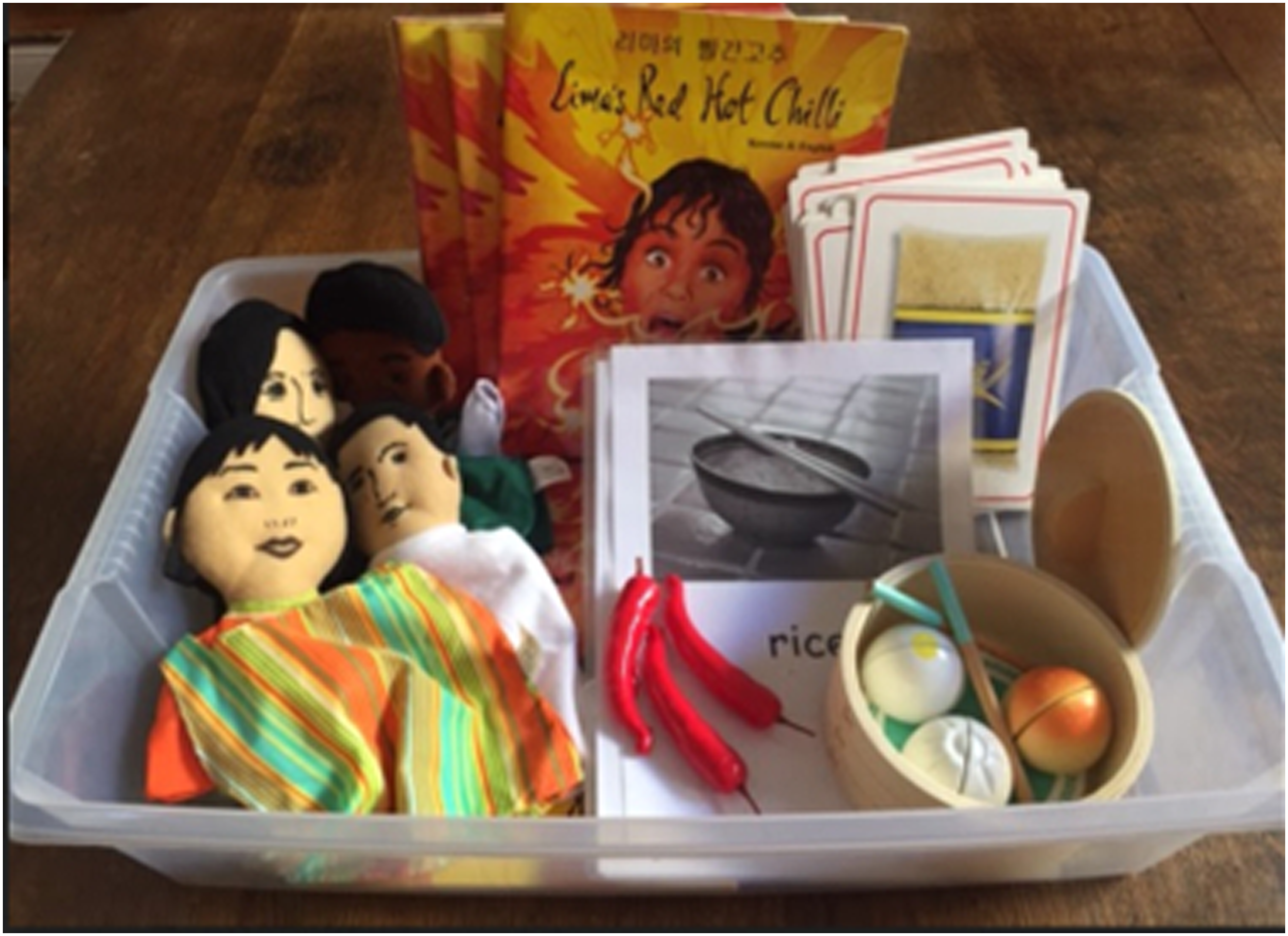
The study: setting, participants, and research design
Setting
City Road Public School is situated in south-western Sydney with an enrolment of 659 children from Kindergarten to Year 6, 98% of whom come from a language background other than English and 1% have an Aboriginal background. The school community is a vibrant mix of Mandarin, Cantonese, Nepali, Vietnamese, Arabic, Indonesian, and Korean speakers. The demographic is characterized by low levels of socioeconomic status and by families who place a high value on education, with many children attending additional after-hours tutoring classes (Teacher interview, 2021).
City Road Public School, the chosen research project school, is distinguished by its unique emphasis on language education. The school values the teaching of languages, considering them a crucial part of the educational program. It runs a Korean bilingual program, where nominated bilingual classes attend a one-hour Korean language lesson each day taught by specialist Korean language teachers. Additionally, the school offers community language programs for K-6 children in Chinese (at three levels), Arabic, Spanish, Indonesian, Vietnamese, Hindi, and Greek. The Weekly Wrap-Up, a bulletin appearing on the school Web site, is translated with the help of the community language teachers. The school also encourages parent volunteers, but it acknowledges that many parents do not expect to be directly involved in the classrooms.
The focal case study is a diverse Year one class, a unique group of 23 children aged 6 to 7, all from language backgrounds other than English. This diversity is not just a characteristic, but a key aspect of the study, providing a rich multicultural context for the research and potential insights into language education.
Participants
The classroom teacher (Annie)
Annie, a Year one classroom teacher at City Road Public School, had noticed a significant evolution in the school’s community over her 10-year career. She pointed out the changing mix of cultural groups among local enrolments, noting that most recently they had enrolled many Nepali children. Despite her Anglo-Celtic and monolingual background, Annie was a strong advocate for the role of play in early childhood programs. Her enthusiasm for the research was shared by the school principal, who was equally passionate about promoting multilingualism across the school.
The young authors
The focal case study in this article involves a Year one class of 23 children. 14 of these children attended a Korean lesson for an hour every day. During this time, once a week (sometimes more), the remaining nine children comprised a case study group, working with the researchers and the class teacher on all aspects of the multilingual storybox pedagogy. Annie was eager for all class members to be involved in creating the culminating task (a class book), so all children worked on the final stages of the project during literacy sessions.
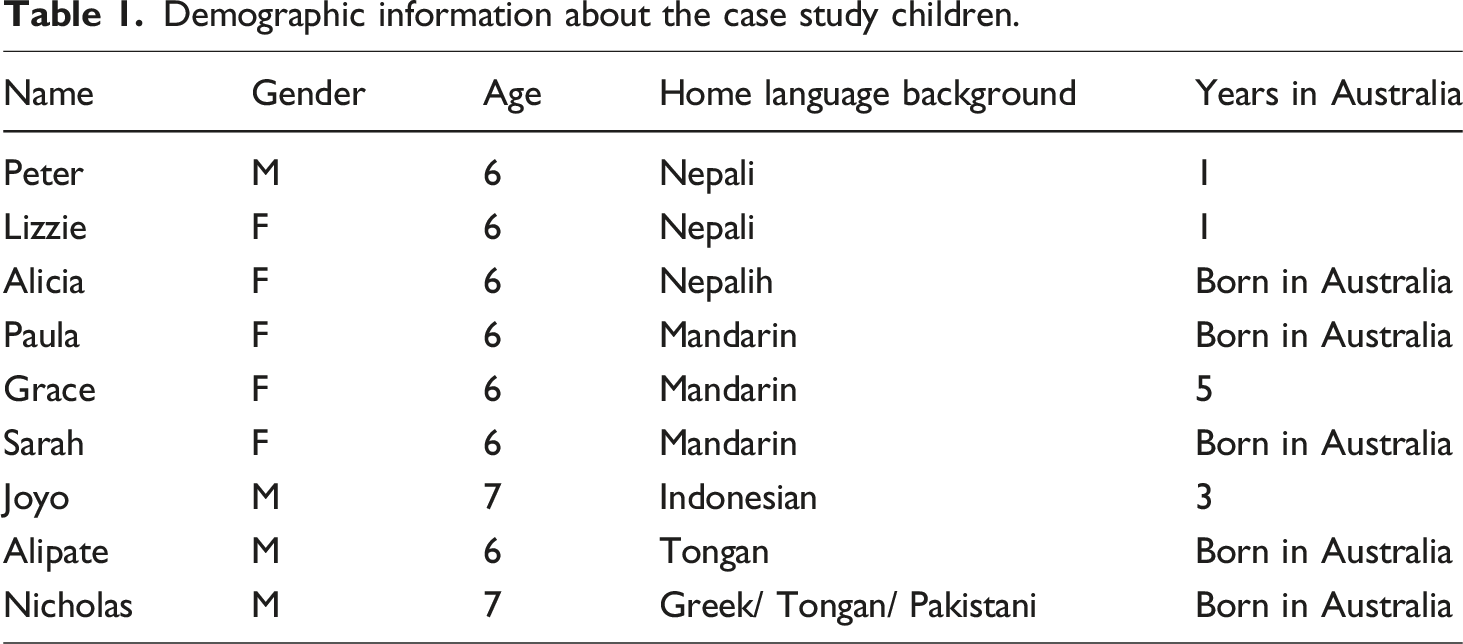
The following table (Table 1) provides information about the case study children. All names have been changed to protect their privacy, but it is important to note that the children still use western or traditional names, reflecting the multicultural nature of the class and the cultural sensitivity of the research.
Demographic information about the case study children.
Research design
Our research question, “What potential does multilingual storytelling hold to engage young emergent bilingual learners in early reading and writing activities?” was designed to explore how access to home languages and cultural funds of knowledge can be practically applied to enhance children’s literacy engagement.
This observational case study was part of a more extensive collaborative inquiry (Carini, 2000), during which we worked with teachers at City Road Public School to identify and develop more culturally and linguistically responsive language and literacy pedagogies for young emergent bilingual learners. Our collaboration involved 10 staff members (the principal, two EAL/D teachers, one language teacher, and six classroom teachers), all of whom attended our two professional learning workshops on translanguaging pedagogy and storytelling in the early years. Our roles in the project were to lead the professional learning and to act as participant observers in the classroom. As former primary and EAL/D teachers and academic researchers, we both have considerable experience in supporting bilingual learners, but as white Australians we do not share any of the students’ cultural or language groups.
The hour-long storytelling sessions were held with the nine case study children. There was at least one session every week for 10 weeks, during which we witnessed significant personal growth in the children. Other sessions were led by the class teacher, Annie, when time permitted. Developmental play was part of the class program and Annie encouraged the children to engage with the story and its themes during those periods, and indoor playtimes. A chronological summary of all activities completed by case study children and by the whole class is provided in Appendix 1.
Work samples and recorded conversations were collected as evidence of literacy and oracy development. Further qualitative data were collected from Annie’s observations and comments, researcher field journal entries, and semi-structured interviews with the children and teachers. Photos and videos were also taken to capture learning episodes.
Data analysis
Work samples and recorded conversations were used to measure children’s progress against the EAL/D Learning Progression (ACARA, 2015). This learning progression, a practical and widely used tool throughout Australia, helps teachers identify the English language levels of their EAL/D learners and address the EAL/D learners’ specific learning requirements. Organised by language modes of Speaking, Listening, Reading and viewing, and Writing, it includes broad descriptions (indicators) of the characteristics of learner groups at each of four phases of English language learning: Beginning, Emerging, Developing, and Consolidating.
Qualitative data were rigorously analysed using an inductive approach. The aim was to unearth and conceptualise the fundamental issues that surfaced during the storytelling sessions. This involved categorising individual phenomena into interconnected themes through open coding. Observations and interview comments were transcribed, analysed, compared, and coded in line with the approach outlined by Strauss (1987). The key elements that emerged from the raw data were then grouped into categories, forming a descriptive and multi-dimensional framework. This framework served as the foundation for further analysis through axial coding. The emerging patterns and themes guided the restructuring of the conceptual framework into a more coherent structure of categories, bolstered by evidence from children’s work samples, photographs, and artefacts. For instance, classroom observations or interview comments about children’s willingness to share information about their food and mealtimes were initially coded and grouped. When these data included children’s use of their home language, they were coded again to create a sub-category. Once concepts became clustered around a related theme, axial coding helped to identify dynamic relationships between categories to inform a more abstract grouping. This approach allowed us to relate examples of the successful sharing of cultural practices in class to comments made by teachers about helpful content presented during professional learning workshops.
As a result of this analysis, we identify five main themes which illuminate the role of multilingual storytelling in engaging young learners in reading and writing. These themes focus on evidence of: • Theme 1: Using dialogic pedagogy to activate children’s funds of knowledge and affirm their identities. • Theme 2: Eliciting multimodal, multilingual and multicultural responses to stories through the use of puppets and free play. • Theme 3: Using a translanguaging approach to learn new vocabulary and build sentences. • Theme 4: Learning how to tell and write multilingual stories. • Theme 5: Engaging families and carers’ cultural and linguistic funds of knowledge.
The findings, a culmination of rigorous data analysis and practical application of the EAL/D Learning Progression, are presented and discussed below. References to the main themes are included within the findings.
Findings and discussion
Central to the methodology of multilingual storyboxes is the developing connection between home and school, part of which sees parents and carers invited into class to read and share stories with the children. At the time of the project, COVID restrictions prevented parents from entering the school grounds, and this program element had to be reimagined as we sought an alternative solution that would allow us to develop quality interactions between the classroom and the school community.
This led to the creation of a class book, an initiative we identified as an authentic rich task (Gibbons, 2009), a purposeful real life task built over several weeks, culminating in a performance or the production of an artefact. The creation of the class book Our Family Dinner invited contributions from the community as part of a sequence of language and literacy activities (in both English and children’s home languages) inspired by the core text in our multilingual storybox, Lima’s Hot Chilli (2009).
This section is organised chronologically into episodes that built towards the publication of our book and during which children developed their literacy skills and understandings. While only the case study group completed all storytelling activities, it is important to note that the whole class joined to add their voices to the book, fostering a sense of community and collaboration (see Appendix 1).
Theme 1: Using dialogic pedagogy to activate children’s funds of knowledge and affirm their identities
In a vibrant classroom filled with the sounds of laughter and creativity, Annie embarked on an innovative journey utilising dialogic pedagogy (Alexander, 2018) to activate her learners’ rich funds of knowledge. As the children gathered around, their eyes wide with excitement, she introduced a diverse array of puppets, inviting them to engage with stories through multimodal, multilingual, and multicultural lenses. Each puppet represented a different culture, sparking animated discussions and eliciting responses that revealed the children’s own experiences and backgrounds. During free play, the classroom transformed into a dynamic storytelling arena where the young learners explored their imaginations, weaving their unique narratives together while celebrating their cultural identities. Annie’s integration of dialogic techniques opened the door for a deep exploration of the children’s cultural backgrounds and personal experiences, inviting them to share their unique perspectives during storytelling.
The initial story reading started with a study of the front cover, with all children offering suggestions about the storyline: “Her face catches fire!” “she’s got fireworks in her mouth!”. They were attentive throughout the storytelling and responded enthusiastically to the part where Lima eats the chilli, acting out the action, with gestures and facial expressions reflecting the feeling of heat in Lima’s mouth. As Lima’s family present her with different antidotes to the chilli’s heat, some children nodded wisely when Grandma produced the milk. “That’s the one,” someone called out, suggesting the benefit of personal experience and the activation of cultural funds of knowledge.
After an uninterrupted first reading, the teacher-researcher led a discussion about the story. All the children in the group are English language learners, and purposeful dialogue is an essential element of EAL/D pedagogy, providing opportunities to make sense of new language, to exchange knowledge and ideas, and to gain the confidence to engage in classroom talk (Dufficy, 2005; Gibbons, 2009). They were asked whether they got hungry after school and what they liked to eat. Initial responses predictably included ice cream, pizza, and burgers, but after initial reluctance to offer suggestions outside the mainstream, Alicia quietly observed, “My mum cooks the best chilli rice.” Lizzie’s comment followed this: “My brother eats chilli sauce on everything!” and Sarah: “I like chillies on my pizza!”
The children’s lively reaction to the story, filled with gestures and animated expressions, demonstrated how closely the narrative connected to their lives, bringing their cultural knowledge to the forefront. Their animated discussion about food, where they shared their favorite dishes and collectively recognized their fondness for spicy flavours, not only enriched the storytelling experience but also affirmed their identities (Figure 2). Drawing noodles with chilli.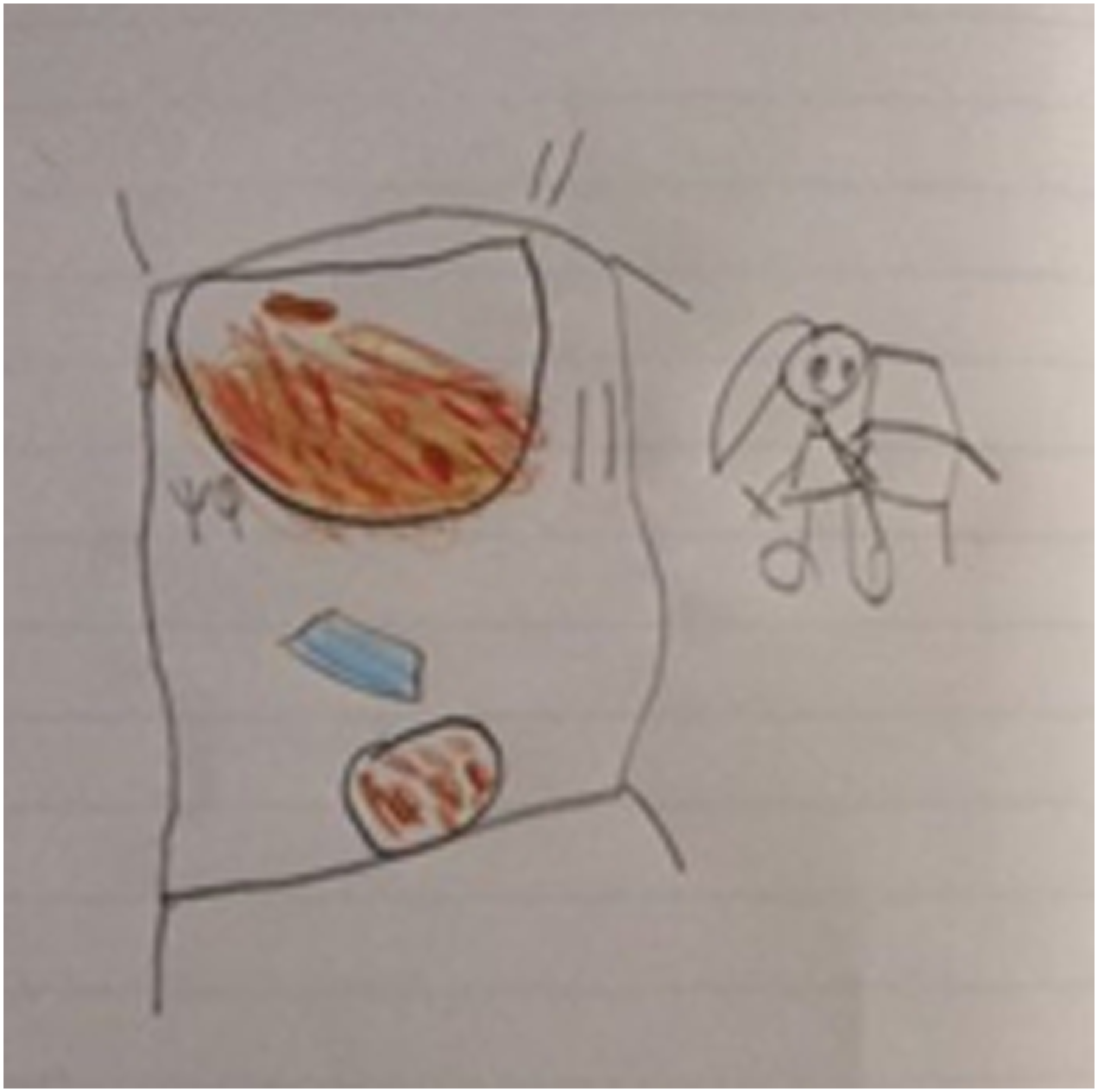
Another writing sample from Peter reflected the post-story discussion and brought in some colloquial Nepali language: “When it is night time I like to eat dumplings and noodles and rice. Our dumplings are called mo-mo”.
Teacher Annie summarised this exchange of information in her interview, conducted after the completion of the project, where she shared her insights into allowing students enough time to develop their responses: “Connections with food started slowly: they don’t readily talk about their home (or food) all the time – they started by being cautious, then the more others spoke, then others started talking about their food.” [Post-project interview, 2021]
Annie’s use of dialogic pedagogy to probe and extend children’s understanding, allowing them the agency to offer their own experiences and thus collaboratively negotiate their responses to the story. These quality interactions invited reflection and recognition of those family and cultural practices that had previously not been formally acknowledged in the classroom, making the children active participants in their learning process. As they discussed their favourite foods, students’ responses shifted from typical options to more culturally unique dishes, showcasing the diverse backgrounds within the group. Following their conversations, the children engaged in drawing and writing, which helped them express their experiences visually and textually.
Theme 2: Eliciting multimodal, multilingual and multicultural responses to stories through the use of puppets and free play
The theme of eliciting multimodal, multilingual, and multicultural responses to stories was vividly brought to life through the use of puppets and free play in Annie’s classroom. Central to the multilingual storyboxes is the opportunity for children to interact playfully with the stories, responding to ideas and experiences reflected in the content. Through puppet and free play, the teacher-researcher encouraged a multimodal response to the story and, in turn, to the cultural practices surrounding food and mealtimes. Children spent time developing different modes of expressing and making meaning, using gesture, facial expression, movement and vocalisations, as well as their home languages, to explore their understanding of the story and to rehearse and refine their identities as members of families and cultural communities. Through a form of multimodal ensemble (Kress, 2001), they used pretend food to eat together, acted out the story in groups, and used puppets to revisit the experience of being part of a multilingual family.
One of the classroom’s standout resources was a picnic blanket and tea set, which encouraged creative free play. The inclusion of culturally relevant props, such as a giant playdough dumpling and a yum-cha set with chopsticks, delighted the children and facilitated imaginative interactions. The children engaged in role-playing activities where they prepared meals using pretend food, such as tearing up paper to create rice and serving it with ‘soy sauce’. These tasks gave them the freedom to authentically reflect on their personal mealtime experiences, blending fun and learning seamlessly. The original story was acted out several times, allowing various roles to be adopted. Children loved to watch each other’s performances and offered advice from the floor: “No, no, the jelly comes before the mango!”; “It was the coconut that was too hard!”
The puppets were employed as play resources to promote an intentional interplay of multimodal responses to the story, facilitating exclamations at the heat of the chilli and gestures of comfort from the family. Annie commented: They particularly liked the puppets – kids always love puppets, telling stories through them. They used them in a variety of situations – free and structured play. For young bilingual children, it allows them to use oral language – they can relax, the focus is on the puppet, not themselves, and they lose their inhibitions. It is the puppets talking rather than the children. You can hear them rehearsing the language of the story. [Interview, May 2021]
During a puppet show reenactment, the teacher encouraged the children to consider how family dynamics might play out within the story, specifically pointing out that while they were speaking English, Lima would likely be communicating with her family in Hindi. This guided them to reflect on their own familial experiences and the language they might use in those moments. Initially hesitant, the children gradually began to embrace the opportunity to speak their home languages, with the three Chinese girls confidently reciting a line in Mandarin, prompting others to join in with their own linguistic contributions.
Peter, for instance, proudly used a mix of Nepali and English to express a line from the story, marking a turning point in his engagement. “Mango, mango, try some mango!” The Nepali speakers were then emboldened to join in, firstly the girls together, then Peter, who stood up and spoke the mother’s line using his repertoire of Nepali and English: “Pani, pani, try some pani!” (“Water, water, try some water!”). Later, he selected this episode as his favourite part of the story and wrote about it in his book.
Overall, the integration of puppets and the encouragement of free play not only fostered an environment rich with multimodal and multilingual responses but also promoted cultural engagement among the children. They were empowered to connect with the narrative and each other, ultimately enhancing their understanding and appreciation of their diverse backgrounds while honing critical language skills in a supportive and joyful atmosphere.
Theme 3: Using a translanguaging approach to learn new vocabulary and build sentences
The development of vocabulary and the improvement of sentence structure through multilingual storytelling was vividly illustrated in the classroom as children engaged with the diverse cultural experiences related to food. Annie actively the use of noun groups to enable children to describe their favourite foods more effectively. This was not merely a technical exercise; it was an invitation for students to express their identities and experiences through language.
One notable example was Lizzie, a newly arrived student, who contributed the noun group “oily sweet noodles” to the classroom display. Her mother affirmed that these noodles were indeed her favorite, highlighting how personal experiences informed their learning. Despite her limited English proficiency, Lizzie successfully completed her writing task, showcasing the powerful scaffolding effect of her familiarity with the story and her own cultural context.
To further engage the children, Annie encouraged them to construct a multilingual word wall that translated the names of their favorite foods into their home languages. This collaborative activity was initially met with reluctance, as many of the students had previously experienced a classroom atmosphere that prioritized English over their native languages. Often viewed as subversive in a predominantly English-speaking environment (Cruickshank, 2004), their home languages became a source of hesitation rather than pride. However, as the task progressed, the children’s initial shyness transformed into enthusiasm. They began to share translations confidently, confirming pronunciations and celebrating their linguistic abilities.
This shift opened a new space for students to express their multilingual identities. The classroom buzzed with energy as children began conversing simultaneously in English and their native languages. The Mandarin speakers broke out into song, while Lizzie and Alicia recited Nepali numbers, creating a dynamic and joyful environment that fostered peer collaboration. As they articulated their favourite words with precision and clarity, they embraced the opportunity to help one another with pronunciation, empowering their classmates as language experts.
Conversations about food also became more animated, with Paula sharing her experiences with Chinese ice cream, leading to spirited discussions and even spirited exchanges in Mandarin, signifying a depth of engagement previously unseen in the classroom. This interchange not only reinforced vocabulary development but also affirmed their cultural heritage.
Ultimately, the collaborative effort culminated in the creation of a multilingual word wall, which stood alongside the English noun groups. This visual representation served as a testament to their learning journey and highlighted the significance of integrating multilingualism into their educational experiences. Through this process, the children not only enhanced their vocabulary and sentence structure but also developed a sense of pride in their diverse linguistic backgrounds, reinforcing the power of storytelling and collaborative learning in fostering a rich, inclusive classroom culture (Figure 3). Building noun groups to describe favourite meals.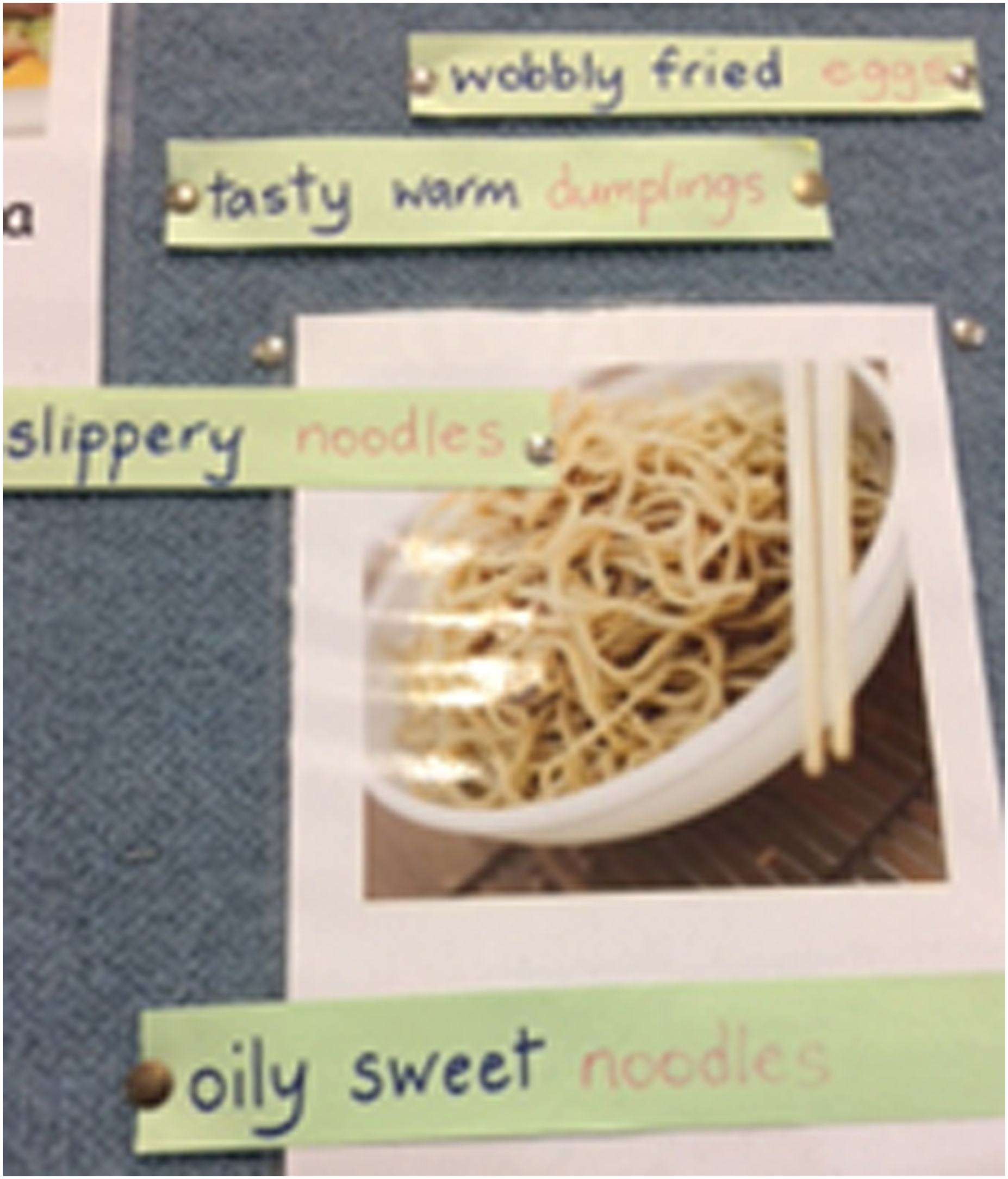
Theme 4: Learning how to tell and write multilingual stories
Throughout the project, the children engaged with a variety of stories about food and communal eating experiences. This engaging content, rich in semantic depth and diverse writing styles, not only captivated the children but also informed their own writing development. The teacher-researcher skilfully leveraged text from these stories to model effective sentence structure and plot development, nurturing the children’s beginning literacy skills in an engaging manner.
A key example was the book Let’s Eat by Ana Zamorano (1996), which depicts a Spanish family coming together for a meal after a week of interruptions. This story served as a source of inspiration for creating a multilingual class book focused on family mealtimes, incorporating the children’s favourite meals represented through pictures and text in their home languages alongside English. The whole class participated in this project, listening to the story together before examining illustrations of the family lunch table, identifying various dishes, and brainstorming how their favourite meals could be depicted in the book. This active engagement fostered a deeper connection to the project, as each child contributed their unique culinary experiences.
Conversations flourished around the activity, stimulated by the teacher’s open-ended questions that encouraged the children to think critically about their representations. For instance, when discussing their favorite foods and how they were prepared, children shared their knowledge, leading to vibrant dialogues that highlighted their cultural backgrounds. This emphasis on communication not only enriched the storytelling experience but also nurtured a collaborative learning environment.Teacher: What’s that on your table? Joyo: It’s bean curd…we have it with yellow rice Teacher: I love rice. How do you make yellow rice? Joyo: I think Mum PUT something in … I’ll ask her.
Transitioning from the focus on food choice and preparation, the teacher introduced the idea of writing for an audience, emphasizing clarity and accuracy. This concept aligns with the Australian English Curriculum (ACARA, 2015), where understanding audience and purpose is crucial. As the children began to view themselves as authentic writers, they were prompted to refine their thoughts to ensure the information in their multilingual book was accessible and informative to readers.
To deepen their connection to the project, the teacher encouraged families to contribute cultural knowledge by annotating their children’s drawings. This outreach served to emphasise the school’s recognition of family contributions and their importance in the learning process. While not every drawing was returned due to various challenges facing families, many children brought back annotated sketches, showcasing their families’ input.
With their sketches in hand, the students wrote accounts of recent family meals, drawing from the annotations as scaffolding for their writing. As they described birthday dinners, New Year celebrations, and everyday meals, their confidence as writers blossomed. Their texts reflected not only their culinary experiences but also their cultural significance, illustrating the rich interplay of personal narratives and multilingualism.
As the project progressed, students engaged in meaningful conversations, expanded their vocabulary, and utilised various modes of expression to narrate their stories. The collaborative framework of multilingual storytelling provided essential support for their writing endeavours, allowing them to create texts that were both personally enriching and culturally relevant. Through these cumulative interactions, the children not only honed their writing skills but also celebrated their diverse identities, ultimately fostering a deep sense of ownership over their multilingual storytelling journey (Figure 4). Annotations to a drawing.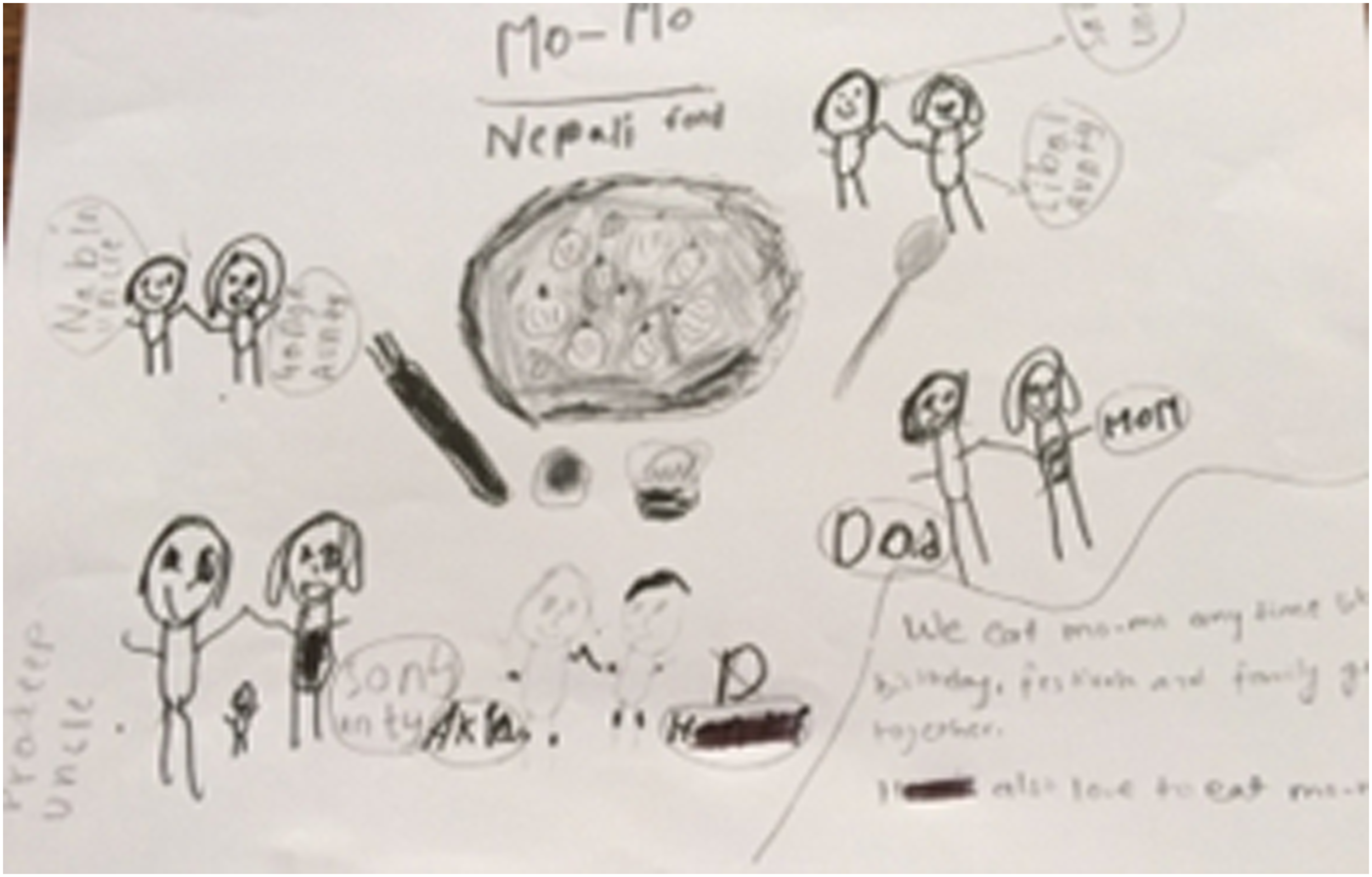
Theme 5: Engaging families and carers’ cultural and linguistic funds of knowledge
This book’s creation was a significant milestone that allowed all the children to proudly demonstrate their cultural knowledge and experience of mealtimes with their family. Each double-page spread featured a picture and corresponding text in English and the home language, a testament to the rich diversity of the community. While the children were becoming competent with English literacy, few were familiar with the written form of their home languages. Therefore, collaboration with parents and the community was not just essential, but a proud moment for all of us, as we worked together to obtain translations of their texts to include in the book (Figures 5 and 6). The class book Our Family Dinner. The class book, sample page.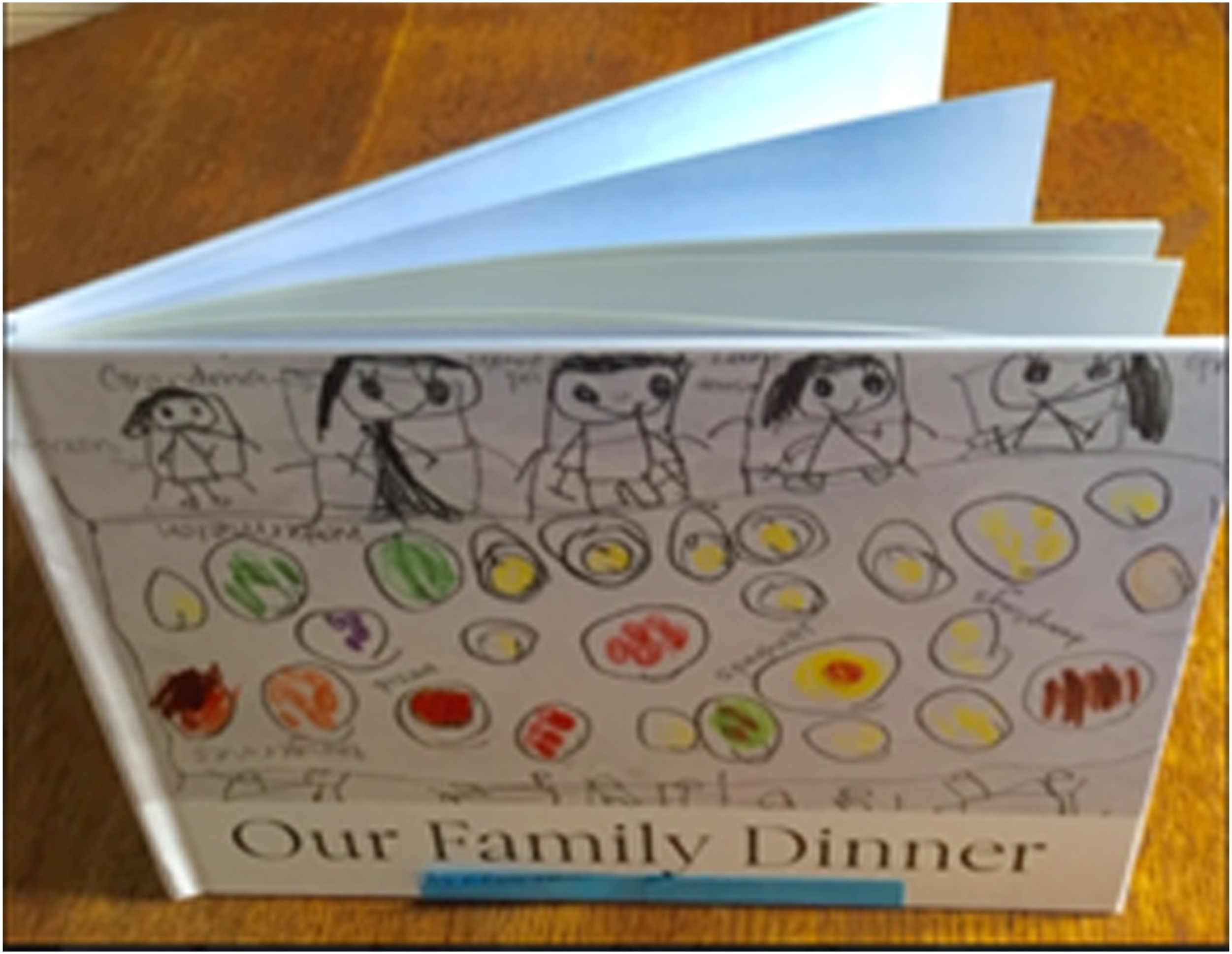
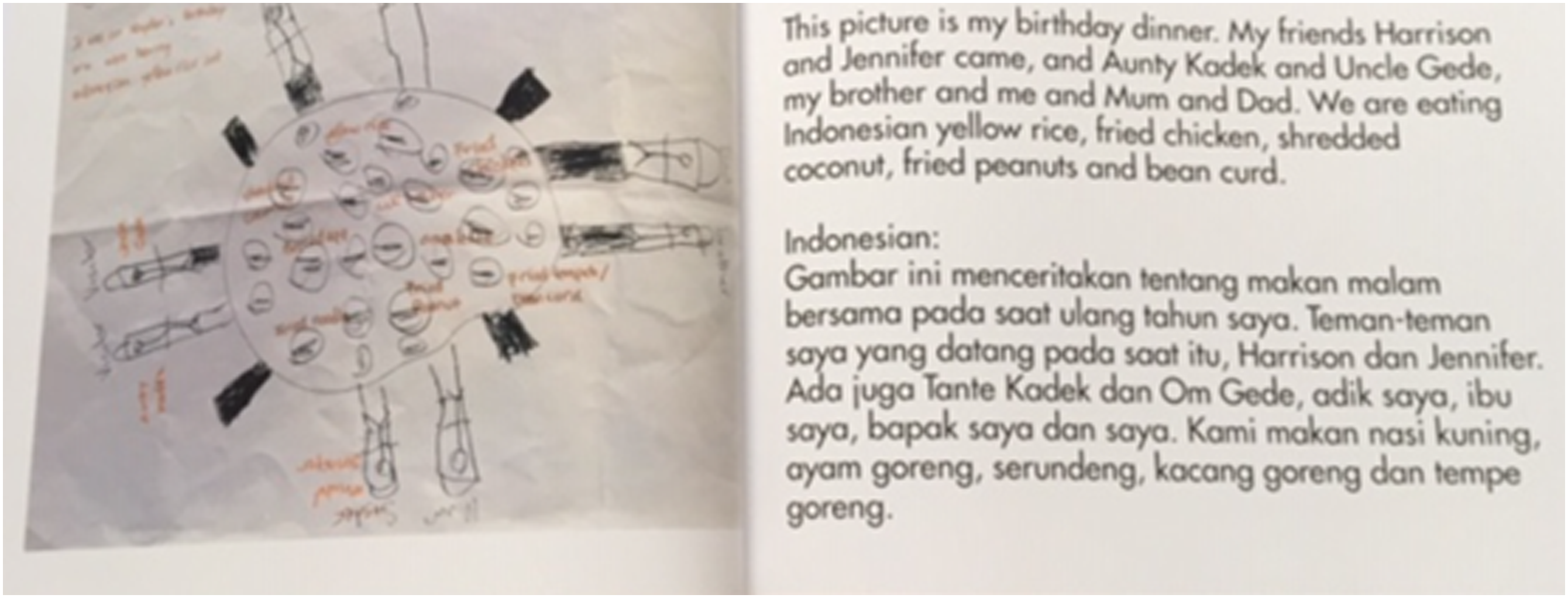
There were 15 different language backgrounds represented in this Year one class, so contact speakers (and translators) from each language group needed to be found. Annie sent requests via Dojo (the parent communication app), email, and word of mouth. Responses came in immediately from Community Language and Korean Bilingual teachers, multilingual classroom teachers, and children’s parents and friends. Translations were labelled and collated with English texts and illustrations, for example: I have drawn my family having lunch. My mum, my brother and I are eating fish, we eat fish every day.
Greek
Έχω ζωγραφίσει την οικογένειά μου που τρώμε το μεσημεριανό. H μαμά μου, ο αδερφός μου και εγώ τρώμε ψάρια, τρώμε ψάρια καθημερινά.
Tongan
Kuó u ʻosi tohoakiʻi hoku fāmilí ke nau maʻu meʻatokoni hoʻatā. ʻOku mau kai ika mo hoku tuongaʻané, mo ʻeku faʻeé, ʻi he ʻaho kotoa pē.
After an initial celebratory reading, Annie was left with a copy of Our Family Dinner and reported its impact on the class. They had to take organized turns sitting with the book and regularly requested a chance to read it if they had completed their work or had finished eating lunch early. The presence of their home languages was thus formalised through their book.
While the students were gradually advancing in their English literacy skills, many were less familiar with the written forms of their native languages. This highlighted the importance of collaboration with parents and the broader community, as their involvement was crucial in obtaining accurate translations that would enrich the book. The process of finding speakers and translators illustrated a collective effort – a proud moment not only for the children but for everyone involved in the project.
With 15 different language backgrounds represented in the Year one class, it was essential to actively seek out contact speakers to assist with translations. Annie utilized various communication methods, including the Dojo app, emails, and casual word of mouth, to reach out to families and community members. The enthusiastic responses that followed, particularly from bilingual teachers and parents, underscored the community’s commitment to supporting the children’s literacy journey. The translated text was carefully labelled and organized alongside its English counterpart, creating a seamless integration of languages.
This collaborative effort transformed the way students engaged with the project. After an initial celebratory reading of the completed book, the students expressed a strong desire to read Our Family Dinner regularly, often requesting to revisit it during quiet moments or after completing their tasks. The inclusion of home languages in the book affirmed their identities and provided a formal recognition of their linguistic backgrounds.
The impact of the book extended beyond the classroom, catching the attention of the Principal at City Road Public School, who ordered additional copies for the school library. Their intention was clear: to ensure that all children could access these stories and to inspire educators to create similar initiatives that celebrate the diverse lives and languages of their students.
“So that all children can read them” and “inspire teachers to develop something similar with their children – celebrating their lives and languages.” [School principal: Post-project correspondence, December 2021]
Overall, Our Family Dinner not only served as a tangible representation of the children’s family experiences but also celebrated the cultural and linguistic richness of the community. By fostering collaboration between families and the school, the project created a supportive environment that valued children’s backgrounds, ultimately enhancing their learning experiences and reinforcing the significance of their cultural identities within the educational framework.
Concluding thoughts
This research study illustrates the power of a translanguaging stance (Garcia et al., 2017), presented as an essential factor through class teacher Annie’s willingness to ‘create space' for languages other than the classroom instruction medium, and for stories that reflect her students’ cultural diversity. Stories have long been recognised as effective vehicles for learning in early childhood, creating an engaging environment that promotes well-being and purposeful activity, and scaffolds language and literacy learning (Cremin et al., 2017; Heath, 1982; Makin et al., 2007). Multilingual storyboxes are designed to be valuable pedagogical tools, supporting teachers to build inclusive classroom environments, and encouraging meaningful home-school connections through family and community-based storytelling (Lopez-Robertson, 2017; D’Warte and Woodrow, 2022).
Throughout our collaboration, children were recognised, respected, and celebrated for their cultural and linguistic diversity. Their linguistic identity, a key marker of their humanity, was being recognised, and their voices were heard (Esteban-Guitart and Moll, 2014; Feez and Harper, 2021). The positive impact of this recognition was profound, witnessed in the dialogic, light-hearted dynamic of the group, where each child took turns to ‘teach' their cultural and linguistic knowledge to their peers. Despite Annie having had no previous experience with children’s home languages, which included Nepali, Greek, and Tongan, she worked hard to foster a multilingual classroom ecology. In a practical sense, she provided appropriate resources, including play materials, books, and art supplies, so that children could access the full range of their cultural and linguistic knowledge and share it with their peers. Adopting this agentive role (Slaughter and Cross, 2021), she made time for these activities and displayed the results in public corridors within the school, positioning her young learners as linguistically knowledgeable and advantaged emergent bilinguals rather than struggling or vulnerable English as Additional Language learners.
The quality of teacher and student interactions was evidenced as a constant thread running throughout the sequence of learning activities, seen for example in the strength of the dialogue during classroom discussions (Alexander, 2018) and more informally between students during play activities (D’warte & Woodrow, 2022). Research confirms that children’s engagement in symbolic and sociodramatic play enhances cognitive and social development, allowing them to rehearse and consolidate new language structures through collaborative and imaginative make-believe play (Dyson and Genishi, 1994; Flint, 2018; Gregory et al., 2004).
We identified evidence of productive relationships between teachers and children and the beginning of valuable connections with families and the community. Family members were involved as local experts in the story creation and translation of the text into home languages, helping teachers establish new connections with the local community. Family involvement and interest in children’s education improves children’s confidence, their attitude to learning, and academic outcomes (Lopez-Robertson, 2017; Wilder, 2014), particularly for children from low-income families whose parents have low levels of education, and families of refugee and migrant backgrounds (Tárraga Garcia et al., 2017).
Productive relationships are crucial for the success of the multilingual storytelling project. The classroom storytelling sessions were not only rich in translingual and transcultural interactions (D’warte, 2023), but also in the active participation of the children. A good story invites listeners to enjoy repeated telling, to interact with the narrative time and time again, a process which offers opportunities for students to refine their understanding and consolidate their grammatical knowledge. Follow-up activities allow them to interact together, rehearsing new language in the safe context of collaborative play and developing innovative variations on a now familiar storyline. By building on their own and each other’s oral contributions to storytelling, children develop new lines of thinking and understanding (Alexander, 2018), which assist them in their writing. As children are supported to participate in increasingly varied writing experiences, they gain the confidence to attempt to produce more complex, multimodal texts, which in turn provide an avenue for developing artistic expression. Such active roles in the storytelling process encourages students’ empowerment and agency in their own learning journey.
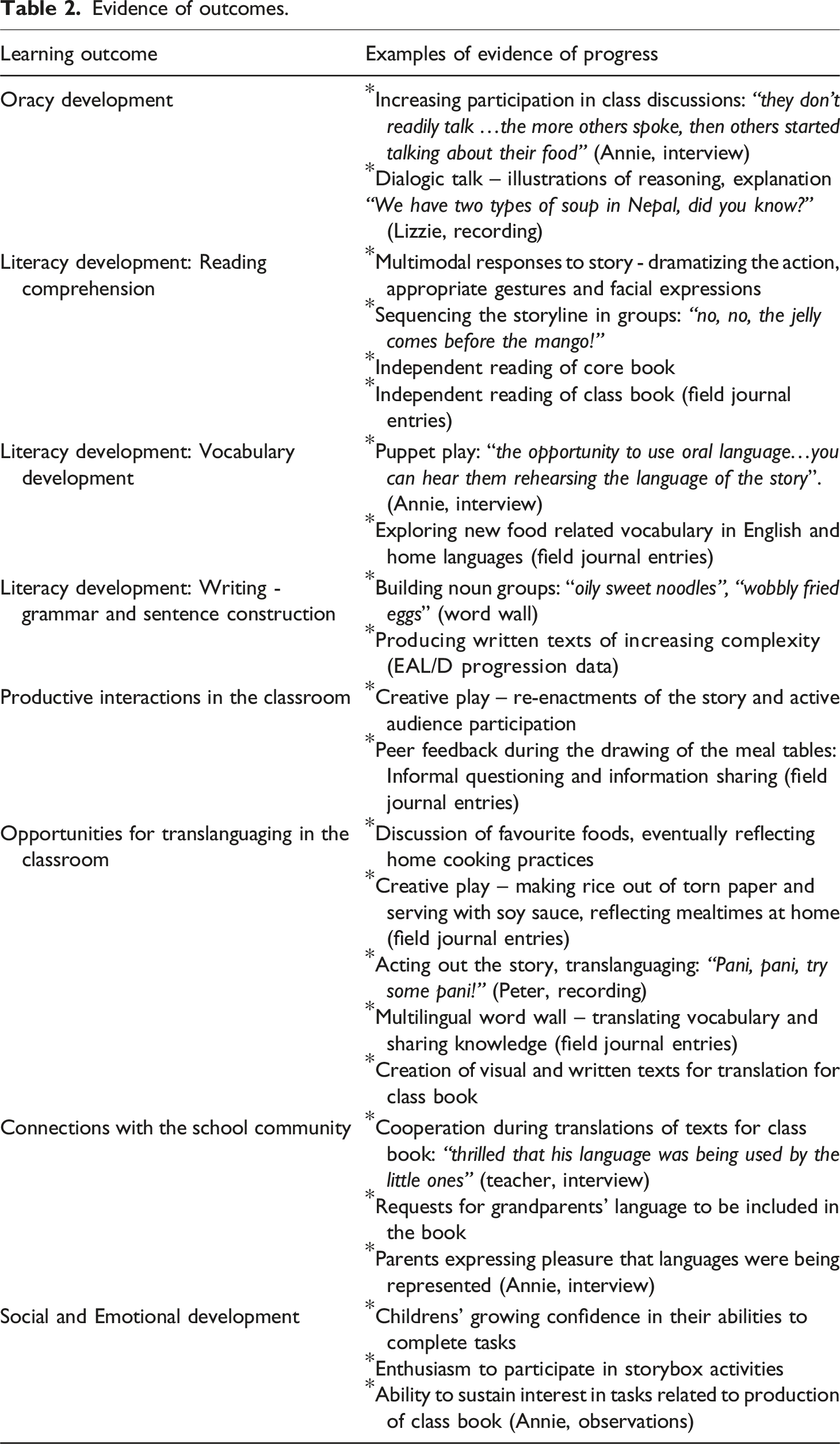
Evidence of outcomes.
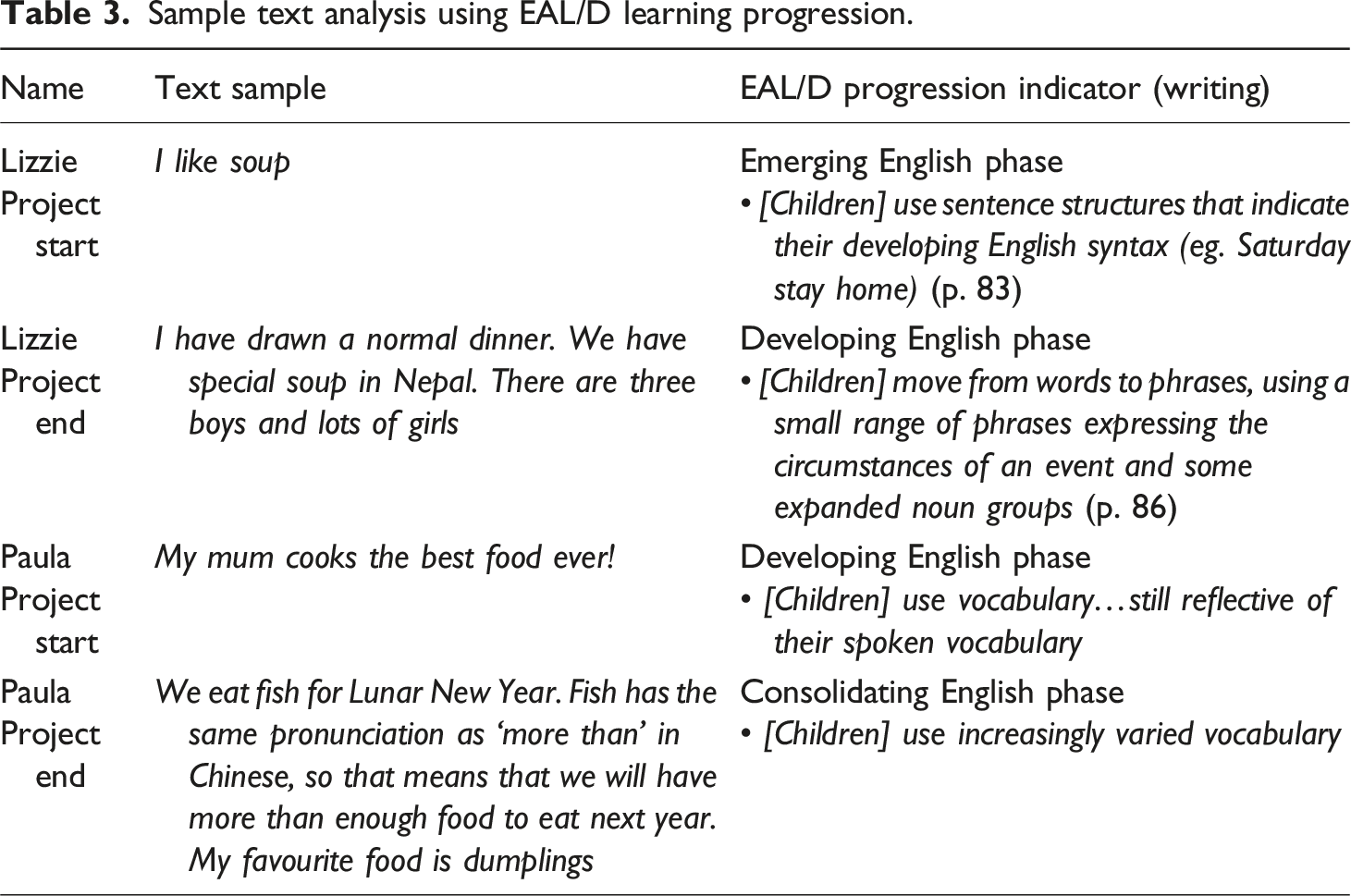
Sample text analysis using EAL/D learning progression.
Learning outcomes are not mutually exclusive and evidence may apply to more than one outcome. Data source is provided in brackets.
To gain some measure of potential growth in children’s English language and literacy development as a result of the storytelling project, we studied their texts written for the class book against the EAL/D Learning Progression (ACARA, 2015). While we cannot claim that the children had developed sufficient skills to move entirely from one learning phase to another, we could identify some movement within performance indicators, as summarised in Table 3.
Limitations of the study
This article describes a small research study running over one term (10 weeks) in the school year. Findings suggest that storytelling, a familiar resource in the repertoire of teachers of young learners, can enhance the development of inclusive and productive multilingual classroom. Working on a rich task culminating in a material artefact helps to sediment young learners' views of themselves as writers, with a published book serving as a tangible signpost of their literacy abilities and a celebration of the multilingual richness of their community.
While such findings give compelling insights into the use of multilingual storytelling as part of a translanguaging pedagogy, they are limited by the size and scope of the research: a longitudinal study over a school year would allow for a more comprehensive collection of data with more than one cohort of children. And in post-Covid times, more parental and community participation could be included in the storytelling projects.
The inclusion of this initiative in regular classroom programs will present challenges. Availability of time complicates planning for many teachers. Ever-increasing demands to complete curriculum, assessment, and administrative requirements in the classroom leave little time for other activities: many teachers of young learners find it hard to include free play in their daily program. Of the 10 enthusiastic teachers who attended our Professional Learning workshops, only one found time to follow up on a translanguaging project with her Kindergarten class. Educators often feel themselves unqualified to include unfamiliar home languages in their classroom, preferring to maintain English as the language of instruction.
If teachers are to be encouraged to take an agentive role (Slaughter and Cross, 2021) in deciding the role and value of languages other than English in the classroom, then they need to be supported by informed school leadership that provides focused professional learning to help them develop a translanguaging stance within existing programs. Communities of practice within or between schools can serve to increase understanding and enactment of translanguaging pedagogy. As we observed during the collation of the class book, there are many multilingual speakers within the staff and wider community of a school who might, for example, participate in an informal mentorship program where teachers less familiar with a language are supported in their understanding and assisted with resource development. More formal mentorship for pre-service teachers would allow them to work alongside those proficient with translanguaging pedagogy, preparing them for productive future roles in schools which will certainly be characterised by increasing linguistic and cultural diversity.
Footnotes
Declaration of conflicting interests
The author(s) declared no potential conflicts of interest with respect to the research, authorship, and/or publication of this article.
Funding
The author(s) received no financial support for the research, authorship, and/or publication of this article.

Chronological summary of storybox activities
Activity
Participants
Purpose
Initial story reading Lima’s Red Hot Chilli
Whole class
Listening to and engaging with story
Post reading discussion
Whole class
Recap of story
Initial sharing of responses
Re-reading of story and further discussion
Group
Recap of story/responses
Purposeful dialogue
Creation of space to share ideas
Recording of ideas through drawing and writing
Group
Consolidation of ideas
Development of language from spoken-like to written-like
Shared reading using multiple copies of storybook
Group
Development of reading skills
Increased familiarity with storyline
Puppet play
Free playGroup (and occasionally whole class)
Playful multimodal meaning making
Group re-enactment and innovations on storyline
Enacting cultural practices around food preparation and mealtimes
Further structured puppet play episodes and discussions
Group
Introduction of home languages into retellings
Sharing experiences of mealtimes
Explicit teaching of grammar, noun groups
Group
Whole classDevelopment of vocabulary and literacy skills in relation to food
Creation of multilingual word wall with illustrations
Group (added to by other members of the class)
Multimodal development of vocabulary
Creation of space for home languages
Development of language from spoken-like to written-like
Initial reading of Let’s Eat!
Whole class
Visual inspiration for format of class book (rich task)
Study of illustration of the meal table
DiscussionWhole class (repeated with group)
Model for individual drawing and writing of family mealtimes
Purposeful dialogue
Drawing sketch of own meal table, with written notes and labels
Whole class (repeated with group)
Multimodal meaning making
Collaboration and feedback
Photocopy of sketch sent home for annotations on food/meal to be added by family members
Whole class
Connecting with families
Knowledge of home practices as valuable information
Annotated sketch to be used as scaffold for further talking, and written account of mealtime
Whole class (more episodes with group)
Development of spoken language and written language
Writing for an audience
Final drafts of student writing to be translated into home languages
Whole class
Connections with school community members as translators
Creation of multilingual book
Choosing a title for the class book
Whole class
Collaborative decision making
Student agency
Proofreading, labelling and collating pages
Researchers
Compilation of class book, online publishing
Book launch
All year 1 classes and teachers
Reading aloud
Celebrating authorship and multilingual funds of knowledge
Presenting copies to school library
Individual reading/sharing of book in class library
Whole class
Establishing multilingual book as valuable artifact
Development of reading skills
Pride in shared achievement