




Abstract
In this article we explore how digital play as conducted through various social media and online meeting platforms facilitated resiliency and confidence building in children during the COVID-19 pandemic. Using day-in-the-life methodology and narrative inquiry, we disseminate and examine observations collected on children aged 2-10 during lockdown in a Newfoundland neighbourhood. Children utilized platforms such as TikTok, YouTube, and Zoom to embrace their agentic digital play in ways that repurposed the platforms to fulfil life milestones and social needs otherwise impacted and disrupted by pandemic restrictions. Through a series of vignettes and interviews, our research not only examines how such digital play benefits children and their healthy development, but how parents reacted to and assisted with their children’s agentic digital platform manipulation and how this provided positive benefits and enriching experiences to the entire family. We additionally explore the conflicts and tensions both children and parents encountered in securely implementing free play via digital platforms, including fears of excess screen-time, digital dependency, and online threats, all of which risk limiting children’s ability to independently explore their creativity and identities through digital play if not handled sensitively. Despite the hurdles to implementing digital play, this study exposes why it is essential for families to navigate this online terrain; this study ultimately poses that digital play and online platforms not only were beneficial to maintaining and building family resilience during the pandemic but will be vital assets in sustaining resiliency and positive mindsets moving forward with pandemic recovery.
Keywords
Introduction
Globally, children’s mental health has been greatly impacted during the COVID-19 pandemic; children experience “increased clinginess, fears, sleep disturbances, poor appetite, agitation, inattention, and separation disorders” (Beal, 2021: 237). During the pandemic, the world not only changed for adults, but even more for children, in a global crisis in which healthy development was forced to take a back seat to health orders and restrictions. Social meetings and normal activities were stopped, and family relationships heavily constrained. Overall, in Canada, childhood inequalities have been both exposed and exacerbated through COVID-19, alongside their effects on children’s short-term development and potential effects on long-term development: “vulnerability locks disadvantaged children into disadvantaged adulthood, putting the brakes on social mobility” (Boarini, 2020). However, we see this as only one conclusion. Observing children in our own communities, we began to see other patterns emerging – children with access to social media and digital platforms for play, learning, and socialization, may have been helped in building “resilience” as we move forward to a recovery stance.
In particular, it has been noted that Canadian children have grown more accustomed to digital play during COVID-19 (Moore et al., 2020). Digital media and associated technology have acted as educational platforms, relaxation devices, and alternative social spheres for many children (Johnson, 2021). In our previous observations, as both parents and researchers, in general there was a consensus among friends, family and educators, and in fact society at large, that digital interactions needed to be limited, among fears that such habits could foster unhealthy digital dependencies (Children First Canada, 2021; Johnson, 2021).
In contrast, in this article we discuss our research on children’s digital play in their home environments that illustrate how digital play was not all bad; in fact, it supported children’s agency and turned into a collective resource of resilience within the family to overcome stressors caused by the pandemic. We vouch for the value of and opportunities in children’s digital play, which may indeed render it a form of play not only useful during the pandemic, but useful in recovering from the pandemic. We also noted the additional benefit that “digital media aids creativity: digital devices allow children to explore and express their imaginations and engage in highly creative play. For example, YouTube serves as a source for children’s imaginative play as a prompt and inspiration, as well as a place where children can store their own creations and exercise their agency” (Thomsen, 2020).
By taking part in digital activities specifically aligned to their interests, children assert their agency more authentically than through prescribed digital activity, while also developing skills more important to them and their own psychological wellbeing (Bakar 2021). Such natural intuition is indeed a boon to children today, who must learn to “negotiate affectively intense relationships and express meaning across diverse modes and media as they connect with distant others in a digitally mediated world” (Flewitt & Clark 2020, 447).
COVID-19 has greatly disrupted children’s lives; however, for those who were able to embrace “lockdown literacies” the pandemic was more manageable. Our study uses the concept of “lockdown literacies” in line with other researchers and their published work (Gourlay et al., 2021). This concept is now being used to describe people's literacies and social practices during home quarantine because of the pandemic, which comprise a semiotic assemblage of language, objects and places (ibid, 380). This perspective orients literacy to the human and the more-than-human (Burnett & Merchant, 2020, 45, cited from Gourlay et al., 2021, 379), providing greater purchase for digital literacies, play, and communication (Gourlay et al., 2021, 380). For the purpose of this study, we define lockdown literacies as children’s capacity to find inspiration, connect with friends, build their resilience, and engage their creativity during a time when these things are made unusually difficult. In our article, we consider the ways in which lockdown literacies played out in the lives of children through interactive platforms like Zoom, TikTok and YouTube, thereby creating new research knowledge about the nature and role of literacies in children's everyday lives during the pandemic. In specific, we are interested in literacies in the context of children's digital play and how these literacies created opportunities and supported children's and their families' resilience. In our study, we consider how technology was accessed for children’s play and socialization during the pandemic in children’s homes and communities, and how the parents’ views of their children’s digital play and other interactions were informed and altered during the pandemic. We also explore children’s ways of enacting their agency for digital play during the pandemic and how parents created opportunities and supported children’s agency through lockdown literacies.
Out of these considerations, we developed the following research questions: 1. How can digital platforms enhance children’s ways for enacting their agency for play during the pandemic play? 2. How do parents/adults and children deal with the contradictions and tensions caused by the pandemic and its regulations for supporting children’s play?
Digital play
During the COVID-19 pandemic, children’s access to both school and peers has been severely limited due to a transition to remote digital learning. Digital play became, for many children, the only venue by which to engage in peer play and socialization, yet parents carried concerns over their children’s screen-time (Teichert et al., 2021). Overuse of screen-time is certainly a concern; even before the pandemic, children’s screen-time and preferences towards digital play were on the rise, exemplified in part by young children’s ease of access to tablets and digital apps (Lowrie & Larkin 2020). During the pandemic, however, concerns about screen-time became less important than the resilience and competencies children were able to build through productive and inventive digital play – an activity that could prove paramount to children’s and families’ fostering of a more positive, healthy COVID-19 experience.
Play can be understood as “as a social and cultural activity inflected by the materials taken up (products), the contexts in which play occurs (places), and the meanings shaped by participants and their relationships (people)” (Digital Futures Commission 2021: p. 14). Hughes’ taxonomy of play outlines sixteen types of play: symbolic, rough and tumble, socio-dramatic, social, creative, communication, dramatic, locomotor, deep, exploratory, fantasy, imaginative, mastery, object, role, and recapitulative (2002). In an increasingly technocentric world, children’s interactions with technology and the internet inevitably result in digital play, in which the ‘products’ and ‘places’ through which they play are digitized, yet the relationships they build are very real and feed children’s need for healthy and active socialization. Definitions and taxonomies of play as introduced by Hughes (2002) can be applied to digital play, with slight alterations, indicating that digital play is not a new type of play; it is indeed “real play” (Marsh et al., 2016, 9). Although the nature and context of digital play differs from non-digital play, digital play can encompass all sixteen of Hughes’ (2002) types of play (Marsh et al., 2016, 9). Digital play allows children to connect with each other and exercise their independent learning, and by extension their agency, by operating their devices/platforms themselves without total adult mediation (Sakr 2020). Additionally, digital play allows for mastery play, or the controlling of one’s environment, through the manipulation of digital characters and worlds, thereby providing further agency for children (Marsh et al., 2016, 7).
Digital play, however, is inevitably mediated by the developers of the apps, games, or platforms used by children; as Grimes (2021) attests, “While children bring a significant amount of agency, creativity, and situated knowledge to their interactions with (and within) digital playgrounds, so too do the designers, marketers, moderators, politicians, and other adults involved in making and managing these play spaces” (65). Through digital play, children therefore build dialogues with concepts dictated by the adult world, which lays the groundwork for their healthy and engaged entry into that world. Additionally, by engaging in digital play, children can develop their agentic capacity for exploration, problem-solving, skill acquisition, and innovative thinking, among other behaviors that impact their healthy development (Bird & Edwards 2015). The potential boons digital play offers children have become readily apparent in the face of the pandemic. In this study, we use the concept of digital play to capture and understand new societal conditions where children readily access and engage in new forms of play with and around digital devices (Marsh et al., 2016).
Children’s agency and resilience
Children’s agency – how and to what degree they exercise it – is essential to children’s healthy development and exploration of their identities. Ofosu-Kusi (2017) defines children’s agency as their “capacity to act independently, make decisions, and engage in actions out of their own volition” (p. 4). Children’s agency can manifest through their chosen participation in activities or events, or through their capacity to act and see their actions generate an impact in their lives and/or on the world (Kumpulainen et al., 2014; Oswell, 2013; Lieten, 2008; Percy-Smith & Thomas, 2010). When children have room to exercise their agency and see its impact, they build confidence in themselves, their competencies, and their place in the world. Exercising their agency enables children to feel more secure when exploring or experimenting in the world, and overall enhances their wellbeing (Kumpulainen et al., 2020; Van Nijnatten, 2013).
Children’s agency is inevitably informed by and likewise informs children’s resilience. Children’s resilience and its role in childhood wellbeing is a much-researched topic today (Ager, 2013; Miljevic-Ridicki et al., 2020; Prince-Embury & Saklofske 2013). Children’s “resilience” is “the dynamic process of transactions within and among multiple levels of children’s environment over time that influences their capacity to successfully adapt and function” and appears in spite of stressful and adverse circumstances; indeed, children with higher resilience more successfully overcome and thrive beyond such circumstances (Aisenberg & Herrenkohl 2008, 303). Children who can build and maintain strong resilience benefit from improved “mental health, educational attainment, peer relationships, and placement outcomes” (Lou et al., 2018, 90) among other boons to their healthy development.
Children’s agency and resilience, as our study exemplifies, reinforce each other when children have the space and tools to exercise them positively. This connection highlights how children can foster their healthy development through the mutual strengthening of these two factors, but is also important because it suggests that if either factor is at risk, then it will have a negative impact on the other. Our study additionally reveals how the positive feedback loop of children’s agency and resilience can be initiated and strengthened through digital play. Therefore, children experiencing decreased agency or decreased resilience may, if given the tools by which to engage in digital play, be able to strengthen their decreased factor to the intertwined benefit of both factors.
The study
In this study, we consider the ways in which lockdown literacies played out in the lives of children. Drawing on narrative research methodology (Clandinin & Conelly 2000; Lindsay & Schwind, 2016; Overcash, 2003), we observed and analyzed the agentic digital play children conducted during the pandemic, alongside analysis of parental reactions to and facilitation of said digital play.
Research methodology
Using day-in-the-life methodology to collect vignettes by which to apply our narrative inquiry, our article examines how children exercised and developed creativity, innovation, and resilience by evolving their digital play habits during the COVID-19 pandemic. Day-in-the-life methodology is a valuable approach to analyzing children’s digital play (Kumpulainen et al., 2020; Poveda et al., 2020). For instance, through video recordings, photos, field notes, and parent interviews, taken in respect to children’s everyday digital practices, author et al. exposed how children’s digital practices “particularly when child-initiated, often crossed online/offline and material/immaterial boundaries” (490). Meanwhile, by collecting such data on a single day in the lives of children and their families, Poveda et al. reveal “how living-room assemblages may be a dynamic lens through which to investigate the social, spatial and material experiences of very young children with digital technologies” (518). In particular, during a pandemic where all participants see the importance of digital practices in children’s lives and the sharing of such narratives.
Research setting and participants
Our study is informed by a sociocultural perspective, one which is concerned with how social setting mediates human development (Vygotsky, 1978, 1986). In this case, the specific setting was number of digital play events and interactions created through the fluidity of several social environments in which the children and families participated. These in turn frame our study's sociocultural perspective – the phenomenon of children’s agency and resilience development in the digital social environment of a pandemic lockdown.
Our research considers how the digital landscape of various online communication/social media tools could be mediated by Canadian children and their families to build resilience during successive pandemic lockdowns. Children’s digital play within these often-perceived adult digital spaces is further exemplified with families negotiating these spaces for their children’s social contact with neighborhood friends in an unprecedented time in history. The study takes place in a metropolitan area of the province of Newfoundland located in eastern Canada that has the highest number of COVID-19 cases in comparison to the rest of the island. The three families in the study were familiar with each other as neighbours, and their children through outside play and through organized summer programs. The sibling sets within the three families ranged from 2 years of age to 10 years of age. In all families, there were two working adults with steady incomes in the household, providing middle- upper class living standards for their families. In Family 1 there were two children, and both Families 2 and 3 have three children. All names have been replaced with pseudonyms to ensure anonymity. These families represent a convenience sample consisting of people who were available and willing to participate in this ethnographic study to understand how children's digital play and its literacies supported family resilience in these troubled times. The sample is authentic and the data provide rich contextual insights into a neighbourhood group of children who participated in a range of activities together that were cancelled due to the pandemic. To establish our sociocultural perspective in this study, we first begin to share our documentary analysis of local webpages and twitter posts that give a pictorial sense of what was happening in the community during the period of the lockdown.
At the time of data collection, children were obligated to stay at home due to lockdown provincial health orders and were participating in schooling via a distance education program. While the children did experience limited outdoor play, children were encouraged to stay in family bubbles, and there was limited physical interaction amongst the children, almost all interaction took place in the outdoors. The NLESD (Newfoundland and Labrador English School District) Twitter account, along with other NLESD emails, were one of several government bodies that promoted social distancing and at-home learning activities during the lockdown period. Such activities (pictured in Figure 1) encouraged digital play by including video chatting and connecting with friends on social media. The NLESD, in particular discouraged group gatherings, such as birthday parties, sleepovers, and playdates which are important milestone events for young children. In our narrative vignettes, children found ways to transition such milestones online via digital play, rather than forgo them entirely. Screenshots of NLESD Twitter post and attached file.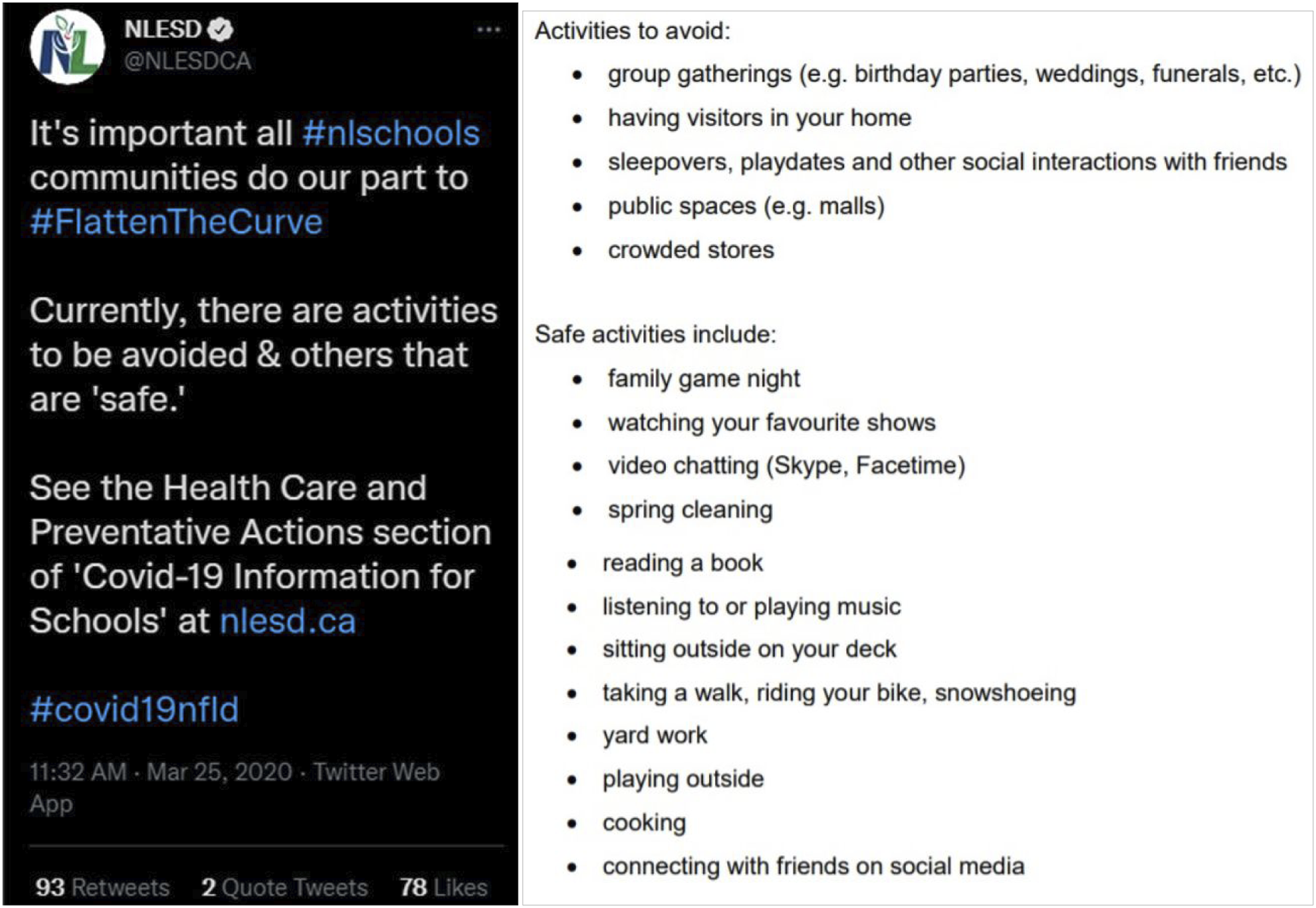
Data analysis
We have chosen to relay the data acquired in our study via a series of three vignettes, against which we apply narrative inquiry into the day-in-the-life activities pursued by the children. These vignettes each highlight moments in which children manipulated digital tools through their own digital competencies and innovation to foster social bonding and agentive creative play during a restrictive period of their everyday lives. Pseudonyms are being used to ensure privacy and anonymity. The vignette is a suitable venue by which to present our findings as its narrative style offers the opportunity for diverse interpretations of an event (Barter and Renold, 2000), and so while our analysis focuses on children’s resilience, agency, and digital play during the pandemic, our findings as conveyed by vignette may likewise assist scholars in search of other themes in children’s digital and/or pandemic experiences.
Participating families
Family 1: The Horan family live on a normally busy street, which became relatively silent with the stay-at-home orders in place. Situated close by to the other two neighborhood families, the children are outside playmates in each other’s yards, generally with pre-arranged playdates. With families living their lives mostly at home due to the pandemic, these three families came together to assist each other with childcare, arranging outdoor and online activities. None of the families had immediate family or parents nearby, which meant that childcare was out of the question with growing COVID-19 numbers at the onset of the pandemic. Twin girls, age 8, live with two parents, both working in the medical field. Technology use is routinely monitored in the house, both children owning iPad devices with lock codes, alongside other media. Television watching was focused on family shows such as the Great Canadian Bake Off and Great British Bakeoff which were very popular each week. Outdoor play and exercise are common practices in this family with bike riding, skiing, ice hockey and snowshoeing among other regular activities. The value of the outdoors was an important first choice for the children.
Family 2: The Dymond family live on a quieter side-street within the same neighborhood. Both adults were government employees adhering to the government work order to stay home, but one had to regularly perform outreach with a vulnerable homeless population. Their children, ages 2 (boy), 8 (girl), and 9 (boy), had access to multiple media platforms. The older children both owned a Nintendo DS and were dedicated players of the online game Minecraft, frequently playing online with school friends and other neighbourhood children. As well, both children enjoyed challenging others on the game Mario Kart, with which all three children were quite familiar. Both children had phones and had also developed TikTok accounts with their own tranche of followers. The parents let the children guide their interests in the use of technology and were equally impressed and had grudging admiration for the children’s abilities to figure things out, or to get around things such as age restrictions on platforms. With this said, the family did monitor their social media use, but also took opportunities to look at their children’s digital play, with the children guiding the parent on the platform sharing YouTube videos of Minecraft videos or pet videos on TikTok. These children regularly used media platforms such as Zoom to keep in touch with elderly family members who lived elsewhere on the island.
Family 3: The Jeffers family lived close to the other families on a busy street that was used as a connecting thoroughfare between the east and west areas of the downtown urban area. One parent was an educator teaching virtually and the other a small business owner. With the pandemic the traffic trickled to a stop, so there was more opportunity for the children to play on the sidewalk. Two girls aged 10 played regularly with both families. At home the children owned their own iPads where they watched PBS kids or Tree House, and other child-oriented channels. At the times, they had discovered that they could watch YouTube videos of baking from popular television shows as well as talent shows. They had an older sibling who taught them how to play Animal Crossing on their Nintendo DS. The girls played with the Dymond family children on their DS and was introduced to TikTok through their children. As avid dancers they took to honing the dances popular on that platform, that they subsequently shared online with classmates and neighborhood friends. As the children of educators, they had Chrome books of which they continued under home-study with the parents when the lockdown was incurred and schools were closed. They also received phones during this period, primarily as the parents’ way of communicating with them, but also for contact with school friends and other family members. They regularly used Zoom to stay in contact with family members in Australia and other places. As competent users of technology they often assisted their parents and grandparents with google classroom and other platforms needed. The family enjoyed watching the Disney channel together and family shows such as the Great British Bake-off. Like the Horan family, cooking and baking began at an early age for the Jeffers family, with both grandparents and parents teaching family recipes. Similar to the Dymond family, the Jeffers largely chose to let the children use their devices freely during the lockdowns, but with house rules such as no technology during eating, phones not allowed in private spaces and left in family areas for charging, and all family members with the same smart phone security code for safety reasons.
Narratives
In this section, we consider the first research question of how children enacted agency for play during the pandemic. During the COVID-19 lockdowns, children in this study found new ways to use digital platforms to enhance agency and interactive play and maintain social relationships in ways which were entirely outside the scope of the designers’ original intended use of the chosen digital platforms: • kids used Zoom and YouTube to organize their own baking contest • kids used Zoom to organize a virtual sleepover, in which they played games, talked and otherwise digitally played games as a group. • kids used TikTok not as a broadcast platform, but as a space to interact with immediate peers through posting videos trading dance moves, commenting and sharing videos on pets, baking hacks and jokes.
In the next section, we present fine-grained narrative vignettes of such digital play events through the lens of a day in the life of children in using digital platforms to maintain and to build relationships with peers. Within these narratives we find the threads of discovery, as parents grappled with their concerns about too much screen time and the dangers of social media, while considering the contradictory desires of their children to socialize with friends and not become isolated. Finally, we hear from the children themselves, as they demonstrate how they found a path through their parents’ conflicted priorities, remaking the digital platforms to suit their own needs, revealing ingenuity, a degree of digital play of which the parents were largely unaware, and a great deal of resilience in the face of a pandemic which utterly upended their lives.
Children’s digital experiences.
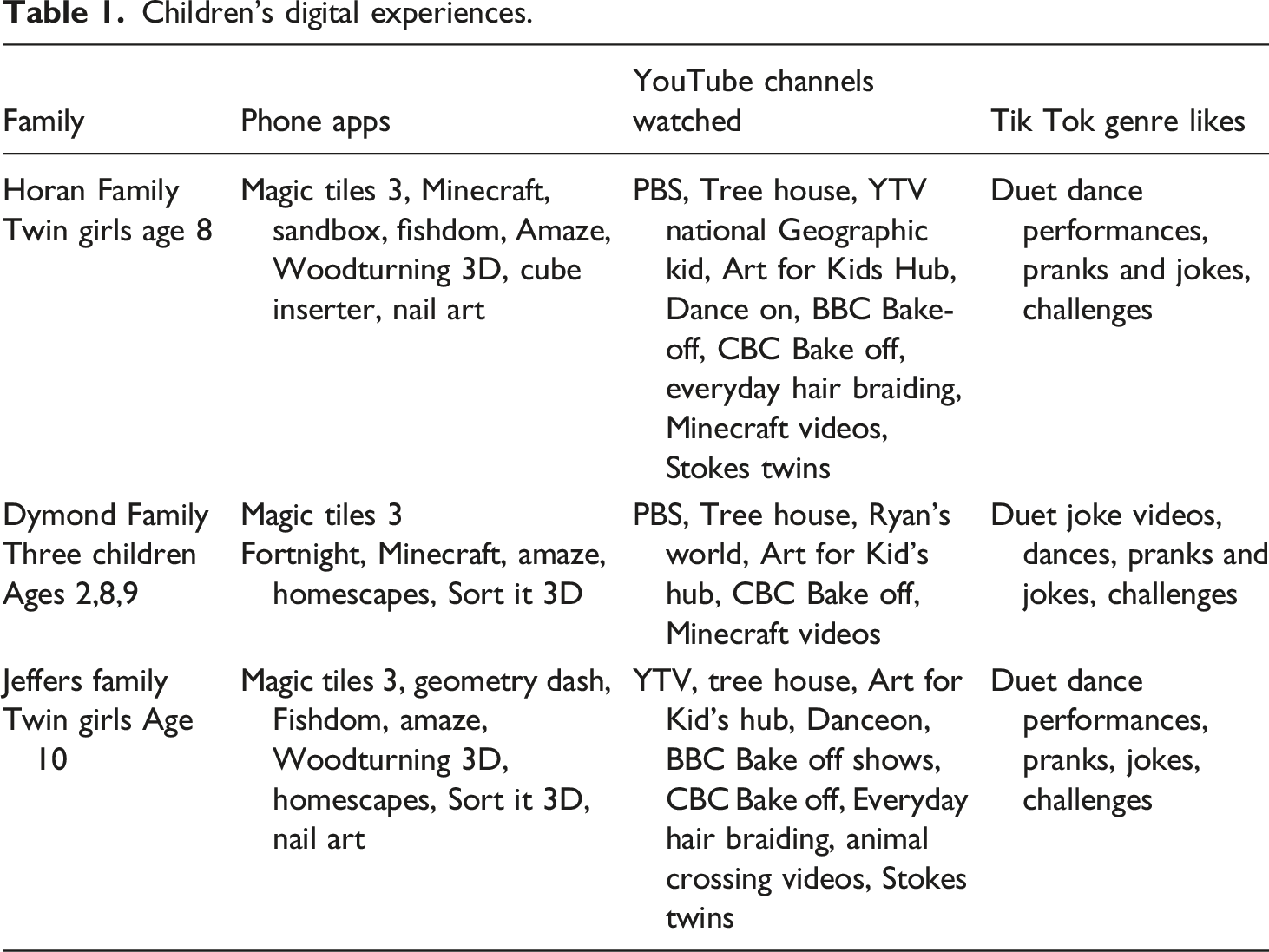
Cusinato et al. (2020) explore such tensions faced by families through the pandemic’s affect on parents: changes to daily routines during the pandemic have impacted family stress levels, which have in many cases led to decreased familial wellbeing and decreased resilience in children, due to how pandemic confinement has psychologically affected parents. Daks et al. (2021), meanwhile, argue that parental flexibility and inflexibility plays a large role in familial wellbeing and children’s ability to cope with COVID-19-related distress. Considering such research, Blaisdell and Lewis (2020) argue for the importance of children’s play and parental empowering of children as drivers of play during pandemic times. However, the parental capacity to empower children effectively is wrought with various tensions and contradictions. As previously discussed, although children reaped benefits from digital play during the pandemic, parents could still be wary of such play due to screentime concerns; as McCormack et al. (2020) show, children’s increased screentime during the pandemic in certain cases led to decreased child wellbeing. Parents found themselves in the difficult position of either restricting potentially beneficial digital play or facilitating potentially harmful digital play. Likewise, parents who allowed children to engage in digital play had to determine to what extent they would mediate their child’s digital play experience; for instance, high mediation could prevent children from encountering toxic digital environments, thereby safeguarding their wellbeing, but it could simultaneously restrict children’s free play, creativity, and independence. Parents, therefore, in handling their children’s digital play, were faced with further pandemic-related stressors due to digital play’s function as both social and exploration outlet for children stuck at home.
During the first lockdown all parents in our study were cognizant about the lockdown resulting in more digital communications, and the fact that children would be engaging in more technology. The provincial education system later became adept at teaching online, but during the first days of the lockdown parents were largely left on their own to establish new educational routines. They all felt at a loss as to what to do – all the parents continued to work from home, and all struggled to supervise their children’s activities. Concerned about the pros and cons of more screen time this parent shared how her comfort changed for her 8-year-old girls. Elizabeth shared: “I guess the big thing was that we got more comfortable with it. Before the pandemic we did not let them on the internet at all, and we strictly monitored how much screen time they had. While we still do both, we had no real choice during lockdowns other than to let them do their schoolwork and have playtime on-line.”
The Dymond family were more comfortable with Damien and Millie’s engagements on the internet, but talked about how their children built resilience through digital online play: As Jennifer shared: “Our two did not take long to figure out lots of tricks and find the sites where other kids in their school were playing and watching stuff. We were pretty suspicious of TikTok, but they’ve spent hours rehearsing dance routines, so we try to take the good with the bad.”
Another parent agreed that while their primary issue had been their children wasting time on their devices, very soon it ceased to be as much of a concern. “I thought they would just spend hours looking at junk, but very quickly they started finding all these cool spaces no one had ever even mentioned before. It all seemed to come out of nowhere when the lockdowns began.”
All parents, when interviewed, referenced their children’s growing consumption of media, and were aware that this was a nationwide problem, even as they attempted to find some balance within the home.
Digital platforms enhancing children’s agency: Zoom
The digital video conferencing program known as Zoom was familiar to businesses and researchers prior to the pandemic, but during the first lockdown it greatly expanded its user base, as others discovered its ease of use and stability. Zoom’s popularity soared as employees were required to work from home, and schools embraced its adaptability as education and curriculum delivery transitioned to distance teaching. The three families’ children quickly discovered that they could use the platform to communicate with peers engaging in multiple types of engagements from television watching, to games of charades and family bingo to virtual bake- offs, and therefore expanded its affordances beyond its origins in the boardroom.
The children talked about how much they liked the freedom of Zoom in their playdates. The playdates were initially set up by parents when children were in complete lockdown and had no real-life social interactions. The ability to share the screen feature allowed access to one families’ Disney Channel, which children from different families then enjoyed together via Zoom. In this focus group the children share their other viewing habits. Interviewer: So, tell me your parents set up the ZOOM and you were screen sharing TV shows? Cara: Yeah, we watched movies that everyone could watch like Disney. We have Disney plus you know. Interviewer: Did you watch a lot of Disney plus? Cara: No, we watched YouTube shows like the Great Canadian Bake off and the one… Tilley: …from AWAY where they talked with English accents. Charlie: I like…. I like… to watch Minecraft videos. Tilley: We watched Mulan and Luca too. The scooter part was funny. Cara: Yeah that part was good. Tilley: Our mom made popcorn and me and Charlie had extra butter shaker on ours.
Later in the lockdown, one of the children held a birthday sleepover party on-line. Each child gathered sleeping bags and snacks in their basement rec-rooms, then using iPads, they held a Zoom party online, until they drifted off to sleep. The parents had little to do with it, other than showing them how to set up the Zoom link. One parent commented: “They organized the whole thing themselves, it was funny, I had to go downstairs at 9:30 p.m. and tell them to quiet down and go to sleep, just like a real sleep-over. I don’t think they were that upset to miss the real thing, they were more excited to do something different.”
Like families all over the world during that spring, the children had found a way to turn the business meeting software to their own devices, triumphing over their forced isolation, creating a space for play and interaction.
YouTube
With a growing confidence and agency with various platforms, the children specifically chose to interact with their peers via Zoom, YouTube and through TikTok, either individually or simultaneously, as will be later explored. YouTube is a popular video sharing platform, on which anyone can share and/or watch both professional and amateur video content, which includes anything from movie trailers and interviews to dance videos and cartoons. TikTok, the third platform chosen by children in our study, is an app by which users can share and watch short video clips, originally no more than 15-s but since extended to 60-s limits. A common thread among these platforms is that they provide children venues by which to share video and sound with each other when physically separated.
On YouTube, the children in the study specifically gravitated towards clips of the Great Canadian Baking Show (CBC, 2018) and recipe videos (The Great British Bake-off, 2021). Regarding the Great Canadian Baking Show, the children especially enjoyed the announcements of star bakers and farewells, segments of the show which respectfully revealed the best baker of that week and which baker would be sent home. The children also accessed full episodes of the Great Canadian Baking Show via CBC Gem, a video streaming platform. The 2019 season of the Great Canadian Baking Show was of particular interest to children, given this season featured Mary Lou Snow, a participant from Conception Bay South, Newfoundland.
The children began watching short instructional recipe videos from The Great British Bake-off especially intrigued and engaged the children, as they were short (ranging around one and a half to 2 minutes each) and easy to follow. They provided instructions via text onscreen accompanied by close-ups of required ingredients and items, including video clips of each step in the baking process (Figure 2). Due to these videos’ ease of use, the children were inspired to conduct their own bake-off by distance. Screenshot taken at 0:41 min from: The Great British bake off (2019, September 14). How to make Victoria sponge cake - cake recipe: The Great British Bake Off – S10. [Video]. YouTube.
As Elizabeth explained: “We were really surprised when they all got into those baking shows. They talked about them online, even started trying to bake simple stuff, you know, cookies and small cakes. Normally we would not have wanted to deal with the mess, but seeing as how we were home all day anyway it didn’t matter so much, and they got a lot out of it.”
During the early days of the lockdown, the local school board had taken great effort to encourage parents with children to find ways of being safe doing activities at home while learning. Online environments became a key tool in this endeavour. As noted by Elizabeth above, baking became an outlet for both the children’s interactions with the digital world, but also with each other, as they took up a new interest in a household task, taking agency beyond the parents’ expectations.
Baking was something that the three families shared as a family past time with the yearly cookie exchange during the holidays, however it had largely been the preserve of the parents. The families’ first bake off was initiated through the Jeffers family with an invitation created on the computer by the two siblings. The rules for the bake-off were created by the children and communicated through text from one family to the others.
Each family was asked to make either cookies or bars for the set bake-off during the lockdown. It was originally thought that elderly neighbours could serve as judges but the health protocols for Newfoundland were at level four lockdown which meant that people could not socialize outside of their own household bubble. It was agreed that the children would make the treats with their parents’ assistance and each family would deliver the treats to the other families. The Jeffers family left aluminum containers on the two other families’ doorsteps with instructions to place two baked items to be shared at the other participating households. In this text, a parent checked in on the pick-up of the treats to be shared with each household. Parents were an important part in assisting in the preparations for the children’s digital tasting contest.
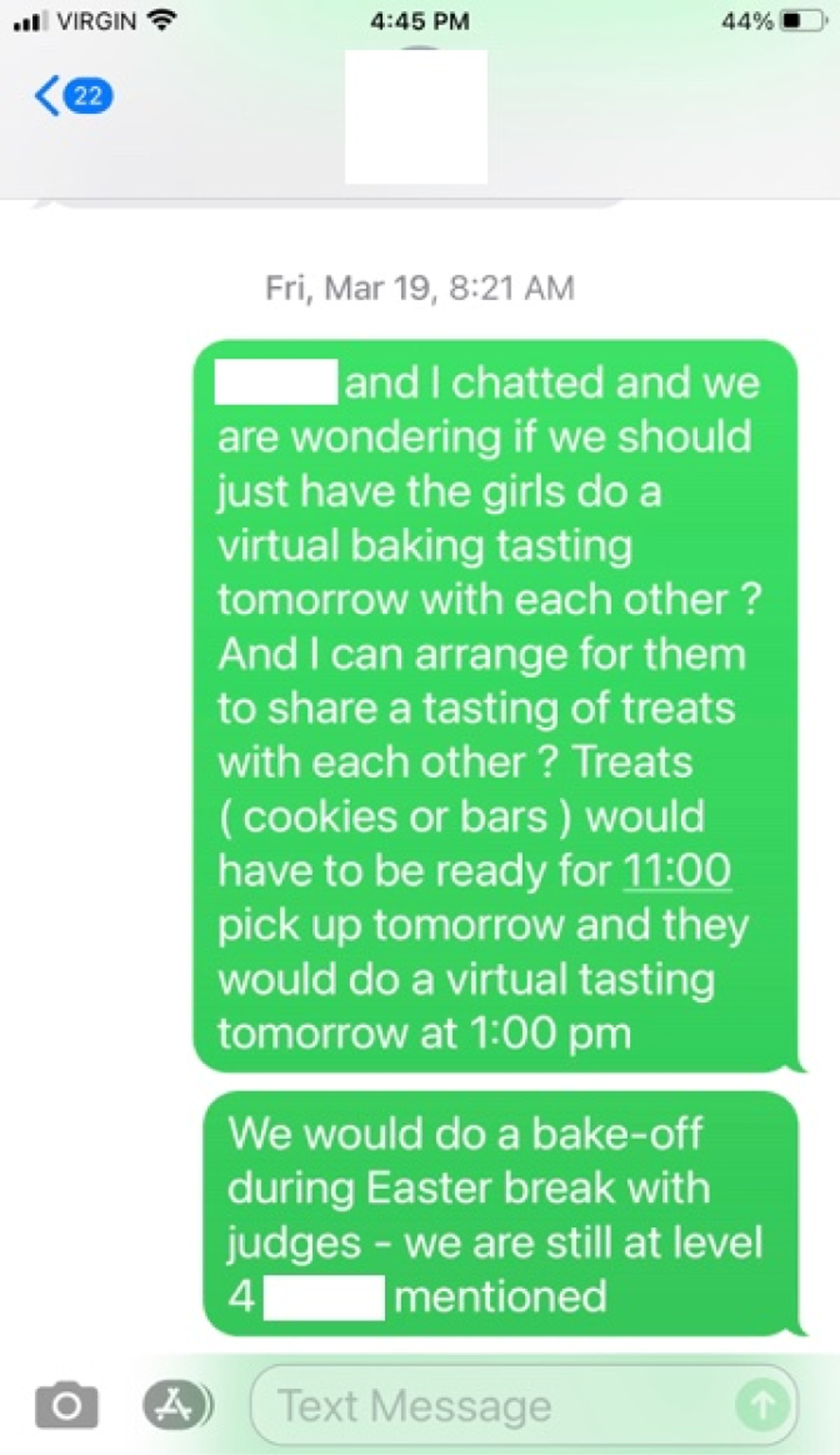
The online and offline experience helped children to relate and connect with each other as the parents connected their children through their interest in baking. Here we follow the time frame of discussion around the bake-off (Figure 3). One of the children in the Horan family had worked with her mother to create her grandmother’s cookie recipe, and during the contest, she sent this picture (Figure 4) to one of the other children to show what she was making. There was an appreciation for the art of the picture as well as the recipe when children were looking through their shared pictures and texts described: Time Frame of the bake-off. The illustration of the heart-shaped cinnamon cookie.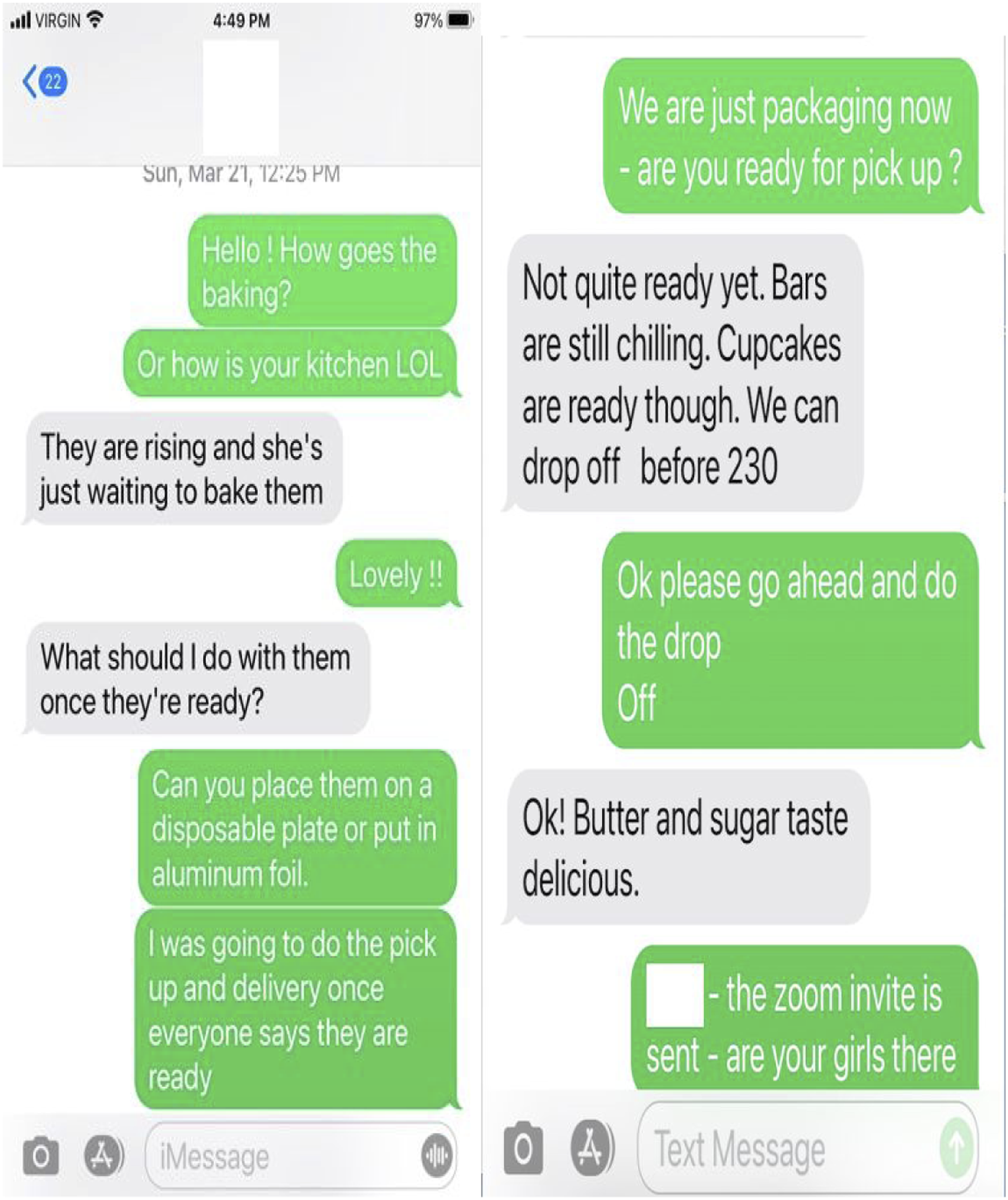

Even after the lockdowns, parents noted that all the children retained some interest in baking, and on subsequent family occasions would produce simple cookies and other goods. Interestingly, their view of YouTube also altered. Some time after the first lockdown, one of the fathers noted that while working outside, he expressed concerns about a household repair to their back gate, which he felt might be beyond his DIY skills. His daughter responded with the suggestion that he consult a YouTube video, and then retrieved her iPad, eagerly searching for videos on fence repair. While the parent did not consciously link this resourcefulness to the YouTube inspired baking contest, he did remark that he was both surprised and impressed that his child saw such utility in the platform. However, as researchers we noted a clear demonstration of the child’s growing mastery of her own agency and resilience through digital play. Her own use of YouTube had moved well beyond simple amusement, as she now saw the platform as an indispensable visual encyclopedia, one which could be readily consulted for brief lessons and instruction.
TikTok
TikTok became a world-wide phenomenon during the lockdown, and the neighbourhood children embraced it with great enthusiasm. The platform, created by a Chinese company and initially popular in China, features brief videos, often as short as 15 s, set to music, which other users can like and comment on. The platform is known for its sophisticated AI algorithms, which quickly track a given users tastes, and pushes similar videos onto their personal feed.
When it first gained prominence among the children, TikTok largely revolved around short videos filled with fast kinetic energy, dancing and quirky humour, a format which the children found ideal. All the children love music, and many missed their dance lessons and choirs. They were fascinated with the dance routines and pranks which many of the videos featured.
Cara shared: “It is really fun – I can make videos without anyone seeing me that I don’t want to”
However, most of the parents were not always as enthusiastic, but given the pandemic situation, allowed the children a lot of latitude.
As one of the Jeffers parents said, “I didn’t know what to think about TikTok, I’m always afraid of social media and the kids, but they seem to spend most of the time on it just making little dance videos for each other.”
Nora’s quote reveals two important strands of the three families’ experience. First, the parents took a profound interest in their children’s increased digital activities, and social media in particular were a concern. The children embraced the new platform, largely ignored the platform’s negatives and instead found a way to create a playful interaction.
Mille said that “I love the dance videos, they are short and not hard to do. Everyone makes up their own moves.”
And to speak to the parents’ concern about the dangers of social media, the children discovered that they could create internal groups for their videos, thus providing a safe space for themselves.
“Our group is private,” explained Millie. “Only our friends can see it, it’s more fun.”
During the lockdowns, and sporadically thereafter, the children recorded and exchanged dozens of videos, most of which featured their original dance routines. Some of these routines were quite elaborate and involved children in different locations working together. At a time when the families were worried about their children becoming lonely and disconnected, TikTok provided a useful point of collective interaction and exercise through dance.
Parents were generally unfamiliar with the platform but were more bemused than concerned about the time the children devoted to it. As one of the parents remarked, “at least with those TikTok videos they are doing something, you know, not just staring at their iPads.”
As researchers, we found the children’s adoption and subsequent adaptation to demonstrate clear evidence of the resilience that was a lingering after-effect of the pandemic. Collectively they tapped into an internet app which was at the nexus of the zeitgeist. They quickly realized both its potential and dangers – “only our friends can see it” – and adapted the platform’s affordances to suit their own needs. Further, at a time when their own real-life interactions were severely constrained, with no guidance from the adults in their lives, they were able to create a digital play-space for themselves which reflected their own interests, not those imposed by educators and parents.
Final observations
In Eastern Canada, as in most of the western world, the COVID-19 lockdown came quickly, accompanied by great waves of collective fear and anxiety. In this study, we do need to note that all three families were quite privileged, being upper-middle class post-secondary educated with steady incomes during the pandemic, and, although burdened in other ways, did have the means and desire to provide support for their children in and for their play, also in relation to digital play. Evidently, the parents in this study worked hard to shield their children from the many negative emotional and developmental ramifications caused by the lockdown, creating routines and activities to fill the gap left by the closure of schools and the forced isolation from their friends, relatives and other activities. At the same time, the joint engagement and play with their children created reciprocally joy into the parents’ lives. One parent of the Jeffers family shared: “We almost treated it like a sort of long holiday at first, like if we took them out of school for a couple of months to travel. You know, printing off work sheets, home-work, stuff like that.”
All the children had ample access to and experience with digital platforms, however, as the severe reality of the lockdown became clear, the parents realized that their children would be spending a tremendous amount of time online and in front of screens, but given the lack of alternatives, sought ways to mitigate what they saw as a negative trend. Due to the pandemic, parents were more engaged with their children's digital activities and were surprised at how easily their children could find ways to remake and rebuild platforms to suit their own play purposes. This was all made possible by parental support to navigate digital play/lockdown literacies for their agency and resilience. This may not be the case for all children in Eastern Canada.
The children did not share their parents’ anxieties about either the pandemic or the amount of screen time they were accumulating, nor did they share the concerns about the cessation of their formal education. They did, however, miss their friends and the structures of their lives. Damien shared: “I missed seeing my friends, at first it was fun being home doing different things…but then it was all the same”
As a result of one of the parents showing their child how to use Zoom, very quickly through an exchange of parent emails, the children established independent communication with each other showing how they enacted their agency through digital play. With the use of Zoom, YouTube and TikTok, they were able to share activities, create a platform for their own creative expression, and most of all through their own agentive actions develop forms of digital play all while negotiating at times parents’ anxieties and ambivalence around such platforms.
Conclusion
We found in our observations that digital play as a coping mechanism and recovery tool for children is essential for pandemic recovery. Our findings also exhibit how parents can navigate their own anxieties regarding digital play/the internet during times of crisis to afford their children increased resilience for the sake of family-wide wellbeing. Further, digital play offered children spaces through which to conduct defining life moments, or milestones, that were missed in-person due to COVID-19 (Zhu, 2021). The conversion of milestones, such as the birthday sleepover conducted online, and everyday social skill building, such as children’s continuous engagement with each other via TikTok, into digital play when in-person activity is restricted shows children’s agentic creativity and capacity to adapt in the face of adversity when they are provided with both the tools (i.e. internet connection, iPads, laptops) and the parental support to achieve such conversions (i.e. providing access to tools, encouraging digital events and setting up Zoom links, coordinating distribution of bake-off items).
This study contributes to existing research knowledge in several ways. First, it provides data about the under-researched areas of digital play and its literacies during the pandemic and home quarantine. Second, it addressed how digital play and its literacies are linked, and how they support family resilience. The conceptualization of family resilience (instead of child's or parents' individual resilience) is also novel and under-researched. Understanding family resilience and its contextual features are important for future interventions in education and areas such as social work. Third, highlighting how digital play helped children and parents cope with missed opportunities and restricted lifestyles during the pandemic reveals the potential for digital play to aid in recovery. As lockdown lifted and children returned to school, the outdoors, and in-person peer play, children’s screen time decreased, yet children retained the competencies, creativity, and independence inspired through the digital sphere, and continued to use the digital sphere as a tool not only to improve their own lives but the lives of their families. Lockdown literacies, then, especially in how they relate to the digital, increased children’s wellbeing during lockdown but also afforded them useful skills and resilience for pandemic recovery. Therefore, policy and public discourse regarding pandemic recovery, and the practices of families and educators, should take into account the role of digital play in fostering agency and resilience, and should not be too quick to discount the positive effects of technology on the lives of children. We also encourage research on family resilience with diverse families in order to understand how cultural, socio-economic, geographical, family composition (e.g. single parent households) elements play out and affect the ways in which resilience in negotiated and (not) achieved.
Research on children’s pandemic experiences has often culminated in discussions of the potential longstanding effects of the pandemic’s negative impact on child and familial wellbeing, especially in those families who have not been able to foster resilience through communication and close relationships (Prime et al., 2020; Stark et al., 2020). While such research and analysis focuses on children’s wellbeing and resilience during the pandemic, it primarily explores the factors impacting children and how parental reactions influence children, rather than through children’s voices. We instead approach familial wellbeing and children’s resilience during the COVID-19 pandemic by exploring how children’s narratives can help children combat pandemic-related stress and isolation by identifying and communicating their lived experiences (Sullivan, 2021). We show how family resilience can be supported through the discovery of the benefits and possibilities of digital play and its incorporation into home life, such as baking and milestone events. Thus, our study adds to the current dialogue on children and families’ pandemic lives as it reveals and analyses an important but often neglected perspective on children’s agency through digital play as a valuable resource for collective resilience, hope and future making in our troubled times.
Footnotes
Declaration of Conflicting Interests
The author(s) declared no potential conflicts of interest with respect to the research, authorship, and/or publication of this article.
Funding
The author(s) received no financial support for the research, authorship, and/or publication of this article.
