




Abstract
Numerous studies indicate that the language and literacy development of young children is highly contingent upon the construction of an enriching home literacy environment. Using sociocultural theory as a framework, in this article I explore how a bilingual child’s language and literacy acquisition is embedded as a social practice within the home literacy environment of everyday life. Drawing on data from a qualitative case study involving parental interviews and home visits, the findings herein reveal that the physical and social context of the home literacy environment is vital in fostering bilingualism and biliteracy for a child with a minority home language background. Knowing the multiple advantages of bilingualism and biliteracy, this study yields evidence to suggest that parents can play an active and conscious role in ensuring the richness of the home literacy environment and its embedded social practices.
Introduction
Immigrants constituted about 14.7% of the Norwegian population at the start of 2020 (Statistics Norway, 2021). With this, it is inevitable to find children who are culturally and linguistically different, and hence speak different languages in their home environment. In such cases, young children may grow up immersed in different complex language exposures. As a result, it may be assumed that this creates a favourable condition for children to be bilingual/biliterate or trilingual/triliterate. Yet, whether such children have a home literacy environment that nurtures their bilingual and biliteracy acquisition from a young age is a topic worthy of investigation. In the same vein, it has not been well documented whether family members and kindergarten teachers are fully aware of the advantages of bilingualism and children’s capacity to learn multiple languages from an early age.
Here, I present a family/child case study exploring the home literacy environment of an incipient bilingual child’s emergent literacy within the family setting. The term “Incipient Bilingual” broadly refers to an individual at the early stages of bilingualism where one language is fully developed (“dominant”) while the other one is not fully developed (“subsidiary”) (Wei, 2000). The case study is guided by a sociocultural perspective that states children’s development in general, and language development in particular, is mediated by their sociocultural interactions (Vygotsky, 1978). The home literacy environment is defined to encompass the overall home context that includes: social, physical (print related and other technological multimodalities/multiliteracies) and attitudinal contexts for nurturing children’s emergent literacy. Different scholars have described the concept of emergent literacy from seemingly varied, but overlapping perspectives. According to Moll et al. (2001), the notion of emergent literacy upholds the natural acquisition of literacy through interaction with people and materials in everyday life. Teale et al. (1987) state that emergent literacy refers to the child’s holistic development in the four language skills: reading, writing, listening and speaking. Whitehurst and Lonigan (1998) indicate that emergent literacy includes the skills, knowledge and attitudes presumed to be developmental precursors to reading and writing as well as the environment that supports such development.
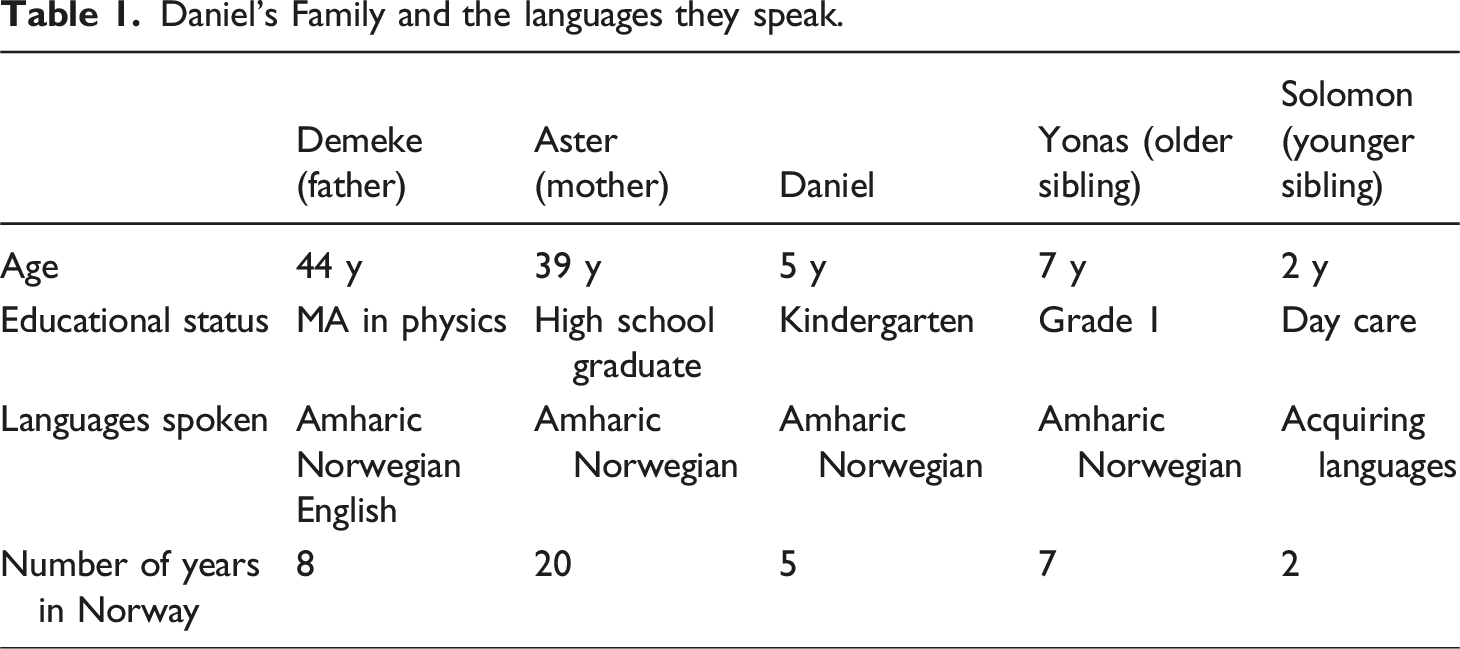
In line with these aspects, the present case study mainly examines the home literacy environment of the target child, Daniel (age 5 incipient bilingual child), who lived in Norway and attended a Norwegian kindergarten in Oslo. Since sociocultural perspective is adapted, it is barely possible to separate and exclusively focus on Daniel, hence the wider family was the broader context and focus for this case study. Amharic is one of the widely spoken languages of Ethiopia, and it is Daniel’s home language. Norwegian is the language spoken by the larger society and is also the language of instruction at Daniel’s kindergarten. The study was confined to the home context for Daniel’s emergent literacy practices, i.e. the kindergarten and the community context were not included.
Since Daniel was a bilingual child in the process of acquiring language and literacy in two languages, I will borrow and use the term from Hornberger and Skilton (2000),“emergent biliteracy”, which foregrounds the interrelationship between bilingualism and emergent literacy. Reyes (2006) also highlights that it is difficult to distinguish language and literacy development for young children who have not yet developed conventional reading and writing skills; both skills co-exist and develop simultaneously and one can hardly be examined without the other. Hornberger and Skilton (2000) contend that, while talking about bilingualism and biliteracy, context is an integral aspect to be considered. The aforementioned scholars highlight the holistic and situated nature of language and literacy development among children, i. e development among the four language skills is intertwined and entangled with the surrounding social, physical and cultural context. Drawing on these sources, I interrogated the extent to which Daniel’s home literacy environment and the embedded social practices provided the nurturing context to foster Daniel’s language and literacy to emerge in both languages, Amharic and Norwegian. To what extent Daniel uses his linguistic resources to make sense of and interact with his immediate home environment is a central focus.
Researchers emphasize the need to have a translanguaging pedagogy that resist monolingual environment and instead creat the condition and space where racialized, emergent bilingual children can practice and engage with the entirety of their languages at school, home and community (Abraham et al., 2021; Yang et al., 2021). These researchers emphasize translanguaging framework as both an ideological stance that is essential to better understand and cultivate the language and literacy practices of the emergent bilingual children in their bilingual and multilingual spaces (Abraham et al., 2021; Yang et al., 2021). However, it should be noted that English language was also present in the family although it is not the focus here.
The sociocultural perspective
Theoretically, this case study is framed within sociocultural theory (Vygotsky, 1978) which means literacy is understood in the context of ongoing social events and cultural practices in children’s everyday lives across different domains such as: the home environment, school environment, neighbourhood/community and playground. Scholars such as Lewis, Enciso and Moje (2007), Gee (2002) and Tracey and Morrow (2006) state that there has been a shift of perspective in early literacy studies from the learner’s psycho-linguistic process to meaning making processes that foreground the sociocultural context. At the forefront of sociocultural theory is the belief that literacy is a social event and practice embedded in everyday life; thus, children acquire literacy through interactions with their immediate environment, people, material and objects around them in sociocultural contexts.
Parallel to this, Barton and Hamilton (2005) point out that literacy is essentially a social event and practice (not necessarily a skill) seamlessly embedded within interactions between and among people. As stated by Brandt and Clinton (2002), the term literacy event is described as “a social action going on around a piece of writing in which the writing matters to the way people interact” (p. 342). The term literacy practice, which is a rather abstract notion, refers to “the socially regulated, recurrent, and patterned things that people do with literacy as well as the cultural significance they ascribe to those doings (Brandt and Clinton 2002: p. 342). As argued by scholars, literacy events are often specific, discrete, observable happenings while literacy practices are abstract, enduring, and not entirely observable (Barton and Ivanic, 1991; Street, 1995). Likewise, McLachlan et al. (2013) concur that literacy is a socially constructed notion, neither ideologically free nor neutral. Hence, the aforementioned citations ensure that literacy is not solely a school related activity, but is situated and revealed in various milieus such as the home and the community. Framed within sociocultural framework, this study foreground the idea that home is the first place of interaction, of activities, involvement and communication. Home experiences are essential to developing a child’s language and literacy skills in different languages.
The cultural and social embeddedness of language and literacy practice is also in line with Bousdieu’s theory of habitus and cultural capital. While emphasizing cultural capital, Bourdieu (2005) describes habitus as a lifestyle behaviour, belief, values, habits and dispositions of a particular social and cultural group (such as a family in this case) that results from their history and cultural background. Accordingly, linguistic relationship between children and family members creates the condition for ocial and cultural capital, which emplies that the way children are socialized is a set up for the cultivation of their language and literacy development in the home environment.
The essence of home literacy environment within a sociocultural framework
Home literacy environment is a broad term encompassing numerous literacy elements and interactive experiences within the home context and it is frequently mentioned as an integral component in emergent literacy acquisition (Schmitt et al., 2011; Wood, 2002). Due to the limited scope of this individual family case study, only a few aspects of Home Literacy Environment are addressed here. These include: family language use, physical resources (both print and digital) and social contexts, literacy events, literacy practices and parents’ attitudes and their involvement in their children’s literacy acquisition.
The home environment plays a vital role in young children’s language and literacy development (Schmitt et al., 2011). What the child experiences at home influences her/his early language and literacy acquisition as literacy is embedded in everyday language and communication processes within the home environment (Wood, 2002). Children’s home environments can be enriched by providing resources, materials/devices, practices, experiences and interactions that reflect these literacy areas. In their ORIM (Opportunities, Recognition, Interaction, and Mode) framework, Hirst et al. (2010) indicate how parents can contribute immensely to their children’s language and literacy acquisition by facilitating the home literacy environment. The ORIM framework suggests four areas for parental involvement: Providing opportunities for literacy; Recognition of children’s literacy development; Interaction around literacy; and, Providing models of literacy users (Hirst et al., 2010).
In order to create such a nurturing home environment, parents’ attitudes and conceptions towards children’s literacy acquisition is an important and sometimes overlooked factor. Kenner (2000) argue that children’s biliteracy development cannot be achieved without parents’ positive conception, early involvement and active co-construction of their children’s literacy development from a young age. Similarly, De Houwer (2009) underlines that attitudes and parental beliefs about children’s language learning are determinant factors for the creation of effective bilingual input. As she describes it, attitudes are the basis for linguistic behaviours and for the management of children’s linguistic environment. Apart from having positive attitudes, parents need to have what De Houwer (2009) described as impact belief. According to De Houwer (2009), “impact belief” refers to the belief that how frequently a child is talked to has an effect on the child’s language development. According to her, “impact belief’’ calls for parents’ active roles, proper attention and enough interactions with children to offer sufficient learning opportunities. Parents should have this belief and see themselves as active agents in fostering their children’s bilingualism and bi-literacy from the early years on, and act accordingly in their everyday lives. Otherwise, having a positive attitude in and of itself is not a guarantee for the children to become bilingual and biliterate.
Another ubiquitous aspect in today’s digital world is children’s exposure to language and literacy through technology which results in creating a home literacy environment beyond print materials and interactions with people. Kress (2000) and Carington and Marsh (2008) describe the ways in which today’s literacy has changed due to technological developments, and indicate the implications for our conceptions of literacy and literacy practices at home and in educational institutions. Literacy addresses a range of multimodal aspects: written, oral (narratives and storytelling), visual (pictures in books, ipads, games, computers, TV images) and symbols that convey meaning. Hence, technology has an unavoidable permeating role in children’s language and literacy development and this crucial aspect is considered in this case study within the home environment.
Methodology
The study is set out as a small-scale qualitative and cross-sectional case study (Yin, 2011) intended to gain an insight into the emergent biliteracy context and practices of a family case study with a focus on Daniel through the exploration of his home literacy environment. An Ethiopian child/family was deliberately selected since I (the researcher) am from the same country, which aids a better understanding of the situation and presents an opportunity to conduct a more thorough exploration on the topic. In this methodology section, I first describe the family context, then elaborate the methods employed and data analysis approach.
Family context for daniel
Daniel’s Family and the languages they speak.
Methods and data collection
Naturalistic observation in the form of home visits and semi-structured interviews with parents were the methods employed for data collection. The observations were conducted over 5 weeks before the parent interviews were conducted on the final visit. This order was chosen as it created an opportunity for myself as researcher to follow up the observational data during the interviews, and minimise any parental influence that an initial interview might have had on subsequent observations.
The entire data collection process took place over five consecutive weeks, 1 day visit per week, for about 2 hours per visit. The first home visit was a preliminary one, and no data was collected. It was only to obtain relevant family background information and to create rapport between the researcher/interviewer and the parent/interviewee(s). Prior acquaintance with the parents at the Ethiopian community in Oslo eased the creation of effective rapport between the researcher and the family, this facilitated both the observations and interviews. The four home visits were deliberately made in the late afternoon on different days mixing weekdays and weekends. This was done with the view of maximizing the chance of observing varied literacy events within the family’s routine across the week. Moreover, these hours were found to be suitable as everyone would normally be at home waiting for dinner.
A semi-structured checklist guided my observations intended to address aspects pertaining to the home literacy environment: language use within the family, physical and social literacy context, and literacy events and practices embedded within the family’s routine. Coupled with the semi-structured checklist, audio recording of family dialogue and note taking were employed during the observation. I observed the family in their natural home setting, while they were interacting with the two languages and/or interacting with printed/written material or other digital devices. As the study was guided by a sociocultural perspective, Daniel’s siblings were also embraced within the observational visits.
The individual interviews with the parents lasted for about 40 minutes each and were conducted on the last observational visit. The interviews were aimed at extracting information about the use of the two languages within the overall home communication pattern, parents’ attitudes towards the two languages, literacy events and practices in the home environment and the literacy resources available around the two languages. The interviews were conducted in Amharic, the native language for the parents and myself as a researcher.
Data analysis
The study employed a deductive themathic analysis approach (Braun and Clarke, 2006) while systematically categorizing the interview and observation data into four different themes which include: the family’s language use, physical and social context, literacy events and parents’ attitude. This involves six different steps: familiarization with the data, generating initial codes, searching for themes, reviewing themes, defining/naming themes and producing the report (Braun and Clarke, 2006: p.87). In doing so, the different situated literacy events/literacy points observed and mentioned in the interviews served as a unit of analysis towards capturing the themes pertaining to the four themes. Thus, concepts such as literacy points (Barton and Hamilton, 2005), literacy events and literacy practices (Brandt and Clinton, 2002) were central for categorizing and thematically organizing the data. These scholars argue that people’s life in general and children’s lives in particular are full of literacy points among which literacy events and literacy practices are the main ones, and these are often a unit of analysis in literacy studies. Hence, literacy events and literacy practices were used as a unit of analysis for breaking up and organizing the data created from the observational visits and interviews.
Findings and discussion
Through data analysis I identified several literacy events and literacy practices and I now elaborate on these in turn including language use, the physical and social context, home literacy events and conclude with a discussion of parents’ attitudes.
Language use within Daniel’s family
One aspect of the literacy environment examined in this study was the language used for communication among Daniel’s family members. As presented in Figure 1, both languages were reported to be used in the home environment. I observed the home conversation between the parents was completely in Amharic, but when the children (Daniel and two siblings) were involved both languages (Amharic and Norwegian) seemed to be employed alternately in the conversation, Norwegian predominating on the children’s part. The conversations observed among the children (without parents’ involvement) were highly dominated by Norwegian and Amharic barely used, as confirmed by the parents during interview. Yet, as a cross sectional study, this may not reflect the entire family language use scenario. Language use scenario at Daniel’s home.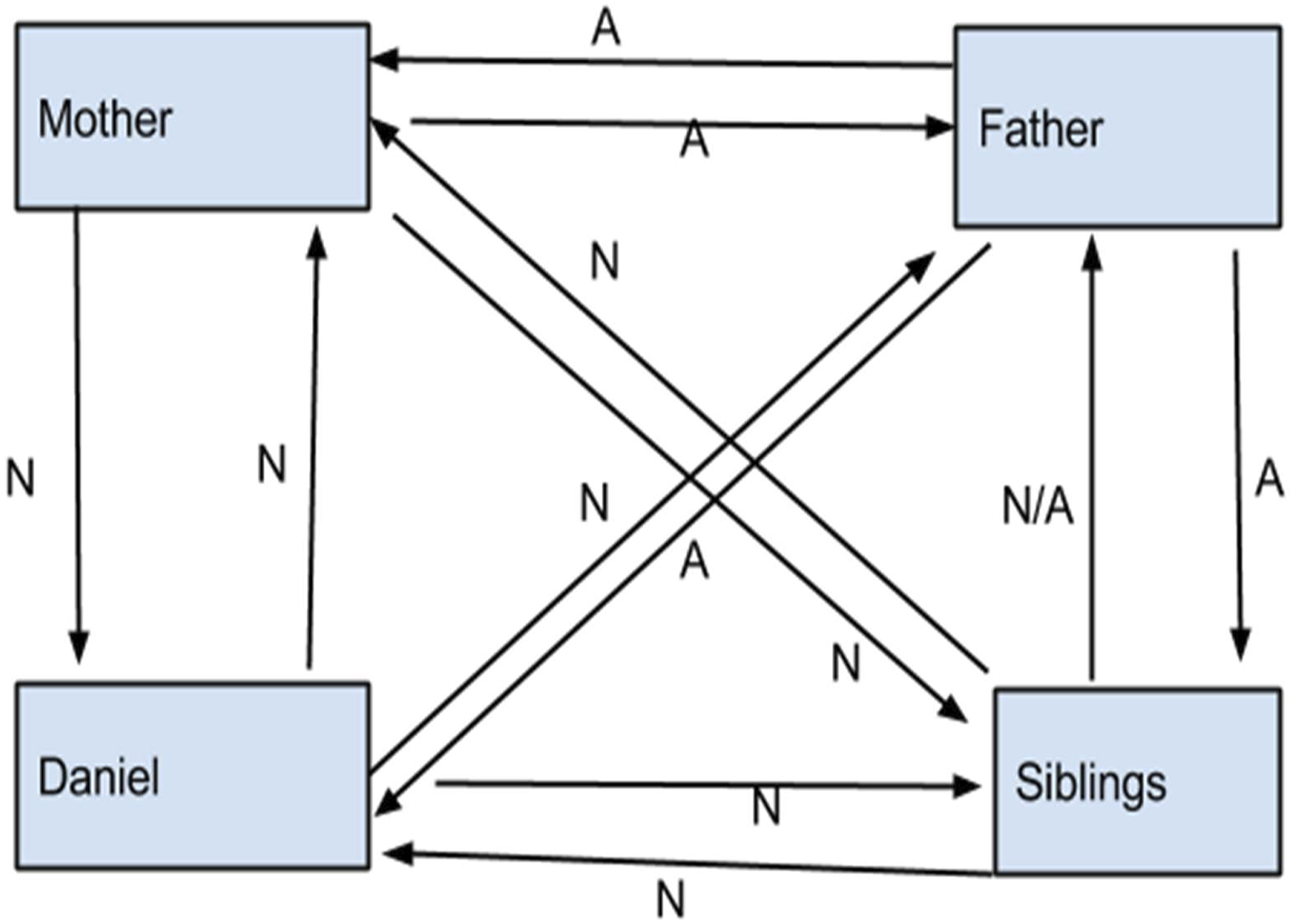
For example, Figure 1 depicts a family language use scenario where ‘N’ refers to Norwegian and ‘A’ refers to Amharic. The single arrows displays the one way communication patterns while the double sided arrows display the two way communication pattern. The ‘N/A’ indicates the use of both languages and a more frequent use of Norwegian than Amharic, and the ‘A/N’ (not manifested) indicates vice versa.
Daniel often preferred to use and respond in Norwegian in the observed communication episodes at home. Even if he was addressed in Amharic and understood what his parents were saying to him, he chose to respond in Norwegian. As his father said, “I just keep talking to him in Amharic although his responses are in Norwegian”. Since Daniel is an incipient bilingual, there could be a possibility that the father’s insistence on the “only Amharic” strategy might gradually urge Daniel towards speaking Amharic. However, this strategy might possibly hinder Daniel’s Amharic oral production if, as seems to be the case, the father accepts his child replying in Norwegian while addressing him in Amharic. Thus, the “only Amharic” strategy the father employed may have had a positive impact on Daniels’s oral skill development in Amharic language, but be mitigated or compromised by not progressively encouraging Daniel to reply in Amharic. Furthermore, using “only Amharic” may impede modelling code switching for the child.
Daniel’s language situation offered possibilities for the parents to strengthen his oral language by implementing the repetition and discourse strategy highlighted by Lanza (2004). As Lanza (2004) indicates there are several parental discourse strategies aimed to foster a child’s mixing of languages including: Minimal Grasp Strategy; Expressed Guess Strategy; Adults Repetition Strategy; Move on Strategy; and, Adults Code switching strategy. From these strategies, the expressed guess strategy was applied in the situation of Daniel and his father. The “expressed guess strategy” may support Daniel in different ways including: asking a yes or no question in Amharic; formulating the response with the right word and expression in Amharic, and requesting clarification, which could possibly instigate Daniel’s Amharic reply. Apart from that, the parents could possibly provide Daniel with repeated contact and communication in Amharic, since it is difficult and time consuming for him to maintain Amharic while growing up in a community where Norwegian predominates.
As Grosjean (1998) indicated, bilingual children like Daniel who have one dominant language would mostly rely on the base language (Norwegian in this case), while the other language remains passive. Grosjean (1998) states that it is normal for incipient bilinguals not to be comfortable to speak much in the passive language. Yet, other scholars indicate the need to nurture oral skills in the passive language, as it will affect future language development. Ferreiro (2003) found that if bilingual children’s oral language is not well established, they might face some challenges at later ages for further biliteracy competencies such as reading and writing.
From the cross sectional observational data, the father mainly used Amharic for what Perez (2004) calls functional purposes (asking questions; giving commands) in the family’s everyday communication. On the other hand, although it was not observed during the home visit, it was mentioned on interview that the father sometimes shifts from Amharic to Norwegian when Daniel fails to understand the communication. This possibly contributed to Daniel’s different levels of understanding of the two languages and their importance, perhaps entrenching the primacy of Norwegian. Yet, it is difficult to infer his relative understanding of the two languages and their importance as this requires a further investigation beyond this study. The mother used Norwegian for such functional purposes within family conversations. Here, Norwegian as a language of functional clarification indicated the power of one language over another.
Below is a dialogue transcript among the father, Yonas and Daniel while they were preparing for Yonas’ homework session. The dialogue was recorded during a home visit and illustrates how the two languages come into play during a family conversation episode. Since Daniel did not speak Amharic during the observation time, I used Yonas' (elder sibling’s) conversation in Amharic as it might show the general picture of language dynamics within the family. The Amharic and Norwegian phrases and sentences are verbatim, but the English translation (beneath the original) I wrote based on the entire context. For better reference in further analysis, the utterances are numbered. 1 Father: ………… የቤትስሪዉን ከመጀመራችን በፈት እስቲ ስለዛሬው ትረፕ ንገረኝ። `Before we start the homework, tell me about your school excursion today` 2 Yonas: ጥሩ ነበር። `it was good` 3 Father: የስዕል ሙዚየሙን ጎበኛችሁ? `Did you go to the art museum?` 4 Yonas: አዎ ምሳም እዛዉ ነው የበላነው። `Yes, we also ate lunch there` 5 Father: ጥሩ ነበር?ምን አየክ? `Was it good? What did you see there´ 6 Yonas: አዎ, papa visste du det jeg ser? Jeg så en gigantik elefant og mange barn var klatring på den. En av dem var nestan felt ned. Det var morsomt: ´yes, daddy do you know what I see there? I saw a giant elephant and several children were climbing on it. One was almost falling down. It was funny. 7 Daniel: Jeg Jeg ønsker også å gå dit og se elefanten. ´I also want to go there and see the elephant´ 8 Yonas: Du kan spørre læreren din eller gå med pappa: ´you can ask your teacher to take you there or you can go with daddy´ 9 Father: ግን ልጀቹ እንዴት ዝሆኑ ላይ ሊወጡ ቻሉ: ´how do the children climb up on the mountain’ 10 Yonas: En av barna var på toppen av elefanten. Han holder hendene og trekker dem opp: ´One of the children was on top of the elephant and he holds others hand and pulls them up´. 11 Daniel: Kansje de ikke har en stige, men hvorfor klatre de på elefanten? Det er ikke ok å klatre på elefanten. ‘Maybe they don’t have a ladder, but why do they climb on the elephant. It is not ok to do that’. 12 Yonas: Det var bare et bilde. ‘No, it was just a picture’……………………..
As we see in utterance 6 of the dialogue, Yonas shifts the conversation to Norwegian as he starts to talk more about his visit to the museum. Despite Yonas switching the code, the father, kept talking in Amharic and Daniel, as can be seen in utterance 7, follows his brother and joined the conversation in Norwegian. As I was informed during the interview, Yonas alternates between the two languages on different occasions and according to the topics being discussed. The father stated that Yonas tends to choose Norwegian when he talks about school experiences since he expresses school activities with ease in Norwegian. This could possibly have been due to Norwegian being the mainstream school language and he had attached the school context to Norwegian as the most familiar language for school activities. He may not have had the vocabulary pertaining to school activities in Amharic, and hence he tended to prefer Norwegian to describe a particular school activity. This could further be an indication of the power difference that the child attaches to the two languages. Although it is common and probably natural for bilingual children to code switch, Leyva et al. (2008) suggest repeated conversational interventions so that children can simultaneously build their oral skills in the passive language. Otherwise, according to Taylor (1993), children in such a state of bilingualism, and who are attending monolingual schools can easily lose their home language.
Although the degree varies, it can be seen that Daniel has both the context and the opportunity to make use of both languages in the home environment. As documented in Figure 1 although it was limited on the children’s part, both languages were regularly heard in the home communication transactions. Reyes (2006) pointed out that participating in such communication transactions with interlocutors that speak both languages creates an opportunity for the development of phonological awareness and processing skills that contribute to the foundation for the children’s emerging biliteracy competence. This practice of reading to Daniel in both languages and writing with them (about things he is interested in) and showing him the differences between the languages, would stimulate his curiosity, so essential for his learning. Moreover, the story listening and hearing also allows him meaningful experience and use his imagination, and this has the potential to enrich his self expression and play with the various cultural practices raised and reflected in the stories-therefor also contributing to Daniel’s emerging identity as a multilingual person.
The physical and social context of the home literacy environment
Daniel’s family lived in a three-bedroom apartment and he shared a bedroom with his older brother. The siblings’ bedroom contained a computer on which the children were observed playing games and searching for songs. There was also a bookshelf comprising most of the books and magazines observed and available in the house. A range of stationery materials, for example textbooks, magazines, story books, game books, CDs, novels, dictionary, pencils, pens and papers, were also witnessed in the room. Some of the Norwegian books were from school and some bought by the parents. Comparatively, the amount of Amharic literature appeared less than the Norwegian literature. A small number of children’s story books, both in Amharic and Norwegian, were also observed during the home visit.
During the second home visit, the family was listening to an Amharic religious song and I was told in the parent interview the children loved to listen and sometimes sang along. Some of the books and other texts around the house were related to the Bible. I identified that the Bible and other associated texts I observed as potential sources of learning Amharic language for the children and also as powerful validators of the importance and status of the home language. As mentioned on interview, the parents were determined to nurture the children with Christian values, and such religious practice can contribute to creating a rich home literacy environment. There were also various religious texts in Amharic hanging on the wall. Some of these included religious quotes from the Bible and Ethiopian calendar in Amharic. All of these helped to create a strong visual identity validating the importance of Amharic. Writing in Amharic was especially important as it is in a different script to European languages such as Norwegian.
A further point of interest that came to my attention during a home visit was the names of the children written in Norwegian and posted on the door of the children’s bedroom. The parents advised they were written by Yonas and indicative of his written skills. In addition, the children’s daily routines and household chores were written (picture supported multimodal text) in Norwegian and put on the wall near the kitchen. I was informed they were written by the father and always referred to by the children regarding their daily responsibilities including: making the bed, laying and cleaning the table, wiping the floor and collecting plates after meals etc. Although they were not observed, using the home (Amharic) language script for such seemingly simple purposes this further validates their languages. On the other hand, the absence of Amharic in this context may send an unintended yet subtle message of the less essential nature of one language. Overall, these visual reminders of the children’s names and responsibilities were an important part of validating them and their place in the family home.
Another tool for language and literacy practice I observed in the house was watching TV. The parents disclosed on interview that the children often watched various movies and TV programmes in both Amharic and Norwegian. It seemed the children preferred to watch TV much more than engage in other “traditional” forms of literacy such as reading and writing related activities. This medium seemed to contribute in part to mediating the children’s use of two languages.
Daniel’s mother mentioned that she was usually busy with long hours at work, and had little time to engage in her children’s “literacy” activities. She also believed that the father was better positioned or able to help the children`s language development, but she mentioned she sometimes read the bible with the children during weekends. Although it is difficult to generalize, there seemed to be a decreased involvement and enthusiasm from the mother that may have impacted the children’s language and literacy development in their home language. This may also reflect merely her belief that the father was better qualified, yet unintentionally downplay the importance of the Amharic language. It is from parents that children primarily receive most of the basics for their emerging biliteracy skills and other language inputs. The parent who spends most time with the child may therefore, all other factors being equal, have the most influence. Since Daniel’s father is studying a second masters degree at Oslo University, he has been a good model for them-which is what “Paradise and Rogoff (2009) describe as learning by observing and pitching in to everyday activities, p. 103.”
Parents do not have to be highly educated to be a model for young children and to nurture their proliteracy habits and attitudes towards reading and other literacy related behaviours. Literacy is not just an explicit learning of letters/numbers, but it is a social practice embedded and valorised in everyday routines at home. It is not mere decoding, but the imbibing of a language as identity. Gopnik et al. (1999) show how newborns are already able to distinguish between languages at birth. Hence, spending quality time and having meaningful conversations counts for children’s language and literacy development, strengthening neural pathways and nurturing identity.
As indicated in the aforementioned paragraphs, Daniel’s home had both the physical and social context to experience literacy in both languages. Yet, on the basis of my four observations, the role of Amharic language seemed to be habitually limited to mainly oral family communication. Except for the religious texts around the house, most of the family’s and primarily the children’s reading and writing practices seem school related with academically purposeful activities in Norwegian. Whilst there are limitations to generalising, it seemed from both my observations and the parent interviews that the amount and use of reading and writing activities in Norwegian significantly outweighed those in Amharic. Apart from the Bible related activity, most of the observed Amharic literacy tended to be receptive and oral and in contrast, literacy activities in Norwegian were both in oral and written forms. This seemingly limited use of Amharic language as print related communication in the family and in the children’s everyday lives is probably both due to, but also reinforces, the power difference in the two languages.
This could be a starting point for parents to reflect on what Bourdieu (2005) terms “habitus” pertaining to the two languages and their concomitant uses in the home environment. While emphasizing cultural capital, Bourdieu (2005) describes habitus as a lifestyle behaviour, belief, values, habits and dispositions of a particular social and cultural group that results from their history and cultural background. Parents, in this view, would need to enhance, and continually examine, their awareness of the need to increase the use and profile of the home language not only for oral communication, but also for other literacy purposes such as reading and writing. As indicated in the findings, a rich potential is embedded within Daniel’s home literacy environment, and the parents could be encouraged towards intentional, purposeful and conscious utilisation of the home environment as an authentic and natural venue for fostering children’s bilingual language and literacy acquisition and development. Otherwise, the availability of these physical resources and the social context may not guarantee a fostering of children’s biliteracy and bilingualism.
Home literacy events
As described by Hamilton and Barton (2008), “literacy event” in this study refers to Daniel’s and his siblings’ interaction with written material within the home routine together with accompanying oral interaction components. Below is a description of a scenario and analysis of some home literacy events during my observations.
One of the afterschool routines for Yonas was the homework session and I encountered this on my second observation visit. He was starting on his homework session which involved a maths worksheet from school, the worksheet was written in Norwegian and Yonas sought help from his father. His father asked Yonas to read the instruction first and then, asked if he understood it. After discussing the instruction, Yonas and his father did the first few questions together and then Yonas proceeded working on the task independently.
While Yonas was engaged in the homework, Daniel was setting up a snakes and ladders board game. Daniel requested his dad to play the game with him and his dad complied. The game consisted of the main board with gridded numbers 1 to 100, pictures of snakes, pictures of ladders, a dice and two players. It is a racing game where a player rolls a dice, and moves his/her player forward from 1 (bottom) to 100 (top) and the player who manages to reach the top first wins.
Before the game began, the father read out loud some of the English phrases on the board and translated them to Amharic for Daniel. Later, the father explained the rules of the game. Throughout the game, there was an ongoing conversation between Daniel and his father. The father was mostly communicating in Amharic and Daniel was mostly replying in Norwegian. There were several questions from Daniel that elicited discussion and the father explained to him. Some of Daniel’s questions were about the rules of the game, and sometimes the father responded with questions as a way of confirming Daniel’s understandings. There was an instance where the father referred to and read the English game manual aloud in English, then translated it into Amharic for Daniel. I followed up this home literacy event during the later interview and was informed the game was recently bought and the children were still learning the rules.
As the game continued, the father’s player landed at the bottom of one of the ladders, and climbed up to number 84 exceeding Daniel’s score which made Daniel unhappy and he raised a question of fairness. Daniel’s question (hvorfor man kan gå opp til toppen av stigen når man lander på bunnen av stigen, er det ikke rettferdig) about why one can go up to the top if one lands on the bottom of the ladder prompted a discussion in which the father related and explained the use of a ladder in real life. The father added that (ጨዋታው ለሁለታችንም እኩል እድል ነው የሚሰጠው። ይህ ደግሞ ጨዋታ ነው መናደድ አያስፈልግም ፤ማሸነፉንም መሸነፉንም መቀበል አለብን። ሁሌ ማሸነፉ ደግሞ አይቻልም) ´the game gives equal chance for both players, and hence, it is fair. The father attempted to convince Daniel that it is just a game and one can either win or lose, and both should be accepted, and no one can win every time´. The father was meaningfully engaged in the conversation and valued the concern and questions from Daniel. Yet the repeated routine of Daniel asking questions in Norwegian, his father replying in Amharic does risk a hierarchical segregation whereby Daniel has a functional Amharic literacy but sees it as very much a segregated area of his life, used for conversations with his father, church events and some cultural stories. Whilst there is nothing wrong with this per se, it does risk demarcating Amharic as regionalised, segregated and part of a home not public life. Arguably, an embrace of language parity as true biliteracy by boosting learning overall (see arguments as summarised by Grosjean 2012) would produce very different scenarios and prospects.
Another literacy event observed was during dinner time. Being considered as a “guest” or “visitor” I was cordially invited to the dining table. There was an Amharic prayer before commencing to eat. The prayer lasted about two minutes and was led by Yonas, who had rehearsed it very well and recited all the words by heart. I later questioned his parents about how he had learnt this and the parents responded they were determined to nurture their children with Christian values and had been working on this for quite some time. The prayer was biblical and they often read it together with the children, with Yonas eventually memorizing the prayer. They added that they would continue to do the same for Daniel and Solomon as they matured. I was also informed that every Tuesday, Yonas participated in an online bible course in Amharic via skype led by a volunteer Ethiopian priest in Germany about the Veneration of St. Mary. Although it was Yonas who actively participated in the course, Daniel and the youngest child were also part of this home social practice.
Following dinner, the family had a familiar routine and spent some time together in the living room to watch television. As the parents remarked, Daniel and Yonas knew how to use the remote control, and they choose to turn on the TV, computer and other devices. They indicated that they viewed a range of programmes: children’s programmes, cartoons, films and children’s songs in Norwegian and Amharic, plus the Ethiopian channel and sometimes English channels too. Yet, the parents advised an inclination towards Norwegian programs in most cases. The father added the importance of English and said “I also want them to be good at English and try to get them exposed to some English media. For example, when they watch some Norwegian films, I adjust the subtitles to be in English.”
At the end of the evening, the parents said that they usually had a bed-time story reading in Amharic, Norwegian or English, unless they were too tired or busy. As Daniel and Yonas shared a common bedroom, sometimes the parents read them a common story and sometimes a story for each. The children were usually invited to choose a particular story for the night and the parents indicated Daniel was more enthusiastic about Norwegian stories than Amharic ones. However, Yonas was attracted to Amharic stories and sometimes asked about difficult words when he felt challenged.
Home literacy events in Amharic and Norwegian at Daniel’s family home.
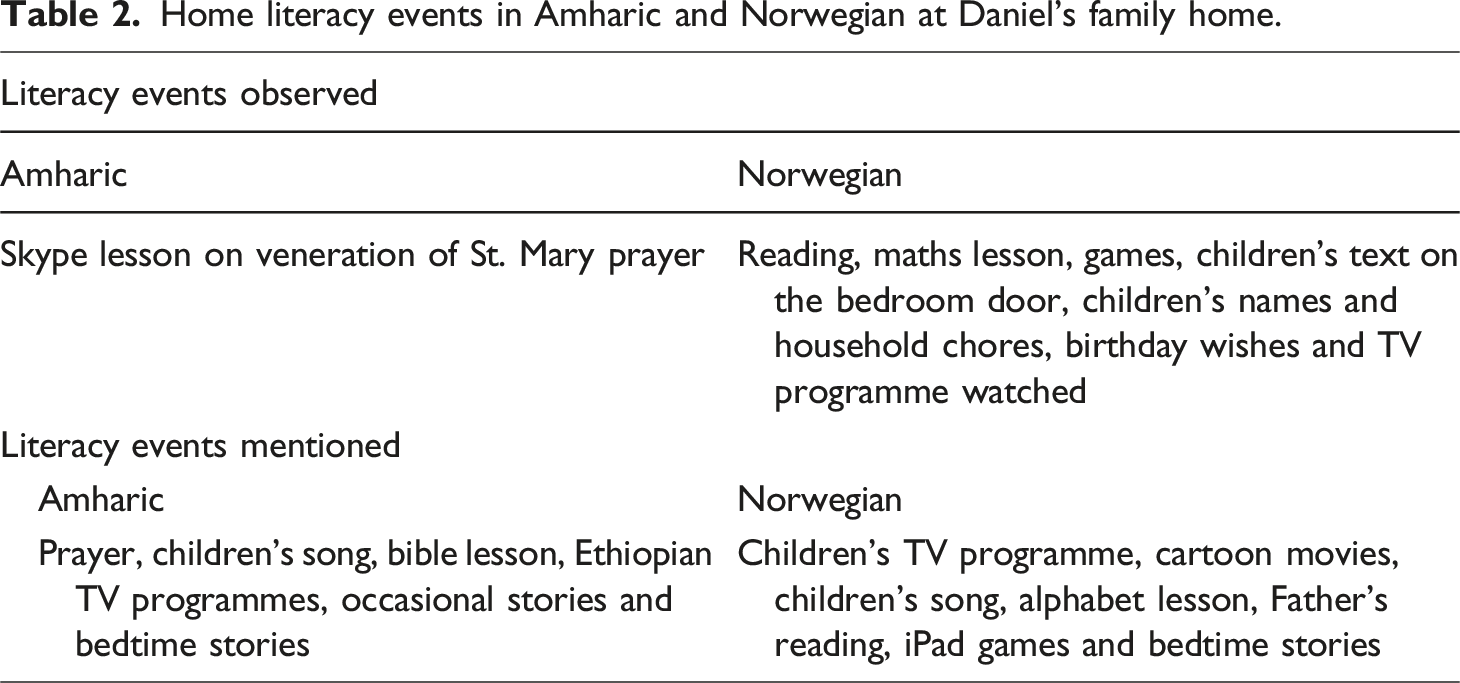
As indicated, during the observed home literacy events, the practices observed in Norwegian seemed to outweigh those in Amharic. I asked about this perceived difference in my interview with the parents. They indicated the importance of Norwegian for the children due to the family’s social context as permanent Norwegian residents. They believed that this was a major contributing factor and shared it was not always easy to be consistent in exposing the children to Amharic language for several reasons like the lack of resources. This perhaps reflected the parents’ understandable concern to offer their children what Bourdieu (2005) terms “cultural capital”, a language essential for their ability to thrive. Yet, a greater acquaintance with biliteracy may well encourage the parents to understand that learning Norwegian is a given and actually learning the home language is potentially a greater gift of cultural capital, as much as learning an extra language is a boost for learning overall.
Apart from those literacy events observed, a comparable amount and variety of literacy in both languages was mentioned during interview. The family seemed to have the potential context to expose the children to both languages in an authentic home environment. Parents given relevant advice and encouragement may well be able to valorise their home languages more and overcome the hierarchical segregation observed in this case study.
As part of the home literacy events, I also attempted to examine Daniel’s emergent writing skills. I observed there were more written works by Yonas than Daniel in the home. Yonas was able to write well in Norwegian and tried to write in Amharic too. I observed several of his hand-written texts at the word and discourse levels in both languages. Yonas was able to write various texts including: the children’s names on the bedroom door, birthday wishes to the family, school texts, and some texts related to the bible lesson and the church school, which he attended on Sundays. Yona’s text literacy behaviours possibly created an opportunity for Daniel to see him as a role model and also engage himself in the written languages.
Although many of the observed literacy practices with Daniel seemed to be orally oriented, there was evidence indicating his emerging writing skills. In my limited observation, I saw that Daniel was able to write the Norwegian alphabet, numbers from one to ten and was able to express his thoughts through various drawings for example, a truck and a giraffe, Figure 2. Multimodal literacy expression by Daniel.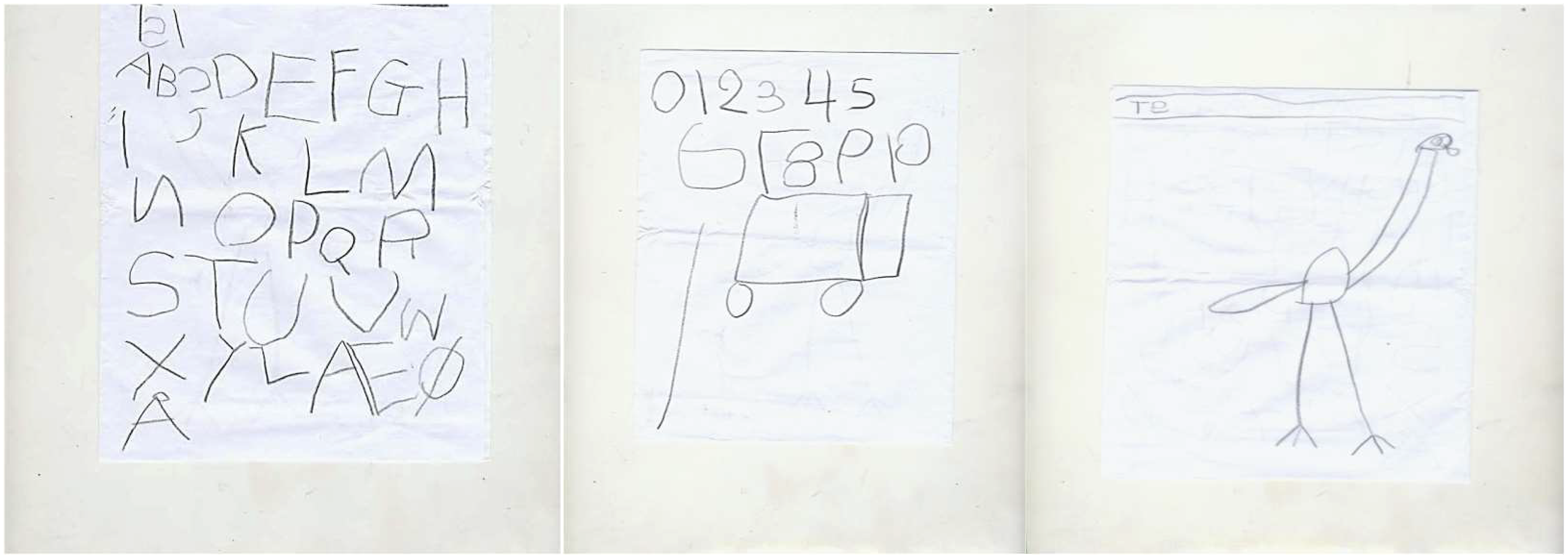
As depicted in Figure 2, Daniel is conveying meaning with his drawings as a form of writing. His ‘writtngs’/drawings bear meaning, and this implies the multimodality feature of early literacy as an alternative means of writing. This is to be encouraged and nurtured so that Daniel can develop these drawings and scribblings to a more advanced and conventional literacy skill in both languages. It is these emergent literacy skills that Ferreiro (2003) and Reyes (2006) have mentioned as potential skills to be fostered to lay a foundation for the development of children’s writing skills. As stated by Kress (2008), such multimodal literacy expressions add to the richness of young children’s literacy development.
Additionally, both languages are written from left to right, though Norwegian is alphabetic while Amharic is syllabic, and this could be an advantage for fostering the child’s biliteracy development and metalinguistic awareness (Ferreiro, 2003). In a similar manner, in their continuum of biliteracy model, Hornberger and Skilton-Sylvester (2000) have revealed that languages with such convergent writing system/patterns (both written from left to right) would reinforce each other and create favourable conditions for children to acquire writing literacy in both languages. Parents need to recognize these similar writing features as an advantage and strengthen their assistance to the children’s emergent writing skills so that they can eventually achieve writing literacy in both languages.
Although the degree and the way they are used are somehow different, both languages were functional in the home environment. On most occasions, the observed print-related activities seem to incline towards Norwegian. Despite the limited nature of the data, most of the child-parent home interactions were at a conversational level that fosters their oral language. Fulgi and Brooks-Gun (2004) pointed out that such scenarios offer possibilities for parents to be more involved in children’s literacy activities including dialogic reading and writing interventions.
Parents’ attitudes/conceptions and involvement
As far as attitudes is concerned, despite some scepticism, both parents appeared keen on fostering their children’s bilingualism and biliteracy. They both expressed their interest for their children to be bilingual and biliterate. As observed and recorded in interview, Daniel and his brothers were attending the Saturday Ethiopian community church school to learn Christian values, the Amharic language and their cultural heritage. The parents clearly intended their children to maintain their home language and linguistic identity for cultural reasons. This, as noted above, is positive, but does risk a kind of parochial segregation of the Amharic home language as subordinate and less public.
Based on the data from the interviews and home visits and despite the undeniable efforts from the parents (mainly from the father), it was not possible to infer that the parents possessed a strong belief in biliteracy in both languages as equally and essentially important. Specifically, Daniel’s mother seemed to lack “impact belief” (De Houwer 2009) although it is impossible to infer due to the limited scope of the study. As mentioned by the mother during her interview, “Everyone around him speaks Norwegian and I doubt if he can learn Amharic while speaking Norwegian whole day at the kindergarten.” Whilst it’s understandable that this could be perceived as a limiting factor in Daniel’s consolidation of Amharic, nevertheless it is possible to acquire second language. It may well be that paradoxically, the mother’s belief has far more of a limiting effect than Norwegian immersion in kindergarten and it is the anxiety and its concomitant denting of his mother’s impact belief that has the effect of downplaying Amharic. She believes that the father is more appropriate than her to help the children in their educational activities in general including language development. She also mentioned that she was busy with her job and household chores. She appeared less enthusiastic about Amharic and conversed with the children in Norwegian during the observation visit days. She stated that Daniel was too young to distinguish between the two languages and seemed to be worried about whether he was confused.
However, a study by Buckwalter and Gloria (2002) has confirmed that there is no tendency for children’s confusion of language and literacy development when they are exposed to two or more languages before formal instruction. The mother advised she wanted the children to be primarily proficient in Norwegian as it was the official language used at work and school, and she became reluctant to encourage Amharic. In line with this, Grosjean (2012) provides a useful summary of the debunks of various cultural myths around young children’s bilingualism (confusion and mixing while learning languages simultaneously, delay in acquisition…etc.), and conversely elucidates the multiple merits (cognitive, social, emotional, and cultural) of growing-up bilingual. Such a belief by the mother, well intentioned, loving and caring though it is, could certainly have an adverse effect on Daniel’s bilingual and biliteracy development. Again this points to the need for parental engagement and education with teachers/researchers. After all, if biliteracy boosts achievement in general it is a win win for all.
Such conceptions of parental roles, as exhibited by Daniel’s mother, could be attributed to educational background. As the father was tertiary educated, it might be assumed that he was more knowledgeable and therefore, responsible for the children’s educational affairs. As revealed at Daniel’s home, this again might have been due to the assumption that literacy is an academic affair addressed only by educated people. It might be this misconception that has made the mother feel less involved in the children’s language development. Such perceptions within a family can create the inability to utilise the potential literacy input generated by the everyday social interactions among family members.
As indicated above, literacy should not be viewed just as a kindergarten/school activity. As discussed by Barton and Hamilton (2005), literacy is a social event embedded in our everyday routine. As understood from the observational visits and interviews with the parents, there seems to be a tendency to relate literacy with activities from school. However, literacy should not be viewed narrowly as only school-based. Family literacy events are complex and the social and cultural aspects within the home environment are inevitably an important part of the literacy events and how meanings and purposes are created through different linguistic and multimodal resources and activities.
Parents need to realize that literacy is not just reading and writing, but it is a broader concept to do with overall communication, and that they should engage children in a variety of activities that involve literacy in different relevant languages. In addition, as Daniel’s father was a role model for the children in the house literacy events, all parents need to be a role model for children’s literacy habits. The father stated that he had assigned a separate time for engaging himself in children’s educational activities; such as, helping Yonas with his homework, reading stories or watching educational films with the children. If children see their parents enjoy reading, there is a very high possibility that they would follow in their footsteps. Reese et al. (2010) have indicated that parents who are able to use and present literacy activities as a source of entertainment for themselves and their children are highly predictive of early literacy competence.
Conclusion
Despite limited generalizability, this small scale cross sectional family case study has demonstrated that home is a natural environment for multiple authentic literacy experiences. The empirical evidence has revealed that literacy is not just a skill, but it is a series of social events and scenarios that we experience in our everyday lives. Sometimes literacy events may appear within the home environment, and remain less than obvious. Yet, we frequently engage in multiple literacy practices within the home environment. It is vital for parents and other guardians to be aware of literary practices and utilize these for fostering young children’s translanguaging and literacy acquisition. As an integral resource for children’s language acquisition, parents need to come to know and understand themselves to purposefully, intentionally and systematically utilise the home environment as a potential source for explicitly fostering young children’s emergent literacy.
As indicated in the findings, Daniel and his siblings’ emergent literacy was mediated within the home environment. Daniel’s home environment has the physical and social context that can support interactions with both languages. In order to lay a strong foundation for fostering their children’s emergent biliteracy in the early years, Daniel’s parents are to be encouraged, coached and enabled to strengthen the richness of the home environment and provide opportunities to interact in both languages in meaningful ways. As long as they are offered the necessary support and exposure for both languages, Daniel and his siblings will potentially attain literacy in two languages and become successfully bilinguals and biliterates. Although in this study no formal literacy assessment was undertaken, Daniel’s Amharic oral proficiency was observed to be low in comparison with his Norwegian proficiency. Most of the print-related literacy activities seemed inclined towards Norwegian, while Amharic was mostly employed for oral communication. One practical strategy to assist young bilinguals such as Daniel to become literate in both languages is to use bilingual books at home as these resources helps the children to see themselves and relate to the book as bilingual speakers.
Concerning the parents’ attitudes, both appeared keen to support Daniel’s bilingual and biliteracy development. However, this was no guarantee that their beliefs fully corresponded with their actions. The mother, in particular, had been observed as sceptical about Daniel’s ability to manage and acquire the two languages simultaneously. Lack of awareness, knowledge and skill in nurturing literacy in everyday life may have been determinant factors. Being the primary care giver, the mother played a key role in Daniel’s biliteracy development, and her belief was important. Of course, she cared for him and wished him to be bilingual, however, unconsciously her scepticism about the likelihood of him becoming bilingual linked into her own self concepts and beliefs. Thus, her limiting beliefs may have become self-fulfilling as she underestimated the extent to which a child can become attenuated to parent expectations, observations, encouragements and beliefs. Just as a plant grows towards sunlight, perhaps a child grows towards his parents’ projected image of him.
Hence, parents’ beliefs should practically influence the home environment including utilizing the available resources and ensuring children gain adequate oral language and print exposure in both languages. Parents ought to bear in mind that children’s literacy development is embedded within their relationships and the various activities of their everyday social lives, and the home environment is the base for all. Professionals should assist parents in broadening their views on literacy and on how to utilise the available resources to create a comfortable home environment where children can socialize, interact and make meanings using both home and community languages.
Yet as researchers, educators and policy makers, we ought to assume some responsibility too - it may be that various studies attest to the importance of biliteracy and parental beliefs. But, we may forget that these studies are less well known or may contradict powerful, albeit mistaken, parental beliefs and instincts. It perhaps underestimates the fears of immigrant parents that their children may be left behind and need to thrive in the home language. So as researchers, educators and policy makers we need to share our expertise and patiently listen to parents’ stories and concerns about bilingualism and biliteracy.
Footnotes
Declaration of conflicting interests
The author(s) declared no potential conflicts of interest with respect to the research, authorship, and/or publication of this article.
Funding
The author(s) received no financial support for the research, authorship, and/or publication of this article.
