



Abstract
The COVID-19 crisis has highlighted elderly people as a vulnerable and excluded community, and connecting to the younger social media generation requires a shift in intergenerational storytelling performance. Recent research on multimodality has emphasized its benefits for the interactional process in storytelling. This study examines three aspects of storytelling – participation, multimodality, and emotional interaction – and uses co-creation and multimodal discourse analysis to investigate two questions: (1) To what extent can intergenerational storytelling benefit older people’s community engagement? (2) In a globalized world, how do children’s relationships with modalities create new lifelong learning opportunities for elders? Qualitative data were collected from pre- and post-session discussions from six storytelling sessions, video recordings made by the participants, and multimodal artwork created by the children after each session. The results reveal (1) that older participants had to adapt their multimodal storytelling, (2) that children preferred co-participatory multimodal storytelling, and (3) that co-participatory multimodal intergenerational storytelling benefits preschool and elders’ well-being.
Introduction
The COVID-19 global pandemic has revealed older people to be an overlooked and vulnerable group. For the increasing older demographic, validation of their identity within a community may be uncertain because of retirement, family work mobility, and shifts towards digital communication (Heydon, 2012). Compounding this issue is the fact that many preschool children are growing up in a globalized digital society (Aarsand, 2007; Flewitt, 2013; Flottemesch, 2013). As they spend less time with their grandparents and more time on their screens, they lose an understanding of past cultural practices (Heydon, 2012; Prensky, 2001; Sefton-Green et al., 2016). Intergenerational oral storytelling is one way in which elders can engage with young children. However, young children are more familiar with multimodal storytelling than other generations, as they spend more time with and have greater access to globalized multimodal discourse (Sefton-Green et al., 2016). New digital and mobile technology has created a generational shift in young audiences’ expectations of oral storytelling’s form and performance (Rupčić, 2018). Thus, there is a need to investigate the relationship between storytelling co-participation, multimodality, and emotional inclusion.
Early childhood literacy research has expanded the concept of literacy practices (Heath, 1983). However, research has predominately been carried out from the perspective of how social literacy practices expand children’s language and literacy knowledge (Burnett, 2011; Flewitt, 2013; Gregory, 2004; Kenner et al., 2007), generally investigating participation from caregivers (parents, extended families) to children. This article flips that perspective to investigate children’s capacity for agency in facilitating elders’ lifelong learning and emotional inclusion through co-participatory multimodal storytelling. In the context of the COVID pandemic, we must not overlook the generational social contract (Rupčić, 2018) and must re-conceptualize the importance of these co-participatory relationships; validation creates emotional, physical, and sociocultural multimodal intergenerational interaction (Pecorini and Duplaa, 2017). The present study highlights two intersecting aspects of storytelling: the inclusion of older people in co-participation, and multimodal narrative gerontology based on the model of Pecorini and Duplaa (2017) (to be unpacked later).
This article focuses on how children’s multimodal relationship and story co-participation creates space for elders to learn from children about new modalities of storytelling. The objectives of the project that it reports were to link multimodal intergenerational storytelling with preschool children and to provide elders with emotional validation and inclusion. The research investigated two questions: (1) To what extent can intergenerational storytelling benefit older people’s community engagement? (2) In a globalized world, how do children’s relationships with modalities create new storytelling learning opportunities for elders? This article will first unpack the concepts of intergenerational storytelling, oral storytelling, the relationship with materiality, and generational differences. Then, it will provide a framework for narrative gerontology.
Intergenerational storytelling
Intergenerational storytelling has been around since the beginning of time. ‘When it comes to human lives, storytelling is sense making’ (McAdams, 2006: 76). People experience the world as a set of stories. There is decades of evidence highlighting the benefits of intergenerational storytelling, regardless of mode (digital, art, etc.), including family and community practices (Fields and Diaz, 2008; Flottemesch, 2013; Heath, 1983; Pahl and Rowsell, 2010; Patino-Santos and Relaño Pastor, 2018; Schecter and Bayley, 2002; Stacy and Aguilar, 2018). This evidence comes from a variety of fields (literacy, early childhood education, multilingualism, immigration, digital storytelling, multimodality, gerontology) and perspectives: the collaborative and participatory literacy practices surrounding new technologies (Merchant, 2009), home and community literacies, multimodal and artefactual literacies (Pahl and Rowsell, 2010), and digital literacies, identity, and space (Burnett, 2011). In addition, research into family storytelling has investigated family connectedness for young children (Aarsand, 2007) and cultural awareness (Burnett et al., 2014; Dyson, 2016). This body of work has yielded rich evidence that expands researchers’ understanding of the importance of intergenerational and multimodal storytelling. However, few studies have focused on the emotional benefits (e.g. inclusion, self-efficacy) that elders receive from interaction.
Recounting narratives related to personal and family history is a retelling of memories of what was experienced. This helps elders with their lifelong learning while intersecting with validation and approval (Stacy and Aguilar, 2018). How they learn, adapt, and develop their storytelling style benefits their emotional connection, inclusion, and sense of well-being (Pecorini and Duplaa, 2017) through increased interaction (in various modes) with the next generation. Following Stacy and Aguilar, this article posits that ‘intergenerational support between children and parents enhances the learning of the older relative in a unique manner’ (Stacy and Aguilar, 2018: 33). Storytelling is a critical social mechanism for the intergenerational transmission of cultural values, knowledge, and practices (Brown, 2013; Clark and Slocombe, 2009). However, this article focuses not on digital or other forms of storytelling (video creation, art, performance, puppets) but on multimodal oral storytelling. Multimodality will be defined after an overview of oral storytelling.
Oral storytelling
It is important to recognize the institution of eldership in the process of oral storytelling (Iseke and Moore, 2011). Oral history enables the reconstruction of shared memories through experience. Oral storytelling interactions, including the sharing of folk stories, memories, and life experience, contribute to children’s language development (Clark and Slocombe, 2009). Storytelling is a multi-dialogic practice that involves the active and negotiated participation of both narrator and audience (Patino-Santos and Relaño Pastor, 2018). The present study focuses on the multimodality of communication and on multimodal co-participation. It recognizes that social interaction is best viewed through a multimodal lens, as children are immersed in modes beyond merely oral transmission (Kress and Jewitt, 2003). This brings us to the next aspect of oral storytelling discourse: the materiality and modality in which interaction occurs.
Relationships of materiality
Children’s relationship with material objects, multimodality, and modes as affordances plays a crucial role in understanding audience expectations. Materiality is a mode’s ‘physical’ features, and history is ‘what has been done in the past with this material, and how the meanings made in the past affect what can be done with a mode’ (Kress and Jewitt, 2003: 15). These relationships with interacting multimodality highlight the mediation of communication, representation, and interaction (Burnett et al., 2014; Flewitt, 2013). Social semiotic modes are shaped over time to articulate individual, affective, and social meanings. However, this article argues that it is not just social knowledge that is important in storytelling but also increased emotional interaction and co-participation.
For Kress and Van Leeuwen (2001), multimodality is the use of several semiotic modes and their interactions within a sociocultural domain. However, ‘today’s children interact with their favourite stories across multiple media platforms: reading picture books, watching movies, playing video games, making videos, and sharing on social media’ (Wessel‐Powell et al., 2016: 167). During storytelling there must be active interaction. As Bucholtz and Hall argue, we must move away from the ‘discourse–materiality dichotomy’ (2016: 187) by analyzing the participatory interactive actions that occur between human bodies and the materiality with which they interact. Therefore, multimodality and multisensory discourse resources (sight, sound, smell, taste, and touch) (Boivin, 2020) will be important aspects of co-participatory multimodal storytelling.
The so-called digital nativist aspects of multimodality also have a crucial influence here, as there are significant generational differences in how and why young people use new technologies (DiMaggio and Hargittai, 2001). Children who grow up continually participating in multimodality and digital technology have different expectations of how a story is organized and performed. In particular, Patino-Santos and Relaño Pastor emphasize the importance of the communicative resources that social actors use to co-construct storytelling … the role of the listener/audience in the production of narratives, the intertextual realities reproduced over the course of storytelling through the use of different voices, or the reconceptualization of past experience. (2018: 2)
Generational differences
The term ‘digital native’ has been used to characterize the greater access to continual and mobile knowledge available to the current generation of children compared to previous generations (DiMaggio and Hargittai, 2001). I acknowledge that the term is contentious (Kirschner and De Bruyckere, 2017; Selwyn, 2009), and it is not my concern here to focus on the positive or negative aspects of children’s relationship with technology.
In Finland, the setting for this study, Internet access is considered a human right, and digital literacy classes begin in primary school. Therefore, exposure to digital and multimodal objects is a familiar experience for young children. The children in this study were not asked directly whether they had access to a home laptop, and I cannot unequivocally state that they did. However, the ease with which they used the tablets provided indicated that they had previously been exposed to digital platforms (a point discussed further in the findings). Moreover, the teachers at daycare, where the children spent eight hours a day, confirmed that they regularly used digital technology with the children. Thus, it is reasonable to assume that, regardless of home access, the children were familiar with digital technology (Helsper and Eynon, 2010: 503). In this context, Prensky has gone so far as to argue that ‘new technologies have been such a defining feature in the lives of younger generations that they predict a fundamental change in the way young people communicate, socialize, create and learn’ (2001: 503). Yet, as other researchers highlight (Burnett et al., 2014; Flewitt, 2013), children’s relationship is with material objects and, in this case, with multimodality; therefore, this article investigates the relationship between children, storytellers, and material objects.
To take account of the elder storytellers’ perspective, we must maintain awareness of and try to understand the children’s relationship with multimodality as it connects to oral storytelling. There is evidence that children are spending less time with extended family and older family members (Sefton-Green et al., 2016), and research has shown that much can be lost when people of different generations are separated (Heydon, 2012). The relationship between the generations, rather than the mode of their interaction, is important: ‘digital technology does not determine social relationships: in reality it is the other way round’ (Wohlwend, 2015: 3). Throughout history, knowledge, values, and cultural and societal practices have been disseminated orally: ‘Knowledge is transferred through tutoring, coaching and mentoring and results in strong ties among employees regardless of their age, which is described as the generational knowledge contract’ (Rupčić, 2018: 139). Particularly after the loss of many elders due to COVID, it is important for society to resume a more active approach to the notion of the generational social contract.
Narrative gerontology
Isolation and a lack of inclusion can lead to mental health issues (Jarrott and Bruno, 2007). Research has credited storytelling with bringing many benefits and improving the well-being of elders through intergenerational sharing, thus contributing to ‘well-aging’ (Pecorini and Duplaa, 2017). This insight leads to the concept of narrative gerontology, a process where by an older person tells the story of their life. The ‘narrative gerontology exists in the inter-generational dynamics between the storyteller – the older person – and the story collector (of a younger generation), through informal learning for both parties and providing the elder a strategy for a ‘better aging’ (Pecorini and Duplaa, 2017: 1). In the present study, we co-constructed topics with older storytellers, focusing on general topics from their lives.
The simple act of storytelling provides emotional inclusion. Pecorini and Duplaa (2017) propose six intrinsic motivations for narration among older people that relate to oral storytelling: flattering the ego (self-confidence, achievement), repairing the ego (healing, resilience), not being forgotten (transgenerational awareness), sharing (education, learning), transmission (valorization, giving meaning to life), and testifying (remembering, communication, resilience). Most of these motivations (flattering the ego, not being forgotten, sharing, transmission, and testifying) were witnessed during the storytelling in this study. There were moments of pride in a successful storytelling session (the term ‘successful’ to be unpacked later). There were also moments when storytelling transmitted learning, knowledge of past practices, and connections to prior historical events, thereby providing meaningful understanding for the children and new ways to communicate.
From a cognitive perspective, oral history enables the reconstruction of memory. Memory is a basis for perception that is often overlooked (Pecorini and Duplaa, 2017). Stories of past practices, memories, and symbols become emotional, embodied, and material representations to which individuals and groups attach a sense of self and purpose. Research has shown that how we remember our past both influences and is influenced by our current sense of self (Pecorini and Duplaa, 2017). For preschool children in particular, interacting with elder people is beneficial, because it transfers values, knowledge, and cultural practices that might otherwise be lost. Children’s ‘apprenticeship’ to others is an active role, in which ‘guided participation is jointly managed by children and their companions in ways that facilitate children’s growing skills’ (Rogoff, 1990: viii). Furthermore, in this globalized world, historical narratives in storytelling need to be preserved, and this can take place through multimodal storytelling.
Research design
Context and participants
This article stems from a larger, two-year study called Building Bridges (2018–2020) involving newly arrived and settled groups (preschoolers, children, young people, community workers, and elders). The events reported here formed the last of three co-creation sessions (Voorberg et al., 2015) in the context of an arts-based collaborative study that involved four older people telling everyday thematic stories to 15 preschool children (ranging in age from 4 to 6years).
The research was conducted at a twinned preschool and care home for the elderly. We recruited older volunteers from those who either lived in the care home or lived by themselves nearby: one man and three women in their late 60s to mid-70s. Their names are pseudonymized here as Lily, Jari, Anne, and Tiina. Lily was a resident at the care facility. She had had a stroke and used a wheelchair. She was the only participant who did not allow her session to be video-recorded, as she was embarrassed by her mouth being slightly affected by the stroke; however, she allowed us to audio-record her session. Jari’s wife also lived at the facility, and Anne and Tiina lived in the local area. The children, who all came from the adjoining preschool, formed two groups: eight children aged 5–6, and seven children aged 4–5. Although the interviews in this article focus on the elders’ stories, the identities of the children were also anonymized. All participants (teachers, elders’ care staff, and children), plus the parents of the preschool children and the school staff, gave their informed consent; one child asked that their face not be video-recorded, and this request was met. Any children who did not wish to participate remained in daycare. The study complied with GDPR rules concerning privacy protection, data management, right to withdraw, data storage, processing, and transportation.
Procedure
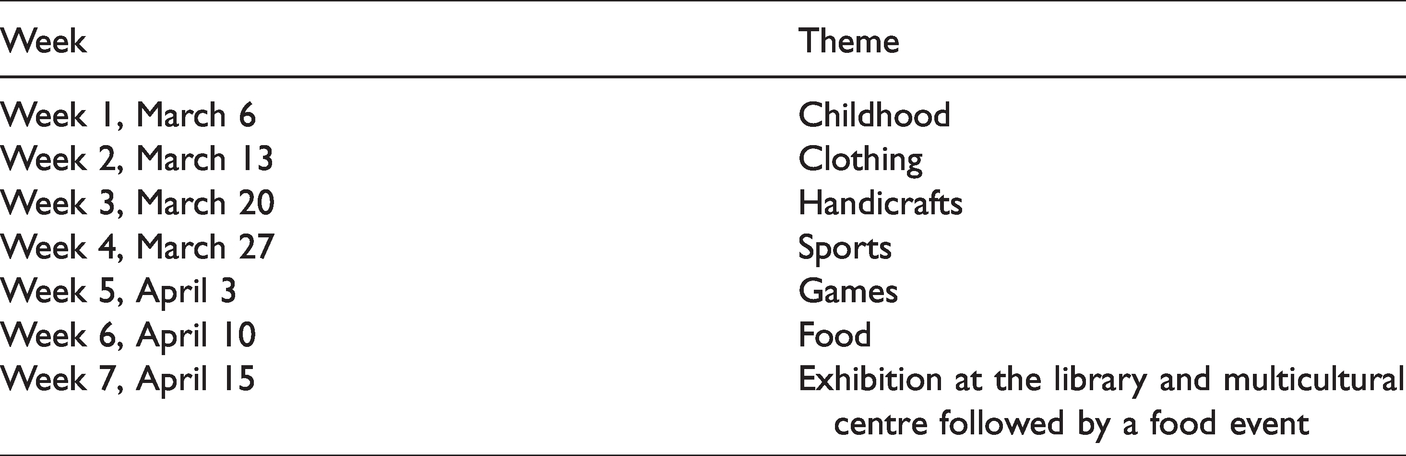
The project took place over a period of seven weeks (see Table 1).
Timeline of the project.
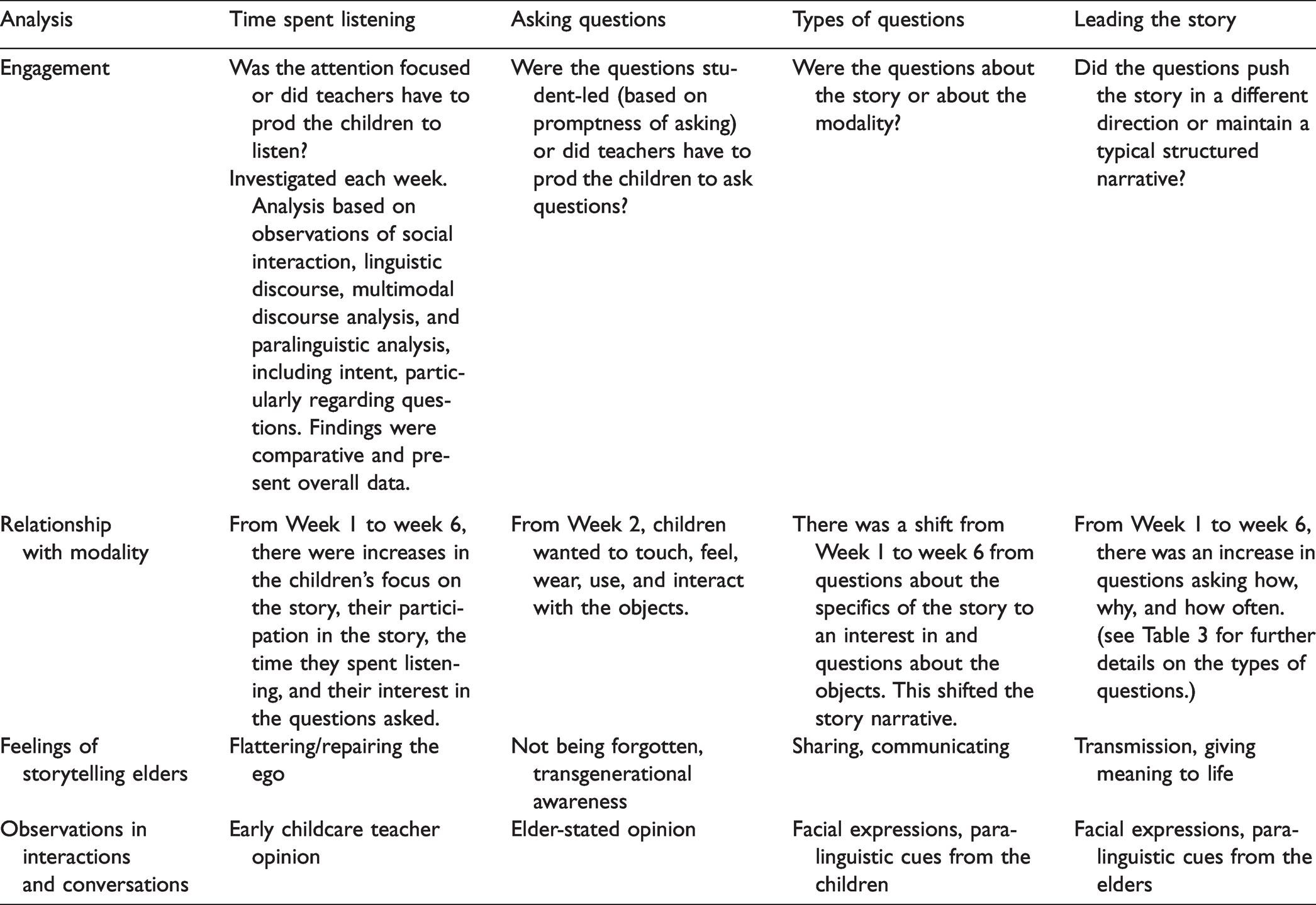
Analysis of multimodal intergenerational storytelling.
Engagement.
My positionality in the project is important to discuss. I spent approximately 14 years teaching preschool and primary children (aged 1–10 years) in a variety of multilingual, multi-ethnic, and socio-economic contexts (Canada, Guatemala, Nepal, the UK, Japan, Malaysia, Qatar, and Finland). I am a multilingual, multi-ethnic/racial, single mother of an English as an additional language, dyslexic young adult. My connection with storytelling originated in childhood summers with my immigrant grandmother, who exposed me to oral storytelling as a form of entertainment. Later, as a preschool language teacher for nine years in Japan, I always embedded storytelling and drama into my daycare language learning programme. Therefore, I have extensive experience in interacting with and observing preschool children from a variety of multilingual, multi-ethnic, and socio-economic contexts. I should clarify that recently my father developed dementia (he has since died of COVID), and thus my focus on intergenerational storytelling has shifted from preschool children’s social literacy and sociocultural aspects to the importance of emotional interaction (Rupčić, 2018). I acknowledge that many researchers will question my objectivity in the analysis of the data. Nonetheless, as an ethnographer, I argue that my deep experiential understanding of elders provides me with embedded contextual knowledge of which others might be unaware. Accordingly, all inferences made from the video data and observation notes were clarified and confirmed by the older participants and triangulated with other data sources.
The data consisted of participant- and researcher-produced video recordings of six oral storytelling sessions, observational field notes, multimodal artefacts, and qualitative pre- and post-session interviews. There were two sets of video recordings, one by the researchers and one by participants. The participant videographers changed from the elder storytellers, the teachers, and sometimes the children. In the interviews, the elders were asked how they felt the session went, what they would change, what had surprised them, how the children had reacted (both positively and negatively), and what they thought would improve the storytelling. The term ‘successful’ was defined by the participants in terms of how focused the children were on the story, their engagement in the story, their active questions and co-participation, and the modality. Informal conversations took place before each session, and relevant issues often emerged as the participants showed us what material objects they would use and why they had chosen them. The data were analysed using multimodal discourse analysis of interaction guided by the framework of Pecorini and Duplaa (2017) discussed above. Multisensory discourse resource analysis (Boivin, 2020), which analyzes interactions with sights, smells, sounds, tastes, and touch, was also used during triangulation of the data, particularly for the food and clothing topics.
In line with the framework of Pecorini and Duplaa (2017), the analysis was divided into three sections: engagement with the storyteller, relationship to the modality, and participatory well-ageing interaction (Table 2). Each section contained questions that the researchers investigated to determine the success of a theme based on the interaction of the participants. Observations were confirmed and clarified with the elder storytellers during the pre- and post-interviews. The data were analyzed in terms of time spent focused (on modality and story), questions asked, types of questions, whether prompting by adults was needed, and whether questions were directed towards the story or the modalities.
Findings
Shifting engagement through multimodality
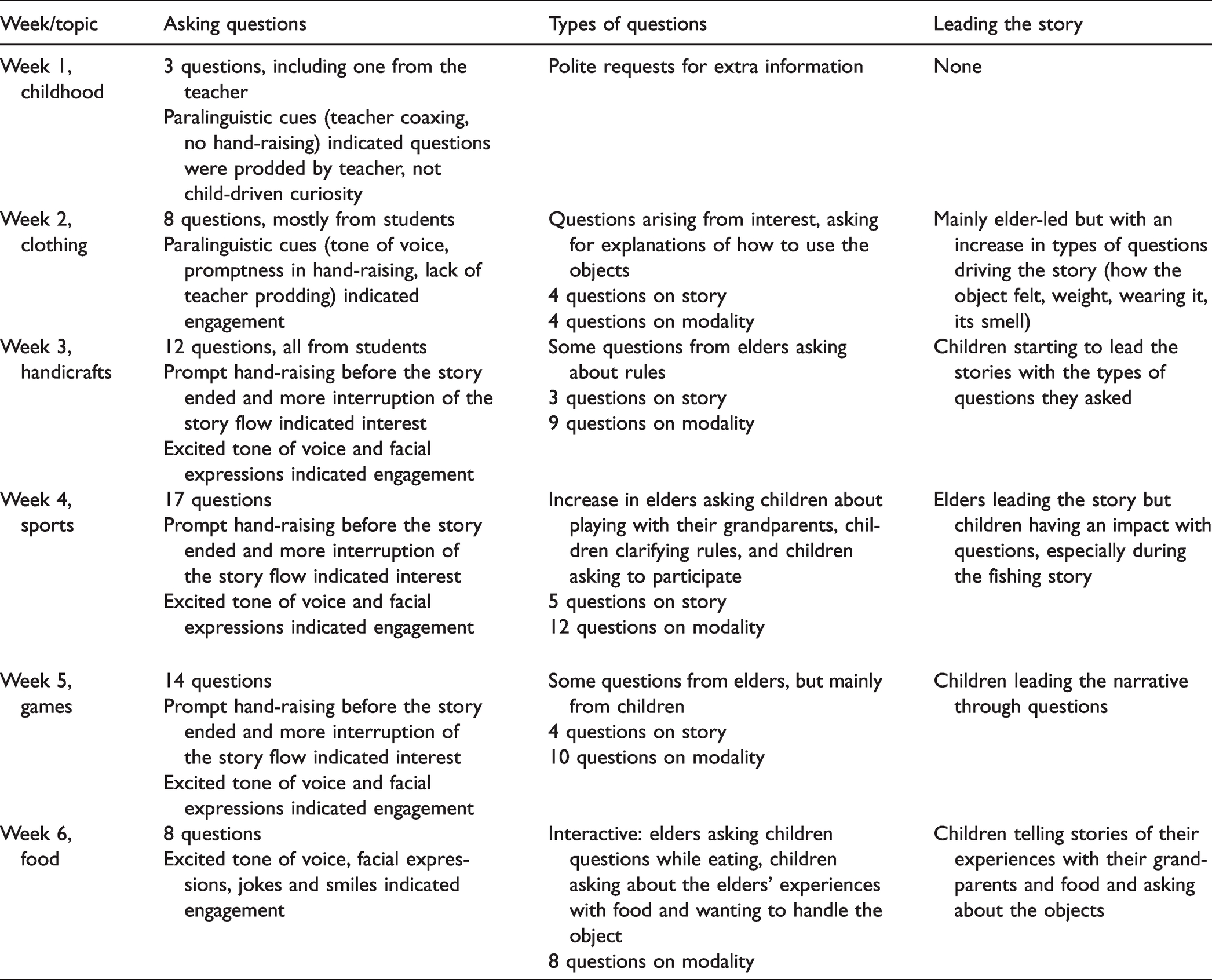
Table 3 (see Appendix 1) presents the findings from observations and video recordings concerning engagement with the stories over the six weeks of the project. Initially, the children listened to the story and politely asked questions only at the end. The teacher had to keep them focused on the story, as the majority were fidgeting, showing signs of impatience and restlessness, and having trouble sitting still. There was little participation, and the preschool teachers had to intervene several times during the storytelling. From the video, it was clear that the initial stories were longer than those in subsequent sessions. Additionally, the storytellers used only a small number of 2 D visuals (photographs). After the session, the storytellers all mentioned that the children were not ‘engaged’, and in the post-session interviews, they reflected on the challenges they faced in maintaining the children’s engagement.
However, it was not only the statements by the older storytellers that evidenced the children’s engagement in the stories through multimodality. This triangulated with our observations and video evidence of how and what the children were recording. We used two tablets, one to record the storytelling and arts sessions, and one for the children to record whatever they wanted. The children’s recordings of the storytelling provided evidence of two types. First, as stated above, the ease with which they used the tablet, without instruction, confirmed their familiarity with the devices, in contrast to three of the elders, who needed some instruction.
The second type of evidence concerned the children’s degree of engagement with the different multimodal objects. Figures 2, 3, and 4 illustrate the degree to which the children were engaged in the modality. In addition, the researcher observed during the sessions that when the children were engaged in new modalities presented by the storyteller (compass, fishing rod, stick game, key game), the children showed heightened engagement; this was confirmed by the weekly videotapes. Their engagement was illustrated in numerous ways: by an increase in questions about the multimodal object, often changing the original narrative of the story; by the intensity of the video focus on the multimodal object; and by the child with the tablet zooming in on the object, sometimes moving in physically (as seen in Figures 3 and 5) to record only the object. When the modalities held less interest, the children would sit back and record the overall storytelling session. For example, when Jari, one of the older storytellers, first began to talk about the expedition and brought out a paper map, the child videotaped the whole scene from farther back. However, when Jari took out the compass, the child moved in and recorded not the storyteller and the object but just the object (Figure 5), which was new to them, as evidenced by the multiple questions about its purpose. The children’s interest in the new or unknown object was what engaged them and brought them into the storytelling narrative.
In later sessions, the children asked more questions than before, often during multisensory interaction with the texture and touch of the clothing. The questions did not arise at the end of the story; instead, the children’s interaction with modes and material objects triggered a continual flow of questions. They became interested in how the objects were made and how they were kept clean. These observations were confirmed in discussions with the participants.
Relationship with modality
Expanding modes of materiality in the discourse
The findings in Table 4 (see Appendix 1) illustrate the relationships between the children, the older storytellers, and the modalities used during the six weeks.
Modality.

Weeks 2 and 3: Video evidence
Another change that the older participants agreed on was the incorporation of modes: not only showing pictures but also integrating props and visual images into the story to maintain the children’s interest.
Anne brought cookbooks for the children to look at and aprons for them to try on. This provided more participation and made it more fun for the children (as seen in Figure 1). Tiina showed them how to sit and walk in the clothing, and they practised this. They all wanted to try on and model the coat and hat. These relationships formed with objects they could utilize, such as Tiina showing clothing that they touched. The post-session clothing interviews, triangulated with casual conversation before the third session, highlighted that the children enjoyed being part of the story, as the photos confirm.
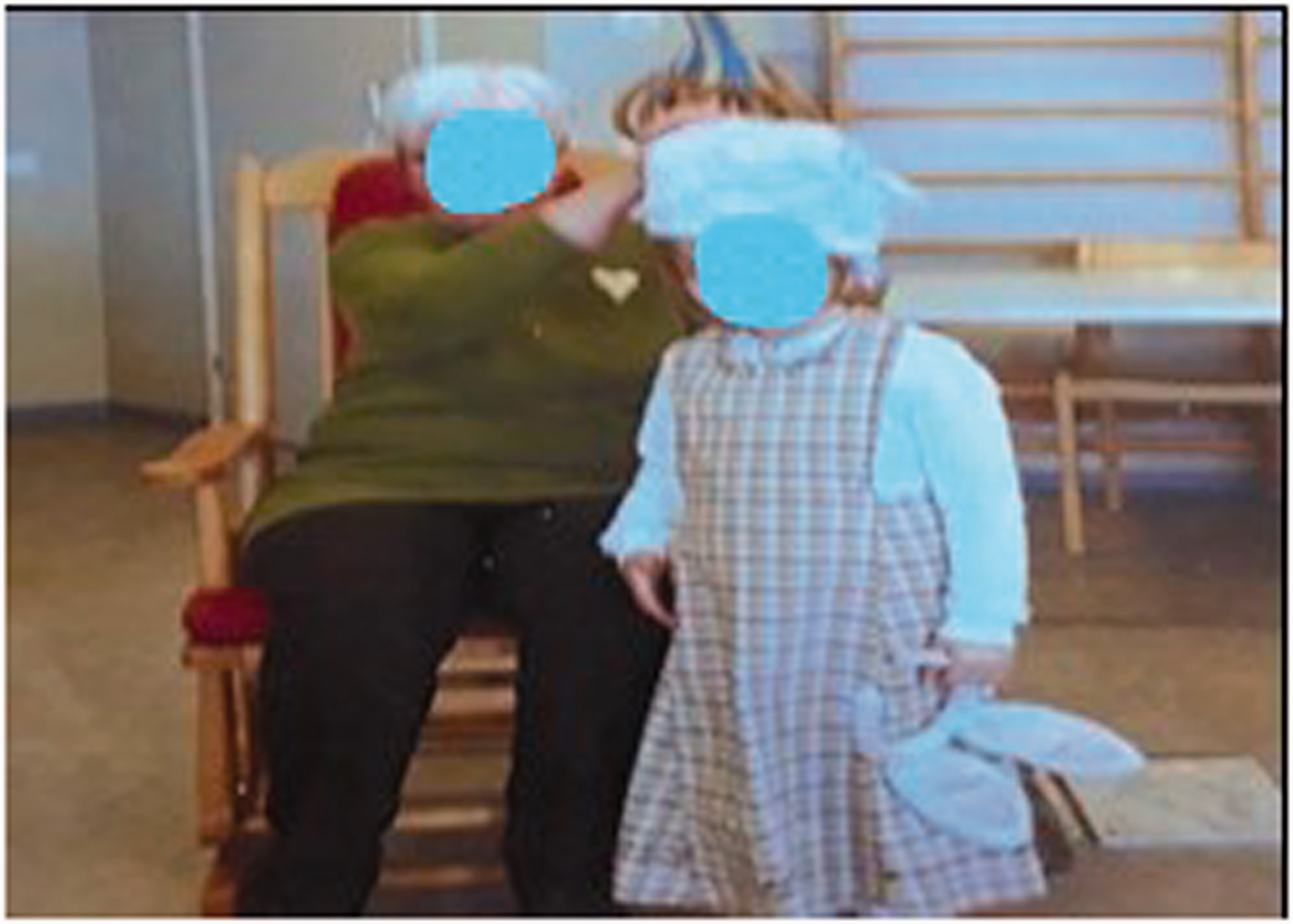
Trying on old clothes.
Week 3: Video evidence
As evidenced in the pictures above (Figures 2 and 3), the more successful storytelling (as indicated by the older storytellers) included children holding, using, and playing with various items and artefacts. Jari told the final story in the clothing session, and he had brought in a large fur coat, hat, and leather gloves. The excitement and interest of the children in trying on the heavy coat was surprising and added more layers to the process of multisensory discourse: the touch of the fur, the smell of the leather, and the feeling of the weight of the coat when walking. This co-participation with multisensory multimodal objects created a more visceral sense–body engagement with the story (Boivin, 2020). The excitement generated by co-participation with modality created an emotional interaction between the older storytellers and the children. The children’s questions sprang from their participation and thus guided the storytelling narration. They asked, ‘It is so heavy! How could you wear it?’ The elders laughed and answered, ‘We had to, to keep warm! There were few department stores, so we made coats from animals killed, and these lasted for a long time.’
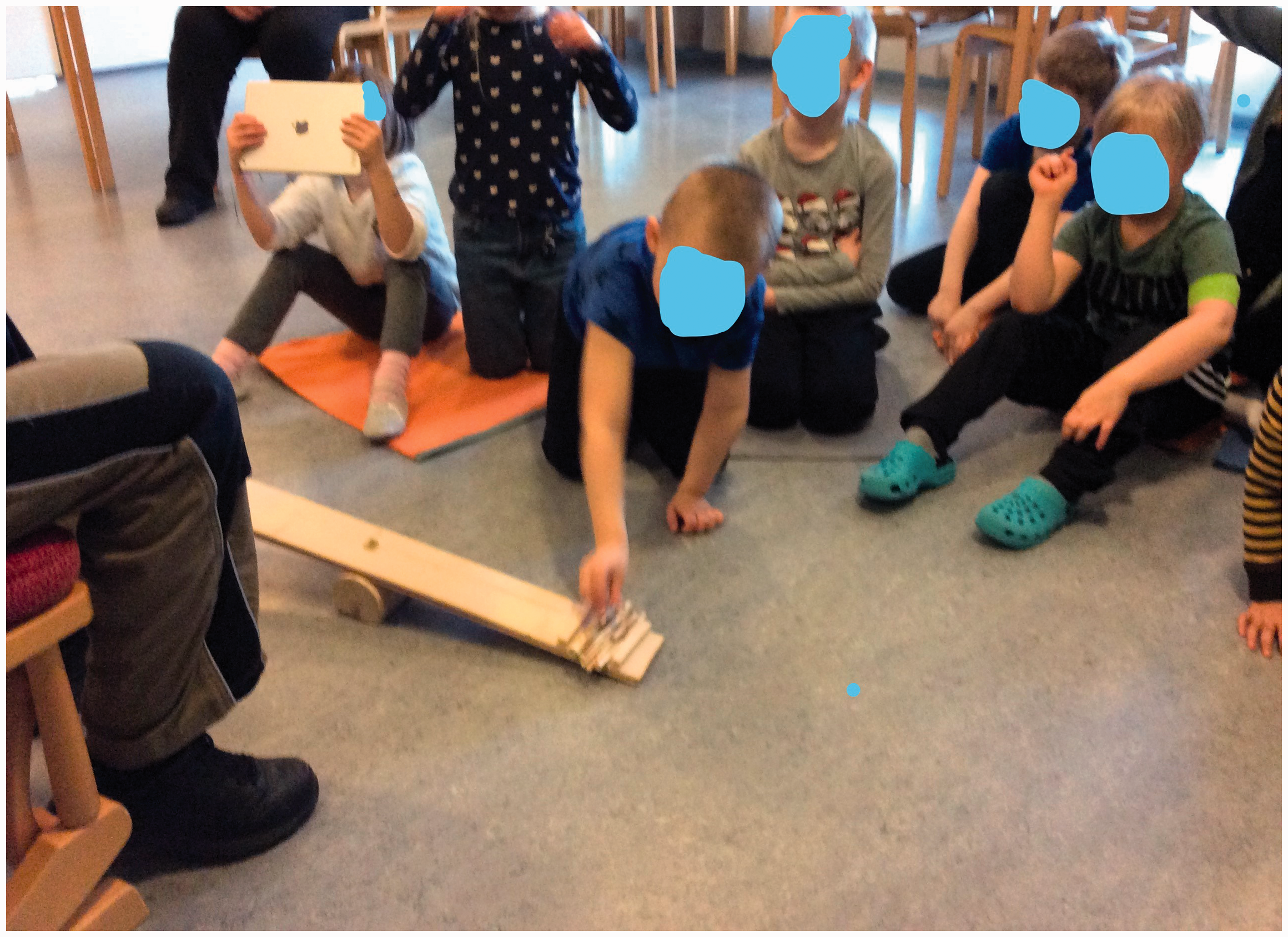
Interacting leading the story.
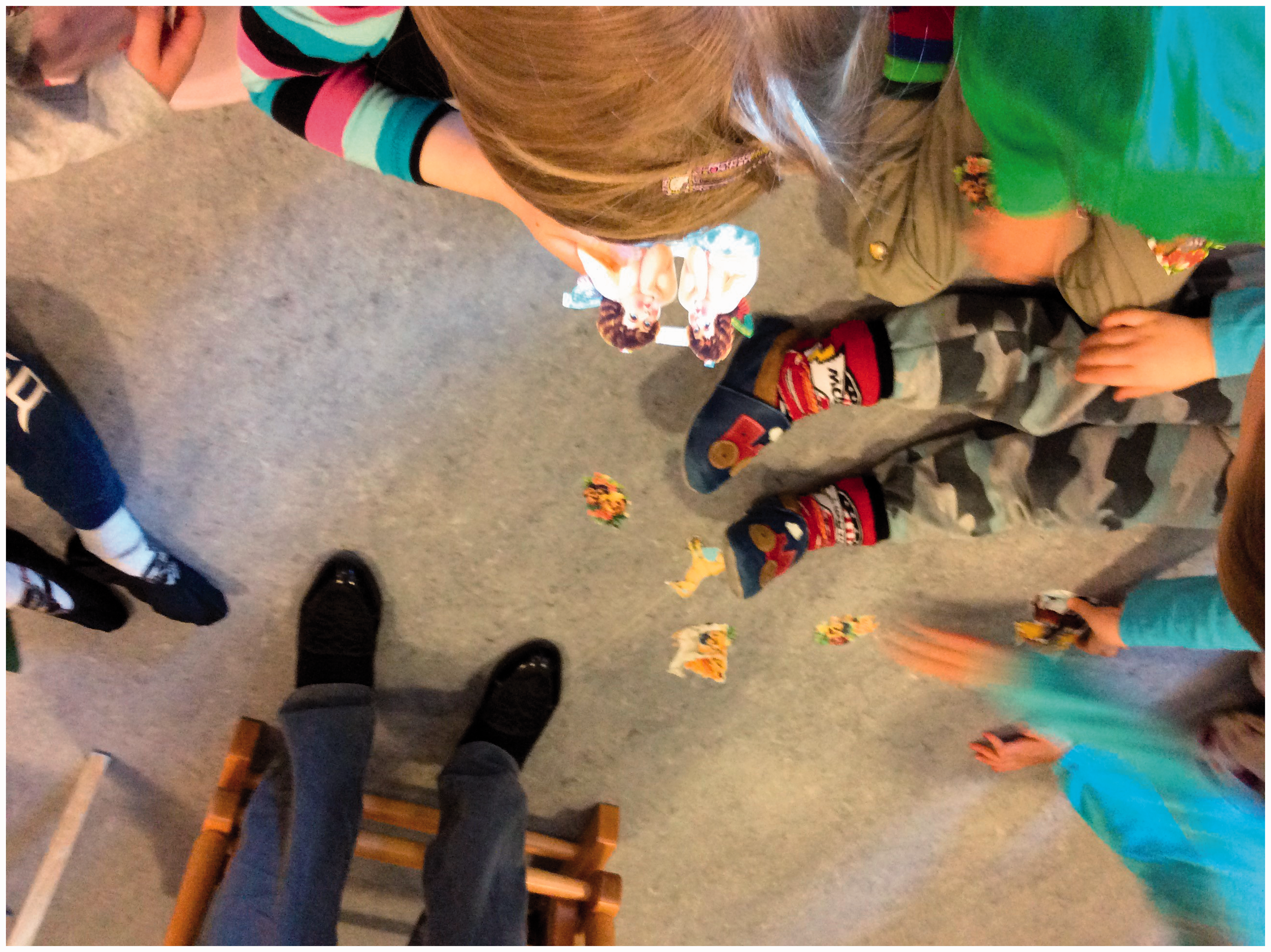
Playing games.
When the children wore clothing brought in by the older storytellers, the act of touching the clothes prompted them to ask questions. It was noted from the observations, and verified in the video recordings, that the children liked sounds and visual images but also tactile sensations. These included wearing clothes, touching toys and sporting equipment, and eating food. The children’s co-participation was clear from the fact that the teacher spent less time admonishing them than before.
Interactive multimodal storytelling discourse
The previous sessions had become more interactive through multimodality, but the following evidence highlights even more participatory aspects of multimodal storytelling.
Week 4: Video evidence
The photos show the interaction of the children with the fishing and hunting materials described in the storytelling session (Figures 4 and 5). The children not only helped to film the narration but also used the compass, map, and atlas. All the children wanted to try these out, and they began to ask questions that stemmed from interaction with material objects. The original story was simply an explanation of the map. However, the children reconceptualized the story by asking questions about the compass. This interaction provided emergent vocabulary regarding an old item that was unfamiliar to them. This exposed them to new language through their engagement in the modality leading the story. One boy asked Jari if he had ever got lost. Jari replied simply, ‘Yes,’ which prompted the children to ask several more questions. Jari then recounted how he had ‘got lost crossing a frozen lake. The ice broke and I fell through.’ This elicited more questions, and he went on to narrate how he was ‘saved by his friend and a stick’ and had to ‘dry his trousers sitting by a fire’. Thus, the children’s multimodal co-participation and their questions reshaped the story, and they learned new words based the unfamiliar multimodal objects (compass, linen, fur coat, key game).
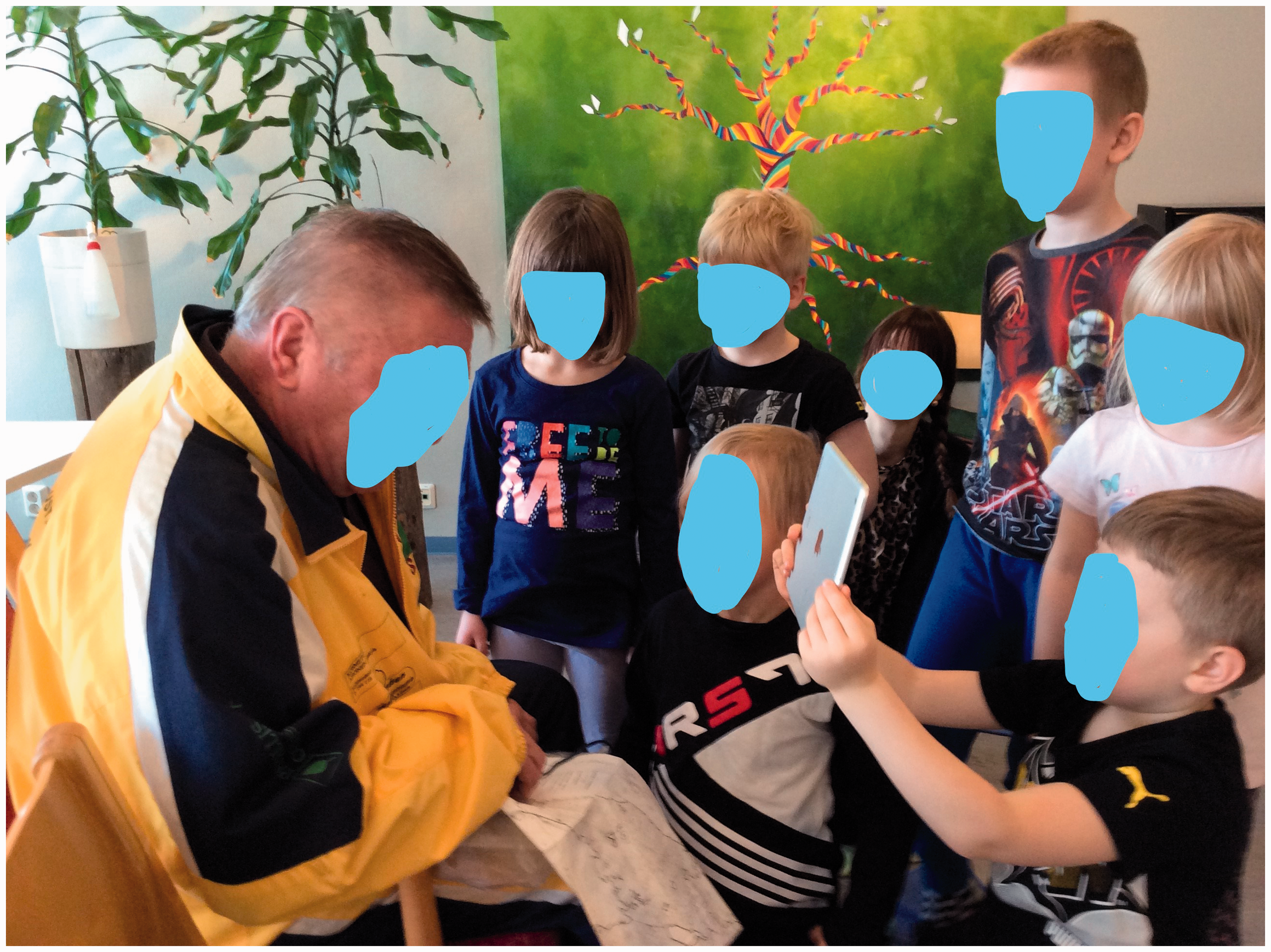
Multimodal co-participation.
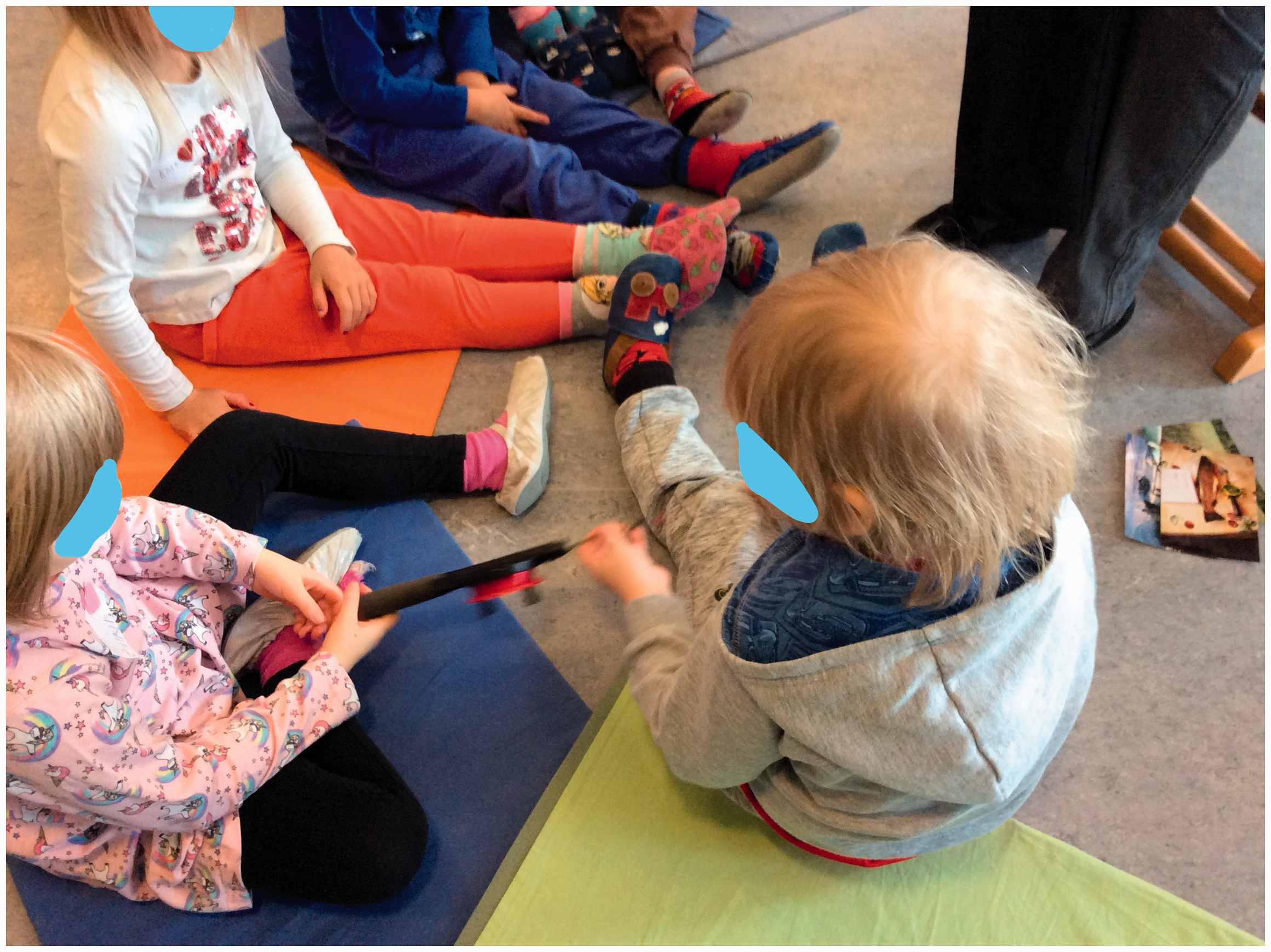
Interaction with an object.
Weeks 4 to 6: Post-interviews
Discussions after each of the three sessions on sports, games, and food indicated that they had been successful. Jari said he had originally been worried that the children would be ‘bored with these old items’, but they were not. The older storytellers noted that ‘the children listened and were ready to interact with the items brought in’ (Anne). They felt that the success of the stories stemmed from the fact that the multimodal storytelling was ‘interactive’ (Tiina) and that ‘the children were a part of the story’ (Lily). For example, during the session on the topic of food, the children helped to prepare food and ate it with the elders. They also played different games after the storytelling part of the session was finished. Again, interacting with multimodal objects increased the chances of the children asking questions.
In the food session, the older storyteller asked the children if they had ever eaten mammi, a bitter pudding made from fermented wheat that is famous in Finland for being divisive: everyone either loves it or hates it. This provided an example of the children becoming participants in the story. They began to recount different experiences and say how they felt about the food. As the children told their stories, the older storytellers began to ask questions, asking them where their grandparents were from, when they first tried mammi, and what they liked about it. A photo from the session (Figure 6) makes it clear that multisensory interaction was occurring in the course of the story.
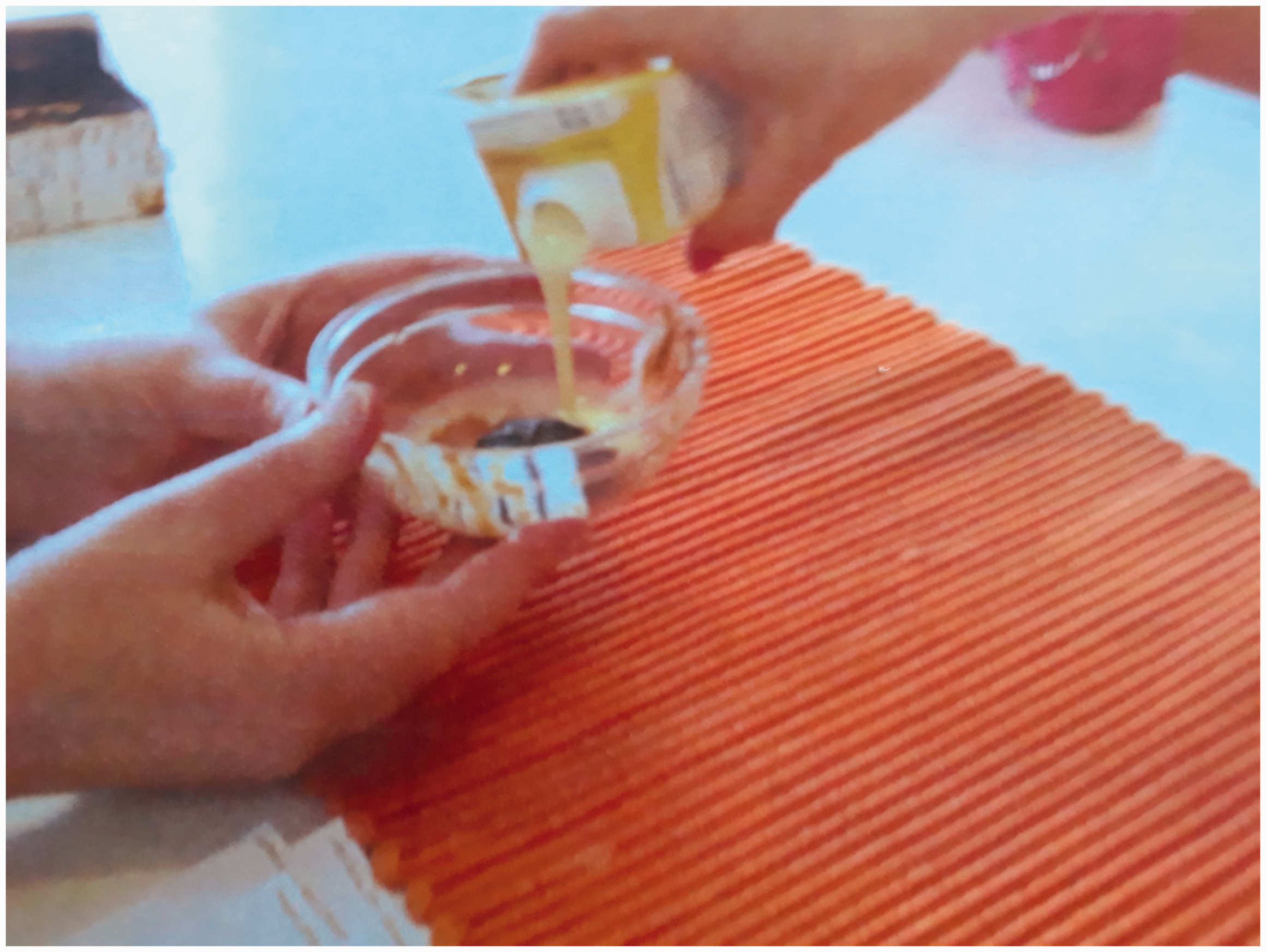
Multisensory discourse interaction.
The children asked the elders if food tasted the same in the past, mentioning that their grandparents had said that ‘food was slightly different’. Therefore, one could argue that the children had become the storytellers for a brief moment. These moments of dialogical interaction highlight the importance of using multisensory (Boivin, 2020), multimodal objects. The interactive accomplishment of narrating was characterized by a progressive shift in the interaction between the preschool children and the elder storytellers.
Emotional inclusion
Week 1: Post-interview
After the first session, Anne stated, ‘We must bring in objects rather than just photos,’ and the other storytellers agreed. Tiina observed, ‘I will have to bring in more things for them to touch.’ Even Jari, who was talkative and confident in his narration skills, said, ‘I need to rethink how to tell the stories.’
The stories were of everyday cultural practices highlighting differences between past and present. They provided evidence of how storytelling benefits older people. When we spoke with the older participants after the initial sessions and triangulated with later interviews, a common theme emerged. All the storytellers noted, ‘it was a challenge to keep the children’s attention’ (Tiina). However, they also ‘felt it was nice as they learned to be more creative in their stories’ (Anne). Lily observed that she ‘needed to bring more pictures’ but also stated that she ‘felt good when the children reacted positively to her story’. They all felt that it was important for the children to learn about the past and its practices. Therefore, a simple answer to the question of how intergenerational storytelling can benefit older people is that it provided a space not only for the children to learn from the elders but also for the elders to learn a new storytelling approach from the children. The interviews after the session on the theme of childhood revealed their understanding of the need to change their way of storytelling. They understood that the children obtain their knowledge and information through intersecting multimodality in smaller chunks (visual, auditory, digital, oral, text-based).
Thus, the older storytellers became motivated by the need to change their storytelling. In the informal pre-storytelling session discussion, they stated that they were ‘becoming excited about finding new ways to tell a story’ (Anne and Jari). After the second session, they expressed greater satisfaction with the results, and noted that they already felt better. Therefore, the children asking more questions enabled the storytellers to be more connected to them. In addition, the children’s interest in new (unfamiliar) modal objects created a relationship with a material object and its storyteller. This demonstrates the elders’ two intrinsic motivations of a sense of achievement and a desire to share their stories with the children (Pecorini and Duplaa, 2017). Thus, the first stories reflected the need to engage not only through oral storytelling but also in an interactive relationship with multimodality.
Weeks 2 and 3: Post-interview
The next post-session interviews revealed a new sense of achievement. Lily, with a big smile, said, ‘I did better this time.’ She had a sense of the children ‘accepting her more’, and she ‘liked having to try to think of ways to keep their attention’. Anne and Tiina joked that they were ‘getting better at this’. Jari especially felt that it was ‘nice when you can capture their attention’. In the following weeks, the four elder storytellers felt that they had achieved strong engagement with the children. Jari said he ‘was happy that the boys had such interest in the compass, map, and pictures of fishing’.
This shift in the children’s interaction with the multimodal object which led the story provided the elder storytellers with intrinsic motivation in the form of validation of their practices and not feeling forgotten (Pecorini and Duplaa, 2017). Their sense of accomplishment gave them a greater feeling of inclusion with the children. Over time, it was evidenced that the best storytelling sessions were those involving multimodal co-participation.
Discussion
After the final session, we asked the older participants which sessions they felt had been the most successful and why. Success for the elder storytellers related to how much the children participated in the story, either by ‘playing with objects’ or by asking ‘more questions’. According to Tiina, ‘The last three sessions [sports, games, and food] were the best,’ because ‘the children took part more in them.’ Jari agreed, noting that, ‘They [the children] were more part of the story.’ Anne said, ‘I agree [pause] I think it was because [pause] they were in the story, not just listening to the story.’ Lily added, ‘I like the last three the best. I felt we were talking to each other.’ The older storytellers agreed that the other sessions had been successful and that they had used different modalities.
My argument here is that the children became part of the storytelling. As they put on the clothes, used the games equipment, or helped with the food, the interaction and questions were immediate. For example, they asked more specific questions about the objects, and this took the form of co-participation during the narration that expanded the original story. Therefore, as Burnett et al. note, the ‘material dimension of experience – the ‘stuff’ such as artefacts, walls, texts and screens, and our embodied experience of all this – is significant to these articulations’ (2014: 92). Observing children reacting positively to objects, games, items, and artefacts brought in to ‘help’ with the storytelling created a connection to prior experiences of the object, the older storyteller, and the newly created experience with the children during the interaction. Moreover, with the food and clothing topics, the multimodality of the storytelling incorporated multisensory discourse resources (taste, smell, sight, sound, touch) from the modes (Boivin, 2020). The feeling of the weight and softness of the fur, and the taste of mammi illustrated Merleau-Ponty’s point: unearthing the perceived worlds hidden under the sediment of history; our bodies inhabit space and serve as a means of expression in the world … into the perceived world to materialise immaterial thoughts … colour, smell and texture. (1962: 94)
Conclusions
This study has three main findings. First, the preschool children’s relationship to multimodality co-participation prompted the older participants to adapt their storytelling in order to provide validation and emotional connections. Second, the children’s relationship with multimodal and multisensory (tactile, visual, auditory, olfactory, gustatory) storytelling practices facilitated new storytelling practices and their emergent vocabulary. Finally, multimodal co-participatory storytelling was the most successful approach: when the children were able to participate by doing or becoming a part of the story (e.g. wearing clothes or preparing food), they were more engaged.
These findings confirm that the storytelling sessions were opportunities for older Finnish people to tell stories that provide children with values, cultural heritage, and identity that might otherwise be lost in a globalized society. The sharing of intergenerational stories offered a platform on which to establish emotional connections, community identity, and community memories, helping to cultivate a sense of co-constructed identity. Moreover, an enhanced understanding of materiality and interactional expectations benefited both the older participants and the children (Jarrott and Bruno, 2007; Pecorini and Duplaa, 2017). They were able to share learning experiences through long-forgotten traditions and practices, integrating small personal stories with each of the themes. This provided them with opportunities to validate their lives and communicate aspects of the resilience of their identity in the community.
The main limitation of the study is the number of participants, as there were only four elder storytellers. Nevertheless, because there were 15 children and the sessions took place over two months, the data are comparatively rich. The video recordings, observations, and interviews reveal a clear sense of emotional inclusion felt by the four elder storytellers, and future research should aim to explore this further.
One aim of the project was to allow multimodal oral storytelling to facilitate shared cultural storytelling practices. From the findings, it is recommended that spaces be created for intergenerational social contact that facilitates elders to learn the best modes and modalities to engage children. Multimodal intergenerational storytelling is mutually beneficial, culturally, linguistically, socially, and emotionally. Moreover, in the context of the COVID-19 pandemic, it is more important than ever for communities to find multimodal storytelling experiences that not only transfer knowledge but are participatory and inclusive, validate knowledge, and provide elders with space for lifelong learning. We globally experienced humans still live and learn best with social interaction that is co-participatory rather than merely digital.
