




Abstract
Wildlife tourism is rapidly growing worldwide, drawing significant attention from both academia and the tourism sector. However, the complex and multi-dimensional experiences arising from the interactions between tourists, wildlife, and local communities are difficult to fully capture. Often grounded in anthropocentrism and focussing on the tourist perspective, wildlife tourism risks undermining its conservation and educational goals, especially under the narratives of Anthropocene. This article bridges tourism studies and anthropology by applying multispecies ethnography and proposes a framework called Wildlife-Tourist Sociality, which examines the dynamic interactions between humans and non-human species in tourism. Drawing on ethnographic fieldwork on the Tibetan Plateau, this study explores three interrelated dimensions: wildlife spectatorship, ferality, and pastoral affect. These analytic entry points illuminate the ecological, affective, and sociocultural dimensions of wildlife encounters, while also foregrounding the distinctiveness of Tibetan wildlife tourism, characterised by its high mobility, alpine geography, and culturally (religious and pastoralist aspects) embedded modes of co-habitation.
Keywords
Introduction
Sustaining non-consumptive and non-harmful touristic practices involving wild species – particularly animals – is the core mission and foundational principle of wildlife tourism (Thomsen et al., 2021). It is often celebrated for its contribution to the sustainable development of nature-based tourism industries (e.g. Ertuna et al., 2023; Fennell et al., 2023) in practical dimensions, as well as for its valuable engagement with ‘post-natural’ or ‘post-humanist’ ideas (Bueddefeld and Erickson, 2022; Cohen, 2019; de Jong et al., 2024) within the social sciences in theoretical debates. However, the persistent anthropocentrism in social sciences (including tourism studies) often neglects the agency and sociality of other species, treating them instead as raw materials, extractable resources, or passive subjects defined solely through human-constructed meanings. The modernist-humanist logic of ‘sustainable use of species’ remains far removed from the fuller realisation of the post-humanist sustainability goals proposed in the time of Anthropocene (Brightman and Lewis, 2017).
However, the Anthropocene increasingly risks becoming a totalising narrative, often shaped by a white, western gaze (Davis and Todd, 2017; Mathews, 2020). Its widespread use tends to obscure the uneven histories of environmental transformation by overlooking the colonial, capitalist, and multispecies entanglements that have shaped planetary change (Adams, 2021; Haraway, 1987; Tsing, 2015). Rather than offering a neutral descriptor of geological epochs, the Anthropocene must be critically interrogated and recontextualised to account for diverse ontologies and lived experiences (Benali and Ren, 2019; Rantala et al., 2024) – particularly those of Indigenous communities and nonhuman beings. As scholars have noted in relation to the ‘Animal Turn’ (Ritvo, 2007) and the ‘Species Turn’ (Haraway, 2008), a re-evaluation of human-animal relations is imperative to rethinking both theoretical models and methodological approaches for imagining a more liveable, multispecies future (Brightman and Lewis, 2017; Tsing, 2017). In this context, the need to ‘indigenise the Anthropocene’ (Adams, 2021) becomes especially salient within wildlife ecotourism studies, where normative conservation and tourism discourses risk erasing local cultural ecologies and animal agencies. These conceptual challenges demand renewed critical attention and situated ethnographic involvement.
In engaging with the current tourism studies literature that debates post-humanist thought (Cohen, 2019), I shall identify three nuanced and complex conceptual traps that warrant serious attention, particularly in relation to the term ‘anthropocentrism’. This concept has been repeatedly critiqued across various domains, from tourism studies to broader humanistic inquiries, highlighting its pervasive influence and the challenges it poses to rethinking human-nonhuman relationships. The first trap lies in the persistent ‘objectification’ of non-human animals. While other-than-human beings encompass both sentient non-human beings (such as animal species) and non-living beings (such as water and stone), the simplistic application of Actor-Network Theory (Latour, 2005) often results in an overly flattened ontology. Such application may recognise but place the relational dynamics between humans and nonhumans in a network of symmetrical actors, glossing over the ontological tensions that characterise situated encounters – often in power-unequal and historical contingencies (van Dooren et al., 2016). It tends to materially and utilitarianly objectify animals (Massumi, 2015), during which animals, viruses, technologies, equipment, tourists, and various human groups are considered equal actants (Beard et al., 2016; van der Duim et al., 2017). Such discussions often fall short in recognising heterogeneous and specific world-making abilities of other-than-human beings in more-than-human assemblages (Haraway, 2015; Price and Chao, 2023; Tsing, 2015).
The sentience and intelligence of all animals as living beings have increasingly been acknowledged (Singer, 1975), yet often through simplified and overwhelming discourses that overlook contextual nuance. Especially in wildlife tourism settings, objectification appears through the visual consumption and commodification of animals as attractions, particularly in staged or curated contexts such as wildlife parks, safari photo zones, or even incidental encounters that become photographic spectacles (Bueddefeld and Erickson, 2022; Ertuna et al., 2023; Malamud, 2017). However, the unique characteristics and distinct ways of being of different animal species are often ignored (Candea, 2010; Hartigan, 2021). These representations do not, in essence, challenge the deeply ingrained human-animal dichotomy or effectively dismantle anthropocentrism.
There is another, more elusive form of objectification that I might term ‘moral displacement’. Sometimes, efforts to counter anthropocentrism are asked to bear an excessive moral burden. Anthropocentrism refers to the presumed superior status and inherent value of human beings within the becoming with-projects of all beings (Haraway, 2008, 2015; Kroker, 2014; Roden, 2015). It is important to acknowledge that the socially constructed moral frameworks held by human communities often exclude non-human animals (Cohen, 2019; Soper, 2012). Non-human animals do not intentionally participate in the formation of moral systems, nor do they possess the capacity to understand human moral behaviours or to issue moral condemnations. However, this fact does negate the (un)intentional emotional and affective correspondences (Ingold, 2021) that occur during daily inter/multi-species interactions. The ethical void in genuinely equal interactions between humans and animals becomes apparent. Imposing moral supremacy can lead to two problematic outcomes: paternalism or speculative agnosticism. The former treats animal others as passive recipients or patients, incapable of exercising moral agency, while the latter results in paralysis by humans – an inability to take any practical actions due to theoretical uncertainties about closing moral loops. Moral displacement thus arises when tourists or tour operators project human moral expectations onto animals (e.g., expecting ‘gratitude’, ‘innocence’, or ‘cooperation’ from wildlife), positioning animals as passive recipients of care rather than moral agents.
In contrast, true equality between humans and animals lies in recognising their mutually constitutive relationships and their diverse abilities of making one another within multispecies ‘worlding’ projects (Haraway, 2008; Tsing, 2013, 2015). It critiques the optimistic tendencies in multispecies theories that are solely based on the harmonious relationships of mutualism, but overlook the daily rights of animals, their suffering, and the real-world violence exerted by human power structures on a global scale (Kopnina, 2017; Watson, 2016). To be recognised as legitimate moral subjects and agents, it is crucial to acknowledge animals’ capacity for agency, responsiveness, and responsibility, expressed not only through cognition but also through embodied, relational, and affective practices (Azzarello, 2018). The challenge here is methodological, grounded in the lived and situated nature of human-animal encounters. Rather than pursuing abstract or universal claims about animal agency or moral subjecthood, I advocate for an ethnographic attentiveness to the situated dynamics of multispecies interactions as they unfold within specific socio-ecological contexts and more-than-human sociality (Tsing, 2013; van Dooren et al., 2016). This approach foregrounds the contingencies, affective resonances, and material arrangements that shape how animals and humans encounter, interpret, and respond to one another in the field.
The third conceptual trap, which I call ‘misplaced personification’ of animals, addresses the anthropomorphic framing often seen in post-humanist discourse. A significant goal of post-humanism is to challenge the idea of the human individual as a pre-determined, self-contained entity (Mol, 2003). As Haraway (1987) famously stated, she would ‘rather be a cyborg than a goddess’. This inward-deindividuation seeks to re- and de-territorialise human boundaries, both somatic and conceptual, which were originally rooted in Enlightenment humanism. By embracing a cyborgian nature (Haraway, 2008) and fostering inter-species relationships (Tsing, 2012), this perspective challenges the dualism of ‘body-environment’, thereby dissolving traditional human bodily boundaries (Hird, 2010; Mol, 2003) and exploring how human individuation functions within and affects the more-than-human assemblages they inhabit (Latour, 2005). This approach moves beyond merely reserving the language of ‘human-animal’ or ‘animal-human’ by engaging in a critical post-humanist understanding towards human bodies.
However, some studies have centred animals as research subject primarily to personify them as non-human analogues of humans (e.g. Best, 2009), which remains entangled with Enlightenment humanism. While personifying animal protagonists can serve as an effective rhetorical tool, constructing animals as other-than-human persons or animal Anthropos might ultimately lead to misplaced anthropomorphism, diminishing the unique relational livelihoods of other species. Misplaced personification is evident in cases where animals are anthropomorphised to make them more relatable to tourists – such as naming individual animals or ascribing them personalities – often for emotional appeal (Bartella, 2021; Thomsen et al., 2021), which can obscure their ecological agency or species-specific behaviours.
Relational understandings (Pernecky, 2024) can apply to both humans and animals, but they are particularly essential in the spaces in between. I thus argue, post-humanism’s ambition of recognising ‘animals as persons’ – a notion often informed by animal ethology (Cohen, 2019; Hartigan, 2021) – might be better re-framed as understanding ‘animals in processual multispecies interactions’. Especially in tourism contexts, what is the broader significance of toured animals as they come into being in these spaces (De Boever et al., 2012)? They often assemble with destined attractions, guests, local communities, tourism agents, and other stakeholders, contributing to a complex network of relations.
Reflecting on the abovementioned challenges identified by post-humanist critics (Nayar, 2023) and the non-human turn (Grusin, 2015) has the potential to invigorate tourism studies with new introspections. Nevertheless, the development of theoretical and methodological toolkits must be approached carefully to ensure practical feasibility. This article aims to clarify the research subject and methodology required to build a situated, ethnographically derived heuristic framework for post-humanist tourism studies, particular attention is given to the wildlife-tourist sociality with discussions grounded in Multispecies Ethnography and the Ethnography of Tourism. Additionally, these experimental approaches are examined for theoretical and practical coherence through long-term ethnographic fieldwork on the Tibetan Plateau, 1 focussing on the Sanjiangyuan (the headwaters of Yangtze, Yellow, and Mekong rivers) National Park’s Tibetan areas.
Overall, post-humanism has undoubtedly drawn public attention to the significance of nonhumans (Grusin, 2015). This shift has also sparked anthropological interest in multispecies ethnography – a new approach to understanding and researching the entangled relationships between human and other species (Kirksey and Helmreich, 2010). While existing tourism studies have increasingly engaged ethnographic approaches to human-animal relations, few have fully embraced the methodological and ethical commitments of multispecies ethnography. Rather than claiming to be the first, this article aims to deepen this intersection by foregrounding the co-constitutive agency of wildlife and tourists, and situating their encounters within the specific ecological and cultural context of the Tibetan Plateau. In doing so, it contributes to advancing a more grounded application of multispecies ethnography in tourism research.
Towards multispecies tourism research by multispecies ethnography
As a post-humanist intellectual movement and methodological orientation, multispecies ethnography has yet to achieve the ideal of ‘a truly multispecies anthropology beyond the human’, as Shepard and Daly (2022, pp. 89–90) describe that its challenges are ‘methodological as well as theoretical; biochemical as well as metaphysical’. In this open compound term, the ethnography inherently reflects a methodological disposition that benefits from and aligns with ongoing debates around epistemological and ontological shifts in post-modernist and post-humanist thought (de Castro, 2015; Grusin, 2015). Nonetheless, the realisation of a comprehensive multispecies anthropology demands further intellectual and interdisciplinary efforts. This represents a prospective invitation for scholars who share similar visions and interests. Multispecies ethnography, as originally formulated by Kirksey and Helmreich in (2010), seeks to ‘anthropologise’ natureculture debates by reinterpreting them in terms of species relations (Hamilton and Placas, 2011). This framework shifts the focus from nature as a singular, holistic, and static entity to an examination of species interactions within relationships and movements, transforming nature and environmental issues into more specific multispecies concerns. While the study of non-human actors is not new to the social sciences or anthropology, multispecies ethnography has renewed the discipline’s focus on these subjects by reintroducing ‘other species (and intellectual models) back into anthropology’ (Kirksey and Helmreich, 2010: 549). In doing so, it poses the provocative question: what is Anthropos becoming? (Hamilton and Placas, 2011). This question represents a forward-looking anthropological inquiry that builds upon progressive formulations, evolving from the notion of ‘good to eat’ to ‘good to think with’, and, ultimately, to ‘good to live with’ other species (Haraway, 2008; Harris, 2009; Lévi-Strauss, 1963).
Rather than adhering to previous cultural constructionist or symbolic interpretative paradigms, multispecies studies explore ‘what is at stake – ethically, politically, epistemologically – for different forms of life caught up in diverse relationships of knowing and living together’ (van Dooren et al., 2016: 5). This focus on multispecies life forms within asymmetric relationships allows for the development of unanthropocentric ethics and methodologies. Such an approach consciously moves away from entrenched presuppositions of ontological homogeneity, the notion of self-contained individual entities, and the misplaced anthropomorphism of non-human species. Instead, multispecies ethnography challenges scholars to reconceptualise these relationships, advocating for an anthropology that recognises the complex, entangled connections among species as integral to understanding the anthropological subject itself.
Furthermore, multispecies ethnography manifests in highly heterogeneous contexts, reflecting the diverse animal subjects and varied interactions that characterise this field of study. This heterogeneity is exemplified by the differences in the species under investigation and the nature of the relationships explored. For instance, Smuts (2001) demonstrated how active engagement with baboon behaviour in East Africa fostered intersubjective interactions, allowing her to integrate into their social fabric and highlighting affective bonds, belonging, and mutual trust across species. In contrast, Mallon Andrews (2023) explores how mistrust defines interspecies relations in the Dominican Republic, where fishermen rely on deception rather than empathy to outmanoeuvre elusive fish species like barracuda and parrotfish in spearfishing.
As a result, the specific research methods, theoretical frameworks, and conclusions drawn in multispecies ethnography can vary considerably across different ethnographic contexts. While some studies may focus on building intersubjective connections and understanding shared sociality across species, others might examine the ethical and interactive dynamics where mutual trust is absent or even undesirable. This highlights the inherent flexibility and adaptability of multispecies ethnography, as it seeks to engage with the full spectrum of human-animal relationships, from trust and cooperation to deceit and exploitation, depending on the socio-ecological context.
When considering animal-human interactions in zoos, it is crucial to recognise that these spaces have long been conceived as sites of spectacle. Zoos serve not only as venues for tourist entertainment, public education, and conservation efforts but also as arenas for the symbolic and cultural performance of post-colonial and anthropocentric power dynamics (Braverman, 2012; Debord, 1994; Haraway, 1989). In these settings, animals are forcibly removed from their original natural habitats and ecological networks, deprived of their environments and biological relationships. Once decontextualised, they are objectified – through curation, enclosure, and signage – for display and consumption (Braverman, 2012). This decontextualisation serves to present animals as static, consumable entities rather than dynamic beings engaged in complex ecological and social relationships. John Berger, in his seminal essay Why Look at Animals? (1980), identified the paradox inherent in the modern zoo: while zoos promote themselves as institutions dedicated to environmental education and conservation, they simultaneously sever the authentic interactive relationships that could exist between humans and animals. Instead, they impose various forms of human dominance over animals, transforming them into objects of human control rather than autonomous agents (Berger, 1980). This paradox has led to a growing discussion surrounding animal-human ethics, focussing on the objectification of animals through the tourist gaze, the restriction of animal agency, and the tension between control and captivity (Berger, 1980; Bueddefeld and Erickson, 2022). Moreover, researchers have examined the ethical distinctions in the treatment and care of animals by zoo visitors versus zoo staff, critiquing the unequal distribution of ethical responsibility (Rice et al., 2021).
In these contexts, the ethical boundaries between conservation, entertainment, and consumption of animals become increasingly blurred. Zoos, ostensibly spaces for conservation, often reduce animals to mere images or symbols designed to entertain and educate human audiences. Animals are no longer perceived as wild creatures inhabiting their natural ecosystems but are transformed into objects of visual consumption – an embodiment of anthropocentrism. This raises important questions for broader debates about human-animal relationships, particularly when contrasted with wildlife tourism. If zoos serve to alienate animals from their ecological roles and reduce them to objects, what makes wildlife tourism different? Both practices raise significant ethical concerns, but zoos, in particular, invite us to critically reflect on the consequences of turning animals into commodities for human entertainment.
Conversely, from the perspective of spectatorship, wildlife tourism presents a significant subversion of the conventional, anthropocentric tourist gaze. Unlike the constructed and enforced intersubjective interactions characteristic of zoos, where animals are observed within the confines of a panopticon-like design (Braverman, 2012), wild animals in their natural habitats tend to maintain their original habitus and continue living among other endemic species in specific biotopes. In wildlife tourism, the interactions between tourists and animals occur in a much more unpredictable, experimental, and feral manner (Bartella, 2021; Lorimer, 2015). Tourists pursue wildlife, who, in turn, may occasionally reciprocate by gazing back or engaging with humans in unexpected ways. These interactions often unfold beyond the conventional framework of face-to-face intersubjectivity, and as a result, the dynamics of wildlife spectatorship are far less spatially confined. Such encounters are often fleeting and transient, unfolding within the animals’ natural environments, which, although disturbed by human presence, remain largely beyond human control.
However, it is crucial to acknowledge that wildlife-tourist interactions differ fundamentally from also other forms of human-animal relationships, such as those in hunting in the Alps (Rippa, 2023) or among pastoralists in Mongolia (Fijn, 2022). These livelihoods, which are deeply dependent on indigenous species, as also seen in marine areas (Mallon Andrews, 2023; Vannini and Vannini, 2024), involve sustained engagements with local ecosystems that are distinct from the transient nature of wildlife tourism. While wildlife tourism may disturb animals’ natural environments, it does not exert the same level of control or dependency as practices like hunting or pastoralism, where human survival or cultural practices are intricately tied to the exploitation of local species.
Thus, I propose the concept of
Wildlife-tourist sociality, then, recognises that both humans and animals act and respond within dynamic ecologies shaped by infrastructures, cultural norms, environmental forces, and sheer unpredictability. It privileges the attunements, co-presences, and continuous calibrations of behaviour and meaning that unfold in shared space and time. To anchor this concept more precisely, I outline three interrelated dimensions: wildlife spectatorship as it occurs in high mobile and fleeting landscapes; ferality as the unpredictable quality of multispecies (more-than-wildlife) encounters; and pastoral affect as a shared sensibility cultivated among both tourists and local Tibetan communities in response to wild animals and environmental conditions. This formulation brings together insights from tourism studies, critical animal studies, and anthropology, offering a critical lens through which to examine the ethical, political, and ecological dimensions of human-animal relations in tourism contexts.
Wildlife-tourist sociality on the Tibetan Plateau
On the 2nd of April, 2024, in Qumarleb County, located within the Yulshul Tibetan Autonomous Prefecture in Qinghai Province, and within the boundaries of the Sanjiangyuan National Reserve areas, I participated in a spring hike alongside a dozen local Tibetan pastoralists, villagers, and conservation NGO practitioners. As we made our way through the open, treeless landscape on the sunny side of the mountain, three herds of bharal (Himalayan blue sheep) suddenly came into view, running towards the same direction and gathering together (see Figure 1). Prior to this, I had not even noticed their presence, as the colour of their fur in spring blends seamlessly with the russet tones of the mountain. This was the first time I had seen such a large number of these mountain-dwelling sheep, and it became much easier to spot them in motion. Several members of our hiking group quickly reached for their binoculars, scanning the brushy mountainside for signs of something else.
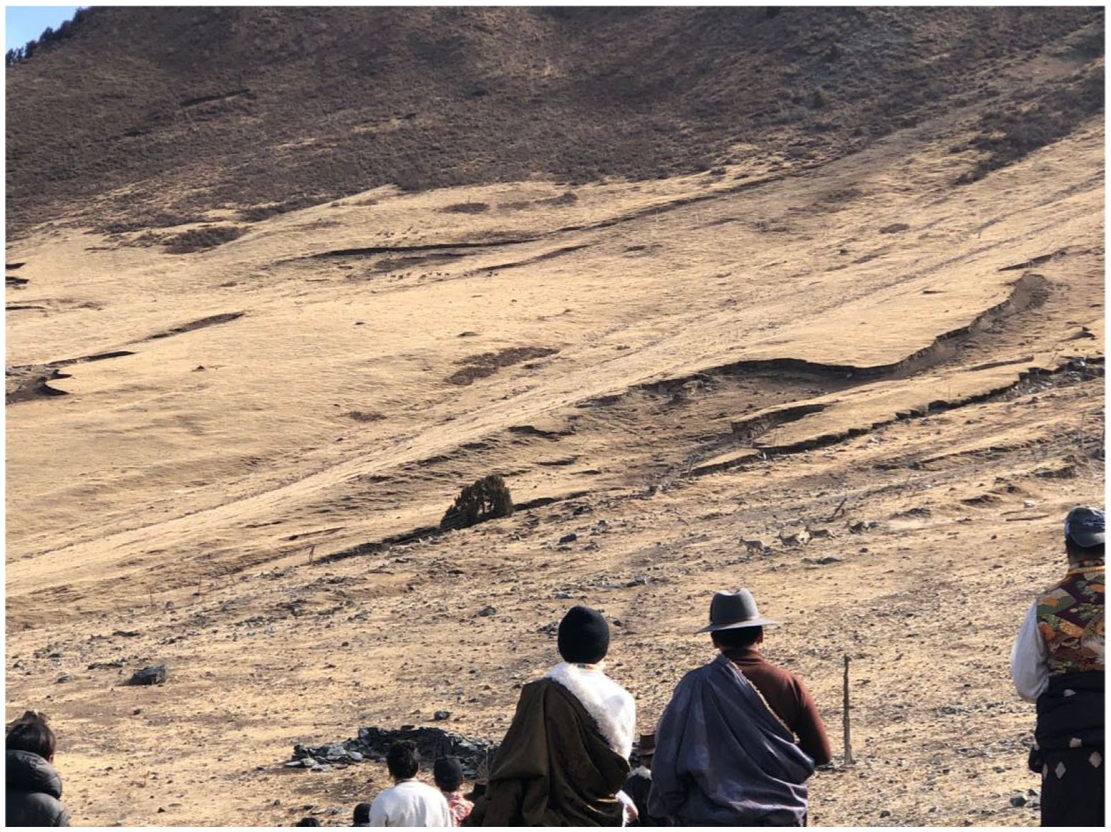
The running bharal in front of the hiking group, there are also two herds of bharal in the distance (2nd, April, 2024).
Curious, I asked a local Tibetan herdsman in his fifties whether the presence of our group might have disturbed the blue sheep. He responded: ‘It’s not about us; the blue sheep have long been accustomed to human presence and do not flee from us. However, when two or three herds come together like this, it usually means that a large predator – such as a wolf or snow leopard – is nearby, but here, there are only snow leopards in these mountains. That’s what we’re looking for’. At this, a professional Tibetan photographer, armed with a telephoto lens, ran towards the trees to capture an image of the elusive predator. Despite our collective hopes, the snow leopard remained unseen.
This fleeting yet enthralling multispecies encounter sparked immediate excitement and lively discussion among our group. Throughout the interaction, the Tibetan pastoralists shared stories about the habits of the blue sheep, the legendary history of this mountain forest, their past experiences of encounters with various species, and of course, the snow leopard that did not appear. The event was serendipitous and experimental, shaping both human and more-than-human socialities in the process (Lorimer, 2015; Tsing, 2015). It exemplified how such interactions can register affectively, reflecting the intertwined emotional, material and epistemological relations between humans and animals in shared landscapes (Lorimer, 2015; Rantala et al., 2024).
Wildlife tourism in the distinctive cultural and ecological milieu of the Tibetan Plateau is characterised by mobile, serendipitous, and often co-produced encounters. These occur during long-distance drives, treks, or seasonal pastoral movements, where human and animal trajectories intersect unpredictably. Moreover, wildlife is deeply entangled with Tibetan pastoral cosmologies and everyday life (Torri, 2015). Encounters with animals could generate aesthetic appreciation or excitement and even elicit narrative recall, ritual associations, and culturally embedded modes of interpretation and sensitivity (Viken et al., 2021). In this context, wildlife tourism becomes inseparable from local cultural landscapes, with animals acting not as passive objects of the tourist gaze, but as volatile agents whose presence shapes and co-constitutes the tourist experience.
Wildlife spectatorship and tourist descry
In his influential book The Society of the Spectacle (1994), Guy Debord critiques how symbolic images and representations have come to dominate modern life, supplanting reality and alienating both humans and material objects. In this spectacle-driven society, everything is commodified and transformed into objects for consumption. Animals, in particular, are rendered as spectacles to be observed and consumed through what John Urry (1990) terms the ‘tourist gaze’. This gaze constructs animals as pristine, untouched, and idealised figures, shaped by pre-existing advertisements, media portrayals, and exoticised representations that fuel tourists’ motivations and expectations. However, this commercially-driven and culturally-constructed form of spectatorship (Malamud, 2017) conceals the more complex ecological and socio-political relationships that exist between animals and humans.
In the realm of wildlife tourism, animals are not fully subjected to human control or surveillance. Unlike captive zoo animals, wild animals retain their autonomy, acting within their natural environments and maintaining their original behaviours and social habits. They are active participants in their ecosystems, rather than passive, morally objectified subjects. The tracking, observing, and photographing of wild animals are not always predictable or fully managed, creating a more dynamic and less controlled form of encounters (Faier and Rofel, 2014). Therefore, a more nuanced understanding of wildlife spectatorship must recognise wild animals as active, elusive agents, deeply connected to their geo-ecological and social environments. The tourist gaze that initially shapes visitors’ expectations can be re-conceptualised as a form of tourist descry – an attempt to discern and engage with the more-than-human world on its own terms. Here, inter-patience, as examined by Candea (2010), becomes a valuable approach in managing wildlife-tourist interactions. It describes a mode of relational ethics where human and nonhuman beings are not forced into immediate, direct engagement, but instead coexist through mutual inattention or deferred interaction. In the context of wildlife tourism, particularly in the Tibetan Plateau’s mobile and affective landscapes, I employ inter-patience to capture those moments of cautious proximity (Rantala et al., 2024), mutual adjustment, and unspoken attunement between tourists and animals. These encounters are grounded in spatial negotiation, restraint, and co-habituation.
On the Tibetan Plateau, this act of tourist descrying is often serendipitous. For instance, the spring excursion in Qumarleb County was originally organised as an environmental education trip by the local Tibetan NGO for herdsmen, rather than a wildlife expedition. However, the unexpected sighting of blue sheep sparked a sense of collective conviviality, prompting discussions and the sharing of local ecological knowledge. Although the elusive snow leopard remained unseen, its symbolic and affective presence lingered in our conversations, enriched by the descriptive narratives of the locals. In this way, the snow leopard’s absence still became an integral part of the experience, leaving a lasting impression on participants and deepening understandings of the local environment and its species. Moreover, tourist descrying is mediated and conditioned by various tools and material actants that shape the wildlife spectatorship experience. Off-road vehicles, binoculars, long-lens cameras, and outdoor equipment act as relational mediators, enabling tourists to locate, approach, observe, and document wildlife in ways that might not otherwise be possible. By creating a buffer between the observer and the observed, these mediations maintain a delicate balance between engagement and restraint, ensuring that human presence does not overly intrude upon or disturb the natural behaviour of animals.
Another occasion in May, while driving along the border of the Hoh Xil no-man’s land (also known as Kekexili Natural Reserve, a section of Sanjiangyuan National Park), we (the author and one Tibetan interlocutor/driver) encountered challenging road conditions. Despite it being May, the roads were still snow-covered, making them slippery and reducing visibility to a minimum. As we cautiously navigated the treacherous terrain, we suddenly came across a herd of Tibetan antelopes, meandering by the roadside at a remarkably close distance – no more than a few dozen metres away (see Figure 2). My immediate instinct was to leap out of the vehicle to capture the moment with my camera. However, the Tibetan driver quickly intervened, advising, ‘It’s cold outside, and this road has a lot of traffic. We must be mindful of safety. More importantly, while the antelopes have become accustomed to the traffic, if you step out and approach them, they will likely flee, and we will lose the opportunity to photograph them from this close proximity’. Later, as I conversed with members of a local Tibetan antelope patrol, I learned that it was the season for the Tibetan antelopes’ migration to their birthing grounds. During this period, small groups of antelopes gather on both sides of the road, waiting for their numbers to swell into herds of hundreds before crossing the road to the west. The local government and Tibetan pastoralists form convoys to protect the antelopes during their migration, ensuring their safe passage for about a week. This assemblage – comprising the Tibetan antelopes, tourists, road infrastructure, technical devices, vehicles, and many human actors – embodies the intricate connections between the social, material, spatial, epistemological, and affective dimensions of the encounter (Lorimer, 2015; Ong et al., 2023).
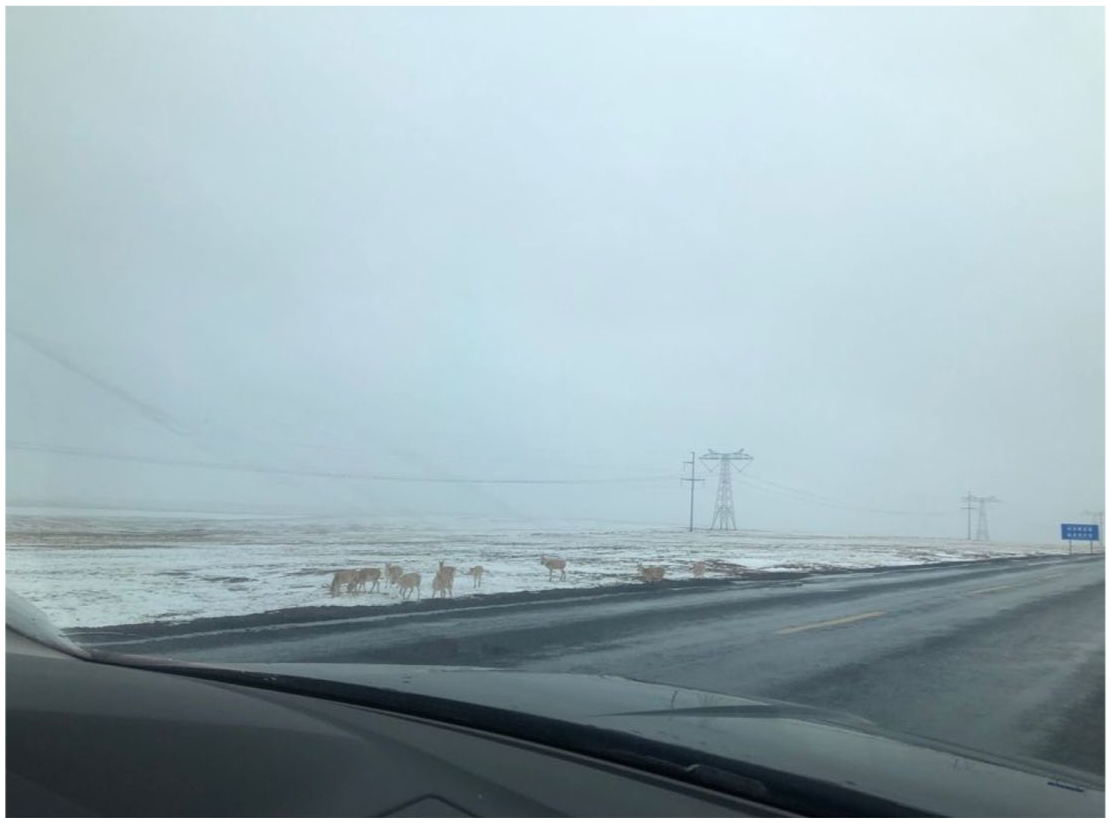
The small group of Tibetan antelopes, Pantholops hodgsonii (5th, May, 2024).
Here, the act of descrying is not a top-down anthropocentric gaze imposed upon the antelope, but rather a dynamic, evolving process. It is sparked by serendipitous encounters, shaped by an awareness of the surroundings, and involves learning to participate in the animals’ habituation to human presence. It requires mastering different forms of knowledge, from local ecological understanding to practical concerns about safety and behaviour. This approach allows for a deeper comprehension of how these animals come into being in their environment, while humans and animals alike navigate their coexistence. The inter-patience (Candea, 2010) begins to emerge. Both humans and animals engage in a mutual learning process, becoming accustomed to each other’s presence while maintaining a respectful distance. This cultivated patience reflects an attempt to co-habituate, whereby both species strive for a delicate balance of interaction. This relationship is mediated and conditioned by the material actants and geographic elements around them (Latour, 2005) – whether it is the road infrastructure, vehicles, or the snow-covered landscape – ultimately shaping the possibilities of coexistence in this fragile, shared space.
In the harsh geographic conditions of the Tibetan Plateau, tourists often face extreme challenges, including cold temperatures, blizzards, low oxygen levels, and the strain of high altitude. As visitors enter the native environment of wildlife, they must adapt and learn survival strategies from the very animals they have come to observe. At times, this may involve staying inside vehicles to avoid the cold and also encounters with dangerous wildlife such as brown bears and wild yaks. These conditions underscore the ‘high-mobility’ nature of tourism across this vast and sparsely populated plateau landscape. Most wildlife encounters emerge serendipitously during long-distance drives and mobile journeys. As such, the agency of wildlife, the materiality of transport infrastructure, and the temporal rhythms of travel become pivotal in shaping wildlife-tourist spectatorship.
What emerges, then, is a nuanced and mobile form of spectatorship – one that reflects a multi-adaptive process (Bragg and Deale, 2019; Tremblay, 2008). Both human and non-human species learn to navigate and negotiate one another’s presence within shifting ecologies of movement. This co-habituation process recognises the heterogeneity of species socialities, while also accounting for the mediating roles of technological and material actants. In this context, wildlife-tourist spectatorship becomes a situated practice of ecological attunement and shared vulnerability, deepening an understanding of the interdependencies that characterise life on the Tibetan Plateau.
Ferality
Wildlife tourism should arguably be recognised as a form of human disturbance on nature and other-than-human beings, with potentially unpredictable effects in the Anthropocene (Pernecky, 2024; Rantala et al., 2024; Tsing, 2015). Although much of the current research, including this article, seeks to portray a harmonious relationship between humans and animals, this often remains a narrative, expectation, or even fantasy (Bueddefeld and Erickson, 2022; Pernecky, 2024). Such human interference in the natural world moves beyond simplistic dichotomies of domestication between human and the domesticated, suggesting that the consequences of these interactions are far more complex and feral in nature. These interactions can lead to both uncertain, harmonious, or even risky realities in the future (Ramírez and Ravetz, 2011).
Nils Bubandt and Anna Tsing (2018, p. 1) define ‘feral dynamics’ as ‘anthropogenic landscapes set in motion not just by the intentions of human engineers but also by the cascading effects of more-than-human negotiations’. It invites epistemological reflection on the broader consequences of human disturbance, encouraging scholars to focus on the multilayered, iterative entanglements between human and more-than-human actors. These entanglements are shaped by – and continue to shape – human realities, particularly those linked to colonialism, industrialism, and capitalism, all of which have irreversibly altered the planet (Bubandt and Tsing, 2018). The effects of these feral dynamics are often uncontrollable and unpredictable, diverging significantly from human intentions. For example, colonial plantations or Fordist industrial factories may attempt to clear land and populations to impose mono- crops, labour systems, or commercial products with the aim of achieving high efficiency. Yet, what Tsing and her colleagues term ‘feral proliferation’ (Tsing et al., 2019: S186) persists, resulting in the emergence of unexpected outcomes such as feral viruses and bacteria, rebellious-social networks, and defective or contraband goods (Tsing, 2005). These unpredictable elements form new kinds of social relations and material innovations, driven by forces beyond human intentionality. This phenomenon is also evident in Maan Barua's (2022) study of ‘feral ecology’ in relation to human-avian interactions in urban London. Barua’s work pushes for a deeper reflection on the entanglements between colonial history, biological nativism, xenophobia, cosmopolitics, and ethology, thereby transcending traditional political economy narratives.
Recognising the irreversible impact of humanity on the planet enables a critical departure from the romanticised idealisation of remote and ‘exotic’ tourist destinations and wildlife. It becomes imperative to interrogate the role of tourism as a form of human disturbance (Barua, 2022; Bubandt and Tsing, 2018) that reshapes the lives, landscapes, and more-than-human relations at visited sites. The Tibetan Plateau, often portrayed as an untouched wilderness, must instead be understood as a deeply inhabited and culturally mediated terrain. Tibetan pastoralists have shaped this landscape for millennia, their subsistence practices, cosmologies, and ecological knowledge forming the socio-environmental fabric of the region. In recent years, the growing influx of tourists has further altered these dynamics, adding new layers of interaction, infrastructure, and expectation. Wildlife in this context no longer exists in a pristine or autonomous state, but rather in a process of adaptive co-habitation – navigating human infrastructures, behaviours, and rhythms. The concept of ferality, as I borrow it, encapsulates a critical stance through which tourists become attuned to the entangled, hybrid, and contingent lives of wildlife. It signifies the shifting ontological status of animals living in environments increasingly defined by human presence and intervention (Benali and Ren, 2019). Far from being a residual category, ferality invites reflection on how tourism itself becomes a vector for new, unpredictable more-than-human formations, challenging the binaries of wild/domestic, presence/absence, and nature/culture.
The ferality of wildlife-tourist sociality should thus focus on two intertwined dimensions. First, it is important to consider the ethology and morphology of feral species at the individual level. It is to trace the emergent bodily forms and behavioural repertoires of feral species as they adapt to human-induced tourist environments, thereby revealing novel multispecies dynamics. These species navigate the complexities of human-dominated landscapes, embodying the blurred lines between controlled and uncontrollable. Second, the feral cascading effects surrounding tourism’s institutionalisation and infrastructural developments must be examined. These effects reveal the ways in which tourism industries – such as roads, hotels, commercial and conservative management systems – set in motion a series of unpredictable and often irreversible interactions between human and non-human actors.
With the increasing influx of tourists, the proliferation of vehicle transportation, and the development of road infrastructure, traffic on the Tibetan Plateau has surged. Many Tibetan herdsmen, too, have acquired vehicles, further contributing to this transformation of mobility across the region. As a result, roads often intersect with traditional yak transhumance and roaming routes, forcing herds to cross these man-made barriers. In some instances, these roads overlap with herding paths, and herders have become accustomed to driving their yaks along the roads for convenience. This adaptation reflects a broader shift in the relationship between humans, animals, and infrastructure in the region. Local Tibetan drivers, many of whom are also pastoralists, have developed a rich and emergent repertoire of more-than-human knowledge. It is an embodied synthesis of traditional herding expertise, driving skills, and practical strategies for guiding tourist encounters. They are familiar with local yak transhumances and know where herds are likely to roam. Practical wisdom has emerged in response to these interactions: they are aware that honking the car horn from a distance is less likely to startle the yaks, whereas honking too close may frighten the animals, prompting them to kick the vehicle with their hind legs. Tibetan drivers thus generally slow down and patiently allow the yaks to move out of the way, sometimes whistling traditional pastoral bovine-herding sounds to gently guide the animals.
In contrast, accidents tend to occur more frequently with tourist drivers, who may lack this local knowledge and experience. Such incidents often lead to tense exchanges between tourists and herders, particularly when high compensation is demanded for damages. The delicate sociality between local Tibetan drivers, herders, and yaks is thus disrupted by the presence of newcomers, but these conflicts can also create opportunities for co-habituation. Moreover, this feral sociality – the dynamic interplay between human and non-human actors – has the potential to introduce other unexpected entities and relations into the mix.
In the spring of 2023, a serendipitous event occurred during my journey. Our tour group spotted a group of Himalayan alpine vultures by the side of the road, and as we approached, we realised they were feeding on a yak carcas (see Figure 3). Our Tibetan guide pointed towards a car nearby, explaining that a serious accident had taken place earlier that morning, rendering the vehicle unusable and thus abandoned by the roadside. One enthusiastic bird photographer in our group was particularly excited, noting how rare it was to observe vultures at such close quarters in their natural behaviour – a truly multispecies ethological moment. The vultures, engrossed in their feeding, seemed largely indifferent to our presence. Their focus on the food took precedence over any potential disturbance from bystanders like us. Seizing this rare opportunity, we inched closer and carefully monitored their reactions. Eventually, we stopped at a distance of approximately 10 m, reaching an unspoken equilibrium between our presence and their continued feeding. We held our breath, quietly filming and photographing this intimate wildlife scene, ensuring that we did not intrude on or disrupt their activity. Once satisfied, we resumed our journey, driving away slowly and taking care not to disturb the vultures further. The experience sparked excitement within the group, and a cheer broke out in the car. Over the following days, we frequently revisited the encounter in our conversations. This instance of cultivated inter-patience was conditioned by the interactions of various actors – tourists, a Tibetan guide, pastoralists, the yak, Himalayan vultures, the abandoned car, and the road. Together, they constituted an unpredictable and feral wildlife-tourist encounter.
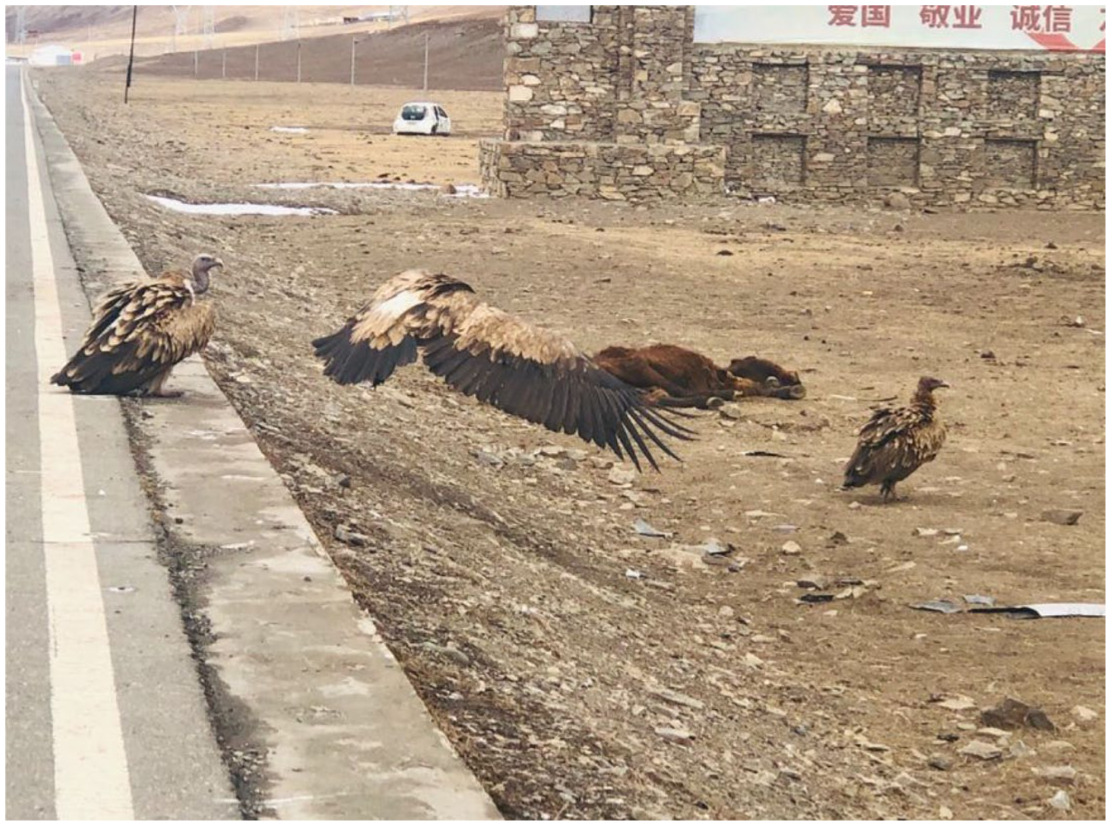
The crashed car, dead yak, and Himalayan vultures, Gyps himalayensis (6th, March, 2023).
This event exemplifies the contingent nature of wildlife-tourist interactions, which are mediated through a complex constellation of material, spatial, and social conditions. The concept of ferality draws attention to the necessity of respectful co-creation of a shared space in which human curiosity and wildlife behaviour can coexist – sometimes harmoniously, sometimes in tension. These relationships are not fixed or predetermined; rather, they are fluid and emergent, shaped by shifting dynamics of attention, care, and restraint in the presence of wild animals. Crucially, the dead yak, struck and abandoned due to a vehicular accident, inadvertently created an opportunity for vultures to feed, which in turn allowed for a rare and intimate observational moment for tourists. The car, thus, becomes a material mediator within a larger multispecies assemblage (Ong et al., 2023; Rantala et al., 2024). Indeed, the vultures’ behaviour itself had been altered by prolonged exposure to human activity, exemplifying how animals adapt to, and are shaped by, anthropogenic landscapes.
Pastoral affect
Engagement with Tibetan pastoralists – particularly through observing and learning their practices of treating, respecting, and caring for animals – has emerged as one of the most meaningful and distinctive aspects of wildlife tourism on the Tibetan Plateau. This process of learning transcends individualised sentiment or subjective appreciation; it cannot be reduced to a matter of personal disposition. Rather, it constitutes the expression of a collective affective force that draws tourists and Tibetan communities into a shared experiential field. This dynamic interaction forms another critical dimension of wildlife-tourist sociality.
Such a force disrupts and decentres the tourist’s sense of autonomous subjectivity, provoking moments of affective disorientation and ontological unsettlement (Deleuze and Guattari, 1987). Here, affect operates more than as a private emotional state, but as an embodied intensity – a visceral sensation arising in the liminal space between movement and stillness (Massumi, 2002). It moves through and between bodies, human and non-human alike. It is registered in unconscious physiological responses to external stimuli, capturing the raw intensity of experience prior to its symbolic interpretation (Rutherford, 2016). Weik von Mossner and Weik von Mossner (2017) further conceptualises this as an ‘affective ecology’, where bodies, landscapes, cosmologies, and more-than-human agencies converge in potent, embodied encounters that resist conventional boundaries between nature and belief. In this way, affect facilitates the continued reproduction of indigenous ecological narratives and experiential worldviews (Singh, 2018).
Within the domain of wildlife tourism, tourists are themselves subject to the same environmental and social forces that shape the everyday lives of local communities. Immersed in these shared landscapes, tourists become embedded in affective assemblages (Ong et al., 2023), which are composed of dynamic interactions among humans, animals, landscapes, and material infrastructures. On the Tibetan Plateau, these assemblages are particularly shaped by alpine ecologies, highland topographies, pastoralist lifeways, and Tibetan Buddhist ontologies (Allison, 2015; Miller, 2000; Pachuau and van Schendel, 2022; Smyer Yü, 2015). For centuries, such forces have underpinned Tibetan pastoralist modes of dwelling, and contemporary tourists are now drawn into this multispecies milieu. Through touring participation, tourists and pastoralists alike co-produce affective and relational engagements with non-human others. These experiences transcend isolated subjectivities, forging collective forms of emotional and material attunement to life in high-altitude, more-than-human worlds.
How would you feel if you encountered a wolf in the wild? For most people, the instinctive response would likely be fear and an acute awareness of potential danger to life. In contrast, during a wildlife tour, tourists are often eager to get as close as possible to a wolf, driven by a desire to capture a rare and thrilling moment. Equipped with protective gear and accompanied by guides or guardians, tourists frequently prioritise recording such encounters – often at great cost – over considerations of long-term consequences for the wildlife or the impact on future visitors. On the Tibetan Plateau, such encounters remain rare, as the relatively low number of tourists means that wild animals predominantly co-habituate with Tibetan herders rather than with transient human visitors. Tibetan herders maintain a distinctive relationship with wolves, characterised by a cultural ethos of non-aggression and coexistence.
For Tibetans, encountering a wolf on the road is considered an auspicious event, signifying good fortune and a successful journey to their destination. While wolves do occasionally hunt young yaks, herders respond by driving the predators away to protect their livestock, yet they refrain from retaliation or attempts to harm the wolves. This non-confrontational approach underscores an ingrained cultural ethos of reverence for the natural world, reflecting a sophisticated moral framework grounded in Tibetan Buddhist principles of compassion and non-harming. Within this cosmology, non-human animals are regarded as sentient beings who may have once been one’s own mother in the cyclical existence of samsara (Simonds, 2023). Such an ontological stance engenders a form of interspecies kinship that informs local ethical responses to wildlife, prioritising coexistence over conflict.
One time, I found myself immersed in the embodied practice of wolf-Tibetan pastoral enskilment (Ingold, 2000), experiencing the affective dynamics of multispecies encounters as a participant conditioned by the same ecological and cultural forces. The wolf, appearing indifferent to my presence, behaved as it would under ordinary circumstances, showing no particular concern or heightened awareness of me (see Figure 4). Instead of retreating, the wolf approached our motorcade with measured curiosity. As our convoy slowed down, I felt a surge of excitement and instinctively reached for my phone to capture the moment. The Tibetan driver, however, cautioned me to remain in the car and advised me to take photographs through the window first, a reminder of the balance between maintaining safety and preserving the natural flow of the encounter. The wolf continued its approach, pausing briefly to survey us before trotting away and ascending a distant hill. After the wolf had moved further into the landscape, we disembarked from the vehicle. In an intriguing display of cultural practice, the Tibetan companions began calling out in a distinctive tone – ‘ki hi hi’ – a sound uniquely associated with excited communication. To our delight, the wolf paused mid-ascent, glancing back at us briefly before disappearing over the ridge.
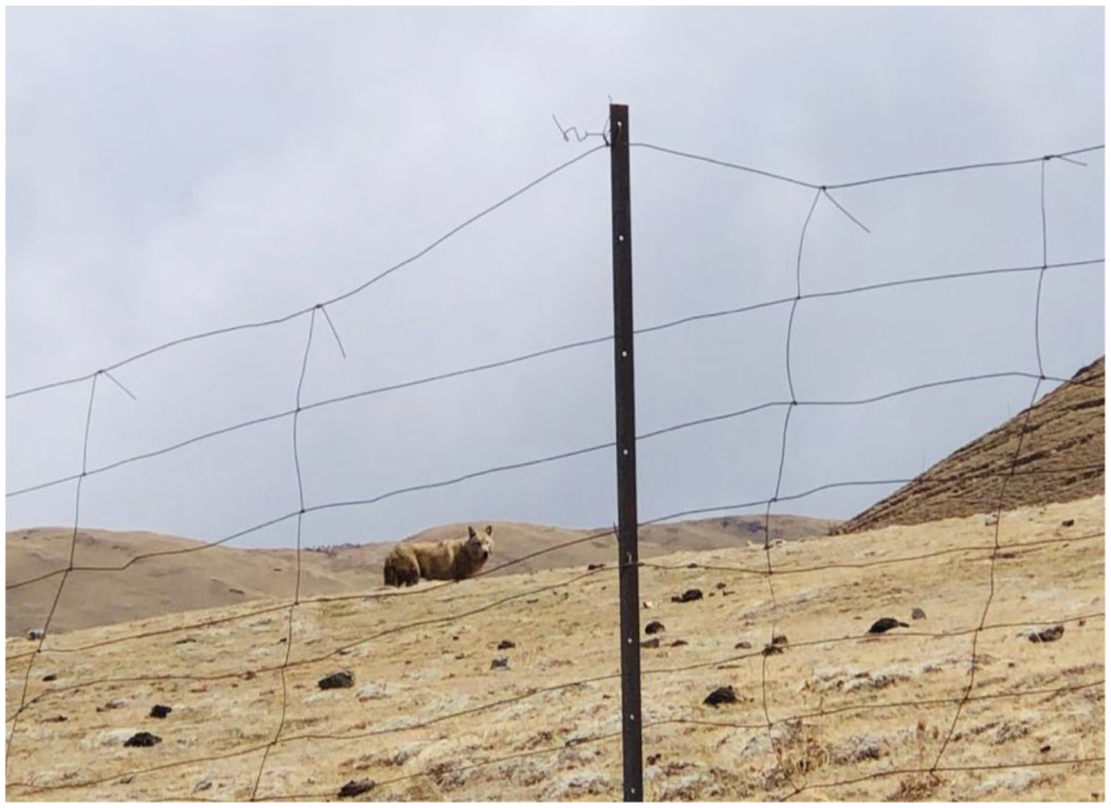
The encountered wolf during the driving (29th April, 2024).
Encounters of this nature are unlikely to occur along major roads or in proximity to towns, where the increased human presence generates a tense atmosphere that typically drives wolves away. I asked my Tibetan interlocutors why neither humans nor wolves seemed particularly afraid of one another. Their response was revealing: since humans do not actively harm wolves, and even if a wolf occasionally preys on a young yak or sheep, such acts are considered within the bounds of natural order and do not warrant retaliation. This reflects a longstanding ethical disposition, wherein Buddhist principles of compassion are interwoven with the pragmatic realities of pastoral livelihood. The coexistence of these ethical and ecological sensibilities underpins a relational mode of being that permits a form of peaceful co-habitation. In this context, tourists – particularly those who behave respectfully and move through the land in pastoral-like rhythms – may be perceived by wildlife, including wolves, as akin to local herders. Thus, the serendipitous encounters facilitated by wildlife tourism on the Tibetan Plateau can, at times, mirror traditional pastoral engagements with the more-than-human world.
Through this pastoral affective intensity, I was deeply embedded in the cultural practices of Tibetan pastoralism and the unique geo-ecological conditions of the plateau. For tourists, such encounters provide an opportunity to engage meaningfully with these cultural and environmental contexts, fostering a sense of humility and curiosity. Rather than simply capturing a decontextualised photograph of a wolf, visitors might instead experience a profound and enduring connection through these affective interactions.
This contextualised and immersive experience underscores the importance of understanding the pastoral affect – a term that could be adapted and replaced by other contextualised affective frameworks such as the marine affective in seafaring communities or the hunting affective in regions where subsistence hunting is practiced. In these varied settings, the dynamics of human-animal interaction take on culturally specific forms, grounded in the material and ecological realities of their environments. For intrusive visitors, such meaningful and affectively charged encounters in these more-than-human assemblages offer an opportunity for self-reflection. By situating themselves within these relational networks, tourists can come to understand their own role as participants in a complex web of human and non-human interactions, transforming their experiences into more thoughtful and meaningful engagements with the natural and cultural world.
Conclusion and potentials
Returning to the questions that initiated the inquiry – how might we learn to live in a world that is already deeply interconnected, fragile, and co-constituted by all living beings? And how might tourism contribute to addressing both social and theoretical challenges in the Anthropocene? This article has sought to propose tentative answers through the development of a conceptual framework for wildlife-tourist sociality. By foregrounding the dynamic interplay between humans and non-human species, this framework seeks to explore the complexities of wildlife tourism as experienced on the Tibetan Plateau. In particular, the concepts of wildlife spectatorship, ferality, and pastoral affect are positioned as key ethnographic cornerstones for understanding these interactions. It demonstrates the strengths of ethnographic methods in capturing grounded, more-than-human socialities in the context of the Anthropocene, offering insights of particular value to the field of tourism studies.
More specifically, this article contributes an original ethnographic account of high-mobility wildlife tourism, as practised on the Tibetan Plateau – characterised by long-distance driving, expansive transportation infrastructure, unpredictable and serendipitous encounters with wildlife, and a lack of stabilised, curated viewing sites. Wildlife here co-habituate with local Tibetan communities who, as both pastoralists and sometimes tour guides, actively participate in the shared sociality of tourism. There is currently relatively little research on this kind of mobile, incidental wildlife tourism.
In addition, the article highlights how local Tibetan communities hold extensive knowledge of wildlife – rooted in pastoral lifeways and religious cosmologies – which shapes tourist encounters in affective and epistemological ways. While ‘pastoral affect’ foregrounds shared sensibilities and embodied relations, it is also necessary to attend to the deeper cultural and cosmological frameworks through which Tibetan people engage with wildlife. For instance, vultures are understood as sacred participants in the life-death cycle, while snow leopards are revered as the guardians of mountain deities. These symbolic, cosmological dimensions of human-animal relations structure the terrain of wildlife tourism and merit further ethnographic exploration beyond the affective register.
Footnotes
Acknowledgements
I am deeply grateful to Emily Woodhouse and Lewis Daly for their insightful feedback on this article and their supervision during the course of research. I extend heartfelt thanks to my Tibetan interlocutors for their generous engagement and support in the field. I am also indebted to the anonymous reviewers for their thoughtful comments and suggestions, which have helped to sharpen and refine this manuscript.

Ethical considerations
This research has been approved by the Institutional Ethics Committee of Department of Anthropology, University College London (protocol code RA067797/1, issued on October 19, 2022).
Consent to participate
Informed consent was obtained from all subjects involved in the study. The participant information sheet and consent form are uploaded separately.
Funding
The author disclosed receipt of the following financial support for the research, authorship, and/or publication of this article: This research was partially funded by the General Project of the National Social Science Foundation of China (Grant Number 23BMZ080); The Chongqing University Central Government Basic Research Fund Project (Grant Number 2022CDJSKJC37); The ASA / Radcliffe-Brown Fund for Social Anthropological Research 2025, Royal Anthropological Institute.
Declaration of conflicting interests
The author declared no potential conflicts of interest with respect to the research, authorship, and/or publication of this article.