




Abstract
This study investigates the dynamics of tourism representation, with a particular focus on self-orientalism, the pervasive influence of Western narratives, and the emergence of strategic self-representation. Using audio-visual discourse analysis, the study analyzes ASEAN tourism videos from 2014 to 2023 to explore how these media artifacts either reflect practices of (self)-orientalism or demonstrate strategic self-representation within a postcolonial context. The findings show that while (self)-orientalism reveals the persistent influence of Western discourse on Asian identities, the evolving narratives in recent promotional videos illustrate a motivated strategy for more autonomous and diverse self-representation. This research highlights the ongoing influence of Western discourse while emphasizing the emerging trend toward more autonomous self-representation in promotional media.
Tourism, a key driver of global economies, has been associated closely with global media representations, and tourism promotional videos function as powerful tools for shaping narratives and perceptions. Said, 1978 work on the subject revealed how the West had constructed an image of the East as “the other,” a passive entity to be explored, exoticized, and dominated. This narrative, rooted in colonial history, has had lasting repercussions on how the East perceives and presents itself. In this context, for example, Southeast Asian nations, rich in cultural and natural tourism resources but historically not positioned as dominant colonial powers, often struggle between asserting their own identities and navigating how those identities are perceived through the lens of Western eyes. Historically, the concept of the “Orient” has been shaped largely by the Western gaze, leading to skewed perceptions and inherent biases, a phenomenon termed “orientalism” (Said, 1978).
The historical legacy of colonialism plays a significant role in this context, as the narratives constructed through tourism media frequently echo colonial tropes that perpetuate stereotypes and marginalize local voices and experiences. Meanwhile, it is also important to recognize the presence of self-consciousness and autonomous actions by local communities, which deserve investigation for their role in challenging and reshaping these narratives. To explore this tension, I conduct an audio-visual discourse analysis of ASEAN tourism promotional videos. I will examine images, words, and various film techniques within the videos to understand the themes of self-orientalism and strategic self-presentation. While these videos are a few of many produced by ASEAN, they offer a useful glimpse into the broader promotional strategies of the region.
Postcolonial Theory and Decolonization
The post-colonial theory is fundamentally a political-economy paradigm concerning the colonial power and subalterns. Primarily, based on the colonial history and imperialist expansions of West Europe, the theory addresses how West Europe conquered and controlled their colonies—both in the form of economic plunder and cultural invasion; and how the colonies responded to this process of subjugation.
Postcolonialism can be seen as a theoretical resistance to the mystifying amnesia of the colonial aftermath. It is a disciplinary project devoted to the academic task of revisiting, remembering and, crucially, interrogating the colonial past. The process of returning to the colonial scene discloses a relationship of reciprocal antagonism and desire between coloniser and colonised. (Gandhi, 1998: 6)
Focusing on subjugating colonial identity and dehumanization, Fanon (1967) emphasized the physical and mental violence imposed by the colonial process. In his argument, colonialism persisted after the geographical colonial occupation. The psychological harm—inculcated servile mentality from the colonists to the natives—reflected deeper inequality in a post-empire world. Therefore, by interrogating racial subjectivity with psychoanalysis, he called for “total liberation” (Fanon, 1988) that asked for continuous resistance from the enslaved people.
Spivak (1988) subaltern study drew attention to the “subaltern consciousness” (p. 285) which also laid a foundation for postcolonial theory. She defined the subaltern as “a space of difference”: the social groups that deviate from the ideal—that have limited access to the hegemonic discourse. She argued that subaltern people need consciousness to represent themselves; saying the subaltern cannot speak is like saying there is no justice (Paulson, 2018).
Facing the domination of elite discourse and elimination of Indigenous voices, the subaltern is called to resist the Eurocentric structure of consciousness. Stating that the expansion of the West is not only economic and political but also educational and intellectual, Mignolo (2007) elaborated his conception on the decolonization of knowledge and identity—a decolonial epistemic shift, urging a reflection on “the emancipating ideals of modernity in the perspective of coloniality” (p. 469). Jefferess (2008) viewpoint highlighted the process of re-humanization: “Reconciliation, as it is constructed within the TRC, seeks to re-humanize all parties involved in apartheid and now the new South Africa” (p. 165). In a postcolonial theoretical mode, the self-consciousness of representing the subaltern themselves could be a critical point for changing the communication imbalance. A stronger media power from the Third World requires more dynamic self-representation from indigenous narratives. McGinty (2012) revealed how American Muslims defend their identity, fighting against stereotypes in Western news reports—they select prominent local narratives who are capable of speaking for their own community. By fostering indigenous narratives, the subaltern consolidates the construction of identity that asserts an inseparable part of local history and a distinction from “the colonists.”
From orientalism to self-orientalism
The concept of Orientalism (Said, 1978) describes how the Western world defines “the East” as an external, homogeneous, and discrete group. Generally, it is a notion that belongs to post-colonial theory, while it highlights that the colonists formed a sharp binary between “good” and “evil,” further erasing the Indigenous voice or limiting their resistance to the colonial authorities (Parry, 2004).
Orientalism can be discussed and analyzed as the corporate institution for dealing with the Orient – dealing with it by making statements about it, authorizing views of it, describing it, by teaching it, settling it, ruling over it: in short, Orientalism as a Western style for dominating, restructuring, and having authority over the Orient. (Said, 1978: 3)
Said’s work of Orientalism revealed the division between the “superior” and “inferior” parts of the world, especially the pejorative and stereotypical nature of the Orient in Western discourse. The depiction of the East as primitive and irrational legitimizes the Western intervention and justification of the colonial process (Said, 1997). Apart from the stereotypical representations and binary oppositions toward the East, the orientalist discourse projects an inclination of “othering.” Navarro (2010) highlighted the “agreed cultural paradigm” from west-dominated texts, where the Islamic world is generalized as a monolithic and deleterious ethnic group. She also noted that Muslim “others” (especially women) are labeled as “victims of their own culture and threats to ours” (p. 98). Pua and Hiramoto (2018) examined the portrayal of East Asian characters in James Bond films, highlighting how these secondary characters are often depicted with exaggerated racial traits to emphasize Bond’s identity as a sophisticated Englishman. This portrayal showed how Orientalist “othering” reinforces the exoticization and othering of East Asian cultures within popular media.
In brief, the Orientalists believe that it is undeniable that the East is on the periphery while the West is positioned at the center of the world. On that basis, Self-Orientalism arose as an extension of Orientalism. The Orient world, which suffered the history of subjugation, internalizes and consolidates the Western Orientalist knowledge itself (Bhabha, 1992). In this context, Orientalism is not purely a First-world conception, but the combination of Western and Eastern changing socio-cultural and ideological conditions (Yan and Santos, 2009): the Eurocentric representations of the East have been incorporated into the self-images of Asians. Thus, the self-produced Oriental images are rooted in the interpretation and representation of the Asian world.
Moving beyond orientalism
Despite its groundbreaking contribution to postcolonial studies, Said’s concept of Orientalism has faced several criticisms in the development of de-colonization and critical tourism study. In Said’s model, knowledge about and power over colonized lands are related together, which derives a binary, static opposition model that neglects the multiplicity of local historical, cultural, or sociopolitical contexts (Pinggong, 2019). In other words, he treated “the West” and “the East” as monolithic and oppositional categories, which simplifies the complexity within each. Besides, Orientalism has been criticized for ignoring the voices and agency of people in the East, who are often depicted as passive victims of Western discourse. For instance, Ahmad (2004) critiqued Said for constructing a binary opposition that ultimately denies the historical and political agency of the colonized, arguing that Said’s approach risks reproducing a form of “epistemic victimhood.” Similarly, Chatterjee (1993) contended that Said overlooks the ways in which anti-colonial nationalists and intellectuals actively reshaped Western discourses to assert their own cultural and political identities. In all, Said’s analysis focuses predominantly on how the West imagines and represents the East, while paying insufficient attention to how Eastern intellectuals, writers, and political actors have responded to, contested, or strategically engaged with these representations.
Therefore, the development of post-colonial theory in tourism studies has led to a more complex and nuanced understanding of Asian destinations and their self-representations. A review of journal articles on Asian tourism underscores the need for the indigenization—or Asianisation—of tourism scholarship (Yang and Ong, 2020). Rather than treating concepts such as Orientalism and self-Orientalism as uniform, coherent, and non-contradictory, some studies emphasize the importance of recognizing the distinct indigenous histories, cultures, and socio-political contexts of various Asian countries. These works draw attention to the complex social and political power relations that shape tourism narratives and representations. By doing so, they situate the self-representations of non-Western destinations within specific historical, cultural, social, and political frameworks (Deng, 2023), and give voice to non-Western subjects, including Asian tourists (Zhang, 2018).
For instance, Teo and Leong (2006) reveal how backpacker spaces are shaped by shifting power relations among diverse actors, including Asian and Western backpackers, local vendors, and tourism intermediaries. Asian backpackers actively negotiate their identities—resisting, conforming, and reshaping the tourist landscape. For example, Japanese and Singaporean travelers strategically congregate in nearby Thanon Rambuttri, forming alternative spatial and social practices. This nuanced, localized analysis foregrounded local agency, intra-Asian hierarchies, and the co-production of space within specific sociocultural contexts. Wei et al. (2021) offer a nuanced, contextualized view of Orientalism and self-Orientalism by examining how the Mosuo people at Lugu Lake navigate everyday power dynamics with tourists. Rather than passively accepting stereotypes (e.g. sexual freedom, matriarchy), the Mosuo strategically perform and exaggerate them to attract tourism, earn income, and subtly subvert the tourist gaze. This approach highlights how representation emerges through negotiation and acknowledges the agency and heterogeneity of local contexts. Besides, rather than relying on dependency theory to explain why wealthy men from the global North engage in sex tourism in developing countries, Chang and Chen (2013) argue that the rise in cross-border economic activity and travel among East Asians more accurately accounts for their participation in overseas sex-related consumption.
Tourism and Southeast Asian images
In the intricate postcolonial narratives, the tourism industry is often associated with narratives with Western concepts and imperialist discourses. Patil (2011) analyzed the documentary Timeless India about the construction of Orientalism in tourism practice: With a British accent, the male narrator refers to Calcutta as “tropical London” and Bombay as “Manhattan.” The video continues: “Around every corner, there is always some festival . . . You feel like you are in a film directed by an Oriental Cecil B. DeMille.” (Patil, 2011: 195)
These attributes provide a potential contribution to the studies on tourism representation. First, tourism itself is structured around spectacle and vision, and viewers actively engage with these spectacles through what Favero called “perspectival viewing” (Favero, 2007). The way people gained knowledge just by “seeing” otherness may hinder true intercultural dialog and reinforce hegemonic power structures under the guise of cultural appreciation (Favero, 2007). Sin and He (2019) examined how social media photography in voluntourism may reinforce power imbalances and colonial narratives, particularly through the “poor but happy” trope. Here, the Barbie Savior parody (a “White Savior” figure) serves as a reverse gaze and prompts self-regulation for fostering ethical reflexivity. Besides, tourism advertisements serve as the main source for foreign tourists to form exotic and monolithic impressions of a host country. The industry, dominated by metropolitan, white, male, and Western promoters, often creates images catering to similar audiences. Tourists frequently hold stereotypical and shallow views of destinations, influenced by sources like travel reviews, guidebooks, and media. Western tourists, in particular, harbor Orientalized perceptions, which are often reinforced by the non-Western destinations themselves (Ooi, 2005). Tourism promotions, cultural products, and museums perpetuate Orientalist imagery, with local tourism agencies shaping narratives to meet tourists’ expectations, thus reinforcing preexisting stereotypes (Ooi, 2005).
As tourism studies have come into the context of postcolonial studies, these concepts are reflected in common forms of audio-visual cues. Law et al. (2007) examined how the 2000 film The Beach reflects and shapes the tourist gaze, commodifying tropical landscapes. The film’s physical transformation of Maya Bay to fit Western imagination of destinations sparked backlash against its eco-imperialist impacts and provoked contested responses of Thai environmental activism. Burns (2004) examined six colonial-era postcards depicting Arabs in the Middle East and North Africa, and argues that the postcards are mechanical reproductions and visual texts that reflect colonial ideologies. They perpetuate stereotypes, legitimize imperialism, and objectify Arab people, especially women. Al Mahadin and Burns (2007) highlight how tourism uses visual cues like veils and camels to present the Arab world as primitive and oppressed, appealing to Western views of the “exotic” Middle East. McGee (2012) discusses early 20th-century performances by artists like Princess Rajah, who used exotic costumes and oriental dance to play into Western stereotypes of the mysterious, erotic “Other.” This exploitation of Orientalist imagery has evolved but continues in modern media, such as in the Pussycat Dolls’ video “Buttons,” which merges traditional and contemporary symbols to entertain a global audience. Nair (2017) analyzes British travel brochures that use visuals of the Taj Mahal and the Ganges to depict India as a land of ancient spirituality, neglecting its modern progress and reinforcing the notion of India as the timeless “Other.” Reversely, Hottola (2002) points out that Indian media also portrays Western women using symbols of liberation and exoticism with their depiction in Western clothing and behaviors that contrast sharply with traditional Indian values.
It is worth mentioning that the concepts of decoloniality and decolonial “autonomy” are also embodied and highlighted in audio-visual media. For example, the lens of Indigenous filmmakers like Alberto Muenala and Amaru Cholango highlights how Indigenous communities leverage audiovisual tools to reclaim and narrate their cultural identities and histories (Leon, 2023). These practices are framed not merely as forms of cultural expression but as acts of resistance against colonial legacies and a means to foster community self-representation and autonomy (Leon, 2023). Gutierrez (2023) discusses aural border thinking in soundwalking, which involves community participation to reinterpret spaces through sound, fostering a deeper understanding of spatial narratives. These previous studies focus on how audiovisual media can be a powerful means for Indigenous and marginalized communities to express and define their identities and histories.
Southeast Asia, historically a diverse and culturally rich region, has been shaped significantly by waves of colonization from European powers from the 16th to the 20th centuries. For instance, Indonesia was colonized by the Dutch, establishing the Dutch East Indies as a major colony; Vietnam, Laos, and Cambodia were colonized by the French, forming French Indochina; while the Philippines was colonized by Spain and later the United States, and Malaysia and Singapore were under British control (Legge, 1993; Reid, 2015). Arnold described the “environmentalist paradigm” in European thought, which highlights that European constructions of nature were central to the imperial project (Arnold, 1996). He explored how colonial science, especially botany, shaped the imagining of India as uniformly “tropical,” despite its diverse landscapes, and how this projection was complicated by real terrains that defied European expectations of tropical abundance (Arnold, 2006). Western sojourners increasingly contrasted the “Southeast Asian tropics” with industrial Europe—shifting from earlier fears of the tropics as inhospitable to a 19th-century “romantic portrayal” of an earthly paradise (Sunderason, 2022). Despite regional diversity, the tropics were broadly constructed as impoverished, disease-ridden, and dependent on external intervention—unsuitable for white settlement, yet still desirable (Arnold, 2000). This “edenic” imagery was partly rooted in the West’s Christian culture: many Europeans still carried the Biblical notion of the Garden of Eden, and some thought it was located in Asia. Thus, Asia was often subliminally cast as a land closer to origin and heaven—a spiritual “Shangri-La” of innocence (Sunderason, 2022). It is no coincidence that travelogs of Southeast Asia frequently referenced biblical or mythical paradise. Colonial writers described Borneo’s forests as “primeval” or Bali’s rice terraces as “emerald gardens,” invoking a sense that in these Eastern tropics one might glimpse the dawn of creation or a lost golden age.
A crucial (if less glamorous) aspect of colonial history is why and how local Southeast Asian populations catered to or cooperated with colonial powers. For one thing, it is essential to recognize Southeast Asia’s long history of anti-colonial resistance. For instance, in Vietnam, the Can Vuong movement (1885–1896) rallied Confucian scholars and loyalists to restore the monarchy and resist French rule (McLeod, 1992), while the Yen Bay Rebellion represented a shift toward more revolutionary forms of nationalism (Guillemot, 2019). In Myanmar, the Saya San Rebellion led by a former monk mobilized rural peasants in a revolt against British colonialism through a mixture of millenarian expectations, ritual, and Buddhist sensibilities (Aung-Thwin, 2008). However, instead of resisting outright at every turn, many Indigenous elites and communities found ways to adapt to colonial rule—sometimes out of coercion but sometimes as a calculated strategy. Historically, colonial rule integrated Southeast Asian economies into global capitalist markets by extracting tropical products on a massive scale, forcing locals to work in colonial enterprises, and using taxation to bind them to the cash economy, leaving many economically dependent and compelled to adapt (Matthews, 2020). This led to the cultural aspect: Southeast Asians strategically adapted to colonial dominance by learning European languages, adopting legal codes, and cooperating with colonial administrations to secure reforms or improve their status, as seen in the Philippines, where Filipino elites collaborated with American colonizers to gain gradual self-government and material improvements (Matthews, 2020). This process gave rise to the concept of “satisfying the West” in tourism - tourism marketing is becoming a method “to maintain and reinforce colonial discourse and the power relations and ideology it fosters” (Echtner and Prasad, 2003: 672).
Research questions and methodology
Previous studies on tourism highlight how Eastern nations are shaped by the Western gaze. Bryce (2007) discusses the Orientalist discourse in British tourist brochures, with Turkey representing the divide between Western modernity and Eastern passivity, while Egypt reflects European interventions in shaping Oriental knowledge. Putcha (2020) examines neocolonial Orientalist engagements in South Asia, linking historical representations to modern travel forms that perpetuate paternalistic views of the region. Feighery (2012) explores how Arabian Peninsula tourism, especially in Oman, manifests self-orientalism by echoing Western narratives. Additionally, Valdez et al. (2017) explore how the Philippine tourism campaign, “It is more fun in the Philippines,” commodifies local cultures by resemiotizing grassroots contributions into a unified global brand, thus reinforcing asymmetrical hierarchies and further embedding Orientalist perspectives into tourism discourse.
However, previous studies on tourism have not yet examined the relationship between self-orientalism and constructive self-image display. As tourism becomes increasingly intertwined with global representation, the way countries portray themselves can significantly influence international perceptions, economic opportunities, and cultural diplomacy. Understanding this relationship helps to reveal whether Southeast Asian countries reclaim narrative autonomy which represents a step toward decolonizing cultural representation. As socio-economic, political, and cultural contexts continue to evolve, it becomes essential to reexamine cultural representation to identify emerging patterns. To address this gap, it is necessary to pay attention to a comprehensive analysis of tourism promotional videos about whether they maximize the obedience to self-Orientalism or reflect the effort to jump out of this concept, and whether the Eastern nations have shifted in self-presentation through changes in content, discourse, and visual effect. Furthermore, previous research has often overlooked the perspective of Asian practices by failing to consider local historical, economic, and political contexts. This study, therefore, contributes to the field by offering a nuanced understanding of how self-representation in tourism media has evolved, particularly from the viewpoint of Asian cultural practices.
In this context, the tourism promotional videos from Southeast Asian countries are particularly significant to be selected as the research object here, as they represent the efforts by Southeast Asian nations to navigate the complexities of Western gaze and self-representation. In 2014, the YouTube account ASEANFeed compiled tourism videos in terms of culture, landscape, people, shopping, and recreation from countries of the Association of Southeast Asian Nations (ASEAN), and issued an integrated country-by-country tourism promotion video on YouTube to depict “the most diverse, beautiful, enjoyable, and accessible landscapes in the world” <https://youtu.be/U-a6yOp0CyI?si=KzE-i4ky9i8WQK6R>. With nearly 200,000 views after its issuance, it became a well-circulated official tourism promotional video for Southeast Asia on YouTube. Afterward, updated tourism video collections from ASEAN countries were issued through the ASEAN Analytics account on YouTube in 2020 <https://youtu.be/xOEs4zcZHiE?si=RSoLRi3VO0AA5MLY> and 2023 <https://youtu.be/DGNQArt0Wlk?si=SpGgyPWsAyCRa5oM>, which also took the same country-by-country format. Although ASEANFeed and ASEAN Analytics are not directly related to ASEAN or member countries, they provide information about the economy, politics and development within ASEAN and compile tourism videos that were made by the official tourism agencies of ASEAN member states.
The videos are selected since they represent the effort of ASEAN member countries to construct their identities. Spanning from 2014 to 2023, they capture a critical period of sociopolitical and cultural transformation, allowing for comparative analysis of evolving narratives over time (Chia, 2014; Park, 2024). Additionally, their wide accessibility and rich audio-visual format provide an ideal dataset for discourse analysis. The strong user base and popularity of YouTube make the videos have high global reach and be viewed by people from different cultural backgrounds. Furthermore, these videos differ significantly in basic visual elements, such as color schemes, imagery, and narrative focus, reflecting a shift in how Southeast Asian identities are portrayed. These differences make it essential to investigate the self-representation strategies and postcolonial elements embedded within the videos. Furthermore, given the global impact and attractiveness of tourism media, understanding how these videos shape perceptions of Southeast Asia is crucial. Analyzing these evolving representations not only highlights how ASEAN countries balance cultural authenticity with appealing to a global audience but also provides insights into how regional identity is constructed and projected in a postcolonial context.
This leads to the following research questions:
The study is carried out within the methodological framework of audio-visual discourse analysis. Foucault (1972) defined discourse as a body of knowledge made up of certain subjectivities, methods of speaking and perceiving, and power structures. Scholars believe that discourse is socially constitutive, which means that social contexts where the discourse is produced will affect the texts (Sunderland, 2004; Zotzmann and Regan, 2016). Critical discourse analysis (CDA) is used as a tool for analyzing “the way social power abuse, dominance, and inequality are enacted, reproduced, and resisted by text and talk in the social and political context (Van Dijk, 2001: 352). CDA proposes a methodological framework that reveals power relations through what we see on screen and investigates how “texts arise out of and are ideologically shaped by relations of power and struggles over power” (Fairclough, 1993: 135).
The potency of audio-visual discourse analysis, particularly its visual component, stems from its capacity to illuminate the nuanced layers of meaning inherent in audio-visual representations. Zabalbeascoa (2008) stated that audiovisual text is “a communication act involving sounds and images” (p. 21). He explains that the verbal elements consist of the words heard in the audio component and the words read in the visual component. On the other hand, the non-verbal elements include music and special effects in the audio dimension, while the visual dimension comprises the pictures and photography.
Visual images, similar to written or spoken texts, are not mere passive reflections of reality; rather, they actively construct, represent, and negotiate meanings (Kress and Van Leeuwen, 2006). These visuals with symbols, metaphors, and ideological underpinnings become powerful tools in the articulation and reinforcement of discourses. Audio-visual analysis, in this sense, becomes an instrumental methodology for revealing the hidden ideologies, power dynamics, and cultural assumptions embedded within these visuals (Chandler and Cypher, 1948). By scrutinizing the semiotic choices, framing, composition, and juxtaposition in visual texts, scholars can gain insights into the dominant narratives being propagated and the power dynamics they uphold (Rose, 2013).
Therefore, audio-visual discourse analysis is the interpretation of wide and eclectic ranges of textual materials, both visual and written (Rose, 2013). Using audio-visual discourse analysis, the study will be able to critically interrogate the context, socio-political significance, historical setting, intertextual connotations, and cultural role of (audio)visual texts from the ASEAN Tourism Ads. It makes critical visual semiotics and Iconography analysis in both denotation and connotation in order to “denaturalize” the video to highlight its socially constructed meanings and ideological work. Due to the low proportion of dubbing and text in this video, this article will focus primarily on the video visuals (protagonist, camera language, tone, story, etc.), supplemented by discourse analysis of music and narration. Drawing inspiration from Foucault’s emphasis on the contextual influences on discourse (Foucault, 1972) and the importance of acknowledging non-discursive contexts including Image and Sound (Heracleous and Hendry, 2000), this study is consciously framed within the interplay between the researchers’ backgrounds and the tourism advertisements under examination.
As an Asian researcher trained in Western academic traditions, the author embodies a duality of perspectives that offers both challenges and advantages. The author’s cultural proximity, influenced by Asian identity, extensive travel experience, and rich personal social networks across various Southeast Asian and other Asian countries, provides a non-Western lens that is more attuned to localized cultural patterns and indigenous perspectives. Conversely, Western academic training presents a risk of inadvertently applying dominant Western analytical frameworks. In this case, the author pays attention to navigating the balance of being both an insider, due to cultural and national affiliations, and an outsider, shaped by Western academic influences. In this way, this dual positioning offers a rich tapestry of insights. Furthermore, the study received diverse feedback and constructive discussions from individuals of various ethnicities, identities, and nationalities at one of the discipline’s top conferences. This exposure to multiple perspectives helped to further mitigate potential biases.
Analysis
The selective reflection in the 2014 ASEAN tourism advertisement
The representation of Southeast Asians in the 2014 ASEAN tourism campaign is characterized by ethnic and cultural symbols and servers. This is manifested in portrayed identity, cultural imagery, and interactions. The portrayed identity of Southeast Asians is primarily that of the observed, positioned as passive figures being looked at or interacted with by predominantly Western travelers, with cultural imagery overemphasizing traditional elements through stereotypical markers and interactions often portraying locals in server or passive roles, thereby reinforcing a relationship contrast where Western visitors are active explorers and locals are facilitators of their experience.
Portrayed identity—The observed
Through an Orientalist lens, the video’s visuals, including intricate architecture and ceremonial garb, highlight the prevalent theme of the “exotic.” These images prompt Western audiences to envision a realm that is full of age-old customs and distinct from their familiar context. Such representations of the “exotic” show how locals are often positioned as passive figures being looked at or interacted with by travelers, predominantly from the West. For example, Western travelers are portrayed as a hero venturing into uncharted territories. At 0:51, the fragment of Thailand paints the Western man as an adventurer, appreciating the beauty and mystique of Asian attractions. This adventurous spirit is accentuated as he takes selfies on a boat while the local elderly men, reduced to mere background, navigate the waters for him. The Western traveler’s exploration of the “exotic” East is further illustrated as he rides traditional modes of transportation, such as an ox and an elephant, transforming cultural symbols into recreational activities.
From 3:27 onward, every local person is showing smiles, emphasizing their roles as ever-welcoming hosts to the Western visitors. In other parts of the video, local workers and performers often appear in groups for extended periods of time. Their individuality is overshadowed by their collective identity as Asian “Others.” Whether the local Asian groups are catering to Western guests or performing local traditions, they seem to directly show the position of welcoming outsiders coming for sightseeing. Such perceptions run the risk of reinforcing the position where the East is perpetually cast in the role of the timeless “other,” defined more by its differences from the West than its own intrinsic values and progressions.
In this way, Southeast Asian countries intentionally place themselves in the observed position, aiming to appeal primarily to their target market—Western customers, who constitute the majority of international visitors. This strategic positioning reflects an inherent imbalance, as the portrayal of local cultures is often shaped by the expectations and preferences of these Western observers. Consequently, despite the intention to celebrate the distinct local scenery and traditions, the representations risk reflecting a colonial gaze, where Western perspectives dominate the narrative. At 17:18, the shot shows a Western woman embracing the scenery; the woman with outstretched arms occupies the main position and foreground of the painting, taking up half of the frame. The image may originally be intended to show her happiness but indeed faces the risk of conveying a sense of ownership: a colonial entitlement where the East is perceived as a territory to be possessed, admired, and dominated (see Figure 1).

Screenshot from the tourism video in 2014 that possibly reflects the colonial gaze.
A colonial gaze—a perspective that visualizes and represents the East through a lens tinted with Western preconceptions and power—arises from this. It shows neocolonialism where the West “consumes” the East. According to Said (1978), the “colonial gaze” highlights the way the West has historically perceived and represented the East. The video illustrates this notion through its visual metaphors. After 25:30, the video shows two consecutive and implicitly connected scenes: firstly, a lizard is eating its prey, with its keen eyes surveying the surroundings. Then after 2–3 seconds, a Western man lying prone on the ground with the lizards is shown in the center, positioned as if stalking or observing something intently like the animals next to him. The immediate visual connection between the lizard, a natural predator, and the man’s posture evokes a parallel between nature’s innate hunting mechanisms and the man’s “predatory” tourist gaze. This visual parallel might suggest that tourism, especially by Westerners to Eastern or culturally different regions, can be perceived as a form of neocolonialism, where the tourist’s gaze objectifies and “consumes” the culture and environment they are observing (see Figure 2).
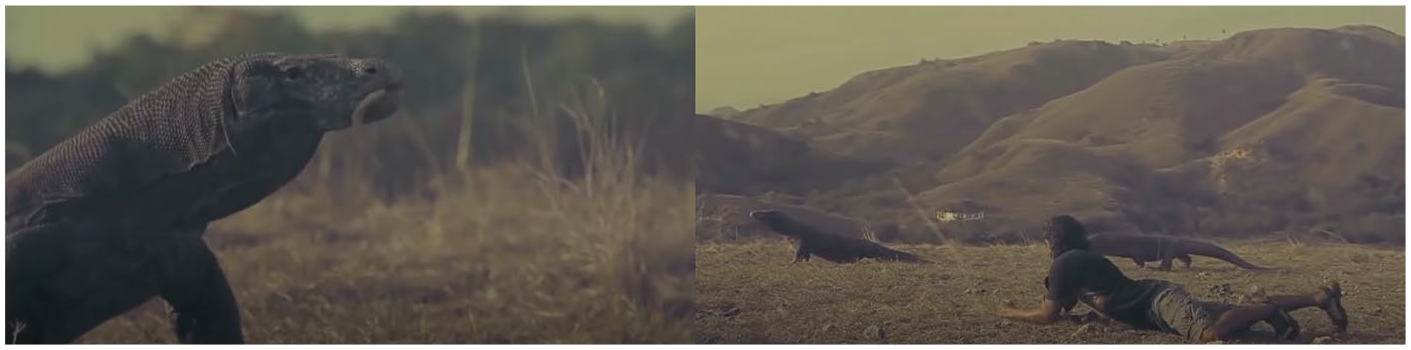
Screenshots from the tourism video in 2014 that possibly reflect the colonial gaze.
This enchantment with the “exotic” arises from the complex history of Southeast Asia facing their distinct colonial experiences by the West. Historically, Western colonizers would depict Southeast Asia as an “exotic” and enchanting realm, emphasizing its lush landscapes, unfamiliar cultures, and sense of adventure. Many 19th- and early 20th-century travelogs and memoirs convey a fascination with the tropics and a romanticized delight in returning to Asia’s shores, as seen in English traveler Beth Ellis’s account of arriving in Burma in 1898 with dreams of tiger shooting and cobra killing (Jacobs, 2025). Rudyard Kipling’s poem “Mandalay” epitomizes this romantic view, as a British soldier longs to return to Burma, drawn by the “spicy garlic smell” and “tinkly temple-bells” of the East (Marinou, 2015). The poem’s nostalgic refrain of “come you back” reflects a colonial sentiment of yearning for Asia’s vibrancy compared to England’s dullness.
For Western colonizers in Southeast Asia, framing the region as “exotic” had a dual allure: it fascinated the European public (justifying colonial expansion as a grand adventure) and implied that these lands were fundamentally different and thus in need of Western management. In other words, depicting Southeast Asia as a dreamy, “Other” world both entertained the imagination and reinforced colonial ideology. A historical view of Southeast Asia’s colonial experience has also pointed out how “tropical exoticism” functioned as an arm of the empire. The concept of “tropicality” encapsulates this: it was a Western discourse that exalted temperate Europe over the tropics while simultaneously romanticizing those tropics (Bowd and Clayton, 2005). In colonial scholarship and popular culture alike, Southeast Asia was painted as lush but lazy, fertile but fevered—essentially a fantasy realm awaiting Western exploitation or guidance. This view “fused science and exoticism”: Western geographers and writers would catalog exotic flora, diseases, or customs, all the while accentuating how different (and intriguing) the tropics were compared to Europe. Such depictions helped rationalize colonialism—if Southeast Asia was a land of endless jungles and “uncivilized” habits, then Western rule (with its railroads, schools, and law courts) could be portrayed as a benevolent gift bringing order to an otherwise “mysterious,” chaotic realm.
Cultural imagery—Traditionalism
Moreover, numerous instances highlight the depiction of Asians through traditionalism. For example, the whole video begins by presenting the Myanmar beach, with the sentence “Let the journey begin” in the center of the screen. Religious believers stand in front of religious buildings; fishermen work hard in the sun. These representative and symbolic activities in Southeast Asia that conform to the inherent impression reached the climax after 0:27. The vivid golden hues and intricate detailing of the edifice are juxtaposed with the figures in traditional attire. The local religious people wear their traditional clothes (see Figure 3).
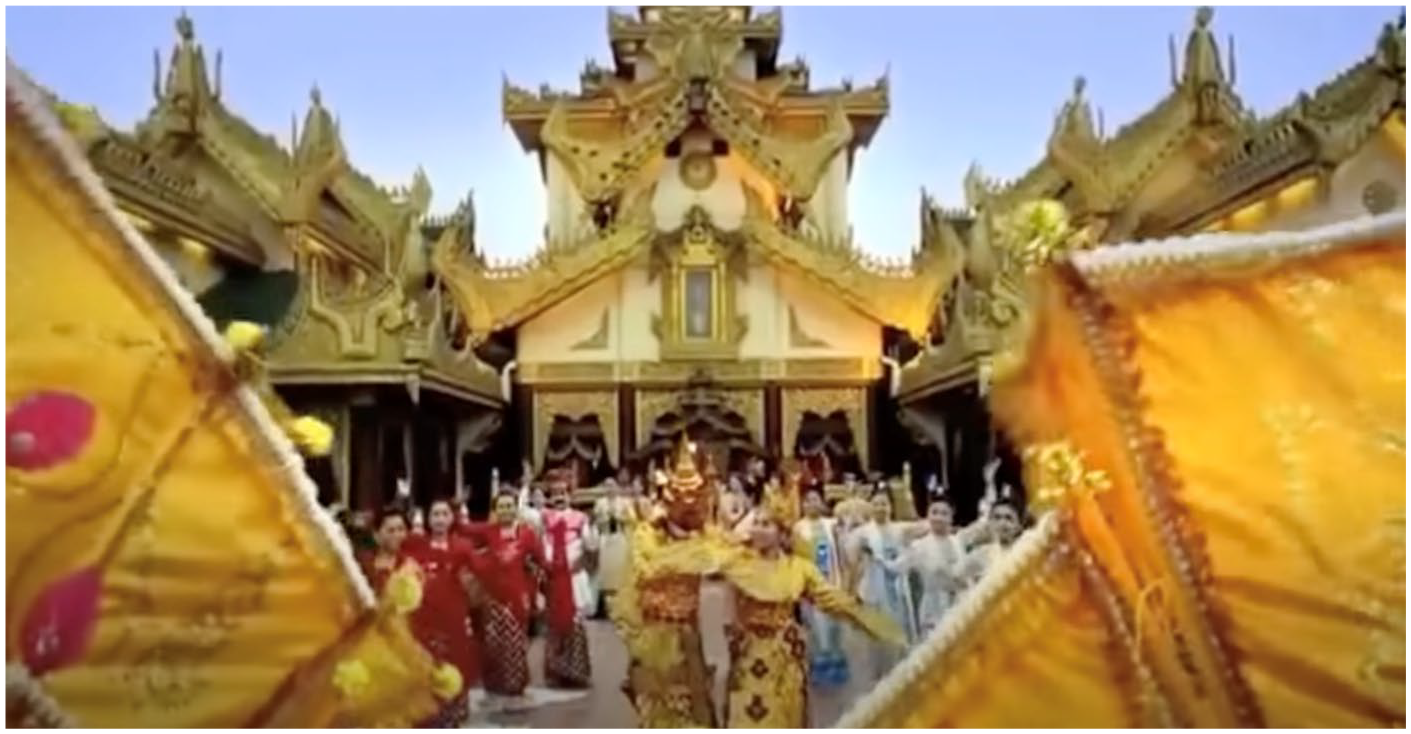
Screenshot from the tourism video in 2014 on local ethnic buildings.
Myanmar is a country that emphasizes its Buddhist heritage and traditional lifestyle as central to its tourism appeal. In Myanmar, being Buddhist is deeply intertwined with national identity, cultural heritage, and social life, from merit-making and temple rituals to guiding personal conduct and social norms. Buddhism in Myanmar dates back to the third century BCE when missionaries sent by the Indian Emperor Ashoka introduced Theravada Buddhism, which later became the dominant religious tradition (Aung-Thwin and Aung-Thwin, 2013). Over the centuries, Buddhism shaped the monarchy, social structure, and cultural practices, establishing a close relationship between the Sangha (monastic community) and political power. (Walton, 2016). The Buddhist politics of religious freedom also became a tool to protect race and religion (Frydenlund, 2018). Therefore, Myanmar’s tourism branding heavily leans on such Buddhist imagery to define its identity. The country has even been dubbed “The Golden Land” in tourism campaigns, a reference both to its fertile soil and unmistakably to its countless golden pagodas that dot the landscape (Jiang and Zhou, 2023).
As the video progresses, women in traditional attire, children dressed in customary clothes, and local religious figures draped in historic garb pervade the scenes. The depiction of a Philippine festive celebration from 5:34: During the more than 20-second clip, a local woman, seemingly the center of attention, dressed in intricate blue attire with a flamboyant headpiece first. Then local event participants are adorned in colorful, ornate costumes, with dancers wearing fiery red and orange costumes (see Figure 4). Many of these dances originated from rituals, royal ceremonies, or community celebrations, making them integral to the collective memory of local communities (Hughes-Freeland, 2022). Southeast Asian countries emphasize traditional dances to help reassert their cultural identity.
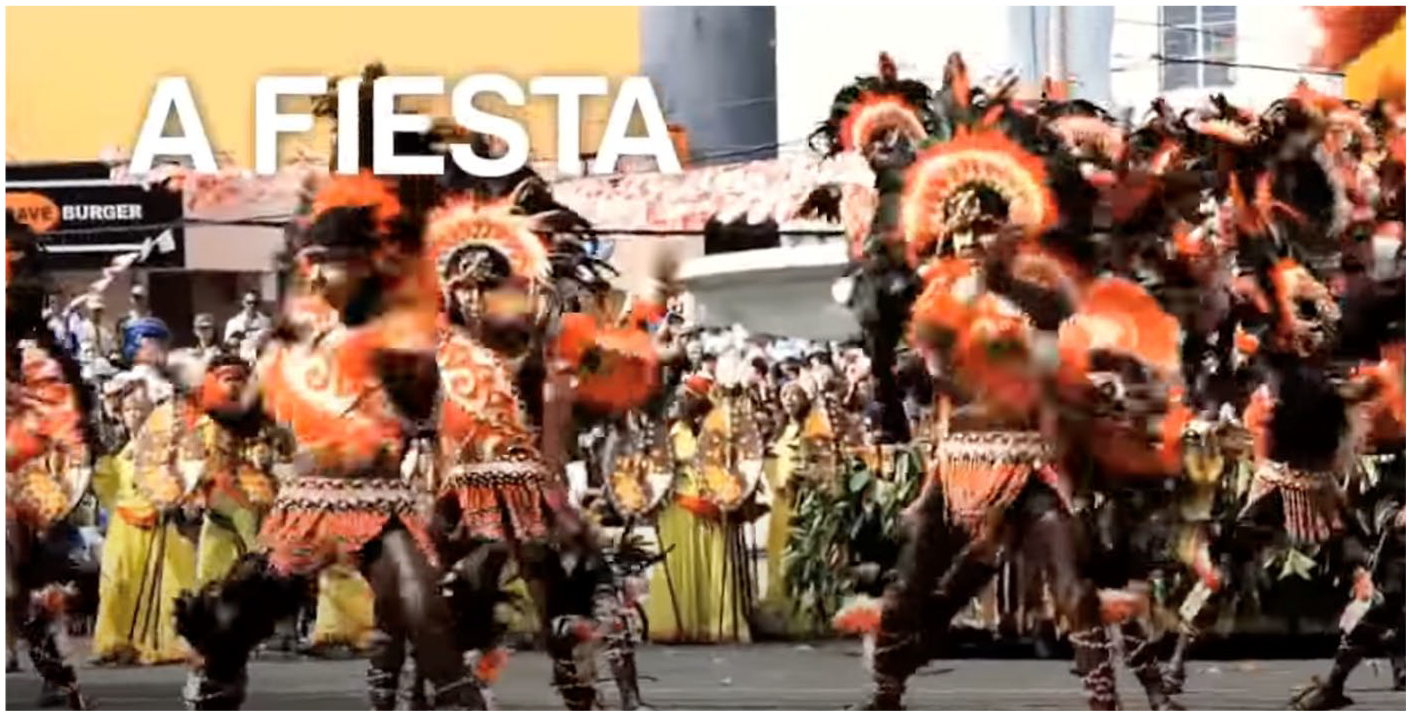
Screenshot from the tourism video in 2014 on local dancing.
However, although religious symbols and cultural traditions are intended to represent diversity and national identity, they might fall into the trope of unconscious backwardness (Echtner and Prasad, 2003). At 14:57, local religious figures with traditional clothes and places appear after a series of scenes on wild animals (see Figure 5). Such a combination can inadvertently perpetuate a view where these cultures, much like the animals, are seen as part of an undomesticated and untamed wilderness, rather than as complex societies with their own evolving histories and modernity.
Screenshot from the tourism video in 2014 on religious persons, buildings, and animals.
Linking the previous section, presenting a traditional image differentiates these countries from globalized urban destinations and promises travelers an “authentic” cultural experience (MacCannell, 1999). Western tourists frequently seek encounters with cultures they perceive as more spiritual, communal, or rooted in the past, as an antidote to modern life. Western engagement with Eastern spirituality has likewise taken on a consumerist form—under the spiritual-haven tourism imaginaries, Western tourists are drawn to destinations where Buddhist heritage, history, and culture are not only concentrated but also commodified (Choe and O’ Regan, 2020). For instance, Jain (2014) observed that modern postural yoga, once a countercultural discipline, has been assimilated into global consumer culture. Purser (2021) criticized the rise of “McMindfulness,” where Buddhist meditation techniques are marketed as secular wellness products divorced from their religious context. This commodification of spirituality parallels how tourism markets “authentic” spiritual experiences. Tourists seeking enlightenment or cultural immersion in Southeast Asia, such as temple visits, meditation retreats, or yoga, fit their expectations of an exotic, pre-modern spirituality (Arjana, 2020). Similarly, Lopez (2002) noted that contemporary Buddhism is, in part, a product of Western interpretations that emphasize universal wisdom and serenity. By capitalizing on this packaged spirituality, tourism campaigns provide a kind of spiritual “staged authenticity,” offering travelers the feeling of a transformative ancient experience—albeit one carefully orchestrated to meet their romantic expectations of the East (MacCannell, 1999; O’Connor and Kim, 2014).
Interaction: Subaltern status
Southeast Asian countries not only unconsciously present cultural elements that feel exotic to Western travelers but also often depict interactions that reinforce a server status. Due to the heavy reliance on tourism as a key economic driver, many ASEAN nations shape their tourism strategies to appeal to Western expectations, often highlighting hospitality and service. This economic dependency subtly influences how locals are portrayed, emphasizing their roles as hosts catering to foreign visitors. This recurring depiction of locals serving Western travelers echoes the historical power dynamics of the colonizer and the colonized, perpetuating a perception of passive Eastern identities. The representations in various visual media often carry with them vestiges of colonial legacies and the power dynamics inherent in them. By portraying Eastern cultures as the subaltern—or the inferior, subservient entities—these representations perpetuate age-old stereotypes and biases. The cultural activities, locals, and ethnic features are not only predominantly portrayed according to the Western standard of “specimen of exotic difference,” but also are deeply intertwined with inequalities of power. This includes the images of nakedness that were linked with colonial history (Mosse, 1985). Historically, for example, Indonesia’s national identity after colonialism was shaped partly by resisting Dutch-imposed stereotypes, while simultaneously grappling with Western influences that persisted in cultural representation. Despite efforts to assert a postcolonial identity, the remnants of colonial discourse continue to shape how Indonesian culture is presented in both domestic and international contexts (Purwanta, 2018).
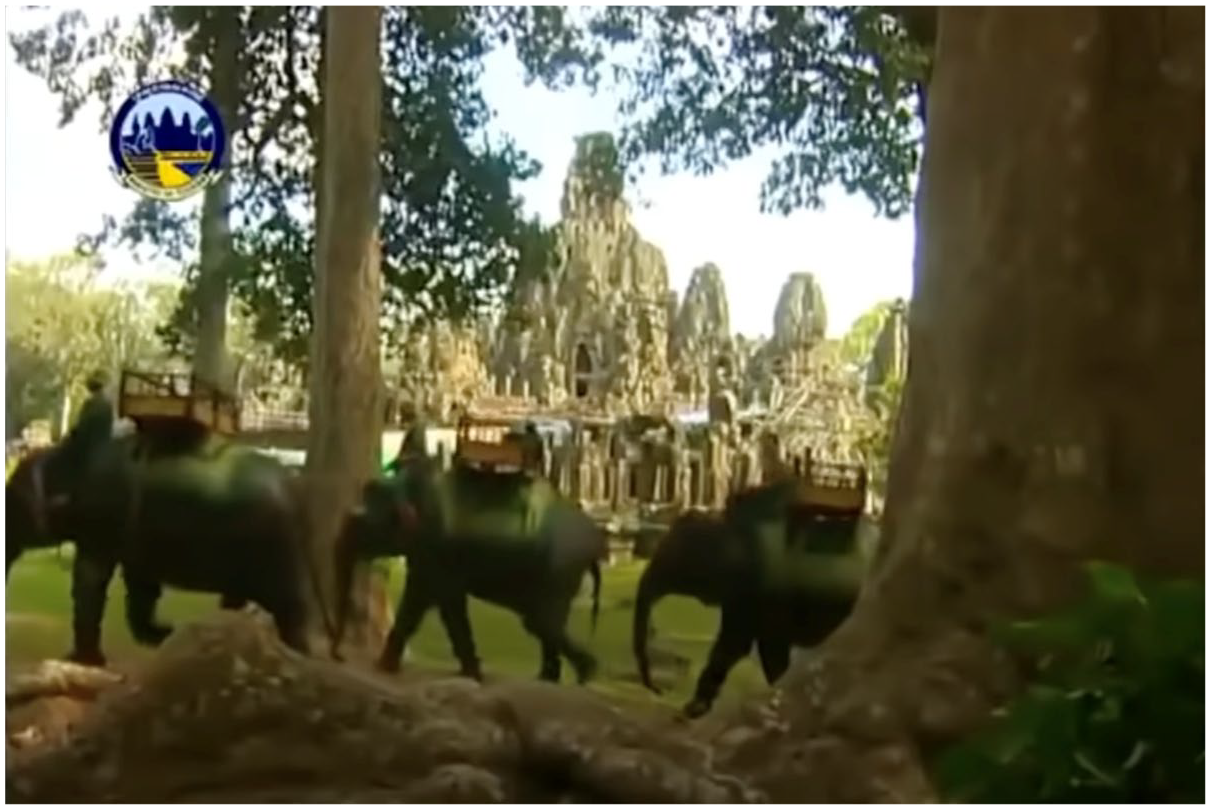
Within the video, traditional Eastern women are consistently portrayed in roles that cater to the Western protagonist, from massages to hospitality. The unbalanced depiction between Western travelers and locals can be seen through camera language. At 1:24, a Western traveler is taking selfies on a boat with a big, wild smile, while the next scene shows an Eastern man driving the boat for him and two other Eastern old persons serving him (see Figure 6). A similar imbalance is shown when a Western traveler, placed dominantly on top of an elephant, is in a position of literal elevation and prominence, while the local individual, despite being the guide and actual caretaker of the elephant, is relegated to the background, both in focus and stature (see Figure 7).
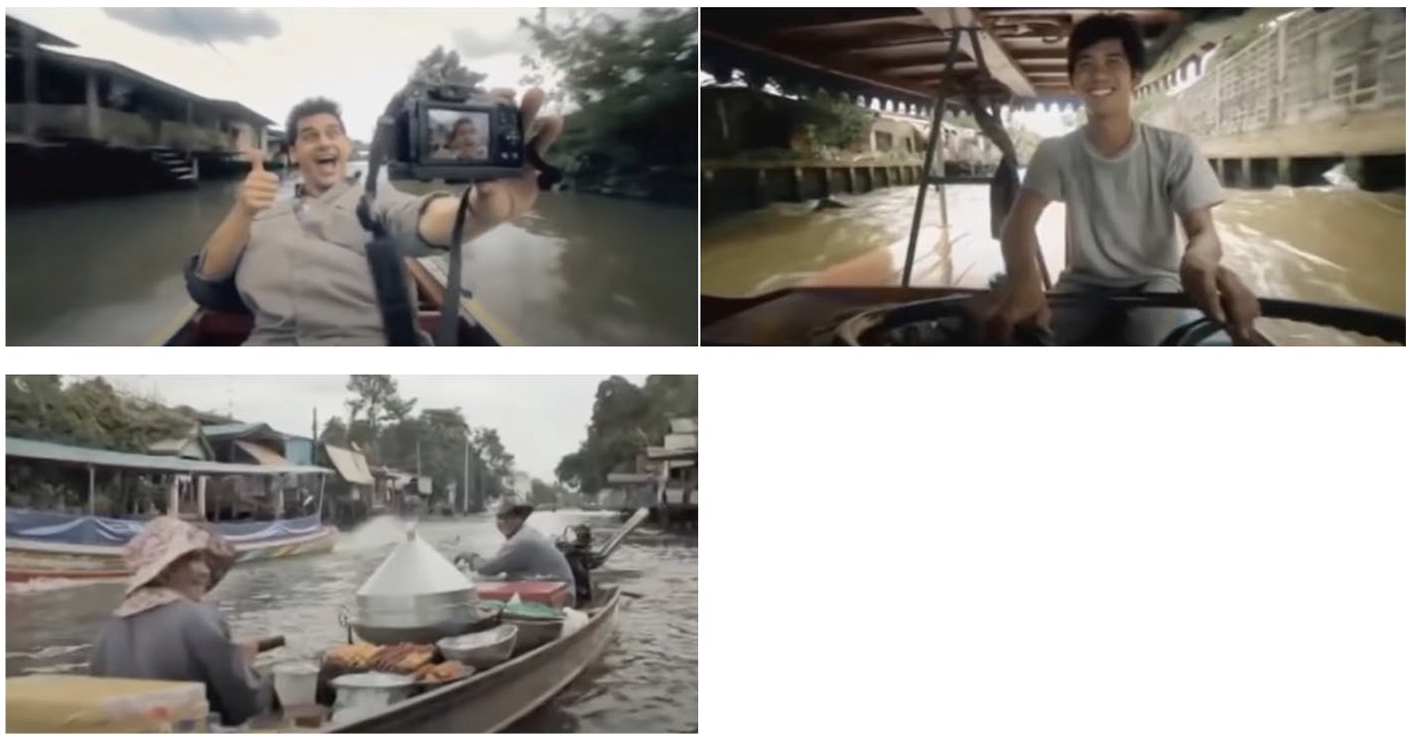
Screenshots from the tourism video in 2014 on a Western traveler and Asian “servers.”
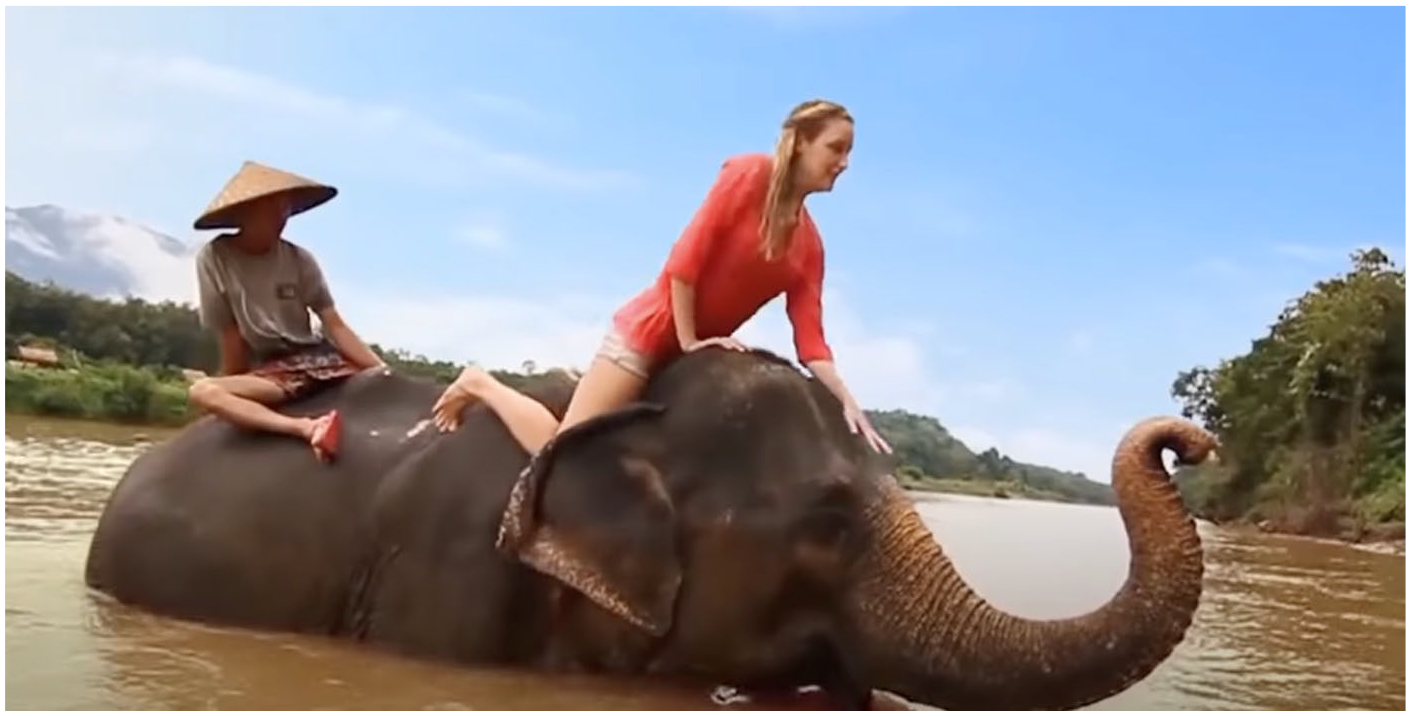
Screenshot from the tourism video in 2014 that reflects imbalance.
Beyond the status of servers, another manifestation is the juxtaposition of modernity and primitiveness. The Western man taking selfies of the Great Buddha or riding an ox symbolizes both physical and cultural control, reducing the East to a mere backdrop for Western experiences. Locals are shown in roles of service or exoticized entertainment (Al Mahadin and Burns, 2006), which reinforces the Orientalist view of the East as primitive. The contrast between traditional Asian structures and Western-style cafes, and between locals’ daily activities and Western tourists’ modern conveniences, highlights the dichotomy of the “primitive” East and the “modern” West (Parry, 2004).
The video at 25:42 contrasts a Western man skating with the narration “so exciting,” followed by local men in traditional attire engaged in cultural activities, set to the sound “live wildlife.” This juxtaposition reflects a contrast where Western activities are seen as modern and thrilling, while indigenous practices are framed as primitive. At 27:05 (Figure 8), the Western explorers are shown in bright light, trying to understand local cultures, while the locals are depicted in dark, shadowy spaces, reinforcing stereotypes of primitiveness and the dichotomy between the “civilized” and the “primitive” Asia (Winter et al., 2008).
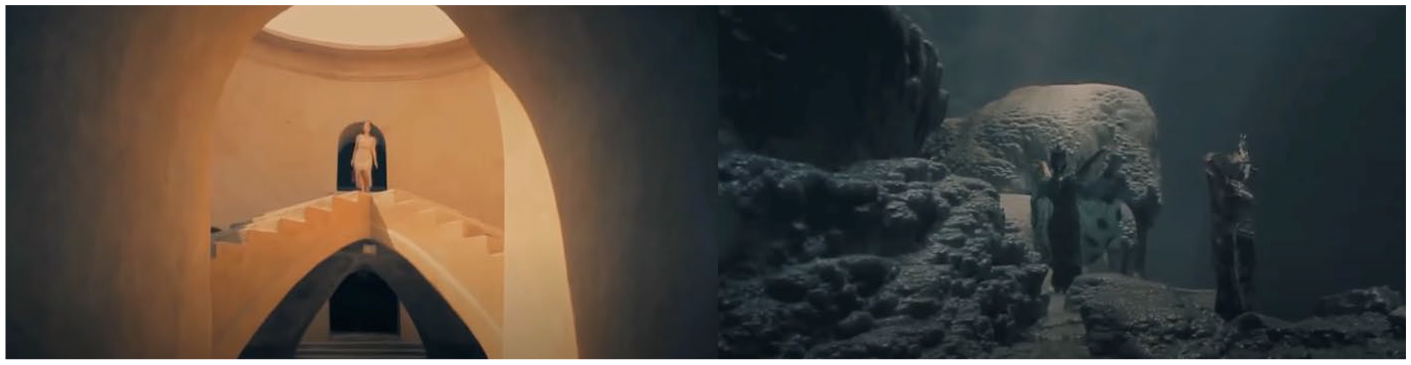
Screenshots from the tourism video in 2014 that depicts Eastern traditional dancers.
The binary of good versus bad is also depicted through the expressions and traits of characters. At 26:31, the Western traveler, young and ostensibly carefree, is positioned as the observer, the one who “captures” through her camera, embodying the legacy of the Western gaze upon the Eastern world. Her youth and beauty contrast sharply with the older, weathered appearance of the local man who is pictured (see Figure 9). This dichotomy reiterates historical narratives where the West, represented as vibrant and progressive, regards the East as a space of timelessness and stagnation.
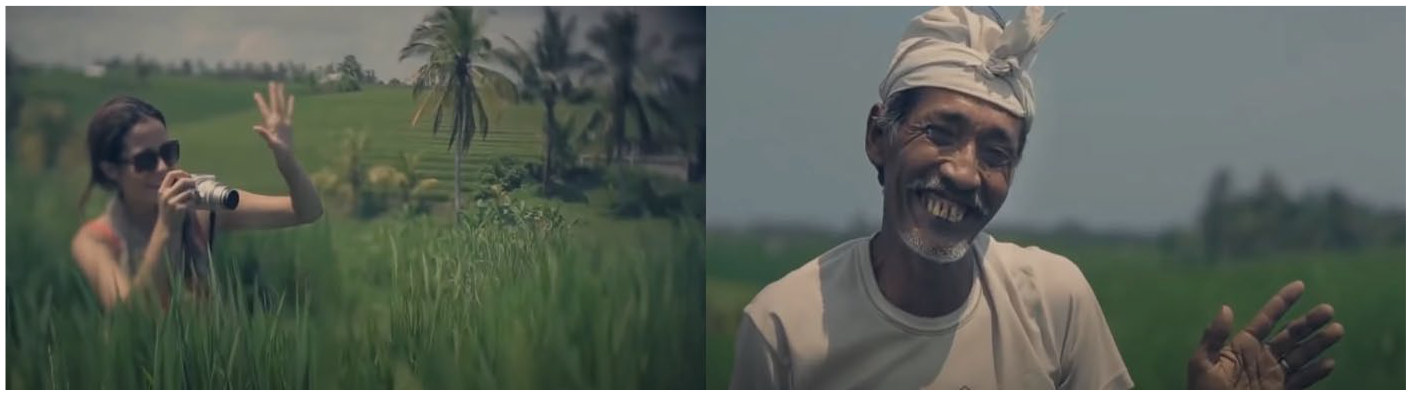
Screenshots from the tourism video in 2014 that contrast the young Western photographer and old Eastern farmer.
ASEAN tourism video sequels: Are ASEAN countries trying to decolonize themselves?
The 2014 ASEAN tourism video was a collection of videos issued by the ASEAN member states, which represents the efforts of self-representation by Southeast Asian member states, rather than being produced by a Western entity. Therefore, it is a representative of self-orientalism, which is rooted in traditional conceptions and predominantly caters to the Western gaze. Over the years, this self-orientalism, although based on a genuine affection for tradition, has been seen as a form of internalized colonization, where the East unwittingly views itself through the lens of the West. However, its 2020 and 2023 sequels reveal a subtle shift in ASEAN’s self-representation. They mark a departure from self-orientalism by showcasing a more autonomous self-representation. This shift is evident in these three dimensions: portrayed identity as the self-observer, cultural imagery of local advancement, and interaction highlighting local actors.
Portrayed identity: The self-observer
The most salient alteration is the portrayal of Asians as the central figures in their narratives. This decision echoes a powerful sentiment: ASEAN nations are intent on “telling Asian stories by ourselves.” It is an assertion of autonomy over their narrative. The video vividly captures Asian protagonists engaging in various contemporary activities, from boating to shopping, taking selfies, and even fashion modeling. This clear shift to the “their nation” paradigm symbolizes ownership and self-recognition. The 2020 video shows a group of explorers in front of the iconic “KL Tower.” They are not external visitors appreciating a foreign land, but locals rediscovering their own urban landscape and asserting their rightful place in it. Through these images, the ASEAN nations seem to be consciously repositioning their narrative focus. The message is that the self-oriented situation where the Western explorer was the primary lens through which these regions were viewed and understood is fading if the spotlight is on their own people defining their surroundings.
From a gendered perspective, the new versions show an increase of Asian heroines as explorers instead of Western roles. As the image shows, the woman who wears traditional Asian clothes is both an observer and a participant in her surroundings. Engaging with traditional dancers and sharing a captured moment with them, she stands as an embodiment of the modern Asian explorer interacting with her heritage. After a few seconds, another scene highlights the same heroine appreciating “her own” land. The depiction contrasts with the Western woman expanding arms toward Asian land in the 2014 video. Instead of merely servants, Asian women started to establish a position of “ownership” of the country (see Figure 10).
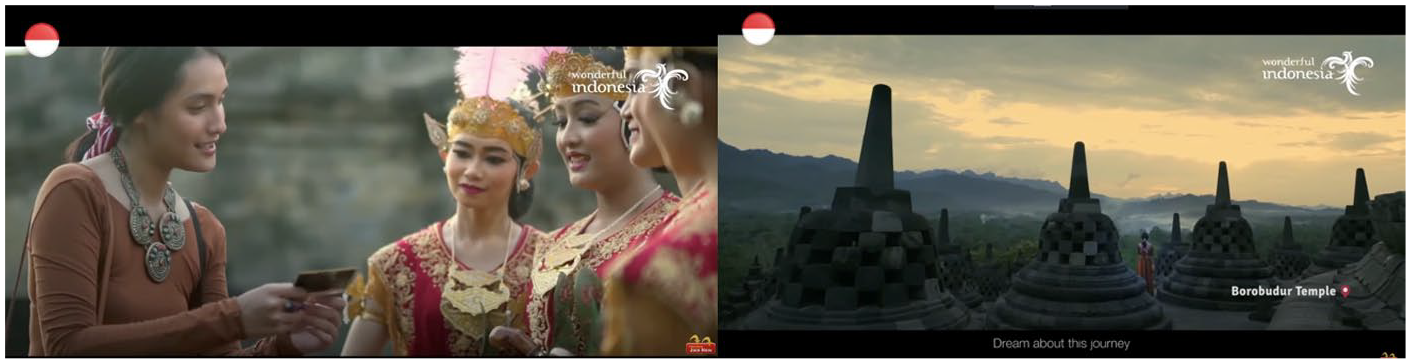
Screenshots from the tourism video in 2020 that show a woman with Asian traditional clothes as the protagonist and explorer of her own continent.
This shift is in line with the broader strategies adopted by the Southeast Asian tourism industry in more recent times. In 2017, ASEAN celebrated its 50th anniversary with a tourism program called “Visit ASEAN@50: Golden Celebration,” aiming to promote the region as a single destination and highlight the 50 best festivals and travel experiences. Rather than focusing on Western tourists observing local traditions, the campaign celebrated cultural interconnectedness and modernity by emphasizing intra-ASEAN travel and showcasing the diverse cultural heritage of member states (ASEAN, 2016) with a focus on local engagement and community-based tourism (Hitchcock et al., 2010). This initiative represented a conscious effort to redefine ASEAN as a vibrant region, promoting regional pride and cooperation while encouraging locals and neighboring countries to explore each other’s cultures.
Cultural imagery: Local advancement
The transition also indicates a try to shift from exaggerating traditionalism to rendering local advancement. While it commences with familiar scenes reminiscent of traditional vibes, like dances and clothing, there is an evident emphasis on vibrancy. The visuals are rendered in brighter hues, screens glow with lighter shades, and the mood is inspired by an upbeat soundtrack. These elements, though subtle, are crucial in setting a more optimistic and modern tone, signifying progress and positivity (see Figure 11).
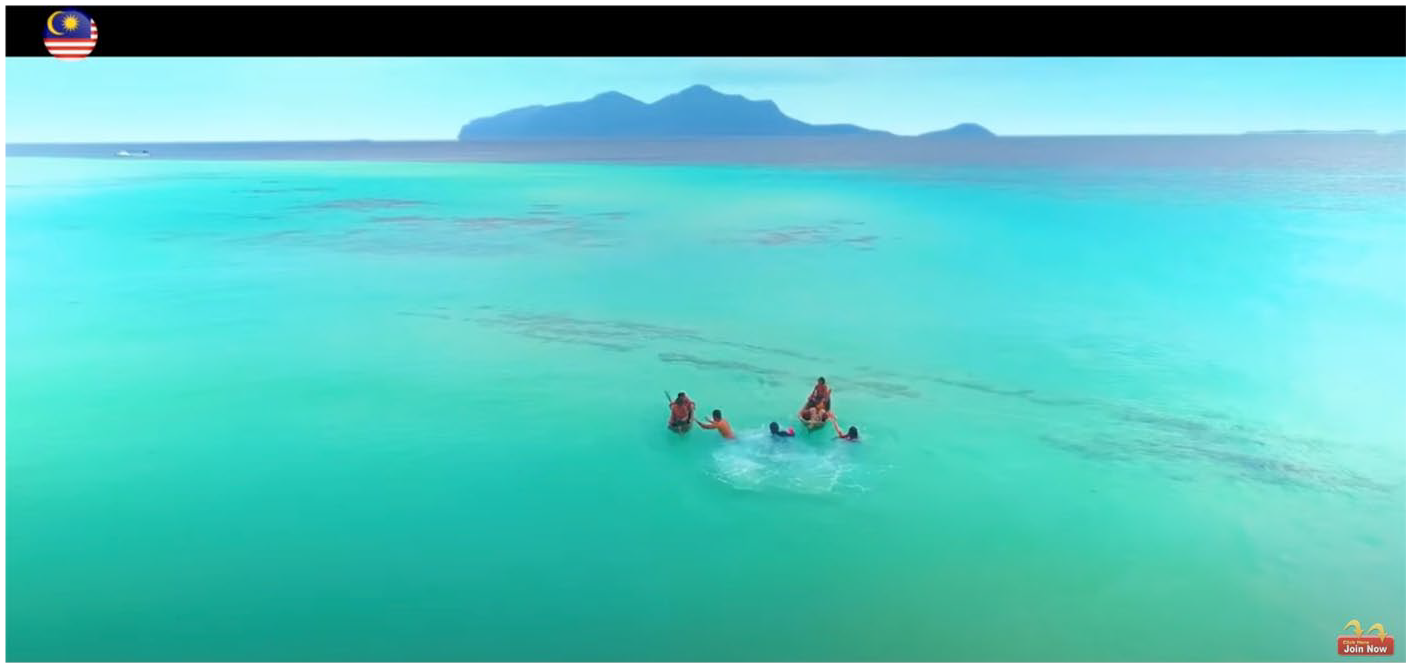
Screenshot from the tourism video in 2020 that shows brighter color and light.
Moreover, the 2020 video incorporates more contemporary portrayals in contrast with the previous rural and uncivilized pictures in the Western view. This juxtaposition of the traditional with the modern serves to reflect the true essence of the ASEAN countries—nations deeply rooted in their rich histories yet dynamically evolving in the globalized era. Such imagery effectively challenges the monolithic representations often associated with the East, showcasing its multifaceted nature. For example, in a scene that contains a vast urban landscape of skyscrapers and dense urban blocks, two Asian tourists confidently stand on a high-altitude platform, admiring the panoramic view of the city. Their expressions and gestures convey a sense of confidence and connection that they witnessed the city’s progress in development (see Figure 12). The 2023 version even shows fancier lens switching, electronic background music, and high-tech surroundings: concert halls, modern hotels, and green buildings (see Figure 13).
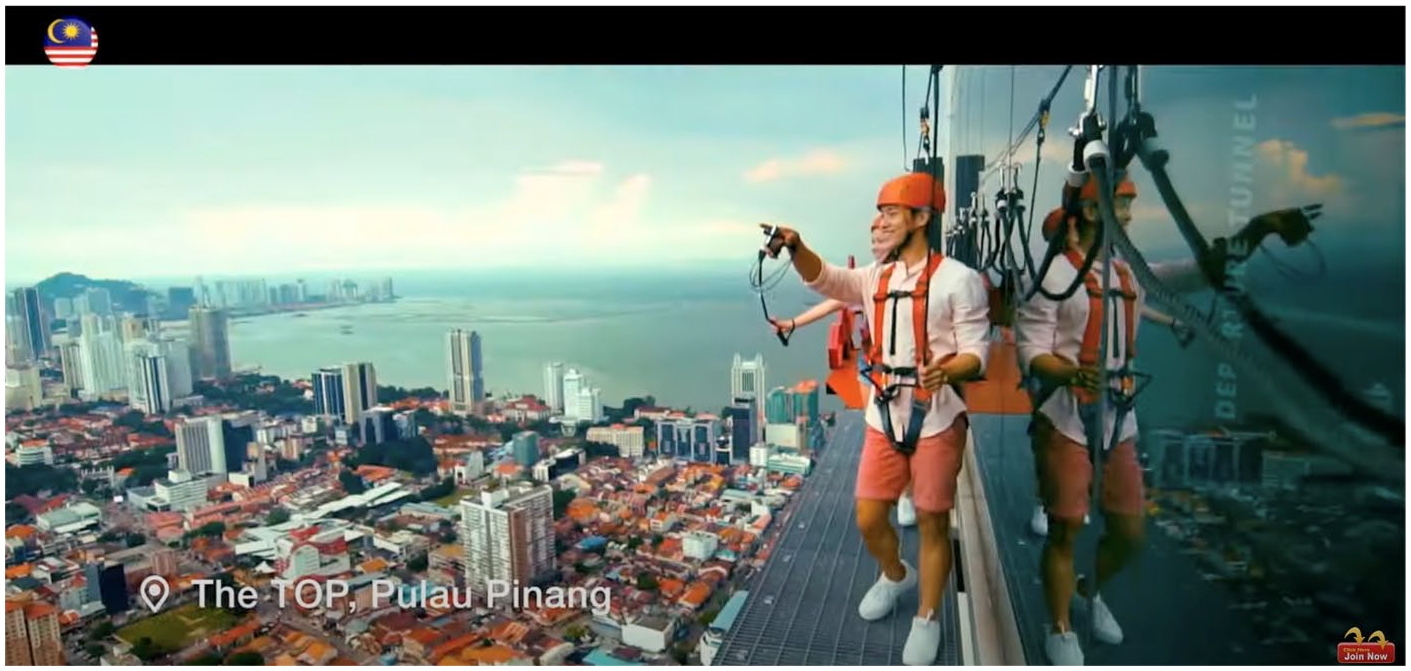
Screenshot from the tourism video in 2020 that shows workers taking possession of their own country.
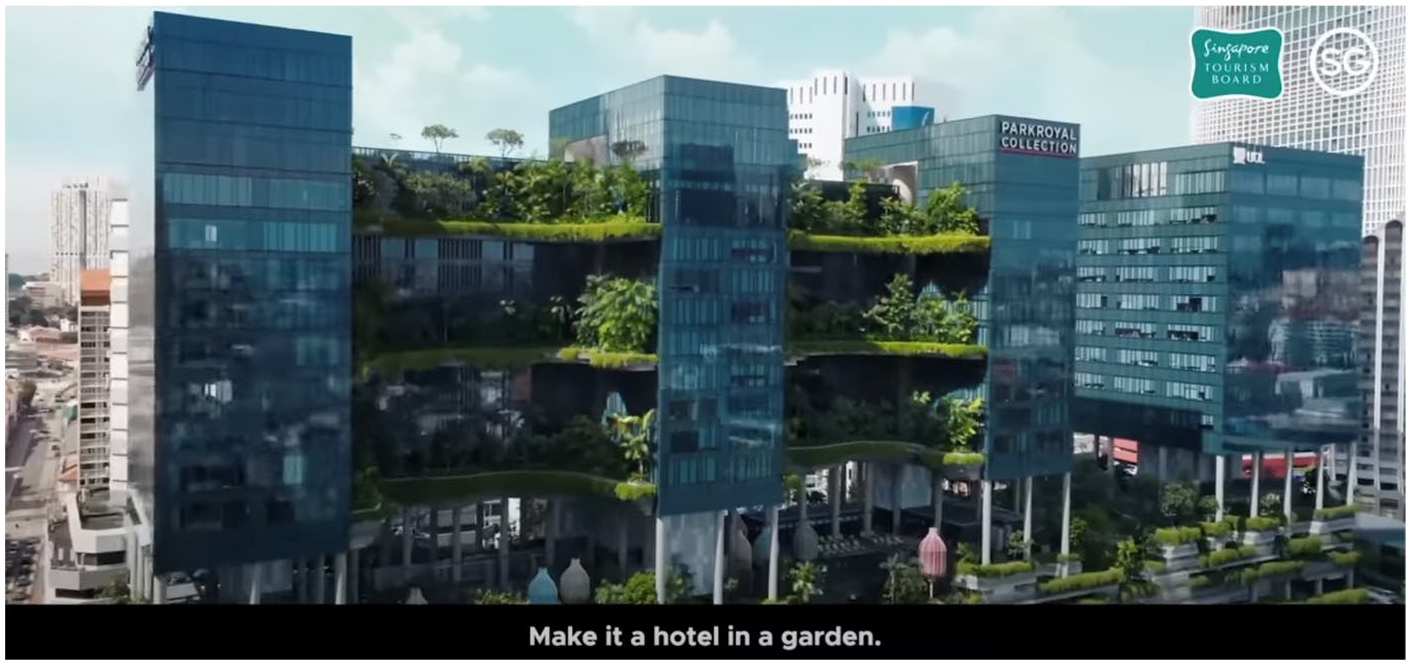
Screenshot from the tourism video in 2023 that shows modern technologies.
Furthermore, the cultural narratives presented are more expansive and inclusive. The breadth of representation is enhanced, not just visually, but audibly too. The diversified audio elements contribute to a more comprehensive portrayal of ASEAN cultures. The scene of the traditional Thai pagoda is accompanied by the sprawling modern skyline of Bangkok in the background with the audio “The shades that open my heart.” Unlike the previous single illustration of traditional architectures, this change indicates how Thailand attempts to present itself as a place that values its traditions while simultaneously embracing the future (see Figure 14).
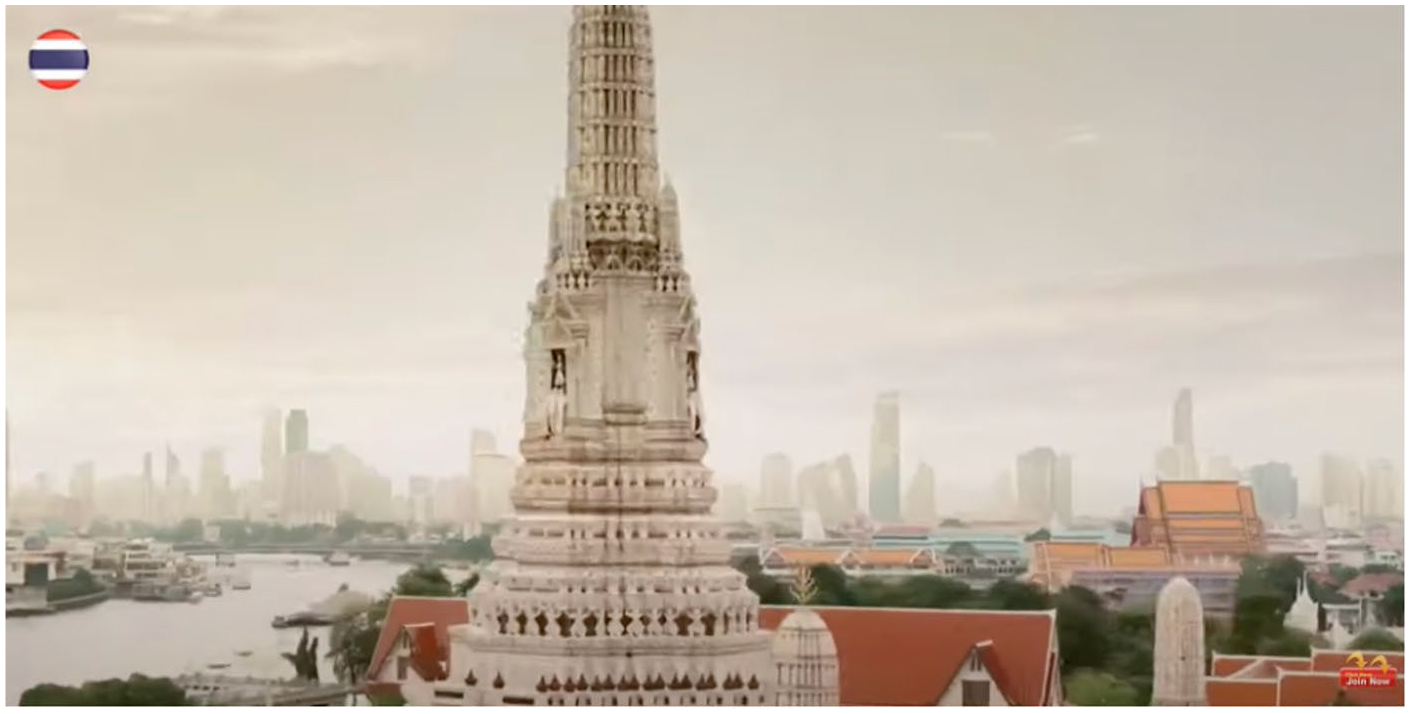
Screenshot from the tourism video in 2020 that shows the combination of traditionality and modernity.
Interaction: Local actors
These descriptions emphasize a shift away from the constraints of internalized postcolonial perspectives and toward the authentic national representation that melds the past with the present. This evolution challenges prior Western-centric views, highlighting ASEAN’s initiative to balance the cultural power relationship. In addition to the traditional portrayal of Southeast Asians as passive hosts serving Western tourists. Instead, they emphasize Asian actors as active participants, engaging with both local and international audiences in contexts that showcase innovation and modernity. In contrast to older representations that positioned locals as secondary to Western explorers, these scenes depict collaborative and inclusive interactions, where both Asian and Western individuals collectively appreciate the dynamic urban environment.
The relationship between Asian countries and the West, as shown in Figure 15, is reimagined as a partnership of equals. The setting features Singapore’s iconic Supertree Grove and a diverse group of individuals gathered for a Global Business Conference. This imagery moves beyond the past dynamics of servitude and observation, instead promoting a vision of shared innovation and mutual appreciation within a modern, cosmopolitan context.
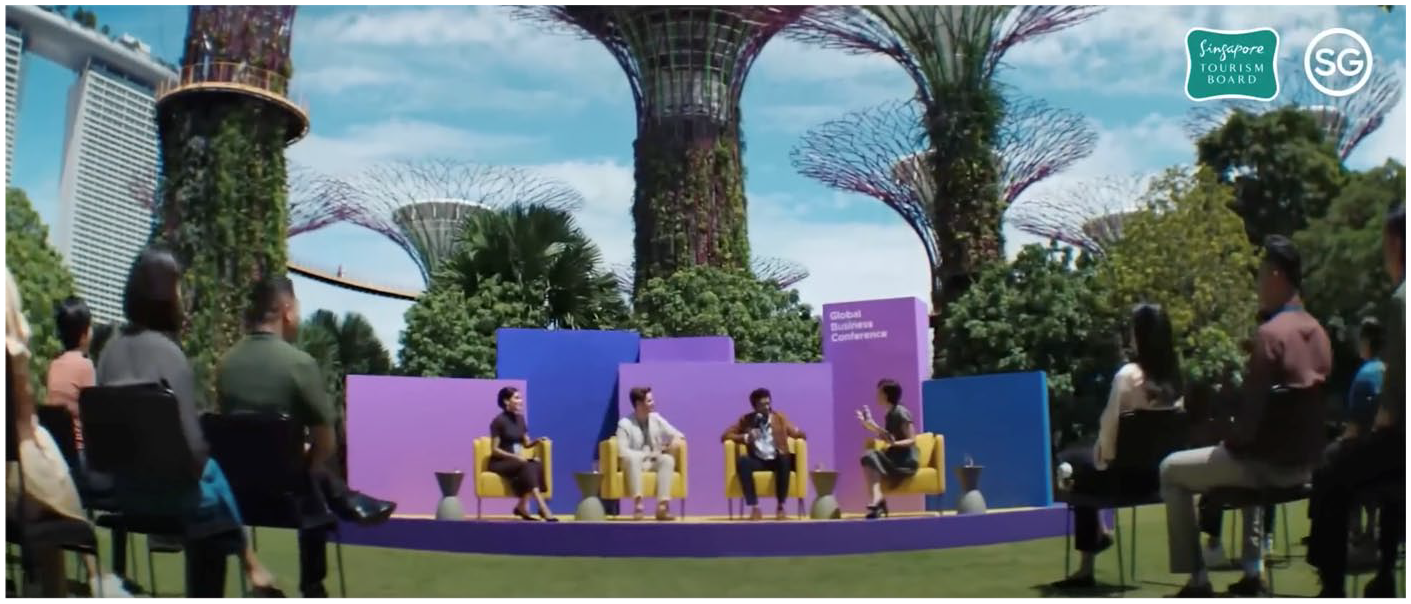
Screenshot from the tourism video in 2023 that shows people from Asia in a global business conference.
The global economic status in Southeast Asia has significantly influenced the tourism stance of Asian actors, leading to a shift from servant status to autonomous representation. In 2023, Foreign Direct Investment (FDI) inflows to ASEAN reached a record high of $230 billion, accounting for 17% of global FDI inflows. This marked the third consecutive year of growth, even as global FDI flows experienced a decline (ASEAN, 2024a). The progress in attracting more foreign investment have reinforced Southeast Asian countries’ self-perception and international image, fostering a more autonomous and confident national identity. Besides, ASEAN has adopted the ASEAN Tourism Strategic Plan 2016–2025 and the ASEAN Tourism Marketing Strategy 2017–2020, which emphasize promoting local cultures and narratives rather than depicting Asian actors in subservient roles (ASEAN, 2015b, 2017). These policies encourage the portrayal of ASEAN nations as equal partners in the global tourism industry, focusing on local empowerment and authentic cultural experiences rather than perpetuating Western-centric narratives.
Discussion
Through the above audio and visual analysis, it can be concluded that the sequel videos both show ASEAN countries’ attempt to shift from colonized depictions to “national image” to characterize themselves instead of pleasing the West.
In a broader view, self-orientalism and constructive self-representation can both be related to showing cultural identity. On one side, it should be recognized that self-orientalism does not inherently negate agency. In some contexts, portraying cultural exoticism can be a deliberate choice to capitalize on Western expectations while subtly embedding local pride and autonomy. As Zhang (2006) stated, self-orientalism can be regarded as a strategy for the once colonized to acquire visibility in the Eurocentric context. Liu (2017) drew on the voices of Chinese Australians to emphasize that their self-orientalism is not a passive toleration, but an active strategy and resistance to protect their ethnocultural identity and prevent being “torn asunder.” Dirlik (1996) also pointed out that the “self-orientalization” of Asian intellectuals is a manifestation not of powerlessness but of newly acquired power. For the tourism industry which is more related to the building of national image, the practices of Orientalist self-representation can be part of a country’s promotional strategy on a global scale. Reisinger and Turner (2012) discussed the application of cross-cultural differences to enhance tourism advertising and marketing for Asian countries. In order to make their own tourism resources more distinctive, and especially to show the differences from the Western world to attract tourists, Southeast Asian countries’ tourism marketing will be accompanied by a moderate emphasis (or exaggeration) on their oriental image (Hitchcock et al., 2010). Besides, with women as the carriers, the protection of their traditional culture and heritage (such as ethnic costumes) is also one of the factors considered for strategic Orientalism.
However, constructive, or strategic self-representations should differ from self-orientalism by showing a nature of autonomy—a decolonization process to remain agency in self-representation and national branding. National or cultural pride, therefore, should be vital in such a process. Drawing insights from Kong (2007), cities with aspirations of achieving a global footprint understand the essence of not only being networked nodes but also their distinct cultural capital. The monumental cultural spaces designed to support vibrant cultural lives can serve as pivotal platforms for nations to revolve representations that are built in their cultural pride. Instead of relying on external, often Orientalist depictions, national pride can lead to depictions rooted in authenticity, respect, and a deep understanding. This self-representation is more likely to highlight the richness and diversity of a culture rather than resorting to reductive stereotypes. Kim and Kim (2021) further amplify the importance of national pride by elucidating its strong association with cultural nativism in East and Southeast Asian countries. Such findings reveal the intrinsic value of national pride in shaping self-representations that resonate with authenticity. Therefore, autonomy and agency should be central to self-representation, as they enable nations to understand their own identity, embrace their development with confidence, and showcase their unique cultural and social progress to the world.
Both the solidification of the “self-image created by Westerners” in the Oriental world and the effort in autonomous representation can be attributed to the drive of socioeconomic factors. Previously, the expansion of the global market forced the government and travel agencies to set up homogenized promotions in order to satisfy international tourists, to reaffirm the widely accepted impressions of the Other. Therefore, the establishment of a preconceived landscape must be considered for Eastern nations when promoting tourist destinations. However, since 2014, the rapid economic development and vibrant market community within ASEAN have empowered member states to move beyond merely satisfying Western expectations, allowing them to redefine their own narratives and market their cultural uniqueness on their own terms. The establishment of the ASEAN Economic Community in 2015 marked a major step toward a more unified market, with ASEAN’s combined GDP reaching $2.5 trillion by that year (making it the world’s seventh largest economy; ASEAN, 2015a). Continued growth and integration have drawn global investment and attention to Southeast Asia. ASEAN-led trade agreements like the Regional Comprehensive Economic Partnership—conceived by ASEAN and signed in 2020—created the largest trading bloc in history, covering about 30% of global GDP (ASEAN, 2020). These economic achievements have also fueled national pride, as Southeast Asian countries are increasingly seen as dynamic emerging economies rather than peripheral players. Politically, ASEAN’s principle of “unity in diversity” and the Narrative of ASEAN Identity (NAI; ASEAN, 2024c) have given member states a stronger collective voice on the global stage. For example, Indonesia’s G20 presidency in 2022 and Vietnam’s APEC hosting in 2017 showcased ASEAN nations’ proactive diplomacy in international affairs, which contributes to confidence at home through successful global engagement.
Another significant socioeconomic factor that leads to shifts in representation is the changing composition of international tourists to Southeast Asia. Recent data reveals a notable rise in Asian tourism to Southeast Asia. For example, in 2024, Thailand hosted 6.73 million tourists from China, 4.95 million from Malaysia, and 2.13 million from India (World Bank, 2024). This surge in tourists of Asian origin redefines the roles commonly assigned to local hosts (Salazar, 2008), diminishes Western-centric dominance, and drives tourism campaigns to resonate with a broader intra-Asian audience. Meanwhile, the economic and geopolitical influence of China and India in ASEAN continues to grow. India is projected to become the fifth-largest outbound tourism market globally by 2027, with its international tourism expenditure expected to reach around US$89 billion (Sugiura and Reed, 2024). China already represents one of the largest source markets for ASEAN member states, driving more than 10 million arrivals annually—about 10.4% of all visitor entries in recent years (ASEAN, 2024b). In response, Southeast Asian countries have taken concrete steps such as relaxing visa protocols, expanding air connectivity, partnering with social media influencers, and promoting lesser-known destinations (Rujopakarn, 2025). These developments encourage ASEAN states to recalibrate their cultural narratives in tourism marketing and emphasize intra-Asian affinities and values that appeal beyond Western frameworks.
This study makes a theoretical contribution by extending the traditional Orientalism concept, which is predominantly centered on the Arabic world, to an analysis situated in the contemporary Asian context. By examining how self-representation evolves from self-orientalism to strategic autonomy, it highlights the importance of autonomy and cultural agency in shaping national representation, emphasizing how modern Southeast Asian nations navigate their identities in global tourism. From a practical perspective, this study offers guidance for future tourism marketing and advertising practices. By illustrating how Southeast Asian countries can effectively transition from externally dictated images to self-defined representations, it provides a framework for tourism stakeholders to craft more authentic and empowering marketing narratives.
Beyond its theoretical contributions, this research offers practical implications for policymakers, tourism marketers, and regional stakeholders across ASEAN states. By illuminating the shift in self-representation, the study encourages tourism authorities and policymakers to craft narratives and design tourism strategies that reflect local agency, pride, and cultural authenticity. Marketing professionals, meanwhile, can draw on these findings to promote Southeast Asian destinations in ways that resonate with diverse cultural values while avoiding reductive tropes. Additionally, tourism stakeholders may find value in embracing localized storytelling and inclusive media production practices to enhance regional identity and foster cross-cultural understanding. As ASEAN states continue to position themselves in a global tourism economy, recognizing and strategically managing cultural representation can strengthen their soft power, brand equity, and long-term sustainability.
Conclusion
This study reveals the evolution of ASEAN tourism videos from self-orientalism to strategic self-representation. The 2014 video, despite its efforts to showcase local cultures, exemplifies self-orientalism by perpetuating Western-centric perspectives, portraying Southeast Asia through exoticism, traditionalism, and passive hospitality. In contrast, the videos in the 2020s mark a transformative shift toward autonomy, presenting Southeast Asian people as active participants in their cultural and social spaces. This transition from self-orientalism to strategic self-representation highlights ASEAN states’ efforts to reclaim their cultural identity, moving beyond externally imposed narratives to promote a self-affirming portrayal aligned with socio-economic progress and regional pride.
A compelling future topic would be the role of digital media and globalization in shaping or challenging orientalist narratives. With the proliferation of user-generated content and social media platforms, how have local voices from ASEAN nations contributed to the reshaping of their global image? While the 2014 ASEAN video and its sequels provide a starting point, a broader spectrum of media, including social media, digital campaigns, and media technology, can offer a more holistic understanding of the paradigms of national and cultural representation. This shift might reveal broader socio-political changes within these nations, including a move toward reclaiming Indigenous identities and histories in the post-colonial era.
Limitations and future directions
As the videos are issued by social media accounts that possess a united “ASEAN” identity, this paper frames these clips as ASEAN, rather than as collections of tourism ads developed by the tourism departments of individual nations. It is also under the consideration of better analysis and understanding of Orientalism as a collective oriental group. However, although issued by accounts representing ASEAN, the videos are produced and owned by the Department/Ministry of Tourism of each respective country instead of the ASEAN association. Therefore, the analysis as an ASEAN group limits the potential comparisons between and within various nations. It should be acknowledged that ASEAN countries have radically different colonial experiences in their forms, processes, and contemporary repercussions, which shape their current cultural identities and representations. Therefore, in the future, a comparative analysis across different ASEAN countries could shed light on each nation’s unique challenges and approaches in its representation, based on its colonial history and cultural context.
Besides, while this study highlights the transition from self-orientalism to more autonomous representations in ASEAN tourism advertisements, it is also critical to consider other underlying motivations behind these shifts. Although economic development in Asian countries is discussed as a factor, it may not fully explain the phenomenon. It is worth questioning whether these shifts truly reflect a conscious effort toward self-representation or whether they are still driven by economic interests, merely adopting a more modern form of catering to the global economy. In this context, the supposed autonomy might instead be a strategic response to evolving market demands rather than a genuine departure from self-orientalism. Future research could involve conducting interviews with tourism officials in Southeast Asian countries to gain deeper insights into whether these changes are perceived as deliberate acts of cultural representation or as responses to global economic pressures.
Footnotes
Funding
The author received no financial support for the research, authorship, and/or publication of this article.
