




Abstract
Motorhoming consists of a way of travelling in vehicles that incorporate a living space. These vehicles usually include a sleeping area, a kitchen, a dining area and, in some cases, a bathroom and shower. People who travel in motorhomes choose a type of tourism that does not rely on traditional touristic infrastructures. They sleep in their own beds, cook their own food and can be self-sufficient and independent for several days without interacting with the rest of society. The main objective of this article is to propose a typology of European motorhome travellers, taking the Algarve region (in southern Portugal) as a case study. Previous investigations conducted in other regions of the world have proposed some typologies of motorhome travellers, but the sociocultural contexts where they were elaborated are very different from the European reality, namely from the studied region. Contrasting with the previous typologies, which used only one or two characteristics of the motorhomers, the proposed typology combines their objective attributes with their subjective discourses about the trip. The three resulting types were designated as ‘enjoyers’, ‘seekers’ and ‘vacationers’.
On the road. . .
There are people that choose to travel off the tourist-beaten tracks. Some of these people travel in their ‘houses on wheels’, visiting popular places but also places of extraordinary beauty unknown to the traditional tourists. The Algarve region is one of the main destinations for thousands of European motorhomers. People who travel in motorhomes choose a type of tourism that does not rely on traditional touristic infrastructures. They sleep in their own beds, cook their own food and can be self-sufficient and independent for several days without interacting with the rest of society.
Despite the restrictions imposed on travel during the COVID-19 pandemic, motorhome tourism has curiously shown great attractiveness and resilience, having been considered an expanding market in Portugal but also in Spain (Mundet et al., 2023), Australia (CIAA, 2020), New Zealand (Espiner et al., 2023), Canada (CTV News, 2020), among other countries. In 2020, around 2.5 million motorhomes circulated across Europe (ECF, 2023).
Although the official numbers show a global trend of growth in this form of travel, several authors warned about the lack of scientific research on the subject, which has generated some gaps in knowledge about the phenomenon of motorhome travel (Caldicott et al., 2022; Dias and Domingues, 2018; Eager et al., 2022; Espiner et al., 2023; Fieger et al., 2020; Hardy and Gretzel, 2008; Hardy and Kirkpatrick, 2017; Higgs and Quirk, 2007; Kearns et al., 2016; Lashley, 2015; Mahadevan, 2013; Rizvi et al., 2021). This article forms part of a broader investigation aiming to fill some of these gaps.
The main objective of this article is to propose a typology of European motorhome travellers, taking the Algarve region in southern Portugal as a case study. Although previous investigations conducted in other regions of the world have already proposed some typologies of motorhome travellers (Brooker and Joppe, 2013; Espiner et al., 2023; Gretzel et al., 2008; Jobes, 1984; Mundet et al., 2023; Southerton et al., 2005), the sociocultural contexts where these typologies were elaborated are very different from the European reality and, specifically, the studied region.
With this article, we want to add knowledge to the fields of leisure, travel, and tourism but also to the discussion about ‘active ageing’ and ‘successful ageing’ as motorhome lifestyle can be considered a healthy alternative and as a quality of life promoter for the retirement or pre-retirement period (Eager et al., 2022; Higgs and Quirk, 2007; Holloway, 2007; Viallon, 2012).
The article is divided into five parts. After this short introduction, we will present, in Section 2, the recent literature about motorhome travelling. Here, we also offer some definitions related to this phenomenon and share some traits of the previous typologies of motorhome travellers worldwide. In Section 3, we introduce the geographical context of the research – the Algarve region of southern Portugal – as well as the methodology employed. Some related data about motorhome travel tourism in this region will also be presented. In Section 4, an original typology will be proposed based on criteria such as the type of vehicle, the ‘generation’ of the travellers, their motivations for travel and the duration of the trip. Each of the three types proposed will be interpreted in the light of a set of pertinent concepts arising from the Social Sciences and Tourism and Leisure studies. In the last Section 5, we reiterate the relevance of studying this way of travelling, presenting some conclusions and final remarks.
Travelling in a ‘House on Wheels’
Definitions: Motorhome, campervan or RV?
Motorhoming consists of a way of travelling in vehicles that incorporate a living space contributing to blur the distinction between everyday and holiday. These vehicles usually include a sleeping area, a kitchen, a dining area and, in some cases, a bathroom and a shower. Motorhoming differs from camping and caravanning (Figure 1) because while in camping and caravanning, travellers sleep (and live) in an infrastructure – tent or caravan – independent of the vehicle, in motorhoming, the ‘home’ is the vehicle. Although, in some circumstances, the three modalities may overlap, they are different concepts and ways of travelling and living.
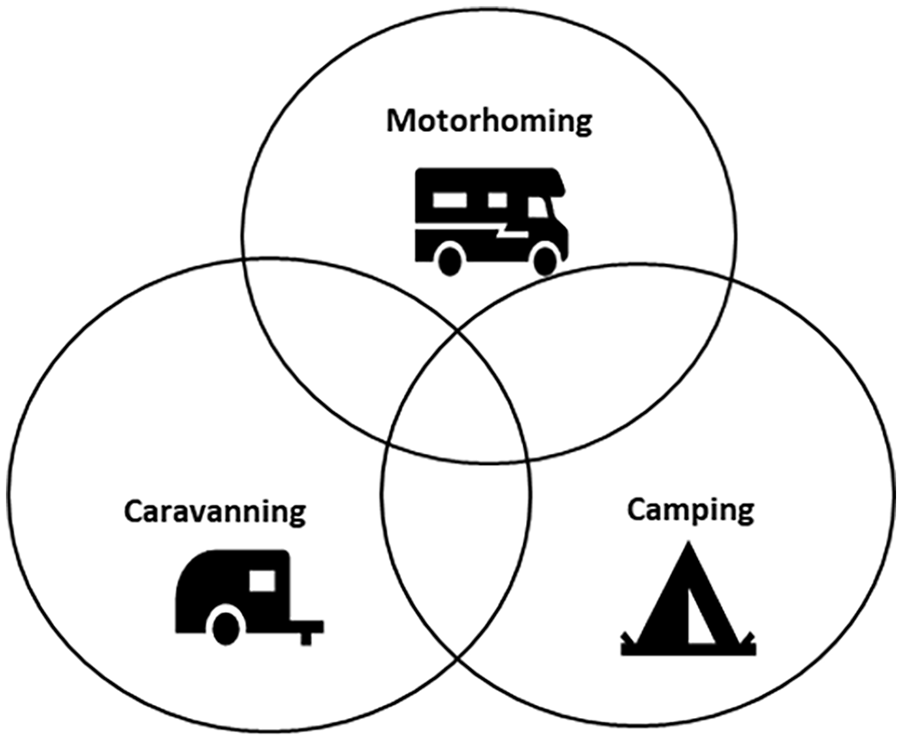
Motorhoming, caravanning and camping.
Depending on the cultural and linguistic contexts, there are different terms to designate the vehicles here defined as motorhomes; for instance, in the UK and British-influenced countries (Australia and New Zealand), designations such as motorhome, van, campervan, camper, for the vehicle, and campervanning, motorhoming and, more recently, vanlife, for the way of travelling. In the US, the most common term to designate this type of vehicle is RV. This acronym derives from the expression recreational vehicle, which is associated with a class of vehicles (motorhomes and caravans) usually bigger than those popular in other countries. The modality is generally called RVing.
Currently, there has yet to be a scientific consensus about the terms to be used regarding this way of travelling. In this sense, we chose to use the designation motorhome for the vehicle, as it is widely used in the European space in official and informal publications (Collins, 2023). Using the same logic, we use the term motorhomer for the users, and motorhoming for the modality, in analogy with the term motorboater and motorboating, concerning motorboat users and the act of travelling by boat, respectively. Furthermore, these designations are widely used in the common language, mainly on web pages of European origin (Caravan and Motorhome Club, 2023).
Trips in motorhomes vary in duration: from a weekend away from home to long periods of nomadism and, according to the literature, the primary motivations for travelling in a ‘house on wheels’ are, firstly, the desire for autonomy and independence regarding the tourist system and, secondly, the desire to escape the beaten tracks, preferably to be in contact with the natural environment (Brooker and Joppe, 2013; Hardy and Gretzel, 2008; Lashley, 2015; Viallon, 2012).
Another aspect that stands out in the lives of motorhomers seems to be their high level of sociability and the sense of community that occur during trips, whether on the road, in the context of belonging to clubs and associations, or during temporary stays in recreational parks or informal spaces (Counts and Counts, 1992, 1996; Hardy and Gretzel, 2008; Holloway, 2009).
In most cases, motorhoming is not just a way of transportation nor a mere recreational or tourism activity; it largely consists in a ‘lifestyle’ with its own characteristics (Figure 2). According to Stebbins’ definition, ‘a lifestyle is a distinctive set of shared patterns of tangible behaviour that is organised around a set of coherent interests or social conditions or both, that is explained and justified by a set of related values, attitudes, and orientations and that, under certain conditions, becomes the basis for a separate common social identity for its participants’ (Stebbins, 1997: 350).
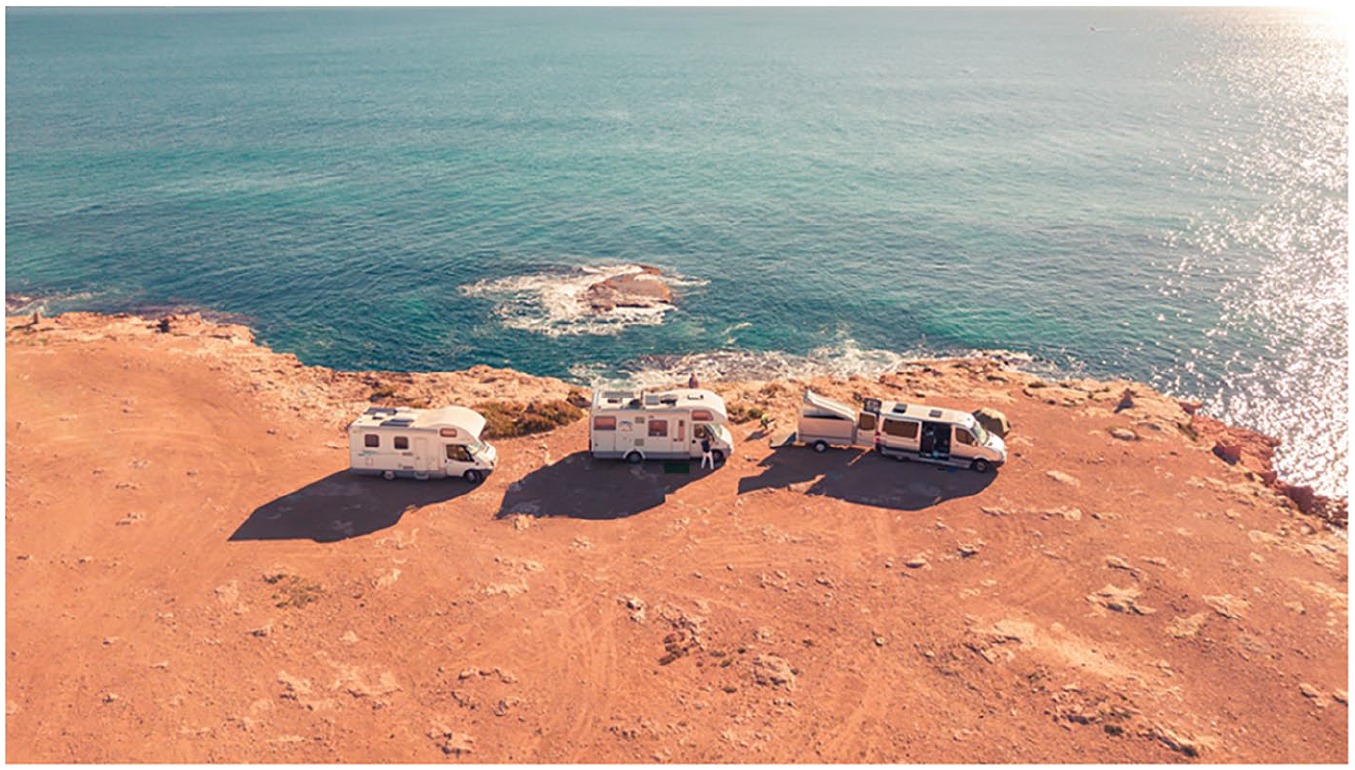
Motorhomes by the coast.
Until recently, most studies suggested that those adhering to this practice were retirees or people in a pre-retirement situation, namely those belonging to the baby boom generation (born between 1946 and 1964) coming from affluent countries (Counts and Counts, 1992, 1996; Holloway, 2007, 2009; Mahadevan, 2014; McHugh and Mings, 1991; Mings, 1997; Onyx and Leonard, 2007; Patterson et al., 2015; Pearce and Wu, 2018; Viallon, 2012; Wu and Pearce, 2017). More recent works, however, point to a growing diversification of the labour situation of motorhome users, as well as their practices and motivations (Eager et al., 2022; Gretzel and Hardy, 2019; Mundet et al., 2023; Rizvi et al., 2021; Zhao, 2020).
In several contexts, motorhoming is linked to temporary migration processes. In the USA and Canada, for example, this practice is closely associated with the movement of the snowbirds, in an allusion to the birds that migrate from the cold zones of the North to the more temperate zones of the ‘sunbelt states’ (Gretzel et al., 2008; Hardy, 2006; Hardy et al., 2012; Hardy and Gretzel, 2007, 2008, 2011; Hardy and Kirkpatrick, 2017; Hogan, 1987; McHugh and Mings, 1991, 1994; Onyx and Leonard, 2005; Simic et al., 2008). In Australia, motorhome travellers are generically called grey nomads as a reflection of the strong participation of the senior public who, in the winter months, travel mainly to the northern regions (Glover and Prideaux, 2009; Hardy and Kirkpatrick, 2017; Higgs and Quirk, 2007; Mahadevan, 2013; Mings, 1997; Onyx and Leonard, 2005, 2007; Patterson et al., 2011; Prideaux and McClymont, 2006). However, some recent studies point to the diversification of this form of travel in Australian territory. The word OzNomads designates a category of lifestyle travellers, including digital nomads, grey nomads, and families with no connection to a fixed residence, dedicated full-time to travelling on wheels (Williamson et al., 2022).
Comparative studies between the behaviour of Australian grey nomads and North American snowbirds suggest that, despite generational and lifestyle similarities, these travellers exhibit significant differences: community feelings and levels of sociability tend to be higher in the case of North Americans when compared to their Australian counterparts. Although establishing fewer community ties, Australians are more likely to be mobile and less likely to spend long periods in parks (camping and motorhome parks). (Hardy et al., 2012; Mings, 1997; Onyx and Leonard, 2005). The research by Onyx and Leonard (2005) concluded that Australian travellers value above all their independence, prefer the most secluded places in natural areas and avoid coastal touristic areas: ‘These Grey Nomads were also motivated to avoid being ‘organised’ (Onyx and Leonard, 2005: 67). This contrasts with the high levels of sociability of North Americans who stay for long periods in motorhome parks, enjoying the intense animation characteristic of these RV resorts (Mings, 1997: 168).
In continental Europe, temporary motorhome migration practices are known, for instance, from France to Morocco (Viallon, 2012), where thousands of French motorhomes remain during the winter months. This is a similar process to what happens to the thousands of British who seasonally migrate to southern Spain campsites (Leivestad, 2017, 2018). In Portugal, many motorhomes can be seen travelling during the winter from several countries of northern Europe to the southern regions of the country, namely, to the Algarve (Dias and Domingues, 2018).
#vanlife: A mobile subculture?
The expression ‘vanlife’ designates a youth cultural movement consisting of living and travelling in a van – usually a goods vehicle – transformed into a motorhome. The origin of this movement has been attributed to Foster Huntington, who, in 2010, dissatisfied with his comfortable life in New York and working for a large international company, decided to dedicate himself to an alternative lifestyle and moved to a Volkswagen van to explore life on the road. (Dorn, 2015; Eager et al., 2022; Mohabeer, 2023).
What Huntington did not know in 2010 was that, as he was publishing images of his new life – characterised by mobility, simplicity, contact with nature and strong aesthetic and environmental components – on social networks, his digital footprint ‘hashtagvanlife’ (#vanlife) was spreading the concept and inspiring thousands of young people around the world to follow his example (Dorn, 2015; Eager et al., 2022). However, in many cases, this adherence goes against the very assumptions that led its founder to choose this lifestyle (Mohabeer, 2023).
It can be useful to mobilise the concept of ‘subculture’ – in its broadest sense – to interpret the ‘van life’ movement, as long as we understand subculture as ‘a category of individuals who share many of the values, beliefs and attitudes of the mainstream culture while holding significant other divergent values that allow that subculture to see itself as separate and at the same time to be seen as distinct or somehow different’ (Bergstrom, 2019: 43). Another feature of a subculture is that its adherents tend to be somehow non-normative or marginal in the way they live their lives, what they do, and how they do it.
Indeed, the adherents of the ‘vanlife’ movement are primarily youngsters who share the desire to be free from the structural constraints of a sedentary, predictable life based on a common logic: work, family, retirement . . . (Bergstrom, 2019; Dorn, 2015; Eager et al., 2022). Critics of modern society and the capitalist economic system, they show a desire for material detachment, a return to nature (Dorn, 2015; Gretzel and Hardy, 2019), to travel the world searching for unique experiences that can be shared on the Internet. These travellers often develop the art of telling the stories of their experiences and sharing images of their trips through digital social networks, namely Instagram, to sustain their lifestyle and inspire more people to follow the same path. (Dorn, 2015: 6, 30).
Digital social networks are thus the pillar for the movement’s expansion (widespread mainly through the #vanlife), which has been attracting thousands of adherents and connecting its members and fans. Vanlifers form ‘virtual communities’, comprised of digital nomads who constantly publish images and videos of their vans parked in idyllic natural landscapes, apparently far from ’civilisation’ (Bergstrom, 2019; Eager et al., 2022; Gretzel and Hardy, 2019: 6). The central element in these travellers’ lives is their vehicle, which is both their mobile home and, for many of them, their workplace (Dorn, 2015; Gretzel and Hardy, 2019; Rizvi et al., 2021). The aesthetic components of the vans often include retro and vintage decoration elements, both outside and inside. (Dorn, 2015: 35; Gretzel and Hardy, 2019: 6; Mohabeer, 2023).
Motorhoming: Unfolding the diversity through the literature
Having as the main criteria the time spent travelling and the available financial resources, Jobes (1984) proposed, in the 1980s, a classification of North American RV travellers in which he distinguished three main types: the full-time travellers, retirees with financial availability, who rejoice in their lifestyle and fear that 1 day they will have to stop; the seasonal travellers, who keep their homes but may be transitioning to full-time travel, and the vacation travellers, younger than the two types mentioned above and still active in their jobs.
Based on an ethnographic study on retirees travelling full-time in the United States, Counts and Counts distinguished the following types of motorhomers according to the degree of commitment to this lifestyle and the kind of trip planning: full-timers (those who live in their RVs on a permanent basis) and non-full-timers; those who travel independently; those who travel in organised groups; planners; non-planners and boondocks (those who like to camp in informal places) (Counts and Counts, 1996; Hardy and Gretzel, 2011).
Southerton et al. (2005), in an exploratory study of caravan and campervan users in the UK, proposed a typology based on the motivations, interests and activities in which travellers engage while staying in camping parks. The authors suggested four types of users of these campsites: family fun-seekers; activity-seeking tourers, who are mainly looking for leisure and sport; private relaxers, who want peace and relaxation and are not looking for any activity or sport but rather retreat and introspection; and finally, the enthusiasts, those who participate in regular meetings, like to socialise and are faithful to the community culture of motorhome owners (Southerton et al., 2005).
Hardy and Gretzel (2011) exposed the main differences between the motivations and lifestyle of travellers in Canadian RVs, distinguishing the caravan travellers, who like to travel in groups and participate in rallies, from the independent travellers, who prefer flexibility and improvisation.
More recently, in an investigation that had New Zealand’s campsite managers as informers, Espiner et al. (2023) proposed a typology – essentially based on financial criteria – with three types: self-sufficient spenders; basic budgeters; and Kiwi classics. The first type comprises middle-aged couples or families: pensioners with purchasing power who are self-sufficient and travel independently. The second group includes younger couples or solo travellers who spend as little as possible and prefer to stay in informal places. Finally, the third type comprises families who traditionally travel on vacation and weekends, annually revisiting the same places and staying in the same campsites (Espiner et al., 2023).
A recent study carried out in Catalonia, Spain, discovered that the COVID-19 pandemic contributed to the popularisation of a category of motorhomers – the authors called camper travel lovers (CTLs) – that did not fit either in the segment of senior travellers (grey nomads) or in the concept of vanlife popularised by digital social networks (Mundet et al., 2023). According to the authors, CTLs use motorhomes and camper vans during short holidays to relax and share their experience with family and friends ensuring safety from COVID-19.
In short, it is possible to group travellers according to different logics. The construction of ideal types consists fundamentally of highlighting specific characteristics considered relevant to confer intelligibility to a particular reality at a given moment of analysis (Schnapper, 1999).
Geographical context and methodology
The (Sun-kissed) Algarve
Located in the extreme south-west of continental Europe, with a geographical area of around 5000 km2 and around 470,000 inhabitants, the Algarve is one of Europe’s most popular tourist destinations. The region is known for its golden beaches and sunny climate (with over 3000 hours of sunshine per year). Although the coastline is the most populated and touristic region, the Algarve extends from the sea to the mountains and presents quite diverse landscapes: beaches, sea caves and cliffs on the coast, sparsely populated traditional villages, nature parks or protected landscape areas in the interior for lovers of peace and nature activities (Map 1).
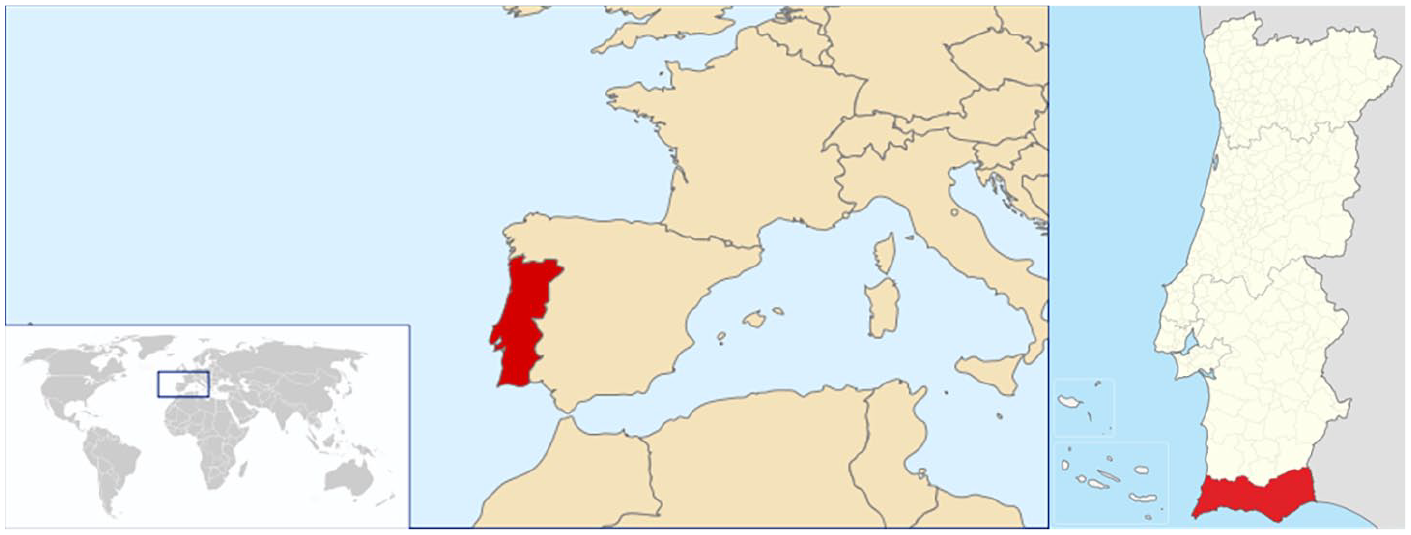
Source: Creative Commons/Wikipedia.
The region’s road network facilitates motorhome travel. A motorway (A22) connects the East (the Spanish border) and West (the Atlantic coast), and another one connects the region to the centre of Portugal (A2). The connection with Spain and the rest of Europe is made via the Guadiana International Bridge. The region has an International Airport (Faro), which on a national level is the second largest in terms of air traffic.
Since the 1960s, the Algarve has been a tourist destination associated with the 3S – ‘sea, sun and sand’; however, in recent years, there has been a diversification of tourist demand, so thousands of people annually seek the Algarve, not only for the beaches but also for the peace, culture, gastronomy and security, among many others (Figure 3).
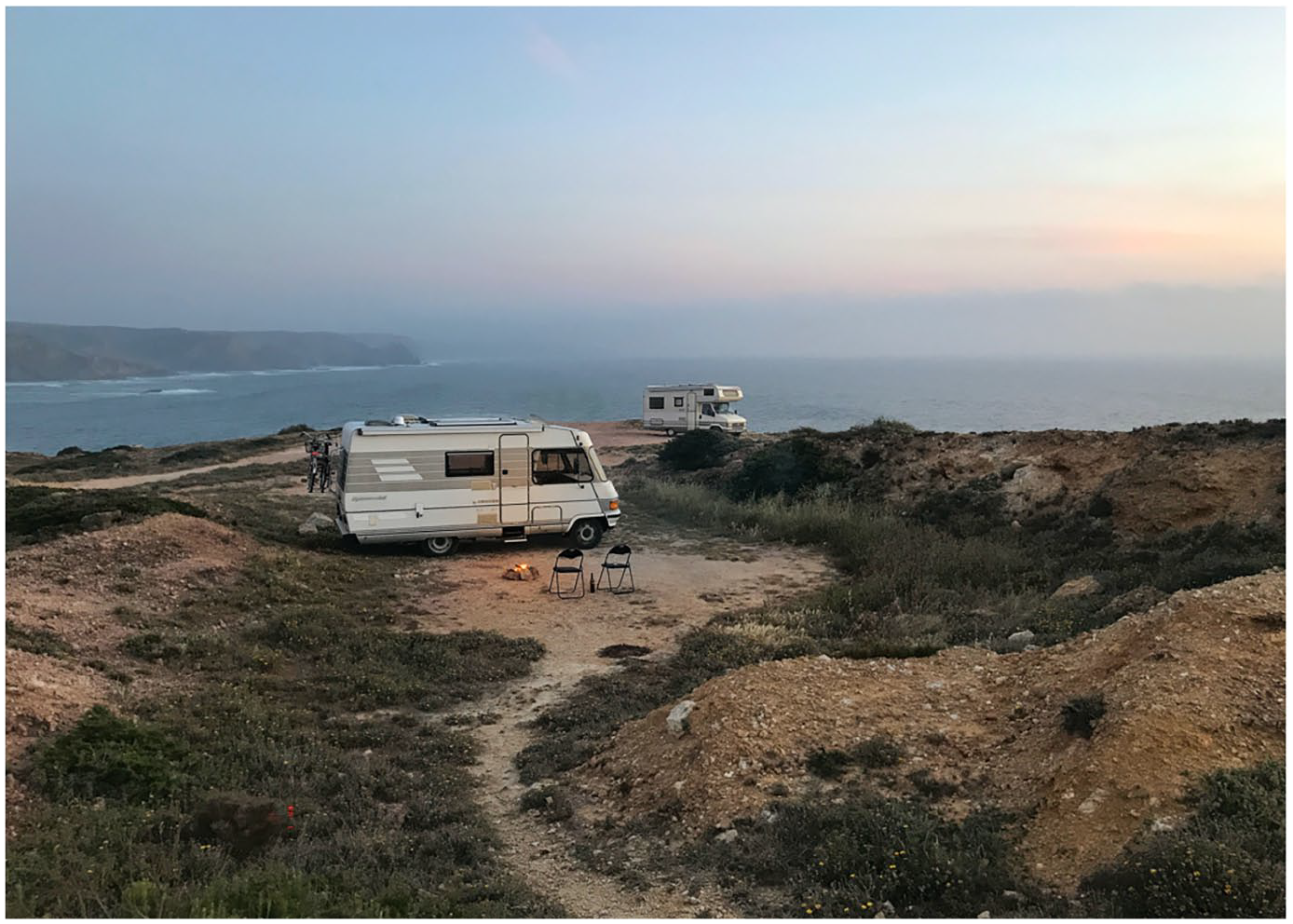
Informal parking place in the Algarve.
One of the tourism segments that has been expanding since the beginning of the twenty-first century is motorhome tourism (CCDR Algarve, 2008). Currently, thousands of motorhomes from northern Europe travel annually to the temperate regions of the South, where they stay during the winter season; many of these travellers have the Algarve as their main destination (Dias and Domingues, 2018). In 2015, a Motorhome Support Network was created (CCDR Algarve, 2023). This network reunites several camping and caravan sites, rural camping parks and service areas specifically for motorhome users (ASA). However, given the nature of this way of travel and the characteristics of the region, many motorhomers choose to park and stay overnight in informal places, by the sea, near the beaches or close to infrastructures such as cultural facilities, restaurants, supermarkets, etc.
Research methodology on mobile subjects
As a way to go beyond a sedentary analysis of a highly mobile object, this study used a ‘mobile methodology’ as has been suggested by several authors (Cohen, 2009, 2011; Cohen et al., 2015; Duncan et al., 2013; D’Andrea et al., 2011). Therefore, a qualitative approach was chosen using participant and non-participant ethnographic observation and a significant set of semi-structured interviews.
During the observation periods, the second author visited several places in the Algarve using a rented motorhome. This procedure allowed us to reproduce and, therefore, understand the movements and practices of motorhome owners, both in formal and informal parking spaces. The participant observation moments were a fundamental instrument for the information collection, as they allowed a vivid experience of some characteristics of this way of travelling, as well as the sensory aspects associated with the proximity to nature. They also made it possible to experience some of the difficulties and anxieties usually felt by motorhomers, namely those related to the long periods spent inside the vehicle during rainy days or the feeling of not knowing where to spend the night after a long road trip (Williamson et al., 2022).
Participant observation also allowed the second author to interact with the travellers, being recognised as an element of the ‘community’ and thus having informal conversations as an additional element of information gathering. Participant observation was complemented by non-participant observation moments in different motorhome campsites and informal parking lots. These places were visited several times throughout the year, allowing a better understanding of the dynamics of these travellers in the region (Figure 4).
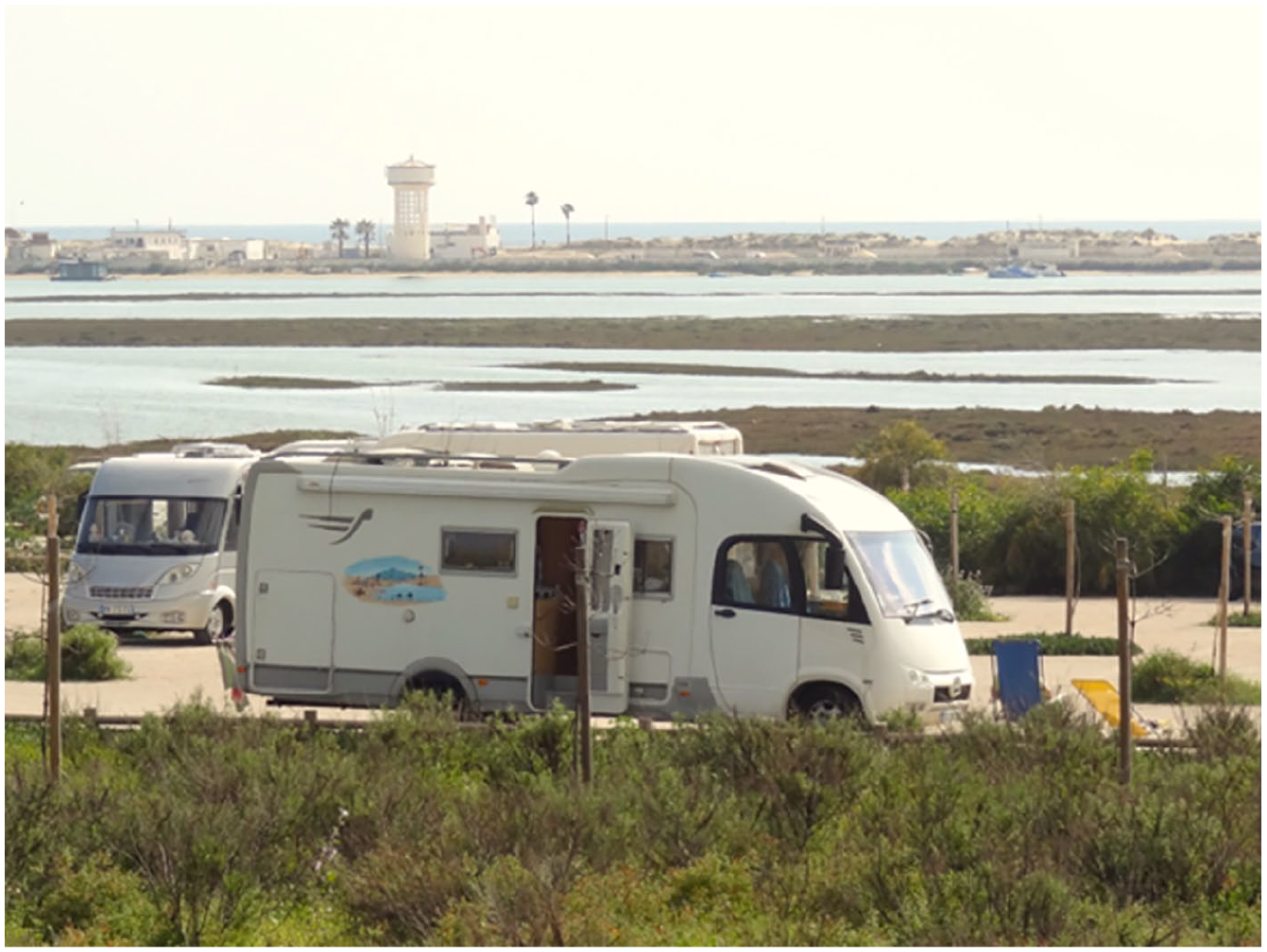
Informal parking place in the Algarve.
Although the fieldwork lasted until April 2021, the interviews – recurring to a convenience sampling – were carried out between July 2019 and May 2020 in formal and informal parking spaces. We consider formal parking as being when the participants were interviewed and observed while parked in camping parks, and informal parking as being when observation and interviews took place in any other location, next to the beach or forest, open field, town centre, etc.
The script of the interviews was translated into English, French and Spanish, and 25 couples, four families with children, six solo women, nine solo men and one group of two female friends were interviewed in a total of 45 interviewees of 12 different nationalities. Participants were grouped according to their generational profile: Millennials (between 23 and 38 years old), Generation X (between 39 and 54 years old) and Baby Boomers (between 55 and 73 years old). Although these generational designations do not form part of the tradition of sociological research, they are used here since they are fully disseminated in the literature on motorhomers and vanlifers.
The anonymity of all interviewees was guaranteed, and after complete transcription, the content of the interviews was coded and analysed using the NVivo 12 Plus software (in the presented excerpts, a pseudonym is used, followed by age and the European acronym for nationality).
Since the fieldwork included several incursions by the second author into the geographical and social reality being studied, to avoid a biased interpretation, the empirical analysis of the interviews and the notes of the ethnographic observation featured a more distanced perspective of the phenomenon through the collaboration of the first author. Thus, this article is the result of a dialogical process that involved several moments of observation, analysis, and theoretical reflection on the reality by the two researchers.
A new typology of motorhome travellers in Europe
The characteristics of motorhome travellers vary over time and according to the geographic and cultural context. For example, while in 1984 in the USA retirees were already the majority (Jobes, 1984), in 2006 in Australia, Prideaux and McClymont reported a change in the profile of the travellers from families to pensioners (2006). In Europe, Viallon (2012) explored the phenomenon of the French retirees who, every year, migrate to the Atlantic coast of Morocco. In the Algarve, Dias and Domingues (2018), in a survey carried out in 2016, also found a prevalence of pensioners from northern European countries.
Curiously, the present investigation allowed us to find a very diverse reality of travellers. In addition to the diversity of nationalities of European travellers, we also found a significant age variation, which challenges the notion that motorhomers are exclusively senior retirees. The interviewee Wendy, who has been travelling in a motorhome since 1985 (she started 30 years ago with her husband and children) and is now retired, recognises the current trend to find a greater diversity of travellers: When we first started doing it, there were only a few with children, and there were mostly retired people, but now, there are all sorts of people. (Wendy, 55, UK, E01)
On the other hand, while in most of the previous typologies, the retirees occupy almost exclusively the full-time travellers’ segment, this investigation found several examples of individuals belonging to younger age groups, not yet retired, travelling full-time – namely, the ‘vanlifers’. In fact, some recent literature (Dorn, 2015; Gretzel and Hardy, 2019) pointed to a significant increase in young full-time travellers, relating them to the phenomenon popularised as #vanlife.
Likewise, women travelling solo have not received much attention from most of the literature; however, in this research, of the 15 solo travellers interviewed, six were women, and the fieldwork allowed us to observe a significant number of women travelling solo in a motorhome in the Algarve.
Except for organised groups, this investigation found examples of practically all the characteristics of travellers described in the previous typologies. For example, regarding the first typology proposed by Jobes (1984), we found the three main types identified by the author: full-time travellers; seasonal travellers; and vacational travellers. However, our research found more contemporary feature: people who rent motorhomes to travel, which was also considered in Mundet et al.’s (2023) work. Indeed, motorhome rental is a relatively new business niche.
As the French sociologist Dominique Schnapper recalls, ‘the purpose of the typological method is not to classify people, but to elaborate the logic of abstract relationships that allows a better understanding of observed behaviours and discourses and gives new intelligibility to social interactions’ (Schnapper, 1999: 113, 114). Thus, the typology presented here constitutes a tool that allows a better understanding of motorhome travelling as it is practised in Europe and, simultaneously, a starting point for further investigations and international comparisons.
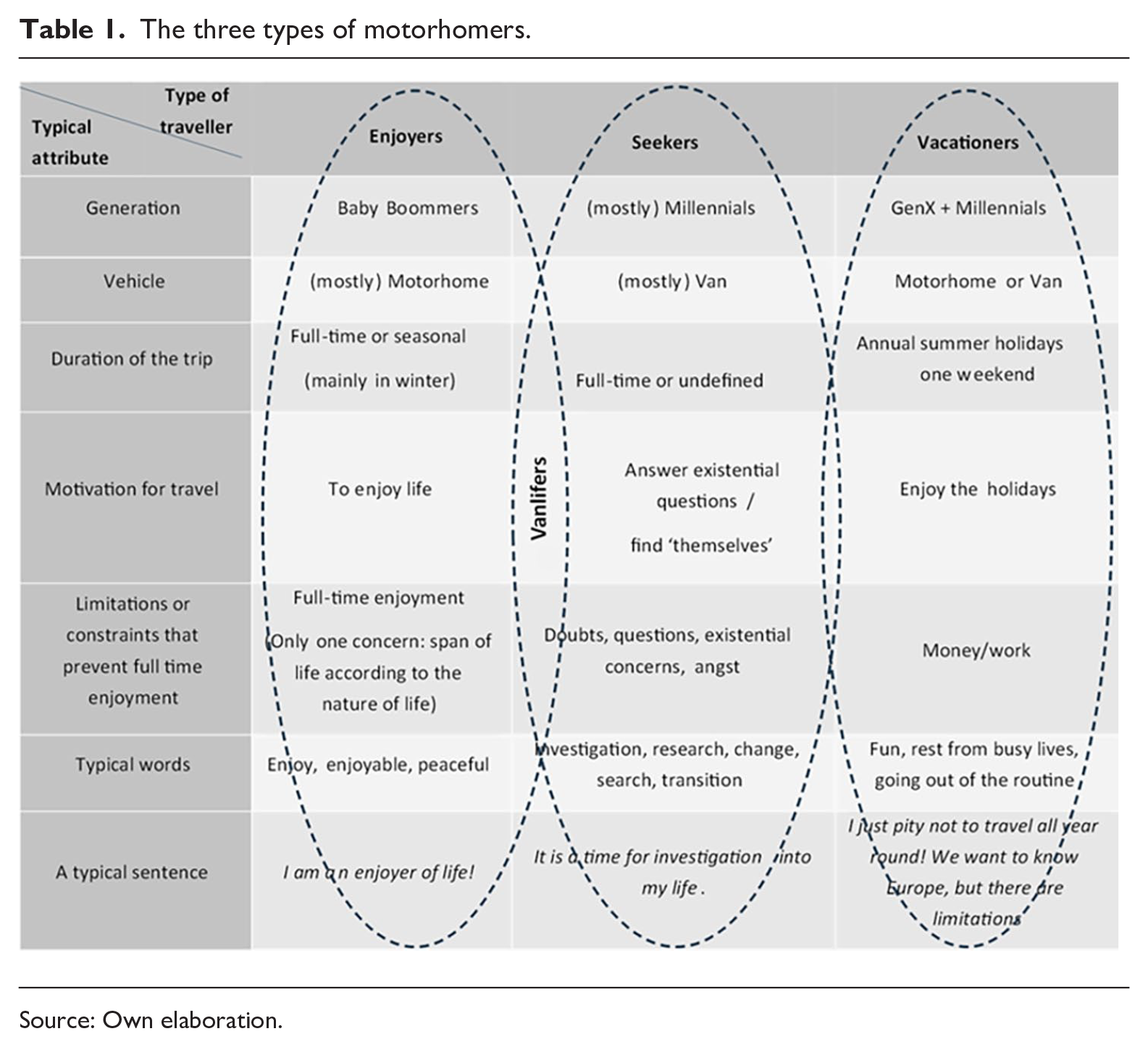
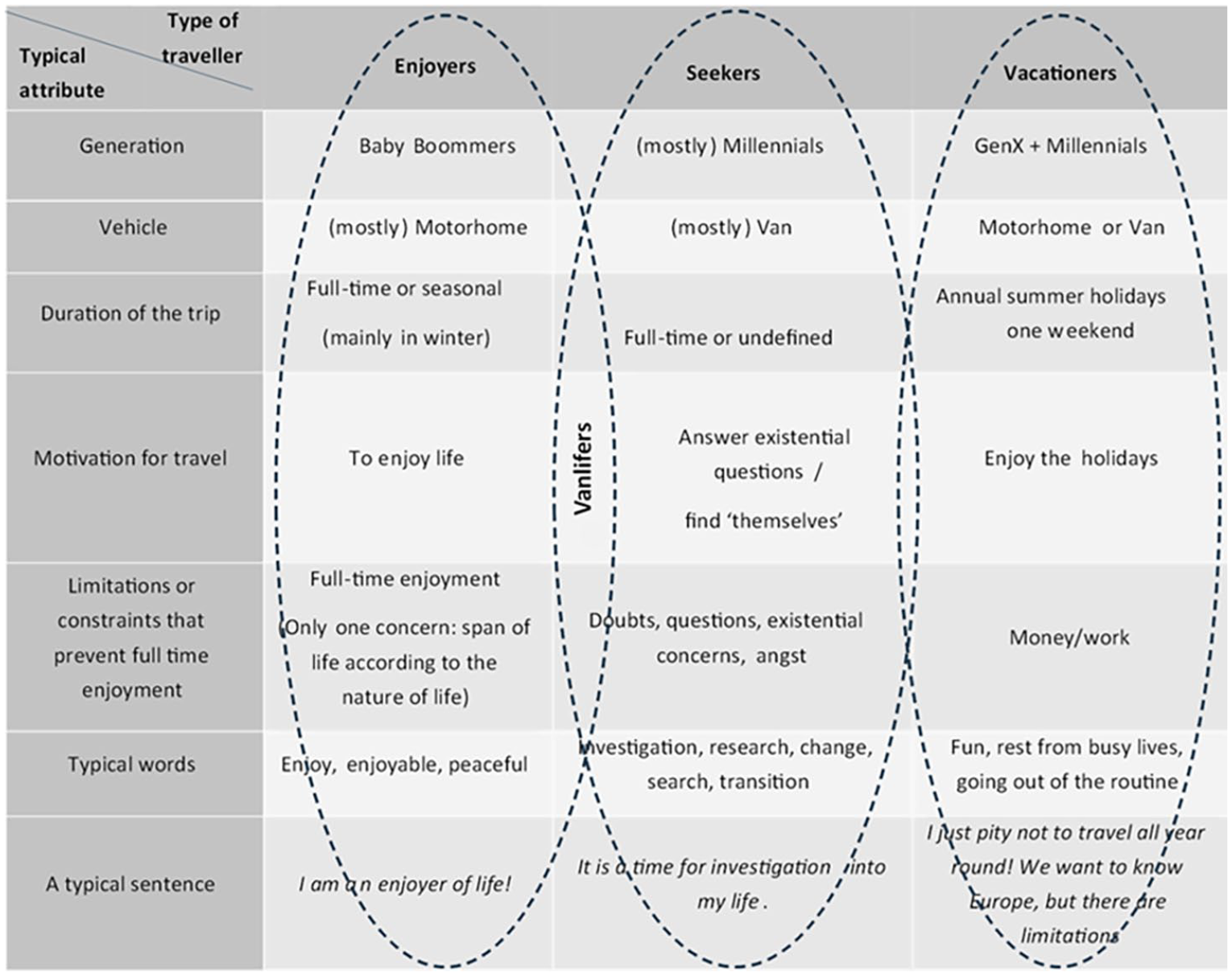
Contrasting with previous typologies, which used only one or two characteristics of the motorhomers, this one is based on five criteria. These criteria combine objective attributes – the age of the travellers (or the generation to which they belong), the type of vehicle used, and the duration of the trip – but also the subjective discourses about the trip: the motivations to continue travelling; the pleasure derived from the trip; or the limitations or constraints that prevent full-time enjoyment. Table 1 summarises the main attributes of the three proposed types. These attributes of European motorhomers are specified below.
The three types of motorhomers.
Source: Own elaboration.
The ‘Enjoyers’ of Life
The enjoyers type comprises full-time and seasonal travellers (those who travel mainly in the winter months) who own modern motorhomes usually equipped with all the comfort features. As most of them are retirees from wealthy European countries, they have the time and financial means to dedicate themselves to travel and leisure activities on a full-time basis, following their rhythms and searching for warm weather conditions.
Motorhome and sunny days are the best. When there is sun, it is when we feel happier. (Aleida, 68, NL, E40)
Aleida’s discourse expresses one of the main reasons why thousands of ‘Baby Boomers’ from all over Europe head to the Algarve during the winter months, a fact also captured by the research by Dias and Domingues (2018). They show great enthusiasm for motorhome travel as a lifestyle and – especially English native speakers – frequently use the words enjoy or enjoyable. Given the way they describe themselves and behave during the interviews, they seem to live in a constant state of happiness, without constraints, schedules, family obligations, etc.
I am an enjoyer of life. I enjoy life. All my friends say that I am an enjoyer of life, I travel, I make friends. I think we have a good life. (Mitchell, 65, BE, E26) [Travelling in a motorhome] is just enjoyable. We travel all the time because we are retired, we do not have to worry about working. I think we are well in the camping life. (Karen and Ken, 72/72, UK, E17)
The discourse of the enjoyers is full of references to a state of freedom and relaxation obtained with their condition as travellers and simultaneously as retirees since, from a generational point of view, this type is almost entirely, although not exclusively, composed by ‘Baby Boomers’: We have retired, so we have more time on our hands to do it. We are just happy, happy that we go in the way. So, it is different from living in our house. I think that it is why it is so enjoyable because it is different. We are not doing the same thing all the time. (Michelle, 59, UK, E10) I have worked my whole life, and now I want to enjoy a little bit. I am happy at the moment when I am travelling. I feel free, really free! The moment I start my trip, I go to Germany, I go to France, I feel very well, I feel good. Very happy, very happy. (Reinier, 67, NL, E29) Now we are retired, and we have time, that’s it! So, we both have time, and we have the will. The motorhome is something to travel with. It’s a thing that is authentic! We bring the house with us, and that’s the most beautiful thing for travel. (Mário, 73, PT, E5) Yes, it is all about being relaxed and staying calm. Then it makes you feel good. We enjoy life. There is no stress. We have no stress. The children are at the end of the phone, we are an hour from the airport, so if there is a problem, we jump on an aeroplane. (Chloe, 67, UK, E34)
Another aspect that stands out in the enjoyers’ discourses is related to the state of ‘social togetherness’, which can be interpreted with the help of the concept of communitas, originally proposed by Turner (1974) in the context of cultural anthropology and appropriated, among others, by Ning Wang in his conceptualisation of existential authenticity (1999). The sense of communitas designates the emergence of spontaneous intimate connections among people, the erasure or blurring of statutory distinctions and social hierarchies and the emergence of a strong feeling of communion between participants, that is, a state of temporary equality (Turner, 1974). Alice’s speech refers precisely to these feelings: We enjoy the motorhoming because you meet people from so many nationalities, you keep moving, seeing new places, and meeting new people. Every year we meet people from last year as well, so we have more friends than we had before being motorhomers. It seems to bring people quite close. (Alysse, 67, UK, 41)
This 67-year-old Englishwoman, who travels with her husband, staying in the Algarve during the winter months, is very expressive about the state of communitas with her peers or those who travel the same way. This feeling is deepened in the following excerpt: Sometimes I have mixed emotions about leaving a place where I’ve been and moving on (. . .) But then I am moving on, and I see some of the other people again, or I meet new people. It is, overall, a happy feeling which I never felt like that much when I left my house, you know. It is strange, maybe because we have so much in common with the other people and they are all kind of happy. They are living the lives they want. They can go when they want and make a change being in a different place. You have no expectations like you do with other people when you are living in a normal house. It’s just different. Often, we think: - oh, one day we will never see them again. It [This way of travellig] seems to bring people quite close. You connect with your neighbours in your house every day, but it is a different kind of connection. (Alysse, 67, UK, 41)
These feelings of social togetherness are experienced in the company of those who, like her, are free from commitments and constraints and can choose where, when and with whom they want to be. In the speeches of the enjoyers, this sensation is not comparable with the connection established at home with neighbours or friends.
The enjoyers seem to have relatively few or no constraints to enjoy life. They have no anxieties or frustrations and do not express difficulties or obstacles that prevent them from enjoying life to the fullest, except for the concerns about ageing, as they are aware that, 1 day, this way of travelling will inevitably have to end.
It is also a very, very quiet life. It is very peaceful this way of living. You don’t feel trapped in anything, you feel very free, and I think that is very uplifting. I think this is a very good way of retirement. You meet a lot of people. I feel very happy and relaxed. I feel special in my twilight years. That is, I am doing exactly what I want to do, and I want to continue to do it until my last day, basically, that I can. Obviously, one day I will not be able to walk as well or think as well. (. . .)I just feel very contented and very happy. Even if I could not move more, I would like to stay in my motorhome until I am gone. (Alysse, 67, UK, E41)
The ‘seekers’
The seekers are motorhome travellers on a quest, namely, inside themselves. Motorhomers of this type also express enormous satisfaction with the fact that they are on an endless journey and have the potential to experience intense subjective states of happiness. However, their narratives are marked by search, restlessness and reflection. They show a predisposition and a willingness to change as if they were in a transition or transformation process. As in the case of Karl: I feel like a lifelong searcher. Sometimes I find some glimpses. I also have big questions that I don’t have answers to! Why are human beings here? I have many philosophical questions. Why am I searching and researching my whole life (. . .)? I feel like making a journey into life, researching possibilities for ‘coming home’ and reconnecting to love and nature. (Karl, 55, DE, E43)
These traits are more pronounced within the ‘vanlife’ community, namely in the context of solo travellers. Motorhome travellers belonging to this type tend to opt for a minimalist lifestyle based on contact with nature, travelling at a slow pace and valuing every moment of the journey. The travellers of this second type tend to present some form of discontent and discomfort with the constraints generated by the social structures of modern society, namely, the appeal to material consumption. The young German travelling alone who left a well-paid job and an economically comfortable life to live and travel in Europe in a modified van exemplifies this state of permanent quest and, at the same time, expresses a desire for personal development.
The main goal is more ‘egoistic’. I am doing this all for me. It is a time for an investigation into my life, to get a bigger mindset, a bigger horizon. I do this for me and to be a better person. (Klaus, 24, DE, 24)
There is a mental state of receptivity that accompanies the attitude of existential search, and travel provides these research opportunities. Some of these travellers demonstrate that they are on a path of introspection, waiting for something extraordinary to happen or for ‘something to change’. As is illustrated by the young Italian who travels alone in his van and fits well as an example of the ‘drifter’ of Cohen’s (1972, 1973) tourist’s typology: Until the day something changes. . . It may happen! Right? Change in your mind, or you meet someone, and you stay. . . I don't know where. You go on a trip, and you meet someone, and you stay. Or you like a place, and you stay there in the van, living. (Luigi, 32, IT, E37)
Dissatisfied with her life in the Netherlands, Mia decided to sell everything and travel to Portugal in search of existential answers. In a modified van devoid of comfort and material goods, she sees travel as an opportunity to find her place in the world: A couple of years ago, I was living on the second floor of an apartment building and wanted to be more in contact with nature, and Holland is too crowded. There are too many people and stress and everything (. . .). This (the van) gives me space to find my place in the universe, standing for myself. (Mia, 54, NL, E12)
These travellers can be compared with the tourists in the ‘experimental mode’, described in Erik Cohen’s classic text, who are looking for themselves, not only through travel but also through other mystical or psychedelic experiences. Others fit into the ‘existential mode’ because they seek, through motorhome travel, a meaning to their lives (Cohen, 1979: 183–193). Some motorhomers are explicitly looking for something, which can be love, a ‘new spiritual centre’ (Cohen, 1979), or what Wang, following Heidegger’s existential philosophy called ‘existential authenticity’: ‘a special state of Being in which one is true to oneself, and acts as a counter pose to the loss of ‘true self’ in public roles and public spheres in modern Western society’ (Wang, 1999: 358). In this regard, the main characteristics of these travellers absolutely validate the model, proposed by Wang, of existential authenticity-seeking applied to tourism, but also meet the aspects of what has been called ‘transformative travel’ and ‘transformative tourism’ (Kirillova et al., 2018; Lean, 2012; Nandasena et al., 2022; Pung et al., 2020; Rickly-Boyd, 2012; Robledo and Batle, 2017; Sheldon, 2020; Teoh et al., 2021).
The speeches of the seekers reveal that these people manifest a state of searching, receptivity and a desire to be amazed and fascinated by the outside world, but above all by their inner world. In this context, motorhoming can be seen as a horizontal means of transportation, but also a vertical one: a subjective movement of discovery and personal evolution (D’Andrea, 2006).
The ‘vacationers’
The vacationers type includes many different travellers and, with the help of another kind of analysis it would deserve a typology of its own.
The primary motivations of the vacationers are the same as those of other tourists on vacations: to rest, to escape from everyday routine, to contact different cultures or just for the pleasure of recreating themselves by the sea or in the mountains.
[This way of travelling] It is a bit of everything, a way of life and tourism (Dulce, 32, ES, E18)
They are mainly people touring in owned or rented motorhomes during short-time breaks or summer holidays, that’s why they contrast with the enjoyers and the seekers, who own their motorhomes or vans and engage in mid- or long-term voyages, for periods that may vary from several months to a lifetime. Nevertheless, the choice of this form of travel is also linked to the freedom it provides, namely in terms of autonomy in relation to traditional tourism infrastructures and the possibility of escaping from crowded places and beaten paths.
We don't like crowded places or big resorts. (Anna, 39, BE, E27) We are not the type of people who go to a resort and stay there the whole time resting. (Paloma, 41, ES, E35) We avoid mass tourism, those people who get off a plane and walk around in herds. . . (Martim, 53, PT, E30) In a hotel, you don’t have this kind of freedom. Yesterday we didn’t like Tavira, so we came to Albufeira. This makes me disconnect – because I work a lot – staring at the rocks, listening to the sea, looking at the landscape. . . (Lisa, 33, ES, E31) I go to the small villages, to the bars where the local people go, not to the places where tourists go. (Wander, 49, NL, E11)
In our study, as in Jobes (1984) research, the majority of the vacationers were couples and families with children. This type comprises, for the most part, adults in active life (Generation X or Millennials). Many of them are used to travelling in motorhomes, others are taking their first steps and finding the seduction of this form of travel, slowly incorporating it as a lifestyle.
During the COVID19 pandemic, the vacationers’ type was increased by those who, although never had travelled by motorhome, decided to try it in order to increase virus safety. Many of them have become enthusiastic fans of this way of making tourism avoiding hotels, restaurants, or other tourist attractions. As Mundet et al puts it, calling them ‘Camper Travel Lovers’: Although CTLs use motorhomes and camper vans for their travel and tourist consumption, they do so during short holidays and with the main aim of coming into contact with nature, relaxing and discovering new places, sharing the experience with family or friends, and ensuring safety in the face of new health emergencies caused by COVID-19 (2023:17).
As they share the same camping spots – be they formal or informal – the vacationers can’t help comparing themselves to the other two types of motorhomers, namely to the enjoyers. Most of them express some sorrow for not being able to spend more time travelling. The dream of many of these younger travellers is to be able, 1 day, to travel by motorhome full-time, as the retirees do.
Retirees are the ones who enjoy it the most because they have time. For my part, I would continue all year. (Laura, 50, ES, E2) If we win the lottery, we would be on the road all the time. I think we would sell the house and travel by motorhome. (Anna, 39, BE, E27) We both have the dream of living in a caravan, but we both love our jobs, so we have the struggle from our professional side where we have to work a lot. We don’t have a job where we can work from the van with a computer. We don’t have that, so it would be either the job or this, but I really like my job and I also like this lifestyle. So, I decided that I will keep my job, but whenever I have long holidays, I will spend some time travelling in a van. (Sophie, 24, DE, E9) [Travelling in a motorhome] gives you a great feeling of well-being. If I could extend the vacation time, I would continue travelling. (Pablo, 28, ES, E15)
Be they Millennials or from the Generation X, the vacationers express great contentment with their motorhome travelling experiences. However, they differ from the enjoyers because they don’t live a ‘continuous’ state of happiness.
Beyond the heterogeneity, what seems to bring them together is, in addition to being active in life, the sadness of not being able to travel longer; that is, not being able to free themselves from the constraints and responsibilities of the work life and still maintain the ability to enjoy the journey while it lasts.
Conclusions and final remarks
This article sought to fill one of the gaps in the literature about European motorhomers: the establishment of a typology that would add sociological intelligibility to the phenomenon. As Schnapper reminds us, ‘typological analysis is an instrument for clarifying the reality and to give intelligibility to social relations; it consists of comparing the results of a research with an abstract idea constructed by the researcher, according to his point of view’ (Schnapper, 1999: 5).
The proposed typology sought to complement and deepen those carried out in other geographic and cultural contexts through the inclusion of more diversified criteria. It combines ‘objective’ criteria – such as the type of vehicle, the duration of the trip or the generation to which the travellers belong – with criteria that depend on their subjectivity - such as their motivations to continue travelling, the pleasure taken from motorhome travelling, or the limitations and constraints that prevent full-time enjoyment. It is also the first typology that seeks to integrate what can be considered a ‘youth subculture’ within the motorhome travel lifestyle: the vanlifers. The ‘vanlifers’ may be understood as a subtype situated between the enjoyers and the seekers.
One of the virtues of the investigation that gave rise to this typology was precisely the diversity of age groups that it was able to cover, which allowed obtaining perspectives from three different generations (Baby Boomers, Generation X and Millennials). This generational diversity was achieved, above all, thanks to the different stages of the fieldwork that was carried out both in the summer and winter months and in formal and informal parking spaces. It should be noted that most of the mentioned investigations were limited to the summer months (Mundet et al., 2023) or to the winter months (Dias and Domingues, 2018).
It is also worth underlining the cultural diversity that was covered by the 12 nationalities represented in this research. In terms of motorhoming, the Algarve has a unique multicultural environment that contrasts with those portrayed by most of the studies carried out in other countries and that focus only on the reality of ‘domestic’ travellers.
The enjoyers type, comprised essentially of retirees, integrates some of the characteristics of the ‘full-timers’ and the ‘seasonal travellers’ of Jobes (1984) and of Brooker and Joppe (2014), but it also relates to the ‘private relaxers’ and the ‘enthusiasts’ of Southerton et al. (2005) and to the ‘self-sufficient spenders’ of Espiner et al. (2023). This type includes many of the attributes of the ‘grey nomads’ found in several previous studies (Higgs and Quirk, 2007; Hillman, 2013; Holloway, 2009; Mahadevan, 2013; Onyx and Leonard, 2005, 2007); however, it also offers a transnational and innovative perspective, highlighting the feelings of tranquillity, well-being and happiness as fundamental traits of their way of being in life. For the enjoyers of life, ‘the world’s their oyster’.
As for the women and men travelling solo, who form most of the seekers, their main traits are the attitudes of receptivity, reflexion, and questioning. They understand travel as a means of search, not of escape. Most of the time, their journey does not have a destination or a predictable duration; they are guided by the need to answer their existential questions. These voyagers do not travel to escape from life, but to ensure life doesn’t escape from them.
In the same way, vacationers integrate some of the characteristics of the American ‘vacational travellers’ (Jobes, 1984), of the New Zealanders ‘Kiwi classics’ (Espiner et al., 2023) and the Spanish ‘camper travel lovers’ (Mundet et al., 2023). However, in the Algarve, ‘vacationers’ mainly include Portuguese and Spanish travellers who come to the region to spend their summer holidays or just a weekend. This type clearly requires a deeper analysis as it consists of the most heterogeneous one of the three presented types. The research presented in this article allows the conclusion that the majority of the motorhomers categorised as vacationers hope, 1 day, ‘to escape from the rat race’ and become full-time motorhome travellers.
One of the conclusions that can be drawn from the proposed typology is that the first two types – each in its way – contribute to the ‘destabilisation’ of some of the dichotomies of modernity: if the enjoyers challenge us to question the modern home-away dichotomy, the seekers – particularly the vanlifers – contribute to the de-differentiation between the triad tourism/work/leisure.
One of the main limitations of the research presented here and that should be considered in future studies, was the impossibility of the participants of different nationalities (namely German, Dutch, Swiss, Italian and Finnish) to express themselves in their own languages. As in many other tourism surveys, these travellers’ interviews were conducted in English, which limits the richness of the discourse when it comes to feelings, subjective perceptions, or symbolic meanings. In future studies, it is possible to be more ambitious in terms of sample size and sociocultural and geographic diversity.
The proposed typology of motorhome travellers is not a finished product. On the contrary, it opens the discussion around the characteristics and motivations of people who travel in Europe in their ‘houses on wheels’ and reinforces the potential of motorhoming as an object of multidisciplinary study. As Max Weber wrote, ‘the ideal typical concept will help to develop our skills in imputation in research: it is not a ‘hypothesis’ in itself but it offers guidance to the construction of hypotheses” (Weber, 1992: 172).
Footnotes
Acknowledgements
This paper is financed by National Funds provided by FCT – Foundation for Science and Technology through project UIDB/04020/2020. DOI 10.54499/UIDB/04020/2020
Funding
The author(s) disclosed receipt of the following financial support for the research, authorship, and/or publication of this article: This paper is financed by National Funds provided by FCT- Foundation for Science and Technology through project UIDB/04020/2020. DOI 10.54499/UIDB/04020/2020
