




Abstract
This paper seeks to extend existing discussions of post-disaster tourism in New Orleans by considering how competing narratives of disaster operate within the tourist experience available in New Orleans. More specifically, we explore how personal reflections and the collective memories of a community are practiced and mobilised as occasions for tourists to connect with and share in memories of disaster in post-Katrina New Orleans. We suggest that in a city where tourism has long been vital to the economic, social and cultural make-up of the place the power of sharing has emerged through personal narratives, artefacts and experiences that, more than a decade after the disaster, are woven into the tourist experience by individuals such as tour guides, curators of exhibitions, street artists, and participants in anniversary ceremonies.
Introduction
‘I’m on a Hurricane Katrina tour of New Orleans – sad but so informative! #ExperienceEverywhere #GoBe #GoBeCurious #NewOrleans (@girlvsglobe 13 May 2017, twitter) ‘Please do the bus tour of the Hurricane Katrina districts. 5000 people died in a tiny area. Houses are abandoned because no family survived. And get fried chicken from Willie Mae’s’ (@maffygirl 9 May 2019, twitter) ‘there are tour companies in new orleans that offer “hurricane katrina tours” they literarily profit from parading people through the (black) areas of the city most impacted by the horrific natural disaster turned crime against humanity’ (@nellabanella 5 Dec 2018, twitter) ‘Recently had a customer ask me about hurricane katrina because they were going on the “Katrina Tour” of the lower nine. And she wanted details of my personal experience. . . How do you respond to something like that?’ (@queenslore 20 July 2018, twitter)
The tourist industry ‘cashing in’ on the destruction of the Hurricane Katrina in 2005 continues to thrive in New Orleans. These tours have been operating for over a decade, and they continue to spark ethical debates about disaster tourism, narratives of remembrance, and urban renewal. Post-Katrina bus tours began to be marketed in 2005 – operated by Isabelle Cossart – and attracted a slew of negative media stories that accused her of profiting from the suffering of the disaster. But Cossart’s participation in post-Katrina New Orleans is complex: active in New Orleans’s tourist industry since the 1970s, she sold four of her five tour buses to the recovery efforts run by the Red Cross and Habitat for Humanity. With the remaining tour bus, she helped with the recovery effort and became aware that the people working to help the city’s citizens wanted to show the scale of the disaster to friends and family. In addition, new trends in dark tourism offered a viable new market for a city that has always had a vibrant tourist industry: ‘In the fall of 2005, the demand for tours showing the destruction wrought by Hurricane Katrina became impossible to ignore. It was the only thing customers asked for’ (Cosssart, 2015). With road signs washed away and many streets destroyed, Cossart drew upon her local knowledge and networks to devise a tour. Reflecting on those who accused her of exploiting the disaster, she spoke to the TV journalist Connie Chung (NBC) and stated the following: What was television news if not gawking at and profiting off others’ misery? I wanted to point out the hypocrisy, but my mic was cut off. I also wanted to say that my Katrina tour was done in a sensitive manner. After all, most of the driver-guides had themselves lost everything they owned (Cosssart, 2015).
Here, Cossart’s words highlight the significance of telling personal narratives as a way of conveying the devastation of Katrina and, by extension, how personal stories of loss in the face of the disaster have the potential to trouble allegations of exploitation. But this also raises vital questions: which personal narratives about the disaster have been profitable for post-Katrina tourism? How are these stories selected and by whom? Who holds the microphone on the bus? And how are the personal narratives presented to the tourist? These questions have not been addressed in the current scholarship on post-Katrina tourism in New Orleans. This paper seeks to extend existing discussions by considering how competing personal narratives of disaster operate within post-Katrina tourist experiences. More specifically, we explore how personal reflections and the collective memories of this community are practiced and mobilised as occasions for tourists to connect with and share in memories of the disaster. New Orleans is a city where tourism has always been vital to the economic, social and cultural make-up of the city; in this paper we aim to capture the tension between official and unofficial accounts of Katrina available within the tourist experience, both of which rely on the role of first-hand experience and accounts. Vital to this process have been tour guides, exhibition curators, street artists, and the participants involved in organising and carrying out anniversary ceremonies. We suggest that personal reflections on the disaster inform collective narratives and become an integral part of the memorialisation of Katrina. This paper argues that personal storytelling and other informal acts of remembering, such as the memorialising Katrina by local artists and residents, interrupt many of the dominant discourses that are disseminated through the Hurricane Katrina tours.
The period of our investigation ran from June to November in 2014–2015, which was the run-up to, and the year of, the 10-year anniversary of Katrina. We chose this period as Katrina peaked in cultural memory of the city (through a variety of formats such as exhibitions and films), which in turn became a focal point for tourists. We travelled to New Orleans as researchers, but with the aim to engage with the diversity of Katrina-related activities available for tourists and to engage with a range of people operating within, and on the fringes of, the disaster tourism economy. As researchers, we have a common interest in tourism studies but we approach tourism from a variety of perspectives that cut across the humanities and social sciences. We thus combine our expertise to consider how Katrina has become enmeshed in the heritage of New Orleans and marketed to tourists. As a group, we were particularly interested in challenging the constant refrain of ‘resilience’ in New Orleans’s recovery, especially when it is used to obfuscate the ongoing experience of racism and displacement for African Americans from New Orleans (Weber and Peek, 2012). In her recent analysis of film and TV representation of Hurricane Katrina, Keeble emphasises this point: she identifies the particular intersection of social anxiety and forces which, ‘evinced a crisis in the very notion of the nation-state [and] brought the violence of neoliberalism into sharp focus and also exposed the extents of inequality and racism in contemporary American’ (Keeble, 2019: 5). By extension, the endurance of Hurricane Katrina tourism after a decade has relied on promoting neoliberal values of resilience (Bracke, 2016) as part of the narrative of recovery, allowing tourism to operate as a form of ‘disaster capitalism’ (Porteria, 2015).
As a way of accessing the narratives of individuals and their role in post-Katrina tourism, this article draws on 20 semi-structured interviews with people directly involved in the tourist industry (tour guides and participants), observations of local artists engaging with Katrina’s legacy in areas populated by tourists, and an analysis of key tropes and images in exhibitions and memorials connected to Katrina that were programmed in the run-up to the 10-year anniversary. The tension that runs throughout these approaches is recognition and representation. Whose stories are being represented to tourists? What is being memorialised and for whom? The sections that follow outline the existing literature in post-Katrina tourism and the relative absence of layered approaches which consider some of the affective dimensions of the tourist’s experience in New Orleans, a topic which remains under discussed in studies of disaster tourism (Martini and Buda, 2019). Our analysis of interviews, vernacular forms of everyday creativity produced by artists on the fringes of the tourist economy (Edensor and Millington, 2019), and a visual and textual analysis of exhibits provides a framework through which to understand how narrative structures facilitate the experience of some feelings over others (Slager, 2019). Our paper demonstrates how the lives and words of people of colour, often working class, have been marginalised while the increasingly commercialised structure of post-Katrina tourism capitalises on the experience of Black suffering (Hartman and Squires, 2006).
Personal Narratives, Spaces of Disaster, and the Tourist Experience
In his book Desire and Disaster in New Orleans, Thomas powerfully summarises the dominant discourses present in post-Katrina tourism by framing it through his personal experience: ‘As a native New Orleanian, I have witnessed first-hand how writers, tourism promoters, and visitors to New Orleans have collectively created and perpetuated stories of New Orleans as exotic, dangerous, and unique characterisations that are inextricably linked to racial mythologies about the city’s black population’ (Thomas, 2009). Thomas goes on to argue that ‘desire’ and ‘disaster’ frame the tourist experience, and that ‘disaster’ is intrinsically linked to the decay of white supremacy in the South. As Thomas points out, a few years after Cossart launched her post-Katrina tours, the imagery on her website advertised Plantation Tours alongside her disaster tours. Through the peripheral engagement with a neoliberal economy of disaster capitalism, the residents of New Orleans – particularly people of colour – draw on their personal experience of the disaster to engage with and challenge the mainstream narratives of disaster and recovery. Building on the wealth of research conducted in resilience and disaster in tourism (Butler, 2017; Cheer and Lew, 2017; Lew and Cheer, 2017), we suggest that resilience becomes manifest through a series of socially constructed actions as communities bring agency and autonomy of their own personal experiences of disaster into the tourism experience. Adopting a range of roles from tour guides, bus drivers, tourism information officers and exhibition managers, to local artisans and participants in second line parades (a traditional brass band parade associated with the historic African-American communities and neighbourhoods of New Orleans), the subjectivities and personal experiences of those who have lived through not only Katrina, but a number of other hurricanes, become inherently imbued in tourist experiences. Personal narratives themselves become an active form of resilience and opportunities to directly address and share knowledge and experiences of disaster become central to tourist experiences in the context of New Orleans.
Such an approach also builds upon existing research in the field of dark tourism (under which disaster tourism is often categorised). To date, this has focused primarily on the development, operationalising and experiences of consuming a range of diverse dark sites such as Chernobyl and Robin Island (Biran et al., 2011). The scholarship usually includes critiques of the memorialisation of human-inflicted atrocity (Ashworth, 2002; Davis and Bowring, 2011), as well as dark tourism as a form of mortality mediation in the consumption of such experiences (Stone, 2012; Stone and Sharpley, 2008). Some scholars focus on the motivations for engaging in the consumption of dark tourism (Buda, 2015; Podoshen, 2013), including the relationship between supply and demand that impacts the production practices involved in the construction of these experiences (Strange and Kempa, 2003).
We do not seek to reiterate this well-trodden ground. Rather, we focus on the personal responses that can help us to understand post-disaster culture and memorialisation as inherently lived and fluid in a community. As the above context suggests, personal narratives are extremely important for understanding disasters: story-telling is, after all, a vital way for addressing trauma, demonstrating solidarity, and connecting with other people. An individual’s story often lies in stark contrast to the mainstream narratives in the media which focus on destruction and gloss over difference, focussing on the spectacular, and dismissing social factors. These narratives are usually blind to race, gender and class; they also tend to concentrate on short-term impacts, heroic stories and sensational accounts so that the myth of a homogenous society is maintained. This erasure does not offer a useful way to help the most marginalised people in the long term. In this paper, we therefore explore how memorialisation has become another version of the ‘resilience’ myth in New Orleans: memorialisation is, after all, a way of interpreting disasters and integrating trauma narratives into the fabric of everyday life. In fact, scholarship on memorialisation often points to its powerful function for the national imaginary (Atkinson and Cosgrove, 1998; Huyssen, 2003) and the way ‘official’ or state-sanctioned visions of memory, mourning and history supersede less visible vernacular interpretations or expressions of memorialisation (Nora, 1996; Wells, 2012). Commemorative sites can form the material basis of state-authored memorialisation. But the personalised narratives and the vernacular forms of memory in post-Katrina New Orleans have closely mirrored unique local cultural forms, such as the Second Line, music, visual art and the celebrations of carnival.
Post-Katrina tourism is a well-covered topic in cultural studies. It has been analysed from the perspective of disaster as a media event (Parr, 2008) to discussions of authenticity in the tourist encounter (Robbie, 2008) to the complex economic, social and cultural reality in New Orleans’s heritage (Pezzullo, 2009). The disaster made room – literally and figuratively – for competing narratives of what New Orleans has represented in the past and what it continues to represent in the present. All of this is foregrounded in how the citizens of the city envision and realise recovery. In this process, local communities, the Federal Emergency Management Agency (FEMA), the international media and local government became different stakeholders (with different agendas) in the recovery process. Allen argues that the scale of the disaster cleared the landscape for powerful agendas that were not necessarily located in or connected to local politics or community organisations: ‘Almost overnight, New Orleans became a full-scale neoliberal experiment in building and recovery’ (Allen, 2011: 2006). Alongside this, there is also a vocabulary that has centred on, and connected to, the work of ‘recovery’ and ‘that has become a new kind of orthodoxy, especially considering the contextual range and uses of these words (Crutcher, 2010; Hackler, 2010; Lansford et al., 2010).
The prominent position of tourism in the recovery of New Orleans has been a controversial subject, especially as it questions and measures the degree of change between pre- and post-Katrina representations of the city. Much of the academic literature on post-Katrina New Orleans has internalised some of the key rhetorical language of survival, resilience and recovery. But the literature on post-Katrina tourism is largely split between studies focussing on the official responses of public and commercial organisations, and those highlighting the disruption of official narratives through counter-memories or counter-narratives. Studies of official tourist branding in New Orleans have highlighted some of the ways in which resilience has been communicated through the selling and branding of New Orleans as a site of post-disaster tourism: ‘tourist professionals’, writes Kevin Gotham, ‘are implementing new urban rebranding campaigns to present an image of “authentic” New Orleans as clearly demarcated, disconnected, and segregated from flooded neighbourhoods’ (Gotham, 2007: 836). The use of branding to divide the city between sites of historical interest and conspicuous scenes of disaster and recovery are also related to a co-ordinated message of ‘business as usual’ in the management of the established tourist infrastructure (Ryu et al., 2013). Indeed, the emphasis on the continuity of New Orleans’s tourist trade has been identified as a significant stratagem for understanding the city’s social, cultural and economic resilience (Chacko et al., 2008). Yet Gotham also questions the gap between the discourse and the reality that arises out of the representation of this recovery: ‘it is important to recognize that the post-Katrina urban rebranding is not just a question of attracting tourists or engineering tourism growth. Rebranding New Orleans is also about socializing residents to view the city as a brand and imagining an urban future that conforms to a semiotic script’ (Gotham, 2007: 839).
The power of branding to incorporate distinct and occasionally dissenting stakeholders has been discussed as an inclusive, if problematic, vehicle for the promotion of places, although the precise method for levelling the differences between stakeholders varies greatly (Marzano and Scott, 2009; Morgan et al., 2003). Gotham’s ‘semiotic script’ edits out possibilities for individuals and unofficial groups to resist commercial tourist branding. In fact, critics who focus on the non-commercial aspects of post-Katrina tourism underscore a very different kind of continuity and resilience, namely, the reinscription of racial discrimination and marginalisation in representations of the city’s value as a tourist destination. For instance, Lynell L. Thomas traces the strategies through which New Orleans has fashioned itself in terms of exceptionalism, from being a French-Spanish colony, to the ability of slaves to purchase their freedom, as a way of discussing processes of ‘forgetting’ a heritage undergirded by racial discrimination and segregation (Thomas, 2014). The focus on New Orleans as a ‘European’ city alongside this attempts to distinguish its history of slavery from other Anglo-American models, which has facilitated a variety of antebellum nostalgia. This has effaced the histories of racial tension and segregation that would necessitate addressing and including African-American heritage (Eichstedt and Small, 2002).
Nowhere is the racial context of post-Katrina tourism as prominent as it is on tours of the Ninth Ward. Despite the highly contained nature of these tours and the displacement of disaster onto key sites, these tours are one of the ways in which counter-narratives of New Orleans’s history have come into contact with visitors. Relatively little attention, however, has been paid to the formal and informal structures of memorialisation in New Orleans and the ways in which they have worked alongside, or against, the dual vision of segregated disaster and unified resilience. It is this tension that we explore and, in so doing, we not only address the practices of co-creation and the sharing of community narratives of lived memorialisation, but we also tease out unresolved issues, paradoxes and silences that are inherently interwoven into these stories.
Our theoretical approach thus documents the personal narratives that are integrated into the post-Katrina tourism experience. The expressions of personal memories play important roles in determining how the individual responds to the disaster and expresses her trauma to other people. As a result, it is vital to become aware of how the tourism experience in New Orleans post-Katrina and how personal accounts can include the nuance and diversity that people express when coming to terms with the disaster and convey it to people from outside the community. Stories and oral narratives, then, form an essential part of a non-tangible cultural memory that exists alongside the more tangible plaques and public art pieces that commemorate the disaster. Personal story-telling often provides counter discourses to the mainstream narratives of the disaster. As writers, especially in Black feminism, have highlighted, personal narratives from marginalised people have the potential to be sites of resistance (Hua, 2013). However, as our analysis demonstrates, the soliciting of ‘authentic’ voices on experiences of marginalisation can itself become co-opted and emptied of political resistance by organisations invested in maintaining dominant narratives (Srivastava and Francis, 2006).
Methodology
In this paper, we reveal multiple pathways through which memories and the memorialisation of disaster are made accessible to tourists through personal narratives. The original data we collected during two periods of fieldwork in August and October 2014 is primarily based on in-depth conversational interviews (Oakley, 2013) with 20 residents working in the tourism industry (attractions, sites and tours) directly associated with sharing experiences of Hurricane Katrina. For the interviews, we used a purposive sampling approach to identify the key tourist sites and attractions within the city limits that would be appropriate for this research, and we conducted a review of all tours and sites available to tourists in New Orleans. This included both an online search using key search engines, as well on-site reviews of information available in tourist information centres. As the memorialisation of Hurricane Katrina is the key focus of this research, we selected sites and attractions that specifically included or referred to the event in their itineraries. From this, we identified individual personnel within each of these tourist attractions, sites and tours, and we approached them for interviews, enabling us to gain a sound understanding of the relationship between Hurricane Katrina and the general tourism product of New Orleans.
During the two periods of data collection, interviews were conducted with individuals involved in the development and delivery of these tourist experiences. Interviewees included tourism information office staff, the exhibition manager from local and state museums (each exhibiting community experiences of disaster, including the Backstreet Cultural Museum and the Louisiana State Museum Exhibition), local artists creating art from hurricane debris in Jackson Square, tour guides from city bus tours and the Ninth Ward bike tour, the tourist office in Jackson Square, participants in the ninth Anniversary Katrina Memorial in the Ninth Ward, and freelance journalists (see Figure 1). Participants were predominantly male and ranged in age from early 20’s to early 70s. It should be noted that the majority of the participants interviewed had direct, personal experience of living in New Orleans during and/or after Hurricane Katrina. It was evident that the value of interweaving personal narratives in the interviews and the experiences realised by tourists, as developed and delivered by participants, was significant to the articulation of the event. As a result, the conversations became a process of sharing lived narratives of self and community, for the participants shared how they offer tourists insights into this period of New Orleans’s past, and the cultures of resistance that underpin the city.
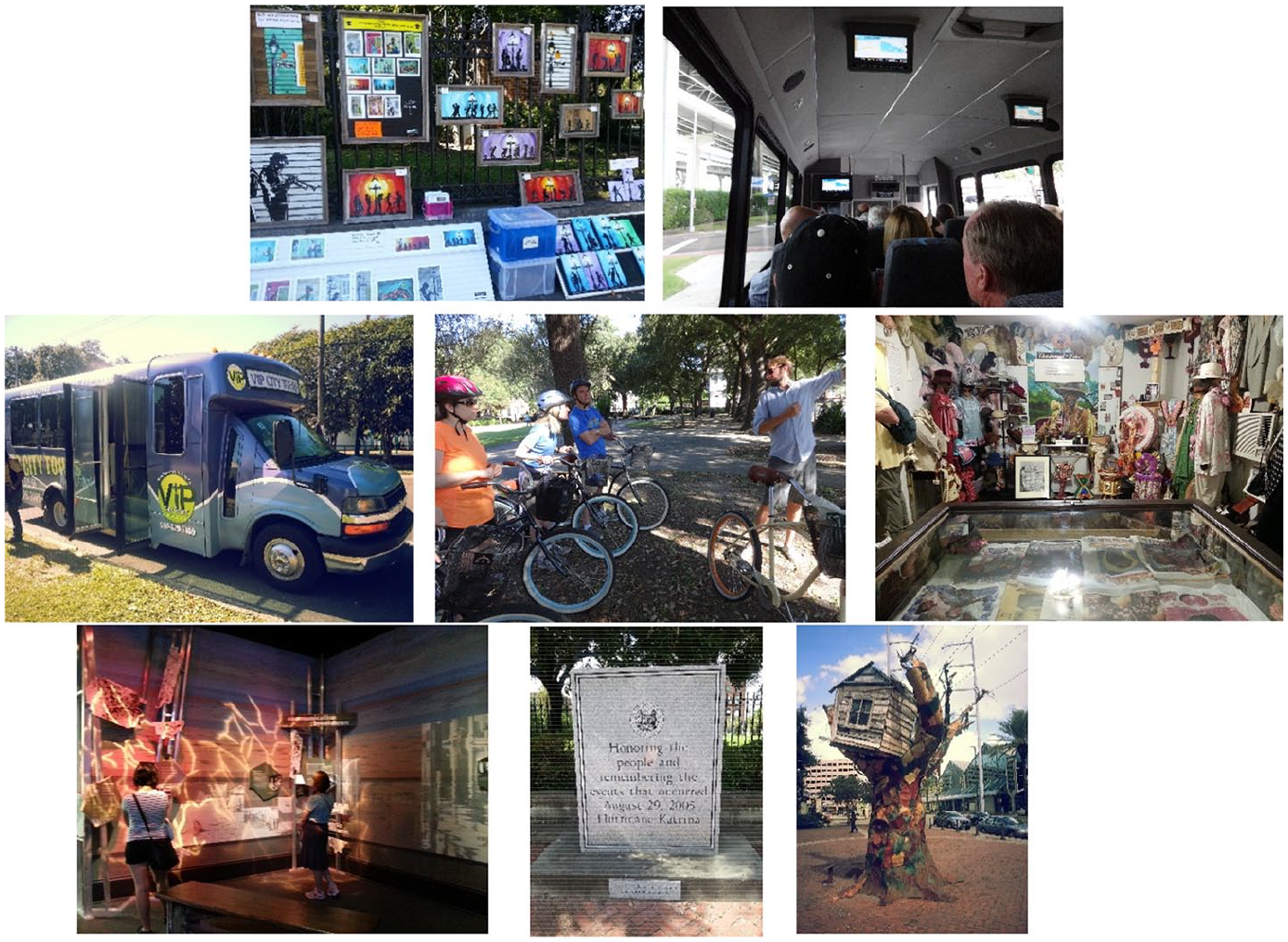
Collage of attraction/site images. Clockwise from top right: Local artists using debris from Hurricane Katrina, New Orleans City and Katrina Tour, Grayline Hurricane Katrina Tour (3 hours), VIP City Bus Tour (3 hours), Ninth Ward Rebirth Bike Tours (4 hours), Louisiana State Museum Exhibition, ‘Living With Hurricanes: Katrina and Beyond’, ‘Scrap House’, Hurricane Katrina Sculpture by Sally Heller, Backstreet Cultural Museum. All authors’ own images.
A series of photographic and video recordings were made during these experiences and detailed field diaries were kept to record observations and reflections. All conversations, including reflective critiques by the research team, were digitally recorded and transcribed verbatim. Video recordings from bus tours were also transcribed verbatim. All respondents were given pseudonyms to ensure anonymity and confidentiality. The data was analysed manually by creating thematic matrices that identified key issues. Emergent thematic structures and codes ensured that the analysis captured an accurate distribution of the key issues raised during the interviews. As Flick (2009) suggests, this ensures that the subjectivities of the respondents are preserved throughout the data analysis process, thus safeguarding the accuracy and high quality of the recorded findings. In curating a fusion of voices through these methodological approaches, we were able to reflect upon the tensions that run throughout these approaches: whose stories are being represented to tourists? What is being memorialised and for whom?
The interviews were combined with participant observation, offering embodied and deep understandings and nuances of memorialisation at the identified sites and attractions. In conducting observations, we were able to not only to realise additional data, but importantly, were able to analyse the interaction between people within each of the tourism contexts. According to DeWalt and DeWalt (2011), participant observation enables researchers to gain ‘greater understanding of phenomena from the point of view of participants’ (2011: ix). It is ‘a method in which a researcher takes part in the daily activities, rituals, interactions, and events of a group of people as one of the means of learning the explicit and tacit aspects of their life routines and their culture’ (1). During the two fieldwork periods, participant observation was realised by engaging with the sites and attractions identified above (Figure 1) and included the sites and attractions associated with each interview participant and extended outward to include sculptures located throughout the city and the Katrina National Memorial Park.
These recordings served to secure mimetic representations of that which was seen and they captured the interplay of objects, people and places that emerged in the moments of the research. Moreover, the visual dynamic also served as a tool for making sense of, and understanding, the complexities of disaster that have had profound and long-lasting effects on the community. As Bæderholt et al. (2004) suggest, visuals are no longer ‘static, distanced and disembodied encounter(s) with the world’ (101) and, as a result, increasing attention focusses on the importance of the visual culture as a method within tourism (Rakic and Chambers, 2012; Scarles, 2012). The significance of this method lies within the image that is represented as well as the motives, desires and needs that lie behind the creation of the image (Scarles, 2009, 2012). In this, visual objects enable researchers to make sense of phenomena and social relationships as they unfold within the field.
Personal Narratives: Accessing Emptiness and Invisibility
In various locations throughout New Orleans, there have been attempts to create sites that memorialise the devastation caused when the levees broke during Katrina. These sites range from abstract sculptures in significant locations associated with the disaster (particularly in the Lower Ninth Ward and the Convention Centre) and there is a memorial garden in the Cemetery District, as well as plaques where the levees broke. On August 27th 2014, two days before the ninth anniversary of Hurricane Katrina, The Times-Picayune reported that Sally Roesenthal, the founder of Levees.org, was planning a new memorial site for Katrina: ‘People arrive at the airport with the desire to understand what happened here and they drive around and all they see is emptiness,’ Rosenthal said. ‘There is no place for them to hear or see the story. This will be that opportunity.’ What Rosenthal neglects to mention is that at the time, a major exhibition on Hurricane Katrina was on display at the Louisiana State Museum and there were a number of events held around the city to commemorate the disaster. Rosenthal’s comments speak to the desire for memorial cultures around Katrina, as well as the erasure of the official memorial sites that already exist.
This erasure was reinforced at the Louisiana Visitor Centre in New Orleans. At the time of our first visit in August 2014, the centre had no centralised information on the number, or types, of memorials connected to Hurricane Katrina. The official exhibit at the museum was easy to locate but, by contrast, it was difficult to locate in situ official markers of the aftermath of hurricane. The tourism office had very little information to help us. Without our motivation to seek out Katrina sites, we could have visited the city and never encountered any traces of the hurricane. Where had the levees failed? Where was the damage? These questions were posed informally to local people and passers-by on the street but they could not direct us to (or even know about) the official fixed memorial park, even when we were several yards away from it. This experience supports Rosenthal’s claim that there is a lack of key focal points to draw together stories connecting Hurricane Katrina to the city. However, this statement is remarkable in the context of the volume of formal exhibitions and public art, not to mention the continued popularity of post-Katrina tours.
On August 29th 2014, the ninth anniversary of Hurricane Katrina, we attended a Second Line (a traditional brass band parade) held to mark the occasion in the city’s Ninth Ward. As a distinctive cultural practice in New Orleans, this type of parade brings together many of the city’s black historical and cultural influences, and it was an opportunity to participate in an organised, though loosely scripted, response to memories of disaster. The significant displacement of New Orleans’s artists, musicians and audiences has negatively impacted the scale and volume of Second Line performances (Turner, 2009) but this event attracted local radio personalities, as well as local and state politicians. Despite relatively small numbers (50–80 people), there was a robust media presence to cover the politicians who were paying tribute to the city. The selected location had two small public sculptures dedicated to Hurricane Katrina, both of which only drew the attention of external visitors (such as ourselves), who had not known of their existence. Politicians met the general public in a highly orchestrated setting where a single dissenting and critical voice of New Orleans’s regeneration was quickly silenced and escorted away. Once the politicians and their aids departed, a small-scale and diffuse Second Line started up, with people actively being encouraged to engage and participate. As one Ninth Ward resident (Jimmy) put it, ‘now that the politicians have had their say, the real memorial begins’. Following the Second Line for approximately a mile, we were in a marked racial minority. Along with some of the newer white migrants to the city, we were easily distinguishable but generally welcomed, either with enthusiasm or bewilderment. Music, song and celebration punctuated the walk, although the momentum often and quickly waned as participants fell back, or slowly left. This parade was a living practice of memorialisation: it connected pre-Katrina New Orleans with its disaster inscribed present, and the Second Line showcased ‘the role of memory, forgetting, and the illusion of a fixed, stable historical memory of disasters’ (Bowen and Bannon, 2018: 220). Although the one dissenting voice was quickly silenced, the reaction of residents such as Jimmy demonstrate the way in which the official and unofficial memorialisation of Hurricane Katrina’s impact on New Orleans have an uneasy co-existence. With commercial tour operators taking the lion’s share of tourist money when it comes to experiencing the parts of the city most associated with Katrina, the lion’s share of the labour to maintain the city’s authenticity and heritage falls to its African-American residents.
The syncretic culture of the city was reflected in the fusion of different narratives at this event. The neglected and culturally ‘invisible’ memorialisation in the form of public art was on display alongside the official performances of memorialisation in the speeches by the politicians. This was combined with the lived memorialisation of the Second Line for citizens of the Ninth Ward and thus foregrounded how the powerful ideological objects, lenses and bodies come together in narratives memorialising the disaster. In his discussion of rituals, Edensor focusses on how heterogenous tourist spaces blur the line between the quotidian and the touristic performance (Edensor, 2001). However, while Edensor describes a context where grandiose rituals can form an extension of the national imaginary or nation-state, the very disorganisation and relatively impromptu pomp of the Second Line was its power. It was a deliberately counter-hegemonic form of mourning embodied in a particular community and heritage which was keenly aware of its own displacement from the regeneration of New Orleans. Thus, the Second Line was a form of lived memorialisation on that day, and its chaotic choreography blurred the line between observers and participants. Although the folding in of minorities, whether they be white residents of New Orleans or tourists, created a clear visual partition, the Second Line demanded only one thing: movement.
Sharing Selves: From Personal Reflection to Community Narratives
These events and experiences address the reconceptualisation of memorialisation in tourism activities as facilitating the process of producing, reshaping and sharing a sense of community through a series of lived experiences and celebrations of culture. In his introduction to Floods of Memory: Media, Memory and Hurricane Katrina (2015), Cook argues that ‘Katrina is a twenty-first century memory project’ (Cook, 2015: xxii). Drawing on theories of collective memory such as Landsberg’s ‘prosthetic memory’ (which mediates the experience of an event to non-witnesses) and Hartman’s ‘collected memory’ (which accommodates official and vernacular practices of memory), Cook demonstrates the importance of layering interpretations of memory. This is significant, for even with the increasing number of documentaries and individual testimonies of Katrina, the appetite to belong to the event through a personalised chain of connection continues to fuel the tourist industry. If memorialisation is understood as a practice of memory, then the processes of telling and retelling the experience of disaster in New Orleans is itself part of an ongoing collective process that moves its focus from physical monuments to individual stories.
Nine years after the hurricane, the communities (residential and business) were motivated to produce events that brought together tourists and gatekeepers of the experience, and facilitated a chain of connection that underwrote veracity and empathic contact. This is most apparent in the Hurricane Katrina exhibition in Jackson Square, Living with Hurricanes: Katrina and Beyond, and the bus and bike tours available in the city. As tourism officials acknowledge, there is limited opportunity for tourists to engage in the collective memories of Hurricane Katrina (Julie). Rather, what exists are a small number of products, quite literally two bus tours (only one of which focuses specifically on the disaster; the other is a general bus tour with a ‘Hurricane Katrina’ section), a bike tour and the community exhibition. These embrace common narratives, including factual accounts of the disaster, chronological accounts of the events, layperson accounts of the engineering infrastructure of the levees, the geography of the surrounding area, the levels of water that submerged parts of the city, the locations where the levees broke, as well as regeneration projects and areas that still require regeneration. Such factual and technical narratives are used to provide accuracy and appropriate context. Yet the personal narratives and sharing of community stories are the accounts that bring life, emotion and human compassion into the tourism experience.
In all of these tourism experiences, the guides were sensitive to, and reflected upon, the stories of the community. The workers were all locals who lived in New Orleans at the time of Katrina or developed the tours in partnership with community members. As Steven commented, ‘they (the bus company) were hiring locals to lead the tourists, local knowledge; (their) story. Locals frequently have the experience of evacuating’. Likewise, Lou, a community member involved in a bike tour made the following statement: ‘you see you’re all getting the privilege to see this community first hand’ (Lou). On another occasion, the tour guide (Julie) spoke about how some tourism spaces provided a ‘voice for the people’ and disseminated first-hand stories and testimonies of the tragedies experienced and witnessed by the residents. Julie even shared her own experience of curating the exhibition as a process that facilitated a realisation of the importance of telling and sharing the stories of Katrina and the central role that the people of New Orleans play in memorialising the event. As such, tourists bear witness to personal testimonies of the strength of a community that has been destroyed and, in some cases, rebuilt.
Respondents conveyed a strong sense of wanting to share the reality of life in New Orleans. As a result, they sought to convey an understanding of the strong spirit of the community and their commitment to the city. ‘Everybody wants to go on a Katrina tour’, Sylvia stated in an interview, ‘but everybody gets disappointed. . .because they want to see the devastation. . .and I think it’s also that they can’t understand why we still live here, but if it’s your home, I was born here, why would you leave?’ From this perspective, the tours and exhibitions are designed to have a pedagogical function: they teach people about the specificities of the disaster and educate tourists about how victims of a major tragedy deal with a disaster. As James put it, ‘its like, OK, I’m going to show you around. . .because I’m trying to teach you a little bit’ (James). By extension, the local guides have developed significant relationships with the communities, and they often involve their friends and community groups in the delivery of the tours. On a bike tour, for instance, the guide took us to visit his house, which was being gutted, as a way of explaining the construction methods in the city and the unique architecture of New Orleans, focussing on the design features that were used to minimise flooding.
Thus, the content of the tours is a fusion of formal and informal community involvement. For example, David explained how ‘this tour was heavily bedded by a couple of different neighbourhood associations’ (e.g. Green Globe Housing Association and The House of Dance and Feathers) and yet, at the same time, various impromptu and serendipitous encounters were common on the tours. For instance, on one occasion, our guide was stopped on the sidewalk by a local resident who wanted to tell us about her experience of Katrina. As John commented, ‘you see everyone knows everyone, they’ve been here since the beginning’. Likewise, David recounted his interactions with the people living in the community where the tours were carried out: ‘I’ve been invited into people’s houses. . .they’re like “come on in”. . . I’ve never had (altercations) with anybody. Very friendly. Everybody says hello anyway’.
Memorialisation through storytelling: Sharing culture
This sense of community cohesion and solidarity underpins memorialisation as lived experience in New Orleans. By giving voice to the local community, hope arises out of personal and collective stories of strength. Amidst unimaginable tragedy, tourists hear first-hand accounts of how communities rallied together as their homes, families and communities were ripped apart. Memorialisation thus emerges through lived recollections of adversity and provides insights into the realities of the disaster. During the tours, James shared many stories, but none was more poignant than that of Mr Green. According to James, Mr Green was on the rooftop with his mother and his three grandkids. His house was floating and falling apart. He made the decision to go to another house right next to him, so he took his mother by the hand. He jump(ed). His mother dies of a heart attack. He goes back from his grandkids, one in each arm. . ..he jumps and he goes with his two kids down to a new house. He goes back for the last granddaughter, he jumps, she slips out of his arms. They never did find that body.
Stories like this are not exceptional. During another tour, the guide spoke about returning to the city soon after the evacuation and discovered the corpse of her aunt in the attic of her family’s home. Guides often share stories of what happened to their own families, many of whom experienced displacement or were separated from loved ones for months, even years, by the disaster. Sometimes they also recount stories about an acquaintance or a friend; at other times, they speak about how their community was destroyed as houses and other buildings were washed away. Or they describe their personal experiences of wading through water, helping in the rescue efforts, and waiting to be evacuated. But the narratives of these memories are not limited to the devastation and trauma of the hurricane; they also include accounts of community solidarity and unity that led to a sense of optimism when the disaster was unfolding. For example, the guides often make reference to ‘hurricane parties’ as they recall that the ‘power (is) going to go out, so you and your friends, empty your freezers, grill everything, you drink all the beer’ (David).
The diversity of the content in these narratives – conveyed in the moments of sharing – have a profound impact on how the tourist sees the places that are visited during the tour. The movements between tragic stories and optimistic narratives create a poignant experience that feeds into the participant’s understanding of the disaster. At the same time, these personal narratives engender accessibility into the range of complex experiences and responses, while also providing an appreciation of the hardship that can come out of disaster. Thus, memorialisation through the personal narratives of the lived experiences of local people helps the tourist to confront the realities of disaster and creates spaces of negotiated understanding as visitors learn and ask questions as they move through places where members of the community construct their own platforms upon which to share their experiences.
Lived experience: Memorialisation and everyday life
Personal memorialisation exists alongside state-sanctioned memorials, which are sometimes features on the Katrina tours. Reflecting on the role of the official memorial on Canal Street, Steven explained, ‘the thing is that . . . (it’s) fair to say that the (process) of memorialisation here which is the lump of granite; it doesn’t work because we’re not that culture. This is a living, breathing culture. This is a dynamic culture. . .look at the thing, take a photo, perform the memorial? We don’t perform that here, we perform our culture. That’s why the lump of granite is not [right]’. In place of what Steven calls this ‘non-memorial’ – this cold and hard chunk of rock – informal spaces of memorialisation have emerged within communities as adhoc and subtle material traces of Katrina. These include things such as scrapes on external walls where an individual has marked the height of the water that engulfed her house, or those people who have decided to not remove the spray painted X’s left on dwellings by the first responders. In fact, the tour guides often identified and shared vignettes of memorialisation, including the tidelines painted on buildings (e.g. ‘the water was up to the red Wallgreen sign’ (James), the ‘X’s’ indicating when a house had been searched and the outcome of the search, as well as the sculptures to Katrina that have appeared over time (see Figures 2 and 3). In other cases, the tour guide talks of the boat outside of a museum that ‘rescued 400 people in the Ninth Ward . . . we brought them on the streets, rescuing people off the streets’ (Sylvia). Tour guides also speak about the jazz funerals and personal collections of Katrina debris that were amassed and displayed by Bartholemew in his garden near the Musicians Village (see Figure 4), as well as taking tourists to the many overgrown vacant lots where homes existed before the disaster. As James remarked, ‘you could say those water lines and different buildings are memorials’, and they remain ghostly presences in the city, where many lives where taken by the high water line. These reminders of the devastation are situated in everyday spaces that, in some cases, have been rebuilt, redesigned and reconstructed. These everyday memorials are produced and consumed by locals. But these sites are also shared by tour guides, who call attention to them, thus revealing locations of memory that would otherwise remain invisible and unknown to tourists.
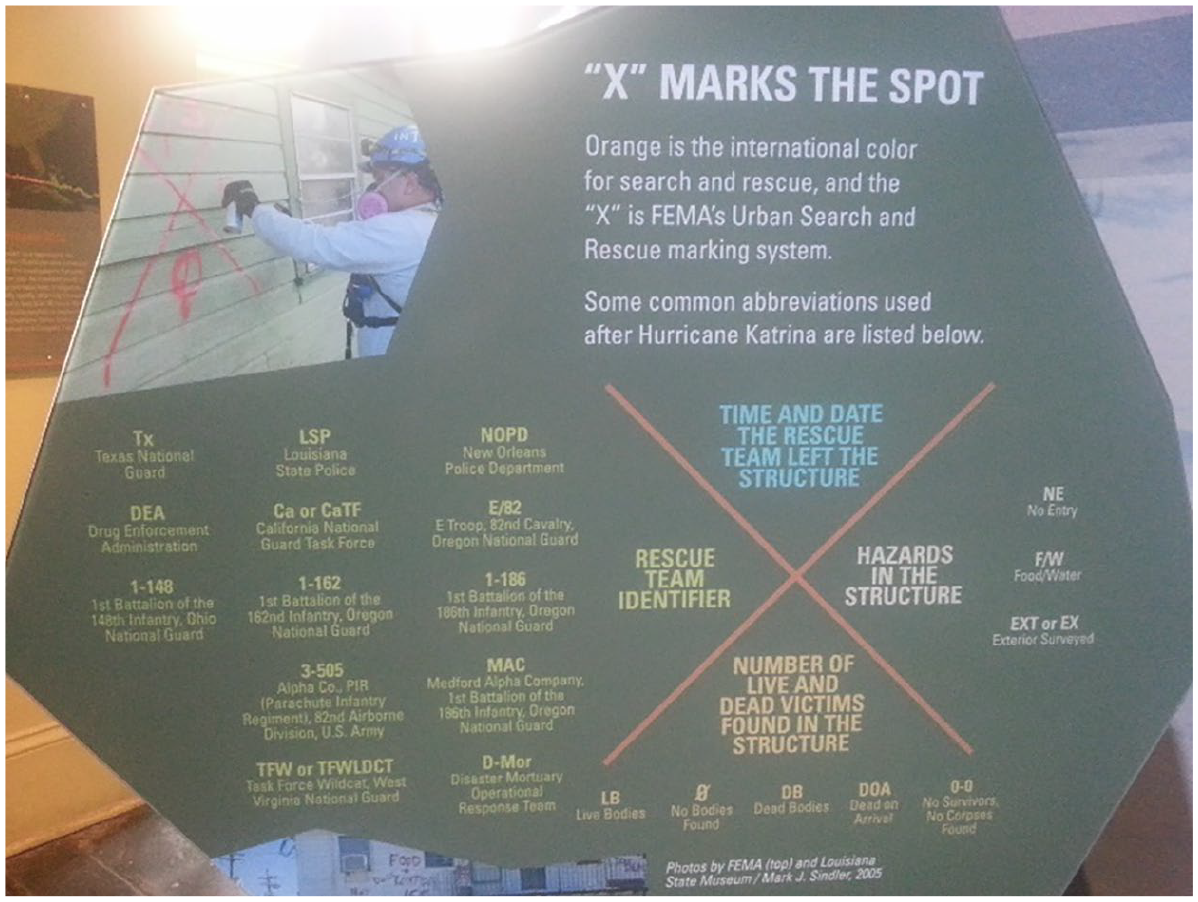
‘X’ marks the spot. Intrepretation board at Hurricane Katrina Exhibition, authors own image.
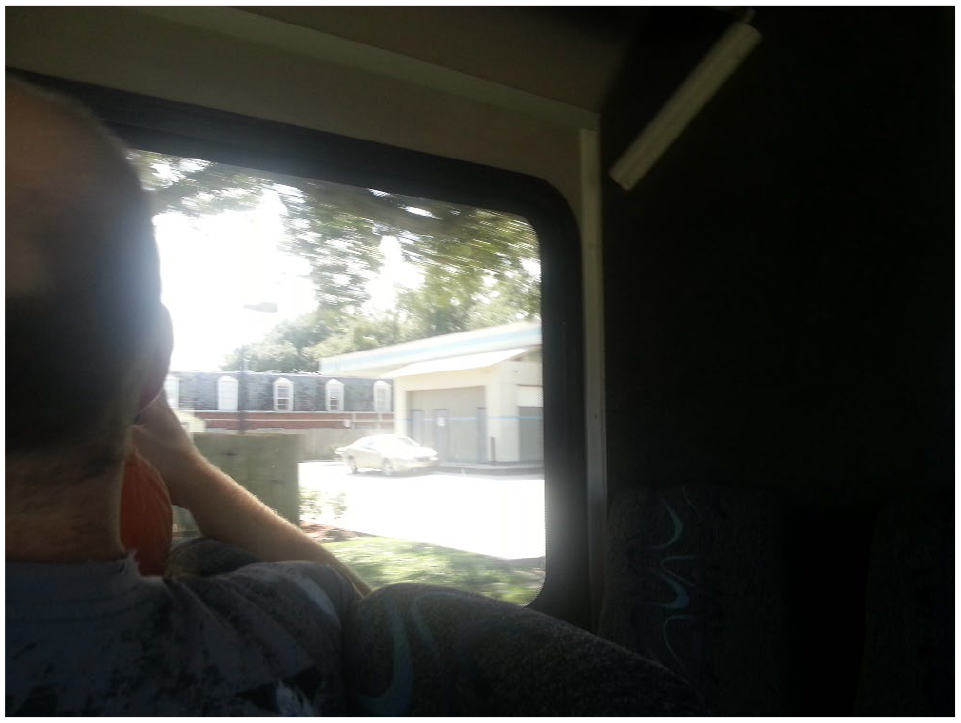
Material traces of water tide lines on gass station in New Orleans through tour bus window, authors own image.
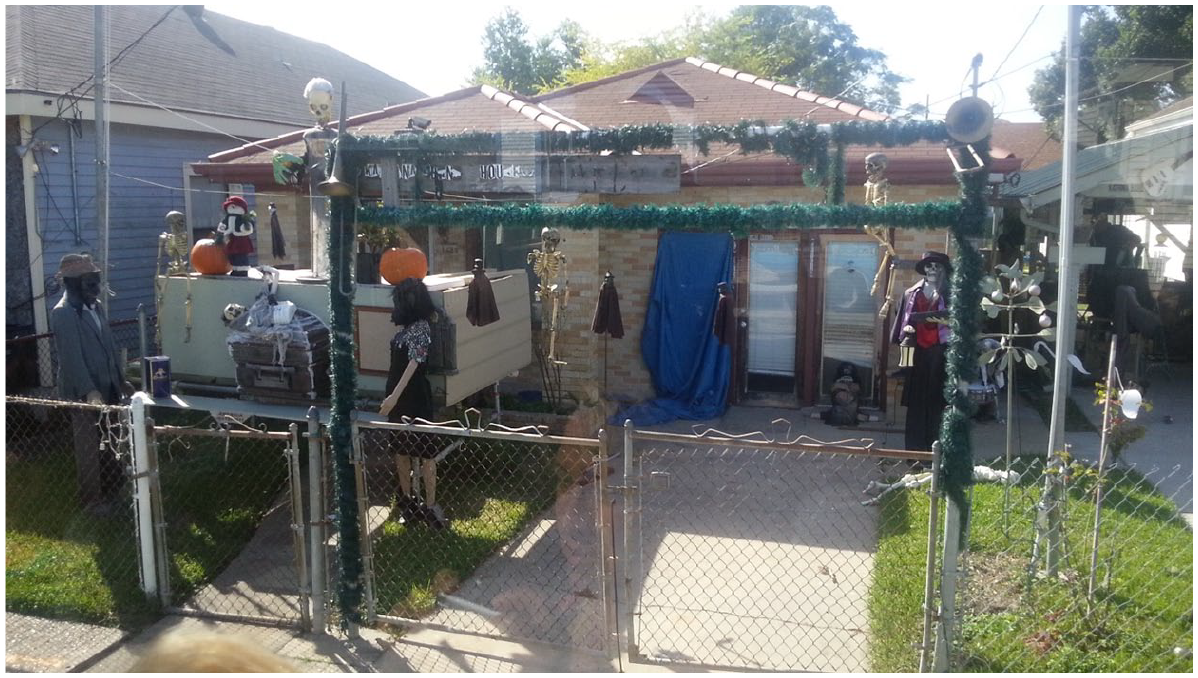
Bartholomew’s Jazz Funeral, Authors own image.
Such informal sites of memorialisation exist for a wide range of reasons. They mark continued absences that have occurred in the wake of forced migration where families have yet to return to the communities after being displaced. They mark the material presence of an historical moment when the water was most destructive, a memory that needs to be saved after the destroyed property is replaced or reconstructed or restored. They also mark the choices of the property owners who do not erase the images of the disaster (X’s) or add them to the buildings (tidelines). Whatever the reasons for the marks and images, the presence of these everyday memorials is a refusal to relegate individual and communal memories of Katrina to the annals of history: ‘It’s still fresh’, says Ben, ‘we’re still really feeling from there, but, as time goes by, it’s part of the history’. Everyday memorials are also a way of facing the altered cityscape and ensuring that the disaster is marked on the new buildings: ‘the idea that the recovery has finished’, says Steven, ‘we’ve done everything we can and now we’re moving on to building new things; we’re not repairing the old . . . (but) a lot of people locally, emotionally feel the pain. . .you might just have a family member that has (moved away). There is the Katrina reminder there’.
Despite the devastation of the disaster, the respondents and guides all shared stories of strength, hope and courage. ‘This is a part of American history; it’s not a sombre story’, says James, ‘it doesn’t matter where you live in a country, you have some sort of natural disaster that may affect your area, but it’s just the cost of living in paradise’. This is typical of the stories told on the tours. For the narratives constructed by tour guides are not limited to memories of Katrina relating to destruction and tragedy; rather, they also include discourses of optimism for the future. For instance, Jenny told people on her tour that ‘Katrina has brought people together and made us more politically active. Before [Katrina] we just liked to drink beer and party. But now we know we have to come together and take responsibility for each other and our community’ (Jenny). Likewise, during his tour, James described what he called ‘some of the good things’: ‘You’ve got to remember it’s been 9 years since this hurricane, so a lot of the devastation has been cleaned up. The good stuff. . .you guys are going to see some construction, some cranes in the sky. . .. we have 1500 acres, 400 square blocks, that’s our biomedical centre. . .. we’ll have some 34,000 jobs’. This hope and optimism is also tangible in the buoyancy that is expressed in the cultural life of the city, particularly Mardi Gras, the Second Lines and the music scene. Within this cultural life, the fluid and dynamic aspects of everyday memorialisation bring together solemnity and tragedy, pride and unity, so that, according to Steven, ‘we’re not going to bow down, we’re not going to be broken. . . we really are proud of it. . . we survived. . . I mean, obviously, not everybody survived. . . but the city survived’. At the same time, though, the haunting presence of the disaster continues to permeate the lived culture of the city; as James reminded us on one tour, ‘we have one cemetery off to the right that’s dedicated to Katrina. We still have some 87 bodies that still have not been accounted for’ (James).
The tours convey a ‘strong sense of community’ (Sylvia) but there remains an intangible gulf between the people with first-hand experience of the disaster and the tourist’s encounter with the city. There is a void, a lack understanding, that can never be filled in: ‘I’ve realised that is what I’m doing on this tour. People cannot understand. . .you can’t paint a picture, because people. . . they don’t realise that water is being churned up like a washing machine. . . they don’t realise that houses now have two feet of mud in it. When they were looking for bodies it was months and months afterwards they’d find those bodies’ (James). This articulates the limits of personalised narratives – indeed, the limits of language in constructing the traumatic narratives of disaster – and this is foregrounded in the fact that the sharing of the experience is imbued with an individual’s emotions and embodied remembrances (Scarles, 2009). James reflected on this and made the following observation: ‘actually, this tour was painful. . . I didn’t want to do this tour. I really didn’t want to do this tour. The reason I did do it is (because) it put me on a bus. It wasn’t that I wanted to be doing the tour, but I’d do it well’ (James). Similarly, Sylvia shared the intensity of emotion when she visited the Living with Hurricanes exhibition for the first time: ‘I don’t think half of them (tourists) have seen what this is, but when I went to it [the exhibit] for the first time, I had to leave. I was very emotional, crying. It really just brings back a bad period’.
This emotion was echoed by Mary, a worker at the New Orleans civic tourist office, who described how ‘many local people find the exhibit difficult. They get very emotional. There’s even a wall which a stranded man wrote on. That brings back a lot of bad memories for folks’. It is significant that Mary referred specifically to this wall (see Figure 5.). Her comment concerns what the curators of the exhibition have labelled ‘Tommie Elton Mabry’s Diary’, a personal narrative of his life for 8 weeks during and after Katrina. This diary is written on the walls of his apartment. Covering four walls, top to bottom, the journal includes entries that record his mundane experiences of everyday life: a sore throat, a toothache, a hangover, as well as the heat and the rain. But the diary also includes references to the personal hardship of living without running water or electricity and the two feet of water that flooded the building. His resistance is perhaps best captured in his sense of loneliness and isolation. Taken together, the entries comprise a significant personal story of strength through the experiences and emotional responses to the disaster, a poignant and individual testament that exists alongside the narrative of communal hardship and hope.
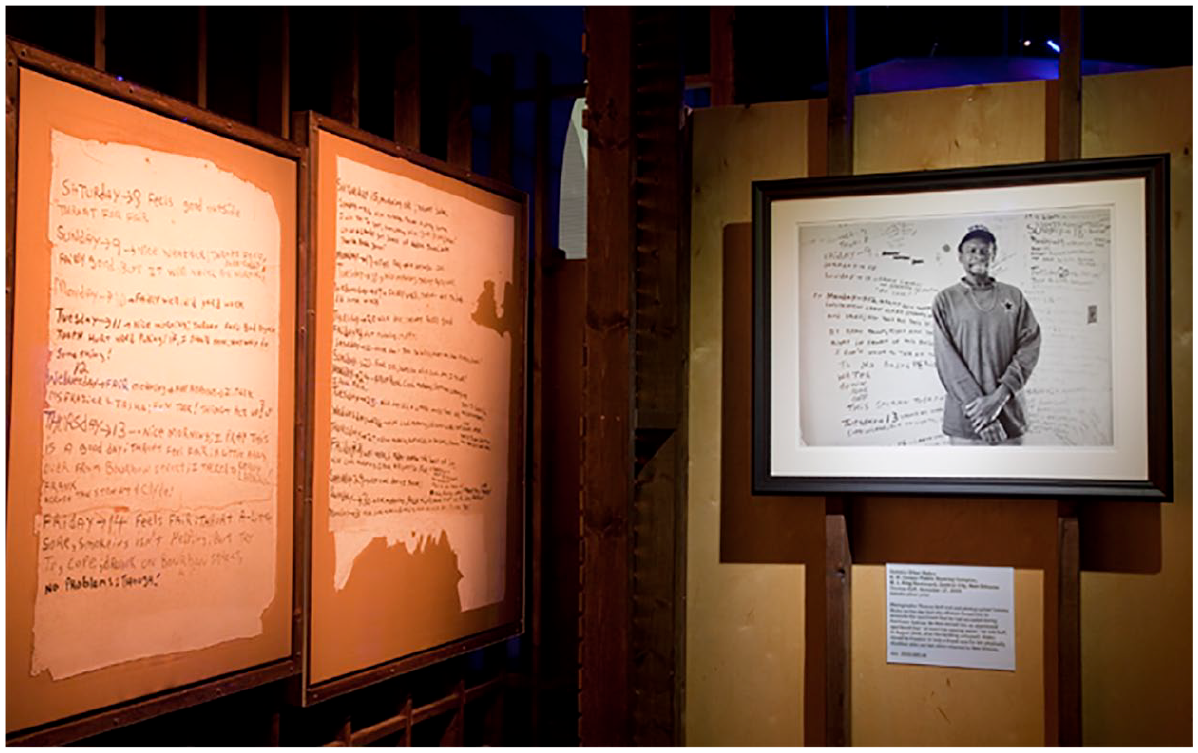
‘Tommie Elton Mabry’s Diary’, Living with Hurricanes: Katrina and Beyond, Louisiana State Museum, the Presbytère, New Orleans (Authors own image).
Like those who have inscribed tidelines on their walls, Mabry leaves a written trace of his experience, a personalised narrative that is part of a vernacular form of memorialisation. The attention paid to this piece in the exhibit illustrates how tourists who visit the city seek out personal narratives of the disaster that might help them to make sense of tragedy and that are often told through individual experiences about the devastation and its aftermath. But the acquisition and permanent display of Mabry’s diary by the Louisiana State Museum also highlights consciousness on the part of the curators about how personal narratives are crucial to the memorialisation of this particular disaster in this place. Indeed, the inclusion of Mabry’s diary mirrors the circulation of personalised memorials found on the post-Katrina tours; through its inclusion in the museum, the journal becomes synecdochic of the need for impromptu narratives and first-hand accounts of the disaster within the post-Katrina tourist experience. Such expressions are also shared through the community video installation in the exhibition (see Figure 6). This is not to ignore the important distinctions between the fluid accounts of verbal first-hand narratives of Katrina and the representations that embed such personal narratives into an ‘official’ exhibition. Rather, it is to foreground the power of the first-person account, the individual’s story, in relation to the fixed municipal and less frequented memorials such as the Katrina Memorial Park or the Hurricane Katrina Sculpture that stands across the street from the New Orleans Convention Center.
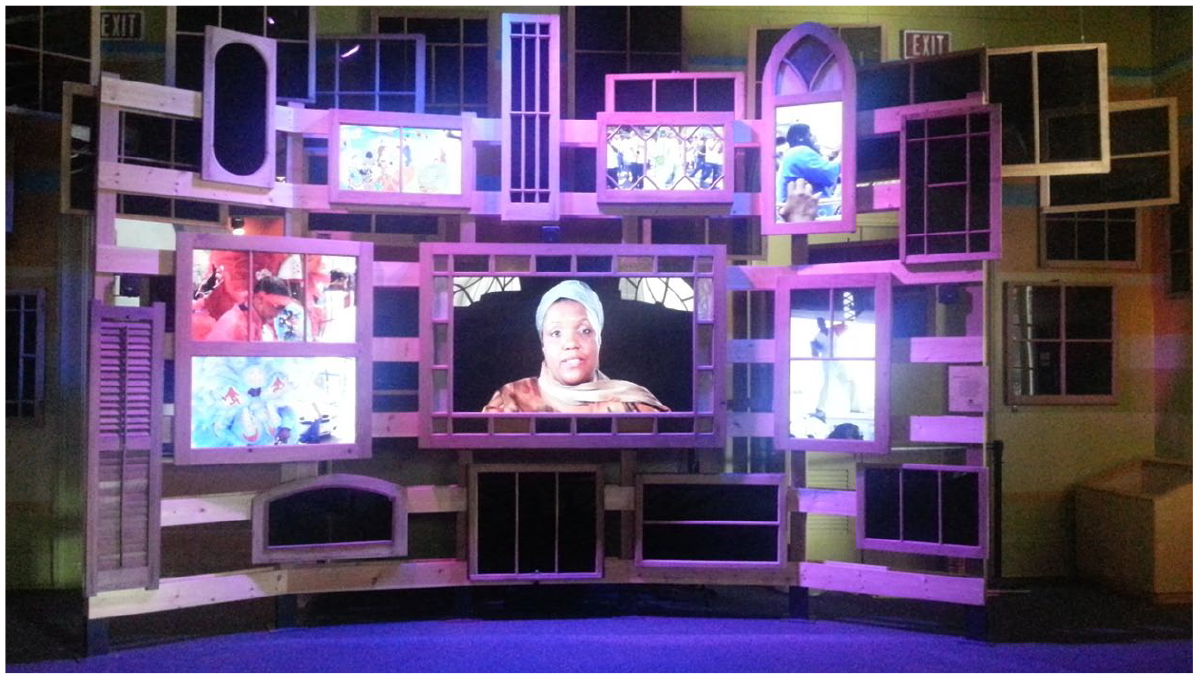
Still of community video installation. Living with Hurricanes: Katrina and Beyond, Louisiana State Museum, the Presbytère, New Orleans. Authors own image.
Conclusion
This study has aimed to explore the complexities of post-Katrina tourism and how it is embedded in personal narratives of memorialisation based on two periods of fieldwork during (and soon after) the ninth anniversary of the disaster. It has drawn from a series of visits to memorials and museums, post-Katrina tours, as well as interviews with New Orleans tourism workers and others who participate in the post-Katrina tourist industry. We have drawn on the work of critics such as Wells and Hackler who have explored the complex relationship between tourism and disaster memorials, as well as Gotham and who investigates the changing cityscape of post-Katrina New Orleans and its impact on tourism. The approach in this study has been to investigate the relevant forms of memorialisation found in post-Katrina tourism, and then layer this knowledge to identify how the various forms of memorialisation function in this context.
Given that there are no systematic tours of the official Katrina memorials in New Orleans, and given the lack of maps to chart or link these sites, the personalised memorialisation of lived experience and shared stories has become a common form of expression within the tourism experience. In this context, memorialisation is linked to (unofficial) personal stories that link individual experience to a community that then becomes played out in the tours. Unlike official memorials that reduce discursive complexity by presenting a narrative that is fixed in time and place, the vernacular memorialisation based on first-hand knowledge includes a fluid discursive complexity of memory that conveys nuanced and, at times, emotionally wrought memorials of the disaster. The memorialisation of Hurricane Katrina offers a contradiction: there is an abundance of memory about the event, and yet there is a lack of material memorialisation to express a form of focalised and state-authorised bereavement.
By not directing tourists to the official memorialisation of the disaster through a network of monuments and public art, the city’s tourist board has inadvertently opened up a space for a more democratic and grassroots approach to telling and retelling stories and accounts of the aftermath. And as a consequence, it is easy to find conflict and contradiction in these personal voices. Memorialisation in this setting becomes an active, lived and continually contested process. To return to the work of Thomas (2009; 2014) discussed earlier in this article, we would highlight that personal accounts of disaster are open to, and have been coopted into, interests which are primarily commercial (such as larger tours run by Grey Lines). However, the privileging of personal narratives in this post-disaster setting has allowed a diversity of voices to interrupt some of the dominant narratives of New Orleans. While our approach and methods were based in tourism, with a focus on those directly involved in the tourism industry, the authors believe these findings provide a starting point for developing further research on inclusive heritage design in post-disaster settings. Opportunities therefore exist to give voice to personal memories and experiences of marginalised communities through a range of creative methods and mechanisms (such as those adopted within the community exhibition at Louisiana State Museum and the Backstreet Cultural Museum).
Footnotes
Declaration of conflicting interests
The author(s) declared no potential conflicts of interest with respect to the research, authorship, and/or publication of this article.
Funding
The authors disclosed receipt of the following financial support for the research, authorship, and/or publication of this article: from the University of Surrey.
