



Abstract
Little is known in research on international refugee law and European Union asylum law about how refugees use visual and multimodal artifacts to communicate their experiences with migration management. This article addresses that gap by adopting a socio-legal approach, integrating visual and multimodal inquiries into refugee law research to understand the intricate relationship between refugee-produced images and migration governance. I illustrate this through two qualitative case studies from Lesvos, Greece: 70 paintings from the Hope Project Greece (2022) and 50 social media posts from the ‘Now You See Me Moria’ Instagram account (2023). This analysis is triangulated with semi-structured interviews with the founders of these initiatives, along with relevant legal and policy documents and reports. The study employs a theoretically informed, empirically grounded framework that captures the interplay between migration management and refugee counter-struggles in everyday life. My findings show that empirical investigations of refugee-produced visuals shared online are crucial for three reasons: they endorse refugees as vital actors in refugee law; they reveal refugees’ everyday practices, narratives, and perspectives in navigating migration management; and they highlight refugee law’s impact on their daily lives. Such investigations illuminate how migration laws and policies are experienced and resisted on the ground, offering unmediated insights into how these laws appear from refugees’ viewpoint. Ultimately, I argue that incorporating bottom-up visual and multimodal techniques into refugee law scholarship offers new avenues for academic debate, knowledge production, and informed discussions on migration governance. Scholarly attention to refugee perspectives, narratives, and everyday practices can enhance refugee agency, voices, and visibility, facilitating recognition of their struggles against dehumanizing and criminalizing state discourses and practices.
Introduction
The images of refugees—appearing as suffering victims, border trespassers, criminals, or threats to national security or identity—often reflect the consciously selected representations of what and how society is made, able, or allowed to see or unsee (Chouliaraki and Georgiou, 2022: ch. 1; Franko, 2020: 3–4; Malkki, 1996; see also Rose, 2001: 6; Massari, Fiń, Lynes in this issue). 1 Such images are also often utilized to construct a certain narrative about refugees, normalizing and justifying the excessive measures of migration management deployed against them. These images commonly appear in political propaganda, media outlets, and on social media, instrumentalized as tools of power by state authorities, international organizations, and the media (Dehm and Silverstein, 2020; Franko, 2020; Gozdecka, 2024; Massari, 2021; see also Massari, Gintova in this issue).
However, the state-driven visual regime does not occur in a vacuum; it has real-life implications for refugees and is often contested by them (Osso, 2025). Earlier research has shown that images produced by and with refugees can represent refugee experiences of displacement, containment, and detention (Catalani, 2019; Lenette and Boddy, 2013). Moreover, images shared online by grassroots organizations, and refugee individuals and communities enable refugees to confront the statist visuality regime and perform their rights (Bayramoğlu, 2023; Georgiou, 2018). Using visual and digital communication tools, particularly social media, refugees, individually or through non-governmental organizations (NGOs), can also expose the restrictive migration management measures they encounter daily and publicize their struggles (Osso, 2024a; Osso and van Houtum, 2024). Therefore, images have a central role in migration governance; they both shape policies, practices, and public discourse on migration and are shaped by these (see Massari in this issue). Produced by various actors—states, migration-related organizations, and refugees—at different levels, they contribute to what we term as ‘visual migration governance’ (Massari in this issue).
Notably since the summer of migration in 2015, political scientists, sociologists, geographers, and anthropologists focusing on migrant agency have paid ample attention to visual and multimodal creations (Bayramoğlu, 2023; Catalani, 2019; Chouliaraki and Georgiou, 2022; Georgiou, 2018; Leurs, 2017). Nonetheless, little is known in international refugee law (IRL) and EU asylum law (collectively, refugee law) research about how refugees communicate their experiences of migration management in their visual and multimodal artifacts. The field has been dominated by conventional approaches often prioritizing state-centric accounts and text-based investigations despite a bourgeoning interest in more critical, empirical, and socio-legal inquiries addressing the viewpoints of the marginalized (Gammeltoft-Hansen and Ghezelbash, 2024: 2). By foregrounding refugee perspectives and experiences, refugee law scholars have engaged with empirical or ethnographic approaches (Bianchini, 2021; Janmyr, 2022) and critical interrogations, some particularly drawing on TWAIL (Third World Approaches to International Law) (Olakpe, 2024). Following socio-legal scholars’ growing attention to the interplay of visuality and multimodality with law and society (Giddens, 2018; Mulcahy, 2017), several scholars have investigated the role of visuality in refugee and migration law (Dehm and Silverstein, 2020; Franko, 2020; Gozdecka, 2024; Pugliese, 2013). However, visual legal scholarship has overlooked the potential of a bottom-up perspective and the contextual insights that refugee-produced artifacts found online could provide into the implications and refugee experiences of migration management.
In this article, I go beyond the text of law as the primary source of making meaning of law and legal phenomena, mainly migration management, exploring refugee-produced paintings and social media content. As an academic lawyer and a political cartoonist from a developing country who settled in the developed world, I advocate for a socio-legal approach incorporating bottom-up visual and multimodal inquiries into refugee law research to demistify the impact of socio-legal production of bordering on im/mobile lives. Socio-legal studies is an umbrella school of thought upholding the study of law in its particular context using various perspectives, theories, and methods from other disciplines, such as sociology, anthropology, geography, and political science. I argue that a socio-legal approach incorporating visual and multimodal inquiries can contribute to foregrounding refugee perspectives, endorsing agency, recognition, and political subjectivity over states’ dehumanizing and criminalizing discourses and practices. It can help understand how migration management measures affect refugees and refugee rights in practice, and how refugees experience and react to these measures in their everyday lives. This can aid not only in producing insightful knowledge but also learning and knowing about the world refugees live in and communicating their experiences to a wider community (Pink, 2013: 17).
In what follows, I illustrate the significance of visual and multimodal techniques in refugee law research within two case studies: qualitative analyses of 70 paintings produced by refugees at the Hope Project Greece, an NGO located on the Greek island of Lesvos (2022); and 50 social media posts produced and shared by refugees involved in the ‘Now You See Me Moria’ (NYSMM) social media movement (2023). Firstly, I reflect on the context in which these artifacts were produced. Then, I address the significance of studying migration management from the viewpoint of refugees and the artifacts they produced while inhabiting the EU's once largest asylum processing and detention camp. I also discuss the data collection and analysis process, including triangulation of visual and multimodal analyses with semi-structured interviews with the founders of the Hope Project and NYSMM, legal and policy documents, and reports of international organizations and NGOs. For analysis, I employ a theoretically informed, empirically grounded analytical framework capturing the interplay between migration management and refugees’ everyday counter-struggles. I conclude by discussing the contributions of refugee-produced artifacts to unmasking migration governance dynamics and asserting refugees as socio-political actors with agency, voice, and visibility. The article offers fresh avenues for academic debate, policy discussions on visual migration governance, and knowledge production by promoting marginalized voices.
The context
The context in which images become meaningful is as equally important as their meanings and effects (Pink, 2013: 29; Rose, 2001: 14). In this section, I provide an overview of the environment within which refugees at the Hope Project and NYSMM produced their visual and multimodal artifacts.
Migration management, particularly in the EU context, is a continuous process that increasingly targets populations, unlike individuals, and expands state borders within and beyond territories through laws, practices, and discourses (Osso, 2023). Notably since 2015, rising hostility, securitization, and externalization vis-à-vis non-Western populations have drastically shaped the EU’s borders following the arrival of over 1.8 million people on the move (Franko, 2020: 41). During the same year, Lesvos alone received more than half a million people from countries including Syria, Afghanistan, and Iraq (Osso, 2024b). The framing of this phenomenon later as a ‘migration crisis’ by the media and EU decisionmakers through imagery and discourses has shaped the legal and policy framework on asylum in EUrope and the lives of protection seekers (Franko, 2020: ch. 1). 2
The effects of this putative crisis, particularly in Greece, continue to date, partly because of the EU–Türkiye Statement of 18 March 2016 (European Council, 2016; see Massari, 2021: 7–8). The Statement aimed at, among others, preventing the arrival of all people on the move, who were indiscriminately labeled as ‘irregular migrants’ as opposed to individuals seeking protection and safety, at the Eastern Aegean islands of Greece (European Council, 2016: para. 1). A range of legal and policy measures by the EU and Greece after the launch of this Statement brought significant challenges to these people, who have been placed out of public sight in remote areas, such as the Greek hotspots. The hotspots, particularly Lesvos, have become ‘open-air prisons’ hindering the incoming refugees from continuing their journeys toward the Greek mainland and other EUropean countries while eroding refugees’ rights and legal remedies (Osso, 2025).
Furthermore, new legislation in Greece brought restrictions to NGOs, human rights organizations, and other bodies monitoring the situation of refugees inhabiting the camps (AIDA 2023: 38). Coupled with the increasing criminalization of refugee activism and advocacy, attacks against journalists reporting on the Greek camps, and their accusation of espionage (AIDA 2023: 181; Osso, 2024a), this has created significant challenges for refugees seeking justice for the violation of their rights. This in/visibilization of refugees, along with their im/mobilization in remote islands and the muting of their voices, has rendered the human rights abuses endured by refugees increasingly indiscernible and abetted authorities to avoid their human rights obligations (Osso and Van Houtum, 2024).
The Hope Project Greece
The paintings at the Hope Project Greece were produced in such context. In late 2021, I came across paintings created by refugees who resided in the Moria camp on Lesvos and attended art workshops at the Hope Project, an NGO established in 2015 by Philippa and Eric Kempson to provide for refugees’ urgent necessities. Over time, the Kempsons recognized how art could serve as a medium for healing and catharsis and a mental sanctuary from the horrendous experiences of displacement, encampment, and border violence. In 2018, they commenced the art center where Moria residents, some of whom also undertook day-to-day tasks of the organization, could engage in artistic and creative activities such as music, dance, theatre, and painting. To date, refugee painters at the Hope Project’s art center have produced over 10,000 paintings, some of which are displayed online, reaching a global audience through media outlets, social media, and exhibitions. Many artists visually narrated their experiences with EUrope’s borders that drastically affected their migratory journeys, present circumstances in Moria, and their future imaginations beyond the camp setting.
Now You See Me, Moria
Art workshops are not the only spaces where refugees document their everyday lives, as revealed by the social media posts created and shared by refugees involved in ‘Now You See Me Moria’ (NYSMM). In 2020, Noemí, a Spanish photographer and photo editor based in the Netherlands, started a photography project with Amir, an Afghan refugee in Moria, after she saw a photograph Amir shared on Facebook, reporting on the camp conditions. The two initiated the Instagram account ‘Now You See Me Moria’ in August 2020 and started documenting what was happening in Lesvos and how the camp conditions affected refugee lives. 3 They chose Instagram mainly because, unlike traditional mass media, social media platforms like Instagram offer their users to create and share content and potentially reach a vast audience in seconds (Noemí, 17 April 2023, interview by author; see also Bateman et al., 2017: 359; Massari in this issue). Their project gradually turned into a social media movement, first with the participation of Qutaeba from Syria and Ali from Afghanistan, then over 600 refugees willing to share ‘insider’ information to raise awareness on the black box of Greek refugee camps (Noemí, 2023; interview). 4
Since the first one, over 4600 posts were shared (July 2025). Each refugee voluntarily participates in the movement, records, and shares online what they encounter in Lesvos without any commands and centralized leadership (Noemí, 2023; interview). 5 The posts contain photographs and videos showing refugees’ everyday lives and captions protesting living conditions in Moria. Those publicized especially after 2021 focused on exposing the construction of a new ‘prison-like’ Closed Controlled Access Centre (CCAC) on Lesvos, which will bring further restrictions on refugee mobility and lives once fully operational (AIDA 2023: 40–41).
Socio-legal approaches to refugee law
Unpacking refugee law’s impact
IRL is a scholarly sub-discipline of international law, flourishing after the 1951 Refugee Convention was adopted, and a field of praxis (Costello et al., 2021). It is also closely related to EU asylum law as the latter is largely shaped by the Member States’ international obligations under the Refugee Convention and reflects IRL’s core principles like non-refoulement while adapting these within a regional framework to manage refugees in the EU.
It is without a doubt that refugee law deeply influences the lived experiences of many refugees (Gammeltoft-Hansen and Ghezelbash, 2024: 2). However, the scholarship has yet to fully acknowledge the significance of addressing the perspectives of people who experienced refugeehood and displacement as an ethical and methodological concern (Costello et al., 2021: 7; Gammeltoft-Hansen and Ghezelbash, 2024: 2). Although even the Refugee Convention’s creators were themselves refugees, demonstrating that refugee experiences are deeply entrenched IRL’s foundations, refugee law scholarship and practice mainly represent the perspectives of developed states, strong actors, and colonial legacies (Byrne et al., 2020: 889; Costello et al., 2021: 7). While traditional approaches to refugee law often overlook the law's practical effects and the ways in which it interacts with broader socio-political dynamics (Gammeltoft-Hansen and Ghezelbash, 2024: 5–6), they also pay little attention to the reality on the ground, largely missing out refugee experiences, perspectives, and agency (Bianchini, 2021: 801; Janmyr, 2022: 8).
Underlying conventional approaches is the conceptualization of refugee law as a system of institutions, principles, norms, rules, in terms of hard and soft law, judicial decisions, and state actors (Banakar, 2015: 54; Moore, 1973: 719). This state-centric understanding of refugee law, or ‘methodological nationalism’, has been challenged in various fora (Janmyr, 2022: 7; Wimmer and Glick Schiller, 2002). Scholars noted that ‘[m]ore fundamentally, law is intimately connected to, shapes and in turn is shaped by, the social, political, historical, and cultural experience of both refugees and host societies’ (Gammeltoft-Hansen and Ghezelbash, 2024: 3). This approach to refugee law resonates with a socio-legal understanding of law as a process shaped by the practices and experiences of various actors, upholding an analysis of legal phenomena in their particular context and of their interplay with society (Banakar, 2015; Moore, 1973). Now, bourgeoning scholarship advocates that refugee law be studied by not only problematizing states as the sole actors creating and implementing law but also acknowledging the agency of other actors, such as refugees, and their perspectives and experiences of the law (Bianchini, 2021: 800–801). Legal scholars argue that adopting a bottom-up approach can contribute to understanding refugee law from below, unpacking how it is experienced and reacted to by refugees (see Banakar, 2015: 51; Olakpe, 2024: 2). This can particularly help investigating refugee experiences of navigating migration management and demanding their rights.
Bringing the voices and experiences of refugees to the foreground through bottom-up approaches to refugee law also contributes to knowledge production (see Olakpe, 2024). Only by eloquently engaging with marginalized individuals and groups within the public sphere and assuming an ethical imperative to recognize and reflect their perspectives, one can address the cynicism surrounding the law (Shaw, 2013: 112) and refugee law in particular. Amalgamating perspectives from other disciplines, non-conventional approaches, and ways of knowing—which can engage with diverse materials like archival, ethnographic, visual, and multimodal, produced by or with refugees—into refugee law research could problematize the law’s generally accepted accounts (Costello et al., 2021: 7; see also Olakpe, 2024: 38). It can challenge ‘[l]aw’s formative narratives of truth’, which commonly uphold power structures, suppress public discussion that advocate for the inclusion of marginalized voices in dominant frameworks, and perpetuate oppression (Shaw, 2013: 111). Giving due scholarly attention to refugee narratives that are too often suppressed, discredited, and misrepresented by state authorities and the media can uncover the hidden realities of refugee struggles (Malkki, 1996: 392; Eastmond, 2007: 260; Georgiou, 2018: 48).
Theoretical–analytical framework
Border sites and their implications for ‘access’ in the EU. Source: Author.
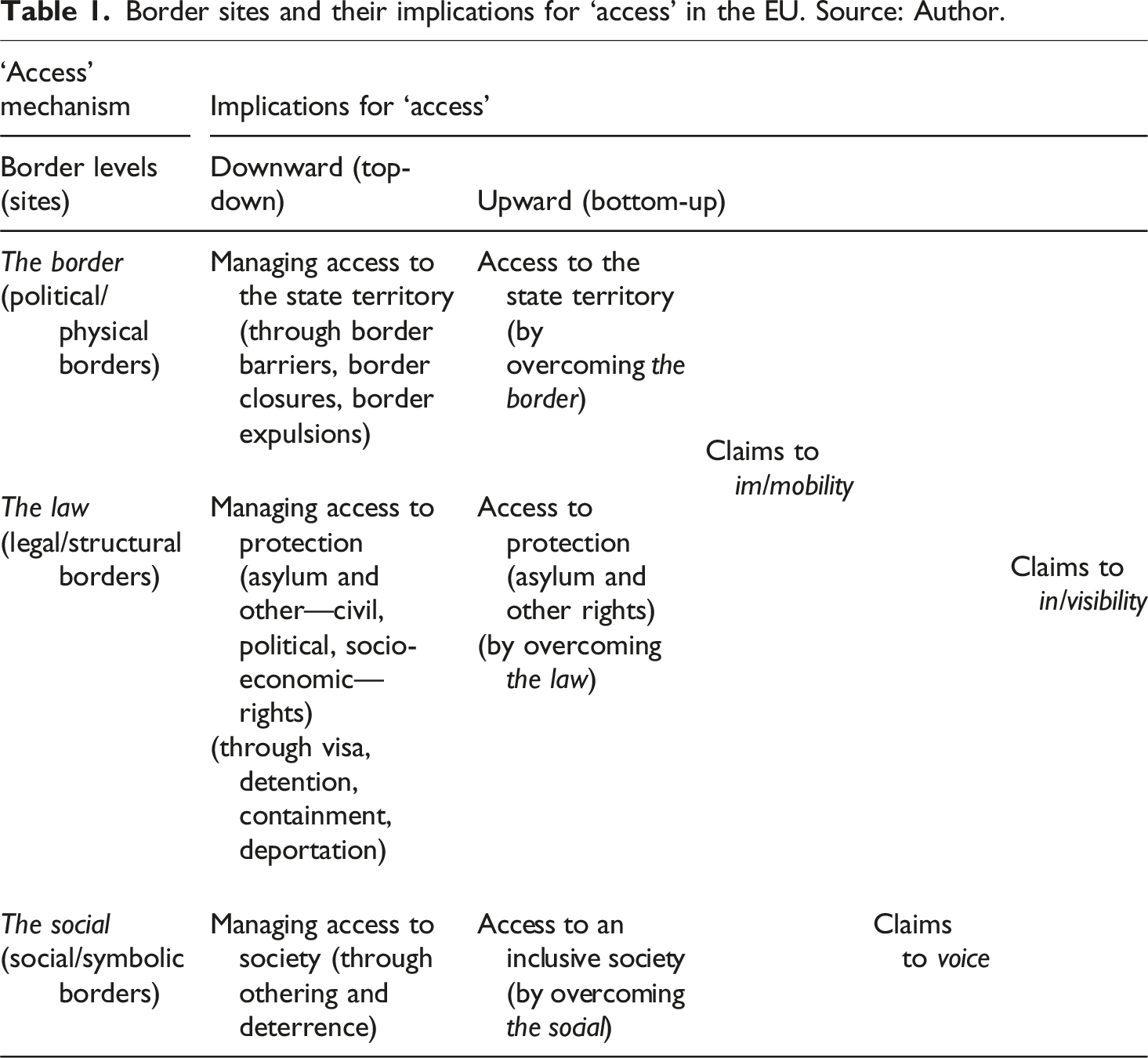
The framework reflects the mutually constitutive interplay between the EU’s (political, legal, and social) borders reproduced through migration management measures targeting ‘irregular migration’ and refugee counter-struggles of ‘access’. I understand ‘access’ as a process where refugees attempt to reach the EU territory, obtain protection, and be included in EUropean society by overcoming these borders. The framework offers a systematic and nuanced account of refugee experiences of migration management, focusing the analysis on the ruptures and moments of refugee struggles vis-à-vis migration management tools at three border sites: when, how, and where refugees encounter these tools, and how they react to these tools to get access. In this framework, visuals also have a key role from the perspectives of both states and refugees, as they influence both statist governance mechanisms and refugees’ access struggles in diverse ways.
Underlying the framework is the concepts of border regime and refugee political agency. The former entails the analysis of borders with an eye on migration, that borders are reproduced in reaction to certain population movements, and as sites of continuous encounter and contestation, that they are often challenged by the people they affect (Osso, 2023: 276-277). Refugee political agency, the capacity to navigate one’s life trajectories on their own terms and decisions, develops in such encounters and contestations against structural constraints, such as migration management, often involving organized or spontaneous political action (Osso, 2024b: 13; Osso and Van Houtum, 2024: 9).
The framework helps visualize how different borders are seen and experienced by refugees. Political or physical borders (the border) are the immediate land or maritime borders where state authorities manage access to territory. Legal or structural borders (the law) are where access to protection (asylum, including asylum procedures, and other rights) is managed within and beyond immediate, physical borders. Social borders (the social) are the sites where states and the media exploit refugees’ differences to control their integration and the exercise of their rights.
The framework also aids in capturing how these borders are reacted to from below. To get access to state territory, protection, and society, refugees may contest the borders or come to terms with their pervasive effects through different manifestations of agency in everyday life (Osso, 2025; see also Table 1). They often seek to overcome the border through cross-border mobility and the law through immobility, namely claiming to stay put and settle by receiving international protection. They may also claim visibility for the recognition of their claims before the law, in offline or online spaces (the social), or invisibility while crossing the border or seeking to avoid their surveillance in refugee camps (the law). Seeking visibility in public or the ‘communication sphere’ (see Massari in this issue) allows refugees to politically act for common issues and ‘create a space to speak freely’ against state-imposed physical, legal, and symbolic exclusion (Nyers, 2006: 56–64). Building on self-created visibility, refugees reclaim their voice—the power to control their narrative over their circumstances and future, and reach an audience (Malkki, 1996: 393)—to share their unique experiences, asserting their individual perspectives for wider recognition, inclusion, and the full enjoyment of their rights in host societies.
Methodology
Visual and multimodal investigations
The bottom-up account of refugee struggles, demonstrated in the framework above, necessitated on-the-ground data collection, leading me to analyze visual and multimodal artifacts produced by refugees in Lesvos and shared online.
Visuality is the social construction of the ways we are made, allowed, or able to see and unsee the world (Pink, 2013: 38; Rose, 2001: 6). In media and communication studies, multimodality means multiple modes of communication like visual, aural, textual, and linguistic forms incorporated into a single medium, such as social media platforms (Bateman et al., 2017: 7). Visuality and multimodality closely relate to our ways of seeing refugees, because many communication channels, such as political propaganda tools, social media, and media outlets, involve visual content depicting refugees in some way (see also Gintova in this issue).
Exploring refugee-produced visual and multimodal artifacts in legal research can overcome ‘methodological nationalism’, spotlighting previously overlooked actors in refugee law, namely refugees, and emphasizing their political subjectivity by challenging dominant portrayals (Byrne et al., 2020; Nyers, 2006: 49). It also provides contextually detailed, on-the-ground insights into how migration management impacts refugees’ lives and rights, revealing their unique perspectives on the law (Gammeltoft-Hansen and Ghezelbash, 2024: 6; Mulcahy, 2017). This approach allows scholars to investigate how refugees perceive and experience legal and policy measures designed to regulate their movement, navigate their journeys or camp life, and speak out, using their art to assert rights and expose human rights violations caused by these measures. Such studies provide a holistic view of refugees’ daily experiences, the interconnected elements influencing them, and alternative ways of seeing the broader socio-legal context beyond legal texts (Pauwels, 2015: 37; Pink, 2013: 17). From a conventional legal research perspective, however, the subjective interpretation of refugee-created artifacts can limit the generalizability often sought. Moreover, such interpretation may not always fully capture the diversity of refugee experiences. Therefore, it is important to triangulate visual and multimodal analyses with other methods, such as interviews or official documents, to provide a more multifaceted understanding.
Data collection and analysis
In this section, I address the methods considered in curating and analyzing refugee-produced visual and multimodal artifacts within two exploratory case studies with the Hope Project Greece (2022) and ‘Now You See Me Moria’ (2023). 6
Refugees at the Hope Project and those involved in NYSMM recounted stories of displacement and everyday life in Lesvos in their natural settings without specific prompts (Philippa Kempson, 14 May 2022, interview by author; Noemí, 2023, interview). Thus, the case studies were valuable in providing firsthand accounts of refugee experiences and insights into the impact of migration management, highlighting visual and multimodal expressions as powerful means for communicating refugee narratives. To better capture the meanings conveyed through these expressions, in both case studies, I engaged with multiple sites of visual analysis—the site of the image itself, the sites of production, and the sites where it is seen by various audiences—as well as technological, compositional, and social modalities of the images (Rose, 2001: 16-17; also Pauwels, 2015, 292-299). My analysis of refugee-produced artifacts has been influenced by various theoretical and personal factors (Pink, 2013: 47). My background as a refugee law and migration scholar informed my analysis of the legal and policy implications visually depicted in these artifacts. While my critical eye as a political cartoonist bolstered my ability to deconstruct symbolism and power dynamics, my identity as a woman who has navigated migration from the developing to the developed world provided an empathetic and culturally nuanced understanding of refugee experiences with bordering.
In 2022, I conducted a study on the images of 70 paintings produced between 2018 and 2022 by 33 refugee artists at the Hope Project (Osso, 2024b). My objectives were to explore what these paintings narrated regarding refugee experiences and perceptions of EUrope’s borders, and how the emerging narratives exemplified refugee political agency vis-à-vis these borders. I sampled the paintings purposefully, identifying those reflecting refugee experiences, such as border crossing, encampment, detention, and future aspirations. The sample represented 20% of the 342 images available (November 2022) on Instagram and Fine Art America, an online repository to publicize and promote artworks worldwide. 7
The qualitative analysis of paintings followed these objectives, which were then translated into nine coding questions: (i) central visual objects, signs, or symbols; (ii) emerging narrative(s); (iii) dominant color; (iv) emotions, mood, action, and/or direction; (v) elements of borders; (vi) elements of agency; and artist’s (vii) country of origin, (vii) gender, and (ix) previous art education/knowledge (Osso, 2024b).
The second case study, conducted with a colleague, addressed 50 social media posts on NYSMM Instagram page, representing everyday life in Lesvos (Osso and Van Houtum, 2024). We sought to unpack refugees’ ‘digital rights claims’ in these posts (Isin and Ruppert, 2020) and their demands from audience in their struggle with navigating migration management. Thus, in addition to what was depicted in the images and the accompanying texts, we also focused on their meaning as understood by the audience (Rose, 2001: 30), including us, the researchers. Because the content on NYSMM Instagram account tackled issues like advocacy, calls to action, exposing camp conditions, and resettlement thoroughly since August 2020, we purposefully sampled the most recent ones (from October 2022 to May 2023) except for some from 2020 to 2021 that related to our themes.
Within this study, we examined the refugee-produced photographs and video footage (visual images) and the accompanying captions (texts) shared online. Our analysis of the sampled posts drew on ‘multimodality’ (Bateman et al., 2017), considering that their meaning is produced on different levels by an interplay of manifold converging or diverging elements (Pauwels, 2015: 80; Pink, 2013: 158). It followed six coding themes: (i) refugee experiences and struggles in the camp; (ii) emotions; (iii) visual elements present or absent in the image, perspectives, and composition; (iv) refugees’ rights claims; (v) elements of visible and invisible borders; (vi) overall message and common themes (Osso and Van Houtum, 2024).
In both studies, we analyzed each image or post using Atlas.ti to obtain an in-depth understanding of emerging common narratives. Nonetheless, while carrying their own special visual effects, refugee-produced artifacts represent a limited understanding of the world and mirror only a fraction of the reality (Rose, 2001: 6, 15). Noting that the impact of an image is always shaped by the social context in which it is viewed, I triangulated the analyses with other data to better understand the circumstances in which these artifacts were created and shared, exploring the elements both within and beyond their frame (Pink, 2013: 29; Rose, 2001: 15-16). I supplemented the respective analyses of the artifacts with two semi-structured interviews, one with the founders of the Hope Project, Philippa and Eric Kempson, in May 2022, and another with NYSMM’s co-founder, Noemí, in April 2023. I also explored context-specific information from legal and policy documents and reports of international organizations and NGOs concerning the situation of refugees in Lesvos.
The analysis of paintings was further enhanced by written testimonies from three refugee artists, which was a serendipitous discovery. Before selecting all 70 paintings, I purposefully identified 10 prominent ones, and the Kempsons provided contact information of only one painter, Abdullah Rahmani, who unexpectedly shared his story of displacement and journey through EUrope. Abdullah also connected me with two other painters, Najib Hosseini and Nazgol Golmuradi, who shared their stories after I assured them their artworks would gain wider recognition when featured in scholarly publications.
Refugee perspectives on migration management
I interpreted the common narratives emerging from the analyses of refugee-produced paintings and social media content as the spatiotemporal aspects of refugee ‘access’ struggles in Lesvos. While this understanding may represent an oversimplified account of refugee movements, which are often unpredictable, nonlinear, and multi-trajectory (Borrelli et al., 2022), it provided significant insights into where and when (spaces and moments) refugees encountered migration management tools before examining how they reacted to these tools.
My interpretation of these narratives in connection with the spatial and temporal logics of refugee movements revealed moments of access to state territory, protection in Lesvos, and EUropean society. The linkage of narratives like this provided an understanding of how refugee journeys continued or halted in the face of borders, recounting alternative stories of refugeehood (see Eastmond, 2007).
To wit, paintings created at the Hope Project illustrated how refugees navigated their past journeys toward EUrope, their camp conditions in Lesvos, and their future aspirations beyond the camp. Because the artists created the paintings while they resided in Lesvos, I interpreted the paintings depicting refugees on the move on land and sea as representing their encounters with the border as they sailed toward EU territory. These paintings often illustrated refugees encountering border barriers, traveling by boat on the high seas, crossing borders between Iran and Türkiye or Türkiye and Greece, and landing on the Lesvos coast (Figure 1).
8
Blue was the most prominent color, showing that refugee artists may have been inspired by the color of the Aegean Sea between Türkiye and Greece. The movement of figures in the paintings, refugees walking or sailing, was often from left to right, possibly indicating the trajectory of their east–west journeys from the Middle East and Asia to Europe. Untitled, painting by Abdullah Rahmani, 2020. Reproduced with the artist’s permission.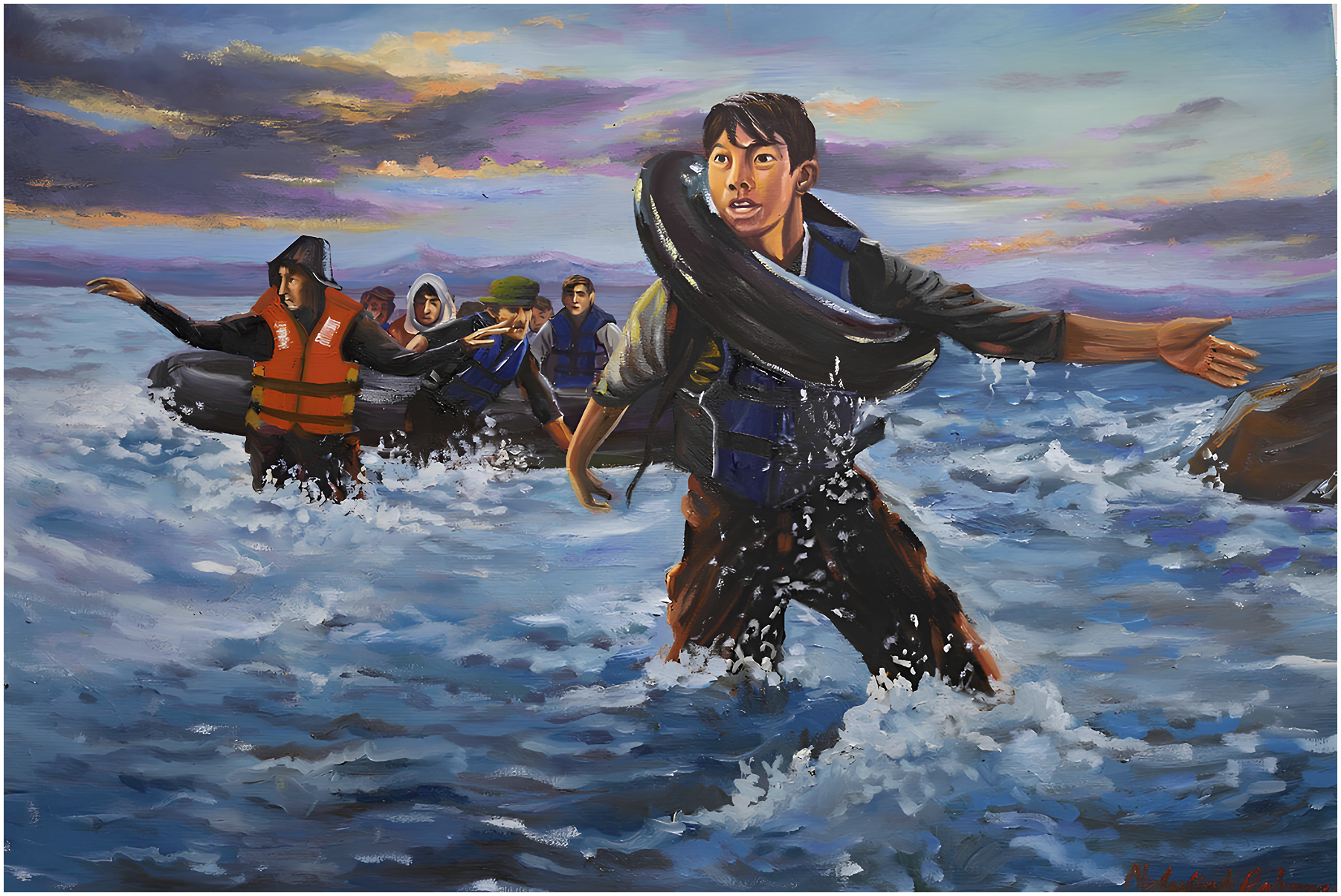
One-fifth of the paintings depicted the conditions, surroundings, and everyday life in Moria. These paintings narrated, for instance, refugees doing daily chores, going to school, running errands in the camp, and attending art workshops at the Hope Project (Figure 2).
9
Some paintings realistically illustrated the fire that burned the former Moria camp down in September 2020,
10
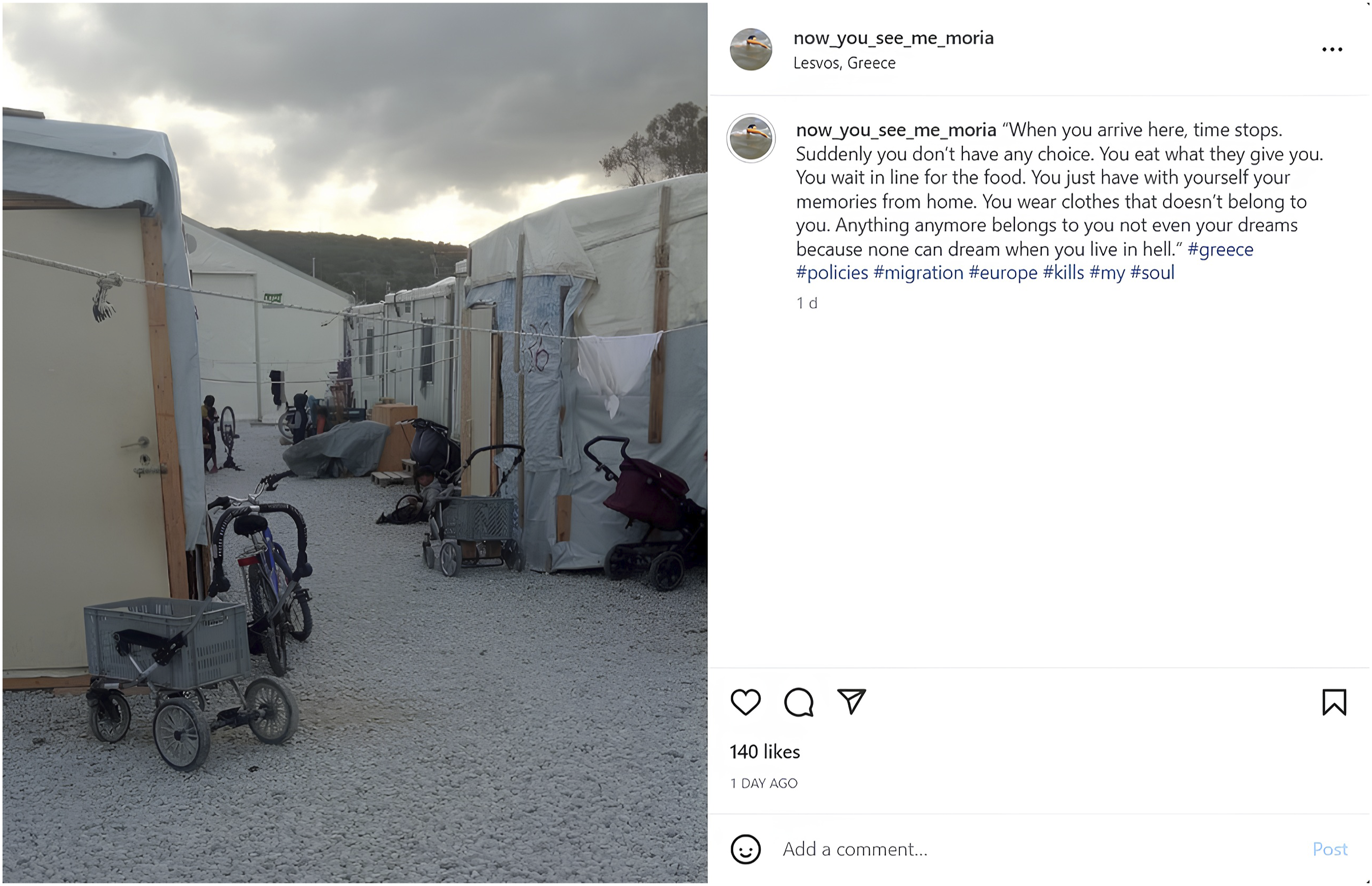
demonstrating the challenges refugees encountered in everyday life. In contrast to vibrant and colorful paintings, photographs and video footage shared by refugees at NYSMM from inside Moria were often motionless representations of living conditions in the camp. One of the images, showing refugees’ belongings and the containers where they spent most of their time, was accompanied by the caption ‘[w]hen you come here, time stops’ (Figure 3), thus recounting refugee experiences of immobility, containment, and isolation in Moria. This suggested that unlike the immediate, stark, and undeniable objectivity of photographs and videos, paintings offered refugees a more expressive and subjective medium for interpreting reality, often serving as a coping mechanism. Untitled, painting by Najib Hosseini, 2020. Reproduced with the artist’s permission. Image on ‘Now You See Me Moria’ Instagram page, 1 April 2023. Reproduced with the permission of my respondent. https://www.instagram.com/p/CqgJF_gohGv.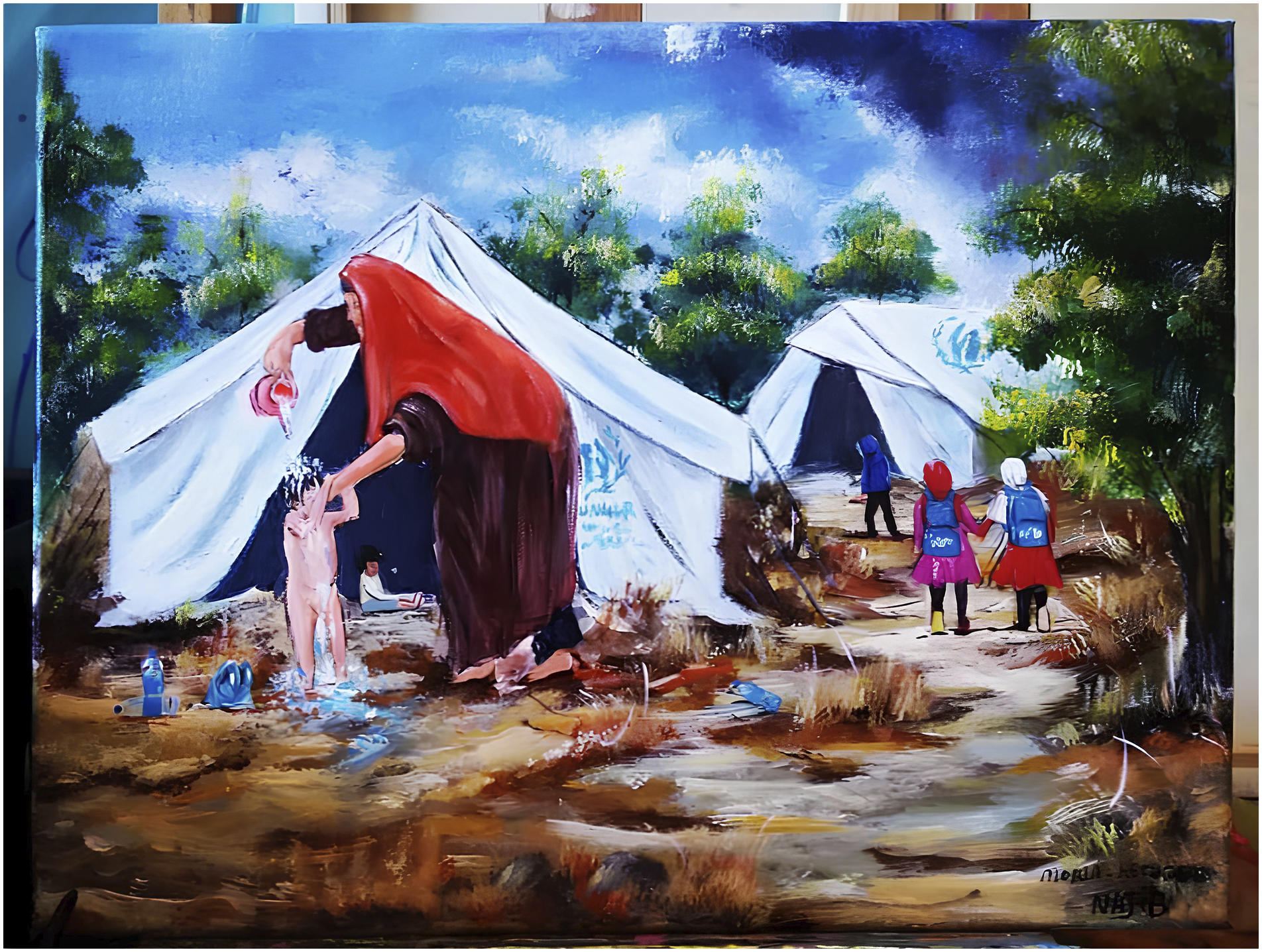
I interpreted these narratives as refugee encounters with the law, depicting their experiences of waiting for the processing of their RSD claims in Moria or for their deportation after a negative RSD decision. The narratives emerged in the face of scarce opportunities for the legal recognition of their refugee status. Although nearly all refugees at the Hope Project and NYSMM were officially asylum seekers, they grappled with lengthy asylum processes that took two to 3 years (Philippa Kempson, 2022; interview; Noemí, 2023; interview; see also AIDA 2023: 9). While the understanding of ‘linear time seems to capture important aspects of asylum seeking as a process’, it is worth recalling that time as a border is experienced differently by different individuals (Kallio et al., 2021: 4009). One of the artists, Najib expressed ‘I was in Greece for almost 2 years, my asylum application was rejected twice by the Greek immigration office’ (28 July 2022, personal communication). For Najib, 2 years was possibly too long to live in a ‘temporary’ camp with undignified conditions but too short to build a life inside and beyond the camp, as he illustrated in a painting of makeshift tents depicting the ephemeralness of camp life (Figure 2).
Furthermore, both paintings and social media posts recounted refugees’ aspirations for freedom and the uncertainties regarding their future. Some paintings depicted the artists’ dreams of being in a safe place or flying from above the barbed-wire structures of the camp.
11
The artists often used bright colors, possibly demonstrating their intense desire to leave the camp and live in a place they could call home. In addition to this positive vision, some artists created murky paintings depicting poignant, isolated, and precarious figures, likely representing the nescience stemming from their timeless containment in a dire camp.
12
A number of captions on NYSMM’s Instagram posts described the challenges of imagining a life beyond the camp while accompanying images in varying styles. To wit, a post shared in April 2023, containing a motionless, peopleless photograph from inside Moria, noted that ‘[a]nything anymore belongs to you not even your dreams because [no one] can dream when you live in hell’ (Figure 3). Another post from March 2023 comprised photographs depicted children in motion, playing, and looking at the sea (Figure 4). All five images were taken from afar to protect the identities of children who were likely refugees. In contrast, the caption criticized the treatment and containment of refugees in Lesvos by EU and Greek authorities: ‘Are we bothering you so much? So just give us freedom to go away and restart our [lives]’ (Figure 4). These narratives suggested refugee encounters with the social, reflecting their imaginations and struggles of integration within EUropean society. They also countered the rising hostility and dehumanization of non-Western refugees in EUrope and the scarce opportunities for their recognition as individuals with agency and rights, highlighting how their artistic and communicative expressions became sites for negotiating prevailing social attitudes and their place within host societies. Image on ‘Now You See Me Moria’ Instagram page, 24 March 2023. Reproduced with the permission of my respondent. https://www.instagram.com/p/CqLgNRAo7du.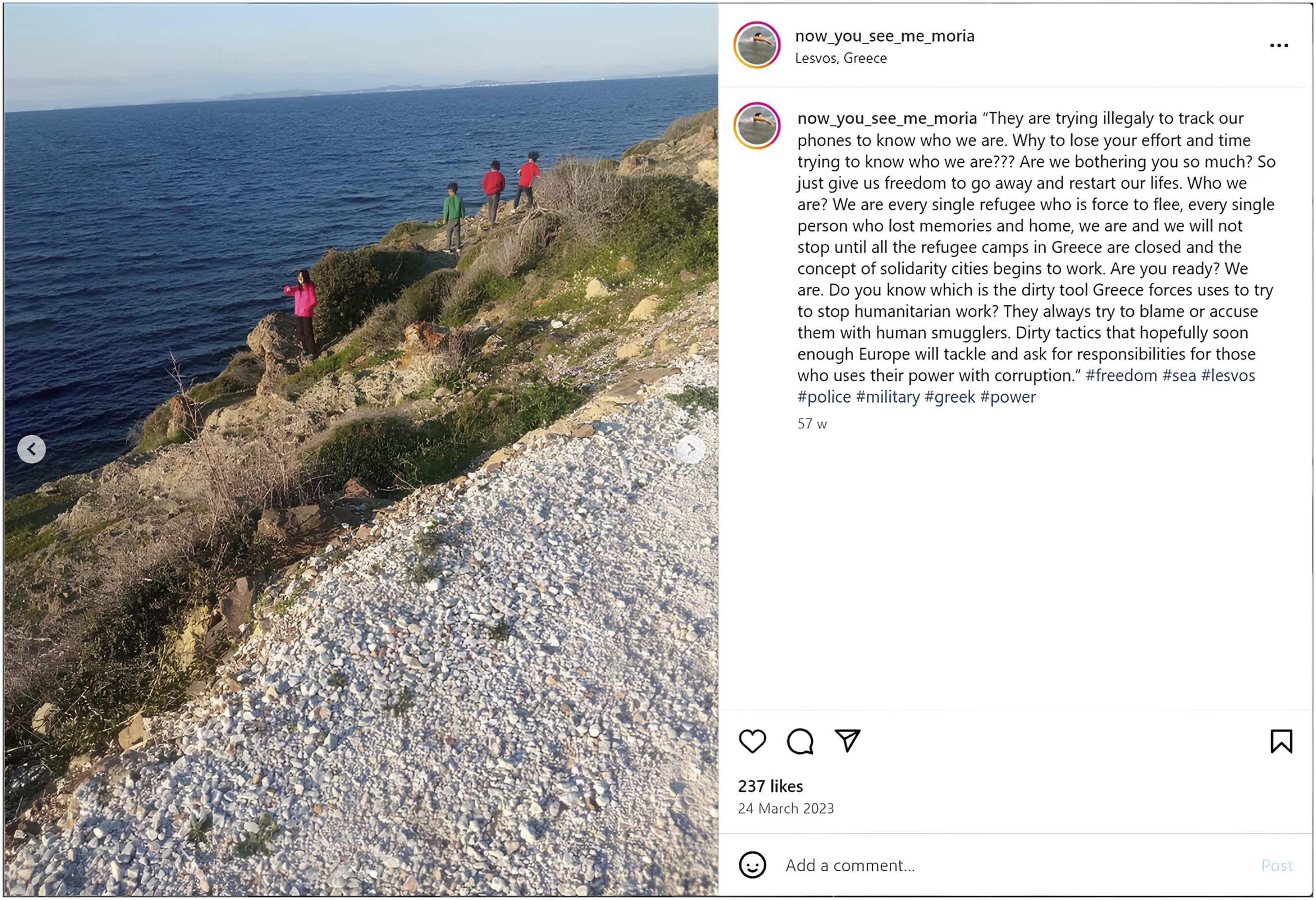
Refugee reactions to migration management
Beyond representing refugee perspectives on the implications of EU and Greek migration management measures for refugees, refugee-produced visual and multimodal artifacts also exposed refugee reactions to these measures in everyday life. I argue that these reactions demonstrate refugee agency in three ways: im/mobility, in/visibility, and voice.
The analysis of refugee reactions was focused on, along with the narratives identified, their practices in art workshops and their actions in cyberspace as they inhabited Moria. This entailed attention to refugees’ subtle and clandestine struggles, aside from explicit, visible, mobile, and active acts of mobility and ‘hot conflicts’ with border authorities. 13 As Mezzadra and Neilson (2013: 13) wrote, movements that manifestly confront borders and border-induced discrimination are not the only indicators of migrant agency. The mere presence of refugees in Lesvos, indeed, demonstrated that they entered EUrope by overcoming the physical borders of Iran–Türkiye, Syria–Türkiye, and/or Türkiye–Greece. A number of paintings and social media posts illustrated refugee journeys by dinghies, by which they might have traveled towards EU, or remnants from these ‘successful’ journeys at the Lesvos shore (Figure 1). 14 However, refugees’ everyday border struggles—their gradual acceptance of borders’ inescapable effects, leading them to either withdraw from their journeys or navigate invisible borders by forming transnational connections—were equally important (Mezzadra and Neilson, 2013: 13).
To wit, refugee-produced artifacts demonstrated claims to immobility, staying put and settling in EUrope as legally recognized refugees. For refugees at the Hope Project and NYSMM, self-identifying as refugees—despite lacking legal recognition—was crucial for realizing their agency and challenging the restrictive structures they encountered on their journey and in Lesvos. Refugee artists at the Hope Project demonstrated their shared identity by signing ‘Moria refugee’ in the right-hand corner of each painting (Osso, 2024a, 2024b). Similarly, refugees involved in NYSMM frequently proclaimed themselves as refugees on Instagram: ‘[w]e are every single refugee who is force [d] to flee, every single person who lost memories and home’ (Figure 4). They also advocated for halting new refugee camps in EUrope and the forced ‘mobility’ of refugees from Moria to the equally degrading Lesvos CCAC, underscoring their claims to settle in EUrope and fully enjoy their rights as members of EUropean society (Figure 4).
As the artifacts demonstrated, refugee political agency in Lesvos emerged also in the form of strategic in/visibility. In many posts, refugees at NYSMM revealed how they tried to avoid their control and surveillance (or hypervisibility) in camps, the spaces the law created to segregate non-Western refugees from the rest of society. The caption in a March 2023 post expressed: ‘They are trying illegally to track our phones to know who we are. Why to lose your effort and time trying to know who we are???’ (Figure 4). Another caption also demonstrated refugees’ continuous struggle with their surveillance: ‘The more you make us our life miserable, the more we will fight against this injustice. They are trying to track our phones. That’s illegal, unconstitutional and against everything’. 15 Paradoxically, refugees also sought visibility and recognition by raising awareness through their artifacts. Refugees at NYSMM reported ordinary photographs and videos from Moria and Lesvos, supplemented with captions highly critical of their conditions, such as poor accommodation, hygiene, and sustenance provided by Greek authorities (Figures 3 and 4). A February 2023 post featured covert photographs of food lines in Moria with a caption stating ‘[t]he more police try to control us or stop showing what’s happening, the more we will show it to you’. 16 Artists at the Hope Project also negotiated in/visibility through paintings, in which they realistically illustrated journeys and life in Moria and Lesvos while also representing refugees in lifebuoys traveling through makeshift boats instead of entering at official ports as per relevant legal frameworks (Figures 1 and 2; note 15). Thus, refugees’ clandestine recording and sharing of images from Lesvos resonated with their clandestine crossings of the border as they tried to reach EUrope for safety and a better life.
In collaboration with ‘outsiders’, refugees at NYSMM sought visibility and recognition by a wider public. With over 39,400 followers and hundreds of likes, comments, and engagements on its Instagram posts (June 2025), NYSMM’s open call successfully mobilized many to create awareness by designing posters, apparel, and an action book, and organizing exhibitions across Europe and Syria (Osso and Van Houtum, 2024). Furthermore, as indicated in a post, ‘[they] are working … [also] to speak directly to the policy makers in Europe to demand a solution’. 17 NYSMM’s audience, including some of its Instagram followers, has been ‘tagging’ EU institutions, decisionmakers (like Commission President Ursula von der Leyen and Home Affairs Commissioner Ylva Johanson), human rights organizations, and media outlets in the posts. 18 In collaboration with the University of Amsterdam’s Law Clinic, a report was drafted to hold EU and Greek authorities accountable for building the Lesvos CCAC. 19 NYSMM legally supports refugee children in Lesvos, evidenced by its #nochildinaprison campaign, and is creating an online archive of refugee-recorded visual materials from Moria to serve as court evidence, thereby seeking recognition also before the law (Noemí, 2023; interview).
Similarly, although refugee artists at the Hope Project were not able to travel outside Lesvos, they collaborated with artists and curators across Europe. Their paintings gained widespread visibility through media channels, exhibitions and auctions across Europe (Czechia, Greece, UK, Germany, Norway) and beyond, and online platforms like Instagram, Facebook, and Fine Art America. 20 Notably, The Guardian (2019) covered the Hope Project artists’ stories and artwork.
While being invisible risks refugees becoming isolated in remote detention centers, remaining silent despite ample visibility equally jeopardizes their claims. It is important that refugees both publicly appear in the ways they intend to be recognized and have their stories reach a wider audience through reputable channels. In the current EUropean context where refugees are portrayed and treated as speechless objects, ‘they are not heard at all and not quoted in earnest as real, reliable sources …, or their words are quoted in ways they never intended’ (Malkki, 1996: 392). While digital platforms offer refugees a voice, their perspectives, rights, and demands are not necessarily taken seriously or lead to change, nor are they recognized as ‘speaking beings’, unless they create visibility to challenge systemic issues that cause their plight and deny them full recognition and rights (Georgiou, 2018: 45; Nyers, 2006: 54). Through external support and digital technologies, refugee-produced artifacts from the Hope Project and NYSMM achieved wide interaction and recognition, allowing their creators to be seen not just as refugees, but as artists, photographers, and authoritative narrators of their own experiences.
The analyses revealed that artmaking and social media empower the hitherto overlooked actors like refugees to control their narratives, effectively transforming them into significant voices. Many paintings openly criticized EU and Greek migration management measures while conveying personal stories, each illustrating moments of refugee experiences of borders and displacement (Figures 1 and 2). 21 Some paintings showed vibrant stories of refugees overcoming physical borders (Figure 1), while others depicted waiting and isolation as a form of agency (Figure 2; note 13). The artists demonstrated their agency through not only painting but also their everyday practices of running art workshops, and collaborating and speaking with their peers (Philippa, 2022; interview). Similarly, refugees at NYSMM used social media to protest their treatment by state authorities in Lesvos and demand respect for their rights, continuously recording and sharing images from their daily lives despite increasing criminalization of their activism and police surveillance (Osso, 2024a; Osso and van Houtum, 2024). Some images powerfully exposed the harsh realities of Moria, from makeshift tents where refugees lived two to 3 years to inedible camp food, accompanied by highly political captions challenging the dehumanizing treatment by EU and Greek authorities (Figure 3; note 16). Through these posts, refugees also envisioned a more just migration governance, demanding ‘solidarity cities’ where they could live autonomously, rather than in prison-like camps (Figure 4). Thus, painting canvases, art workshops, and digital technologies transformed seemingly depoliticized spaces like Moria into sites of politics, deliberation, and contestation, allowing expression without fear of criminalization or deportation from Greece (Osso, 2024a, 2024b).
Refugees at the Hope Project and NYSMM created visual and multimodal artifacts to reflect on their experiences and assert themselves as socio-political actors with agency, voice, and visibility. Through their creations, they challenged EU migration governance and border violence, demanding respect for their rights and resisting statist efforts to portray them as mere victims, invaders, or criminals.
Conclusion
This research employed visual and multimodal methods, grounded in bottom-up, socio-legal approaches to refugee law, to explore refugee experiences with migration management. Through case studies of the Hope Project Greece (2022) and ‘Now You See Me Moria’ (2023), I demonstrated how analyzing refugee-produced artifacts and everyday practices can reveal refugees as previously overlooked actors in refugee law; highlighting their narratives and perspectives in navigating migration management measures, and showing the law’s impact on their daily lives.
Empirical investigations of refugee-produced paintings, photographs, and videos found online offer unmediated insights into the impact of measures designed to regulate refugee movement and how refugees react to them on the ground. These studies help overcome ‘methodological nationalism’ in refugee law research, revealing how the law is experienced by refugees. By focusing on refugee perspectives, narratives, and everyday practices, scholarship can buttress refugee voices, agency, and visibility, allowing for refugees and their rights to be recognized through their unique abilities rather than solely ‘by showing their wounds’, thus countering the prevailing official narratives (Georgiou, 2018: 48). Ultimately, employing bottom-up visual and multimodal techniques in refugee law research provides novel avenues for academic debate, knowledge production, and informed discussions on migration governance. The theoretical-analytical framework applied in this study can be a relevant starting point to inspire new research exploring how marginalized groups create visual narratives to challenge oppressive structures, showing how visual migration governance is shaped not only by powerful actors but also by the very individuals it affects.
Footnotes

Funding
The author(s) disclosed receipt of the following financial support for the research, authorship, and/or publication of this article: This work was supported by the Finnish Cultural Foundation (grant number 00210804) and the Finnish Academy of Science and Letters (grant number 0222799-7).
Declaration of conflicting interests
The author(s) declared no potential conflicts of interest with respect to the research, authorship, and/or publication of this article.
Data Availability Statement
The datasets analyzed during the current study are available in the University of Helsinki Open Repository, https://hdl.handle.net/10138/588345 (Osso, 2025).