




Abstract
Research on Islam in Russia has been growing in recent years. Despite the variety of perspectives adopted by scholars in the field, attention has focused mostly on responses to emerging globalised trends of Islamic orthodoxy in traditionally Muslim areas which had historically cultivated their own understandings of Islamic religious tradition strongly intertwined with local life. Most scholars of Russian Islam argue that the split among Russian Muslims between the followers of (global) ‘orthodoxy’ and (local) ‘traditions’ lies along generational lines. However, the sociological microdynamic of this process is still under-researched. This paper presents the results of an in-depth ethnographic study of a Muslim community in one of the Tatar villages of the multi-ethnic Volga region. It argues that the generational perspective is not sufficient to explain the split between ‘orthodox’ and ‘traditional’ Muslims. By employing Pierre Bourdieu’s approach to social reality and the religious field, the paper examines how a conflict arises on the base of competing discourses on Islamic norms and practices, but goes far beyond it, and concerns social, economic and symbolic spheres of the villagers’ lives. It shows that not only generational but also other social characteristics based on various forms of capital need to be taken into account to explain the split between orthodox-oriented Muslims and the followers of local Islam.
Introduction
Islam is playing a growing role in Russia due to the steady rise of the proportion of Muslims in the population. Marlene Laruelle has argued that although not all Russian ethnic Muslims practice Islam routinely, their identification with Islam is important and impacts on Russian domestic and foreign policy alike (Laruelle, 2016). Academic research focused on the political dimension of Islam in Russia is certainly expanding (e.g. see Aitamurto, 2016; Graney, 2006; Shterin, 2016), but it is not the only one. Traditional Islamic studies continue to look at the impact of current social changes on Islamic doctrine itself (e.g. Garipova, 2017, Di Puppo, 2019). Michael Kemper and his colleagues lead a project on Islam and the Russian language, for instance (Bustanov and Kemper, 2012, 2017). Lili Di Puppo and Jesko Schmoller (2018) have edited a journal volume dedicated to the interrelations of Islam and ethnicity in contemporary Russia from the perspective of a variety of everyday Muslim experiences and of social or official discourses about Islam.
There are also sub-regional studies that focus on the specificities of the rise of Islam in socially, historically and culturally distinct parts of Russia. The North Caucasus has been of interest to anthropologists as well as political scientists mostly because of the prominence of Islamic radicalisation in the region (e.g. Sagramoso and Yarlykapov, 2013; Starodubrovskaya, 2016; Yarlykapov, 2010). Tatarstan as a region where half the population are ethnic Muslims has attracted the attention of social researchers interested in identity politics and nationalism (Schmoller, 2018; Suleymanova, 2015; Wertheim, 2005; Yusupova, 2016, 2018). There is also research done on the influence of migration from Central Asian countries on the transformation of Islamic practices in Russia (Yusupova and Ponarin, 2018). Another area of interest has been the transformation over time, especially across the Soviet and post-Soviet eras, of religious practices in Muslim villages (see the case-study-based edited volume by Dudoignon and Noack, 2014, especially chapters by Bobrovnikov, 2014; Minnullin, 2014; Sagitova, 2014).
Lilia Sagitova’s (2014) chapter provides a good example of the dominant way in which these changes tend to be framed. Sagitova traces the post-Soviet transformations of religious life in the largest Tatar village in Russia’s Penza region. She is especially interested in the conflict around Islamic norms and practices that happened in the village in the early 2000s. She describes it as a conflict between generations: The return of the new generation of mullahs and their inclusion into the religious life of the village stirred conflicts between the “old” generation of spiritual leaders and the newcomers. In the first place this was due to the emotional conduct and the lack of tolerance on the part of the younger mullahs […] In recent years, a rapprochement between the two sides can be observed: Members of the older generations increasingly appreciated the efficiency of the approach pursued by the young mullahs in spiritual and social questions, the latter began to assess the local context and the role of the older generation more soberly. (Sagitova, 2014: 16) The harshness of the ‘young mullahs’, but also the stiffer competition for the congregations and hence the resources created clashes on the level of norms and values, as well as on the level of status and influence. It led to a split within society, in which both parties stuck to their own lines of argumentation. (Sagitova, 2014: 20)
In this paper, I propose to use Bourdieu’s theoretical framework of the religious field (Bourdieu, 1991), applying it, though, to the specific case of Islam in Russia. Although there are various critiques and elaborations of Bourdieu’s framework (McKinnon et al., 2011; Verter, 2003; Wood and Bunn, 2009), there has been surprisingly little empirical application of Bourdieu’s theory on specific cases. What I aim to show in this paper is that this framework can, in fact, be very useful as a means of methodologically guiding both qualitative ethnography and quantitative social network analysis.
Context
The village N is located in the multi-ethnic Volga region in one of the non-ethnic regions of the Russian Federation. 1 According to archival documents, the village was established at the end of the eighteenth century by a small group of Tatars. In 2013, when the events considered in this article took place, the village population was 2065 people, consisting of 507 households, almost all villagers being ethnic Tatars. There were 270 children attending the local school and 406 elderly people in the village at the time. The population had in fact grown over the preceding years on the account of the rise in birth rate. Like in the case of Eluzan’ discussed by Sagitova (2014), the majority of the residents of village N (including younger ones) aspire towards upward social mobility within their own village community, rather than plan to move out to urban areas.
At the beginning of the 1990s, the inhabitants of the village worked in a kolkhoz (communist collective agricultural enterprise). After the dissolution of the kolkhoz, most of the population established their own private farms with greenhouses where they grew vegetables to sell. A few villagers have farms with cows and horses, while some run small commercial businesses and engage in trade. The village has four grocery shops and a pharmacy. One of the successful local farmers has opened an equestrian sport complex in 2013. There is also a meat processing company that produces halal meat products with a staff of 50 workers; a factory producing roofing iron, employing eight workers and a private sunflower oil mill. In 2012, the village also opened its own ethnographic museum.
Religious practices play an important role in the community life. There are three mosques and one madrasah in the village. There is also a sacred spring that was named after the first mullah. Due to the remoteness of the village from the regional administrative centre, religious education in the madrasah had not, in fact, been interrupted during the Bolshevik revolution and the civil war that followed. It was only during the early Soviet period that the madrasah had become an elementary school as happened elsewhere in the Soviet Union, but it then re-opened as a religious school in 1992. All three mosques had stayed open even during the entire Soviet period, though the number of parishioners had dramatically decreased. Only at the start of 1990s, regular parishioners created mahallas around each mosque. Most of each mahalla members are elderly people with a small proportion of middle-aged and young men.
In the mid-2000s, three Tatar families from other neighbouring regions moved in to settle in the village; these I will call ‘newcomers’. Among the reasons for moving to the village, they highlighted family connections and the village’s reputation as an ethnically homogeneous Tatar settlement with a good Muslim infrastructure. According to the interviews, their primary motivation for moving to this village was their hope that they will be accepted as ‘genuine’ Muslims, which had not been the case in their previous places of residence. According to the locals, though, these families moved to the village thanks to the invitation by one particular figure, a powerful local elderly businessman. The heads of these ‘newcomer’ families were about 40 years old when they arrived. They had not had any religious education, aside from learning Islamic rules with mullahs during Friday prayer in their previous settlements. Unfortunately, due to sensitivity of the topic, I was not able to gather the information on how come their views were influenced by more orthodox understanding of Islam. It is hard to define their religious views in exact terms, but it is possible to say that what unites them is a tendency towards ‘orthodoxy’, by which I mean that they use citations from the Koran, rather than deference to community traditions, to explain their life-choices. In this, while calling themselves ‘genuine Muslims’ they explicitly differentiate themselves from fellow Muslims whose life-choices are based principally on local community rules. For example, they readily express views against visiting ancestral cemeteries, vaccinating their children, pilgrimage to the sacred spring or the participation of women in public life, all of which are the norm in the life of this village and do not contradict their understanding of religiosity. These newcomers are likely to observe religious prescriptions that go against local custom and even meet with the disapproval of the local community. This may range from wearing long beards and ankle-length trousers to refusing to take their children to get help from a medical specialist when needed. Significantly, having settled in the village, these ‘newcomers’ also began to actively promote their views on Islamic practices and canons in contradiction with the local practices and views; and this then ignited open conflict in the summer 2013. Before going into a detailed discussion of the conflict, I would like to make a reservation that I do not consider religious practices or theological arguments by the sides of this conflict in detail because it serves a different research question, which would probably need an anthropological approach and not a sociological one. This paper is written from a sociological perspective, and does not seek to analyse differences in religious views of the villagers, or meanings of a local Islam per se. Rather, it addresses the microdynamics of the religious conflict by focusing on the positions of various actors in the field of religion.
Conflict escalation
One day, during joint prayer, one of the newcomers reproached a young local for not standing correctly and even kicked the lad’s legs to ‘teach’ him how to pray ‘the proper way’. Such behaviour caused indignation among the others present and the man was asked to leave the mosque immediately. According to the newcomers, though, the incident was caused by the ‘propaganda’ of a young new mullah, who in his sermons accused the newcomers of Wahhabism, something that they denied.
This event sparked a wider discussion of religious practices and rules in the village and was followed by several meetings of locals, including women and those who did not attend mosques regularly. At one of these meetings, the villagers passed a resolution that the newcomers should be forced to leave the village within a month on the grounds that they were spreading dangerous ideas of radical Islam. The resolution was documented under the title ‘The threat of Wahhabism in village N’ and ran as follows (in my own English translation):
The demands voiced at the general [village] meeting come down to the following:
The village administration must be the one controlling the sale of houses [in the village] in the future. All mullahs and madrasah teachers must conduct explanatory work about radical branches of Islam among all villagers, especially youth. They must promote and teach traditional Islam. The entire village community must be vigilant against newcomers and be united in combating the Wahhabis actively and relentlessly. The following families that hold alternative worldviews are obliged to leave the village in one month: [list of families].
After signing the resolution, the villagers gathered in the courtyard of one of the newcomers and tried to force him and his family to leave. However, the man filed an appeal to the prosecutor for harassment and the villagers had to back off. Indeed, the resolution had no legal weight and was in fact against the law, so the newcomers were under no obligation to leave, continuing to live in the settlement for a couple more years. However, the immediate result of the resolution was that they were excluded from visiting the local mosques for several months, during which the conflict continued. The villagers also sent a petition to the Regional Spiritual Board of Muslims asking them to take action against the spread of Wahhabism in the village. The Board, however, refused to step into the conflict openly, and only informally suggested further actions, leaving the villagers come to an agreement on their own. Open conflict faded within a year and the newcomers started visiting the mosque again, but the expectation that they should leave the village had not been withdrawn. In reality, the conflict continued in latent form through a form of boycott. As one informant explained: The Officials explained to us that we cannot force them to leave the village, but that we can act in the domain of the economy: we will not buy anything from them, and we will not help them. We will not cooperate with them in any way. (М., 49 years of age, 10 March 2014)
It is important to note that at the point of escalation, the villagers consciously and explicitly framed and labelled the above-described events as a serious ‘conflict’ that went to the core of village life and identity. They thus went on to reproduce the logic of conflict in discourse, both in their own discussions and in interviews with me. What is more, they were at this point inclined to present the conflict in question as something that ran very deep and had started a long time ago, when the first newcomers with alternative religious views had arrived.
Indeed, the locals offered two main explanatory frames for the conflict:
As a conflict between ‘natives’ and ‘immigrants’: ‘They came to our territory where our ancestors lived, and [now] they dictate their rules. This should not happen. They undermine our authority’. (А., 48 years of age, 25 July 2013) And as a conflict that derives from fundamental cultural differences: ‘I don’t know what the conflict is about. I cannot judge. But they pray in a different way. It is not appropriate for us. That is the reason of the conflict, there is nothing else’. (К., 32 years of age, 9 January 2014)
Furthermore, the above-discussed resolution against the newcomers suggests that the villagers were especially concerned about village youth becoming attracted to the newcomers’ religious views. Indeed, the escalation itself was sparked by a young man being given a lesson in how to pray ‘correctly’. Is this then also to be seen as, at least potentially, a conflict of generations? And yet, once the height of the drama had passed, around half a year later, the same research participants who had previously seen themselves as engaged in a veritable battle now started to present the situation in their discourse as a rather more ordinary case of local squabbling. Might there then also be other possible explanations of this ‘conflict’ to the ones mooted above?
Theoretical framework of analysis
To analyse this case, I employ Pierre Bourdieu’s theory about social space as a field of struggle (1989). He argues that social space as well as physical space have their value, which become targets of struggle taking place in various fields of the social world (cultural production, academia, journalism, bureaucracy) (1996). Thus, physical space does matter in the struggle for social space and provides an advantage in this struggle. Ability to dominate in social space, mainly due to the assignment (material or symbolic) of deficit goods that are distributed in it, depends on the available capital of actors in this space. With this I combine the framework developed in Bourdieu’s ‘Genesis and structure of the religious field’ (1991). Bourdieu argues that the benefits that a group or class derive from a particular type of religious practices or beliefs depends on how this religion can strengthen the material and symbolic power that can then be mobilised by the group or class to legitimise this material or symbolic power and the position they occupy in society. This field has its own type of capital – ‘religious capital’, which is itself contested. As McKinnon et al. (2011) rightly pointed out, ‘religious fields are indeed fields of contest, but they are precisely so because religious capital is not always, or only, taken for granted’ (363). Therefore, in my analysis I am not focusing on formal believes but rather on positions within a religious field and practices that help occupy these positions (Turner, 2011: 113).
The other key idea that Bourdieu develops here is that the possibility of change in the religious field and, consequently, a change in religious ideology is based on the exchange established between experts and laymen on the basis of different interests, and a competitive relationship between different specialists within the field of religion: The exchange relations established between specialists and laypersons on the basis of the different interests, and the relation of competition, which oppose various specialists to each other inside of the religious field, constitute the principle of the dynamic of the religious field and therefore of the transformations of religious ideology. (Bourdieu, 1991: 17)
Thus, the proposed theoretical framework informs the following research questions:
Who are the religious specialists in the religious field of this village? What is their place in the field’s structure? What is the dynamic of their struggle? How did the struggle for a specific physical space (the right to visit a mosque) influence the restructuring of the religious field in the village? How is the distribution of religious capital between these three groups performed? And how is this capital converted into other forms of capital?
Methodology
The data collection methods used were observation and interviews, as well as the collection of materials related to the religious situation in the village available on the Internet (YouTube channel and Vkontakte page). Field diaries and observations were made in July 2013, January and March 2014; interviews were conducted during the same months. Photo, video and audio materials as well as official documents concerning the conflict were collected during March 2014. These materials were analysed in terms of qualitative content. Social network analysis data was collected also in March 2014 and analysed using USINET software. The networks data collection followed the cognitive social structure method. All interview recordings and SNA databases were destroyed after the analysis for ethical reasons (research participants’ security) (see more on why this research needs research participants safety in Yusupova, 2019). Important to note that, actual theological debates or religious practices of villagers were not the focus of the data collection, as they would be in anthropological research. Instead, having in mind a sociological perspective, research interviews, observations and social network data were gathered around the social dynamic of the conflict itself focusing on various actors’ disposition in the religious field of this village.
The structure of the religious field in N
During the conflict described above, the religious field of the village N was divided between three groups. The first group consisted of the local mullahs and some other workers of the mosques (muezzins), as well as the mahalla chairmen. These people could be classified as ‘priests’, according to the proposed, Bourdieu-inspired theoretical framework. The second group were the newcomers. This group could be classified as ‘prophets’, according to the same schema. Importantly, though, there was also another group of ‘prophets’ whom I call ‘experts of Islam’. 2 These people do not serve in the mosques on a regular basis, but they have credibility and reputation among the local population as the ‘truest Muslims’. The village also has the third group – the ‘sorcerers’, who continued to put a spell or heal people with Islamic magic without any attempts to engage in the conflict. However, in what follows I will not discuss this last group because of their lack of participation in the conflict. They simply kept providing individual services and were paid for them as usual. During and after the conflict, their position and role in the social space had not changed much. I will now consider the other two groups in a separate subsection.
The priests
The first group of religious leaders consisted of about 12 people (three or four in each mahalla). They represent the first type of actor in the religious field, and I will call them imams to highlight their religious leadership in comparison to the mullahs. Here, I must mention that before the conflict, the main criterion for the election of the Imam was his education. The mahalla chairmen tried to find a person with special religious education, often inviting a man from the neighbouring villages, or even from other regions. In the last 10 years, many educated young imams settled in the village for some time. After a while, almost every one of them left for another place. A few local madrasah graduates tend to continue their education in the Russian Islamic University (RIU) in Ufa or RIU in Kazan. Most of the graduates do not pursue a religious career at all.
The story of a young Imam who came to the village from the neighbouring Orenburg region in the summer of 2013 is typical. After the death of one of the imams, the chairmen of the mahalla started to look for someone who could replace him. He found out that one young man, who studied at the local madrasah some time ago, continued his education in a madrasah in Dagestan. The chairman contacted and invited him to be an Imam in the village. At that moment, he had just graduated. During his stay in the village, he was studying in absentia at RIU. This young Imam was the one who started accusing newcomers of Wahhabism, agitating villagers actively to attend the mosque as a sign of opposition to the ‘radical strands of Islam’. But the young Imam’s wife had not agreed to move to the village and he therefore left the village six months after the conflict had escalated. As the result of the conflict, several criteria for the selection of a new Imam had changed. The main criterion became that he must be of local origin, whereas education became less important. Some additional criteria were also introduced, such as credibility and of him needing to be a ‘man of character’. According to the interviews, these two criteria became the most important ones as a way of preventing someone from outside coming to manage the mosque and dictate the rules.
The Imam of the second mosque, where the conflict escalation took place, was an elderly man who was studying at the time in the local madrasah. He was elected by laypeople in August 2004. An important source of his legitimacy and symbolic capital was the fact that he had made the hajj in 2006 and his son had received a religious education in Turkey and worked as an Imam in the city. Although the Imam of the second mosque was born elsewhere, he was an inhabitant of the village for many years and had significant social capital.
The Imam of the third mosque was the madrasah teacher who was originally from the village, who had graduated from this madrasah himself and then received higher religious education at the RIU in Ufa. Thus, he too had a strong symbolical capital and wide social networks of relatives in the village. Despite the existence of the madrasah in the village, few of its graduates continue with a religious career due to low levels of remuneration that such a job entail. Thus, religious capital is not easily converted into economic capital. Nevertheless, it is readily converted into symbolical capital: the respect of the community is crucial for being an Imam, and vice versa.
The prophets
As mentioned, there were two groups in the community that might be considered ‘prophets’ (following Bourdieu’s schema): the group that I dub ‘Islamic experts’ and the ‘newcomers’.
Those that I call ‘Islamic experts’ are pious parishioners who actively engage in Islamic self-education. Each mahalla has five to seven people who fall into this category. They gather together in small groups and learn tajwid (Koran reading) and Arabic, discuss topical religious matters concerning the local community, the wider Russian ummah or Islam in the world. They run their own classes in the madrasah or in one of the mosques after the evening prayer, usually two or three times a week. These are ‘individualistic’ Muslims (Roy, 2007) who try to discover religion on their own by learning and reflecting on faith, ethnicity and identity in general. As a rule, they belong to the wealthiest villagers who have sufficient free time to engage in such self-education. For example, the deputy head of the meat production factory leads classes in Koran reading twice a week after evening prayers. As mentioned earlier, this village is quite prosperous in comparison to other villages in the region and the richest residents actively convert their economic capital into symbolic and social capital. What is remarkable is that this conversion occurs mainly through charity and pious adherence to religious practices which serve as a basis for religious authority of this type of ‘prophets’. One of the most notable examples is hajj. Most of the villagers try to make the hajj and preferably not only once. Of course, the rich go for hajj more often, every time taking with them one or two low-income family members, usually the elderly. This is highly appreciated by other relatives, neighbours and villagers in general. Due to strict social control in the community and rumours as an instrument of it, the news about this kind of generosity is fast spread in the village.
Crucially, what makes this group a subgroup of the ‘prophets’ is that it seeks to undermine the symbolic power of priests, yet without replacing them in the formal hierarchy. Instead, they strive to assume the position of greater symbolic authority and influence when it comes to making certain important decisions in the religious field of the village: for example, who should be hired for a new Imam, who should be replaced, how should the lay people celebrate certain holidays, how much money should go to charity and how it should be distributed, and so forth.
The other sub-group of the ‘prophets’ are the four families of newcomers, two of which are Tatars from the neighbouring region with family ties in the village. The third family consists of a Tatar from outside who married a local woman. They live with her uncle who did not object to their views on religion from the beginning and eventually began to share these views. The fourth family consists of an ethnically Russian man who had converted to Islam and who married a local woman.
The first family settled in N about 10 years before the conflict. They did not have any relatives in the village at that time. One of the influential and wealthy villagers invited them because they were friends and shared a common vision of religious issues. At that time, this villager was one of those who could be considered belonging to the group of local ‘Islamic experts’ in the terminology that I introduced. However, his approach to religion shifted with time towards the newcomers’ position. The brother of the head of this first newcomer family then moved with his family about a year before the conflict escalation. The third and fourth family had moved to the village about three and two years before the conflict escalation, respectively. Their social networks in the village were not so strong, but they did establish some relationships. In fact, they managed to attract several local villagers, about 10 people, to their side. These were mostly relatives, but also some neighbours who sympathised with their religious beliefs. The newcomers spread their views during gatherings focused on the reading of the Koran, or just during everyday practices, including prayers in the mosque. This sub-group, which distinguished itself with good rhetorical skills and the ability to give clear, knowledgeable and authoritative answers on ritual matters, intended to replace the priests in a classical way – by changing the whole structure of the field and taking the highest formal and informal positions.
The restructuring of the religious field of the village
Exclusion from a physical space such as a mosque or the settlement itself is an important indicator of the struggle for social space between the three groups. The right to attend the mosque is the right to use it for recruiting followers and promoting one’s own rules. As one of the research participants said: The mosque – is the home of Allah, everyone can enter there. But Allah has commanded us to take care of our faith and our homeland. By allowing them to dictate the rules in the mosque, to teach our young people, we betray it all. (R., 56 years of age, layman, 4 March 2014)
This resulted in a restructuring of the religious field, reducing the influence of the formal role of the imams and further increasing the influence of the non-professional role of Islamic experts. One of the research participants described his neighbour, who falls in the latter category, in the following words: He observes the rituals, all of them, he made two hajjes, he educates himself in religious knowledge and combines all of it with the normal daily life of a farmer. He knows more than any Imam in the village! (D., 38 years of age, layman, 29 December 2013)
This dynamic of struggle in the religious field of the village N could also serve as an illustrative model for understanding current developments in the clash between ‘traditional Islam’ and new orthodox trends on the level of the country as a whole. The meaning of traditional Islam is discussed in various Muslim regions of the Russian Federation on the regional level. The Islamic revival in post-communist Russia is developing in two main directions. One direction is leading to the re-invention of traditional ethnic religion. Another one is leading to the spread of fundamentalist religious views that oppose the idea of a specific local Islam. This dichotomy might be simplistic and there are many nuances within it; however, I am using it in this paper for heuristic purposes. There are also other approaches to understand the notion of traditional Islam in Russia as a political discourse (Benussi, 2018) and a discursive tradition (Garipova, 2020).
The distribution and conversion of religious capital
By religious capital I mean the power to control and transform the religious practices of laymen. As any other form of capital, religious capital could be converted into social, economic and cultural capital and other forms of capital, and vice versa. The conversion of religious capital into social capital could happen through many kinds of religious gatherings – majlises – during which people socialise. Frequent participation in these social events with religious meaning puts a person in a bridge position between different social networks of friends, colleagues, neighbours, etc. In his seminal article, Mark Granovetter (1973) has argued that this position of ‘bridge’ may bring many benefits to its holder. In the above-described religious field of village N, the imams are the ones most likely to occupy this position. Religious gatherings are very popular in N even among those who do not attend the mosques regularly, and it is in these settings that the social capital of the imams can grow.
The conversion of religious capital into cultural capital is a transparent process as well. There are many social programs for official religious leaders (imams) initiated by the Regional Muslim board, where they bring imams together for educational and cultural activities. Additionally, a hajj experience could be treated as gaining cultural capital which in turn could also be transformed in other forms of capitals in various fields.
The conversion of religious capital into economic capital may seem limited but, considering the context of a traditional society based in the countryside, it is not. The more respect a religious leader has, the more people are ready to help him financially or offer other forms of assistance, such as help during harvesting or in the transportation of goods (vegetables to the neighbouring markets, in this case). The imams and the mullahs also get some recompense for performing their religious functions, although the amount is usually small and depends on the mahalla charity. Nevertheless, this means that the size of the Imam’s salary usually directly correlates with the level of his popularity.
Distribution of capital and social networks
In this paragraph, I analyse various social networks in each of the three mahallas. Research limitations resulted in focusing on only those community members who attend the mosque on Fridays regularly. Before launching the discussion of quantitative social network analysis results, I would like to highlight some evidence from the ethnographic fieldwork. The most influential Islamic experts who started this conflict belong to the third mahalla; all four families of newcomers belong to the second mahalla where the escalation of the conflict has happened. Thus, the first mahalla’s networks could serve as referent types because there are no newcomers or Islamic experts there.
In Figures 1 to 9, I have reproduced three types of social networks: who goes to whom for majlises (religious ties), who helps whom (economic ties) and family ties between regular parishioners. I consider neighbour relations as economic ties and do not consider ethnicity as an important factor since the village is ethnically homogeneous.
Figure 1 is a network of religious ties of the first mahalla. This figure shows that the density of the religious social network is high and social ties based on attendance of religious events are strong. The imams are in the centre of the social network and have more ties than anyone else. This indicates that the social field of religion in this mahalla is stable and conflict did not lead to its restructuring. Interestingly, the centre is located slightly to the left. In the right, less integrated part of the network are people who are economically less successful. They invite fewer people to the gatherings or do not organise such gatherings themselves and attend only gatherings organised by other people. Nevertheless, the Imam of this network (Va S) is located at the centre and has almost the same number of ties as the most prosperous or economically powerful members of the mahalla (compare with the network of economic ties of the same mahalla in Figure 3). 3 This shows that economic capital is indeed convertible to religious capital by attending more gatherings and making ties with (in the religious field) powerful imams.
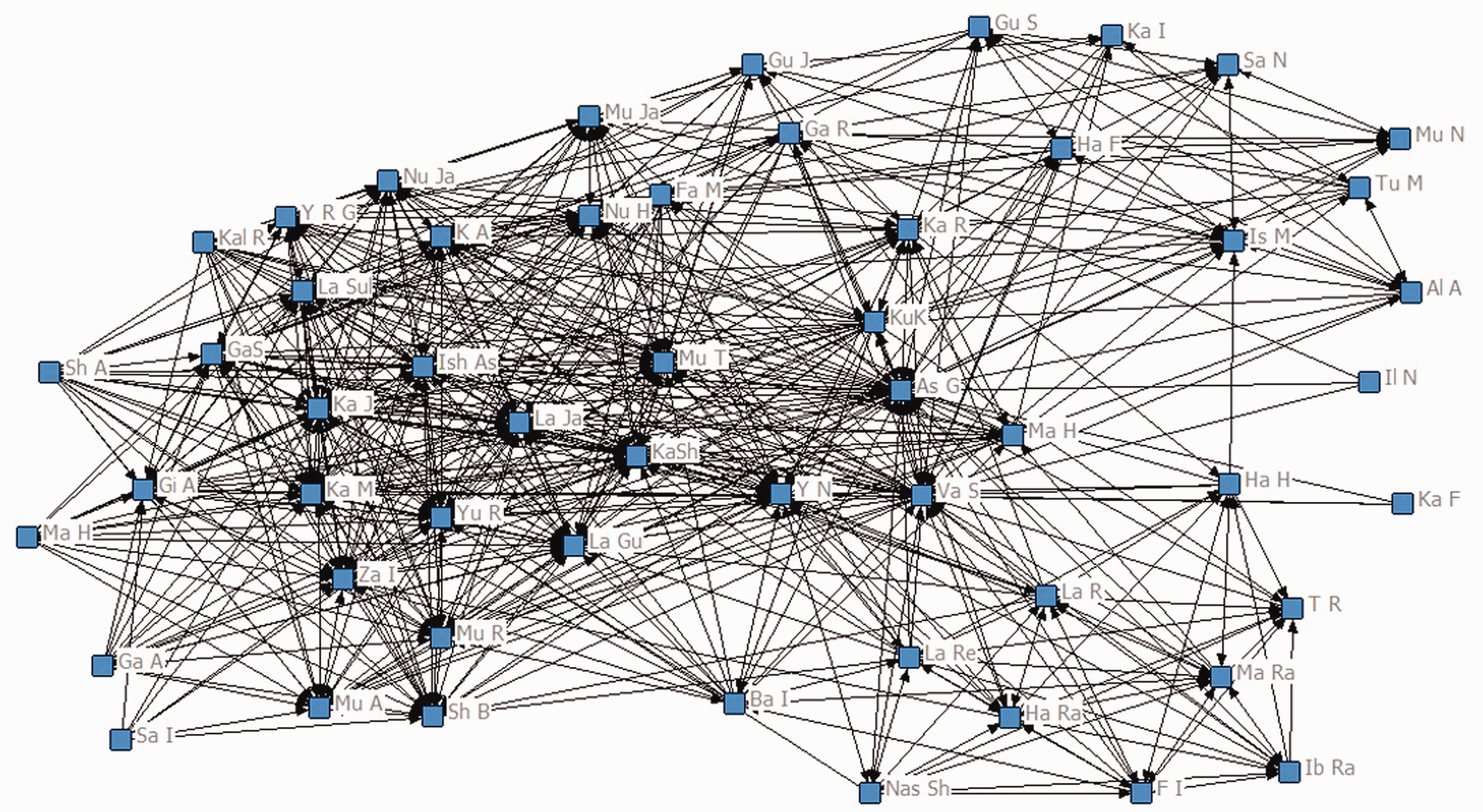
Religious ties in the first mahalla.
Figure 2 shows that most of the people attend mosque individually and half of the active congregation does not have relatives who also attend the same mosque regularly as they do. However, there are two big related families and several family trios in the first mahalla. This is another possible explanation for the high density of religious ties.
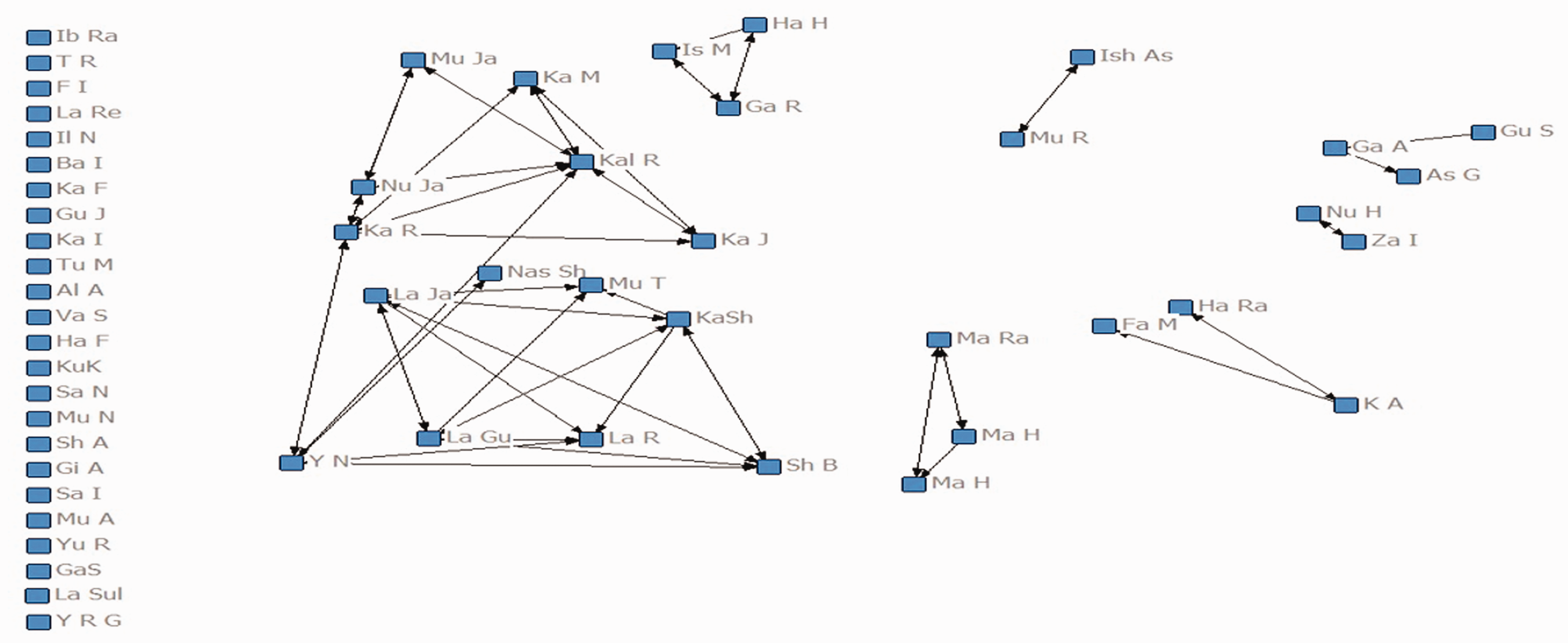
Kinship ties in the first mahalla.
Figure 3 shows that economic ties are well developed and only one person is excluded from this network. Ethnographic evidence suggests that he is more engaged in economic relations with the participants of the second mahalla. The figure also shows that economic ties correlate with family ties to a large extent but do not correlate much with religious ties. However, some key nodes of economic network are also key nodes in the religious network (La Ja, Y N for example). Importantly, these people are over 50 years old, and there are no young people in key positions in these networks. Two individuals, Ka F and Ha Ra, are in key positions in the economic network but far from the centre of the religious network. These are young successful businessmen who are not active in the religious field, but both attend the mosque regularly. They are not interested in occupying a central position in the religious field and prefer to invite to their majlises relatives and other villagers who might not attend the same mosque or do not attend any mosque regularly at all.
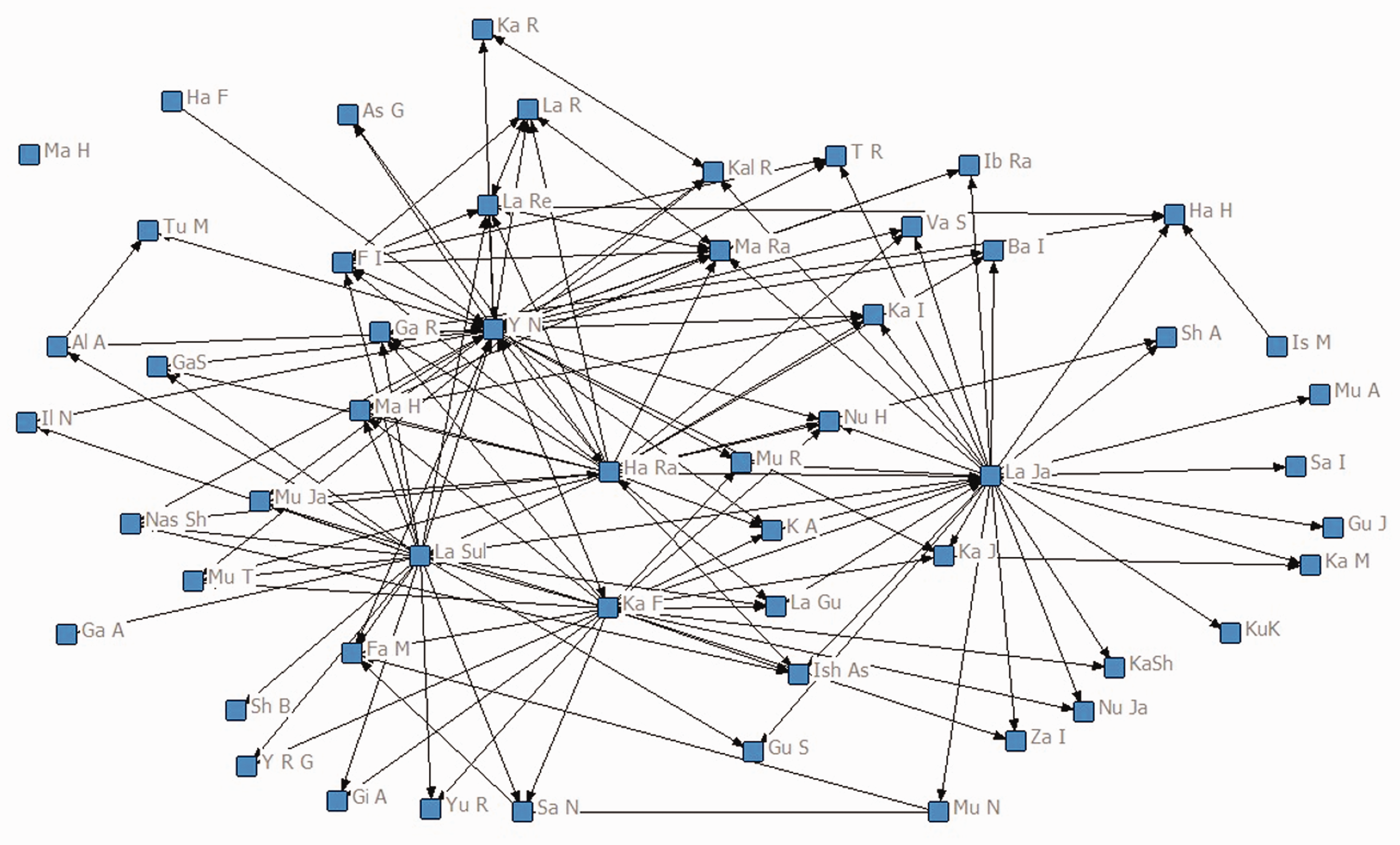
Economic ties in the first mahalla.
The comparison of all three figures from the first referent mahalla leads to the following conclusion. The conversion of economic capital into religious capital is more likely to happen in older age. Rich elderly people are more interested in this conversion than the younger ones.
All four families of ‘newcomers’ are based in the second mahalla. However, Figure 4 of religious ties in the second mahalla is very similar to the first, referential one. There are only a few, but nonetheless important differences. First, there is one unattached node, TG, which represents one of the ‘newcomers’, who holds orthodox religious beliefs but is not included in other orthodox-oriented social networks. Another dissimilarity is that there are two visible centres of the network, with GRf serving as a bridge. On the left side of the network is a vertical line of nodes, with NRV, AI, BM and PM in the centre, who represent sympathisers of ‘newcomers’ and who at the same time have a big influence in the economic domain (see Figure 6). It is worth noticing that AI, BM, SM and PM also have family ties, which means that their strong links in the religious field are supported by their social capital, rather than vice versa. About 14 parishioners of the second mahalla tend to attend religious events organised by newcomers’ sympathisers including the newcomers themselves and their relatives, which is about one-quarter of the whole network. A much more intense part of the network is on the right side of the figure. After the comparison with the economic ties, we can conclude that the most prosperous villagers, again, have the central positions in the religious network.
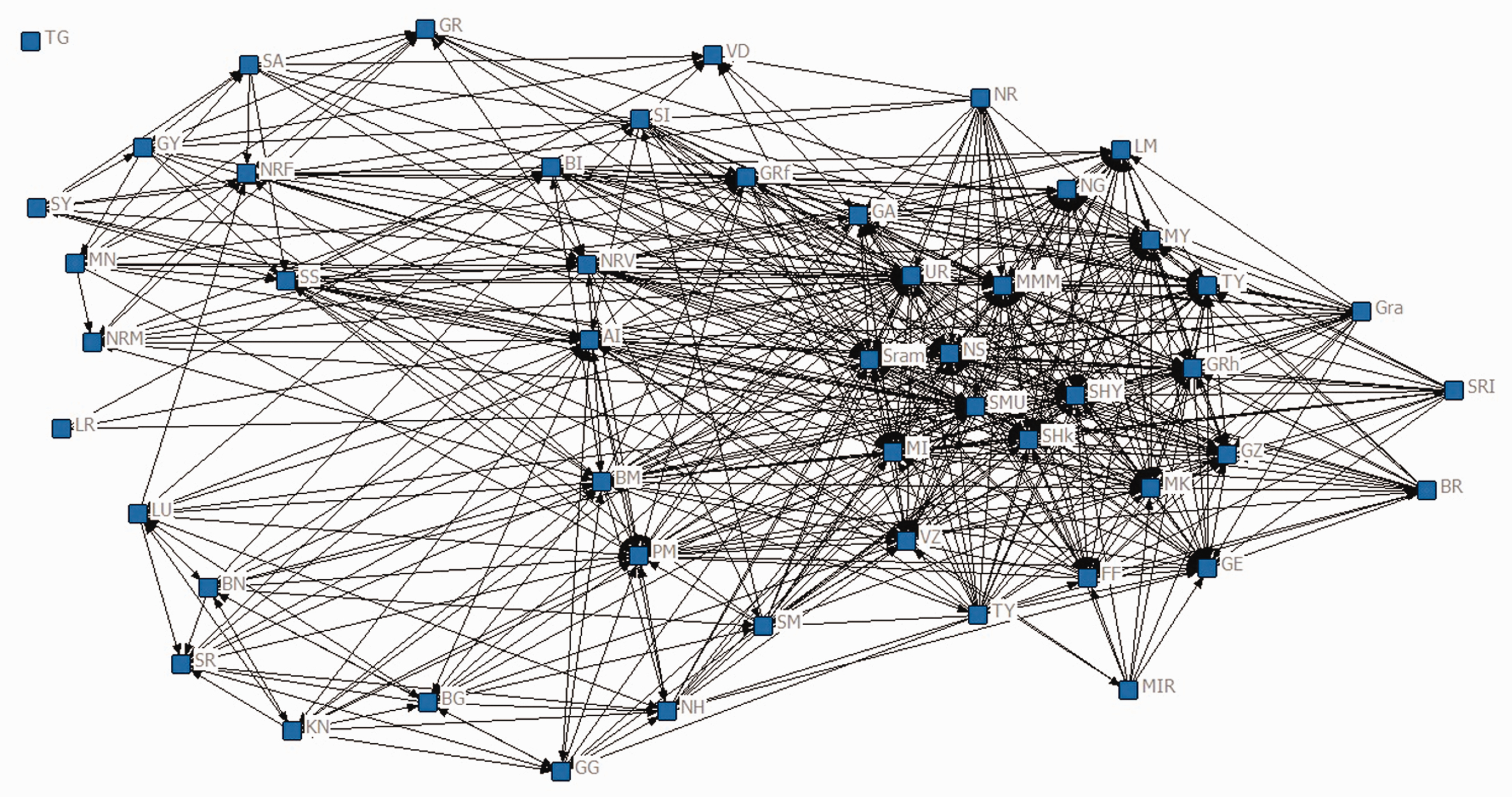
Religious ties in the second mahalla.
As it can be seen from Figures 5 and 6, AI, a 70-year-old successful businessman, holds the most power in both family and economic networks. This might explain a relative split into two centres of the religious network since AI is a sympathiser of the newcomers.
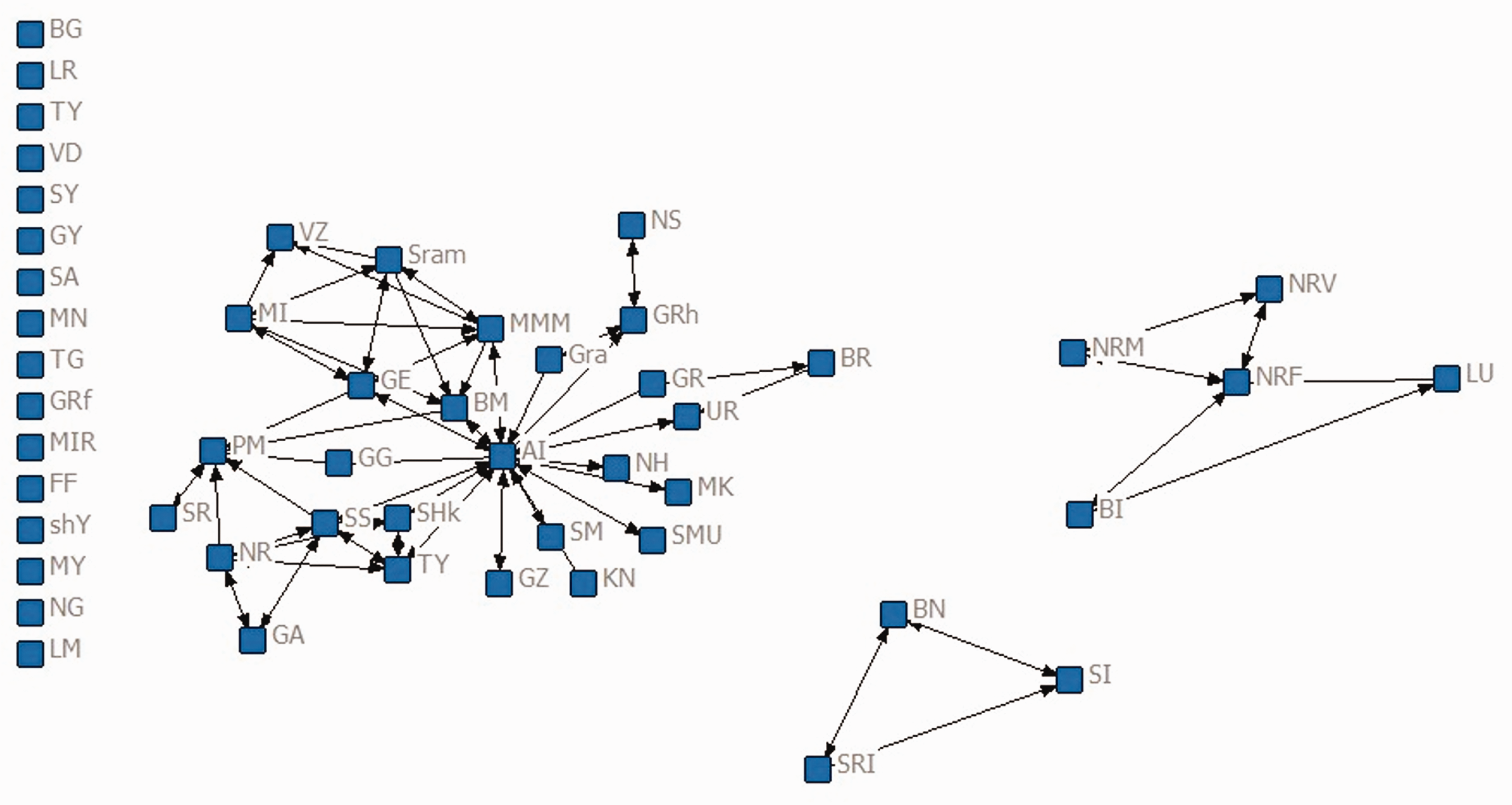
Kinship ties in the second mahalla.
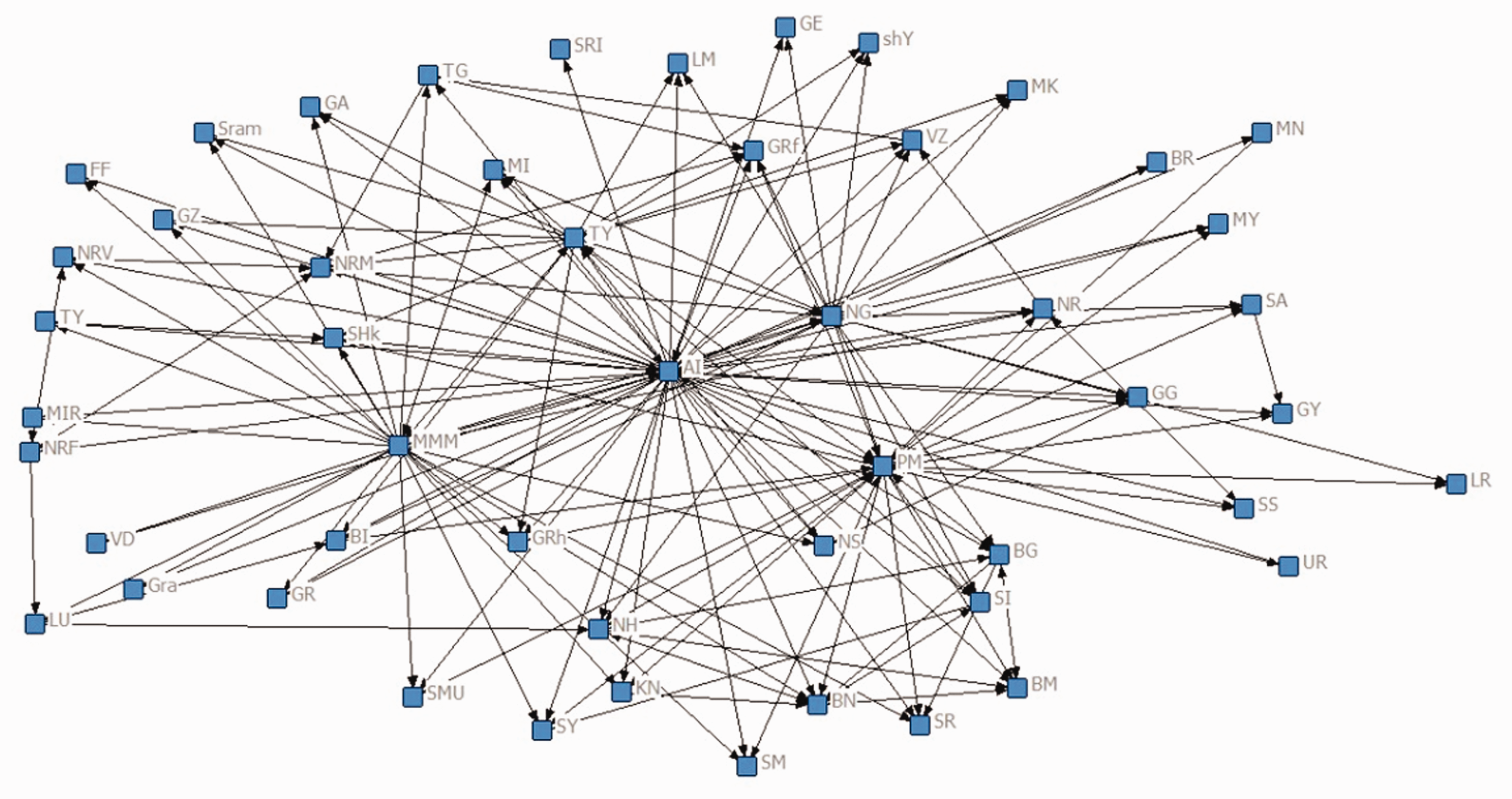
Economic ties in the second mahalla.
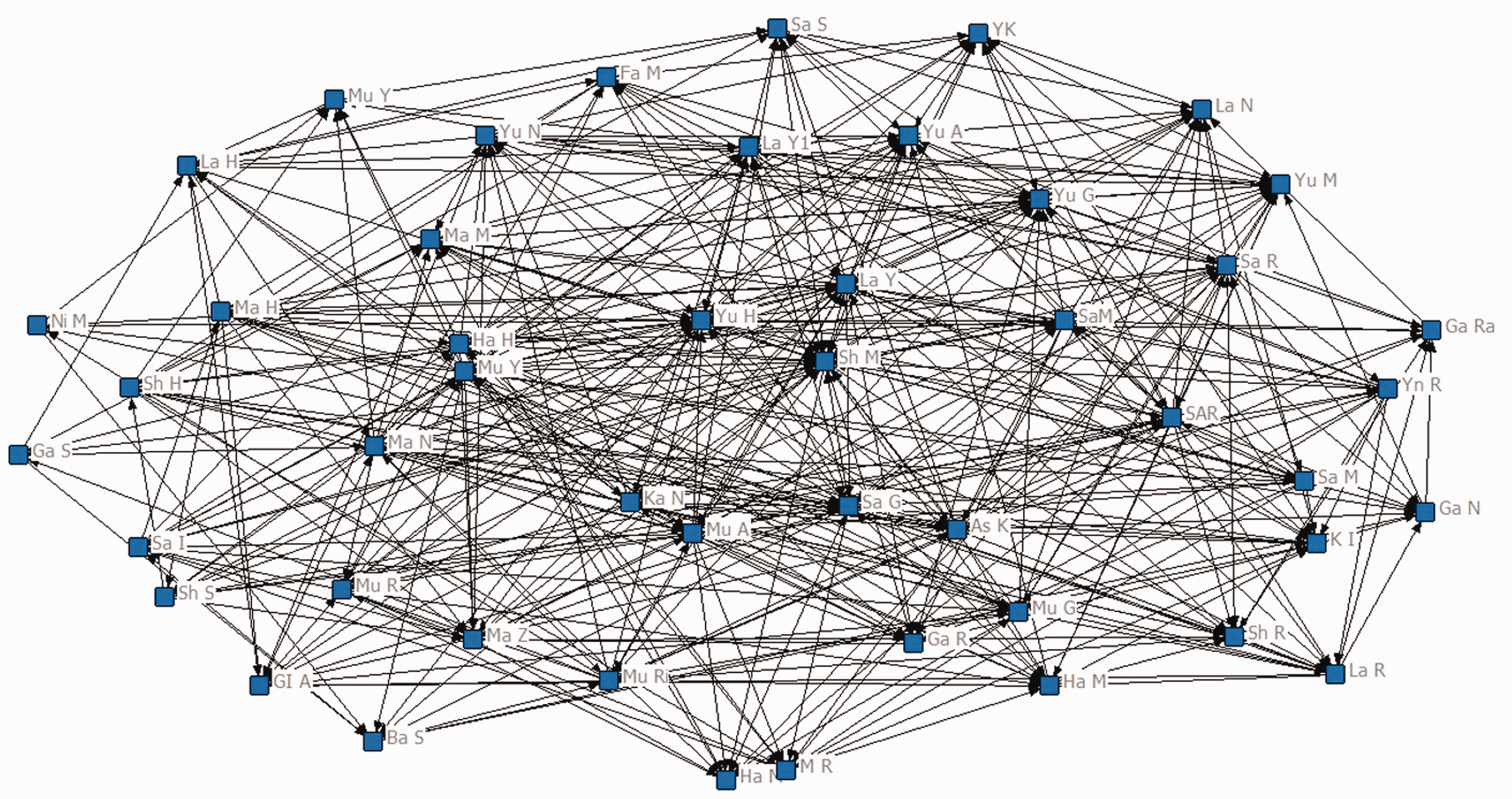
Religious ties in the third mahalla.
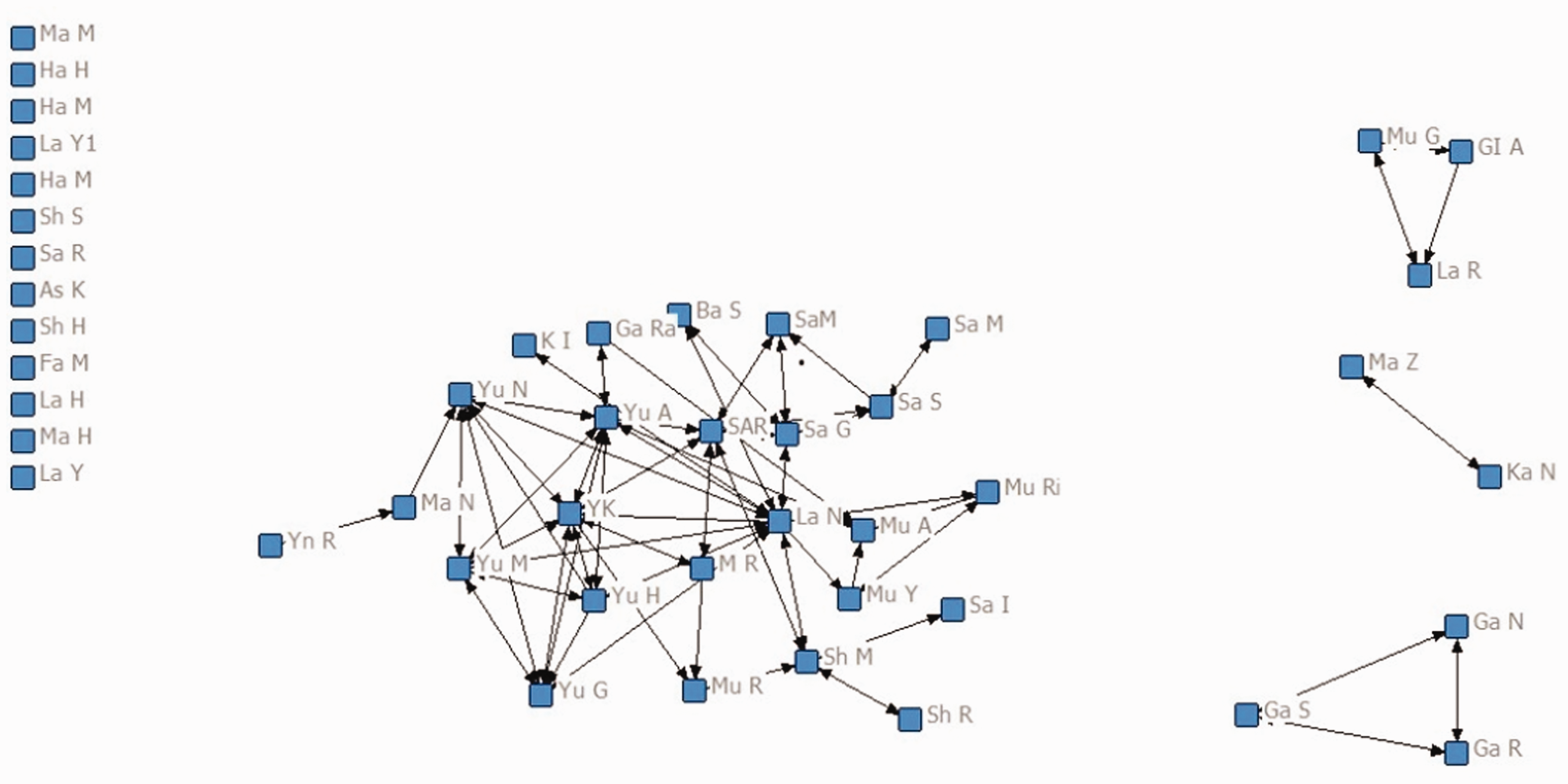
Kinship ties in the third mahalla.
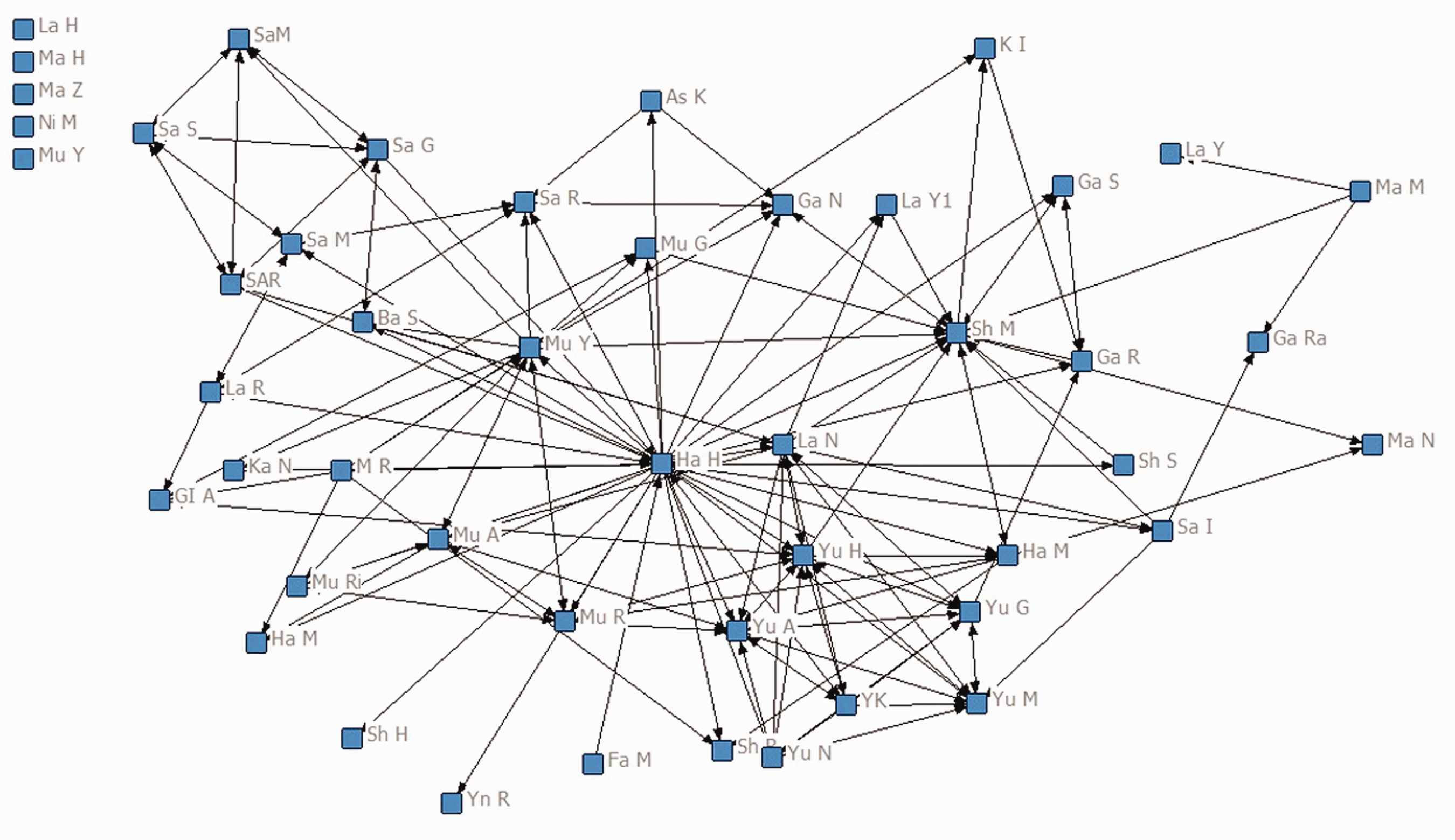
Economic ties in the third mahalla.
The comparison of economic and religious ties in the second mahalla shows a significant difference with the first mahalla. The central node in the economic network is not central in the religious network. However, this node occupies the central position in the sub-network of the newcomers’ sympathisers. It means that, on the one hand, in the situation of social struggle for dispositions in the religious field between Priests and Prophets, economic capital is less easy to convert into religious capital. On the other hand, a rich person could create another centre of the religious network, which means that economic capital does matter.
At first glance, the religious network of the third mahalla, where the Islamic experts live, might seem to be less intense; however, this is because there is a smaller number of nodes (i.e. people who attend the mosque regularly). The actual density of this network is indeed less than in the first mahalla, but higher than in the second (Table 1). Comparison with the economic network shows that all key nodes of the religious network are also central in the economic network. At the time of data collection, there was no Imam in the mahalla, so there is no key node in the religious network who would not be central in the economic network.
Density of network/number of ties.

Kinship ties in the third mahalla shows that central nodes in the religious network are all members of one family. These are not necessarily close family ties; they may be cousins or brothers-in-law. It is important to notice that during the conflict escalation, all young relatives of the Islamic experts supported them by attending Friday prayer regularly, which is not something that they would do normally. Thus, Islamic experts used not just economic but also social (specifically family) capital to extend the network and occupy central positions in the religious field.
A comparison of the economic networks of the first and third mahallas gives interesting results. Thus, if we were to remove the Imam (Va S) and his deputy/muezzin (As G) in the first mahalla, the network of religious ties would be almost the same as the network of economic ties, which proves the argument that economic capital can be converted to religious capital. And if we were to remove the most powerful man in the economic sphere in the third mahalla (Ha H), the network of religious ties would be almost the same as the economic network. This means that in the situation when the religious domain gets special attention there are fewer possibilities to convert any other capital into religious capital. By contrast, in such circumstances, the Islamic expert Sh M, who is more central in the religious network than in the economic one, was able to gain support from the community, including economic support, meaning that this is the situation where religious capital is especially convertible into social and economic capital. The comparison also shows, however, that the economic sphere is less sensitive to people’s positions in the religious field. It integrates the newcomers’ sympathisers, even while leaving them on the periphery of the mahalla’s economic network.
A comparison of the networks’ density (Table 1) and centralisation (Table 2) could illuminate the integrity of the networks and the importance of this or that form of capital in the village community taken as a whole and in each mahalla separately.
Graph centralisation (as proportion, not percentage) (out/in).

We see that the third mahalla with the densest kinship ties and high economic density has less density in the religious sphere than the other mahallas. At the same time, it has the highest centralisation degree in the religious sphere with one whole family at the centre. It means that in the third mahalla, religious gatherings are organised along kinship ties more than in the other two mahallas. This, in turn, means that the conflict resulted in social closure. Moreover, this closure is happening only in the religious sphere, not the economic one. The comparison of centralisation degrees also shows that although the centralisation in the economic sphere in the second mahalla is almost twice higher than in the first, the religious centralisation degree is the same as in the referent mahalla. This confirms our findings that the rich man started to create another centre of the religious network, thereby making the network dipolar.
Conclusion
Social space in the village was transformed in many ways after the ‘newcomers’, who professed different views on religious life, had moved in. The most important transformations occurred after the escalation of the conflict which took the form of a struggle over a physical space – namely, the mosque. A closer look at these transformations shines a light on the struggle in the religious field per se.
First, findings of the research revealed that there is a conversion of the economic and social capitals into religious capital: wealthy villagers tend to invest into their religious capital and their economic power eventually strengthens their religious authority. Second, the struggle over physical space facilitated the social struggle over religious authority and restructured the religious field by dividing it into two core-periphery sub-fields or by strengthening its centralisation depending on the strategy of the wealthiest villagers, who either sympathise with the newcomers or resist them by calling for social cohesion. As a result, the newcomers strengthened religiosity among the locals generally.
Overall, a generational explanation does not always work or at least cannot be an exclusive explanation of the growing interest towards orthodox Islam over local Islam. This case shows that elderly people also might support orthodox-oriented Islamic strands. An aspiration to social status is blind to generational differences. So is a desire to resist alien beliefs and keep control over social and physical space.
Moreover, this case illustrates how the social struggle in the religious field leads to the actual creation of the discursive definition of ‘traditional Islam’ over the course of this struggle. It leads to an assumption that the notion of ‘traditional’ Islam in Tatarstan and other traditionally Muslim areas in Russia is created in the same way as it had happened in this village, i.e. through processes of opposition to newcomers who could be people of orthodox views on religion or immigrants with their own specific traditions. This case helps us to understand the social microdynamics of this opposition. It shows how the notion of ‘traditional Islam’ acquires a negative association, in the sense of being not radical or not fundamentalist. As a result, the idea of ‘what local Islam is’ emerges through the exception of what does not pertain to it rather than reflection of what it consists of. This case is also a mirror of contemporary Russian Islam as a whole: the growing Islamophobia inside of the Russian Muslim ummah discloses both the lack of reflection on people’s own Islamic traditions and the lack of adherence to Islam among Russian ethnic Muslims.
Footnotes
Acknowledgements
I wish to thank Andy Byford and Jesko Schmoller as well as my former colleagues from the Institute for Human Sciences in Vienna for their useful comments on my first draft.
Declaration of conflicting interests
The author(s) declared no potential conflicts of interest with respect to the research, authorship, and/or publication of this article.
Funding
The author(s) disclosed receipt of the following financial support for the research, authorship, and/or publication of this article: I thank Durham University, where I am currently COFUND International Junior Research Fellow, and the Cross-Language Dynamics: Reshaping Community project of the Open World Research Initiative, funded by the UK Arts and Humanities Research Council (grant ref AH/N004647/1), for the opportunity to work on the final version of the paper.
