



Abstract
Using Gorz’s writing on cities and time as a starting point, this sensory ethnographic study uses pinhole photography to explore how time feels for ‘unemployed’ volunteers at a community garden in the north-east of England. It upholds that the garden’s ability to fill time meaningfully is grounded in the food-growing and composting cycle but is also anchored to the mature trees, structures and artworks – made, grown or maintained by the volunteers themselves, that persist in the space for many years. We argue that urban community gardens offer their denizens an ‘elongated present’ that is fulfilling to the individual while also sustaining community and nature. Emphasising the need for enduring, rather than temporary or pop-up, growing spaces in helping us transition to a sustainable, post-work society, the study thus adds temporal insight to existing scholarship on the importance of community gardens.
Introduction
In an advanced capitalist society, those who are marginalised through unemployment find themselves unmoored from the temporal structuring that paid employment provides. Focusing on data from a sensory ethnographic study of long-term unemployed volunteers at a community garden, this article reflects on how such spaces for growing and making provide a rewarding way of spending time that informs a post-work agenda. ‘Post-work’ is a term associated with a radical agenda, developed in the light of automation and environmental/social crisis, that highlights the need to move beyond waged work. Developed in recent decades by Gorz, Hunnicutt, Aronowitz and others, such ideas have gained traction in policy-making circles. Recent syntheses such as Frayne (2015) or Granter (2009, 2021) offer a compelling treatment of the post-work imaginary. Building on this scholarship but with a specific focus on urban growing spaces, we argue that the garden’s capacity to fill time meaningfully is grounded in the food growing and composting cycle but is also anchored to the enduring made and grown things – such as mature trees and fences – that persist in the space over decades. These findings highlight the need for policies that ensure the longevity of community gardens and underscore the significance of such spaces for sustainable, post-work cities.
We set out from Gorz’s (2005) understanding of the role of urban policy in fomenting radical social change. Gorz grasps the strategic importance of cities as sites of experimentation with how we might fill our days if freed from the routines and structures of paid employment. Noting that, without facilities for collective action, non-work in cities becomes a mode of social isolation and emptiness, he insists on the need for community-based facilities such as carpentry workshops at the neighbourhood level (Gorz, 1985: 107). Importantly for our study he argues that urban policy, if sufficiently attuned to nascent efforts to live beyond work, can catalyse post-work society and ensure its becoming. Policies that support the right kinds of placemaking and activity in place can thus create the conditions where ‘a new and different society can begin to take shape and become aware of itself’ (Gorz, 2005: 101).
Noting the centuries-long dominance of a productivist ethic based around being paid for what we do, Gorz (1985: 107) asserts that ‘we urgently need to prepare ourselves’ for a post-work temporality. Attuned to Gorz’s proposition, this study positions the long-term unemployed as experts in co-creating sustainable post-work cities, warranting the attention of urban policymakers. Our attention is focused on time, how the passing and ‘filling’ of time might feel in a society that has moved sustainably beyond paid employment. Here, we engage with the problematic of how a post-work temporality can emerge in cities that are structurally oriented to the notion that ‘time is money’.
In a capitalist system, time’s instrumental character creates in our cities dynamics of having too little and too much time. Scholarship on UK/US working time shows that those in paid employment are working longer and harder, with negative outcomes (Burchell, 2002; Green, 2004, 2007; Kelliher and Anderson, 2010). Here, pervasive digital technologies enable workers to ‘work hard more easily’ (Kelliher and Anderson, 2010: 86), colonising their ‘freest thoughts and impulses’ (Ross, 2002: 19). At the same time, people of working age who find themselves ‘time-rich’ as a result of unemployment, struggle to find meaning and attachment in everyday urban life, with lack of structured time forming a key component of unemployment-related distress (Frasquilho et al., 2016; Zuzanek and Hilbrecht, 2019). Indeed, as discussed below, the neoliberal framing that equates worklessness with worthlessness (Evans, 2012), makes it difficult for those who are unemployed to fill their time meaningfully.
Amidst this crisis around paid employment, calls for a shorter working week and growing interest in universal basic income are grounded in a logic of increased wellbeing and protection of the natural environment. As part of this post-work imaginary, there have been urgent calls to address the climate crisis by reducing working time (Frey, 2019; Knight et al., 2012; Mompelat, 2021; Rosnick, 2013), simultaneously addressing the parallel crisis in stress-related illness (Clarke, 2020). While these arguments are compelling, how it might feel to spend one’s days in a post-work urban context is under-researched. Understanding of how the passing or filling of time might be experienced and valued in a post-work society is needed in order to plan for a socially and ecologically sustainable future. We argue here that community gardens are capable of filling time meaningfully but that this capacity draws heavily on the gardens’ ability to endure over a long period.
The pinhole photographs and testimony featured in this article are drawn from a sensory ethnographic study carried out in Newcastle upon Tyne, a post-industrial city in the north-east of England. The permaculture-based community garden where the study was carried out is located in a neighbourhood with high levels of unemployment and poverty. In the following sections, we draw out emergent themes from this data set, which contains insights from volunteers who are not in paid work, focusing on how time feels in the garden and the meaning that respondents attached to their experience of time spent working on projects, or merely being, in the garden.
The following section reviews literature related to gardens and wage labour, with a specific focus on time. We then briefly review the sensory ethnographic methodology before proceeding to outline interconnected themes that emerged from the data. The study finds that, in the garden, participants experienced a sense of fullness of time described through feelings of dwelling and savouring; second, this sensibility was anchored for the participants in the presence of enduring made and grown things that provided feelings of connectedness and ontological stability; third, alongside their attachment to enduring aspects of the garden, the gardeners felt a shared attachment to a legible cycle of growth and renewal of vegetables, fruit and honey that, punctuated by rituals, energised and carried them along. In the concluding discussion, these findings are used to argue for policies that ensure the permanence of community gardens as part of an urban post-work strategy that supports the learning process of how to fill our time outside of capital’s extractive and environmentally destructive mandate.
The radical content of garden time
Gardening and industrial time
In his classic treatment of the spirit of capitalism, Weber rehearses the implications of Franklin’s edict that ‘time is money’ (Weber, 2012: 57). Here, time spent idly or in recreation is framed as throwing away sums of money, as wasting life’s purpose. Historically, gardening has had an intriguing relationship with this edict. Gardens are simultaneously associated with leisure, not to mention sensuality (Francis and Hester, 1990; Lucan and Gray, 1996) and also productivity through the yield of nourishing food that rewards the gardener’s labour (Crouch and Ward, 1988).
In the UK, the history of community gardens and allotments 1 reflects this ambiguity. At their inception, such growing spaces were regarded by employers as competition with wage labour, since a worker could potentially earn more by his own labours than through his job (Crouch and Ward, 1988). At the same time, community-based gardening activity was viewed, through its desultory rhythms, as a breeding ground for ‘inefficiency and wastefulness of time’ (Thompson, 1967: 77). 2 While employers feared that such gardens might foment self-sufficiency or indolence, these growing spaces routinely formed part of working-class communities, not only as a way to supplement low wages through productive labour outside of employment but also as ludic sites where workers could restore themselves sufficiently to undertake the debilitating demands of their paid work. For example, Spender’s (1934a, 1934b) Mass Observation photographs show chrysanthemums lovingly grown and exhibited by coalminers, and the arbours that they created from found objects.
While productivity – in the sense of fertility, growth and harvest – is innate to community gardens and allotments (Hope and Ellis, 2009), the way time is experienced and valued in these spaces is arguably antithetical to Franklin’s instrumental exchange between minutes and reward. Mumford (1934) characterises Franklin’s industrial notion of time as a departure of the nymphs and goddesses that had previously enchanted daily life, imbuing everyday practices with mystery and hidden powers. Whereas time devoted to wage labour in the factory or office takes on the character of an enclosed space that can be divided, filled up, and saved (Mumford, 1934: 17), time spent in an allotment or community garden sustains, in Mumford’s terms, something of the unbounded eternal of animistic life. As resistant to industrial time and in-keeping with a post-work sensibility, garden time is thus intriguingly radical.
Given this radical content, community gardens have generated academic interest, providing insights to inform a post-work society based on sustainable, creatively satisfying social interaction (Evans, 2012). As explored below, recent scholarship has emphasised how such spaces embody a ‘temporality of care’ (Kotsila et al., 2020) that is incompatible with capital’s interest in short-term gain. Examining the context of major European cities, Kotsila et al. argue that a temporality of care is threatened by development pressure, where removal or relocation of these growing spaces is commonplace. As explored below, undervaluing such spaces represents a squandered opportunity for embedding a much-needed post-work practice in urban settings.
Community gardens and the post-work imaginary
Scholarship on post-work identifies the need for urgent reflection on the type of daily activity that might heal cities threatened by climate crisis, economic recession, jobless recovery and the rise of precarious working. Aronowitz and DiFazio (1994) argue that looming crisis demands a dramatic rethink of how work is organised in our cities, advocating ‘dignified non-work’ that transcends the dominant dichotomy between productive and unproductive activity. In a similar vein, Weeks’ (2011) feminist analysis of the post-work imaginary argues that, in recognising that the current central organising structures of production and reproduction are untenable, we must explore alternative modes of being, asking ‘what might we want in their stead?’ (p. 110). As noted earlier, Gorz’s reflections on urban policy and the politics of time offer a valuable perspective on how to cultivate a post-work ethic in cities. Gorz (2005) argues that policymakers and urban designers need to focus on organising urban space and time in a way that enables post-work activity to flourish, providing appropriate facilities and resources that normalise and naturalise post-work behaviours, thus sending the message that these behaviours are ‘the kinds of activity a society struggling to emerge expects from everyone’ (p. 101).
A key, yet under-researched, facet of post-work scholarship, is the way time itself is experienced outside of paid employment’s ordering principles. Thompson’s seminal essay on time and industrial work-discipline posits the need to face an automated future by rebuilding a habit of filling our days ‘with enriched, more leisurely, personal and social relations’ (p. 95). Aware of how alienated labour and consumption-based leisure has stunted our abilities to cope with a post-work temporality, Thompson (1967) asks, ‘what will be the capacity for experience of the men who have this undirected time to live?’ (p. 95). The urgent need to re-learn how we experience time is picked up by Gorz (1985) who, as part of his writings on the ‘politics of time’, notes that: ‘We have to re-learn how to devote ourselves to what we do, not because we are paid for it, but for the pleasure of creating, giving, learning, establishing with others non-market, non-hierarchic, practical and affective relationships’ (p. 107). This scholarship directly challenges the tendency, in contemporary capitalist society, to treat those who are not in paid employment as worthless or ‘feckless’ (Evans, 2012). Indeed, the collective placemaking activity of the unemployed becomes, through this lens, a vital force working to ‘rewire’ our cities to a post-work temporality.
Gorz (1985) emphasises that ‘free time can be nothing but empty time’ unless a politics of collective facilities is enacted that provides ‘cities, towns and even apartment blocks with places for communication, interchange and autonomous activity’ (p. 103). This notion – that the liberatory quality of reduced working time is highly contingent – is reinforced by Zuzanek and Hilbrecht’s (2019) assertion that working less is currently experienced as ‘enforced leisure’ that systematically excludes the unemployed from mainstream social activity. In the face of a jobless future, they highlight the need to develop policies that, instead of stigmatising unemployment, support individuals’ active choice to reduce their work hours. Balderson et al. (2021) explore this further, investigaing UK workers’ motivations behind working less, proposing a wider societal enactment of reduced working time in order to embed and normalise such choices. Such ideas have gained recent traction in policymaking circles, with employers and governments experimenting with universal basic income and a shorter working week (Forrest, 2021; Woodyatt, 2021).
Amidst this interest in dignified non-work, academic studies of community gardens have provided key insights into the post-work debate. Lang’s (2020) account of a community garden and welcome centre serving a marginalised community in Manchester explores what motivates the unpaid activity that volunteers engage with. Lang draws on Muehlebach’s (2011) conception of affective labour, as that which produces good feeling and relations rather than goods. Using this guiding concept, she highlights the community garden’s ecological benefits and strong community fabric as well as illustrating how the space addresses the volunteers’ ontological need to be in the world through what they do. In a similar vein, Cumbers et al.’s (2018) study of Glasgow’s community gardens develops Massey’s (2005: 152) idea that space is ‘generative’, forging and shaping social relations rather than simply mediating them. They observe how work in the community garden reconstitutes urban labour in neighbourhoods blighted by unemployment, so that these ‘become generative spaces for creating more collective and solidaristic forms of work’ (Cumbers et al., 2018: 146).
Lang’s study touches usefully on the gardeners’ sense that the garden keeps them busy, but temporality is not the explicit focus of her study. Similarly, while Cumbers et al. suggest that the rhythm of work in such spaces is organised in a nourishing and empowering way, the lived texture of garden time is beyond the scope of their enquiry. Resonating with the interest of these studies in the post-work imaginary, therefore, but with a focus on how time might feel in the post-work city, we emphasise the role of enduring things in the garden alongside the satisfying rhythms of the growth cycle.
Studying how time feels in a garden
The sensory and embodied aspects of being in a garden have generated academic interest (Tilley, 2006) but the experience of time passing in gardens is under-researched. On the one hand, there is an extensive literature on the well-being gains that encounters with nature offer to time-poor or stressed workers. Existing studies point to the mental and physical health benefits that accrue to employees who are able have such encounters (Largo-Wight et al., 2017; Lottrup et al., 2015) and explore how time feels for busy professionals on their allotments (Schoneboom, 2018). Similarly, scholarship on the benefits of gardening for retired (and therefore relatively time-rich) people, shows a strong association between gardening and improvements in wellness (Hawkins et al., 2013; Milligan et al., 2004). However, for those of working age who are not in paid work, the texture of time in the garden has not been the subject of focused enquiry.
Of key relevance to this study is Kotsila et al.’s (2020) claim that community gardens are governed by ‘temporalities of care’, which sharply contrast with a neoliberal temporality that seeks to make short-term, countable gains. Kotsila et al.’s framing of time is based on a macro-level consideration of the policy framework in which gardens struggle to survive. They show that, in the European cities they studied, number-driven impact assessments and short-term funding clash with the holistic, gently unfolding benefits that accrue from the garden, noting that these benefits are destroyed by forced garden relocations and time-delimited funding. Building on Kotsila et al.’s work, our study aims to unpack through a sensory methodology the temporal characteristics of lived experience in a community garden. With a particular focus on the interplay between sustained and ephemeral elements of the garden, we show that the garden’s benefits are attached to ‘enduring’ elements (including mature trees and sculptures) as much as to the relatively short-lived phases of the vegetable growing cycle.
In considering how a temporality of care may be experienced by garden volunteers, we therefore reflect on the relationship between immersion in the garden’s cyclical rhythms and the capacity of made and grown things to endure in the garden, considering how, together, these provide an anchor for identity. Here, as is discussed further in the conclusion, Arendt’s (1998) wariness of a simplistic ‘back to nature’ philosophy, 3 provides a useful touchstone. Arendt (1998) is critical of the human capacity to ‘remain and swing contentedly in nature’s prescribed cycle. . .with the same happy and purposeless regularity with which day and night and life and death follow each other’ (p. 106). For Arendt, it is important for humans to stabilise and develop their identity through creation of durable things. Invoking Arendt’s work, we are concerned with the way in which gardeners navigate the swinging pendulum of the growth cycle alongside their attachments to sculptures, trees and fences that they and others have worked on.
Below, we introduce the sensory ethnographic methodology that was used in the study, then describe the garden, outlining the themes that emerged from the data.
Methodology
The engagement took place over a 3-month period that began with spending time getting to know the garden and its community, followed by the design and enactment of two sensory mapping sessions where participants took pinhole photographs of their favourite places in the garden, culminating in an exhibition at one of the garden’s community open days. Eight adult volunteers participated in the workshops. A number of other groups of stakeholders also participated in the wider study, which is beyond the scope of this article. 4
During the workshops, participants recorded their favourite place in the garden on an inviting map that had been created for the project, proceeding to create a sensory portrait of this spot through pinhole photography, supported by reflective writing, foraging and texture drawing. The researchers worked alongside the participants, helping them to record their thoughts and assisting with the pinhole cameras, which were mounted on tripods. The activity was designed to promote creative expression of thoughts and feelings, encouraging participants to pay attention to what they were hearing, seeing, touching or smelling in the moment, as well as retrieving memories and associations that were associated with their chosen spot.
Our methodology was designed around sensory ethnographic principles (Pink, 2008, 2009), with a focus on experiencing the passing of time through the senses. Pink emphasises the importance of regarding researcher and subjects as emplaced, recognising the ‘sensuous interrelationship of body-mind-environment’ (Howes, 2005: 7) in place. The methodology was thus designed to attend to smell, touch, sound, and taste as well as the visual or verbal in order to create a densely layered ethnographic account of time spent in the garden. Designed to resonate with the garden’s permaculture philosophy, the methodology resonated with slow design principles (Fuad-Luke, 2008) that gently reveal the familiar through a different lens, awakening emotions as well as unconscious desires (Gaver et al., 1999: 28).
The participants’ engagement in creating pinhole photographs epitomised this approach. Here, we were informed by scholarship on participant-led photography, which emphasises the need to empower research participants to carry out their own representational work (Johnsen et al., 2008). Participant-led photography penetratingly explores the activities through which ‘place meaning’ is constituted, revealing subtle or difficult to articulate aspects of existence (Young and Barrett, 2001) and providing nuanced understandings of the meanings associated with spaces that are apparently already ‘known’ (Johnsen et al., 2008; Klingorová and Gökarıksel, 2019).
While mobile phone cameras are increasingly used in participant-led research, some researchers have used alternatives such as disposable cameras in order to cater to the needs of marginalised subjects (Johnsen et al., 2008) or to introduce a playful focus on the subject’s framing of reality, without the filtering that comes from reviewing and deleting work (Kelly, 2021). For our purposes, pinhole cameras were not only attuned to the garden’s ‘slow’ permaculture philosophy but they also added a playful ‘jolt’ of the unfamiliar that freed up creative expression and, through long exposure times, allowed participants to immerse themselves in the setting. In addition, the fuzzy, allegorical photographs that emerged from a darkroom that was created on-site created a conversation between words and images that allowed participants to create ‘new knowledge’ (Pink, 2007: 86), accessing their memories and talking about shared experiences, while drawing on poetic as well as prosaic associations.
For the purposes of this article, the words and images that emerged from the sensory engagement were analysed using techniques drawn from grounded theory (Strauss and Corbin, 1990) identifying emerging themes that related to temporality; the data were coded in an open-ended fashion to arrive at the emergent themes detailed below. Our approach was inspired by Shortt and Warren's (2019) Grounded Visual Pattern Analysis (GVPA), involving both ‘dialogic’ and ‘archaeological’ elements. We therefore sought to capture both the conscious knowledges communicable via testimony, and the unconscious knowledges manifesting in the photographed scene.
Scotswood Natural Community Garden (SNCG) is a largely volunteer-run resource located in Newcastle upon Tyne in a neighbourhood ranked among the UK’s highest 10% for income, health, employment and education deprivation (DCLG, 2015). Founded in 1995, it is the only natural green space in the immediate area and is one of a very small number of organisations in the region offering nature-based interventions for disadvantaged people. Deeply engaged in the local community, it offers a broad range of programmes and events focused on engagement of marginalised groups. The 2.5-acre garden is managed through a permaculture philosophy based on cooperating with nature and caring for the earth and its people.
The garden employs a small number of full- and part-time staff with roles ranging from fundraising to hands-on forest school education, as well as a staff gardener who has expertise in permaculture methods. Working on a small operational budget, the staff tend to be very busy and juggle multiple responsibilities to maximise use of resources. Their work is supported by an established group of adult volunteers, some of whom have worked in the garden over a period of many years. Some of the adult volunteers have interesting vocational backgrounds – one used to be a car mechanic, another worked on the oil rigs – some have come to the garden as a result of a health issue or immigration status that prevents them from engaging in paid employment. Other adult volunteers have different learning needs that make it hard for them to find a paying job or pursue a traditional career. The volunteers engage in a range of tasks from simple construction and pond-building to planting, beekeeping and composting. The cross-cutting themes that emerged from the data set are discussed below.
Findings
Our findings revealed an emphasis on a sense of an enjoyable rather than overwhelming fullness that was associated with time passing in the garden. This was related by participants to their social interaction with the made and grown aspects of the space. Their images and testimony drew our attention to how the food growing cycle acted alongside longer timespans associated with enduring things to create a meaningful, stable sense of identity.
Fullness of time, dwelling and savouring
Volunteers spoke of time passing in the garden using words related to calm and relaxation intriguingly coupled with expressions of buzzing, absorbing intensity. Here, there was a strong sense of dwelling in nature’s unfolding temporality that one volunteer described as wanting to stay in that moment. Another described being in the garden as having a ‘holiday feel’, again invoking a notion of wanting to stay inside a time and not wanting it want to end. This feeling of dwelling in a temporality gently dictated by the needs of the garden was greatly valued.
Such time, for the gardeners, had a quality of permitting one to savour it rather than have it rush past or overtake one. Volunteers described how the passing of time in the garden felt absorbing but without feeling overwhelming; this was linked to metaphors of safety and security and an ability, as one volunteer put it, to feel at one with nature. Here, the garden’s temporality was associated with being able to focus on one’s thoughts or on a task at hand. Rather than passivity or inaction, this appeared to energise participants, who felt stimulated and engaged, as though their time was filled up rather than empty.
Alan, 5 one of the long-time adult volunteers, recalled the satisfaction of working on benches and stools in the setting, being able in this absorbed state, to take his time with the work and do a good job. Ian, another participant, juxtaposed the intense buzzing of the bees in the nearby hives with a feeling of being relaxed and focused. Ian felt that the unhurried yet patterned temporality of the garden created a kind of framework in which he could act and get things done, ‘I value the structure the most’, he reflected, adding that he associated being at SNCG with ‘serene and calm feelings’, adding ‘how lucky I am to have found the garden’. A further volunteer, Robbie, particularly enjoyed the temporal rhythm of the pond-building work which was sustained over the darker months. He described how the group worked through winter in all weathers, wearing outdoor gear that enabled them to get the job done in time for spring. Now, in the warmer months, he enjoyed looking at the progress that had been made with the pond area, feeling the sun-warmed wood of the fence under his hand as he thought about the work that had been carried out. Robbie’s photograph captures the sense of tranquillity of one of SNCG’s larger ponds, while also showing a ‘made’ fence in the foreground (see Figure 1).
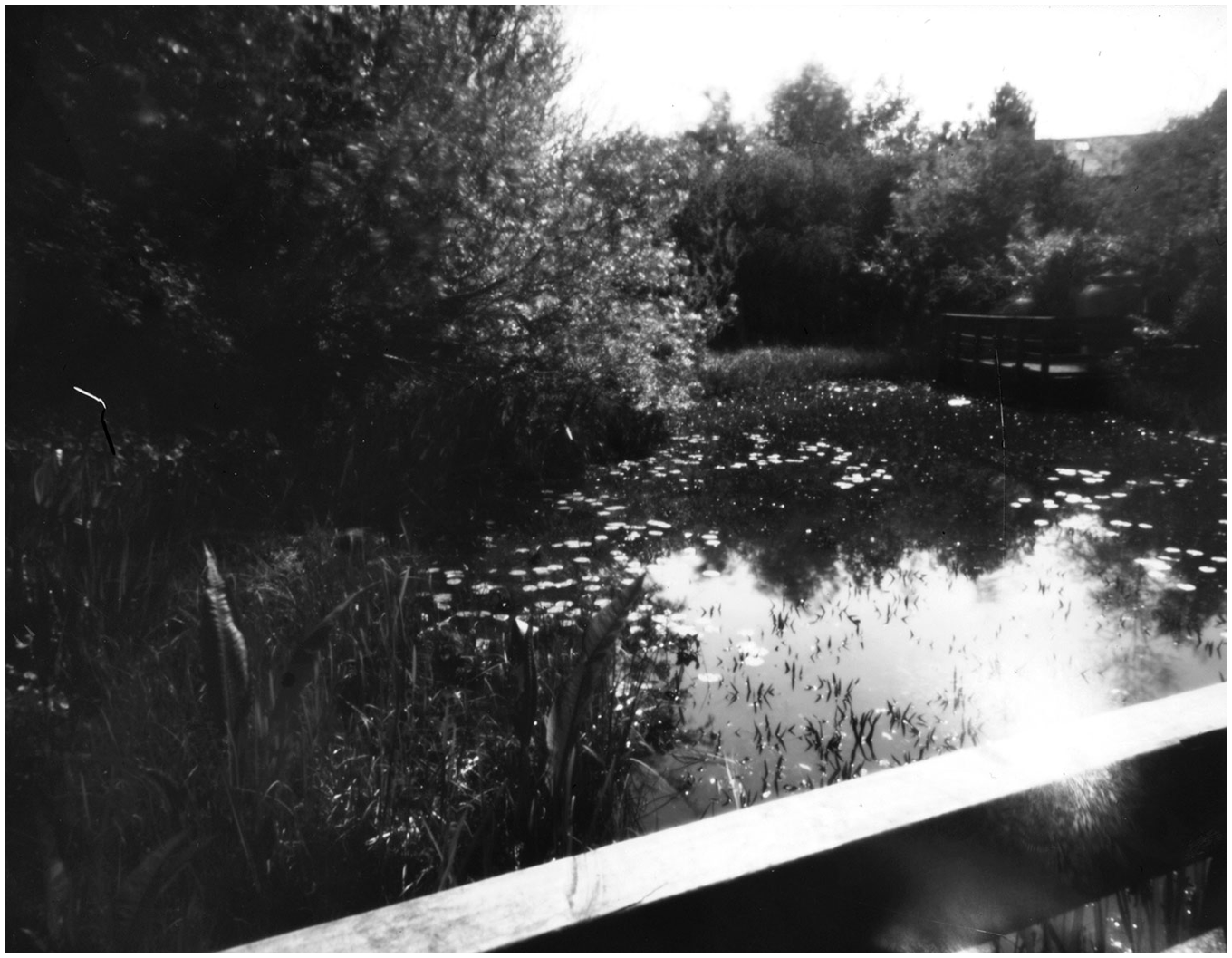
Photographed by Robbie, pond area with sun-warmed fence.
This sense of dwelling in time that did not feel pressured or frantic, allowed participants to engage in a nourishing immersion that felt like going at nature’s pace, maintaining the ‘holiday feel’ while engaging in rewarding and purposeful activity. The ability to savour time in the garden was linked to a temporal attachment to enduring things, as explored below.
Made and grown things that endure – an ‘elongated present’
The garden is steeped in its own history and, in spite of acts of vandalism and arson that have resulted in lost equipment and damaged buildings, there are treasured artworks within its boundaries that endure, creating strong attachments. Similarly, some of the trees are dedicated to individuals who have been part of the garden. More mundane structures, such as wooden fencing and seating are also enmeshed in stories that are attached to known individuals. This enduring nature of things in the garden creates an ‘elongated present’ that transports those who are part of it to cherished moments or feelings of being with others and of making things together. More generally, some of the volunteers likened the garden to specific childhood memories of safe places, which added value to present moments spent in the space.
One of the focal points of the garden is a sculpture that was carved in place at the garden a number of years ago. Some people at the garden remember seeing the sculptor at work and watching the sculpture take shape out of a tree stump. Made from untreated wood, the sculpture has become weathered over time. The simple bench next to it is a favoured place for Tony, one of the volunteers, who enjoys the sculpture and likes to listen to birdsong at this spot. Tony chose to take his photograph there (see Figure 2), enjoying the way in which the photograph captures the lines of the sculpture which have blended gradually into the surroundings as it ages.
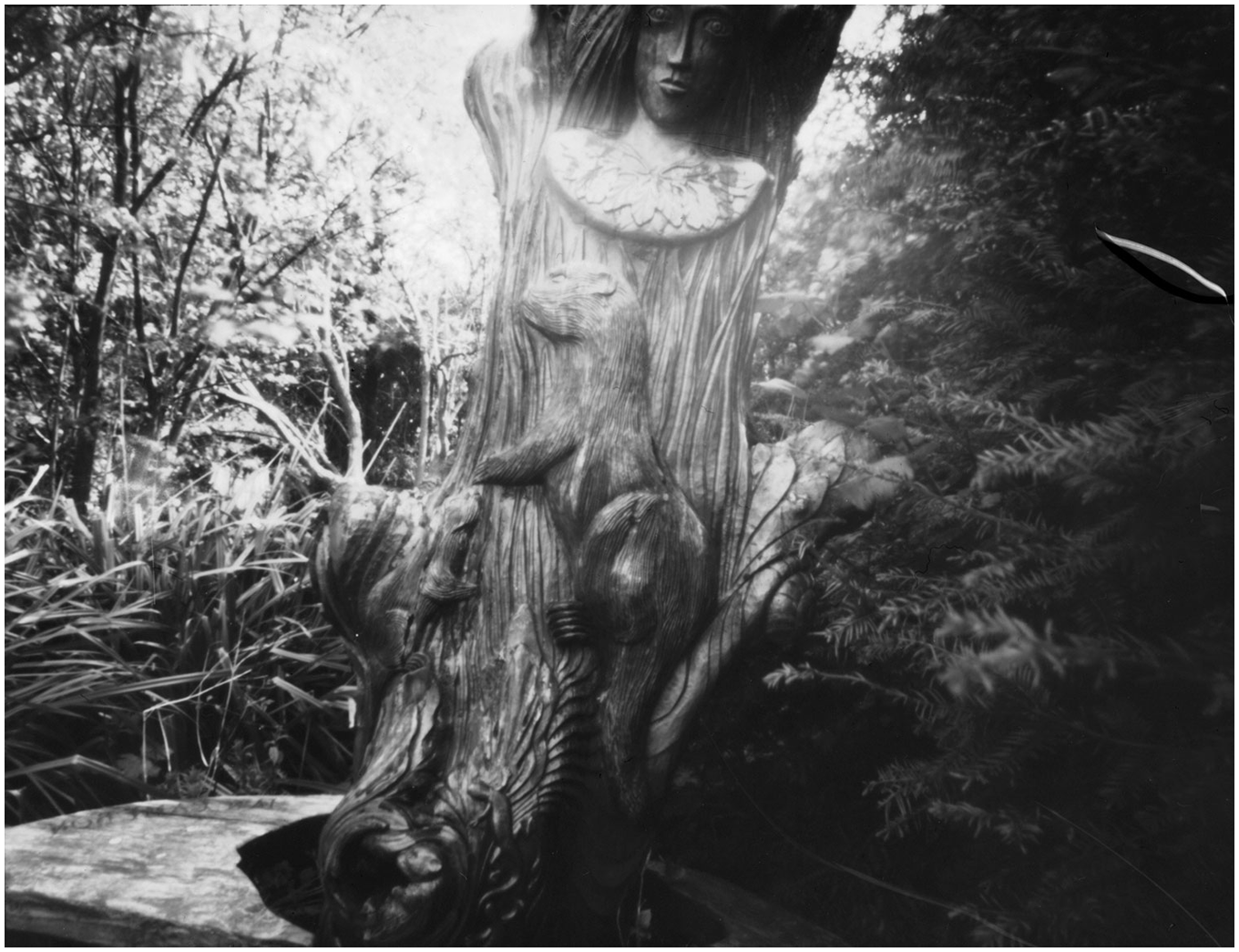
Photographed by Tony, sculpture with favourite bench.
As well as the artworks, the benches, fenceposts, and pond decking have a ‘storied’ quality for the volunteers and are linked to their own labour or other known individuals who carried out the work. These simple structural features of the garden are valued by volunteers as linking them back to their own experiences of being with others or improving the space through their own activity. This continuum between present and past experience adds value to how these structures are experienced by the volunteers when they spend time in the garden. Seeing products of their own labour endure over time is also sustaining to volunteers’ sense of self in the present. Charles, one of the veteran volunteers, chose to photograph some structures that he had helped to build for the beehives, admiring their solidity and remembering the satisfying teamwork that went into them (see Figure 3).
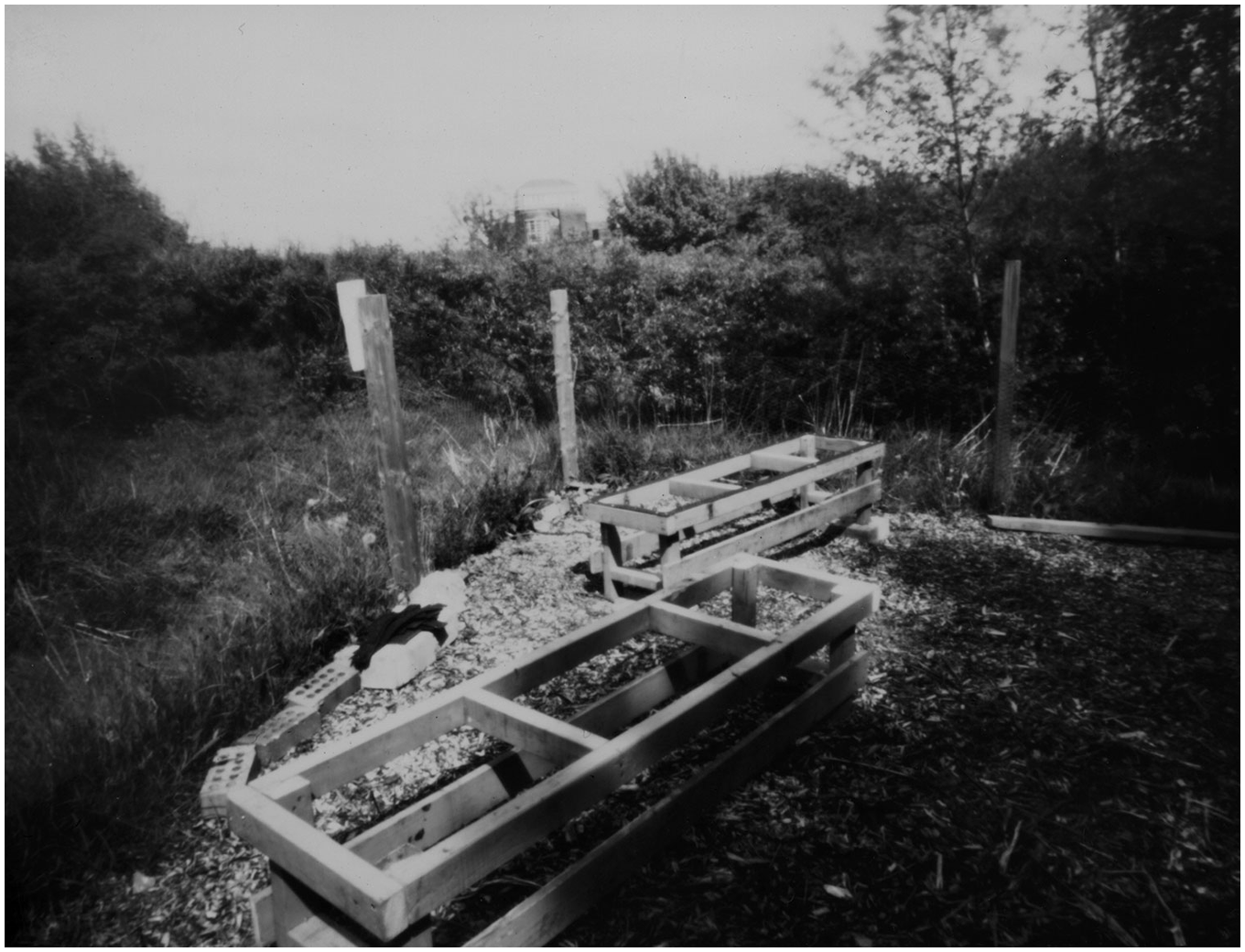
Photographed by Charles, solid wooden structures built for the beehives.
Some of the plants and trees in the garden have been planted in the memory of, or in honour of, particular individuals have contributed their time and energy to the garden. For example, in a wooded corner of the garden stand a group of whitebeams, an at-risk native species that were planted in memory of one of the garden’s ‘pioneers’. Many of the trees, shrubs and perennial plants are associated in the minds of volunteers and staff with particular individuals who planted them. The maturity of some of the trees, particularly the fruit trees in the orchard, lends the garden a sense of aged solidity and heritage. Again, reaching back to things past, these enduring things enrich and deepen the experience of time in the garden’s present.
Finally, some of the volunteers associate the garden – as a place of beauty that stays intact – with memories of people and places outside of and unconnected to the space. This association in turn adds to the sense of belonging and security that the garden offers. Listening to the birdsong next to the sculpture, Tony comments that the song of the robin reminds him of the protection of his mother, who used to talk to him a lot and was able to help him forget all the bad things in the world, so that in the garden he feels that he ‘could be here for hours’ and has a sense that the garden and everyone in it are protected. Ray, another of the volunteers, comments that the pond life reminds him of his childhood wanderings in the 1960s when he and his friends would come across frogs and newts. These associations from the past are able to persist through association with being in the garden, at the same time adding value to time spent here.
Participating in a cycle of growth and renewal
The emphasis above, on the garden’s enduring natural and made things, suggests a relationship with linear time. However, volunteers also spoke of being very much attuned to the cyclical temporality of nature. For Aidan, who has been involved in the garden over more than one growing season, it was important to have a sense of ‘participating in the growth cycle’. For him, this included ‘recycling nature’, particularly helping out with the garden’s successful composting operation where volunteers learn to mix wet and dry elements in a way that most effectively breaks them down to make new soil. Aidan chose to photograph the vegetable patch with the compost heap in the background, capturing the anticipation of produce that the volunteers had grown to eat together, as well as celebrating the ‘art’ of composting that would carry on the cycle (see Figure 4).
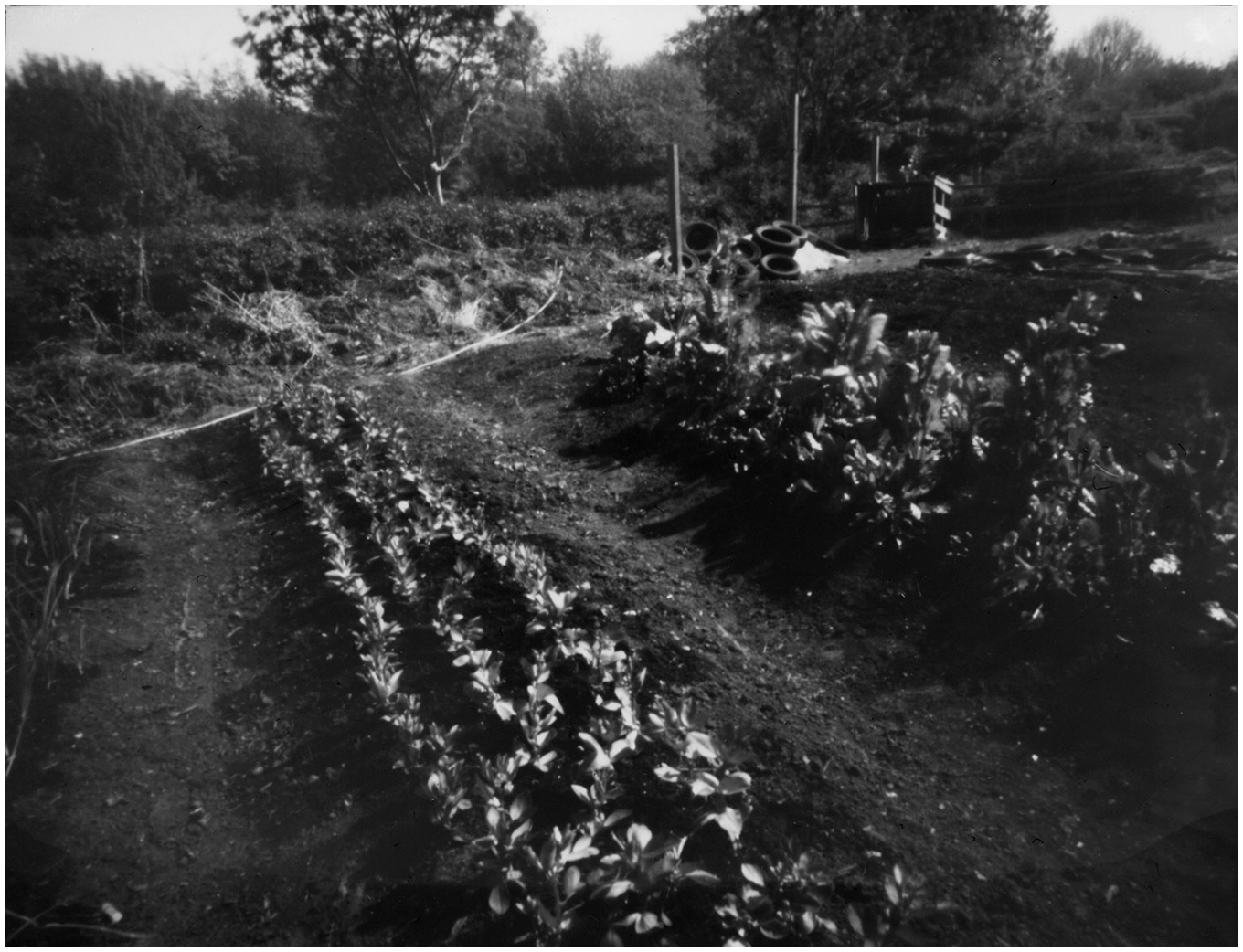
Photographed by Aidan, the vegetable patch with compost heap.
Volunteers felt carried along together and boosted by this participation in nature’s cycle. One of them likened it to renewal of the spirit through the garden’s continual process of regeneration. Another expressed this idea in terms of the growing season, which allowed you to begin something and take it through to its conclusion in a satisfying amount of time that felt neither too long nor too short. Here, the garden’s communal practice of cooking and eating together each Wednesday formed a sort of zenith of the cycle, which was followed by composting of any food waste or peelings. Indeed, nature here was experienced not as a single cycle but as multiple, overlapping cycles so that, each Wednesday, volunteers ate together some of the things they had grown, while in that same week they were planting new seeds or breaking down leftover vegetation from a harvested crop.
Volunteers’ awareness of the cycle of nature is underscored by garden celebrations and events, which mark particular moments in the seasons, as represented by changes in the garden’s key crops. These include the Blossom Day, mentioned above, where we celebrated some of our initial findings, but also include a day at the end of the apple harvest where the local community is invited to share in the garden’s bounty. Importantly, as part of permaculture philosophy, the focus is on enjoying what the garden gives while also sharing this with the animals and insects that form the garden’s ecosystem. This lack of focus on maximising produce for human consumption informs the rhythm of gardening at the site, which is attuned to notions of ‘slow food’ that is not forced but rather, unfolds at a restorative and nurturing pace that gardeners readily attach themselves to.
Discussion: Protecting community gardens towards a post-work future
SNCG’s temporality provides an opportunity to dwell in the moment and savour one’s efforts through the fullness of the senses, which feel awakened, engaged, and connected to present and past activity. Volunteers are surrounded by enduring things that they or those known to them made or planted and this storied quality provides security and enrichment. These made and planted things form an ‘elongated present’ so that the present moment is infused with the presence of others who have been part of the garden in the past. Through mundane things that endure through time, such as fenceposts or gravel paths that they have worked on, volunteers are able to appreciate that they have woven themselves into the fabric of the garden. At the same time, being part of the garden’s cyclical rhythms of food growth and renewal is sustaining and energising, providing social rituals alongside periods of investment and growth.
Volunteers’ time in the garden has a kind of fullness that is antithetical to the industrial notion of time that Mumford (1934) describes. Rather than being experienced as a unit to be filled up so that value can be instrumentally extracted from it, time in the garden is experienced as a filling up of the senses that at once absorbs attention and allows focused project-based activity or reflection. Volunteers feel immersed in garden time, and this immersion has an open-ended, ‘holiday’ quality rather than feeling closed off or limited. This fullness is also created by the elongated quality of time in the garden, whereby enduring trees and benches connect volunteers back to concrete experiences of making or being with others in the garden. Finally, the natural cycle of the growing season, which is in itself a series of cycles within cycles, gently structures time in the garden, providing a temporal anchor for activities and social rituals. The recurrence of this cycle, alongside that which endures, is nourishing and reassuring to those who participate in it, offering a rhythm outside of the self that, shared with others, repeatedly unfolds and gives back at a timescale that feels legible and rewarding.
As Gorz (1985) illuminates, one of the key problematics associated with post-work cities is the need to avoid ‘empty time’ (p. 103) and provide people with ways to reinvent the way that they spend their days. For those who have been socialised within an instrumental capitalist temporality the removal of the structure waged work provides can be distressing. As Denning (2010: 154) has it, ‘Under capitalism, the only thing worse than being exploited is not being exploited’. This is reinforced by Zuzanek and Hilbrecht’s (2019) evidence that unemployment in a capitalist society is a source of emotional distress and exclusion from social life.
Existing scholarship has shown that replacing paid employment with dignified non-labour rather than stigmatised unemployment can benefit the environment, support mental health and build community cohesion (DiFazio, 1985; Weeks, 2011) yet, as argued earlier, the temporal aspects of a post-work scenario are under-researched. How time might feel should paid employment cease to be a central organising principle of our lives, and what temporal rhythms might order and give meaning to our existence remain key questions in the post-work imaginary.
The findings of this study offer temporal insights that may inform thinking about how to nurture self, community and natural ecosystems in a post-work society. At SNCG, an emphasis on being (with others) in the space rather than instrumental productivity permits an open-ended savouring of experience that is antithetical to instrumental, extractive notions of filling time, yet seems simultaneously to support vigorous ‘doing’. Perhaps in opposition to Arendt’s (1998: 106) framing of the ontological doldrums that result from our capacity to ‘swing contentedly in nature’s prescribed cycle’, we see here a correspondence between feeling carried along by the garden’s absorbing cyclical rhythms and an ability to focus upon inscribing oneself in the space in a durable way through making and growing things that endure.
Thus, participating in and observing the rhythm of the growing season provides volunteers with ontological benefits related to recurrence and renewal but it is simultaneously a space where things last, speaking to Arendt’s preoccupation with the human need to create tangible, enduring and wholly executed things. The volunteers’ association between the trees, fences, compost area, the sculpture and their own stories, interwoven with the stories of those they have built, worked the land and shared meals with, provides sustenance and a sense of continuity to the self. Carrying these narratives, the garden elongates the present moment to include those who have been part of the space since its inception, knitting a layered social fabric that provides security and meaning. In turn, this mode of being respects and nurtures the natural ecosystem that it forms part of.
Weeks (2011) asserts that the current ecological and social crisis demands finding the time to re-invent our daily rhythms. As Cumbers et al. (2018: 146) note, community gardens provide broad lessons for building more progressive forms of work outside of capitalist enclosure: “. . .gardens become the site of a broader urban imaginary where an urban commons is being created, in which production and work are based on social need, management strategies are democratic and collaborative, and values of collective knowledge formation and sharing are being cultivated; all aspects associated with a ‘solidarity economy’ rather than an appropriative one”.
Conclusion
Considering the problematic of filling time or having ‘too much time on one’s hands’ in a post-work scenario, the activity of ‘unemployed’ adults in community gardens offers lessons in the kind of urban temporality that might characterise such a post-work future. This study underscores Kotsila et al.’s (2020) observation that the benefits of urban community gardens cannot accrue through short-term funding and forced relocation. We suggest that community gardens, oriented to a legible and nurturing cycle of food growth and renewal, simultaneously support the creation of durable things, developing a storied character that develops over decades. This enables people to inscribe themselves in place, sustaining an enduring sense of self in the world. Our study thus underscores the need to protect these treasured urban spaces, which, as we re-learn what Thompson (1967: 95) calls ‘the arts of living’, are invaluable in helping us move gracefully and purposefully towards a post-work future.
Footnotes
Declaration of conflicting interests
The author(s) declared no potential conflicts of interest with respect to the research, authorship, and/or publication of this article.
Funding
The author(s) disclosed receipt of the following financial support for the research, authorship, and/or publication of this article: This research was funded by an ESRC Impact Acceleration Grant and the Social Renewal Institute at Newcastle University. The project would not have been possible without the enthusiasm of the garden volunteers, staff and trustees.
