




Abstract
In this autoethnography, I share about my journey navigating multiple researcher positionalities. I commence with a reflection on how one of my positionalities as an ‘outsider-within’ influences my onto-epistemological stance and approach to the research. Through my shared case, where I am a ‘marginal intellectual’ with an intersectional researcher positionality, I highlight the complexities of negotiating power in co-creating knowledge with participants whilst navigating the insider/outsider/in-between researcher positions. I illustrate how a reflexive methodology incorporating Arts-Based processes (ABP) facilitated navigation of power dynamics in order to mitigate the ‘representation crisis’ often resulting from researcher positionalities.
Keywords
Introduction
During my early academic years, I was exposed to a Western tertiary education wherein the central theme on African gender discourse was premised on the plight of the ‘Third world woman’ (Mohanty, 1984); as being of one largely disenfranchised and often a victim under a universal patriarchal system. In 2016, I undertook my Master research with these prejudicial biases or ‘wheels in my head’ (Spring, 2008), as a benchmark which I incorporated into the researched experiences of fellow Malawians. At the time, I was a novice researcher and my approach to research was simplistic without critical reflection on how various factors such as my socio-economic standing, educational background and positionality influenced my research processes and produced knowledge (Merriam et al., 2001).
It is years later through an extensive educational training in critical awareness and reflection that I realized, whilst I may have felt as an insider (a Malawian woman researching lived reality among Malawians), my research approach had previously involved an unequal power dynamic through which I had caught and suffered what Freire terms as ‘narration sickness’ (Freire, 1976). I had gone into the field looking at my participants not as research collaborators, but rather as subjects whose experiences I narrated against the backdrop of an academic framework and my own worldview, which at the time was of African women’s experience as belonging to the monolithic one portrayed in earlier Eurocentric texts (Beoku-Betts, 2005; Cooper, 1994; Saidi, 2010). Upon attaining this realization, I began to reflect on the fact that my background and experience play a significant role in shaping my identity (Chiseri-Strater, 1996). That this, in turn, also influences how I perceive of the world, including my positionality as a researcher and as an academic (Berger, 2015; Coemans et al., 2019; Milligan, 2016; Shields and Penn, 2016).
Now as a PhD candidate, I find myself once again returning to Malawi to conduct research. The ambition of my research project is to navigate through the lifeworld of fellow Malawians and their perceived truth of experiences relating to gendered agency. I approach this by situating how they exercise power within the cultural context and how this is informed and decoded from a specific edutainment program. Whilst I am Malawian with some understanding about the cultural practices, it would now be remiss of me not to acknowledge how my Western-based (American, European and Australian curriculum) and largely ‘banked’ education (Freire, 1976) has both influenced and caused conflict in how I understand knowledge about my fellow Malawians (Smith, 2013). Second, my socio-economic standing, specifically class and power, are elements needing to be acknowledged and ‘checked’. Notably, the accumulation of social capital allows me certain privilege such as academic language and interpretation of co-created knowledge compared to the lesser power participants have in influencing this co-created outcome knowledge (Milligan, 2016; Kara, 2017).
This autoethnography thus focuses on my journey undertaking research while navigating the complex researcher position of being an ‘in-between’ researcher who is both an insider and an outsider conducting a study influenced by my interest in the decolonial outcome of co-creating knowledge with research participants. This article aims to problematize and highlight the complexities and dilemmas of the insider–outsider researcher position by reflecting on my own journey as a researcher from the ‘global South’, with academic training from the north, carrying out research within my home country. I articulate the challenges I faced of balancing power to avoid the slippery trap of being the ‘oppressor’ by falling out of line with the emancipatory and truly dialogical ambitions of decolonial and participatory research or knowledge creation (Freire, 1976; Kara, 2017). I share my experience of how utilising various visual approaches and processes enabled me to navigate multiple researcher positionalities and offered ways of expressing and sharing information (between myself and the research participants) not limited to verbal and written language.
Background
Over the years, the task of scientific research (of knowing) has evolved from being seen as one carried out independent from the influence of the context wherein it is conducted, as well as independent of influence from the researcher’s context (Chiseri-Strater, 1996; Kara, 2015; Smith, 2013; Van der Vaart et al., 2018). Qualitative researchers in different fields of study acknowledge the complex nature of a researcher’s context or position and how the various factors, including a researcher’s ontological and epistemological positions impact the outcome knowledge (Angrosino, 2005; Dwyer and Buckle, 2009; Johansson et al., 2021; McNess et al., 2013).
A factor that is often considered and debated includes the researcher’s positionality on whether they are best positioned as an insider or as an outsider in the research context, and the advantages or challenges of either of these positions. On the one hand, insider status is argued to enhance understanding or depth of understanding that may not be as easily accessible to an outsider status researcher. However, such insider status is often questioned in terms of the level of objectivity, reflexivity and authenticity that one may have whilst carrying out research in an environment or group one belongs or relates to (Chammas, 2020; Johansson et al., 2021; Kanuha, 2000: 444; Labaree, 2002).
On the other hand, an outsider position of a researcher is argued to offer more objectivity as the researcher can maintain distance and objectively conceptualize the participant experience (Dwyer and Buckle, 2009). An outsider position would thus potentially reveal other data that an insider researcher might have missed out on, that is, an outsider positionality offers the strengths that are otherwise weaknesses to an insider researcher position (Merriam et al., 2001). Whilst the positionality debate started with consideration to a researcher as belonging to either side of the binary, there is vast work that cautions researchers to rather pay attention to the slipperiness or blurriness of the realities around such a dichotomy (Berger, 2015; Dwyer and Buckle, 2009; Merton, 1972; Milligan 2016). Researchers are cautioned that by taking a strict stance on either being an insider or just outsider, power differentials affecting a study would be masked and not brought to light (Milligan, 2016). Consequent to an acknowledgement of the blurred lines of positionality, there is consensus that researchers should consider and reflect on their position as being complex, ‘ever-shifting, and permeable social locations’ (Naples, 1996) that continuously influence the study (Ergun and Erdemir, 2010).
Researching from the blurred lines of the insider–outsider position entails activation of the ‘hyphen’ status of being in-between (Humphrey, 2007). In-between status facilitates the revelation of power dynamics while maintaining a balance between the researcher’s sense of self and exploring complex contexts (Merriam et al., 2001). This is to say that, for a researcher to successfully work from the in-between position, there is a need to ‘preserve attachments to different worlds in order to respect their inner truth, whilst cultivating a non-attachment which allows for critical and creative growth’ (Humphrey, 2007: 23). Additionally, the blurred positionality facilitates fluid identity shift by researchers, allowing them access as both the insider and outsider throughout the study (Ergun and Erdemir, 2010).
My positionality and its influence on my way of knowing
Knowing is perceived as achieved through various mechanisms, and knowing ‘is itself a multiple states of affairs, not a singular one’ (Eisner, 2008). Therefore, research is instead seen as linked to society, which is essential to how researchers now seek to understand or uncover knowledge useful in exploring and understanding the world (Kara, 2015). According to Chiseri-Strater (1996), a researcher’s knowledge creation process and outcome knowledge ‘is circumscribed by the paradigms and disciplines under which we train, work, and publish’. Furthermore, knowledge creation is influenced by the researcher’s positioning, ‘by age, gender, race, class, nationality, institutional affiliation, historical, personal circumstance, and intellectual predisposition’ (Chiseri-Strater, 1996: 147). In pursuit of uncovering knowledge about the lived reality of my study participants, I first needed to come to terms with my positionality as a researcher and how this would influence my research design, data collection, analysis and outcome knowledge (Coemans et al., 2019; Kara, 2017).
Throughout the research project, I lean into the positionalities of an insider, outsider and in-between researcher while simultaneously evoking the role of being an ‘outsider within’ (Collins, 1986). An ‘outsider within’ status refers to ‘social locations or border spaces occupied by groups of unequal power ….. Thus, outsider-within identities are situational identities that are attached to specific histories of social injustice …’ (Collins, 1999: 86). While I am an insider within the academic context, I am also a ‘marginal intellectual’ in that I am an African female and in-between researcher conducting research to include the voice of an often marginalized group to which I also belong. Thereby, the ‘outsider-within’ influences my decolonial agenda of exploring knowledge co-creation with participants with hopes of ‘revealing aspects of reality obscured by more orthodox approaches’ (Collins, 1986)
In illustrating Collins (1986) point, my journey shared herein is an example; evoking the ‘outsider within’ prompts my empathy in support of the feminist agenda for gender equal practices in Africa. However, this same ‘outsider within’ status is also influenced by critical reflection and questioning of how we have historically come about knowing or building knowledge about the African gender reality. On the one hand, I am a ‘marginal intellectual’ with insider status within academia, partly due to the social capital attained by my years attending American and European educational institutions. On the other hand, it is also from the context of the academic insider perspective (where I am simultaneously an outsider-within) compounded by the lived experience of a different African reality that allows me insight into the extent of the monolith and marginalization of the African’s voice in the naming or creating of her knowledge in mainstream academic texts.
Thus, through this complex set of dynamics involved in navigating the role of an ‘outsider within’, I set out pursuing research with theoretical underpinnings linked to the emancipation of marginalized voices in telling of their reality (Freire, 1976; Hudson-Weems, 2004). Therefore, my position as an ‘outsider within’ is influenced by my context within academia and being an African woman in pursuit of knowledge co-created with the participant (African voice) in the naming and sharing of their reality (Hudson-Weems, 2004).
My case is one that I argue as an intersectional researcher, wherein my lived experiences, together with my education, class, age and ethnicity or tribal affiliation are elements that entail having to navigate different positions during my research. Additionally, my onto-epistemological stance as an aspiring decolonial researcher also plays a significant role in the study. I believe that reality, and in this case, the reality I set out to investigate is one of many, and I limit my discussion and findings to the co-constructed knowledge about reality as experienced by the participants in the study. My epistemological stance is one of a decolonial approach towards understanding gender experiences. At the same time, while I share in feminist epistemology, I opt to identify with and work from the theoretical standpoint of the Africana womanist approach (Hudson-Weems, 2004) that seeks to decolonize the body of knowledge about the African gender reality by facilitating the African person’s agency and power in the naming of said reality.
My intersectional positionalities are what influenced my decision to have a methodological strategy that has participatory elements. This choice was exercised as I believe that a participatory approach 1 would facilitate sharing power with participants in creating knowledge about their reality (Acker, 2000; Merriam et al., 2001; Milligan, 2016). Through this co-creation of knowledge, I evoke the ‘outsider within’ and pursue the Africana womanist objective of ‘self-naming’ the African gender reality considering the African history and cultural context (Collins, 1999; Hudson-Weems, 2004).
Research context
The research was conducted in a rural area of Southern Malawi, Phalombe District, which is located 80 km south of the city of Blantyre. The district has over 490,000 people, with the main ethnic groups being the Lomwe, Yao and Nyanja. While Nyanja is the most commonly used language, Lomwe and Yao are also dominantly spoken together with the national languages of Chewa and English (Nelson et al., 2018). The research team consisted of myself as the key investigator who is also fluent in English and Chewa, together with a male research assistant familiar with the country’s Southern region and has a good command of English and Chewa.
The Phalombe district area is prone to natural disasters, subsequently resulting in an extensive number of non-governmental organizations (NGOs) working on various humanitarian relief efforts. The research study participants were recruited from radio listening clubs run by one such NGO that aims specifically to sensitize and encourage families to protect the rights of young girls by encouraging them to stay in school, as well as promote the community to be vigilant and avoid cases of child marriage or in fact end them when they do occur. The NGO airs a weekly live interactive radio play that tells the story of a young pupil (named Ovilera) who is abused by her stepfather resulting in her falling pregnant. The listening club members (including my research participants) gather each week at a designated location to listen to the show.
‘So what’s Arts got to do with it?’: De-literalizing the process of co-creating knowledge
Given that a third of the Malawian population is seen as being ‘illiterate’ 2 , alternative means of understanding and communicating, not limited to writing and/or reading, would thus be beneficial to meeting the core objective of co-creating knowledge (between the researcher and participants) (Khupe and Keane, 2017) about the Malawian-lived reality. To mitigate the gap in literacy levels among my participants with little to no primary education, I found it prudent to find a common means of easily expressing one’s perceptions of the dynamics within the local context.
Being cognizant that the pursuit of knowledge is possible from more than linguistic deductions (i.e Eisner, 2008; Vist, 2016), several mechanisms were implored in my research to achieve the knowledge outcomes of the project. Various methods borrowed from Arts-Based Processes (ABP) were used in an effort to de-literalize knowledge from Malawi by making confident choices informed by critical philosophy on knowledge, knowing and understanding. Verbal, visual and other aesthetic data was observed and included for analysis in the project to provide a picture of the dynamic and complex reality of the participant’s lives. I utilized visual approaches as ‘visual knowing can transport us into the mind and experience of another in a way that is not inherent in everyday language or conversation’ (Sullivan, 2010; quoted in Gerber and Myers-Coffman, 2017). For this reason, I opted for the use of drawing elicitation and photovoice as powerful resources to understand (without verbal-linguistic boundaries), how participants view themselves and how they relate to their environment. Drawing elicitation is a data collection task where participants are given a broad question or theme through which they will process and respond by producing a graphic representation (drawing) of their perception of the researched situation (Kearney and Hyle, 2004; Weber and Mitchell, 1996). Drawings attained through drawing elicitation serve as a useful tool for collecting data in the Malawian context (due to literacy limitations) as well as for situations wherein the respondent may struggle expressing concepts that are difficult to verbalize (Kearney and Hyle, 2004; Weber and Mitchell, 1996). In addition to the drawing elicitation task, participants were trained on the requirements to undertake the photovoice data collection task. Photovoice is a method where participants tell stories of their perceptions through images they would have captured over an assigned period (Wang and Burris, 1994; Nykiforuk et al., 2011).
Interrogating this worldview (per the participant’s perceptions) is a relatively complex task given the restrictions of language articulation (Ellsworth, 2005) and literacy; this is not to say that the participants were blind or unaware of how they perceive their lived reality. Inquiry with visual methods of photos and drawings, therefore, provided a means for participants to elaborate on various social issues and dynamics within the community of the study context (Cohen Miller, 2017; Weber and Mitchell, 1996), allowing a different form of articulation and serving as an accessible means of sharing their views without the limitation of differing literacy levels, and language barriers (I elaborate on these shortly). Through these methodological choices inspired by ABP as an approach to my overall project not only served the aforementioned purposes, it also allowed for the vital deliteralization (Eisner, 2008) of my research and processes and sharing of power to co-create by providing participants with a means to control shared narratives and representation of their own lives (Veum and Undrum, 2018: 88). For instance, participants captured images they felt best related to their lived experience during the data collection phase. In addition, the participants exercised more power in deciding which images to speak about and emphasize in relation to their narrative.
These extensions of Art and knowing within the realm of research are seen as having emerged out of the interaction between Art and Science into what is generally termed as Arts-related research. Arts-related research is a term applied to all inquiry that uses the arts as a means to ‘explore, understand, and represent human action and experience’ (Savin-Baden and Wimpenny, 2014: xiv). Arts influenced inquiry or research takes into account several factors, including that of the researcher’s stance, emphasis on reflexivity in the research processes, and a belief that there is a diversity of meaning and ways of knowing as well as value and celebration of diverse means of expression (Savin-Baden and Wimpenny, 2014; Vist, 2016). This sentiment about art and science in research is shared by Vist, 2016, who refers to ‘Art experiences as evocative, embodied and emotionally strong impressions and expressions, affording possibilities to think of, reflect upon and communicate about oneself and the world’ (p. 2). From such Arts-Based processes, I was able to take into account and navigate the power dynamics involved when co-creating knowledge with participants while taking into account our shared and at times, dissimilar contexts. Furthermore, Arts-based processes help address the question of representation (Goldman, 2007) by providing means for continuously reflecting and clarifying what my voice as a researcher represents (including positionality) and whether and how the voice of participants is represented. The methods were relied on specifically during the processes that influenced the study setup and design as well as during the process of data analysis and interpretation of results (Jones and Leavy, 2014: 1–2).
While the discussed ways of knowing within this article may fall within the post-modern paradigm, they lend themselves to my research objective (that are rooted in a decolonial and constructivist paradigm) that is to de-literalize knowledge about a group of people ordinarily marginalized in the processes of creating academic knowledge about them (Khupe and Keane, 2017; Kolawole, 2004; Mohanty, 1984; Ogundipe-Leslie, 1994; Spivak, 1988).
Setting up the study with arts-based inspired processes
I share in the belief that research does not exist within a vacuum but is rather conducted with factors such as the context (external environment and that of the researcher’s disposition) as variables that affect the data (Merton, 1972; Van der Vaart et al., 2018). Thus, I needed to be aware of my context as well as that of the participants. Being Malawian, I am an insider with participants in that we are people of the same country; furthermore, as a woman, I have a second point of similarity of a shared gender identity along with a majority of the research participants. In these similarities, my state as an insider is based on presumed commonalities that should be reflected upon. In attempting to maintain a balance where my supposed similarity would play a role in influencing me to limit participants in expressing themselves (for example, by assuming that as a Malawian female, I ought to know how they feel), I opted to enlist the help of a male Research Assistant (RA) as a good measure for someone who is somewhat foreign to the Malawian woman’s reality (Dwyer and Buckle, 2009; Glesne, 1999). In an attempt to consider the blurred nature of my positionality, I drew inspiration from arts-based processes to acknowledge my disposition as a researcher and that of the RA as a tool for reflexivity and guidance in navigating my in-between position.
Using reflexivity to know more
I approached my research as an artistic exercise in that the outcomes of my study would comprise artistic articulations through narrative. Therefore, I relied on methods utilized in ‘Art Education’ to achieve empathic understanding and maintain some aesthetic distance (Bresler, 2006) through reflexivity at different intervals of my research. I took further guidance from Bresler (2006) who states that; ‘To accomplish empathic understanding, the researcher must achieve a state of mind that is explicitly rational, and at the same time, highly affective’ (p. 54). Exercising reflexivity entailed examining my role as a researcher, my disposition, as well as problematizing that disposition (Berger, 2015) to understand how I impacted or interacted with the research environment and participants (I will later elaborate on interrogation of sense-based expressions as an example of this). This allowed me to establish a dialogical relationship (between the affective and the cognitive).
The aesthetic interview and exercising perception
Shields and Penn (2016: 8) state that ‘Not all knowledge is rooted in the concrete or tangible; in fact, most of the world around us is experienced, sensed and felt ’. With this assertion in mind, language or communication is thus more than verbal, such as within a Malawian cultural context where clothing choice also communicates intended or unintended information. This entailed that during my fieldwork visits, I make conscious choices to shed the many ‘signs’ associated with Western modernity (e.g. wearing trousers), for the deliberate choice of long clothes that adequately covered my shoulders, covered with the traditional print ‘chitenje’, all in an effort to emphasize more on my role as an ‘insider’ researcher. These choices of dress, while minor to some, allowed me to seem more as one of them while minimizing any resistance due to perceptions of my appearance. This was utilized as a way of communicating the ‘thou’ in my research, and as a way of creating a connectedness and reduced distance to the community members I interacted with throughout the research. A second and deliberate choice was that of clothes and wrappers of colours considered neutral. The study was carried out during a particularly politically tense time in a country where the colours red, blue and yellow are associated with being a supporter of specific political parties. To avoid misconceptions that I was a representative of any one political party, I opted to blend through neutral, culturally appropriate clothing expected to be worn by a young woman. In the expressed manner, I exercised my knowledge as an insider from the research context in influencing my choice of how to appear by expressing my ‘thou’ ness or insider state through aesthetics suited to a Malawian female.
Despite dressing ‘right’ and observing cultural norms and practice, I was led to a crucial decision on how to setup my study. From the initial introduction to school authorities (that give permission for the listening club to be run on their school grounds), to meeting the listening club itself, a resounding assumption was that I, as the female was the RA, and my male counterpart as the assumed researcher in charge. After clarifying the difference, participants, a majority of whom were female (9 out of the 10 participants were female), still had a tendency to be more receptive to the male RA. Awakened and conscious of how my disposition and presence may impact the room, I was on guard to watch out for any and all intended or non-intended nonverbal forms of interaction between myself and the participants. This is to say that all bodies present in the room interacted and mine, despite the carefully selected clothing and ways of speaking, was a part of an unspoken power dynamic, an element that I think is worthy of reflecting on as it demonstrated the assertion by Merriam et al. (2001) that ‘during fieldwork the researcher’s power is negotiated, not given’ (p. 409). In this case, I had to negotiate from an outside position with lesser power as the participants exercised more power in influencing the research dynamics by having a favourable rapport with the RA.
The instance above is an example where my status as an insider meant that my gender inadvertently made me an outsider based on cultural nuances surrounding assumptions of how a man is often seen as a figure of authority in the circumstances similar to mine (being on a research mission). Additionally, participants referred to me as a young girl (Msungwana or Mtsikana in the local language of Chichewa) assuming that I was not a mother or a parent. Although it was a correct assumption, by being placed in this group, I became an outsider, despite my nationality or gender, to the group, since all participants were parents, supporting the notion that insider–outsider roles are not fixed (Merton, 1972; Naples, 1996).
Using my senses, I observed and noted the dialoguing pattern and resulting ease with which my RA (who was also a parent and assumed authority figure) developed a rapport and gained the participants’ confidence. In order not to disrupt established rapport, I then made a conscious decision to rather have the RA appear to take the lead while I played the role of a participant observer during most parts of the interaction with participants. I took this approach in order to not interrupt the learning component by disrupting the ‘natural order’ to the power dynamic that the participants’ bodies and mine had created. In addition, I made the decision on the role dynamics based on my understanding of the general local perception of men generally seen as being more ‘authoritative’. This aspect combined with my ‘young’ appearance were factors that would be affecting participant responses as Malawi is a society wherein age plays a role related to the level of respect one may receive (the elderly are generally seen as wise and receive more respect as authorities on most issues in life). In distancing myself by being a participative observer, I also avoided any ‘over-identification or over rapport’ (Glesne, 1999) with the participants, thereby maintaining an objective stance without role confusion (Dwyer and Buckle, 2009) in navigating my in-between researcher position.
Exercising lingering; language choice in understanding ‘gender’
As a native of Malawi, I have the advantage of speaking and understanding two of the formal national languages; Chichewa and English. My multicultural experience and extended years of being educated abroad have privileged me with the ability to eloquently express myself with English as a first language. Whilst this can be regarded as an advantage in some instances, it was rather a challenge in that my initial project objectives and questions are fairly easier to express in English, yet not quite as simply translated into the local language of Chewa, let alone that of Lomwe that was more familiar to the participants.
As much as I am an insider through my gender and as a Malawian, I am also an outsider-within my research context as I come from an ethnic or tribal group different from participants. I am from the Chewa tribe, which has a different set of internal tribal practices and dynamics from those of the participants. Additionally, having the Chewa as an official common language places me at an advantage, while participants are subjected to having to communicate with a language that is second to their mother tongue of Lomwe. I should acknowledge that while all the participants were able to communicate in Chewa, there might have been some details lost in translation as ‘idioms, metaphors, cultural nuances translate awkwardly, if at all’ (Merriam et al., 2001), causing an encumbrance between the researcher and participants.
The key question of gender, for instance, is understood within the mainstream academic and global cultural perspective, is fairly new to the communities within which I was conducting my research. Furthermore, a brief desk review conducted revealed that the term itself did not have a direct translation, thus the English term was borrowed and localized (Genda pronounced Jenda – not to be confused with the act of ‘ku genda’, the verb referring to the act of throwing a rock, for example). The introduction of the concept is carried out with training by the aforementioned NGOs with the aim to sensitize community members to engage them as future participants who practice or advocate gender equality.
Art education encourages moments of a researcher’s ‘lingering’ of thought or a ‘lingering caress’ with the object, to allow the mind and body to wander into all the different directions the art may move them (Bresler, 2006: 54–57). With introspective lingering, where I questioned my own positionality and understanding of gender as a trained academic, it occurred to me that my understanding of gender dynamics was perhaps too simplistic and problematic in that it is formed by ‘wheels in my head’ (Spring, 2008) informed by various factors, an understanding that might not be assumed or perceived in the same manner by my prospective participants. Upon reflecting on my aforementioned epistemological disposition, I initiated my study with the notion of open-ended lingering. This process of open-ended lingering leading to this realization is akin to that of translation of internal images (Gerber and Myers-Coffman, 2017) wherein, ‘previously concealed forms of knowledge emerge, take shape, and ultimately facilitate the articulation of our perspectives, the formation of the research questions, and decisions about design and methodology’ (p. 600).
As much as I attained clarity on my positioning and questions of interest (as an insider, outsider, or as an ‘outsider within’ per Collins, 1986), I had to ensure that I did not limit participants to respond only to my ideas about their reality; I should not have them respond to my understanding of gender, but rather have them teach me their understanding of gender reality in their context as Malawians from the specific rural community. Thus, I visualized and problematized my Eurocentric informed views and understanding of gender dynamics by acknowledging my own lived reality as an African from a matrilineal family structure. By acknowledging that I have lived and experienced a gendered reality contrary to the generally taught and criticized monolith of African Women’s gender experience (per hooks,1996; Hudson-Weems, 2004; Kolawole, 2004; Lorde, 1984; Mohanty, 1984), I became aware that other realities were plausible. Once these internal images were problematized, I then rather relied on the guiding principal by Freire (in Roberts, 2003) on the dialectic process involved in the pursuit of knowledge. Specifically, how the critical scholar is also one open to being educated through the knowledge from participants (the researcher is also a learner, and participants are both educators and co-creators of knowledge) (Freire, 1976; Kincheloe, 2008). Thus, prior to posing any question for the participants to answer, I first needed to understand the cultural practices and daily-lived interactions that translate to the Western concept of gender dynamics.
To enable this understanding and embark on the co-creation of the participant’s knowledge, I arranged and facilitated a focus group to get familiar with the participants, (through analysis of dialogue and observation). During the initial focus group discussion, I understood that gender was associated with traditional (In a Malawian sense) gender roles and how these translate into modern life (including their perceived challenges of these traditional roles). Once this understanding was established, I then revised my question and task to look at how the participants perceived their roles as men and women of the various communities. Through their shared narratives, I then explored the different forms in which they exercise agency to express power, interact with power, negotiate or resist power as men or women. Data from this question would thus later facilitate the knowledge about agency and power as it is configured in the lives of everyday Malawians (per the study participants).
Creating something from nothing: translating data from images
In ABP, translation also occurs through the representation and dissemination of knowledge in an accessible and meaningful way to promote deeper understanding and social change (Gerber and Myers-Coffman, 2017: 597–598). Having illustrated how ABP aided my translation of sense-based data and inspired my methodological strategy, I now will share how this same ABP inspiration provided a means of re-literalizing through translation of collected data (visual and otherwise). Below, I provide an example where I relied on ABP inspiration to understand more than just the depicted image, as well as how this tactic served the means of countering the physiological and experiential limitation of my status as an outsider.
Case 1: Hidden sites of resistance
At first glance, Figure 1 depicts a type of bucket placed on a chair. Within the Malawian context, such a set-up is used for advertising a typical ‘from home’ business operation. It is common for many Malawian homes (in rural and urban spaces) to have a bucket filled with fresh goods (such as freshly baked snacks) for sale to the public. Further querying of Figure 1 reveals the picture to represent a site of resistance for some women, such as participant Abiti who opted to operate from her home while attending to her other roles and responsibilities as a wife. By ‘site of resistance’, I refer to participant Abiti’s narration of how she could negotiate with an otherwise oppressive circumstance within her society; that of a door-to-door saleswomen being seen as promiscuous, with loose morals who cannot keep a home. Upon understanding such societal restrictions and in response to her own husband’s disapproval of her working as a mobile (door-to-door) sales woman, participant Abiti articulates how she negotiated and set-up an at home business (as depicted), where passer’s by are able to buy fresh goods from her in the comfort of her home compound. Participant Abiti concluded by sharing how she felt empowered through her business initiative that enabled her to make extra money for her household. ‘Bucket on chair’ by Participant Abiti.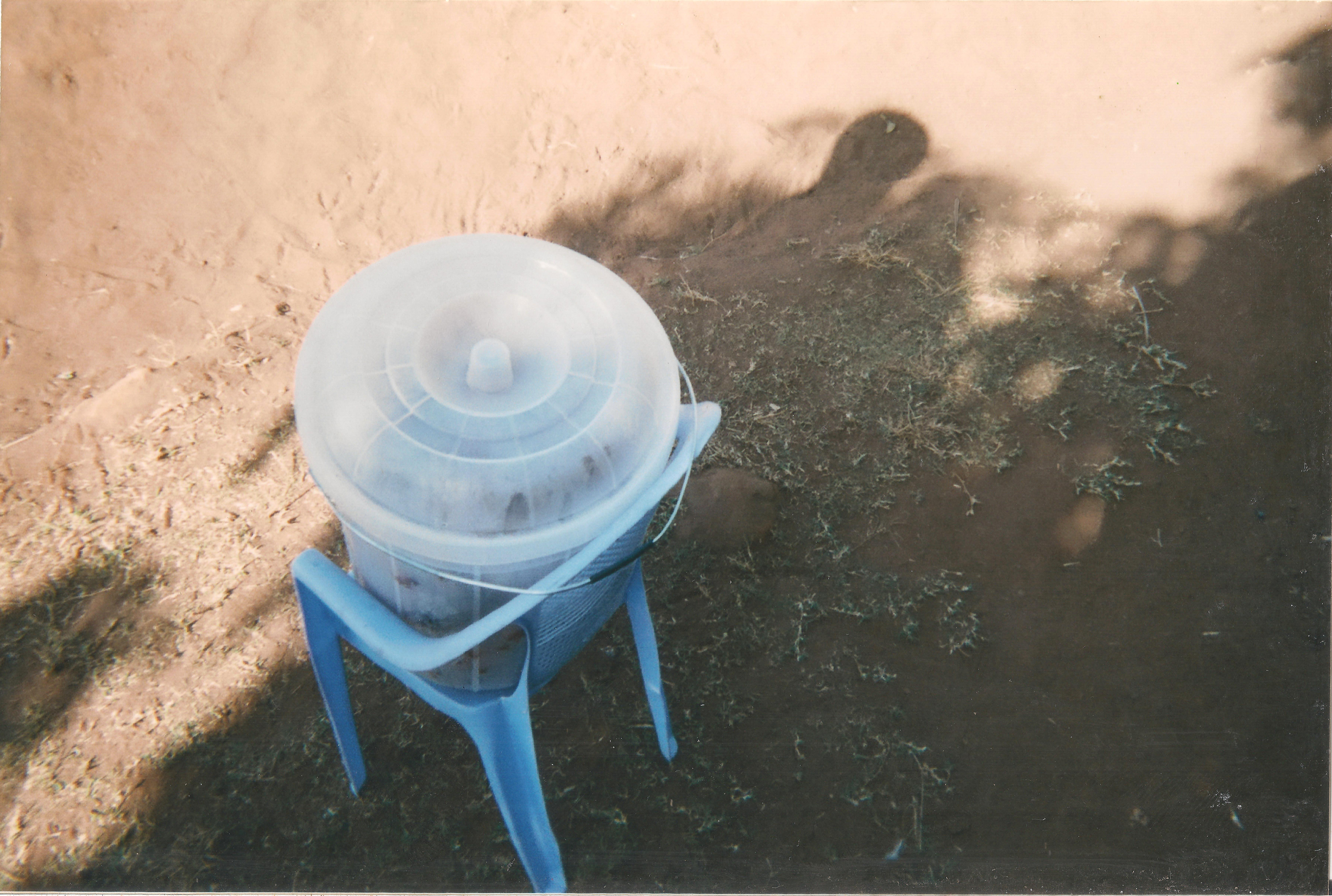
I assert that the depth in the discussion between myself and participant Abiti was enabled by utilizing the method of photovoice, which empowered (Lyon and Carabelli, 2016) Abiti as the story teller to relay more information as she saw fit and revealed multiple layers about her lived reality (that she was resourceful and able to negotiate or resist her oppressive circumstances). A nuanced and complex dynamic that could not be easily reached in a ‘semi-structured Q & A’ interview in that an interview would entail my placing relevance on certain issues and possibly lead to loss of data due to my disposition. Instead, the participants created how they wish to impart knowledge about their lived reality by capturing moments that matter to their story and narrative of their everyday life.
Concerning the outcome knowledge within my study, ABP inspired translation of the above image, is an example illustrating how ‘A picture is worth a thousand words’ an understanding possible with applying ABP approaches that were utilized for the purported strength of allowing the researcher to probe even further (than words) (Gerber and Myers-Coffman, 2017). In addition, drawing from ABP offered the advantage in exposing how the particular participant exercises agency to negotiate with a power exerted over her by societal views as well as those held by her husband. The visual text above thus is more than a simple picture, it also reveals a narration relating to experience of a type of oppression as well as visual representation of a site of resistance towards such oppression (Finley, 2012). This concept of a site of resistance may be difficult to ascertain within the conventional means of verbal articulation and perhaps even restrict sites to physiological spaces. However, the process of ABP-inspired translation considers the meaning of both embodied and non-embodied knowledge, which could be expressed through symbols such as an image or picture.
This shared instance is an example where the limitation of my outsider status is countered through the visual data collection methodology. By sharing the pictures and narrative, the participant served as proxy and granted me insider status to her lived reality circumventing the physiological limitation of inability to follow her around and possibly invade her private sphere. I would argue that the selected methodological strategy contributes towards works that conceptualize gender within African spaces (Kolawole, 2004) and as a step towards reclaiming or constructing narratives of the reality of African women as told by the ‘subaltern’ (Hudson-Weems, 2004; Spivak, 1988). Thus, the reflexive and delicate exploration of my in-between researcher position influenced my study design and data outcome which I would argue facilitated articulating a different gender reality per the above example.
Conclusion
This autoethnography is written to contribute towards the body of research on navigating the positionality of being an in-between researcher pursuing decolonial narratives. I elaborate on the different contextual possibilities in influencing a researcher’s positionality and eventually the study design as well as outcome knowledge. Through varied ways of exercising reflexivity, I share how I evoked the different researcher positions at times where most beneficial to the objective of co-creating a body of knowledge where the power is shared between the researcher and the participants. While participants were not included in the final articulation of the findings, I hope that their voice is carried in the naming of their reality through the methodological and analysis strategy I exercised. Furthermore, in as much as my in-betweener status entails shifting positionalities, I hope to have demonstrated how participatory methods contributed to the navigation of these shifts (Milligan, 2016).
I share the problematization of my intersectional positionality as a case for encouraging researchers and readers in general to question the role of the researcher’s contexts in the shaping of knowledge of the African gender experience. I posit rather that instead of perceiving of the world as either an insider or an outsider, researchers should question and attempt to see how the blurred in-between context shapes the story or how it informs the voice of the outcome knowledge (Smith, 2013). In the case of my research, consideration should be given to how the complex nature of my in-between researcher status is both enabled and limited by my context. For example, how my epistemological pursuits are decolonial, while working with social capital attained through Eurocentric affiliated resources and the problems or challenges likely to arise.
Footnotes
Declaration of conflicting interests
The author(s) declared no potential conflicts of interest with respect to the research, authorship, and/or publication of this article.
Funding
The author(s) received no financial support for the research, authorship, and/or publication of this article.
