




Abstract
Research suggests that interviews, unaided by additional methods, may be an ineffective way to explore young people’s experiences with sensitive issues. Researching minority youth’s experiences on personal or emotionally charged issues requires research techniques that enable young people to reflect on issues in a way that reduces the potential discomfort involved in such discourse. This article discusses the methodological approach of incorporating interviews with ‘third objects’ via photos, cufflinks and video in a study aimed at facilitating conversations with black British university men about the significance of their parents guidance during their formative and adolescent years, and their experiences with racism during their higher education studies. The overarching message of this article is that when exploring personal and sometimes emotional topics, the implementation of third object visual and physical prompts with semi-structured interviews can contribute to the depth of findings by unearthing the seldom heard counter-narratives of marginalised ‘others’.
Introduction
This research study primarily explored issues of race and racial offences experienced by black men in elite university settings by using third object prompts and interviews. Research indicates that when exploring personal or sensitive issues with research participants, such as child neglect, sexual abuse and bullying in schools, fully structured interviews may not be the most effective method to gain understanding of young people’s experiences (Faller et al., 2010; Read and MacFarlane, 2006; Torre and Murphy, 2015). Often participants deflect, change the subject or refuse to discuss personal and emotional areas of their lives during structured interviews. Similar challenges have been found when exploring issues of parental support (Hill, 2006), racism and discrimination with young people (Carvallo and Pelham, 2006; Sidanius and Pratto, 2001).
It is undeniably apparent that today young people live in a media prolific world, where most of the information that they receive flows through different technological devices. They are particularly bombarded with digital images through social networking sites (Dicks, 2011; Mitchell, 2011). As a result of growing up in an ocularcentric culture, it makes sense to use visual and object mediums of communication that youth are most familiar with to explore their experiences. The evolution of visual methodologies and object interviews (Dicks, 2011; Mannay, 2016; Pink, 2001; Rose, 2007) illustrates the increasingly important role that visual studies have come to play in sociological and educational research. My research process was dependent on black men’s participation in the co-construction of knowledge based on their engagement and reflection with visual third object prompts for discussion about their experiences with their parents, race and discrimination as well as any resources that may have helped them succeed in elite university settings.
Researchers have found visual methods, such as photo-elicitation and video to be instrumental in enabling young people to feel more comfortable and engaged in reflecting on sensitive aspects of their lives (Clark and Morriss, 2015). Visual methods can provide an opportunity to establish a level of rapport between the participant, the researcher and the research. Third objects can also aid in reducing power imbalances in researcher–researched relationships, thereby diminishing the researcher being assumed to a role akin to ‘expert’ (Darbyshire et al., 2005; Epstein et al., 2006; Gwyther and Possamai-Inesedy, 2009).
Objects can act as a distraction from discussions around personal or emotional issues by enabling individuals to use an inanimate element to reflect, frame and attach their own meanings and understandings to objects and images (Mannay, 2016). Third objects have the potential to act as a vegetable scraper that can generate new insights by peeling away layers of memories and social worlds that might ordinarily be missed, ignored or perceived as insignificant. Discussions of people’s experiences and reflections are useful mediums to gain meanings that ‘define’ and ‘recast’ material culture (Shankar, 2006: 297), through the exploration of the everyday and that can provide insights that might otherwise remain inaccessible to the researcher (Clark-Ibanez, 2007; Pink, 2007). Hence, visual methods can also be helpful in evoking discussions about parental issues and sensitive discussions on race and discrimination. However, it is important to recognise that visual methods within research can be ‘arbitrary and subjective’ (Pink, 2007: 67) and open to multiple interpretations by participants based on diverse cultural and spatial environments. Nonetheless, in accord with researchers (Emmison and Smith, 2000; Flick, 2009; Harper, 2002), I contend that the inclusion of visual methods through third object prompts can enhance an interview setting by making it less structured and by actively engaging young people in discussions.
There are multiple interpretations of what is understood as a participatory method. In this research the visual methods/third objects were chosen by the researcher. However, the semi-structured interviews that were conducted involved British African and Caribbean men’s (BACM) participatory engagement with the third objects. In this article, I describe my view of elite university fields, my standpoint as an intersectional critical race theory researcher, the methods and third object prompts that were used and some of the findings on sensitive issues that were unearthed through the use of this methodology.
Elite higher education: A power-dynamised and institutionally racialised field
Similar to secondary schools (Gillborn, 2006; Harris, 1993; Pilkington, 2013), universities can be perceived as locations that deploy institutionally racialised ‘grammars’ that develop individual and group knowledge about racialised subjects, which can significantly contribute towards effectuating racialised subjects and power dynamics (Andrews, 2020; Carbado, 2002) where people of colour are denied the benefits and privilege associated with ‘cultural capital’ (Bourdieu, 2001). For purposes of this study, racialised ‘grammars’ are synonymous with elite Russell Group institutions’ that serve to construct and locate individual and group identities relationally, resulting in emotional and material ramifications. The Russell Group comprises 24 self-selected first-class UK institutions (see appendix A). Twenty are in England inclusive of the venerable universities of Oxford and Cambridge, two in Scotland, one in Wales and one in Northern Ireland (Shepherd, 2012). Similar to the Ivy League in the United States, UK Russell Group universities benefit from having an illustrious status in higher education due to their national and international recognition as some of the most research-intensive, well-published and prestigious institutions in the world (Richardson, 2015; Williams and Filippakou, 2009). I consider elite universities to be racialised cultural landscapes where relationships and understandings are developed and shared – and where power is expressed and deployed on the premise of race-based presumptions.
Critical race theory and intersectionality: My research approach
Using an intersectional approach of race, class and gender with critical race theory (CRT) is a salient approach that helps make sense of some of the complexities black men encounter in elite UK universities (Berger and Guidroz, 2010; Collins, 2004; Crenshaw, 1989). CRT does not accept ubiquitous truths and it rejects normative master narratives (Tobias and Joseph, 2018). Instead, it begins with the assertion that race is a social construction and ideology that infiltrates all aspects of social life and educational institutions for which justice is needed, (Crenshaw, 1995; Delgado and Stefancic, 2017; Solorzano et al., 2000). CRT seeks to locate the voice of marginalised others, voices seldom heard (the counter-narrative) as it employs the concept of intersectionality. I begin with the CRT contention that like the United States, UK higher education represents a racialised landscape (Ladson-Billings, 1998; Ladson-Billings and Tate, 2006). Using CRT, third object prompts and reflection to review my participants’ counter-stories shed insights on their university experiences with intersectionalities of ‘race’, class, gender and discrimination.
There are multiple theories related to intersectionality (Crenshaw, 1989) which include – but are not limited to confluence (Joseph, 2015; Omi and Winant, 2014), conviviality (Gilroy, 2004), matrix of domination (Collins, 1990) and interlocking systems of oppression (Razack, 1998, 2016). All these theories assert different macro and micro levels of disadvantaged due to multiple sources of oppression: their race, class, gender identity, sexual orientation, post-colonialism, patriarchy, white supremacy and capitalism. Though similar, yet also distinct, all these theories contribute to the importance of examining race (and other marginalised characteristics) as a decentred, unfixed and unstable complexity for which there is no one single definition. Intersectional theory posits that people are often disadvantaged by multiple sources of oppression: their race, class, gender identity, sexual orientation, religion and other identity markers.
While many who originally championed intersectionality were African American women, the theory has developed in a multiplicity of ways that have proven beneficial to understanding a wide range of difference, including individuals’ sexual orientation, age, class, disability and more. For this research, I chose to use Crenshaw’s (1989) theory of intersectionality to illuminate the value of alternative techniques to research black men intersectionally. I acknowledge that my participants’ educational experiences do not fit neatly within the categories of either their race or gender – but are rather a combination of racism, genderism and classism. Intersectionality posits that approaching discrimination and oppression through a ‘single-axis framework’ (Crenshaw, 1989: 39) erases the voices of those who experience more than one form of oppression. Intersectionality does not advance a methodology. However, it focuses on the experiences of marginalised and oppressed groups in society. Utilising an intersectional approach to conduct and analyse my research enables a deeper appreciation of the presence of race-based assumptions within education. I anticipated that a qualitative counter-narrative research inquiry approach would be useful for shedding light on black men’s experiences in elite universities. This article will demonstrate that third objects prompts coupled with interviews can make a valuable contribution to the study of race and discrimination in higher education.
The research participants
BACM attending Russell Group institutions participated in this study. Russell Group universities represent a prestigious status in higher education (Richardson, 2015; Williams and Filippakou, 2009), receiving disproportionate amounts of research income and substantial post-study salary benefits (De Vries, 2014). While increased numbers of black, Asian and minority ethnic students are attending university, up 15.7% between 2013–14 and 2017–18, black student representation throughout the Russell Group remains low at less than 4% (BBC, 2018; Havergal, 2015; Zwysen and Longhi, 2016). Within Oxbridge black student admissions acceptances rates are even lower. In 2018, 2.4% of black British African and Caribbean home-domiciled students received undergraduate offers, compared the proportion of UK-domiciled white students admitted to Cambridge, which was 75.6% (Cambridge, 2019). At Oxford, 2.6% of black British undergraduates received places, compared with 81.7% of the proportion of UK-domiciled white students admitted to Oxford (Oxford, 2019). These numbers represent a dearth of placements for black British applicants in the Russell Group, particularly within Oxbridge.
It is important to develop an understanding of material and social processes that may affect this under-researched group, BACM in elite academic settings. Counter-narrative inquiry is useful to understand material and cultural practices (Malinowski, 2002). This paper discusses third object prompts (photos, cufflinks and a video) that my participants engaged with while sharing their counter-narratives. The next section discusses the methodology and ethics and then proceeds to discuss how third objects contributed to BACM’s discussions of parental support and experiences with racism.
Methodology and ethics
Fifteen BACM ‘home’ 1 students were recruited from 10 UK Russell Group for interviews about their experiences at elite universities. Four participants attended Oxbridge and 11 attended other Russell Groups. Institutional names were removed, and pseudonyms were used to maintain anonymity. Participants were assured that the researcher complied with the British Educational Research Association’s ethical guidelines, and that they could withdraw from the study at any time. Participants selected pseudonyms to protect their identities, anonymity and confidentiality. In order to chart student’s continuing experiences at university and clarify issues shared in discussions, second and third interviews were completed within nine months of the initial interviews, in person or via Skype. In total, 47 interviews were conducted in one year.
Rationale for third objects
A third objects methodological approach was chosen based on previous research (Dumangane Jr, 2011) on this topic where interviews without the use of third objects were conducted to explore black men’s discriminatory accounts in education. I specifically asked participants if they had they ever experienced discriminatory situations in secondary or higher education. Participants usually failed to acknowledge any racist experiences. As a researcher, I interpreted their responses as a misstep due to my direct approach to addressing this issue – and an attempt by participants to avoid being labelled victims. Victimisation is often associated with stigmatisation where an individual is ‘reduced in our minds from a whole and usual person to a tainted, discounted one’ (Goffman, 2009: 3). In general, people who have been stigmatised have a predisposition to be labelled as victims (Miller and Kaiser, 2001; Ruggiero and Taylor, 1997). Research (Sue, 2010; Wilkins, 2012) suggests that often minorities and marginalised victims of microaggressions make calculated, conscious decisions to deny or adopt coping strategies that enable them to suffer in silence rather than acknowledge or challenge offences. It is suggested that a common response to directly asking people whether they have ever been victims of discrimination results in a denial or failure to acknowledge the occurrence (Miller and Kaiser, 2001). Consequently, for this research study third object prompts were implemented to aid discussions on personal issues, including issues of racism.
‘Third objects’ as research tools
Third objects, often called ‘third things’ (Winnicott, 1968: 70–71), are visual method tools that include games, pictures, visual art images, short internet videos, films or even inspirational quotes (Pink, 2001). Initially used in social work and therapeutic settings with children (Stanczak, 2007), these tools provide something else for children to focus on when sensitive and emotional issues are being explored. In my interviews with BACM, I employed pre-piloted third object elicitation strategies using, photos, cufflinks and a video to spark participant discussions. These methods were used to deflect discussions of sensitive issues from the interviewees onto objects to stimulate and recall memories, prompt reflection and provide a basis for discussion (Roth, 2007). These prompts were useful in establishing a rapport to explore personal issues about BACM’s parents, and university experiences with race and discrimination. The following sections discuss the third objects and methods used and some findings that they aided in unearthing.
Photo-elicitation
Photo-elicitation (Collier and Collier, 1990) is a well-established methodological tool whereby the researcher and the participant discuss photographs together as a stimulus during an interview. I used pictures of university students in various settings related to social life. It is important to note that due to copyright laws, I am unable to include the exact photographs that I used in my research study. The pictures included in this article, Figure 1 (Azevedo, 2018) and Figure 2 (Bentzinger 2020) represent copyright free photos 2 from the online Unsplash portfolio that represent examples of pictures similar to those that I used with my participants. During my interviews, I asked participants whether the pictures resonated with their perception of ethnic demographic representation on campus. Participant responses revealed that their experiences of what their universities looked like was aligned more closely to Figure 2 than to Figure 1. University student representation social situations 1 and 2.
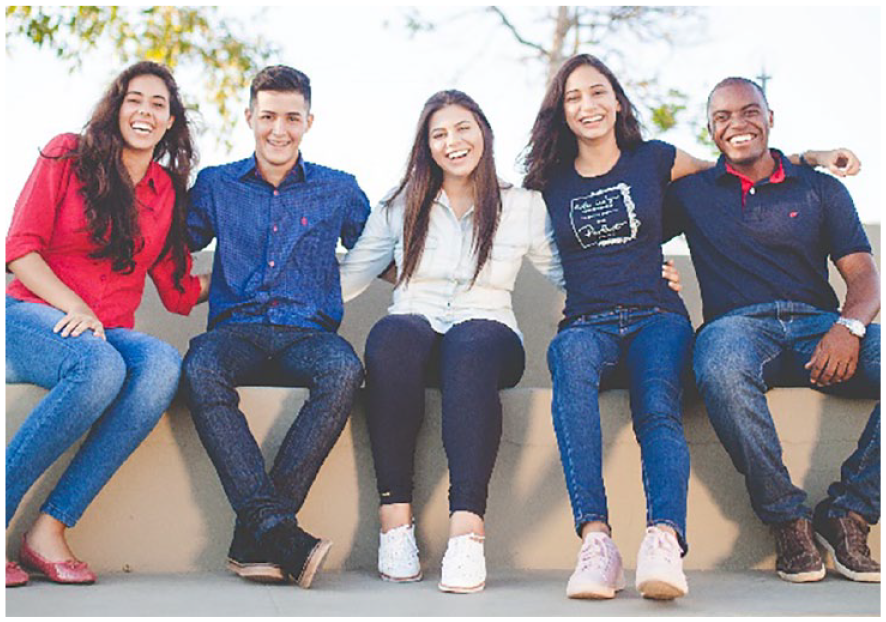
University student representation social situation.

University student representation social situation.
Ok. To be honest they represent kind of, generically diverse ads. In this one [Figure 1] it’s like we need a black person, a white person, someone from China. I’ve been in a photo shoot for my university and literally I was recruited because I was black and they wanted to show that there was a diverse nature to it. Well I understand that, but if you’re black, (pause) . . . I can see through it, but I clearly know that these guys were probably students for whatever university this is advertising and they advertised them saying can we get some students . . . and this picture [Figure 2] looks like my uni. But I think the first picture is an example of how my university’s marketing or recruitment department
Do you think either picture is representative of [name of his University]?
I wouldn’t say picture one is representative. It’s not as diverse as that here . . . Now this picture [Figure 2] looks more like my uni during freshers’ time and usually there aren’t many black or minority people who I know of that take part in those drinking and partying events. (Jayson, Working Class British African Russell Group Graduate)
Jayson is aware of the recruitment and advertising tactics that his university uses that many universities undertake to try to reflect diversity on campus. He appears to see his university primarily represented in social situation 2 in Figure 2, as a predominantly white institution. As a black researcher, I related to Jayson’s story as I had been similarly recruited for pictures whilst completing my postgraduate degrees. My photos were marketed multiple brochures and posters – even in schools I was not affiliated with, in what appeared to be an effort to represent a diverse and inclusive presence in those departments. Another participant, Duane did not think his institution was represented in either picture.
I think picture one [Figure 1] [is] definitely trying to represent happiness (laughs). These are my work mates.
So, you know these people?
Yeah. . . . we all are involved in [organisation at his university]. . . I wouldn’t say this picture [Figure 1] looks like [name of his University]. There are a lot of like international students here. But it’s less diverse at the undergraduate level. This picture [Figure 1] gives a skewed vision of things here (laughs). And this picture [Figure 2], well the way they look, well they don’t look like students who go to [name of his University].
What do you mean by ‘the way they look’?
Just that students tend to be dressed better here than that picture – I mean students here usually dress differently than the ones in this picture [Figure 2].
(Duane, working class British Caribbean Oxbridge Grad)
In an unexpected twist, my conversation with Duane went afield when he informed me that even though he did not believe either picture was representative of his institution, he actually knew people in social situation 1 in Figure 1. Duane’s comments about social situation 2, Figure 2 suggest a slight hint of classism with his intimation that Oxbridge students ended to dress ‘better’ than students portrayed in the photo. He quickly amended his comment by saying that Oxbridge students tended to dress ‘differently’ than those in social situation 2. Third object prompts enabled detailed accounts of a scarcity of diversity which 13 out of 15 participants discussed.
There are also constraints and limitations to third object photo prompts. Prompts may lead participants to focus only on visible, observable phenomena instead of abstract, reflective concepts. Photo-elicitation can result in the identification of people and places, which can be risky and may require anonymisation. Duane’s acknowledgement that he recognised people in a photo was not problematic as the photo was within the public domain of accessibility. Despite agreement among researchers (Collier and Collier, 1990; Harper, 2002) who have asserted the benefits of photo prompts, occasionally this tool inhibited my research discussions. Fortunately, the use of additional third object prompts, cufflinks and video, engendered higher levels of reflection and discussion among my participants.
Cufflinks
My second method of enquiry involved cufflink prompts (Figure 3) to elicit discussions about family members. Cufflinks were not chosen because I presumed that my participants would identify people who wore them (though this would have been a bonus). They were selected as a tactile third object prompt because, like buttons, they come in a variety of colours, shapes and sizes, both shiny and minimally stated in style. Cufflinks can be fashioned around formal attire (in the case of the diamonds) or sport attire (in the case of the silver figure kicking a ball). Feminine, masculine as well as non-heteronormative identities and subjectivities could be explored with the variety of cufflinks participants were provided and selected.

Third object prompt: cufflinks.
During discussions, I aimed to gain an understanding of my participants relationships with their parents/carers to ascertain if they identified any resources or ‘capitals’ that they had gained from them. Instead of beginning conversations with traditional questions, such as ‘Can you tell me a little bit about your parent(s) / carer and what they do for a living?’, third objects served as an icebreaker to initiate discussions. Using this method enabled me to break the frame (Mannay, 2016), by breaking out of the prescribed question-and-answer directive. Consequently, the cufflinks aided participants in describing and constructing their lived experiences through their reflections and understandings, by allowing participants to imagine their parents through a ‘third object’.
Gold knot reflections
Participants were asked to select three different cufflinks. One that reminded them of their mother/significant caregiver, their father/significant caregiver and one that reminded them of someone special, who had impacted their lives. Below is an example of a response that cufflinks helped reveal.
This is for my mum [Figure 4, gold knot cufflink] and it’s golden because she always had golden powers of wisdom. She didn’t speak a lot, so she was very quiet, and my dad did a lot of the instructing and sort of being forceful trying to guide you. But my mum did a lot of the explaining of the reasoning behind it (. . .) she would explain to me what is expected of me, and what they wanted me to achieve in life. And also golden in terms of she taught me about religion as well (. . .) she told us about church and explained to us about God but at the same time she allowed us to make our own choice and so for me religion has been very influential in everything that I’ve achieved in life. (James, Working Class British African Russell Group Grad)
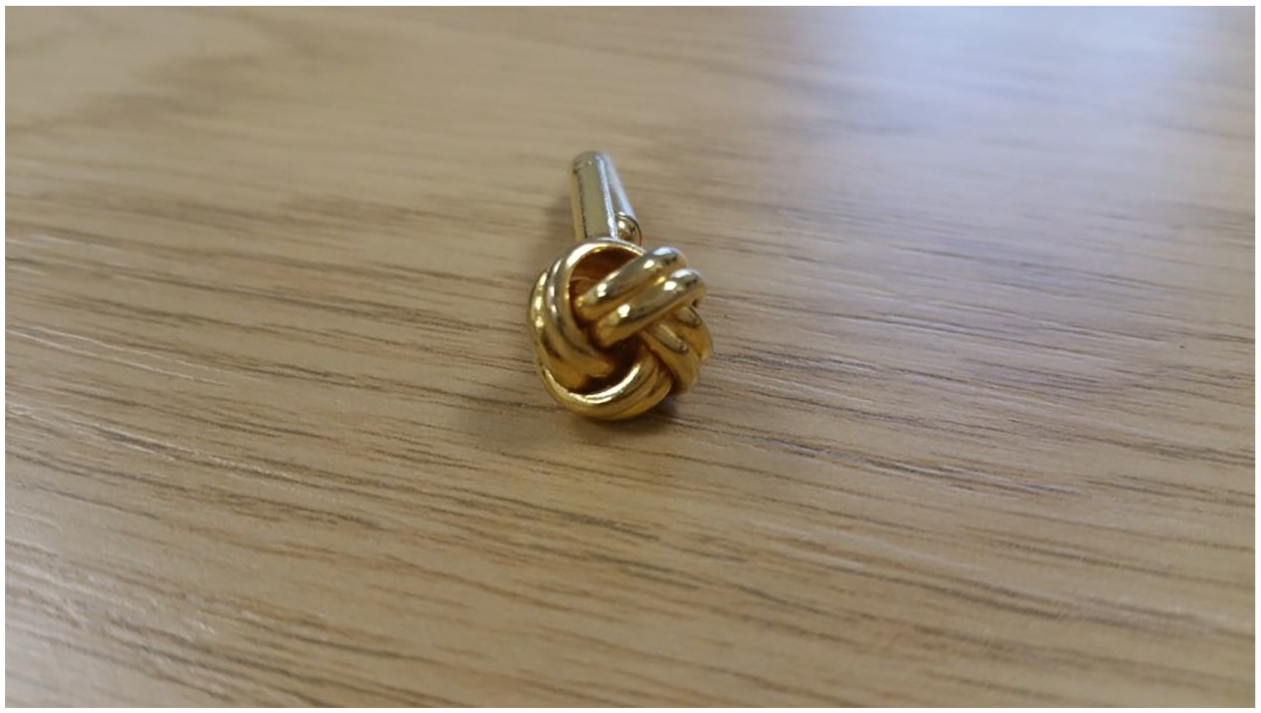
Third object prompt: gold knot cufflink.
Cufflink prompts enabled participants to associate parents and carers with an object on which to reflect when describing their parents. In contrast to James describing his father’s guidance as ‘forceful’, his mother provided him with measured ‘quiet’ reasoning. James described his mother as being ‘golden’ and providing him with ‘powers of wisdom’ and an understanding of the high expectations his parents had for him. James also identified faith as a support that his mother instilled in him. He describes religion as a central source of influence and support in his life, which I suggest is a form of capital (Bourdieu, 2001) which I describe as ‘faith capital’ (Dumangane Jr, 2017).
Previously piloted interviews without the use of a third objects did not evoke in-depth discussions about parental support that the cufflinks unearthed. Third objects aided in eliciting descriptions that lead to ‘a far deeper understanding than simple [interview] conversation’ could convey (Newman et al., 2006: 301). Cufflink prompts enabled participants to think more reflexively, beyond the typical question, ‘tell me about your parents or carer’. This process resulted in ‘making the familiar strange’ (Mannay, 2010: 108) by encouraging participants to reflect on a part of their everyday lives that was invisible to me through their association of the cufflink with everyday understandings of their own lives. The use of my final third object, a video vignette, enabled me to explore sensitive issues related to race and discrimination.
YouTube video vignette
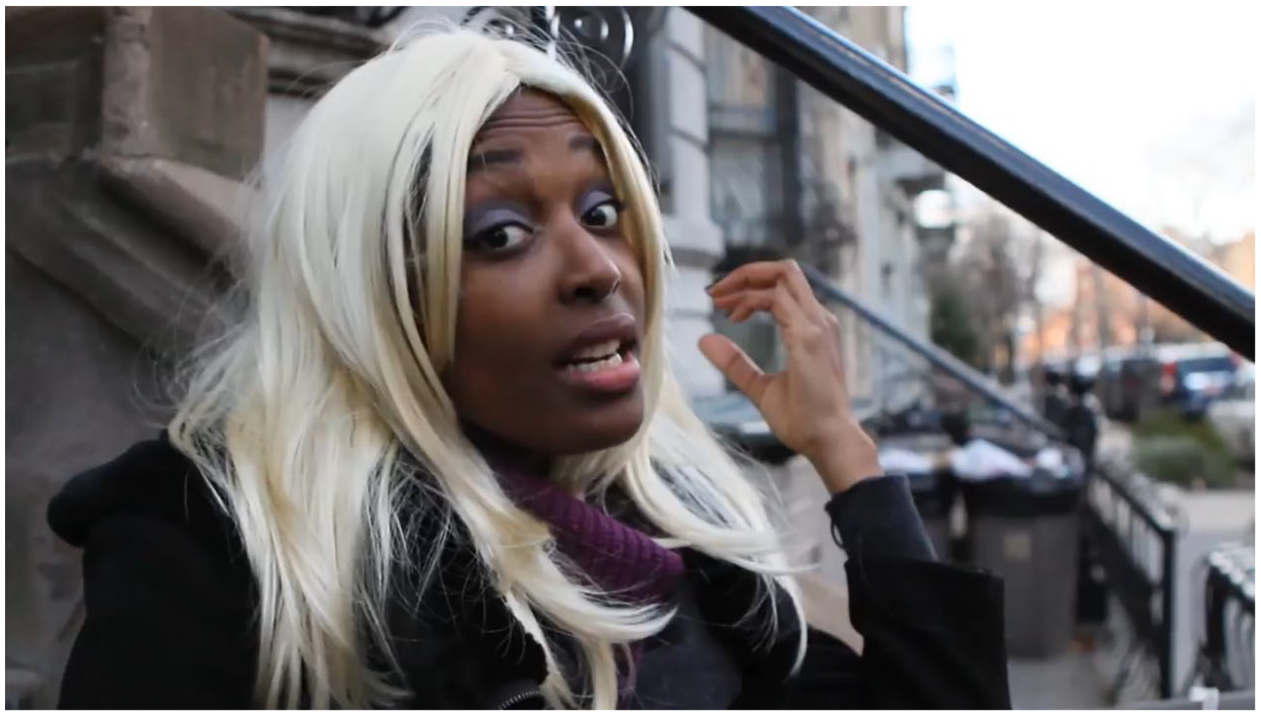
Video has been used in a variety of research situations ranging from the exploration of children and young people’s identities how social class and race are expressed in classrooms (Mehan, 1979). Research involving video-based reflections can assist in engendering accounts about issues that may be invisibly buried in day-to-day routines. My final third object prompt employed a video vignette entitled, ‘Shit White Girls Say to Black Girls’ to illicit discussions with my participants about their experiences in higher education related to their possible experiences with race and discriminatory slights (microaggressions).
Video 1 Video vignette – Shit White Girls Say to Black Girls: https://youtu.be/ylPUzxpIBe0.
My previous interview research (Dumangane Jr, 2011) with BACM on discriminatory issues resulted in participant denials that they had ever experienced discrimination. It is argued that this occurred in part due to issues of hegemonic masculinities. Young boys and men’s masculinities are multiple, with different versions of masculinity routinely competing for dominance (Phoenix et al., 2003; Seidler, 2006). Young men’s views on masculinity are fluid and dependent on the situation in which they find themselves. They often express a variety of positions, reflecting struggle and contradictions in their masculinity constructs. Boys who do not comply with traditional norms of masculinity tend to be ‘othered’ (Renold, 2004) and called derogatory names such as ‘losers’ (Connell, 1995), ‘sissies’(Phoenix et al., 2003) and ‘nerds’ (Gilbert and Gilbert, 1998). Similarly, when racism is discussed with black men, in order prevent the appearance of hurt or weakness, there is often a tendency to exercise masculine constructs of emotional restraint and toughness through a denial that an offence ever occurred (Bonilla-Silva, 2019; Wilkins, 2012).
Video used to elicit discussion on sensitive issues: racism
I used a video prompt [Video 1, video vignette] to deflect and remove discussions on racism from my participants onto the person in the video. The two-minute video was chosen for its representation of an African American woman wearing a blonde wig, parodying a white woman asking her questions about her race, cultural practices and social engagements. The vignette aided in introducing levity to serious and sensitive discussions about race. For example, selection of a video portraying a black American woman discussing issues of race altered issues of gender as my participants were black British men. Furthermore, locality and context were different. The video was based on black American contexts of race and discrimination and my participants’ experiences were from British African Caribbean male perspectives. Hence, the video prompt was selected to act as a distancing mechanism to enable me to engage in sensitive dialogues about race and discrimination. It proved beneficial in initiating emotional discussions as represented by Allen’s comments:
Yeah. Of course. Touching the hair. At school and university. Like it’s happened loads of times. Or if I get a haircut it happens as well. And white people using black slang in an ironic way. So, I think what’s good about that video is like none of that is like, most of the time it’s not done in like an aggressive way of or like in a hurtful or hateful way at all. So, it’s fine. . . . And then sometimes it’s not . . . its reflective of a bit of white ignorance or nervousness around like black people or issues to do with race. (Allen, Middle Class, Oxbridge Grad)
Allen appears to perceive many of the comments parodied in the video to be non-aggressive, non-malicious, unintentional and non-racist. He attributes the situations in the video and his own first-hand experiences with racism to ‘ignorance or nervousness’ of white people around issues related to race rather than direct examples of racist or hateful behaviour. Alex’s reaction to the video elucidated a more emotional response:
I think it shouldn’t be called ‘shit white girls say to black girls’, it could be ‘shit white people say to black people’ and . . . those are things I will hear for pretty much the rest of my life. . . . It made me feel very sad . . . at first, I thought it was quite funny but uh, I wasn’t laughing by the end. . . . At [university name] I’ve been through that and I know I’ve heard statements like that my entire life and I suspect that, like with most things I try and talk through them. (Alex, Middle Class, British African, Russell Group Grad)
Alex’s account suggests that the video’s examples were emotionally hurtful to him because he has endured similar experiences to the ones depicted in the video his ‘entire life’. Routinely he has worked to ‘talk through’ and manage these situations in a measure way. Alex’s reaction to the parodied video suggests that he may have experienced racial microaggressions. Black people as recipients of microaggressions and discrimination can be classified as a stigmatised group. When they experience subtle and indirect forms of racism, they may minimise or often fail to acknowledge the extent to which they are being stigmatised and unfairly treated (Carvallo and Pelham, 2006: 15).
Continuation of interviews post-visual and third objects implementation
After breaking the ice with third objects I appeared to have established a good rapport with participants from which I spring boarded discussions about their experiences at their elite universities. I asked participants how they felt they were perceived by white students at their institutions.
That video reminds me of . . . one of my friends . . . the first time he met me. He thought I was going to stab him. . . He’s from [name of town]. I think there’s very few black people there . . . I think that’s one thing I’ve learned. Just in terms of the ignorance that people can have. And I think I’m somebody who would never kind of blame people for that position. If anything, I would try to teach them and show them or help them to kind of see how ridiculous they are (laughs)
So, would you say that’s ignorance rather than racism?
Yes. I think it’s very unlikely that anyone would be the victim of kind of what’s the word I’m looking for, just overt direct racism, like in today’s day and age.
What do you equate as being direct racism?
For someone to call you nigger or something.
(Duane, working class British Caribbean Oxbridge Graduate)
Duane’s account sets a high standard for what he considers to be racism. He equates racial offences perpetrated towards him as ‘ignorance’ rather than ‘overt’ discrimination. When ‘ignorant’ situations occur, Duane feels that it is his responsibility to educate white people about their ‘ridiculous’ misconceptions about black people. A similar high bar for what constitutes racism was asserted by nine of my participants who easily acknowledge offensive accounts but were cautious and apprehensive to describe their experiences as racist, though I unreservedly would have identified the accounts as discriminatory. This was further evidenced in Franco’s discussion of his experience of being stereotyped to be a murderer by someone he dated.
I never felt that there were any real race things at [University name]. The real issue was class. . . . But . . .this one girl, I went out with her very briefly and it ended. And I felt really weird about it actually. I did not fit into her world. . . . She was incredibly good-looking and rich. . . . When we were going out with each other she actually asked me if I had ever killed anyone. . . . I couldn’t believe it. . . . it was incredible. And so, I really struggled with the class issue, to be honest. (Franco, Working Class, British African, Russell Group Graduate)
Despite the directly offensive and discriminatory enquiry by an ex-girlfriend, as to whether he had ever killed a person, Franco does not identify this incident as racist. Instead, he attributes the woman’s discriminatory enquiry to ‘class’ and the fact that she is from a wealthy background. This problematic account reasserts research that many black men make conscious coping strategy choices to not classify offensive incidents as discriminatory to avoid being perceived as victims (Andreouli et al., 2016; Carvallo and Pelham, 2006). Neither Duane nor Franco identified their occurrences of being perceived as possible perpetrators of violence as racist. Franco categorises his ‘have you ever killed anyone’ situation as classist. Duane understands his friend’s perception of him as someone who might stab him to be based on ignorance, not racism. For Duane, a person would have to use a racial slur for him to consider it discriminatory. There are major risks of isolation, exclusion and being perceived as a complainer or troublemaker when challenging racist actions (Burdsey, 2011; Sue, 2010). Recipients of racism often choose not to accept what the action could construe: that a mate or partner harbours racist perspectives of him.
Discussion
Third objects implemented in this research study aided in evoking discussions about personal parental and sensitive issues, including race and discrimination. Although researchers have explored experiences of racism using objects and video (Kumsa et al., 2015; Maiter et al., 2013), it is suggested that no similar tool has been implemented to explore sensitive issues with BACM in elite institutions. Using a CRT lens with third object prompts to examine BACM experiences is a way of raising awareness of sensitive issues that may lead to environmental improvement in academic spaces. With the assistance of third object prompts, BACM’s counter-narratives can provide insightful responses and challenges to existing literature about their experiences and identities (King, 2015; Solórzano and Yosso, 2002). Photos, cufflink and video prompts helped me establish rapport with my participants while also bringing to light comprehensive data about their parents, capitals and uncomfortable discussions about their experiences with race and discrimination in education. With the aid of the video prompt participants appeared to transfer or deflect their victimisation from themselves to a black person from a different country and gender while concurrently expressing forms of measured hegemonic masculinity and emotional control of their reactions to their own offensive experiences. Even though these men appeared comfortable and willing to identify offences, often they set a high bar for what they would consider to be a racist act.
Reflection: a weaknesses of the methodology
A weakness of this research study was my failure to make third object methods more participatory. To improve this study, I could have asked my participants to bring pictures to their interviews that resonated with their perceptions of what their universities’ social worlds resembled. I could have asked my participants to bring a third object to their interviews that they identified with their parents or significant carer. This would have provided my participants with more agency within the research. I chose not to do this as I had piloted a similar method with BACM where I asked participants to bring a picture or object to interviews (Dumangane Jr, 2011) and disappointingly, over half the participants failed to bring anything with them to the interview session, resulting in reduced data. However, when I conduct future interviews or focus groups on sensitive issues, I will ask participants to bring a picture of a significant third object with them on their cellular device. Mobile phones are a relatively common form of communication that all my participants would most likely own and could foster more participatory and collaborative research findings.
Conclusion
This research found third objects in the form of photos, cufflinks and a video to aid in unearthing insights into aspects of young black men’s discussions of their parents, friends, ‘capitals’ and university experiences with race and discrimination. Some researchers argue that traditional surveys and closed-ended fixed-format question-and-answer interviews are emaciated, rationally driven accounts that direct interviewees, lack depth of the topic being investigated, and omit more than they reveal of researched participants perspectives (Check and Schutt, 2011; Hollway and Jefferson, 2013; Mannay, 2016). In concurrence and as a critical race researcher, it is important that I engage with research methods that allow space for subjectivities, listening to individuals’ accounts which provide the opportunity for complex and differentiated understandings of my participants’ experiences to be revealed.
However, it is important that researchers carefully assess whether visual and photo-elicitation techniques will assist issues that they are exploring. It is paramount to recognise the limitations of how visual methods can be interpreted participants (Pink, 2007). Acknowledgement of who produces or presents third object prompts that the participants engage with can have far-reaching implications. One third object can have multiple meanings depending on whose eyes are viewing it, as well as the cultural and spatial context of where the research is being conducted. Furthermore, future research in this area can be enhanced by involving participants in the selection or construction of the third objects used. Despite these challenges, in accord with other researchers I assert that third objects have the potential to educe compelling insights into the modes by which people actualise their worlds (Mannay et al., 2017; Rose, 2007). I am not suggesting that third objects are a research design requirement, rather that they can and should be considered where researchers deem their inclusion within the methods to enhance data exploration – with the caveat that ‘appropriateness will not always be obvious in advance’ of conducting the study (Banks and Morphy, 1999: 14). As a consequence of moving beyond directive, fully structured question–answer interviews to semi-structured formats, incorporated with third objects, my participants’ reflections and experiences were rendered visible. Participants appeared to be comfortable sharing their personal, sensitive and ssometimes emotional accounts with me. It is suggested that third object prompts coupled with interviews can aid in giving voice to young people and marginalised ‘others’ by engaging them in participatory and reflective approaches to sensitive, offensive and seldom explored issues. I contend that I would not have uncovered such rich and insightful accounts of BACM’s offensive and discriminatory experiences without the use of these methods. These techniques could be employed to explore other sensitive and current issues with marginalised groups including – but not limited to Islamophobia, Homophobia and Xenophobia, at a time when nationalism is growing across Europe, the UK and the US.
Footnotes
Funding
The author disclosed receipt of the following financial support for the research, authorship, and/or publication of this article: This publication is based on research funded by the Economic and Social Research Council, ES/I019537/1, in fulfilment of a PhD in Sociology of Education. The research explored the narratives of British African Caribbean men at elite UK Universities, supervised by Prof. David James and Dr. Katy Greenland, Cardiff University, School of Social Sciences.

Notes
Appendix
The Russell Group.
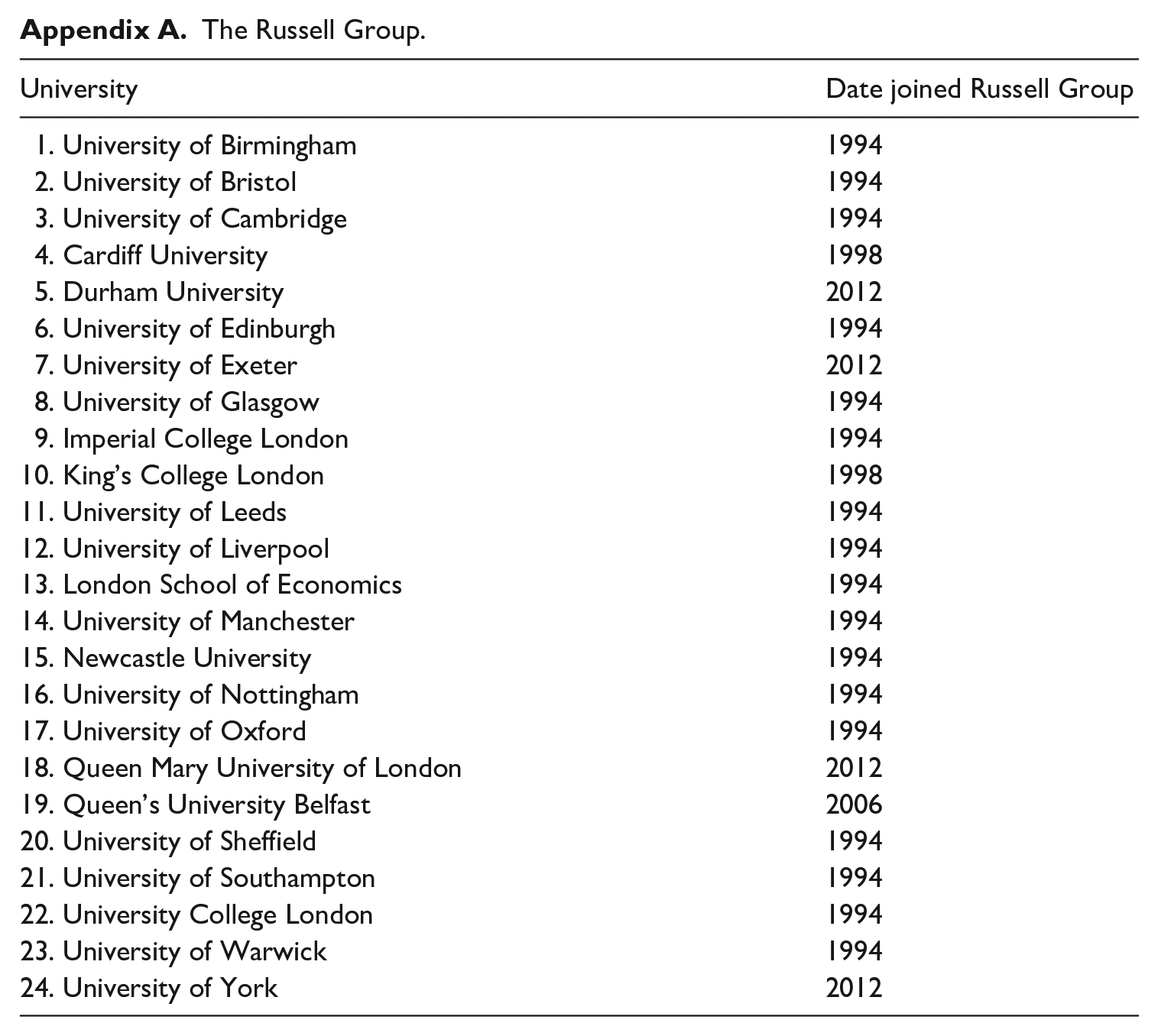
| University | Date joined Russell Group |
|---|---|
| 1. University of Birmingham | 1994 |
| 2. University of Bristol | 1994 |
| 3. University of Cambridge | 1994 |
| 4. Cardiff University | 1998 |
| 5. Durham University | 2012 |
| 6. University of Edinburgh | 1994 |
| 7. University of Exeter | 2012 |
| 8. University of Glasgow | 1994 |
| 9. Imperial College London | 1994 |
| 10. King’s College London | 1998 |
| 11. University of Leeds | 1994 |
| 12. University of Liverpool | 1994 |
| 13. London School of Economics | 1994 |
| 14. University of Manchester | 1994 |
| 15. Newcastle University | 1994 |
| 16. University of Nottingham | 1994 |
| 17. University of Oxford | 1994 |
| 18. Queen Mary University of London | 2012 |
| 19. Queen’s University Belfast | 2006 |
| 20. University of Sheffield | 1994 |
| 21. University of Southampton | 1994 |
| 22. University College London | 1994 |
| 23. University of Warwick | 1994 |
| 24. University of York | 2012 |