




Abstract
With the digital availability of social data helping reshape ethnographic research and thus broadening the mainstream understanding of ethnography, this research proposes a set of strategies to overcome current limitations in doing ethnography. Based on a two-year online and offline ethnographic project on social media use in later life, insights are provided into how the practices and meanings of ethnography are being reconstructed and negotiated in response to the explosion of digital social data and through team practices. This paper reviews how collaborative and interdisciplinary ethnographic reflection is sustained and extended by digital tools, creating a live source of data that can be analysed within the framework of ethnography. As a contribution to current debates on the ’Social Life of Methods’, it also reviews epistemic issues associated with digital data and team ethnography, such as the role of the ethnographer(s), the field(s) and computational data analysis. The article reaches the conclusion that digital team ethnography is a viable option for undertaking thick and descriptive studies about the use of social media, which in turn favours a collaborative, non-hierarchical and dialogue-driven knowledge production process.
Keywords
Introduction
This article focuses on the methodological developments of team ethnography and how these processes are reshaped by the availability of digital data, with reference to a research project exploring social media practices in later life. Digital data includes platforms, applications and devices as a resource for social inquiry (Housley et al., 2014). In particular, three core elements of ethnography are reviewed: the construction of the ethnographic object, fieldwork, and fieldnotes. Analysing these core elements in this particular context allows the relation between knowledge production in teams and digital data to be discussed. It also enables a better understanding of how a team of ethnographers immersed themselves into fieldwork, craft fieldnotes and engaged in the reflexivity process while producing a nuanced account of social media use in later life.
There has recently been a call for “thick and descriptive” studies on the current use of social media and its social implications (Beer and Burrows, 2007; Boyd, 2008; Selwyn and Grant, 2009). Consequently, over the last two decades, we have witnessed an increase in ethnographic research into online social life (Boellstorff, 2008; Boyd, 2014; Miller et al., 2016; Postill, 2014; Postill and Pink, 2012). This emergence of ethnographic studies has led to an expansion of the methodological toolbox used to capture online and offline social interactions (Beneito-Montagut, 2011; Hallet and Barber, 2014; Hine, 2007; Leander and McKim, 2003), though there has been limited attention to teams doing digital ethnography. This paper attempts to tackle this knowledge gap by discussing how recent forms of digital data play a significant role in research methods (Edwards et al., 2013), particularly in the case of team ethnography.
Since ethnography ‘plays a complex and shifting role in the dynamic tapestry’ of the social sciences (Hammersley and Atkinson, 1995–2007: 2), the subsequent development and widespread adoption of digital technologies in our everyday life has led to a revisiting of the classical ethnographic debates surrounding the role of the researcher and the observability of social phenomena (Postill and Pink, 2012). The conditions for ethnography have thus changed and its practice challenged due to the impossibility of observing full accounts of social interaction, which can now occur online, too. The very definition of ethnography has been called into question due to increased social mobility, globalization and hyper-connectivity, as well as constant changes in Internet applications and services, and the availability of digital data. Furthermore, since some limitations of ethnography derive from a lack of funding and time, as well as an emphasis on research policy expectations (or impact) and the need for quick results, the academic research agenda and mode of knowledge production can be restrictive. For instance, in the UK, research impact and publications are highly affected by the implicit schedule and agenda set by the Research Excellence Framework (REF) exercise. Researchers are under pressure to demonstrate the impact of their research on the public policy process. In addition, grant applications typically favour team research over individual endeavours (Creese et al., 2008; Mauthner and Doucet, 2008).
It is worth describing the ethnographic implications of research on social media. Team ethnography may be a way to address some of these limitations without compromising high-quality, rigorous and valuable results, and ensuring slow and long ethnographic projects. Yet, it is needed to explore how team ethnography can be conducted in and through the digital environment, where researchers can carry out fieldwork online both synchronously and asynchronously, and fieldnotes can be produced, shared and commented on collaboratively, in real time or in near real time, and independently of the researchers’ locations. In turn, the research process itself can generate digital data based on the online interactions between the researchers themselves, as well as between the researchers and the participants. Digital platforms and tools are essential elements in this process; they are also able to deliver digital footprints of the aforementioned social interactions, which can then be incorporate to the project data corpus with other forms of data (such as fieldnotes) and generate a set of ’data flows’. In this context, data flow refers to the path taken by data within a research project, as it moves from its source to a data repository. In the case of this research, all the data were imported to NVivo. These data are live and continuously produced independently of the research project, in the form of ’locomotive data’ (Edwards et al., 2013).
Recent ethnographic teams, such as Clerke and Hopwood (2014) and Creese et al. (2008), have provided detailed accounts of how work is produced in teams and how this process is carried out (Schlesinger et al., 2015). This research is particularly interested in the latter point, not only regarding internal team dynamics, but also with respect to the roles that digital data and digital technologies play within this process. The paper first reviews recent ethnographic projects and conceptualizes two models of doing ethnography in teams by focusing on the researchers’ roles throughout the project and the division of labour amongst the research team. Following this literature review, there is an introduction of the digital ethnographic team project on which this paper is based. The teamwork process is then discussed in relation to the ethnographic object, the fieldwork and the writing of fieldnotes. This section is significant because it presents both online and offline approaches to team fieldwork. Since fieldnotes are primary data in ethnography, the following section discusses the processes of interpretation and reflection that took place as a result of using digital data through the joint fieldnotes strategy. The paper then introduces the two digital data flows that complemented the primary ethnographic data: (1) the product of an ongoing conversation among researchers; and (2) the digital data collected from participants’ social interactions via social media. The process of doing digital ethnography in teams then leads to a discussion about knowledge production in teams and digital data. Finally, this paper concludes by stating how fruitful this scenario may be for current research methodology and for the study of social life online.
Team ethnography
Although ethnographic research teams are common, the idea of a ’lone ranger’ or solitary ’lone wolf’ has pervaded ethnographic practice for many years (Douglas, 1976; Mitteness and Barker, 2004). Not much has been written about team or collaborative ethnography and nothing has seemingly been produced regarding digital team ethnography. Online ethnography itself has been characterized as a lone researcher performing fieldwork partially or completely behind a device screen, for example, a computer, smartphone or tablet (Hine, 2000; Kozinets, 2010; Miller, 2011; Williams, 2007).
The issue of team ethnography has been addressed by reviews of its methodological and practical implications (Erickson and Stull, 1998; Wasser and Bressler, 1996). Team and collaborative ethnographic literature not only describes the relationships among researchers working together, but also the relationships between researchers and participants. The particular study discussed here, however, focuses on the relationships between researchers and their role within a research team. Rather than dealing with detailed terminological distinctions, a brief selection of team and/or collaborative ethnographic projects have been included1,2. Some examples of team ethnography will be provided revolving around two axes: the number of settings, and the level of researcher collaboration during the different stages of the research process. The purpose is not to provide an exhaustive or detailed list. The main goal of this review, instead, is two-fold. First, it seeks to provide significant examples of team ethnography where experiences are shared rather than divided. Second, it aims to highlight how team ethnography is not just a change of scale; rather, there are differences between the processes of doing ethnography individually and in teams that affect all stages of an ethnographic project (Jarzabkowski, et al., 2015).
There are several models available through which to conduct team ethnography, ranging from very close teamwork to researchers working individually for the most part and only together at specific stages of the research project. It is the level of teamwork or individualism that ultimately determines the model. Having reviewed recent team ethnographic projects, it has been possible to conceptualize two different models according to the level of collaboration among team members: multi-sited team ethnography and being in the field together. Due to the lack of ethnographic teamwork in the digital realm, the examples provided here are not exclusive to this context. The few digital ethnographic projects found that included teamwork did not contain a great amount of detail regarding how the research was undertaken (Fields and Kafai, 2009; Murchison and Coats, 2015).
In multi-sited team ethnography, individualism is often involved in fieldwork. In this model, team ethnography is understood as several ethnographers investigating the same issue in different settings in order to access multiple sites (Gerstl-Pepin and Gunzenhauser, 2002; Gillespie, 2007). The approach used in Gillespie’s (2007) research project was a sub-category of this model, referred to as collaborative media ethnography, which included ethnographic exploration of the same topic conducted in different places in both the UK and abroad. It even included a virtual ethnography of jihadist websites (Awan, 2007). This project made use of an e-Discussion group, which enabled ongoing sharing and re-evaluation of emergent findings (Gillespie, 2007). Another common team organisation within this model is that of experienced researchers leading the research project and junior researchers (including graduate students) conducting fieldwork in small teams and adopting different roles throughout the research project (Gerstl-Pepin and Gunzenhauser, 2002). In this type of team ethnography, there is usually a clear and hierarchical division of labour. The challenge in this model arises when fieldnotes offer different interpretations and perspectives in the observation of the same situation. A recent example of multi-sited digital team ethnography is The Global Social Media Impact Study, which involved nine ethnographies in multiple sites around the world conducted by individuals investigating the use of social media (Miller et al., 2016). Although the research project scheduled team meetings and monthly online updates on previously set topics, each ethnographer was responsible for the whole research process for each site, from the selection of the field to the writing of the results. 3 It is therefore clear that this type of ethnographical study is primarily done by a solo researcher, who produces a detailed account of the object of study through in-depth immersion in a single local community.
The other team ethnography model involves being in the field together (Adler and Adler, 1987; Clerke and Hopwood, 2014; Creese et al., 2008; Schlesinger et al., 2015). Here, researchers share the experience of being in the field and conducting fieldwork, although the fieldwork does not necessarily have to be the same experience, with researchers being able to focus and reflect upon different issues (Rix-Lièvre and Lièvre, 2010). The division of labour in this model does not relate to either the fieldwork or to the project stages, since all researchers are somehow involved in all phases of the ethnographic project.
For Clerke and Hopwood (2014), being in the field together did not require being there concurrently, as both researchers undertook fieldwork in the same setting but not at the same time. They shared some field visits but most of their observations were done individually. The same was true for May and Pattillo-McCoy’s (2000) research as part of the Chicago Comparative Neighbourhood Study (CNS), whereby fieldnotes were also produced individually. Similarly, Schlesinger (2015) and the rest of the team adopted different roles during the fieldwork and the three researchers were seldom together in the field at the same time. In the model of being in the field together, all phases require the collaboration of all researchers, from defining the ethnographic object to producing the fieldnotes, as part of a fieldwork experience that is intrinsically connected (Creese et al., 2008).
At this point, it is worth bearing in mind the projects that have combined these two models. Jarzabkowski et al. (2015) collaborated on a project that started with a multi-sited approach (i.e. each researcher performed fieldwork in one setting) but which later changed tack, with researchers moving from one setting to another to complement one other’s points of view. Thus, every researcher was able to experience every setting. May and Pattillo-McCoy (2000) also took advantage of a mixed approach by using several teams of two researchers situated in different settings, as did Woods et al. (2000), who combined the two models through a flexible approach.
For this project, the processes of being part of a team and collaborating are not mutually exclusive. While team ethnography applies to any ethnographic project involving more than one researcher in any of its phases, collaborating within a team entails collective sense-making processes in any or all stages of the research process. Despite the developments in recent literature, little is known about how teams of ethnographers work together, the concrete methods they adopt, and the ways in which they conduct their research. Developing this one step further, it seems apparent that even less is known about the digital tools and data that are capable of contributing to team ethnography. 4
Doing digital team ethnography
In terms of the approach for this project, digital ethnography was performed as a team by following the classical approach of Erickson and Stull (1998), which considers team ethnography as a valid model due to its set-up as a deliberative process. This was considered the best way of dealing not only with the complex and interrelated definition of ‘team’ and ‘collaboration’ in ethnographic research, but also with the meaning of ‘digital’ with respect to ethnography and the recent debates around such a topic (Marres and Gerlitz, 2016).
The research posed a set of questions aiming to explore how the everyday-life practices of older adults in social media helped build and maintain social relationships, as well as to investigate the entangled relationships between social media use and social isolation. In doing so, the eventually aimed to describe the qualities and materialities of social relationships and social media. The project followed a multi-situated and user-centred methodological approach, entailing both online and offline fieldwork as well as an analysis of multimedia data (Beneito-Montagut, 2011). Turning away from a loneliness-led approach – one that focuses only on isolation and experiences of loneliness – meant asking new research questions. So instead of asking ‘What goes wrong?’ for people who suffer social isolation, asking ‘What goes right for people who continue with meaningful social relationships in later life?’ had the potential to offer new insights that could be applied to other people wishing to improve their quality of life regarding social relationships.
The ethnography took place in Catalonia, Spain, in four community centres for older adults 5 and via several social media applications, as well as in participants’ homes and public spaces such as cafes. Using the community centres as an access point, 20 social media users over the age of 64 6 (11 males and 9 females) were recruited, with online interaction with these participants beginning after an entry interview. Entry interviews revealed information about the participants’ social media use and personal relationships. Interacting with them online involved being present in every social media service or platform they used (mainly Facebook, WhatsApp and email, although a small number of participants also used Twitter and Instagram) during the two years of fieldwork. It also involved collecting social media data from the participants’ online activity. During a period of five weeks, the social media activity of each user was collected, both as a spreadsheet containing metadata and as visual data from screenshots converted into PDF documents (Figure 1). The ethnography ended with an exit interview.
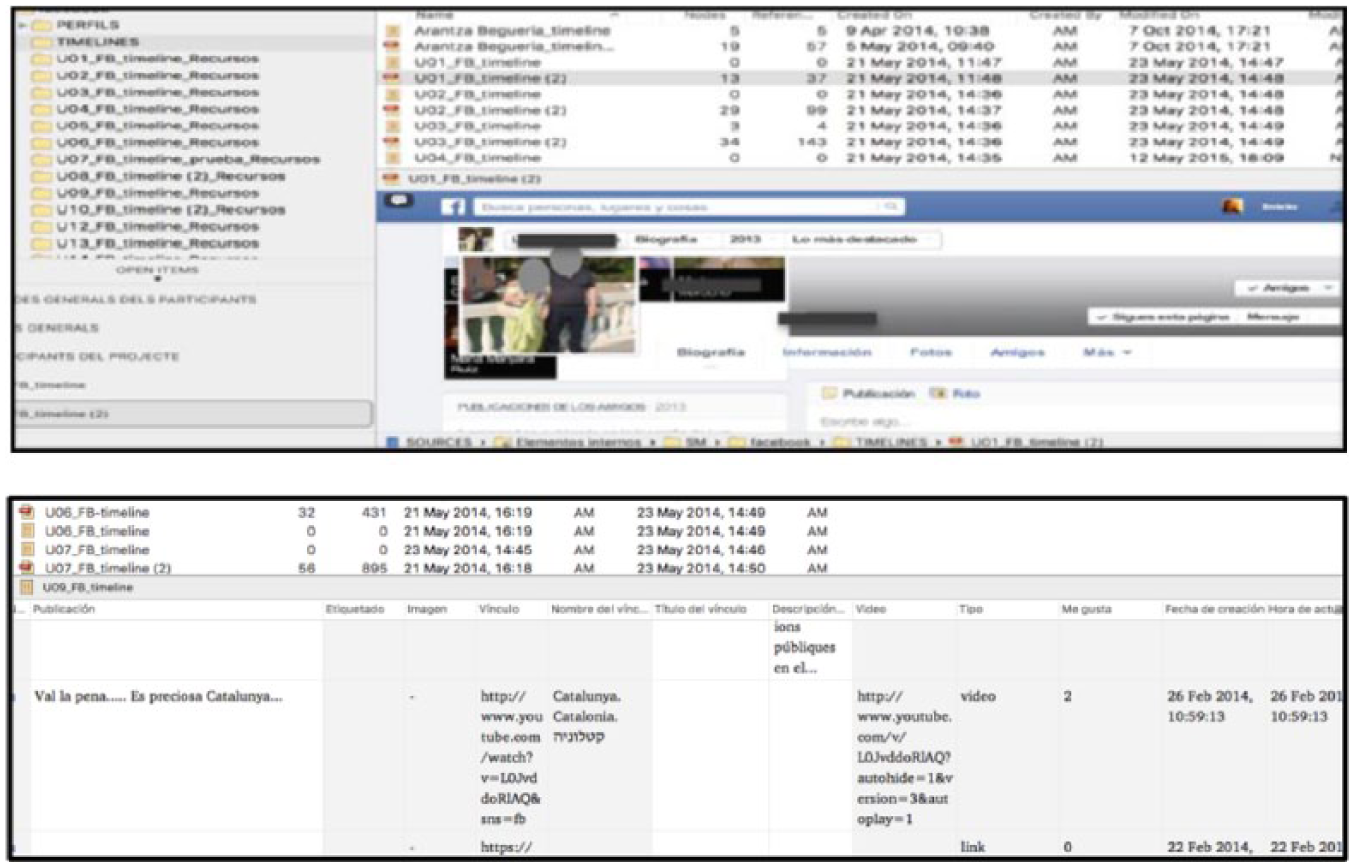
NVivo screenshots of Facebook’s timeline and spreadsheet format with metadata.
The next sections seek to analyse the experience of conducting digital team ethnography while investigating social media use in later life.
The ethnographic object and building a team
The project began with a single researcher undertaking the initial conceptualization; however, the inductive tradition that resists fixing detailed research goals too early in the research process allowed the topics to be elements rather than the foundational focus of the study. The ethnographic object evolved while fieldwork unfolded and the project incorporated more team members. When attempting to define the ethnographic object, almost all of the conversations among team members took place via email, video chats and through the sharing of documents on a cloud service, although the principal investigator -Roser Beneito-Montagut (RBM)- and Arantza Begueria -as researcher- (AB) did meet face-to-face once at the beginning of the project. This section describes the process of defining the ethnographic object while the team was being assembled.
In 2012, RBM won a competitive grant to conduct research on the topic in Catalonia, Spain; a location in which she held an academic position. When initially defining the project, the focus was predominantly on social media and relationships in later life; however, stipulations outlined by the grant called for projects in the field of social inclusion. Thus, the topic of social isolation was added to the focus of the study to increase the chances of getting funding. This decision was further consolidated by the impact and knowledge transfer agenda underpinning the grant call. The project started with a team of two researchers (RBM and AB) and later expanded to a team of three. Nizaiá Cassián (NC) joined the team ten months after the fieldwork commenced. As is usually the case in funded research projects, both researchers (AB and NC) were recruited for the project under precarious fix-term contracts, and the team initially followed a hierarchical structure (Platt, 1976). The structure of academia as it currently stands meant that RBM had teaching and management commitments, as well as a job change at the beginning of the project (from Catalonia to the UK, for a fixed-term position at a University), making it essentially impossible for her to spend much time in the offline field. Throughout all this, AB and NC remained in Catalonia.
All three researchers had had prior ethnographic experience, with RBM and AB having both worked on online ethnography, as well as having highly interdisciplinary backgrounds. In addition, both had a solid understanding of the crossroads of information, communication technologies and social sciences. RBM was a sociologist interested in emotions and social relationships online. AB was an anthropologist interested in the interactions between the body, health and technology. NC was a social psychologist interested in techno-care and community activism. RBM and AB also had a common interest in social media, while RBM and NC shared an interest in later life studies. Although the team came from different disciplines, they all shared ‘a thoroughgoing commitment to understanding other people’s social worlds’ (Atkinson, 2015: 5). This affinity went beyond disciplinary aspects: the three team members were ‘technologized researchers’ (Lash, 2002; Lunenfeld, 2000), in that they all had extended experience in various Internet technologies, and they were all female. This shared epistemological approach and subsequent affinity ultimately helped the members bond as a team.
While all these commonalities within the team helped, their individual descriptions do not reveal how the team established itself to carry out digital ethnography (Hammersley and Atkinson, 1995). This was achieved through constant interaction among the researchers, which mainly occurred online. Team building was indeed a gradual and iterative process, which started by focusing on the ethnographic object. As a response to AB and NC entering the project, the ethnography incorporated the social construction of the ageing body, civic activism and cultural-visual practices on social media as topics.
The following extract of an email between RBM and AB illustrates the type of conversation that was held when negotiating the incorporation of such topics: AB. I’m going to start reading the references you gave me … so, I’ll be reading for a few days … Listen!, would it be too much to ask R2 to look for references about ageing+body, or ageing+body+SM?, and even better if she could find ethnographic research … if she doesn’t have time … no worries. RBM. I already mentioned her about ageing and the body, but only related to Internet or social network sites. (email on the 18 November 2014)
Another relevant factor regarding team building was dependability due to geographical distance. The offline fieldwork was done in Catalonia, but the RBM was living in the UK. RBM therefore needed to rely on, and trust, AB, which consequently allowed for the establishment of a dependent relationship that blurred the hierarchical relationship embedded in the academic status of each researcher. The geographical distance also necessitated a continuous, constant and near real-time communication channel between both – and later, among all three – researchers through digital technologies. The constant conversation was not just limited to team debriefing meetings, but played a significant part in establishing a dialogic and deliberative dynamic from the beginning of the project that continued throughout its entirety. This dialogue began with the negotiation of the initial team and drew on the ethnographic object as explained, but it soon became a quotidian way of sharing and discussing ideas, thoughts and approaches. In turn, as communication was not restricted to organisational and managerial issues, conversations about the definition of the project produced a considerable amount of the digital data that was incorporated into the project. These data contributed to what is called the first ‘data flow’.
Thus, the main ethnographic challenge was team building and establishing appropriate means to keep an ongoing conversation and deliberative process that spanned all stages of the ethnographic project. In order to do this successfully, it was important to take into consideration the characteristics of the team: a geographically distant PI, changes in membership, and a hierarchical academic structure. For the project, affinity, interdisciplinarity, dependability and dialogue were the key elements to team building.
‘Getting there together’: online and offline team fieldwork
In the context of contemporary social relations, the observations of everyday life can be difficult for ethnographic practice, as social interaction is becoming increasingly mediated by digital technologies in many societies (Hallett and Barber, 2014). In this project, talking with participants and spending time with them (Delamont, 2004) meant interacting in face-to-face situations as well as in several online platforms. This was done in order to challenge the traditional idea of fieldwork. While traditional ethnography (observation and interviews) are still useful, researchers need to continue rethinking what counts as a field site and as fieldwork. Following Atkinson’s (2015) argument, ‘field’ is understood as a complex entity that is not bounded. This is even truer for digital ethnography (for a summary of these ideas, see Hine, 2017). One of the core defining factors of ethnographic fieldwork is the way in which the researcher’s social interactions and personal relationships serve as the primary means of eliciting interpretations. This section presents the fieldwork as a way of understanding the participants’ everyday social media practices, which resulted in three complementary ethnographic observations, as interpreted by the team. These three fields were then combined and used in one ethnographic work.
Throughout the two years the project lasted, AB was immersed in the field, interacting daily with participants, both face-to-face and through social media platforms. Arantza entered the field by attending the social media workshops, where personal relationships were soon forged. AB also visited a number of participants at their homes and spent leisure time with them. Such fieldwork involved establishing trust relationships with participants and being an active part of their lives. While in the community centres, R1 observed participants using social media or, in some cases, learning how to use social media. During this time, different kinds of interactions took place, ranging from sharing playful (Figure 2) or political content on Facebook to talking about it face-to-face at a cafe. The interactions also included intimate and personal matters. For example, one of the participants had a long-distant romantic relationship that was mainly sustained over social media. AB became a confidant to this person. During the computer workshops, they would show her the poems and songs they were planning on posting on Facebook for their romantic partner, and in the evening they would talk to AB via Facebook messenger about any recent developments regarding the relationship. Moreover, the team were able to observe and further analyse any reactions to the Facebook posts, since they were made publicly accessible. Thus, the online and offline observations allowed to draw a complex picture of their social relationships.
However, with their ethnographic roles being closer to the digital ethnographic tradition through covert observation, 7 both RBM and NC took on a different approach regarding fieldwork. RBM observed participants online daily without ever being noticed, though participants were informed about the presence of researchers during the observation period. And despite some participants having the chance to meet face-to-face RBM at the beginning of the project, she was ultimately the veiled observer of the social interactions between AB and the participants, and their public activities on social media. RBM only had access to participants’ online activity through the social media practices as provided by AB, who befriended and interacted with participants most regularly online. RBM and NC approached this social media activity by observing how AB interacted with the participants. Another regular practice that the team undertook was to share and collect emails, pictures, memes and PowerPoint documents that the participants sent to AB or as a part of long email chains. Indeed, this was a common practice within the sample (Figure 2).
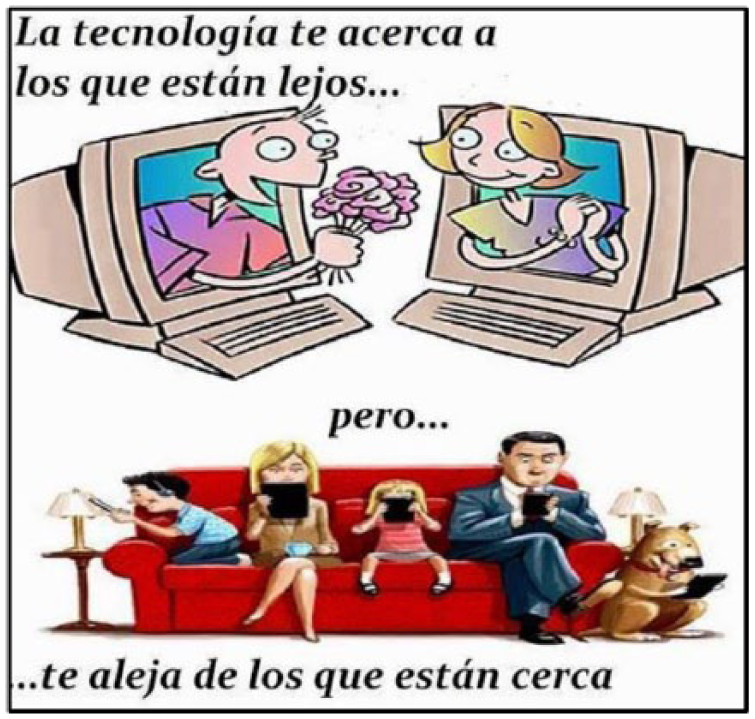
A piece of graphic humour shared by a participant.
Thus, RBM was able to observe, on a daily basis, how the participants publicly interacted on social media, and was informed of private interactions as they happened between participants and AB from the beginning of the project. Since NC joined the project later, observations during the first ten months were partial and took place asynchronously through the data captured with NCapture. Careful ethical considerations regarding online observation and data collection were taken into account, continued and extended throughout the project. All participants were informed and gave their consent to be observed by a team of researchers. Ethical issues on this research project were complex and their discussion, although critical and sustained as part of the ethnographic practice, are beyond the focus of this paper.
This study moved away from a traditional view of ethnographic fieldwork and considered online spaces, where participants socially interact, as enmeshed with physical spaces. Three experiences were also obtained: AB formed very close and personal relationships with participants, whilst RBM and NC sustained two other more detached experiences during the same period. It is worth noting that, despite only AB having a holistic experience (as will be explained in due course), the partial and limited experiences of the other researchers still remain valuable for this project, since both were able to maintain their sociocultural perspectives as digital ethnographers through digital means as part of the team. In this study, being in the field together not only meant that all the researchers collaborated in every stage of the research project, but in addition, since different settings were observed, a multi-situated approach was adopted. Building on the approach of Erickson and Stull towards fieldwork, this involved ‘getting there together’, but ultimately ‘seeing the same thing differently’ (1998: 15). They did not necessarily need to rely only on participants’ accounts via interviews, or AB’s perspective found in the fieldnotes. They were able to observe participants’ social public interactions in online spaces. Hence, to see the same thing differently meant observing the same experience (everyday social media use in later life) in different fields. This eventually led to the conceptualization of fieldswork versus fieldwork.
The idea of fieldswork implies multiple ways to observe and an exemplar of team ethnography. In this case, it entails three complementary observations. This conceptualization recognizes the fact that fields are being produced by participants’ activities, by one’s own activities as an individual and as a team of ethnographers working collaboratively to understand a unique experience (Amit, 2000). In the entangled ethnographic milieu of social interaction online and offline, the fieldwork is not fully observable from a single setting, if observable at all, nor is it bounded, as explained before. It does not exist ‘out there’; it needs to be constructed. The ‘work’ in ‘fieldswork’ is not pluralized in order to recognize the exclusive conceptualization of the collaborative work undertaken by the team (through ongoing conversation) and the focus of the study.
Fieldswork represents a multi-situated digital ethnography undertaken in several settings. The fields are also multiple beyond the multi-situatedness because they are observed and interpreted by three researchers with different ethnographic roles and different, but complementary, experiences in the field. The concept of fieldswork recognizes that the construction of the field is closely bound to the participant and the researcher. Fieldswork is not only a way of recognizing the multiple intertwined settings in which digital ethnography takes place, but also a way of recognizing the different roles of the ethnographers in a team where each ethnographer produces their own field (Hine, 2009; Pink 2012).
This approach to ethnographic teamwork answers Jarzabkowski et al., who questioned how it was possible to ‘make such ethnographies ‘whole’ given that the ethnographic experience of ‘being there’ is said to be intrinsically personal’ (2015: 7). The ethnographic experience (the fieldwork) is understood to be specific to the individual experience, but experiences (fieldswork) can be subjective and shared. Subjective selves share their individual perspectives to construct a unique and nuanced account of everyday social media use in later life. This leads to the following discussion on how ethnographic interpretation and reflection, as well as the unique nuanced account, were produced through digital team ethnography.
‘Digital’ fieldnotes: collaborative and interdisciplinary ethnographic reflection
Fieldnotes ‘are the first written products of a field team’s ethnographic gazes’ (Erickson and Stull, 1998: 23). Therein, Erickson and Stull highlighted the relevance of systematically sharing observations as essential to effective team research. This section examines how fieldnotes were crafted during the observation period of this study by focusing on the role of fieldnotes and the processes of collaborative reflection and interpretation. Although fieldwork and fieldnotes are typically intertwined, these elements are discussed separately here to describe the challenges and opportunities that the digital factors add to each element.
In team ethnographic projects, there is usually a hierarchical split between data collection (fieldwork and the writing of fieldnotes) and data analysis processes (Schlesinger et al., 2015). The PI does not generally participate in fieldwork but takes the lead in the analysis and interpretation of results.
This was not the research approach in this project. Contrary to other ethnographic projects, the data collection and data analysis was not divided, nor were three sets of fieldnotes (one for each field) produced. Fieldnotes were produced and expanded upon on a regular basis by AB, the researcher who undertook the participant observation.
The process was as follows. AB took very brief fieldnotes in a notebook in the field. After each participant observation session in the community centre or other physical space, a detailed description of the observation was written upon AB’s return to home or the office. When social interactions took place over a smart phone on the move, the procedure was the same as for face-to-face observations. On these occasions, she sent an email to herself from the smart phone with brief notes about the interaction, which were then developed further at the desk. If the interaction occurred when working at the desk, the fieldnotes were immediately produced and shared without rewriting them later, as part of a multitasking routine. Upon completion, fieldnotes were uploaded to a secure cloud system and regularly commented on by the RBM and NC whilst they were being produced. Such comments reflected the RBM’s and NC’s own perspectives and interpretations, based upon their own readings and observations of participants’ online interactions.
The nature of RBM’s and NC’s comments was two-fold. Firstly, they commented on the participant observations that had not been observed by them (those which occurred in online and face-to-face private spaces). Secondly, they annotated and commented using their own experience in the field and from their own disciplinary point of view. In this sense, each reading and piece of writing added a subjective, interpretative layer to the fieldnotes. This was referred to as interpretative team practice; in other words, a way to share and jointly produce interdisciplinary fieldnotes.
This approach to writing fieldnotes did not come without tension. At the beginning of the project, AB explained in an email to the rest of the team that they found the whole process embarrassing due to doubts regarding the quality and adequacy of their notes, and the personal and intimate investment that such notes represented (Jackson, 1990). At the beginning of the project, the fieldnotes were less personal and more neutral, but as the project evolved, so did the personal and professional relationship among team members, and thus the fieldnotes became more personal and emotional. AB also used the fieldnotes to share with the other team members their feelings and emotions experienced throughout the fieldwork.
Since they were written for the team and not just for their own reference, AB also recognized that their fieldnotes were longer and more detailed. Regarding the face-to-face settings and the private interactions via chats or emails, AB revealed: ‘I needed to explain everything to you because you weren’t there’.
However, fieldnotes were not limited to writing about the participant observation undertaken in the community centres or online observations. Reflective team practice occurred in parallel. Reflexivity is recognized as a crucial element in the ongoing process of interpretation in ethnographic research (Clifford and Marcus, 1986; Geertz, 1998; Gerstl-Pepin and Patrizio, 2009; Hammersley and Atkinson, 1995). Consequently, the final fieldnotes (those commented and annotated) were also about research decisions that needed to be made during the project. This practice primarily took place in the same written work as the interpretative practice but sometimes took the form of standalone sets of fieldnotes. It was also the starting point for systematically carrying out a collaborative reflection process and continuing the dialogic process that had started with the definition of the ethnographic object. As an illustration of this, AB wrote a set of fieldnotes that discussed and analysed the pros and cons of using a personal Facebook account or creating a new Facebook profile (which in turn would give easier access to the rest of the team) to befriend participants. These particular fieldnotes sparked a conversation about the research process and resulted in a shared reflection on the epistemic and ethical implications of each option. It was eventually decided that R1 should use a personal social media account, since this would allow for a symmetric relationship that places both the researcher and the participant on the same level of reciprocity. Ethnographic practices as individuals and as a team were constantly discussed, negotiated and reviewed through fieldnotes and emails.
The use of fieldnotes was interdisciplinary, systematic and live (Erickson and Stull, 1998). Digital tools supported a real-time process for generating collaborative fieldnotes that were interpretative and reflective. They were commented on and highlighted (Figure 3) as a regular analytical process, and later coded and linked when uploaded to NVivo. These data were also enriched by emails and chats among team members. Beyond the data generated via fieldnotes, the ethnographic team’s interpretation and reflection also produced a ‘data flow’ via email and chats, which also formed part of the interpretation and reflection. For example, the construction of the analytical coding scheme took place via email, thus representing the raw data of the project’s ‘reconstructed logic’ (Woods et al., 1998). To summarize, fieldnotes were enriched by the digital data generated by team conversations that necessarily had to take place online. Sharing meant an interwoven and fluid practice embedded within the research routine. Digital data and digital tools helped overcome the power-based limitations of traditional notions of dialogue for team ethnographic fieldswork, allowing for meaning to be unveiled from symmetric positions within a team (Gerstl-Pepin and Gunzenhauser, 2002).
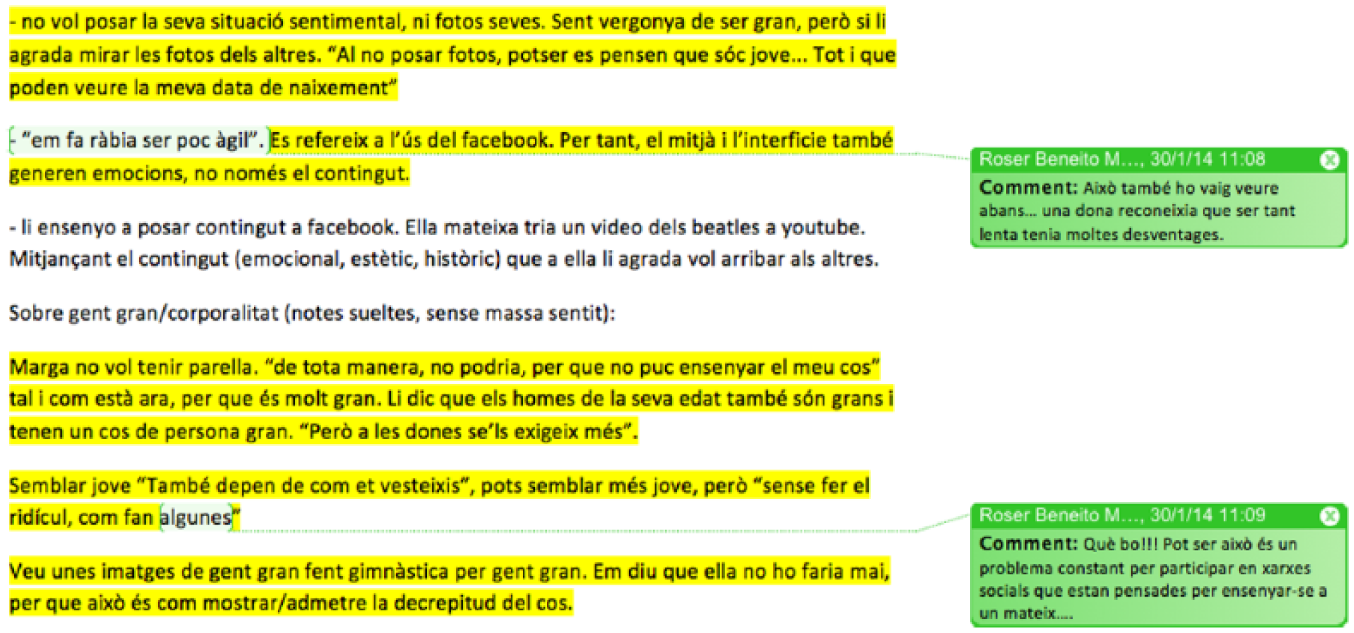
Collaborative fieldnotes.
Knowledge production
The aim of ethnography is to achieve deep understanding and in-depth knowledge. As a knowledge-based generation process involving an immersive experience, deep understanding and ongoing reflexivity, the distinctiveness of ethnography is as relevant to digital team ethnography as to any other ethnographic project. Reflexivity as a result of team ethnography leads to collaborative sensemaking and knowledge production processes that are distinct from those experienced by lone researchers (Jarzabkowski et al., 2015).
The relationship between research methods and technology has often been treated as purely instrumental, but the use of technology in this project entailed a more complex role in the research process, as it was entangled in the object of the study and in the research process itself, which was highly technologized and mediated. It could be argued that this allowed for a particular knowledge production process, which was impacted by both (non-neutral) technology and by the team practices (dialogic, symmetric and reflective practices). This ultimately leaves two questions. How do digital tools and media affect the process of collaborative knowledge production? How is digital ethnography knowledge production affected by analytical procedures (such as content analysis), and advanced by digital data (data flows) and computational techniques?
To answer these questions, it is necessary to review how the data flows presented above (digital footprints of interactions among researchers and digital footprints of participants as part of their everyday life practices on social media) offer different possibilities to augment ethnographic data (Edwards et al., 2013). These live data flows open up analytical possibilities for ethnography. As members of a team, the ethnographic dialogic practices of this study were mostly sustained through digital media, which left digital footprints of the several processes undertaken throughout. Uploading online conversations to QDA software with data mining capabilities opened the door to the use of computerized data analysis techniques (such as word frequency analysis) for specific data sets (such as emails between the team negotiating the ethnographic object, building the team, or the collaborative fieldnotes) (Figure 4). This data corpus also comprised mediated interactions among the researchers as a consequence of the reflective process embedded in ethnographic approaches, which acted as an aide-mémoire. These processes were generally invisible before, and rarely produced analytical data with which to enhance ethnographic primary data.
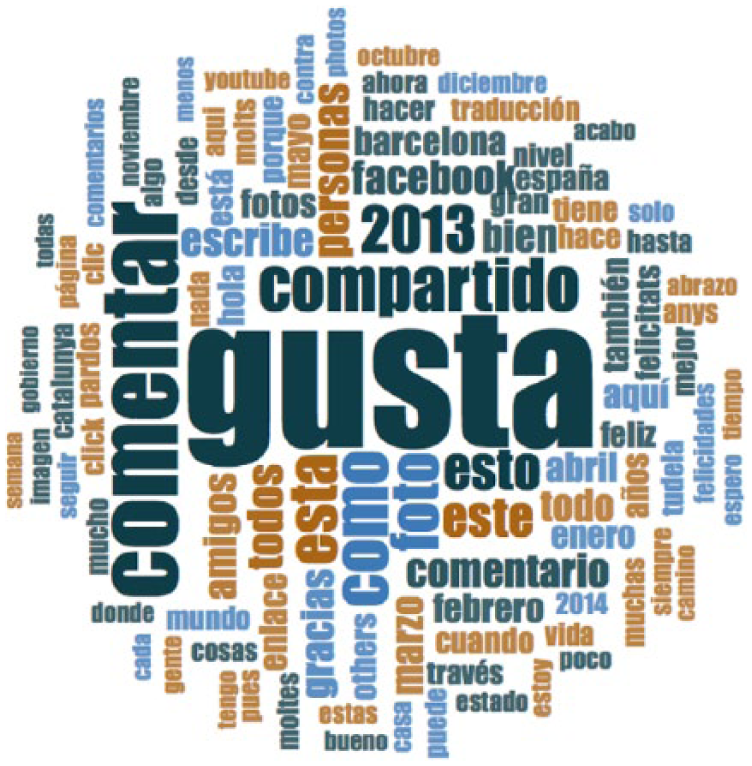
Word cloud of the social interactions on Facebook.
Furthermore, participants’ online interactions produced another digital data flow through continuous data gathering that included computational techniques from participants’ social media profiles and interactions. These data sets allowed for the application of the aforementioned analytical procedures, as well. This does not mean, as claimed by Edward et al. (2013), that digital data provide researchers with an alternative to ethnographic immersion in online contexts, but it could contribute to the production of a more nuanced account of online and offline social relationships. Nonetheless, it is important to recognize that, although these complementary analytical strategies were possible, this project privileged ethnographic means of knowing through fieldswork and researchers’ own selves.
Wasser and Bressler (1996) recognized that knowledge in collaborative teams can be richer, but there is also the danger of it becoming more diffused. Digital tools, digital media and computational data analysis can potentially prevent or restrict the dispersion of knowledge. These digital aspects can also sustain an ongoing dialogue and provide data and analytical tools to disentangle team interpretations, and to explore meanings that are veiled by the hierarchical relations of researchers in an ethnographic team.
By studying social media practices in later life through digital team ethnography, this paper has moved from an individual and personalized experience of constructing the ethnographic object, fieldwork and fieldnotes (wherein a ‘lone ranger’ is the knowledge producer) to a decentralized and collaborative method of knowing. In this method of knowing, knowledge is constructed through several forms of interaction both with participants and among team members, including online interactions. The team practices described throughout this paper became part of how the ethnographers produced collaborative knowledge and created their ethnographic place. As Law et al. (2011) have argued, digital social media not only facilitates new ways of organizing social life, but also of analysing it.
Conclusion
This article presented a methodological approach centred on the processes of doing digital ethnography in teams. By describing how a team addressed three core elements of ethnography (the construction of the ethnographic object, fieldwork and the writing of fieldnotes), the roles of computing, social media and digital data were used to explore social media practices in later life. This research found that digital team ethnography increases the corpus of data that can be used to understand the social world under observation. At the same time, team ethnography provides a research design that is compelling to the limits of current research environment and can provide a dense and high-quality understanding of social media practices, without accepting quick results. Digital team ethnography requires very close collaboration and ongoing dialogue, which is sometimes challenging to carry out without the use of social media platforms.
This account of a team doing digital ethnography to research both online and offline social media use in later life serves as an example of how to use digital tools and data, and shows the potential to augment research methods (Edwards et al., 2013). The paper has also revealed how it is possible to uncover the human practices of social life and of the research team itself in several ways (Dicks, 2012; Smith, 2014).
In summary, this paper suggests that digital team ethnography is a viable option for undertaking thick and descriptive studies about the use of social media and their social implications, as presented here with the case of social media practices in later life. Doing digital ethnography in teams not only involves working with the social actors that the research seeks to understand, but also with other researchers in constructing a joint account. Digital team ethnography enhances the quality of research through the researchers’ holistic co-construction of complex meaning and by employing the data generated.
Footnotes
Acknowledgements
We would like to thank Dr. Adam Edwards and the anonymous referees for helpful comments and suggestions on earlier versions of this article. Any remaining errors are ours.
Funding
This research received support from the Recercaixa/ACUP (Spain), grant number 2012ACUP-00325.