




Abstract
Knock is the most crucial limitation in attaining the peak load required at high efficiency in heavy duty (HD) spark ignition (SI) engines. Renewable fuels such as ethanol and methanol have high resistance to autoignition and can help overcome this limitation. To reduce knock and improve efficiency further, dilution can be used to add specific heat capacity and reduce combustion temperature. This work studied diluted combustion and knock characteristics of gasoline, ethanol, and methanol on a HD SI single cylinder engine for a wide load range. Ethanol and methanol displayed excellent knock resistance which allowed a peak gross IMEP of 25.1 and 26.8 bar respectively, compared to gasoline which only reached 8.3 bar at
Introduction
Road freight transport is expected to surpass private transport as the largest greenhouse gas emitter within the transportation sector by 2030. 1 To decarbonize the freight transport sector, renewable fuels are viewed as an important strategy. 2 There are possible biomass based renewable fuel production methods, such as gasification, that generate methanol, ethanol and other higher alcohols. Additionally, as a simple molecule, methanol can also be produced as an “electro-fuel,” potentially even from atmospheric carbon dioxide.1,3,4 These varied production pathways make alcohols a promising low-carbon future fuel for the transport sector. Currently, world production of renewable fuels constitute around 75% ethanol and 25% bio-diesel and the share of alcohols could increase in the future.
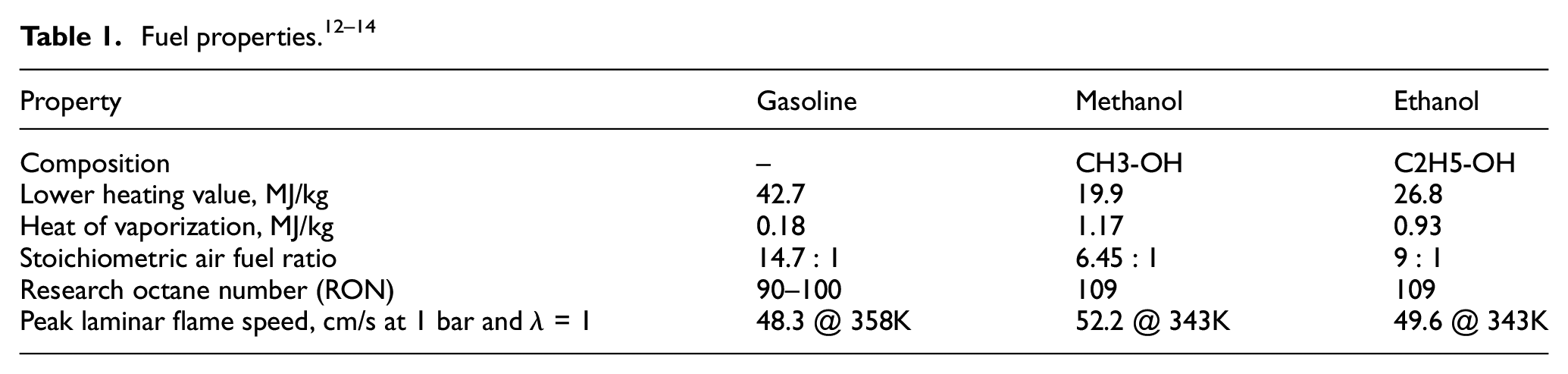
Alcohols, such as ethanol and methanol, have a high octane number (listed in Table 1) and cannot be used directly in conventional diesel combustion process without ignition improvers, increased compression ratio or an ignition source.5–8 Another way to introduce alcohols in HD engines is to utilize premixed ethanol or methanol with a diesel pilot ignition source. With premixed alcohols, studies have reported control over a wide load range and low emissions but a high pressure rise rate limits the premixed alcohol fraction that can be used, especially at high loads.9–11 Additionally, dual fuel engines require two fuel handling systems and have to retain the high pressure diesel injection systems thereby increasing capital costs. Instead, high octane ethanol and methanol can be used relatively easily in spark ignited (SI) engines.
HD SI engines are an attractive option due to their low noise and lower system cost. If operated stoichiometric, a simple three-way catalyst and control would suffice as after-treatment. However, HD SI engines are limited in operating range and efficiency by engine knock.
Knock is defined as the auto-ignition of the unburned fuel-air mixture (end gas) ahead of the flame front. As the flame propagates, the pressure and temperature of the end gas increase which could result in end gas auto-ignition, rapid heat release, undesirable noise and potential engine damage due to high heat transfer. In HD SI engines, knock will be worsened compared to light duty engines since a larger bore diameter causes a longer residence time for the end gas at high temperature and pressure. Moreover, a higher boost pressure is necessary to achieve the required engine load, which would further exacerbate knock.
Apart from conventional knock discussed earlier, there is potential for super-knock especially if the engine is direct injected. Super-knock phenomenon and mitigation strategies has been discussed in detail by previous works.15–19 In addition, studies20–22 have reported preignition potential of various fuels and blends. Despite the high resistance to auto-ignition of ethanol, the longer injection duration and wall wetting increases pre-ignition occurrences that could lead to super-knock.22,23 Although not in the scope of this study, super-knock is important to consider in HD SI engines as load and speed ranges are similar to downsized and boosted spark ignition engines
To mitigate knock, increase load range and efficiency in HD SI engines, low carbon alcohols exhibit suitable properties as shown in Table 1. Apart from the high research octane number (RON), ethanol and methanol have high heat of vaporization (HOV) which reduces temperature. Since the lower heating value (LHV) of alcohols are lower, more fuel injection is required and as a result, significantly higher temperature reduction due to evaporation can be achieved by ethanol and methanol over gasoline.
In addition to higher RON and HOV, alcohols’ resistance to low temperature heat release (LTHR) further improves knock reduction. Gasoline end gas ignition delay shows a negative temperature coefficient (NTC) in the transition from low to high temperature chemistry. As the end gas temperature increases over 750K, the change in ignition delay decreases and is highly relevant in the knock performance of boosted and spark retard operation.15,17,24–26 With increase in boost pressure over 1.5 bar-a, LTHR becomes a limitation in SI gasoline engines. 27 Unlike gasoline, ethanol and methanol do not exhibit an NTC region and has a much longer ignition delay time in the low and medium temperature regimes, thereby allowing increased boosting compared gasoline. 20
Though alcohols favor knock reduction and increased specific torque compared to gasoline, it is not clear if the diesel engine IMEP can be achieved in HD SI engines. On a HD single cylinder engine, Ottosson and Zioris 28 used port fuel injected E85 to achieve 17 bar IMEP (knock limited) at 39% indicated efficiency at stoichiometric operation. The lower efficiency reported was due to spark retard to mitigate knock at increased boost pressures. Using a similar engine, Björnestrand 29 studied methanol direct injection at lean conditions and observed over 45% indicated efficiency at a load of 8 bar IMEP.
Results from light duty engines fueled with alcohols show an improvement in both BMEP and efficiency.30–33 Notably, Brusstar et al. 34 and Brusstar and Gray 35 used ethanol and methanol on a SI converted light duty and medium duty diesel engine. Without a peak pressure or boost limitation, they achieved 18 bar and 20 bar BMEP using E85 and M85 respectively. 35
To increase engine load further, mixture dilution can be used. Through exhaust gas recirculation (EGR) or excess air addition, the specific heat capacity of the unburned fuel air mixture can be increased, which reduces combustion temperature. 36 This reduction in temperature aids knock reduction and also offers higher efficiency due to lower heat loss. Apart from the temperature effect, there is also a reduction in chemical reactivity leading to higher end gas autoignition delay times for leaner mixtures.37,38 With both chemical and temperature advantages, studies39–42 have shown reduced knock tendency with EGR and more favorable phasing for gasoline fueled engines. Similar to EGR, excess air dilution also reduces knock and is the focus of this study.
The effect of dilution on ethanol and methanol fueled engines and knocking behavior is captured by few studies. Gukelberger et al. 43 and Kaiser et al. 44 observed a marginal efficiency improvement for E85 with EGR but not as much as gasoline since E85 was already close to optimal phasing. In these cases, the potential for improvement was limited by hardware used, that is, boost pressure or peak pressure limitation. For instance, Brusstar and Gray 35 report significantly higher loads if boost and peak pressures are not limited while using over 20% EGR.
The challenge to increasing dilution is combustion instability. Mixed results for stability are reported comparing gasoline and ethanol31,45–48 and are elaborated in a previous work. 49 Ethanol, with a higher HOV, results in lower temperature at spark timing than gasoline and hence potentially lower stability. On the other hand, ethanol is more volatile and has a marginally higher laminar flame speed which should reduce instability. The effect of temperature seemed to be a key factor as shown by Moxey et al., 48 where increased residual gas content reduced instability in ethanol and increased instability for iso-octane. Further investigation into the effect of increasing intake temperature on dilution limit of ethanol and methanol fuel is required. Increased intake temperature could aid in increasing lean operation and efficiency over a wider map, especially in part load operation to minimize throttling loss.
To match diesel engine operating load, an IMEP of over 25 bar is required from the HD SI engine. This load has to be achieved with relatively high efficiency as high load operation is prevalent in HD engine operation for acceleration and gradients. Theoretically, the highest efficiency and IMEP can be realized at high dilution where the engine is limited by both knock and instability.
This study experimentally investigates the influence of ethanol and methanol fuel in combination with excess air dilution on engine knock. In addition, the effect of increasing intake temperature on combustion instability with diluted operation of these high HOV fuels were investigated. Engine performance has been evaluated at higher pressure and temperature conditions than previous studies, which will be a proof of concept and aid in validating simulation models at more relevant operating conditions for HD engine application.
Experimental setup
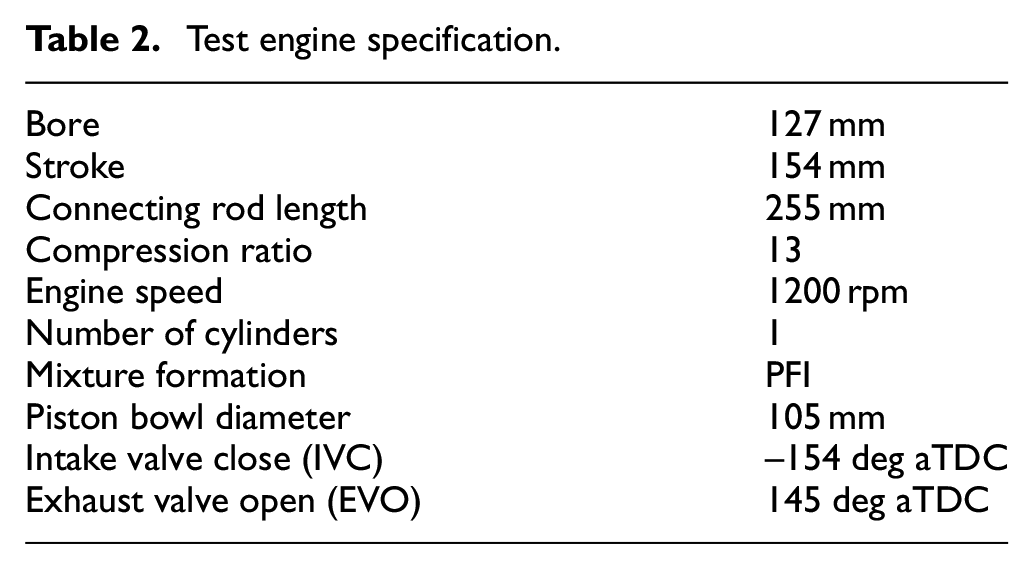
The experiment was performed on a HD single cylinder engine rig available at KTH Royal Institute of Technology. The engine is based on the Scania D12 and was adapted with port fuel injectors and a central spark plug. A custom piston was used to reduce compression ratio (CR) to 13 from the diesel baseline CR of 17.1. A bathtub style geometry was used to minimize potential hot spots and is shown as “baseline” in a previous publication. 50 A CR of 13 is fairly higher than boosted LD gasoline and was chosen to improve efficiency for part load ethanol and methanol. The stock diesel cylinder head and intake ports were used which produces swirl. The engine specifications are listed in Table 2 and the test set up is shown in Figure 1.
Test engine specification.
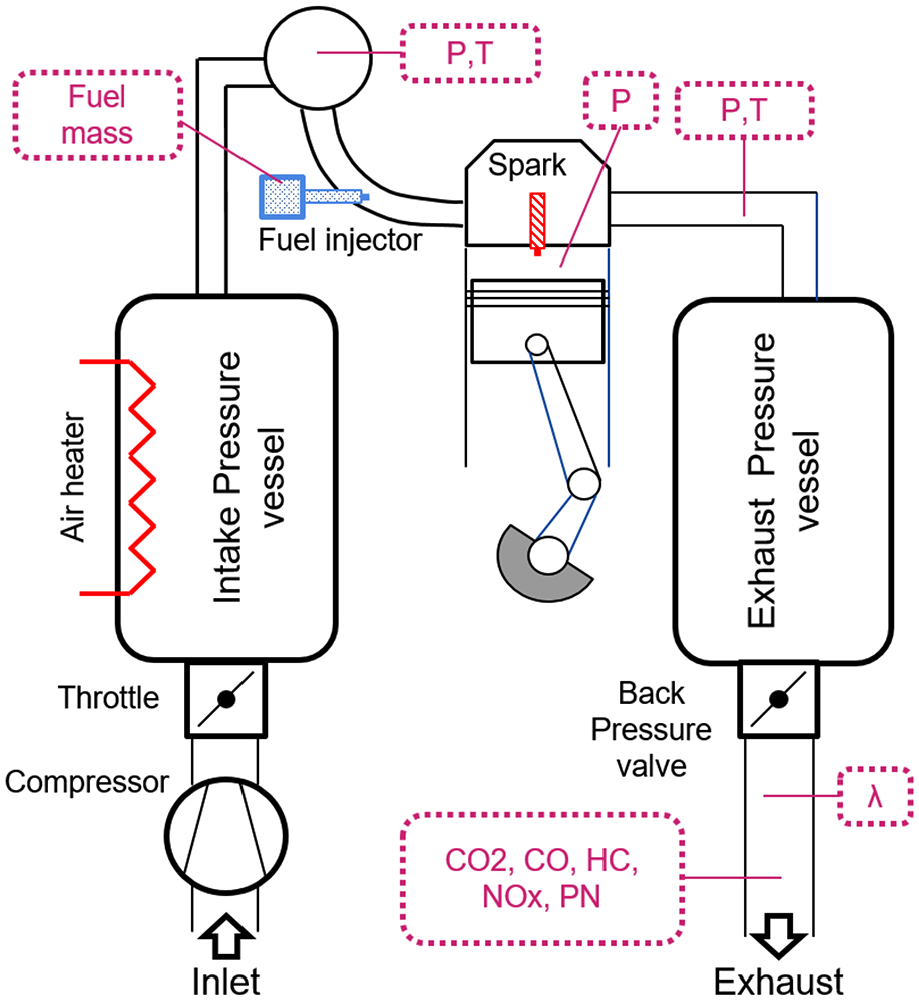
Experimental setup – single cylinder engine rig.
The test cell is equipped with an independent external compressor to simulate boosted operation. A back pressure valve was used to maintain back pressure equal to the intake pressure at boosted operation so that residual level in-cylinder will be comparable to a full engine. The intake temperature was maintained constant at 30°C for the full load cases. The oil and coolant conditioning systems also retained a constant temperature of 90°C throughout the tests. Exhaust temperature was limited to 750°C and intake boost pressure was limited to 2.5 bar in our setup.
The fuel system was constructed with two high flow Bosch EV14 injectors placed approximately 30 cm upstream of the valve at each intake port. A fuel injection pressure of 5 bar relative to intake pressure was used through an inline pump and a mechanical fuel pressure regulator. For all cases, fuel was injected during the valve open period with start of injection at intake valve open (IVO). As a low LHV fuel, methanol required a long injection time of up to 180 CAD but was completed before IVC. A Bosch wide-band oxygen sensor and ETAS lambda meter were used to maintain set point excess air ratio within ±0.025. A Denso 5717 spark plug mounted in the center of the cylinder head was used with the stock Scania EURO 5 gas engine’s ignition coil. In a swirl combustion chamber, the central spark position was chosen to minimize mean velocity at the spark plug. A lower mean velocity should theoretically produce lower chance of spark blow out, have lower cycle variation and higher lean limit for a given ignition energy. 51 The coil charging time was maintained constant for all fuels and operating points. The engine was controlled using an in-house software and constant spark timing was used without any knock control. Since spark timing was manually set, knock limited spark advance (KLSA) was defined as spark advance when maximum amplitude of pressure oscillation (MAPO) of the high pass filtered pressure signal reached over 1 bar for 1 to 3% of the sampled cycles.
Data acquisition
Cylinder pressure at 0.1 CAD resolution was sampled using a flush mounted AVL GU21D pressure sensor and a Kistler 5011 charge amplifier. A fuel container was used and consumption from the container was measured using a Sartorius MW1P1-150FE-L industrial scale. Raw emissions were measured through a Horiba MEXA 7100 DEGR gas analyzer. Gross indicated mean effective pressure,





Where, P = ensemble averaged and pegged in-cylinder pressure signal (Pa); V = calculated cylinder volume (
Apparent rate of heat release (AROHR) calculated using Eqn. 4, is used to estimate burn duration, CA1075 and anchor angle, CA50. CA1075 is the crank angle required to burn 10% to 75% of unburned mixture and is used to describe the burn rate in this study. CA50 is the point where 50% of fuel-air mass has burned and is used to describe combustion phasing. Flame development time, CA010, is the crank angle degree (CAD) required to achieve 10% burned fraction from spark timing. The in-cylinder mass is calculated based on measured fuel flow and lambda. The in-cylinder temperature is calculated using the ideal gas law and a 7-coefficient NASA polynomial is used to calculate the specific heat ratio,
The hydrocarbon emissions reported by the flame ionization detector (FID) in the exhaust gas analyzer are corrected for alcohol fuels to account for the weaker response in oxygenated fuels. A response factor of 0.7 and 0.4 is used for ethanol and methanol respectively.55,56
Test methodology
The test plan was designed to evaluate knock limited operation of gasoline, ethanol and methanol at increasing levels of excess air dilution at 1200 rpm. The knock limited
To evaluate part load performance for ethanol and methanol, 8.5 bar
Results
The effect of excess air dilution in combustion and knock limits of gasoline, ethanol and methanol are presented. To match diesel engine loads, a target of 25 bar
Full load—
1.4
Within the limitations of the set up used, peak
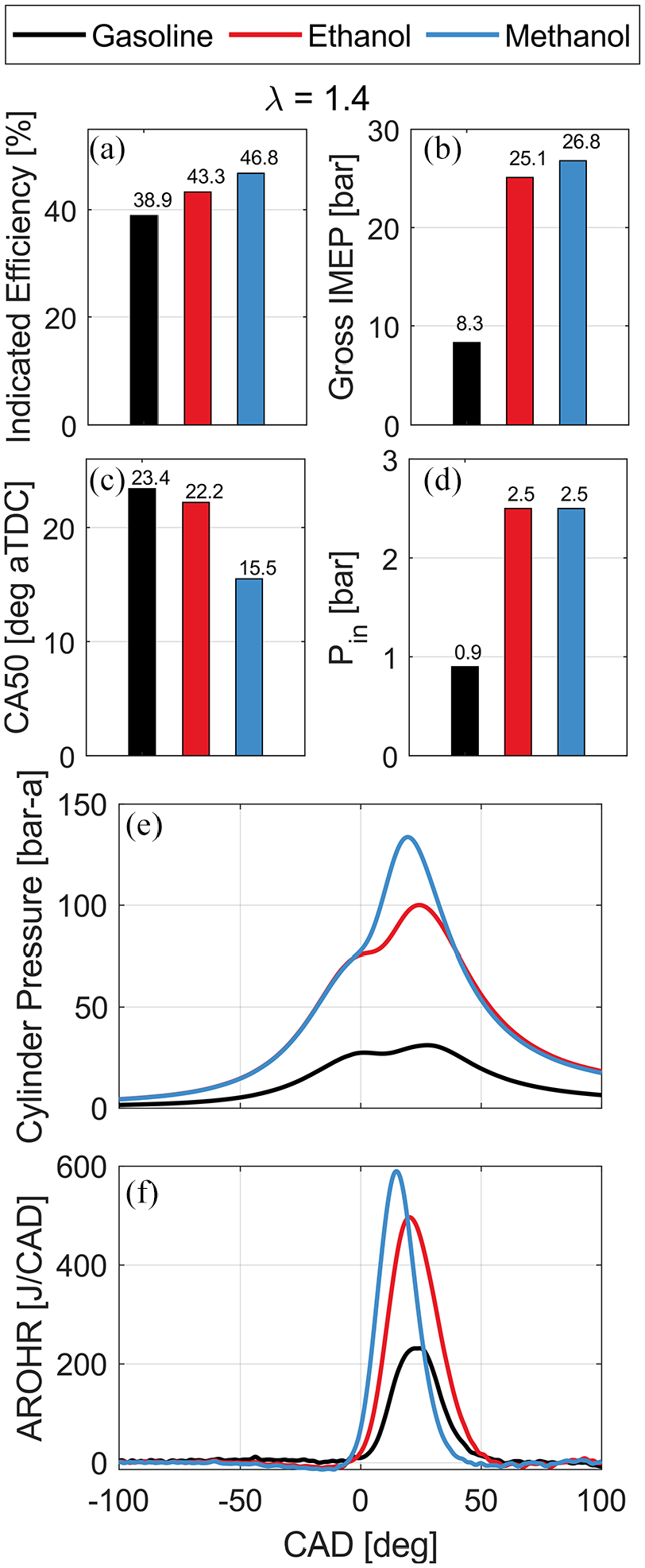
Peak IMEP at
Both ethanol and methanol reached the boost pressure limit in the experimental setup used. Due to lower knock, methanol CA50 was phased earlier and recorded 46.8% indicated efficiency at full load. The peak pressure was well within diesel limits for all fuels. At full load, methanol showed 134 bar-a peak pressure due to its earlier combustion phasing as shown in Figure 2. The better phasing also corresponded to faster heat release (Figure 2(f)) when compared to similarly phased gasoline and ethanol.
Full load – Effect of dilution
The peak load achieved at each dilution level and the performance and emissions for those points are shown in Figures 3 to 5. With increasing dilution, specific heat capacity is added thus reducing temperature and knock. This is seen from
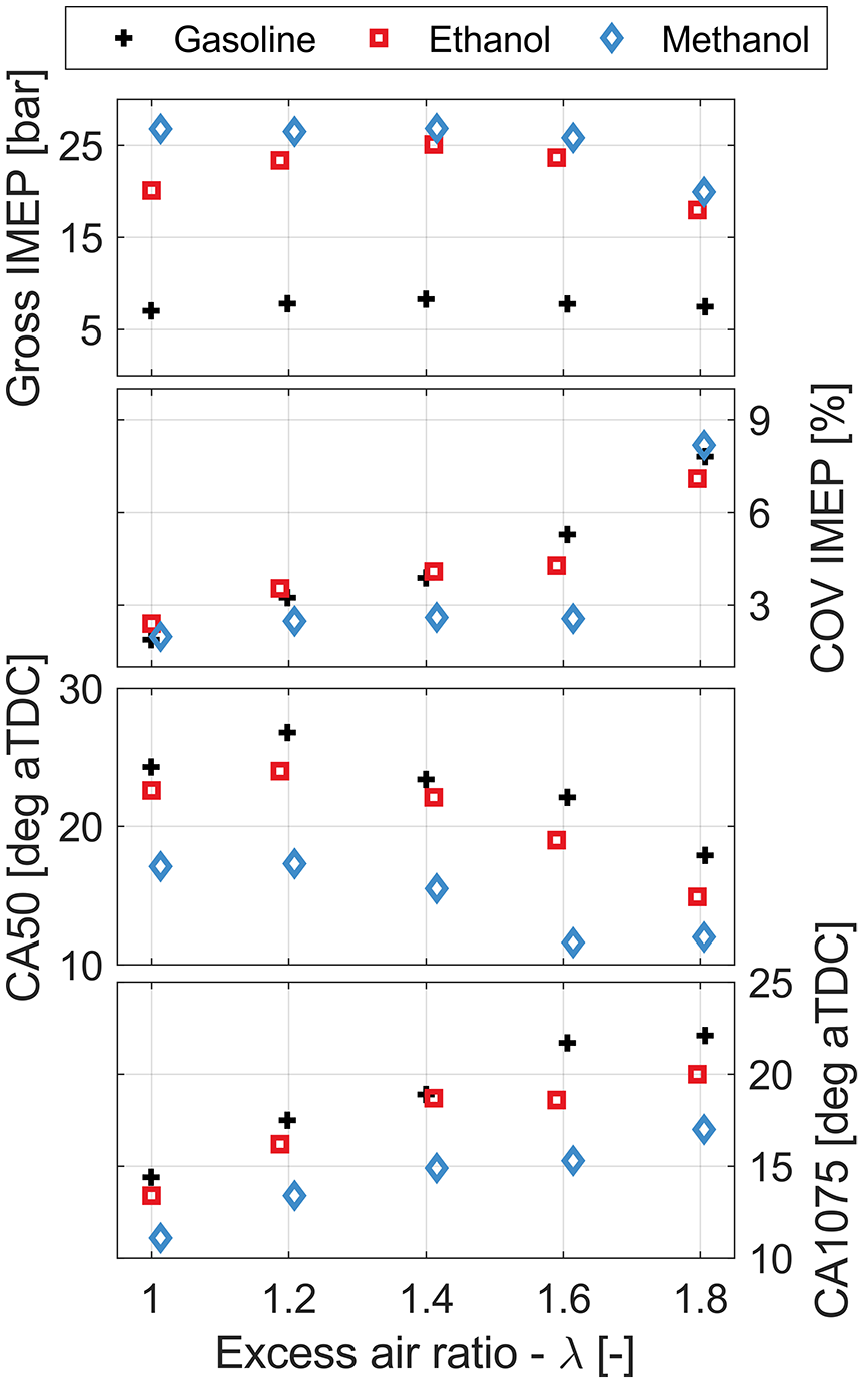
Peak load points – (a)
At
With increasing dilution, efficiency also increased as a function of reducing heat transfer and favorable combustion phasing as seen in Figure 4(a). Compared to gasoline, ethanol and methanol showed about 5 and 8% point improvement in efficiency respectively and much higher
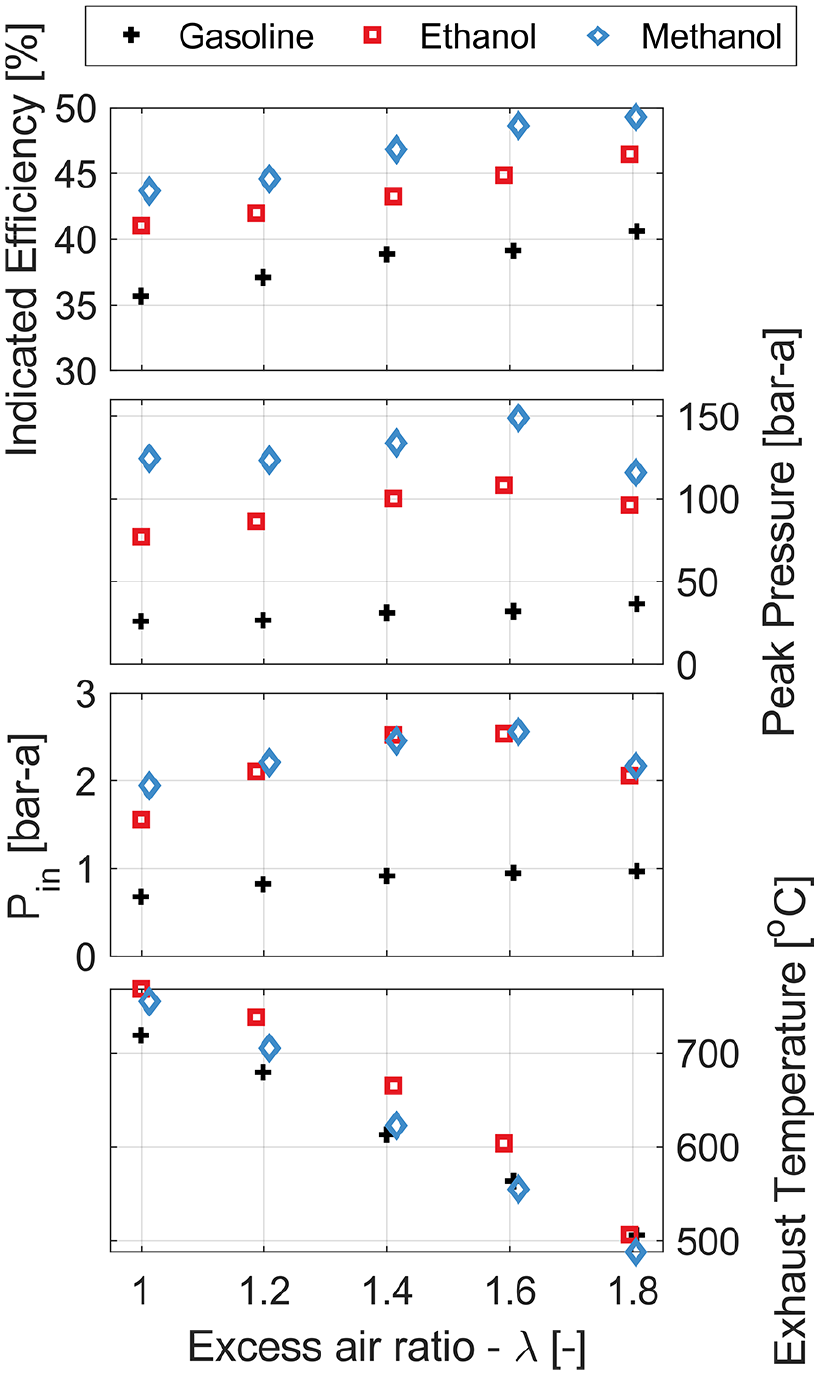
Peak load points—(a) indicated efficiency (b) peak pressure (c) intake pressure, and (d) exhaust temperature.
The corrected HC emissions show a similar trend for all fuels in Figure 5(a) with respect to excess air ratio. Gasoline had the lowest load and in-cylinder temperature, thereby produced the highest specific HC. With a large HOV and high injection quantity, methanol showed a sharp HC increase from
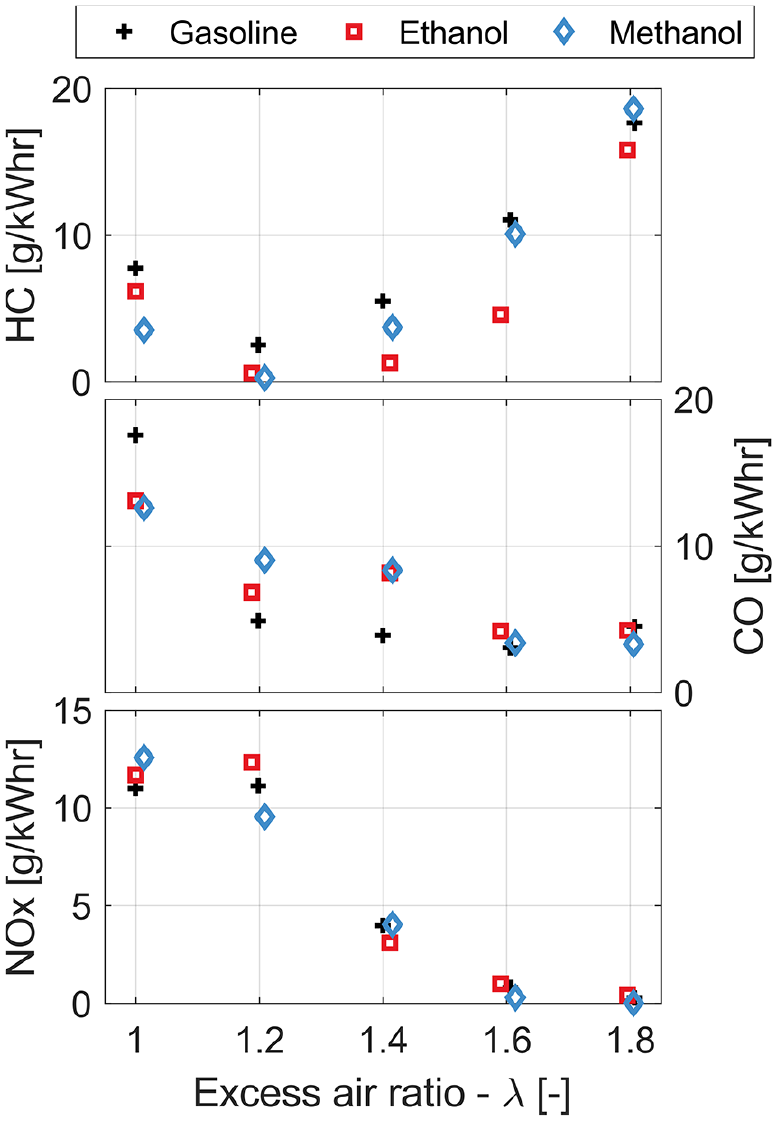
Peak load points—emissions (a) corrected unburned hydrocarbons (b) carbon monoxide, and (c) oxides of nitrogen.
Knock limit: Load increase
Figure 6 presents the effect of increasing IMEP to knock limited CA50 for gasoline, ethanol and methanol at
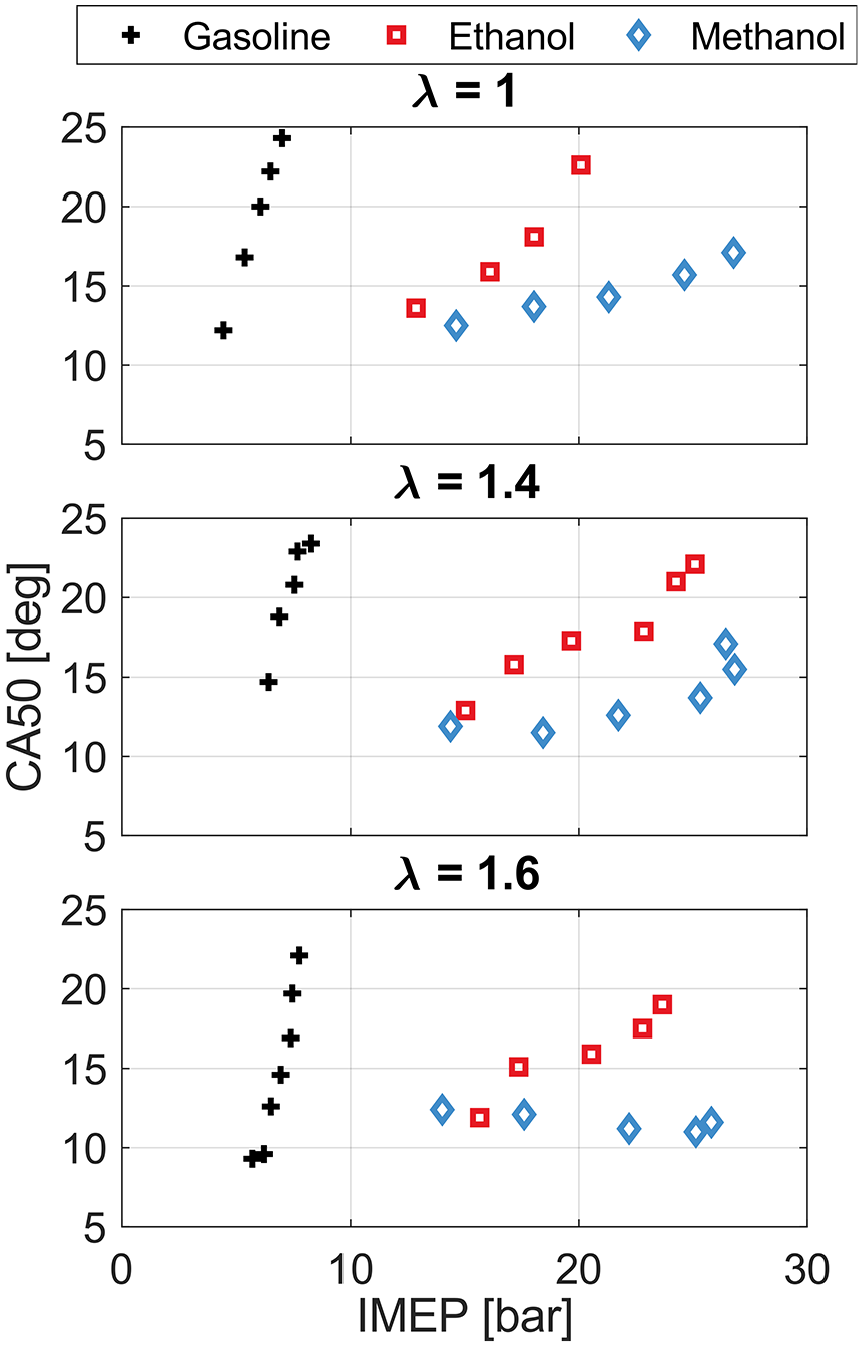
Load sweep—knock limited CA50 for (a)
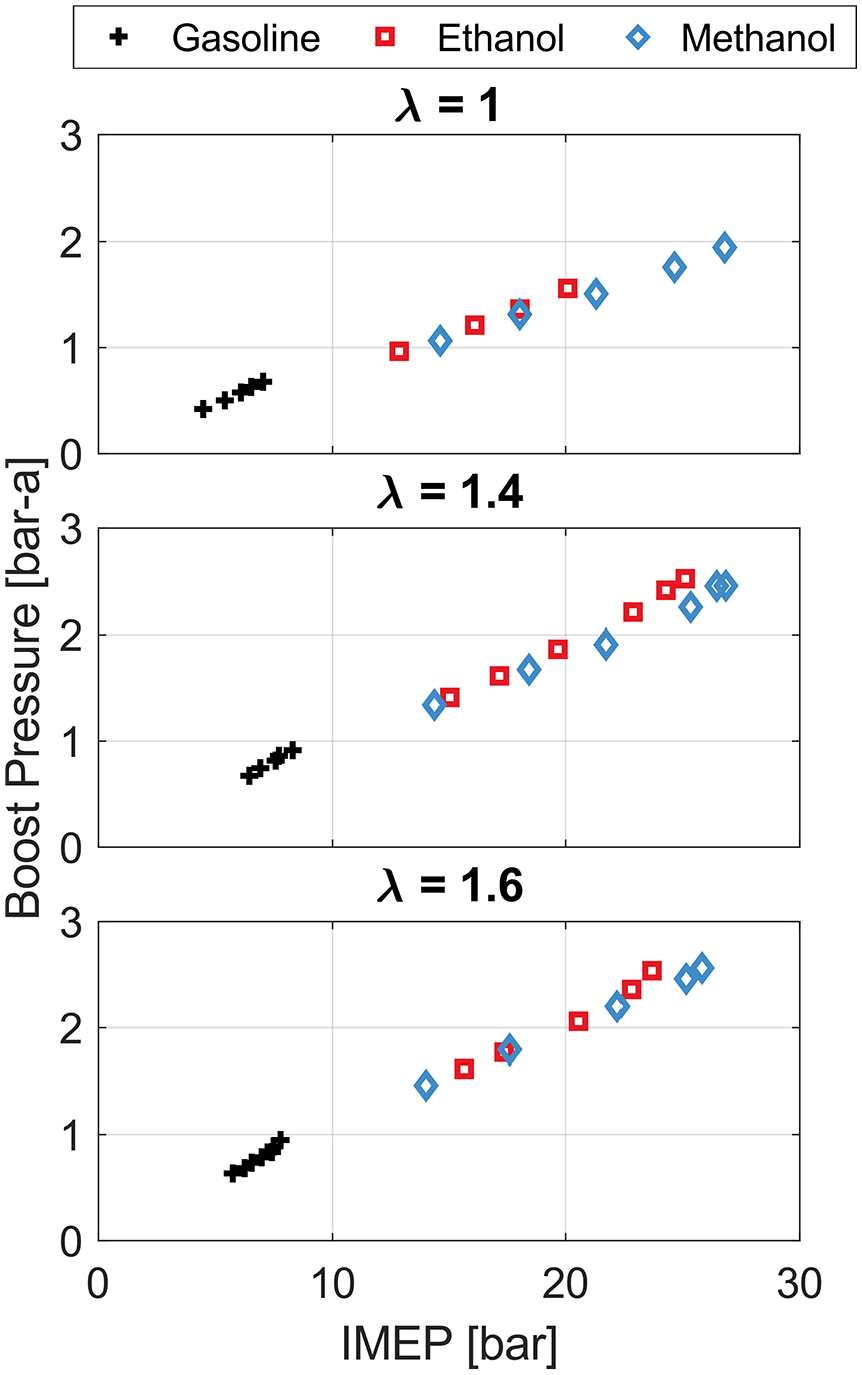
Load sweep—intake pressure for (a)
In the case of ethanol (Figure 6), retardation for knock was required only above 16 bar
The indicated efficiency curves, shown in Figure 8, follow the CA50 trend especially for gasoline. Notably, ethanol and methanol showed much lower efficiency penalty for spark retard than gasoline. This may be due to the lower in-cylinder temperature and heat loss for the alcohol fuels. At
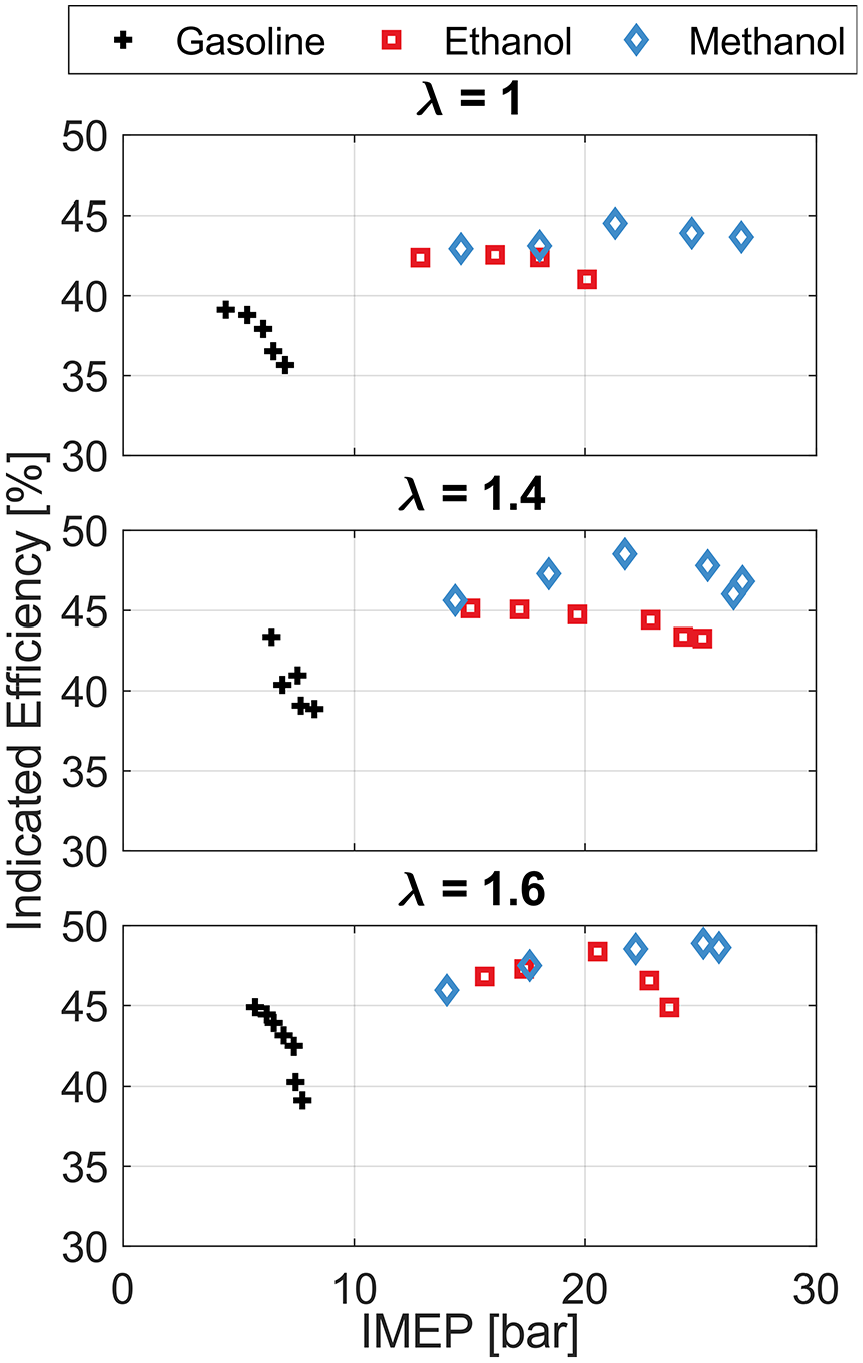
Load sweep—indicated efficiency for (a)
At full load, burn duration (CA1075) showed sensitivity to dilution but could not be compared at similar phasing between the fuels, as seen in Figure 3(c) and (d). Typically, spark retard caused the flame to propagate post TDC where the turbulence level in-cylinder is falling thereby increasing burn duration. It was only possible to achieve a third of the load with gasoline, hence results are at different pressure-temperature conditions in the full load case while comparing fuels. To better study the effect of fuel and dilution on combustion characteristics, knock limited gasoline is compared with part load ethanol and methanol in the subsequent section.
Part load: Effect of dilution
In this section, part load ethanol and methanol combustion characteristics is compared to knock limited gasoline at the tested lambda points. The load for alcohols was maintained at 8.5 bar
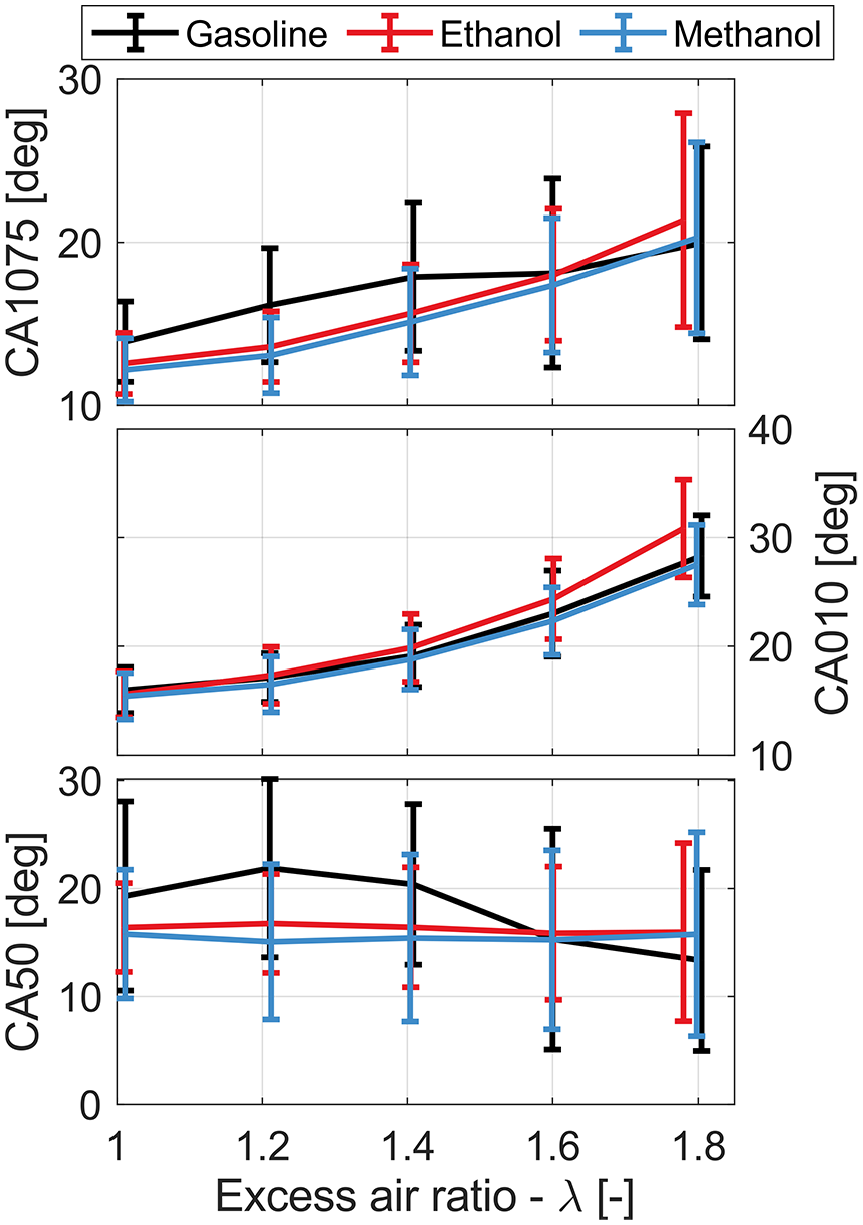
Part load spark sweep—mean value with error bars indicating twice standard deviation for (a) burn duration CA1075, (b) flame development time CA010, and (c) combustion phasing CA50.
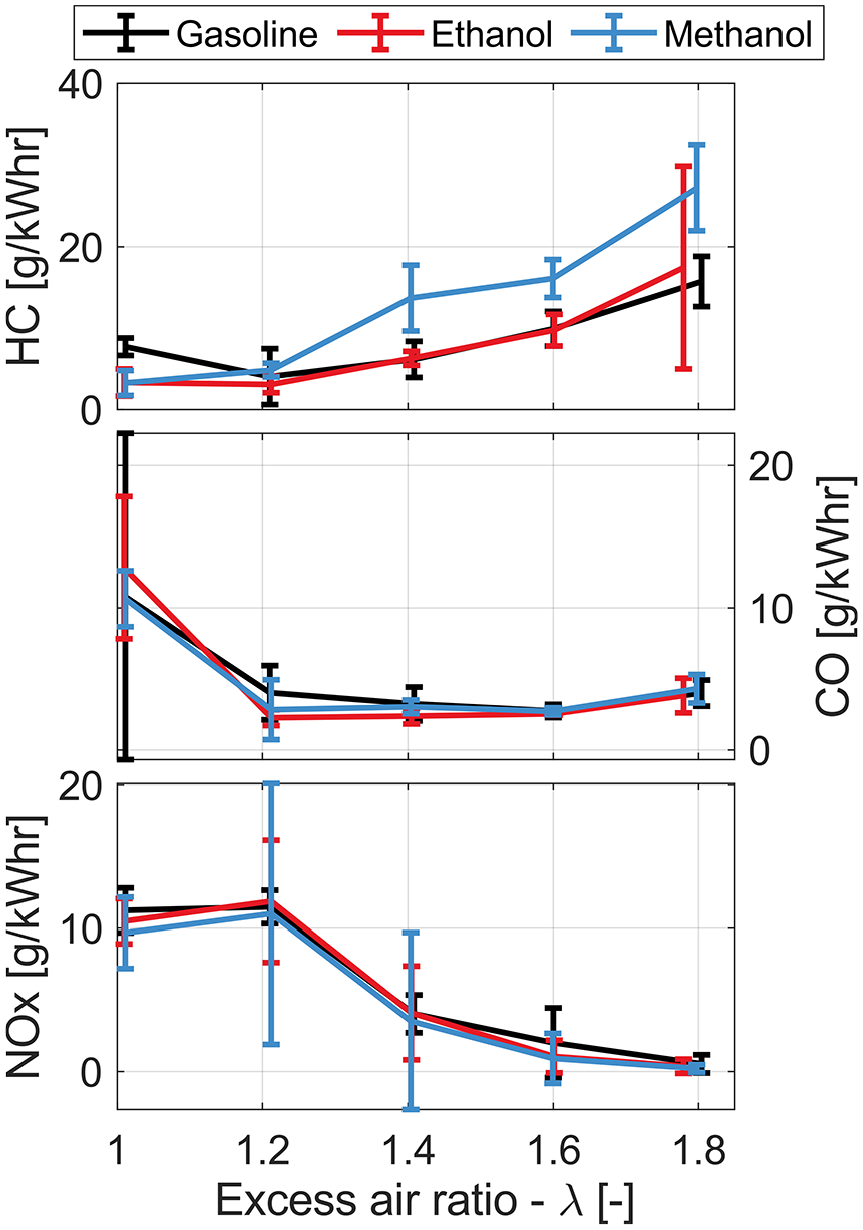
Part load spark sweep—mean value with error bars indicating twice standard deviation for (a) corrected unburned hydrocarbon, (b) carbon monoxide, and (c) oxides of nitrogen.
Figure 9 compares the mean combustion characteristics of the fuels where the error bars indicate twice standard deviation for the points tested. The large spread in CA50 shown in Figure 9(c) is due to spark sweeps. Overall, there is no significant difference between fuels for CA1075 seen in Figure 9(a). The mean CA50 for gasoline was higher at lower excess air dilution which causes higher CA1075 since combustion occurs at lower turbulence post TDC. Ethanol and methanol showed similar burn duration until
Comparing emissions shown in Figure 10 to the full load case previously shown in Figure 5, the trend is inverted for HC emissions in part load conditions. With a higher HOV, flame quenching occurs earlier and methanol produced the highest corrected HC emissions. Gasoline and ethanol are on a similar level at most excess air conditions. At comparable load, CO and NOx emissions are similar for all fuels.
At the same load and CA50 shown in Figure 11, ethanol and methanol showed similar indicated efficiency over the range of dilution levels tested. Indicated efficiency increased from 43% to 45.5% when excess air ratio was increased from
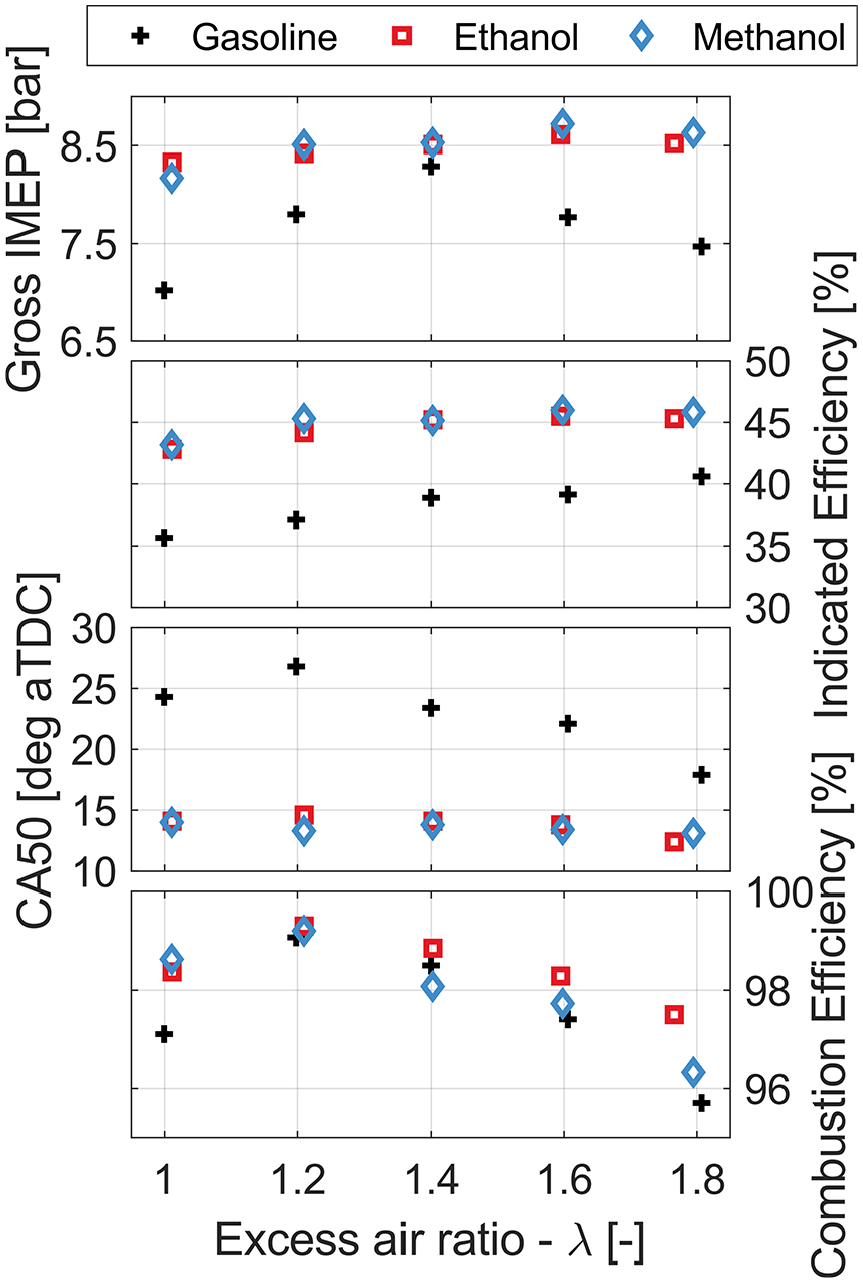
Part load comparison at similar phasing (a)
Part load: Effect of increasing intake temperature
To test the sensitivity of temperature at spark advance to combustion stability in high HOV fuels, the air supply was heated in steps of 15°C: 30°C (baseline), 45°C and 60°C. The combustion phasing was maintained within 2 deg of each other and an
With increasing temperature, there was a reduction in flame development time, CA010, seen in Figure 12(b) and (d). Increasing temperature from 30
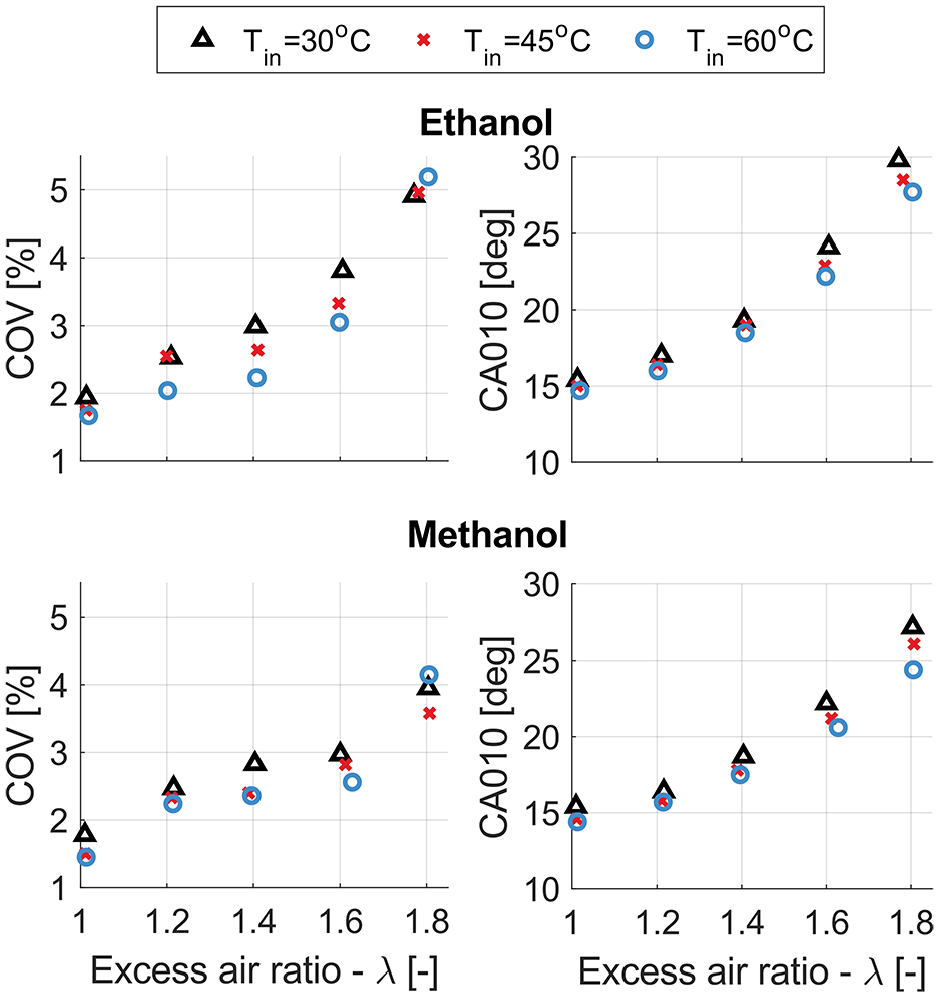
Intake temperature effect on (a) ethanol COV of
Methanol showed lower COV on average due to its lower flame development time. Similar to CA010 reduction, the same relative drop in COV due with increasing temperature was seen for both ethanol and methanol, as shown in Figure 12. In spite of the increase in temperature, lean limit could not be increased in both fuels. At
Discussion
In a single cylinder heavy duty SI engine, knock was effectively limited by ethanol and methanol through high RON, high HOV and lack of a NTC region. Similar to Pischinger et al.,
20
our results show that ethanol boost pressure can be increased by about 60% over gasoline at
The boost pressure and peak pressure requirements were within operating limits of diesel engines and minimum changes are required to convert diesel to SI combustion. However, one drawback to the study is that intake temperature was maintained at 30°C even at high boost pressures. This may not be feasible in operation and more tests are required to evaluate the influence of increased temperature on knock and load limitation. Also, intake and exhaust pressures were maintained equal in this study to ensure knock was assessed at a similar residual level as a full engine. With turbocharging, there is possibility that a positive or negative pressure differential might arise and its effect on knock performance has to be assessed. If back pressure is higher than boost pressure, residual gas level and in-cylinder temperature would likely be higher which would lead to a lower knock limited IMEP. If boost pressure is higher than back pressure, potential scavenging loss has to be minimized in port injected engines.
At part load
In the experiment, the engine used had swirl ports which does not significantly contribute to turbulence increase and in addition, causes heat loss during the expansion stroke. Swirl in LD diesel engines have been attributed to cause 0.5% point reduction in indicated efficiency 57 hence it is worth investigating further in HD SI engines. To improve the benefit of dilution, combustion speed can be increased further through increased turbulence. LD engines use tumble ports and pentroof combustion chambers where the bulk velocity breaks down into turbulence close to TDC and aids in improving combustion speed. However, this calls for a complete re-design of the cylinder head and will be justified if the production volume is significant.
A simpler change may be using piston shapes to improve squish and increase turbulence close to TDC. The potential improvement offered by higher squish pistons were tested through a previous simulation study 50 compared to the piston used in this experimental study. With increase in combustion speed, the end gas could be consumed before the critical residence time for auto-ignition is reached. Moreover, increased flame speed could aid faster flame development and lower COV at elevated dilution.58,59
With increase in dilution, exhaust temperature reduces which poses a challenge to maintain high after treatment efficiency. In this study, IMEP below 8 bar was not tested and exhaust temperatures remained above the critical limit of 400°C for ethanol and methanol. With lower loads, after treatment efficiency may be a limitation in achieving high dilution and needs further investigation. Although exhaust enthalpy reduces with dilution, the enthalpy available until an excess air ratio of
Summary
Knock limited 26.8 bar and 25.1 bar
Over 18% increase in
Methanol exceeded the target 25 bar
Peak efficiency of over 48% was recorded for both ethanol and methanol at an excess air ratio of
With increased dilution at and above
Instability was generally high for
At part load, with increase in intake temperature, a decrease in COV was observed for most excess air points but it did not help increase lean limit beyond
Footnotes
Acknowledgements
The authors would like to thank Magnus Bjurman (Volvo CE), Johan Engström (Volvo GTT) and Ludvig Adlercreutz (industrial PhD student at KTH) for their support and feedback during this work.
Declaration of conflicting interests
The author(s) declared no potential conflicts of interest with respect to the research, authorship, and/or publication of this article.
Funding
The author(s) disclosed receipt of the following financial support for the research, authorship, and/or publication of this article: The Competence Center for Gas Exchange (CCGEx), and its partners are acknowledged for the financing for this work.
